Tag: Google

  • Game On! Google’s Knowledge Graph Now Shows Video Games

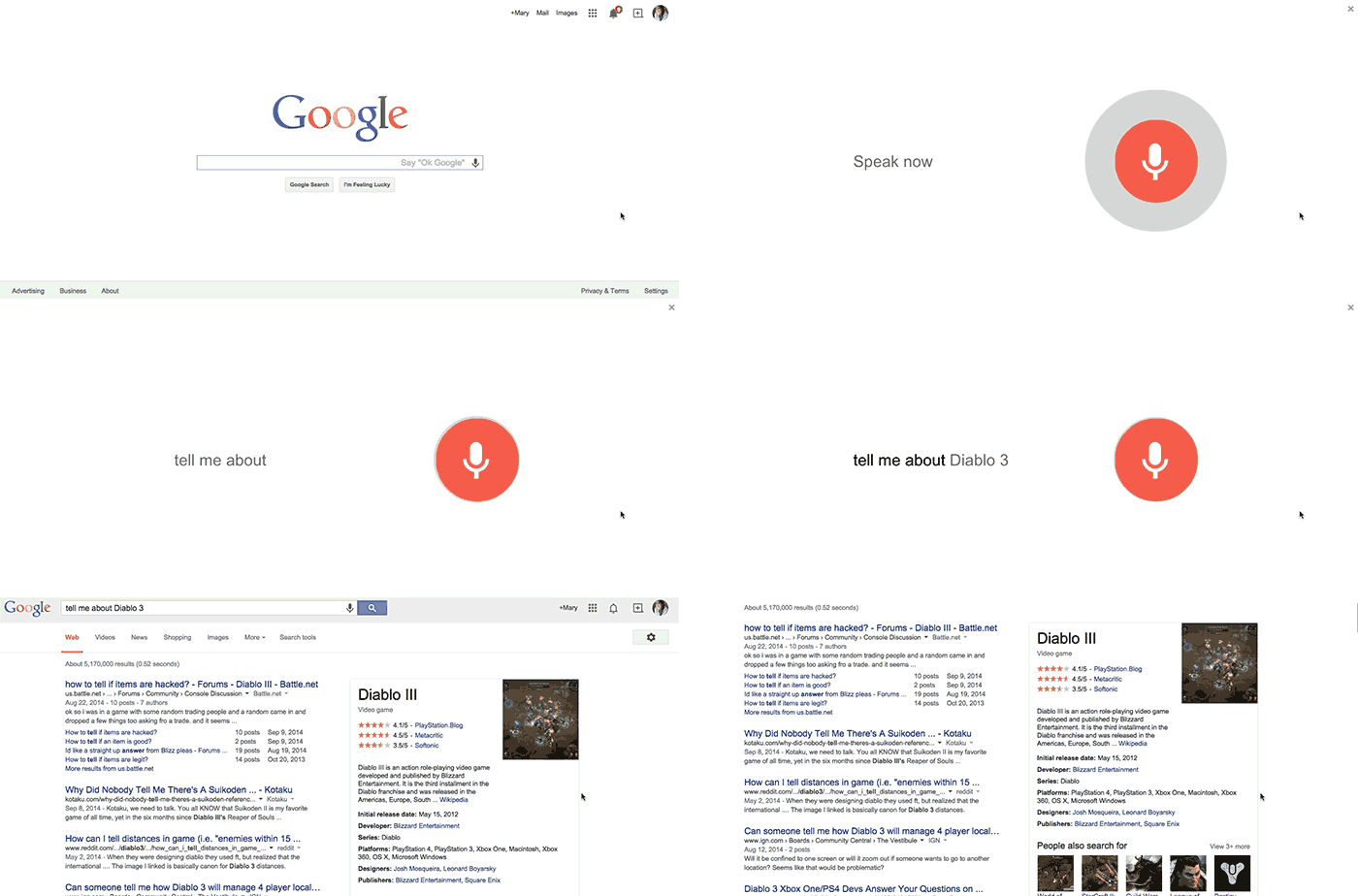
    As of a couple days ago, Google’s Knowledge Graph now includes information about video games! For those of you unfamiliar with the Knowledge Graph, it’s the box that appears on the right side of search results usually for searches like famous people, books, movies, and businesses. It includes pertinent, concise information on the subject matter. Accessible through desktop, mobile, and voice searches, the Knowledge Graph is Google’s way of connecting “real-world things” to provide “more meaningful results.”

    OK-GOOGLE-TELL-ME-ABOUT-DIABLO-3

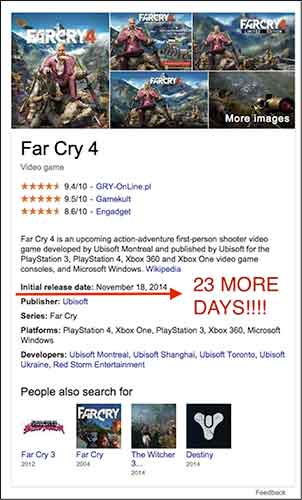
    With video games, there are a few basic information points that users typically look for when searching for video games. With this addition to the Knowledge Graph, Google has created basic title information for video games, like release date, rating, developer, platform, and publisher, among other things, easy for users to find.

    FarCry4KnowledgeGraphImage

    In the past, when I wanted to find the release date for a new video game it would take a bit of clicking around on various sites (usually Wikipedia or IGN) to locate that information. Now I can find out when Far Cry 4 is coming out just by searching “Far Cry 4,” which to me is pretty amazingly convenient!

    Another exciting feature for gamers is the “people also search for” section, which enables you to easily discover a new game! It is worth noting, however, that it seems (at least for now) in this section, games in a series are plagued by their previous or original titles. To me, that’s wasted space. I’d obviously know to check out Far Cry 1-3 if searching for Far Cry 4 and would like to see a more varied selection.

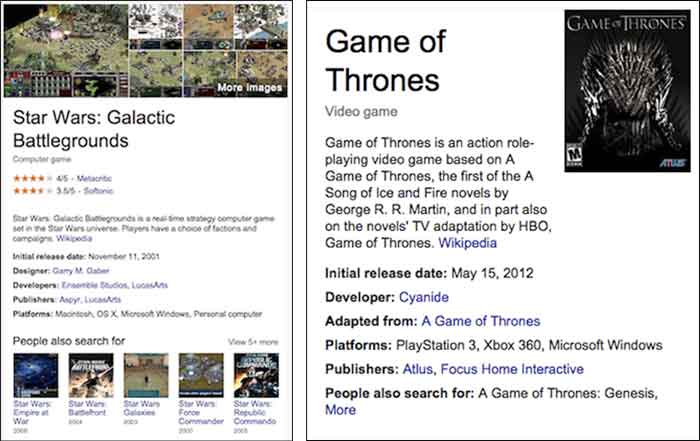
    I did a test to see if some of my all-time favorite games would also show up in a search (even if they’re much older games). Diablo II, Game of Thrones (the RPG) and the lesser-known Star Wars: Galactic Battlegrounds all passed! As suspected, however, it seems like the less recognized games, like Game of Thrones, miss out on some of the listed data, such as game photos, ratings, and a “people also search for” section. As an avid gamer, I know better than to judge a game purely based off ratings, but it’s still great data to have, now made easily accessible to searchers via the Knowledge Graph.

    StarWarsGameOfThronesKnowledgeGraphImage

    For more information on this awesome update, check out VentureBeat’s article including direct info from a Google spokesperson.

  • Is Apple Pay Keeping Google Wallet Away? Yelp Gets Posh + More!

    1. Apple Pay Launches as a part of iOS 8.1
    – Mashable

    On Monday, one of iOS 8’s most anticipated features, Apple Pay, went live. iPhone 6 and iPhone 6 Plus users only had to download the iOS 8.1 update and add a credit card to Passbook to start using the feature. In theory, a user only need connect a card, hold their iPhone to a pay terminal, use their personalized Touch ID and be on their way.

    Apple Pay does not link with loyalty cards, nor can it bypass the seemingly never ending prompts you encounter at supermarkets and drugstores. The near field communications (NFC) feature can work with most payment terminals, with most major banks and the list of participating merchants is expected to continue to grow.

    ApplePayImage-SearchInfluence

    2. Google was here first with Google Wallet
    – Mashable

    Although Apple Pay has greatly overshadowed it, Google has had a similar system since 2011 called Google Wallet. But if Google really was the hipster of cellular device tap and pay, why is Apple getting all the credit (pun intended)?

    Apparently, it’s the service providers such as AT&T, Verizon, and T-Mobile that have been obstructing the visibility of Google Wallet for the past three years. While Google controls the Android software that carries Google Wallet, the service providers control the hardware and carried minimal phones capable of using the feature. Apple, on the other hand, controls the hardware and software of their devices.

    Google hopes to gain more media and user attention following the launch of Apple Pay because unlike Apple, Google Wallet is compatible with any bank and any credit card.

    3. Drivers for Uber Protest Company Policies
    – Business Insider

    Drivers for the ridesharing service, Uber, are not happy this week. On Tuesday, drivers organized across the country to protest the company’s policies, including those on reduced fares, tipping, the driver rating system, and driver safety.

    Drivers say that because of Uber’s reduced fares, they are losing money and find shorter trips not worth the cost of gas they require. They feel the company’s automatic tipping policy, that requires drivers to deny cash tips from customers that wish to give one, is only adding to their struggles. Drivers also face concerns over their personal safety when dealing with disgruntled or intoxicated passengers.

    Uber has yet to comment on the matter.

    UberProtestImage-SearchInfluence

    4. Yelp Adds Hotel & Winery Reservations to Business Pages
    – MarketingLand

    Remember last year when Yelp teamed up with OpenTable to make booking a restaurant reservation as simple as a tap of a button? Instead of food, this time it’s rooms and wine. Early on Monday, the company announced that business pages would now do hotel bookings, via Hipmunk, and winery reservations, via CellarPass. Yelp has also expanded its booking services to a number of other third party delivery and reservation services.

    While Yelp does not charge businesses directly for access to these features, the third party providers do and give Yelp a share.

    5. Maps Connect – An Aspirin for the Maps Corrections Headache
    – Search Engine Land

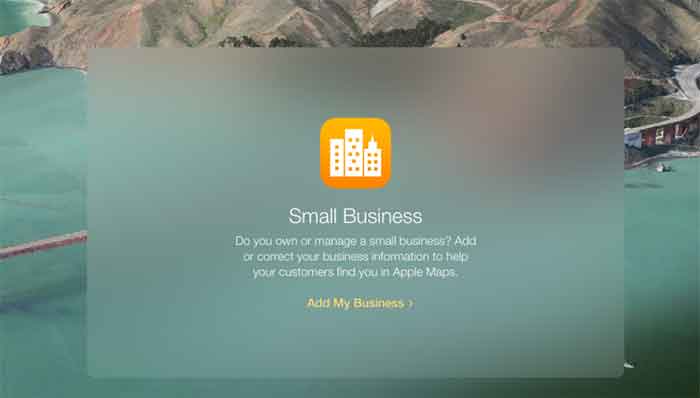
    On Tuesday, Apple launched Maps Connect, a free service that allows small business owners to manage listings on Apple Maps via their Apple ID. The process requires a one-step verification phone call. After that, the business owner is free to manage their listing or listings seamlessly. Updates or newly created listings show up within a week or sooner.

    The service does require an Apple ID, so those without it will need to download it. It also is intended for small business owners themselves, or authorized representatives, but not third party agencies.

    Currently, Maps Connect is only available stateside, but Apple plans to expand overseas in the future.

    AppleMapsUpdateImage-SearchInfluence

    Image Sources:

    Thanks to Mashable for the Apple Pay photo, Maya Kosoff of Business Insider for the Uber protest photo, and Search Engine Land for Apple Maps Self-Service photo.

  • Google Gives Answers To Life, Love, & The Universe

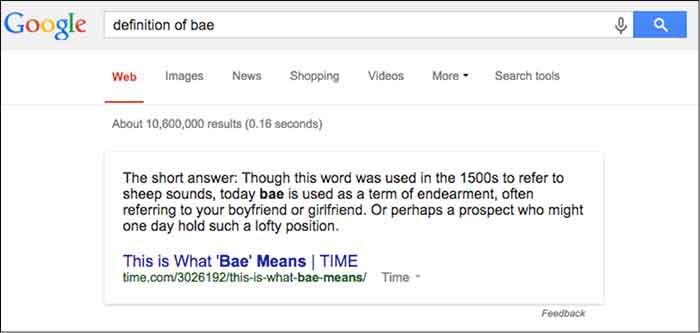
    As you may or may not have noticed, prevalence of Google’s answer boxes among search results has increased dramatically. Google’s algorithm updates have always pushed the search engine to more closely mirror the human searchers, aiming to provide the best answer to each question. With the collection of Google’s Knowledge Graph (their personal database of information and the interconnectivity of ideas), they have announced their goal of transforming from an “Information Engine” to a “Knowledge Engine.”

    From Google’s Knowledge Graph, a new item has emerged in search results: the answer box.

    If you haven’t seen them (and have no idea what I am talking about), let me back up. According to Moz, Google now displays a direct answer in 3.5% of search results, as opposed to the standard 10-pack of results, sprinkled with some PPC ads.

    These direct answer results have been around for well over a year (I found posts introducing them in August of 2013). However, answer boxes are being seen in 44% more search results after the rollout of Panda 4.1. So, more people are seeing them and more people are talking about them!

    Answer Box 1.0

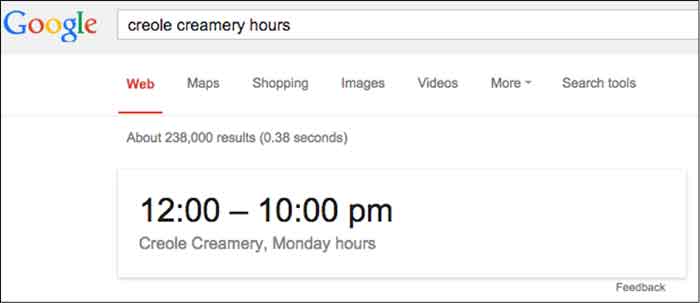
    The first generation answer box was a Google SERP feature. These early answer boxes provided short, direct snippets of information that were concise and, ultimately, limiting. Below is a perfect example that still holds this early answer box format:

    Google Answer Box Hours Of Operation Image - Search Influence

    Dr. Peter J. Meyers provides 101 other examples of early answer boxes in this blog. Quickly scrolling through them, you’ll notice they all look pretty similar and pretty boring.

    Answer Box Evolution

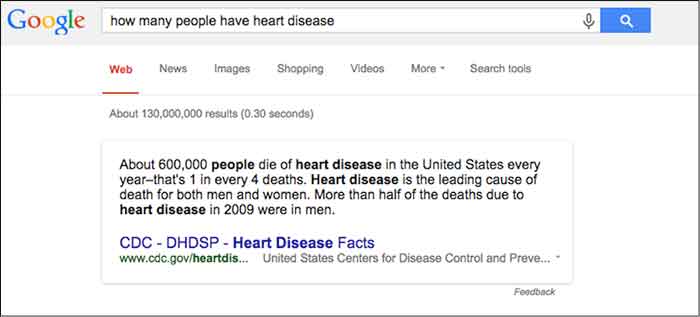
    Over time, the answer box has drastically evolved. Google quickly realized that it could not index every possible answer to every possible question. Spoiler alert, Google doesn’t like to be limited. So, instead, Google used its vast index of the Internet to pull results from sites, creating a completely different answer box that looks more like:

    CDC Information Pull Google Answer Box Image - Search Influence

    This, however, can pose problems. Sometimes, Google pulls answers from long-outdated websites, which can provide an incorrect or inappropriate answer.

    There are going to be instances where Google provides an insufficient or incorrect answer. When this happens, rejoice because even Google is imperfect. One example (and, yes, I’m being excruciatingly picky here) cropped up while I was doing research for one of our clients.

    HowManyHeartDiseaseGoogleAnswerImage

    Initially, my reaction was “Cool, that’s some information that I could use,” but then I realized it wasn’t the information I was looking for.

    StarWarsJediMindTricksImage

    Nice try Google. I was looking for how many people have heart disease, not how many people die from heart disease.

    But, you’ll notice that there is this handy “Feedback” button at the bottom. Here, you can write a personal message to Google telling them to get their act together. Yes, you can be a part of the Google movement.

    Other issues can occur when Google pulls from sites that are out-of-date. So be on the lookout, and when you find inaccuracies provide concise feedback, and be on your merry little way.

    Other Answer Box Speciation

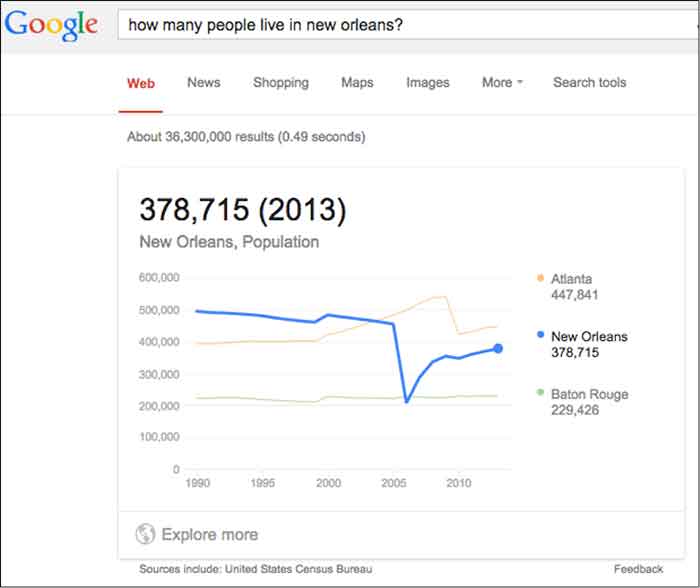
    Population – This one is actually interactive and will show the population anywhere along the measured domain.

    Interactive Population Google Answer Box Image - Search Influence

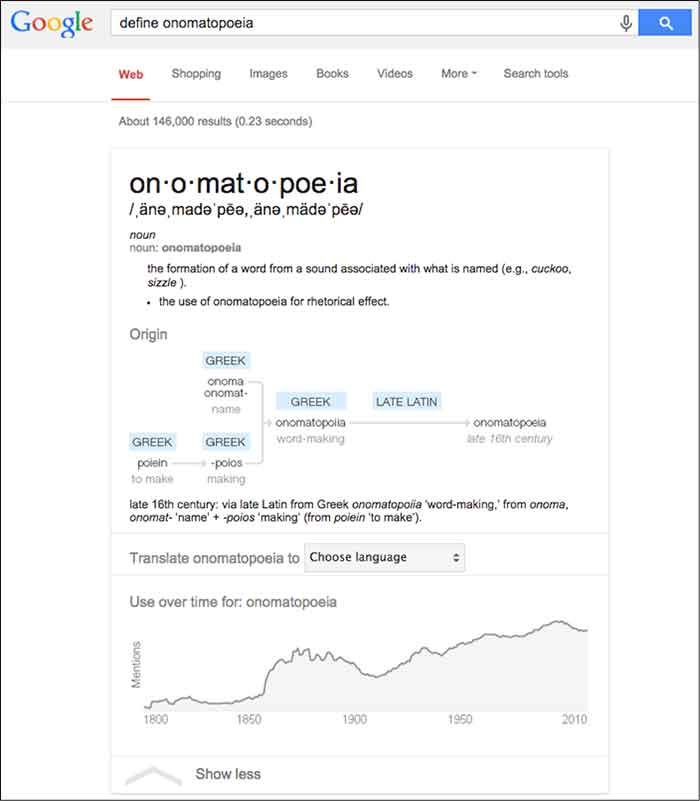
    Etymology & Definition – As a copywriter, this is a personal favorite of mine. I imagine this will do wonders for future linguists and English majors as they can find definition and historical context, all in one search.

    Definition Google Answer Box Image - Search Influence

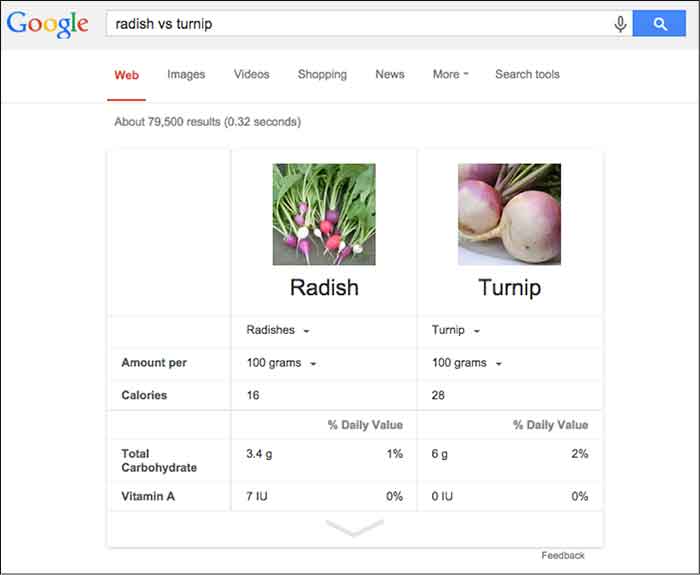
    General Knowledge – What is a thing? Compare and contrast objects or see a specific object defined across a wide array of variables.

    Comparison Google Answer Box Image - Search Influence

    These are just a few examples of an infinite amount of possibilities and I expect Google to only further diversify its answer boxes as its Knowledge Graph continues to expand. However, you’ll notice that, in general, the newer answer boxes seem much more comprehensive, colorful, and engaging. It seems fairly certain the we will continue to see these answer boxes more often as Panda stays on patrol.

    Why Now, Google?

    Plain and simple: mobile search is on the rise. Mobile users already account for more than half of all site traffic. The percentages are even more staggering for social sites such as Facebook and Twitter. Google is in tune with the mobile trend.

    The mobile searcher is a completely different animal than the traditional laptop user. Personally, when I am searching on my phone, I am looking for something very specific. That could mean any number of things — hours of operation, contact info, a trivial fact… The point is, I’m not in the mood to sift through a second layer to find that information. Google appeals to the mobile user in all of us with these answer boxes.

    Also, Google’s answer boxes are another push for clear, concise, valuable information. Google is, afterall, a search engine. Users are searching for information. Google continually updates its algorithms to effectively provide the best possible information.

    On its own site, Google says, “Get answers no matter where you search. Information from the Knowledge Graph is available on your desktop, tablet, and smartphone. So wherever you search on Google, you’ll find that answers and discovery are at your fingertips.”

    What Does This Mean For Your Site?

    In theory, if you’ve earned enough authority points from Google, your site could be a source included in the answer box. Unfortunately, unless you are the CDC or Times.com, this is highly unlikely for broad searches. To get pulled into more localized questions, there are things you can do to signal to Google, “Hey, this is an important piece of information.”

    One such way is schema, which classifies bits of information so that it is easier for search engines to digest. You can learn loads more about schema here and in an upcoming blog post.

    What kinds of answer boxes have you seen? Have you come across any issues with terrible (or terribly funny) Google answers? What do you think of them? Let us know!

    Image Source:

    Thanks to Tina Grimes for sharing the Star Wars mind trick gif.

  • What’s Black and White and Impacts 3-5% of Search Queries? Panda 4.1!

    In the last two months, Google has been busy improving the Panda. In early August (Aug. 8, 2014, to be exact), there was a lot of chatter from the SEO community seeing the flux in Google Analytics accounts, which was generally accepted as an unconfirmed monthly Panda data refresh.

    In early September, there was a large Panda data refresh, and on Sept. 25, Google’s Pierre Far announced yet another Panda algorithm update, (the previous Panda algo update was May 19).
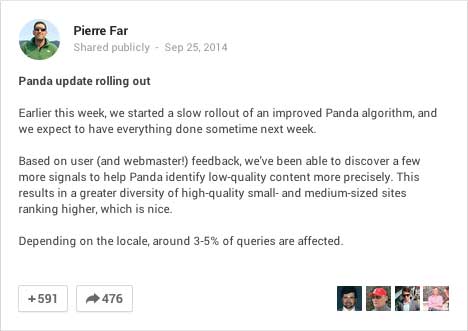
    GooglePlusPostPandaAnnoucedImage

    And just to keep you on edge, ceaselessly examining your Analytics data, the rollout of this Panda has been sloooowwwwslothlike. Google confirmed that some Google data centers were not updated until “October 6 or later.” So, your website could have seen the algorithm at some point before Sept. 25 and after Oct. 6 – that’s a two-week time frame to analyze!

    What is Panda?

    There are so many blog posts out there describing the Panda algorithm, I will just summarize it briefly. If you’re interested in reading about it in more detail, here’s a good blog post, and some excellent reading here.

    Panda is an algorithm that filters the search results to:

    1. Reward high-quality content with more presence
    2. Push sites with thin content down to rank lower

    Google says low quality or thin content is text that

    •   Is very short in length
    •   Offers very little useful information to the consumer
    •   Is unoriginal or copied

    Your website content should not be self-serving; it’s all about providing information to the consumer to educate them with detailed and authoritative information.

    PandaContentPullQuoteImage

    This most recent Panda is an algorithm update, which is supposed to reward more high-quality small and medium-sized websites. From Par’s G+ post:

    “Based on user (and webmaster!) feedback, we’ve been able to discover a few more signals to help Panda identify low-quality content more precisely. This results in a greater diversity of high-quality small- and medium-sized sites ranking higher, which is nice.”

    This update is significant because it added more signals to better identify lower quality sites. Earlier algo updates have rewarded big directories for local searches, so this update is exciting because small- and medium-sized websites have a fighting chance for ranking in their local markets.

    Google Updates vs Data Refreshes

    To paraphrase, an update is a change in the algorithm. A data refresh is when the algorithm has not changed, and new data that is pushed through the data centers, such as new crawl data, is updated in the various data centers across the Google universe.

    Updating the data centers is one reason why updates are seen at different times for different geographies.

    I am quoting this really old Matt Cutts blog post here:

    Algorithm update: Typically yields changes in the search results on the larger end of the spectrum. Algorithms can change at any time, but noticeable changes tend to be less frequent.

    Data refresh: When data is refreshed within an existing algorithm. Changes are typically toward the less-impactful end of the spectrum, and are often so small that people don’t even notice. One of the smallest types of data refreshes is an:

    Index update: When new indexing data is pushed out to data centers. From the summer of 2000 to the summer of 2003, index updates tended to happen about once a month. The resulting changes were called the Google Dance.”

    What are data centers? Google crawls the websites out there and caches those in their gigantic index. That index is huge and is stored on thousands of machines. Those thousands of machines live in various Google data centers around the world. To truly geek out, read more about Google data centers here – these centers are where the Internet exists.

    Did Panda Help or Hurt Your Site?

    When you look in Google Analytics, it may be easy to see a drop off or dramatic increase. For example in the graphic below, I’m guessing Panda rolled out in the business’ local area around Oct. 6, and it didn’t go well for the site:

    Panda rolled out Oct 6, 2014

    And on Sept. 29, this site was Panda-happy:

    increase in Google organic traffic after Panda September 2014

    For most of the sites I looked at, the visual changes were more subtle, so I usually toggle between the data by week vs. the daily data. The weekly data shows me a week where the decreases started, which correlates to the earlier rollout dates:

    weekly analytics view to pinpoint Panda rollout

    When I switch to the daily data, I can clearly see the dips in traffic. I have to pinpoint Saturday, Sept. 20t or Wednesday, Sept. 24 as the day this site got the Panda.

    daily Analytics shows dips in Google organic traffic after Panda

    The Sept. 20 might be a little early to fit in the Panda time frame, and I am accustomed to seeing a spike immediately before an algo filter, so I’m going for Sept. 24. Using Sept. 24 as the before and after date, this website has seen 12% decrease in Google organic traffic.

    12% decrease in Google organic traffic after Panda Sept 2014

    This website with the 12% decrease in Google organic traffic after Panda is a good website for an authoritative local business. What this drop tells us is even if the content on the site offers really great information for the consumer as this one does, it might be old and/or thin. Someone may have copied it over the years. We might need to add other content to our pages with images and videos. Content is not just text. We need to take a good look at the age of the text and the variety of the content on the page. With this review, we can create a strategy for improving the content for the next Panda data refresh.

    What to Do Now

    PandaImageWebsite owners or managers who see a Panda smack really need to take a critical look at the content on the site. To succeed, the content needs to be information rich, and not self-serving.

    An example of self-serving content is content that is stuffed with keywords, abundant keyword use on a page not only in the body text, but also in the URL and alt tags. This is also sometimes referred to as over-optimization.

    Self-serving can also mean the content talks too much about the business instead of talking about the product or service the consumer is trying to learn about. Talking about the business is great as long as it’s on the About page or the home page. Leave products or service pages to be about those topics.

    This is a great list compiled by Josh Bachynski “The Complete Google Leaked PANDA Do & Don’t LIST – 2011 to Present.”  This list really dives into the aspects of good and not-so-good content.

    Google published a list of questions to ask when writing content. The full list is here. I have chosen some to republish below:

    • Would you trust the information presented in this article?
    • Is this article written by an expert or enthusiast who knows the topic well, or is it more shallow in nature?
    • Are the topics driven by genuine interests of readers of the site, or does the site generate content by attempting to guess what might rank well in search engines?
    • Does the article describe both sides of a story?
    • Does this article provide a complete or comprehensive description of the topic?
    • Are the pages produced with great care and attention to detail vs. less attention to detail?

    Diversity of content and freshness of content are also factors to consider.

    Diversity of content helps readers in various ways. Content can mean images. Original images are best rather than stock images, but stock images work. Content can also mean videos, charts, calculators, and reviews. Content is anything that helps the consumer learn more to make well-informed decisions.

    For content freshness, a blog is probably the easiest approach to keep the website updated regularly without having to rewrite your page’s content too often.

    If you have a specific owner or practitioner who is the authority on the information, claim that using Author markup – authorship thumbnails are gone from SERPs but that doesn’t mean the Author authority is gone.

    There are so many tactics for coming back after a Panda smack, and the best strategy is a mix of tactics. It will likely take time to create really good content and build back your website credibility, but it is a necessary investment for your site’s success.

    If you think your site is suffering from the Panda, give us a call. We would be glad to help.
  • Five For Friday: Paging Dr. Google, Panda 4.1 Is On The Loose, And More!

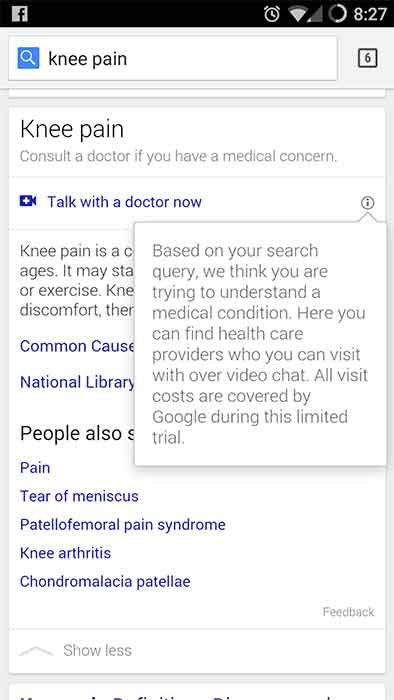
    GoogleKneePainAnswerImage

    1. Google Gets a Medical Degree
    -Mashable

    In what may prove to be the coolest Google project all year, reports have surfaced that the search engine plans to implement a feature to their already lauded Helpouts initiative. The new project will attempt to take health-related symptomatic searches and connect users with real doctors online. All costs are being covered by Google during the limited trial period, however it may cost you as the service is refined. The impact this will have on health professionals is exciting, and could transform an entire industry. The opportunities this service poses are truly endless, especially when you consider the degree of Google’s philanthropic endeavors.

    2. The Forgotten Curriculum
    -Moz

    Carla Dawson of MobyDigital discusses the pros and cons of teaching SEO at universities.

    As a recent graduate frustrated with the absence of tech-related courses being taught at my alma mater, I strongly believe in this move to educate the average university student on the subject of SEO. The article poses quite a few points of contention and agreement, here are a few that stuck out:

    1) Pro: Everyone says they know SEO. Without a standard for learning SEO, there can be no true credibility among firms. Teaching these skills at universities will quell [most] questions about a persons knowledge base.

    2) Pro: Today’s student is tomorrow’s potential client. Students who learn SEO in a formal setting will be able to sell [and be sold] SEO services more effectively.

    3) Con: Google algorithmic changes are frequent, and transform the industry.  The single most significant obstacle to teaching a standard course on SEO is the fluid nature of the industry.

    3. Panda Does Not Approve of Average Content
    -Business 2 Community

    The most recent tweak to the Panda Algorithm is in full swing. Nothing about this update is drastically different from what we have seen before, but Google is making it clear that authentic, well-vetted content from small and medium sized businesses remains a staunch priority.

    This checklist, provided by Google, is a great resource for those writing content for their business:

    • Would you trust the information presented in this article?
    • Is this article written by an expert or enthusiast who knows the topic well?
    • Does this article have spelling, stylistic, or factual errors?
    • Does the page provide substantial value when compared to other pages in search results?
    • Was the article edited well, or does it appear sloppy or hastily produced?

    TheAngryPandaCommercialSquareGifImage

    4. The Semantic Future of Link Building
    -Moz

    In his most recent submission to the MOZ Blog, Paddy Moogan discusses the impact on link authority, as Google continues to prioritize semantic search over exact-match keywords. As Google continues to understand search intent more and more, the rules surrounding link building will change. Paddy argues that the quantity of links, the anchor text of the links, and deep linking will matter less and less in the coming years.

    5. What Is Your Take on B2B Marketing Strategy?
    -Search Engine Land

    The recent banishment of the Google Authorship markup inspired annoyance in people like Derek Edmond, of KO Marketing. The impact on B2B Marketing from this discontinuation is very real to a certain niche, but as the wild world of SEO ebbs and flows, Derek reminds us of four tactics employed by B2B marketers that have had success in the past. Will marketers continue to build on these tactics, or abort them entirely?

    1) Purchasers prioritizing “thought leaders” in their industry. This tactic was primarily employed by the use of Google Authorship and Derek believes some kind of platform will fill this void in the future.

    2) Infographics are well respected, and oft-cited, however the market for infographics is so saturated that it is becoming increasingly difficult to create effective infographics.

    3) Derek argues that guest-blog posting is tricky game. The useful expertise provided by credible commenters can boost your authority as a business. On the contrary, Google considers guest blogging to be spammy, and it is easy to have unreliable sources hurt your authority.

    4) Derek warns against the dangers of spammy content, and questions the SEO usefulness of using Twitter to market your business. Matt Cutts of Google has stated that the search engine does not consider social signals when it comes to rankings. However, Derek argues that using Twitter as a tool to build relationships proves to be invaluable.

    Thank you to Panda Cheese for the great angry panda commercial!

  • Five For Friday: Amazon Gets Physical, Tinder Cleans Up, & G+ Asks, Am I Pretty?

    FiveForFridaysColorfulFive

    1. Google Testing New Local Interface In Web Search Results – Search Engine Roundtable

    Google is testing a new interface for showing the local web search results. Back in August, we saw that Google was showing the local carousel within the results, but this new interface is simply a list of the results and isn’t going to preview a map within the carousel.

    2. Tinder Spammers Move to SMS After Improvements To Dating App’s Security – Tech Crunch

    For awhile now, the dating app Tinder has been overwhelmed with spam bots, or accounts created to flirt with Tinder users and then direct them to adult sites. However, this summer, Tinder was called out by Symantec and therefore had to address the issue with an update. At first it appeared the update addressed the issue, but a new report is showing that the spammers have just moved to using SMS texts.

    3. Report: Amazon To Open New York Retail Store – Marketing Land

    Recept news reports say that Amazon is planning to open a Manhattan store just in time for holiday traffic. According to WSJ, the new store, opening at 7 West 34th Street, is to operate as a mini-warehouse of sorts, allowing returns and pickups. Others had reporting that this might be a place for Amazon to showcase it’s upcoming products such as new e-readers, the Fire Phone, or Fire TV. Either way, this could be a game changer for this e-commerce provider.

    4. Google Adds The Ability To Post Polls On Google+ – Marking Land

    As of October 9th, Google+ is giving users the ability create and share polls. This was a tool Facebook was offering back, but then pulled back in 2012 finding it redundant. This new feature in Google+ will on the web and Android versions within the next few days, and then eventually iOS.

    5. Google Makes Conversational Search Even More Intelligent – Search Engine Journal

    OpenTableLogoImageOn October 9th, Google announced an update to their conversation search functionality which should make it easier for planning. Overall the new features include, location-based searches, making reservations, and finding directions. These new features are now available on the Android and iOS app. What does this mean for businesses? It’s more even important to optimize your site for local search as well as to verify your Google+ local listing. If you own a restaurant, then you should ensure you are listed on OpenTable so you don’t miss out on potential customers!
  • 5 For Friday: Winning at Local Search, Snippets in Search, & Investing in Content

    1. Google Structured Snippets Officially in Search Results
    – Search Engine Land

    Schema markup and other forms of structured data are being used by webmasters to display Google structured snippets, but this isn’t the only way more data is pulled into the search results. Google has been testing out new forms of this “structured data.” Data for a particular search result is now being pulled from “Knowledge Graph and other data sources.” Google is pulling more and more information from sites to show in search results in order to “provide the most relevant information to the user.”

    2. Be Careful of Switching to HTTPS to Improve Google Rankings: The Buffer Story [UPDATE]
    – Search Engine Land

    In early August, Google announced they would be putting more trust in secure sites as a ranking factor. One particular case in which a site adopted this practice early actually saw a major drop in traffic immediately following. This was an issue on Google’s part during the roll out of this new algorithmic adjustment. It has since been corrected, but the moral of the story is: Be cautious before making such a big website change.

    GoogleAlgoImage

    3. How to Win at Local SEO with Reviews, Citations, and Local Events
    – Search Engine Journal

    Recent Google algorithm updates have local businesses panicking trying to react to these new updates. While it is not time to panic, it is time to make sure you have all your local SEO basis covered. Make sure you are still completing all of the long lasting local search practices – consistent local listings, social media presence, and on-page optimizations. Make sure to take things to the next level by optimizing your local listing and reaching out to customers for reviews. This article takes local search even further by explaining how to leverage your local events online!

    pinslocalbusinessimage

    4. How to Use Keyword Research to Find New Landing Page Testing Ideas
    – Search Engine Watch

    Deciding on which elements of a landing page to test can be difficult and the options are endless. This article describes a shortcut for coming up with winning test ideas, which is competitive keyword research. Many available tools online allow you to view the landing page for given keywords your competitors are using. By viewing different competitors and their landing pages, you can get many different A/B testing ideas to improve your paid search campaign.

    5. Don’t Forget to Invest in Content (Not Just “Content Marketing”)
    – Search Engine Watch

    Businesses are jumping on board with the idea of content marketing, but many are solely investing in content creation. They know they need to be using content in their marketing strategy but they are getting their intern to work on it. Business owners need to be focused on the actual content creation process and what is being published because anyone can write but it may not be representing your brand in the best way. This article focuses on 4 main reasons business owners need to invest in content, not just “content marketing.”

    Image Sources:

    Google Algorithm Image

    Local Business Pin Image


  • The Beheading of Google Authorship

    So unless you’ve been living under a rock, you already know, or at least have an idea, of what happened to Google Authorship. Back in June, we saw the ominous sign that Google removed Authorship circle count and photos from search results. Between its low implementation rates and high error of implementation, Google Authorship was simply proving not to be a strong search signal. Google’s continual changes are almost always driven by the goal to improve usability and to make search results more relevant to users.

    Why?

    So, why, after 7 years, is Google getting rid of this feature, and why did they even have it in the first place?

    In 2007, Google patented Agent Rank (aka Author Rank) with the idea of creating a search signal to improve the rankings of authoritative, reputable authors. They understood the power of personal connection and the desire for people to connect with other people online. As the years went on, rel=”author” was rolled out to webmasters everywhere, and with the start of Google+, the Authorship project came full circle. This was, at the time, a solid way to prove authenticity of writers for those searching for trusted results.

    However, as time went on, it became apparent that the use cases of Authorship markup were either limited or done incorrectly. In a study performed by Stone Temple Consulting, which sampled 500 authors over 150 different major media sites, it was found that 70% of authors didn’t even try to connect their content and authorship to one another, and that 72% of sites that did attempt markup, had errors.

    Google’s research also found that providing author information in search results didn’t help users, and if anything, distracted from search results.

    Now What?

    GPlusGifFirst, this doesn’t mean that Google is diminishing the value of markup in general, just this particular type of markup. In a post on his Google+ page, John Mueller said, ”Going forward, we’re strongly committed to continuing and expanding our support of structured markup (such as schema.org).”

    It is clear, that in their ideal world, Google will find a better way to come back to this Authorship feature. According to Mark Traphagen, Sr. Director of Online Marketing for Stone Temple Consulting, this is far from the end of authorship. Google just needs to have the ability to more confidently determine who the voices of a niche are without relying on markup. In Mark’s words, “author authority is going to have to be based on much more sophisticated means of machine-based identification and understanding,” which, as you can imagine, we are a long way away from.

    Moving forward, I think it is important for authors to continue using the best Authorship practices, because Authorship still exists, just with a lesser role in search results. And there is no evidence that having a strong Authorship presence won’t influence your results in a more indirect way. Also, quality content will always be a strong ranking factor, and providing multiple, non-spammy ways to access said content across the web (like through the “Contributor to” section of your Plus page), will always be a good practice.

    ThumbsUpImage

    Image Source:
    Thumbs Up Gif

  • 5 For Friday: Local Search, News, Advice, Measuring Success, and Penguin Refresh

    Five

    1. Local Businesses: Watch Out!
    – Search Engine Watch

    Apple’s newest gadget, the Apple Watch, is likely to have a major impact on local search. The expected increase in hyper-local searches means added pressure will be placed on businesses to ensure they can be found easily online. “Users will be able to search for locations via dictation or favorites, map out the routes and receive touch feedback at each turn – including different notifications to denote right or left turns” said Apple’s Vice President of Technology Kevin Lynch.

    2. SEO Success: Ranking #1 Isn’t What it Used to Be
    -Search Engine Land

    Following “Pigeon”, Google’s latest algorithm update, it has become increasingly apparent that rankings do not equal success. Instead you should focus on the following 5 metrics to more effectively measure SEO success: organic traffic, organic landing pages, organic conversion sources, Google My Business impressions and clicks for driving directions.

    PigeonUpdateImage

    3. Awaiting the Penguin Refresh
    – Search Engine Watch

    Google’s John Mueller recently announced that a Google is working on a Penguin update that is expected to launch in the “reasonable future.” In the meantime, Muller encourages webmasters to “focus on cleaning up site issues and making sure the sites are as good as they can be in and of themselves rather than focusing on individual factors of individual algorithms.”

    4. Social Customer Service: Now More Important than Ever
    – Search Engine Watch

    The social media revolution has had countless impacts on the success and failure of businesses. Consumers have more power than ever before; therefore, it is crucial businesses are aware of their concerns. Tips for success include: taking complaints and issues offline as quickly as possible, responding in less than an hour, and creating content that helps the customer, while maintaining a positive attitude.

    5. App-sessed
    – Marketing Land

    A new study shows that users spent 21 percent more time on apps in the last year. The data revealed that users are spending the longest amount of time on music-related apps and the shortest (but also most frequent) amount of time on social networking apps.

    MobileAppImage

    Image Sources:

    Pigeon Update Image

    Social Media Apps Image


  • Tiny Houses and Tiny Spaces: Making the best use out of space

    TinyCoverDesignImageThe term “Netflix” is Internet speak for “how to kill 2 hours on a rainy Saturday evening.” Well, it was one of those times, and I had stumbled upon Tiny: A Story About Living Small. This documentary shows Christopher Smith’s yearlong journey to find a home of his own. To accomplish this, Chris sets out to buy a large plot of land surrounded by wilderness. On it, he begins to build a tiny house. He ends up building his “home” on a utility trailer with 124 square feet of living space. In the film, Chris also interviews several other families that have also decided to consolidate their living situation.

    If you are like me, you have poured hours into Google searches of these tiny houses and thought, “that’s clever.” The numerous tricks and tips of people who opt for a smaller living space utilize all of the space so that they are comfortable and not cramped. It is this notion that interested me most – taking something small and making it seem bigger by utilizing only what matters and making it flow.

    When it comes to design, far too often we are faced with trying to fill in every conceivable space with more content and images. In doing this, we fail to see that what we are left with is just a pile of stuff and our original message is buried. Also, there are times when we say more than what is needed, and instead of drawing in the target viewer, they seem to just be waiting patiently for the end so that they can move onto the next thing. So to combat this, I have compiled a list of things to consider when designing for smaller spaces, whether for a sidebar web ad or a quarter page ad in a magazine.

    Take a Hard Look at the Space

    The main thing that gets lost when designing for small spaces is the actual size of what we are designing for. Computers give us the ability to enhance images and see them close up. But far too often, what can be read while zoomed in, cannot be read in its actual size. So take the time to open the web ad in a browser to see it in action, or print out the magazine ad and hold it in hand.

    Stack the Messages

    When it comes to deciding what to put in to the space, think of each element as a physical thing. Can you stack everything in your hand and still read everything? Does the logo take up too much space to where someone could fail to know what the image is? Does the novel-like copy seem like more of a pain to read and not draw in attention?

    Dual Purposes

    ToiletDualPurposeImageWhat makes tiny houses so unique and intriguing is that the purpose of everything within them is to maximize space. Like having a sink connected to upper basin of a toilet to eliminate the need for two large elements in a bathroom.

    In the design of things, we can sometimes make use of this as well. Can you use images of your brand in action? Is there a way to animate a web ad and engage the audience in the process? Can that magazine ad both sell your brand and serve as a useful tool to the viewer, like a checklist or a resource worthy of being saved?

    Space to Stretch Out

    The most common reason for people not wanting to jump on the tiny house bandwagon is the concern of not having enough room to even stand up. Many have expressed they would feel too confined and cramped. This same concern should be applied to our designs. When faced with a small real estate for any design, empty space needs to be viewed as an actual thing, as opposed to just being “empty.”

    Too often, we view space as being wide and vast. This also trickles down into the planning process for designs, and by the time it comes to implementation, there is no space for any of the elements to stand up or stretch out. It is important to take into account that space is an actual thing and needs to be represented, otherwise the design will become too confined and cramped.

    The Big Impact of Little Things

    The idea that everything needs to be big in order to be seen is something that does not hold true with designs that are small. This mindset is great for ideas, but when it comes to implementation, all that excitement and enthusiasm needs to be more focused. When it is, that small thing will be inviting and call out, like the sirens to Internet sailors, or to the casual passerby of a newsstand. These small designs should act as a ticket to something larger, something that merits investigation. Making our audience ask, “I wonder what that is all about?” is stronger and more enticing than just giving them a catalog of your products. It is that sense of curiosity and yearning to investigate that will build brand strength and forge a desire to learn more about what it is that you do.

    If you are curious about tiny houses, check out these blogs:

    http://www.tumbleweedhouses.com/

    http://thetinylife.com/

    http://www.tinyhousedesign.com/

    Image Sources:

    Tiny Book Cover

    Dual Purpose Toilet