Tag: Facebook

  • #FreelanceFriday: Freelancing Tips for College Students

    This blog is part of our Freelance Friday series, where we discuss everything and anything related to freelancers. For more freelance information, tips, and trends, follow us on Twitter.

    College is expensive. Tuition is sky high, textbooks cost an arm and a leg, and everyone needs a little extra income to go out and fully enjoy the college experience. Even with scholarships and saving accounts, it is nearly impossible to avoid some kind of financial strain during these years pursuing higher education.

    So, with time and experience typically at a premium for students, are there any legitimate ways to make some extra money on the side?

    Yes! Freelancing!

    Freelancers, digital nomads, work-at-home parents, and all independent workers currently comprise 33% of the U.S. workforce (approximately 53 million people). Freelancing is an umbrella term that encompasses writers, editors, graphic artists, designers, photographers, videographers, and many more people with specialized, in-demand skills. And, what’s great about freelancing is that it is open to anyone, including cash-strapped students.

    President Obama Asking You To Join The Movement - Search Influence

    Freelancing is a great way to get relevant work experience, which–whether through part-time jobs, internships, or freelancing–is incredibly important for a college student.

    Where freelancing offers a distinct advantage over a normal job is in its flexibility. Most jobs have a fixed schedule, whereas freelancing (in most cases) offers you the chance to work on your own schedule. It also allows you to work from anywhere–your dorm room, apartment, library, classroom, or when you go home for the holidays.

    If you decide to give freelancing a shot (and you totally should!), here are a few things you need to consider first, as well as a few things you need to do to position yourself for success.

    Figure out How Much Extra Time You Have

    Life as a college student is busy. You are already balancing classes, labs, papers, exams, presentations, and various extracurricular activities. Adding freelancing to the mix is only going to make you busier.

    A commitment to weekends and holidays will help you as a freelancer, but no matter when you work, prioritization and productivity are key. Because you are a student, schoolwork should also come first, but beyond that, you will need to figure out how to find more time in your schedule to freelance. You can prioritize your freelance work based on things like deadline, pay, research/planning/setup, estimated time to complete, and other markers.

    Determine What You’re Good At

    Your freelancing side gig does not need to relate to your major, but it can’t hurt. Freelancing opportunities can fall into all, one, or a combination of three things: something you are passionate about, something you are knowledgeable or skilled in, or something that is in high demand.

    Every topic with a web presence needs content creators. There are tons of niche markets you can work your way through, especially as a writer. If you really want to flourish, especially at first, stick to what you know best, but don’t be intimidated by exploring something new. College is the time when you should be exploring new things to help discover what you want to do in life.

    Identify Your Goals

    What do you want to gain by freelancing? More money? Of course. Experience? Always a plus. But what else are you looking to gain from this? Are you looking for a gateway to a full-time job? Do you just want to try out a field before committing to it? Will you continue freelancing after college?

    These are all great questions to ask yourself before and during your time as a freelancer. The answers should not dictate whether or not you do it, but they should provide guidance and purpose to what you are doing.

    Get the Right Tools

    What do you need to be successful as a freelancer? For most, a computer and reliable internet access should go without saying, but what else?

    Well, that depends on the field you are operating in. For some, that is all you need. The internet can help with the rest. Other more specialized skills will need more–graphic designers may need the latest software programs, while photographers will need a good camera, lighting, and other equipment.

    Know what you need upfront and familiarize yourself with these tools. Freelancing may be a side job for many, but that doesn’t make it any less important when it comes to planning, preparedness, professionalism, and time management.

    Understand You Will Have to Start From the Bottom

    This is a tough pill for many to swallow. Like most jobs, you have to start at the entry-level position. It’s a nearly unavoidable rite of passage. Accept it and work your way up. Thankfully, ascending the freelance food chain is typically easier and quicker than climbing the corporate ladder.

    It is important to build your skills and constantly improve your services and presentation. The more you freelance, the more you will learn how things are done, what you should and should never do, etc. Reaching out to other freelancers for advice and support is always a great idea.

    Betty White Informing Us That She's On The Twitter And On Facebook - Search Influence

    Self-Promote

    Once you have been working for a while, it is important to create a portfolio of your best work as an example of your skill and proficiency. This is a crucial tool for landing other gigs. You can even include some pertinent school assignments as well, especially when you are just starting out.

    Creating a personalized website or blog as well as engaging on social media are also great ways to showcase past projects and seek out new work. Many freelancers today use Twitter and Facebook to stay up to date on industry news and find relevant opportunities.

    You shouldn’t feel bad about this kind of self-promotion. It is a crucial part of freelancing. And speaking of the importance of self-promotion, check out our freelance Twitter account. We frequently share the latest freelancing trends, tips, and best practices.

    Build Your Professional & Adult Skills

    Freelancing can help you build valuable workplace skills. Just like school, deadlines are extremely important, as are promptness and efficiency. Similarly, freelancing often calls for collaboration with a wide variety of people. While you may already be using these skills in school, freelancing will allow you to put better hone them in a more professional setting.

    As an independent contractor, you will learn to deal directly with your clients and gain valuable experience handling a variety of situations as they arise. You will also learn more about contracts as well as taxes.

    Treat Freelancing Like a Real Job

    Many people have made this mistake, especially those who have never freelanced before. They contract for a little while before quickly realizing that it is a real job. You are getting paid to provide a skill or service. You have to consider deadlines and often collaborate with others. How is that not a real job?

    In essence, freelancing is even more than just a job. You are essentially starting your own microbusiness. If you go into it knowing this, you can somewhat avoid the learning curve and work through any missteps early on that could cause you to lose clients, doubt your own abilities, or even quit.

    Use Your Freelance Career to Jumpstart Your Post-College Career

    Because freelancing is a real job, don’t be hesitant to include it on your resume and discuss it a significant positive in job interviews after you graduate. The work you’ve done has given you experience in the workplace–use that to your advantage! Be confident about your transition into the job market. You will have more experience than your fellow graduates.

    Of course, you can also continue, and likely expand, your freelancing business after school. You have spent the time and effort to build these relationships and skills, why not continue utilizing them!


    Image Sources:

    President Obama

    School Supplies Animation

  • ‘Tis the Season to Get Creative: Using Social Media for Holiday Marketing

    Many of your customers are gearing up for numerous holiday festivities that involve family, friends, and coworkers. This time of year also inspires lots of shopping. According to a study done by Deloitte, the average American will purchase 15 gifts during the holidays with the months of November and December generating 30 percent more revenue than non-holiday months. With all the gift giving and celebration, a stellar online presence, particularly on social media, is key to your business having a shining season. Keeping your customers engaged and informed of specials, events, and general happenings in the behind-the-scenes aspect of your business builds trust but also can build sales. In 2015, 75 percent of shoppers used the internet to research which gifts to purchase. So, don’t be afraid to get creative and light up your customers’ timelines with compelling copy. Need a little inspiration of your own? Here are some social media marketing tips that will get you in the holiday spirit.

    Christmas gift giving from 22 minutes - Search Influence

    Deck The Halls…With Lots Of Images

    Photos, videos, and other images are paramount to a healthy social media presence and they also present the perfect opportunity to engage potential shoppers on all levels. Create an Instagram video and show quick, behind-the-scenes clips of your store or showcase a new product or one of your lesser-known services. According to Wyzowl, 74 percent of shoppers who watched a demonstration video about a product or service subsequently bought it. So, show off your Spielberg skills and put together a product video to demonstrate how a featured item in your store is used. Remember, this doesn’t have to be a costly high-tech venture; just use a smartphone and tell a short and sweet story about how your shop is preparing for the holidays. Upload to your social media or even YouTube. If stills are more your thing, take some high-quality photos using your iPhone or a more professional camera and post images of employees who are in the holiday spirit. You can even include some shots of that huge order fulfillment you and your crew are working tirelessly on. Make the images personal and easy to share. If you are running low on your own photos, try incorporating user-generated photos from your customers.

    Tinsel Everything From Wall to Wall

    In other words, cover your bases when it comes to social media. Since your potential customers are more than likely shopping for other people, you are not necessarily trying to gain the attention of your traditional customer base. You may be trying to appeal to a mother buying a gift for her 20-year-old son, or a 30-something purchasing something for his niece. If dad is buying something for his daughter and your business has the perfect gift, let him know. Facebook has proven to be a wonderful resource that really does appeal to pretty much every demographic. With tools like Facebook ads, it’s becoming easier to target your potential shopper, so make sure the language that you’re using in your content speaks directly to your audience.

    Tinsel being placed on a tree in It's a Wonderful Life - Search Influence

    Spread the Joy of Your Business

    Today’s consumers want to know the ethics behind the companies they are shopping with. According to a 2015 Nielsen report, 66 percent of respondents were willing to pay more for products and services that came from companies who were committed to positively impacting social and environmental issues. So, tell your customers who you are and what you stand for. Are you doing any fundraising or charity events for the holidays? Share it! Are you participating in a food drive or giveaway? Tell us about it! Does your company’s mission align with the spirit of the season? Even better. These are positive events that can not only create a space for your company to give back but also encourage trust with your customers and impact sales, too.

    Give the Gift of Hashtags

    Added to the Oxford Dictionary in 2010, the hashtag is social media’s way of organizing ideas, keywords, and campaigns. Search some of the current trends and see if an existing hashtag fits your company’s voice or vision for the season. If not, jump start your own! Consider running a promotion based on your customers reposting or sharing a specific photo or post. Have them use a catchy hashtag you’ve created that is personal to your holiday messaging. To incentivize their repost or share, offer participants a small discount.

    Jimmy Fallon and Justin Timberlake using hashtags - Search Influence

    Embrace All the Holidays

    Facebook is a wonderfully diverse platform that will surely get you views from people of all walks of life, so don’t narrow your focus on just one holiday. Show love to each one of them and give them a shout out on your page. Let everyone know how inclusive you are across age groups, interests, and religious and cultural holidays alike. Take the time to wish your current and potential customers a happy holiday season and welcome them to your store.

    This time of year, after all, is about love, celebration, and gratitude. Let your customers know you care with a thoughtful social media campaign that will inspire them. If you need assistance with creating a holiday strategy and managing your social media, contact our team. We are happy to help you deck the halls with holiday content that will get your customers into the spirit of the season!

    Images:

    Gift Giver

    Tinsel

    #Hashtag

  • Meet & Greet : Your Buyer Personas and What You Should Know About Them

    When you ask a small business owner what kind of customers they want to attract, it’s not uncommon to get an answer like “everyone” or “anyone who can use our service.” When you’re creating marketing content, however, it’s not often possible to create something that will appeal to every single person on the planet—some people simply won’t be interested. For example, it doesn’t make a lot of sense to try and convince a college-age renter to install a new roof. It’s a more efficient use of your marketing resources to zero-in on people who are most likely going to be your customers. The best way to do this is to create buyer personas. Doing this will help you to define exactly who you are trying to reach.

    Zoolander Who Am I Image - Search Influence

    What is a buyer persona?

    A buyer persona is the Everyman of your customers. It combines all the characteristics your customers have in common and puts them into one fictionalized person who represents your average consumer. The buyer persona is based on real information about your clientele, and it defines their age range, gender, income, common pain-points, and what they’re hoping to get from your product. It also combines your demographics with psychographics to build a buying character that is pretty much human.

    Why are buyer personas important?

    Having a well put-together buyer persona helps two people: you and your potential customer. According to a survey by Rapt Media, 63% of consumers would think more positively about a brand that gave them content they found valuable, interesting, and relevant. Whether you’re reaching out via a direct mail campaign, emails, or Facebook, no one wants to be stalked by content they’re not interested in.

    Wedding Crashers Image Of Gloria Saying I'd Find You - Search Influence

    By focusing your marketing efforts on your buyer persona, you’re ensuring your message gets in front of people who are most likely interested, without alienating those who aren’t.

    At the same time, knowing your buyer persona means you can give your customers exactly what they’re looking for, ensuring they trust you when it’s time to make a decision. For example, if your buyer persona is an on-the-go business traveler who doesn’t want to waste time during the research stage, you can present them with content in an easy to digest infographic. The potential customer is now more likely to engage with your content and come back to you next time they need a problem solved.

    How can I build a persona for my business?

    Your buyer persona should be based on who your real customers actually are. You can do this by directly surveying your current or past customers. Ask them about their background and demographics, as well as more probing questions like how they heard about your product, why they bought it, how they’re using it, and what (if any) difficulties or reservations they’ve had since their purchase.

    Talking directly to your customers is the preferred method, but if you’re not getting enough information, supplement it with searches on sites like Quora and industry forums to see what kinds of information people are seeking. Content Marketing Institute recommends you ask these three questions when searching: 1) What is the first thing my customer thinks of in the morning; 2) What are their last thoughts at night; and 3) Why is this so. The first thoughts they think about will reflect their daily to-dos and frustrations.

    Image Of Titus Telling Kimmy That He Already Did Something Today - Search Influence

    By the end of the day, they’ll start considering the macro level of what they’re doing with their life. The ‘why’ gives context to the first two questions. If you end up getting a couple of different answers for some of the above questions, that’s totally okay. It just means you probably have more than one buyer persona.

    What does a great buyer persona look like?

    A strong buyer persona will read much like a character description from a play or TV show. Describe Olivia Pope from the TV show “Scandal.” What does she do for a living? How old is she? Does she live in a city, the country, or a suburb? East Coast, West Coast, the South, or Midwest? What kind of clothes does she wear and what is her favorite pastime? With her line of work and hobbies, what kind of products would she be most interested in and find to be most helpful? This is a short list, but you get the picture. Buyer personas completely flesh out your customer base, creating what may look like a complete person or personality. The more detailed, the better. The sharper your assessment of your client base, the better targeted your marketing and the more likely you will attract your most likely customer.

    Image Of Scandal's Olivia Pope Saying It's Handled - Search Influence

    Need an expert to help you build your buyer persona? We offer a variety of great services to target your customers and engage them online. For help creating a digital marketing campaign that speaks directly to your potential customers, contact our team!


    Images:

    Zoolander

    Wedding Crashers stalker

    Titus To-Do List

    Olivia Pope

  • How to Preserve Your Online Reputation as a Plastic Surgeon

    We’ve all had it happen. Your small business or practice is reaching customers, connecting with them on social media or through chat on your site, and giving them helpful answers to their questions. It’s natural and supportive, just how it should be. And then, after all that work to build your reputation, someone posts a negative or snide review of your work. This one post, while frustrating to see, could put a damper on your reputation as a skilled, trustworthy plastic surgeon. But let’s face it—there will always be vocal customers. Here’s some advice on how to handle these moments of crises.

    Doctor holding tablet PC talking to patient - Search Influence

    Be Proactive, Not Reactive

    The first step in monitoring how your practice is perceived online is by listening to social channels. An analysis of Facebook, Twitter, and LinkedIn will help you notice what patients are saying about you. This way, you can catch small concerns before they become major headaches. When patients comment on your page, engage with them in a genuine way (even when it’s positive!).

    Also, you and your partners should evaluate some of the top physician-review websites, like yelp.com, vitals.com, and healthgrades.com. While you’re at it, claim your online listings. Managing your online reputation starts by claiming your listings on key online directories and social networks. These directories and networks allow you to share information that presents your practice in the best light.

    Doctor holding out stethoscope - Search Influence

    Make Sure Your Website’s Content Doesn’t Make False Promises

    Even the slightest exaggeration about what a product can do for your patients can be a red flag for Google and a false promise for your patients. Examine your existing content on your site, keeping a keen editing eye for any hard promises for products or treatments, i.e., “Our facelift procedure will turn back years on the clock” or “you will get the results you want.” Promises like these cannot be broadly made for every patient. By being upfront with your patients about expected results, you can limit any confusion, outrage, or dissatisfaction with outcomes.

    Respond Quickly and Politely to Negative Reviews

    Nearly 70% of patients who post negative feedback tend to respond positively if their concerns get noticed and responded to. Be prompt and be professional. If you or your staff make a mistake, it’s best to own up to it and make a genuine apology instead of trying to defend your position. A sincere apology can work wonders in diffusing a delicate situation. Instead of responding with your initial emotional response, remain calm and genuine—remember, everything on the internet never truly goes away, so don’t use a canned response. By staying professional, polite, and personal, you’ll not only help that one patient, but you’ll also show your community that you’re a physician who cares. You’ll also possibly grow your practice by garnering an influx of potential patients. And, when you can, try to take the conversation offline. More often than not, your answer to their complaint won’t be so simple that it can be summed up in one or two sentences. Also, there will likely be patient-specific information that should not be shared online.

    Consider Patient Confidentiality

    If you’re going to be talking about a specific patient on your website or through your social media channels, make sure to get their permission first. This includes instances where you are just uploading their image and not using their words. Facebook posts with pictures receive 53% more likes than those without, but these could put your practice in danger if you never get permission from the client to begin with. Patients should be notified if their image will be used, details of what the image will be used for, its expiration date, and a note detailing the patient’s right to revoke consent before it is signed off by the patient.

    By practicing due diligence on the front end, you’ll save yourself from a mountain of legal trouble and paperwork down the road. For more detailed information about your online presence and patient confidentiality considerations, check out our blog here.

    Use Facebook to Tout Your Expertise and Build Trust

    According to a report done by Search Engine Watch, 33% of people use social media for healthcare information. Also, nearly 90% of respondents aged 18–24 said they would trust medical information shared by others on their social media networks. That’s putting a lot of trust into others for a very integral part of our lives—our health. By making sure you have a strong presence on social media, you add valuable, trusted medical advice in a channel where, far too often, people are given either misleading or false information about how to diagnose and treat medical symptoms.

    Ideally, by continuing to connect with and respond to your patients on platforms like Facebook, you can start to turn them into promoters of your practice, not just patients that visit once or twice a year and then go about their normal routines. You’ll be top of mind when their friends ask about a local clinic to get an injectable filler or a breast augmentation procedure.

    If you’re interested in learning more about how to manage your practice’s online reputation, reach out to Search Influence. One of our experts will be happy to help you develop and keep a healthy online presence in your local community.

  • How Patients Are Searching for Doctors Online: Make It Easier for Them to Find You

    The digital world has infiltrated every facet of our lives, including our health care. Yet, many physicians don’t know how to best compete in this online marketplace. The sheer amount of information on the internet has empowered patients to choose physicians with discretion and change care providers if they don’t have a good experience.

    By placing your clinic’s online presence in the same digital spaces that your potential patients occupy, you can increase the likelihood that they’ll choose you for their next appointment.

    Help Them Find Their Diagnosis

    Patients come into an appointment with a pretty robust working knowledge of all the possible rare tropical diseases they could have and a comprehensive list of all side effects of each potential treatment. How do they have all of this information? They Googled it.

    While some people still go straight to their mom, most first enter their symptoms into a search engine or medical-focused portal like WebMD. They investigate all the possible causes of the symptoms, available treatment options, and further advice on what kind of care they should seek. By creating content that answers these questions, you can position yourself as an authority on the subject and build trust with the readers.

    Claim Your Listings

    Once people have a good idea of what could be wrong with them and what kind of medical care they need, they might not immediately make an appointment. Instead, they may return to search engines to do further research. They search facilities and doctors nearby, check to see which providers are in their insurance network, and read reviews. This chart from Gravitate shows some of the queries people are searching.

    Having information about specializations, board certifications, awards, presented papers, and other selling points on your website is useful, but often patients are looking at third-party sites like Healthgrades for reviews from other patients. You only have control over the content of your website, but if you claim your listings on some of these sites, you can update them to have an up-to-date address and phone number, a link to your website, a list of current physicians and specialties, and even responses to negative reviews.

    For help claiming your listings or other healthcare marketing services, contact Search Influence.

    Put a Face to Your Practice

    When you claim your listings, it’s a good idea to list all of your physicians and some of their basic information. You can also provide detailed bios of each doctor on your website. Yext conducted a study on how people search for physicians and found that 76.3% of patients search for individual providers, while only 29.9% research facilities.

    Patients want to feel like a partner in their own healthcare, so finding a physician who is personable, knowledgeable, a good listener, and willing to go out of their way to help the patient is important; a strong doctor-patient relationship may even be favored over a cutting-edge facility if the patient is seeing a different doctor every time or feels more like a lab rat than a person.

    By giving information about the people behind your practice, you’ll appear in front of a much wider audience and get conversions through your personality and expertise.

    Take Advantage of Social Media

    Americans, especially the younger generations, get the majority of their news and information from social media, for good or ill. But even older people use social media to share interesting articles and connect with people who share similar experiences and worldviews. By sharing important and relevant medical information, you can help educate patients and combat misinformation. 

    If you consistently share quality content, potential patients will trust you and see you as an authority within your field. While they may not run off and make an appointment immediately, you will be in their minds already the next time they get sick. Social media is also a great way to continue to engage with patients you’ve seen before by responding to comments and questions. This way, they will feel like you still care for them as a person, even after their treatment has ended. Just be sure to maintain patient privacy.

    By finding patients where they are on the internet and providing them with quality content that answers their questions, you can position yourself as a source for medical information and quality care. Contact our team for help building a digital marketing campaign suited to the unique needs of the medical industry.


    Images:

    Gravitate Graph

  • Facebook Ads vs. Boosted Posts: Here are 4 Reasons to Always Choose Facebook Ads

    The world is filled with many ways to advertise a product or service. Simply hoping that your message makes its way to the perfect target audience is never the best practice to ensure your advertising efforts are successful and profitable for your business. With the increase of paid digital advertising on many online platforms, it is becoming more difficult than ever to reach potential customers the old fashioned organic way. As more content continues to flood these platforms, knowing how to utilize their advertising tools is more important than ever before. Facebook is continuing to reinvent the way the world does advertising. With the platform being a rich and unique source of users’ personal interests and behaviors, combined with the ability to present advertising information in compelling and creative ways, using Facebook to advertise your business is becoming a no brainer for both newbies and advertising professionals alike.

    With that being said, busy business owners might ask themselves, “Why should I spend the time to create Facebook ads with Facebook Ads Manager when there are simple tools like Boosted Posts that do the same exact thing?” The ease and simplicity of boosting an already posted Facebook post cannot be denied. With the click of a button and for as low as $5, your post can reach more people, potentially resulting in more engagement, increased traffic, and even better sales. Sounds great, doesn’t it? The major problem that many business owners come across with boosting posts is simply wasting money due to a lack of strategy tied to a specific business goal. Using Facebook ads can come with a bit of a learning curve. It is not as quick and simple and can’t be done directly for your page. Facebook ads can, however, bring some distinct advantages to the table that you can’t get with boosted posts. These advantages can help you grow your business by not only helping you to narrow in on your ideal customer, but also by presenting your business in a way that truly personalizes the experience and connects with these individuals.

    Here are 4 reasons to always choose Facebook ads over boosted posts for your advertising efforts:

    1. Facebook ads provide in-depth targeting options that go beyond just interest-based targeting used by boosting a post.

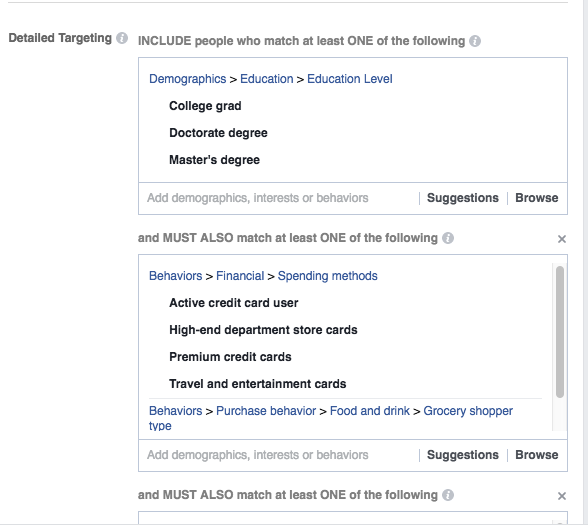
    Unlike Facebook ads, boosted posts are extremely limited in who you can actually target. There are only three targeting options: people who have already liked your page, friends of people who have liked your page, and people who you choose through a few basic targeting options. Though the first two options can provide some value to your business, just because someone likes your page doesn’t necessarily mean they are your ideal customer. Likewise, though there are a few targeting options with boosted posts, you cannot target behaviors or utilize detailed targeting, which means, for example, you can’t target someone who is a college grad AND an active credit card user. Instead, you can target users by their location, age and gender, and interests.

    Example Of Detailed Targeting Image - Search Influence

    Example of detailed targeting.

    Though Facebook Ads Manager can be daunting at times, it is certainly one of the best tools on the market to get in front of the perfect audience for your business. If you have a good understanding of your customers, what they are interested in, and how they behave, Facebook has the big data analytic capabilities to back your knowledge. Understanding how to use these targeting capabilities to your advantage can provide long-lasting value to your business.

    2. Facebook Ads Manager allows you to schedule ads during times that matter most to your business.

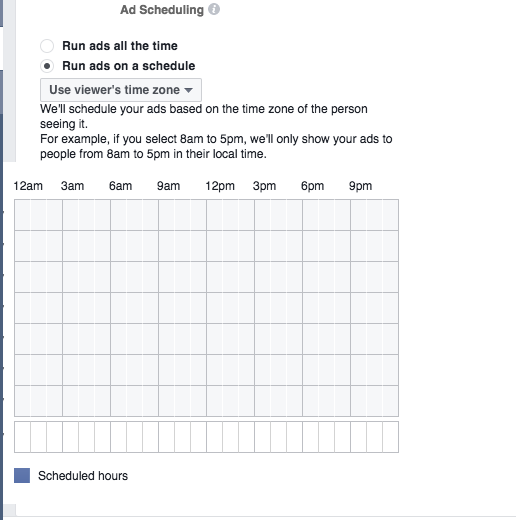
    When using boosted posts, the advertiser has very little control, if any, over how and when a post is delivered. A boosted post can only run between one to seven days, limiting your ability to show ads during the time your ideal customer is on Facebook as well as during hours of the day that might be most important to you and your business, i.e. when your store is open or for the duration of a special event. Using Facebook ads allows you to pinpoint exactly when you want your ad to run. This can help to save your advertising dollars for when you need them most!

    Example Of Ad Sampling - Search Influence

    Example of ad scheduling.

    3. Take advantage of unique call to action buttons that tell your users exactly what action to take!

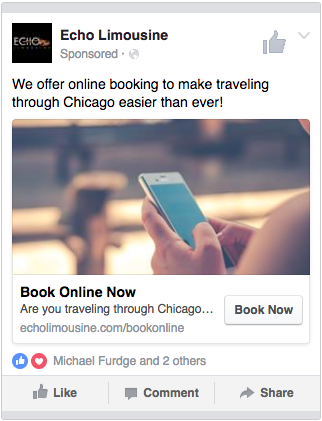
    Boosted posts are optimized for engagement, or likes and shares. If you are trying to entice a potential customer to click on your post’s call to action, this is not going to be the best way to do that. With Facebook ads, businesses have more of an opportunity to increase sales and traffic to their websites by using call to action buttons. These buttons help your audience understand the action you want them to take after seeing your ad. Including these in your ads urges users to move away from the ad and onto your site, giving them more of a chance to shop, sign up for an account or email list, or learn more about your product or service.

    Example Ad Using The ‘Book Now’ Call To Action Button - Search Influence

    Example ad using the ‘Book Now’ call to action button.

    4. Unique creative and placement options.

    Boosted posts come with only a few creative and placement options within Facebook. These ads can typically be spotted within your target audience’s News Feed. With Facebook ads, on the other hand, ads can be seen using Instagram and on the right-hand side of the Facebook platform. Facebook ads also come equipped with a number of creative possibilities, including multiple image ads, video ads, and slideshow ads. These can be used to entice and excite your target audience, making for a more enjoyable experience when discovering information about your business.

    Ultimately, Facebook Ads Manager is the perfect tool for all advertisers to get in front of their ideal customer using in-depth targeting and advanced delivery options alongside unique creatives. Though boosting posts might always be a simple and easy tool for advertisers with less experience, using Facebook ads is certainly the way to go to grow your customer reach in a creative and personalized way.

    Need help using Facebook Ads to impact your business? Search Influence is equipped with the expertise and experience needed to help you grow! Contact us today.

  • Growing Your Practice on Facebook, Part 6: A Facebook Success Story

    Part 6 of The Ultimate Guide for Growing Your Medical Practice Using Facebook

    Welcome to the final installment of our series on using Facebook to promote your medical practice. Now that we’ve covered best practices, we’ll show you how we put them in action using one of our own clients as a case study—Donaldson Plastic Surgery.

    Remember, if you want more information about using Facebook for your medical practice, make sure you download our e-book.

    But First, Let’s Recap

    Before we show you how to put everything together, here’s what we’ve learned so far:

    Part 1: Why Facebook Matters – The introduction to our blog series showed how Facebook can be used for medical practices in particular, and why it’s an important tool for engaging with patients and creating a personal connection with them.

    Part 2: Shareable Content – We gave easy-to-follow tips for creating shareable content as well as advice on the often forgotten second step of Facebook: engaging with your followers in response to their interest in you.

    Part 3: Advertising – Taking a slightly different approach, we went into detail about paid promotions, discussing the difference between promoted posts and ads, and laying out Facebook’s restrictions that govern medical advertising.

    Part 4: Reaching Your Audience – We explained how to leverage Audience Insights to target your ads to your ideal patient, making them more effective, and how to bridge the gap between your online audience and the real patients who walk through your door.

    Part 5: Patient Confidentiality Concerns – This blog brought it all home with clear examples of how to stay HIPAA-compliant while posting on social media.

    Now, it’s time to see how all of these elements work together with a real medical practice.

    Facebook Campaign in Action: Donaldson Plastic Surgery

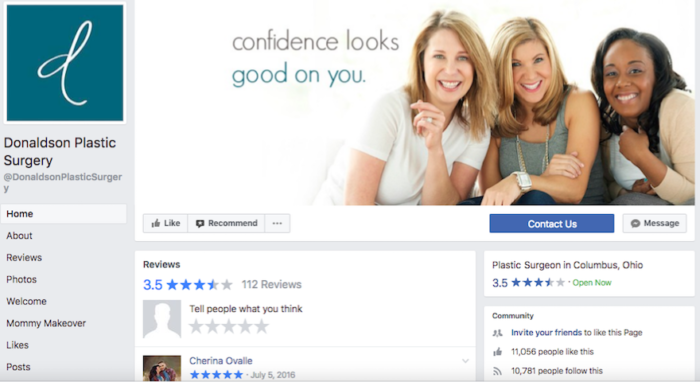
    Dr. Donaldson has been our client since 2009, the year he opened his practice. Since he was just starting out, there was a lot of work that needed to be done in terms of digital marketing, including a new Facebook page that had a grand total of zero Likes. Since launching his Facebook campaign in 2011, Dr. Donaldson’s page Likes have increased to over 11,000. This was accomplished through a comprehensive Facebook marketing campaign.

    This campaign was comprised of Facebook management, fan building, and Facebook display ads. We created posts that established Dr. Donaldson’s professional brand and consistently published engaging, informational, and promotional posts that appealed to current and potential patients throughout the area. We also created ads that increased brand awareness, brought Dr. Donaldson’s practice to those who didn’t know him already, and promoted the full range of his services, all utilizing Facebook’s targeting abilities.

    Image Of Facebook Page Likes For Donaldson Plastic Surgery - Search Influence

    Combining paid ads with an increased frequency of organic posts expanded the practice’s fan base. A large chunk of Dr. Donaldson’s Facebook fans, totaling 11,000+ Likes, have come from annual fan building campaigns (over 6,400 of the Likes, in fact). Campaigns such as Likes for Lives encourage Facebook users to Like your page in exchange for a donation to a charity organization. These campaigns increase followers while also giving insight into your practice’s values and the importance of giving back to your community.

    Dr. Donaldson is proof that a well-managed Facebook page, full of engaging posts and targeted ads, can work to create a campaign strategy that gets patients through the door and establishes your practice as the medical resource in your area.

    Armed with the best practices we’ve covered in our blog series, you can accomplish results like this for your medical practice as well! If you have any strategic questions or need help growing your practice on Facebook, contact one of our experts here.

  • Growing Your Practice on Facebook, Part 5: Patient Confidentiality Considerations

    In our last blog, you learned how to capture your audience with engaging content and analyze the results. Now that you understand what it takes to connect with your patients, we’ll take a look at common obstacles medical practices face when posting on Facebook.

    Social media and the healthcare industry can seem in opposition at times. One is about sharing and transparency, while the other hinges on patient confidentiality and privacy. But the irony is that the medical industry is not immune from the benefits and trends of platforms like Facebook.

    Facebook is a wonderful resource for any industry looking to grow their business. Potential clients and patients desire access to the goings-on of a medical facility or hospital, and similar to peeking in on the page of a friend or associate, patients expect to see their doctor’s office online, too. Uploading staff happenings or posting about a new procedure is invaluable to the cause. But what happens when patient confidentiality is violated? In the era of “clicks,” the two opposing parties of health care and social media must become friends. Although there’s a fine line to walk when working within HIPAA rules, here are some helpful tips to consider when using Facebook for your medical office.

    Image of doctor using a tablet - Search Influence

    Get Written Permission Before Posting

    Nothing can replace the power of pictures on your Facebook page. According to a Hubspot survey, Facebook posts with images receive 53% more Likes than those without. Images serve as testimony to what your practice can do and how you can help other patients achieve their desired results. They are also a way for your patients to discuss and identify symptoms that may need a doctor’s immediate attention. However, posting photos without explicit consent from all parties can lead down a very hairy path—even if the image isn’t of someone’s face.

    According to Privacy Rule requirements, physicians must obtain a signature from the patient that specifically spells out the what, when, and where of the shared item. Some medical facilities have recently opted to send out a blanket consent statement, but this is not best practice. Be sure the statement includes details such as a full description of your purpose in using the image, an expiration date on the image consent, as well as a note describing the patient’s right to revoke consent. Send a copy of the signed document to the individual and keep one for your records as well. Working this into your protocol prior to posting photos will keep a clear line of communication between your practice and patients, and it will also create a streamlined process for your social media marketing needs.

    Avoid Talking About Specific Patients

    Posting about patients can be helpful to your practice. You can highlight testimonials, success stories, and interesting procedures that can be used to engage new and current patients alike. However, when posting on Facebook, even if given permission to use a patient’s medical situation, you’ll want to be explicit in not identifying the individual.

    Confidentiality and privacy are two sides of the same coin. Confidentiality limits the details of a patient’s health exclusively to the medical team unless given informed consent. Privacy, on the other hand, relates to the patient’s right to be treated with respect and dignity. HIPAA goes even further, stating that information given about a patient in a public forum should not disclose individually identifiable information. This information includes anything that could be used to hone in on a specific person, such as past, present, or future physical or mental health details. Understanding the difference between the two, and how they relate to the language and images used in Facebook posts, will help you and your staff to find that happy medium.

    Image of doctor's stethoscope on top of patient's records - Search Influence

    Don’t Take Pictures Around Sensitive Materials

    Where you take the picture can matter just as much as the picture you take. When capturing images to share with your patients, be aware of any medical records or other confidential materials laying around. With zoom features on devices, potentially threatening information can become more decipherable when viewed from apps on a cell, tablet, or another mobile device. Avoid this mistake by thoroughly surveying the area before snapping a shot around the office. Put away any files or paperwork containing information that is private or for medical office use only. It may also be a good idea to only take more candid photos in certain areas of the facility where sensitive items are least likely to be an issue. Also, be sure to avoid taking pictures that may have a patient in the background. Having a designated spot for photo ops can minimize the chances of mistakenly exposing information that would break patient confidentiality and put your office in a compromising position.

    Facebook doesn’t have to be a no man’s land for physicians and medical practices. Healthcare and social media can play on the same team. Building your brand online and strengthening relationships with your patient base is invaluable, especially with Facebook’s almost 2 billion monthly users. Don’t be intimidated by HIPAA; instead, embrace the rules, implement best practices for your staff, and walk the line to marketing and confidentiality success. The exposure you’ll get will be well worth it.

    Check back next week for the final installment of our medical industry blog series, which will walk you through one of our case studies and show you how to put everything together!

    If you are ready to chat about your digital marketing opportunities today, contact one of our experts.


    Images:

    Tablet

    Patient Records

  • Growing Your Practice on Facebook, Part 4: Reach Your Audience

    Now that you’ve gained valuable insights on the many uses of Facebook paid ads, the importance of engaging with your followers, and why all of this matters in the first place (spoiler alert: yes, social media is worth your time), we’re going to get into the specifics of understanding and capturing your audience. After all, if you don’t understand your users, how are you ever going to reach them?

    We’ll share how to use the Audience Insights tool on Facebook to analyze when your users are active and what’s catching their attention. Then, we’ll share some surprisingly easy ways to update your Facebook page and grow your followers—as well as your actual patients.

    Ready for the PhD-level course on using Facebook to grow your medical practice? Download our free e-book today.

    How Can You Use Audience Insights to Grow Your Reach on Facebook?

    With nearly 2 billion monthly users on Facebook, it’s important to narrow the scope and understand who is engaging with your practice, as well as what they are looking for from your page. That’s where the Audience Insights tool plays a vital role. Audience Insights allows page administrators to understand their users and target their reach according to demographics, purchase behaviors, geography, and activity on Facebook.

    By creating a custom audience using this tool, you can target your ads to a specific group of users on Facebook. Say you know that your typical patient is a female in greater New Orleans with an average household income of $150-250K and a bachelor’s degree or higher. You can create a new custom audience using these demographics and build an ad campaign on Facebook to target that audience. While that’s a pretty narrow scope for a medical practice that isn’t quite so sure of their ideal patient, experimenting with a few different test audiences to gather data on successes and misses is a great first step.

    On the other end of the spectrum, you can also use Facebook insights to gain more knowledge about your active users and cater your posts and ads to the types of demographics that are most engaged with your page. You can even learn the best times of the day and week to post and the type of content that achieves the highest engagement. Perhaps you see a spike in engagement when you post patient testimonial videos on your page and dedicate more marketing spend on creating videos. Or, maybe your analytics show that users are more engaged in the mornings, so you schedule your posts in advance for time slots between 8 a.m. and 11 a.m. to capitalize on your users’ behaviors.

    These insights can all inform your future social media marketing strategy to focus on what works and build on your successes.

    Picture Of A Medical Doctor's Desk - Search Influence

    How Can You Connect Your In-Person Audience With Your Social Presence?

    While tools like Audience Insights allow you to understand your online audience, it’s just as important to understand and connect to the people visiting your office and living in your community. The more you can bridge these two segments, the better your chances of building a loyal fan base and creating meaningful social media content.

    Events are a great option for bridging these two audiences. If you’re hosting an event at your office, like a drive for flu shots or a fundraiser for a local nonprofit, be sure to create a Facebook event so guests can RSVP, invite friends, and receive reminders as the date approaches. If your event is public on Facebook, the platform will also suggest it to other users based on friends who are attending. Now your online users also have a reason to visit your office and speak with you in person about a subject they are already interested in.

    Community events that focus on the values of your practice are also important for building trust and humanizing your online presence. By showcasing the causes that are important to your industry, work, or community, users can connect with your page through those similar interests. For example, if your company is participating in a community event like March of Dimes or you have a team participating in a local 5K, share updates on your fundraising efforts, highlight photos from the event, and link to informational articles about the cause. All of these strategies help create dynamic social media content while also connecting you to the broader community of users with shared interests and passions.

    How Can Fan-Building Campaigns Help Engage & Grow Your Audience?

    Now that you have a better understanding of who your target audience is and how to build a bridge between your online and IRL communities, it’s time to increase the number of actual fans connected with your page. The first step may seem obvious, but it can’t be overlooked. You have to have an active, established page with helpful content and consistent posts. Make sure you’re dedicating time to posting new content as well as responding to inquiries to build engagement.

    Image Of Stethoscope With Breast Cancer Ribbon At Medical Practice - Search Influence

    Another great tactic to generate new followers is through a fan-building initiative such as a “Like for Lives” campaign. Remember when we said that connecting your social media content to your values and industry is important? “Likes for Lives” does just that. The basic premise is that for each additional Like that your page receives for a set period of time, your medical practice will make a donation or take an action to help save a life. This could be a monetary donation to a charity, a volunteer commitment, or any other creative action your practice can take to help others.

    The goal is to generate excitement on your page and in your office, giving you plenty to post about in order to raise awareness about your campaign and encouraging your fans to share your initiative with their friends in support of a good cause. Be sure your staff is informed of the campaign, and encourage or incentivize them to share the information within their own networks on Facebook. If you work with a nonprofit to raise money, they may also want to share the content, further increasing your reach.

    With a combination of tactics like these and consistent posts on your Facebook page, you’ll start seeing your audience steadily grow. By targeting the right demographics, you can also see this growing audience translate to more patients. Remember, social media is here to stay, and leveraging its power and reach can have a big impact on your medical practice.

    Stay posted for the next update in our series where we’ll discuss the importance of patient confidentiality on Facebook.

    Eager for more tips and tricks to grow your social media IQ, or ready to get started with digital marketing campaigns for your business? Contact an expert from our team.

  • Growing Your Practice on Facebook, Part 3: Advertising

    In our previous blogs, you’ve learned that Facebook is crucial for promoting your medical practice and that shareable content is the number one component of your social media strategy.

    As the next step in your journey to increase your social presence, Facebook ads are another highly effective way to promote your practice online. In this blog post, we’ll answer your questions about the importance of paid promotions on Facebook, the difference between promoted posts and ads, the primary advantages of Facebook ads, and whether your ad copy complies with HIPAA and other guidelines.

    Why Not Just Use Free Posts?

    With so many opportunities to post for free on Facebook, it might seem like paid promotions aren’t necessary. However, due to recent Facebook algorithm updates, overtly promotional posts are receiving less organic distribution on the platform. This is due to a Facebook survey in which users named highly promotional posts as the number one thing they would like to see less of in their news feeds. As a result, your followers will be unlikely to see any of your posts that push products, urge people to enter contests, or reuse advertising content. Below are some examples of highly promotional posts.

    Image of a highly promotional Facebook post - Search Influence

    Image of an overtly promotional post on Facebook - Search Influence

    However, in the same survey, Facebook users reported that they aren’t bothered by promotional content when it has been identified as advertising. This means that paid promotions are not only ways to get around Facebook’s algorithm updates and reach your target audience, but also ways to engage your followers without coming across as annoying or spammy.

    What’s the Difference Between Promoted Posts and Ads?

    The two main types of paid promotions on Facebook are promoted posts and advertisements. Understanding the difference can help you determine where each best fits into your social media strategy.

    Promoted posts are formatted like traditional free posts, but they are marked as sponsored content and appear higher in your followers’ news feeds. The main advantage of promoted posts is that you can test them out as free posts before investing in them. If one of your free posts is performing especially well, Facebook will often prompt you to “boost” or promote it. Promoted posts can also be easier to use because they follow the traditional Facebook post format.

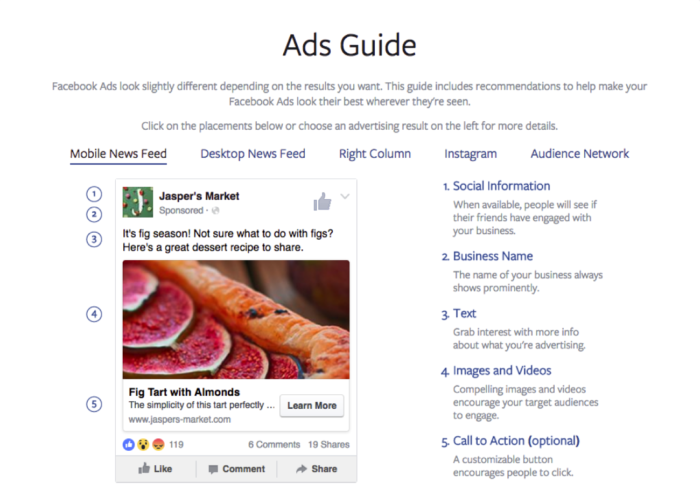
    Advertisements, on the other hand, can follow a wide range of formats. Facebook’s Ads Guide allows you to customize based on your campaign’s objective, be it brand awareness, lead generation, website traffic, or one of many others. The guide can also walk you through the different ad placements, focusing on which fields will be included in which type of ad. As shown in the images below, mobile and desktop news feed ads have space for social information, business name, text, images or videos, and a call to action.

    Image of Facebook's Ads Guide for mobile feeds - Search Influence

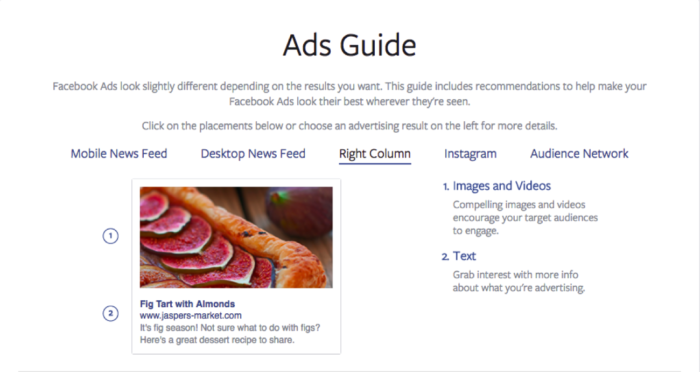
    Right column ads, on the other hand, only have space for text and images or videos:

    Image of Facebook's Ads Guide for right column information - Search Influence

    While all of these options make advertisements a bit more challenging than promoted posts, they also allow ads to achieve more diverse objectives. Promoted posts are great for growing brand awareness and driving engagement, but if you have goals outside of social media—for example, getting potential patients to fill out a consultation form on your website—then Facebook ads are the better way to go.

    What Are the Main Benefits of Facebook Ads?

    The reason why ads are more effective than promoted posts for driving off-Facebook conversions is the call to action (CTA) button. While exact numbers vary based on the industry, type of content, and action the reader is being called to do, statistics show that conversion rates increase dramatically when a CTA is present. While CTAs can be included in the text of a promoted post, the CTA button in ads allows your message to stand out even more. More importantly, it explicitly tells readers what action you want them to take, and allows them to accomplish it with just one simple click. Facebook also provides an easy drop down menu of popular CTAs for you to choose from, ranging from “Contact Us” to “Download” to “Watch More.”

    The second major benefit of Facebook ads is the platform’s detailed targeting options. These are available for promoted posts as well, and they can be set or altered within Facebook’s Ads Manager. While traditional advertising channels, like billboards or newspaper ads, can’t guarantee that your message reaches your goal demographic, Facebook ads can be carefully targeted to the people you want them to reach. For example, if you run a geriatrics practice in New Orleans, you can ensure that Facebook shows your ads to users aged 65+ in the Greater New Orleans area. Using Facebook’s targeting feature allows you to run a more efficient ad campaign. You can direct your time and money only toward the demographics that are most likely to become your patients, without wasting advertising resources on anyone else.

    What Legal and Ethical Guidelines Govern Medical Facebook Ads?

    As you’re certainly aware, the medical industry is heavily regulated. Everyone from the American College of Physicians to the Health Insurance Portability and Accountability Act (HIPAA) to Facebook itself has rules for medical advertisements. If you break them, your ads will likely be taken down, and in some cases, legal action may even ensue. While Facebook’s Advertising Policies provide a detailed list of prohibited and restricted content, the two biggest red flags for physicians are misleading content and patient confidentiality violations.

    Misleading content includes anything that could be considered deceptive or ambiguous to patients. The most obvious examples are photoshopped images or exaggerated guarantees; however, even subtle wording variations can lead to misleading content violations. For example, it’s generally okay for a physician to claim that Botox can contribute to a more youthful appearance. Yet, it could be considered misleading to claim that Botox will make patients look ten years younger or eliminate signs of aging. Although these statements are quite similar, only the first one is acceptable because it does not make any specific promises about the product’s outcomes. Some of the best precautions against misleading content include citing studies or journal articles whenever claims are made, and labeling all non-patient photos with the word “model.”

    While misleading content might get your practice in trouble with Facebook, violating HIPAA rules about patient confidentiality can get your practice in trouble with the law. As with misleading content, some precautions are obvious. For example, you should never post any identifying information about patients, such as names or faces. However, many HIPAA violations are less apparent. For example, it is prohibited to post images that do not clearly identify a patient, such as a rash on someone’s foot, unless you have clear legal permission to do so. Similarly, be careful that no pictures of the office have patients or medical records in the background. To avoid any issues, require patients to sign a consent form before using their images, or stick to model-labeled images and stock photos.

    Interested in learning more? Don’t forget to check back for the next post in our medical industry blog series, which will help you reach your target audience.

    For more information about getting started with Facebook Advertising for your hospital or practice, contact us here.

    Images:

    Ads Guide Mobile Feed

    Ads Guide Right Column