Tag: digital marketing

  • Top 5 Google Analytics Metrics for E-commerce Tourism Companies

    Top 5 Google Analytics Metrics for E-commerce Tourism Companies

    With a growing number of travelers using mobile search to book their vacations, it’s a great time to be in the tourism industry, assuming you have an e-commerce option for your customers. Whether you’re offering hotel rooms, dinner reservations, or curated experiences, your customers are more likely than ever before to make their travel purchases online and on the go. But, how can you tell if the e-commerce side of your business is operating at peak performance? With a strong track record of successful marketing for zoos, museums, and other tourist attractions, Search Influence is here to help! We’ve compiled the top five Google Analytics metrics that your business should be tracking to make sure you’re optimizing your potential.

    1. E-commerce Conversion Rate

    Google divides the number of completed sales by the number of visitors to your website to provide your e-commerce conversion rate. This metric is one way to measure your business’ success in terms of online sales. While it does not measure how much revenue each sale brings in (that’s the average order value, and we’ll talk about it next!), your e-commerce conversion rate tells you how many visitors to your site have become paying customers. It’s an especially important metric to keep track of because converting current visitors into customers is much more cost effective than acquiring a new customer base.

    Of course, e-commerce isn’t the only conversion rate you can measure. Break down conversion points on your site into micro and macro. In the world of e-commerce, your macro conversion would be a purchased products/tickets. Micro conversions are smaller actions that lead up to the end goal of purchases. For tourism, this would likely include visits to key pages (like ticket pricing page), to adding something to a shopping cart, to email signups. You should watch your success of micro conversions and tune your campaigns to those as well, as each of these actions should be designed to drive customers toward macro conversions—increasing that e-commerce conversion rate of visitors turned into paying customers.

    2. Average Order Value

    Average order value tells you how much revenue online purchases generate for your business, on average. It is calculated by finding the total revenue generated from online orders and dividing it by the number of orders. According to some experts, like Databox, it could be the one most important metric for your e-commerce business to focus on.

    So, how do you improve your average order value? MonsterInsights provides some key suggestions.

    First, price your products with upselling in mind. For example, if you’re a photographer shooting on-site family vacation photos, you might offer a base package of 20 photos, with the option to add more at an increased price-per-photo rate.

    Second, offer product bundles at discounted prices. For example, if you’re running a walking tour company, you could bundle together a daytime and a nighttime tour. Customers will be enticed by the promise of extra touring for their dollars, and you’ll still gain more income than if they had just purchased a single tour.

    Finally, offer savings with a minimum order—something like, spend $100 and get $20 free. Customers may spend more than they ordinarily would just to access the discount. All three of these strategies can drive up your average order value, bringing in more revenue for your e-commerce tourism business.

    A close-up of a woman touching a screen - Search Influence

    3. Revenue Per Visitor

    Revenue per visitor is a crucial metric – increasing it can mean revenue growth for you without having to drive new visitors. You can increase this metric by both converting more visitors into customers and increasing your customers’ average order value. Revenue per visitor is calculated by dividing your total online revenue by the number of unique visitors.

    You can increase revenue per visitor by using any of the previously discussed methods, like upselling, bundling products, and offering discounts with a minimum spend. Keep in mind that a low revenue per visitor is not necessarily an indication that your business is struggling. For example, if you’re selling lower priced items, like postcards or other tourism souvenirs, your revenue per visitor will be much lower than for a company selling high-dollar items like cruise tickets or hotel suites. You’ll just need a larger number of unique visitors to boost your sales and drive revenue overall, and this should play heavily into your marketing goals and strategy.

    4. Customer Lifetime Value

    Customer lifetime value tells you the total value that an individual customer, acquired during a particular time period, has spent with your online business.

    This metric is best used for estimating appropriate marketing costs for your business, and for analyzing your customer acquisition strategy. For example, if your average customer will only spend $100 at your business over the course of their life, it isn’t worth paying hundreds of dollars to attract this customer. Maximize your return on investment (ROI) by keeping your marketing and advertising expenses reasonably lower than the income your average customer is likely to generate for your business. Most businesses are willing to spend 5-10% of revenue to acquire a new customer. (See more in our blog “What’s The Perfect Marketing Budget For Your Company?”)

    5. Return on Advertising Spend

    Speaking of ROI, let’s discuss return on advertising spend—or ROAS as it’s sometimes called—which is a key metric for determining the effectiveness of your digital advertising. It tells you how much income you earn for every dollar spent on advertising campaigns. If you’re running online ads and want them to be as effective as possible (who doesn’t?), you need to raise your return on advertising spend. Ideally, your ads should drive about three times as much income as you paid to advertise.

    A man viewing graphs and charts on a tablet - Search Influence

    So, how can you raise your return on advertising spend to this ideal 3x level? Conversion Fanatics Blog offers some great tips. First, do some testing to figure out what channels work best for your business. For example, if your Facebook ads tend to perform better than your Google ads, channel your dollars to Facebook, where your ads drive the most revenue. Similarly, test the times at which your ads have the best results. If you notice that holiday ads bring in more clients for you than summer ads do, it could be worth concentrating your ad dollars on that crucial time of year. Finally, you can dive into even more metrics. Monitor the user journey by tracking how many customers click on your ad, how long they stay on the resulting landing page, and so on. If you can pinpoint which stages of the user journey are working well for you, and which stages are losing potential customers, you can fine-tune your ads and landing pages for an improved user experience.

    These five metrics, all available through Google Analytics, are key components of e-commerce tracking for any online tourism company. For more information about how to optimize your travel business’ potential, contact Search Influence at 504-208-3900, or request a proposal today to hear opportunities from our strategists.

    Images:

    Camera and Phone

    Touchscreen

    Tablet

  • Everything You Need to Create an Effective Landing Page—and Everything You Don’t

    If you have run any type of digital marketing campaign for your business, you’ve probably come across the term “landing page.” But what exactly is a landing page, and what role does it play in helping to convert leads into customers? Simply put, landing pages are the pages where users “land” after clicking on an ad from Google, Facebook, or a similar platform. When done right, they feature persuasive and highly relevant content, focused on one specific conversion. By directing users to a landing page rather than simply the homepage of your website, you can ensure that you are able to attribute leads to a specific campaign while simultaneously providing a better answer to the search inquiry of the user. A landing page should be specifically focused on lead generation, and these tips will help you have the highest conversion rates once users make it to your page.

    Do Have a Compelling Call to Action

    A clear call-to-action(CTA) is the most important part of your landing page and should clearly communicate what you want your reader to do on the page. This could be to register for an event, download an eBook, or schedule a consultation. Whatever it is, it needs to stand out from the rest of your content and be one of the only, if not the only, actionable items on your landing page.

    If your CTA is a form instead of a button, the title of your form should be much more specific than a simple “Contact Us.” Entice your readers with simple, yet descriptive language like “Register to Get Your Free Marketing eBook” instead. For buttons on your form, avoid generic language like “Send” or “Submit” and instead use language like “Get My Analysis” or “Start My Free Trial.”

    Graphic of a form field on a landing page - Search Influence

    Users are also typically skeptical to give out more information than necessary, so you don’t need to ask for their full name, address, phone number, date of birth, where they went to high school, and their mother’s maiden name if all they’re doing is downloading an eBook. A user is much more likely to actually fill out the form if you keep it short and sweet. Sticking with essentials like their name and email may be all you need.

    For more tips on how to craft stellar CTAs that will convert, check out this blog post.

    Don’t Cram Everything Above the Fold

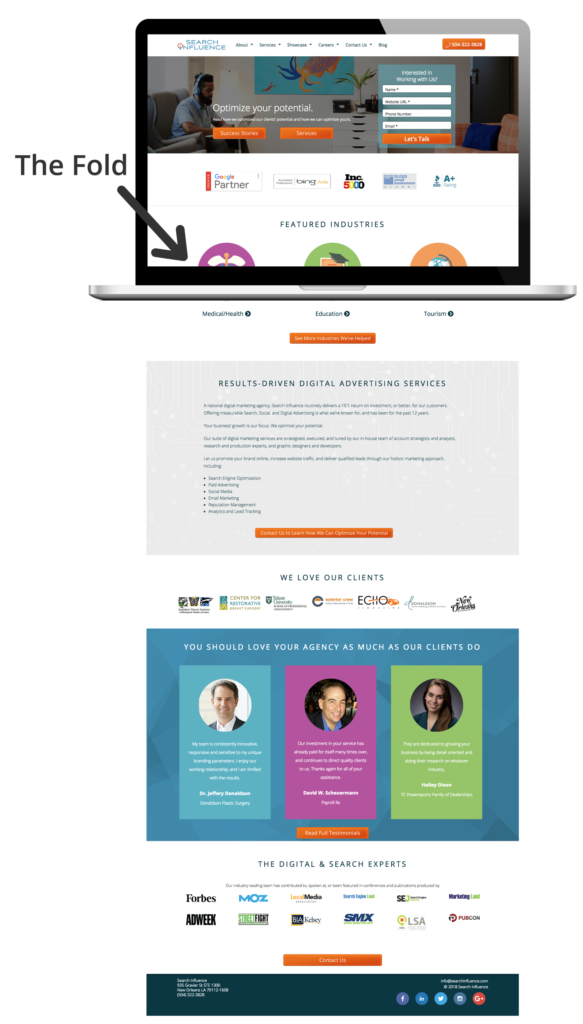
    We’ve all heard for decades that readers rarely make it below the fold (originally used in reference to traditional newspapers), and that we should try to cram everything important above the fold. This doesn’t hold as true today as it once did, and cluttering the top section of your page can actually hurt your conversions. While it is still true that some users won’t make it below the fold at all, if what you have above the fold is compelling enough to grab their attention, they will scroll down to read the rest of your content. So while, yes, you do still want your CTA and most important information above the fold, try to limit it to just that. No one wants to read anything that is a cluttered mess, and you’ll retain users’ attention much better by avoiding the clutter.

    Visual representation of above-the-fold content on a landing page - Search Influence

    Do Have Fast Loading Speed

    A fast page load time is absolutely essential for any web page. Users expect a page to load within seconds, and if it doesn’t, they often abandon the page entirely. In fact, a case study from Hubspot found that a 1-second delay in site speed resulted in a 7 percent reduction in conversions. Images and videos often slow down page load time, so be sure to optimize elements like these to avoid losing users. Luckily, you can test out the load speed of your page and address any concerns.

    Don’t Have Endless Content or Jargon

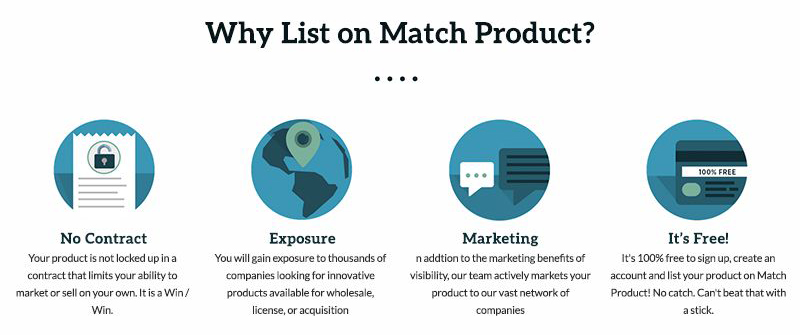
    You don’t want to confuse any potential leads with overly complicated, industry-specific jargon. You should be able to demonstrate your expertise in your field without intimidating or annoying any of your users. While you want to give enough information to draw a user in, you don’t want to overwhelm them with too much information up front. If you do have longer content, try breaking it up with bulleted lists or by using icons.

    Icons used in a landing page - Search Influence

    Do Include Images and Videos

    According to Unbounce, videos can increase conversions by about 80 percent—making them a worthwhile investment for your page. Since videos are often quite big and the play buttons can distract from your CTA, consider making your video considerably smaller than the standard minimum of 960px by 720px, with the option to make the video bigger when it’s actually playing.

    Example of video used in a landing page - Search Influence

    If you don’t have a relevant video for your page, strong visuals are still extremely important. Avoid stock photography whenever possible, but it’s still better to have stock photography than no imagery at all. Users also respond better to images with faces in them than images without.

    Photos aren’t the only type of imagery you can utilize on your landing pages. Depending on the industry, your target audience might respond well to vectors or illustrations, which can also help explain complex subjects when photos aren’t available.

    Example of vector graphics used in a landing page - Search Influence

    Whatever imagery you do end up using on your page should be consistent with the display, Facebook, or any other type of ads that are driving users to the landing page in the first place. When a user clicks on an ad with vector images, for example, they would expect the following landing page they land on to have similar imagery. If the look and feel of the page is completely different than the ad they clicked on, the user could be confused and think they clicked on the wrong ad altogether.

    Don’t Include Navigation

    While it may seem counterintuitive to exclude typical site features like a navigation bar, for landing pages, you actually want to include as few opportunities to leave the page as possible. This includes navigation, which can also be distracting and take away from your main call-to-action.

    Do Conduct A/B Testing

    Once you’ve got your pages built, you should conduct A/B testing by changing out elements of your page to determine what performs best. While audiences typically respond more positively to people in images, for example, maybe yours responds better to objects or vector illustrations. You should also test out CTA placement, button colors, font choices, and content. Keep in mind what you learned in science class though, you only want to change one element at a time when performing these tests. If you change multiple variables at once, you won’t have accurate data on which elements are actually making the page perform better or worse.

    Creating landing pages that convert is no easy feat. Unbounce estimates that achieving a 12 percent conversion rate for your landing page will place you above 90 percent of the competition. With a comprehensive online advertising strategy, every step of the process will be clearly catered to your target demographic, making it as easy and risk-free as possible for users to take action. If you want help creating your online presence, reach out to Search Influence to receive your custom marketing analysis.

  • Impact Your Tourism Marketing With Instagram Stories

    If you’ve been keeping up with our blog, then you already know how to market your travel and tourism business during the off-season, and how to engage with vacationers using mobile search. But, do you know how to leverage Instagram Stories for impactful tourism marketing? Stories are temporary videos or photos strung together to form a slideshow gallery that, well, tells a story. Since Instagram rolled them out in 2016, over 25 million active business profiles and 300 million active daily users have flocked to this feature, according to ClickZ.com. This means that Stories could be a huge area of opportunity for your business—if you use them the right way. If you’re unfamiliar with Stories, Cnet.com offers in-depth instructions on how to use this feature. But once you have the basics down, dive into our pro tips for how to make Instagram Stories most effective for your company.

    A graphic of someone using Instagram - Search Influence

    Promote Yourself Creatively

    Here’s the great thing about Stories—you no longer have to worry about over-posting. You are free to share as much content as you want throughout the day without taking over anyone’s feed. Plus, since the rollout of Instagram’s latest algorithm update, your traditional posts may have even less chance to be seen by followers in their feed, but Stories will appear right in front of your users at the top of their screens. This gives you more potential screen time and more creative ways to showcase your brand. But remember, it’s not about just posting links and asking users to click them. It’s about creating an experience where following your links is a natural and enticing option. Maybe you’ll be inspired by The North Face, who designed their Story to look like a dating app and asked users to swipe up to match with the perfect sleeping bag. Or, maybe you’ll start a little smaller by moving your weekly newsletter onto Instagram Stories. Whether you’re promoting events, products, newsletters, or just trying to drive extra traffic to your website, keep it creative and enticing and you can’t go wrong.

    A graphic of a stories page for Cheerios Instagram - Search Influence

    Actively Engage Followers

    Promoting your company is important, but the strongest marketing campaigns are customer-focused, not you-focused. Instagram Stories allow you to engage with your customers on a more personal level, while still reflecting your brand’s identity creatively. One great idea for customer engagement comes from Cheerios, who posted a Story that compliments their followers. When followers are tagged in a personalized compliment, they feel valued by the brand, which deepens their sense of connection with Cheerios and builds brand trust and loyalty.

    A more common approach is to leverage user-generated content—using your story to promote posts created by your followers. User-generated content is popular because it not only saves your company the time and energy of designing your own Story, but it also makes your customers feel like a valued part of your brand story, again building trust and loyalty.

    As a final engagement strategy, consider using an Instagram Story poll. Polls tend to be fun and entertaining, and most importantly they ask followers to take an action on your Story that feels far less pushy than clicking a link. They also provide the opportunity to get genuine customer feedback or opinions, which can inform your future marketing strategies. For example, you could post a poll asking followers to choose between an island cabana or a cozy ski lodge, and then use their results to determine whether your next campaign should be focused on the tropics or the mountains. Whether you opt for compliments, user-generated content, polls, or something even more creative, always keep your audience at the forefront of your mind and your engagement will likely be successful.

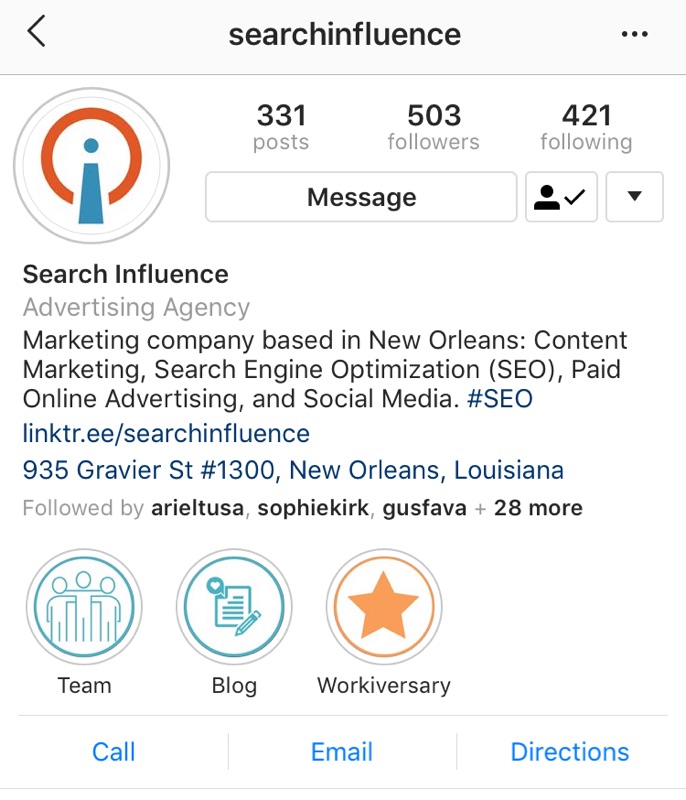
    A screenshot of Instagram highlights for Search Influence

    Customize Your Highlights

    Unlike regular Stories, which appear across the top of Instagram users’ home feeds, Stories Highlights are located on your company’s profile, between your bio and your photos. Highlights are kept for as long as you want—they will not automatically disappear after 24 hours like a regular Story. Because of this, Stories Highlights are a great way to share important brand information right on your profile, in an organized and aesthetically pleasing way. For an in-depth guide on how to customize your Stories Highlights, later.com walks you through the process of creating your own icons and covers in Canva. And, for an in-depth look at how to use Canva, our blog offers some friendly tips on what Canva can do for your business.

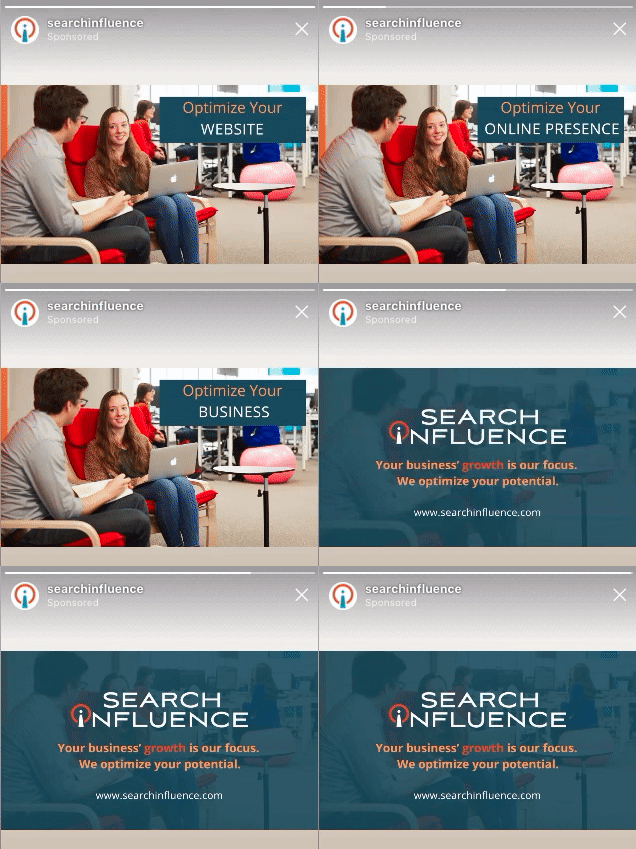
    An example of a sponsored Instagram ad from Search Influence

    Don’t Forget Advertising

    While authentically engaging with your followers is the ideal situation, sometimes it’s necessary to establish your brand or grow your network with paid advertising. On Instagram Stories, photo ads last 10 seconds, while video ads last for 15 seconds. It’s a very short window of time, but with the right approach, it can still be effective. Design your ads to catch your audience’s eyes quickly. Interest users with strong visuals, engage them with clear messaging, and then urge them into action. With this combination of tactics, you’ll have a good chance of achieving the goal of your ad campaign, whether it’s recruiting more followers, increasing sales, or gaining website traffic.

    Ask the Professionals

    If right now you feel confident and inspired to dive head first into creating exciting Instagram Stories, that’s awesome! But if you want more advice about managing your company’s social media, advertising online, or learning how to use additional Stories features like geotagging, the experts at Search Influence are here to help. Call 504-595-1623 with questions, or request a proposal online today.

    Images:

    Stories Demonstration

    Cheerios

  • What’s the Perfect Marketing Budget for Your Company?

    In our years of experience as a digital marketing agency, we’ve found that a typical marketing budget for a business is 5-10 percent of revenue, sometimes more when in growth mode. But don’t stop reading yet! Determining the exact budget for your business, and how to allocate it, depends on a wide range of factors, from goals to company age. Here are five questions that can help your business determine its ideal marketing budget.

    1. What Are Your Needs and Goals?

    Most effective marketing budgets start with a bottom-up approach. This means that your first step is to define your company’s quantifiable goals and objectives. This could be the number of new customers or accounts you’d like to see in the next year. It could also be how quickly you need to see results on your campaigns. The important thing is that the goal is well-defined. This way, you can come up with specific strategies to reach your target, and you can easily measure which strategies are working (and which ones aren’t!). Quantifying your business goals as much as possible will help you create a much stronger marketing budget and marketing campaigns.

    2. What Does Your Historical Data Look Like?

    So you need specific objectives…but how do you determine what those should be? One effective tool is historical data. For example, if you’re trying to figure out how many new leads you need per month, look at data from previous months. How many people typically contact you per month? How many of those people are qualified potential customers? How many typically convert into actual customers? And is this conversion rate providing you with enough customers to keep your company growing? Once you determine how your company has been performing, you’re in a much better position to decide if and how you’d like to change that performance. In other words, you’re in the perfect place to set measurable goals!

    For more information on how to track leads and determine the quality of those leads, visit our Analytics & Lead Tracking page!

    3. How Old Is Your Company?

    Historical data is great—if you have historical data. Brand new companies usually don’t, which can make determining a marketing budget especially challenging. Luckily, the experts are here to provide guidance! Both entrepreneur.com and websolutions.com recommend that new companies should allocate between 12 percent and 20 percent of their gross revenue to marketing costs. While this range might seem a bit high, there is logic behind it. New companies must be more aggressive with marketing spend because survival depends on building lasting brand recognition with an audience that’s never heard of them before. Once companies have established their brand and customer base, they can change their focus to maintaining the awareness and market position they’ve gained, while incrementally growing their business. And they can adjust their marketing budget to the 5-10 percent we recommended earlier.

    4. What Should Your Marketing Plan Include?

    So once you’ve established your goals and consulted your historical data if possible, what sort of marketing tactics should you use to achieve those goals? First, a typical marketing budget covers both public relations and advertising, in addition to the previously discussed branding. It’s a very wide range, but it can most easily be broken down into print and digital communication. Print communication includes traditional marketing efforts, like billboards, newsletters, brochures, and press releases—and don’t forget to budget for design, printing, and mailing costs. Digital communication, on the other hand, includes developing a website that’s both SEO friendly and user-friendly, using online advertising to your advantage, and maintaining active social media accounts. Depending on your industry, you might also want to budget for additional marketing efforts that don’t neatly fit into the print or digital category. This could include broadcast advertising, on radio or television, or special events like conferences and trade shows.

    To learn more about how digital marketing can help your company reach its goals, visit our pages about Content Marketing and Online Advertising!

    5. Where Is Your Target Demographic?

    With all those marketing options to choose from, how do you know which ones are right for your business? One key way to narrow down the list is to define your target demographic—not just who they are, but where they are. This question not only applies to the physical location but also to online behavior. What types of media does your target demographic use? Do they spend more time checking their emails or scrolling through Twitter? Whether you’re marketing in the print or digital arena, knowing the places your target demographic frequents can help you put your content in the best location to make the most efficient use of your marketing dollars. In fact, your target demographic can help you decide whether to use print or digital marketing in the first place. While traditional media can strongly contribute to brand awareness and complement your digital strategy, the right balance of print to digital marketing depends greatly on your industry and your customers. Know your target demographic, and you can feel confident you’re investing in the right media.

    At Search Influence, our goal is to help you grow your business and optimize your potential online. If you’d like professional insight into choosing the ideal marketing budget for your company, call 504-336-3422 or request a proposal online today.

    Images:

    Rihanna

  • Zoos, Aquariums, and Non-profits: Here Are Three Top Tips to Fundraise Like a Pro

    Based in a city known for its tourism and attractions, Search Influence is no stranger to digital marketing for zoos, museums, and other non-profits. We’re here today to pass on some of our knowledge to you! These three tips for fundraising through social media are sure to spark your creativity and help get donations flowing through the door.

    Two hands holding a ball of money - Search Influence

    1. Make Giving Easy

    Even the most dedicated patron can get turned off if they have to fill out confusing forms or trudge to your office in person. Streamline the donation process by taking advantage of easy online giving platforms. Some user-friendly platforms and campaigns include:

    FundRazr

    MuseoBlogger points to the Boston Museum of Science’s success with FundRazr. This app is free to download and offers patrons a number of custom giving options. For example, they can either choose to contribute anonymously or to identify themselves via their Facebook profiles. Similarly, they can choose to give either by credit, debit, or PayPal. MuseoBlogger writes that FundRazr is “intuitive, convenient, and provides both instant gratification and recognition.” Maybe that’s why Boston Museum of Science raised over $1,200 from Facebook users alone—likely all donors who were not contributing via the traditional channels.

    Text to Give

    Colleen Dilenschneider, Chief Market Engagement Officer for IMPACTS Research & Development, highlights Cameron Park Zoo’s mobile giving campaign and Rosamond Gifford Zoo’s Adopt an Animal program as two nontraditional fundraising campaigns. As part of their mobile giving campaign, the zoo encouraged guests to donate $5 or $10 through a simple text message, making it easy for patrons to show support from home or say thanks after a great day at the zoo.

    Adopt an Animal

    The Adopt an Animal program at Rosamond Gifford Zoo is available to animal-loving patrons throughout the year, but in honor of National Adoption Day, the zoo ran a two-day promotion to spread awareness of the program. To reach a wider audience, they lowered the minimum donation requirement and created a smaller, custom donation package. This promotion generated an extra $350 and gave incentive to those who may not normally donate to the program.

    It’s simple. The easier it is to give to your organization, the more likely people are to donate.

    2. Establish a Brand

    Having easy donation platforms is great—as long as people know about them! To make the most of any digital fundraising campaign, you first need a community of fans and followers. And the first step in building that community is establishing your own brand. This gives patrons a clear idea of who they’re engaging with and helps them feel a personal connection with your organization and its values. After all, no one wants to give away hard earned money to a stranger on the internet!

    Complete branding should be an in-depth endeavor. It requires cohesion between your physical location, website, and social media platforms. If you’re looking for a place to start, think about visual branding: assure your color scheme, logos, fonts, and overall visual aesthetic remain consistent across all your on- and off-line locations. Or, you could start with brand values. Post clear causes or ideals that your organization believes in, and then provide evidence of those values through success stories and patron or employee spotlights. For an at-home example of establishing brand values, check out our About Us page and see how we communicate our dedication to optimizing business’ potential and the New Orleans community. Then, pop over to our pages about Success Stories and Company Culture to see those values demonstrated in action.

    3. Get Inspired With Engagement Ideas

    With your brand established and clearly communicating exactly who patrons support when they donate to you, it’s time to engage with the community! There are tons of great ideas out there, but here are some of our personal favorites.

    First, make it very clear where donations will be going and how patrons will benefit by giving. Just like how people prefer to support trusted brands over internet strangers, patrons are more likely to donate if they know exactly what their money will achieve. Consider offering additional perks for high-dollar donors. For example, a newsletter with updates about their chosen animal or a plaque with their name by their sponsored exhibit.

    Another popular engagement idea is live-streaming certain exhibits. Offer a night-stream that shows patrons what nocturnal creatures are up to when the zoo or aquarium is closed. Keep a 24/7 feed going on monkeys or other active and entertaining animals. Or, if one of your animals is expecting, consider broadcasting her pregnancy and birth, as well as her baby’s early growth. While this isn’t as directly tied to fundraising as animal adoption programs, it will nonetheless warm viewers’ hearts and get them engaged with and excited about your organization, building the meaningful connections that could turn into donations down the road.

    Finally, appeal to photographers. Nothing gets people excited about zoos and aquariums like cute pictures of fuzzy animals, and encouraging visiting professionals to take photos means your organization gets all the exposure with a fraction of the cost and effort. Consider using your social media accounts to host fan photo contests, like the Shedd Aquarium, or repurpose the photos you already have with a caption contest. To go even further, consider hosting photographer-only after-hours events, like Aquarium of the Pacific. This offers amateurs and professionals alike the opportunity to take great pictures without the general public getting in the way. When they post their photos, it’s free advertising for your organization, and it’s a great opportunity to extend your network to include the photography communities.

    Consult the Experts

    We promised three fundraising tips, but here’s a bonus fourth! If you want to focus the majority of your time and energy on running your organization, Search Influence is here to help you with everything from content marketing to online advertising. Request your proposal online today.

    Images:

    Moneyball

    Zootopia

    Giraffe

  • 7 Tips for Eye-Catching Social Media Posts

    For years, social media has been the most cost-effective place to advertise your business, but it takes planning to stand out from the competition. In the up-to-the-minute marketplace of memes, it pays to use eye-catching colors, animated images, and consistent, compelling branding. Fortunately, once you develop a digital marketing strategy that reflects the strengths of your company, you’ll be able to create and share content with a minimal investment of time and effort.

    1. A “Social Media Strategy” is Key.

    Every month, 30 percent of millennials interact with a brand on social media platforms like Facebook. Consumers expect to find information about your business on social media, and they want to be able to reference your company’s page when bragging about their positive experience at your establishment. Pictures of meals have been some of the most popular content on Instagram, and a lot of those pictures are copied to other social media platforms. When the friends of your customers ask where they can get that ice cream fudge volcano, wouldn’t it be great if your business page was suggested as a hyperlink? Customers are already talking about your business online, but your business has to be on social media to join that conversation.

    Social media photographer holding up lens to nature scene

    2. Source High-Quality Images.

    We’ve all learned to spot them: bland stock photos show smiling employees or hands at a keyboard, but they don’t inspire trust in the business. Instead of using generic, one-size-fits-all images, consider hiring a photographer to take real photos of your business and products. Alternatively, grab your iPhone and take a few pictures yourself. DIY photos convey relatable authenticity, and they can work as short-term images on social media, but a professional photographer will take lighting and composition into account, digitally adjusting images as needed. Whenever you can afford the expense, make quality images a priority, especially for the long-term images that become profiles and header images on your social media pages.

    Example of Spotify leveraging Instagram post

    3. Pay Attention to Color Schemes.

    Does your branding consistently utilize a couple of key colors? Great! But consider using slightly different (but still complementary) colors for different lines of products and services. Spotify is a great example of a brand that makes use of dynamic color schemes but still manages to keep it consistent. In the image from Venngage above, you can see how they’re easy to recognize but hard to forget.

    Colors convey a personality and warmth, and it’s worth a little time to evaluate whether to choose bright and bold colors or something more subdued and approachable. Rather than defaulting to flat reds and blues, use light and dark gradients to achieve something more unique than the local high school’s color scheme. Choose unconventional colors to make your posts more recognizable on social media. Spotify makes use of dynamic color schemes throughout all of their branding designs. This creates a stronger visual for their brand and allows visitors to instantly recognize their graphics and associate them with their company.

    Taylor Swift drinking a Diet Coke

    4. Make Your Own Custom Branded GIFs.

    A step beyond quality still images, GIFs are animated bitmap images. While its pronunciation is debatable, the acronym stands for graphics interchange format. Clips from TV shows and other videos are popular fodder for GIF images, where a gesture or a moment of action is captured and repeated in a short loop. Moving images naturally stand out in the newsfeeds of customers, and humorous GIFs inspire a lot of organic engagement. GIFs are recirculated for free online, but creating your own has distinct advantages. First, when you create your own content, it’s easier to avoid potential copyright issues. Second, when your custom GIFs are fun and compelling, those GIFs can lead people back to your website, helping you build authority online.

    Reeds blowing in the wind

    5. Leverage Cinemagraphs.

    Cinemagraphs can be made in video or GIF format, so there’s naturally some confusion and overlap. Still, GIFs tend to be loops of a video where the beginning and end are clear, not unlike an instant replay from a sporting event. Cinemagraphs, on the other hand, tend to be artistically made in a way in which it’s hard to tell when the image begins to repeat, giving the effect of a live picture or streaming video. A steaming cup of coffee, a waterfall, and a drink being poured are examples of subject matter for cinemagraphs. Naturally captivating, this type of media is harder to DIY, but it can make a crucial difference at the moment when users decide whether to stop or keep scrolling.

    Happy Father's Day custom graphic for Search Influence social media channels

    6. Keep It Consistent But Exciting!

    While experimenting with different types of media and formats, remember to keep your messaging on track. Don’t get bogged down with details, either in perfecting a single post or cramming as much information as possible. With the short attention spans on social media, clarity and brevity are essential.

    – Bullet points and clear headers are helpful with any text. If you haven’t hired a professional graphic designer, then avoid the temptation to use artistic (but hard to read) fonts.

    – Big, clear lettering is safest, especially when your target audience includes older demographics.

    – Numbers, percentages, and impressive statistics can help catch the reader’s eye.

    – Don’t be afraid to try different techniques and learn what works best for your audience, but stay close to home base while you develop your image as a reliable, professional authority.

    Alternatively, a broader presence in the community can make your business a topic of conversation, but that type of campaign can have a more gradual impact on walk-in clients and leads.

    Search Influence employees posing on Canal Street for social media channels

    7. Always Keep Your Marketing Goals in Mind

    Especially when you’re first getting started, it’s a good idea to check out the social media presence of others in the same industry. You may find businesses in the same industry that have a different service area, and therefore they aren’t direct competition. Take a look at how different types of posts inspire different amounts of engagement, and you may find ideas for developing content of your own. As with any type of marketing, it’s also important to clearly define your goals at the outset. Is your objective to build a following and make your brand more recognizable in the community? Or are you mainly looking to generate leads for potential clients? Depending on your industry, dominating local search may be the most effective way to get clients to call your company.

    If you don’t have the time to juggle business operations with digital marketing, then you can always outsource your social media management to professionals. The experienced team at Search Influence can provide a digital marketing and SEO consultation, identifying opportunities to strengthen your online presence. Follow our blog for the latest tips on GIFs and marketing trends.

    Images:

    Camera lens

    Spotify covers

    Taylor Swift

    Cinemagraph

  • Your Referral-Based Business Still Needs Digital Marketing

    Most referral based businesses are pretty happy watching the dollars come in without having to invest in marketing. The business model usually looks a little something like this: company does good work → client is happy → client tells a friend they are happy with great work by company → friend works with company. Badabing.

    But wait, we missed a step! How’s the referral going to find you? Even if your name, number, address, and directions are written down, laminated, framed, and handed to a referral, they will still search online to find any business. According to Google, 97% of consumers use the web to search for local businesses.

    • 96% of people seeking legal advice use a search engine
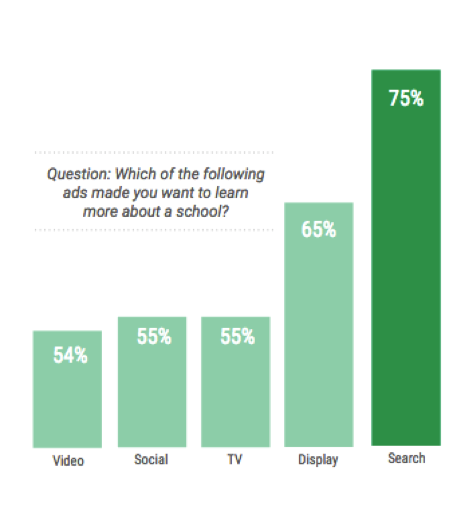
    • 56% of students turn to search when research programs/degrees
    • 78% of local-mobile searches result in offline purchases

    These stats prove search is the best opportunity to influence your audience buying decision and shape their perception of your company. If your business isn’t investing in digital marketing, which of your competitors will the referral contact once they can’t find you online?

    Who’s Representing Your Law Firm Online?

    Only 13% of people are referred to an attorney by a family or friend. If you don’t have a strong brand or search presence online when the referral or new lead is searching for you, what does this say about your reputation? Some may think, “How good can this guy be if I can’t even find him on Google!” Even if you have a compelling slogan, your law firm needs to be competitive in local search results.

    If your law firm generates cases based on client or attorney referrals, make sure to get that word-of-mouth online! Ask for and publish reviews and testimonials on your site. Don’t forget to spread the word and feature testimonials on avvo.com, lawyers.justia.com, findlaw.com, and other industry related platforms.

    72% of people searching for legal advice only contact one attorney. So let’s make sure they find and contact you first!

    Google’s Power in the Universities

    According to Fortune, Millennials spend 27 hours a week consuming media. Getting in front of and grabbing the attention of millennials is becoming more competitive for universities. With educational resources and easy access to student loans, students are no longer applying to universities simply based on legacy or location. According to a Google Ipsos Research study in 2017, 20% of students read 3rd party ratings and reviews to compare schools, but you can expect that a higher percentage of searchers are influenced by the overall online reputation of a school.

    Building Your Reputation Online

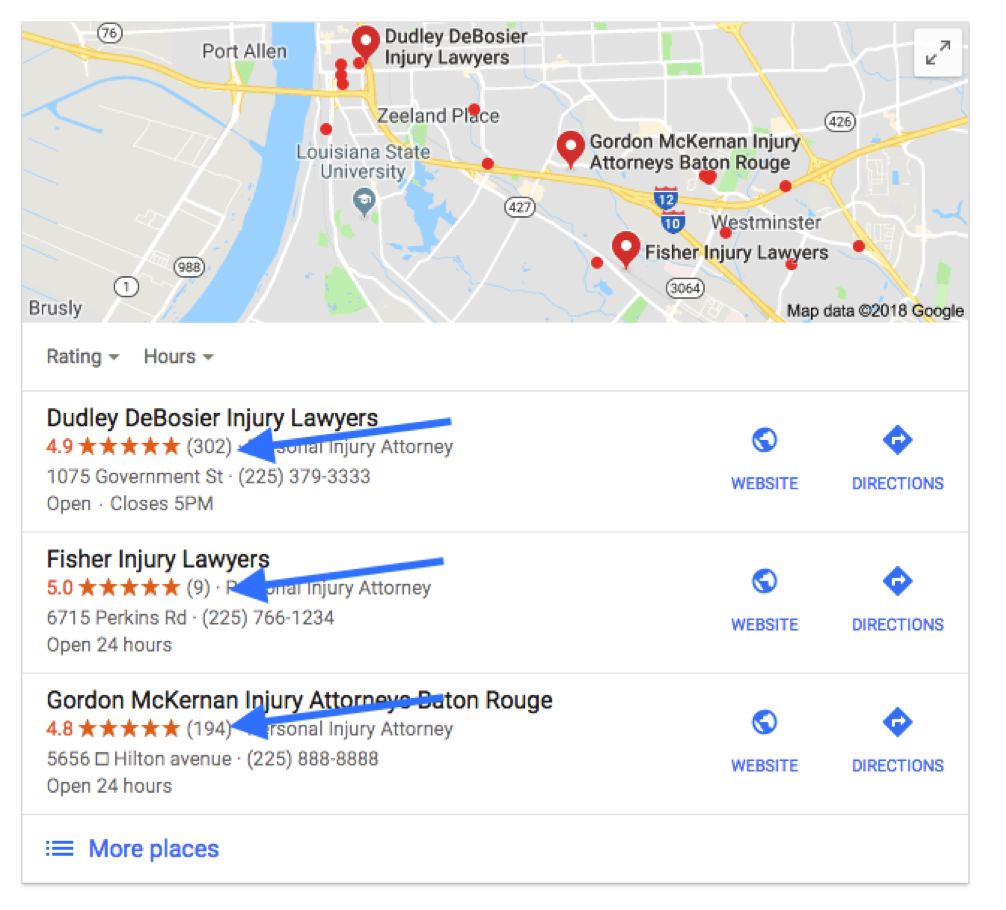
    Reviews aren’t promotional advertisements full of promises; they’re hard evidence that your company goes above and beyond for customers. Don’t just sit back and wait for reviews to appear. With 88% of people likely to trust a review from a stranger as they would a referral from a friend or family member, you need to encourage happy clients to leave reviews on your site and on 3rd party sites. Since Google reviews appear alongside search results, those reviews are particularly important for referral-based businesses.

    For 3rd party sites like Findlaw, Angie’s List, and Houzz, claim your profile and make sure all of your business information is accurate and updated. But don’t stop at conventional review sites! Video testimonials can be a great way to make online reviews more relatable. YouTube videos are easy to upload, and they can directly impact your search rankings. Before and after photos and videos for home renovations visually engage with an audience in ways content can’t. However you serve customers, look for a variety of ways to confirm that your services really set your company apart.

    The Market Is Wide Open

    Customers are searching for the products and services you provide, and they are influenced more by trusted and recognizable brands they engage with digitally. Google uses over 200 trust factors to rank websites and is constantly updating its algorithm. If you aren’t actively competing for searched products, services, and your audience’s attention, then you’re giving those undecided potential customers to the competition. So I’ll ask you again, if your business isn’t investing in digital marketing, which of your competitors will your referral contact once they can’t find you online?

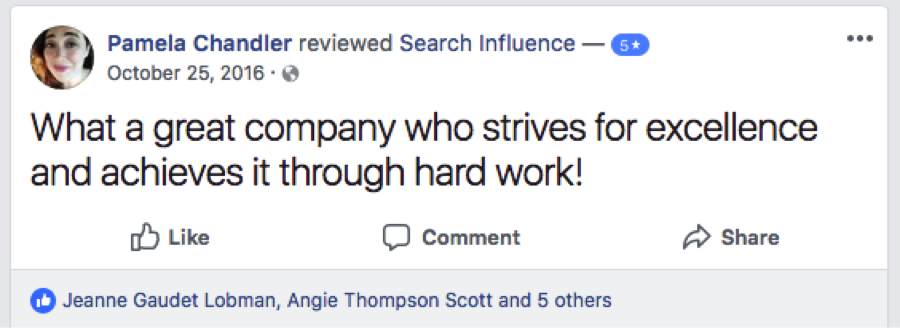
    Contact the team at Search Influence for a consultation, and learn how to shift your digital marketing strategy into high gear. Find out about our company’s reputation by reading reviews from other industry leaders in SEO and digital marketing. You know your industry, and we can help make your expertise more evident online. Request a marketing analysis, and we’ll find opportunities to amplify the visibility of your referral-based business.

    Images:

    Search for Universities

  • Are Your KPIs Leading to a Healthy ROI?

    Marketing research displayed on multiple graphs and charts - Search Influence

    One metric that every small business owner should track and strategically work to improve is return on investment (ROI). Improving ROI can depend on boosting any number of individual indicators that help businesses focus on what they’re doing right and where they need to improve. Learn how these indicators apply to digital marketing and how to track, set goals for, and improve those indicators.

    What Are ROI and KPIs?

    Most business owners are familiar with the concept of ROI as an important, perhaps the most important, bottom line for any expenditure. ROI provides a simple ratio that expresses how successful an expenditure is relative to the income it generates. For some business decisions, calculating ROI is relatively straightforward. The ROI for a rental property, for example, would be based on the cost of buying the property plus taxes and upkeep divided by the amount paid by tenants each year. In the world of digital marketing, however, it can be difficult to determine the value of clicks, shares, and retweets, and to draw a direct line from any specific customer to a specific advertisement.

    Key performance indicators (KPIs) are more specific data that provide the metrics to analyze the effectiveness of a digital marketing strategy. In fact, ROI itself is a KPI. A business may select ROI as their #1 KPI, and then other secondary KPIs to watch as leading indicators of success. Paying attention to the right KPIs, and understanding how they relate to and inform ROI, can allow businesses to agilely hone a lean marketing approach around what works by cutting out the fat failing to provide a return.

    How to Determine Your KPIs

    It’s important to realize that not every metric is a KPI. For example, a tourism company might find it especially helpful to track how often promotional emails are forwarded or social media posts are shared. People like to share vacation experiences with friends who often rely on recommendations, and people also like to vacation with their friends. A high share rate could indicate a multiplier effect for some promotions, meaning that the marketing strategy is generating customers outside of a business’ subscriber list or social media following who nonetheless engage with the content. (Read more about creating customer advocates for tourism businesses). While every metric might not be important for your business, here are some common KPIs:

    Website traffic sources – Visitors enter your site from many avenues. The traffic sources can be organic, direct, referral, or paid. Each source can be reviewed to provide high-level information about your site traffic. Organic search traffic, when a visitor finds your website by searching keywords in a search engine and clicking through to your site, is the top source for generating traffic. It’s essential to improve SEO in order to increase your organic traffic.

    Engagement metrics – Take a moment to compare your favorite website to a website that you dislike. What impacted your experience on those sites? Optimizing your website for an intuitive user experience is essential. Bounce Rate and Average Time on Page are two key indicators of how visitors are interacting with your site. Be sure to monitor these metrics and optimize your website layout and content as needed.

    Conversion rate – This is a KPI that any business owner wants to see continually increase. Filling out an on-site form, clicking your number to call, or purchasing your product are just a few conversions that you want to encourage on your site. Each conversion can generate a lead for your campaigns. The higher the conversion rate, the higher the ROI.

    How Do KPIs Affect ROI?

    In a certain sense, ROI is the mother of all KPIs. The best performance indicator of almost any business investment is how much return it produces. Calculating ROI, however, requires an understanding of how a business’ applicable KPIs determine ROI.

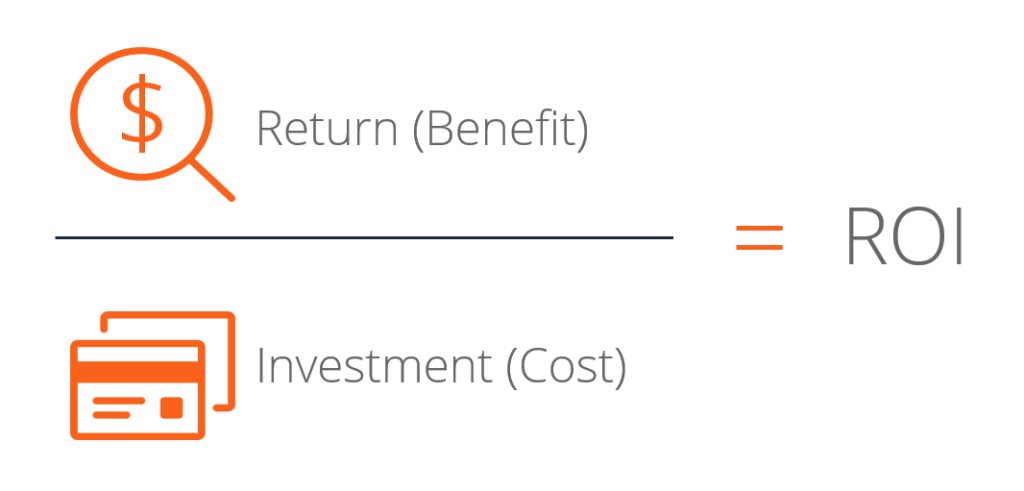
    A simple formula is just the return minus investment and then divided by the investment:

    Your result can then be expressed as a percentage. In order to account for your KPIs, your return should take into consideration factors such as the average lifetime value of a customer and conversion rate of turning leads into customers, in addition to the average profit margin.

    How to Set S.M.A.R.T. Goals for Your KPIs

    Businesses commonly use the acronym S.M.A.R.T. when setting KPIs; it stands for specific, measurable, achievable, results-oriented, and time-bound. Focus on goals that are detailed and clearly defined, and that can be tangibly measured to determine success or failure unequivocally. They should be within reach (a business that constantly falls short of its goals needs to rethink their achievability) and based on the objective ends rather than the means. Finally, they should have a definitive deadline to make sure goals aren’t kicked to the next quarter or year.

    Digital marketing may not quite be rocket science, but it does get pretty complicated. It’s important to determine what KPIs are most important to your industry, look to competitors and market leaders to see where indicators are comparable and where there’s a discrepancy, then develop strategies to boost those indicators. Small business owners have enough on their plate to worry about without poring over the nitty-gritty of analytics and lead tracking. Search Influence is a nationally recognized leader in search-focused digital marketing, with the expertise to help small businesses succeed in an ever-more digital world. Read testimonials from our clients to get a feel for how we can help your business grow, or contact us today to see what our understanding of KPIs can do for your ROI.

    Images:

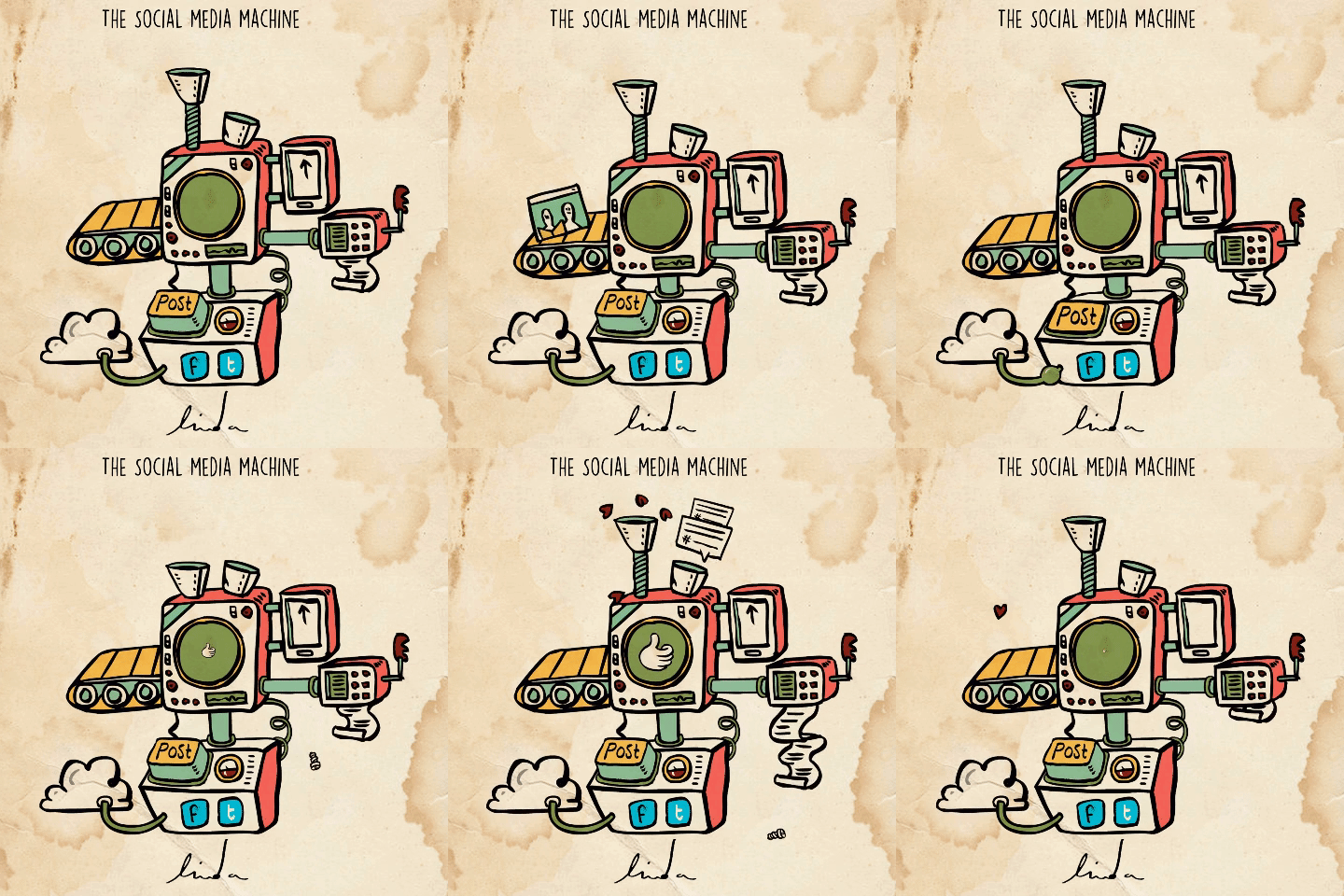
    Social Media Machine

    ROI Calculator

    Rockets Away

  • Connect Your Brand With Your Community

    Human beings are social animals, but what kind of community would form around your company’s online branding? Brand loyalty is easily observed in beverage and automotive industries, and fans of a particular brewery or manufacturer often consider that brand preference a part of their personal identity. Coke or Pepsi, Chevy or Ford, and Windows or Mac: these rivalries and preferences elicit emotions like the choice between sports teams. The fans of a brand develop a tribal sense of community, but it doesn’t happen with just any company. What if you could make your brand inspire that degree of enthusiasm and loyalty?

    A collection of company branding icons - Search Influence

    Make Your Brand Relatable

    When kids try to make friends, the classic advice is to “be yourself.” Similarly, your online branding strategy needs to come from a genuine place if it’s going to build a following. Big promises and low prices will motivate a purchase, but you need to meet or exceed a customer’s expectations in order to make them a fan. When you think about brands that have been popular for decades, they have earned the lasting support of repeat customers. Quality products and reliable service aren’t just slogans, they’re perceptions that match the experience of satisfied customers.

    A branding campaign should not require an overhaul of the way you do business. It can be as simple as identifying your strengths or making your marketing more consistent. But where do you go once you’ve got your brand established? The first step is finding those that relate to your brand the most. Target the interest groups and demographics most likely to identify with your brand through online advertising, and track their progress along the consumer journey. After they’ve visited your site or clicked on an advertisement, keep your brand visible with targeted remarketing. Every impression and interaction is an opportunity to confirm the value and reliability of your brand.

    Three women having coffee and a business conversation at a diner - Search Influence

    Emphasize Human Interaction

    Automation is great for business efficiency, but customers appreciate interacting with your human employees. When an existing customer calls with a problem or question, they react differently when answers come directly from a person instead of a recorded message. We’ve all experienced the frustration of answering a dozen automated questions in order to complete a simple task. In contrast, it’s easy to imagine how it feels to interact with a single employee throughout an interaction with a business. Whether they’re contacting a travel agent, realtor, or secretary at a law firm, people have a different experience when they have the chance to repeatedly connect with the same human being. Their connection with that individual becomes their connection with the whole company.

    Of course, the conduct of your employees can have a positive or negative impact on the way your brand is perceived, depending on how they interact with customers. When training and managing employees, remember how their treatment of customers can impact the long-term reputation of the business. Efficiency is important, but be sure to acknowledge and reward employees who go the extra mile for customers. It can be as simple as remembering a name or some other personal detail. A friendly voice and attention to detail can make customers feel valued by your company, even when you’re offering a no-frills product or service.

    Find Followers on Social Media

    Find a voice that resonates with your target audience and sets your business apart from the competition. On social media, your company’s response to news and trends will give the public additional opportunities to identify with your brand. Whether you develop a presence on Facebook, Instagram, LinkedIn, or Pinterest will depend on your target audience and what’s appropriate for your industry.

    You’ll want to post frequently in order to keep your business visible, but the majority of the posts should not be directly promotional. That doesn’t mean you have to spend all your time writing your own witty blogs. Not everyone is rocking the digital marketing industry like Search Influence. Rather, you can share news stories and articles related to your industry and community. By sharing authoritative, newsworthy content, you prove to followers that your business is keeping up with the latest trends. Not only are you building your brand, but you’re also making your business a valuable resource to potential customers, even when they aren’t currently in the market for your services.

    One of the biggest benefits of social media is that it provides a more detailed view of your target audience. As your following grows, you’ll gain a more detailed understanding of the interests, demographics, and preferences of people interested in your company. This information enables you to develop customer profiles and more specifically define your target audience. Identify the trends that groups of your fans have in common, and you’ll have an edge on the competitors who still advertise indiscriminately to the public at large.

    How Does Community Generate Revenue?

    Your customers understand how traditional advertising works. Across all platforms, paid content and advertisements get a lower CTR than personal content generated by close friends and family. When a friend recommends a business or vacation destination, that recommendation is more impactful than a commercial. By building a connection with the community, your online branding can make itself a topic of conversation. You can design promotions that encourage fans to show their support on social media. When people see that a close friend voluntarily supports your business, that recommendation carries weight. Get customers to advocate for your tourist attraction, dealership, or boutique, and you have a powerful alternative to conventional ads.

    Establish Your Brand As a Community Ambassador

    Members of the public are generally skeptical about the motivations of corporations and businesses. The global economy never ran on gumdrops and compliments, but consumers like to see brands that make a visible effort toward conservation, disaster relief, and other causes with a broad base of support. Politically controversial issues are a gamble because they needlessly turn away potential customers. It’s far better to publicly give to a popular cause and leverage social media so that fans can share the news of your good work. Many of your donations to non-profits can be tax-deductible. Improving the image of your company isn’t a fast process, but it has the potential to greatly increase your revenue by converting potential customers into supportive fans.

    If you need help clarifying your brand or marketing your business online, our team can help. Grounded in a foundational understanding of SEO, we know how to build authority and make your business stand out. Digital marketing isn’t just a way to generate new leads—it’s an increasingly vital part of remaining competitive in today’s marketplace. Request a proposal from Search Influence to amplify the digital voice of your online branding.

    Images:
    Brands

    Facebook

    We Like You

  • Why Are My Ads Disapproved by Google’s Misleading Content Policy?

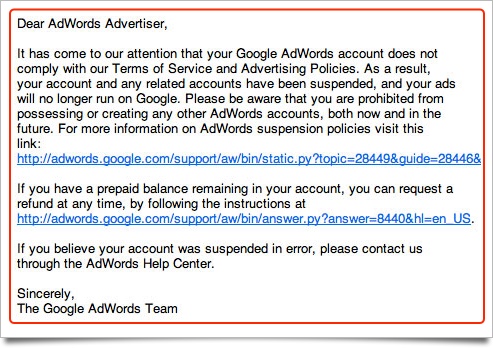
    In its continual quest to better serve users, Google has cracked down on misleading content in advertisements as well as website content. When your advertising campaign is slammed for “misleading content,” it can come as quite a surprise. Because Google holds advertisers to a high standard, some of the violations might seem like harmless marketing strategies. Regardless of how the situation arose, it’s important to bring your website and account back in line with Google’s expectations. The sooner you resolve potential violations, the sooner you can get back to building your brand’s online reputation.

    What Is the Google AdWords Misleading Content Policy?

    “Misleading content” is an umbrella term that includes several types of violations, ranging from problematic testimonials to deceptive branding. The main objective of the misleading content policy is to provide a set of clear standards for online advertisers to follow as to not deceive users with exaggerated or false content. The central component of these standards states that:

    – Disclaimers need to be included alongside perceived claims, even if the claims are direct quotations from past customers.

    – Images that show before-and-after results also need disclaimers. More broadly, improbable assertions are likely to draw the attention of the Google AdWords team.

    We’ve all seen investment opportunities and weight loss programs that sound “too good to be true.” As you might imagine, some of the standards allow room for interpretation, and many affected advertisers find that they need to resolve multiple policy violations to resume advertising.

    At least, in theory, Google’s policy should benefit both users and advertisers. Users shouldn’t have to scroll past misleading or spammy content, and advertising slots will become more valuable as users learn that paid search results are also informative and trustworthy. When you edit your ads and website to align with the Google AdWords misleading content policy, you’ll also be improving content and sales copy that might have sounded suspicious to potential customers. The things that Google considers “misleading” may also be off-putting to your target audience.

    What Kinds of Businesses Are Most Impacted by This Crackdown?

    With shifting expectations for disclaimers and testimonials, medical businesses like plastic surgeons and dermatologists are particularly vulnerable to being caught on the wrong side of AdWords policies. Whenever possible, peer-reviewed journals and other reputable sources can be referenced to support claims. Images are useful for showing the results of weight loss programs and cosmetic procedures, but those types of images need to include disclaimers to emphasize that individual results vary.

    Investment firms, lawyers, and other businesses may run afoul of Google AdWords misleading content policy, even though they aren’t making medical claims. The misleading content policy looks for vague guarantees and other wording that implies certainty or permanence. Depending on the phrasing used to describe results, virtually any business can find itself on the wrong side of Google’s misleading content policies.

    How Does Google Review and Determine If Content Is Misleading?

    In case there was any doubt, Google doesn’t employ a review board of physicians or lawyers to determine which claims are unjustified. Instead, an editor on the Google team judges whether the wording or formatting of a page is misleading. When the editor finds one or more violations that justify disapproving the account, they may (or may not) make a note in your case file. With the number of campaigns and sites reviewed by editors, it doesn’t make sense for them to make exhaustive lists of recommendations beyond the first one or two violations.

    As a business owner, you might never interact directly with an editor at Google. When you call the account representatives on the Google helpline, they only have the information that editors chose to note in your case file. If you fix the problems that were cited as “misleading,” there may be additional problems found when your site is re-evaluated. It can be a frustrating runaround but don’t get angry at the person on the helpline. They aren’t the ones who flagged your content, and they don’t have the power to reinstate your account. Instead of focusing on the people who made the decision, it’s better to try to understand the aspects of the policy that might apply to your site and campaign.

    What Do I Need to Do to Get My Ads Approved and Running Again?

    Not everyone gets site-specific recommendations in his or her case file, and even if you’re lucky enough to get actionable advice, it’s still important to be proactive about finding additional violations. After your campaign account has been flagged, the responsibility is on your company (and your web developer) to make sure that your site and your PPC campaign meet the standards set by Google. Look through your landing pages in search of other potential violations.

    Could your seals and stamps be perceived as mimicking government seals? Site layouts and deceptive popups can also trigger penalties. Popup windows shouldn’t simulate messages or system errors, displays intended to trick users into clicking through or interacting by accident. As previously discussed, assertions about future results need to be carefully worded. Some violations are more obvious than others but use due diligence to ensure that your site complies with relevant policies.

    How Can I Avoid Getting Ads Disapproved in the Future?

    Look at the penalty “sandbox” as a learning opportunity, and try to avoid repeating the same mistakes in future campaigns. Make a point of looking beyond your PPC campaigns to your website and your company’s approach to branding online. The campaigns flagged by AdWords often have issues on the landing page, marketing strategies that may be mirrored across the rest of the website. Even if a PPC campaign can be restarted with changes to a few key pages, it’s worth adjusting other website content to align with misleading content policies. Search algorithms favor high quality, unique content, and the misleading content policy hints at indicators that could eventually affect overall search rankings.

    If you don’t have time to spend waiting on the Google helpline, consider getting professional help through digital marketing consulting. Google’s policies and expectations shift periodically, and anticipating changes can become a distraction from your day-to-day business.

    As a Google Premier Partner, Search Influence has over 25 employees certified in Google AdWords Search, Video, Mobile, Display, and Analytics. Our digital marketing agency keeps up to date with the latest trends in search engine algorithms and online advertising to best serve our clients. Contact us so we can help get your ads approved and running again.

    Image Credits:

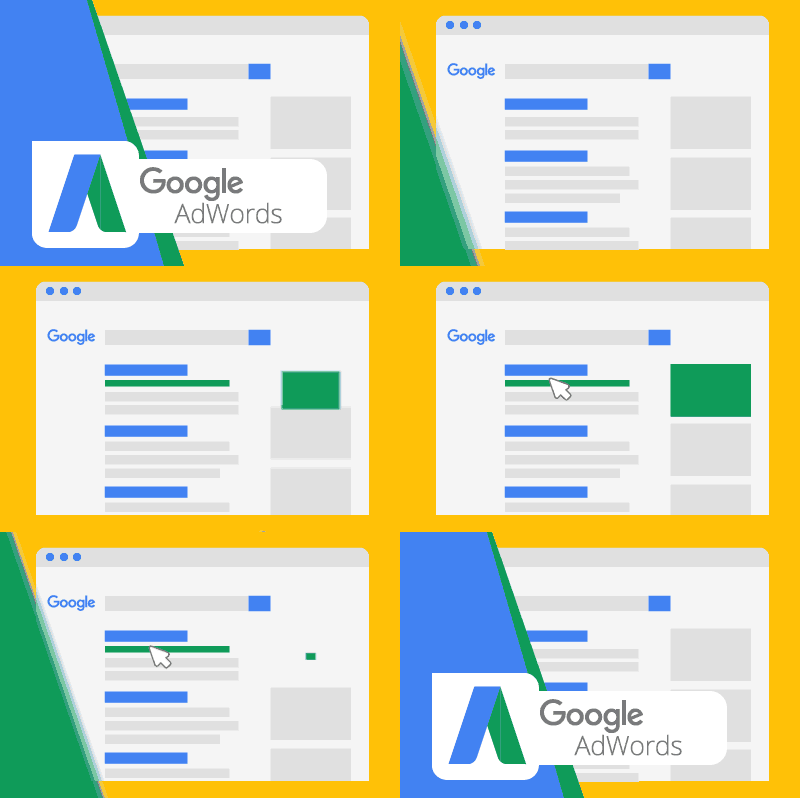
    Google Adwords Email

    Magnifying Glass