Tag: digital marketing

  • How Repurposing Your Content Can Extend Its Shelf Life

    You may have noticed the recent box office trend of classic movies coming out again as modern remakes. From fairy tale retellings to musical biopics, some fans are excited to see their favorite characters come back to life, while other viewers might wonder why these stories are being repeated. Clearly, there’s a value in repurposing well-known content—based on the success of these movies—and it’s a value that businesses can borrow and put to use in their content marketing.

    Scene from the 2019 version of The Lion King

    What Does Repurposing Mean, Anyway?

    When you see the word “repurpose,” you might be thinking of “revamping,” but there’s a very important difference between the two. Revamping is simply reusing old content for the same purpose that it was originally created. This tactic updates the timestamp on the content so it stays relevant, but it isn’t changing anything that would allow it to resonate with new audiences. Repurposing content means changing the format the content was originally presented, thereby reaching new audiences and enabling company growth.

    To repurpose content, you wouldn’t simply repost an old Facebook photo or retweet an old stat; you have to be adding new value to the original. The real advantage of repurposing comes when you’re able to reach new customers in previously untouched segments for your business. Think about all the recent Marvel blockbusters. These superhero movies have created a massive base of fans, many of whom might not have read the comics but still enjoy watching the movies. Turning a classic comic into a big-screen action flick is a great example of how Marvel was able to repurpose their storylines into a different style of content and gain new, loyal customers.

    I understand that reference

    Which Content Is Worth Repurposing?

    The effort of repurposing should only be used on your best performing content; after all, not every Avenger made the cut from page to screen. Because repurposing will breathe new life into your existing content, you don’t want to use something that’s too dated or low-quality.

    How can you tell which pieces of content are the best? Look for what Buffer classifies as evergreen content, or content that is both timeless and high-quality. When your content isn’t dependent on a certain timeframe—things like limited deals or promotions—you can feel confident that it will remain relevant no matter when you repurpose. And if you know your content is high-quality, then you also know it will continue to get traffic. Analytics and lead tracking are great ways to find out how your customers interact with your site and what your strongest marketing efforts are.

    How Can I Repurpose My Content?

    Once you know which content of yours performs the best, it’s time to get creative and get your content in front of some new eyes. Four easy ways to start repurposing include:

      • Create an Infographic: Chances are, your business already has some pretty impressive statistics. But what’s the point of all those numbers if nobody knows them? Infographics help customers process data visually and are an easy way to turn lots of text into an image that’s more shareable on social media.
      • “Roundup” Blog Posts: An easy way to fill out a blog is with a repeating “roundup” post that compiles all your top hits at the end of every week or month. These not only create a place for customers to quickly find your best content, but it can also encourage regular visitors to read something they might have otherwise missed.
      • Turn Testimonials Into Case Studies: Case studies let you share your own successes from the perspective of your client. This information is valuable to potential customers who want to know how you were able to help people like them, and a well-written case study gives your current client the benefit of being promoted.
      • Turn Blog Posts Into Videos or Podcasts: Customers might love your regular posts, but when your content is only available in a readable form, it means you’re competing with other tasks in their day. By utilizing videos or podcasts, regular readers have more ways to enjoy your content, and it might even draw in new listeners who only have time for audio.

    The ideas don’t have to stop there. With just a little brainstorming, you can come up with plenty of other ways to repurpose content.

    Winnie The Pooh trying to think

    Does Repurposing Content Even Work?

    While a solid piece of work should be able to stand on its own, repurposing content gives you the ability to bring new life to something old and put it in front of a brand-new audience. While you might remember the original Disney animated classic of a recent remake, think of how many young viewers will experience the new version as their first movie-going experience. And, more importantly, how many will become lifelong fans after that.

    Repurposing content meets some very important business needs, too. Marketer Neil Patel’s recommendation of “write less… promote more” allows companies to save time in their creation process while still getting their name out there. Repurposing content allows you to do less work while actually gaining more rewards.

    From those classic movie remakes to sitcom spinoff series to covers of songs that become more popular than the original, everyone has been exposed to repurposed content in some form or another. As Mark Twain said, “there is no such thing as a new idea,” but one good idea can inspire countless more. By keeping all your great content to yourself or leaving old blog posts to get dusty on the metaphorical shelves of your website, you’ll never know how many great ideas it could spawn.

    Starting with quality content is the best way to create new ideas you’ll want to repurpose again and again. From SEO services to social media management, Search Influence knows how to help businesses develop that content. Let’s chat about how we can help you.

    Images
    Lion King

    Reference

    Pooh

    Spongerobert


  • How Using Psychographics Can Shed Light on Your Buyer Personas

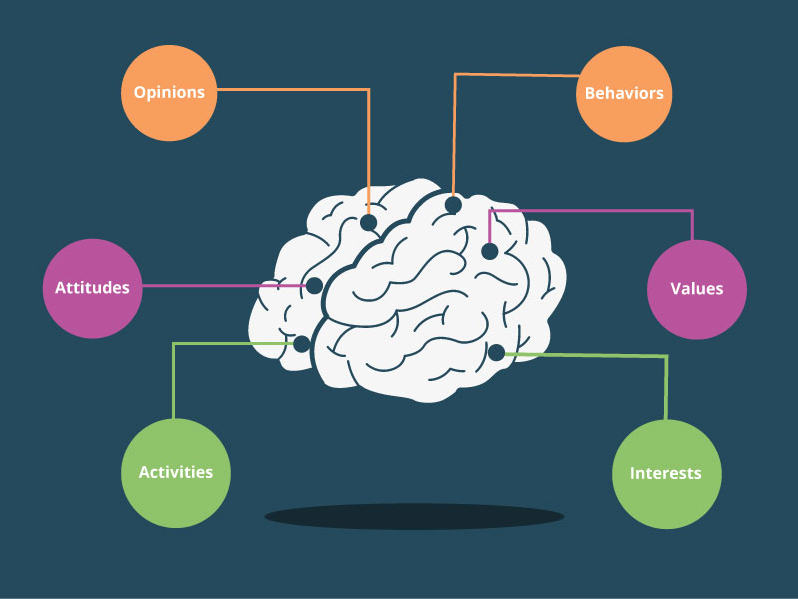
    Custom graphic displaying psychographic elements

    Looking at your buyer without understanding them as a whole is like ordering a hamburger without the toppings. Nobody wants a dry hamburger without cheese, bacon, tomatoes, pickles, or at least some sort of condiment. So why do some businesses only care that a buyer bought their product and not want to know why? This is where psychographics come into play. These provide insight on customers and why they do the things that they do.

    How Do Psychographics Complete A Buyer Persona?

    Psychographics are the toppings and the main flavor of your burger. If we are looking at it in terms of your customers, psychographics are the personality components that make your customers who they are as people.

    Psychographics help you dive further into a person’s feelings, thoughts, decisions, opinions, and attitudes. The whole idea behind psychographics is relating to your customers on a deeper level. It provides an opportunity for a business owner to truly understand who their customers are, what they like to do, who they’re friends with, what TV shows they love, or even what they dislike.

    Think about your closest friend or significant other and why you love and trust them. Is it because of what they do for you or is it because of how they make you feel? That feeling can be related to the psychographics of your friend or significant other. It shows you the heart and soul behind the person who is consistently doing nice things for you.

    Now let’s relate that to your business.

    Who do you think is more beneficial to your business: a one-time customer or a repeat customer? Obviously, repeat customers are more valuable because they drive your ROI and tell other people about your business. Their positive reviews help build a positive reputation that encourages other people to give you a try. But if you hadn’t truly connected with that first customer, they wouldn’t have vouched for you.

    As business owners, we need to understand that it’s more than just what a client can do for you, it’s about who they are as a person. Why do they trust you, come back to your business, and share their exciting news with you? It’s because you’ve built trust and spent time understanding who they are as a real person. You took the time to see them not just as a price tag but as a genuine hardworking and loyal person.

    You bought into who they are and in return, they bought into your business.

    How Do You Obtain Psychographic Information?

    It’s time to sit down and really dive deep into what is important to you about your customers.

    This is where you can gather your team and brainstorm. Maybe sit around and talk about some of their favorite customers. Have your team provide a memorable story, what they love about that customer, describe their relationship to the customer, and give personality details about who they are.

    After you’ve spent the afternoon bonding as a team and connecting over how great your customers are, it’s time to focus your efforts on making connections with future customers.

    So how do we do this?

    Simple, those customers that were spoken highly of can provide insight better than anyone else. Utilize this. Hold interviews with your customers where you can ask them all about how they feel about your company, what they like and dislike, and what keeps them coming back.

    Next, you can send out surveys to other customers via email asking them similar questions. As a business owner, you can go a step further by connecting with them on their social media accounts.

    Social media can be a useful resource for learning more about your customers. You can see which types of music they listen to, where they spend their free time, what their family life is like, and even their feelings on a plethora of topics.

    From here, you can enter all of this information into your own Customer Relationship Management (CRM) system. This will come in handy when you want to create look-a-likes for your Facebook Remarketing or Google Display Remarketing advertisements. Not only that, but it can provide concrete data that can pull similar interests that connect your customers to one another.

    So remember, a burger will always taste best fully dressed, and a buyer persona is better with a psychographic to support it. Not sure where to start creating your psychographics? From strategy to social media management, Search Influence is here to help. Get started by contacting us today.

    Images

    Tablet Payment

  • National Emoji Day – Katelyn Mulkey on WWL

    Katelyn Mulkey, Account Coordinator at Search Influence, joined Great Day Louisiana on National Emoji day to share her knowledge on:

    • The history of emojis
    • New emojis being released in 2019
    • How emojis relate to inclusivity and the all-inclusive-web
    • Misused emojis

    Emojis have been popular since they first appeared on Japanese mobile phones in the late ’90s, and in the past few years they have become a hallmark of the way people communicate. They show up everywhere—from texts and Facebook posts to press releases and corporate emails. At Search Influence, we’re always up-to-date with social media best practices. Learn more about our digital marketing services and how we can help your business get found online. Reach out to a strategist today to get started.

  • How to Bounce Back From a Bad SEO Experience

    If you or someone you love is struggling to bounce back from a bad SEO experience, please call 504-208-3900 today.

    Let me first start by saying, I am truly sorry. I hate to hear our competitors are delivering anything less than a successful (and profitable) SEO campaign, and I really hate to know these companies are giving a great company, like mine, a bad name. Shame! I hope this blog can be therapeutic and we can strengthen your trust in SEO and humanity… together.

    If you’re reading this, you don’t need me to tell you how SEO is an investment and how it should be included in your marketing strategy. Actually, the more I think about it… maybe you do. Maybe the value was never clearly communicated or our competitors did a poor job in setting expectations. Again, on behalf of the industry—I apologize.

    Frustrated business owner after a bad SEO experience with Search Influence competitor

    A big step in therapy is acceptance. Together, let’s accept that an immediate impact is not possible with SEO. Let’s also accept that in the SEO world, Google controls life. If we understand the algorithm and play by the rules, there’s no reason this experience should be negative. As a reminder, Google is responsible for 94% of total organic traffic, so yes, we play by the rules. If you think I’m just drinking the Google Kool-Aid, know that 61% of marketers say improving SEO and growing their organic presence is their top inbound marketing priority.

    If you’ve ever sat in on one of my webinars or pitches, you’ve heard my analogy—SEO is the marathon and paid search is the sprint. SEO is organically strengthening a brand’s authority, and it’d be illogical to believe anything organic can efficiently mature and be optimized in a short period of time. If you’ve heard “we can increase rankings immediately” or “I promise you’ll be on page one,” SEO wasn’t the right campaign for you. If you are looking for immediate results, it’s possible with paid search. I don’t want to beat a dead horse, but expectation-setting and communication is key to any partnership. It’s possible that your previous SEO campaign was strong and could have been very successful, but expectations on results and return wasn’t effectively or honestly communicated.

    Over the last seven years, I’ve worked with and regained trust of many business owners and marketing executive who’ve come to Search Influence a little gun shy. Over the years, I’ve had time to think of all the things I wish clients would have asked our competitors when they weren’t doing their job. I’d also like to share some of our unique selling points that aren’t broadcasted because it’s so natural to our team and part of our core, we sometimes forget to share.

    Anyone investing in SEO, especially while recovering from a negative experience, should consider the following when interviewing new marketing partners.

    Partner With a Transparent Agency

    Like any relationship or partnership, communication and trust are crucial. At Search Influence, we truly see our team as an extension of your company and brand, and we want you to trust and challenge us as much as you would your own. In employee interviews, you ask for references and work experience. Why should hiring a marketing partner be any different?

    When you’re vetting through agencies, ask for client references. We know that customers are 88% more likely to trust a review or testimony from a complete stranger as much as family and friends. If numbers are all you care about, ask for success stories. I encourage you to not only ask for references and case studies within your own industry, but in others, as well. Analyzing an agency’s ability to target different types of audiences like college freshman vs. concrete manufacturers or write strong legal web content vs. e-commerce ad copy shows willingness to understand your audience and shows they aren’t cookie cutter.

    Team collaborating on SEO marketing efforts

    Don’t Be Afraid to Ask the Hard Questions

    No relationship is perfect, but before starting a new partnership, don’t you want to know why it didn’t work out with all the other ex-girlfriends? Don’t you want to know who broke up with who and why, and if we ever break up, are you going to be salty and never return my stuff?  

    The first cut is the deepest, so let’s cut to the chase and ask the hard questions that are extremely important. I strongly encourage you to ask the following questions:

    • What happens if it’s not working and I’m not seeing results?
    • What’s the number one reason clients part ways with your company?
    • How do you hold yourself accountable?
    • If you create logins on behalf of my company, will you share them with me?
    • Should I ever leave, will you remove work from my site?

    In my opinion, how the agency responds to these direct and powerful questions says more about their core values than the strategy alone.

    See What’s Behind the Curtain

    If Search Influence sees ourselves as an extension of your company, don’t you want to know how we operate? If I were in your shoes, I’d want to understand a day in the life of my campaign. I’d want to understand the frequency of internal communication, who Q/A’s site edits before they go live, how many editors sign off on press releases, and how frequently will I be hearing from my team.

    Maybe you’re not interested in a list of references or reading success stories, but are instead interested in what’s behind the curtain. To tease a little bit of the magic, I’ve listed just some of our day-to-day activities that are so routine we almost forget how glamorous it is to the other side of the curtain.

    • Results-Driven
      • Every campaign starts and ends with your goals. The strategy, the work, and the focus is centered around what we need to do in order to deliver success. We track conversions and measure success so we can confidently show you a positive ROI.
    • Think Like Your Target Audience
      • We evaluate the entire consumer journey and create buyer personas to understand their behavior online. We analyze their interests, triggers, frequented sites, content consumption, and more to implement a strategy to target and convert your audience into customers.
    • Transparency and Accountability
      • We’ve created a reporting dashboard to how you how your campaign is performing 24/7. Not only can you see campaign success, but you can see what our team is actively working on and tactics coming up the pipeline.
    • Proactive, Not Reactive
      • We’re constantly learning from each other through our daily department huddles and weekly company meetings. Our constant collaboration allows us to share what’s working and what’s not working and how we can improve. With every learning, we confidently and proactively bring new ideas to each campaign.

    Don’t let one bad breakup keep you off the SEO market forever. Get in touch with the SEO experts at Search Influence today so we can help you create and implement a targeted digital marketing plan.

    Images

    Frustration

  • Your Guide To Google’s Newest Search Ad Type: Responsive Search Ads

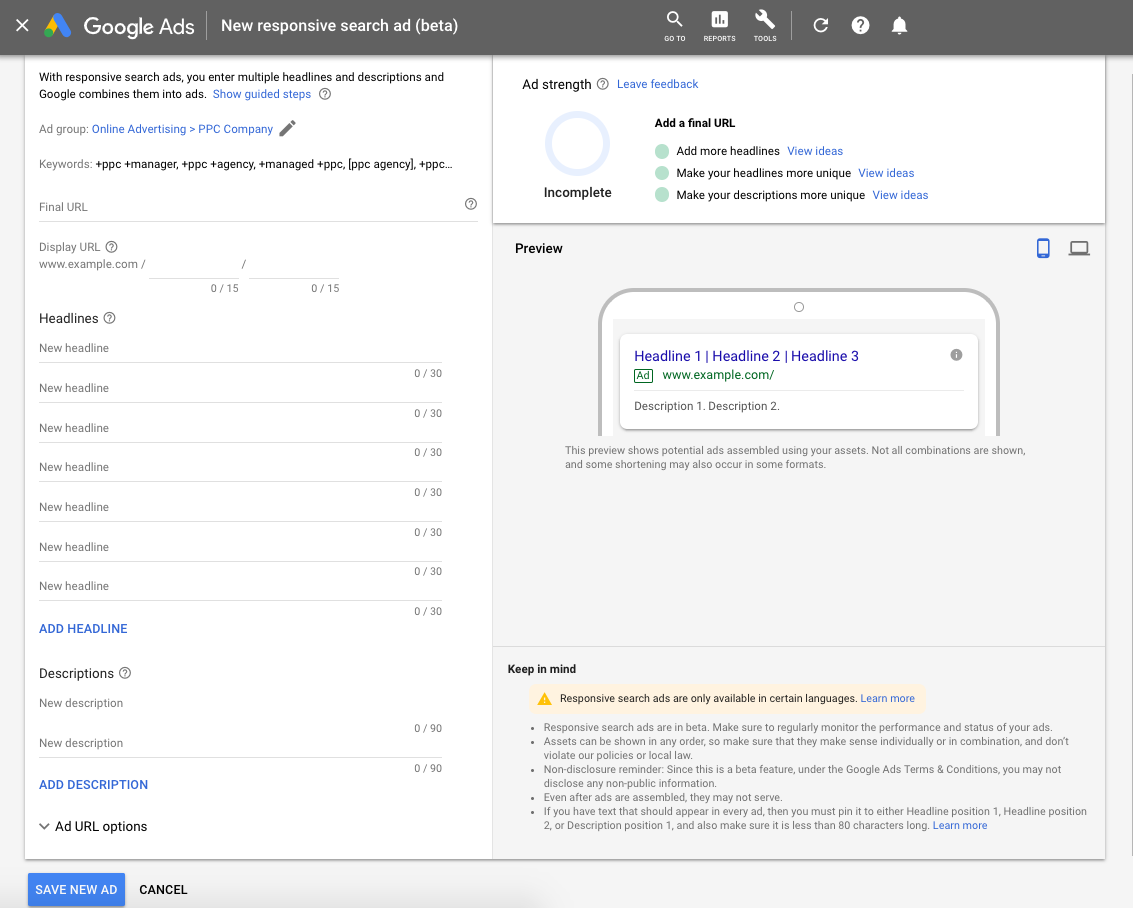
    It seems lately that the changes to Google Ads and the types of ads you can create have been coming faster than some advertisers can handle. A few years ago, expanded text ads were a revelation. More headlines and higher character counts had us all loving the extra real estate we were able to have on the SERP. But now Google has come out with a whole new game changer—Responsive Search Ads. RSAs will save you time and management by relying on automation and machine learning to deliver the most relevant ad for each query. How do you take advantage of all this? By exploring this guide to adding responsive search ads to your paid search campaigns.

    What Are Responsive Search Ads?

    Responsive search ads are a new ad type that’s still in beta, and they might not be available in all Google Ads accounts. Unlike expanded text ads, where you create one static ad, responsive search ads use Google’s machine learning to assess which of the multiple headlines and descriptions that you create will combine to show the most relevant ads to searchers.

    How Do Responsive Search Ads Work?

    An advertiser enters up to 15 unique headlines (30 characters each) and four unique descriptions (90 characters each) to create an RSA. When a search triggers your ad, Google reads all of the signals available (search term, intent, device, time of day, and many many more) and uses machine learning to determine which of your ad assets will be the most relevant to the searcher. That is the ad combination that gets served.

    Example of Google responsive search ads work performed by Search Influence in New Orleans, LA

    Responsive Search Ads Vs. Expanded Text Ads

    You might be wondering which ad type to use, and the answer is both. In fact, Google’s Matt Lawson writes that, because RSAs are still in beta, they aren’t going to capture all of the traffic that an ETA might.

    “Try to implement at least three ads per ad group with an optimized ad rotation. If you have access to responsive search ads already, you should remember to have at least one additional text ad in each of your ad groups. Responsive search ads are still in beta, and some traffic won’t be included in that experiment. You need a text ad to capture those impressions.”

    As for the differences between RSAs and ETAs, here’s a breakdown of assets:

    Responsive Search Ads Expanded Text Ads
    Number of Headlines Shown on the SERP 2 or 3 2 or 3
    Number of Headlines Written 3 – 15 2 – 3
    Characters in Each Headline 30 30
    Number of Descriptions Shown on the SERP 1 or 2 1 or 2
    Number of Descriptions Written 2 – 4 1 – 2
    Characters in Each Description 90 90

    As you can see, the searcher won’t be able to tell the difference between the two ad types. When responsive search ads were first announced, there was a lot of rejoicing of “more real estate on the SERP,” as the expanded text ads had lower character limits; however, the character counts of ETAs have been expanded once again to match the RSA character limit.

    What Are the Benefits of Using Responsive Search Ads?

    The most immediately obvious benefit of RSAs is that Google does the testing for you, virtually eliminating the need for you to run A/B tests. This can save tons of paid search account management time. Google claims that the constant testing will lead to the most relevant ad being shown for different search terms. This is something that a lot of advertisers need help with. Though there are scripts that can create reports approximating this effect, there is no way to segment ad copy performance by search term in the Google Ads interface.

    What About Disadvantages to Using Responsive Search Ads?

    All this time-saving automation comes at a price, of course: control. Someone with lots of time to test minor tweaks and analyze an abundance of data might prefer to conduct their own tests.

    Though there are options to “pin” a couple headlines and descriptions so that they always show (useful for compliance reasons or companies with strict branding), you are really limited in controlling the final version of the ad.

    Reporting options are subpar so far. We are offered very little insight into how each asset is performing, but we do have an asset-level report that shows how many impressions each headline and description has gotten, and a combination report that shows impressions for each combination.

    From this, you can infer which assets are performing best, but it’s only an assumption that’s based on trusting Google to properly optimize. Google says poor performers won’t be delivered, so if you see an asset getting few impressions, it might be underperforming.

    Along with the lack of control, RSAs also don’t support ad customizers at this time, with the exception of dynamic keyword insertion, which is actually encouraged. This means that you are unable to use countdowns, IF functions, inventory customizers, etc. with RSAs.

    Responsive Search Ad Best Practices

    Before you create responsive search ads, you might want to brainstorm a few benefits, features, and calls to action that you’ll want to include in your ads. Some of these features and tactics include…

    Unique and Varied Headlines

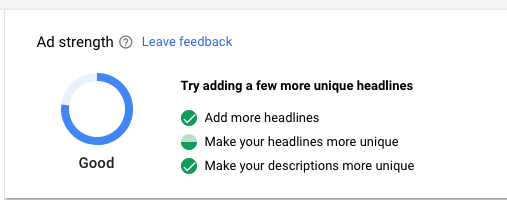
    You want your headlines to be distinct. Google says it has controls in place to prevent redundant assets from being served together, but headlines need to be different enough from each other that the system can adequately distinguish between them and serve relevant combinations. When building your ads, you will notice the Ad Strength meter in the upper right of your screen assessing the quality of your ads. This is what it might look like if your headlines are too similar:


    Pay attention to the ad strength and get creative. You’ll also see the meter telling you to add more headlines. Strive to fill all 15 spots with a unique headline.

    You should also vary the length of your headlines. You don’t want to use all 30 characters in every headline. As with the content of the headlines, this gives Google more factors to test. Also, that third headline is more likely to show if it is short.

    Use Your Keywords—But Do So Sparingly

    You’ll want to include your keywords in some of your headlines, but not all of them. I like to keep only three or so keywords in the headlines and then maybe one or two in my descriptions. This leaves room for more of the business’ benefits, features, etc., and gives more variety. In addition to three keywords, I also use DKI in one of the headlines.

    Use Google’s Recommendations

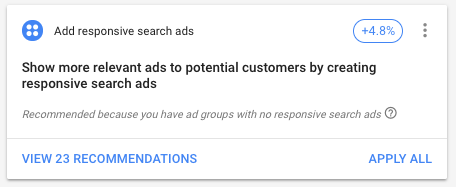
    If you haven’t started implementing responsive search ads yet, but are opted into the beta program, you might see recommendations to do so in Google Ads.

    Recommendations provided by Google Ads prior to starting campaign

    This is a great way to get started. When you view the recommendations, you’ll see that Google has already created some RSAs from headlines and descriptions that you are already using in your ETAs. Review these recommendations and make any necessary changes, then hit “Apply,” and you’ve got yourself a responsive search ad.

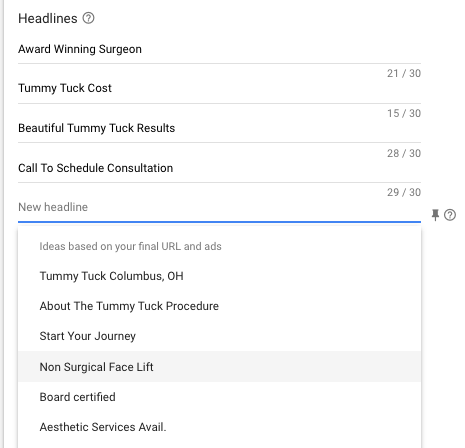
    Once you have ads running, you might also notice that when you go to add new headlines, Google will make suggestions based off your other ads and your landing page. Some of these might not be relevant to the particular keywords in your ad group, but some likely are relevant.

    More recommendations from Google prior to launching ad campaign

    How Many Responsive Search Ads Should I Use in an Ad Group?

    It’s best practice to have at least one RSA with two or three ETAs in an ad group, but you can include up to three responsive search ads in each ad group. Most advertisers won’t need this many, but if you are pinning headlines and descriptions, you might want to test pinning vs. not pinning, or A/B test the headlines you are pinning.

    Don’t Forget to Monitor Responsive Search Ad Performance

    Especially while RSAs are still in beta, advertisers need to be monitoring if they are performing as well or better than your ETAs. As always, focus on your bottom line, not solely on click metrics like CTR. Watch that Google’s optimizations aren’t suppressing your most profitable ad in favor of your most clickable ad. I recommend reading this piece on Search Engine Land about not relying too heavily on CTR and conversion rate for more information on this topic.

    A strong campaign for your business’ online advertising requires experts who are up-to-date on all of the latest roll-outs from Google and other advertising platforms. Search Influence can expand your business’ online presence. Start a conversation with one of our digital marketers today to grow your business.

  • Search Influence Adds Five New Hires to Their Krewe

    No matter the time of year, Search Influence is dedicated to expanding our clients’ online presence and growing their businesses. Even though New Orleans just got done with its most hectic time of year, Mardi Gras, we’ve been focused on producing results for our clients. We also understand that we need a comprehensive team of digital marketing experts to create our best work. In the past few months, we’ve expanded our team to include five new Influencers! Meet the new additions to our “Krewe.”

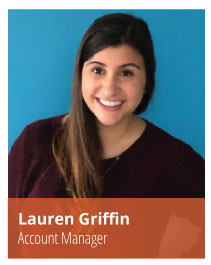
    Search Influence Account Manager Lauren GriffinSearch Influence Sales Assistant Demi LeBlancSearch Influence Sales Executive Michael Shargois

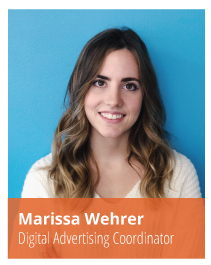
    Search Infuence Digital Advertising Coordinator Brandt "RC" ArceneauxSearch Influence Digital Advertising Coordinator Marissa Wehrer

    Lauren Griffin

    Lauren Griffin has been hired as an Account Manager.

    From a small town called Abbeville, Lauren grew up visiting New Orleans regularly. She was always drawn to the city due to its culture, history, and laissez-faire attitude. During her time at Louisiana State University, she discovered her passion for marketing. Lauren feels truly lucky to be doing what she loves in a city she loves.

    Demi LeBlanc

    Demi LeBlanc has been hired as a Sales Assistant.

    You can usually find Demi watching some movie with Barbra Streisand and attempting to be a world-renowned (yet terrible) watercolor artist. She loves finding creative solutions to everyday problems and using her creativity to design and customize whatever is in front of her. She’s always looking for ways to make things better.

    Michael Shargois

    Michael Shargois has been hired as a Sales Executive.

    Michael was born and raised in New Orleans, and he’s never leaving! He is a graduate of Lusher Charter School and Louisiana State University. Outside of business hours, you can find him supporting his favorite sports teams—the Saints, Tigers & Pelicans. Michael also enjoys listening to music and spending time with his girlfriend. Michael is an animal lover but doesn’t have any pets. If anyone needs a dog walker, let him know!

    Brandt “RC” Arceneaux

    Brandt “RC” Arceneaux has been hired as a Digital Advertising Coordinator.

    Brandt grew up in St. Charles Parish, just upriver from New Orleans. After high school, he enlisted in the military and spent the next six years traveling and working around the world, including Germany, Turkey, Iraq, and Florida. He learned German and developed his childhood French while working overseas. He returned to the city after Hurricane Katrina and worked as a police officer while earning his English degree. After working in the U.S. intelligence community for six years, Brandt returned home again to complete his master’s degree and started a consulting and translating business. Brandt lives with his wife and their cat, Professor Shorthair. He spends his time cooking, practicing music, and jogging at Audubon Park.

    Marissa Wehrer

    Marissa Wehrer has been hired as a Digital Advertising Coordinator.

    Marissa graduated from LSU with degrees in Marketing and Entrepreneurship. She fell in love with digital marketing after selling jewelry online during college. After college, Marissa lived in Spain, earning her International Master of Business Administration and working for a startup. After returning home, she combined her passion for fashion with digital marketing and started a blog. With her blog ItsRiss.com, she has the opportunity to express her creative side and incorporate her digital marketing skills. Now she gets to live out her passion all day, every day!

    Welcome to the team, Lauren, Demi, Michael, RC, and Marissa!

    If you’ve been hoping to expand your business’ digital marketing campaign, look to Search Influence. Our experts, whether tenured or new to our team, can help boost your company’s online presence while tracking leads and analyzing trends. We’re committed to helping you reach your marketing goals. Start a conversation with one of our strategists today.
    Interested in joining our team? Check out our open positions!

  • Unfamiliar With “SEO?” Here’s Why Search Engine Optimization Is Important

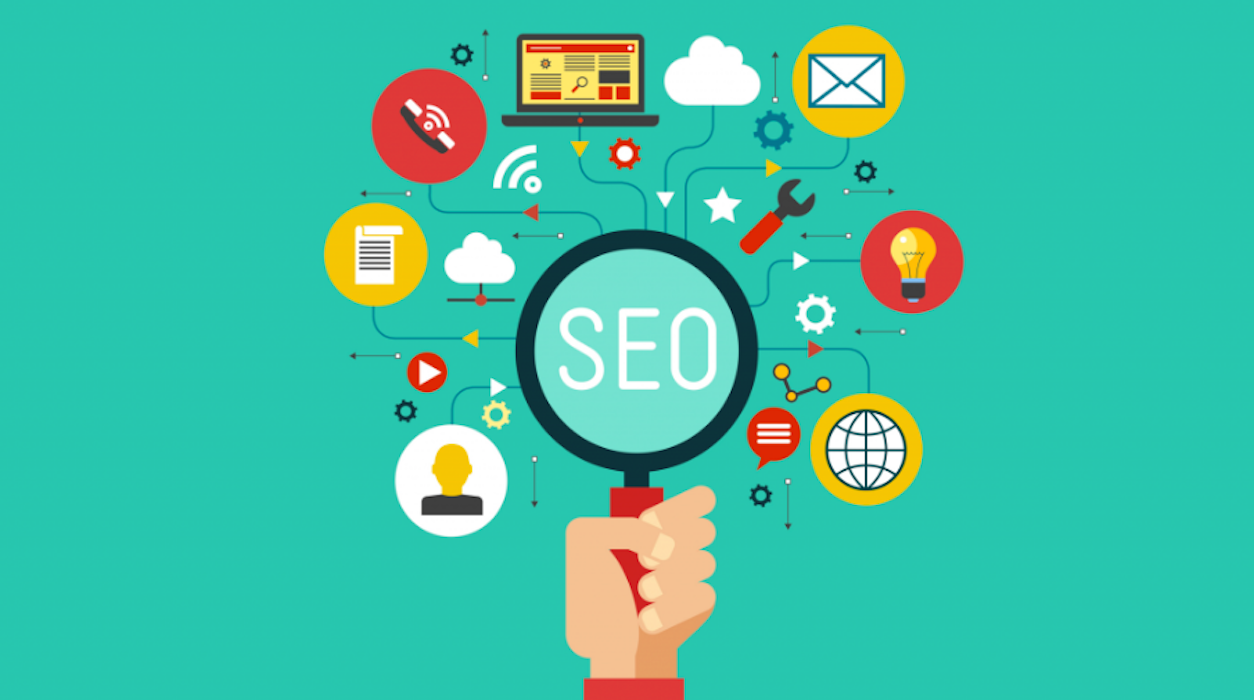
    Magnifying glass zooming in on SEO

    I entered the digital marketing industry in 2012 when Search Engine Optimization was a simple blend of keyword stuffing and link building. If anyone suggests those strategies still hold up, then they’re living in the past. SEO has changed because the search behavior of consumers has changed. According to Google, 84% of Americans are shopping for something at any given time, in up to six different categories. During their journey, shoppers are searching online, verifying references, reading reviews, connecting with local businesses, and (the most important step of all) converting.

    The once linear buyer’s journey has become a multilateral experience full of content consumption, brand impressions, strategic ad targeting, online searches, remarketing, and email marketing. To be successful, brands must be present in the ever-changing and always competitive online market.  As digital marketers, our job is to connect searchers to the right businesses, and SEO is one of the most effective ways to do that.

    What Is SEO?

    SEO allows businesses to connect with the right audiences by increasing the quality and likeliness to convert traffic to a website while improving brand recognition.

    The way Google connects businesses with audiences is through its algorithm, which changes about 500-600 times a year. The algorithm is intended to keep up with consumer behavior and keep searchers from ending up on untrustworthy websites. To quickly connect searchers to businesses, Google’s algorithm includes some of the most popular “checklists” that searches have indicated are important.

    Can I trust them?
    Are they located close to me?
    Do they offer the service I need?

    New call-to-action

    How SEO Works

    The three most effective constituents for any SEO campaign include content, brand authority, and local presence.

    Content

    Content helps answer the question “Do they offer the service I need?”

    It looks like on-site content, blogs, videos, whitepapers, email marketing, infographics, content marketing, product descriptions, information about the business’s history, and social posts.

    Shoppers consume content differently on mobile devices than on desktops and through different avenues like video, blogs, graphics, and social posts. Content is the most effective way to communicate who you are and what you do to search engines and your audience. This gives businesses a great opportunity to get creative and engage with audiences outside the traditional text of website content.

    Website content

    Create and optimize unique content for each service or product that you want to rank for next time a user is searching. For example, a lawyer who specializes in personal injury should have dedicated pages for each practice area they offer like medical malpractice, car accident, wrongful death, etc. Having dedicated pages for “medical malpractice” precisely and effectively communicates to Google that the content on these pages strictly focuses on “medical malpractice.” This strongly impacts content relevance and organic rankings when people search “medical malpractice lawyer.”

    A click to a site, organic or paid, is a very strong sign of a user’s level of intent and conversion. On-site content should be used to communicate competitive advantages, prices, products, and services. Onsite content should deliberately be written in to drive conversion behavior, with strong calls to action like “call now”, “sign up for our newsletters”, “contact us today”, or “buy”.

    Videos

    Research by HubSpot suggests that using videos on landing pages will increase conversions by 86 percent.

    Businesses need to communicate their message and engage with their audience. A video can be a 30-second teaser for a series of blogs, 2-minute testimonials of a happy client, or 5-minute highlight summary of a recently sponsored community event. Videos are great for users engagement and even better for product promotion.  Almost 50 percent of internet users look for videos related to a product or service before visiting a store.

    Blogs

    According to HubSpot, companies that published more than 16 blog posts per month got about 4.5 times more leads than companies that published zero to four monthly posts.

    This type of content should be slightly more engaging and address identified topics and related topics interesting to the audience. Blogs should always be shared on social, and including videos is a great way to complement the content and increase engagement.

    Brand Authority

    New call-to-actionThis helps answer the question “Can I trust this businss?“

    It looks like earned media like press releases and brand mentions, industry recognition and noted awards, customer reviews, backlinks for all off-site work and publications, and Google posts.

    88 percent of people trust a review from a stranger as much as they would a referral from a friend or family member. Having reviews on your site builds trust with readers while highlighting customer satisfaction. Potential customers trust user-generated content, and all businesses should encourage their clientele to leave reviews or have a dedicated strategy in place to generate them.

    Other ways to increase brand awareness off-site are through earned media publications like brand mentions and press releases. Anytime a business has a newsworthy topic like a major event, community sponsorship, new leadership, or a new location, creating and publishing a press release can establish brand trust and awareness while gaining reputable backlinks.

    Brands should always assure they are receiving link backs from any third party publications and sponsorships. Not only do links build trust with Google, but it also provides a way for referral site traffic from other sources and sites.

    Local Presence

    This help answer the question “Are they conveniently located to me?”

    It looks like local on-site content, correct and consistent listings on maps like Google, Apple, Yelp, and Bing, and showing up in Google’s Maps Pack.

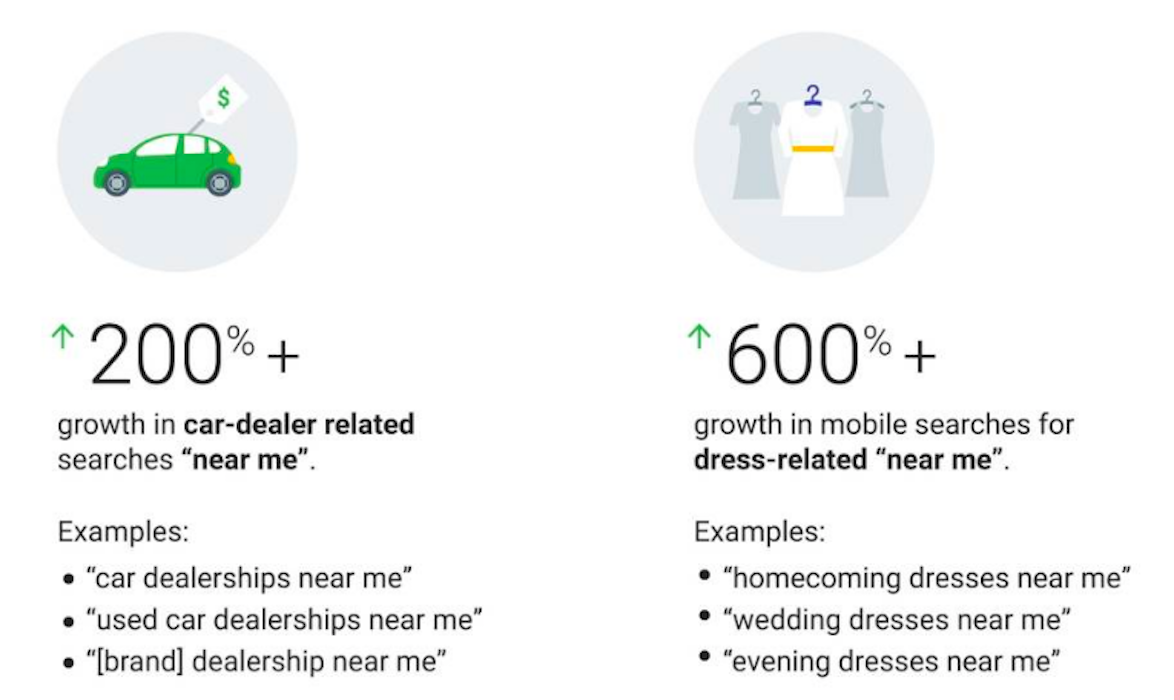
    While consumer behavior continues to move off of the streets and onto the internet, communities supporting local businesses stay strong. In 2018, HubSpot’s data stated that 72 percent of consumers who did a local search visited a store within five miles. Being found locally is crucial, especially for businesses in the service industry like landscapers, restaurants, groomers, mechanics, etc. According to Google, mobile searches that include the phrase “near me” have grown by 500 percent in the last two years.

    Google graphic showing the dramatic increases in near me searches

    So how can businesses communicate they are in fact “near” searchers? First, make sure that you claim and optimize the correct name, address, and phone number across the major local directories like Google, Apple, Yelp, and Bing. Also, build out local landing pages for each location on-site to include a map, local content, hours of operation, and directions. Check out our location page for a concrete example.

    The way consumers search for dresses, landscapers, and car dealers will continue to change, and therefore the digital marketing industry will too.  Just as our campaigns have strayed from the simplicity of keywords and link building, our marketing campaigns will continue to develop and change. In an everchanging and competitive industry catered to consumers, businesses must have a strategy to be successful. If you don’t, Search Influence’s digital marketing experts can help you develop one. Call us at 504-336-3379 to learn more.

    Images

    Magnifying Glass

    Google Data


  • 4 Reasons Why Digital Marketing Spend Keeps Growing & Isn’t Stopping

    4 Reasons Why Digital Marketing Spend Keeps Growing & Isn’t Stopping


    Digital marketer working on strategies at a computer in New Orleans, LA

    Cambridge Analytica. GDPR. Brexit. The 2016 presidential election. Privacy has been at the forefront of national news related to Facebook as well as social and digital media in general for the last few years.

    Yet, spending on digital marketing and advertising continued to climb in 2017 and 2018, with spending on social advertising growing more sharply in 2018 than it had in any other year since Duke began its CMO Survey. In fact, according to the same survey (the largest of its kind), digital marketing currently makes up 44 percent of marketing budgets and is expected to increase to 54 percent in five years.

    Interestingly, companies report a lack of confidence in their digital marketing capabilities and, despite increased spending, are having difficulty proving its impact on their revenue.

    So, with all the privacy concerns and difficulty proving its value, why are more and more advertisers and marketers shifting more of their budgets towards digital marketing?

    It’s Changing. Quickly.

    With the maturation of digital media, tech innovations, and younger generations growing up with constant access to the internet, the marketing landscape has changed dramatically in recent years, significantly more than it had in decades prior. To keep up, marketers need to invest time, resources, and media spend in the digital space.

    The largest opportunity for most companies is access to skilled capabilities to ensure these growing digital expenditures are impacting the company’s bottom line. Sixty percent of marketing leaders reported growing capabilities and skills by training and hiring, while a much smaller portion seek out relationships with agencies, specialists, or consultants.

    Sounds like a lot of wheel-reinvention to me. Working with a professional digital marketing agency can mean the difference between growing investments for the sake of growing ROI vs. growing investments because you’re falling behind.

    It’s Where Americans Are Spending Their Time.

    Like it or not, advertising funds most of the content and media we consume, and it drives popular culture in the U.S. Since TV’s inception, advertisers have paid big bucks to produce the content that people watch.

    Today’s digital media is no exception. YouTube stars rise to fame and fortune by producing content that viewers watch, earning the attention of advertisers and sponsors. Social media influencers make their living by producing content for the masses to consume that promotes products to certain interest groups.

    Today, most Americans have a smartphone. When Pew Research first started collecting data on smartphone ownership in 2011, they calculated 35 percent of Americans owned a smartphone. The share as of February 2018 was up to 77 percent.

    There’s no contest. Digital media is where nearly every demographic, in every market of the U.S. (and the world) is spending their time. For advertisers, digital media offers the opportunity to do more than just make an impression, which is about all one could expect from a billboard or traditional TV ad.

    It’s Highly Influential in Purchase Decision Making.

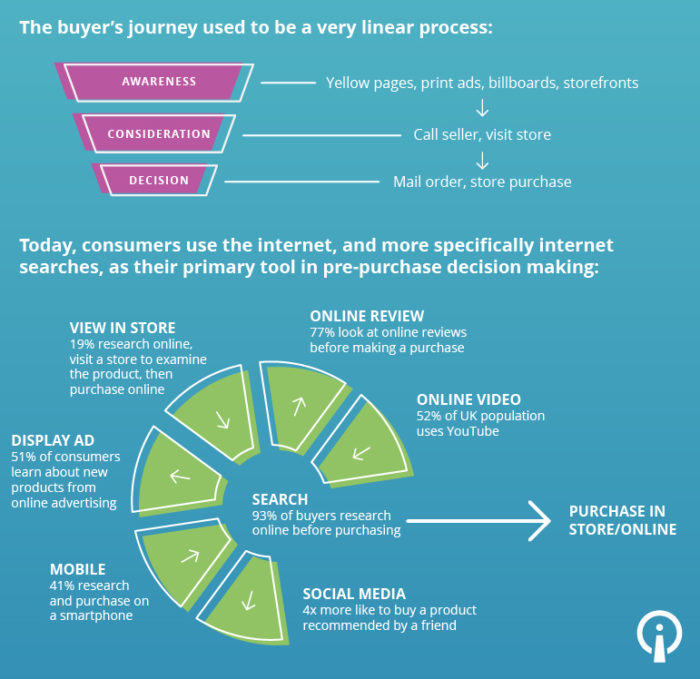
    The buyer’s journey used to be a very linear process: the buyer becomes aware of a need, they consider their options, they express intent, and make a decision. Today, consumers use the internet, and more specifically internet searches, as their primary tool in pre-purchase decision making.

    According to Google, 93 percent of consumers do research online before making a purchase. And, in general, people find user-generated content (like reviews and testimonials) to be highly influential in their purchase decision making. The internet is bursting with this type of content, and digital marketing helps brands share it with the masses in a cost-effective manner.

    Because of marketers’ ability to target specific audience segments based on their interests and online behavior, digital marketing can be far more personalized than traditional marketing. Billboards, TV, and print advertising broadly segment an audience and provide the same messaging to one large group. Digital marketing allows businesses to increase engagement and brand loyalty through personalization that anticipates potential customers’ needs and desires.

    It’s Trackable and Offers More Insights on Effectiveness Than Traditional Advertising.

    As digital marketers, we love data. So what we love most about digital marketing is its trackability.

    With the right amount of expertise and technical know-how in place, digital marketers can often tell you which channels are producing the most business and highest ROI. When’s the last time a billboard or TV campaign could do that?

    What’s key is making sure you’re focused on the metrics that matter, otherwise you might get totally lost in the information overload.

    These aren’t the only reasons for the continued growth in digital marketing expenditures worldwide. Accessible technology is the way of the world today, so businesses who want to keep up in the increasingly competitive digital space should carefully consider their digital marketing capabilities and hire experts who can prove their ability to produce a real ROI. Let’s talk about how we can help you.

    Images:

    Working at Laptop

  • How Small Businesses Can Build Quality Backlinks in 2019 and Beyond

    A man drawing a graph representing backlink growth through Search Influence in New Orleans, LA

    Backlinks have traditionally been one of the most important ranking factors in Google’s mysterious SEO algorithm. So what exactly is a backlink, and why is it important? A backlink is simply a link on someone else’s site that leads to your site. Google values them because your site must be reputable and authoritative if lots of other sites value your content enough to share it. The classic ways to acquire backlinks can still be useful, but the landscape of link building is changing.

    What Makes a Good Backlink?

    The main thing about link building is that quality and quantity both matter. Google values links from sites with strong domain authority (think national sites that everyone in your niche has heard of) and relevance to your industry. For example, if a small business gets a backlink on The Wall Street Journal, they’re getting a top-notch link. That being said, a handful of great links won’t necessarily outweigh hundreds of decent links. For SEO purposes, a “follow” link is better than a “nofollow” link, as nofollow links are not technically backlinks. However, while they shouldn’t be a large focus of a link-building campaign, nofollow links help with branding and shouldn’t be discounted.

    A hand drawing a graph from current to target representing goal setting for Search Influence in New Orleans, LA

    Beware of Spammy Link-building Tactics

    Before Google’s Penguin algorithm update, the quantity of backlinks was most important, so businesses invested tons of money in “black hat” link-building tactics that placed backlinks on random sites with software. Though some sketchy SEO companies still employ software to build links, Google is not only aware of this tactic, they will actively punish a business’s rankings if they find that most of their backlinks are bought.

    The Penguin update came out in 2012, so the “quality over quantity” issue is well known throughout the SEO world, but many small businesses or recent start-ups aren’t aware of it. If you are paying a company to build backlinks for your site with software or other black hat methods, you are paying to penalize your search engine rankings.

    What Are the Tried-and-true Ways to Build Links?

    Building quality backlinks isn’t an easy task—that’s why links are still highly valuable in Google’s algorithm. These link-building strategies have been covered ad nauseam, so we won’t go into too much detail here. Most of the ways to get links back to your site start with an outreach campaign to other website owners and businesses.

    A woman on a laptop representing the backlink strategies at Search Influence in New Orleans, LA

    One of the simplest ways to find a potential backlink is searching for business mentions of your site that are unlinked and asking the site owner to add a link. Another straightforward tactic is to use competitive research, wherein you find who links to your competitors’ sites and target those businesses with your outreach campaign. A similar strategy, which we’ve already delved into, is to search for broken links on relevant sites and either ask them to replace the broken link with one to your own content or point out the error and ask for a different backlink on the page.

    How Do I Build Backlinks in 2019 and Beyond?

    The digital marketing industry received confirmation that SEO trends are changing when Moz published their survey of 2018’s local ranking factors, which found that interacting with Google My Business is one of the most important factors in Google’s local ranking system. So while this may mean that backlinks hold less value than they have in the past, link building is still crucial to a well-rounded SEO plan, as we explained in our analysis of Moz’s survey. The traditional methods of link building still apply, but, in today’s world, businesses need to remember that…

    Content Quality Is King 

    Link building nowadays relies heavily on getting people to share your content, and the main way to get people to share your content is—wait for it—to have great content that people want to share.

    An image of someone pantomiming their mind being blow at Search Influence in New Orleans, LA

    So, then, what qualifies as great content?

    One of the biggest factors for Google, and your audience, is that your content meets Google’s E-A-T guidelines. This means that your content demonstrates expertise, authority, and trustworthiness. It should thoroughly cover the topic and answer your audience’s questions, especially because most people find sites through indirect queries. In addition, useful content that draws people in is one of the main principles of inbound marketing. There are some more specific tactics to create fantastic content, but the main goal is that it helps your audience with their pain points.

    Once you’ve got high-quality content, how do you get people to share it?

    Include images or video. Articles with an image receive up to 94 percent more views than plain text articles, and social media posts that include an image or video get up to 10 times more engagement than content without one. Of course, you need to find a good image to include. You should also focus the content on channels targeted to your audience (so making your content easily shareable on Instagram is going to be different from posting it on YouTube).

    It should go without saying that you should share your awesome content on all of your social media channels (and get your friends to do so, too). However, sitting back and hoping it goes viral and is featured on Ellen isn’t exactly practical. You need to build networks with influencers in your niche, reach out to them, and ask them to include a link to your content.

    Optimize Your Outreach Strategy

    The businesses that you target for your link building campaign should find your content useful—as in, their audience will find it useful. You need to demonstrate to them why it’s worth their while to share your content or link to your site. And, while it’s best to have backlinks on websites with strong domain authority, don’t ignore smaller businesses that are relevant to your industry. Smaller businesses may be more likely to include your link in their content, and any backlink will help build brand awareness, which is a growing part of modern SEO strategies.

    A man at a desk representing the marketing strategies of Search Influence in New Orleans, LA

    Don’t Be Impersonal

    No one wants to read spam emails, and if your outreach emails have obviously been carbon-copied and sent to 200 people, it’s likely that the recipients won’t want to take their time to help you. Sending emails to tons of people does take a lot of time, so it’s fine to use the help of a template, such as these from Hubspot. But you should still make sure that the contents of your email are specific to the person you’re sending it to. Better yet…

    Find Content on Their Site That Could Use a Link to Your Content

    You’re going to be more successful building links if you find a specific article that would benefit from including your link in it, rather than just sending an email saying “Hey, I wrote this. Can you stick it on your site somewhere? Thanks!”

    Let’s say you’re a smoothie company, and you’ve written an amazing, super-detailed article about the nutrients in common smoothie ingredients. After scoping out businesses that would benefit from this information, such as a nutritionist’s website or a lifestyle blog, see if they have any pages that relate to your article. Maybe you find a parenting website that has a blog about making sure kids are getting enough vitamins from their food, and you know that your article would provide helpful additional information. The writer will likely be more receptive to including your link because you’ve shown them exactly where it should be on their site.

    Reciprocate the Link Love

    Website owners love seeing their name and work out there as much as you love seeing yours, so including relevant links to another business’s content on your own site is a great way to open the door. At the very least, they are more likely to share the article and could help create a partnership. You can offer to guest blog and invite them to guest blog on your site. You can even syndicate your content to get the most out of your work while maintaining a good relationship with influencers in your field.

    Link-building Tips for Local Businesses

    A local business owner representing the local seo services of Search Influence in New Orleans, LA

    To bolster their local SEO strategy, small businesses need to ensure that they create brand awareness, both on- and offline. You should build relationships with other related businesses. For example, a restaurateur could reach out to a local farmer’s market. Try to go even further and create strategic local partnerships, where you and another business leave reviews on each other’s sites and share each other’s content. You should also network and reach out to influencers in your industry.

    Link building can be one of the most challenging aspects of boosting your search rankings, but it doesn’t have to be. At Search Influence, we can help you find the right link-building strategy through both tried-and-true methods and by creating quality content to build brand awareness. If you’re ready to take your link building to the next level, start a conversation with one of our SEO experts today.

    Images:

    Mind Blown

    Internet, So Helpful

    No, Thanks

  • Why You Should Consider Hiring a Digital Marketing Agency

    As 2018 comes to a close, now is the perfect time for business owners and stakeholders to reflect on the year that they’ve had, evaluate the current state of their firms, and develop solid business resolutions for a productive 2019. We often speak with businesses that are trying to decide between utilizing their in-house staff for digital marketing or hiring an external agency. The post will discuss the factors you should consider when making this choice. Regardless of the current state of your marketing, you should develop a plan that will help you strategically allocate your resources to set your business up for success in 2019.

    Experience

    Marketing is an investment, often a significant one. Spend your dollars wisely and entrust them to someone who has experience generating results. Marketing agencies, whether they work within one industry or a range of markets, should have several case studies detailing their experience with businesses similar to yours and the returns they have been able to achieve. Because your business can approach digital marketing through a myriad of strategies and platforms (Search Engine Optimization, Paid Search Ads, Google Display Ads, Social Media, Content Marketing, etc.), you need to find an agency that can detail how they plan to accomplish your stated goals via the numerous outlets they have at their disposal. An agency should be able to speak to the certifications of their team within each of these platforms, previous campaigns they have run, and their overall digital marketing expertise to help you to feel confident in moving forward. Though you or members of your team may have had some success running a Paid Search campaign in the past, did that campaign perform to its true potential? Which previous campaigns can you compare that to? Digital marketing agencies have historical data and industry benchmarks, as well as teams of strategists, to steer campaigns in the right direction. While a member on your staff may be a self-proclaimed Facebook expert, does that qualify them as someone you would trust to develop an engaging social media campaign across several platforms with custom graphics and promoted posts? Though your in-house marketing team may have some digital marketing experience, do they have the time to navigate the continuous algorithm updates that Google makes throughout the year? An agency’s experience should demonstrate their ability to provide direction to your marketing and, most importantly, a return on your investment.

    Cost

    As with any decision, cost will be an integral factor. Depending on your goals, a holistic marketing campaign may be more expensive than expected. Conversely, doing it yourself, or doing nothing at all, may already be costing you more than you think. A well-designed strategy executed by experienced marketers should pay for itself while also allowing you and your team to save time. Even if you have an in-house marketing team, and many of our current clients do, a digital marketing agency can augment their efforts, increasing your reach and efficiency. Additionally, by having an agency, you will be able to tap into their established tools and reporting. Are you thinking about moving forward with a digital marketing agency but are still worried that the cost will be prohibitive? Share your concerns with the agency you are considering. They should be transparent about their pricing and explain the scope of the campaign they are pitching, as well as the strategies they plan to employ. You can also ask if it is possible to begin your partnership as a piloted effort, in which the agency will be able to earn additional business by effectively performing a portion of the work you are looking to accomplish. We have experienced this situation several times. Though our aim is to develop a comprehensive strategy to reach our clients’ goals as quickly as possible, we have plenty of experience starting off with a slice of a company’s marketing budget and then using the quality of our work and results to prove that they have partnered with the right firm.
    31 questions to ask a marketing agency

    Voice

    Another potential issue that business owners and key stakeholders mention is that they doubt an external agency’s ability to properly capture the voice and culture of their organization. The process of finding a digital marketing agency should provide an opportunity to get an outsider’s opinion of how clearly you’re projecting your voice online. The agency you choose to partner with can help you find or refine your voice and maintain consistency in your messaging. One of the benefits of a relationship with a respectable agency is the amount of time they will spend consulting you during the initial outreach and objective setting process. Most agencies will invest a significant amount of time getting to know your organization and analyzing existing messaging to ensure that your voice is effectively captured and presented. Additionally, you should always be able to review and edit materials they create on your behalf. No one knows your business the way that you do, but through the steps listed above, the right agency can surprise you with how quickly they grasp and effectively market the culture you have created.

    Tracking

    31 Questions Checklist square imageEffective and easily digestible analytics and lead tracking, along with the ability to show a return on investment, are the best reasons for you to consider hiring an agency. You should expect any digital marketing firm you work with to provide comprehensive reporting that offers insights into the impact of their campaigns. This is no place for ambiguity, and the right agency will effectively demonstrate “where the rubber meets the road” on an ongoing basis. Effective reporting allows your agency to effectively hold itself accountable to reaching the goals you agreed upon.

    After considering the four factors discussed above, you and your team should reflect on the performance of your current digital marketing strategy and feel more confident in moving forward with an agency in 2019. Since 2006, Search Influence has helped hundreds of clients improve their presence online. If you still have any questions about how partnering with a digital marketing agency can help your business grow, fill out our form for a free marketing analysis or call us at (504) 322-3828.

    Images:

    Goal setting

    Whiteboard

    Tracking