Tag: business

  • Get More Views on Your Company’s #Facebook Page

    The term “pound sign” has become obsolete and even deserving of ironic quotes these days. The “#,” now the almighty hashtag, is generally associated with where it originated: Twitter. The hashtag’s aim was to unify groups of individuals discussing similar topics across the social media platform. However, hashtag usage has now expanded to Facebook, and using them properly can guide more traffic to your business’s page.

    How Do Hashtags Work?

    The popularity of hashtags is still on the rise, and more and more Facebook users are typing in “#[insert topic]” to seek common ground with others online. Want to promote your nonprofit organization? When typed into a Facebook search bar, hashtags such as #nonprofit and #donate will lead to news articles, Instagram posts, and more that discuss these topics. Used appropriately, your hashtag can generate engagement among social media users who are browsing for a service that your company offers.

    Image Of Schmidt From New Girl Being Excited #Excitement - Search Influence

    #Don’t #Get #Carried #Away

    When deciding what hashtag seems the most appropriate, using a trending topic just for the sake of site traffic is a bad idea. If you’re looking to promote your law firm, adding #KanyeWest to a post would probably generate views, but ultimately would make your page look spammy —and desperate. Plus, doing so could result in ruining your online reputation. It’s also important to keep it short and sweet. Will Facebook users be typing in “#IneedatriallawyerinNewJersey”? Probably not. But #NewJersey and #TrialLawyer could certainly yield some positive engagement while sounding natural.

    Image Of Jimmy Fallon And Justin Timberlake Singing The Hashtag Song - Search Influence

    Facebook as a Search Engine?

    With Facebook generating around 1.5 billion searches per day, it’s easy to say that the platform is getting used as a search engine. With the proper use, hashtags can be excellent in online promotions and business news. However, too many hashtags can generate less traffic, so choose no more than two relevant tags per post. Once you’ve gotten a couple of trial runs with your hashtags, watch your analytics and see where the strengths lie. If a post’s views are going down as a result of your tags, try different ones!

    Photo Of Spongebob And Patrick - Search Influence

    Being clever with Facebook hashtags can enhance your business’s discoverability. Try inserting them into posts and let the results speak for themselves.


  • Top 10 Search Influence Blogs of 2016

    The year 2016 was filled with memes, the Olympics, superhero movies, and the election. You can bet, with over 46% of people now online worldwide, there were plenty of changes to online marketing, too. If you haven’t kept up, here are the top 10 blogs of 2016 to make sure your business is poised for the #bestyearever.

    Lieutenant Dan And Forest Gump At New Years - Search Influence

    1. What Happened to Facebook’s 20% Text Grid Tool?

    Our Internet Marketing Team Lead, Michelle Neuhoff Boyd, created this informative blog post that eased the confusion of Facebook’s 20% text grid tool. Find out how this new rule may affect your business.

    2. An Update: How to Get Rich (Answers, That Is) with Google

    Jim Carrey Typing - Search Influence

    Not rich with money, but with Google. Over the years, Google has changed their algorithm, and our team at Search Influence is making sure to stay on top of every change. Read this post from 2015 to learn more about rich answers.

    3. Getting Hands on With the New Google My Business

    Having a hard time understanding the new Google My Business? This engaging blog post can clear up any confusion on listings, editing, and more.

    4. Three Top Picks for The Big Idea at New Orleans Entrepreneur Week

    During New Orleans Entrepreneur Week, The Big Idea picked 10 entrepreneurs’ ideas in front of a large crowd, and everyone got to vote their favorite. See the top three picks that Paula Keller, our director of sales and marketing, enjoyed the most by reading this post.

    5. Email Marketing for Small Business: 9 Things Not to Do

    Find out how not to email your customers when just starting your business. Originally published in 2010 by a Search Influence Alumni, read all about effective email marketing.

    6. A Dentist’s Guide for Choosing Target Audiences on Facebook

    Jean-Luc Picard Star Ship Enterprise - Search Influence

    Ever wondered how to market your dentistry on Facebook? This guide will help you understand the most successful dental campaigns in the industry. You’ll know what age group and interests to target.

    7. Should You Be Using Google’s URL Shortener in Your Social Media Campaigns?

    Are you still unsure if you should use Google’s URL shortener? This blog post talks about the benefits of using their shortener, such as the URL analytics, redirects, ease-of-use, and more.

    8. Barnacle SEO – Local Search Engine Optimization for the Sam’s Club Crowd

    Will Scott, CEO and co-founder at Search Influence, published this post back in 2011. Learn more about the term Barnacle SEO and which sites to trust for small businesses.

    9. Nix the Wix SEO Challenge: Tips & Tricks

    This post from 2015 helps you make the most out of your Wix website by guiding you on the meta tags updates, sharing your site on social media, making your site visual, and more.

    10. 10 SEO Blogs You Should Be Following

    Do you want to read reliable SEO blogs? Here’s a list of the most informative SEO blogs that Monica Shariffskul put together. Many of these are on my top list, too.


    Be sure to subscribe to our Search Influence blog, and you’ll be the first to know when a new blog has been posted. Also, Happy New Year!

  • Google’s Ascent With User Experience

    Being found on the internet is essential to any business. We all know it, but few understand what it takes to be found. Luckily, there is an easy approach to beginning your own online marketing journey.

    Start by looking at Google, not as a search engine where businesses tirelessly compete to appear at the top spot, but as a user tool. Back in the ancient times of the internet, Yahoo had a $125 billion market cap, and Google was hoping to be acquired for $1 million. As time marched on, Google surpassed Yahoo as the number one search engine because of one key difference between them: the user experience. Google didn’t provide results promoting Google brands or its own material. Instead, it happily delivered the most relevant search results to the user. Results that took the user to a different website.

    While this may seem counter-intuitive—helping users leave your site and go to another—it has proved successful. Sure, users temporarily left Google by clicking on a third party’s link; it also guaranteed their return. Such a great user experience will entice anyone to return time and again for a similar experience. This is how Google surpassed Yahoo as the leading search engine, and it’s the best way for you to start your online marketing process.

    User Experience Vs. Design - Search Influence

    The lesson for you to take away as you embark on your journey is to put user experience first. When creating your website or content, don’t try to be overly fancy or technical. Start by making it simple and convenient. Websites become popular when users can easily navigate and find content that is relevant to their search. Don’t try to force your consumer into a Corvette when they are really looking for a minivan. Your customers will thank you when they can easily access your website, it loads quickly, and the information they are searching for is plain for them to see and understand.

    Going forward, as you build out your website, keep the consumer in mind each step of the way. How would you want to interact with the website of a business like yours? If you don’t know where to start, talk to the friend who doesn’t quite understand what you do. They can be your guide, explaining how they would want to navigate your site and their desired outcome. Use this to cater each step of the user experience to your actual users.

  • The Do’s and Don’ts of Content Syndication for SEO

    A few weeks ago, I received a question about the value of content syndication in marketing strategies. Because it’s one that I also asked when I first started at Search Influence and began learning about SEO, I wanted to actually address this question in a full blog post.

    The Magic Of Mobile - Search Influence

    What Is Content Syndication?

    Content syndication is the process by which a piece of content (blog, news article, graphic, video, etc.) is pushed out to other sources. You see this, for example, when online news outlets pick up press releases or other articles and repost them verbatim to their own sites.

    From a UX point of view, this can be a great way to increase your reach to potential customers. From an SEO point of view, content syndication can garner valuable backlinks and help to increase website authority. And from an overall marketing point of view, the efforts spent on syndicating content can also build great relationships with other websites and organizations.

    Backlink and Authority Building

    The process for syndicating content is similar to that of general link outreach and is for a similar purpose as well: to generate authoritative backlinks that, down the line, contribute to your own site’s authority. Coupled with the opportunity of increasing reach to your business’s original content, this can be a worthwhile tool in your marketing arsenal.

    The Caveats of Content Syndication

    That said, there is a right and a wrong way to syndicate content when it comes to SEO. Here are some things to think about when considering it for your marketing strategy:

    1. Duplicate Content

    Syndication is inherently creating duplicate versions of your content and putting them on other websites. In the case of written content, this can actually detract from your SEO efforts if done incorrectly. It’s important to understand the policies and practices of the websites you’re syndicating to and ensure they are declaring yours the primary version.

               Genie From Aladdin Multiplying - Search Influence

    This can be done a number of ways but the primary ones are:

    – Rel=canonical – This is a meta attribute that basically tells search engines that the page they are on is the same as another page. In this scenario, syndicated versions of your content will set your original URL as the canonical. For more information, check out Google’s own post on the rel=canonical attribute.

    – Noindex – This is a robots meta tag that tells search engines not to index a page at all so that it won’t appear in search results. Ideally, in this case, syndicated versions of your content will be set to noindex so your original post isn’t competing for rankings with them.

    2. Backlinks

    Remember to include an actual backlink to your content when syndicating. This can be forgotten when you get caught up in pushing your content out there or when syndicating images and videos. Ideally, this would go to the original content’s URL, rather than another page on your website.

    3. Site Authority

    This is an oft forgotten consideration when choosing a syndication site. Quality and quantity both have their place when creating your syndication strategy.

    In an ideal situation, if you were to get one backlink from content syndication, you’d want it to be from a site with the authority equivalent of Google itself, and you’d want it to have a follow link back to your website.

    But, we don’t live in an ideal world, so it’s important to keep in mind the actual authority of syndicating websites and find out if the links you’re getting are follow or nofollow. Check out this resource to learn a little more about the importance of follow and nofollow links.

    With all this in mind, content syndication can be a great opportunity for websites. But, like I said in my last post “The Importance of Content Marketing to Your SEO Strategy,” it doesn’t matter if you don’t have great content to start with.

  • Search Influence Year in Review: Our Top 10 SEO Blog Posts of 2016

    With this year drawing to a close, now is the time to reflect on the year and prepare for a successful and productive 2017. In keeping with this, we’ve highlighted our top SEO blog posts of 2016 to get you extra pumped for your New Year’s re-SEO-lutions.

    Image Of Happy New Year Script - Search Influence

    1. An Update: How to Get Rich (Answers, That Is) With Google

    In 2016, it’s estimated that approximately 40 percent of queries on Google resulted in “Rich Answers.” So what are these Rich Answers, and how can your website get selected for a Rich Answer on Google’s search engine results page (SERP)? This updated post gives you all the details.

    2. Barnacle SEO – Local Search Engine Optimization for the Sam’s Club Crowd

    3745255

    For small businesses with small budgets, the “Barnacle SEO” approach may have big payoffs. Learn how attaching yourself to the white whales of the SEO world can expose you to new markets and customers.

    3. Nix the Wix SEO Challenge: Tips & Tricks

    Sure, Wix is the uber-easy-to-use, code-free web developing platform for dummies, but just how well do Wix sites get along with search engine optimization? Thanks to these quick tips and tricks, it’s easier than you may think for Wix sites to play nice with SEO.

    4. 10 SEO Blogs You Should Be Following

    Fancy yourself a true SEO connoisseur? This list outlines all the insider blogs you should be reading to stay up to date on the constantly changing world of search engine optimization. Hey, even if you’re new to the game, resources like the Google Blog and MOZ Blog provide a plethora of information to get started.

    5. These 10 Expert Tips Will Drive Traffic to Your Business’s Website

    Driving traffic to your website means driving sales for your business. Our in-house experts share their insights when it comes to getting people in the online door. Hint: If you’re promoting on Facebook and publishing press releases, then you’re off to a good start.

    6. 5 Tips to Improve Local Search Rankings Even If You Don’t Have a Physical Location

    Many businesses are opting for prime real estate on the interweb instead of brick and mortar locations, but that doesn’t mean you need to sacrifice website optimization. Check out these five tips for increasing your ranking.

    7. Google My Business for Doctors: Visibility, Authority, & SEO

    Claiming or creating a Google My Business listing can have big search impacts for medical practices. Follow this step-by-step guide for single practitioner practices, multi-practitioner practices, and multi-location practices.

    8. Local SEO: How to Clean up Citations for Better SERP Visibility

    A citation is the presence of a business’s name, address, and phone number (NAP) on any website. The consistency and accuracy of your NAP across sites will improve your local SEO rankings. Learn the four basic steps to complete an effective citation cleanup.

    9. 12 Things You May Not Know About Online Marketing

    Are you ready to be shocked and awed by the amazing (and hard to predict) world of online marketing? Here’s a list of some of the things that caught our Search Influence team members by surprise when they were rookies in the game.

    10. The Importance of Content Marketing to Your SEO Strategy

    Content marketing is the bread and butter of your SEO strategy and, in many ways, the success of your brand. Are you telling a relevant and compelling story about your business? Are you targeting the right audiences? This post will help you answer these important questions.

    What better way to bring in the new year than with a new online marketing strategy? We hope these posts offer some helpful insights and maybe even a little motivation for a productive and optimized 2017.

  • 5 Things To Know About Online Marketing Before Starting Your Own Business

    With 2017 quickly approaching, there are many people who are dreaming about starting their own businesses. Before jumping in, here are five things you should know about online marketing as an entrepreneur just getting started. Three tips are from guests Mike Blumenthal, David Mihm, and Greg Sorenson, and two are from yours truly.

    1: Scale Is Everything

    online-marketing expert 1

    Mike Blumenthal runs an amazing blog that keeps up with the most recent changes in online marketing and Google in particular. As a founding partner of GetFiveStars.com (a reputation management platform), Mike is known by many as “Professor Maps” due to his wealth of knowledge around the local search ecosystem. He was one of the first people I thought to interview for this blog.

    According to Mike, he doesn’t necessarily consider himself an “entrepreneur,” but “rather, someone that is trying to find their way through life by helping others be and do better AND not have to work for someone else. That ethos, which evolved over a number of years in business, helped me be clear about what I am doing and why.”

    I asked Mike what’s something he wish he knew before getting started in our industry, and he had the following to say:

    • I grew up in a family business and all I knew was family as partners. That was true well into my career. I wish I knew that family doesn’t always make the best partners as they may not be flexible enough in this new age of constant change.
    • Find and work with partners that not only share your core values but also have skills you don’t yet have. You can help each other out and make the enterprise more effective for all.
    • Recognize that we are in a market economy and, as such, any company is at the mercy of that economy. It takes thoughtfulness and hard work to succeed but never for a moment delude yourself that your success is controllable or fully due to that hard work and thinking. It is just as easy to fail as succeed in today’s world, and often, you are but a passenger (victor or victim) in a much bigger exercise that is not of your own making.
    • Scale is everything. You can scale with people or you can scale with software. But realize that if it is just you, there are concrete limits to what you can do and can continue to do in a given period of time. But scaling, while easy to say, is not as easy to do. It has taken me several tries to even get close.
    • In the end, there is nothing special about being an “entrepreneur.” It is just a different way of moving through the world, putting food on your table for the ones you love and hopefully helping others.

    2: Address Online Reviews, Good and Bad

    Responding to reviews online is crucial when it comes to showing that you’re engaged and active with your community and customers. As I mentioned in my blog on “4 Tips To Manage The Reputation Of Your Online Business,” it is often assumed that large franchises and multi-location businesses are too big to handle the relatively large amount of feedback they receive. While it’s much easier to respond to positive reviews, responding to negative reviews gracefully and respectfully can also lead to an improved reputation for your business.

    3: Pay Close Attention to Google Updates

    online-marketing expert 2

    David Mihm is a co-founder of GetListed.org (now Moz Local) and a leader in Local search engine marketing. When asked what he wish he knew before going into online marketing, he said:

    For one thing, Google’s a huge company with many different departments, not to mention a crazily complex algorithm, and it’s unlikely that the statements made by the webmaster team are infallibly correct. More importantly, statements that come from Googlers are not designed to serve webmasters’ interests; they’re designed to serve Google’s interests. So, take every comment Google makes with a grain of salt, and to the extent that you can, test their statements (and your hypotheses) with what you actually see happening in business decisions on a big scale, and in search results on a small one.

    4: Your Website Needs to Load Quickly

    In my presentation on “10 Ways To Improve Traffic To Your Site,” I mentioned the importance of good site speed. Site speed is the amount of time a page on your website needs to completely load. This matters not just for search engine visibility and ranking users and search engines, as users are less likely to stay on a website that takes a long time to load and search engines will penalize your website for being too slow. Google’s PageSpeed Insights Tool is great for analyzing your site for ways to improve your site speed and it will provide you with detailed information on how to fix each issue.

    5: Start with Concrete Marketing Goals

    online-marketing expert 3

    Greg Sorensen, vice president at Baker Maid Products, Inc., works with retail customers to help conceptualize new products and bring them to market. He works with a production staff to ensure they are producing quality products efficiently by trying to improve our production infrastructure. Greg also manages all of their accounts directly and seeks out new retail customers such as grocery chains, specialty food stores, and online food retailers. Last but not least, he helps steer the direction of their marketing efforts with the help of their social media associate and their operations manager.

    When asked what he wish he knew about online marketing before going into his current field, Greg said the following:

    Anything. Honestly, I knew nothing about online marketing when I was starting out. Partly because we had no budget, but also, at the time, online marketing seemed somewhat mystifying. I wish I had known more about crafting a strategy as opposed to just doing a hodgepodge of ideas and hoping it worked out. It is easy to waste money that way. You must have concrete goals and a well-researched plan to achieve them.

    Hopefully, these five tips will help you in starting your own endeavor with a few less roadblocks or missed opportunities.

  • A Day in the Life of an Account Manager at Search Influence

    Twitter Takeover Presley Broulliette

    With all of the great positions available at Search Influence, it’s easy to wonder what each department or each position does every day. Earlier this week, I took to Search Influence’s Twitter to break down what my day-to-day as an Account Manager looks like. Though each day is different, they all share a common theme: client communication, meetings, and managing my team.

    Responding to Client Questions

    Mornings always consist of answering emails. Each person on the Account Management team has clients from across all industries and locations, all of which communicate with us primarily through email and phone. I like to take the mornings to open up all emails, check for emergencies, and answer any questions our clients may have. It’s great to know that our clients are getting reliable customer service, as we strive to answer all requests within a 24-hour span.

    Search_Influence_Jobs Tweets

    One of my favorite aspects of being an Account Manager is getting to work with clients from all industries. On a daily basis, I talk to everyone from a plastic surgeon to a mortuary cooler provider! Our client rapport is incredibly diverse.

    Our Morning Whiteboard Meetings

    Every morning at 9:30, the entire Account Management Team meets by our whiteboard to go over metrics and tasks for the day. We also use this time for giving other members of the team “kudos” for being CHARGED.

    Paid Search Meeting

    On Tuesdays, members from all departments meet to talk about our paid search, or PPC, clients. This meeting is a great way to discuss successes as well as potential roadblocks in our campaigns.

    Paid Search Meeting Search Influence

    Managing Your Team: Weekly 1-on-1 Meetings

    The biggest difference when you are promoted from an only client-facing position to a management position is managing your team. One of the best things about being in a management position at Search Influence is being able to work closely with my team and watch their careers grow.

    In order to stay up-to-date with my team, their clients and any questions they have, we have weekly 1-on-1 meetings. This hour-long meeting is a dedicated time for my team to ask any client or career-related questions, as well as a time for me to follow up with any projects that are pending or in progress. This time isn’t specific to the Account Management position either—all departments at Search Influence have these dedicated 1-on-1 times!

    Other management duties consist of leading employee reviews at the 6-month and annual mark and reviewing my team’s tasks/projects.

    Wrapping Up Big Projects

    Search_Influence_Jobs Tweets

    After lunch, I typically dedicate my time to working on big projects. These can be client-related, internal, or team-related. I’m most productive in the afternoon, so this is the time that works best for me, but it’s different for all members of the Account Management team.

    Search_Influence_Jobs Tweets

    The project that I am most recently working on consists of revamping the presentation deck that we use when we kick off a new client. It was a great opportunity, and I’m so excited to see this project through!

    My Account Management Career

    Search Influence has been a great career experience so far within my almost three years here. Because I was hired fresh out of college (Geaux LSU!), I’ve worked my way up from Junior Account Associate to the management position I hold now. I’m thankful for the opportunity I’ve been given and would encourage anyone looking for a client-facing role to apply!

  • The Importance of Content Marketing to Your SEO Strategy

    content-marketing-is-important-for-SEO image

    A few weeks ago, I wrote about the basics of link building and how content is crucial to any editorial link building strategy. Today, I want to talk about exactly why it’s so important and what you can do to start writing great content, not only for SEO, but also for your overall content marketing strategy.

    What Is Content Marketing?

    Content marketing is the strategic creation, distribution, and promotion of content to generate leads, sales, and brand awareness. This could be anything from a social media post or a webpage to a regularly updated blog or news section of your website.

    Really it applies to any piece of content that a consumer could see.

    Content for SEO

    That’s why, when it comes to SEO, content is one of the most important factors in search engine algorithms and the basis for multiple other factors that affect search visibility and traffic. It is also why SEO factors into your content marketing strategy.

    Did you know:
    – 75% of consumers use search engines regularly when doing product/service research (CMI)

    – 60% of consumers purchase a product/service based on that research (UpScribed)

    Well, search engines like Google do. That’s why they include specific guidelines for creating content:

    screen-shot-2016-10-11-at-1-40-40-pm

    Because content is the foundation of the consumer experience, search engines have placed a premium on its value as a ranking factor.

    Consumer-Focused Content

    Like any foundation, you need to build upon your website’s existing content to really reap the benefits. More valuable content equals more visibility and more links. It’s not enough just to have a website with good content. You need to keep creating more new and germane content to maintain your relevance in the eyes of search engines and to continuously provide opportunities for references, backlinks, and lead generation.

    Did you know:
    – 86% of consumers stated that using a search engine allowed them to learn something new or important that helped them increase their knowledge. (Pew Research Center)

    – 95% of B2B buyers are willing to consider vendor-related content as trustworthy. (Curata)

    – Businesses with websites of 401–1000 pages get 6x more leads than those with 51–100 pages. (Hubspot)

    It all loops back to user experience. Search engine algorithms are developing to incorporate user experience as a ranking factor.

    Content Creation Strategies

    So, how can you create a content marketing strategy with search engines in mind?

    1. Create custom topical content. One of the major rules in SEO is to avoid duplicate content, so let’s start there. Your content should be completely unique and each page should have one main topic or focus, ideally centering on something potential customers would search.
    2. Utilize titles and headings. By organizing your content with descriptive titles and headings that focus on the topic you’ve picked, you’re more clearly indicating to search engines and users what the page is about.
    3. Reference products and services by name. Don’t skirt around the subject with euphemisms and colorful language. While advanced, search algorithms aren’t the best at gleaning information that’s not explicitly stated.
    4. Create new pages. Like I said before, each page should have a topic of its own so if there’s something you want to talk about, make a new page or post for it. Locations, products, and services are all examples of things that warrant their own pages, as long as there’s enough to say about them.
    5. Which leads me to my last tip: Fill up your pages. If you can’t come up with at least 300-ish words on a subject, it probably doesn’t actually deserve its own page.

    Did you know:
    – The average length for content ranking in the top 10 results of Google is at least 2000 words. (Quicksprout)

    Just remember, search engines are ever-developing to match user intent. So, when in doubt, write for your potential customers and make sure your content is reaching them.

    Image Sources:
    Image 1 (Keyboard Graphic): Google Photos
    Image 2 (Screenshot): Google Support
    Image 3 (Office Space Meme): Relatably


  • #NOLATech Week 2016: How To Drive More Traffic To Your Site

    In conjunction with NOLATech Week 2016, Search Influence hosted a workshop to help support small businesses in their online marketing efforts. Paula Keller and Mary Silva presented on how to boost your local search rankings and ways to drive traffic to your website respectively.  

    Paula Keller’s “How To Boost Your Local Search Rankings”

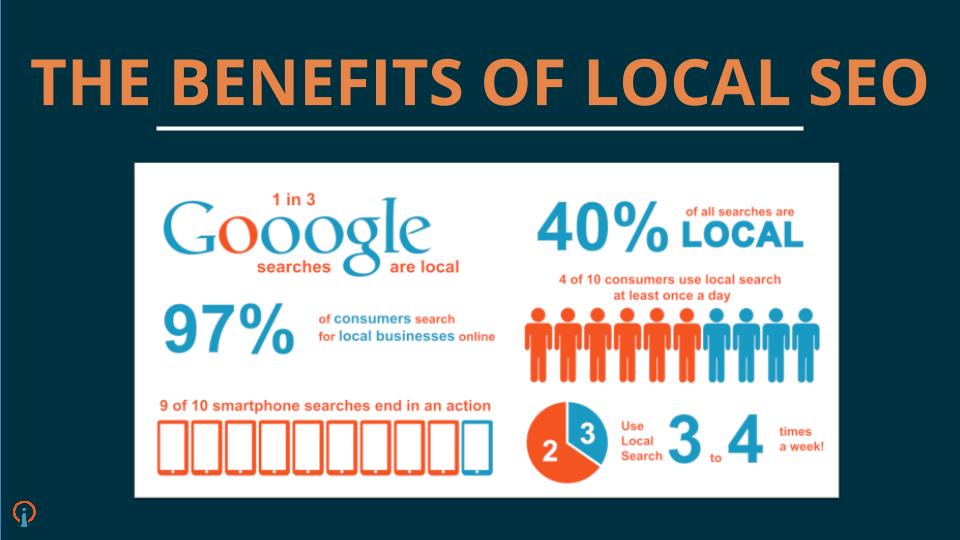
    Paula’s “How To Boost Your Local Search Rankings” presentation took the audience through what types of businesses benefit from local SEO efforts. It also detailed the different types of Google My Business pages and how to use them. With the insight from Paula’s presentation, business owners can better understand how to optimize their business both onsite and offsite to gain better local search rankings.

    search-influence-university-how-to-boost-your-local-rankings-10-11-2016


    Mary Silva’s “10 Ideas To Drive Traffic To Your Website”

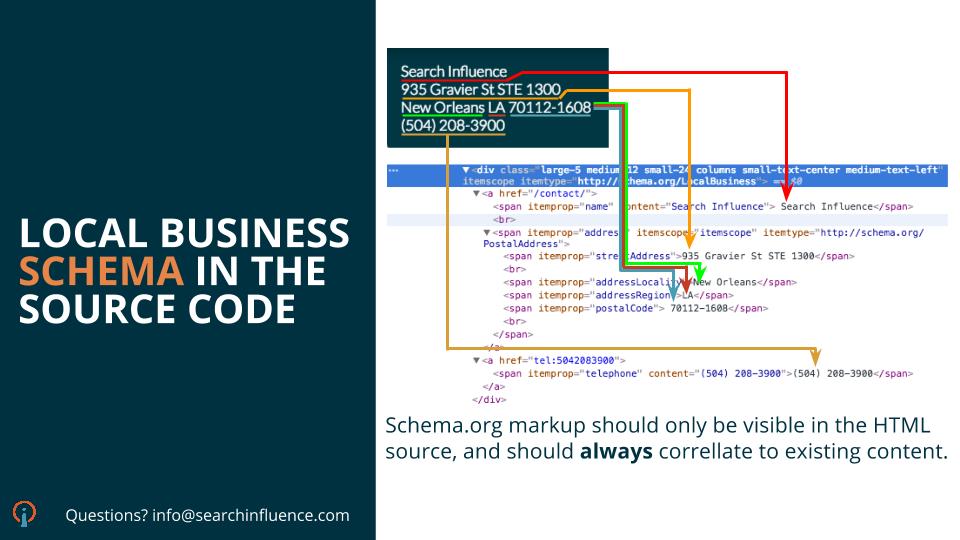
    Mary’s “10 Ideas To Drive Traffic To Your Website” presentation tackled concepts that influence your site’s user experience and actionable ways to help improve traffic to your site. It covered topics ranging from highly technical concepts like Schema markup and Google Search Console Analysis to less laborious efforts like directory and authoritative link earning. She explained how to use Schema.org rich snippets to create more engaging search results for your website on Google. Her presentation also went into detail on how to use social media efforts effectively to not only post but also promote engaging content like infographics. “Think of your online marketing efforts as a service,” said Mary, Internet Marketing Team Lead at Search Influence. “We know our users, and we’re getting them closer to their end goal faster. Make your overall goal to give users a cleaner, better experience and make users lives easier. ”

    search-influence-university-10-ideas-to-drive-traffic-to-your-website-5-26-2016

    In utilizing some of the tips and tools explained in these two presentations, guests could help increase their business’s online success in many ways including, but not limited to, improved visibility in local search results and increased traffic to their sites.

    For more information on the event, visit townsend.bunksite.com/ or contact the office directly at 504-208-3900 or Search Influence, 935 Gravier St #1300, New Orleans, La. 70112.


  • Here Are Our Top 5 Blogs From September

    Another month, another top five blogs from Search Influence! All of these posts are chock-full of information that will help you keep your website in tip-top shape and give you some insight into life at Search Influence. Subscribe to our blog to stay up to date on what’s going on in the world of SEO and Search Influence.

    #5: How Google Possum Has Affected 3 Pack: A Before and After Review

    Google’s newest update has had some drastic effects on the search results 3 pack. Amy Arnold gives us the lowdown on some listings that are pretending to be dead.

    Google Possum Update

    Look at that beautiful Google update devouring those listings.

    #4: What Happened to Facebook’s 20% Text Grid Tool?

    Michelle Neuhoff Boyd is back at it again this month and refuses to leave the top five standings. Whether you’re a Facebook fiend or a business taking advantage of the social platform, this blog entry has mountains of information about the inner workings of the Social Media giant.

    #3: Happy Working Parents Day: 10 Influencers on Lessons From Their Working Parents

    To celebrate National Working Parent’s Day, Mary Silva whipped up a heartfelt blog post complete with written and video interviews of some of our employees. Tears may be shed by the time you reach the end of the video, so be sure to have that tissue box ready.

    Kid nodding head

    #2: Search Influence Adds 3 New Hires in August

    Search Influence added three more employees in August and a lot of people were interested. Learn more about our new team members in this post compiled by Melissa Verzwyvelt.

    #1: Barnacle SEO – Local Search Engine Optimization for the Sam’s Club Crowd

    Last but not least, Mr. Barnacle SEO himself, Will Scott, saw a massive resurgence in popularity of his blog where he coined the industry changing term. Take a gander at this super informative blog.

    While you’re at it, follow our blog to get the latest updates from Search Influence.