Shutting down the ability for these sites to advertise online…
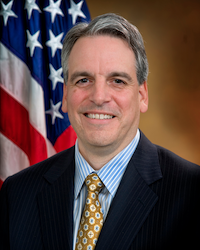
As expected from page 21 of the May 10 quarterly report to the SEC, Google will pay for a Department of Justice investigation into the use of American ad space for illegal Canadian pharmaceuticals. Finding that from 2003 to 2009, Google “both allowed and helped” Canadian pharmacies that tried to sell to US patients, this DOJ settlement avoids criminal prosecution. It’s also one of the largest forfeitures in US history, according to Rhode Island U.S. Attorney Peter F. Neronha. Crimaldi argues that Google may see long-term reputation damage from the case, which butts heads with the mantra of “Don’t be Evil.”
But is this backlash really going on? Google’s stock price was up $4.47 (.86%) on the day, despite Crimaldi’s piece coming out at 8am yesterday. Crimaldi predicted this by mentioning its miniscule amount compared to Google’s cash on hand; but not only this, the money has been paid for already. Google already mentioned it almost a year ago. The fallout for this may have already rippled the zeitgeist — May 10 began a 6-day slump, though not the nadir of a 3-month losing streak starting in April. Making comparisons even harder is the 5-day selloff that was likely a direct commentary on Standard and Poor’s downgrade of the company’s shares to “Sell.” S&P rated the stock a “Hold” yesterday, basically saying “the price is right.” Similarly, Robert W. Baird & Co. sees verticals like YouTube as undervalued, and sees the stock outperforming the market, even growing to $650 a share.
Three salient points arise from this story. First, there is a lot of trust in Google. The business world sees one of the main thrusts of European antitrust investigation as a boon to the company: the vertical integration Google has enacted. Secondly, Google isn’t the Dad and Dad store it was, even as recently as last decade. Google’s revenue has exploded by 33% over the past fiscal year, in no small part due to the Adsense/Admeld deal. Finally, Google has often toed the line of what is or isn’t legal — for a less objectionable example, look at Google’s reticence to Chinese censorship laws.
Peter F. Neronha, sending "a clear message to… Google and to others that contribute to America's pill problem that they will be held to account."
Most importantly is that this has already been planned for and dealt with. The submitted Form 10-Q says:
In May 2011, in connection with a potential resolution of an investigation by the United States Department of Justice into the use of Google advertising by certain advertisers, we accrued $500 million for the three month period ended March 31, 2011. Although we cannot predict the ultimate outcome of this matter, we believe it will not have a material adverse effect on our business, consolidated financial position, results of operations, or cash flows.”
This is the slide deck from my presentation at Local Search Summit “Using Facebook & Twitter to Drive Local Leads” this afternoon.
We had a great crowd and I enjoyed the heck out of putting this slide show together. I was trying to position some real tactics in using Twitter for local business.
I’m hopeful that it was tactical versus theoretical and I look forward to your feedback.
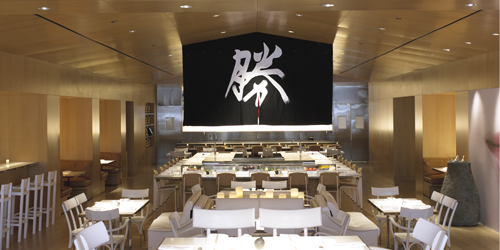
So, I’m sitting in a fancy sushi restaurant in LA a couple weeks ago with a friend, who’s also a client. Everybody’s thin and beautiful (except us, of course), the decor is slick and gorgeous and the sushi and company were awesome.
We’re talking business and Marc says to me “why do you stay in New Orleans”?
Look, if you live here, you know why I stay in New Orleans. But for the rest of you, here’s a few:
When you go to morning meeting at your kids’ school people are dancing
It’s funky, eclectic, exotic and refined
It’s a small town with an international vibe
There is a warmth that’s real, I mean real
There is a thriving business community who gets what’s important
It’s easy
Why not stay? I’ll leave that for someone else, I don’t know where else to go, you know? I love New York, I love San Diego, I love Paris, but none of them is this easy.
And, regardless of what the paperssay, it’s a great place to start a business.
Ok, enough rah, rah, how bout some facts!
in 2008, Louisiana was 5th in the nation in Entrepreneurial activity
The Louisiana Angel Investor Tax Credit
The Digital Media / Motion Picture and Sound Recording Tax Credits
Measures are underway to extend this to all technology firms
Unlike the rest of the country our unemployment rate is going down
And finally, we have GNO Inc. who is putting together the GNO Digital Media Alliance to advance the cause of Digital Media and Media as the next growth industry in Louisiana.
Michael Hecht of GNO Inc was kind enough to come speak with us and told us that GNO Inc has put together a data sheet with some key facts about New Orleans. At our Net2NO meeting on Tuesday night I suggested everyone with a blog should take it upon themselves to spread the good news.
On their web site it’s an image. I had it transcribed below:
GREATER NEW ORLEANS: A GREATER REALITY
The Greater New Orleans Reality Check
The Greater New Orleans region has international trade assets, such as six-class A railroads, excellent highway access and a location at the mouth of the Mississippi, that are unmatched anywhere in the country.
Our port system, taken from Plaquemines to Baton Rouge, is one of the largest in the world.
We have 88% of the nation’s oil rigs off our coast, and are in the top three in the country in oil and gas production. We are America’s Energy Coast.
Every single manned flight that has gone into space since Apollo has done so with a massive fuel tank built in one of the largest and most advanced manufacturing facilities in the world, right here at Michoud.
We are now the center of the third largest film producing region in the country, behind only Hollywood and New York.
The GNO region has a collection of colleges and universities that is as good, in quantity and quality, as that of any city of comparable size in our country. And these schools have come back strong: admissions at Tulane is up 180% from pre-storm levels.
94% of our region is above sea level.
And, the technology exists to restore our wetlands and protect the remainder.
9l% of the regional population is back.
And the population that is back is filled with highly educated and motivated “brain-gainers.”
Our region is experiencing a level of civic and business engagement that hasn’t been seen in decades.
Our region is embarking on one of the most ambitious educational reform programs in the history of our nation.
Here you can find a sense of place, a value for dollar and an overall quality of life that city planners have discussed since Jane Jacobs, but few actual regions can offer. In an ever more homogeneous world, the GNO region increasingly shines as a unique beacon of culture.
While the rest of the country is reeling from a massive financial crisis, we are relatively better-off thanks to billions of recovery dollars, a surplus from formerly high oil and gas prices, and record-breaking exports.
This is our reality. This is Greater New Orleans.
So, get out there and spread the good news. Post a comment with a link to your blog post and I’ll add it below with the others who are:
Editor’s Note: This was written immediately after the feast in February and has been in queue for publication since (in other words, my bad).
New Orleans Contemporary Arts Center Web Site
New Orleans Contemporary Arts Center graciously hosted the Social Innovation Conference called ‘The Feast’ put on by All Day Buffet. Social change entrepreneurs joined together to talk about the social change movement that is about to explode. As the entire nation in quietly experiencing the beginning stages of a business paradigm shift, New Orleans is growing into the next hot spot for the movement. Some refer to it as the next Silicon Valley because of the incredible opportunities that New Orleans has to offer start up companies, for profit and nonprofit alike.
Echoing Green Web Site
The conference started with a presentation from Heather McGrew of Echoing Green, a 501c3 organization that invests in “new leaders who have untested, smart ideas that deserve to be implemented”. They’re looking for great new social change agents or social entrepreneurs worldwide with new ideas. The focus of Heather’s talk was about ‘identity’ and what that means for an organization, company, and the third sector as a whole.
The cycle of identity goes like this: A start up organization realizes it needs credibility to get funding and investors, it begins to create a brand that people recognize, as the organizations grows the brand becomes more and more widely recognized (credibility) due to press releases, logos, website design, ads, completed projects, etc. The building of the brand can begin to dominate goals rather than the mission of the organization. So, the question becomes, how do we get back to the movement? How do we get back to the social change mission we started out seeking to accomplish?
The organization’s leadership must have the same vision, which must be congruent with the mission. Everyone needs to be on par with and seeking to accomplish the mission. In addition to the mission there are long-term goals that social change entrepreneurs are trying to reach. This one project will change a segment of the system in place but the entire system is the long-term goal. Many social entrepreneurs have this global ambition however; as an organization takes on an identity it becomes territorial of its resources and mission. For example, GTECH, Green Coast Enterprises, and SPOUT may all find themselves competing for some of the same grants, investors, land, etc. Competing over resources to accomplish similar missions is not what the organizations are about. Competition in the third sector, unlike the private sector is less likely to produce successful results. Ideally social change organizations would use the limited resources available to them in the most efficient manner. This means collaboration on a large scale, larger than we have seen yet in this sector; collaboration that is about identifying with the movement not the organization’s brand.
Rachel Botsman and Tamara Giltsoff from Social Innovation Sustainability Space presented a similar message regarding a business paradigm shift and the theme of ‘connectedness’. I thought the most illustrative example of the change that we hope to see more of in the business world is the collaboration between Coca Cola and the World Wildlife Fund (WWF). Coca Cola has the most water efficient manufacturing plants however the WWF was saying, it really doesn’t matter how efficient your water usage is if there isn’t any water left to use. Coca Cola and the WWF spent years spending money lobbying for their positions. Then Coca Cola understood and formed a partnership working to conserve the water we have now. This is an example of private and public sector organizations identifying themselves with the social change mission not their brands. The overall message being that everything is interconnected and people and organizations need to shift a large part of their identity and the reason they do business toward social change.
NOLA 180 Web Site
Speaking of interconnectedness, NOLA faces a hard battle improving its broken education system. John Alford spoke about NOLA 180‘s plans for implementing a school turn-around plan through out individual schools in New Orleans. Currently, the model is being tested on Langston Hughes Academy where students are held high standards and personal accountability. The students serve a 9-hr school day, have homework, and are taught strong moral principals in addition to academic lessons. Langston Hughes will likely serve as an incubation school for new teachers and administrators to be trained for the eventual take over of another school that seeks to be turned around. John’s models are impressive and daunting, there is a lot going on in them, which means an equal amount of work to do. But, they’re visible, the plan is accessible and all we need to do is execute. As he said, the New Orleans we are building now with young, successful talent cannot be sustained if the future generation of New Orleans is not being educated. The students are connected to New Orleans success.
Voodoo Ventures Web Site
Chris Schultz’, Voodoo Ventures, a local business and social entrepreneur gave an incredibly motivating and inspirational speech about start up organizations. He taught all of us how to execute ‘bootstrapping’ perfectly. That is pulling yourself up by your bootstraps and putting your ideas out there and in motion. Fear of failure should never enter your mind; everyone fails at least once and if you fail you pull yourself up by your bootstraps and move on to the next idea. Also, entrepreneurs often have the ‘impostor syndrome’ that is the fear of being considered an impostor. This, he says, needs to be shoved off as quickly as possible. Of course someone has thought of your idea before, but have they executed it?
Receivables Exchange Web Site
Nicolas Perkin honed in on this point in his presentation about his company The Receivables Exchange. He told the story of how his current investor had almost invested in someone with the same idea a couple years before but, the Receivables Exchange plan had the kinks worked out and the other didn’t. The investor invested in their company and the company has been and still is incredibly successful. Lesson: It’s all about execution. The idea isn’t what makes the company its how it’s executed. What we all need to remember is, as Chris said, ‘the one renewable resource we can all count on is our ideas’. We’ll always have new ideas and some of them are less than stellar but others are treasures. Now we need to ‘just do it’.
Hello Health Web Site
Jay Parkinson founder of Hello Health was the case in point changemaker. Dr. Parkinson is a doctor that has become fed up with the current way America practices medicine. He brought it to our attention that we’re really stuck in the 1970′ in the way America delivers healthcare. You make an appointment, go to the office, fill out a bunch of paperwork, see the doctor for eight minutes, he writes down what happens, tells you a number of things, you leave, forget 85% of what he told you, and then you have no further communication. Then the paper chart is filed away so you have no reference to that either. Insurance companies and other payment options add to the frustration of doctors and patients. In the most simplified way possible to explain the problem, there is no incentive for a doctor to care for their patients as well as possible. And, quite with the current system there is no way for a doctor to do so.
Dr. Parkinson took the social networking tools we use in this century and created a website that allowed patients in his area to look at his goggle calendar, make an appointment and he would make a house call. Billing would be done through PayPal and there was no need for staff, office, and the practice of paper documentation is now documented on your personal medical profile, available online. Now, the doctor is being paid upfront, quality care is provided to the patient, there is no hassle with waiting rooms, and you can communicate with you doctor and access your medical records with ease, at any time. It is revolutionary and is exactly the type of paradigm change that causes systemic change.
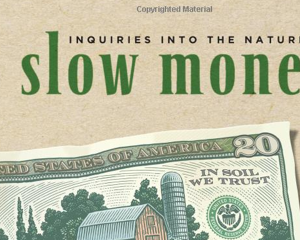
Slow Money Book Cover – Copyright Woody Tasch
Woody Tasch, author of Slow Money, introduced social changemakers that have accomplished systemic changes in their communities though years of persistence. An interesting example was organic farming and various other resource-accountable organizations that are working to sustain resources. The point that I took away from his presentation is that everyone needs to be aware of what impact everything we do has on our resources. Putting this knowledge in numbers that we can actually imagine and visualize is key. Let’s not talk in billions anymore, let’s break it down and talk in the amount we can all comprehend.
The type of ideas that Dr Parkinson and other social change agents have are what organizations like Ashoka, All Day Buffet, and Echoing Green invest in. Ashoka, based out of Washington DC, encourages and invests in social entrepreneurs. They offer them invaluable resources and a network that will allow them to stay sustainable.
New Orleans is a fertile ground for startups, nonprofit and profit alike, the plea I heard today is: as NOLA starts to take off, let’s keep our mission’s identity in mind. Let’s create a mission that changes the world because our entire city is working together to create social change. Let’s set the example of how social change innovation should be done for the rest of the world. Let’s create the social change industry that revolutionizes the way businesses, government, and public organizations operate.




 , introduced social changemakers that have accomplished systemic changes in their communities though years of persistence. An interesting example was organic farming and various other resource-accountable organizations that are working to sustain resources. The point that I took away from his presentation is that everyone needs to be aware of what impact everything we do has on our resources. Putting this knowledge in numbers that we can actually imagine and visualize is key. Let’s not talk in billions anymore, let’s break it down and talk in the amount we can all comprehend.