Tag: advertising

  • Defibrillate Your Clinic’s Social Media Plan in Five Steps

    Over the past decade, there have been steady increases in the acceptance, usage, and number of social networks. With membership in the hundreds of millions and even billions, social media networks like Facebook, YouTube, and Twitter have become excellent platforms for businesses that want to reach and engage their audiences. Because they form part of a more niche industry, it is crucial for hospitals, healthcare practitioners, pharmaceutical companies, and others in the healthcare industry to have a detailed online strategy in place across various social media platforms. Below are five steps to designing a comprehensive social media plan that take into consideration the challenges and specific needs of the healthcare industry.

    Challenges

    Healthcare providers face a number of unique obstacles when entering the world of social media. Businesses in this industry typically have multiple stakeholders, from existing patients to future patients to other physicians. Each stakeholder has unique expectations regarding communication standards and topics, and a fully fleshed out plan that follows these steps should take these expectations into consideration.

    The healthcare industry is strongly regulated by organizations like the FDA. However, in the recent surge of social media outlets and usage, the healthcare industry has faced a unique challenge: the reigning regulatory offices have not cited clear guidelines regarding the use and management of these social media platforms. Seeing as some information on the topic has been released, it is important that you review these sources before creating a social media plan for a business in the healthcare industry.

    Creating Your Plan

    1. Define Your Personality

    As a business and as a brand, you will need to define your online social personality: how do you want your stakeholders and audience to perceive you? Thinking of your brand as an individual will allow you to adopt a more coherent voice across your chosen social media platforms. To help define your voice, ask yourself questions like the following:

    • What color would you associate with your brand?
    • If your brand was a person, what kind of clothes would they wear?
    • What type of car would this person drive?
    • How would his or her friends describe him?
    • Does this person have likes or dislikes?

    Although it may be difficult in the beginning to uncover the personality of your practice, carefully designing this aspect of your social media strategy will allow you to create a more concrete tone and voice.

    Along with defining your voice, take the time to study and understand your stakeholders. Decide which groups you would like to reach: existing patients, future patients, other healthcare professionals, insurance companies, or any combination of these. This decision will impact the tone and purpose of your social media campaign, as each of your audiences will react best to content that is specifically designed for them. By keeping your target audience in mind, you will enhance your ability to focus your social media updates, allowing you to promote audience engagement and build a stronger, more trusting relationship.

    2. Listen

    After you have settled on the tone and audience of your social media strategy, pause to listen to the existing conversation. Determine how your audience and competitors interact within the social space, monitor conversations about your industry, and track the ways in which your brand is discussed online. Using tools like Google Alerts and hashtags, Sprout Social, monitoring forums and other online spaces to understand the existing conversations.

    Listening to the discussions that are in place across the spectrum of social media platforms will allow you to gain a sense of which healthcare topics are currently trending. It will also help you to identify the concerns, questions, and interests of your target audience, allowing you to build a strategy to address these topics during your social media campaign.
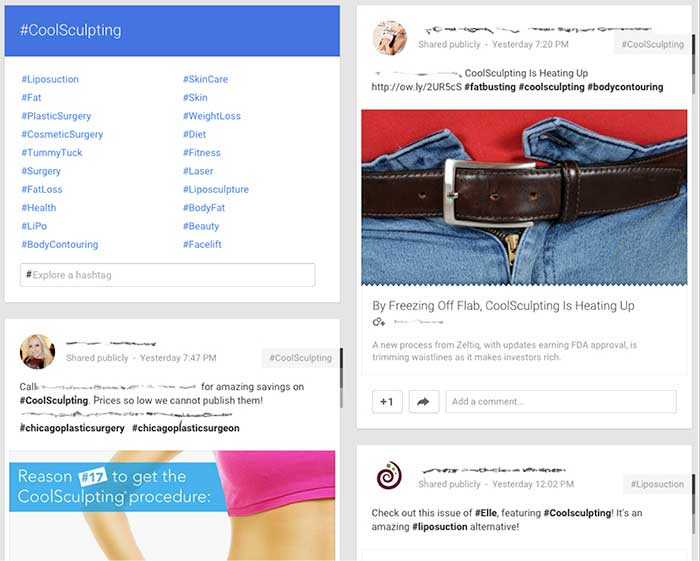
    GooglePlusIndustryHashtags

    Example using Google+ to review similar hashtags and industry competitors
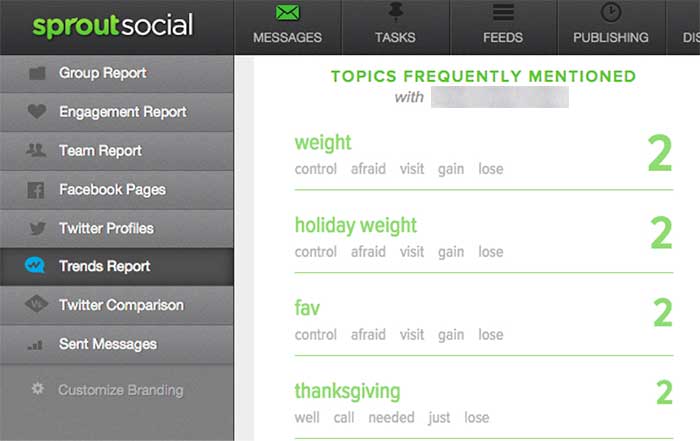
    SproutSocialConsumerConversation

    Example of using Sprout Social to understand how consumers are talking about your brand.

    3. Find Your Voice

    Next, begin your own conversations! Look for areas in the industry that lack a strong voice. Use that space to make a name for your brand and to demonstrate your expertise. Also, provide topics and the secure space for conversations regarding the health industry and health issues. Help moderate conversations to keep the discussions moving and the connections building. Encourage your audience to converse with you and with each other to foster a sense of community.

    To make use of your influence on social media, you can use a number of strategies:

    • Add personal, authentic stories: Depending on your goal, these can consist of success stories, anecdotes of achievement, or triumphs over a disease or disability.
    • Facilitate conversations and actions: Give healthy-eating challenges or build a place to help raise awareness for widespread health issues.
    • Wow the crowd with numbers: Build credibility by showing your audience the bigger picture. Share statistics, infographics, and other information about your industry or practice.
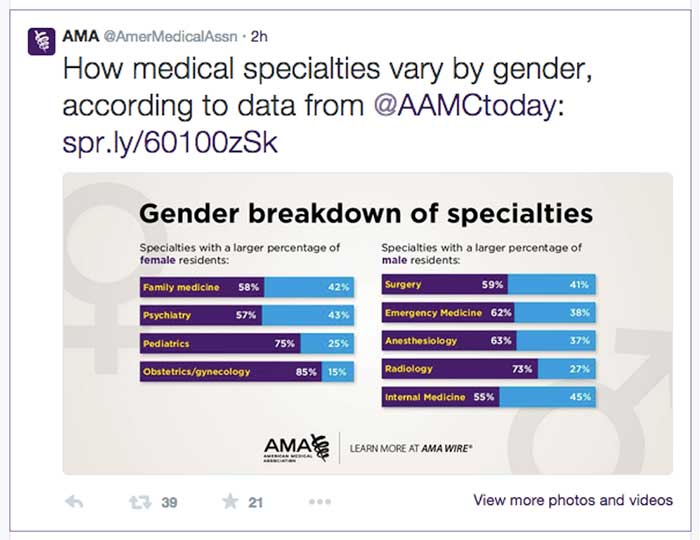
    AmericanMedicalAssociationExample

    Example from the American Medical Association using numbers to engage in a conversation. Only 2 hours after being tweeted this post received 39 retweets and 21 favorites.
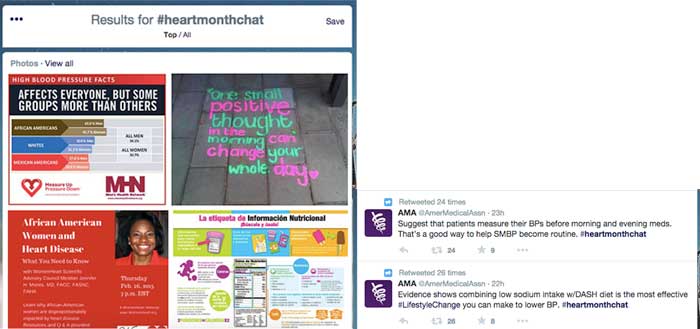
    TwitterHealthcareDiscussion

    Example of Twitter healthcare community discussing heart health online via #heartmonthchat and how the American Medical Association was able to find their voice in the conversation giving advice and statistics. Both tweets were retweeted and favorited several times.

    4. Collaborate

    Social media has become a frequent place of feedback for companies, and you can take advantage of this fact by using the social space to collaborate with your audience and with others in your industry. Do not be afraid to talk to your audience about their experiences and how to improve them in the future.

    Use social media as a place to work with other practitioners and organizations to raise awareness regarding healthcare topics. By working with others, you can increase your audience reach and further your message.
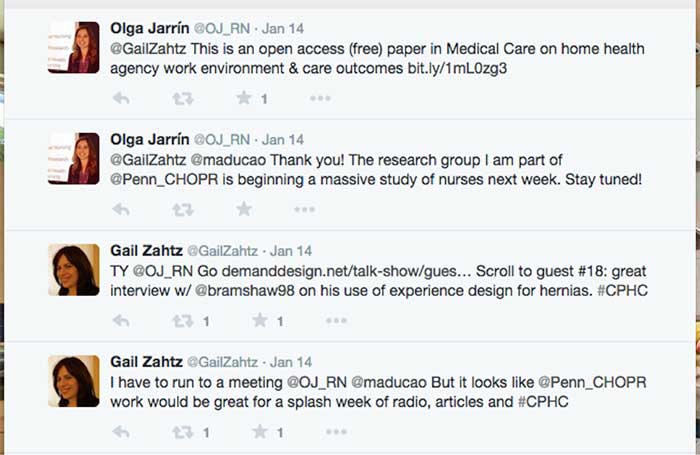
    GailZahtzHealthcareTwitterAdvice

    Example of Gail Zahtz (expert in patient-doctor relationships, offers advice to healthcare industry) collaborating with others in the healthcare industry to make information more readily available.

    5. Measure Your Success

    Although the last step in this plan is to measure your success, it is important to review your achievements on a regular basis and throughout each step of the process. Measure growth and success in the online space by an increase in followers, consistent interaction, and rising mentions across social media platforms.
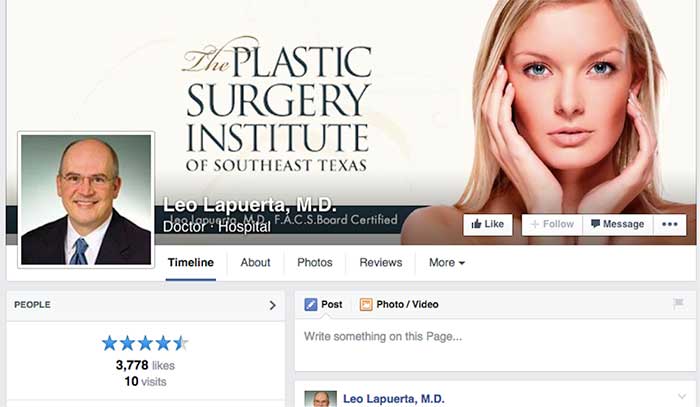
    ThePlasticSurgeryInstituteFacebookLikes

    Example of growth of likes on Facebook using these steps. Prior to this campaign beginning, The Plastic Surgery Institute of Southeast Texas ~500 page likes.

    Consider the steps above when designing your own social media strategy. For more inspiration, check out some of these healthcare companies that have successfully created an empowering online presence!
  • Behind the Scenes: How Social Media Is Being Used in the Local Film Industry

    Unless you have been living under a rock for the past ten years or so (and not just any rock, but one without TV or Netflix), chances are you have watched a movie that was filmed here in New Orleans. The city – and the state as a whole – has seen an explosion of film and television productions over the past several years, earning the region the title of “Hollywood South.”

    From comedies like 21 Jump Street to Oscar-winners like 12 Years a Slave, Louisiana has even surpassed film production stalwarts like Los Angeles and New York City to become the country’s production capital – all thanks to the highly lucrative tax credits introduced in 2002.

    And while the big-budget movies are driving the local industry (check out NOLA-shot blockbusters Jurassic World and Terminator: Genisys in theaters this year), this influx has also helped inject momentum into the independent film industry – more specifically, the micro-budget indie film scene. These are projects made by passionate local filmmakers looking to find a foothold in the industry at large.

    These are not films the average moviegoer is typically going to be able to see or even hear about. So how do these filmmakers get the word out? How do they raise the funds to even get it made? And how do people find out where they can see these smaller films?

    The best and easiest way is through social media, an umbrella term that can be divided into several different platforms (Facebook, Twitter, Instagram, etc.). The most effective social media strategies take a multi-faceted approach into account and are tailored to suit each medium’s strengths to maximize effectiveness.

    I talked to a few local filmmakers about the importance of social media and other Internet marketing strategies. I found that first and foremost on these filmmakers’ minds is exposure, whether for fundraising or promotional purposes.

    Fundraising and Promotion

    “Facebook is a useful platform that enabled a community to form around the project. It is very useful in promoting fundraisers and screenings,” explains Sam Bass, who has helped with the social media campaigns for two films, How to Disappear Completely and Give Light: Stories from Indigenous Midwives. “Twitter is better for engaging with people outside of your immediate community with the potential to lead to significant opportunities and connections.”

    “We began our social media campaign to draw attention to our Kickstarter,” says Hunter Burke of Construct Films, who is using social media to raise funds for and promote the film Atchafalaya. “It was the quickest and most effective way to get our message out.”

    Greg Tilton, director-producer of reddit doc, had a similar mindset, but he wanted to lay the groundwork for their project before asking for fundraising help. “Social media was key because I did not want our IndieGoGo campaign to be the first time someone had heard of the project,” he states. “It’s been successful because people who don’t know me or my immediate network are following and engaging the project.”

    Mac Alsfeld, the writer-director-star of Father-Like Son, found social media to be most effective after the film was made. “We heavily relied on Twitter to build a relationship with festivals,” he explains. “I think it is important to show festivals that you are the type of filmmaker that will market yourself and that festival to potential filmgoers.”

    Getting Help

    For these filmmakers and others, this was a very important part of the behind-the-scenes process. For the most part, they were navigating the tricky waters of social media without any substantial professional Internet marketing experience – though some had help.

    Burke turned to a friend who had social media marketing and crowdfunding experience. “I really owe a lot to him for educating me on what is standard, what has worked in the past, and also coming up with some wonderful ideas. Without him, I would have been totally lost.”

    Lucky enough to be dating someone in the tourism and marketing industry, Tilton found it helpful to have someone more experienced to bounce ideas off of. “As I experimented, talked to her, and read a lot of articles online, I slowly built up my knowledge. She was a great sounding board for ideas.”

    Thoughts on Social Media

    Even without much prior experience, these filmmakers now have some very astute thoughts about the medium overall gained from their newfound experience.

    “I do believe that it is VERY important to have a presence within the social media community,” declares Kenna J. Moore of Ghost of Elysian Films, who was awarded the Emerging Vision Award for a Louisiana Filmmaker at the 2013 New Orleans Film Festival and the Louisiana Shorts Jury Award in 2014. “It is crucial that our image and what is being put out there is closely monitored. I like to have a presence but stay away from all of the ‘look-at-me’ syndrome that one can easily fall victim to in most social media settings.”

    “The thing about social media is that it is, at its core, incredibly voyeuristic,” says Tilton. “Many people do follow the musings of their interests, so there is a large audience to be engaged and many want to be a part of something big. You can find that audience.”

    Tips for Fellow Filmmakers

    As for fellow indie filmmakers feeling overwhelmed by social media, all the filmmakers have useful tips to share:

    Bass: “Have a social media strategy. Know how to work it. And don’t panic when nothing happens for a week. The most important things are follow-through and relationship building.”

    Alsfeld: “Show people that you have passion. Use your social media to blast information. And even more importantly, have fun. Don’t be boring.”

    Burke: “We performed the best when we released media. Posting a picture, an interview with the filmmaker, or a sample of the score really got our audience interested. People really responded to something they could interact with. Make it a fun experience. Keep it simple. Leave them wanting more.”

    Moore: “I’ve learned that social media has pros and cons. Some people gain opportunity and references from it. Some social media activity allows for negativity and distraction. I would encourage people to stay focused.”

    Tilton: “If you have nothing to say, don’t say anything. So many people are retweeting and posting haphazardly. It’s just a jumble of buzzwords and hashtags. Just make sure it’s always quality and you will find that pays off bigger.”

    Additional Resources
    Here are some more tips directed specifically at indie filmmakers on making the most out of social media:

    7 Tips for Promoting Your Indie Film on Social Media via Premium Beat

    6 Tips on Using Social Media for Your Indie Film via Media-Match

    Image Sources:

    3, 2, 1 Film Image

    Social not-working Image

    The End Image

  • 5 for Friday: New Apple Gadgets, Net Neutrality, And Twitter Says Buy, Buy, Buy!

    5ForFridayImage

    1. Apple’s Big Reveal
    -Mashable

    This week, it’s impossible to ignore Apple’s big unveilings. While the new iPhone 6 may come with some interesting upgrades, for me, “the big reveal” was all about the Apple Watch. The new gadget is very slick looking and appears to be packed with features. Apple aims to put our entire social networks on our wrists while combining a fitness tracker, texting and voice capabilities, as well as a ton of fun apps. Check out this article, which talks about the technology behind Apple Watch.

    2. Twitter’s Advances Its E-Commerce Plans
    -TechCrunch

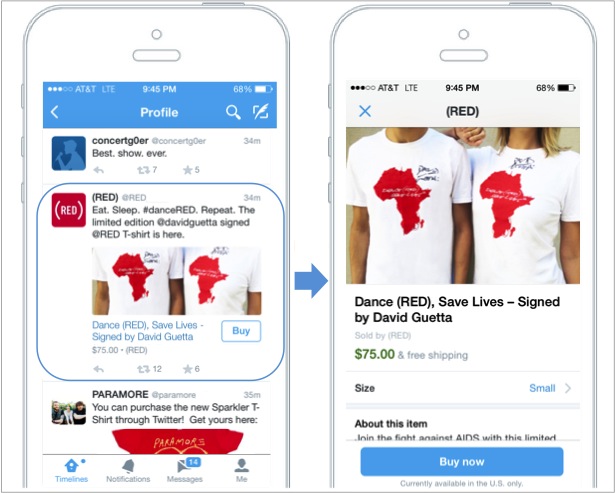
    As the ever growing competition between social media giants continues, Twitter explores alternative revenue options other than advertisements. The Nathan Hubbard, Twitter’s head of commerce, says of the microblogging platform, “[We] want to be a bridge between a consumer wanting something and getting it.” While still in the testing phase, the “Buy” button is a big step for Twitter in a series of initiatives built to generate more profit from its 271 million users. How do you feel about the option to buy goods from within Tweets?

    TwitterBuyNowButtonImage

    3. Facebook Converts Higher Value Into Better Marketing Services
    -Bloomberg

    While on the subject of social media advertising, check out this article on Bloomberg, which talks about Facebook’s incremental improvements to its array of advertising services. Marketers today are willing to spend more money for better conversion tracking, innovative new promotion options (such as video ads), and improved mobile ads.

    4. Social Networks for Net Neutrality
    -TechHive

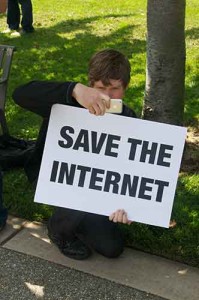
    SaveTheInternetImageOver a dozen large websites, such as Netflix, Foursquare, and WordPress, joined “The Internet Slowdown Day” protest on Wednesday, looking to garner public support in the fight for net neutrality. Citing big Internet providers as the enemy, the websites simulated what the fast and slow lanes of the Internet would look like by displaying the loading page icons on their home pages. As September 15th approaches (the deadline for second-round comments on FCC proposed net neutrality rules), the conversation about Web traffic regulations is as pertinent as ever.
    5. Are You Using All Possible Keyword Sources?
    -Moz.com

    This highly informative post by Neil Patel uncovers some of the potential sources for your keyword research that you may not have thought of previously. While you may already have a preferred tool, the author suggests several unorthodox ways to supplement your research and, ultimately, lead to a better SEO campaign.

    Image Sources:

    Save the Internet Image

    Twitter Buy Now Button

    App Filled Five Image

  • Do Your Ads Belong on LinkedIn?

    LinkedInLogoImageLinkedIn is a great advertising platform for business-to-business (B2B) companies. It helps these businesses increase brand awareness and allows them to connect with potential clients.

    Should you be advertising on LinkedIn?

    Unfortunately, if you’re an ice cream shop advertising on LinkedIn in the hopes of increasing your sales, there is a 110% chance that your time, effort, and financial resources are better off on another platform. (Hint: Facebook). This marketing approach is best for linking to other businesses.

    LinkedIn Advertising is also extremely beneficial for companies looking to fill open positions. Users aren’t just on LinkedIn to see the latest baby pictures that their old high school friends are posting. They are mostly looking for professional development and networking opportunities.

    Are you targeting the right audience?

    So, you’ve decided that LinkedIn Advertising is a strategically advantageous move for your business. Now what? Figure out your target demographic.Do this before writing your ad copy and even before sponsoring your updates. It’s imperative that you do this before jumping onto this marketing battlefield with no precise aim.

    TargetMarketImage

    Why is this so important?

    LinkedIn offers a variety of demographic targeting options that can be combined to best fit the audience of your campaign. Strategically deciding on your audience will send your ads in the right direction for the best results.

    Who are you speaking to? Do you know what that audience likes and dislikes? You won’t be able to write enticing, effective ads that achieve your goals without this knowledge.

    When it comes to target options, the possibilities are vast! You can choose to target anything from specific locations, companies, and job titles to specific schools, groups, ages, and genders.

    Once you decide that LinkedIn is the place for your business and you figure out who your target demographic is, you’ll be ready to start running ads and sponsoring your updates.

    Image Source: https://flic.kr/p/3dTdUc

  • Is Anti-Social Media On the Rise?

    This year will make a decade since Facebook was launched and social media usage has skyrocketed, but is social media turning us anti-social? Parents who were unhappy about their children’s texting habits in the early 2000’s would be appalled by today’s society of Instagraming, Tweeting, FourSquaring and Pinteresting fiends across all age ranges. However, the pendulum may have swung too far, and it seems that parents aren’t the only group fed up with obsessive social media behavior.

    There are many signs that we are entering an age of ANTI-social media.

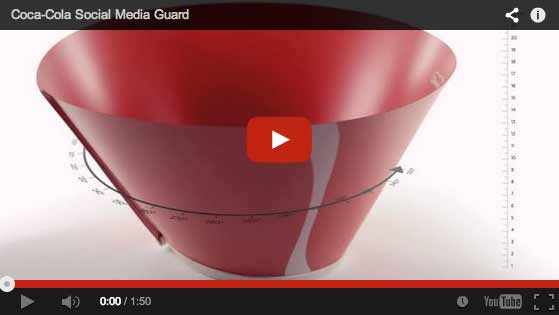
    SocialMediaGuardVideo

    Many corporations and industry leaders have voiced their advocacy for more human interaction through traditional media. Coca-Cola invented the Social Media Guard in the sarcastic commercial pictured above, which blocks people from the ability to see their phones.

    Dentyne used print and commercials to encourage more “face time” by comparing human interaction with social media actions in an ad.

    DentyneAdClip

    Professionals working within the social media industry may even capitalize off of the anti-social tendencies of those who are active online. Here are a couple of examples of how.

    Cloak

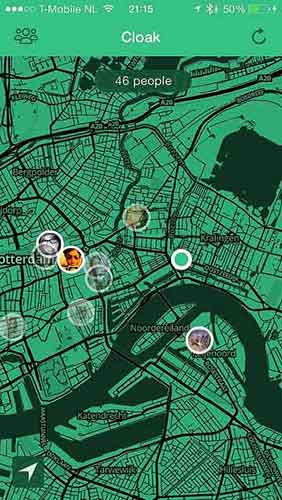
    Facebook, Twitter, Instagram and FourSquare aid this new mobile application in locating where you are. Cloak asks you to login to one of your social media accounts, which pinpoints where you are on a map, along with the locations of other friends who are also logged into Cloak.

    The app is advertised as a way to avoid people that you do not want to run into. You can set alerts that warn you when certain users come into a selected radius of you. Couldn’t this also be used as a way to stalk people? Guess that wasn’t a catchy advertising pitch…

    CloakAppScreen

    Self Control

    This app allows you to choose time periods when you do not want the ability to access specified apps or programs at all. This could be used to stop yourself from checking your email, playing games, checking Facebook, etc.  A screenshot of the app is below, followed by their honest answer on how to stop the app when it is activated. The interest in this app shows that people want to be detached from their online world every once in a while but might need a little help to disconnect.

    SelfControlApp

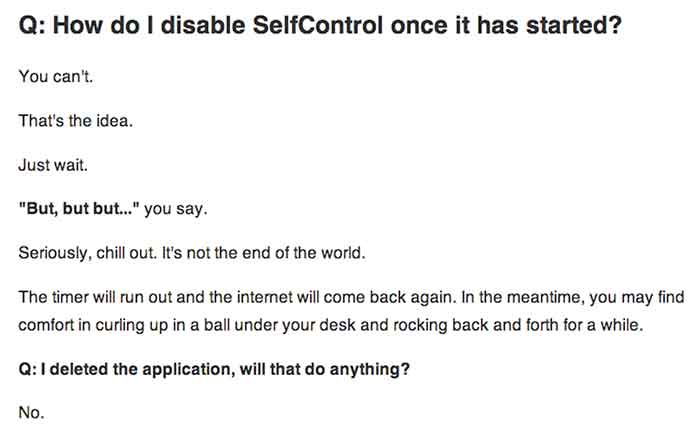
    HowDisableSelfControl

    This discussion will continue on for years, but has social media gone too far? Check out the signs.

  • Social Media, Your Personal Red Carpet

    Coined ‘Fashion’s Latest Muse’ by the New York Times in September of 2013, it’s no secret that Instagram has been the leading source of social media in the fashion industry  for quite some time. Naturally, marketers and retailers alike have picked up on this trend, using Instagram as the latest and greatest promotional tool. But what makes the difference between a chic social media campaign and a total tragedy? Let the experts guide you with five basic rules to live by:

    What Are You Doing?

    fashion social media

    Although social media is all about promoting your products, there is something more important to promote….your brand. No one wants to follow an Instagram that solely pushes this season’s must haves. Yes, it’s all about fashion. But people want to know what makes you tick. Where do you hang out? Where do you dine? It’s no coincidence that Rag & Bone, True Religion, Hudson, J Brand, Free People, Joie, Stuart Weitzman, Jimmy Choo, Harpers Bazaar, Mercedes-Benz Fashion Week, We Wore What, and Lookbook were all at the major music festival #Coachella this weekend. And what instapost got the most attention? With 41,872 likes, Free People takes the lead with this shot of Australian fashion blogger Natascha Elisa, who by the way, isn’t sporting a look by Free People. Helping other like-designers get press to support the Free People way of life: How’s that for lifestyle branding? #Genius.

    We Can Still See the Background…

    social media marketing for the fashion industryOne question: Where are you taking your Instagram photos? Wherever it is, please remember that your audience can still see what’s going in the background of your post. Your Instagram can only look as professional as it’s location, so if you’re guilty of taking all of your pictures in a dressing room, it’s time to change your ways! Taking the extra few minutes to find a scenic location will go a long way, I promise. And it doesn’t have to be a runway – go to the street, or into a room with great decor. Fashion blogger Danielle Burnstein, known for her blog We Wore What, is a perfect example of taking great street shots. Here she is pictured on a city street, in front of a wall with only a few posters and some graffiti behind her. But with the few pops of color and great lighting, it makes for an amazing background. This is probably why she is followed by major designers like Alice + Olivia, Tibi, J Brand, Theory, Jimmy Choo, Stuart Weitzman, and Kurt Geiger.

    Social Media Marketing for the Fashion Industry

    Let Me Take a Selfie

    While the infamous ‘selfie’ is sometimes a must in order to properly display an outfit (sans the duck face), remember that the focus is on the product…not the person modeling them. There is a reason that professional models are very thin. Models are meant to be background, they are there to display the clothing or product, and not to distract from them. That being said, models are a critical element to any campaign. Clothing never looks the same on a hanger as it does on a person. The viewer needs to see the fit of the garment, as well as know how to style it. There is an entire Instagram account that puts this rule to the test called Up Close and Stylish. The stylist (and model) posts ‘selfies’ daily, however she chooses to remain entirely anonymous. She has never shown her face to the public, only her outfits. And how many followers does this mystery fashion lover have? As of right now, she has the attention of 898,000 viewers, with the majority of her posts getting well over 20,000 likes.

    Social Media Marketing in the Fashion Industry

    All Things Beautiful

    The fashion industry strives to create beauty in the form of wearable art. And as art lovers know, there is inspiration everywhere. Do you see something absolutely gorgeous that makes you smile? Share it! Whether it’s a garden in full bloom, a picturesque park, or an amazing presentation of food – we appreciate the post.Take it from the Instagram guru’s at Alice + Olivia, who are known for their unbelievably colorful and whimsical pictures. They recently posted this bouquet of flowers, which caught the attention of 5,761 viewers, so it’s safe to say the public responded.


    Social Media Marketing in the Fashion Industry

    Use Your Tools…Wisely

    There are some great tools on Instagram for fashion designers, bloggers, and retailers alike. The video tool is great for behind the scenes clips of photo shoots, or taking your favorite outfits and turning them into a montage. Of course it’s always popular to do a video recap of all of the looks you’ve put together at the end of the year…but personally, I prefer the sneak peeks. It’s also easy to credit someone within Instagram (designer, stylist, brand) whether it’s via tag or hashtag. But please – easy on the hash tags. No one likes an over enthusiast blowing up their Instagram with #unnecessary #borderlinespam #hashtags. Let the creativity of your post speak for itself. Yvan Rodic (of Face Hunter) spotted model Ash Walker making a statement on subject….

  • Instagram is “Ad” it Again!

    Screen Shot 2014-03-06 at 11.46.49 AM

    Does it seem like, eventually, everything turns into a platform for advertising? For social media, that seems to be the trend when comparing networks over the years. Everything from Facebook, Google, Twitter, Pinterest, and Pandora have all followed the same trend. Using a great business plan (and a lot of foresight), they open their online “doors,” create a massive following, and after a few years succumb to the massive potential profit that is advertising.

    Instagram Ads

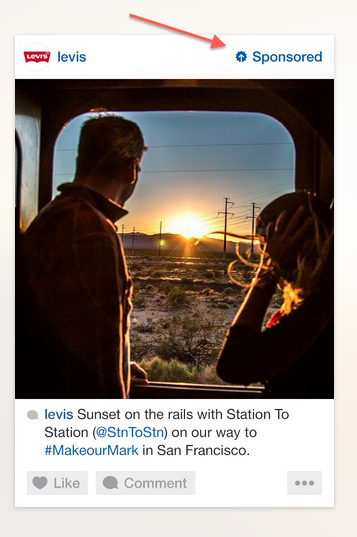
    Even though it took some time, it is clear that the mega success of our beloved Instagram has followed suit. After Facebook bought the ultra popular image sharing platform for a cool $1 billion, they didn’t waste time reaping a return on their investment. In late 2013, Instagram announced that they would start releasing “sponsored” posts that would look and feel like the other images users were already sharing. The Beta version of these sponsored posts were designed to “underwhelm” users so that they might not even know they were looking at an advertisement.

    Who Sponsors Posts?

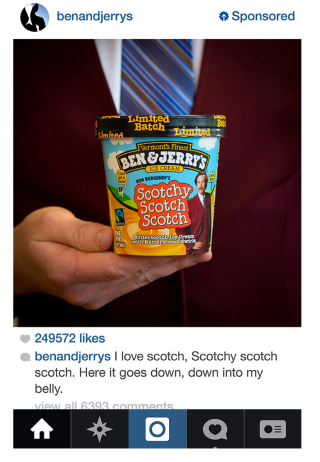
    Screen Shot 2014-03-06 at 11.47.44 AM
    These sponsored posts were only given to a select number of brands like Ben & Jerry’s, Macy’s, Michael Kors, Lexus, and Levis, in order to test out consumer reactions. However, recent studies show that these advertisements were highly successful due to the limited number of competitors on the site, the quality of the advertisement, and the fact that it is an image instead of text. Many advertisers understand that images are far more powerful than words, which is why Instagram, along with its huge user base, is an ideal platform for marketing.

    Personalized Ads

    But how will Instagram know what brands you like or images you’re drawn to? The beauty and genius of the merger is that Facebook already knows everything about you! Between the information Facebook has already collected about you (likes, interests, hobbies, etc.) and the images that you like and follow on Instagram, advertisers are able to put more customized and targeted ads in front of you. The hope is that these ads will be so successful that companies will eventually pay more to advertise. So watch out, you might actually start seeing ads that you enjoy!

    Have you seen an ad on Instagram that grabbed your attention? Let us know in the comments!

  • New Search Influence Production Members

    Take a look at our newest Internet Marketing Associates!

    Alex Talbot

    AlexAlex is a native New Orleanian. He grew up in Gretna and went to Jesuit High school. Alex recently graduated from Loyola University with a degree in marketing and economics. Before joining us at Search Influence, he worked in sales and brand management at a cable and satellite company. In his spare time, Alex plays in a punk rock band called Pears, previously known as the Lollies.  One of Alex’s most recent performances was on Mardi Gras day at Siberia! Alex joins the technical Internet Marketing Associate side of the SI production team. His focus includes interpreting web marketing trends and search optimization plans for national SMBs in a variety of different industries. Alex also analyzes web traffic statistics to create detailed reports of link building campaigns and marketing initiatives.

    Nakia Thomas

    photoNakia grew up in Gonzales, Louisiana. She attended Louisiana State University, where she graduated with a degree in communications. Before becoming a part of the Search Influence team, Nakia was a Formal Wear Specialist (She helped pick out gowns and tuxedos!) at a wedding boutique, and did some freelance and ghost writing work.  Additionally, Nakia writes songs, and helps one of her good friends with his record label. Check out this single she helped write! NGWY (No Good Without You). Nakia adds to the growing content focused Internet Marketing Associates group of the production team here at SI. She focuses on writing and optimizing content for our client’s websites, video scripts, blog, social media, and more. Nakia also performs Internet research, website edits, quality assurance, and editorial review.
    We’re so excited to add these two multi-talented people to our growing team! If you’re interested in becoming an Internet Marketing Associate, or any part of the growing Search Influence team, check out our list of available careers!

  • Un-blurring The Lines of The FTC and Native Advertising

    Un-blurring The Lines of The FTC and Native Advertising

    To those of us in SEO and other forms of web marketing, native advertisements may seem like a God-send, the perfect combination of advertising power and positive user experience. The content-driven marketing platform is under a great deal of scrutiny, however, as it becomes more and more commonplace on the web.

    While advertorials have been used for the greater part of the last century, native advertising is a more recent development that has capitalized on user experience in the digital age. In 2013, more than 70% of websites offered native advertising, and that number is likely to increase by around 10% this year (Mondaq). Due to their editorial nature, regulators—as well as members of the general public—are worried that native ads blend too seamlessly with unsponsored web content, and many are eager for the issue to be formally addressed.

    The SEO value of native advertising is obvious. It’s an excellent tool that not only allows for optimization, but also provides great content to the user. And as we all know, content is king. Native ad campaigns can be more successful than traditional online ads, and as marketers, we like to believe that’s because users enjoy the content we’re putting out.

    Critics, on the other hand, argue that the ad serves as a sneak attack, tricking users into clicking through. As Federal Trade Commission Chairwoman Edith Ramirez told Reuters, “By presenting ads that resemble editorial content, an advertiser risks implying, deceptively, that the information comes from a non-biased source.” The drama around native advertising recently culminated in an FTC workshop focused on the method. This idea of hiding advertising in content inspired the FTC workshop’s name, “Blurred Lines: Advertising or Content?”

    blurred-lines-logo
    http://www.ftc.gov/news-events/events-calendar/2013/12/blurred-lines-advertising-or-content-ftc-workshop-native

    Un-blurring the Lines

    The workshop’s panelists questioned standardization and responsibility, trying to keep all three parties—buyers, sellers, and consumers—in mind, with perhaps a little more favor to the consumers, who have the least agency in the situation. While everyone agreed that transparency is necessary, some argued that it wasn’t enough. Chris Jay Hoofnagle of Berkeley’s Law and Technology Center, for example, presented results from his research, showing that as many as 35% of consumers didn’t identify a native ad as an advertisement although it was marked. On the other hand, Chris Pedigo of the Online Publishers Association reported that more than 70% of websites that offer native advertising had not received complaints from users.

    These statistics are just two examples of the myriad of arguments that seem to complicate the issue rather than clarifying. If there was one thing everyone could agree upon at the end of the workshop, it was that more work still needs to be done before any definite regulation can be imposed. Even Jessica Rich, Director of the FTC’s Bureau of Consumer Protection, stated that native advertising may be too complex an issue for one-size-fits-all standardization.

    In the meantime, the responsibility remains on the publisher to use discretion and focus on un-blurring the lines with clear indications of sponsorship on native ads. That may not be an attractive idea to advertisers hoping to fool users, but those producing strong content know better. If a company is actually creating the content users want, it shouldn’t matter that it’s marked with their logo and a big “Sponsored” label.

    Publishers can look at the situation one of two ways: embrace the responsibility or abuse it. With freedom from regulation, publishers are free to respect users and clearly label native ads or take deals with eager corporations to disguise the content. We advertisers share in the opportunity, as we can always choose which publications we partner with.

    Running a Clean Campaign

    While partnering with a publication that sneaks in sponsored content may seem like a good tactic from a purely bottom-line-driven approach, some innovative companies have already proven to us that it’s really not necessary in the end. Several publications are working to show their dedication to corporate responsibility when it comes to native advertising, and it turns out native ads are successful no matter their labeling.

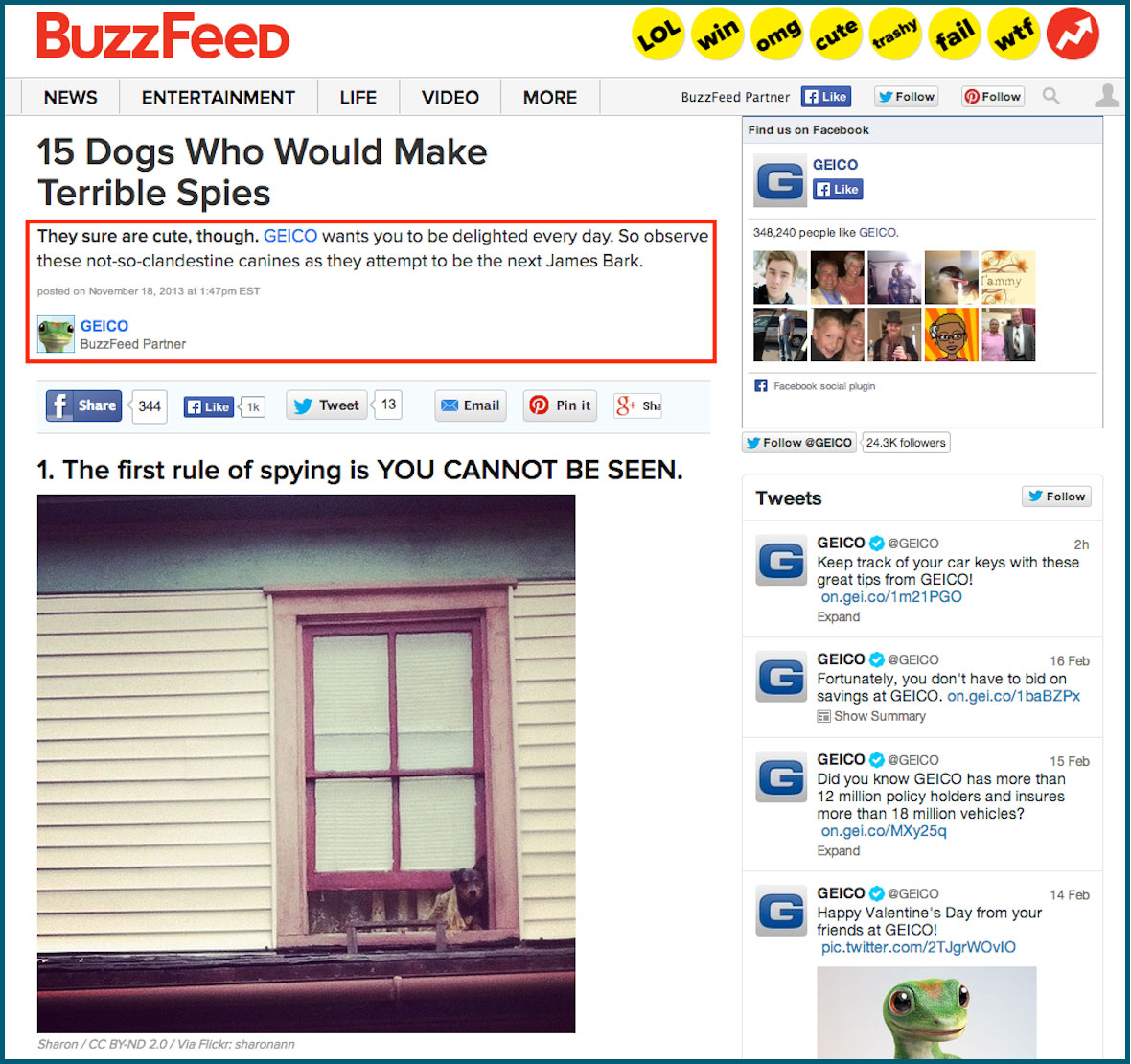
    BuzzFeed is a truly great example. The site rejects display ads entirely, relying on only native ads for advertising revenue. And it’s working out pretty well, according to Peter Kafka at All Things D, Buzzfeed planned to earn somewhere around $40 million in 2013, but the end number ended up being closer to $60 million. This sales boom comes in spite of the fact that advertisers’ contributions on the site are marked “Sponsored.” Buzzfeed’s pioneering efforts have obviously benefited the company greatly, and their sponsored content often drives more web traffic than traditional posts.

    infographic-pic
    http://www.buzzfeed.com/geico/15-dogs-who-would-make-terrible-spies

    Buzzfeed isn’t alone in their honest tactics. Many other companies acknowledge their native ads, including The New York Times, which announced in December that it would mark sponsored content with colored bars and “Paid Post.” According to the Times, publisher Arthur Sulzberger Jr. sent a letter to all employees emphasizing the “strict separation between the newsroom and the job of creating content for the new native ads.” The Times even published an article on their attitude toward native advertising, turning a policy into a great PR moment.

    IAB Playbook

    While no formal regulations are in place, the Interactive Advertising Bureau has set out to clarify the practice and set standards in the industry with the Native Advertising Playbook. By publishing the playbook, the IAB is acknowledging both the importance of native advertising and the danger it poses to unsuspecting consumers. Patrick Albano, the vice president of Social, Mobile and Innovation Sales at Yahoo and co-chair of the IAB Native Advertising Task Force explained that the organization set out with the goal of providing “guidance based on the state of the industry today while at the same time leaving room for flexibility to inspire innovation and growth.”

    The playbook goes over six different “core interactive ad formats” that are currently being used in native advertising: in-feed units, paid search units, recommendation widgets, promoted listings, IAB standard ads with native elements and custom ads. It also gives broader ethical principles advertisers can use to protect the consumer. With all native ads, the playbook suggests advertisers consider form, function, integration, buying & targeting, measurement and disclosure to “ensure that a unit will meet their brand objectives.”

    What This Means For Marketers

    To be completely honest, things are just as uncertain as before the FTC held its workshop. The workshop raised just as many questions as it answered and proved that no one has thought of a fair way to regulate native advertising. What the workshop really did is formally alert the industry to the FTC’s ever-growing interest into this marketing technique. As an industry I’m sure we’d hoped to avoid regulation altogether. We will now need to wait and see, and the good news is it’s not imminent given industry professionals and federal regulators still can’t seem to figure out what, in particular, should be regulated, much less in what way.

    In the meantime, Bureau Director Jessica Rich suggests that advertisers continue to rely on the FTC’s Dotcom Disclosure Guidelines when in doubt, while discussions continue. The IAB seems to be leading the discourse, with a series of native advertising workshops beginning in March 2014. Until then all we can do is focus on our own marketing efforts, working to keep consumers informed and clients successful. And native advertising is sure to be part of that process. In fact, with the advent of Penguin, native advertising seems to be our best hope. With each update, Google pushes even further back against search marketers, emphasizing the importance of well-thought-out and informative content. While I have always maintained that SEO is built on content, Google is regulating marketers in its own way by devaluing anchor text and deep links in favor of solid branding. So basically, if your native ads are giving users what they want, then Google’s happy, too.

    Has all of the recent hubbub around native advertising had an impact on your strategies? What do you see on the horizon? I’d love to hear your thoughts on the subject and on my theories. Please share below!


  • Kickstarter For Advertising and Funding


    159396590Crowdfunding has been around for a while now, from major sites like Kickstarter to more niche spots, like Indiegogo. Crowd funding is a process in which a project finds its funding from a vast pool of minor investors as opposed to the traditional approach of loans, private partners, and venture capitalists. Proper utilization of this funding option has lead to product launches across a variety of fields, from independent films to music to video games.

    Recently, major artists and established companies have turned to crowdfunding to act as both an additional revenue stream as well as viral marketing. By allowing fans and potential customers to feel included in the creative process, you can increase loyalty to the brand and to the project itself. Most projects have rewards associated with different levels of fund contribution, from early copies of products to names appearing in the credits of films and albums.

    Small businesses can even capitalize on this process by starting projects to fund future store or service expansions, and future product lines. A great example of a potential user would be a clothing boutique that sells a mixture a vintage clothing and modern, locally sourced products. The boutique could start a crowdfunding project to expand the production of an in-house jewelry line, setting a funding goal of slightly higher than the cost of an item. This essentially results in pre sales of these items, as well as viral advertising amongst current and potential customers.

    Avoid potential pitfalls, the major one being over promising. Make sure you understand the entire cost and potential extra expense associated with any new line or expansion and set your funding goal for above that amount. This way you will have all the capital you need to deliver the final product to your numerous investor/customers. And if you don’t meet your fundraising goal, sites like Kickstarter refund the money to the investors so you don’t have any unmet obligations among your existing customers.