Blog

  • How Will AI Search Affect Paid Ads? What Marketers Need to Know

    Graphic for How Will AI Search Affect Paid Ads? What Marketers Need to Know blog post

    Key Insights

    • AI Overviews decrease paid ad performance. When an Overview appears, Google Ads CTR drops from 21.27% to 9.87%.
    • Zero-click search is becoming part of the new norm. Some 58.5% of U.S. searches end without a website visit, elevating impression share, on-SERP visibility, and AI-referral traffic as essential metrics.
    • Lower-funnel tactics mitigate loss. AI-driven creative, smart bidding, transactional keywords, and conversational search phrases recover clicks that Overviews cannot satisfy.
    • First-party data and channel diversity preserve revenue. Feeding CRM signals into ad platforms and expanding into programmatic, CTV, and creator-led video sustains growth as generative SERPs evolve.
    • Advertisers will soon be eligible to have their ads shown in AI Overviews and AI Mode if they use Performance Max, Shopping, or broad match Search campaigns, including AI Max for Search.

    Ask any paid search specialist today, “How will AI affect paid search ads?” and you’ll see the same mix of excitement and anxiety.

    The chat-style answer from Google’s AI Overviews (AIOs) now blocks the top of search results, condensing information from multiple web pages and displaying it above everything on the results page.

    Marketers are already measuring the fallout: When an AIO fires, paid ad click-through rates (CTRs) can plunge by more than half, and organic traffic often drops too.

    Yet, declaring PPC dead would be premature.

    AIOs also provide new context signals and fresh attribution labels in GA4 that can boost performance when used strategically.

    And now, there’s a new development: Google has announced that advertisers will soon be eligible to appear in AI Overviews and AI Mode if they use Performance Max, Shopping, and broad match Search campaigns, including AI Max for Search.

    While this capability isn’t yet widely available to all advertisers, it hints at a future where paid visibility within AI-powered experiences will be possible.

    This post unpacks the latest data on visibility declines, explores emerging AI PPC opportunities, and outlines how Search Influence is helping brands safeguard revenue while turning generative search into a competitive edge.

    What Are AI Overviews, and Why Do They Matter for Paid Search?

    AI Overviews appear at the top of the SERP, absorb user attention, and compress the real estate available to paid ads.

    An AIO is essentially Google’s “CliffsNotes” for a query. Google Gemini analyzes millions of pages, extracts key points, and presents a conversational answer with citations. Because the card can occupy the entire first viewport, especially on mobile, users often get what they need before scrolling.

    Fewer impressions reach the positions where search ads typically run, driving immediate visibility loss and, in turn, lower CTR. In practice, that means campaigns relying on upper-funnel traffic or broad-match keywords feel the squeeze first, while tightly focused brand and product queries remain comparatively resilient.

    How Does AI Impact Google Ads’ Performance in 2025?

    A person using Google on their smartphone

    When an AIO triggers, paid ad CTR drops from 21.27% to 9.87%.

    A six-month Seer Interactive panel found that AIOs currently fire on roughly 7% of paid impressions. That share sounds modest until you realize it skews toward high-volume, informational queries that traditionally fill remarketing lists.

    With clicks disappearing on those terms, advertisers face two immediate pressures: shrinking top-funnel traffic and higher average cost per click (CPC) as more brands bid harder for the impressions that remain. Savvy teams now track impression share by SERP feature, segmenting “AIO” versus “no AIO” to spot dips early and reallocate spend before budgets burn.

    Are AI Overviews Reducing Web Traffic and Ad Clicks?

    By satisfying informational intent on-page, AI Overviews cut organic visits by 18–64% and dampen paid ad engagement.

    A Bounteous analysis revealed that sites targeting informational-type queries (think “average HVAC install cost” or “symptoms of low iron”) lost up to two-thirds of traffic once AIOs rolled out. Because AI search platforms resolve a user’s curiosity instantly, many never click another result. Paid ads suffer collateral damage, particularly for queries without commercial intent.

    Brands that once depended on broadly educational content to seed future conversions must now find new ways (first-party data, remarketing from social, and answer-engine optimization) to keep their funnels full.

    What Are Zero-Click Searches?

    Zero‑click searches occur when search engines satisfy user intent on the results page itself, leaving no need to visit another site.

    Featured snippets, knowledge panels, local packs, and now AI Overviews all deliver answers instantly, so the original search queries end right there. Recent SparkToro research found that 58.5 % of U.S. Google searches in 2024 finished without a click — proof that user behavior is tilting toward on‑SERP consumption.

    For marketers, this shift clouds traditional metrics. Impressions may vanish before ads load, and click‑through rate tells only part of the story. Tracking impression share, on‑SERP visibility, and emerging “AI referral” traffic offers a truer view of campaign performance in a world where many journeys now begin and end on Google itself.

    How Do AI Overviews Affect Paid Ads Differently Than Organic Listings?

    AI Overviews diminish paid impressions more than organic visibility because only organic citations appear inside the answer card.

    When Gemini selects content for an Overview, it lists source links at the bottom of the snapshot. That gives SEO teams at least a branding breadcrumb, even if clicks decline. Paid ads, however, receive no such cameo; they’re simply shoved below the fold. The double hit, fewer impressions, and zero on-card mentions force advertisers to squeeze more profit from every click.

    It also nudges CPC upward as marketers bid aggressively for shrinking inventory.

    Collaboration between PPC and search marketers becomes indispensable. Organic can still score brand impressions, while paid must double down on high-intent keywords that AIOs rarely answer outright.

    What Should Marketers Do to Adapt Paid Search Campaigns for AI Search?
    The Google Ads logo

    Advertisers can reclaim lost clicks by combining AI-driven creative, intent-rich targeting, and smart bidding tuned for AI-powered search.

    First, embrace AI as a creative partner. AI-powered tools like Performance Max, ChatGPT, and Gemini can spin adaptive headlines that mirror the conversational phrasing users now type, or voice search, into Google. Feeding first-party CRM segments back into Google Ads sharpens audience models so the algorithm boosts bids only for prospects who resemble real buyers. Smart bidding strategies, such as Target CPA or Target ROAS, then respond in milliseconds if an Overview slashes available impressions.

    Next, pivot budgets toward bottom-of-funnel phrases — “same-day crown dentist near me,” “buy carbon-fiber pickleball paddle,” “cloud ERP demo pricing.” These commercial-ready searches still require a click, making them less vulnerable to AIO cannibalization.

    Finally, test longer, question-style keywords. Broad match combined with responsive search ads (RSAs) can capture AI-driven, voice-style queries like “Who installs tankless water heaters in Austin on weekends?”

    It’s also worth noting that campaigns will be eligible to appear in AI Overviews and AI Mode when using Performance Max, Shopping, or broad match Search, including the new AI Max for Search.

    Marketers leveraging these campaign types should monitor announcements from Google Ads to understand when and how this feature rolls out to their accounts.

    This conversational SEO/PPC crossover ensures visibility as search behavior evolves.

    Will AI Referral Traffic Replace Traditional Clicks?

    AI referral traffic is still embryonic but poised to become a measurable channel worth monitoring in GA4.

    Dig into GA4 source/medium reports, and you might notice entries such as gemini.google.com or chat.openai.com. Creating a custom channel group for any URL or host containing “ai” or “overview” lets marketers benchmark engagement metrics, time on site, scroll depth, and assisted conversions for these visits.

    Early numbers suggest that AI referral users consume content quickly and frequently navigate to deeper pages, perhaps because they arrive already primed by the answer box.

    Tracking micro-conversions (PDF downloads, click-to-call events) will help quantify the true value of this emergent audience as volumes grow.

    How Will the Paid Search Industry Evolve in Response to AI?

    Paid search is shifting toward data-heavy automation, diversified media mixes, and AI-enhanced creative storytelling.

    Google has already infused Gemini into ad creation, offering dynamic headline suggestions pulled from landing pages, product feeds, and customer intent signals. As SERP space tightens, brands are funneling incremental dollars into programmatic native, connected TV, discovery campaigns, and AI paid advertising on social platforms like TikTok Pulse. Agencies that weave PPC, conversion rate optimization, and answer-engine optimization into one cohesive strategy will distance themselves from siloed competitors.

    Meanwhile, the concept of Generative Engine Optimization (GEO) (or AI SEO, as we like to call it) has gone from theory to practice. Expect PPC managers to partner with SEO leads on structured data, schema markup, and entity optimization designed to make both ads and citations algorithm-friendly.

    How Can You Future-Proof Your Paid Search Strategy in an AI-Driven World?

    To future-proof your paid search strategy in an AI-driven world, marry rapid experimentation with rich first-party data and a diversified channel mix so revenue stays resilient as generative SERP features evolve.

    Operate on rapid test–learn loops: Weekly experiments reveal performance swings long before quarterly reviews surface them. Push every offline conversion, call, CRM deal, and store visit into Google Ads and Microsoft Advertising so machine-learning models optimize for profit, not vanity clicks. Layer audience signals, such as lapsed customer reactivation or high-value upsell, to fine-tune bidding during low-impression windows caused by AI models.

    Outside the SERP, pilot creator-led YouTube shorts, TikTok Spark Ads, and programmatic audio to hedge against further search volatility. These channels, amplified by AI-targeting capabilities, keep your message in market even when Google’s answer engines handle the top of the funnel.

    Finally, build dashboards that isolate artificial intelligence search impressions, CPC deltas, and AI-powered search marketing ROI so leadership sees both the risk and the enormous opportunity.

    Higher Ed Spotlight

    AI Overviews reduce top-funnel research traffic, yet high-intent education queries remain prime real estate for paid ads.

    Prospective students may find tuition averages or admission timelines directly in an Overview, but searches like “AACSB-accredited online MBA with scholarships” or “fastest RN-to-BSN program near me” still demand a click. Higher ed institutions that refine keyword match types and clusters around modality, cohort start date, and location continue to generate qualified leads at competitive cost per inquiry (CPI).

    Personalizing ad copy to speak to specific learner motivations, career advancement, salary potential, and schedule flexibility improves conversion rate even when impressions drop.

    To see where AI-powered search has distorted your funnel, use our free Higher Ed CPI Worksheet.

    Learn More About Navigating AI-Powered Search With Search Influence

    AI Overviews aren’t fading. They’re expanding.

    But that doesn’t mean your paid media growth and ad relevance have to shrink.

    The search marketers at Search Influence are already training AI tools to craft conversion-tested creatives, teaching smart-bidding algorithms to detect Overview-heavy SERPs, and visualizing AI referral paths inside GA4.

    We blend AI-powered bidding, conversational keyword research, and cross-channel planning to turn generative search disruption into revenue.

    If your CTR line looks like a ski slope or your CPC has climbed without a parallel rise in leads, it’s time for a deeper conversation.

    Contact our digital marketing team and let’s rewire your PPC campaigns for the AI Overview era.
    Images:
    Unpslash
    Unsplash

  • The 8 Best AI SEO Tracking Tools: A Side-by-Side Comparison

    The 8 Best AI SEO Tracking Tools: A Side-by-Side Comparison

    SI Essential AI SEO Tracking Tools

    Key Insights

    • AI search is already reshaping the way users discover content, and using the right tools for SEO is essential to track visibility across AI search platforms.
    • Accuracy matters. Because AI search results are dynamic and context-driven, SEO professionals must continually test and compare tools to ensure their targeted keywords are truly making an impact.
    • Not all AI SEO tools are created equal. Each platform offers unique strengths depending on your goals, budget, and reporting needs.
    • An experienced SEO expert will help you get the most out of these tools, turning raw data into strategic decisions that improve rankings, visibility, and performance.
    • SEO content must now work for both humans and AI. Tools that help identify citations, brand mentions, and gaps in AI visibility can guide more effective SEO content creation and optimization strategies.

    Updated October 13, 2025 at 10:36 AM Central by Will Scott, AI SEO Expert, and CEO of Search Influence.

    New & Improved: The Ultimate Guide to AI SEO Tracking Tools in 2025

    I created an updated post based on our testing and deep research with Claude. Check out the comprehensive review of AI SEO Tracking Tools, with side by side comparison tables and more.

    Table of Contents

    As AI-driven search evolves, marketers need more than instincts and old-school metrics.

    They need reliable AI SEO tracking tools to measure their visibility across platforms such as Google’s AI Overviews, ChatGPT search, Perplexity, and Microsoft Copilot. These search engines synthesize answers, prioritize trusted sources, and favor structured, entity-rich content.

    You still need solid technical SEO and consistent SEO tasks driving your campaigns. The real difference maker today is how you track and adjust your content creation strategy for artificial intelligence-driven results.

    That’s where the new generation of tracking tools comes in.

    And here’s the truth: It’s not just about which tool you’re using.

    It’s about how well you understand the insights those tools deliver and how quickly you can adapt your strategy based on what you find.

    Used effectively, these tools help you fine-tune your approach, improve rankings, and drive better results from Google Search and beyond.

    At Search Influence, we bridge the gap between tool and strategy. We don’t just run reports. We turn data into action.

    In this blog post, we’ll break down eight of the best AI SEO tracking tools available today.

    You’ll see how they compare in usability, insights, and pricing, and get our recommendations on which tools deliver the most strategic value.

    What Are the Best AI SEO Tracking Tools?

    What are the Best AI SEO Tracking Tools?

    1. Scrunch AI

    If you’re managing multiple brands or juggling several sites, Scrunch AI is quickly becoming one of the most versatile and agency-friendly platforms in the space. It’s one of the latest AI SEO tools I’ve tested, and so far, it’s my favorite.

    What sets it apart isn’t just its ability to track AI visibility across platforms, but how seamlessly it adapts to different client needs. Whether you’re running a site audit, optimizing top-ranking pages, or tracking brand mentions in AI-generated responses, Scrunch AI gives you the control and clarity you need to scale your strategy.

    Pros:

    • Offers both SMB/agency and enterprise pricing plans, making it flexible for teams of all sizes
    • Concierge onboarding helps you get up and running quickly, with expert support
    • API access for enterprise accounts enables deeper integrations with your existing SEO software and reporting workflows

    Cons:

    • Limited export capabilities may be a drawback for data-heavy teams

    Best for:

    Agencies managing multiple brands that need a single AI tool to monitor and compare performance across clients. It’s also a great option for marketers who need actionable insights across various search engine rankings.

    2. Advanced Web Ranking (AWR)

    Advanced Web Ranking (AWR) is a long-standing player in the SEO software space, now evolving to support the realities of AI search engines. Known for reliable rank tracking, AWR has introduced filters for SERP features — including Google’s AI Overviews — to help marketers monitor where and how their content appears in AI-generated results.

    While AWR doesn’t yet track visibility in platforms like ChatGPT search, or Microsoft Copilot, it gives SEO professionals a head start in understanding their footprint in Google’s AI ecosystem and Perplexity.

    Pros:

    • Already widely used by SEO experts and marketing agencies for standard SEO tasks
    • Lets users filter for AI Overview visibility, providing insight into performance in AI-enhanced search engine results
    • Helps assess how effectively your content satisfies search intent in AI-modified Google results

    Cons:

    • AI visibility insights are still surface-level — enough for awareness, but not enough to drive high-level strategy
    • Refers to AI Overviews as “SGE,” an outdated term that can muddy reporting
    • Doesn’t track presence on ChatGPT or CoPilot

    Best for:

    Marketers who want to begin tracking their presence in AI-generated Google results using a tool they already know. AWR offers a light lift for those testing the waters of AI search tracking while maintaining focus on core rank tracking and search intent metrics.

    3. Semrush (AI Analytics Tool)

    Semrush added an AI analytics tool to its already expansive suite, giving marketers early insights into how their brand and content are interpreted by AI search engines. While still in its early stages, this feature helps teams gauge high-level presence and sentiment across emerging AI-driven platforms.

    This isn’t a tool for granular AI visibility tracking yet, but it does offer signals that show whether your content is resonating within AI-generated content and across AI SEO surfaces.

    Pros:

    • Provides domain-level indicators such as sentiment, engagement, and visibility that can correlate to AI search engine performance
    • Offers limited but growing AI-specific reporting that aligns with AI SEO tools
    • Easy add-on for existing Semrush users — no steep learning curve required

    Cons:

    • Data is not yet comprehensive
    • Misclassifies some brand names
    • Insights are still surface-level compared to specialized AI SEO tools

    Best for:

    Teams already using Semrush who want a low-effort way to monitor their early visibility in AI-powered search environments. It’s especially useful for validating whether your SEO content and keyword research strategies are beginning to register across AI-generated results.

    4. xƒunnel

    xƒunnel is a newer entry on this list, but one that’s making waves by tracking user journeys through AI search engines, not just traditional SEO. Rather than stopping at keyword performance, xƒunnel maps how users refine their queries. It also surfaces where your brand is being cited within AI answers across platforms.

    Pros:

    • Tracks query refinement, giving deeper insight into how users evolve their questions
    • Persona-based breakdowns show how different demographics interact with AI search engines
    • Enables citation tracking across trusted sources like Reddit, YouTube, and more — places that influence AI-generated answers

    Cons:

    • Currently in limited release, so availability may be restricted
    • User interface is not as polished as more mature SEO AI tools
    • Requires manual inputs for some features, limiting scalability for large teams

    Best for:

    Brands and digital marketers who want to understand how they’re appearing (or not appearing) across the full AI search landscape. xƒunnel is especially valuable for teams interested in optimizing not just for search engine results pages, but for the emerging, conversational search behaviors reshaping how users engage with information.

    5. Rankscale

    Rankscale is one of the first purpose-built tools designed to monitor visibility in AI search engines. Rather than just tracking rankings on traditional SERPs, this SEO tool evaluates how often your brand or content is cited or surfaced within AI-generated responses — an increasingly important metric as organic traffic shifts toward conversational search.
    Its standout feature, the AI Search Rising Score, gives marketers a directional look at their SEO performance within the AI ecosystem. Rankscale also delivers strong entity-based insights, which help fine-tune your SEO strategy around how large language models interpret your brand.

    If you’re serious about preparing your SEO efforts for the future of search, this is one tool to watch closely.

    Pros:

    • Measures visibility in AI-generated search with a proprietary AI Search Rising Score
    • Tracks citation sources, showing which pages, platforms, or mentions contribute to AI visibility
    • Helps identify what entities AI search engines associate with your brand, supporting deeper search engine optimization
    • Provides high-level reporting ideal for informing strategic SEO efforts

    Cons:

    • Requires manual selection of each target keyword, which can be time-consuming at scale
    • Pricing is still TBD — uncertainty may limit accessibility for smaller teams or early adopters

    Best for:

    SEO strategists and marketing teams focused on refining their SEO software stack to support the artificial intelligence era optimization. Rankscale is ideal for tracking how your content performs in AI-generated search and understanding which citations and entities drive results.

    6. Otterly

    Otterly is a rising contender among the best SEO tools designed specifically for tracking brand performance in AI search engines. Unlike tools that rely solely on traditional keyword rankings, Otterly focuses on search prompt visibility. This makes it especially useful in an era where users interact with AI search platforms in more conversational ways.

    Pros:

    • Tracks visibility based on full prompts rather than just keywords
    • Works across multiple AI search platforms, including ChatGPT, Perplexity, and Google AI Overviews
    • Clearly displays brand mentions, citations, and links returned in response to each search

    Cons:

    • Requires manual entry of each prompt, which can be time-intensive
    • Doesn’t offer automatic topic clustering or entity suggestions
    • The interface is less intuitive than tools that use AI to surface insights automatically

    Best for:

    Teams that want highly structured, prompt-specific tracking across AI platforms. Otterly is a great choice if your strategy depends on SEO content optimization and refining title tags or other metadata to improve how your brand appears in conversational search responses. It’s especially useful for marketers who want more control over tracking defined topics rather than relying on automated discovery.

    7. Profound

    Profound is a powerhouse in the SEO AI tool landscape, designed specifically for large organizations that need deep, enterprise-grade insights into how they appear in AI-generated search results. With the most robust dataset currently available for AI search tracking, Profound gives SEO teams a clear view into their presence across platforms like Google AI Overviews, ChatGPT search, Microsoft Copilot, and Perplexity.

    Unlike other tools, Profound automates both topic clustering and citation tracking, offering rich, actionable insights with minimal manual lift. It’s one of the few SEO tool solutions that not only shows your brand’s visibility but also reveals where competitors are gaining traction and which essential SEO elements you may be missing.

    Pros:

    • Offers the deepest dataset available for tracking search results across multiple AI search engines
    • Auto-generates topic clusters and citation analysis, speeding up SEO processes
    • Highlights competitor visibility and entity optimization opportunities
    • Supports CSV exports for SEO experts who want to dig into custom reporting and secondary data layers

    Cons:

    • Enterprise-level pricing (starting at $3,000/month) limits accessibility for smaller teams
    • It’s not always clear whether topic groupings are AI-driven or manually curated, which may affect strategy interpretation

    Best for:

    Large SEO teams or enterprise brands that need a bird’s-eye view of their performance across AI search ecosystems for multiple websites. If you’re looking for SEO AI insights that go beyond basic rank checking and want to benchmark against competitors while automating much of the discovery process, Profound offers a powerful, though premium, solution.

    8. Peec AI

    Peec AI is a newer AI SEO tool on the market that’s gaining traction. It offers a straightforward way to track visibility across major AI search platforms, with the added benefit of location-specific tracking.

    Its pricing model is accessible for teams that don’t need enterprise-scale insights but still want to understand how their target keywords are performing in AI-driven search. While it doesn’t have the depth of some other tools, it’s a solid starting point for smaller SEO audit projects or those managing multiple client websites with limited resources.

    Pros:

    • Offers location-specific tracking, which is ideal for regional visibility (local SEO)
    • Covers a good range of AI search platforms
    • Entry-level pricing makes it a low-risk investment for AI tracking

    Cons:

    • Limited by the number of tracked queries — may not scale well for larger sites

    Best for:

    Budget-conscious marketers, freelancers, or agencies managing smaller client websites who want to begin tracking AI visibility and validating their target keywords in AI search. Peec AI is also a great complement to a traditional SEO audit, helping surface new optimization opportunities as AI search evolves.

    Which AI SEO Tracking Tool Offers the Most Accurate Data?

    AI-generated search results are dynamic and interactive, making data accuracy even more critical. They change based on user prompts, intent, and evolving models. Inaccurate reporting can lead to a flawed SEO strategy, ineffective content creation, and underperformance in what may soon become the dominant form of search.

    To stay ahead, marketers must monitor:

    • How keyword research efforts translate into mentions and visibility within AI search platforms
    • Whether tools are detecting citations embedded in AI responses versus just traditional blue links
    • How well tools can differentiate between AI Overviews, standard SERP features, and deep content citations

    What impacts data accuracy in AI SEO software?

    Several factors influence how trustworthy a tool’s output is:

    • Update frequency: Tools that update in real-time or daily provide more relevant insights. Weekly data may already be stale in AI-driven search.
    • Citation recognition: Look for tools that identify both direct links and entity-based mentions — a crucial distinction when optimizing for search engine optimization in the AI era.
    • Context parsing: Accurate tools must be able to separate brand mentions in citations from general topic references. This is especially important for tracking internal linking performance and content attribution.

    Keep testing. Keep learning.

    Because no AI SEO tracking tool is fully mature, the best approach right now is to test multiple platforms, validate their findings, and refine your SEO processes accordingly. Use these tools to supplement your broader SEO strategy, not define it outright. As the tools improve, so will the reliability of the actionable insights they provide.

    How Do I Choose the Right AI SEO Tracking Software?

    With so many new AI SEO tools entering the market, choosing the right one can feel overwhelming. But it all comes down to your goals, budget, tech stack, and where your audience is searching.

    1. Assess your goals

    Start by asking the big questions:

    • Are you trying to track brand visibility in AI search platforms like Google AI Overviews or Microsoft Copilot?
    • Do you want to optimize content for more citations in AI-generated search results?
    • Are you aiming to improve entity SEO and dominate specific topics or concepts?

    Knowing your objectives will help you choose between a simple keyword rankings tool and a full-scale platform built for AI visibility.

    2. Consider your budget and resources

    Some tools, like Profound, offer incredible insights but come with enterprise-level pricing. Others, like AWR, are more accessible but require more manual setup. Consider:

    • Enterprise vs. mid-market vs. small business needs
    • Your team’s bandwidth for manual input versus your desire for automated reporting

    3. Evaluate your current SEO stack

    Already using Semrush or another mainstream keyword research tool? Adding an AI component like Semrush’s AI Analytics can be a frictionless first step. If your team is already comfortable with keyword research tools and technical SEO platforms, an integrated solution may be ideal.

    • Already running local SEO or Google Business Profile campaigns? Look for AI tracking tools that complement those efforts.
    • Need deep customer journey data? Tools like xƒunnel can show how people interact with your brand across AI search engines.

    4. Think about the search engines you prioritize

    If you’re focused exclusively on Google Search, tools that specialize in AI Overviews might be enough. But if you’re looking for multi-platform coverage, choose tools that track across ChatGPT search, Microsoft Copilot, and Perplexity, too.

    5. Consider ease of use and reporting needs

    • Do you need easy-to-understand dashboards for client reporting?
    • Or do you prefer detailed CSV exports for deeper internal data analysis?

    The right AI SEO tool should match your workflow, not disrupt it.

    6. Plan for scalability

    As AI search ecosystems grow, so should your tracking capabilities. Make sure your chosen AI SEO tool:

    • Is updated frequently and keeps pace with AI developments
    • Has a roadmap to evolve with platforms like Google Search, Perplexity, and beyond

    A Real-World AI SEO Tracking Tool Example

    AI GPU Chip on motherboard

    To show how AI SEO tools can drive real results, let’s look at a hypothetical, but realistic, use case featuring Riverstone University, a mid-sized institution launching a new online Master’s in Environmental Policy program.

    Quick setup

    Riverstone’s marketing team wanted to increase the visibility of the new degree across AI-powered platforms like Google’s AI Overviews and ChatGPT search. Traditional SEO tools were no longer enough — they needed a way to monitor how the program was appearing in AI-generated search results.

    Tool selection

    After evaluating several tools for SEO, the team selected Rankscale. It offered the ability to track entity mentions, analyze citations, and identify how well the university was being represented across emerging AI search engines.

    Process

    With Rankscale in place, the Riverstone team got to work. They:

    • Tracked target keywords related to environmental policy degrees, sustainability education, and public policy programs
    • Used Rankscale to monitor search rankings and citation frequency across AI platforms
    • Analyzed where and how Riverstone was being mentioned, or missed, within AI-generated answers
    • Noted which meta descriptions and page content were being pulled into responses and where gaps in entity strength existed
    • Used these insights to create optimized content, strengthen internal linking, and improve schema markup in Google Search Console
    • Applied ongoing content optimization tactics to refine page copy, headings, and citations

    Potential outcomes

    With consistent use of AI SEO tracking tools, Riverstone’s team could:

    • Increase brand recognition and authority in environmental education topics
    • Earn more citations across AI search engines, driving AI-informed traffic to their program pages
    • Improve their search rankings in both traditional SERPs and AI Overviews
    • Track results over time and prove value to stakeholders using visual dashboards and exportable reports

    From higher education marketing to e-commerce, the best AI SEO tools can help you proactively shape how your brand is represented in AI-driven search.

    Whether it’s refining meta tags, optimizing for local search, or expanding SEO content creation, AI SEO tracking gives your team the power to act with intent, not guesswork.

    If you’re a marketer, an SEO expert, or just someone trying to future-proof your strategy, now is the time to start integrating AI SEO tools into your stack.

    My Final Recommendations

    Choosing the right AI SEO tools depends on your goals, team size, and budget. Here’s a quick breakdown:

    • Already using Semrush? The Semrush AI analytics add-on is an easy way to begin tracking AI Overviews without overhauling your stack.
    • Focused on citation visibility? Rankscale delivers strong insights into where and how your brand is mentioned in AI-generated content.
    • Have enterprise-level needs and budget? Profound provides the most comprehensive view of AI visibility and brand relevance.
    • Want to track the full customer journey in AI search? xƒunnel is a forward-thinking choice for journey-based visibility.
    • Need flexibility from SMB to Enterprise? Scrunch is a great choice.

    The great news is that all of these tool providers are iterating like crazy. If you find a feature in one you like, chances are it will be in all of them within weeks.

    Regardless of which tool you choose, an experienced AI SEO agency can help you unlock its full potential.

    At Search Influence, we don’t just track performance — we help you optimize content, interpret the results, and build strategies that drive organic traffic, support SEO-optimized content, and even improve your Google Business Profile management.

    The tools gather the data. We help you act on it.

    Learn More About the Best AI SEO Tools With Search Influence

    If you caught my recent sessions at the Zenith Digital Marketing Conference or our most recent UPCEA webinar on SEO for AI search, you heard my thoughts on how AI is reshaping the search landscape.

    When I look into my SEO crystal ball, one vision is clear: AI is leading the way.

    At Search Influence, we’re not just watching this shift happen. We’re actively helping our clients evolve with it.

    We believe insight is only useful if it drives action. That’s why we go beyond reporting to help you make smart, data-backed decisions — whether it’s refining SEO content, fixing broken links, improving internal links, or updating meta descriptions.

    Our work with clients includes everything from SEO content creation and keyword suggestions to SEO audits and digital advertising campaigns, all rooted in best practices that align with the realities of AI-powered search.

    If this blog post sparked ideas or gave you a clearer view of where SEO is headed, let’s talk.

    We’ll help you put the right AI tools and strategies in place to create optimized content, boost your organic traffic, and get measurable results from your AI SEO efforts.

    Images:
    Unsplash
    Unsplash

  • The May Influencer: Don’t Get Left Behind – Key AI Search SEO Changes to Know

    Stay ahead in digital marketing with The Influencer, Search Influence’s monthly newsletter covering SEO, digital advertising, and content strategy. Get top tips to fuel your online growth, expert insights from the Search Influence team, and our latest company news. Don’t miss out!

    AI Powered Search graphic

    AI-Powered Search Is Here — Why It’s Time to Invest in SEO

    CHUCK WILKINS | 11-MINUTE READ

    Learn how AI-powered search is changing SEO and what your brand must do to stay visible. Get expert tips in our must-read guide.

    Read More


    Letter tiles spelling out the word Search

    The Latest SEO Trends and Challenges You Can’t Ignore

    ALISON ZERINGUE| 13-MINUTE READ

    Struggling to keep up with SEO trends? We’ll show you how to adapt to AI and social search before your visibility and traffic take a hit.

    Read More


    Overlooked Higher Education Marketing Strategies To Maximize Your Budget blog post

    Overlooked Higher Education Marketing Strategies To Maximize Your Budget

    JEANNE LOBMAN | 16-MINUTE READ

    Boost enrollment with data-driven higher education marketing strategies. See how Search Influence empowers universities to reach more students efficiently.

    Read More


    UPCEA Webinar Top Takeaways: SEO for AI Search

    1-HOUR WATCH

    Catch up on our latest webinar, “SEO for AI Search: Protect Your Student Enrollment Pipeline,” to discover how to stay visible in the new era of search.

    Watch

  • Behind the Scenes of Your SEO Strategy – May Client Insider

    Behind the Scenes of Your SEO Strategy – May Client Insider

    SEO Success Takes Strategy, Not Just Software

    We boost your business’ visibility through ongoing monitoring, tactical adjustments, and expert insights.

    When you invest in SEO with Search Influence, you’re not just paying for a one-and-done strategy or a quick fix. You’re getting an iterative, strategic plan that our SEO pros adapt based on your business goals, audience, performance data, and changes in the search landscape.

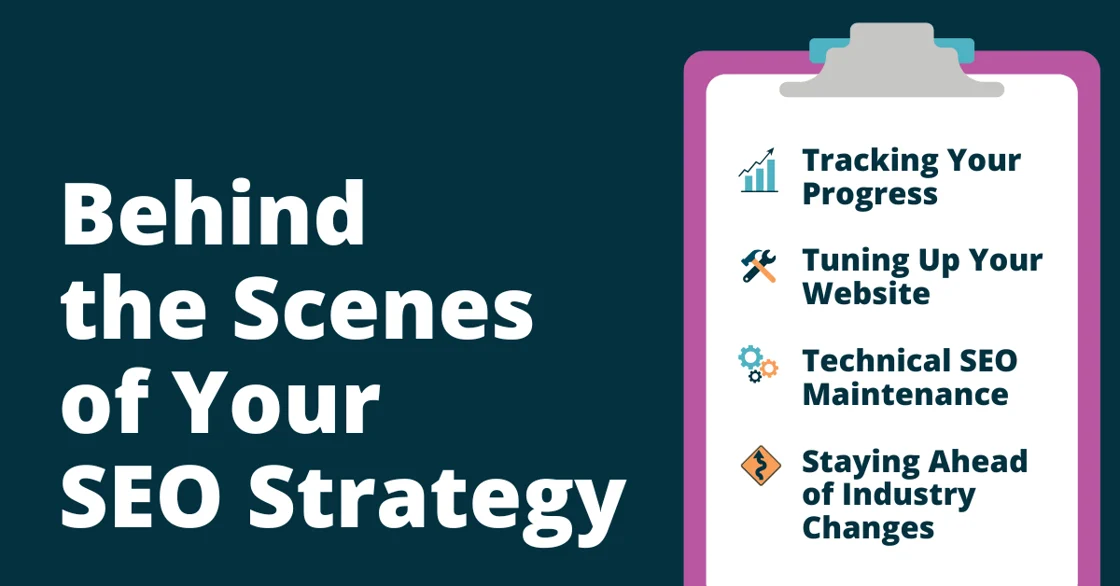
    Behind the scenes of your SEO Strategy graphic

    Here’s a behind-the-scenes look at what our strategists monitor and adjust to keep your business reaching the right people:

    Tracking Your Progress
    We look at your site’s traffic, keyword rankings, and search performance to make sure we’re on track to achieve your SMART Goals.

    • Organic traffic trends: Are more people finding your site through search? Are there opportunities to reach other audiences?
    • Platform insights: Which keywords and pages are earning visibility and clicks?
    • Search intent shifts: Are competitors using different types of content that are performing better for similar searches?

    Tuning Up Your Website Content
    We make targeted updates to the content and structure of your site to help search engines, AI engines, and users better understand and engage with your site.

    • Titles, meta descriptions, and headings: Are they clear, relevant, and eye-catching enough to drive clicks?
    • Internal links and anchor text: Are we guiding users and search engines to the most important information?
    • Content freshness: Is your content aligned with what people are searching for? Does it reflect your current offerings?

    Technical SEO Maintenance
    We run regular behind-the-scenes checks to ensure your site is performing at its best.

    • Routine technical audits: We identify and fix issues like crawl errors, flagged pages, and slow site speeds.
    • Smooth site performance: We ensure your site’s pages are indexed properly and resolve any errors that could affect how search engines treat your website.

    Staying Ahead of Industry Changes
    We stay on top of what’s new so your strategy stays strong.

    • AI search: We’re adapting your tactics to help you show up in AI searches like AI Overviews, ChatGPT, and Gemini.
    • Platform updates: We adjust when Google releases major updates (like its March core update).
    • New search result features: Are things like AI Overviews, “People Also Ask,” or Maps pushing organic listings further down the page
    • Constant strategic improvement: We stay ahead of SEO trends by developing new best practices. Our experts are sought after to share our knowledge with others in the industry.

    Keep your SEO strategy evolving

    Every optimization is driven by expert analysis, strategic adjustments, and a dedicated team that knows how to make real impact.

    READ MORE:

    The Future of Search: SEO and AI Impacts Explained
    by Michelle Neuhoff Boyd

    AI-Powered Search Is Here — Why It’s Time to Invest in SEO
    by Chuck Wilkins

    Got questions or want to discuss how we can take your strategy even further? Reach out to your Account Manager today.

  • How to Market Microcredentials for Maximum Program Visibility

    How to Market Microcredentials for Maximum Program Visibility

    How to Market Microcredentials for Maximum Program Visibility blog graphic

    Key Insights

    • Microcredentials are on the rise as adult learners, career changers, and working professionals seek faster, more affordable ways to gain in-demand skills.
    • Unlike traditional degrees, microcredential enrollment funnels are short, fast-moving, and often self-directed. Learners may enroll within days, not months.
    • Messaging that resonates with microcredential audiences emphasizes job relevance, flexibility, and immediate outcomes, rather than campus life or long-term learning.
    • A strong cross-channel strategy, spanning SEO, paid ads, social, and email, is essential to reach today’s learners where they are and convert interest into action.

    If your institution is offering microcredentials but struggling to fill seats, the issue might not be the program. It may be the marketing.

    Microcredentials are short, skills-based credentials built for speed, flexibility, and career impact. They appeal to learners seeking advancement without the commitment of a full degree. To meet rising market demand, many institutions have expanded non-degree offerings to accommodate microcredentials and stay competitive. 

    According to Coursera’s 2024 Micro-Credentials Impact Report, 51% of higher ed leaders globally now offer microcredentials as part of their curricula.

    Yet many are still applying degree-style marketing to a very different kind of learner.

    Microcredential audiences move quickly. They prioritize outcomes over campus life and expect easy, immediate access to information. Reaching them requires a distinct, streamlined strategy that reflects how they search, decide, and enroll.

    To boost your visibility and connect with these learners, follow these best practices for marketing your microcredentials.

    Why Are Microcredentials Gaining Popularity?

    People working on laptops and tablets at a coffee shop

    Shifting demographics are reshaping higher ed

    The traditional college-aged population is declining, creating enrollment challenges for institutions that have long relied on recent high school graduates. As the demographic cliff approaches, colleges and universities are looking to expand their reach to a new target audience, especially adult learners, career changers, and working professionals seeking practical options.

    Millions are seeking an accessible path forward

    According to UPCEA, more than 40 million adults in the U.S. have some college credit but no credential. Many of these individuals face external pressures (full-time employment status, financial strain, and family responsibilities) that make returning for a traditional bachelor’s degree difficult. Microcredentials, especially affordable and stackable ones, offer a flexible alternative for advancing professionally.

    Economic pressures are driving new priorities

    Over the past few years, rising education costs and mounting student debt have changed how people evaluate their learning investments. Many learners now prioritize programs that are affordable, low-risk, and lead to near-term career benefits. Microcredentials check all three boxes, offering focused, skill-based continuing education without the long-term commitment of a degree.

    Employers are hiring for skills, not just degrees

    Employers are increasingly prioritizing job-ready skills over traditional credentials. Microcredentials allow learners to gain and showcase specific, in-demand abilities that align with job market needs. Morning Consult research found that 81% of employers believe they should consider skills versus degrees when hiring. In many industries, demonstrable competencies are more valuable than academic transcripts. 

    Marketing Microcredentials vs Traditional Degrees

    Marketing funnel differences

    Microcredentials attract a different kind of learner, which means the path to enrollment also looks different. While traditional degrees involve extended timelines and multiple stages of engagement, microcredentials often require quick, outcome-driven decisions.

    Traditional degree funnels typically involve:

    • Long consideration periods, often spanning several months to a year
    • Fixed application windows and admissions cycles
    • Emphasis on relationship-building, exploration, and multiple touchpoints before enrollment
    • Decisions influenced by long-term academic or personal goals

    Microcredential funnels, by contrast, are defined by: 

    • Short decision-making windows — learners may enroll within days of discovering a program
    • Rolling or frequent start dates that demand consistent promotion
    • Higher expectations for fast outcomes, affordability, and convenience
    • Learners motivated by immediate career needs, not long-term campus experiences

    The enrollment process also plays a role. Some microcredential offerings are self-serve, allowing learners to register and start immediately without applying. Others still involve an application or review process. Knowing which type you’re marketing, application-based or on-demand, will shape how you message urgency, availability, and next steps. 

    Marketing messaging differences

    Microcredential learners are goal-oriented, and your messaging needs to match that mindset. Unlike traditional students who may be drawn in by campus culture or the promise of a four-year journey, microcredential prospects are focused on immediate, practical learning outcomes.

    Traditional degree marketing often emphasizes:

    • Institutional reputation and academic prestige
    • Campus life, student community, and support services
    • Long-term growth and personal development
    • Deep subject immersion over multiple years

    This messaging supports a slower decision cycle where students take time to explore, attend events, and speak with admissions counselors.

    Microcredential marketing requires a different focus. Your content should highlight:

    • Clear career relevance and targeted skill development
    • Fast, flexible online learning formats that fit into real life
    • Tangible ROI, like job advancement, new credentials, or salary increases
    • Social proof and real-world outcomes through testimonials or employer partnerships

    Concise, career-focused messaging is key to building trust and driving action, especially when your audience is ready to move.

    Since many microcredential learners bypass traditional touchpoints like info sessions or one-on-one meetings, your digital content must do more heavy lifting. Messaging across your website, ads, and email campaigns needs to quickly answer core questions such as: Is this relevant to my goals? How quickly can I start? What will this do for my career?

    Aligning Your Microcredential and Graduate Program Marketing

    To market microcredentials effectively, you need to understand how they relate to your existing graduate programs. Are they meant to stand alone, or are they part of a larger academic pathway?

    Start by defining the relationship

    Clarifying the purpose of each offering helps avoid mixed messaging and ensures that your marketing reflects the learner’s intent.

    Microcredentials often appeal to learners exploring a field, building targeted skills, or seeking quick career advancement. These are typically short-term career goals. Graduate programs, by contrast, attract those ready to invest in long-term academic or professional growth.

    Connect the path when it makes sense

    If both options fall under the same subject area, consider framing your marketing around the learner’s goals rather than the credential type. 

    Positioning microcredentials as an on-ramp, not just an alternative, helps fuel engagement across all your program types. It reinforces long-term value while meeting learners where they are now.

    For example: Instead of promoting a “Digital Marketing Microcredential” and an “MS in Marketing” as separate tracks, position them together as “Marketing Programs for Every Stage of Your Career.” This approach helps prospective students understand how various educational programs fit into a broader professional path.

    There’s still value in marketing each program individually, but building cross-awareness can strengthen both funnels. If your microcredentials are stackable, make that progression clear in your messaging and visuals. Show how learners can move from a single course to a certificate or a digital badge, and eventually to a master’s degree if they choose.

    How to Market Microcredentials With a Cross-Channel Approach

    A chess piece being moved on a chess board

    To reach today’s fast-moving, outcome-driven students, you need a coordinated presence across search, social, and email. Microcredential learners don’t follow a single path to enrollment, so your marketing strategy shouldn’t rely on a single channel. 

    SEO

    Roughly 68% of online experiences begin with a search engine, according to Ahrefs. For prospective learners, that makes SEO the natural first touchpoint, and a critical one. Whether they’re comparing options, looking for a specific skill, or exploring career next steps, your program pages need to rank and resonate.

    Start by creating dedicated pages for each microcredential, and structure them around what your audience cares about most:

    • What new skills they’ll gain
    • How the program is delivered (online, hybrid, self-paced)
    • How long it takes and how much it costs
    • Who’s teaching it and what kind of outcomes students can expect

    Include strong, clear CTAs and support your value proposition with testimonials, employer recognition, or career placement stats when available.

    To improve visibility, optimize for long-tail keywords that reflect specific intent, such as:

    • “How to earn a microcredential in [topic]”
    • “[Topic] online course for working professionals”
    • “Affordable short-term certificate programs in [industry]”

    You should also support your SEO efforts with blog content that answers common questions and reflects search intent. Topics like career outcomes, comparisons to bootcamps, or time and cost advantages can help draw in qualified traffic while positioning your institution as a helpful resource.

    Paid search

    While SEO builds long-term visibility, paid search helps you capture demand in the moment, especially from learners who are ready to take the next step. By targeting high-intent keywords, you can reach prospective students actively searching for fast, flexible learning options.

    Focus your campaigns on search terms that reflect urgency and career motivation, such as:

    • “[Topic] certificate online”
    • “Short course in [field]”
    • “Learn [skill] online”
    • “Career-focused [topic] course”

    Ad copy should speak directly to what matters most to microcredential learners:

    • Career outcomes: What can they do or achieve after completing the course?
    • Time to completion: Use specifics like “Gain skills in 6 weeks” to set clear expectations
    • Cost transparency: Highlight affordability with phrases like “Only $399” or “Job-ready training for less”
    • Learning format: Reinforce convenience with “100% online education,” “Self-paced,” or “Evening-friendly” messaging

    When done well, paid search drives more than traffic. It drives action. Use your landing pages to reinforce the value promised in your ad, making it easy for learners to take the next step without unnecessary friction.

    Paid social & display

    Paid social and display advertising are powerful tools for expanding your reach and reinforcing program awareness. These channels connect you with prospective learners where they’re already spending time, whether they’re scrolling LinkedIn during a work break or browsing Facebook after hours.

    Use platforms like LinkedIn and Meta to deliver tailored messaging that reflects where someone might be in their decision process:

    Awareness

    • Target by job title, industry, or interests to reach learners who may not yet know about your program
    • Focus on big-picture benefits like career change, flexibility, or upskilling
    • Use headlines like “Break into tech without a degree” or “Get ahead in healthcare. No long-term commitment required.”

    Consideration

    • Highlight program features: length, cost, format, and career outcomes
    • Use short videos or carousels to showcase what learners can expect
    • Highlight learning from experienced faculty who double as industry leaders
    • Keep messaging focused and benefit-oriented: “Gain job-ready skills in just 8 weeks” or “Fully online, on your schedule, courses”

    Decision

    • Reinforce urgency with enrollment deadlines, limited-time offers, or next steps
    • Use testimonials, student quotes, or employer recognition to build trust
    • Retarget those who’ve visited your website or interacted with earlier ads but haven’t yet enrolled

    Well-timed, well-targeted social and display ads help keep your microcredential programs visible and relevant, especially for learners who need a few reminders before they’re ready to commit.

    Organic social

    Organic social media marketing plays a long game. It helps your institution stay present, build credibility, and create meaningful connections with prospective learners over time.

    With social search on the rise, platforms like LinkedIn, Instagram, and Facebook are becoming key discovery tools for those exploring career paths and educational opportunities. A strong presence here highlights the real value of your microcredential programs through authentic, relatable content.

    Share content that reflects learner goals, outcomes, and lived experiences:

    • Career wins: “How I landed a new job three months after earning my certificate”
    • Industry insights: “Top 3 skills employers want in [field] right now”
    • Behind the scenes: “What it’s like to take this course as a working adult”

    Short-form videos, alumni spotlights, and faculty features give your program dimension and authenticity. Focus on flexibility, support, and real-world impact, all core themes that resonate with busy professionals looking to level up.

    A thoughtful organic social presence reinforces the credibility of your program and helps prospective learners see themselves in the experience you offer.

    Email nurture campaigns

    Email marketing is one of the most effective ways to keep prospective learners engaged after their initial inquiry. With the right segmentation and sequencing, email nurture campaigns guide students from interest to enrollment, while reinforcing the value of your microcredential programs along the way.

    Start by segmenting your audience based on what matters most: program interest, learner intent, or stage in the decision-making process. Then build a sequence that delivers timely, relevant content with a clear next step.

    A sample 3-email sequence might look like this:

    • Email 1: Welcome + program overview: Introduce the microcredential, who it’s for, how long it takes, and how it’s delivered. Reinforce accessibility and flexibility.
    • Email 2: Career outcomes + student story: Focus on the real-world value. Share a testimonial or brief case study that shows how past learners applied the credential to advance their careers.
    • Email 3: FAQs + next steps: Address common questions about cost, deadlines, or course requirements. End with a strong, direct CTA that encourages action.

    Calls to action like “Start now,” “View your course options,” or “Get your questions answered” can make a big difference when timed right. The goal is to stay helpful, human, and focused, offering just enough information to move learners forward without overwhelming them.

    Turn Microcredential Interest Into Enrollment

    A successful microcredential marketing strategy doesn’t exist in a silo. It works best when it’s part of a larger, student-centered, cross-channel approach. 

    From SEO and paid search to social and email, your campaigns should reflect how today’s learners search, engage, and ultimately make decisions.

    Search Influence is a higher education digital marketing agency that helps institutions market everything from short-term certificates to full degree programs. We know how to tailor strategies based on learning format, audience intent, and funnel stage, so you can meet prospective students with the right message at the right moment.

    Not sure where to begin? Let’s start by evaluating what you’re already doing. 

    See where your microcredential marketing stands

    Our Self-Assessment for Higher Education Marketers includes seven proven strategies to strengthen your campaigns, covering everything from program pages and CTAs to video, lead generation, and remarketing.

    It’s designed to help your team build full-funnel, cross-channel campaigns that turn awareness into enrollment and position your institution for long-term success.

    Download the self-assessment and start identifying your next best opportunities today.

    Images:
    Unsplash
    Unsplash

  • How to Reduce CPI in Higher Ed Without Sacrificing Lead Quality

    How to Reduce CPI in Higher Ed Without Sacrificing Lead Quality graphic

    Key Insights

    • Not all inquiries are equal. Tracking lead quality ensures your budget supports those most likely to enroll.
    • Lowering cost per inquiry only works if you maintain your focus on lead quality.
    • When your targeting, messaging, and landing pages work together, you eliminate waste that inflates CPI.
    • Setting clear conversion goals and refining keyword strategies helps ad platforms deliver stronger leads at lower costs.
    • With a higher education marketing agency, you gain the strategic support needed to reduce CPI without compromising results.

    If you’re a higher education marketer already tracking and measuring cost per inquiry (CPI), you know the goal isn’t just spending less. It’s making every dollar count toward the right prospective students.

    However, the challenge is lowering CPI without losing the quality leads that fuel your enrollment pipeline. That means looking beyond quick fixes and closely examining lead quality, campaign performance, audience targeting, landing page experience, and how well your marketing efforts are aligned with student intent.

    Here’s how to reduce CPI with intention, while keeping your pipeline strong and your recruitment goals on track.

    The State of Higher Ed Cost Per Inquiry

    Driving down CPI starts with context. Without a clear understanding of where your institution stands, it’s impossible to know whether you’re optimizing effectively — or leaving budget on the table. 

    Do your campaigns match student intent? Are your landing pages converting efficiently? Are you capturing qualified leads, or just cheaper ones?

    Search Influence and UPCEA’s 2024 Higher Ed Marketing Metrics Research Report: What Gets Measured Gets Managed offers valuable insight into typical performance across program types.

    According to the report, professional and online education programs spend an average of $800,970 annually on digital advertising, representing about 3.6% of total revenue. The average CPI varies by program:

    • $140 for online and professional education
    • $128 for undergraduate programs
    • $157 for graduate programs
    • $51 for noncredit programs

    These benchmarks give higher education institutions a practical frame of reference. If your CPI is significantly above these figures, it’s worth digging deeper. 

    Once you have a clear baseline, the next step is knowing where to focus. Below, we break down how to reduce CPI without sacrificing the quality of your inquiries.

    How to Reduce CPI at Your University

    Money being taken out of a wallet

    Refine your conversion goals to capture more leads

    Defining success from the start helps your campaigns target the right audiences, improve efficiency, and generate quality leads that convert — setting the stage for a lower, more effective CPI. Ad platforms work best when they know exactly which action to optimize for, so setting the right conversion goals is essential.

    If your campaigns aren’t clearly aligned with inquiries, applications, or enrollments, you risk wasting spend on leads that look good on paper but don’t move the needle. 

    Tips for refining your conversion goals

    Align internally and with your agency on primary KPIs

    Start by building alignment across internal teams and agency partners on the key performance indicators (KPIs) that matter most in your current campaigns. Whether you’re focused on inquiries, applications, or enrollments, having shared goals ensures everyone is working toward the same outcomes. This clarity sets the foundation for smarter decision-making, more focused reporting, and campaigns that support institutional priorities.

    Define what counts as a true lead for your institution

    Once your KPIs are established, determine which actions reflect meaningful progress in your enrollment funnel. Brochure downloads, event registrations, contact forms, and applications each signal different levels of intent. While all have value, not all carry the same weight when it comes to lead quality. By identifying which actions qualify as a true lead, you can set smarter conversion goals and ensure your campaigns focus on attracting the prospects most likely to take the next step.

    Set and map conversion goals across the funnel

    With lead definitions in place, assign clear conversion objectives that align with each campaign’s role in the funnel. Awareness-stage campaigns might focus on brochure downloads or event sign-ups, while decision-stage efforts should optimize for inquiries or applications. Matching your goals to user intent gives ad platforms better direction and allows you to measure ROI more accurately across each stage of the enrollment journey.

    Help platforms optimize with consistent signals

    Focus on a small set of high-value conversion actions to give ad platforms the data they need to optimize effectively. When too many different actions (like clicks, page views, or form fills) are tracked as conversions, platforms like Google and Meta struggle to prioritize what matters the most. Their machine learning systems rely on clear, consistent signals to identify patterns, refine targeting, and improve delivery over time. The more reliable the inputs, the stronger your marketing performance and the more optimized your ad spend.

    Restructure campaigns to support focused goals

    As your conversion goals and targeting strategies evolve, make sure your campaign structure reflects those priorities. Grouping campaigns by funnel stage, audience segment, or program type gives platforms cleaner signals and helps you more easily evaluate performance. Taking the time to restructure upfront creates a more efficient optimization process and a clearer path to lowering costs without compromising lead quality.

    Track lead quality to reach the right students

    Tracking and acting on lead quality ensures your marketing budget is spent generating meaningful conversions, not just a higher volume of them. Fine-tuning your conversion objectives can increase volume, but without insight into lead quality, you risk filling the funnel with prospects who are unlikely to enroll. 

    When you monitor how inquiries perform beyond the first click, you can make data-driven decisions about targeting, messaging, and spending, ultimately improving efficiency and enrollment outcomes.

    Tips for tracking and leveraging qualified leads

    Start with a manual lead review

    Begin by manually reviewing individual lead submissions to evaluate quality up close. Ask yourself, “Is this the type of prospective student we want more of?” This quick exercise helps you spot patterns in form fills, like missing information, off-target program interest, or low engagement signals. It also gives you immediate feedback to refine targeting, messaging, or creative in real time, long before more complex attribution models kick in.

    Measure lead quality by campaign or platform

    Once you understand what makes a lead valuable, evaluate how each campaign or platform contributes. Go beyond volume and calculate the percentage of leads from each source that meet your quality criteria. Comparing cost per qualified lead (CPQL) gives you a more accurate picture of performance and helps you identify which channels drive meaningful inquiries — and which may inflate your numbers without adding enrollment value.

    Monitor enrollment outcomes, not just form fills

    An inquiry is only part of the story. To truly evaluate performance, track how leads progress through key stages like application submission and enrollment. This helps separate campaigns that generate lasting impact from those that attract surface-level interest. By focusing on outcomes that reflect your enrolled student goals, you can make more informed decisions about where to invest and where to pull back.

    Score and automate lead qualification in your CRM

    Manage, score, and qualify leads directly in your CRM software to make lead quality measurable. Start by assigning values based on criteria like program interest, verified contact details, or secondary engagement. This will help your team prioritize follow-up and identify which inquiries are most likely to convert. 

    Whenever possible, automate this process. Set up rules that flag high-quality leads in real time, reduce manual review, and ensure your best prospects don’t fall through the cracks. A smart qualification system speeds up decision-making and gives you a consistent framework for evaluating performance across campaigns.

    Use CRM insights to guide optimization

    After your leads have been scored and stored in your CRM, use that data to inform campaign decisions. Look for patterns among your most qualified inquiries. Where did they come from? What messaging resonated? Which programs attracted the strongest potential students? These insights allow you to refine your targeting and creative strategies with a focus on what’s working, not just what’s getting clicks.

    Feed qualified lead data back into ad platforms

    Take your insights one step further by feeding qualified lead data back into platforms like Google and Meta. By sharing first-party CRM data through tools like Google Offline Conversions or Meta Conversions API, you give platforms the signals they need to optimize for leads that match your enrollment goals, instead of just low-cost conversions. This can significantly improve targeting and reduce wasted spend.

    Build a closed-loop optimization system

    Integrate your CRM, lead scoring, and ad platforms to build a feedback loop that improves campaign performance over time. When qualified lead data flows both ways — from your campaigns into the CRM, and the CRM back into platforms like Google and Meta — you enable smarter targeting, faster optimization, and better use of your budget. 

    This closed-loop system requires effort to set up, but it’s one of the most effective ways to consistently lower CPI while improving lead quality.

    Identify where your Google Ads spend is going to waste

    Refining your keyword strategy avoids wasted spend in Google Search campaigns. Even well-targeted ads can lose efficiency if they’re triggered by irrelevant or low-intent queries. Fortunately, Google Ads shows you the exact terms users searched before clicking, giving you the insight needed to spot misalignment and adjust your targeting before your budget goes off track.

    Tips for finding and fixing wasted Google Ads spend

    Review the Search Terms Report regularly

    Take time to review the search terms triggering your ads to ensure your spend is aligned with your goals. The Search Terms Report reveals what users are typing, not just the keywords you’ve selected, making it easier to catch off-topic or low-intent traffic early. Regular checks help you identify patterns, remove distractions, and keep your campaigns focused on reaching the right target audiences.

    Spot irrelevant search matches

    Not every click is a good one. Look for queries that fall outside the scope of your programs or audience, especially those that suggest confusion about your offerings. For example, if you’re promoting a “sports management degree” and your ad shows for “sports chiropractic school,” that’s a mismatch worth correcting. Flag these terms and add them as negative keywords to prevent further waste.

    Watch for keyword match type issues

    Your keyword match types directly influence how precisely your ads are served. Broad match keywords can open the door to a wide range of loosely related queries, some of which may not reflect your intent. If you’re seeing too many irrelevant impressions or clicks, consider tightening your targeting with phrase or exact match. This change gives you more control over how and when your ads appear.

    Refine your keyword targeting

    Use performance data to expand and adjust your keyword list based on what’s working. Test new terms that better reflect how your prospective students search and remove those that consistently underperform. This kind of proactive refinement helps you reach more qualified users and improves the efficiency of your marketing campaigns over time.

    Double down on high-performing terms

    When certain keywords consistently drive qualified inquiries, treat them as strategic assets. Increase budget allocation, build dedicated ad groups, and explore related variations to expand your reach. Prioritizing high-performing terms helps you scale what’s working and maximize impact without adding unnecessary spend.

    Prune your campaigns consistently

    Keyword lists can grow stale or bloated over time, pulling your campaigns away from their original focus. Set aside time for regular cleanup — removing underperformers, eliminating overlap, and tightening targeting to stay efficient. Campaign pruning helps you avoid wasted impressions, reduce spend on low-value clicks, and keep your strategy aligned with enrollment goals.

    Optimize and test landing pages to boost performance

    Testing and refining your landing pages allows you to pinpoint what drives action, whether you’re using existing site content or building standalone pages tailored to campaign goals. A well-placed ad is only effective if the landing experience meets the user’s expectations. 

    If the page doesn’t match the intent behind the click, whether in content, clarity, or design, you risk losing prospective student engagement and driving up your CPI.

    Tips for optimizing and testing landing pages

    Match message and intent across ads and landing pages

    Landing pages should deliver exactly what your ad promised. When the headline, tone, and call to action on the page reflect the user’s expectations, you’re more likely to keep them engaged and guide them toward conversion. This landing page best practice doesn’t just improve performance. It can also boost your Google Ads Quality Score, helping your campaigns become more cost-effective over time.

    Focus on a single, clear conversion goal

    Each landing page should revolve around one primary action. Make the path obvious, whether you want users to schedule a tour, download a brochure, or start an application. Avoid cluttering the page with competing links or mixed messages that can distract from your main objective. A clear, focused call to action (CTA) keeps users moving in the right direction and increases your chances of conversion.

    Limit form fields to essentials only

    Asking for too much information too early can discourage prospective students from completing your form. Stick to the essentials — only ask for what’s needed to qualify the lead or move them forward in the funnel. In a study of over 40,000 landing pages, HubSpot found that the use of complex form fields like drop-downs and multi-line text areas significantly decreased performance. To keep conversions high, simplify your forms and save additional questions for later.

    Incorporate social proof and trust signals

    Confidence plays a major role in whether users take action. Reinforce your message by adding elements like student testimonials, graduation rates, job placement stats, or recognizable affiliations. These trust signals help validate your offering and reassure prospective students that your programs deliver real value.

    Tailor the experience to the campaign type

    Not all campaigns serve the same purpose, and your landing page should reflect that. For Google Search, ensure the page aligns with the keyword’s intent and delivers immediate relevance. For Display campaigns, match the tone and content to the audience’s funnel stage, offering helpful next steps rather than a hard sell. Aligning page content with campaign context improves user experience and overall campaign performance.

    Consider creating dedicated landing pages when possible

    If your institutional website is difficult to update or shared across departments, standalone landing pages can give you the control and flexibility needed for campaign success. Dedicated pages make it easier to test messaging, customize layout, and iterate quickly, all without disrupting other parts of your site. When built with purpose, these pages can dramatically improve engagement and conversion rates.

    Audit and update regularly

    Even well-built landing pages need regular attention. Over time, content can become outdated, or changes made by other teams can unintentionally affect page performance. Set a schedule to revisit your campaign landing pages to check for accuracy, brand alignment, and effectiveness. Ongoing audits ensure your pages stay relevant, consistent, and ready to convert.

    Dedicated landing page success story

    At Search Influence, we’ve seen the impact that dedicated landing pages have on campaign performance metrics. 

    With our support, one client, leveraging HubSpot, implemented ad-specific landing pages designed to align closely with each campaign’s messaging and intent. Within just over two weeks, they generated 56 qualified submissions and saw their CPI decrease by nearly 50% compared to similar campaigns using standard website pages. 

    The ability to tailor content, streamline the user experience, and iterate quickly played a key role in achieving these results.

    Why Should You Hire an Advertising Agency to Help Reduce Your CPI?

    People working together in a meeting

    Reducing CPI is a complex process that requires a coordinated effort across campaign structure, targeting, tracking, and landing page performance. Even with the best intentions, it’s easy to get bogged down in the details, especially without dedicated resources or specialized expertise.

    Our Marketing Metrics Report shows that only 47% of higher ed marketers in online and professional education are satisfied with campaign performance. 

    Just 29% are confident in their ability to track results. 

    The link between the two is clear: 92% of those who are satisfied with tracking also report satisfaction with performance.

    If your internal team is stretched thin or struggling to connect strategy with outcomes, a higher ed-focused advertising agency can help fill the gap. With access to advanced tools, deep platform knowledge, and the capacity to focus solely on improving results, the right partner can bring clarity and control to complex campaigns and help you lower your marketing expenses with precision.

    Let’s Make Your Higher Education Marketing Dollars Work Smarter

    At Search Influence, we’ve spent nearly two decades helping colleges and universities improve campaign performance while optimizing their marketing budget. 

    Our team has actively shaped how the higher education sector defines and measures cost per inquiry. From benchmarking results to uncovering inefficiencies and implementing data-backed digital marketing strategies, we work alongside educational institutions to lower CPI without sacrificing lead quality.

    Ready to see where your campaigns stand? 

    Download our free CPI Worksheet to calculate your current CPI, evaluate your ROI, and pinpoint where your resources will go furthest. This resource offers actionable instructions for calculating your CPI for all your programs, by program type, and even assessing your cost per enrolled student.

    With the right insights, you won’t just spend smarter — you’ll recruit smarter.

    Images:
    Unsplash
    Unsplash

  • The AI SEO Guide: From Concepts to Application

    The AI SEO Guide: From Concepts to Application

    The AI SEO Guide: From Concepts to Application blog post

    Key Insights

    • AI SEO means creating content that resonates with humans and is easily interpreted by AI systems.
    • Search engines prioritize semantic relevance, so depth and clarity now matter more than exact keywords.
    • AI models pull from trusted sources, making content accuracy and accessibility essential.
    • Content should align with user intent and be structured in self-contained chunks that AI can retrieve.
    • Winning at AI SEO requires ongoing effort, fresh content, and the right tools to track AI visibility.

    AI SEO is the strategic optimization of digital content to perform well with both human visitors and artificial intelligence systems like search engines, voice assistants, and chatbots. As we enter an era where content is increasingly filtered through AI tools like ChatGPT and Google’s AI Overviews, and voice assistants are answering user questions directly, your content must now serve two audiences:

    1. Your human customers
    2. The AI models deciding what content to surface in search results

    To improve your organic traffic and win in this environment, you need to understand how AI works, how search engines are changing, and how to optimize content so it’s both discoverable and compelling. This guide walks through the essential concepts of AI SEO, from AI fundamentals to successful content optimization.

    Part 1: Foundations — What Powers AI SEO

    Artificial intelligence (AI)

    Think of AI as your super-smart digital teammate who learns from data to make decisions, generate content, or answer questions. It’s like having a research assistant who’s read the entire internet and never sleeps.

    In your website’s world, AI helps with:

    • Answering customer questions automatically
    • Suggesting content your visitors might like based on their behavior
    • Improving your SEO by understanding what your content means, not just what keywords it contains

    Try This: Ask ChatGPT to analyze one of your web pages and suggest improvements. You’ll get a taste of how AI “sees” your content.

    Large language models (LLMs)

    LLMs, like GPT-4, Claude, or Gemini, are a type of AI software powering tools like ChatGPT that your team can use for content creation and optimization. These sophisticated platforms process and generate human language based on vast amounts of text data they’ve analyzed.

    For AI SEO specifically, your marketing team can use LLMs to:

    • Create search-optimized content that addresses search intent.
    • Generate blog ideas based on trending topics and search volume.
    • Analyze top-performing search results to identify content gaps.
    • Draft meta descriptions and title tags that improve click-through rates.
    • Develop FAQ sections that address common user queries and help with featured snippets.

    Embeddings in search engines

    Embeddings transform text into numerical vectors that capture meaning. For AI SEO, this is crucial because modern search engines use embeddings to understand the topics in your content.

    For example:

    • “Buy running shoes” and “purchase athletic footwear” would have similar embeddings despite using different words.
    • This allows search engines to match your content with user queries based on meaning, not just exact keyword matches.

    Content creation strategies should focus on comprehensive topic coverage rather than exact keyword density.

    The best AI SEO software tools now use embeddings to analyze how search engines will interpret your content, helping you optimize for semantic relevance.

    Vectors and AI-driven search results

    Vectors are the actual mathematical representations of your content that search engines use to match with search queries. When optimizing content for AI SEO:

    • Each piece of content has a unique vector “signature” based on its topics and meaning.
    • Search algorithms compare query vectors with content vectors to determine relevance.
    • The closer these vectors align, the higher your content may rank in search results.
    • Recent changes in search engine algorithms prioritize semantic relevance over exact keyword matching.

    Try This: Use AI SEO tools to analyze your highest-performing organic content and identify the semantic topics that may be driving its success in search results.

    Part 2: Making AI Smarter — Grounding and RAG

    Grounding

    Ever had a conversation with someone who confidently states something completely wrong? AI can do that too. It’s called “hallucination.” Grounding is like giving AI a fact-checker before it speaks.

    In practical terms, grounding means connecting AI to reliable sources of truth, such as:

    • Your website content
    • Product catalogs
    • Knowledge bases
    • Customer support archives

    This matters because it ensures that when someone asks a question about your business, the AI answers with accurate information, not what it thinks might be true.

    RAG: Retrieval-augmented generation

    RAG is the framework that makes grounding possible. Think of it as a three-step process:

    1. Retrieve: The AI searches for relevant content in your database (using those vector coordinates we talked about).
    2. Augment: It adds this information to its “working memory.”
    3. Generate: It crafts a helpful, accurate response using this fresh information.

    It’s like the difference between asking someone to recall a movie plot from memory versus letting them look up details while they tell you about it. The second approach is always more accurate.

    This is what powers:

    • Custom GPTs with access to your content
    • Site search that gives conversational answers
    • Google’s AI Overviews that summarize search results
    • Enterprise chatbots that know your specific business

    Try This: Test an RAG system yourself by creating a custom GPT in ChatGPT with your website content, then see how it answers questions about your business.

    Part 3: Structuring Content — Relevance, Salience, and Granularity

    Topical relevance

    Topical relevance means your content matches what people are looking for. It’s not just about keyword matching. It’s about addressing the concepts behind the keywords.

    To boost relevance:

    • Focus each page on one clear topic (avoid the “everything bagel” approach).
    • Use natural language that covers related terms and concepts.
    • Match the underlying intent, not just the exact search terms.

    Salience

    Salience is about prominence and focus. Is your core topic front-and-center, or just mentioned in passing?

    Think of it this way: If your page were a movie, is your key topic the star, or just an extra in the background?

    To win at AI SEO, know that:

    • Salient content gets retrieved more often.
    • It ranks better in traditional search, too.
    • It delivers what real users are looking for.

    Chunks (Passages): The unit of retrieval

    Modern search engines and AI don’t read your content like humans do. They break it into bite-sized pieces called “passages” or “chunks.”

    Think of each chunk as a mini-document focused on one subtopic. When someone asks a question, AI might pull just that relevant chunk, not your entire page.

    To optimize your chunks:

    • Use clear subheadings that state the main idea.
    • Make each section answer a specific question.
    • Keep related information together.
    • Aim for self-contained sections that make sense on their own.

    Try This: Look at your top-performing page. Can you identify distinct chunks? Would they make sense if read in isolation?

    Good vs. great: What high-salience content looks like

    Low-salience example: “We offer a range of services, including SEO, PPC, email, social media, and more.”

    High-salience example: “Our SEO strategy begins with a technical audit, followed by keyword mapping and targeted content updates to drive organic rankings.”

    Why this matters: The first mentions SEO, and the second is focused on it. That focus is what makes content salient and retrievable.

    Part 4: Aligning Content With Intent and the Customer Journey

    Understanding user intent

    User intent is the “why” behind a search. It’s the difference between someone researching a topic and someone ready to buy.

    • Informational: “What is university SEO?” (They want to learn.)
    • Navigational: “Search Influence SEO services” (They’re looking for a specific site.)
    • Transactional: “Hire higher ed SEO agency” (They’re ready to act.)
    • Investigative: “Best SEO firm for colleges” (They’re comparing options.)

    Matching content to intent

    Remember those AI concepts we discussed earlier? Here’s where they come together:

    • Use topical relevance to ensure you’re covering the right concepts.
    • Apply salience to focus your content on what matters most.
    • Structure your content in chunks that answer specific questions.

    Mapping to the customer journey

    Your website isn’t just a collection of pages — it’s a journey you’re guiding users through:

    Aligning Content With Intent and the Customer Journey graphic

    Try This: Audit your content by journey stage. Do you have gaps? Are you heavy on awareness but light on decision content?

    Keep It fresh: Why content age matters in AI retrieval

    Both search engines and AI systems prefer fresh content. It’s not just about having a recent publication date but about having current information.

    Picture this: If two pages have similar relevance, but one was updated last week and one two years ago, which would you trust? AI feels the same way.

    Best practices:

    • Set a calendar reminder to review key pages quarterly.
    • Update statistics, examples, and trends regularly.
    • Add “Last Updated” dates to show content freshness.
    • Consider a content refresh strategy as part of your regular marketing calendar.

    Invisible SEO: Metadata, markup, and machine signals

    AI doesn’t just see what humans see. It reads the code behind your pages, too. These behind-the-scenes signals help machines understand your content:

    • Semantic HTML: Using proper heading tags (H1, H2) instead of just making text bigger
    • Schema markup: Adding code that explicitly tells search engines “this is a product” or “this is an FAQ”
    • Meta information: Writing compelling, keyword-relevant titles and descriptions
    • Image alt text: Describing images for both accessibility and context

    Try This: Use either Schema Markup Validator or Google’s Rich Results Test and see what structured data your site currently has. Look for opportunities to add FAQ, HowTo, or other relevant schema types.

    Your content in vector indexes and AI repos

    Your content doesn’t just rank in traditional search. It gets embedded, chunked, and compared in massive vector databases:

    • For content to be found, it must be crawlable (unless in a private system).
    • It needs semantic richness — context and meaning, not just keywords.
    • Strong internal linking helps establish relationships between concepts.
    • Clear structure signals what’s important and how ideas relate.

    Testing and tuning: How to track your AI SEO performance

    AI SEO isn’t “set it and forget it.” It’s an ongoing process:

    • Track your presence in AI Overviews using monitoring tools like SEMRush or Advanced Web Ranking.
    • Test common customer questions in ChatGPT to see if it references your content.
    • Identify gaps by comparing what questions you want to rank for versus what AI actually retrieves.
    • Consider one of the emerging AI tracking tools like Scrunch, RankScale, or Profound.
    • Use these insights to continuously improve your content strategy.

    Part 5: The Future of AI SEO — Preparing for What’s Next

    Search engine diversity: Beyond Google

    While Google dominates the conversation around search, different search engines and AI platforms approach content evaluation in unique ways:

    • Bing/Microsoft: Often emphasizes freshness and social signals differently than Google
    • DuckDuckGo: Focuses on privacy and may value different content signals
    • Niche Search Engines: Vertical-specific engines like Amazon or YouTube have their own unique ranking factors

    Content optimized for multiple AI systems should:

    • Focus on universal quality factors like clarity and comprehensiveness.
    • Avoid over-optimization for any single algorithm.
    • Test performance across multiple platforms.

    Try This: Compare how your top content performs in Google versus Bing or other search engines to identify potential optimization gaps.

    Knowledge graphs: Entities and relationships

    Search engines use knowledge graphs to understand entities (people, places, things) and how they relate to each other. This structured understanding helps AI comprehend context and meaning beyond just keywords.

    For example, a knowledge graph understands that:

    • “Apple” could be a fruit, a technology company, or a record label.
    • Tim Cook is the CEO of Apple Inc.
    • iPhones are products made by Apple Inc.

    To optimize for knowledge graphs:

    • Use schema markup to clearly identify entities.
    • Build content that reinforces entity relationships.
    • Create content clusters that thoroughly cover related topics.

    Try This: Research how your brand and key products appear in Google’s Knowledge Panel to understand how search engines currently interpret your entity.

    Agentic search: When AI acts on your behalf

    We’re moving from an era where users search for information to one where AI assistants search on their behalf. Think of it as the difference between looking up a restaurant yourself versus telling your assistant: “Book me a table at a good Italian place nearby.”

    This shift has profound implications:

    • Users may interact less directly with your website.
    • First impressions will happen through AI interpretations of your content.
    • Content needs to be both human-friendly AND machine-actionable.

    Try This: Ask an AI assistant like ChatGPT to recommend a product in your category and see what sources it draws from. What made those sources retrievable?

    Agent-to-agent communication

    The next frontier is machines talking to machines on our behalf. Imagine your customer’s AI assistant negotiating with your business’s AI system to book an appointment or customize a product.

    To prepare for this:

    • Structure data in machine-readable formats.
    • Develop clear API documentation.
    • Ensure your content can be easily parsed into actionable items.
    • Consider what permissions and capabilities you’ll grant to external AI systems.

    E-E-A-T: Building trust with both users and AI

    To describe quality content, Google coined the term: E-E-A-T principles (Experience, Expertise, Authoritativeness, Trustworthiness). While not explicitly related to AI search, the factors are increasingly important for AI evaluation:

    • Experience: Show first-hand knowledge and practical application.
    • Expertise: Demonstrate a deep understanding of your field.
    • Authoritativeness: Build recognition from others in your industry.
    • Trustworthiness: Provide accurate, current information with transparency.

    AI systems are getting better at evaluating these signals to determine which content to trust and recommend.

    Try This: Audit your key pages for E-E-A-T signals. Do you clearly communicate credentials? Do you reference authoritative sources? Do you show real expertise?

    Multimodal AI SEO: Optimizing beyond text

    AI systems are increasingly “multimodal,” i.e., able to understand text, images, audio, and video together. This trend has significant implications for comprehensive content optimization:

    • Image Source Optimization: Use descriptive filenames and alt text that help AI understand image content.
    • Video SEO: Include transcripts and structured markup that make video content discoverable.
    • Podcast Optimization: Provide detailed show notes and timestamps that AI can index.
    • Social Media Integration: Coordinate messaging across platforms for consistent brand signals.

    The best AI SEO strategies now incorporate multiple content formats to create comprehensive digital experiences that rank well across all search platforms.

    The evolving link landscape in AI SEO

    While internal linking remains crucial for establishing content relationships, the role of external links is also evolving in an AI-driven search environment:

    • Quality over quantity becomes even more important.
    • Contextual relevance of linking domains matters more than domain authority alone.
    • Links from diverse but topically relevant sources create a more natural signal.
    • Citations and mentions may gain importance alongside traditional links.

    To adapt your link-building strategy:

    • Focus on genuine relationships with relevant content creators.
    • Seek opportunities to be cited as an information source, not just linked to.
    • Create link-worthy resources that AI systems would recognize as authoritative.

    Part 6: AI SEO Tools and Implementation

    Essential AI SEO software and platforms

    To effectively implement AI SEO strategies, your team will need the right tools:

    • AI Content Creation Tools: Platforms like ChatGPT, Jasper, ContentBot, or CopyAI help generate search-optimized content
    • SEO Analysis Software: Tools like SEMrush, Ahrefs, or Moz now include AI-powered content suggestions
    • Search Intent Analysis: Specialized tools that analyze user queries and suggest content angles
    • AI-Powered Keyword Research: Software that identifies semantic keyword clusters and topic opportunities
    • Content Optimization Platforms: Tools that evaluate your content against top-performing competitors
    • Dedicated AI Tracking Tools: Tools like Scrunch, RankScale, or Profound can explicitly track your placement in AI search results

    These tools work best when used by skilled marketers who understand both SEO fundamentals and AI capabilities.

    AI SEO implementation timeline

    For teams looking to adopt AI SEO practices, consider this phased approach:

    1. Audit Current Performance (1-2 weeks)
      • Analyze organic traffic trends.
      • Identify content performing well/poorly with AI systems.
      • Benchmark against competitors.
    2. Tool Selection and Training (2-4 weeks)
      • Choose appropriate AI SEO software.
      • Train your team on new platforms.
      • Develop internal best practices.
    3. Content Optimization (Ongoing)
      • Prioritize high-value pages for updates.
      • Create new content using AI SEO principles.
      • Monitor performance and adjust strategies.
    4. Advanced Implementation (3-6 months)
      • Develop custom AI applications for your website.
      • Create specialized datasets for content creation.
      • Build automated optimization workflows.

    The most successful brands view AI SEO as an ongoing process rather than a one-time project.

    Measuring AI SEO success

    Track these key metrics to evaluate your AI SEO efforts:

    • Featured Snippet Appearances: How often your content appears in position zero
    • SERP Feature Presence: Inclusion in knowledge panels, FAQs, and other enhanced results
    • AI Overview Mentions: References to your content in Google’s AI Overviews
    • Voice Search Results: How often your content is selected for voice assistant responses
    • Click-Through Rate Changes: Shifts in user behavior based on SERP changes
    • Page-Level Engagement: Time on page, bounce rate, and conversion metrics
    • Organic Traffic Quality: Not just more visitors, but more qualified prospects
    • Referrals from AI Engines: It is possible to create filters in GA4 and other Analytics packages to track AI referrals
    • AI Presence: If you invest in an AI tracking tool, you can track your presence in snippets and citations over time

    Set up custom dashboards in your analytics platform to monitor these metrics by page type and content category.

    The AI SEO Opportunity

    AI SEO represents the future of search engine optimization, blending traditional SEO best practices with new approaches designed for AI-powered search. As these trends continue to reshape how people find information online, brands that adapt will gain significant advantages in organic traffic and digital visibility.

    Success in AI SEO requires:

    • Understanding how AI systems evaluate and retrieve content
    • Creating comprehensive resources that address search intent at every stage
    • Optimizing for both traditional search results and AI-generated answers
    • Building content that establishes your brand as an authoritative source
    • Staying current with the latest AI search engine trends and changes

    The most effective teams will use AI tools to enhance their content creation process while maintaining the human expertise and brand voice that connects with their audience.

    Your Next Steps:

    1. Conduct an AI SEO audit on your highest-traffic pages to identify optimization opportunities.
    2. Explore how AI tools can help your team create more comprehensive, relevant content.
    3. Develop a content plan that addresses each stage of your customer journey.
    4. Build internal expertise on how AI is changing search behavior in your industry.

    The brands that embrace these changes now will build sustainable advantages in organic search that will serve them well as AI continues to transform how people find and consume information online.

    Need help navigating the shift to AI SEO? Contact Search Influence to develop a strategy that keeps your content visible, valuable, and ahead of the curve.

  • UPCEA Webinar Top Takeaways: SEO for AI Search

    \This post was updated by Ren Horst on 05/01/2025 after the webinar took place. It was originally published on 04/02/2025.

    Key Insights

    • AI is driving a shift toward instant answers, changing how online content is found and reducing the need to click through to webpages.
    • To compete, your content must reflect people’s intent, not just what they type.
    • Institutions that act now can maintain visibility where it matters most: at the decision point.
    • Pages that emphasize clarity, structure, and real-world context are more likely to be picked up by AI tools.
    • External signals like mentions, citations, and schema help reinforce your authority.

    As artificial intelligence reshapes how prospective students search for information online, higher education marketers are under growing pressure to adapt.

    In the recent webinar “SEO for AI Search: Protect Your Student Enrollment Pipeline,” presented by Search Influence and UPCEA, Search Influence Director of Paula French (Director of Sales and Marketing, Search Influence), Will Scott (Co-Founder and CEO, Search Influence), and Bruce Etter (Senior Director of Research and Consulting, UPCEA) broke down what institutions need to know — and do — now.

    The session covered three critical areas: how AI is transforming search behavior, why core SEO practices still matter in this new search world, and what your team can start doing today to remain visible.

    If you missed it live, here are the top takeaways to help shape your AI SEO strategy.

    SEO for AI Search Webinar: Top Takeaways

    Understanding AI search

    What is AI search?

    AI search is a search experience powered by artificial intelligence that delivers complete, synthesized answers to queries, instead of the traditional list of clickable links.

    Platforms like Google’s AI Overviews, ChatGPT, Gemini, Microsoft Copilot, and Perplexity don’t always send users to web pages—instead, they generate answers using large language models (LLMs) trained on vast datasets, sometimes enhanced by retrieval-augmented generation (RAG), which pulls in real-time web content.

    However, these models also rely on entities, citations, and structured data to decide what gets included in responses.

    These tools prioritize clarity and credibility, reshaping how content is surfaced. This shift is changing how users interact with search and how institutions must approach their content strategy.

    How is AI search changing user behavior?

    Instead of scrolling through organic results, users increasingly receive answers to search queries directly from tools like Google’s AI Overviews and ChatGPT.

    This has led to a sharp increase in zero-click searches, where the search ends with the summarized response, without a need for the user to visit a website.

    The trend is accelerating fast as AI usage grows. ChatGPT reached 100 million users within two months of launch, and generative AI adoption has already hit 39.4%, outpacing the early growth of both the internet and personal computers.

    As these platforms prioritize quick, in-platform answers, some sites are seeing organic traffic drop by as much as 15% to 64%.

    The space for traditional organic links continues to shrink. It’s not just AI-generated results pushing them down—today’s search engine results pages (SERPs) are packed with product carousels, featured snippets, People Also Ask boxes, and other dynamic elements that crowd out classic blue links.

    But the window isn’t closed. It’s simply shifting. Clear, structured, and credible content still has a shot at visibility, especially if it aligns with how people phrase questions and how AI systems choose what to surface.

    Rethinking SEO in the age of AI

    What is SEO for AI search?

    SEO for AI search is the strategy of optimizing digital content to be surfaced, cited, or featured in answers generated by AI-powered search tools.

    This approach focuses on helping AI platforms recognize your content as authoritative, relevant, and structured enough to use in their responses.

    Instead of focusing on organic search engine results rankings, the intent is to be referenced directly in the answer, whether through a citation or inclusion in the response itself.

    To achieve this, your content must be semantically clear, supported by schema markup, and aligned with what AI considers trustworthy. The goal is to build pages that speak fluently to both human intent and machine logic.

    How does traditional SEO differ from AI search SEO?

    SEO THEN AND NOW. Traditional vs AI Search SEO

    Traditional SEO is driven by ranking factors like exact-match keywords, content volume, and backlinks. AI search SEO takes a different approach, one that aligns with how artificial intelligence models gather, interpret, and present information.

    Instead of keywords, it prioritizes entities: clearly defined people, programs, places, or concepts that AI can recognize and connect across sources.

    Rather than focusing on content volume, it values semantic relevance: how well your content reflects user intent and contextual meaning.

    And instead of relying solely on backlinks, it rewards citations: trusted references that help AI validate your authority.

    Some refer to this evolving strategy as Generative Engine Optimization (GEO). At Search Influence, we prefer AI SEO or AI search SEO, because it’s still SEO, just built for visibility in the next generation of search.

    AI Content Optimization Checklist

    Improving visibility in AI-driven search

    How can you make your content entity-rich?

    The more your content aligns with how entities are framed in trusted sources, the better chance you have of being included in AI-generated responses.

    To show up in AI-powered search, your content needs to be entity-rich. That means using clear, recognizable references to your university, schools, programs, and related topics, so AI knows exactly what you’re talking about.

    But getting there takes more than keyword tools. You need to look at the places where entities already “live,” like Wikipedia.

    For example, if you’re trying to rank for higher education, it helps to know that Wikipedia actually treats that as part of a broader entry: tertiary education. Inside that page, you’ll also find related concepts like continuing education and vocational education, all tied to the same entity. In this example, you can use structured data and clear language to help AI connect your content to those recognized ideas.

    Why is schema markup important for entity optimizations?

    A traditional SEO tactic, schema markup is a type of behind-the-scenes code that helps search engines understand your content and relate it to the right entities.

    It’s not visible to site visitors, but it gives AI extra signals about your content’s topic and structure.

    While it’s still unclear how directly AI tools use schema, we know it plays a key role in organic search, and strong organic signals are still one of the best ways to boost your website’s visibility in AI results.

    On university websites, schema can clarify who you are, what you offer, and how different pieces of content relate to your institution. It helps reinforce entities like your university name, academic programs, and faculty, especially when paired with clear language on the page.

    Some helpful types of schema include:

    • Article schema: Tells AI the headline, description, and type of content
    • Publisher schema: Links content back to your institution as the source entity
    • SameAs schema: Connects your content to other relevant entities and concepts across the web

    There are also education-specific options, like EducationalOrganization and Course schema, that help AI connect your site to topics like higher education and online learning.

    How do you optimize for semantic relevance?

    AI-driven search engines and tools prioritize meaning over keywords. To stay visible, your content needs to reflect how real people think, search, and ask questions.

    1. Write with intent: Answer specific questions, connect related topics, and provide helpful context, even if you’re not writing in a Q&A format. This shows AI your content is built to inform, not just rank.
    2. Keep it chunked: Use short, focused blocks of around 170–200 characters. That’s how information appears in AI Overviews and featured snippets, and it increases your chances of being included.
    3. Prioritize structure: Use clear headings (H1s, H2s) and make sure your page titles say exactly what the content delivers. When your content is easy to scan, it’s easier for AI to understand and surface in results.

    How can you use semantic triples to make your content more findable?

    Write with the Semantic Triple
    Semantic triples are foundational to AI-powered search. From Google’s Knowledge Graph to AI Overviews, these tools rely on clear, structured relationships to understand what your content means and when to surface it.

    Each semantic triple follows a simple format: subject → predicate → object.

    For example:

    University X → offers → a nationally ranked online MBA
    That MBA → leads to → career advancement for working professionals

    This structure helps AI connect the dots between your institution, your programs, and the outcomes students care about. The more often these relationships appear, both on your site and across trusted sources, the more likely AI is to recognize your relevance and elevate your content in search.

    To use semantic triples effectively:

    • Identify the core relationships in your messaging (Who? Does what? Why does it matter?)
    • Express those ideas in short, direct statements, especially in headings, intros, and metadata.
    • When possible, link related triples together in a way that still sounds natural to readers.

    For instance, you can combine two triples into a persuasive sentence:

    University X offers a nationally ranked online MBA that leads to career advancement for working professionals.

    This kind of structure isn’t just good writing. It’s exactly what AI is built to understand.

    What are citations in SEO, and how do they help AI understand your authority?

    Citations (mentions of your institution, programs, or people across the web) help AI connect your brand to the topics you want to rank for.

    These references don’t always need to be clickable links. What matters is consistent, contextual mentions in trusted places.

    AI-powered search engines look for co-occurrence, which is how often your name appears near relevant terms on authoritative sites. These mentions could come from news articles, faculty bios, higher ed directories, speaker bylines, or awards listings.

    The more often your institution is tied to specific keywords or subject areas, the more likely AI is to recognize you as an authority.

    To strengthen your citation signal:

    • Choose a consistent, “locked-in” phrase that reflects your niche (e.g., top-ranked online business program).
    • Use it in boilerplate descriptions, press releases, faculty bios, and guest content.

    However, citations work both ways. When your site links out to reputable sources, it shows AI that you’re part of a trusted information network. Referencing government data, academic research, or respected media outlets adds credibility and helps AI understand the context of your content.

    Where can you build citations?

    There are plenty of places to earn citations — if you know where to look.

    Some require cross-team coordination, while others are quick wins you can act on immediately. The key is to show up consistently in trusted, topic-relevant spaces.

    Ideas include:

    • Online directories like Niche, Peterson’s, and BestColleges
    • Media coverage in outlets such as Inside Higher Ed, The Chronicle, or local press
    • Alumni stories and features on industry-specific sites
    • Conference speaker bios and event listings
    • Professional associations like UPCEA, GMAC, and CIC

    Tools for tracking AI search performance

    What are the best tools to track your visibility in AI-powered search?

    Despite popular belief, it is possible to track your AI SEO performance. New tools are emerging fast to meet that demand.

    At Search Influence, some of our top picks include Scrunch, RankScale, and Profound. These platforms offer insights tailored specifically to AI-powered search, helping you understand how your content is being surfaced in tools like Google’s AI Overviews or ChatGPT.

    Other helpful tools include:

    Some platforms focus on surface-level AI visibility metrics, while others dive deeper into entity tracking, co-occurrence analysis, and content structure. The right tool for you ultimately depends on your goals, budget, current tech stack, and reporting needs.

    Q&As From the Webinar

    If you’re a resource-strapped institution, what’s the most important place to start?

    Many academic websites are weighed down by long, unbroken blocks of text. Start by structuring your content in semantic-friendly chunks.

    Chunking your content is one of the simplest, highest-impact ways to improve visibility, especially when time and resources are limited.

    By breaking that content into clear sections, with meaningful headers, concise paragraphs, and scan-friendly formatting, you improve readability for users and make it easier for AI to understand and surface your content.

    Is there a limit to how many external links you should include, or does it depend on the content?

    It depends on the type and length of the content.

    For shorter or more narrative-driven pieces, you may have fewer opportunities to link out. In those cases, it’s better to focus on clarity and flow than forcing in links.

    More external links can be valuable for technical, research-based, or program-specific content, especially when pointing to trusted sources that support your claims.

    If there’s relevant data, industry standards, or authoritative context available off-site, link to it. Just make sure every link adds real value and helps AI understand the credibility and depth of your content.

    How do paid search ads influence AI SEO?

    Paid search doesn’t directly impact how your content is pulled into AI-generated responses, but it can still play an important supporting role. It’s still important to bid on your branded terms. Even if your content appears in an AI-generated answer, paid search helps you control what users see and where they land next.

    There are two layers to how AI search tools work today:

    • LLMs generate responses based on pre-trained data.
    • RAG systems ground those responses in real-time web content pulled from traditional search indexes.

    That means traditional search ranking signals still matter, including engagement metrics like time on site, click-through rate, and user behavior. And that’s where paid search comes in.

    Paid ads can boost visibility and drive more engagement with your content. In turn, that engagement feeds into ranking signals, making your site more likely to be included when AI systems pull from live search data to shape responses.

    There’s another layer to consider: In tools like Google’s AI Overviews, when users click on suggested links, they’re often sent to a follow-up Google search, not directly to your website.

    The first thing they see? Your paid search ad, if you’re running one.

    Why Partner With Search Influence

    Search Influence can help protect your student pipeline with AI SEO strategic and Practical Support

    SEO is evolving fast. If your institution wants to stay visible as search engines shift toward AI, your strategy needs to reflect how search works now, not how it worked five years ago.

    At Search Influence, we help colleges and universities take practical steps to improve visibility, increase qualified traffic, and support enrollment goals amidst emerging trends. We’ve spent nearly two decades working with higher ed teams to turn complex websites and limited bandwidth into measurable results.

    We’re here to help you where it makes the most sense, whether that’s full-service execution, in-house team support, or a hybrid approach.

    Ready to explore what’s possible? Book a call with our team, and let’s talk AI search optimization strategies for your institution.

    More resources for higher ed marketers

    • SEO Research Study: Our original research with UPCEA on how colleges and universities are approaching SEO, including gaps, priorities, and benchmarking data you can use to advocate for strategy updates.
    • SEO Roadmap: A done-for-you strategy (updated for AI search) that focuses on one top program or degree. Built by our team, this roadmap delivers a clear, prioritized plan you can implement over three months, covering keyword strategy, technical updates, content improvements, and authority-building tactics.
    • SEO Workbook: A guided, do-it-yourself resource that helps you uncover site issues, understand your authority, define keyword priorities, and more. You’ll walk away with at least three months of actionable SEO tactics your team can put into place immediately.

    Missed the Webinar? Watch the Replay

    If you want to see the full conversation, including live examples, audience Q&A, and deeper discussion from our panel, watch the complete recording of “SEO for AI Search: Protect Your Student Enrollment Pipeline” on YouTube.

    Whether you’re building your strategy from the ground up or refining what you already have, the full session will give you the clarity, context, and insights you need to make smart decisions in the age of AI search.

  • Overlooked Higher Education Marketing Strategies To Maximize Your Budget

    Overlooked Higher Education Marketing Strategies To Maximize Your Budget blog post

    Key Inights

    • Track Key Metrics to Justify Budget Increases: Monitoring cost per inquiry (CPI) and cost per enrolled student (CPES) helps institutions prove ROI and secure additional marketing budget.
    • Align Campaign Priorities With Institutional Goals: Universities that connect their marketing strategies to enrollment objectives see better results and more efficient spending.
    • Leverage a Full-Funnel Marketing Approach: A blend of SEO, paid search, content marketing, and social media engagement ensures that institutions reach prospective students at every stage of their journey.

    Are you using the right higher education marketing strategies to maximize your budget?

    If your budgeting methods don’t reflect today’s digital-first student journey, you probably aren’t.

    This blog will provide actionable steps to refine your marketing strategy and optimize your budget.

    Backed by industry benchmarks and real-world case studies, these insights will help you develop a comprehensive digital advertising strategy that maximizes enrollment impact while keeping costs in check.

    7 Things You Aren’t Considering in Your Higher Education Marketing Plan and Budget

    All the data in this blog is from our Higher Ed Marketing Metrics Research Report: What Gets Measured Gets Managed, which we conducted in collaboration with UPCEA.

    This study established the sector’s first benchmarks for higher education cost per inquiry (CPI) and cost per enrolled student (CPES) and explored whether online and professional education units track critical metrics that better inform outcomes.

    1. Ensure upfront buy-in from key stakeholders on goals and objectives

    For a higher education marketing strategy to be effective, marketing teams and institutional leadership must align on the right goals and success metrics from the start. 

    Higher education marketing teams that secure upfront buy-in from stakeholders see more satisfaction, stronger support, and greater budget flexibility. By aligning early on the right success metrics, institutions can make smarter marketing investments, increase efficiency, and ultimately drive better enrollment outcomes.

    A strong higher education marketing strategy:

    • Clearly defines what success looks like based on measurable, data-driven insights
    • Compromises with leadership by setting achievable goals alongside stretch goals that challenge the team while remaining realistic
    • Proactively communicates marketing’s impact on enrollment to ensure continued stakeholder support

    2. Track relevant metrics

    Nearly one-third (31%) of higher ed marketing professionals report that they cannot directly correlate their marketing success to enrollment because they lack proper metric tracking. 

    Without these insights, institutions risk inefficient spending, missed enrollment targets, and a weakened ability to compete in an increasingly crowded market.

    While most higher education marketing teams track the source of inquiries, many fail to track the cost of generating those inquiries, leaving a critical gap in understanding marketing efficiency.

    Our research shows:

    • 73% of marketing units track the source of inquiries for online and professional education programs
    • Only 46% track CPI
    • Only 43% track CPES
    • Nearly 17% do not track any of these three key metrics

    To gain leadership’s trust and approval, marketing teams must advocate for tracking relevant content performance, targeted advertising success, and CPI benchmarks while aligning expectations around achievable enrollment growth.

    3. Create a reliable benchmark for your campaign performance

    Institutions must have clear benchmarks for evaluating the efficiency of their marketing expenditures to ensure effective higher education marketing.

    Tracking these benchmarks improves marketing efficiency and helps institutions advocate for additional budgets, refine student recruitment strategies, and boost enrollment.

    CPI and CPES provide precisely that. CPI is one of the most critical metrics in student recruitment, as it helps determine the effectiveness of digital marketing and traditional marketing efforts. Institutions commonly track CPI for specific channels like paid search, organic search, and web pages, allowing them to measure the success of campaigns across multiple platforms.

    Among higher ed institutions offering online and professional education programs, the average CPI is $140. 

    However, CPI varies widely, ranging from $29.03 to $450, depending on factors like audience targeting, advertising platforms, and campaign type.

    Pro tip: See how your marketing efforts compare to industry benchmarks using our CPI Calculator.

    While CPI measures the cost of generating leads, CPES provides a deeper look into the student enrollment process by calculating the cost of acquiring each student who officially enrolls. This metric is critical for institutions looking to:

    • Evaluate the efficiency of marketing expenditures
    • Optimize digital and traditional marketing strategies
    • Align marketing spend with student recruitment goals

    Higher education institutions that track CPES gain valuable insights into which strategies and campaigns contribute the most to actual enrollments. This allows marketing teams to refine their approach, ensuring they target the right prospective students while minimizing wasted budget.

    4. Align your campaign priorities with institutional goals

    For higher education marketers, success is about supporting priorities, not just inquiries. Aligning digital marketing campaigns with institutional goals is key to driving meaningful results and maximizing available resources. This helps support budget efficiency, enhance institutional reputation, and drive stronger engagement with prospective students.

    Each year, educational institutions set strategic goals that impact everything from recruitment to retention. Whether the focus is on increasing applications for specific programs, expanding online offerings, or strengthening engagement with alumni, marketing must be in sync with these objectives. 

    Budgeting plays a crucial role in this alignment. While foundational initiatives — such as search engine optimization, digital advertising, and content marketing — remain essential, institutions also need flexibility to support emerging priorities. For example, if a university is launching a new degree program, marketing must be prepared to adjust strategies to reach the target audience and attract prospective students effectively.

    Collaboration between marketing and academic departments is also key. When marketing teams work closely with department leaders, they gain deeper insights into program strengths, career outcomes, and differentiators that resonate with students. This partnership ensures that marketing technology and messaging are optimized to highlight what makes the institution unique.

    5. Create channels to reach your audience at every stage of the funnel

    Reaching prospective students at every stage of the enrollment funnel requires a mix of traditional and digital methods that work together to create a seamless experience. Many higher education institutions leverage a combination of search engine marketing, email marketing, paid advertising, and content marketing, but even those actively investing in these strategies often have opportunities to refine their approach for better results.

    According to our Higher Ed Marketing Metrics Research Study, email marketing and search engine optimization are most often managed in-house, while Google paid search advertising, Meta paid advertising, digital display advertising, and LinkedIn advertising are typically outsourced. 

    This can lead to many institutions running campaigns in silos, missing out on the opportunity to create a seamless experience across multiple touchpoints. Running full-funnel campaigns with different objectives — such as brand awareness, lead generation, and retargeting — ensures that ads and content engage students at different decision-making stages.

    While these are foundational higher education marketing strategies, success depends on how well these channels are optimized and integrated.

    For SEO, institutions must take a more strategic approach, embracing evolving trends like Google AI Overviews and social search to ensure content remains visible to students searching for programs and schools. A well-optimized website with high-performing landing pages and strong student success stories helps improve organic reach and conversion rates.

    With paid ads, incorporating CRM data into campaigns can enhance targeting, allowing universities to reach students who are more likely to enroll. An example of this may be uploading qualified lead data and optimizing for those conversions in the platform, instead of all inquiries, making better use of your budget.

    Optimizing nurture campaigns can significantly impact the conversion rates from inquiry to application. Many institutions still rely on generic follow-up emails rather than implementing personalized, automated sequences that guide students through the decision-making process. Experimenting with new email marketing tactics, such as interactive emails or dynamic content based on student interests, can improve engagement.

    Video marketing and social media engagement also continue to grow in importance, helping universities connect with students in more authentic and compelling ways. For example, showcasing student success stories through video content can build trust and encourage prospective students to take the next step.

    When planning your marketing strategy for the year, consider what new tactics you want to explore and what budget you might need for testing. Allocating resources for research and development in new marketing tools and techniques gives your institution a competitive edge in an increasingly crowded digital space. 

    6. Ask for more budget to drive better results

    A graphic explaining how to leverage KPMs to make a case for budget

    If leadership expects an increase in enrollment, marketing teams need the financial resources to support those goals. Leveraging valuable insights from key performance metrics can help you make a strong case for increasing your marketing budget to maximize impact.

    When asking stakeholders for more budget, it helps to show them how much your competitors are spending.

    Marketing budgets vary widely, but data from the 2022–2023 fiscal year provides a clear picture of industry benchmarks.

    Among professional and online education units:

    • 25% spent between $200,000 and $500,000 on marketing efforts
    • 23% spent $50,000 to $200,000 on marketing expenses
    • On average, professional and online education units spent $848,712

    Higher ed institutions increasingly prioritize digital technology to attract prospective students, with a significant portion of marketing spend on digital advertising.

    In the same fiscal year:

    • 40% of professional and online education units allocated $100,000 to $500,000 to digital advertising
    • 19% spent over $1 million on digital ad campaigns
    • The average digital ad spend was $800,970

    If you need more budget to drive better results, tracking key metrics like CPI can support your case to key stakeholders. For example, if your higher ed institution has a CPI of $100 for a specific program, you have the building blocks to make the case that an additional $10,000 investment could generate 100 more inquiries. By understanding your enrollment funnel, you can estimate how many of those inquiries will convert into enrolled students — providing leadership with a data-backed projection of revenue impact.

    7. Use a blend of agency and in-house support

    Balancing in-house and agency support is crucial for higher education marketing teams looking to maximize their impact. 

    Finding the right mix ensures that universities can optimize resources, effectively engage students, and improve overall marketing performance. 

    But how do you find that perfect balance for your higher ed institution?

    Start by asking:

    How many full-time employees work in our marketing department?

    A successful marketing strategy demands significant time, expertise, and resources.

    Smaller teams of 1-3 people are unlikely to have the time and skills required to handle marketing demands fully in-house. 

    4-5 member teams would be suited to do some aspects of marketing, like content writing and SEO-related website updates, while more complex tactics like strategy, off-site SEO, and evaluation of results would be better handled by agency. At this size of a team, a tight-knit partnership will drive strong results. 

    Looking at teams of 8-14 — this is where you can begin to take on more in-house, as long as you have a dedicated marketing strategist to plan, guide execution, and evaluate. With just one team member fully focused on strategy, an agency can back up your team with up-to-date expertise and insight through audits or consulting. 

    Large teams of 15 or more are likely well-equipped to handle marketing in-house, depending on what other priorities you have.

    What strategies does our university already have in place for SEO?

    Consider what tactics and work you already have in place for SEO. Is it a robust or piecemeal strategy? How often do you work on these tactics?

    Some questions to ask are:

    • Do you have identified target keywords for top programs?
    • Are you updating content with SEO goals in mind? 
    • Do you have a link-building strategy or are you just taking what comes naturally?
    • Are you using tools like Semrush or Moz and Google Search Console?
    • Does your team stay up to date on SEO trends and changes? For example, are you exploring and testing tactics for AI search?
    • Finally, are you diagnosing performance? 

    How strongly do you agree with this statement? 

    “My important programs or degrees show up in search results.”

    How well you rank today is a pretty good indicator of how well-equipped your team is to handle SEO internally. 

    If they are ranking well today, you may be set with your current strategy and team. 

    If they are not ranking well and driving traffic and quality leads, then you should consider an agency.

    Which capabilities exist on our team?

    The skills needed to conduct SEO are varied and not typically found in one person. For example, a team member may be great at writing content and PR outreach but may not have data analysis or technical SEO skills. 

    If you have all these skills in-house or can foster them, then you can set yourself up for SEO success internally:

    • SEO strategy development
    • Creating SEO-optimized content
    • Technical SEO expertise
    • Access to and knowledge of SEO tools
    • Website development and management
    • PR outreach for link-building
    • Data analysis

    If you can’t, relying on a credible agency gives you access to these capabilities immediately without having to recruit, retain, and train staff. 

    How much time does our team have available for our SEO priorities? 

    Managing SEO in-house demands significantly more time than working with an agency. 

    Successful in-house teams handle everything from keyword research and content creation to technical updates and performance monitoring. 

    So, how much time are we talking about?

    If your team has less than 8 hours/month, that’s about enough time to manage an agency partnership. 

    If they have 8-20 hours/month, they have time to do some SEO basics within typical marketing work.

    If they have 21-40 hours/month, they can be a little more strategic, do some basics, and spend some time monitoring results. They may also have some time to give tips to other team members on how to incorporate SEO into their work. 

    If they have over 40 hours/month to dedicate to SEO, they should be able to strategize, do some basics themselves, direct other team members, and evaluate results. 

    Ultimately, it’s up to you to consider whether your university has the internal DNA and capacity to succeed independently. If not, an agency will help shoulder the effort to meet your goals and drive consistent SEO performance.

    Search Influence’s SEO Quiz is designed to help you evaluate whether building an in-house team, outsourcing fully to an agency, or blending both approaches will best support your institution’s goals. By clarifying your staffing options in just a few minutes, the quiz enables smarter decisions that strengthen your SEO strategy and enhance student recruitment outcomes.

    Analyzing Effective Higher Education Marketing Strategies

    Palo Alto University increased monthly inquiries by 49%

    When Palo Alto University wanted to increase prospective student inquiries, they partnered with us to refine their digital marketing efforts and expand their reach.

    Initially, Palo Alto University ran Google, Facebook, and SEO campaigns, but their results fell short of their enrollment goals. Our team identified a key opportunity: Their budget was limiting audience reach, meaning they weren’t fully capitalizing on their potential student base. By implementing a strategic, multi-channel approach, we significantly boosted inquiries.

    We focused on:

    • Expanding campaign targeting to promote four key degree programs
    • Increasing investment in paid advertising to engage a broader target audience
    • Optimizing on-site content to improve organic search visibility
    • A/B testing refreshed messaging to better resonate with prospective students

    The results spoke for themselves. Within two quarters, monthly inquiries increased by 49%, exceeding their goal and reinforcing the power of a comprehensive higher education marketing strategy. 

    Tulane SoPA surpassed their inquiry goal by 58%

    For the Tulane School of Professional Advancement (SoPA), meeting enrollment goals meant more than just increasing inquiries — it required a strategic, data-driven approach to connect with the right prospective students at the right time.

    With the launch of three new programs, Tulane SoPA set a target of 500 inquiries per month and partnered with Search Influence to refine their marketing efforts. Recognizing that paid advertising would deliver the quickest impact, we optimized their campaigns for maximum efficiency while improving the overall student recruitment experience.

    To help Tulane SoPA reach their goal, we:

    • Designed a distinct creative concept with custom illustrations to strengthen brand identity
    • Enhanced landing pages to boost conversion rates and guide students through the enrollment process
    • Launched Facebook Lead Generation and Google Smart Display campaigns to increase engagement at multiple touchpoints
    • Expanded geographic targeting to reach a broader audience aligned with Tulane SoPA’s growth objectives

    The impact was immediate. Tulane SoPA exceeded their inquiry goal by 58%, with 80% of all inquiries driven by paid advertising. This success reinforced the value of a well-rounded digital marketing strategy in helping higher education institutions effectively engage students and convert interest into enrollment.

    Higher Education Marketing Strategies FAQs

    What are the best marketing strategies for higher education?

    A strong higher education marketing strategy starts with SEO, ensuring your programs appear early in a prospective student’s search journey. A well-executed SEO strategy drives long-term organic traffic and enhances visibility across digital marketing channels. 

    However, digital advertising is equally important for reaching the right students at the right time, providing immediate visibility, and amplifying organic efforts. 

    By combining SEO with targeted digital advertising, academic institutions can maximize engagement, increase inquiries, and drive more applications.

    How does a university increase its visibility?

    Universities attract students best by utilizing a mix of SEO and digital advertising.

    From optimizing for high-intent keywords and writing engaging blog posts to running targeted Google and social media advertising campaigns, these digital marketing strategies are some of the most efficient ways to attract prospective students. 

    What are the biggest marketing challenges for universities?

    The rise of AI Overviews and social search is changing how students find information, requiring universities to adapt their marketing strategies.

    Additionally, cookie deprecation and reduced tracking capabilities make it harder to measure campaign success across digital marketing channels. 

    To stay competitive, universities must refine their education marketing approach to navigate these evolving challenges.

    Optimize Your Higher Education Marketing Strategy With Search Influence

    Make every marketing dollar count with data-driven strategies designed to boost enrollment and engagement. 

    At Search Influence, we specialize in SEO, paid advertising, and analytics-backed marketing strategies tailored for higher education institutions. 

    Our advanced dashboards consolidate all your marketing metrics in one place, giving you the insights needed to refine your approach and maximize results. We help institutions align marketing efforts with enrollment goals to drive measurable success.

    Get exclusive insights into your higher ed marketing performance — download our Marketing Metrics Research Study today.

  • UPCEA Guest Blog: Paula French Analyzes the Latest SEO Trends in Higher Ed

    Paula French Analyzes the Latest SEO Trends in Higher Ed blog

    Search is evolving fast. Is your institution keeping up?

    In her latest guest blog for UPCEA, “Higher Ed SEO Trends to Stay Competitive,” Search Influence’s Director of Sales and Marketing, Paula French, breaks down four key trends redefining SEO in higher education.

    She explores how AI Overviews are lowering organic results, why platforms like TikTok and YouTube are becoming primary search tools, and how Google’s “People Also Ask” and E-E-A-T signals are raising the bar for ranking.

    If you’re seeing organic traffic drop or struggling to reach qualified prospects, Paula’s blog is your guide to what’s happening and what to do next.

    The Latest SEO Trends in Higher Education, Unpacked

    AI Overviews are reshaping search results

    Google’s AI Overviews now provide quick, synthesized answers from multiple sources and display them at the top of many search results. While this shift can reduce organic traffic, Paula explains how universities can optimize for these summaries by writing detailed, concise content that invites clicks — and still positions the institution as a trusted resource.

    4 steps to optimize for AI-driven search

    Social search is gaining ground

    Today’s students are just as likely to search on TikTok, Instagram, LinkedIn, or even YouTube as on Google. That means institutions must think beyond traditional SEO to social search. Paula shares how repurposing website content and leveraging student-generated media can help schools appear where generations like Gen Z are already searching.

    “People Also Ask” is a missed opportunity

    Google’s “People Also Ask” section remains a powerful place to earn exposure, yet many institutions overlook it. Paula explains how answering common student questions — and structuring content with search in mind — can help universities appear in these high-traffic dropdowns, even as traditional rankings fluctuate.

    E-E-A-T matters more than ever

    With so much information being summarized or reinterpreted by AI, Google’s emphasis on trustworthy sources is only increasing. Paula reinforces why meeting Google’s quality standards, E-E-A-T (Experience, Expertise, Authoritativeness, and Trustworthiness), must remain central to any SEO and AI search strategy for better visibility.

    Across all four trends, Paula offers a strategic lens on what matters most right now: earning attention, trust, and action from the students who are most likely to apply. For more in-depth insights into each trend and how to make them work for you, check out Paula’s full blog post on UPCEA’s page.

    From Insight to Action: The SEO Workbook

    Reading about the latest SEO trends is one thing. Acting on them is another.

    To support higher ed marketing teams in building a competitive SEO foundation, Search Influence created the SEO Workbook, an easily accessible resource packed with hands-on exercises and strategy planning tools.

    Inside the workbook, you’ll find guidance on how to:

    • Evaluate your site’s authority and visibility
    • Build a content strategy around high-value academic programs
    • Strengthen your site’s technical foundation for search
    • Improve discoverability across search results so your organization ranks better in AI summaries, social platforms, and traditional search

    Completing the exercises will give you a prioritized action plan and three months of SEO techniques you can start using immediately.

    If your institution is ready to compete for attention in today’s search environment, this workbook will help you focus your efforts and start seeing real results. Download our SEO Workbook today to bridge the gap between what’s changing in search and what your team does next.