Blog

  • The Ultimate Guide on How to Get Facebook Reviews

    5-star-reviews image - Search Influence

    There’s no introduction needed for Facebook—it’s one of the top social media platforms, and with over 1.79 billion users online, it’s hard to ignore when it comes to online marketing for your business. You have to encourage customers to not only like your page but also leave a positive review. It’ll help boost sales and excite others to leave a review as well. In summary:

    How To Get Facebook Reviews

    1. Ask customers to check-in to your business
    2. Utilize Email marketing
    3. Respond to reviews, whether positive or negative

    Reviews are becoming more and more common on the internet. According to the 2015 Social Recommendations Index, about 71% of Facebook users trust the content they see on this social media platform. Also, about 66% users will share their thoughts, experiences, and opinions on the company or their recent purchase. Facebook reviews are critical when it comes to being successful online. Here’s a guide on how to get more for your business.

    Image Of Fresh Prince And Uncle Phil Dancing - Search Influence

    Just Checking-in on You

    Users checking-in to your place of business on Facebook can help prompt reviews. They can tell their friends what they’re thinking or feeling, and they can add a photo or video to their post. The number of users that check-in to your business will also be added to your Facebook page. The more check-ins, the more people are attracted to your business!

    But how do you ask people to check-in? Often something as simple as signage in your place of business reminding customers to check-in can work. It can be a sticker posted on your register or a flyer in the front window. You can also provide rewards or discounts for those who check-in. Your customers will be prompted to tell their friends and family about the discount they can receive for checking-in on Facebook.
    Image Of Buzz Lightyear Describing The Abundance Of Emails - Search Influence

    Emails, Emails, and More Emails

    You can ask customers to leave a Facebook review through email marketing. It’s best to ask right after their visit since their experience will be fresh in their mind. Send them an offer, newsletter, post-purchase email, post-visit email, or confirmation. Make sure to provide a direct link to your Facebook page in the email to make it easier for consumers to leave their review.

    However, you don’t want to sound too pushy when asking for reviews. When sending customers a post-purchase email, make it personal. Mention their name in the email, thank them, and ask them how their visit went and if they have any ideas on improving your business. If you come across as genuine, you’re likely to get genuine reviews in return. Most importantly, don’t forget to tell them that you would like to hear from them. Their opinion matters!

    Image Of Office Employees Raising The Roof - Search Influence

    Respond to the Good and Bad

    It’s important to respond to customers who leave a review. That includes both positive and negative reviews. This will help build your reputation as a dependable business owner who cares about customers. When responding to reviews, stay professional and courteous, even if the commenter was unprofessional or impolite.

    There may be a time when you’ll have to deal with a Facebook troll. It’s best to respond to them professionally, but if their response is out of hand, you can send them a direct message to help solve the problem. You can also delete and block certain users who are truly trolling your business. Steer clear of deleting and blocking every person who posts a negative comment, because not every negative commenter is a troll.

    Facebook marketing is important for those who want to gain local reviews. Be sure to check out our previous blog about using hashtags on Facebook and how they can help benefit your online presence.
  • Two Days of Local Brilliance at LocalU Advanced and MozCon Local Conference Today

    Local-U logo image - Search Influence

    Next month, a two-day event filled with local search marketing goodness is coming to Seattle: LocalU Advanced on Monday, February 27th, and MozCon Local on Tuesday, February 28th.

    Online marketing experts from across the country will drop serious knowledge featuring tips and tricks to build your SEO success maximizing local search ranking factors. In addition to the knowledge, there will be fantastic networking opportunities throughout.

    The Program

    Through informative presentation and discussion, LocalU Advanced aims to help marketing professionals with tactical advice they can use on day one. LocalU conferences focus on adding skills to their attendees’ online marketing toolboxes, including advice on how to increase engagement and customer loyalty. The sessions will offer up-to-date information on local search best practices, tracking and reporting and managing business listings.

    The Speakers

    Some of the biggest names in Local Search, including Mike Blumenthal, Mary Bowling, Mike Ramsey and more will be sharing their vast knowledge. Search Influence’s Director of Sales and Marketing, Paula Keller French, will speak at Monday’s event, discussing the importance of content in SEO. Paula will also co-present a real-life competitive analysis sure to educate by example. LocalU Advanced will also include a representative from Google My Business to answer questions and to help resolve issues that businesses may be facing.

    Sign Up Today

    These events will provide ample opportunity to meet others in the industry, engage in valuable learning discussion, and unwind. With plenty of time for Q&A and advice on building your company’s online visibility from search marketing experts, these events are not to be missed!

    Register to attend here.

  • Three Simple Tips for Optimizing Your Facebook Page

    Facebook-for-business image - Search Influence

    For developing a meaningful online presence, proper management of your social media profiles is essential to any successful marketing effort. There are some very obvious, and important, actions to take: have a snazzy profile and cover photo, publish meaningful content, and engage with potential clients. However, beneath the surface, there are measures you should take to ensure your Facebook page is helping you reach your audience.

    Image Of Facebook Logo - Search Influence

    1. Ensure You Have Accurate Categories and Subcategories

    Often, businesses have neglected to fully flesh out this portion of their business page. This section is important because the category will indicate that you are, in fact, a local business trying to market a product or service while the subcategories will better define your products and services. In a crowded market, you want to make sure your page is helping guide potential customers directly to the goods and services they need. Facebook allows up to three subcategories, so if possible, find three that best fit the description of your business and the products or services you are marketing. This is editable in the “About” section of your page.

    2. Use a Custom URL and @Username

    Facebook allows businesses to edit their Facebook URL and use an @username to reflect their business name. First, this makes it much easier for new or repeat customers to find your information on Facebook. Additionally, it adds authority to your page because it reflects your business name rather than a random string of numbers and letters. Lastly, from a purely visual perspective, it just looks better. This is also editable in the “About” section of your page.

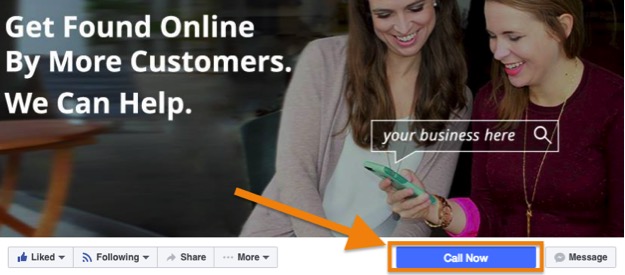
    Image of Call To Action Button On Facebook Page - Search Influence

    3. Add a Call to Action Button

    Facebook makes it easy for your potential customers to reach you by allowing you to have a Call to Action button right there on the cover photo. You want to ensure that you optimize this button so that customers can recognize it and that you get a response if it is used. Book Now, Contact Us, Use App, Play Game, Shop Now, Sign Up, and Watch Video are all options you can use to help boost a product, service, or special promotion your business may be running. You can easily find this where it says, “Add a Button.”

    While it’s easy to focus on the cosmetic and social aspects of your Facebook, it is important to remember that your Facebook can work for you without a great deal of effort from you. Creating accurate, well-written descriptions is another thing you can do to help with your page’s search value. In many cases, having a marketing business that understands how to make Facebook work for you can help you attract customers you would not have reached otherwise.

  • Freelance Friday: Freelance Burnout and 10 Ways to Prevent It

    This blog is part of our Freelance Friday series, where we discuss everything and anything related to freelancing. If you are a freelance writer and are looking for additional work, consider applying at Search Influence.

    Freelancing may seem like an easy, carefree gig to those not in-the-know. You get to work when and where you want and are free to do whatever you want at the drop of a hat.

    But actual freelance writers know that this is certainly not the case. Freelancing can be just as time-consuming and demanding as any office job. We, too, are prone to feeling overworked, overextended, and altogether overwhelmed.

    In fact, since so much of the responsibility is placed squarely on their shoulders, many freelancers feel obligated to work and work and work long after 9–5 Monday through Friday. This can ultimately lead to freelancer burnout.

    Image Of An Overworked Freelancer At His Desk - Search Influence

    Freelancer burnout is more than just “writer’s block”­—it’s something more oppressing and potentially dangerous to you and your freelancing career. Burnout can lead to a creative motivational block, which in turn, can impede your work and affect your income!

    Thankfully, there are a few things freelance writers can do to avoid this breakdown. Here are 10 tips to prevent freelancer burnout!

    1: Stay Organized

    Organization helps in all facets of life, and freelancing is no exclusion. Know what needs to be done and when, establish priorities, keep emails in order, etc. Getting organized makes you feel proactive and sets you up for success.

    2: Stick to a Schedule

    Just because freelancing affords you more flexibility in your work schedule doesn’t mean you can be nonchalant and lackadaisical. An easy-to-follow plan of action will not only help you keep due dates in order and your agenda under control, but it will also help you manage the proper work-life balance needed to prevent burnout.

    Working At An Office Job - Search Influence

    3: Give Yourself More Time Than You Think You Need to Finish Your Freelance Projects

    You may think it takes a certain amount of time to write a blog post, but who knows what curveballs might be thrown your way. Maybe you will have trouble getting started or locating a source you know you have seen before. It’s always best to be prepared (as best you can) for the unknown.

    4: Know Your Limits

    Don’t overcommit. It’s easy to make promises to impress clients, but keeping those promises can be a lot more work. Don’t say yes to everything, and don’t put extra pressure on yourself to get more done or get things done quicker. You know how much you can write in a day. Get the work done on time, and most importantly, get it done well—those are the only things you should ever guarantee.

    5: Set Mini Goals

    It is always best to divide up larger projects into more manageable parts. In conjunction with your schedule, set up achievable milestones throughout the day, week, and month. This will give you a sense of accomplishment and help you stay on track while keeping the bigger picture in your mind.

    Johnny Depp Strategizing With A Slinky - Search Influence

    6: Don’t Give in to Writer’s Block

    Writer’s block is legit, but there are ways you can work around it. Don’t just keep plugging away and turning out pages of dribble. Put the assignment to the side and get your blood flowing—go for a walk or a run, try a new environment, write about something else. Stir your creative juices and come back to your project with a refreshed mind and reinvigorated determination.

    7: Take Care of Yourself

    You can’t sit in front of the computer all day. Don’t overwork yourself. As a freelancer, you are your only workforce­—and you don’t get paid sick days! Eat properly and exercise. Do right by yourself and it will show in your writing. Here are 8 tips for freelancers to stay healthy and happy.

    8: Switch It Up 

    Change is good. Whether you take your work to a new location (like the library or a coffee shop) or tackle an entirely different project, it will usually help. Remember, freelancing offers you the freedom to do things like this that other workers can’t, so take advantage of it!

    9: Build a Support Network

    Freelancing can be an isolated career. Without colleagues to interact with and vent work-related frustrations to, stress—and even depression—can creep into your day-to-day. Try seeking out other freelancers (there are tons of us out there) in various forums online and local meetup groups. Finding people that understand what you are going through is the best way to tackle any struggle, including burnout.

    10: Reevaluate Your Freelancer Goals

    Are you focused too hard on a specific niche? Then expand your horizons. Are you spreading yourself too thin? Then try honing in on what you do best. Depending on your situation, change can be liberating. Focusing your time and energy on one expertise can help you enjoy your work and find more appropriate clients, while trying new things can keep you stimulated and multi-faceted.

  • Don’t Feed the Trolls Part II: Facebook

    Search Influence’s resident troll has returned with the next installment of troll defense lessons. This edition will focus on the Facebook social media platform. Trolls inhabit every single corner of the infinitely expanded world wide web. Social media, forums, news articles, emails, Amazon reviews, and even online video games. The main strength that trolls have in most of these platforms is that they don’t have to expose their identity. But, what happens when someone trolls you on Facebook? Show me a person who trolls with their own identity, and I’ll show you a person who has nothing to lose. Though there is no surefire way to completely stop someone from trolling you into infinity, there are some pretty hard and fast rules that apply to all troll defense tactics.

    Image Of Trolls Dancing With Excitement - Search Influence

    Don’t Feed the Trolls

    Does this statement sound familiar? If it does, it means that you either read the previous entry into the troll stomping anthology, or you are a seasoned internet veteran. This is perhaps the easiest and simplest way to deter a troll from taking up residence on your business page. Though the easiest way to deal with a troll is to confront them face first, an excessive number of responses and back and forth will eventually cause you to devolve into the troll that you are trying to destroy.

    Don’t Assume Everyone Is a Troll

    The main reason that your business page exists is to connect with your customers and fans. It needs to be understood that a complaint is not always a troll setting up shop. Whether you have 50 followers or 50,000,000 followers, each and every one of them made the conscious decision to click the “like” button on your page because they like your product or service. Give users the benefit of the doubt and make an earnest attempt to make peace with them.

    Keep Your Cool

    When you’ve definitively identified that someone is actually trolling you, remember that you are a professional and a troll is a professional at making professionals profess professions unprofessionally. Your responses will be visible to everyone who follows your page and even some passersby as well. Those viewing your argument won’t necessarily feel the same rage that you do and may think you treat all customers in the same fashion. Not only that, but raging at a troll makes them seem like the victim, and the last thing that you want your fans and strangers to do is to sympathize with a troll living on your business page.

    Image Of SNL Being Slightly Angry - Search Influence

    Use All Provided Tools Available

    Similar to Twitter, Facebook has a few built-in tools to deal with users that attempt to interact with you in bad faith. First and foremost, you have the ability to delete comments. This should be used VERY carefully. A legitimate negative comment should not be deleted; that issue should be addressed directly and publicly. The only comments that should ever be deleted are deliberate and dishonest attacks made toward your business. Specific users can also be blocked on Facebook as well. If you do have to delete a user’s comment for legitimately trolling you, blocking them is probably a good idea as well. Facebook also has a direct messaging system that can be used to reach out to users in case they need to share private information.

    Sounds Tough

    With a whopping 1.79 billion users (that’s 25% of the entire world population) and not even plateauing quite yet, Facebook can be a challenge to navigate. Here at Search Influence, we offer a full suite of Social Media Management services to offer with a team of professionals to deal with the trolls for you.

  • Get More Views on Your Company’s #Facebook Page

    The term “pound sign” has become obsolete and even deserving of ironic quotes these days. The “#,” now the almighty hashtag, is generally associated with where it originated: Twitter. The hashtag’s aim was to unify groups of individuals discussing similar topics across the social media platform. However, hashtag usage has now expanded to Facebook, and using them properly can guide more traffic to your business’s page.

    How Do Hashtags Work?

    The popularity of hashtags is still on the rise, and more and more Facebook users are typing in “#[insert topic]” to seek common ground with others online. Want to promote your nonprofit organization? When typed into a Facebook search bar, hashtags such as #nonprofit and #donate will lead to news articles, Instagram posts, and more that discuss these topics. Used appropriately, your hashtag can generate engagement among social media users who are browsing for a service that your company offers.

    Image Of Schmidt From New Girl Being Excited #Excitement - Search Influence

    #Don’t #Get #Carried #Away

    When deciding what hashtag seems the most appropriate, using a trending topic just for the sake of site traffic is a bad idea. If you’re looking to promote your law firm, adding #KanyeWest to a post would probably generate views, but ultimately would make your page look spammy —and desperate. Plus, doing so could result in ruining your online reputation. It’s also important to keep it short and sweet. Will Facebook users be typing in “#IneedatriallawyerinNewJersey”? Probably not. But #NewJersey and #TrialLawyer could certainly yield some positive engagement while sounding natural.

    Image Of Jimmy Fallon And Justin Timberlake Singing The Hashtag Song - Search Influence

    Facebook as a Search Engine?

    With Facebook generating around 1.5 billion searches per day, it’s easy to say that the platform is getting used as a search engine. With the proper use, hashtags can be excellent in online promotions and business news. However, too many hashtags can generate less traffic, so choose no more than two relevant tags per post. Once you’ve gotten a couple of trial runs with your hashtags, watch your analytics and see where the strengths lie. If a post’s views are going down as a result of your tags, try different ones!

    Photo Of Spongebob And Patrick - Search Influence

    Being clever with Facebook hashtags can enhance your business’s discoverability. Try inserting them into posts and let the results speak for themselves.

  • Top 10 Search Influence Blogs of 2016

    The year 2016 was filled with memes, the Olympics, superhero movies, and the election. You can bet, with over 46% of people now online worldwide, there were plenty of changes to online marketing, too. If you haven’t kept up, here are the top 10 blogs of 2016 to make sure your business is poised for the #bestyearever.

    Lieutenant Dan And Forest Gump At New Years - Search Influence

    1. What Happened to Facebook’s 20% Text Grid Tool?

    Our Internet Marketing Team Lead, Michelle Neuhoff Boyd, created this informative blog post that eased the confusion of Facebook’s 20% text grid tool. Find out how this new rule may affect your business.

    2. An Update: How to Get Rich (Answers, That Is) with Google

    Jim Carrey Typing - Search Influence

    Not rich with money, but with Google. Over the years, Google has changed their algorithm, and our team at Search Influence is making sure to stay on top of every change. Read this post from 2015 to learn more about rich answers.

    3. Getting Hands on With the New Google My Business

    Having a hard time understanding the new Google My Business? This engaging blog post can clear up any confusion on listings, editing, and more.

    4. Three Top Picks for The Big Idea at New Orleans Entrepreneur Week

    During New Orleans Entrepreneur Week, The Big Idea picked 10 entrepreneurs’ ideas in front of a large crowd, and everyone got to vote their favorite. See the top three picks that Paula Keller, our director of sales and marketing, enjoyed the most by reading this post.

    5. Email Marketing for Small Business: 9 Things Not to Do

    Find out how not to email your customers when just starting your business. Originally published in 2010 by a Search Influence Alumni, read all about effective email marketing.

    6. A Dentist’s Guide for Choosing Target Audiences on Facebook

    Jean-Luc Picard Star Ship Enterprise - Search Influence

    Ever wondered how to market your dentistry on Facebook? This guide will help you understand the most successful dental campaigns in the industry. You’ll know what age group and interests to target.

    7. Should You Be Using Google’s URL Shortener in Your Social Media Campaigns?

    Are you still unsure if you should use Google’s URL shortener? This blog post talks about the benefits of using their shortener, such as the URL analytics, redirects, ease-of-use, and more.

    8. Barnacle SEO – Local Search Engine Optimization for the Sam’s Club Crowd

    Will Scott, CEO and co-founder at Search Influence, published this post back in 2011. Learn more about the term Barnacle SEO and which sites to trust for small businesses.

    9. Nix the Wix SEO Challenge: Tips & Tricks

    This post from 2015 helps you make the most out of your Wix website by guiding you on the meta tags updates, sharing your site on social media, making your site visual, and more.

    10. 10 SEO Blogs You Should Be Following

    Do you want to read reliable SEO blogs? Here’s a list of the most informative SEO blogs that Monica Shariffskul put together. Many of these are on my top list, too.


    Be sure to subscribe to our Search Influence blog, and you’ll be the first to know when a new blog has been posted. Also, Happy New Year!

  • Google’s Ascent With User Experience

    Being found on the internet is essential to any business. We all know it, but few understand what it takes to be found. Luckily, there is an easy approach to beginning your own online marketing journey.

    Start by looking at Google, not as a search engine where businesses tirelessly compete to appear at the top spot, but as a user tool. Back in the ancient times of the internet, Yahoo had a $125 billion market cap, and Google was hoping to be acquired for $1 million. As time marched on, Google surpassed Yahoo as the number one search engine because of one key difference between them: the user experience. Google didn’t provide results promoting Google brands or its own material. Instead, it happily delivered the most relevant search results to the user. Results that took the user to a different website.

    While this may seem counter-intuitive—helping users leave your site and go to another—it has proved successful. Sure, users temporarily left Google by clicking on a third party’s link; it also guaranteed their return. Such a great user experience will entice anyone to return time and again for a similar experience. This is how Google surpassed Yahoo as the leading search engine, and it’s the best way for you to start your online marketing process.

    User Experience Vs. Design - Search Influence

    The lesson for you to take away as you embark on your journey is to put user experience first. When creating your website or content, don’t try to be overly fancy or technical. Start by making it simple and convenient. Websites become popular when users can easily navigate and find content that is relevant to their search. Don’t try to force your consumer into a Corvette when they are really looking for a minivan. Your customers will thank you when they can easily access your website, it loads quickly, and the information they are searching for is plain for them to see and understand.

    Going forward, as you build out your website, keep the consumer in mind each step of the way. How would you want to interact with the website of a business like yours? If you don’t know where to start, talk to the friend who doesn’t quite understand what you do. They can be your guide, explaining how they would want to navigate your site and their desired outcome. Use this to cater each step of the user experience to your actual users.

  • The Do’s and Don’ts of Content Syndication for SEO

    A few weeks ago, I received a question about the value of content syndication in marketing strategies. Because it’s one that I also asked when I first started at Search Influence and began learning about SEO, I wanted to actually address this question in a full blog post.

    The Magic Of Mobile - Search Influence

    What Is Content Syndication?

    Content syndication is the process by which a piece of content (blog, news article, graphic, video, etc.) is pushed out to other sources. You see this, for example, when online news outlets pick up press releases or other articles and repost them verbatim to their own sites.

    From a UX point of view, this can be a great way to increase your reach to potential customers. From an SEO point of view, content syndication can garner valuable backlinks and help to increase website authority. And from an overall marketing point of view, the efforts spent on syndicating content can also build great relationships with other websites and organizations.

    Backlink and Authority Building

    The process for syndicating content is similar to that of general link outreach and is for a similar purpose as well: to generate authoritative backlinks that, down the line, contribute to your own site’s authority. Coupled with the opportunity of increasing reach to your business’s original content, this can be a worthwhile tool in your marketing arsenal.

    The Caveats of Content Syndication

    That said, there is a right and a wrong way to syndicate content when it comes to SEO. Here are some things to think about when considering it for your marketing strategy:

    1. Duplicate Content

    Syndication is inherently creating duplicate versions of your content and putting them on other websites. In the case of written content, this can actually detract from your SEO efforts if done incorrectly. It’s important to understand the policies and practices of the websites you’re syndicating to and ensure they are declaring yours the primary version.

               Genie From Aladdin Multiplying - Search Influence

    This can be done a number of ways but the primary ones are:

    – Rel=canonical – This is a meta attribute that basically tells search engines that the page they are on is the same as another page. In this scenario, syndicated versions of your content will set your original URL as the canonical. For more information, check out Google’s own post on the rel=canonical attribute.

    – Noindex – This is a robots meta tag that tells search engines not to index a page at all so that it won’t appear in search results. Ideally, in this case, syndicated versions of your content will be set to noindex so your original post isn’t competing for rankings with them.

    2. Backlinks

    Remember to include an actual backlink to your content when syndicating. This can be forgotten when you get caught up in pushing your content out there or when syndicating images and videos. Ideally, this would go to the original content’s URL, rather than another page on your website.

    3. Site Authority

    This is an oft forgotten consideration when choosing a syndication site. Quality and quantity both have their place when creating your syndication strategy.

    In an ideal situation, if you were to get one backlink from content syndication, you’d want it to be from a site with the authority equivalent of Google itself, and you’d want it to have a follow link back to your website.

    But, we don’t live in an ideal world, so it’s important to keep in mind the actual authority of syndicating websites and find out if the links you’re getting are follow or nofollow. Check out this resource to learn a little more about the importance of follow and nofollow links.

    With all this in mind, content syndication can be a great opportunity for websites. But, like I said in my last post “The Importance of Content Marketing to Your SEO Strategy,” it doesn’t matter if you don’t have great content to start with.

  • Search Influence Year in Review: Our Top 10 SEO Blog Posts of 2016

    With this year drawing to a close, now is the time to reflect on the year and prepare for a successful and productive 2017. In keeping with this, we’ve highlighted our top SEO blog posts of 2016 to get you extra pumped for your New Year’s re-SEO-lutions.

    Image Of Happy New Year Script - Search Influence

    1. An Update: How to Get Rich (Answers, That Is) With Google

    In 2016, it’s estimated that approximately 40 percent of queries on Google resulted in “Rich Answers.” So what are these Rich Answers, and how can your website get selected for a Rich Answer on Google’s search engine results page (SERP)? This updated post gives you all the details.

    2. Barnacle SEO – Local Search Engine Optimization for the Sam’s Club Crowd

    3745255

    For small businesses with small budgets, the “Barnacle SEO” approach may have big payoffs. Learn how attaching yourself to the white whales of the SEO world can expose you to new markets and customers.

    3. Nix the Wix SEO Challenge: Tips & Tricks

    Sure, Wix is the uber-easy-to-use, code-free web developing platform for dummies, but just how well do Wix sites get along with search engine optimization? Thanks to these quick tips and tricks, it’s easier than you may think for Wix sites to play nice with SEO.

    4. 10 SEO Blogs You Should Be Following

    Fancy yourself a true SEO connoisseur? This list outlines all the insider blogs you should be reading to stay up to date on the constantly changing world of search engine optimization. Hey, even if you’re new to the game, resources like the Google Blog and MOZ Blog provide a plethora of information to get started.

    5. These 10 Expert Tips Will Drive Traffic to Your Business’s Website

    Driving traffic to your website means driving sales for your business. Our in-house experts share their insights when it comes to getting people in the online door. Hint: If you’re promoting on Facebook and publishing press releases, then you’re off to a good start.

    6. 5 Tips to Improve Local Search Rankings Even If You Don’t Have a Physical Location

    Many businesses are opting for prime real estate on the interweb instead of brick and mortar locations, but that doesn’t mean you need to sacrifice website optimization. Check out these five tips for increasing your ranking.

    7. Google My Business for Doctors: Visibility, Authority, & SEO

    Claiming or creating a Google My Business listing can have big search impacts for medical practices. Follow this step-by-step guide for single practitioner practices, multi-practitioner practices, and multi-location practices.

    8. Local SEO: How to Clean up Citations for Better SERP Visibility

    A citation is the presence of a business’s name, address, and phone number (NAP) on any website. The consistency and accuracy of your NAP across sites will improve your local SEO rankings. Learn the four basic steps to complete an effective citation cleanup.

    9. 12 Things You May Not Know About Online Marketing

    Are you ready to be shocked and awed by the amazing (and hard to predict) world of online marketing? Here’s a list of some of the things that caught our Search Influence team members by surprise when they were rookies in the game.

    10. The Importance of Content Marketing to Your SEO Strategy

    Content marketing is the bread and butter of your SEO strategy and, in many ways, the success of your brand. Are you telling a relevant and compelling story about your business? Are you targeting the right audiences? This post will help you answer these important questions.

    What better way to bring in the new year than with a new online marketing strategy? We hope these posts offer some helpful insights and maybe even a little motivation for a productive and optimized 2017.