Blog

  • Boost Paid Search Results With Demand Gen + Performance Max – October Client Insider

    Boost Paid Search Results With Demand Gen + Performance Max – October Client Insider

    Unlock the Power of Demand Gen + Performance Max

    The Upgrade Your Paid Search Strategy Needs

    Different kinds of paid advertising

    Paid Search captures intent. When someone types in a query, your ads put your business front and center. But what about reaching people before they search?

    Google’s Demand Gen and Performance Max campaigns are built to do just that:expand your visibility, build your awareness, and move your prospects toward conversion.

    How Demand Gen Works

    Demand Gen campaigns act like a premium version of Display, placing your ads in social-style feeds where discovery happens. These campaigns help you spark interest early by reaching audiences across:

    • YouTube Shorts and in-feed video for immersive, mobile-first experiences
    • Discover feeds to connect with users scrolling curated content
    • Gmail placements where ads appear natively within inboxes
    • Google Display Network with high-quality, visually engaging inventory

    By building awareness in these environments, Demand Gen presents your brand before customers even begin searching.

    How Performance Max Drives Conversions

    Performance Max extends your reach across all of Google’s properties while using AI to optimize performance. With this campaign type, you benefit from:

    • Cross-channel reach across Search, YouTube, Display, Discover, Gmail, and Maps
    • Predictive audiences powered by Google AI and your first-party data
    • Creative optimization that tailors ad combinations from your assets
    • Real-time bidding and budget pacing to maximize conversions against your goals

    The result is a campaign that complements Paid Search, capturing high-intent traffic while driving new conversions efficiently.

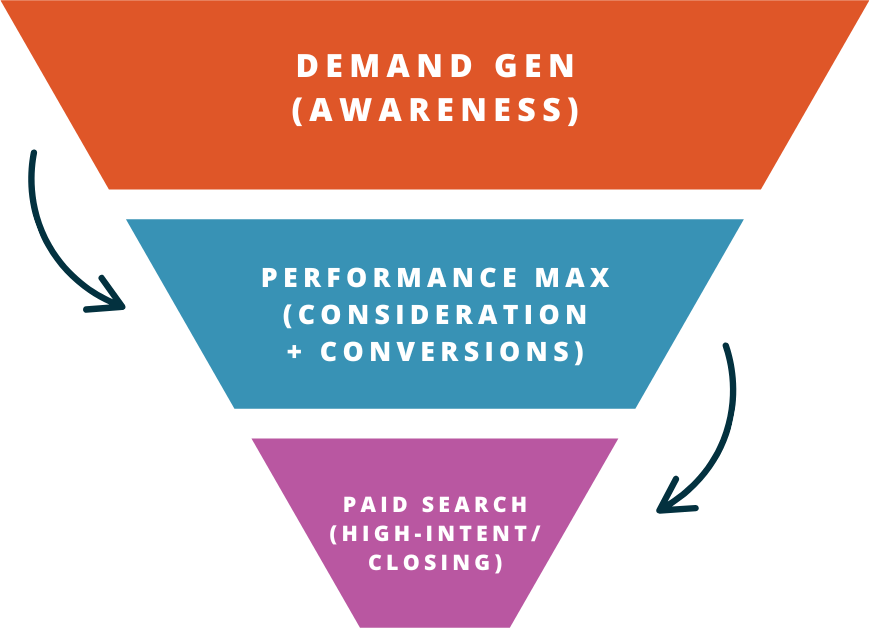
    Paid search funnel

    Why Add Both to Your Strategy

    Together, these campaigns build a full-funnel approach: Demand Gen fuels awareness, Performance Max converts interest, and Search closes the loop. Adding them ensures your ads reach customers at every stage of the decision journey.

    Looking to take your Paid Search strategy to the next level? Talk to your Account Manager about adding Demand Gen and Performance Max to your campaigns today.

  • New From Search Influence – AI Search in Higher Education: How Prospects Search in 2025

    AI Search in Higher Education: How Prospects Search in 2025 image on a tablet

    Artificial intelligence isn’t on the horizon for higher ed — it’s here. Half of prospective students already use AI tools weekly to search for information in the same way they use Google.

    To help institutions adapt, the Online and Professional Education Association (UPCEA), in partnership with Search Influence, has released the 2025 AI Search in Higher Education Research Study. This research sheds light on how prospective adult learners use AI, search engines, university websites, and other platforms to explore, trust, and select programs.

    Download the full AI Search in Higher Education Research Study

    About the AI Search in Higher Education Research Study

    The AI Search in Higher Education report surveyed 760 qualified adult learners between 18 and 60, all interested in advancing their skills or knowledge through online and continuing education. These respondents represent today’s prospective adult learners, a growth market for universities and an early indicator of broader enrollment trends.

    UPCEA led the research, bringing its deep expertise in online and continuing education, while Search Influence shaped the study with insights from our nearly 20 years as an SEO and AI search optimization agency.

    Together, we uncovered how AI, traditional search, and institutional websites are reshaping the way prospective students find, trust, and ultimately choose programs.

    Key Findings: How Prospects Search in 2025

    The results illustrate a rapidly diversifying student journey. Here are the top takeaways:

    • AI tools are an integral part of the enrollment funnel. 50% of prospective learners use AI platforms weekly, making them a standard part of the search process.
    • University websites anchor trust. 77% of respondents rated institutional websites as their most reliable source when exploring programs.
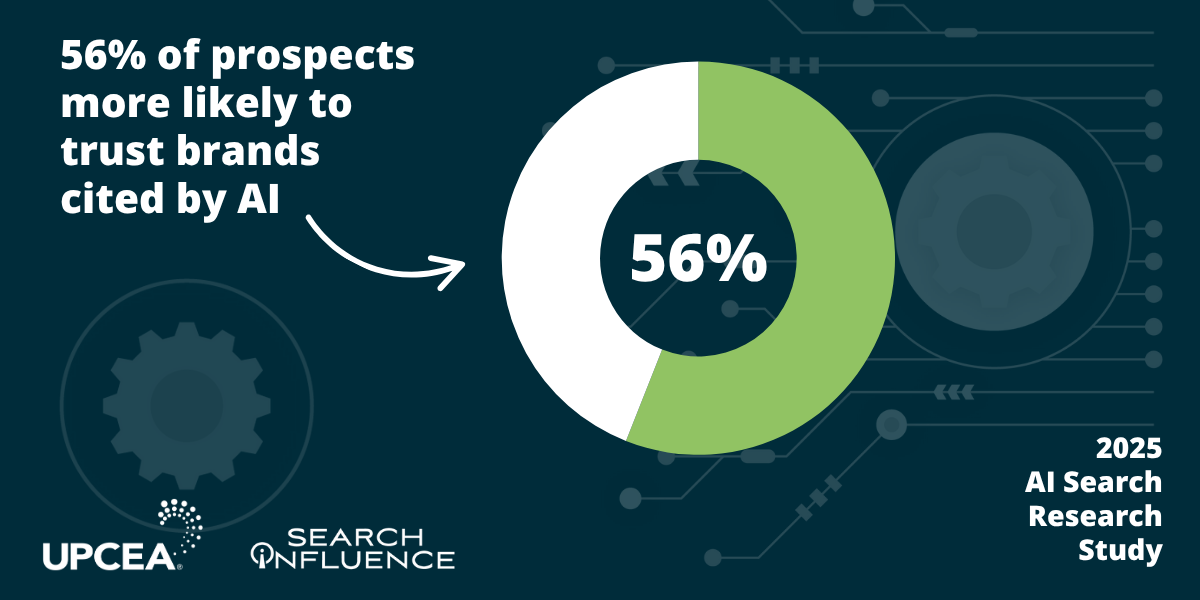
    • AI citations influence credibility. 79% of prospects read Google’s AI-generated overviews, and 56% say they are more likely to trust schools cited within them.
    • Search visibility drives consideration. 82% of students report they are more likely to consider programs that appear on the first page of search results.
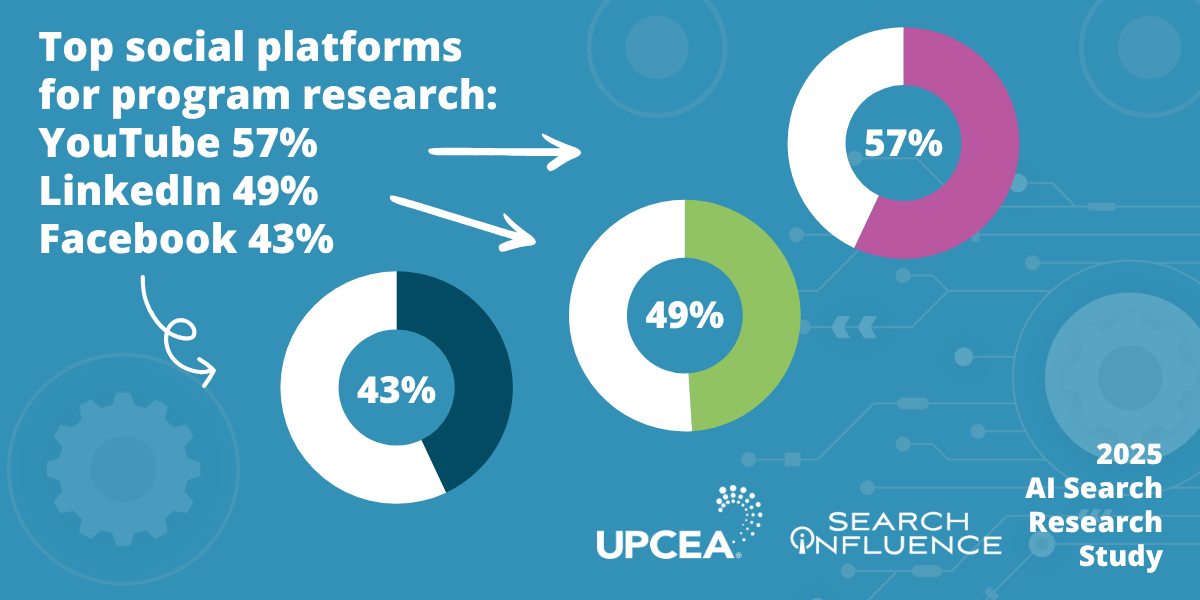
    • Discovery spans multiple platforms. 84% of prospects use search engines, 61% use YouTube as a search engine, and 50% rely on AI tools in the same way they use Google.

    These findings confirm that students are moving fluidly between AI platforms, search engines, and video-based resources. Institutions cannot rely on a single channel. They must create content that performs across all of them.

    50% of prospects use AI tools at least weekly

    Why Online and Continuing Education Students?

    Online and continuing education students are often early adopters of new search behaviors, and their choices ripple outward to the broader higher ed market. They are career-focused, typically employed full-time, and actively researching programs that fit their personal and professional goals.

    By focusing this study on online and continuing education prospects, we’re able to capture a forward-looking snapshot of how AI search in higher education is shaping program discovery, trust, and enrollment decisions.

    What This Means for Higher Ed Marketers

    For higher ed leaders and enrollment teams, the implications are clear:

    • Multi-channel visibility is non-negotiable. Students expect to find you on Google, university websites, AI-generated responses, and video platforms like YouTube.
    • SEO is the connective tissue. Strong, authoritative SEO is the foundation that fuels visibility across both traditional and AI search engines. Without it, your programs won’t appear in the places students are looking.
    • Early movers will win. Many institutions have not yet adapted their strategies for AI search. Schools that act now will gain a competitive advantage in enrollment visibility and trust.

    Measuring Success in AI Search

    Success in AI search isn’t just about rankings. Institutions should track citations in AI Overviews, visibility across AI platforms, and engagement from AI-driven traffic, alongside traditional metrics like cost per inquiry (CPI) and ROI. By adding these benchmarks, schools can better understand how AI contributes to the enrollment funnel and make smarter investments in visibility and trust.


    top social platforms graphics

    Take Action: Be Visible in AI Search

    AI search is a core part of how students find and evaluate higher ed programs.

    The 2025 AI Search in Higher Education Research Study confirms what many institutions are beginning to notice: if you’re not visible in AI search, you’re not in the consideration set.

    The good news? Acting now puts you ahead.

    Download the full 2025 AI Search in Higher Education Research Study to explore the data and recommendations.

  • From Cold to Gold: How to Measure Lead Quality

    Note: This post was updated by Gi Levet on 10/7/2025 to reflect current best practices. It was originally published on 12/8/2023.
    Key Insights

    • Quality of digital marketing leads always trumps quantity of leads.
    • Knowing the differences between high-quality and low-quality leads helps you determine the quality of your own leads.
    • Ongoing measurement is a multi-step process that gives you a consistent pulse on the quality of your sales leads.
    • Several tools can help you with DIY lead tracking and scoring, such as Google Analytics and CallRail.

    Leads are the lifeblood of digital marketing, offering valuable insights and opportunities to connect with potential customers.

    However, to actually see the impact of these leads, you need to understand that not all leads are created equal. Having leads doesn’t necessarily mean you’re dominating your industry.

    The idea “The more the merrier!” works well for click-through rates and conversions. When it comes to leads, quality trumps quantity. Having a funnel of incoming leads might look good on paper, but it’s the high-quality leads that drive business growth.

    That’s exactly why 79% of marketers identified generating quality leads as their main goal, according to Semrush research.

    But how do you know the quality of your sales leads?

    Two words: ongoing measurement.

    When you keep a steady pulse on the quality of your leads, you can:

    • Better optimize your marketing strategies.
    • Ensure efficient resource allocation.
    • Boost your conversion rates.

    In this post, we’ll discuss how to measure lead quality, why it’s so important, and what it can mean for the success of your marketing campaigns.

    What Is Lead Quality?

    In digital marketing, a lead is an individual or entity that has expressed interest in a product or service, typically through an action or engagement online. This could be through activities such as filling out a contact form or downloading key content on your site. Lead quality refers to the potential of a lead to convert into a customer.

    Categories of Lead Quality

    There’s a spectrum of lead quality, akin to the classic temperature scale (from cold to hot). These lead quality categories include:

    Unqualified leads

    Unqualified leads are those who have shown some level of interest in your products or services but have not been vetted to determine if they are a good fit for what is being offered. These leads may lack the necessary budget, authority, need, or timeline to make a purchase. Unqualified leads require more time and resources to nurture and qualify, and there is a higher likelihood that they may not convert into customers.

    Qualified leads

    Qualified leads have passed a certain evaluation threshold, indicating they are more likely to be interested in and capable of purchasing the product or service. This evaluation might include verifying that the lead has the budget, authority, need, and a specific timeline — ensuring a higher chance of conversion. Qualified leads are generally more informed about your product or service and have shown genuine interest, making them easier to convert into customers than unqualified leads.

    Ideal qualified leads

    Ideal qualified leads represent the best potential customers, meeting all the criteria that define an ideal buyer for the product or service. These leads have the budget, authority, need, and timeline to partner with you. They also align with your target market and buyer persona. They are highly likely to convert and have a strong potential to become long-term, valuable customers. Nurturing and closing deals with ideal qualified leads tends to require less effort and resources, providing a higher return on investment.

    Assessing High-Quality and Low-Quality Leads

    We recommend starting your lead assessment as a manual process at first. This will help you familiarize yourself with your leads and define what quality looks like for your brand. Ideally, you can automate your lead ratings from then on.

    Let’s put this into perspective with an example.

    Say you’re a higher education marketer responsible for ensuring your institution’s undergraduate programs attract and enroll the most qualified and interested students.

    To effectively do so, you take a look at three main qualifiers/differences:

    Behavioral differences

    • High-Quality Leads: Engage actively with content, often returning to your university’s website multiple times. A high-quality lead interacts more with calls-to-action and may spend longer durations on key pages. They frequently participate in admission/open house webinars, download course catalogs, or engage in live chats with admissions counselors.
    • Low-Quality Leads: Display passive or erratic behavior, like bouncing quickly from the website. These leads have limited interactions with the site’s main features or content. They rarely engage in deeper interactions, such as signing up for campus events or accessing gated content, such as program requirements.

    Level of purchase intent or interest differences

    • High-Quality Leads: Display a clear interest in specific courses or programs, often inquiring about curriculum details, faculty, or research opportunities.
    • Low-Quality Leads: Express a vague or general interest, like “I’m thinking about studying business somewhere.” Low-quality leads rarely ask detailed or specific questions that indicate a deeper interest.

    Demographic and target audience differences

    • High-Quality Leads: Often fit the typical age range and academic prerequisites of the intended program. These leads may hail from regions or schools that frequently send students to your institution. They possess a strong academic or extracurricular background aligning with your program’s focus.
    • Low-Quality Leads: Might fall outside the typical age or academic background suitable for the program. They may have educational aspirations that don’t match the institution’s offerings.

    Once you’ve assessed the criteria of your leads, you have a blueprint to apply to future measurements.

    Importance of Lead Quality in Digital Marketing

    Lead quality is the secret sauce of online advertising success. But it’s not just because better leads = higher probability of more conversions.

    Measuring lead quality is an involved, insightful, and impactful process. When you take the time to measure it, you can benefit from:

    • Efficient use of marketing budget and resources: Optimizing toward lead quality allows for a targeted approach, maximizing the impact of every marketing dollar spent. This reduces wasted budget on unqualified leads, ensuring more resources are directed toward potential conversions.
    • Direct influence on sales efforts and productivity: High-quality leads increase the efficiency of your sales team, enabling them to close deals more effectively. This reduces time spent chasing leads with low conversion potential, increasing overall sales productivity.
    • The link between lead quality and customer lifetime value: High-quality leads are more likely to become loyal customers, leading to repeated sales over time. This increases overall revenue for your company, as these leads not only convert but can also advocate for your brand, bringing in more potential customers.

    How does lead quality impact conversion rates?

    Lead quality plays a pivotal role in conversion rates, as it directly influences a potential customer’s likelihood to purchase or engage with a product or service.

    High-quality leads align with the target demographic and have demonstrated a clear interest in a company’s offerings, both of which set the stage for a smoother conversion process. These high-quality leads tend to move more quickly and efficiently through the sales funnel because their intent to purchase is clear and strong from the outset.

    As a result, there’s a reduced chance of these leads dropping out or losing interest mid-funnel, ensuring that your sales team’s efforts are concentrated on prospects with the highest likelihood of converting.
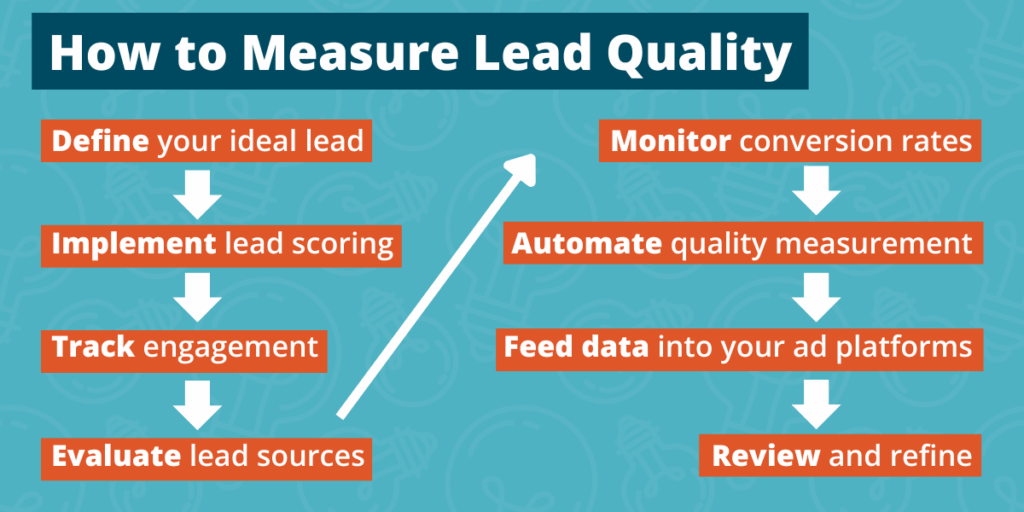
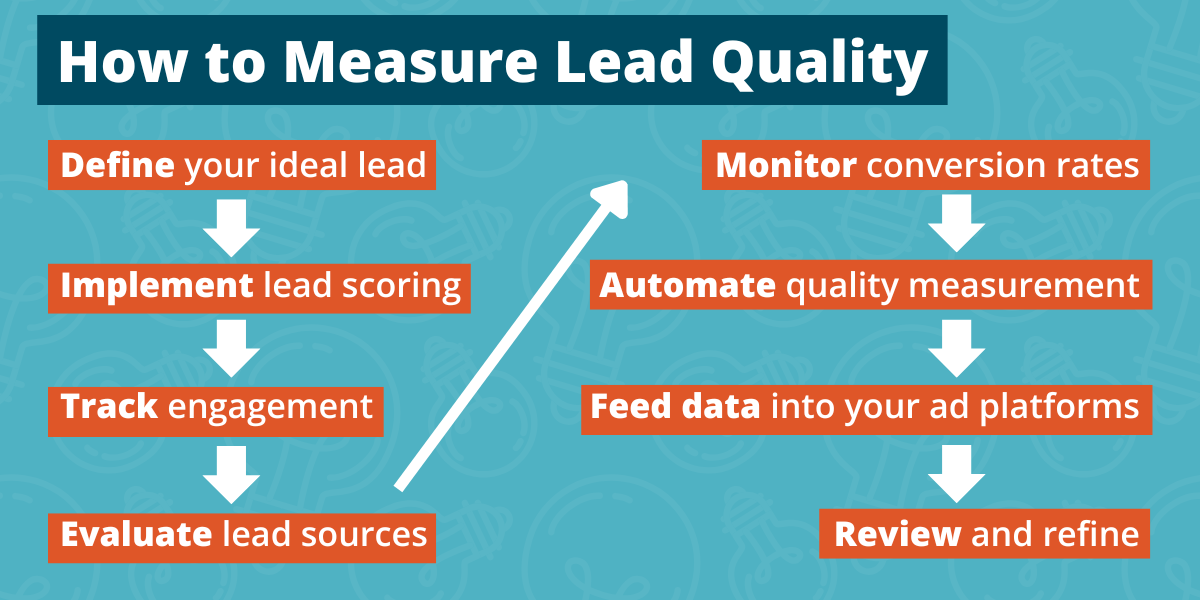
    How to Measure and Monitor Lead Quality

    Measuring the quality of your leads can be a tough nut to crack, especially if you’re a first-timer. But it doesn’t have to be.

    To help you get started, we’ve developed a set of best practices for assessing the quality of a lead:

    Step 1: Define your ideal lead

    Create a profile of your ideal lead, considering factors like demographics, location, interests, and behaviors that align with your product or service. It’s important to be as precise as possible in this phase since this profile serves as the cornerstone for your lead quality assessment.

    Think of it as sketching out a detailed buyer persona that embodies the characteristics of someone who would not just be interested in, but most likely to benefit from and purchase, your product or service.

    Step 2: Implement lead scoring

    After you’ve crafted your ideal quality lead, implement a lead scoring system that assigns points to various lead attributes and behaviors.

    For example, a lead visiting a pricing page might get more points than one just reading a blog post. A lead that matches your ideal customer profile in terms of demographics might also receive higher points.

    This scoring system acts as a quantitative method to gauge lead quality, enabling your teams to prioritize their efforts on the most promising leads and, thereby, optimize the overall efficiency of your sales process.

    Step 3: Track engagement metrics

    Monitoring engagement is one of the clearest ways to understand lead quality. Look at signals such as time on site, return visits, or downloads of gated resources. These actions tell you how invested a prospect is in learning more.

    Many analytics platforms now integrate AI to surface deeper engagement insights automatically, reducing the time it takes to spot patterns. With automation, you don’t just see the raw metrics. You see which behaviors consistently correlate with higher-quality leads.

    Step 4: Evaluate the lead source

    Not all traffic sources are created equal. Some channels reliably deliver prospects that align with your buyer persona, while others flood your funnel with unqualified leads. By evaluating lead sources, you can see which campaigns and platforms produce the highest-value opportunities.

    Advanced tools can also automate source attribution, helping you see at a glance which channels drive the highest-quality leads. With accurate attribution, you can confidently invest in the platforms that consistently deliver ideal leads.

    Step 5: Monitor conversion rates

    Conversion rates are one of the most reliable indicators of lead quality. If leads from a specific source convert into paying customers more often, that source is worth prioritizing.

    With automated tracking, you can quickly identify which leads move through the funnel faster and use that data to refine your scoring models. Instead of waiting weeks to spot trends, you can optimize in near real time.

    Step 6: Automate your lead quality measurement

    Manual lead scoring can be inconsistent and time-consuming. Automation makes the process scalable. AI-driven tools like CallRail’s AI-powered automated scoring remove guesswork by assigning scores based on real behaviors and outcomes, not assumptions.

    Automation allows you to:

    • Capture real-time insights without manual effort.
    • Eliminate bias in how leads are evaluated.
    • Scale your measurement process as lead volume grows.

    By shifting to automated scoring, you create a consistent, always-on system that improves accuracy and frees up your team for higher-value strategy.

    Step 7: Feed lead data into your ad platforms

    Your CRM data doesn’t just help your sales team. It can make your ad campaigns smarter, too. Feeding qualified lead data into platforms like Google Ads and Facebook ensures those platforms optimize for quality, not just volume.

    Here’s how it works:

    • A prospect fills out a form.
    • Their info flows into your CRM.
    • The CRM verifies and scores the lead over time.
    • Qualified lead data is synced back to your ad platforms.

    This workflow bypasses cookie-tracking issues and creates a feedback loop where campaigns automatically improve. Many CRMs already support automated qualification, which reduces manual effort and ensures reporting accuracy.

    Step 8: Regularly review and refine

    Automation and CRM integrations give you accurate, real-time data, but they don’t replace the value of human oversight. Your team still needs to regularly review results, refine scoring criteria, and re-evaluate lead sources to ensure they reflect changing audience behavior and market conditions.

    With automation handling the heavy lifting, you can focus on strategic improvements, making adjustments that strengthen the overall process while staying confident that the data guiding those refinements is current and reliable.

    Tools and Software for Evaluating Lead Quality

    Evaluating lead quality doesn’t have to feel overwhelming. The right tools can take the guesswork out of measurement and give you a clearer picture of which prospects are worth your team’s time.

    At Search Influence, we often recommend a combination of software and frameworks that cover different points of the funnel:

    • CallRail: Track inbound calls and attribute them to the right marketing source, so you know which campaigns are driving real conversations.
    • CRM systems (HubSpot, Salesforce, etc.): Manage leads as they move through the pipeline, apply scoring models, and feed quality data back into your ad platforms.
    • Google Analytics: Understand website behavior and map out the conversion paths that indicate strong purchase intent.

    Together, these platforms create a practical foundation for measuring lead quality, from the first interaction through to conversion.

    CPI Worksheet for higher ed marketers

    In higher ed? Search Influence’s CPI Worksheet is a practical tool for connecting lead quality back to enrollment outcomes. It helps you calculate:

    • Overall CPI across all programs
    • CPI by program type (undergraduate, graduate, non-credit)
    • Cost per enrolled student to see the true return on your marketing efforts

    Using this worksheet alongside lead quality measurement shows whether optimizing for better-qualified leads lowers costs and helps you allocate budget to the campaigns most likely to drive enrollment growth.

    Measuring Lead Quality FAQs

    How to measure lead quality from organic search leads?

    You can measure lead quality from organic search by tracking engagement signals like time on site, pages viewed, and conversion actions completed. Leads that interact with high-value content, such as service pages, pricing, or gated resources, show stronger intent than those who bounce quickly. Pairing this behavioral data with lead scoring in your CRM helps confirm whether your SEO is attracting prospects likely to convert.

    How to measure the quality of leads coming from different channels?

    The quality of leads from different channels is measured by comparing conversion rates, cost per qualified lead, and long-term customer value across sources. For example, leads from paid search may convert faster, while leads from organic or referral traffic may have higher lifetime value. Attribution tools and CRM integrations make it easier to see which channels consistently deliver the best-fit prospects.

    What is the key indicator of a high-quality lead?

    The key indicator of a high-quality lead is purchase intent that aligns with your target customer profile. This often shows up in behaviors like filling out detailed forms, requesting demos, or asking specific questions that demonstrate readiness to convert. When paired with demographic or firmographic alignment, these intent signals give sales teams confidence that the lead is worth pursuing.

    What makes a lead unqualified?

    A lead is considered unqualified if they lack the budget, authority, need, or timeline to purchase your product or service. For instance, they might engage with your content but fall outside your target audience, or they may express only casual interest without the means to act. Unqualified leads often require more nurturing and have a much lower likelihood of conversion.

    How to increase the quality of leads?

    You can increase lead quality by targeting campaigns toward your ideal customer profile and using filters like geography, demographics, or job role to narrow your reach. Optimizing landing pages for clarity, offering valuable gated content, and feeding qualified lead data back into ad platforms also improves lead quality over time. Combining precise targeting with automation ensures your pipeline attracts prospects more likely to convert.

    Lead Tracking With Search Influence

    According to Hubspot, over 50% of marketers across the globe find generating leads and traffic their most challenging task. Is it yours?

    Search Influence offers expert analytics and lead tracking services to help you make more informed decisions about targeting your ideal leads. When you work with us, we’ll help you know the impact of your marketing efforts with everything from website form and call tracking to coprehensive reporting and ROI analysis. We’ll identify your target audience, track all interactions, and pinpoint the best opportunities to improve lead quality.

    Don’t let the complexity of your leads leave you in the dark.

    Contact us today to explore the depth of our lead tracking services and tap into our industry-leading expertise.

  • The September Influencer: Back to School: Your Ultimate Guide to AI Search Success & Tracking

    Stay ahead in digital marketing with The Influencer… Don’t miss out!

    AI SEO Insights from Our CEO, Will Scott

    The Ultimate Guide to AI SEO Tracking Tools in 2025: Beyond Traditional Search Optimization

    WILL SCOTT | 19-MINUTE READ

    Will Scott shares his expert perspective on the evolving landscape of AI SEO tracking tools. Learn how to boost your AI search visibility and stay ahead of the competition.

    Read More


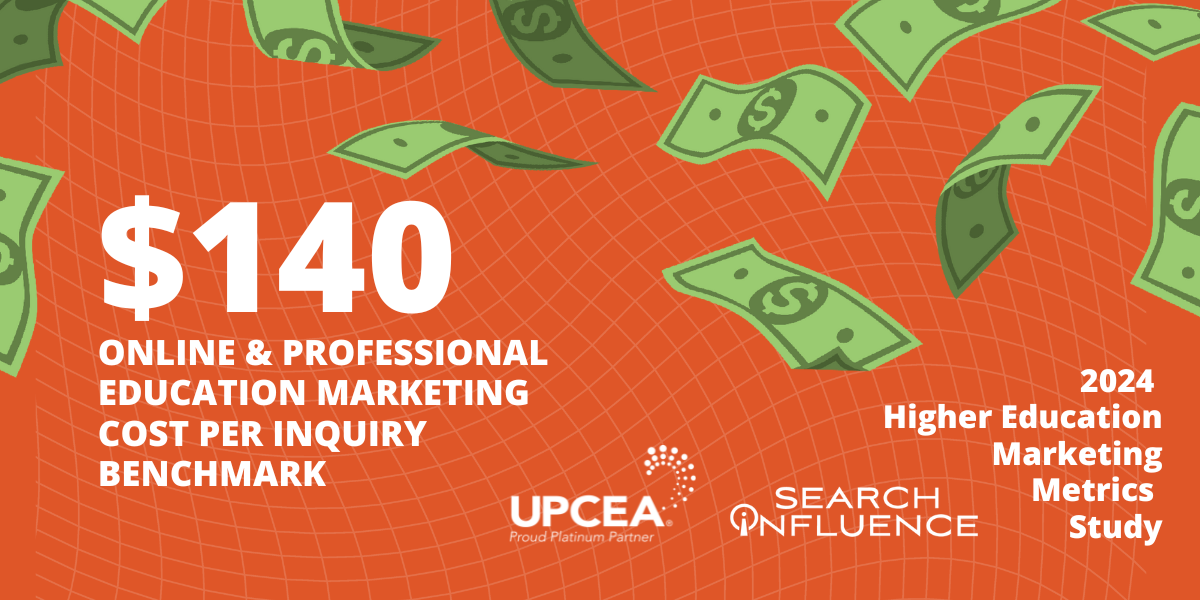
    2024 higher education marketing metric graphic

    66 Higher Education Marketing Stats [2025]

    PAULA KELLER FRENCH | 10-MINUTE READ

    The right industry data helps you refine your marketing strategy for success. We compiled the essential higher education marketing stats for 2025.

    Read More


    How Marketing Supports SEO and Helps You Score Big With AI Search

    PAULA KELLER FRENCH | 11-MINUTE READ

    Learn how integrating marketing with SEO across social, PR, and paid advertising improves your rankings in AI search.

    Read More


    Digital Advertising Strategy Checklist: What to Do Before You Spend $1

    KELE JOHNSON | 12-MINUTE READ

    Build a smarter digital advertising strategy with Search Influence. Get a step-by-step ad campaign checklist to drive real results from day one.

    Read More


    Ready to increase your search visibility? Chat with our experts!

    We help organizations achieve AI search success through smarter SEO. Contact us today to craft a winning strategy tailored to your goals and ensure your business stays visible where it matters most.

    Let’s Talk


  • What Your Marketing Dashboard Isn’t Showing You, And How Ours Does

    What Your Marketing Dashboard Isn’t Showing You, And How Ours Does

    Key Insights

    • Most dashboards miss critical context. Standard marketing analytics dashboards typically show surface-level numbers like impressions or clicks, but fail to connect them to real business outcomes like inquiries, acquisitions, or revenue generated.
    • Search Influence marketing dashboards integrate multiple platforms. By pulling from CRMs, call tracking, Google Analytics, Google Ads, and even offline sources, our digital marketing dashboard examples provide a single source of truth for marketing performance.
    • Lead quality matters as much as lead quantity. Search Influence’s marketing dashboards go beyond counting form fills by integrating qualified lead scoring and call tracking data, helping marketing teams focus on the channels most likely to drive conversions.
    • SMART goals make marketing dashboards actionable. Unlike generic marketing dashboard templates, we build dashboards that align directly to Specific, Measurable, Achievable, Relevant, and Time-bound goals, keeping marketing teams focused on progress toward shared objectives.
    • Customization is the ultimate advantage. Search Influence creates customizable dashboards tailored to your business model, ensuring your key marketing metrics tell your story, not someone else’s.

    Imagine looking at your business through a foggy window.

    You can make out some shapes, maybe website traffic here, some social media metrics there, but you’re missing the sharp details that let you make smart decisions.

    That’s how most marketing dashboards work.

    They give you a handful of numbers, but without context, connections, or clarity. They leave digital marketers staring at charts that raise more questions than they answer.

    So what’s the solution?

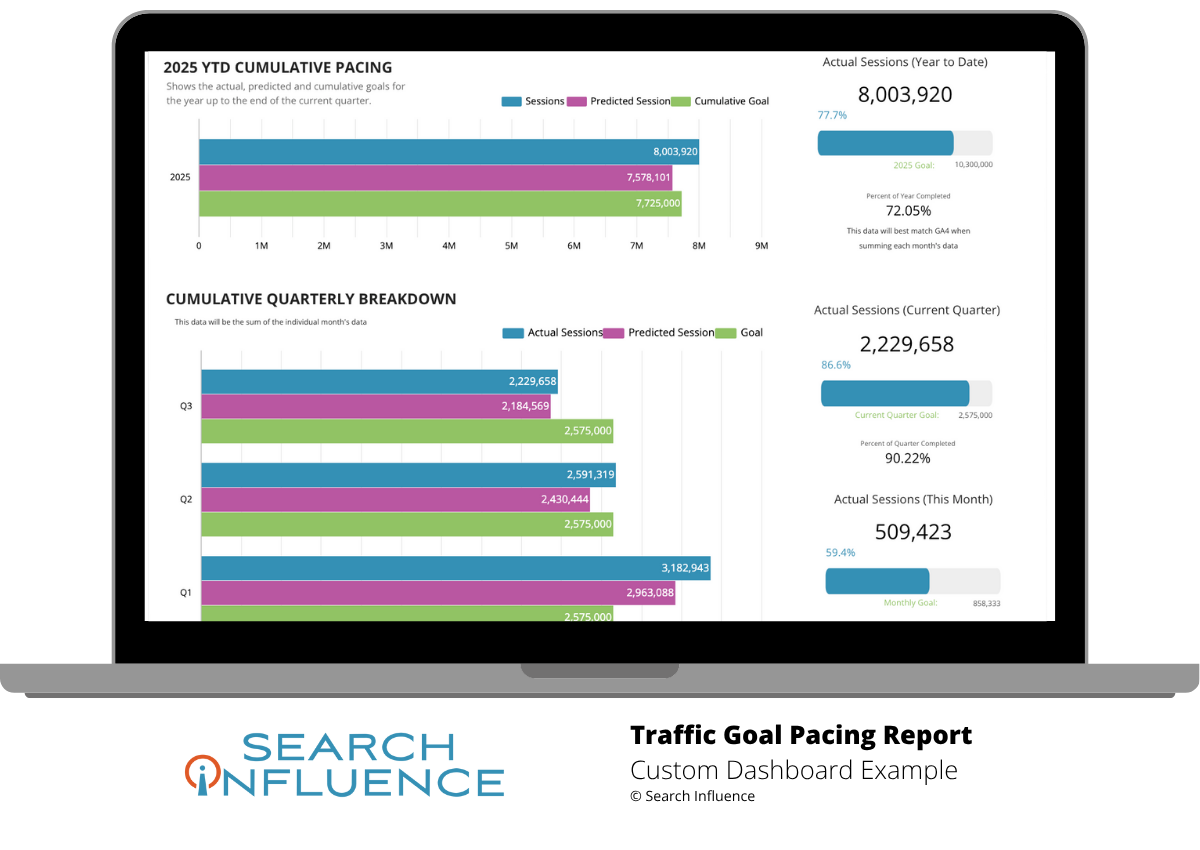
    At Search Influence, we think a marketing dashboard should do more than just decorate your monthly report. It should tie together multiple platforms, align with your marketing objectives, and give you actionable insights you can use to improve campaigns in real time.

    Even our “standard” dashboards are built to outperform most marketing dashboard examples you’ll see from other agencies.

    And when you need something truly unique? We scope and create custom dashboards that match your business model.

    Here are six key points your dashboard probably doesn’t show you, and how ours does.

    1. Leads From All Sources in One Place

    The Problem: Standard digital marketing dashboards usually spotlight one channel: Google Ads, Facebook Ads, or maybe website form fills. But leads don’t live in silos.

    The SI Difference: We integrate CRM systems, call tracking tools like CallRail, and web forms into one unified lead generation dashboard. Instead of bouncing between platforms, you get a single web analytics dashboard that tracks inquiries, lead generation efforts, and revenue-driving conversions.

    The Benefit: You see the full story of your marketing efforts without the guesswork. One login, one source of truth, and one number you can trust.

    2. Cost Per Inquiry (CPI) and Cost Per Acquisition (CPA)

    The Problem: Many marketing analytics dashboards stop at cost per lead (CPL). But CPL doesn’t tell you whether those leads turn into paying customers.

    The SI Difference: Wherever your CRM and analytics dashboard data allow, we go deeper. We create dashboards that can connect your marketing spend with inquiries and acquisitions, creating a real picture of ROI. Even when we can’t attribute it down to the channel, we show overall CPI and CPA so you understand the cost of growth.

    The Benefit: You make data-driven decisions based on revenue potential, not just click costs.

    3. Lead Quality, Not Just Quantity

    The Problem: A thousand form fills don’t mean much if they’re all spam or unqualified leads.

    The SI Difference: We work with clients to score lead quality. CallRail, for example, allows calls to be tagged and scored. We pull that data into your marketing performance dashboard so you know which channels bring in prospects most likely to convert.

    The Benefit: You stop wasting budget on low-quality leads and double down on marketing channels that actually drive growth.

    4. Multi-Source Data Integration

    The Problem: Your marketing data lives in silos — Google Analytics, social media dashboards, CRMs, email campaign platforms, and more.

    The SI Difference: We merge it all into a single digital marketing dashboard. From SEO dashboards that pull in Google Search Console and keyword rankings, to email marketing dashboards that show open rates and conversions, to paid advertising performance across Google Ads and LinkedIn Ads, everything comes together in one place.

    The Benefit: You see how each channel supports your marketing strategy, without drowning in complex data.

    5. SMART Goal Alignment and Progress Tracking

    The Problem: Many dashboards are just a random collection of numbers. They don’t tell you whether you’re meeting your marketing objectives or hitting key metrics.

    The SI Difference: We build dashboards around SMART goals — Specific, Measurable, Achievable, Relevant, and Time-bound. Your key performance indicators aren’t buried in a sea of metrics; they’re front and center. And for stakeholders who want more detail, we make the detailed metrics accessible with a click.

    The Benefit: Everyone sees progress toward the same goals, whether it’s organic traffic growth, lead generation, or improved conversion funnel performance.

    6. Customization for Your Business Model

    The Problem: Off-the-shelf marketing dashboard templates limit what you can measure and how you can view it.

    The SI Difference: Whether you’re in higher education tracking enrollment inquiries, healthcare tracking patient leads, or hospitality tracking bookings, we scope and build customizable dashboards tailored to your operations.

    The Benefit: Your marketing data tells your story, not someone else’s template.

    Search Influence’s Marketing Dashboard Best Practices

    Our dashboards aren’t just pretty charts. They’re high-powered decision-making tools that would even make HAL gush.

    Here’s what we prioritize:

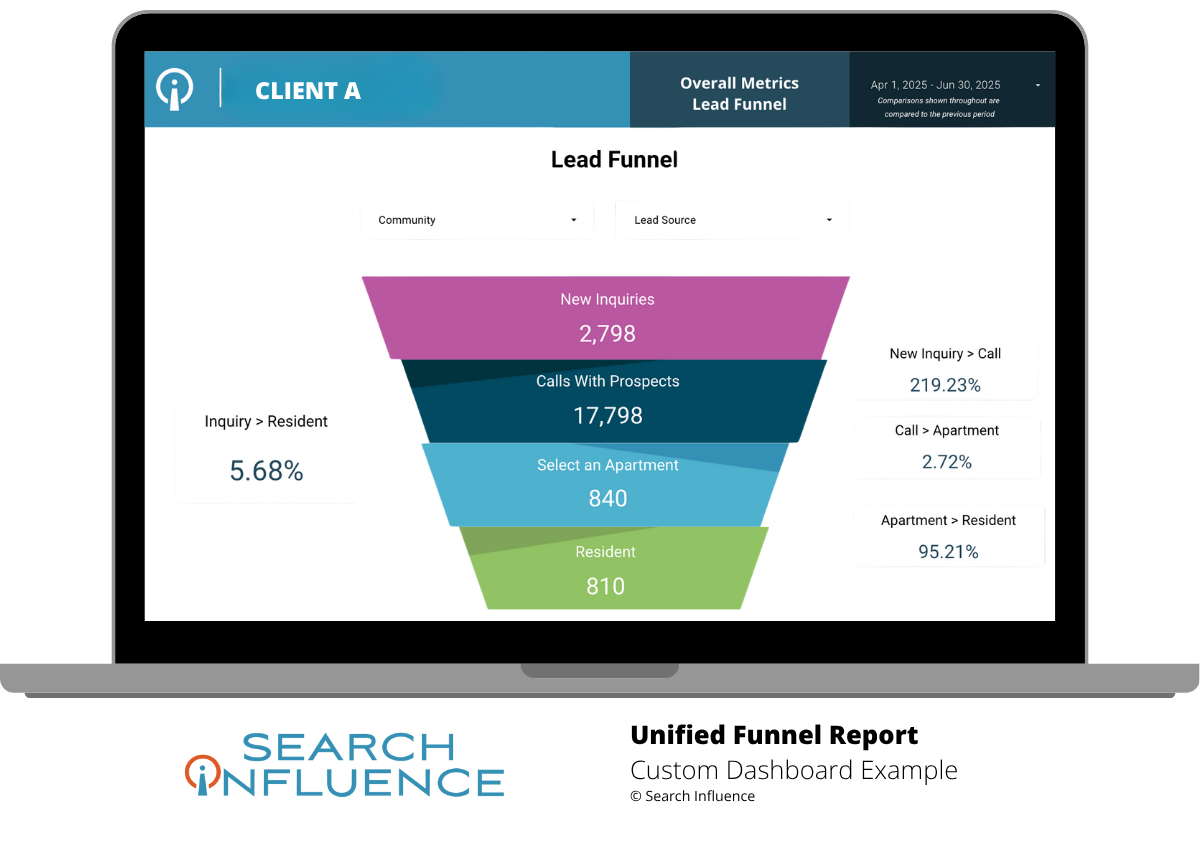
    • Funnel visualization that shows your conversion funnel step by step
    • Integration of all relevant data sources for complete marketing reporting
    • Emphasis on lead quality, not vanity metrics
    • KPI key metrics tracking aligned to SMART goals
    • Custom configurations designed for your specific business

    Marketing Dashboard FAQs

    What does a marketing dashboard include?

    A marketing dashboard includes metrics, visualizations, and KPIs that track marketing performance.

    In practice, this means a dashboard isn’t just a list of numbers; it’s a carefully structured view of how your campaigns are performing across channels. A strong digital marketing dashboard example might combine website traffic, keyword rankings, and lead generation data into charts that reveal trends over time.

    Instead of hunting through Google Analytics, Facebook Ads, and email campaign reports separately, you get one clear picture. Some dashboards even layer in benchmarks or targets, so your marketing teams can quickly see if campaign data is above or below expectations.

    How to create a dashboard for marketing?

    Creating a dashboard for marketing requires defining goals, selecting KPIs, and integrating data sources.

    The process starts with your marketing strategy: What do you want to achieve?

    If your goal is lead generation, your key performance indicators may include cost per lead, lead quality, and conversion funnel stages.

    From there, you identify the data sources (Google Analytics, Google Ads, social media, CRM, etc.) and use a marketing dashboard tool to connect them. The best dashboards allow customization, so you can highlight priority metrics for executives while still offering detailed metrics for specialists.

    Or, you could call Search Influence.

    We scope dashboards that reflect both your goals and your business model, whether that’s patient inquiries, student applications, or e-commerce sales.

    What are the three essential elements of a marketing dashboard?

    A marketing dashboard has three essential elements: relevant KPIs, real-time data, and visual clarity.

    Relevant KPIs ensure the dashboard focuses on the numbers that matter most, not vanity metrics. Real-time or near-real-time data makes sure decisions are based on current performance, not last quarter’s results.

    And visual clarity means presenting complex data in a way that’s easy to interpret, through graphs, funnels, or tables. For example, a marketing KPI dashboard might display how organic traffic, paid advertising, and email campaigns each contribute to overall lead generation. Without all three elements, dashboards risk becoming confusing reports rather than tools for data-driven decisions.

    What is a marketing dashboard used to do?

    A marketing dashboard is used to monitor campaign performance, track ROI, and guide strategic decisions.

    Think of it as a single source of truth for your marketing data. Instead of siloed reports, it consolidates insights into one analytics dashboard so you can evaluate the effectiveness of your digital marketing campaigns. Marketing dashboards typically show you where leads are coming from, how much they cost, and how they move through the conversion funnel.

    Beyond reporting, they’re decision-making tools: Should you increase spend on Google Ads?

    Should you shift resources from LinkedIn Ads to search engine optimization?

    A well-built dashboard answers those questions with clarity.

    What are marketing metrics?

    Marketing metrics are measurable values that indicate the effectiveness of marketing efforts.

    These include everything from social media metrics like engagement and reach, to SEO dashboards that track keyword rankings and organic traffic, to financial metrics like customer acquisition cost and revenue generated.

    The key is to focus on the right mix of performance metrics that align with your goals. For example, a B2B business might prioritize cost per qualified lead, while a retail brand might zero in on website performance and conversion rate.

    By tracking marketing metrics consistently, marketing professionals can see which channels deliver ROI and which need refinement.

    How to measure marketing performance?

    Measuring marketing performance involves tracking KPIs, comparing results to goals, and analyzing trends over time.

    A web analytics dashboard tracks website performance and website traffic, while a social media dashboard pulls in data from platforms like LinkedIn Ads or social media ads.

    But raw numbers aren’t enough.

    The value comes from comparing outcomes to your SMART goals: Did organic traffic hit the growth target?

    Did email campaigns generate the expected inquiries?

    Did your company’s marketing efforts lower acquisition cost?

    By tying performance metrics back to objectives, you gain actionable insights to optimize campaigns. Measuring performance this way isn’t just reporting; it’s steering your marketing strategy with confidence.

    Why the SI Marketing Dashboard Difference Matters

    Most dashboards give you half the picture. They skip over lead generation efforts, gloss over ROI, and bury key insights in complex data.

    Search Influence dashboards give you the whole landscape with all its beautiful details, Ansel Adams style.

    Whether you use our standard marketing dashboard or a fully custom build, you’ll see a clear, actionable view of your digital marketing campaigns. You’ll know how your marketing channels are working together, how your website’s search engine performance is trending, and where to focus resources for the biggest impact.

    If you’re ready to go beyond surface-level reporting, it’s time to see what your marketing dashboard could really do.

    Schedule a consultation and see how Search Influence dashboards turn data into decisions.

  • Search Influence Honored as One of 2025’s Best Women-Owned Businesses by New Orleans CityBusiness

    Search Influence is proud to announce that New Orleans CityBusiness has named us one of the 2025 In the Lead: Best Women-Owned Businesses honorees.

    The special section, profiling recognized companies, will appear in the September 19, 2025, issue of New Orleans CityBusiness.

    This honor comes alongside our recognition as an honoree in the 2025 CityBusiness Empowering Women Award and adds to our ongoing distinction of being named five times to the publication’s Best Places to Work list.

    Together, these awards highlight our growth as a digital marketing agency and our commitment to creating a workplace where women lead, innovate, and thrive.

    What the Award Represents

    CityBusiness selects honorees based on business performance, innovation, workplace culture, and community impact.

    To qualify, companies must be owned in whole or majority by women and based in the Greater New Orleans area. Honorees are chosen for achievements such as:

    • Demonstrating strong growth in revenue or employees
    • Trailblazing in industries traditionally dominated by male-owned firms
    • Building a workplace that supports employees with programs that foster morale and growth
    • Showing consistent community engagement and mentorship

    At Search Influence, these values align directly with our mission. 75% of our leadership and 79% of our team are women, and our culture emphasizes mentorship, inclusion, and opportunity.

    A Women-Owned Digital Marketing Agency Making an Impact

    From our beginnings in a spare bedroom to becoming a nationally recognized digital marketing agency, our growth has always been rooted in people. Being a women-owned company means leading with empathy and strength while ensuring every team member has the tools to succeed. Flexible schedules, paid parental leave, and clear paths for professional development are just a few ways we support our team.

    We also give back by hosting YouthForce interns each year, helping mentor the next generation of women interested in business, technology, and marketing.

    Driving Innovation Through AI SEO and Digital Advertising

    This award also celebrates how we’ve helped clients succeed through innovation.

    Search Influence has been an early adopter of AI SEO strategies, ensuring our clients appear in AI-powered search results like Google’s AI Overviews and conversational assistants.

    Our dual approach, optimizing client visibility in AI search while using AI tools to improve SEO workflows, keeps our partners ahead of rapid industry changes.

    In addition to SEO, our expertise spans digital advertising and data-driven email marketing.

    For nearly 20 years, we’ve delivered measurable results through strategies that blend human creativity with advanced analytics.

    Looking Ahead

    Recognition as one of the Best Women-Owned Businesses underscores what we’ve always believed: When women lead, companies and communities grow stronger.

    We’re grateful to New Orleans CityBusiness for this honor and proud to stand alongside other local businesses that are making an impact.

    As AI, search, and digital advertising continue to evolve, Search Influence remains dedicated to helping our clients thrive in a competitive environment. Our story proves that innovation, inclusion, and community commitment are the foundation of lasting growth.

    Ready to maximize your success with a proven women-owned digital marketing agency?

    Contact Search Influence today to discuss how AI SEO and digital advertising can drive your next stage of growth.

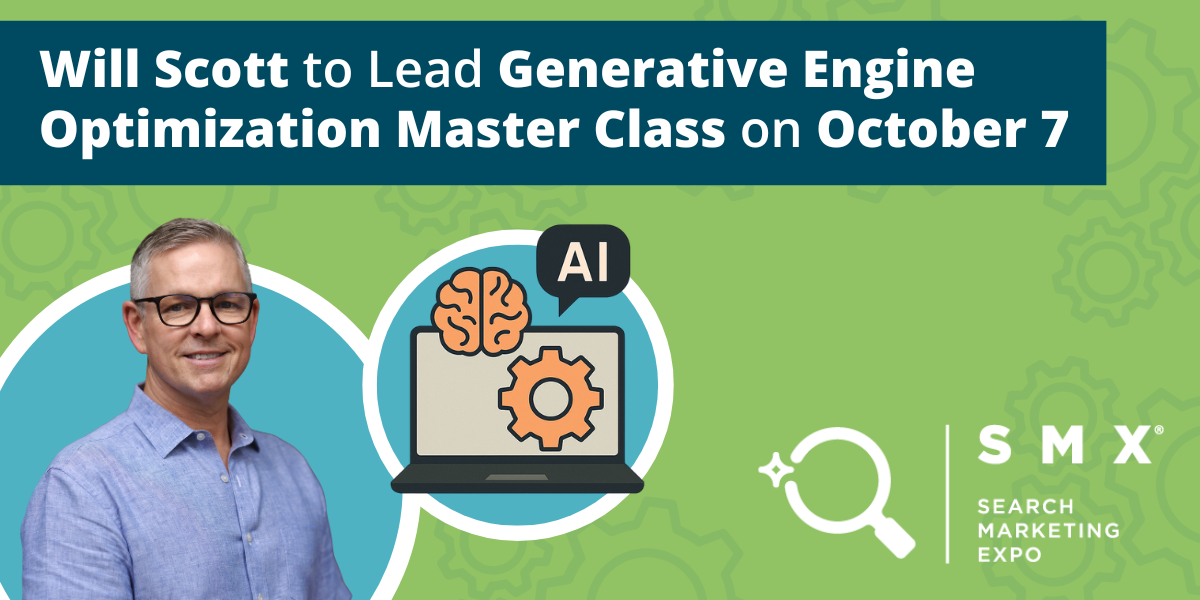
  • Will Scott to Lead Generative Engine Optimization Master Class on October 7

    Search is no longer limited to ten blue organic links. Today, platforms like Google AI Overviews, ChatGPT, and Perplexity generate direct answers that change how people discover information.

    If your content isn’t optimized for these generative engines, you risk being left out of the results entirely.

    On October 7, 2025 (11:00 am – 4:45 pm ET), Search Influence CEO and Co-Founder Will Scott will lead a live, online Generative Engine Optimization (GEO) Master Class with Search Engine Land. This intensive session will show SEO professionals and content strategists how to align with AI-driven search while continuing to perform in traditional results.

    Why AI SEO Can’t Wait

    AI-powered search surfaces content differently than Google’s organic results. Instead of ranking pages, these engines parse entities, measure authority, and pull contextual answers.

    For marketers, that means adapting keyword strategy, strengthening trust signals, and structuring content so AI systems can cite it directly.

    Will Scott, who coined the term “barnacle SEO,” has long helped businesses prepare for shifts in digital visibility. His GEO Master Class is designed to provide a practical framework so marketers can maintain and expand reach across both AI-driven and traditional search environments.

    What the Master Class Covers

    Fundamentals of GEO

    Learn how generative engines interpret relevance, authority, and citations, and what that means for your content.

    Content Structuring for AI

    Explore formatting and entity optimization techniques that improve your chances of being cited in AI-generated responses.

    Keyword Strategy for AI Queries

    Move beyond static keywords and into conversational phrasing, questions, and modifiers that trigger AI responses without losing organic visibility.

    Competitive Analysis for AI Visibility

    See how competitors perform in generative results, where opportunities exist, and how to adapt their wins to your own strategy.

    Authority and Trust Signals

    Understand how AI systems assess brand authority and what steps you can take to strengthen recognition.

    Measurement and Iteration

    Gain tools and frameworks for tracking appearances in AI answers and adjusting content accordingly.

    Future Outlook

    Get an informed view of what’s next in AI search and how to prepare your strategy today.

    Who Should Attend

    This training is built for content strategists, SEO specialists, and digital marketers with 2–5 years of experience who need actionable techniques for AI SEO. Whether you manage in-house content or work with multiple clients, the session will equip you with skills to keep visibility strong in a generative-first world.

    Agenda at a Glance (ET)

    • 11:00–12:15 — GEO fundamentals: entities, citations, and semantic relevance
    • 12:30–1:45 — Keyword and entity optimization, with a schema deep dive
    • 2:00–3:15 — AI-ready content strategies and hands-on competitive analysis
    • 3:30–4:45 — Measurement, tools, and a forward look at AI search

    About Will Scott

    With decades of experience in SEO and digital marketing, Will Scott has been at the forefront of shifts in search behavior. Beyond leading Search Influence, he has presented at SMX, Pubcon, and LocalU, sharing strategies on AI-driven search and optimization.

    Earlier this year, he led a two-day AI for SEO Master Class with SMX and presented at LocalU Global on using AI for local search. His upcoming session with Search Engine Land builds on that momentum, offering professionals practical frameworks they can apply immediately.

    “Marketers don’t need to abandon SEO. They need to evolve it,” Scott explains. “Generative Engine Optimization is about ensuring your content is both discoverable by AI systems and valuable to human readers.”

    Register Now

    The Generative Engine Optimization Master Class will be held live online on October 7, 2025, from 11:00 a.m. to 4:45 p.m. ET. Registration is $249 and includes on-demand access.

    Don’t miss your chance to learn directly from Will Scott and gain practical skills for AI SEO.

    Register now to secure your spot.


    Images:
    Unsplash Image 1
    Unsplash Image 2

  • NEW: AI Traffic Report Available for Your Reporting Dashboard- September Client Insider

    Introducing Your New AI Traffic Report

    Track sessions, engagement, and visibility from AI-powered search

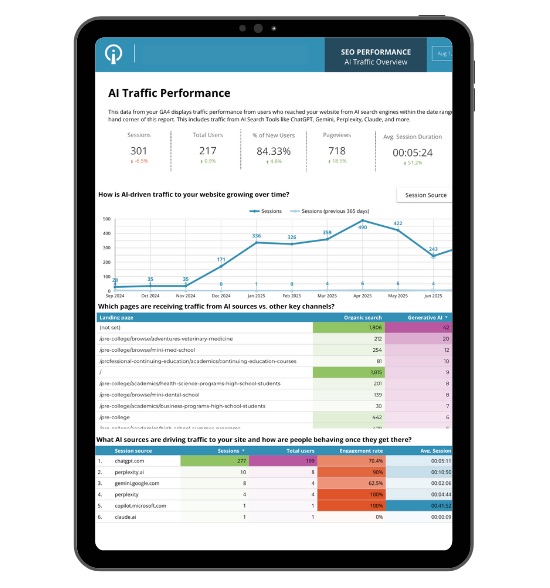
    We’ve been working hard to create visibility into your brand’s performance in AI search. The AI Traffic Report is our latest step toward that goal, and it’s now rolling out to client dashboards.

    This new page gives you a clearer picture of how AI search connects users to your business. You’ll find data points that show both where your traffic is coming from and how those visitors engage once they land on your site.

    The report highlights:

    • Sessions from AI sources: traffic driven by engines such as ChatGPT, Gemini, and Perplexity
    • Engagement metrics: insights into how AI-driven visitors explore your site
    • Breakdown by AI engine: which platforms are responsible for delivering the most traffic
    • Landing pages from AI sources: the specific pages users see first when arriving through AI search, and how that differs from organic and social traffic

    Together, these insights provide a new level of transparency into how AI-powered search is driving visibility and website activity.

    What’s coming next

    The AI Traffic Report is just the beginning.

    Our next phase of reporting will introduce AI visibility tracking, similar to keyword ranking reports, which will measure how your brand appears in or is cited in AI-generated answers. The rollout is in progress now, and your Account Manager will update you as soon as it is ready to view!

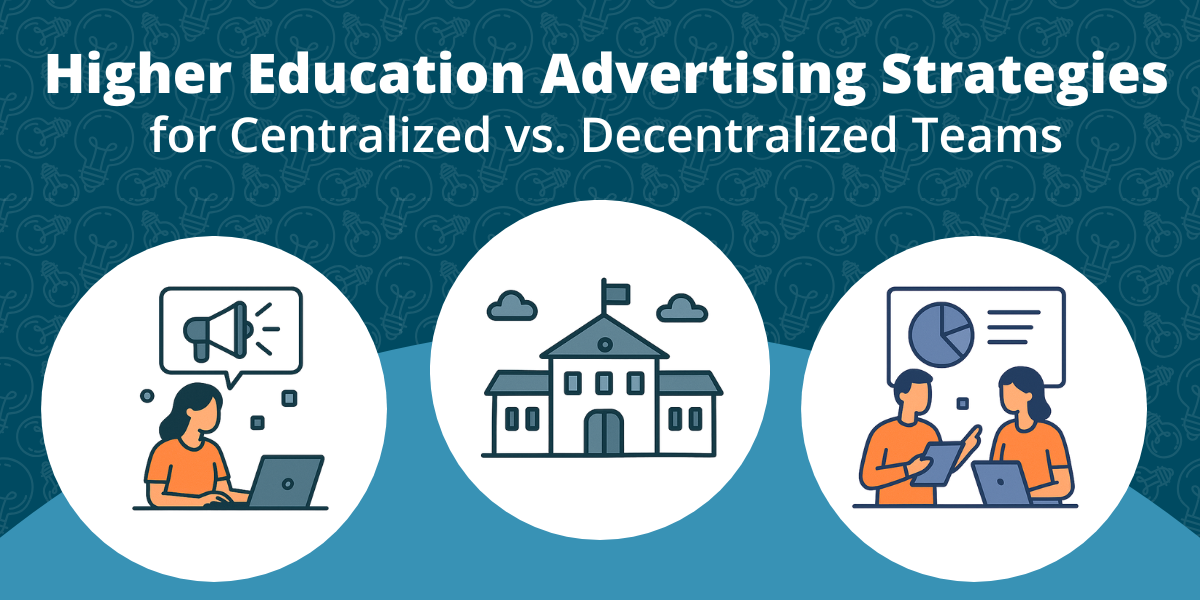
  • Higher Education Advertising Strategies for Centralized vs. Decentralized Teams

    Higher Education Advertising Strategies for Centralized vs. Decentralized Teams

    Key Insights

    • Team structure drives advertising performance. A centralized marketing team delivers efficiency and consistency, while decentralized teams excel in agility and program-level targeting.
    • Most universities operate in hybrid models. Few are purely centralized or decentralized. Hub-and-spoke and collaborative networks are common, and each impacts paid advertising differently.
    • Aligning strategy with structure prevents wasted spend. The right setup helps higher education marketers avoid overlapping ads, mixed messages, and underperforming budgets.
    • Paid advertising success comes from clarity. Institutions that match their organizational model to their media strategy see stronger ROI, better audience targeting, and more meaningful enrollment outcomes.

    If you’re responsible for higher education advertising at an institution, you already know the challenge.

    Every school, program, and department wants visibility, and they all want it yesterday.

    Meanwhile, leadership expects a unified brand that builds credibility and delivers enrollment results.

    That tension comes to a head in paid campaigns, where budgets are closely watched and wasted spend is difficult to justify.

    Should all campaigns be managed by one centralized marketing team to ensure control and consistency? Or should departments run their own ads to tailor messages for specific programs and audiences?

    Most institutions operate somewhere in between. Knowing where your structure falls (e.g, centralized, decentralized, or hybrid) is the first step toward building a digital advertising strategy that makes every dollar work harder.

    Variations in Centralized and Decentralized Higher Education Advertising

    Not all universities fit neatly into “fully centralized” or “fully decentralized.” Recognizing your model is key to avoiding wasted budget and reaching the right students.

    Centralized Variations

    Centralized structures are common when leadership wants control, efficiency, and a unified voice. Within this approach, there are two main models institutions typically follow:

    Fully centralized

    In this model, one marketing office controls all budgets, creative, targeting, and reporting. Paid campaigns for undergraduate admissions, graduate programs, and brand-building all flow through the same team. This creates consistency and accountability, but campaigns often move more slowly, and programs with niche audiences may feel underserved.

    Hub-and-spoke

    With a “hub-and-spoke” setup, the central office sets strategy and creative standards, and likely also provides already-approved ad templates. The departments then execute campaigns within those guidelines.

    For example, a nursing school might adapt central paid search templates to highlight clinical outcomes, while the business school uses the same framework to promote MBA career paths. This model gives programs flexibility without losing alignment, but it requires clear governance to work well.

    Decentralized Variations

    Decentralized structures give schools more autonomy and agility. Instead of waiting for central approval, departments can quickly tailor campaigns to their audiences. Two common models fall under this approach:

    Fully independent

    In a fully independent model, each school or department manages its own advertising, from budgets to creative to targeting. For example, the business school might run a Meta campaign to boost MBA enrollment, while engineering launches LinkedIn ads for prospective undergraduates.

    This setup gives programs agility and control over their own messaging, but it often leads to inconsistent brand voice, overlapping campaigns, and higher costs when departments compete for the same prospective students.

    Collaborative network

    In a collaborative network, departments run their own campaigns but share certain resources, such as analytics platforms, vendor contracts, or a CRM. For example, multiple schools may use a shared DSP to buy media while still creating their own ads.

    This structure lowers costs and improves visibility across programs, but it depends on adoption. Without consistent use of shared tools, you can still end up with inefficiencies and fragmented audience targeting.

    Pros and Cons of Each Structure

    Centralized Structure

    A centralized marketing team shines when leadership prioritizes consistency and efficiency. But in practice, it can also create friction when programs need specialized campaigns.

    Pros

    • Cohesive brand identity: Every ad, across search, social media, and display, reinforces a unified message for prospective students.
    • Economies of scale: Media dollars go further when a centralized marketing team buys in bulk, lowering CPCs and CPMs.
    • Clear reporting: Centralized audience data makes it easier to connect campaigns to enrollment outcomes.
    • Policy alignment: There’s easier institute-wide compliance with accessibility, privacy, and government regulations.

    Cons

    • Slower response times: Campaigns for specific academic programs or niche demographics may lag.
    • Creative bottlenecks: One team reviewing all assets can delay launches.
    • Departmental disconnect: Faculty and program chairs may feel their priorities aren’t represented.

    Decentralized Structure

    Decentralized models work best when agility matters most, but that same autonomy often leads to inefficiency and fragmentation in higher education campaigns.

    Pros

    • Agility: Departments can launch or pivot enrollment marketing campaigns quickly.
    • Tailored messaging: Schools can highlight unique career outcomes, campus life, and student success stories.
    • Encourages innovation: Independent teams are often able to test new tools, channels, or creative approaches.

    Cons

    • Brand inconsistency: Prospective students may see conflicting messages across multiple channels.
    • Budget inefficiency: Overlapping campaigns may compete for the same target audience.
    • Limited ROI visibility: Multiple CRMs or landing pages can make performance tracking difficult.

    Paid Ad Strategies for Each Structure in Higher Education

    Understanding your structure is only useful if it translates into smarter campaigns. Each model requires a different approach to ensure your ad dollars are invested wisely and drive enrollment.

    For Fully Centralized Teams

    When one marketing office owns all advertising, scale and consistency are your biggest advantages. The challenge is making sure campaigns still connect with prospective students across different programs.

    • Plan around the calendar: Create a campaign roadmap that aligns with enrollment cycles, campus events, and application deadlines. This ensures steady awareness throughout the year.
    • Leverage remarketing: Use centralized retargeting to reach visitors across all university web pages, reinforcing brand visibility and creating a unified experience for potential students.
    • Allocate budgets strategically: Prioritize spend where it aligns with enrollment goals, career outcomes, and high-demand academic programs, not just where the loudest requests come from.

    For Hub-and-Spoke Models

    This hybrid structure allows departments to highlight their strengths while the central office maintains control of strategy. It works best when there’s clear communication and shared insights.

    • Distribute audience research: Share data on audience behaviors and search insights to help schools tailor campaigns to the right demographics.
    • Provide creative frameworks: Branded ad templates and pre-approved copy blocks let departments develop authentic content that still feels consistent.
    • Centralize reporting: A shared dashboard helps leaders and departments monitor engagement, compare performance, and refine higher education marketing strategies.

    For Fully Independent Departments

    When every college runs its own campaigns, speed and specialization come naturally. The risk to avoid, however, is waste, including duplicate targeting, inconsistent messaging, and missed opportunities for collaboration.

    • Hold quarterly ad reviews: Bring departments together to compare results, share key strategies, and reduce overlap.
    • Encourage light-touch brand guidelines: Even voluntary frameworks help create a more unified experience for prospective students.
    • Pool funds for high-cost media: Channels like YouTube, CTV, or sponsored content often deliver deeper connections with specific demographics but may be out of reach for one department’s budget alone.

    For Collaborative Networks

    A collaborative network provides autonomy but relies on shared resources to cut costs and increase efficiency. The success of this model depends on adoption across departments.

    • Invest in shared platforms: A common CRM or analytics system makes it easier to track engagement and communications across the institution.
    • Coordinate retargeting pixels: Prevent schools from competing for the same audiences online by unifying tracking.
    • Offer training: Equip decentralized teams with the skills to interpret insights and use digital marketing tools effectively.

    How to Decide Which Model Works for Your Institution

    Choosing between centralized vs decentralized marketing structures isn’t about which one is “better.” It’s about which one matches your institution’s size, resources, and enrollment goals.

    A small liberal arts college with a handful of academic programs may thrive under a centralized marketing team, while a large research university with multiple colleges often needs hybrid structures to balance control and autonomy.

    Key factors to consider include:

    • Number of schools and programs: The more academic programs you offer, the harder it becomes for one office to manage every campaign.
    • Central marketing staff size: If your team is lean, decentralized departments may need more responsibility.
    • Technology and infrastructure: Institutions with robust CRMs, shared analytics, and advanced digital marketing tools can unify campaigns more easily.
    • Leadership priorities: Some universities value a unified experience and brand voice above all. Others prefer program-level autonomy to reach specific demographics.
    • Hybrid effectiveness: Many higher education institutions succeed with hub-and-spoke or collaborative models, where central offices provide guidance and resources while departments tailor ads for their own prospective students.

    The right fit comes down to aligning your organizational design with your advertising goals.

    Common Challenges in Higher Ed Paid Ad Management

    Even with a well-chosen model, challenges are inevitable. Higher education advertising is complex, with multiple audiences, competing priorities, and budget pressures. Some of the most common issues include:

    • Budget allocation disputes: Programs often compete for limited funds, leading to tension over who gets priority.
    • Duplicated targeting: Without coordination, two departments may spend against the same prospective student audience in major search engines or social media platforms.
    • Fragmented tracking: Multiple CRMs, landing pages, or disconnected web pages make it difficult to attribute campaigns back to enrollment outcomes.
    • Compliance requirements: Accessibility standards, privacy regulations, and institutional diversity goals must all be reflected in campaigns.
    • Balancing consistency with flexibility: Universities need cohesive brand visibility, but also space for departments to highlight authentic content such as student success stories, career outcomes, and campus life.

    Addressing these challenges requires more than good intentions. It takes shared governance, modern tools, and clear reporting structures.

    How an Advertising Agency Can Bridge the Gap

    Many institutions find that bringing in an external partner helps them balance competing needs. An experienced higher education advertising agency acts as both strategist and coordinator, offering:

    • Cross-department coordination: Ensuring enrollment marketing campaigns complement, rather than compete with, each other.
    • Centralized analytics: A unified view of performance across digital marketing channels, from paid search to sponsored content.
    • Audience research: Fresh insights into audience behaviors, college options, and what drives potential students to engage.
    • Budget optimization: Redirecting spend toward the channels and creative that attract more students and deliver ROI.
    • Neutral facilitation: Acting as a “traffic controller” to balance requests from different colleges and departments.

    The right partner doesn’t take control away from internal teams. It creates alignment, so every program benefits from a smarter strategy and cleaner execution.

    FAQs About Centralized vs. Decentralized Marketing Strategies

    How does team structure impact higher education advertising strategies?

    Structure determines who controls budgets, creative, and targeting. Centralized teams create consistent messaging, while decentralized teams allow program-level customization. Hybrid structures aim to capture the benefits of both.

    What KPIs should universities prioritize in paid ad campaigns, regardless of structure?

    Metrics like cost per inquiry, cost per enrollment, website engagement, and conversion rates from landing pages tie directly to marketing goals. These help link advertising dollars to measurable enrollment outcomes.

    How do you measure ROI across multiple departments?

    Shared CRMs, attribution models, and centralized dashboards allow institutions to consolidate insights. Without these, it’s nearly impossible to connect spending with results across multiple academic programs.

    How can universities prevent brand inconsistency in decentralized campaigns?

    Use creative frameworks like branded templates, approved copy blocks, and optional reviews. This allows departments to create authentic content while maintaining a consistent look and feel.

    Is it better to manage university paid media internally or with an external agency?

    It depends on your resources. Internal teams know the culture and campus life deeply, while agencies bring advanced tools, digital marketing expertise, and broader insights. Many educational institutions benefit from a hybrid approach (internal vision with external execution support).

    Digital Advertising for Higher Education: Smarter Ad Spending Starts With Structure

    The structure of your marketing team is one of the biggest factors in the success of your higher education advertising.

    No model is “right” or “wrong” on its own. The key is aligning your digital advertising strategy with how your institution actually operates. When structure and strategy match, you avoid wasted budget, reduce audience overlap, and deliver a unified experience for prospective students.

    Download the ROI White Paper

    At Search Influence, we’ve seen firsthand how much team structure impacts campaign performance. That’s why we developed “3 ROI Models to Prove the Value of Your Education Marketing,” a practical guide to help higher education institutions measure and improve the impact of their digital advertising.

    In the white paper, we share:

    • Three proven models for evaluating higher education marketing campaigns
    • How to turn data and insights into smarter, faster decision-making
    • Tips for preparing confident conversations with leadership and stakeholders
    • Strategies to refine campaigns in real time to attract more students and strengthen ROI

    Don’t wait until the next enrollment cycle to maximize your ad spend. Download our ROI white paper today and start building a more measurable, effective advertising strategy tailored to your institution.

    Images:
    Unsplash
    Unsplash

  • Celebrating Women in Leadership: Search Influence Earns 2025 CityBusiness Recognition

    Celebrating Women in Leadership: Search Influence Earns 2025 CityBusiness Recognition

    Search Influence is honored to be named an honoree in the 2025 New Orleans CityBusiness Empowering Women Awards. This recognition highlights companies across the region that are creating meaningful opportunities for women in business and leadership.

    Why This Award Matters

    Each year, CityBusiness recognizes 50 companies that demonstrate a real commitment to supporting women in the workplace and community. Honorees are evaluated on how they recruit, promote, and mentor women; create inclusive workplaces; and contribute to advancing equality in New Orleans.

    This year, we were especially surprised to be included since we didn’t submit a nomination. This makes the recognition feel all the more meaningful. It reflects not just what we say about ourselves, but what our peers and community see in us.

    A Workplace Where Women Lead

    At Search Influence, women aren’t just represented, they lead.

    Women make up nearly 80% of our team and hold 75% of our leadership positions. These numbers reflect intentional decisions about how we hire, promote, and create opportunity.

    It also reflects the kind of workplace we’ve built together. Flexible schedules, parental leave, mentorship programs, and professional development stipends aren’t perks; they’re tools that help every team member grow and succeed.

    Meet the Leaders Behind the Recognition

    Our recognition in the Empowering Women Awards is a testament to the women who shape our agency every day:

    These leaders, along with many others, have created an environment where women at every level can thrive.

    Beyond the Office

    Our commitment to women extends outside our organization. Through partnerships with groups like YouthForce NOLA, we’ve mentored high school students and opened doors to careers in digital marketing. Our employee-led IDEA Committee continues to foster inclusion, diversity, equity, and awareness inside and outside the workplace.

    These initiatives are part of a larger belief: that empowering women strengthens our community as a whole.

    Looking Ahead

    This recognition is not just a moment of pride, it’s a reminder to keep going. The needs of our team evolve, and so must we. By listening to our employees, staying agile, and learning from the community around us, we’ll continue to define what it means to support women in the workplace.

    “We believe empowerment happens in the day-to-day choices that shape our culture,” said Co-founder and COO Angie Scott. “This recognition from CityBusiness inspires us to keep building a workplace where women can succeed and lead.”

    Join the Conversation

    We’re proud to celebrate alongside the other 2025 honorees recognized by CityBusiness. Together, we’re shaping a business community that reflects the best of New Orleans: resilient, diverse, and forward-looking.

    Read more about the company culture of Search Influence on our website: Search Influence Company Culture