Blog

  • 5 Content Mistakes to Avoid

    You work hard to promote your business, providing your clients with the best services and customer experience possible. However, in order to develop a loyal customer base, it’s necessary to first attract potential clients who may be interested in the services that you offer. This often begins with their first glance at your webpage. Not only is web content important for these same visitors to reach your site, it’s instrumental in keeping their attention on your company.

    No matter how wonderful the products and services your business provides may be, one look at your webpage can make or break a potential client’s commitment to the company. For example, improper grammar, punctuation, or spelling not only makes you look foolish, it ultimately detracts from the overall credibility of the organization itself. That’s why copyediting is important to everyone, whether you specialize in legal services or auto repair.

    While there are hundreds, or even thousands, of words that are misspelled, misused, and generally abused regularly in sales copy, here are a few particularly common mistakes to look out for:

    Words to Watch:

    1. Effect/Affect
    In general, effect is used as a noun, while affect is used as a verb. E.g.
    “The effects of water damage in your home can be severe.”
    “Mold and other toxins can greatly affect the air quality in your home or business.”

    2. Premier/Premiere
    If your services are the highest quality in the area, you are the “premier” service provider. A “premiere” is the opening night of a film or production. E.g.
    “We are the premier carpet cleaning service in the state, providing affordable rates and guaranteed customer satisfaction.”
    “Did you catch the premiere of ‘Game of Thrones’ last night?”

    3. Lose/Loose
    This is a common typo, yet can make such a bad impression on a potential client. For example, an educated consumer may think twice about enlisting the services of a lawyer who guarantees no fees in the occasion that you “loose your case.” E.g.
    “You have nothing to lose when working with us, because we offer a free case evaluation, and charge no fees unless you are compensated for your losses.”
    “If your plumbing fixtures are loose or in need of repair, trust the skilled professionals at our company.”

    4. Insure/Ensure
    In the same vein, informed customers would never choose to purchase a flood protection policy from a company who “insures complete customer satisfaction.” Insure is used exclusively in limiting financial loss or liability; that is, providing or obtaining an insurance policy. Ensure, on the other hand, means to guarantee a condition, term, or event. E.g.
    “We insure boats, trucks, cars, and ATVs.”
    “We will work hard to ensure you are satisfied with the quality of our products.”

    5. Team/Staff
    Team, staff, and other collective nouns are always singular. E.g.
    “Our team is dedicated to providing high quality service and repairs.”
    “The staff at our company is highly trained, and capable of handling any job you need completed.”

    As you can see, there are a number of linguistic pitfalls that should be avoided when posting content to your website. Make sure to carefully look over your page, or hire a team of competent copy editors to ensure the quality of your content matches that of the product you work so hard to promote.

  • What’s Everyone Yelling About?

    Why is Everyone Yelling?First a caveat, I am not a psychologist, but we’ve all felt the urge to ask the question “Why Is Everyone on the Internet So Angry?” The article linked here addresses the cultural pressures on the individual that may result in the bombastic tirades we often see on message boards or in comment sections. But, what if the connection goes deeper than a desire to exploit anonymity or a mimicry of pundits. Then the question is why do people act mean on the Internet, or more broadly, why would ordinary people act so belligerently? Thus we arrive at the Stanford prison experiments. Now if you’ve never heard of it, the long and short basically reveals the extreme nature of people to psychologically adapt to the roles a situation places them in, ie. prisoners and guards. Here’s the funny part. This experiment was a big step in the world of Attribution Theory, something directly applicable to the world of … wait for it… Marketing.
    If you clicked on that link you’d find Hull University’s Stephen Dahl’s, a Professor of Business, explanation of attribution theory as it applies to how we interpret another person’s comments about a product or service. Namely, we “attribute” motivations to another person’s actions or comments, based on three categories: consensus, consistency, and distinctiveness. Is everyone else saying that? Has this person always said that? Does he say that about everything? If he is acting with low values in these categories, it’s likely he has a personal motivation. How does this apply to anger? The simple answer is, trolls. Individuals on the Internet who are trying to make you act a certain way, their words are not based on true opinion or interpretation of something, but on the wholly personal desire of enjoying another person feeling upset by their actions. And a lot of people are buying what they are selling. You can find that most of these heated exchanges online are traced back to, or at least spurred on by these mischievous instigators.

    I’m not disagreeing with the other explanations for this anger on the Internet, but merely adding another facet to understanding it. Some people are not trying to have a conversation; they are trying to persuade you to act irrationally for their amusement. Most people who have been on the message boards long enough have honed their senses and research abilities to more accurately attribute a “troll” motivation to these individuals, and thus avoid these situations entirely. We aren’t all angry, angry just has a very aggressive sales team working for it. And thats the problem.

    People who spend large sessions in communities, like Reddit and Tumblr, have sharpened their instincts for picking up personal motives. Initially to avoid being manipulated by these people, but now they see personal motives as deceptive in some ways and can react strongly against them. It’s important to be open about your marketing intentions or backgrounds when dealing with some communities or else the backlash can be harsh.

  • 5 For Friday — Links, Stories & Posts For Your Weekend

    1. How does social media affect your SEO? – Search Engine Journal
    Jackson 5 Michael Jackson Anthology  Does Google really pay attention to social signals? As more and more users share content through social networks, Google is taking note to what gets shared and has even trying to capitalize on that by starting Google+. Some users may use social media to see what is newsworthy, but you definitely have to watch how your company manages its social presence. How are you taking advantage of social media for your business?

    2. Google’s Algorithms – How does it all work? – Search Engine Land
    Did you know that the web is made up of over 30 trillion individual pages? Take a look at Google’s most recent infographic on “How Search Works.” The graphic is divided into three parts: crawling and indexing, algorithms, fighting spam. Check it out.

    3.  Google releases change history in Google Analytics – Search Engine Watch
    If you logged into your Google Analytics recently, you will notice a new change. Google has added Change History in Google Analytics, which allows you to see what historical edits were made to the account. This is pretty neat and helps you keep track of what changes were made if you work with multiple admins.

    4.  Groupon fires its CEO Andrew Mason – Social Media Today
    Andrew Mason, CEO of Groupon, was let go this week after board members were questioning his role in the company. As the daily deal market becomes more competitive and oversaturated, Groupon saw its stock decline since its initial public offering in 2011. Did Groupon make the right decision to go public? What does this mean for future IPOs?

    5. Will Pinterest help Nars generate meaningful leads? – Mashable
    Nars launched an interesting social media campaign last month on Facebook to promote their new Andy Warhol-inspired collection. Now they are launching a new campaign on Pinterest to see if they can generate actual sales from the popular site. Partnering with three popular Pinterest users, these pinners will develop their own boards on each of their accounts to offer early access to its new Satin Lip Pencil collection. Nars is stepping up their social media plans. Will others follow suit?

  • WTF Facebook?

    On Friday, I received an email from Facebook regarding their Page Insights. My initial reactions were “Great! They’ve finally realized how horrible their reporting system is and are making changes!” Boy, was I wrong. The email in its entirety is below, but the man gist is that they have been incorrectly reporting on the number of total, organic, and paid impressions and reach as reported through their Page Insights. Supposedly, the Ad Insights and Billing Data reporting tools are not affected, not that those are great anyway.

    They promise that these issues will be fixed by today and “moving forward, your impressions and reach numbers in Page Insights will reflect these updates.”

    The real kicker however, is that these issues impacted their “logging system,” so they will not be able to provide accurate historical data for organic and paid reach and impressions (in Page Insights). I mean, come on! Not only is Facebook’s reporting platform not intuitive, but your historical data is now inaccurate or missing.

    Facebook’s reporting platforms have continued to disappoint, and this is no exception. It would be great if they spent some time gathering data about what their users want and need, and how best to display that data. I guess I have to give them some props for admitting their mistake and fixing it ASAP, although I was hoping for more.

    What data would you find interesting for Facebook to report on? Let us know!

  • Surprise Oscar Winner: jcpenney’s #YoursTruly Real-Time Marketing Campaign

    During this evening’s 85th Academy Awards, jcpenney used real-time marketing to capitalize on our here and now, instant gratification tendencies by launching a strong activation through social media. The goal of the Oscars campaign was to grab new viewers and continue to update their more-than-outdated, less-than-classy image.

    To begin, their Twitter page, much like many Oscar attendees, put its best face forward with a glitzy makeover. Before this evening it’s very likely that you, your wife, girlfriend, or 20 something daughter certainly didn’t think of jcpenney as fresh, on trend, glitzy, luxurious, or modern. Some of you may not have even thought it was still a surviving entity.

    Well, as long-time believer that shopping at this store was calm, easy, and reliable, I have been having so much fun spreading the news of the come-back-company. About 15 months ago, Ron Johnson, the man who made the Apple Store the addictive adult version of a candy store, stepped in as CEO of jcpenney and vowed to not just turn the company around, but completely transform it.

    There has been a slow, but certainly not subtle, roll out of a new store layout including mini brand shops, major tech updates and store renovations, and even a dramatically new “everyday low price” structure that so strongly alienated long-time customers and enraged critics that jcp back-pedaled and brought back the idea of traditional “sales” within months.

    Throughout this time, Johnson had a flurry of critics but I always believed and still do believe they will succeed at their task of complete rebranding, taking the “affordable luxury” phenomenon to the next level.

    Their most significant splash into the homes of their target demographic? Oscars 2013, when the company our children will know as “jcp” and my mom will always call “Penney’s” launched a feel good real-time cross-channel campaign that spanned from our televisions to our tweets.

    In the commercial that aired this evening, jcp writes us a personal love letter stating, “Dear America, you deserve to look better and live better.”  Why wouldn’t I want to shop somewhere that tells me I deserve more!?

    The Key Components of the Real-Time Marketing Campaign:

    In addition to appealing to our egos, let’s discuss the other aspects of the award-winning combination that made this campaign effective.

    On-Time and On-Point Tweets

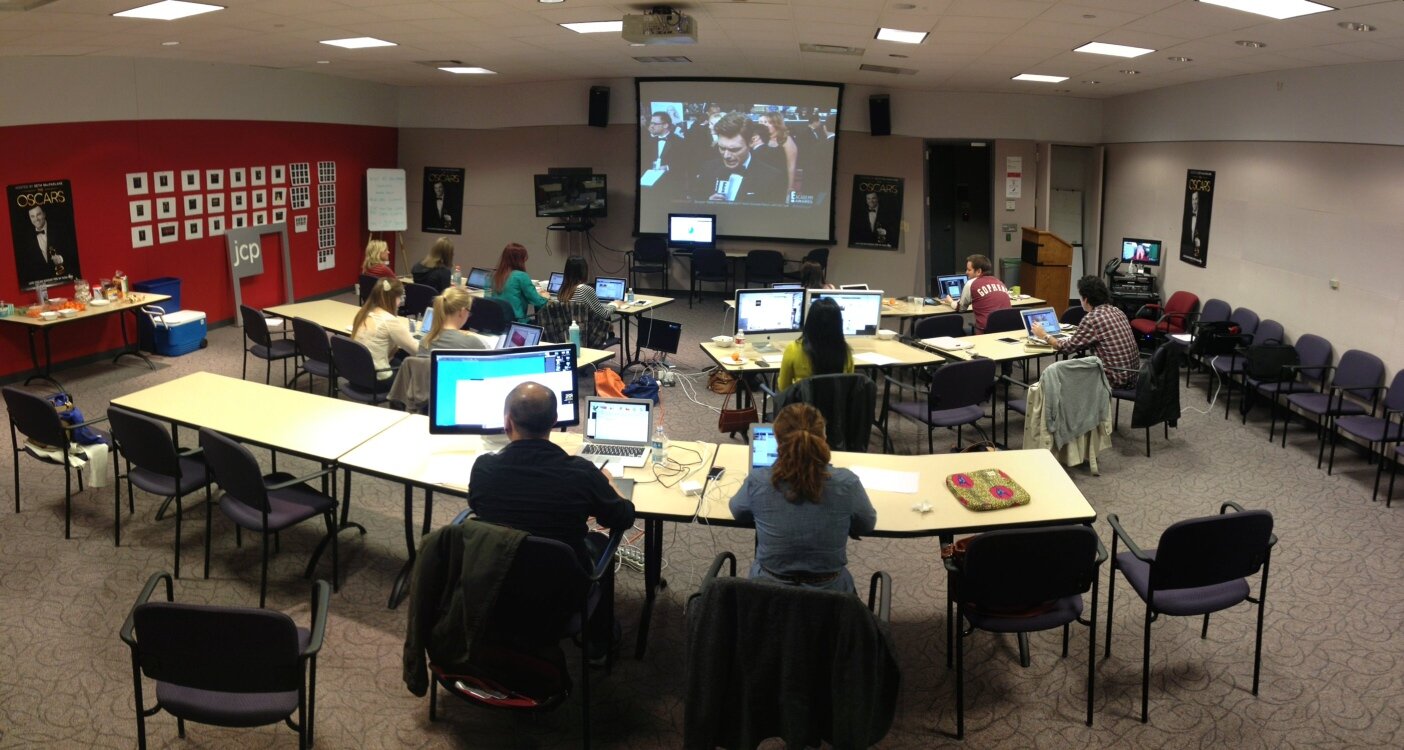
    Early in the evening, @jcpenny tweeted a back-stage peek inside their social media command center. Many team members were on hand, watching the show on a larger than life projector, all well-situated for quick tweeting and ad targeting. I’m sure they were ready for quick fire graphics in case they needed to step up to the plate to try to out-Oreo Oreo, who gathered with their marketing team to attempt to re-create the magic of their Super Bowl 2013 social media win.

    jcp Oscars 2013 Social Media Command Center

    Demographically Targeted Twitter Ads

    I am clearly in jcp’s target demographic. As I launched Twitter, this was the first thing I saw:

    Even if I had not been popping open my computer to pen this post on the very campaign that was being targeted to me, I, or those out there with similar demographic profiles as me, would have been pulled into the well composed and thought out campaign.

    Shareable Graphics

    The rapid fire team rolled out right-on-time, clearly pre-planned graphics that tied in with the “Dear America” theme all while promoting niche, desirable products.

    jcp Oscars 2013 campaign - Dear Commercial Break,  jcp Oscars 2013 Campaign - Dear Red Carpet  jcp Oscars 2013 Social Media Campaign - Dear Plunging Necklines  jcp Oscars 2013 Social Media Campaign - Dear Mani-Cam

    Strong Television Placement

    Not only was the “Yours Truly” spot placed early in the broadcast, it had all the makings of a 90 second must-keep-watching commercial: the “who’s ad is this” mystery, a montage of memories, a cinematic soundtrack, clever word play, and continuing bold use of text throughout. All ending with the most important piece of the pie…

    Calls-to-Action

    If you happened to catch the ad, you saw the strong close driving you to jcp.com/yourstruly, a buy-now optimized mini site that directed you straight to the promoted products. In case you may have landed straight on jcp.com, they had a nice reminder of the evening’s festivities and invited all their new admirers to join them on Twitter.

    The Free Prize Inside: $100 Gift Cards Galore

    For many of those that jumped in the conversation, @jcpenney quickly returned their tweet with a $100 gift card. 2 big benefits here: 1. getting new customers into the store to see the new changes 2. creating social buzz. If you were given $100, you would tweet it, wouldn’t you?

    That’s right. Congratulations, jcp. Although you didn’t have to try too hard here as I’ve always been a fan, I am sure you have turned a number of heads this evening on the red carpet.

    You have our attention, and now, we’re tipping our hats to you.

    Yours Truly,

    plmk

  • 5 for Friday — Links, Stories, & Posts for Your Weekend

    Green faded door number 5

    How Brand Came to Dominate Google’s Relevancy Algorithm – SEO Book
    Google CEO Eric Schmidt has said, “Brands are the solution, not the problem.” Going all the way back to 2003, this infographic details the timeline of Google’s preference for brands in rankings, even going into some high-profile companies using shady techniques and not being penalized in the same ways small businesses might.

    Write a (Good) Blog Post in 1 Hour – SuccessWorks
    The old adage goes, “write about what you know.” The SEO-focused copywriting agency SuccessWorks takes it a step further in this brief how-to list, saying we should write about something we enjoy. Not only is this more enjoyable, but it’s also easier to push out a post quickly when you like what you are writing about. The other main takeaway from this is to take a break after your first draft. Fresh eyes will pick up on typos and other mistakes when you come back to the computer. You may even see places where you can add more information.

    Will Social Signals Replace Links? – Search Engine Journal
    It’s obvious to anyone online, especially in marketing, that social media is becoming more and more important to building a brand, but what if it becomes more important to your rankings? This post explores some of the possibilities but maintains that proven strategies for link building shouldn’t be overlooked just yet.

    How to Use Hashtags in Your Social Media Marketing – Social Media Jungle
    We’ve written about how to use existing hashtags to your advantage, but what if you want to create your own? Probably one of the most important takeaways from this post is to search the hashtag before using it. We’ve seen what can happen if companies use a trending hashtag without knowing why it’s trending. It’s just as easy to make one up that is being used for something completely unrelated.

    34 Tools to Help You Create Better Content From Start to Finish (and Beyond) – BlueGlass
    Getting into creativity mode is not always easy. This list of sites, apps, and other tools is not exhaustive, but can’t be too far from it. From brainstorming to editing, there’s a tool to help you with every step of the content creation process. Lots of these are free and all of them could be helpful for writers. Especially fun is The Writer’s Diet, where you can run a diagnosis on a sample to see where changes can be made to make the writing more concise and accessible to your audience.

  • Don’t Be ‘That Guy’…Top 5 Networking Faux Pas

    Whether or not you are in a business development or sales role, networking is a great way to get your company’s name out there and put a face with the brand. Yes, I mean face to face networking, not “liking” posts on Facebook.

    My personal experience with networking over the last several months has been mostly positive, and being a people watcher, I have especially enjoyed identifying what characteristics push people to make it or break it at these events. In that spirit, I have created a classification system of the networking personalities that I have encountered.

    Five Types of Networkers

    Round 1-091. The Sales Slug

    The majority of people at networking events are there trying to sell something directly or indirectly, but but take for example the commercial plumber attending the event to build his referral network. Pushing your catering business on him will not prove lucrative — you’re wasting your time, sales guy. The Slug is in a one-sided conversation with you for his benefit only. You may as well be talking like the teacher from “Charlie Brown”, because he is NOT LISTENING. “Wah waah wah wah waah”

    2. The TMI Open Book Guy

    Talking about your personal life is not a bad thing, particularly when it may be common ground and making connections. The trick is understanding where to draw the line. Based on the fact that you just met this person, they probably don’t want to hear about the DUI you got in college. Really, legal issues are never common ground for professionals. Taking it easy on the complimentary booze can go a long way in making sure you don’t become this guy.

    3. The Phone Checker

    Unless Fido is being held for ransom, you don’t need to check your cell phone while someone is talking to you. Your goal for that event and the $20 admission fee dictates that you are there to meet other people, and incessant phone checking makes you an unapproachable social pariah.  It’s the new equivalent to checking your watch. The people with whom you are speaking will undoubtedly get the impression that you don’t have time for them.

    4. The Wallflower

    You are not at an 8th grade dance, so get off the wall and introduce yourself. Many of you may be situated on the introverted side of the personality spectrum. I’ve also been guilty of this at times. While attending a networking event, you need to pretend you are the most popular girl in school. If you are thinking that by becoming an island you appeal to the crowd as approachable, you are sorely mistaken.

    5. The I Just Rolled Out of Bed Guy

    Seriously Guy? Take some pride in your appearance when you are in the public eye; what you wear in your leisure time is up to you. This isn’t a slumber party, it’s a professional event. Shorts and snuggies are not acceptable, ladies and gentlemen. Networking events range from black tie to somewhat casual, but the invitation never says “what you wore to bed last night.” We think it’s great that you work from home, but we don’t. Thus, we do not care to see your home “office” attire.

    Honorable Mention:

    The Tries Too Hard Guy

    I am hesitant to poke fun at this guy because I believe that he really means well. Typically, you will hear these people tooting their own horns and then brown nosing the people they’re talking to. They generally lack real social skills which leads to them overcompensating in a variety of ways.

    So, based on what we have learned not to do, we can easily derive a few pointers that can make one better prepared for their next networking event:

    • Be prepared. It’s the Boy Scout motto for a reason. Come to the event in the appropriate attire, with proper messaging, and be ready to put your best foot forward.
    • Keep conversations professional, natural and sincere. If at the end of the conversation it makes sense to pursue a business relationship, it should happen naturally.
    • An exchange of business cards is always recommended.
    • Make good eye contact with individuals to engage in conversation. Once in conversation, give them your full attention and ask relevant questions.
    • Make sure to follow up with quality contacts and connect through social media after the networking event.


    These bad habits are all pet peeves of mine, but I have absolutely been “that guy” on more than one occasion. Networking can require a little practice, but a positive attitude, a sense of humor, and a willingness to listen go a long way. Hopefully these insights help you avoid any faux pas’ at your next event.

    Scott Holstein is a Business Development Associate at Search Influence, a national online marketing firm focused on small and medium-sized businesses, and white label online marketing products for publishers and media partners who serve them. Search Influence is the largest online marketing company on the Gulf Coast and New Orleans’ only Inc. 500 honoree in 2011.

  • Has the Internet Made Us Lazy?

    googleIt’s no doubt that the Internet and search engines have drastically changed many aspects of contemporary life. The way people act, think, and speak have all been dramatically affected by the innovations of the Internet and search engines. In our line of work, we see the great benefits search engines can have on people and business. However, some studies have discovered some other interesting effects the Internet can have on people and their memory.
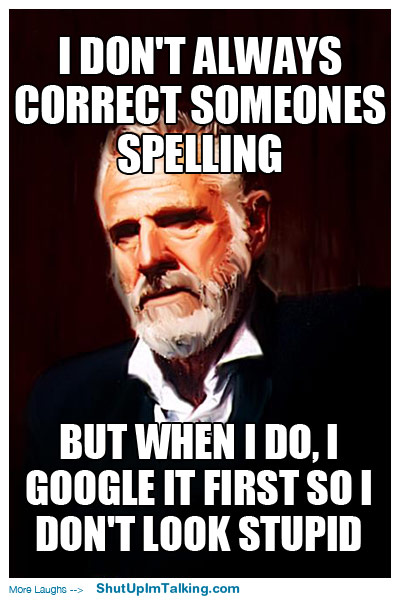
    Whenever anyone has a question, the automatic answer is “Google it.” To many of us of the younger generation, this seems like a no brainer, but when we think back to our first research project in the 5th grade, just “looking it up” had very different meaning, possibly opening up a book, getting the encyclopedia off the that top bookshelf, or even — gasp — a trip to the library. Information is so easily accessible today through technologies; we have SO much information at the tips of our fingers. Have these innovations of the Internet changed the way our memory and our brain works? Has the Internet made us lazy?

    shutup

    Think back to when you looked up a something simple on the internet, like how late Dominos stays open, and then you wanted to know that information a second time a few weeks later, do you remember that information or do you find your self looking it up multiple times on different occasions. Since the information is readily available to us are we less likely to remember it? Studies have shown the answer is yes!

    A study performed by three psychologists reported college students showed lower rates of recall on newly learned facts when students thought the information would later be easily accessible on a computer. The study also reported that when students are searching for information on the Internet, they were more likely to remember where they got the information than the actual information itself.  All this seems to support the claim that the Internet has in fact has made us lazy.

    Although we may be lazier, the study goes on to tell us the Internet may also be making us smarter! Experiments like these have discovered people are “using technology as external memory storage.” The researchers are quoted saying “We are becoming symbiotic with our computer tools, growing into interconnected systems that remember less by knowing information than by knowing where information can be found.” One of the psychologists concludes this very practice could be making us smarter because we don’t waste brainpower memorizing the facts. Instead we get more out of the information, and we then have a better chance at grasping the overall concept.

    What are your thoughts? How has the Internet affected you over the years? Do you think you are lazier or, in fact, are you smarter?

  • 5 for Friday — Links, Stories & Posts For Your Weekend

    Round 1-01Google AdWords Announces Enhanced Campaigns -Search Engine Watch

    Google announced Enhanced Campaigns this month, much to the dismay of some and delight of most. The Enhanced Campaigns work to simplify mobile marketing – sounds good, right? So why are some advertisers viewing this update negatively? Check out our blog post by resident Google AdWords Expert to learn why.

    The Ultimate Guide for Monitoring your Reputation Online  -Search Engine Journal
    Here’s an infographic Beyonce might be interested in. We’ve all had unflattering or embarrassing photos taken. Reputation monitoring is something we all need to think about in these days of hyped-up connectivity online. This infographic explains the steps businesses and individuals need to take to protect their image online.

    A Glimpse into Facebook Graph Search -Search Engine Journal
    A step-by-step tutorial explaining the new features of Facebook Graph Search. Options to search include: My friends, Photos of my friends, Restaurants nearby, Games my friends play, Music my friends like, and Photos I have liked. Different filters will help you hone down the results even further, based on things like ‘Employer’, ‘Likes’, ‘Following’, and ‘Married to’. Want to find people in your area who are interested in the things you like? Here’s your chance.

    40 Important Local Search Questions Answered -SEOmoz
    Local search is increasingly playing a bigger part in search engine optimization. The takeaway from this piece? “Even though local has arrived, it’s still a mess.” In an attempt to de-mystify this genuinely confusing piece of the puzzle, Mike Ramsey has kindly compiled the 40 most important questions and their answers concerning Local Search.

    How Unique Does Content Need to Be to Perform Well in Search Engines?  -SEOmoz
    Here’s a great questions we’ve been running into a lot lately: “What is meant by duplicate content and how unique do I have to be?” First, let’s qualify that navigation, ads, footer, sidebars, etc., don’t count. This leaves us with the on-page content. Copying internal or external sources can be a problem – but as long as you’re adding unique value it’s not duplicative.

  • The Missing Markdown Editor

    Let me start by introducing my favorite way to write notes, documents, or any other type of text for that matter. It’s a format called Markdown created by John Gruber. Take a look at his project page for Markdown to learn more about it. I’ve recently discovered a great little application for OS X that absolutely blew me away with how simple, yet amazingly feature packed it is. This application is Mou written by Chen Luo. The missing Markdown editor for web developers.

    Mou_Screenshot_1

    There’s a standard Markdown document on the left with a live render of your document on the right. It provides you with custom stylesheets to change the preview to your liking. For you business folks it can also export your document to a PDF for easy, consistent distribution between multiple different types of devices. Also for those of us who are attached at the hip to our terminal there’s a quick way to launch Mou from the command line using:

    open -a Mou

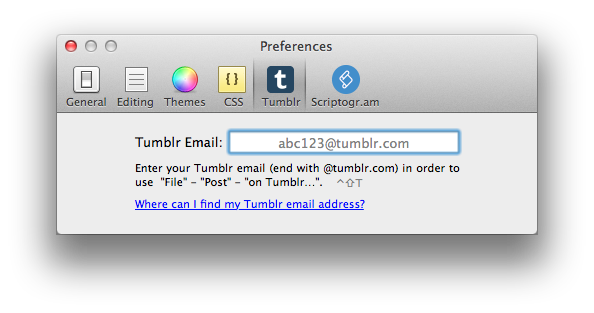
    For those who like to blog with Tumblr, this app will export any Markdown document to your Tumblr blog using the post email address given to you by Tumblr.

    Screen Shot 2013-01-29 at 2.36.22 PM

    This handy little app is a great for anybody who writes text while not wanting to use a large word processing application. Visit mouapp.com to download the application for free, or donate to get a license for free when Mou reaches version 1.0.