Category: Social Media

  • Is Anti-Social Media On the Rise?

    This year will make a decade since Facebook was launched and social media usage has skyrocketed, but is social media turning us anti-social? Parents who were unhappy about their children’s texting habits in the early 2000’s would be appalled by today’s society of Instagraming, Tweeting, FourSquaring and Pinteresting fiends across all age ranges. However, the pendulum may have swung too far, and it seems that parents aren’t the only group fed up with obsessive social media behavior.

    There are many signs that we are entering an age of ANTI-social media.

    SocialMediaGuardVideo

    Many corporations and industry leaders have voiced their advocacy for more human interaction through traditional media. Coca-Cola invented the Social Media Guard in the sarcastic commercial pictured above, which blocks people from the ability to see their phones.

    Dentyne used print and commercials to encourage more “face time” by comparing human interaction with social media actions in an ad.

    DentyneAdClip

    Professionals working within the social media industry may even capitalize off of the anti-social tendencies of those who are active online. Here are a couple of examples of how.

    Cloak

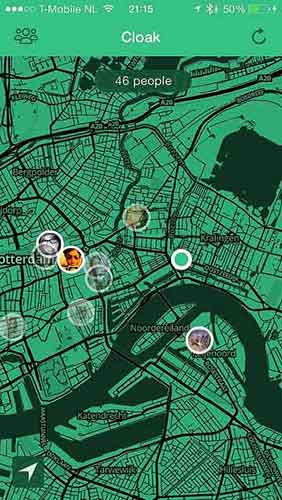
    Facebook, Twitter, Instagram and FourSquare aid this new mobile application in locating where you are. Cloak asks you to login to one of your social media accounts, which pinpoints where you are on a map, along with the locations of other friends who are also logged into Cloak.

    The app is advertised as a way to avoid people that you do not want to run into. You can set alerts that warn you when certain users come into a selected radius of you. Couldn’t this also be used as a way to stalk people? Guess that wasn’t a catchy advertising pitch…

    CloakAppScreen

    Self Control

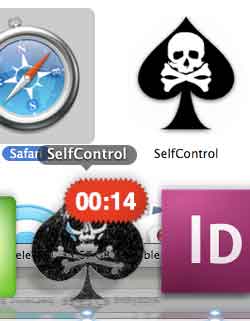
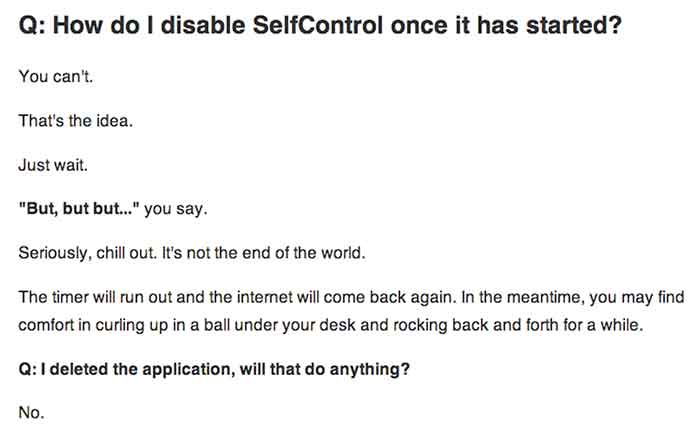
    This app allows you to choose time periods when you do not want the ability to access specified apps or programs at all. This could be used to stop yourself from checking your email, playing games, checking Facebook, etc.  A screenshot of the app is below, followed by their honest answer on how to stop the app when it is activated. The interest in this app shows that people want to be detached from their online world every once in a while but might need a little help to disconnect.

    SelfControlApp

    HowDisableSelfControl

    This discussion will continue on for years, but has social media gone too far? Check out the signs.

  • Social Media, You Don’t Have To Be A Wizard

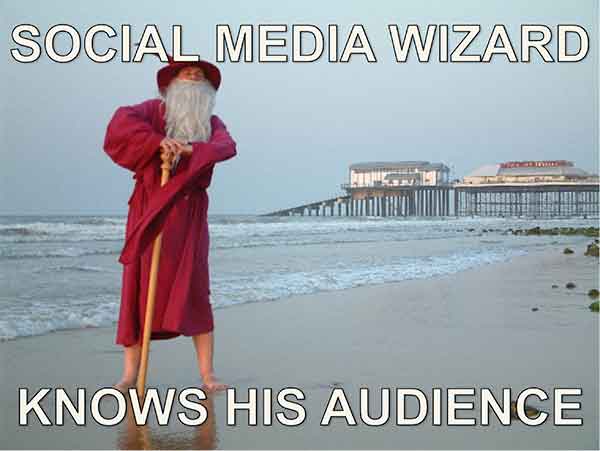
    Your Audience

    You know your target demographic. If you don’t, social media should be the last thing on your mind. Properly addressing your demo group is essential in establishing a relationship with your followers on any social media platform.

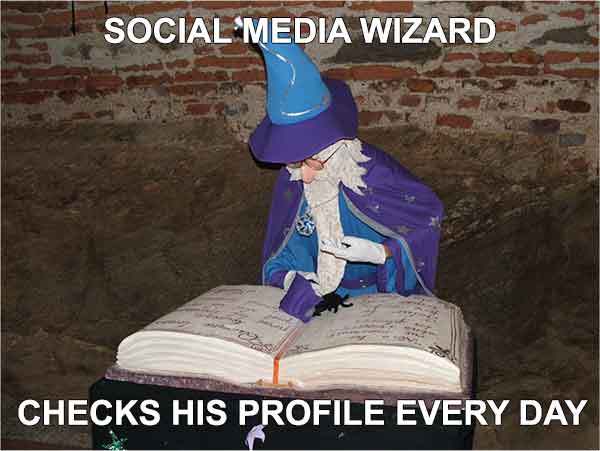
    SocialMediaWizard

    Social Media Optimization (SMO) is used to directly target potential customers with relevant information, and eventually provide them with opportunities and incentives to become active customers. Proper SMO should also give current customers incentive to provide positive feedback so that others view your brand as trustworthy.

    SocialMediaWizard02

    Your Message

    For professional organizations, like law firms, business consultants, or industrial suppliers, news and advice are likely the fastest way to become a trusted voice amongst your demographic. Provide information your clients can use, “Tips to protect your rights,” or “Break through in industrial oven designs.” Be a voice of insight at the forefront of your field.

    If your target is the general public you need to be both friendly and local. Plus, direct social media interaction is key. If you post about an upcoming event in town, keep an eye out for responses on your Facebook feed or from your Twitter followers. Be aware of comment chains on your feed; respond to comments in an upbeat and positive way. Generally resist the urge to comment outside of your own page in regard to individuals (it can be viewed as overreaching or unprofessional).

    SocialMediaWizard03

    I know it sounds obvious but social media should be social and light hearted, so any sales efforts should be low pressure if they occur at all. A more effective strategy is to create interesting internal blogs, (then spread them through social media) so that you increase traffic to your page, which increases the chances of a conversion. You may not go viral but you can still reach your audience.

  • Social Media, Your Personal Red Carpet

    Coined ‘Fashion’s Latest Muse’ by the New York Times in September of 2013, it’s no secret that Instagram has been the leading source of social media in the fashion industry  for quite some time. Naturally, marketers and retailers alike have picked up on this trend, using Instagram as the latest and greatest promotional tool. But what makes the difference between a chic social media campaign and a total tragedy? Let the experts guide you with five basic rules to live by:

    What Are You Doing?

    fashion social media

    Although social media is all about promoting your products, there is something more important to promote….your brand. No one wants to follow an Instagram that solely pushes this season’s must haves. Yes, it’s all about fashion. But people want to know what makes you tick. Where do you hang out? Where do you dine? It’s no coincidence that Rag & Bone, True Religion, Hudson, J Brand, Free People, Joie, Stuart Weitzman, Jimmy Choo, Harpers Bazaar, Mercedes-Benz Fashion Week, We Wore What, and Lookbook were all at the major music festival #Coachella this weekend. And what instapost got the most attention? With 41,872 likes, Free People takes the lead with this shot of Australian fashion blogger Natascha Elisa, who by the way, isn’t sporting a look by Free People. Helping other like-designers get press to support the Free People way of life: How’s that for lifestyle branding? #Genius.

    We Can Still See the Background…

    social media marketing for the fashion industryOne question: Where are you taking your Instagram photos? Wherever it is, please remember that your audience can still see what’s going in the background of your post. Your Instagram can only look as professional as it’s location, so if you’re guilty of taking all of your pictures in a dressing room, it’s time to change your ways! Taking the extra few minutes to find a scenic location will go a long way, I promise. And it doesn’t have to be a runway – go to the street, or into a room with great decor. Fashion blogger Danielle Burnstein, known for her blog We Wore What, is a perfect example of taking great street shots. Here she is pictured on a city street, in front of a wall with only a few posters and some graffiti behind her. But with the few pops of color and great lighting, it makes for an amazing background. This is probably why she is followed by major designers like Alice + Olivia, Tibi, J Brand, Theory, Jimmy Choo, Stuart Weitzman, and Kurt Geiger.

    Social Media Marketing for the Fashion Industry

    Let Me Take a Selfie

    While the infamous ‘selfie’ is sometimes a must in order to properly display an outfit (sans the duck face), remember that the focus is on the product…not the person modeling them. There is a reason that professional models are very thin. Models are meant to be background, they are there to display the clothing or product, and not to distract from them. That being said, models are a critical element to any campaign. Clothing never looks the same on a hanger as it does on a person. The viewer needs to see the fit of the garment, as well as know how to style it. There is an entire Instagram account that puts this rule to the test called Up Close and Stylish. The stylist (and model) posts ‘selfies’ daily, however she chooses to remain entirely anonymous. She has never shown her face to the public, only her outfits. And how many followers does this mystery fashion lover have? As of right now, she has the attention of 898,000 viewers, with the majority of her posts getting well over 20,000 likes.

    Social Media Marketing in the Fashion Industry

    All Things Beautiful

    The fashion industry strives to create beauty in the form of wearable art. And as art lovers know, there is inspiration everywhere. Do you see something absolutely gorgeous that makes you smile? Share it! Whether it’s a garden in full bloom, a picturesque park, or an amazing presentation of food – we appreciate the post.Take it from the Instagram guru’s at Alice + Olivia, who are known for their unbelievably colorful and whimsical pictures. They recently posted this bouquet of flowers, which caught the attention of 5,761 viewers, so it’s safe to say the public responded.


    Social Media Marketing in the Fashion Industry

    Use Your Tools…Wisely

    There are some great tools on Instagram for fashion designers, bloggers, and retailers alike. The video tool is great for behind the scenes clips of photo shoots, or taking your favorite outfits and turning them into a montage. Of course it’s always popular to do a video recap of all of the looks you’ve put together at the end of the year…but personally, I prefer the sneak peeks. It’s also easy to credit someone within Instagram (designer, stylist, brand) whether it’s via tag or hashtag. But please – easy on the hash tags. No one likes an over enthusiast blowing up their Instagram with #unnecessary #borderlinespam #hashtags. Let the creativity of your post speak for itself. Yvan Rodic (of Face Hunter) spotted model Ash Walker making a statement on subject….

  • Social Media Goes Sci-Fi

    Continuing the trend of the recent push towards wearable tech, Facebook recently announced that they have acquired the virtual reality company Oculus VR, for a price tag of around two billion dollars. If you have no idea what Oculus is, or does, their flagship product, the “Oculus Rift,” is depicted below:

    10166365646_9d9a2ea50c_z

    If you thought Google Glass was intense, the Oculus Rift will most likely not be for you. Unlike the Glass, the Rift headset is specialized for HD gaming and full submersion into virtual reality. If the headset looks familiar, this isn’t the first time this type of technology has hit the consumer markets. The company started as a Kickstarter in 2012 with the goal of reviving the type of gaming headsets depicted in the 1990s Sinbad classic “First Kid.”

    00000065

    Benefits

    Even though the technology came and went over a decade ago, this doesn’t mean that history is destined to repeat itself. Stanford University’s Virtual Human Interaction Lab has been conducting research on how virtual reality can improve education, help the environment, and teach altruism. Their findings on how we can utilize virtual reality simulators have drawn the attention of several social media companies, including Mark Zuckerberg.

    Integrating Oculus

    Whether or not the gaming technology will cross into the social media world is yet to be determined. As of now, Facebook has not announced any specific plans for integrating the Oculus technology into their platform. However, Chaotic Moon Studios produced a concept video of what a Facebook themed virtual reality experience may look like. The video depicts the headset’s possible ability to create a user friendly shopping experience, similar to the one Facebook already uses.

    Unfortunately, we probably won’t be seeing this kind of social media experience gain popularity for a while. Mark Zuckerberg called it a “long-term bet on the future of computing.” Until then, could you see yourself using the Rift instead of going to the mall?

  • Is Facebook No Longer Effective for Small Business?

    Image Of Facebook LogoIt’s well known that Facebook is, by far, the largest and most successful social network in the world. Here are just a few of the astonishing statistics for this social giant:

    • More than 1,310,000,000 (that’s 1.3 billion) active monthly Facebook users
    • Over 680,000,000 active mobile Facebook users
    • Number of users rose 22% from 2012 to 2013
    • 48% of Facebook users visit the site every day
    • The average number of friends per Facebook user is 130
    • 48% of 18- to 34-year-olds check Facebook when they wake up
    • 28% of 18- to 34-year-olds check Facebook before they get out of bed

    Facebook is obviously home to a massive potential audience. The problem for businesses, especially small businesses, is the same as the advantage: Facebook is massive. And it’s hard to be noticed in the crowd.

    Finding Your Facebook Audience: Then vs. Now

    For quite some time, Facebook has remained the cornerstone of social media marketing. Small business marketers discovered and fine-tuned strategies to grow their Facebook pages organically, gathering page “Likes” and fans who would spread their message willingly to their own friend networks.

    However, there have been a few changes along the way. In late 2013, Facebook acknowledged that the organic reach of posts would drop off for everyone. Advertising Age reported that a statement from Facebook read: “We expect organic distribution of an individual page’s posts to gradually decline over time as we continually work to make sure people have a meaningful experience on the site.”

    Facebook’s New Algorithm

    The driving force behind the “meaningful experience” Facebook is promoting came in the form of algorithm changes. Near the end of 2012, the social network changed its news feed algorithm—and users immediately saw a decline in organic post reach. At the time, Facebook denied the algorithm was intended to reduce news feeds.

    However, another update to the algorithm in 2013 filtered news feeds even more, and this time Facebook stated the reach reduction was deliberate. Coincidentally, the network began offering promoted posts: a program that lets companies buy the ability to push their posts into more Facebook news feeds.

    Organically, page posts will now show up in only around 1 to 5 percent of the news feeds of people who have “Liked” your page. A number of variables, such as relevance and shares, can increase the percentage of exposure within that range—but only paid, promoted posts will exceed it.

    Are Promoted Posts Worth It?

    With organic reach on Facebook in decline, and the reality that businesses must pay to have their posts pushed to enough news feeds for the chance of going viral, is it worth investing your time and resources in Facebook marketing?

    The answer likely depends on your existing circumstances. If you already have a strong Facebook network with a substantial number of followers, you’ll probably benefit by continuing to post actively and buying the occasional promoted posts. It should be noted that promoted posts can cost anywhere from $5 to $300 per post—and the per-action cost of these promotions can run high.

    For small businesses lacking the time and the budget to sink into Facebook as a primary platform, this form of social marketing may no longer be viable. It won’t hurt to maintain a presence on Facebook, but relying solely on this platform to increase your business could be a costly mistake.

    What do you think—has your Facebook reach declined recently? Have you ever tried a promoted post? Share your thoughts in the comments!

    Image courtesy of Gerd Altmann

    Megan Totka is the Chief Editor for ChamberofCommerce.com. She specializes on the topic of small business tips and resources. ChamberofCommerce.com helps small businesses grow their business on the web and facilitates connectivity between local businesses and more than 7,000 Chambers of Commerce worldwide.

  • Social Media And Viral Content: Tips From Matt Siltala

    If you haven’t heard of Matt Siltala, get your butt to Google right now and start searching. As an online search industry leader and president of Avalaunch Media, Matt came to New Orleans this week to present at Pubcon, a social media and optimization conference and expo featuring multiple days of multiple-track sessions, leading-edge keynotes, and an all-day intensive Pubcon Masters Group training program.

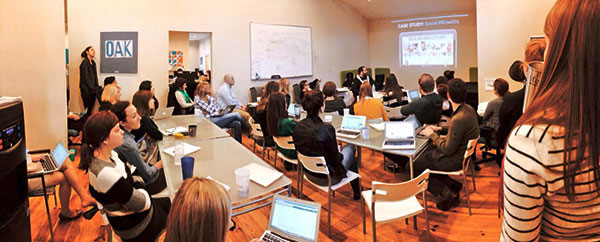
    Prior to wowing the crowds at Pubcon, Matt was kind enough to visit Search Influence and give us the skinny on social media, content, and how to make things go viral. His presentation was amazing, informative, humorous, and vastly helpful in terms of SEO. So, I’ve put together some key takeaways businesses can and should focus on in order to promote their brands and make a name for themselves online.
    MattSiltala-01

    Find Your Target Market By Talking To The Right People

    When you’re trying to reach a target market, knowing who to talk to in order to get results within that market is most important. When you talk to someone with power, authority, and a willingness to help, there is a higher probability of getting your brand noticed and increasing awareness among your target market.

    Pro Tip: If you know who you want to target, use Followerwonk to compare, analyze, track, and group users. That way, you know exactly who you’re reaching, and what to say in order to entice them.

    What Makes Good Content?

    Oddly enough, controversy increases viewers and makes for some great content. Think about it. When do people get the most involved in content? During a debate! Any topic people disagree on will get more viewers. This is a theory that withstands the test of time. For example: Republican vs. Democrat, Mac vs. PC, Coke vs. Pepsi, and Matt’s popular Evolution of the Electric Guitar infographic, which includes a Guitar Hero controller, featured below.

    music history timeline evolution infographics electric guitars 3660x1186 wallpaper_www.wall321.com_28

    Build Up Your Instagram Following With Deals

    bdb414e7b829806b2e3cdd921638042f

    With millions of users posting pictures every day, Instagram has exploded in terms of social media marketing and brand promotion. Boutiques, restaurants, and more post photos of products, specials, daily deals, and location information daily, giving viewers a reason to follow them and stay consistently engaged in the brand. By monitoring hashtags and paying attention to channels, businesses will learn whom to target and how to peak people’s interests and gain followers.

    Pro Tip: Show products in context to help viewers visualize a final product. Whether that is a meal, an outfit, or a piece of furniture, demonstrating what the product will look like in conjunction with other products peaks interest and makes things easier to relate to.

    Processes On Pinterest

    More frequently, businesses are turning to Pinterest to gain a customer base. In fact, the “Pin It” action has gained more popularity than the Facebook “Like” and Twitter’s “Retweet.” Checklists, how-tos, recipes, and detailed processes are hugely popular on Pinterest because they get people thinking and and keep their interest longer than a simple image.

    Pro Tip: In terms of repinning vs creating new pins, employ 4:1 ratio. Remember that it’s not just about repinning for content, you repin to network. And make sure you get yourself noticed by commenting regularly.

    Focus On Visuals On Facebook And Twitter

    As with all other forms of social media, building a following and growing your popularity is key to brand success on both Facebook and Twitter. So, what is the key to getting lots of retweets, likes, shares, and comments? Images! Think about it, what is the most retweeted post of all time? Ellen Degeneres’ Oscar Tweet! Only three days after the Oscars the tweet had a record 3.2 million retweets. Now that’s a powerful image.

    Pro Tip: Identify influencers relevant to your industry and interact with them as much as possible on social media to grow your online presence and brand popularity.

    I could go on and on about the wealth of knowledge Matt dispelled on the Search Influence family, but rather than rambling I’ll leave you with a few of his final tips and tricks:

    1. Pay attention to Linkedin groups. If you get in contact with the owner of a relevant group to your industry they can help you tremendously. Not only can they contact a large group of people easily via email, the group they’re contacting will be the exact target market you need for shares and online visibility.

    2. Sign up for alerts from Help A Reporter Out. You can find experts, get free publicity, and gain tons of helpful contacts.

    3. The gift category in Pinterest is wildly popular. By using a dollar sign ($) in your post description, your post will automatically show up there.

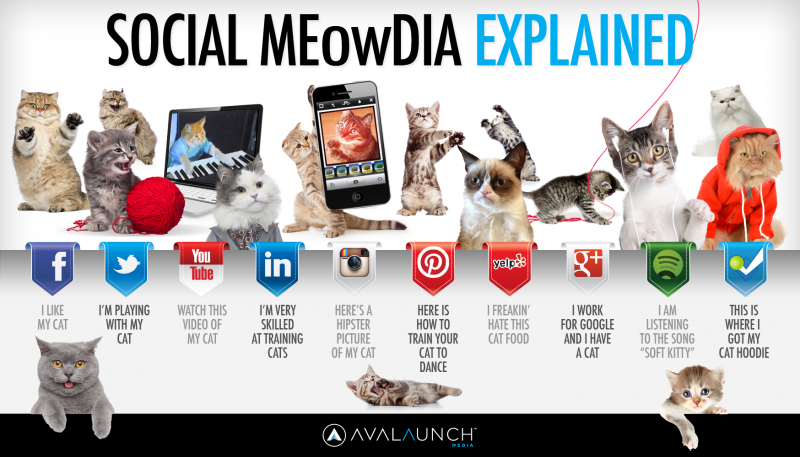
    4. Find a way to repurpose everything. Much like Matt’s wildly successful Social Meowdia Explained infographic (featured below), post, images, content, and more can be repurposed to gain popularity in a variety of forms. For example: an infographic can be turned into a blog, memes, content, etc.
    Social_Media_Explained4-800x457

    1. Remember that everything you do contributes to authorship. Every post you write, share, retweet, favorite, etc has your brand name attached to it. Everything you do online grows your authorship, so take advantage of that and be creative in what you post.

    For more information on Matt Siltala, check him out at Pubcon or visit his website! And for any questions on the information above, feel free to ask in the comments!

  • Overview of Three Types of Google+ Pages

    Last week, I had the pleasure of presenting a webinar on Google+ to some of our partners. I shared information on the importance of Google+ for SEO, the work that we do on Google+ for our clients, and some common challenges we work through.The following is a breakdown I presented of the three types of Google+ pages that we work with for our clients.

    1) Google+ Local Page

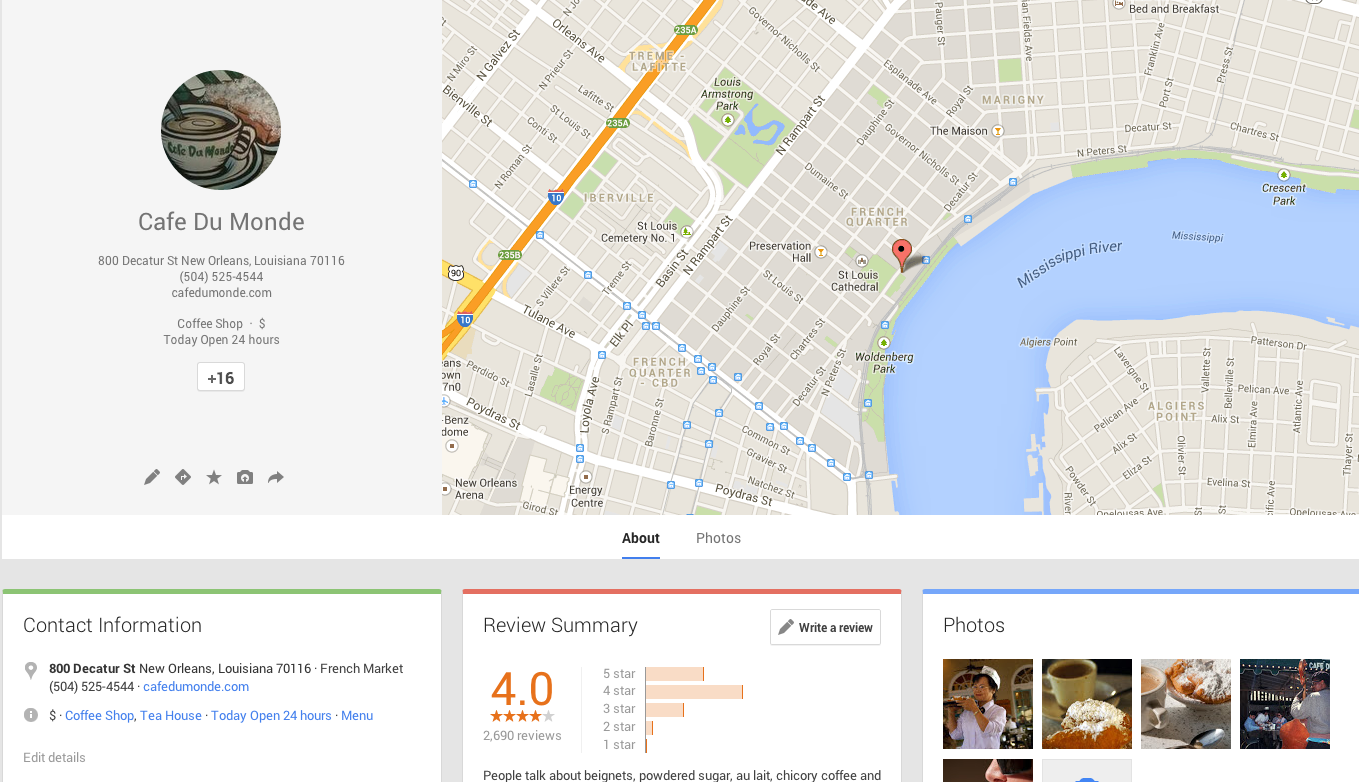
    This is the type of page that many of our client come to us with. It’s a page that hasn’t been verified yet (through phone or postcard verification). It includes information such as location, hours, phone number, reviews, and categories.

    How do you know it’s a Local page, you ask? The easiest identifier is that the cover photo of the listing is a map. When a client comes to us with this type of page, we will convert it to the next type of page: a Local/Social page!

    An unverified local page looks like this:

    Cafe Du Monde, we love you, but you need to verify your Google+ page!

    Screen Shot 2014-03-13 at 9.13.21 AM

    2) Google+ Local/Social Page

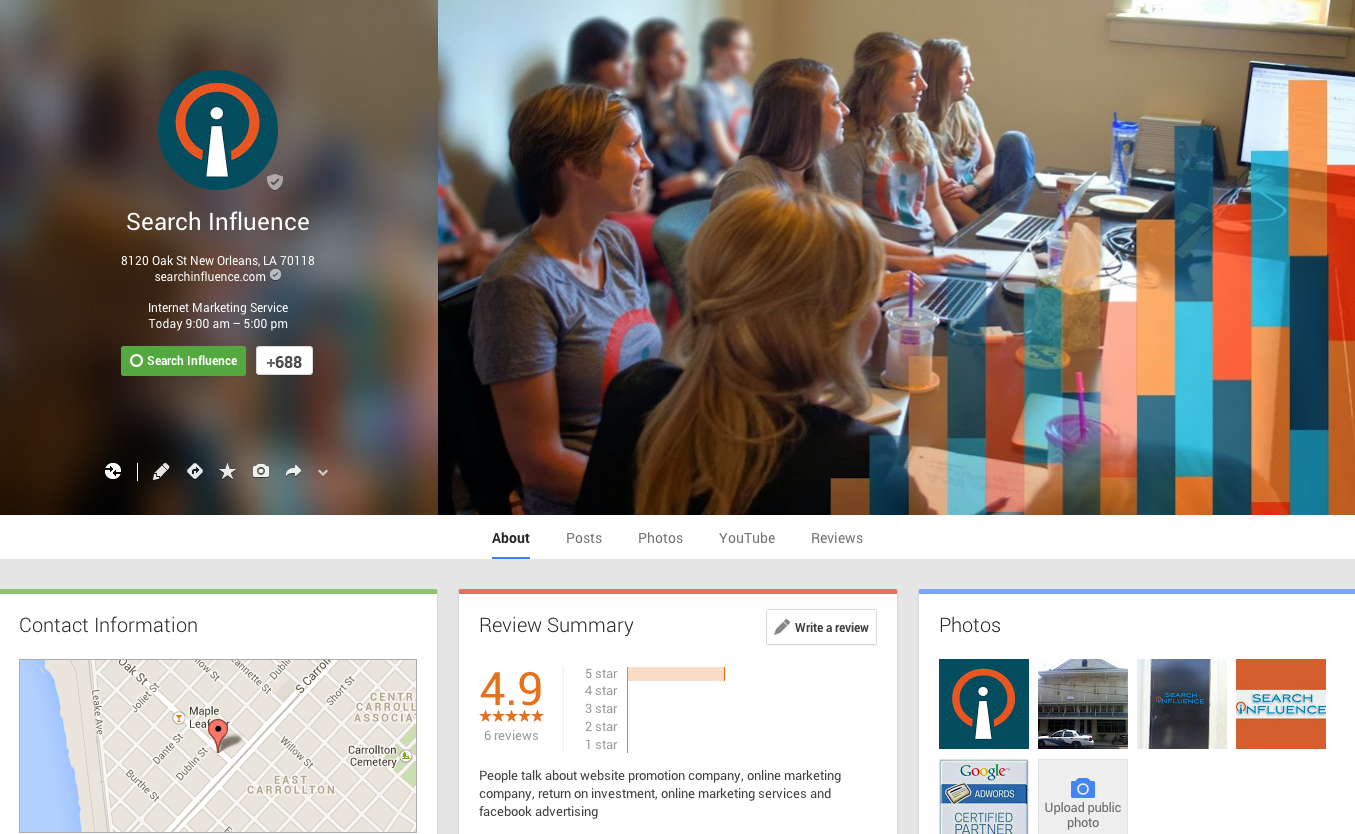
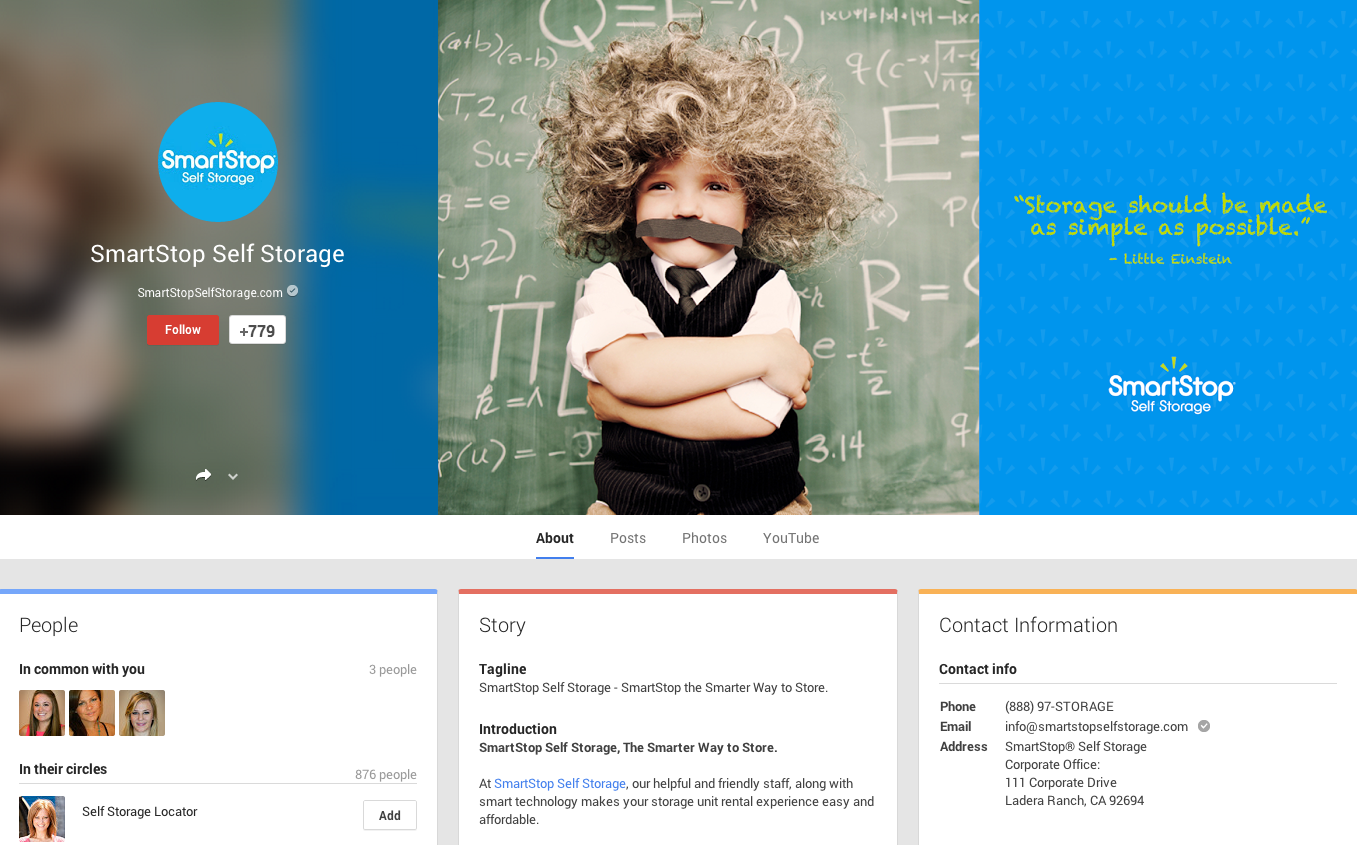
    This page has all the same information as the Local page, and more! When you complete the phone or postcard verification process, Google converts your Local page to a Local/Social page. It carries over all the great information you had on the Local page including your existing reviews and location information. You can tell it’s been converted because the cover photo is no longer a map. The default cover photo is an image with a rainbow of colors, but you can customize the cover photo, just like Search Influence has done with our page!

    This page also has tabs for Posts, YouTube, and Reviews. You can link your Youtube account to this page for a tab to show up on your page as well. This is how we want all of our clients’ Google+ pages to look like.

    Screen Shot 2014-03-13 at 9.13.55 AM

    3) Google+ Brand Page

    For our clients that have more than one location, we create a Google+ Brand page. We have a Local/Social page for each location and create an overall Brand page. This page is the one we use for Google Publisher. On this page, we only list information that applies to the whole brand such as a 1-800 number, link to their Facebook page, website link, and company Youtube channel. This page represents the overall brand, as opposed to a particular location.

    Screen Shot 2014-03-13 at 9.14.27 AM


    Do you have questions about what type of Google+ page to create for your business? Feel free to comment below!

  • Instagram is “Ad” it Again!

    Screen Shot 2014-03-06 at 11.46.49 AM

    Does it seem like, eventually, everything turns into a platform for advertising? For social media, that seems to be the trend when comparing networks over the years. Everything from Facebook, Google, Twitter, Pinterest, and Pandora have all followed the same trend. Using a great business plan (and a lot of foresight), they open their online “doors,” create a massive following, and after a few years succumb to the massive potential profit that is advertising.

    Instagram Ads

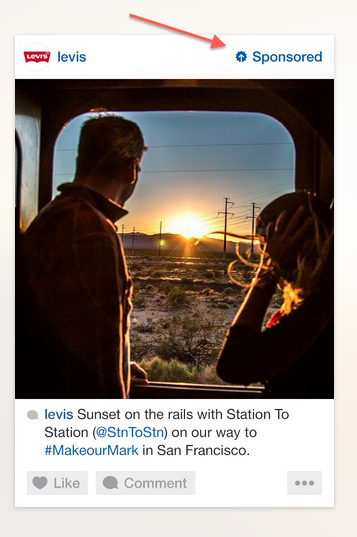
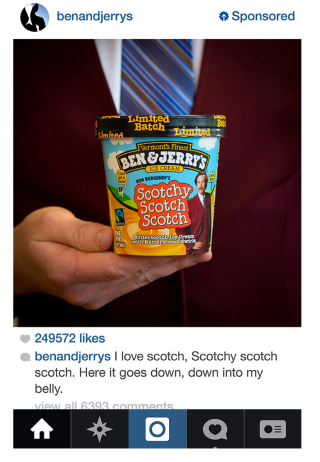
    Even though it took some time, it is clear that the mega success of our beloved Instagram has followed suit. After Facebook bought the ultra popular image sharing platform for a cool $1 billion, they didn’t waste time reaping a return on their investment. In late 2013, Instagram announced that they would start releasing “sponsored” posts that would look and feel like the other images users were already sharing. The Beta version of these sponsored posts were designed to “underwhelm” users so that they might not even know they were looking at an advertisement.

    Who Sponsors Posts?

    Screen Shot 2014-03-06 at 11.47.44 AM
    These sponsored posts were only given to a select number of brands like Ben & Jerry’s, Macy’s, Michael Kors, Lexus, and Levis, in order to test out consumer reactions. However, recent studies show that these advertisements were highly successful due to the limited number of competitors on the site, the quality of the advertisement, and the fact that it is an image instead of text. Many advertisers understand that images are far more powerful than words, which is why Instagram, along with its huge user base, is an ideal platform for marketing.

    Personalized Ads

    But how will Instagram know what brands you like or images you’re drawn to? The beauty and genius of the merger is that Facebook already knows everything about you! Between the information Facebook has already collected about you (likes, interests, hobbies, etc.) and the images that you like and follow on Instagram, advertisers are able to put more customized and targeted ads in front of you. The hope is that these ads will be so successful that companies will eventually pay more to advertise. So watch out, you might actually start seeing ads that you enjoy!

    Have you seen an ad on Instagram that grabbed your attention? Let us know in the comments!

  • Facebook Announces Design Changes and New Features for Pages

    Facebook Announces Design Changes and New Features for Pages

    Yesterday, Facebook For Business announced a new, more “streamlined” design for Pages, which will begin rolling out this week. In addition to the new look, a new feature called “Pages to Watch” will launch, allowing page admins to monitor and compare their page with that of other businesses.

    Ch-ch-changes!

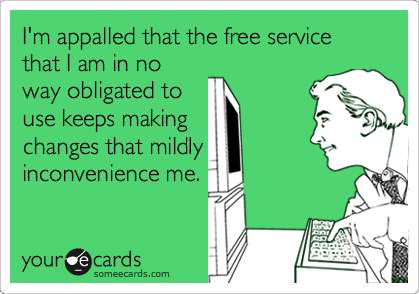
    Overall, the layout changes to Pages are not terribly drastic, but as with any small change, there will likely come some backlash from the user base. Page administrators have a few new features to look forward to and some adjusting to do when it comes to navigating the platform, as Facebook has rearranged some key features with the design refresh.

    Facebook Changes Design Ecard
    Photo credit: http://www.someecards.com

    Here are some of the notable changes to the design of Pages and how they might affect you:

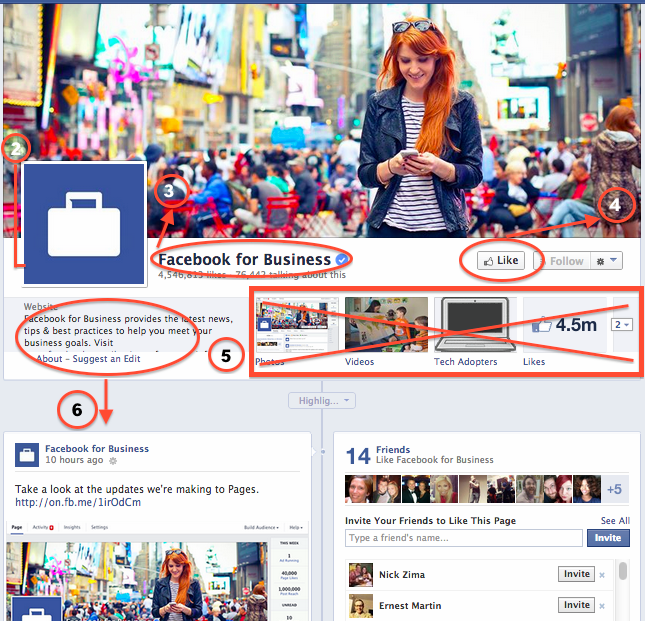
    1. The cover photo and profile square dimensions do not appear to have changed, though Facebook’s announcement does not specifically list any dimensions.
    2. The position of the profile square has changed slightly, as the cover photo overlaps farther with the profile square than before. Some design changes may need to be made to pages with a design that integrated the cover photo and profile square together.
    3. Page name and website will appear in white typeface, overlaid on the cover photo. It appears that cover photos will automatically contain a darker gradient from the bottom up to accommodate this text, similar to what is in place on Twitter header photos.
    4. The “Like” button has been overlaid with the cover photo (as opposed to the current layout, where the Like button is below the cover photo), which may result in a change to design when the goal is to draw attention to the “Like” button. Some existing Facebook pages with cover photos drawing attention to this button will need to be updated.
    5. Tabs no longer have square icons appearing below the cover photo. Because the position of these has changed, cover photos drawing attention to specific tabs will need to be updated.
    6. The “About the Business” section has been relocated farther down the Page Timeline, below the total Likes.
    7. Other changes directly affect page administrators rather than users. These include:
      • Different placement of key metrics such as ads you’re running, page likes, post reach, and notifications from “This Week”
      • Direct access to your Ads Manager account from the top of the page when an admin is viewing the Timeline
      • Simplified navigation at the top of the page for activity, insights, and settings

    The Design As We Know It

    Facebook's current Page Timeline layout before March 2014 update

    What We Can Expect

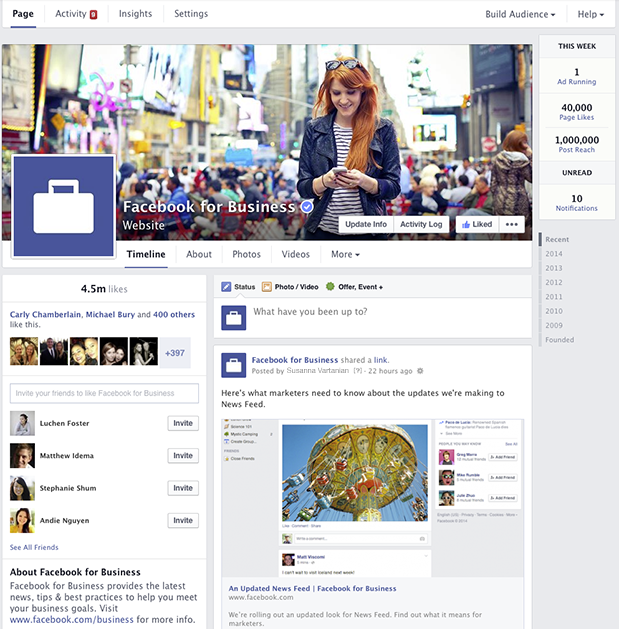
    In addition to the cover photo and general header changes, Pages will now feature a two column layout similar to the old version, but with some notable changes. Now, the right hand column features the Page’s timeline content and posts. Facebook for Business says in it’s post that this “means that all of your posts will appear consistently on your Page and in News Feed.” I’m curious about the latter half of that statement, as it’s currently unclear how the layout change will affect post visibility in the News Feed.

    Facebook's new design layout for Pages - March 2014

    The left column will now display information about your business, starting with the total number of likes. According to Facebook’s release, it will feature a map (though not visible in the images provided), business hours of operation, phone numbers, website URL, etc. This column will also feature photos and videos.

    Fancy New Features For Admins

    It seems like most of the changes will simply result in a few painful days as Page admins get used to clicking around the new layout, and finding what they need to manage their pages. A few things that will make our lives a bit easier are the relocation of Page insights and admin navigation to the top of the page. There’s now also a more prominent “Build Audience” button, allowing admins instant access to their Facebook Ads Manager account from the timeline.

    At the top right, Facebook has also added a “This Week” panel, showing you metrics about your page from the last week including the number of ads running, total page likes, post reach, unread messages, and notifications.

    Lastly, the newest and potentially most usable feature is the addition of “Pages to Watch.” This addition will enable Page administrators to keep up with the competition by monitoring Pages of businesses they care about. Other new features in Insights include the opportunity to view engaging posts from Pages you’re watching within the last week.

    Are you looking forward to the changes or dreading the adjustment period? Share your thoughts in the comments below!

  • Gram it up! 5 Tips to Expand Your Brand on Instagram

    Instagram LogoIf you‘re like me, Instagram is the place to be. I find myself spending a lot less time on Facebook and Twitter and a whole lot more on Instagram, or as I like to call it “Insta.”

    I tend to follow many businesses I enjoy and liking almost everything they post. I started thinking more about how businesses use Instagram to promote their brand and products. I did some digging and came across a video that Instagram for Business blog put together recently.

    What It’s All About

    The video was a short sample of pictures and short video clips. I mean duh, I should have known since that’s what Instagram is about. The video featured some of the best brands on Instagram, according to them. Nike (@nikerunning), Ben and Jerry’s (@benandjerrys), and General Electric (@generalelectric). It was a one minute and thirteen second reminder that pictures and videos can captivate anyone if displayed correctly. It also displays how the community can play a role in promoting your business by hash-tagging and tagging things related to your brand.

    Instagram has recently announced their book, The Instagram Handbook for Brands. But don’t get too excited just yet, the book is not currently out to the public. You can however expect to see some of its content on their blog soon. The book showcases eleven of the top brands on Instagram and their posts that captivate audiences, along with popular/successful hashtags.

    Even though the book isn’t available for the “human eye” just yet, they listed a few tips for brands modeled after the eleven top brands of Instagram.

    1. Be accurate to your brand

    Ensure that your imagery expresses a clearly defined personality and voice.

    2. Allocate your experience

    Offer a view into the world or lifestyle that your brand makes possible through the eyes of the people who use your products and services.

    3. Discover beauty in every nook and cranny

    Show how your company sees the world and make it meaningful to people.

    4. Encourage action

    Start a movement around your brand.

    5.  Be aware of your viewers

    Learn what people love about your brand, and explore how you can capture the imagination of new customers.

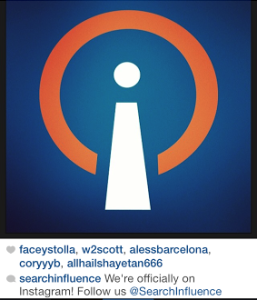
    SI instagram

    Search Influence (@searchinfluence) has recently joined the awesome world of Instagram! Follow us for a peek at what it’s like to work at this fast-paced and fun place!

    Is your business on Insta? Let us know what works for you in the comments section below.