Category: SEO

  • The Rise of Intent Research and What it Means for Keyword Research in 2020

    Keyword research has long been thought of as one of the most impactful ways to gain prime real estate on SERPs. In the SEO world, if you’re not focusing a vast amount of your effort into keyword research, then you’re missing out on a great deal of SEO value. Finding and analyzing search terms by users and incorporating them into your website’s content is about as old as SEO itself. But as 2020 gets underway, a new kind of research is out to dethrone this age-old SEO practice. Intent research is quickly making its case as the new leader in SEO research. Take a look at these two types of research and where you should put your SEO effort in the coming months.

    Understanding the Basics: What is Keyword and Intent Research?

    Gif showing a Google search for Mardi Gras info

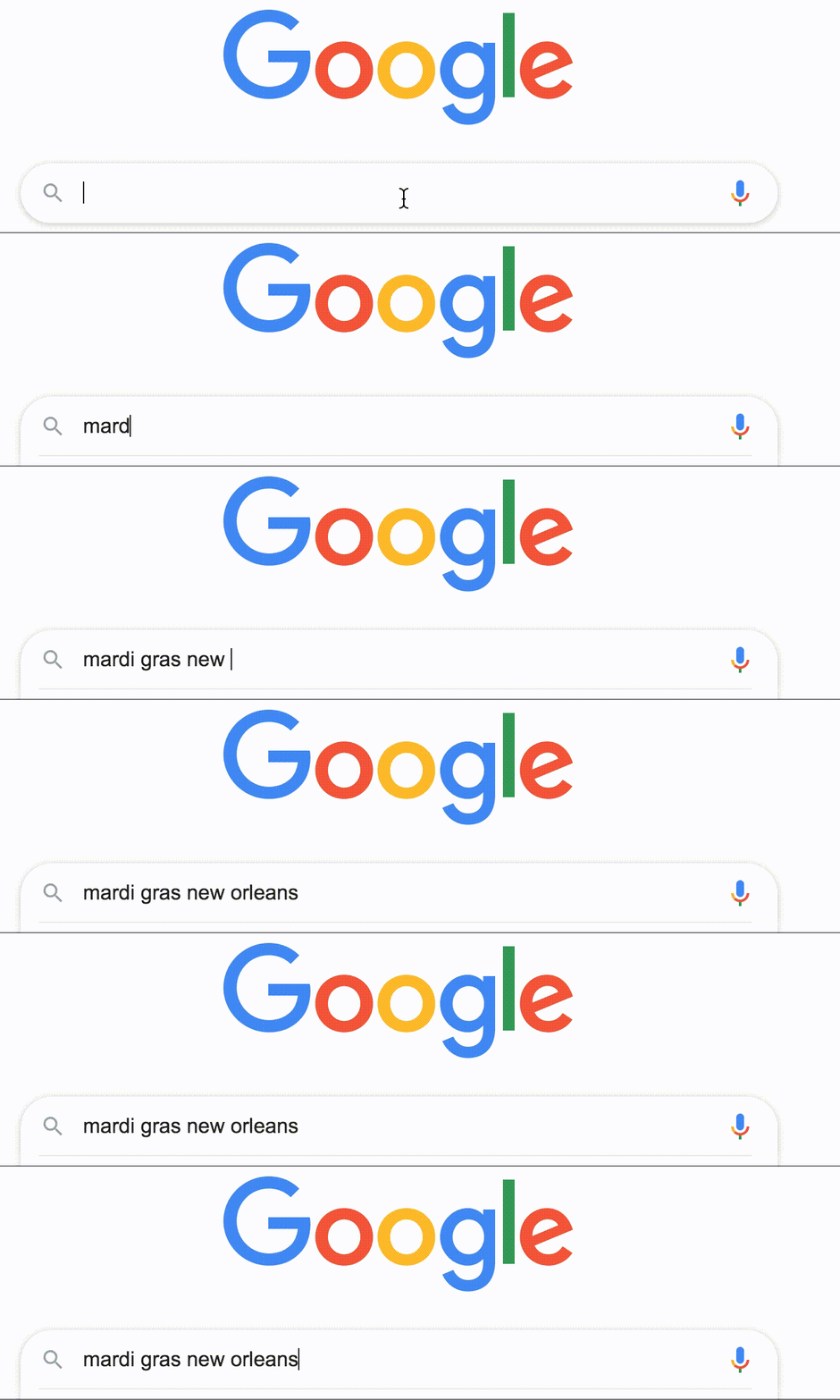
    Keyword research is, essentially, the process of identifying and analyzing a word or words users choose to include in search queries and then curating your content based on those specific words or phrases. These words or phrases can be categorized by things like popularity or relevance. Having a good understanding of specific topics is also important. Take, for example, searches done around a holiday—let’s look at Mardi Gras in this case. By understanding the topic, you can assume that users are likely searching for words or phrases like “mardi gras beads,” “mardi gras new orleans,” or “costume stores.” Incorporating those specific keywords into your content in the hopes of getting your content to show up in SERPs is the practice of keyword research.

    Intent research, on the other hand, is less specific and more concerned about what the user is trying to get out of their search. Rather than focusing on particular words and phrases, search engines spit out results based on what they think the user is looking for. Because intent can be hard to pinpoint, and keywords can have several different meanings behind them, how you interpret the keywords you are targeting is essential. Let’s say you’re researching the keyphrase “how to run a marathon.” The intent behind this could mean several different things. Is the user asking how to train for a marathon? How to sign up for a marathon? In understanding the user’s intent behind their search, you can better create content to drive users to your website.

    The Rise of Intent Research

    In a recent video where he discussed what to look forward to in 2020, Bing’s Frédéric Dubut claimed that search engines are quickly moving from keyword to intent research. One of the reasons for this, he believes, is in part due to Google announcing that they are now incorporating their BERT language model into search results. BERT, Bidirectional Encoder Representations from Transformers, is a technique for natural language processing. Google claims that BERT “helps better understand the nuances and context of words in searches” to produce more relevant results. The example they give is the importance of the word “to” in the search “2019 brazil traveler to usa need a visa.” In this example, you can see how the word “to” is what ties together the keyphrase in terms of understanding the user’s intent. By reading and understanding “to” in this context, Google is more likely to weed out content that mentions needing a visa from the USA by a Brazilian traveler, therefore providing them with more accurate search results.

    Is This the End for Keyword Research?

    John Meuller of Google says not so fast. Despite the rise of intent research recently, he believes there will always be room for keyword research. He admits that over time, search engines will become better at understanding a user’s intent, but that at its core, it is more of a balancing act between the two research practices. As he puts it, “even if search engines are trying to understand more than just those words, showing specific words to users can make it a little bit easier for them to understand what your pages are about and can sometimes drive a little bit of that conversion process.”

    So What Does That Mean for SEO in 2020?

    What does that mean gif

    In a nutshell, research practices will largely be a team effort in the coming year. As new language is created and refined and updates to search engines are made, search intent will be easier to understand and interpret. However, specific keywords will still be necessary when understanding that intent. Figuring out what type of research is best suited for your business will take a bit of trial and error. One way to get started is by trying to complete searches as if you were a user and see what sort of results populate. Depending on the types of results generated—and the research practice used—you can get an idea of how you should cater to your target audience. If this sounds overwhelming, don’t worry; we’ve got you covered. Our team of experts is ready to get you on the right path to a successful SEO campaign in the new year. Contact us today for a custom marketing analysis!

    Images

    What does that mean?

  • Trends in SEO: 2020 and Beyond

    The beginning of a new year marks a fresh start, new outlooks, and perhaps new approaches to a person’s conventional wisdom or habits. Digital marketing, though constantly evolving through the calendar year, is no different. As we begin to envision digital success in the new year, one important exercise is to evaluate where you have been and which trends you need to follow to stay ahead of the competition moving forward. Many of the topics we will discuss are not necessarily new information or revelations, but rather, the relative importance of them has increased and will continue to do so as search goes in a certain direction. With that out the way, let’s jump into the biggest trends that will impact SEO throughout 2020.

    Start Learning and Understanding Google’s BERT Update

    Announced in the latter half of last year, this announcement made waves in the search community due to the potential implications around how digital marketers perform keyword research and develop content. BERT, or Bidirectional Encoder Representations, originated as an open-source research project that aims to better understand the contextual relationship between words and how that tacit relationship may affect the meaning, or intent, of those words when used together. In plainer terms, it is a framework that tries to better understand natural language to deliver better search results rather than serving up more direct, literal word-for-word results.

    Bert from Sesame Street using a banana as a phone and saying hello?

    So, Why Does BERT Matter for Businesses?

    Google posted a blog on October 25th, 2019 announcing their reasoning behind introducing this new algorithmic feature. In his post Pandu Nayak, a Google Fellow and Vice President of Search at Google stated:

    “Particularly for longer, more conversational queries, or searches where prepositions like “for” and “to” matter a lot to the meaning, Search will be able to understand the context of the words in your query. You can search in a way that feels natural for you.”

    Essentially, Google is trying to deliver better results by understanding searcher intent rather than responding to an exact query. This has large implications for content because SEOs will now have to consider intent, or what customers are trying to find, rather than getting bogged down with the exact search value of a keyword string. That is not to say that keyword research does not serve a purpose; this type of research will be helpful to understand broad trends or high-level areas of the search funnel, but what businesses and digital marketers will need to better understand is what the searcher ultimately wants.

    The English language is chock-full of nuance, so this is really a move to try to get at the heart of that nuance. An example of that would be a query such as “how to play a stand up bass”—it is fairly apparent we are not talking about bipedal fish. Trying to better understand the relationship between words and why context matters when delivering search results is at the core of this BERT update. It bears mentioning that John Mueller from Google recently came out and reflected the idea that keyword research is not “dead,” but rather, diminishing in importance a bit:

    “There’s probably always gonna be a little bit of room for keyword research… And even if search engines are trying to understand more than just those words, showing specific words to users can make it a little bit easier for them to understand what your pages are about.”

    While it’s hard to trust Google when talking about these topics, it seems to me he’s implying there will still be value in optimizing towards general keywords with established search volume.

    This discussion leads nicely into another concern for digital marketers moving forward:

    Expansion of Voice Search

    This will be a much shorter section because, as it stands, most of the SEO recommendations made for voice search align with already established SEO trends applicable in normal search context. However, while there are not special SEO tactics needed for voice search, the level of adoption of this product is something to be mindful of because of—you guessed it—BERT!

    People tend to use more natural, longer-tail questions when using a voice-assistant device. A happy coincidence of generating content with BERT in mind is that it will inherently align with the intent of a lot of voice searches. This matters because, according to analytics firm Comscore, nearly half of the searches in 2020 will be done via a voice device.

    As we know, voice search typically serves up a single result that answers the query; in order for businesses to best position themselves for voice search, they will need to be mindful of both BERT and another large issue moving into 2020 and beyond:

    The Rise of Zero-Click Searches

    If you have used Google to find an answer to an inane question in the last few years, you have undoubtedly performed a zero-click search. It may be fairly obvious why these are called “zero-click searches,” but it’s important to understand why this is happening and the ways brands and businesses can work around a system that diminishes traffic to their website. The decline of clicks is likely the reality for the foreseeable future. As mobile and voice search grows, the need for Google to provide quick, relevant answers versus pushing you to a third-party site increases. The goal from there should be to figure out how to get your brand best positioned to be the answer that voice and mobile searchers are looking for.

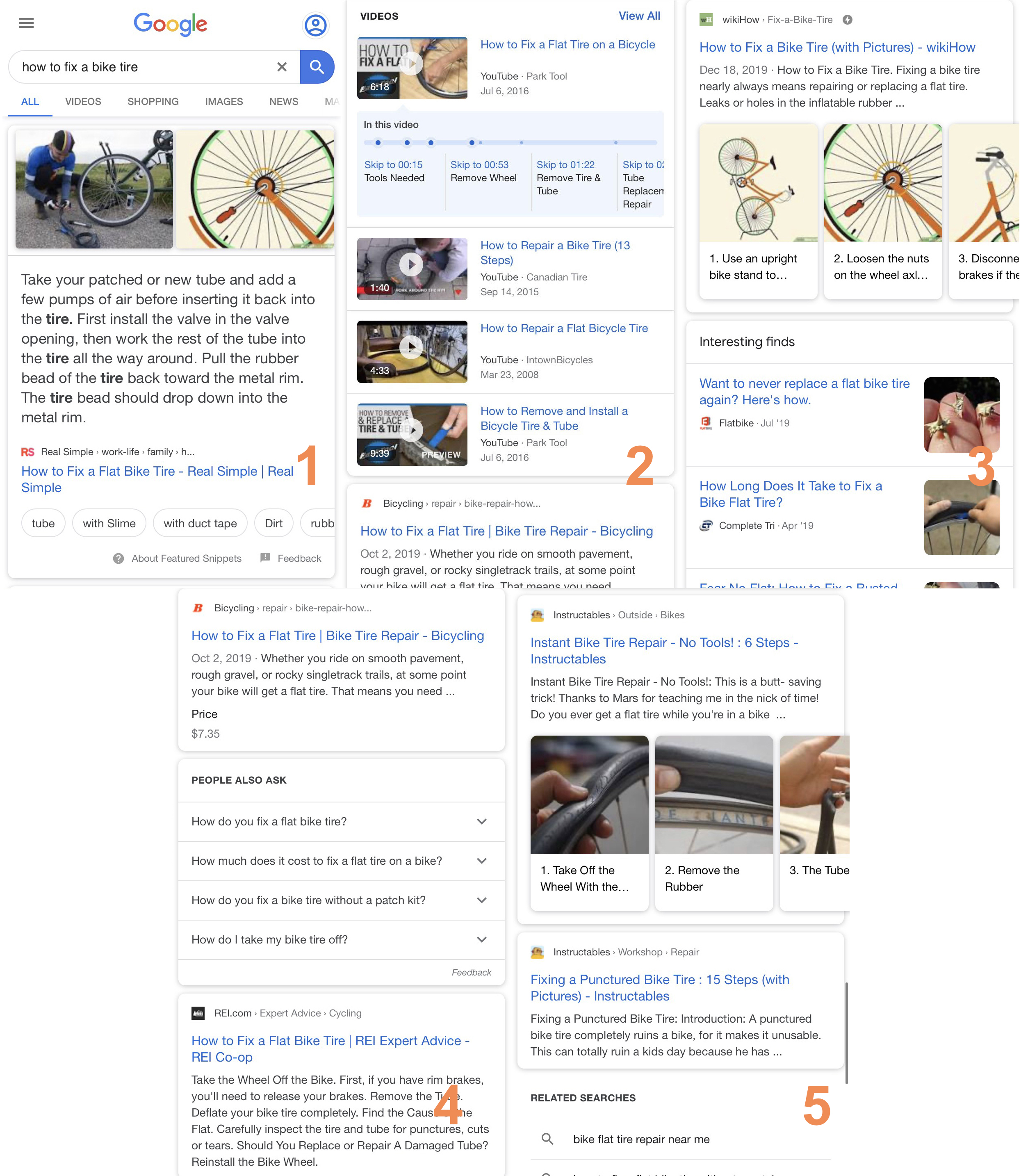
    As mobile search increasingly becomes the search method of choice for users, it’s helpful to visualize just how this impacts user behavior. Let’s take a basic question like “how to fix a bike tire.”
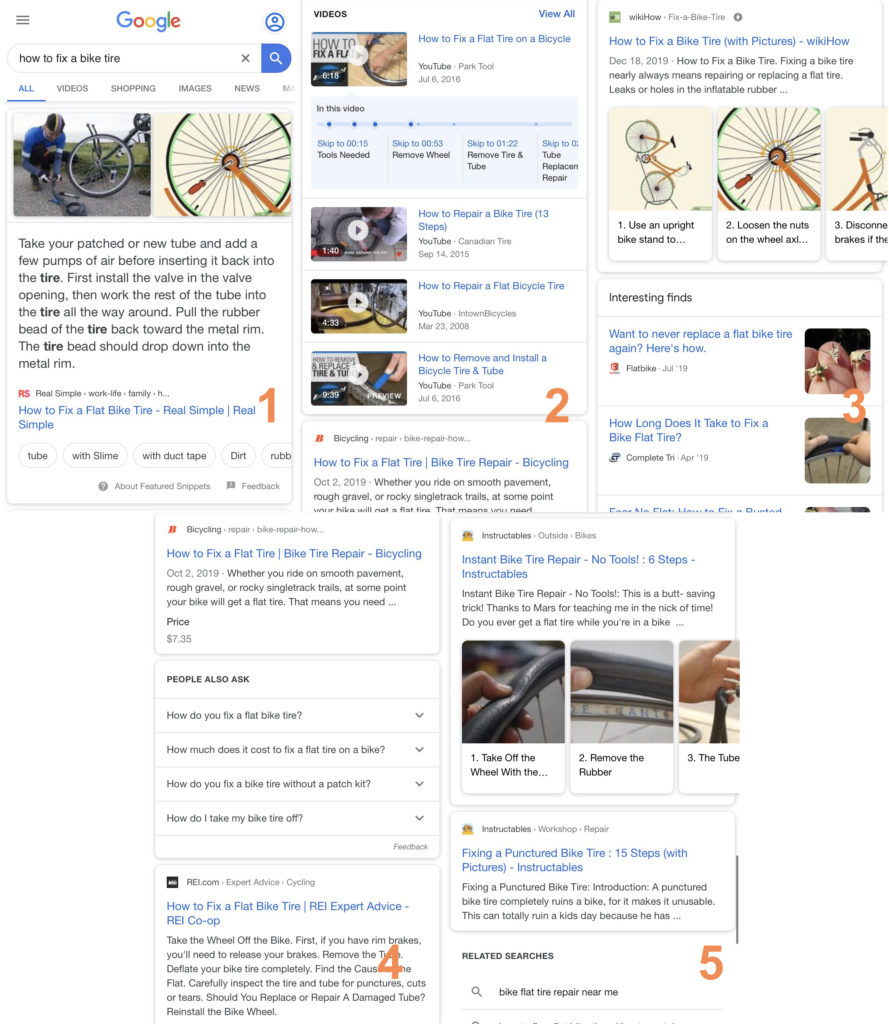
    Screenshot of mobile search on Google for Search Influence blog

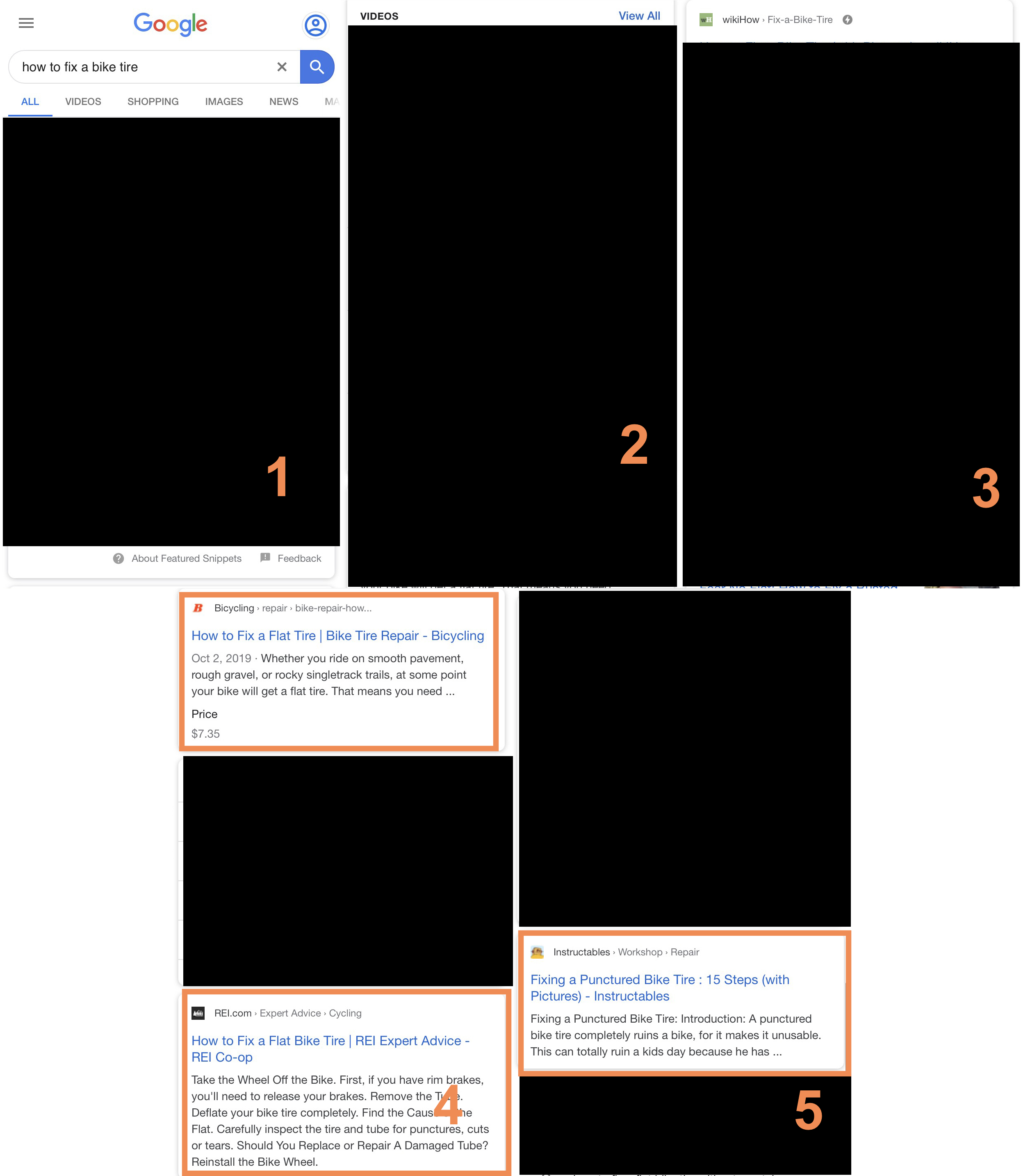
    As you can see, there is competition amongst featured snippets, video content, and embedded images. While discussing this very topic at Local U Advanced in Denver, CO, Cindy Crum from MobileMoxie offered a really interesting visual way to see why zero clicks are becoming more and more important to deal with. If we block out anything that is not a traditional “organic result” in the SERP, you will see that other types of results occupy most real estate.
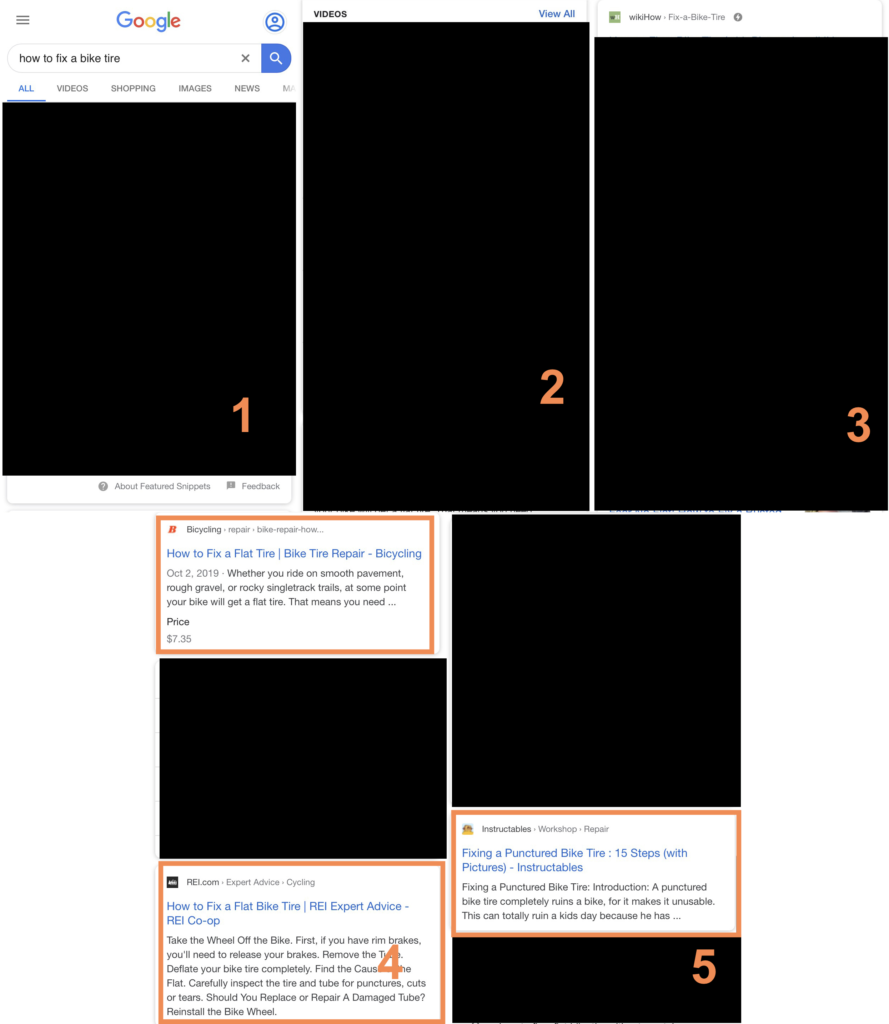
    Mobile search on Google with all non-organic results blacked out

    How to Combat Zero-Click Searches

    It may be time to stop thinking purely in terms of organic traffic. Much of SEO for businesses moving forward is about visibility. How can we position ourselves to be the brand that answers the questions our clients want to know? This is why content will continue to be the backbone of any SEO strategy. Doing proper research into the questions, queries, or searches that align with your business goals and striving to be the authority in your industry is the best way to ensure you remain competitive—and visible—in a landscape that does not necessarily reward good content with clicks.

    In shorter terms, you really want to try to be the featured snippet. This is an extremely difficult task as we know there is a high barrier to entry and it takes content tweaks, patience, and a strong will to see it through to grab snippets. Good content research includes finding the least competitive snippets and prioritizing those over a more competitive, higher level search. Doing simple keyword research is not enough nowadays. Moving forward, thinking about how these searches propagate results is equally as important.

    Google Maps: The New Home for Local Search?

    When people think of search, the Google homepage with the requisite search box is likely most people’s first mental image. However, for businesses moving forward, there should be an increased focus on how the Google My Business/Google Maps product is influencing and driving local search.

    Another big takeaway from the Local U Advanced conference is the volume at which users are going directly to Google Maps to find local businesses. According to the data from industry thought leader David Mihm’s presentation, from March of 2018 to August of 2019, 72% of all impressions on search were on Google Maps as opposed to Google Search (the traditional SERP). This is a huge discrepancy, and one of the big takeaways is that businesses are not leveraging Google My Business as much as they should.

    In order to be competitive in rankings in Maps, it is important to breathe as much life and information into your listing as possible. This includes driving reviews and optimizing descriptions, including appointment links, booking platforms, a healthy number of photos and videos, answering questions, and, finally, ensuring you are engaging with reviews. While proximity to a location plays a huge role in how the Maps listings are displayed, if you are actively managing your profile, the chances are that you will see some benefit.

    Also, consider how public-facing this listing is. If it looks sloppy, incomplete, or utilizes blurry images, users might be less engaged and less inclined to click through to your listing. While this seems relatively simple, many businesses fail to leverage this product—or even use it at all.

    Design Your Site for Mobile First. Always.

    This is not new for 2020, or even 2019 for that matter, but that does not minimize the importance of designing your site to perform well on mobile. Back in late 2018, the SEO community started talking about mobile-first indexing, and this was a major shift in the way search engine crawlers—and Google—understood and indexed your site.

    In response to Internet searches becoming an increasingly mobile experience, Google decided to push developers and business owners in that direction by making the mobile version of the site the version that is indexed in Google. In other words, Google crawls the mobile version of your site and makes determinations about its health on that basis. Web development is often thought about in terms of desktop computers, but it is becoming increasingly the case that your mobile version is at least, if not more, functional than the desktop experience.

    One of the biggest factors and problems searchers find with mobile sites is the overall speed. We know there is a direct correlation between load times and how many people will abandon your page. In the same way that users respond negatively to slow sites, the crawler will factor that in when crawling your site. A slow experience is not good for users, crawlers, or your business.

    This became increasingly visible to digital marketers when they rolled out site speed evaluation in Search Console. Google is essentially giving people feedback about their site speed in the hopes that flagging this will lead developers and businesses to try to create better mobile experiences for users. As seen below, this a report that is now standard in all Google Search Console reports.
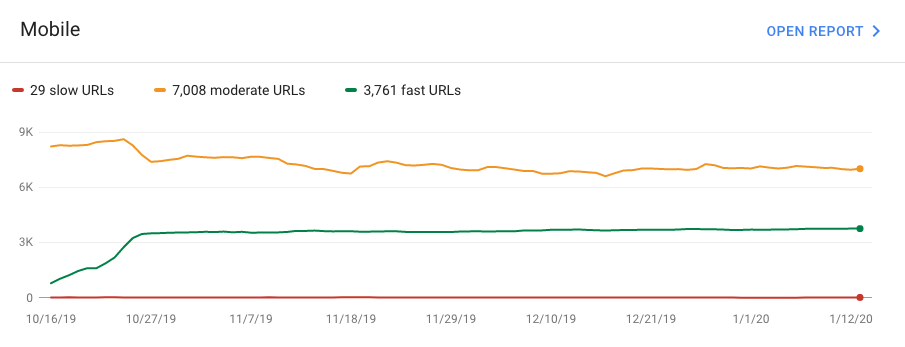
    Example of Google Search Console speed tests for Search Influence blog

    Google has been poking and prodding at digital marketers and developers for a while, indicating their sites are “relatively slow.” To the extent that this is accurate is questionable in my view—my belief is Google is inclined to tell you that your site is slow because they want you to go after improvements that ultimately make Google’s life easier. In that way, I do not see it as super nefarious because ultimately it helps everyone in the end, from users to large businesses.

    What’s Old Is New

    While we have pinpointed some newer aspects or changing directions, there are some old tenets of SEO that will remain very important moving forward. Backlinks are still relevant, you need to leverage structured data, video content will remain a huge differentiator in terms of content, leveraging E-A-T guidelines and content can help drive traffic, and, finally, write good content that serves the need of your users.

    SEO is constantly evolving. Many of these trends will change over the coming months, and different algorithms will impact different industries in unique ways. It will be next to impossible for businesses to develop the “perfect” site for ranking well—the best we can do is interpret what Google is asking for and do our best to align with their needs while also considering the needs of users. Ultimately, Google is incentivized to provide the user a good search experience, so by reading the tea leaves and (skeptically) following their guidance, your site should be in a good place to grow its audience.

    Do you have questions about how SEO could help your business? Need a consultation? The team at Search Influence has experience managing SEO campaigns of all shapes and sizes. Reach out to us today for more information.

    Images

    B.E.R.T.
  • Does SEO Success Require Development Knowledge?

    The short and simple answer to this question is no. You won’t need to delve deep into writing code or earn a degree in computer science to improve your website’s search results. There are some more complex aspects to SEO, but a large number of important and impactful SEO tactics can be performed by any computer-savvy individual. A funny thing I’ve learned from years of working in digital marketing is that many people with advanced technical knowledge of programming and code are not informed on SEO best practices. Many of the insights and standards of search engine optimization have been devised by tenacious marketers and website owners without any technical training or coding ability.

    Getting Started With a CMS

    To effectively improve your website, you will need to know what type of website you’re working with. The available tools and accessibility to a website’s features can vary widely. A lot of sites are built using Content Management Systems (CMS) like WordPress, Squarespace, and Wix (along with many others) that are designed to give users without coding experience the ability to log into a dashboard and update a website. These CMSs also have features that support SEO updates as well, but they can differ and may require using add-ons that weren’t originally built into the CMS. If you don’t know if you’re using a CMS or which one it is, there are online tools available that can figure that out for you. Here’s one I’ve used that is fairly accurate.

    You can also investigate the CMS type with a simple search query. Something along the lines of “What CMS is this” or “web cms detector” will bring up a number of online tools that will analyze the code from your site to determine what CMS is in use. The answers you find may not be 100% reliable, so you may need to contact whoever set up or sold you your website if you still aren’t sure.

    A paper man sitting in front of HTML code reading 'Hello World'

    Optimization for Beginners

    Once you’ve established which CMS or code your website is built on, search engines are your best friend when it comes to learning how to edit and optimize your website. You can start searching for your website’s documentation and specific tasks you want to complete within your system. If you’re new to the game, you’ll be pleasantly surprised at the vast number of beginner-friendly articles written about specific implementations of technical SEO available on the web.

    As a starting point, you should research how to update title tags and meta descriptions. These components of a website impact the information displayed in search results. If you’re using Squarespace or Wix, you can access this via the page editor features and can look up how to do so in the site’s documentation. If you’re using WordPress and you want to implement these changes, your WordPress theme may or may not already have this feature. If not, it’s likely you’d need to download a plugin, which is a program that adds functionality to WordPress and installs it on your site. Pretty much any open source website (WordPress, Drupal, Joomla) will have their own version of a plugin. These programs are usually designed by developers, some of which are free!

    If you aren’t using a CMS, you will probably need to access site files and edit some code. There’s plenty of online resources that can walk you through the process. Be cautious, however. You should always back up your site before making any changes to code or adding plugins. Maintaining a backup or version control system is the safety net that allows you to switch things back to how they were if anything goes wrong.

    A Little Code Goes a Long Way

    I know many people describe code as gibberish or absurdly unapproachable; at first glance, code can look like an alien language. However, the most commonly used code to structure websites, HTML, is pretty simple and useful. HTML is pretty much the label system of the internet. You label paragraphs, headings and sidebar content, horizontal lines, bulleted lists, blocks of content, images, pretty much everything on the page. These labels, with a little help from style sheets, tell your browser how to treat content and images and present them on the screen. There are also labels built into HTML that give search engines other important information, like headings.

    Headings are implemented in HTML with H-tags. They range from h1 to h6 and are intended to organize your headings based on their importance. Search engines use these to determine keywords and the core concepts of the page’s content. To improve your SEO, use these to label your main content heading on the page with an h1, subheadings with h2s, and so on. You can start learning HTML by using online learning tools.

    The Mighty Pen

    Even if you absolutely hate technical stuff like code, you can still ramp up your site’s SEO. Ultimately, the content on your site is your main money maker. Even if you use a bunch of high-level SEO techniques to get into the top results for a search on a major search engine, if you can’t engage your audience by delivering topical and engaging written content, you won’t last long. A talented writer can be more impactful than a senior developer. In the world of digital marketing, you absolutely need both. We are the Yin and Yang of website creation.

    Make Information Easy to Find

    Here are some basic concepts for writing with SEO in mind. Make it easy to read. Easy to find key information. Title things effectively. Does your content answer a question? Then include the question most people are asking as a heading or title. Does a paragraph have details about something specific? Give it a subheading lets someone who’s skimming the page know, “Here it is! This is what you’ve been looking for.” Use lists and bullet points. Highlight key terms with links to more detailed information and bolded text. Link product names to pages where people can purchase them. Provide business hours, important addresses, and contact information on every page and make it easy to find. Make everything as easy as you can for your audience.

    SEO is all about delivering what people want. Google would quickly lose its status as the top search engine if the results people got for searches weren’t helpful. Search Influence helps businesses follow SEO best practices so that they can succeed online. Contact us today to learn more about how we can help you optimize your website.

    Images: Paper Man

  • Disavowing a Backlink: When Is It Okay to Say Bye Bye Bye to a Backlink?

    If the internet was high school, websites would be the students and Google would be a top of the line, elite institution. Think of Google’s search engine algorithm as their admission’s department because it decides which students (websites) are worthy of being apart of their academy (The Top Search Results).

    Keeping with this analogy, one of the ways The Top Search Results’ admissions department decides which students to let in is letters of recommendation, aka backlinks. Letters of recommendation from prominent, trust-worthy people put a nice polish on any application, right? On that same note, letters from sketchy people or from yourself can have a negative effect. No letters at all… Well, you get the point.

    Thinking of backlinks as letters of recommendation is an excellent way to simplify a multifaceted part of SEO because that’s how search engines treat them when deciding which websites are most authoritative. Backlinks from reputable, popular sites (e.g. CNN.com, Forbes.com, Rollingstone.com) can do wonders for your domain authority and keyword rankings.

    A backlink from a spammy site can have the opposite effect.

    Although you can’t control who/what links to your site, you can disavow an unwanted link. Disavowing a link lets Google and other search engines know that even though a site is linking to yours, you have no association with it.

    Disclaiming a backlink can do wonders for your SEO because it pulls out associations that could be hurting your rankings, and it makes backlinks from authoritative sites stand out even more. If you let link-building-professional Liam Cook tell it, “Link disavowing is almost as important as link-building for SEO.”

    The trick (because there’s always a trick) comes in deciding which backlinks are harmful enough to your domain authority that they need to be disavowed. To help you out, here are a few good reasons to think about disavowing a backlink.

    Gif from the film The Hangover

    1. The link is coming from a spammy site

    If you find that a link to your site has ended up on a spammy site, it is probably best to disavow the link right away. How can you tell that a site is spammy? According to Hamish Fitzhenry, three telltale signs are:

    • Having tons of links on one page
    • Taking a really long time to load
    • Having an abnormal amount of pages and links that 404

    Cameron Conaway, one of Klipfolio’s senior marketing managers, says that a red flag for him is if the anchor isn’t in English.

    However, if it is too hard to tell just by looking at a site, you can always check its Spam Score. As defined by Moz.com, a Spam Score is the portion of a site with attributes that are typically “penalized or banned by Google.” It is believed that a backlink from a site with a Spam Score that’s higher than 7 can raise the Spam Score of the receiving site.

    2. The Link Isn’t Relevant to Your Industry

    Let’s return to the analogy we started with.

    Imagine that your application to The Top Search Results is impeccable. And then… admissions goes to read your letters of recommendation. You have two superb letters from Barbara, who runs a flower shop in your hometown, and your cousin Joey, who you babysat one summer. But none from academic relationships like past teachers or principals.

    The two letters you have may be great, but they won’t be that helpful because they’re completely unrelated. The same thinking can be applied to a site’s backlink profile. If a website for used cars has a backlink from Foodnetwork.com, that could be a red flag that something isn’t right, so it’s worth checking out. Evaluate whether or not the backlink is organic and makes sense. It’s worthy to note, though, that an unrelated backlink probably won’t be from a recognizable website like Foodnetwork.com; it’ll likely be a domain that you’ve never heard of before.

    (On a similar note, you should also think about disavowing backlinks from sites that are linking to URLs that you’ve removed from your site.)

    3. The Link Isn’t Organic

    Google values authenticity. It likes to keep it real (in this case). If a link wasn’t honestly earned, you may want to think about disavowing it.

    Show us the real you gif

    If a large percentage of your backlink profile is comprised of inorganic links, tread carefully. You’d do well to remember these words by Justin Metros: “The long term gain for positive SEO isn’t the number of backlinks you have but the quality of backlinks. Get rid of anything questionable.”

    How Do You Keep a Handle on Your Backlink Profile?

    Once you clean up your backlink profile, implementing a plan that will keep it squeaky clean will save you time in the future. You can use one of these backlink monitoring tools.

    Majestic Bulk Backlink Checker

    Majestic.com’s Bulk Backlink Checker is a subscriber-only service that lets users check 400 to one million URLs (depending on how you upload them). The program offers metrics like “Trust flow,” “Citation Flow,” and the number of NoFollow links on a site.

    Ahrefs

    Ahrefs’ Backlink Checker “has the second most active web crawler after Google.” This platform offers URL metrics like the total number of backlinks, “Domain Rating” and “URL Rating.” It also offers a Backlinks report, which shows users every single site that links to theirs.

    SE Ranking

    SE Ranking uses Google Webmaster Tools data to show users their backlinks. You can use it to monitor your backlink profile and disavow links using a file the site will generate for you. This service comes with a small monthly fee, but the tool also allows you to track your site’s keyword rankings, do a website audit, and generate keywords.

    Deciding which backlinks to disavow is no easy feat. So, here’s one last piece of advice from Mike Kawula, the CEO of Social Quant who also was named as one of the Top 100 Marketing Influencers in 2017: “My biggest piece of advice on deciding whether to disavow a link pointing to your site is to be sure SEO is your area of expertise. If it isn’t, either hire someone to handle it for you or bring on a contractor who specializes in this area.”

    Luckily, Search Influence has a team of SEO experts who can help you develop a comprehensive backlink strategy. To learn more about our SEO services, call (504) 208-3900 or schedule a consultation.

    Images

    The Hangover

    The real you

    Workers

  • How Does Having an SSL Certificate Impact Your Site’s SEO?

    Site security and user privacy have been a hot topic in the technological community lately. With big names like Google pushing for tighter security, it leaves website owners wondering what they need to do to ensure that their site is compliant with the best practices that will ultimately lead to them being favored in search results. One of the security measures that’s being pushed is ensuring that a site is secure. But what is a secure site and why does it matter? Here’s what you need to know about SSL Certificates and the role they play in your site’s SEO.

    Graphic of lock laid over an map of the world

    What Is an SSL Certificate and How Do I Get One?

    A Secure Sockets Layer Certificate is a means of creating an encrypted connection between a web browser and server. By using an SSL Certificate, an encrypted key protects sensitive information that is submitted by site visitors. If you’ve really got internet security on your mind, you can dig deeper by taking a more technical look at SSL Certificates.

    There are paid and free versions of SSL certificates, and others may be included through your hosting service. Depending on your CMS and hosting provider, there are various ways to get your virtual hands on a certificate. For example, installing a WordPress plugin or rerouting your site through CloudFlare may be an easy and convenient option. If neither of these are possible or ideal, you can usually purchase one through your hosting provider or buy one somewhere else and install it manually.

    Once you have it installed, it’s equally important to ensure that you keep your certificate up to date by auto-renewing it or making sure to renew it before the expiration date.

    What Does an SSL Certificate Mean for Your Site and Its Visitors?

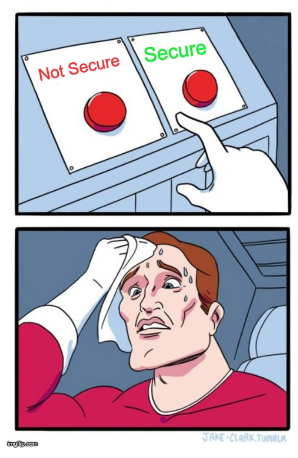
    Which site would you rather make a purchase on: One with a red “Not Secure” warning clearly visible, or one boasting a green padlock ensuring that all of your information stays secure?

    Super hero sweating whether to pick secure or non secure options

    It’s a no-brainer. Secure sites are more appealing to visitors because they are provided the comfort of knowing that any of their information that is passed onto the server will be encrypted. Enhancing user experience should be a top priority for your website. A site with a “Not Secure” warning may even scare off some visitors from completing any transactions or creating an account on your site. Installing an SSL certificate and having a fully secure site means that your site and its visitors can have peace of mind.

    Do You Have to Have an SSL Certificate?

    Technically, no—at least not yet. However, browsers are now making their users more and more aware of which sites are secure and which ones are not. For example, Google’s push for secure sites includes making the “Not Secure” warning more prominent on web pages, as well as favoring secure sites in search results. Some sites that aren’t secure even direct the user to a full warning page warning them not to continue before they can click through to the site. This definitely won’t help a site’s bounce rate.

    Additionally, if your site’s connection isn’t secure, it leaves your users’ information vulnerable to people looking to get their grubby hands on it. Personally, I wouldn’t want to be the person sending the email to users letting them know their information has been compromised should the worst happen. Why not make your site secure and provide your users with the assurance they need before willingly giving you their information? Overall, having a secure site greatly enhances user experience, confidence, and the overall trust of your brand. If that wasn’t enough, whether or not you have an SSL Certificate can impact your SEO and search engine rankings.

    What Does SSL Have to Do With SEO?

    Having an SSL Certificate on your site is becoming more important than ever for SEO and search result rankings, and its significance will only increase. Search engines are rewarding sites that are secure and penalizing those that are not. According to an article by Neil Patel, data shows that sites with an SSL Certificate are getting increased traffic over those that don’t. Plus, as Google continues to place an increased emphasis on the importance of SSL, it will likely have an even bigger impact on SEO rankings as the years progress.

    Much like Google’s push to require mobile-friendly sites for healthy SEO, a secure site is going to become the standard. If your site isn’t secure, then not only are you behind the times, but you are no longer following best practices. Many platforms that outline what your site does well and what needs to be improved will start to report that your site being not secure is an issue, if they don’t already.

    Graphic of SSL certificate being displayed in browser's URL field

    Making your site secure will let you take advantage of all of the current and future benefits that come with it. Now that you understand what an SSL Certificate is, how to get one, and why it’s crucial for your site, its visitors, and your SEO, contact Search Influence to make your site secure and enhance your SEO.

    Images

    Map Lock

    Secure vs. Non Secure

    Browser

  • How Often Should You Revisit Your SEO Strategy?

    So you want to know how often you should revisit your SEO strategy. My recommendation? Go back to the basics! Google is constantly updating its algorithm, so your rankings can always be affected. That means you should constantly be on top of the strategy you set in place to ensure you’re being effective and generating results. When considering how often to revisit your strategy, it would be a good idea to consider the things that affect your rankings. The major players are keywords and content.

    The Key to Keywords

    The way people search for things is always changing. Where people used to Google the term “marketing company,” they may now Google “marketing company near me.” It’s one thing to rank well, it’s another thing for people to be able to find you based on what they’re searching for. If you aren’t ranking well for terms people are using, this won’t benefit you in achieving your marketing goals.

    If you keep a record of your original keyword research, you can always refer back to it to determine if those search volumes have increased or decreased over time. This will allow you to stay relevant on which keywords work best for you. Since it’s recommended that you revisit your keyword strategy every quarter for campaigns and promotions, it’s also a good bet to do this for SEO.

    A person highlighting notes on a desk

    Keeping Content Fresh

    Before you worry about keeping your content fresh, you need to ensure it fits the recommended guidelines set by Google. Title tags are important because they are often the first thing a visitor sees when they search for something and you pop up in their results. Meta descriptions also display in search engine results and should provide visitors some context about that page’s content. Even though that doesn’t directly affect your rankings, it affects people wanting to visit your website, which can affect rankings.

    Title tags and meta descriptions also need to fit within the length recommendations and include the keywords you chose for the campaign, if possible. If the keywords you chose and used throughout your content at the beginning of the campaign are no longer relevant, then it might be time to go back to the drawing board. When these two elements are concise and relevant, they can positively influence your rankings. Just make sure to keep an eye out for any updates made on recommended guidelines for content by Google.

    As far as content on your website, you can always tell if the website page has good and relevant content by how many visits it receives. Low webpage visits can be a good indicator that it may be time for a refresh. This does not exclude old content. While publishing new content is a great way to increase rankings, you can always revisit old content and give it a little TLC to see if the work you already put in can still work for you.

    Off-Page

    When it comes to off-page SEO, here is where it can get a little tricky. There are times where we aren’t in control of the things that happen off your site, like with backlinking, but there are tools and options to assist you in taking back as much control as possible. Let’s say you find a link to your website to be spammy; you can contact the webmaster and request it be removed. There’s no telling if or when this may happen, but you can always combat this by gaining new links from authoritative sites.

    When it comes to listings, you want to ensure your information is consistent across all platforms. Whenever an opportunity presents itself, you should make it a point to submit to as many listings as you can. A great tool you can use for this is Bright Local. It works to show you inconsistencies throughout the listings you currently have, as well as new opportunities you can submit to. It’s best to keep an eye on these and revisit them every month.

    An additional tool that is always accessible to you is social media. This is a great way to create awareness for your business and potentially gain more and new visitors to your website. Staying on top of your social media campaigns is a sure way to help your rankings. If you see a campaign is not performing well, then it may be time to reconsider what changes need to be made to make it better. While social media doesn’t increase your rankings, it can help gain new visitors and increase potential backlinking, which will.

    In the End

    There isn’t an exact recipe that will get you to rank number one. The key to running an effective strategy and campaign is to consistently revisit it. Remaining proactive when it comes to algorithm updates and keeping your website full of organic and fresh content will always be your best bet. If you consistently check and adjust, you’ll be on the right path! And if you need some expert assistance with your SEO or content marketing strategies, start a conversation with the New Orleans SEO pros at Search Influence.

    Images: Desk


  • Prop Up Your SEO Strategy With Pillar Pages and Topic Clusters

    If you haven’t heard of pillar pages, don’t feel bad; they’re relatively new to the SEO scene, with the term coined by Hubspot in 2017. However, they’ve been taking over content marketing strategy discussions since their relatively recent inception, and this new system of structuring content is proving to be beneficial to both the user and the site’s SEO.

    What Is a Pillar Page?

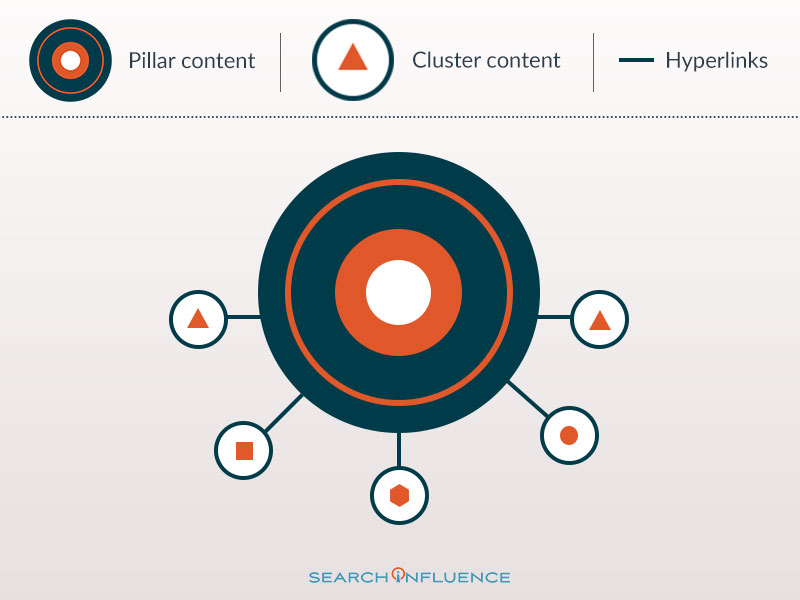
    A pillar page is a content-rich page on a website that broadly covers a topic. Hubspot created pillar pages as a technique for restructuring their blog, but they can apply to information pages and service pages, as well. Pillar pages divide your site’s content into “topic clusters,” which don’t focus on a specific keyword, but rather a general topic. The pillar page is the main body of content on the topic, linking to more specific pages. Think of pillar pages as “Topic 101,” and the links provide more in-depth information.

    Custom graphic showing the relationship between content clusters and pillar content in SEO

    How Do Pillar Pages Affect SEO?

    Pillar pages help improve user experience by making your site easier to navigate. In addition to increasing the likelihood of having repeat visitors or higher conversion rates, better user experience can also increase your site’s SEO rankings. Google tracks engagement metrics, such as dwell time, bounce rates, and click-through rates (CTR). Since pillar pages are long content pages with several internal links leading to relevant and highly detailed pages, readers are more likely to spend more time on your site and generate a high CTR. The reason Google tracks engagement metrics is because it signifies that the reader found your site to be helpful; the longer someone stays on your site and the more internal links they click, the better it looks in Google’s eyes—it shows that your site accurately reflects the information that the SERP gave and that people want to read your content. Having links to relevant pages also helps Google’s algorithm determine that the pillar page accurately reflects the search term.

    How Do You Create a Pillar Page?

    If you’re ready to revamp your content marketing strategy and create pillar pages, you first need to determine the topic clusters you want to organize your site around. For example, a cosmetic surgeon could have pillar pages about body contouring, breast augmentation, and facial procedures. The pillar page itself will likely be longer than your normal service page or blog page, giving a detailed overview of the topic.

    You should also conduct SEO semantic research to find the best keywords and anchor text for your topic clusters.

    The pillar page should also be easy to navigate; it should have several line breaks or even a table of contents to help readers navigate the subtopics. You don’t need to have the in-depth subtopic pages already written; you can add links to them on the pillar page as you build these secondary pages out.

    Because they are long, detailed, and content-heavy, pillar pages may seem intimidating. However, they’re really just a way to restructure your content to make it easier for both readers and search engines. If you’re looking to revamp your content marketing strategy, the experts at Search Influence are here to help. We have all the tools to help you create a phenomenal pillar page. Reach out to one of our strategists today.

  • How to Bounce Back From a Bad SEO Experience

    If you or someone you love is struggling to bounce back from a bad SEO experience, please call 504-208-3900 today.

    Let me first start by saying, I am truly sorry. I hate to hear our competitors are delivering anything less than a successful (and profitable) SEO campaign, and I really hate to know these companies are giving a great company, like mine, a bad name. Shame! I hope this blog can be therapeutic and we can strengthen your trust in SEO and humanity… together.

    If you’re reading this, you don’t need me to tell you how SEO is an investment and how it should be included in your marketing strategy. Actually, the more I think about it… maybe you do. Maybe the value was never clearly communicated or our competitors did a poor job in setting expectations. Again, on behalf of the industry—I apologize.

    Frustrated business owner after a bad SEO experience with Search Influence competitor

    A big step in therapy is acceptance. Together, let’s accept that an immediate impact is not possible with SEO. Let’s also accept that in the SEO world, Google controls life. If we understand the algorithm and play by the rules, there’s no reason this experience should be negative. As a reminder, Google is responsible for 94% of total organic traffic, so yes, we play by the rules. If you think I’m just drinking the Google Kool-Aid, know that 61% of marketers say improving SEO and growing their organic presence is their top inbound marketing priority.

    If you’ve ever sat in on one of my webinars or pitches, you’ve heard my analogy—SEO is the marathon and paid search is the sprint. SEO is organically strengthening a brand’s authority, and it’d be illogical to believe anything organic can efficiently mature and be optimized in a short period of time. If you’ve heard “we can increase rankings immediately” or “I promise you’ll be on page one,” SEO wasn’t the right campaign for you. If you are looking for immediate results, it’s possible with paid search. I don’t want to beat a dead horse, but expectation-setting and communication is key to any partnership. It’s possible that your previous SEO campaign was strong and could have been very successful, but expectations on results and return wasn’t effectively or honestly communicated.

    Over the last seven years, I’ve worked with and regained trust of many business owners and marketing executive who’ve come to Search Influence a little gun shy. Over the years, I’ve had time to think of all the things I wish clients would have asked our competitors when they weren’t doing their job. I’d also like to share some of our unique selling points that aren’t broadcasted because it’s so natural to our team and part of our core, we sometimes forget to share.

    Anyone investing in SEO, especially while recovering from a negative experience, should consider the following when interviewing new marketing partners.

    Partner With a Transparent Agency

    Like any relationship or partnership, communication and trust are crucial. At Search Influence, we truly see our team as an extension of your company and brand, and we want you to trust and challenge us as much as you would your own. In employee interviews, you ask for references and work experience. Why should hiring a marketing partner be any different?

    When you’re vetting through agencies, ask for client references. We know that customers are 88% more likely to trust a review or testimony from a complete stranger as much as family and friends. If numbers are all you care about, ask for success stories. I encourage you to not only ask for references and case studies within your own industry, but in others, as well. Analyzing an agency’s ability to target different types of audiences like college freshman vs. concrete manufacturers or write strong legal web content vs. e-commerce ad copy shows willingness to understand your audience and shows they aren’t cookie cutter.

    Team collaborating on SEO marketing efforts

    Don’t Be Afraid to Ask the Hard Questions

    No relationship is perfect, but before starting a new partnership, don’t you want to know why it didn’t work out with all the other ex-girlfriends? Don’t you want to know who broke up with who and why, and if we ever break up, are you going to be salty and never return my stuff?  

    The first cut is the deepest, so let’s cut to the chase and ask the hard questions that are extremely important. I strongly encourage you to ask the following questions:

    • What happens if it’s not working and I’m not seeing results?
    • What’s the number one reason clients part ways with your company?
    • How do you hold yourself accountable?
    • If you create logins on behalf of my company, will you share them with me?
    • Should I ever leave, will you remove work from my site?

    In my opinion, how the agency responds to these direct and powerful questions says more about their core values than the strategy alone.

    See What’s Behind the Curtain

    If Search Influence sees ourselves as an extension of your company, don’t you want to know how we operate? If I were in your shoes, I’d want to understand a day in the life of my campaign. I’d want to understand the frequency of internal communication, who Q/A’s site edits before they go live, how many editors sign off on press releases, and how frequently will I be hearing from my team.

    Maybe you’re not interested in a list of references or reading success stories, but are instead interested in what’s behind the curtain. To tease a little bit of the magic, I’ve listed just some of our day-to-day activities that are so routine we almost forget how glamorous it is to the other side of the curtain.

    • Results-Driven
      • Every campaign starts and ends with your goals. The strategy, the work, and the focus is centered around what we need to do in order to deliver success. We track conversions and measure success so we can confidently show you a positive ROI.
    • Think Like Your Target Audience
      • We evaluate the entire consumer journey and create buyer personas to understand their behavior online. We analyze their interests, triggers, frequented sites, content consumption, and more to implement a strategy to target and convert your audience into customers.
    • Transparency and Accountability
      • We’ve created a reporting dashboard to how you how your campaign is performing 24/7. Not only can you see campaign success, but you can see what our team is actively working on and tactics coming up the pipeline.
    • Proactive, Not Reactive
      • We’re constantly learning from each other through our daily department huddles and weekly company meetings. Our constant collaboration allows us to share what’s working and what’s not working and how we can improve. With every learning, we confidently and proactively bring new ideas to each campaign.

    Don’t let one bad breakup keep you off the SEO market forever. Get in touch with the SEO experts at Search Influence today so we can help you create and implement a targeted digital marketing plan.

    Images

    Frustration

  • Enriching Your Results on Google

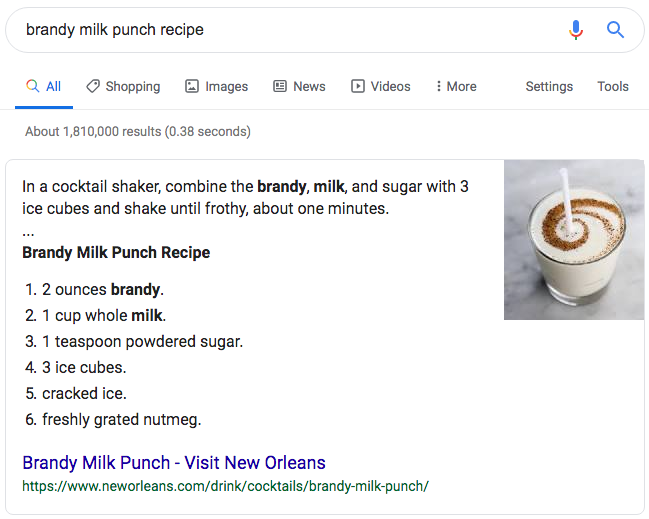
    If you’ve used Google to perform a search for a recipe, an answer to a question, to find a restaurant, or find out the time a concert starts, you’ve probably noticed that not all search results look the same. Some of the results have extra information, some appear with pictures in a “carousel” at the top of the page, and some have reviews with stars on them. These are what have been called “Rich Snippets” by Google, and more recently are being referred to as “Rich Results” in Google documentation. There are many types available, and if you have a website that you are trying to drive traffic to, then there is probably a way for you to take advantage of these features.

    What’s a Rich Snippet?

    The results returned by Google for each recommended web page that consist of a title, a description, and the URL for the page are “snippets” of information taken from the pages of websites. For example, take our LinkedIn page as it appears in the search results:

    Typical Snippet

    Rich snippet data on a SERP result for Search Influence's LinkedIn page

    The title and description are pulled from meta information stored on the pages of websites that are referenced in the results. These are typically added to the code of the site using some simple HTML that can be read in the source code but does not display for site visitors on the page.

    Rich Snippet

    Example of a rich snippet being served up in the Google SERP

    Similarly, Rich Snippets use code on the page to provide more information to Google and can result in additional information that is displayed more prominently in search results.

    How Do I Get My Site to Show as a Rich Snippet in the Search Results?

    In order for Google to display your webpage(s) as rich snippets in the search results, you need to have the information required for the Rich Snippet type in a coded format that Google can read. This is done with “Structured Data,” which, just as the name would suggest, is information specified in a particular format. Google uses the vocabulary of schema.org for most of it’s structured data, and there are several different formats that can be used. Google’s preferred format is JSON-LD (JavaScript Object Notation for Linked Data) which is a common format for communicating information in web-based applications and other domains. This code format can be a bit tricky to write, so you’d likely be better off using examples provided by Google’s documentation and replacing the values with your own information or using a tool or plugin that will generate the code for you.

    If you are familiar with HTML, there are some more easily writable ways to implement structured data on your site using Microdata and RDFa. These use additional HTML attributes to define structured data.

    If you use a popular CMS (content management system) like WordPress or Shopify, there are also a variety of plugins or add-ons that can assist you in adding structured data to your site.

    What Types of Structured Data Does Google Use for Rich Snippets?

    There are 29 different rich result displays, and Google has just announced some more upcoming display options that will be available on certain search types. I would recommend checking out Google’s documentation for a comprehensive list and all the different structured data that is required for a web page to appear with various display perks and in certain sections of the results. I’ll cover some of the primary ones that will apply to the broadest number of sites.

    Article

    Blog posts and news articles can use the article structured data to potentially be featured in Google’s top stories, carousel, and display, with extra features like headline text and a larger image than the normal thumbnails from results.

    Breadcrumb

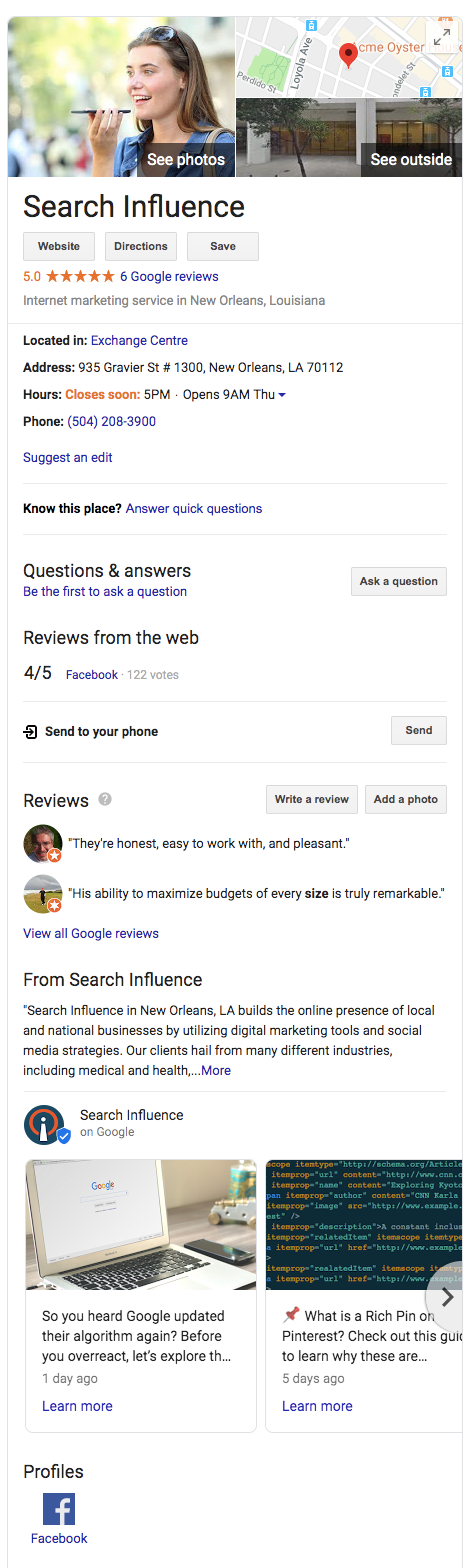
    Breadcrumb structured data can be used to display the pages in relation to the rest of the site.Example of a knowledge graph result using Search Influence as the businessFor example, a specific product page could fall under a category page, which falls under a broader category. With breadcrumbs displayed in the search results, navigation to any of these pages is just a click away.

    Carousel

    Google’s search carousel feature, a prominent interactive display with images that appear at the top of search results, can be unlocked with the carousel structured data. This usually works in conjunction with other structure data like article, recipe, or course structured data.

    Course

    For Education, schools and businesses offering courses can lay out information that will be displayed in the Google search results.

    Event

    This type is an interactive rich result that shows a list of organized events, such as concerts or art festivals, that people may attend at a particular time and place.

    FAQ Page

    A Frequently Asked Questions page structured data is for common questions posed on the page’s subject, often used by businesses to provide information about its products and services.

    How-To

    A How-To walks users through a set of steps to successfully complete a task, featuring video, images, and text.

    Local Business

    Local businesses will benefit greatly from this type of structured data. It allows your business to appear in the knowledge graph with important information like address, hours of operation, contact info, logo, and business description.

    Logo

    This allows your organization’s logo to appear in search results and the Google Knowledge Graph.

    Product

    Structured data for products includes price, availability, and reviews.

    Q&A Page

    Similar to an FAQ page, Q&A structured data can be used on pages that present information in question and answer format.

    Recipe

    This structured data type will allow recipes to potentially display in Google search results with ingredients list and instructions.

    Review Snippet

    A review snippet is a rating or short review excerpt. It can apply to products, recipes, movies, and local businesses.

    Video

    These snippets allow you to markup video content and appear in video results of Google search results.

    Where Can I Learn More?

    You can see example code, required information, and images of the resulting rich snippets that structured data types make possible in Google’s documentation here. I also recommend checking out Schema.org, where you can learn more about the structured data that Google used as a base for all their structured data conventions.

    If you need help implementing code or appearing higher on Google’s search results, the Google and SEO experts at Search Influence can help. Contact us today.

    Images

    Dollar sign

  • How to Create Effective and Engaging Video Content on a Budget

    In 2019, it’s impossible to deny the importance of video content for businesses. Visitors spend 2.6 times more time on pages with video, and websites with videos are 53 times more likely to reach the front page of Google than ones without. 95% of the message is actually retained from a video (as opposed to only 10% of information read via text) and a whopping 85% of consumers want to see more video content from brands. The evidence that video is going to dominate the marketing world for the foreseeable future is everywhere, and it’s exciting!

    We’re going to give you a few tips below to help you create optimized videos that won’t break the bank.

    Visual representation of good video implementation on site

    Tip 1: Choose a Style and Tone for Your Video

    The tone of your video can make or break how it’s received by your viewers and ultimately your ROI, and since some marketing professionals consider video to be the type of content with the best ROI, you need to choose wisely. If you’re making an informative video about wills and estate planning, you’ll probably want to take a more serious approach. This not only goes for the content of the video but the animation style, too. You don’t want to use an animation style that’s too playful for your subject, but you also shouldn’t use an overly professional video style for more fun and casual content.

    Tip 2: Appeal to Your Audience’s Emotions

    Instead of focusing narrowly on your product or service, you should also try to appeal to the emotional side of the viewer by focusing on the mission of your product or company. Focusing on a story will connect more to the user subconsciously, which is how 95% of all purchases are made.

    Tip 3: Utilize Existing Content

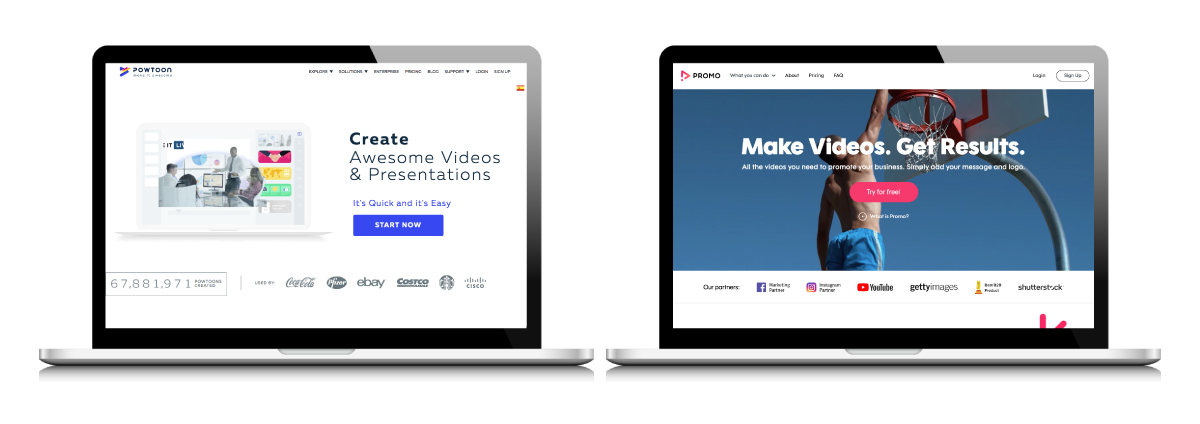
    Two examples of video production products

    Making videos in-house will save you a lot of money, and you don’t need to be an experienced filmmaker or video editor to make quality marketing content. There are plenty of resources out there that don’t require any special software to use. Powtoon, for example, is a great resource for creating animated videos. Multiple different animation styles are available to choose from that can work for any industry or topic.

    Another helpful video creation resource is Promo. Promo provides free music and live action and animated video clips that you can combine with text or your own footage and audio. You will save countless hours by using what is already available to you on these and other platforms.

    Tip 4: Focus on the First Ten Seconds

    It is essential to grab your viewers’ attention in the introduction of your video. A fifth of all viewers will stop watching after ten seconds if their attention is not captured in the first ten seconds. You have until the 30-second mark to engage your viewers or you’ll lose 33% of them, and one minute until you lose 45%. You need to know your audience well enough to know what will stand out to them enough to stop scrolling and pay attention throughout your whole video. Once they do make it to the end of the video, a strong CTA is just as important as those first ten seconds. Choose something specific like subscribing to a newsletter or visiting a page on your site.

    Tip 5: Optimize Your Video for SEO & Mobile

    Over half of all videos on the web are viewed on mobile. Of those mobile viewers, over 90% of them share video content with others. The potential shareability of videos viewed on mobile is not something to be ignored, and which is why you need to optimize your videos for mobile. The standard aspect ratio for videos viewed on desktop is 16:9, but this is not ideal for mobile as it does not show up big enough on the screen. Ideally, videos optimized for mobile would be designed with a 9:16 aspect ratio so that they fill the entire screen. To ensure your video is viewed well on both desktop and mobile, create a square video with a 1:1 aspect ratio. For Facebook, your videos should have both captions and audio. This is not required, but it is recommended, as 85% of videos on Facebook are viewed without sound.

    Animaker is just one resource available to you that allows you to create vertical videos tailored specifically for mobile viewing.

    According to the digital marketing institute, you should be hosting your video on your own domain: “enable embedding on your video as this will help you increase the likelihood of receiving inbound marketing links,” and make sure your descriptions and keywords are thorough and unique to the video you created. Video can drive up organic traffic as much as 157%, so you need to make sure your video is optimized for SEO.

    These tips should help get you started on creating and optimizing your own video content in-house. If you should still need some SEO guidance on making sure the right people and customers are seeing your video content, the team at Search Influence can help. Contact us today to get started.