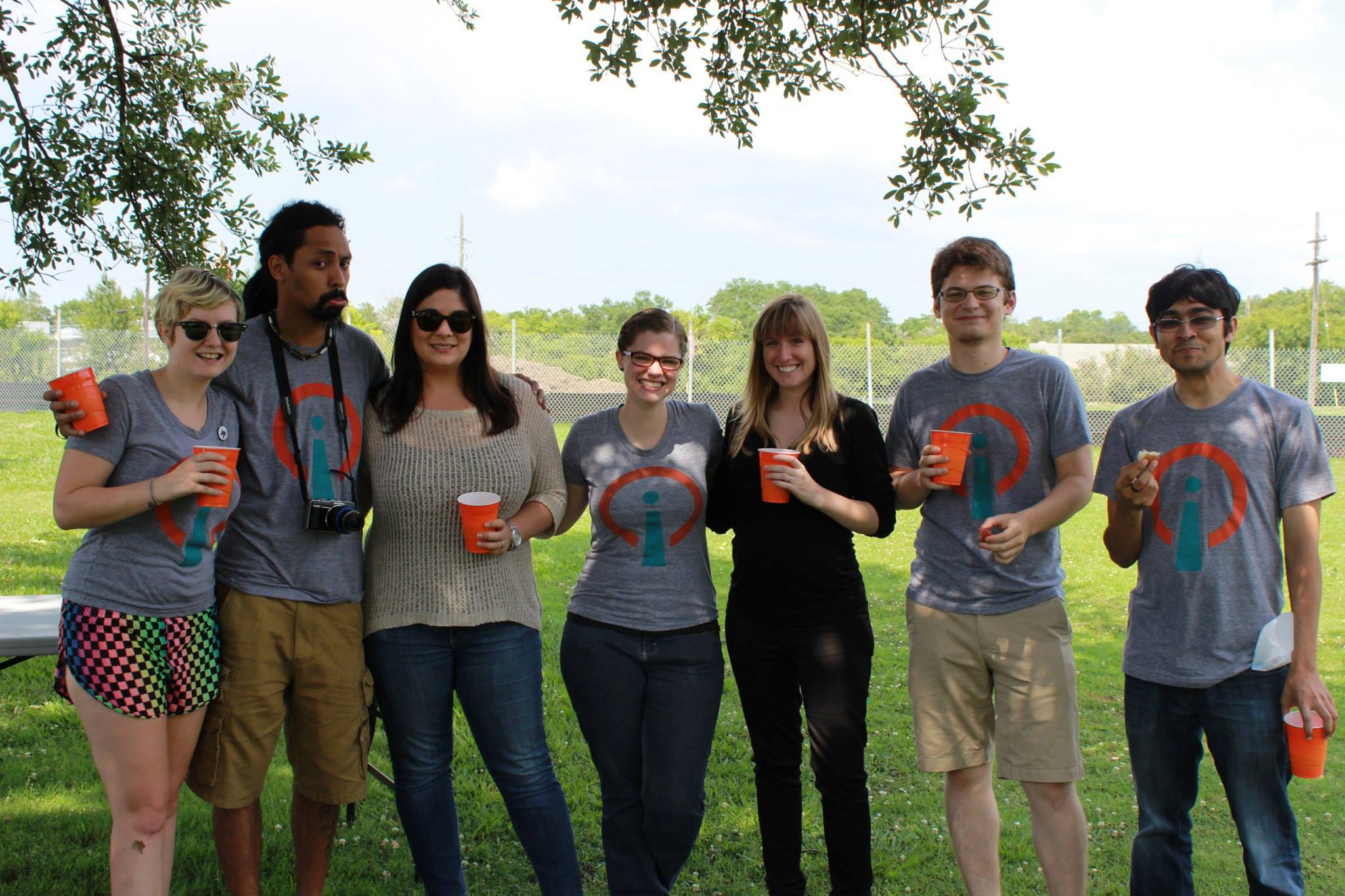
We are excited to welcome five new employees to the growing Search Influence team!
Gabrielle Allen has been hired as an Internet Marketing Associate. Born and raised in New Orleans, she graduated from Delgado Community College with an associate’s degree in Web Design. Before joining Search Influence, Gabrielle worked for a cosmetic company as their Social Media Manager.
Samantha Wright has been hired as an Account Associate. She received her bachelor’s degree in marketing from The University of Georgia. Before moving back to her home state of Louisiana, Samantha worked in sales for AT&T and as an Account Manager for a marketing company in Atlanta.
Michelle Neuhoff has been hired as a Graphic Designer. Hailing from Nashville, Tennessee, Michelle attended Loyola University New Orleans where she received bachelor’s degree in graphic design. She previously worked for Ingram Content Group in Nashville as a Production Artist before moving back to New Orleans.
Maggie Bomze has been hired as a Junior Account Assistant. Originally from Ohio, she is currently a student at Tulane University with plans to graduate in December. She is studying marketing and English. While not at Search Influence, Maggie works in the Marketing Department for Tulane Athletics.
Kendall Finn has been hired as a Junior Account Associate. A New Orleans native, Kendall graduated from Louisiana State University with a bachelor’s degree in marketing. During her time at LSU, Kendall was able to intern for several companies, including Professional Arts Pharmacy, Rent the Runway, and Uptown PR.
At a recent Wednesdays at the Square event, I ran into a friend who was sporting red shoes along with a nametag that read, “Ask me about my red shoes.” The Wizard of Oz, of course, popped into my head, but I asked the question anyway. Turns out, the movie had nothing to do with her shoes of choice. Instead, they embodied some familiar virtues such as courage and, most importantly, heart.
The Red Shoe Society consists of young professionals that support the Greater New Orleans Ronald McDonald House, which provides temporary accommodations and other supportive services for families with sick children. The Red Shoe Society’s collective mission is to bolster this built-in support system that helps needy families from all over the State of Louisiana. They raise money and awareness by organizing fundraisers, hosting monthly dinners at the house, and networking at events like the weekly festivals at Lafayette Square. They also utilize social media, getting their message out on their Facebook and Twitter pages.
Anita Mirchandani, a full-time teacher, says that they are trying hard to grow as an organization. “We have only been around for 1 year. In addition to raising money for the house, our current goal is to get more members. We are really small right now and need to expand.”
In order to recruit and raise money, they plan social events where more young professionals have the opportunity to get involved with the cause while expanding their networks. Anita says, “We have social mixers every so often to raise money, like the Cocktails for a Cause event on May 23rd at the Rusty Nail, where 20% of the profits go towards the house.” At places like the Sovereign Pub and Ralph’s on the Park, the volunteers also hold the “Making Ties” happy hour events, which provide young professionals a chance to learn about the organization’s mission and join the charity.
Since the Red Shoe Society consists of teachers, bankers, attorneys, and several other professionals, they remain flexible in scheduling their service around their regular business hours. However, they all come together each month and work hands on at the house. Anita says, “We have a monthly dinner where the members bring in food to the house for the families to eat. So one night a month, they come ‘home’ to a cooked meal after spending an exhausting day at the hospital.”
One of the reasons I love New Orleans is that living local is part of everyday life. People love shopping and eating at local businesses. Thankfully, you won’t find many chains in the New Orleans zip codes (you need to go out to Metairie for that)! My friend Christine Alex recently started a jewelry business that imports handmade pieces from several countries across the world. This Q&A profiles her company, touching on why it totally fits in with the local New Orleans vibe.
How did you come up with the idea for your business? I came up with the idea for Culture Shock when I was traveling abroad. I thought it was cool to bring back jewelry instead of postcards to my friends and family. The jewelry became a hit and eventually more and more people began giving me money and asking me to bring items back for them. That’s when I thought it would be really neat for people to be able to buy handmade items from all over the world without having to leave their couch. Culture Shock became an LLC in October 2012 and officially launched on January 18, 2013.
What is the goal/vision for your business? When I studied abroad, I gained a deep level of respect for other cultures and as a result, appreciated my own culture so much more. My goal is to educate my customers about other cultures while selling them a piece of someone else’s culture to wear.
What products do you offer? I sell jewelry that I hand picked from all over the world. The biggest countries that I receive my inventory from are Nicaragua, India, and Nigeria. Aside from offering a selection of imported items, I also began creating my own ethnic inspired items. In addition, as a way of honoring my own Creole culture, I created an apparel line under Culture Shock called Naturally Creole. This line offers a selection of Creole-themed apparel and accessories.
Do you have an online presence? Website, Facebook, Twitter, Pinterest? Yes, I have a website, Facebook, Twitter, Pinterest, and Instagram. Facebook and Instagram receive the most engagement from followers. I have noticed usually the same people follow us across social media platforms.
Why do you use Facebook? What is the benefit that it is bringing to your business? I use Facebook because it’s where my customers are, and I want to develop a relationship with them. Facebook allows my customers to understand the personality of my brand and learn more about my company and the products that I offer.
On the content she posts to her platforms: I try to post content related to the countries that I import my items from. I post photos, videos, and open-ended questions. Pictures usually receive the most activity from our followers. On Pinterest, I pin items from our website.
Do you run any contests on Facebook? If so, what kind? Yes, giveaways.
On her customers: Word of mouth and social media have been important in building brand awareness and getting people to buy our great pieces. I’d love to get more interaction from our social media followers to continue to build the brand!
On June 13, Google announced that it had acquired Waze, a social-sharing platform that uses crowdsourcing to gather real-time information about road closures and traffic jams to give mobile searchers accurate, up-to-the-minute directions. The deal will provide new data for Google Maps that might improve local search capabilities and help fuse online content marketing with in-store sales.
Apple announced this week that when iOS 7 comes out this fall, Siri will have a new integrated web search feature powered by Bing. This update could go a long way toward making the voice activated virtual assistant a better web search option for iPhone users, and could potentially drive a lot of new traffic to Bing.
New analytics are available on Twitter to help users identify trends in their accounts without having to go to a third-party tool. While the data is basic, it may provide marketers and small businesses with valuable insights into the behavior of their followers.
A recent study shows that the “ability to use data analysis to extract predictive findings from big data” is the most prized skill for a marketer to have. You might be surprised by which skill ranked second. Overall, the list shows that some “old school” skills still have a lot of value.
Proper link building is a key ingredient in developing a successful blog. Paid advertising and social media strategies will only take so far. This author shares the story of how he got the links he needed to get his travel blog out to a wide audience.
Search Influence’s newly established Team Building Committee, a group of nominated SI employees that helps promote our eclectic company culture, put together a “Spirit Week” last week in preparation for our first company crawfish boil.
Our first day of Spirit Week allowed SI employees to roll out of bed, ready to go to work. We celebrated “Pajama Day” on Monday, complete with comfy Yoga pants, slippers and the usual plaid sleep bottoms. SI Developer Andre Eble won Best Costume and an iTunes gift card for his unique combination of penguin flannel and Spider-Man.
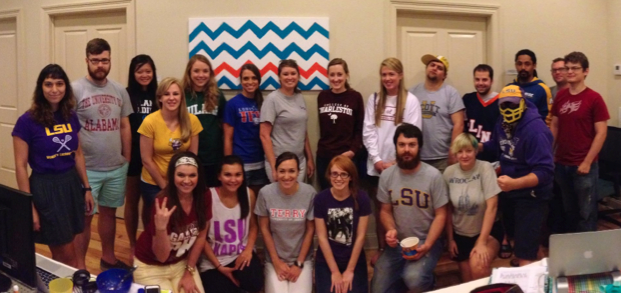
School spirit was in the air on Tuesday when we celebrated “College Day” and witnessed school rivalries and die-hard alums. Some of the team chose to wear college t-shirts, while others went all out in a costume.
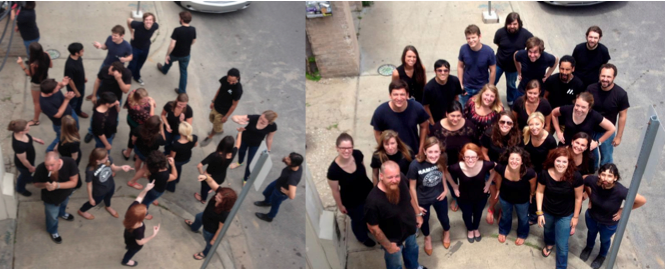
Wednesday was “Dress Like Your Favorite Lead Developer Day.” This day was dedicated to our very talented Lead Developer Luke Ludet and his timeless daily wardrobe choice: a black t-shirt and jeans. The SI office was filled with Luke Ledet wannabes reppin’ their black tees and jeans. Can you spot the real Luke Ledet in these pictures?
Our department teams got together for Thursday’s “Group Day” and used our arts and crafts skills for hilarious group get-ups. The White Label Account Management Team stuck to their New Orleans roots and put on their best Mardi Gras gear ready to party.
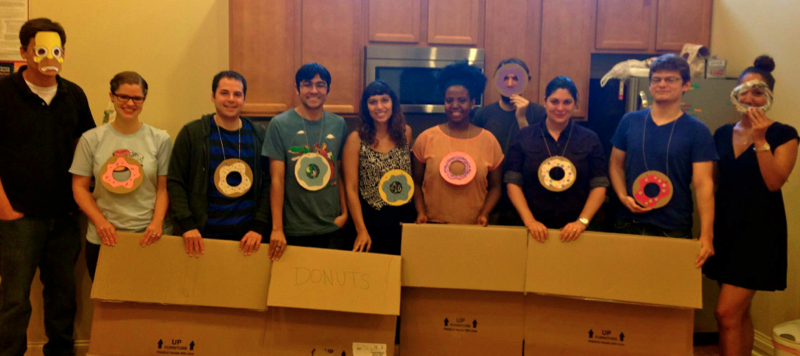
Our Production Team gave the office a sweet tooth when they dressed as Homer Simpson and a box of donuts.
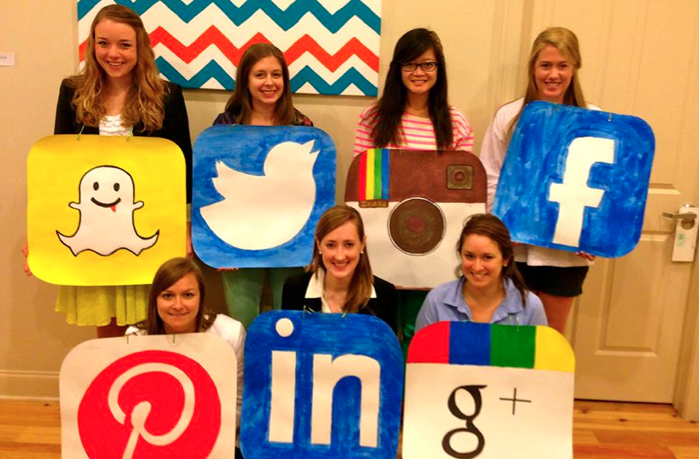
The Direct Account Management Team was social media savvy and dressed as their favorite iPhone apps.
The A-Team used their local search skills as inspiration for their costumes and dressed up as Google Maps pins. Designer Will Monson, interpreted the theme a little differently and dressed as a member of SI’s predominantly female “group”- Account Management.
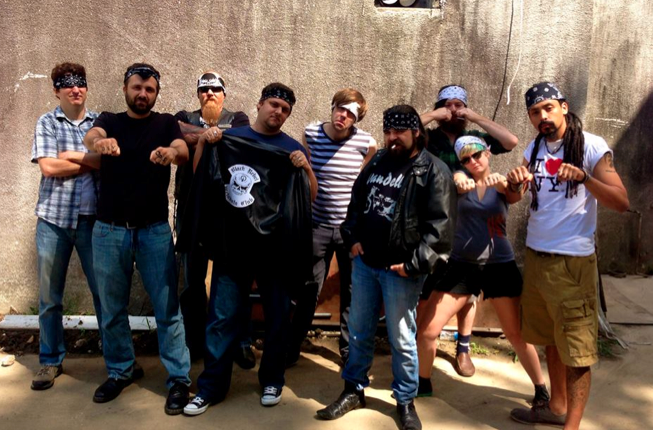
And, the Best Costume Award for “Group Day” went to the Development Team, or rather “Black Rebel Meta Data Club,” for their hardcore biker costumes.
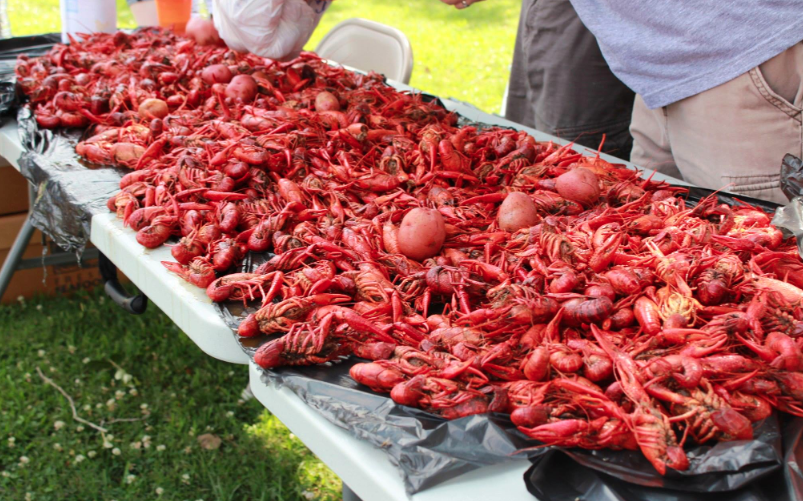
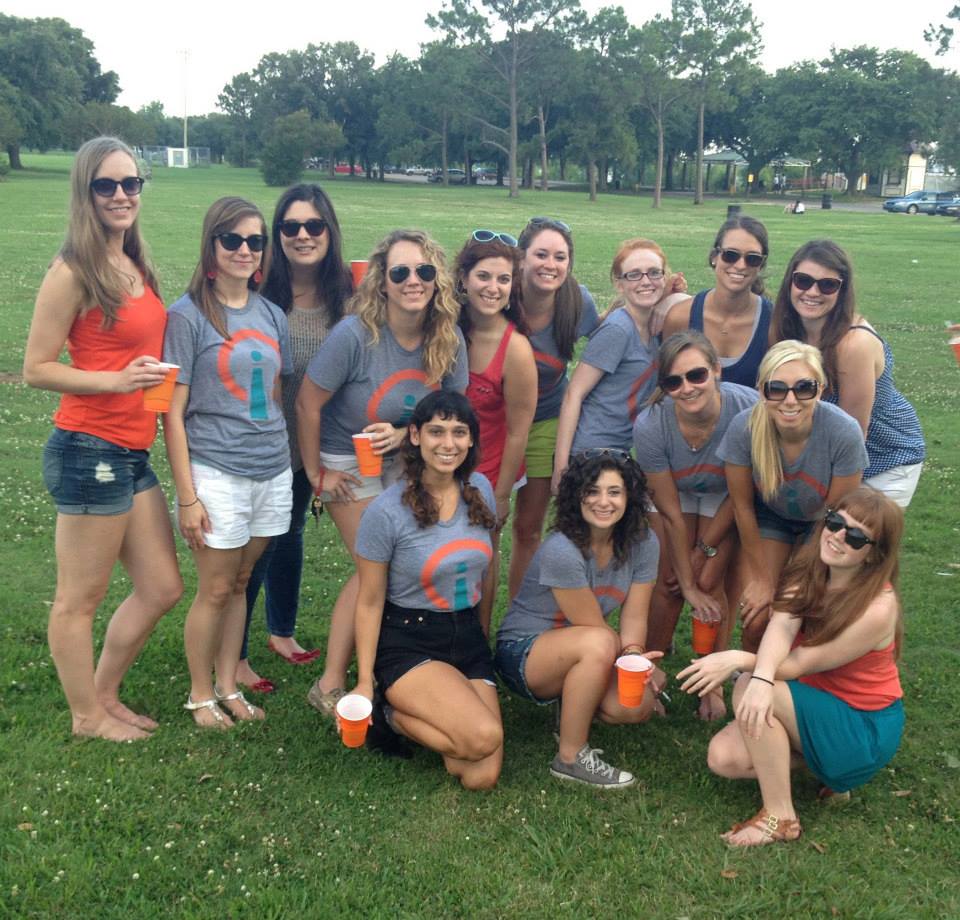
Spirit Week came to an end during Friday’s company crawfish boil at The Fly at Audubon Park, where we enjoyed Abita Amber and delicious boiled crawfish from Johnny’s Seafood. The team played games, tossed frisbees and spent time with co-workers from other departments.
Thanks to our wonderful Team Building Committee for their creativity and a successful Spirit Week. And, of course, a special thanks goes to Will and Angie for encouraging our dynamic company culture and making Search Influence such a great place to work.
As usual, Google is always testing new search results and the way the results display. Dr. Peter Meyers of Moz recently noticed a change in the Google search interface. The results displayed included restaurant reviews from Reason, New York Times, and the Wall Street Journal when he searched [mexican restaurants].
In a recent announcement, Facebook plans to consolidate its ad offerings down from 27 to close to half of that. Offers for online deals will disappear and they are changing way “Sponsored Stories” are laid out. Expect these changes to slowly roll out.
If you have heard of this NSA PRISM program, you should pay attention now. The Guardian uncovered a top secret document that showed that officials had direct access to systems of Google, Facebook, Apple and other internet bigwigs. The document was allegedly used to educate intelligence operatives on the program.
Jade W of Google announced that Google will now start displaying “Are you a business owner?” to direct branded search results. Although it is a minor change, it seems as though Google is attempting to engage small business owners more. Have you started seeing this change for other SMBs?
For those who still use Yahoo as their primary search engine will notice a change in the search results. Yahoo has attempted to de-clutter the SERPs and moving search results higher up on the page. Do you like the new changes? Will you start using Yahoo?
It’s no secret that a company’s online presence can help and maybe hurt their business, and this is especially true for start ups that are turning to the Internet to get the word out about their services or products. This list (while in no way exhaustive) is a great collection of some of the biggest mistakes that rookies make. Some of the mistakes listed include poor/no user interface and user experience, pages that take forever to load, funky site architecture, meaningless URL naming conventions, and skimping on content marketing and blogs. Of course, there’s also the ever-present “Don’t Ignore Social Media.”
Will Scott, our very own CEO of SEO, has a post on Search Engine Land this week all about how infographics can affect your rankings, traffic, and leads. The piece details how one Search Influence client has benefited from the creation of infographics specifically designed with leads in mind. There’s also some fun stuff in there about the history or representing information visually.
In this post SEO-focused copywriting agency SuccessWorks gives quite a few tips for planning and implementing a content strategy. The first point of planning, and what I think is the most important step of writing anything, is to keep the audience in mind — identify and then analyze who they are, how they get to your site, and what they do with the content. Once you know what your audience is looking for, audit your site and take inventory periodically to make sure that everything is fresh, applicable to your audience, and unique.
While this isn’t the whole list of 64 tips (it’s only 19, but the rest of the list will presumably be posted on the aimClear blog at some point in the future), the information given here is valuable to those just starting out or who have been doing it for a while. And the list is helpful for anyone managing any sort of account, from SEO to paper.
She probably could have used some help.
Some of the items are very basic and are actually life lessons: keep your promises, be a thoughtful listener, be confident. Some of these are enlightening more specifically to business, like don’t expose yourself to legal risks and don’t let your client find something out from another source.
Another list! Can’t you tell we love ’em here? And blogs, too! This one is a great reflection on lessons learned from blogging since 2006. The first is my favorite: Blogging is hard. With so many marketers and other blogs telling business owners how awesome blogs can be and a great one can really drive traffic, lots of people want to get into blogging for their companies. It can seem to some people that a blog is easy to throw together and doesn’t take long. This is absolutely not the case, and as the author reminds us, it’s completely ok to say that you aren’t ready for the type of commitment and work that comes with maintaining a quality blog with posts going up on a regular basis.
Google hosted their big developers conference this week, Google I/O. Although there were no big new products introductions, one service that has been getting a lot of attention is Google Now. Although this product was released over a year ago, it is now available for free download on Apple and Android phones and tablets. Guillaume Bouchard has some interesting ideas about how Google Now will affect the SEO community and what we can do to stay ahead of the curve.
Google announced another big update this week. Google Maps is undergoing a complete makeover. The maps will be more interactive and customized for each user. Search results will be clearly labeled on the map with icons and brief descriptions. They’re also promising “smarter directions” and “tours generated from user-submitted photos.” The update is invitation-only right now.
This is a fun article and a good read for anyone working in SEO. Introducing somebody to SEO is not easy, and it’s good to take a step back from our industry jargon and realize that clients – usually small business owners – might not know what “organic search” is!
We’ve been hearing for a while about the importance of content marketing. This infographic lays out the cold hard facts about how and why content marketing is essential for your business.
5. Google Local Adds New Troubleshooter to Move Reviews When a Business Relocates – http://blumenthals.com/blog
One more update from the all-important Google. Google has announced that they now have a process in place to submit requests for when a business relocates, changes its name, or changes ownership. This is something that has plagued Maps teams for a while and it’s great to see Google doing something proactive in order to simplify the process.
At a recent event I found myself ranting – yes, really, ranting and I understand there’s video – about what I think is a very big deal for SMBs and those who market for them. The topic at hand was call tracking and local search.
Over the course of my interaction with a few of our attendees I discovered that at least a couple of them were using call tracking to demonstrate ROI for their customers in a potentially harmful way. Call tracking in local SEO, if done poorly, is one of the most irresponsible things an online marketing company can do.
What’s Coming – It’s Kinda Long:
The NAP (+W)
The History of Call Tracking
Why doing it wrong really hurts SMBs
When is it OK?
How you can do it with less risk
Your NAP +W and Why It’s So Important Not to Mess It Up
The first time I heard the NAP (Name, Address, Phone Number) referenced was in a presentation by my friend Gib Olander who at that time worked for Localeze, one of the 3 main data providers for online and offline directories. Gib and I were presenting on a panel at SMX Local & Mobile in July 2008. My presentation was on a concept I called “Barnacle SEO” and Gib’s was all about the NAP. Mike Blumenthal has sinced added the +W (web site).
NAP +W is:
Business Name – you should have one and only one name. It should be the same on your web site, yellow pages listings, Secretary of State web site and everywhere else.
Address – the location of your business in the real world. This should be identical, or very close, to the version of your address in the USPS database.
Phone Number – your main business phone number. In the best case this phone will be answered by someone who says “Thanks for calling [Business Name], may I help you”?
+ Web Address – your home on the web. All about your business, hopefully including your Name, Address and phone number.
In relational databases there’s a concept of a Primary Key, which is the piece of data which ties together data in different tables. So, in databases, the primary key helps you identify a unique record. In the world of Local Search, the NAP is like that. In other words, your NAP defines your business. It’s like your fingerprint on the web.
Hopefully it’s self-evident that when you mess with your NAP you run the risk of confusing Google and other local search engines, which is never a good idea. If you screw up your NAP you may find yourself invisible in maps and locally focused searches.
If you get many customers who came to you from search, this can be devastating for your business.
History of Call Tracking
A lot of folks in online marketing are relatively new to call tracking. To those of us who grew up in and around the Yellow Pages business, they’re nothing new. In the Yellow Pages universe, they refer to them a number of ways. “Metered lines,” “RCF (remote call forwarding) lines,” and other names all describe what we now know as call tracking.
The Yellow Pages providers and their industry analysts were trying to do the same thing we’re trying to do now. They were trying to show either directly, or by inference from category data, that the ads they were selling had value by demonstrating a direct ROI (Return on Investment). There is little doubt that if your primary goal is to prove the value of your marketing efforts, you can’t beat call-tracking for service and local businesses.
Over the years, some of those same companies who were providing call-tracking for Yellow Pages have morphed into our current crop of call-tracking providers for local SEO and online marketing.
Why Doing It Wrong Hurts SMBs
Small business advertisers typically have a limited budget for marketing and are therefore attracted to “performance based” solutions, in other words, those that feel like they come with a guarantee. Call-tracking is a great way to track leads and demonstrate the performance of these programs.
Small businesses are also often fickle and impatient. And they’re not professional marketers, so we can’t expect them to think like we do about their investment.
And they don’t usually understand exactly what it is we as marketers are doing for them. In the case of Call Tracking, they likely have NO idea of the risks of their local and maps rankings if their NAP gets screwed up.
According to an acquaintance of mine who works for Google in Local Support and Operations, Google’s systems don’t support replacing your local number with an 800 number if they’re still able to verify your local number. Yes, you can have multiple numbers, but Google is going to treat the one they are able to find and confirm through their own data as authoritative. Google is looking for the greatest number of signals — some of them human generated, like phone verification — to assure their data is correct, so if they find a call tracking number in all the places they look for authoritative data it can be incredibly problematic long term.
There are 3 major data providers in the US, Axciom, Localeze, and InfoGroup. One of those 3 is the origin for 90+ percent of the data you see online. But, like Google, they too get some of those data from crawling the web. So you can see how it becomes a vicious cycle – publish bad NAP, bad NAP get’s crawled and goes back into the ecosystem, bad NAP lives on long after the campaign has ended.
At Search Influence we have a pretty deep expertise in NAP clean up — that’s right, NAP clean up — and a staff trained in how to manage listings. Most locally focused SMBs, plumbers, roofers, even doctors and lawyers don’t have the expertise to do it themselves. And, this should be obvious, they’ve got businesses to run.
Putting a bad NAP into the ecosystem can hang around for YEARS. We all know that guy who keeps getting calls for the pizza place which used to have his number, right? Imagine your frustration if you were the pizza place. Think of all the sales you’d be missing.
Beyond the NAP issues, for local search call tracking can be a crutch for weak metrics. It’s a heck of a lot easier to tell a customer they got 20 calls than to pick up the phone and ask about their business.
When is It OK to Use Call Tracking for Local SEO
NEVER!
Ok, maybe not never.
I think it’s OK to use call tracking with PPC and other online ads as long as one takes precautions against those numbers being seen with other referral sources. And, for national accounts (preferably with ads) I don’t feel as strongly given the lower, perhaps negligible impact of maps. But I realize that’s not Local SEO.
For local / maps SEO, I want to state clearly that tracking numbers in local search should be avoided at all costs.
My friend Thomas Ballantyne says he’d be OK with lead gen services in local as long as the business name wasn’t a match for his. In other words, if you want him to buy leads that use local search you’d better not muck up his NAP. From a home-service provider we hear it clearly, think about using a slightly different business name in the same way some providers use a slightly different URL. That way you don’t have to worry about your lead-gen stuff winding up in the cluster.
If, however, a client is adamant that they need to see the calls generated or they need to record calls that come from search it can be done, but the proper precautions have to be in place.
How You Can Do It with Less Risk
The safest way to track phone leads is by dynamically switching the number using Javascript.
Search engine robots are increasingly capable of “seeing” dynamic content so this is an imperfect method by itself.
It does, however, reduce the likelihood your tracking numbers will be identified and muck up your NAP+W.
A little more technological implementation can reduce the likelihood of NAP confusion even further:
First, determine the User Agent of the visitors to your site – the identifier of the browser – and ensure that it’s not a robot, such as GoogleBot or BingBot. If you determine the visitor is a robot, you must show your proper NAP.
If at all possible, ONLY show a call-tracking number when there is a utm_source, or other tracking code on the URL string. Doing this will explicitly assure your tracking numbers are only present for visitors from a specific source, or ad campaign.
Finally, if you want to be absolutely certain your numbers won’t get spidered you can render them in images. By replacing the image which contains the phone number you assure it won’t be misread. This is not the preferred method given it’s not mobile friendly and clickable.
End of Rant…Phew!
I hope it’s clearer now why call-tracking is such a dangerous tool. Yes, it’s a tool we use, but much like using a chainsaw, we take every precaution available.
Our local business clients don’t know what they don’t know and often don’t know to ask “what are the risks.” So we, as their shepherds, need to be sure that we do no harm.
I’d love to hear some other opinions. Do we have an ethical responsibility to our clients to educate them in the risks, or does the end justify the means?
Due to financial limitations, many non-profits find it difficult to increase their online presence. It may be difficult for local non-profits to compete with the big brands that are creeping on their digital space. Yet there are a few ways for non-profits to interact with their target audience online for very little out of pocket expense. What is this magical tool that non-profits should be utilizing? Social media, of course.
Social media outlets prove to be great tools to capture, engage, and inform your supporters. It works as a way to provide a face to your cause and keep your loyal audience up to date. A recent study by Craig Newmark reported that 92% of non-profits are on Facebook and 90% are on Twitter. Non-profits are spending more and more time investing in their social media marketing. However, simply signing up for your social media account isn’t enough. How do you reach your audience? What do they want to hear? What will get them excited?
Five quick tips for non-profits when crafting your social posts:
Sneak Peeks: everyone appreciates a good inside scoop! Are you about to launch a new product or event? Why not let your social media audience get the inside information first. This will create buzz around your brand!
Insider Photos: you most likely know that pictures are a great addition to your social posting and should be worked in whenever possible. Including behind the scenes pictures is a great way to engage your fans and highlight your supporters. It provides a great “this is what happens when you aren’t here” anecdote. Team Gleason does a great job of including behind the scenes shots to keep their Facebook Fans engaged and sharing interesting content!
Keep your posts relevant: is there an upcoming organization event? Post about it! Is there local breaking news? Tweet it! The beauty of social media is that you’re able to comment on things as they’re happening. You want to stay relevant and timely.
Link to your site: how do you expect your social media to impact your web traffic if you don’t link to your site? When appropriate, link back to your site so fans can learn more information. Links work best when paired with an eye-catching graphic. Check out what The Museum of Modern Art did with a link to purchase tickets online.
But don’t always link to your site: yes, you want to drive site traffic, but you have to do it carefully. There is nothing social media users hate more than the self-obsessed page. The majority of your posts should be great and engaging content. Self-promotion should be the minority of your updates.
And don’t worry, non-profits. The social media sites want you to succeed! Facebook even recently released a resource center for non-profits. So get to posting and watch the fans and site visits increase!




 Kendall Finn has been hired as a Junior Account Associate. A New Orleans native, Kendall graduated from Louisiana State University with a bachelor’s degree in marketing. During her time at LSU, Kendall was able to intern for several companies, including Professional Arts Pharmacy, Rent the Runway, and Uptown PR.
 At a recent Wednesdays at the Square event, I ran into a friend who was sporting red shoes along with a nametag that read, “Ask me about my red shoes.” The Wizard of Oz, of course, popped into my head, but I asked the question anyway. Turns out, the movie had nothing to do with her shoes of choice. Instead, they embodied some familiar virtues such as courage and, most importantly, heart.
 In order to recruit and raise money, they plan social events where more young professionals have the opportunity to get involved with the cause while expanding their networks. Anita says, “We have social mixers every so often to raise money, like the Cocktails for a Cause event on May 23rd at the Rusty Nail, where 20% of the profits go towards the house.” At places like the Sovereign Pub and Ralph’s on the Park, the volunteers also hold the “Making Ties” happy hour events, which provide young professionals a chance to learn about the organization’s mission and join the charity.


 1.
1. 







 A lot of folks in online marketing are relatively new to call tracking. To those of us who grew up in and around the Yellow Pages business, they’re nothing new. In the Yellow Pages universe, they refer to them a number of ways. “Metered lines,” “
 The safest way to track phone leads is by dynamically switching the number using Javascript.
