Category: Industry Insights

  • Birds of a Feather Tweet Together: How to Shape Your Dental Practice’s Strategy

    1601-SI-Newsletter-0112-Big-KG-D-01

    With today being National Bird Day, one saying comes to mind, and it’s one that forever rings true: “Birds of a feather…” Like-minded individuals with similar interests and agendas generally come together and communicate with each other more regularly. This can be beneficial for dentists, periodontists, and orthodontists as they work on growing their audiences online.

    Who’s in Your Flock?

    For those in the family dental industry, consider who will be most inclined to tweet about your services. First to note in the flock is, of course, parents and families. With that in mind, crafting your content with families in mind can benefit both your business as well as your audience, both of which will do wonders for your online presence and, in turn, grow your respective audience as more of that same audience is brought in by their own family and like-minded friends.

    Tweet to Your Birds

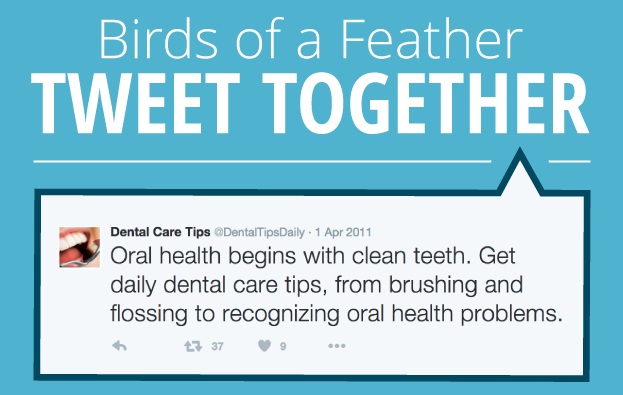
    Birds go where other birds go. If you want your Twitter audience to grow, start with those on Twitter who fit your audience to a tee. From there, encourage interaction and engagement with them and their fellow followers who share the same general mindset and lifestyle. For example, if you share a great joke, infographic, or helpful fact about oral health practices and end it with “RT to your friends and fam!,” more will learn of your company’s personality and expertise through shared tweets, and those with whom the messages resonate will join your flock of followers, allowing your audience to continue to grow and prosper.

    Take Flight Today

    The idea of growing your audience online can be daunting to those who aren’t entirely familiar with the method, as the Internet has grown to become a whole new world of its own. Don’t worry, though—that’s what online marketing services are for! Allow a professional company to best serve you in the way that will grow your audience, your company, and your success via online marketing today.


  • From Europe, with Love: A Marketer’s Guide to Capitalizing on Tourism

    1601-SI-Newsletter-0112-Big-KG-B-01

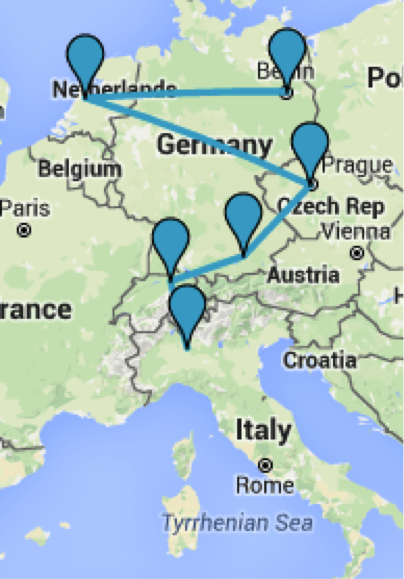
    I recently took my first ever solo trip and explored six European cities in two and a half weeks. On my trip, I realized the importance of tourism for small businesses. Every tourist needs places to stay, food to eat, and things to do while visiting—and that leaves a big opportunity for businesses, especially on search (and social)!

    MB 1

    Let’s take a look at my search (and purchase) journey, starting at the very beginning.

    Selecting a Destination & Finding Places to Stay

    One of the most important parts of going on a solo trip is making sure you are going to the best places, and going in the most efficient order. At Search Influence, we help city tourism and marketing organizations, like New Orleans, and I can attest to the importance of the work we are doing. How else would I have discovered Milan, Zurich, Munich, Prague, Amsterdam, and Berlin!? Truth be told, I also used the recommendations of friends, Redditors (read: opportunity for businesses), and Rick Steves to solidify my plans. When it came time to decide, looking at the city tourism websites helped me to make my final decision.

    MB 2

    The next toughest part of preparing for the trip was finding places to stay. Solo travelers feel a lot of pressure when picking hostels, or Airbnbs, because it can have a huge impact on your trip, and on your impression of the city. I have personally never paid so much attention to reviews in my life! The thought of picking a hostel that didn’t seem 100% right was frightening. I wanted to make sure they had Wi-Fi (everywhere, not just in the lobby) and were clean, in a good location, and recommended by other travelers on HostelWorld and Reddit (Pro Tip: if you search the city name + “hostel” you can find some awesome recommendations from Redditors). The most surprising thing for me is that after the fact, Airbnb was the only one to push for a review. While I am going to go back and leave reviews everywhere else, I thought this was a missed opportunity.

    Searching Abroad & What You Can Do to Attract Tourists

    Now, let’s find some organic online marketing opportunities using some of my search history, which I like to think of as representative of many travelers.

    • should i get the berlin tourist pass
    • van goh vs rijksmuseum
    • indonesian restaurant amsterdam
    • caridejuv ucen opera
    • u modre kachnicky
    • bike tours munich
    • rashes on legs
    • jungfraujoch trip from zurich
    • malpensa to ostello bello

    Based on this mishmash of tours, museums, restaurants, skin ailments, directions, etc., there are a few strategies you can adopt in order to acquire traveling customers. I would try to build trust with the customer in the organic search results, and to take it a step further, I would use paid ads to target them for likely-to-convert terms.

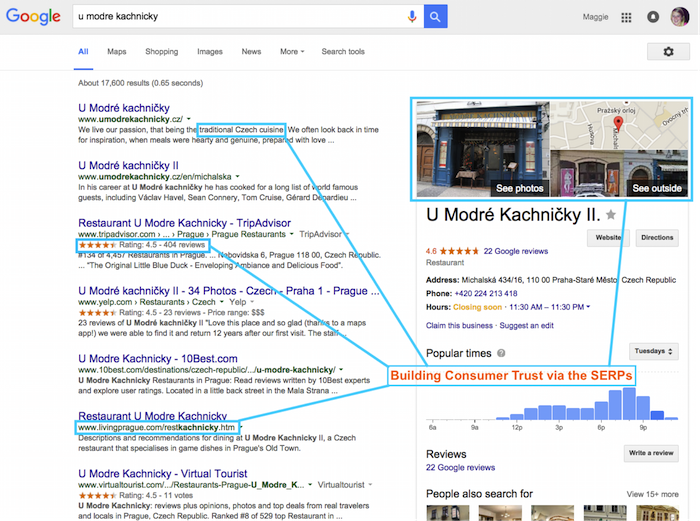
    Organically, you can build trust and authority with potential customers. In the screenshot below, the restaurant dominates the branded search result, which can build a sense of trust with someone who doesn’t know much about the area. My favorite tactics include the ones below:

    • Relevant meta data
    • Large numbers of positive ratings (on trusted sites with Schema markup!)
    • Local directories
    • Clear photos of the front of the restaurant
    • A correct map on Google+
    • Features on travel blogs
    • Active social media profiles (not pictured)

    MB 3

    By showing authority online (on and offsite), you can capture and convert a tourist (with money to spend) into a customer. You may even have an impact on locals, tourists trying to be locals, and the special breed of traveler who goes around touching statues for good luck!

    MB last

  • Search Influence Will Give One Of These Businesses $10k. Who Should It Be?

    1512-SI-Newsletter-1229-Big-KG-A-01

    Search Influence is proud to be celebrating our 10th year of helping businesses succeed online. We can think of no better way to celebrate our 10-year anniversary than to give away $10,000 worth of free online marketing services to one lucky Louisiana-based business. It’s our “Make Your Dreams Come True” contest, and we need you to help decide the winner.

    Our five finalists are as follows:

    The grand prize winner will be chosen based on the number of votes each finalist receives via Search Influence’s Facebook contest page between now and January 8, 2016. People can vote daily, so please make sure to visit often. The winner will be announced on Wednesday, January 13th at Search Influence’s 10-year anniversary celebration in New Orleans.

    Good luck to our five finalists!

  • Are You a Homer or a Lisa? Psychographics Demystified via The Simpsons

    In marketing, half the battle is understanding your typical clientele. Understanding your customers is crucial in marketing directly to your niche targeted audience. That being said, understanding the ins and outs of your customers can often be daunting and tricky…But wait—hope is not lost! Look in the sky! It’s a bird…it’s a plane…it’s PSYCHOGRAPHICS!

    What are psychographics?

    Psychographics are “the study of personality, values, opinions, attitudes, interests, and lifestyles. This area of research focuses on interests, attitudes, and opinions.” Huh? That definition is so ambiguous! It doesn’t help at all! Allow me to clarify with an example:

    Let’s pretend that you’re a Chevrolet dealership in New Jersey. In getting to know your clients, you may try to determine who your typical customer is by asking, “Who do we usually sell Chevys to? What do our typical customers look and act like?” Your first thought may be, “We usually sell our Chevys to mothers between the ages of 30-45.” The answer you just gave is the demographic of your typical customer, not the psychographic. If you had gone a little deeper by saying, “We usually sell our Chevys to mothers between the ages of 30-45 who often seem stressed trying to juggle bringing their kids to various after-school activities, running errands, and finding time for themselves; in fact, they often chose to buy Chevys through us because of the brand’s incredible safety ratings. They always have their children’s safety in mind,” that would be the psychographic of your average customer.

    Demographic: Mothers age 30-45

    Psychographic: Who the mothers age 30-45 actually are…their buying habits, what attracts them to purchasing a Chevy, what turns them away from purchasing other brands, etc.

    Why are psychographics important?

    Understanding the ins and outs of your clients can help you tailor your marketing efforts to directly reach your average customer. Think about it: designing a customized marketing campaign for a mom between the ages of 30-45 is much harder than designing a marketing campaign for a mom between the ages of 30-45 who values vehicle safety ratings and needs a large vehicle to schlep her kids around but still wants a vehicle with luxury components for her own comfort. While demographics may give you a generic snapshot into your average customer, psychographics allow you to really hone in and understand your customers as well as their buying habits.

    How do I determine the psychographics of my clients?

    Ask investigative questions! When I work with my clients to help them delve into the psychographics of their customers, I find that asking questions that dig a bit deeper can range from, “Can you expand on what you mean when you say that your average customers are males aged 45-60 who like to fish?” to “You mentioned that your clients are males aged 45-60 who like to fish. Do your clients usually find themselves fishing only on the weekends? How much time and money would you say your clients usually spend weekly on fishing? Are they fishing in their free time on the weekends, or is fishing part of their daily routine?” By avoiding easy, quick responses through more investigative questions, you will be able to better understand your customers and in turn develop a more customized and effective marketing campaign.

    Need some more context?

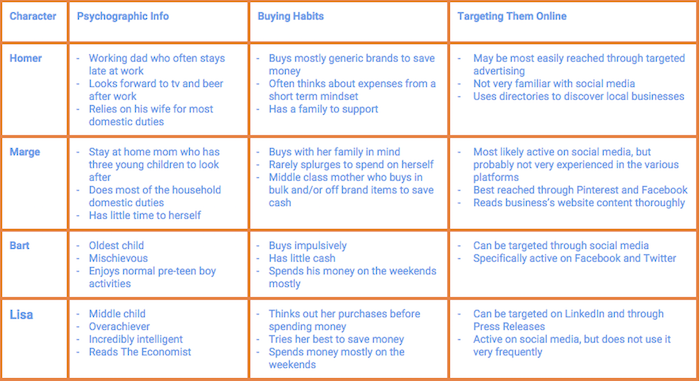
    Below, I have included a chart of the main characters from The Simpsons. In the chart, you will find a breakdown of each character’s psychographic information, their buying habits, and how to best target each character online. When reading through the chart, ask yourself, “What things would I need to know in order to get more specific information from my customers? In knowing this information, how could I better customize a marketing campaign targeting an average customer like Homer Simpson, as opposed to strategizing my marketing efforts in hopes of targeting customers similar to Lisa Simpson?”

    Disclaimer: for all you diehard Simpsons fans out there, I left out Maggie Simpson on purpose…because she is an infant…and she doesn’t have buying habits…

    2-homer

    Screen Shot 2015-12-18 at 11.01.23 AM

    Image Credits:

    Superman GIF

    Simpsons GIF

  • The Easy Guide to Holiday Marketing: Four Tips to Help Land Last-Minute Shoppers

    The Black Friday frenzy might be over, but that doesn’t mean people are done shopping. If your customers are anything like me, they’ll be walking through your doors at noon on Christmas Eve.

    So how do you score the last-minute shoppers? Here are a few easy, last-minute marketing tips to help your business succeed this holiday season:

    Last-Minute Holiday Gift For Marketing Blog

    1. Go Mobile

    According to Think with Google, 28% of all holiday retail sales were influenced by shopping-related mobile searches last year. Having a mobile-friendly site weighs heavy in user experience; users can better navigate your inventory, contact you, and see what kind of holiday deals you can offer them.

    2. Utilize Social Media

    Utilizing social media sites like Facebook, Twitter, and even Instagram can be a great way to draw customers into your brand. Showing them their shopping options and being easily accessible is a way to set your business apart in such a busy and competitive season.

    Last Minute Holiday Present For Marketing Blog

    3. Tailor Your Content

    Tailor your content specifically for the holiday season. Your social posts should be helpful to the customer, something along the lines of “We’ve picked out the perfect gifts, so all you have to do is buy them!” Your posts shouldn’t add to the stress of their last-minute shopping. Website content should feature holiday hours, holiday shipping notifications, and anything else that might affect a customer this holiday season.

    4. Make Your Business Stand Out

    Offering incentives like free shipping, free gifts with purchase, and giveaways can help your business stand out among local competitors. Advertise these incentives on your site, social channels, and in your store. With so many ways to reach your business, you want shoppers to easily know why they should choose you over a competitor.

    Use these four super quick and easy ways to better market your business this holiday season.

    Image Credits:

    Orange gift

    Red gift

  • A Brand by Any Other Name: The Importance of Brand Consistency

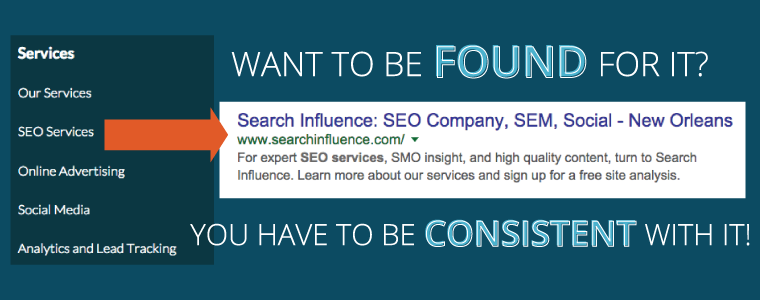
    In the world of SEO, consistency really is key. Any deviation from the norm can negatively affect you in search results and in the eyes of your potential customers. Consistency with your NAP (name, address, phone number) is important throughout your website, social channels, and on any directories you’re listed on. Your NAP isn’t the only thing you should be concerned with when it comes to being consistent, however. Branding consistency is also something everyone should consider.

    Branding isn’t exactly something a lot of small businesses can budget to have concern for. The term itself implies hiring graphic designers, brand management firms, or other big-budget solutions you may not be able to even consider. For the sake of this blog, however, let’s assume branding only refers to your image and content consistency.

    Your Image

    For a lot of small businesses, branding ends at your logo. You may be working with WordPress or other do-it-yourself CMS systems that allow you to plug in your logo and make a few tweaks here and there to how things look, but that’s usually as far as it goes. Maybe you threw some of your colors in there too to liven things up a bit. Now, not all of us can be WordPress experts, but it can be worth the extra effort to make sure things look consistent throughout your site. Is your logo flat and modern looking? Make sure any elements, buttons, or boxes on your site are also flat and modern. If your logo is round and poofy, it might make sense to find some round and bold options instead. It doesn’t have to be perfect, but your logo and website should have the same look and feel.

    The goal here is to have consistency throughout your site. When a potential customer clicks through your pages, you want them to always know where they are, what company they’re looking at, and to be greeted by pages that look like they go together. Much like consistency with your NAP, all you’re doing here is ensuring that the customer knows they can trust your business.

    3-logo-website

    Your Content

    Other than your image branding, another important thing customers factor into whether or not they’ll do business with you is your content branding. You want the customer to be able to search for something, see consistency with your brand being associated with that search, and trust you for that. Use your brand name as much as you can in your content. Not to the point where it seems spammy, but sprinkled in there enough for it to be associated with what people might be searching for.

    When looking for someone to do business with, your potential customers are looking for someone they can trust. If they’re fumbling around a site that uses different color schemes than your uniforms or fleet, they might think they’re in the wrong place. Having consistency in your online presence is as important as your name these days, so get to it!

    Consistent Logo Example Image

  • Tech It Out: Scripting Automated Emails of Extracts with Tableau

    Businesses now more than ever need effective, data-driven metrics to drive solid, evidence-based workflows. More and more small- and medium-sized companies are realizing an increased demand for data visualization to be able to quickly and clearly communicate exactly what is happening at every level in their business. A Stanford-born company arose to fill this need: Tableau. Tableau has more than 35,000 customer accounts, so chances are, if you need data analytics, you’re using Tableau.

    Our particular needs were a little different and required a little bit of innovation. Tableau has user accounts, but we weren’t satisfied with the level of user account access control to the app, and we couldn’t give everyone access to all of the data. So how could we report metrics to different departments while keeping the irrelevant inner workings of other departments cleanly separated?

    Tableau Server Metrics Image

    The solution lies in having meaningful tags on workbooks and automatically emailing out extracts. Here’s the reference for commands we’ll be using.

    What you’ll need:

    – A scripting language you’re comfortable with

    – An already running Tableau Server

    – The username and password to that server to log in and perform general admin tasks

    – The site ID that you’re interested in reporting on

    1. Create a command to log in to the Tableau Server.

    The first thing you’ll want to do is write a command in your script to log in to your already running Tableau server. It should have the basic form:

    tabcmd login -s SiteURL -u Username -p Password

    2. Focus on either emailing PDFs or workbooks and plan accordingly.

    You can either export PDFs of views or the actual workbooks themselves. The workbooks are more time-consuming to export, but they contain the interactive parts of the workbooks, and the dimensions don’t have to be known beforehand. Either way, you’ll need to perform a GET request.

    If you want to get info on the workbooks:

    your_site_uri + ‘api/2.0/sites’ + site_id + ‘/users/’ + user_id + ‘/workbooks

    If you want to get info on the views:

    your_site_uri + ‘api/2.0/sites’ + site_id + ‘/workbooks/’ + workbook_id + ‘/views’

    3. Parse the workbook info.

    Each workbook and view comes back with a smattering of XML info related to the workbook. The important bits are as follows:

    • ID
    • Title
    • Project
    • User-defined tags
      • Frequency
      • Recipients
      • Disabled

    The ID, title, and project are all related to the default Tableau structure. In our case, I have user-defined tags which represent the frequency that the workbooks are emailed out (daily/weekly/monthly), a tag with the email address of each intended recipient, and a tag indicating if the emailing function should be disabled for that particular workbook.

    With some simple string substitution, maybe a regex pattern here or there, you should be able to pull out all of the relevant information and create your own class to store the tag information for each workbook.

    4. Refresh your extracts.

    Unless you want stale data getting sent out, you should refresh each extract related to each workbook. Every call should include information about the workbook title, the project, and the data source. It should also have the synchronous flag to ensure stale data isn’t mailed out before the extract completes refreshing. It should have the form:

    tabcmd refreshextracts –workbook WorkBook –project Project –datasource DataSource –synchronous

    5. Export the workbooks.

    Exporting the workbooks command should look something like this:

    tabcmd get ‘/workbooks/’ + title + ‘.twb -f ‘ + title + ‘.twbx’

    6. Email

    Use the tags pulled from step three to create the list of recipients. Use your favorite email class (I used Ruby’s built-in Mail class to do this) to email out each email if the particular report is to be sent out that day.

    And that’s it—you’re done! You’ve defeated automated reporting!


  • Will Camp Out for Marketing Tips: Your Black Friday Survival Guide

    1

    November is here! A month full of falling leaves, dropping temperatures, giving thanks, and many people’s favorite shopping day: Black Friday. Last year, 133.7 million people shopped during the Black Friday weekend, according to a Fundivo.com study. As a local business, you may be trying to get a piece of the Black Friday pie this year, but you might not know where to start. Follow these tips to make the most of your online marketing efforts on one of the busiest the shopping days of the year.

    Plan Early

    The time to start thinking about marketing for Black Friday is now. If you traditionally experience a high volume of customers and sales during this time, like a retail store, you won’t necessarily be able to think about your marketing plan as you’re stocking extra inventory a few days before.

    One of the first things to decide is what your business is going to offer for Black Friday. Is it going to be a storewide sale? Will you sell a product you don’t typically offer? Consider your goals and determine what makes the most sense for your business.

    Get the Word Out

    Once you’ve chosen your Black Friday offer, you need to let people know about it. By promoting your offer online, you’ll be able to reach significantly more potential customers than by promoting it in-store alone.

    If you don’t have extra budget specifically for your Black Friday offer, use social media to connect with your fans. Stand out amongst competitors by posting images of products that will be available during your sale or offer an online-only incentive to entice shoppers to stop in on Black Friday.

    If you’re willing to put a bit of spend behind your efforts, Facebook advertising is an affordable alternative to a costly pay-per-click campaign. You can use their impressive targeting options to get your message in front of your specific demographic. Facebook targeting ranges from gender, age, and location to education, income level, interests, shopping habits, and more.

    Also, consider adding a page to your website with information specific to your Black Friday offer. That way, anyone scouting out sales in your area beforehand will know exactly what to expect from your business.

    Be Creative

    Black Friday isn’t just for retail. Although retail stores tend to see the majority of the action, it doesn’t mean other industries can’t jump on the bandwagon.

    Not everyone loves waiting in line overnight and battling crowds all day, but who doesn’t love a bargain? If you’re a service area business, reward your customers for being productive with home maintenance on Black Friday by offering discounted service or installation. Since many people take the day off work, it’s a great time to take advantage of gaining some extra business.

    Restaurant offers are also a great way to capitalize on Black Friday foot traffic. Let customers know ahead of time that appetizers are half off or you’re offering happy hour prices all day so they know where to go when they need a break from the shopping crowds.

    Make sure your business is taking full advantage of Black Friday this year by creating your marketing plan early, making your offer known, and utilizing creativity to gain more customers.

    Image Sources:
    Jingle All The Way
    Glee
    Gossip Girl
    Shopaholic

  • Stalking, Espionage, and More: The Guide to a Successful B2B Marketing Campaign

    Dealing with business to business, or B2B, clients in search engine optimization, search engine marketing, or social media can be challenging. There is an extra layer of difficulty associated with a technical business that you don’t typically have when working on B2C campaigns.

    The key to starting a B2B online marketing campaign is to focus on your business. Having a jumping-off point of information also allows you to craft thoughtful questions to ask in your initial meeting. Here are some easy things you can do to understand a technical client’s business and industry (besides scouring their site).

    Understanding the Client

    1. Watch the Tube – I love watching YouTube videos that my clients have created. Industrial clients tend to be good at showing off their technology via video. It can be super insightful, and it may help with your strategy down the road.

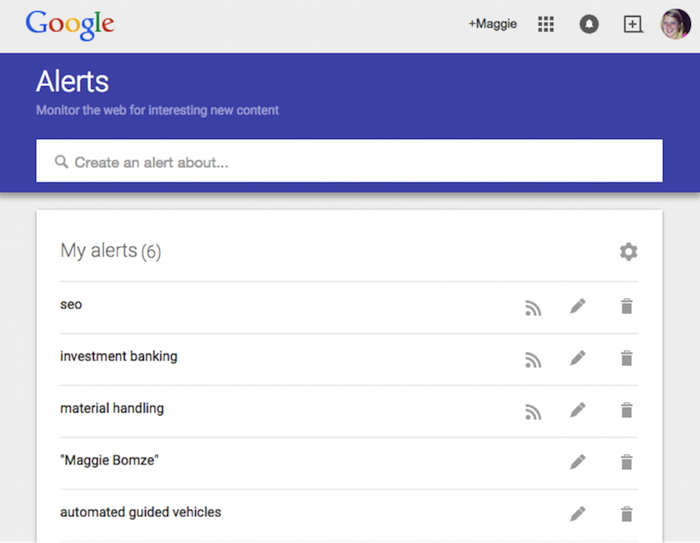
    2. Set up a Google Alert – Reading up on industry news can initially help with learning about the B2B client, and it can be informative later on when you need ideas for social media posts and press releases. (Side note: I think it’s 110% acceptable to have a Google Alert about yourself, so go on and set that up too.)

    MB Blog 1

    3. Do Some Stalking – Head over to LinkedIn to find out who you are going to be speaking with and what their background involves. I’ve also gone as far as joining engineering groups on LinkedIn to see what people in the industry are talking about (and more importantly for SEO and SMO, what types of posts get them engaged). I would also advise checking out any professional associations, charity organizations, and conferences where they regularly attend or present.

    Reaching the Client’s Customers

    1. Infiltrate the Buying Center – Find out (most likely by asking) which industries the client works with, and ask the right questions to find out who the decision makers are in the buying process. This can help you with ad targeting and creating relevant content for C-level buyers vs. operational team members.

    2. Find the Trigger – I always ask technical clients about their sales cycle, and most importantly, what triggers the need for our client’s goods/services. It is helpful to know what other businesses are going through and where search engine optimization fits into the B2B marketing plan.

    3

    Relaying that Knowledge to Your Team

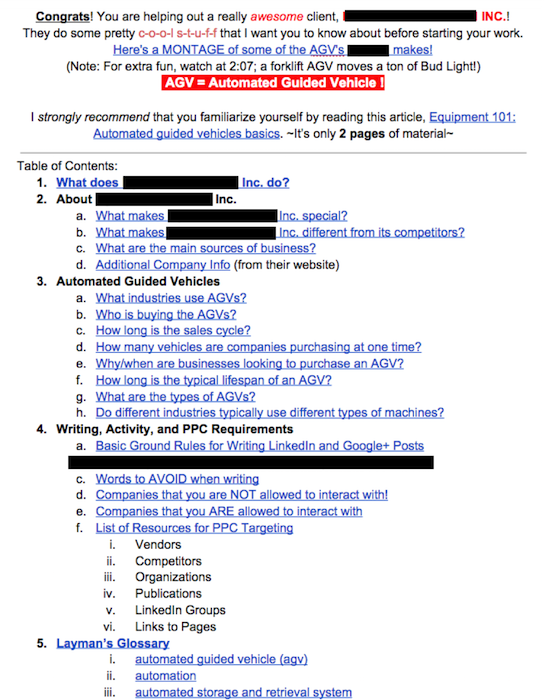
    1. Shout It from the Rooftops – Let the appropriate people on your team know the information they’ll need in order to produce the highest quality work for your client. This might be the hardest part of a B2B marketing campaign. Ask anyone on my team: I’m guilty of giving everyone all of the info I have on a super-technical topic! One short-term solution is to keep an ongoing “Everything you need to know” doc and organize it through bookmarks. This way, your team can quickly get to the info that impacts their task.

    MB Blog 2

    What are some of your tips for working with B2Bs in SEO? Let us know in the comments!


  • A Little Bit Goes a Long Way: Small Steps For Improving Your Online Presence

    Establishing your online presence can seem like a daunting task for small businesses or those who are less knowledgeable about the tech world. Fortunately, there are a few simple ways to market your brand and engage your customers without the hassle. Taking actions like creating social media accounts, keeping your content relevant, and being proactive are valuable ways to attract and keep prospective clients and customers.

    Create Social Media Accounts

    One of the easiest ways to promote your product or service(s) online is by interacting with current and potential customers. A good way to do that is through social media. In the last decade, the social media world has exploded in popularity. Social networking services such as Facebook, Twitter, and Instagram (because who doesn’t love artsy photos of…things) are just a few simple ways to promote your brand while giving you the opportunity to interact with potential clients. The best part about them? They’re free and can be set up in just a few easy steps. Sharing content on your social media account allows you to not only communicate with current clients or customers, but it may also lead those consumers to share it with those who wouldn’t have seen it otherwise.

    Keep Your Content Relevant

    Whether it’s on your social media accounts or your website, it’s important to keep your content fresh and up-to-date. There are few bigger turnoffs to online users than seeing out-of-date information about your company. Offering a new product or service? Customers should know about it (and let’s be honest, you definitely want them to). Moved to a new location? Be sure to change your address. No one wants to get to your “location” only to find out that you’re no longer there.

    CC1

    Be Proactive

    If you’re famous, it’s probably best to avoid reading what people are saying about you online. If you’re a business, you better be. Read online reviews to find out what is or isn’t making your customers happy, and make any necessary adjustments when possible. Engage with your customers directly to show them that you hear them and are working on ways to improve a product or service. Think like a customer. What were some experiences that caused you to support or abandon a certain brand or business? You can’t make everyone happy, but you can certainly take steps to appease the majority.

    There are many other ways to improve your online presence, but these are just a few, easy steps to get started. Interacting with consumers through social media, providing relevant and up-to-date content, and getting proactive will help you to market your brand in a digital world.