Category: Industry Insights

  • The Rise of the Silver Surfers: Engaging Older Americans Online

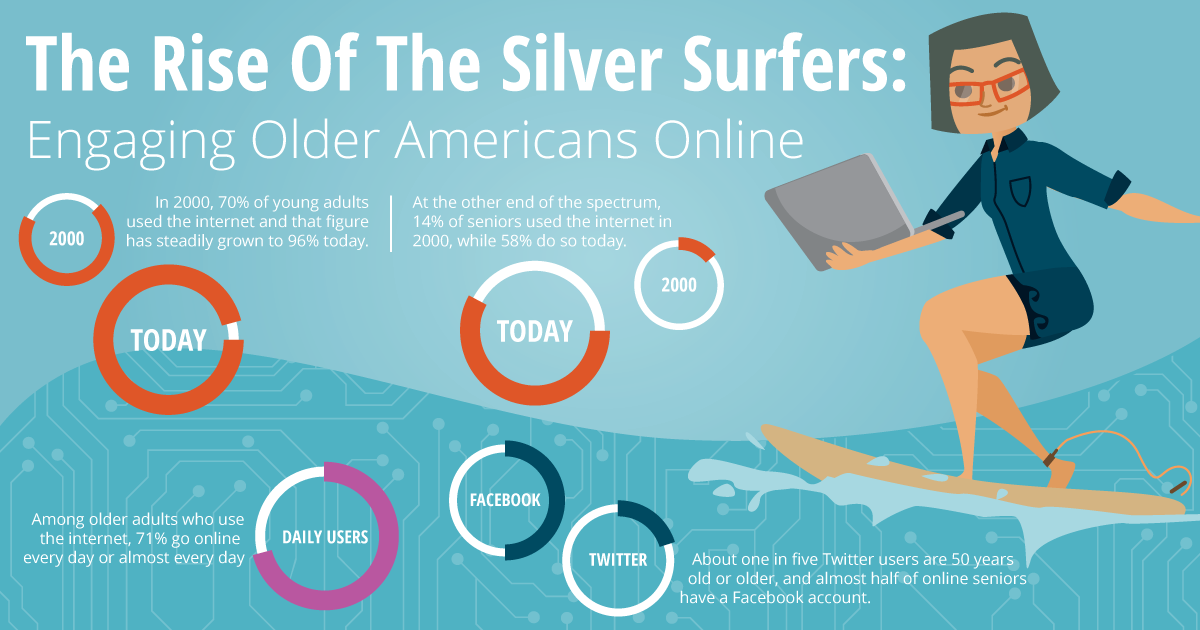
    Mini Infographic Silver Surfers Older Americans Month - Search Influence

    In honor of Older American’s Month, let’s take a look at the latest trends and talk about engaging this audience!

    “So, who exactly is considered an older American?” you might ask yourself. Well, based on the Older Americans Act of 1965, you could say anyone over 60, basically Baby Boomers and older. These are the people who were working in businesses and actively using technologies like PalmPilots and beepers/pagers during the early stages of the rapid technology growth in the 20th and 21st centuries. You may have also previously heard the term “silver surfer” used to refer to anyone over the age of 50 who is an avid internet user.

    According to 97 surveys conducted by Pew Research over the past 15 years (2000-2015), internet usage gaps between older and younger Americans still persist, though they’re lessening. Now about six in ten seniors go online. While adults 65 and older rank the lowest in internet usage between age groups, the number of older Americans online has grown in the past 15 years and will continue to grow in the coming years.

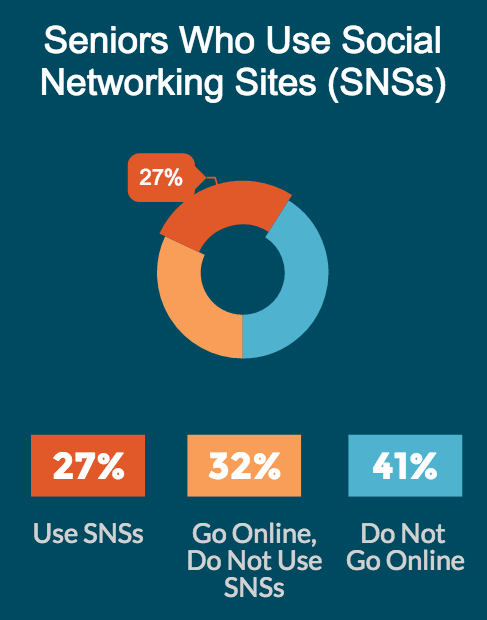
    Another report from Pew Research digs deeper into technology usage trends by analyzing seniors within their age group. Among the older Americans who currently go online, about three-quarters of them go online every day. Just over a quarter of seniors use online social networks.

    The Stat:

    “Older adults have lagged behind younger adults in their adoption, but now a clear majority (58%) of senior citizens use the internet.” — Pew Research Center

    What It Means for Marketers:

    While the previous usage numbers and perceptions would’ve indicated to online marketers that the older age groups aren’t very active online, that is definitely no longer the case. As of 2012, more than half of the senior population is online, and you can bet that number will continue to grow. The silver surfers are now an important and very present audience to consider when marketing online.

    The Stat:

    Seniors have the largest adoption rate change from 2000 to 2015 of any age group (14% to 58% respectively). — Pew Research Center

    What It Means for Marketers:

    This rapid increase in adoption rates shows an increase in technological intelligence among this age group. The previous parallels between chronological age and cognitive age are shifting and advertisers would do well to adjust accordingly. While practicing “ageless” marketing is all well and good, when trying to target this specific audience, be authentic and thoughtful of “the new 65,” a more-tech savvy and a now younger cognitive age group.

    The Stat:

    77% of older adults have a cell phone, but just 18% are smartphone owners. — Pew Research Center

    What It Means for Marketers:

    As many of you reading this know, mobile marketing is quite the focus of today. While a little less than a quarter of older adults have smartphones, over a quarter own tablets or e-book readers. This means that mobile searching and browsing is highly likely for this audience. Consider your potential to reach these seniors when optimizing your website and its content.
    Seniors Older Americans Online Using Social Networking Sites - Search Influence

    The Stat:

    “Today 46% of online seniors (representing 27% of the total older adult population) use social networking sites such as Facebook.” — Pew Research Center

    What It Means for Marketers:

    These silver surfers aren’t just surfing the web; they’re socializing, too! About one in five Twitter users are 50 years old or older, and almost half of online seniors have a Facebook account. Engage with the older American audience to help grow your brand online.

    Biggest Takeaway:

    When you think older Americans, you shouldn’t think, “my grandma who makes me fix her Wi-Fi router and doesn’t understand smartphones.” Instead, think of the generations before you who were in their prime for the technological boom that gave us the first cellphones, computers, and video games. These generations were the first to experience technology and were fortunate enough to grow and adapt with it. So, in reality, they’re part of your market and audience whether or not you realize it. The silver surfers are here and growing, so don’t discount them when you’re planning your marketing campaigns!

    All data and stats came from the following sources:
    http://www.pewinternet.org/2014/04/03/older-adults-and-technology-use/
    http://www.pewinternet.org/2015/06/26/americans-internet-access-2000-2015/
    http://blogs.forrester.com/gina_sverdlov/12-06-08-the_data_digest_digital_seniors
  • The Diagnosis Is In: Your Medical Practice Needs Reviews

    Reviews
    Yelp, Healthgrades, Google My Business, RateMDs, Vitals—the list goes on and on. More than three quarters of patients are browsing review sites, using the online reviews to decide on a new healthcare practitioner. It is now more important than ever for your practice to have a strong online presence with positive reviews on your own site as well as external review sites. If you need help generating more online reviews, here are five tips to encourage your patients to share.

    1. Use Word-of-Mouth to Ask Patients to Post Reviews

    Your source for positive reviews is from your frequent and satisfied patients. Never resort to review stuffing by asking office staff, friends, or family members to write a positive review. Fake reviews, usually long on descriptions and short on facts, are easy to spot. You need your happy patients to share the truth about their experience, and you should be encouraging them to post reviews. At the check-out desk, have a sign or a handout ready with your website or other review site URLs you use. Include words of appreciation and encouragement, and request—don’t pressure—patients to rate their experience.

    2. Make It User-Friendly With a QR Code

    Do your patients use smartphones? Statistics suggest that they most likely do. Even if you have a “no cellphone” policy in your waiting room, many patients may be checking their emails or Facebook newsfeed while waiting. Why not give your mobile-enabled customers immediate access to your business information with a QR code?

    A QR code is a mobile-friendly barcode that brings users to a specific mobile landing page, such as your Google My Business page or Google Places business listing. You can print a QR code on business cards, mailings, and brochures, and your patients can leave a review with the click of a button. Even if patients choose not to scan the QR code, they may be impressed with how tech-savvy your practice is.

    3. Reach Out on Social Media

    If you already have a Google+, Facebook, or Twitter page, post links to your review sites and encourage patients to post reviews. Not everyone you ask in the office will write reviews, so you need to offer patients constant feedback opportunities. By maximizing review opportunities, you also maximize your feedback and develop a strong online reputation.

    LM 1

    4. Be Open to Negative Feedback

    The more open and welcoming your practice appears to be, the more comfortable patients will be coming to you instead of airing complaints on the internet. Encourage patients to contact your practice directly to voice concerns, and consider creating a paper or email survey to ask for feedback. You should try to hear from complainers before they make their grievances public.

    If negative feedback does show up on a review site, respond to the criticism in a non-defensive manner. This will signal to potential patients that you listen and care about customer service. Remember to never discuss personal medical information, but focus on broader policies. And remember, always ask the patient to contact you to discuss his or her dissatisfaction. This shows others that your practice takes responsibility for patient satisfaction.

    LM 2

    5. Deliver Your Best Service

    The more satisfied your patients are, the more likely they are to write positive online reviews. Patients have high customer service expectations, so train everyone, including receptionists and the billing department, to treat them with kindness and respect. Always look for ways to improve your patient’s experience. Practices with the best service get the best online reviews.

    Screenshot Credits:

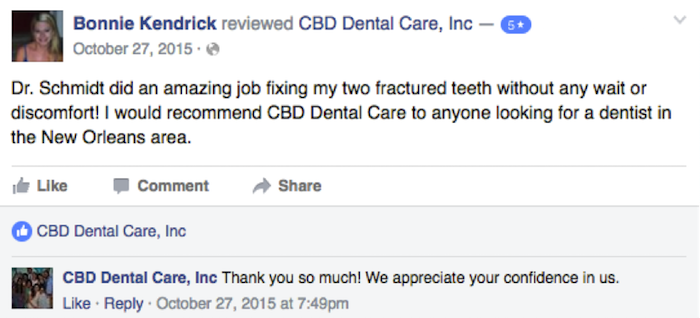
    Facebook Screenshot Image
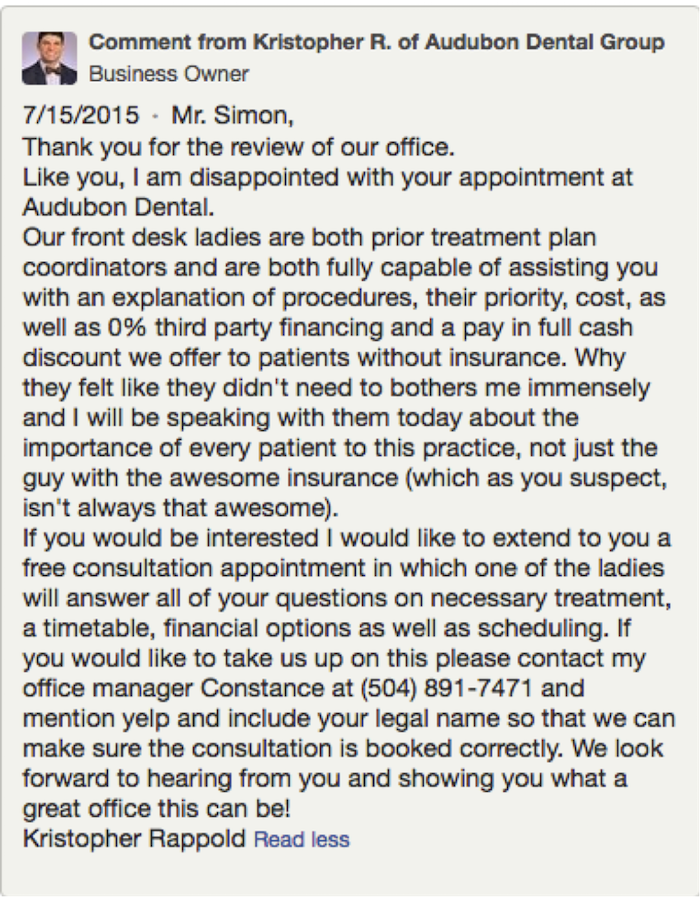
    Yelp Screenshot Image

  • Successful Franchisers Do These 5 Things to Find More Leads Online

    Blog4

    Ok, so you finally made that leap of faith and decided to franchise your business. And why not? You have a proven business model that works. Your operational systems are tried and tested. You know how you want to grow and the best locations for success. It is equally important to build and protect your brand. Trust me, I have seen what can happen when you blindly give your logo to someone with publishing software without brand standards in place. You will end up with ads like this.

    As a franchise owner, you may have already seen the difficulties with maintaining brand consistency across all of your marketing. Before pushing into online advertising, take a deep breath and then read this blog or view this SlideShare that provides five tips that will help you land more leads online.

  • Successful Physicians Do This to Quickly Increase Their Online Presence

    Doctor greeting patient

    Gone are the days when Americans simply used the Internet to merely research symptoms they or their loved ones were experiencing. Instead, they are now going online to determine which doctors to see, what treatment to get, and what services a hospital might provide — and using that information to drive their choices.

    According to Manhattan Research, which surveyed 5,210 adults who use the Internet as a health resource, 54% of respondents said they did online research to decide what services they might need and who should provide them. Other surveys like this one from Pew Research have said that roughly 75% of American adults search for health information online.

    No doubt, one thing is certain: people are becoming more comfortable with using the Internet for health-related decisions. And this upward trend isn’t likely to stop anytime soon. One out of every five patients uses online health information to choose a primary care physician, according to Manhattan Research.

    What’s that mean to health care professionals? It’s time to put more effort into beefing up your online presence. Communicate who you are and what you do. The quickest way to increase your visibility is to advertise on the Google Display Network. Watch this SlideShare or read this blog to learn more.

    Image Credit:

    Doctor Shaking Hands With Patient Image

  • How Should a Dentist Handle a Bad Review?

    1603-SI-Newsletter-0331-KG-E-02

    There’s a lot of chatter on the Internet about where to find a great dentist. You can give patients a bag of goodies and send out reminders about regular cleanings, but some will still forget to come back just as surely as they forget to floss. Retention is a challenge for any dental practice, but fortunately, there’s a whole pool of people searching for local dentists online. To tap into the online traffic and fill more exam chairs, one of the most important tools is online reviews.

    Claim Your Listings

    Even if you don’t have a top-of-the-line website, just claiming your existing online listings can make a big difference. Update your hours of operation and contact information on places like Google+ and Yelp. And claim the listing so that you can follow what the community is saying about your practice.

    Reviews Matter

    Reviews have a very real impact on the perception of your practice and whether people choose to contact your practice. One dentist estimates that “It takes at least five good reviews to counter one negative review.” And a negative review could come for seemingly no reason at all, such as a patient who came in once for a promotional offer and was upset about the final bill. The negative review that takes only a few minutes to write can impact your business’s average for months.

    Last year, the Minnesota dentist and hunter who killed a lion in Zimbabwe faced an influx of thousands of negative Yelp reviews for his practice. Fortunately, Yelp’s user support team helped to remove the negative reviews that did not describe a “first hand customer experience.” Still, it’s clear that many people are willing to use review sites as a means of inflicting damage on a business.

    Responding to Reviews

    Even if the review has been filed under the patient’s real name, HIPPA limits how much you can say in response, even if you simply want to refute false accusations. While responding to negative reviews is one of the best ways to minimize their impact, what you say makes a big difference. In general, an official response to a negative review should incorporate the following tips:

    • Apologize, even if the complaint is unreasonable.
    • Address their concerns, but don’t go into detail. This isn’t the place for an argument.
    • Move the conversation out of the public eye. Provide an official email contact.

    Keep the Audience in Mind

    The natural human response to a bad review is to argue and get defensive, especially when the negative rating seems unjustified. Unfortunately, winning the argument online wouldn’t necessarily impress future patients, and it could even make you look like a bully. Rather, try to address the situation and move the conversation to email so that it takes up as little real estate as possible. A back-and-forth exchange will just highlight this one negative review. Don’t make any public offers for compensation or refunds, or it may encourage more negative reviews.

    424274849_c4593205c9_o

    Get Help from the Professionals

    Claiming all the proper listings and inviting happy patients to fill out reviews can be a significant investment of time. To take the guesswork out of improving your online reputation, you can enlist the help of a company like Search Influence. We’ve had past success with helping our clients get more positive reviews, and it’s a process that dovetails neatly with other SEO services.

    Image Credits:

    Chattering Teeth GIF
    Simpsons Laughing GIF
    Working Dental Professionals Image

  • A Review Of CODE: Debugging The Gender Gap

    Mary Silva Grace Hopper Code Gender Gap Featured Image

    I recently had the opportunity to attend a viewing of the documentary CODE: Debugging the Gender Gap. From their site, “CODE documentary exposes the dearth of American female and minority software engineers and explores the reasons for this gender gap.”

    In the early days of programming, women dominated the field. Building physical machines was the hard work for men, and programming was seen as the more trivial work for women.

    Women Programmers In History

    As far back as the 1800s, we saw women dominating in computer sciences. I recently learned of Ada Lovelace from one of our web developers, Mattie Kenny. Ada Lovelace was a mathematician and writer who wrote the first algorithm to be read by Charles Babbage’s computer, the Analytical Engine.

    In the first few decades of programming growth, we saw more and more women joining the computing field. Grace Hopper is a great example of women who paved the way early on in this field. She was a Navy admiral who invented the first compiler (a program that transforms source code into another computer language) for a computer programming language in the 1940s. By the mid-1980s, women made up more than 35% of computer science majors, which has consistently fallen over the past 25 years to the now 15%.

    Grace Hopper Portrait Code Press - Search Influence

    So what caused such a drastic decline in the number of female computer science majors? This is exactly the question that CODE: Debugging the Gender Gap hopes to explore.

    The film alludes to the introduction of the brilliant male hacker trope in 80s movies and pop culture being partly to blame. That, along with the targeting of video games to boys, started to really make the computer science field a “man’s world.”

    Even in games like Metroid, which was released in 1987, we found ourselves with our first female main character in video games, but she was only acknowledged as female when seen as a “reward” in the game. While in the mysterious head-to-toe power suit, the protagonist is referred to with male pronouns. The only time the character is seen as a woman is when the player finishes the game in under five hours and unlocks her as a reward.

    Metroid Manual Game Description Scan - Search Influence

    Women In Tech Now

    Moments in history like those referenced above, which could have provided an exciting role for females interested in computer sciences, instead failed by objectifying women rather than empowering them. The results of these events and how the gender gap in this field has grown are exemplified in CODE, which shows us the unwelcoming workplaces commonly found filled with “brogrammers” these days. “A lot of women call it death by a thousand cuts, or microaggressions,” Director / Producer Robin Hauser Reynolds says. “It’s going to work every day and (having) to prove over and over, beyond what a man has to do, that you belong in that place.” The primary tension that this film portrays is that women with an interest in programming face a lot of roadblocks and challenges if they hope to make it in the field. It can be alienating to work in a field surrounded by those who continually make efforts to keep you from succeeding.

    Where CODE succeeded, however, was in showing successful women like Yelp’s software engineer Jen Wang and Pinterest’s software engineer Tracy Chou. These women are powerful, positive role models who love their jobs and clearly believe that having more powerful women in leadership roles in computer science fields can help make the opportunities more approachable and increase the number of women drawn towards these fields.

    While the beginning of the film covers the negative results of previous events (the decline of women studying computer science and the hostility towards females in the tech workplace), the second half of the film provides a light at the end of the tunnel so to speak. Providing positive role models in STEM fields as well as opportunities to learn programming at a young age could surely do some good in reducing the gender gap in technology fields. Also, shedding light on positive workplaces in the tech field that employ a large number of women is a great way to open up the barriers to entry for women.

    Personal Takeaways

    Something I recently said in an interview for another blog post of ours is that it takes just one instance of a young girl seeing a woman in a STEM role to think to themselves, “Hey, I could do that, too.” I hope, by continuing to be a knowledge resource in the industry through blog posts like this on code-focused industry best practices and changes, that I can help positively influence views around women in tech. I am so honored to have had my hard work at Search Influence recognized through continued career growth, and I can only hope that companies like ours that support women in tech continue to pop up around the United States.

    Image Sources:
    Grace Hopper Portrait
    Metroid Game Insert Scan

  • The Prescription for Better Online Reviews for Your Practice

    Just last month, Forbes ran an article titled “Why Doctors Must Market Themselves in 2016.” Much as customers at a restaurant can get on Yelp to write about their experience, patients can review their physicians on Yelp and other sites as well. RateMDs.com, Healthgrades.com, and Vitals.com are just a few examples of sites that host online reviews for physicians, dentists, and hospitals. ZocDoc.com even includes an app that allows you to search for nearby physicians in your insurance network. These websites had around 6.4 million hits last year, and in 2014, more than half of patients reported that they used physician-rating websites to select a doctor. Even if your practice hasn’t decided to take a look at your online reviews, many of your patients already have.

    Part of the Broader Trend

    According to a BrightLocal survey, 88 percent of consumers trust online reviews as much as they trust a personal recommendation. Patients who scour the Internet for reviews on cars and restaurants will naturally use similar resources when looking for a dermatologist or other medical practice. Even when patients are referred by a friend or another physician, many will search for directions through Google, which will reveal reviews entered on Google+. In effect, online reviews are ubiquitous to the point of being unavoidable, and addressing online reviews has become an equally unavoidable part of healthcare marketing.

    1602-SI-TheInfluencer-KL-A-04-lg

    The Danger of Online Reviews

    Not everything on the Internet is true, but negative reviews can have a very real effect on the reputation and success of your practice. As with any business, it’s unfortunately the least satisfied patients who seem most motivated to leave reviews, and they counterbalance the handful who would take time to write about a positive experience. In the same study where 61 percent of participants used online reviews to find doctors, only about one in five took the time to write reviews themselves. A major key of online reputation management is encouraging the satisfied majority of your patients to leave reviews. Learn how here.

    Use the Feedback

    The University of Utah Madsen Health Center decided to start sharing survey data with their physicians in 2008, and the hospital jumped in patient satisfaction from the 34th percentile up to the 80th over the course of six years. What’s more, safety, mortality, and efficiency scores improved while malpractice premiums and costs went down for the hospital. While some online criticism may be groundless, trends and insights can also be useful as feedback to improve your practice and the quality of service provided.

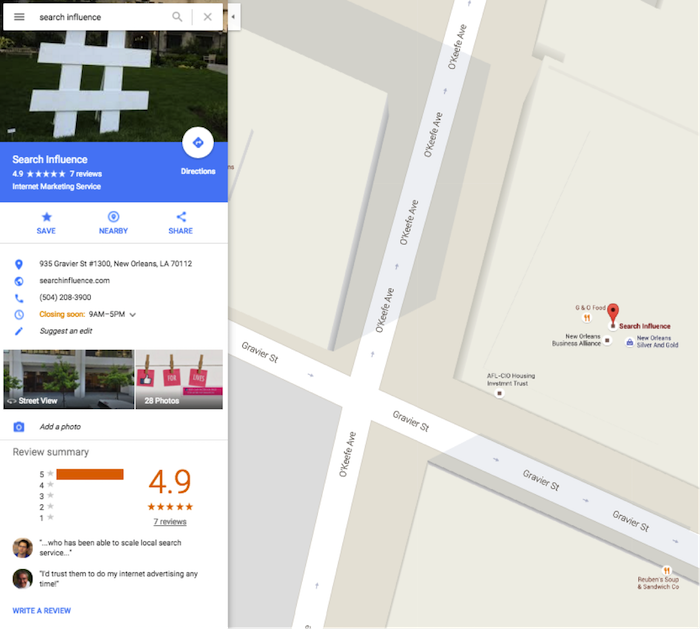
    Search Influence Google Maps Location Image

    Plan Your Strategy

    Because negative reviews have cumulative and long-term effects on your practice, a long-term outlook is needed to address the problem.

    • Claim Your Listing – Your practice may already exist on Google+ and other review sites. Claiming the listing allows you to monitor reviews and respond to negative ones.
    • Update Your Information – Entering your hours, contact information, and services makes your practice more accessible.
    • Check Out Competitors – How do your ratings compare to other practices in your area? Do you have listings on the same review sites?
    • Reply to New Negative Reviews – Do not delete negative feedback, but feel free to reply as appropriate.

    How to Handle Negative Feedback

    Reviewers who are upset sometimes make outrageous claims, but deleting the review only fuels a bigger reaction. When publicly responding to negative reviews, it is important to express sympathy for the person’s negative experience and move the conversation out of the public eye. People looking at the reviews should see that you have addressed the complaints, but they don’t need to read a long exchange that distracts from positive reviews.

    Screen Shot 2016-02-10 at 11.13.02 AM

    Screen Shot 2016-02-10 at 11.13.15 AM Consider Calling in the Professionals

    While claiming your practice on current listings does not take much time or expertise, managing the online presence across several sites can be a job that warrants a little professional help. The team at Search Influence can get results, especially when it comes to strategies that get your satisfied patients writing reviews. Ultimately, online reviews should just be one component of a comprehensive online marketing strategy. Increased visibility in the search rankings can help generate leads and reviews, which becomes a cycle for growth.

    Image Credit:

    Doctors at Work Image

  • 5 Ways to Improve Your Productivity at Work

    There’s a difference between going through the motions of the workday and actually getting things done. Productivity takes strategy – and constant reevaluation. Take a look at these five ways you can improve the productivity on the job and what you should probably stop doing to get there.

    1. Hire expert help

    Small business owners are especially notorious for having an “I can do it all” mentality. While it seems noble in theory, tackling every task single-handedly is actually counter-productive. As a business owner, you need to focus on the big-picture and find ways to delegate or completely outsource other tasks – especially the ones you don’t have expertise in handling. If you want to zero in on your target audience for marketing, hire a data firm to give you direction. If you want to sell more products on your website, hire a search engine optimization company to make that happen. If you simply want to have a better content, hire a content marketing firm to make your messaging stand out. Doing everything yourself isn’t productive, but asking for expert help can be.

    2. Take a break

    This may sound like the opposite of what you need to do in order to get things done but research shows that overworked employees actual accomplish less than those who are well-rested. A “break” can mean everything from walking away from your desk for five minutes every hour to eating lunch away from your computer to actually booking a week-long trip somewhere exotic. Every person knows what he or she needs to recharge – tap into that in order to heighten your productivity when you are on the clock.

    3. Close your email tab

    And go ahead and put your smartphone away too. Did you know that the average worker wastes 40 percent of the workday reading internal company emails? One in four workers admits to wasting an hour each workday on personal electronics doing menial, non-necessary tasks. The combination of constantly checking notifications on phones and through email can add up to a lot of wasted moments during the work day. Set aside scheduled times during the day to check your email and texts (and Facebook/Twitter/Instagram notifications) and respond. Then close out your email tab and put your phone away until that next scheduled time rolls around.

    4. Get physical (off the clock)

    Moderate exercise can actually boost your energy throughout the rest of the day, and lead to better sleep at night. Both things are a boon for productivity at work. The endorphins released during exercise are also part of what makes human touch so enjoyable. Lynn Brown Rosenberg, health advisor to the Sinclair Institute says, “If you were intimate the night before, the next day you’re going to feel more powerful. Energized. Balanced. We are less stressed and more able to be productive.” So squeeze in some time to hit the gym, and cozy up to that special someone, and you’ll see your productivity improve.

    5. Drop pointless tasks

    It’s easy to get caught in a cycle of monotony and what is comfortable in the workday. This usually isn’t always what is best for your productivity, though. Evaluate your tasks in a day – and what really makes a difference. The items that aren’t really very helpful should be dropped or adjusted to something that will improve effectiveness. If you work for someone else, don’t be afraid to respectfully share the aspects of your job that you think aren’t benefiting anyone and provide suggestions for change.

    Productivity takes constant adjustments and innovative ways at looking at your tasks. Remember to focus on what’s really important – and that includes your own health and well-being – and your work productivity will rise.

  • 4 Tips for Managing the Reviews & Reputation of Your Multi-Location Business

    Managing your business’s online presence can help you set yourself apart, especially when it comes to big franchises and multi-location businesses that are often too large to handle things like responding to reviews.

    1. Monitor What’s Being Said About Your Overall Brand

    By using tools that monitor mentions of your brand name online, you can keep a pulse on the overall tone and sentiment customers express about your brand. Social Searcher is a simple, free tool that allows you to track mentions on Facebook, Twitter, and Google+ and to get alerts about the mentions in your email inbox. This can help you reply to feedback about your business that comes in forms other than review platforms like Twitter posts and Facebook statuses.

    2. Address Reviews Both Good and Bad

    Responding to reviews online is important for showing that you are a brand that is active and engaged in your widespread community. It is often assumed that large franchises and multi-location businesses are too big to handle the relatively large amount of feedback they receive. Being able to manage and respond to those reviews is a great way to set yourself apart from your competitors and show concern for and interest in your customers. While it’s much easier to respond to positive reviews, responding to negative reviews gracefully and respectfully can also lead to a greatly improved reputation for your business.

    3. Check Out Industry-Specific Review Sites

    Screenshot 2016-01-12 14.41.33

    Some industries have their own niche sites where you’ll find reviews. These are great opportunities for building and understanding your business’s online presence for those who are actively engaged in your industry. For example, GolfNow is a site that helps golfers locate courses all around the US and even internationally. Within each course’s listing, you can also find reviews from golfers that use the site. Another interesting feature of this review site, which can be seen on the Audubon Institute‘s Audubon Park Golf Course listing, is that reviewers who book their golfing experience through GolfNow are shown as “verified,” which gives more authority to the reviews. Having authoritative resources across the web pointing back to your business is also a great way to increase your business’s visibility in search engine results.

    4. Get Creative with Review and Testimonial Opportunities

    Think about what type of engagement your business attracts and try to come up with a way to engage and feature your customers’ feedback on your site. Everyone these days is taking pictures of their food, so restaurants would be smart to feature tags of their food in the form of an Instagram stream on their site using free tools like Instansive. These kinds of tools allow you to generate a code to implement on your website that shows photos from your username or using a unique tag. Similarly, business owners can take note from the clever Donaldson Plastic Surgery. Dr. Donaldson’s patients are proud to share their selfies and testimonial videos on site, so this is a great opportunity to leverage positive reviews for their business in a fun and engaging way.

    Whether you’re a three-location local business or a countrywide franchise, it’s important to maintain control of your online presence. Check out the ways in which Search Influence can help your business grow its presence online on our services page.

    Image Credits:

    Five-Star Image

  • The Verdict Is In: How to Make Your Law Firm Mobile-Friendly

    The Internet is not contained to just desktop computers anymore. With the massive proliferation of mobile devices, including smartphones, tablets, and phablets, users have the Internet wherever they go, and that means there are a lot of mobile search inquiries. In fact, according to Google, more people search using mobile devices than with desktop computers worldwide.

    2283584007_f199332890_z

    Importance for Law Firms

    What this means is that your law firm must be optimized for mobile searches in order to be found, especially by younger generations. Think about it: when a smartphone user needs timely legal advice to handle a situation such as a car accident, they will immediately use it to search for a reputable law firm. And the closer your law firm is to the top of the mobile search rankings, the more likely your firm is to receive that phone call.

    Whether on desktop or mobile, more and more people are using the Internet to find a lawyer. Citing a survey conducted by Moses & Rooth Attorneys at Law and Mike Blumenthal, Will Scott notes that 15.5 percent of those searching for legal assistance use the Internet. He also points out that those between the ages of 18 and 24 have a stronger inclination to search for legal representation using the Internet.

    13677439224_d5d7dc7387_b (1)

    Become Mobile-friendly

    But how can your tell if your law firm is optimized for mobile searches? Google Analytics will provide you with the tools you need to know if your website is up to its standards. Some things to pay attention to when optimizing your site for mobile is your site speed, internal links, how many images are used, the word count, and strong social signals. These elements all affect your search rankings, communicating to Google whether or not your website is mobile-friendly.

    In addition to having a site that is easy to find on Google, you’ll also want to implement strategies to convert mobile website hits into clients. Adding a click-to-call button to your website will allow users to easily call your office so they can arrange a meeting for a consultation. A simple inquiry form is also important to implement on your website so mobile users can fill in the fields with pertinent information about their case without having to wait to find a desktop to do so.

    It is also important to understand what your potential clients will be putting into the search box. Besides specific and location-targeted keywords, Blue Nile research has discovered that 27 percent of search engine users form their searches as questions. That means when a potential client searches for a law firm, over 1 in 4 people will search for phrases such as “where can I find a medical malpractice lawyer?” or “how can I fight a ____ charge?” A detailed and informative FAQ page will help lead these searches to your law firm. Not only does the FAQ page help for search engine optimization purposes, but it also benefits the user experience. A potential client will see the detailed information that answers their question and gain confidence that the site of your law firm has the solution to their legal matters. And with the aforementioned click-to-call button, the initial consultation meeting will be set up with effortlessly.

    As the world transitions further and further into the digital realm, it is important for your law firm to understand how to stand out from the other law firms online. Search Influence is here to make sure your website is optimized for mobile searches to convert hits to consultations.

    Image Credits:

    Law Books

    Mobile Phone Search