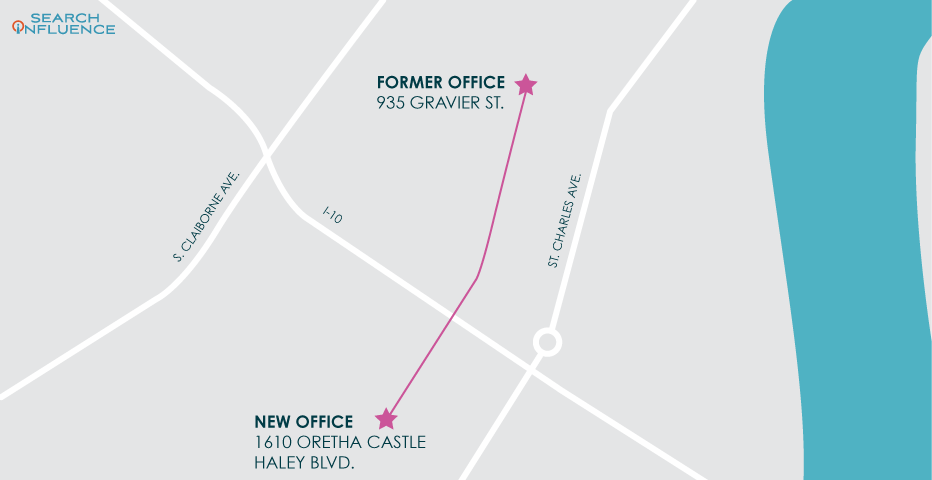
We moved on UP-town! After 5 years in our downtown headquarters on Gravier Street, Search Influence has moved our world headquarters just over a mile uptown, where we’ve taken over a 3-story building on Oretha Castle Haley Blvd. We’ll be joining the Youth Empowerment Project (YEP), Café Reconcile, Southern Food & Beverage Museum (SoFAB), and the New Orleans Jazz Market in this recently revitalized area of Central City in New Orleans.
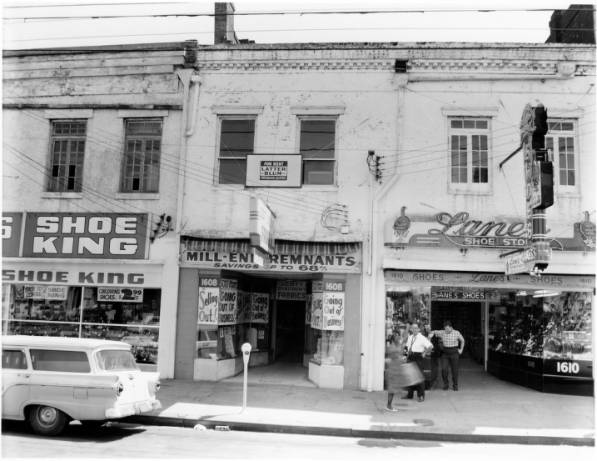
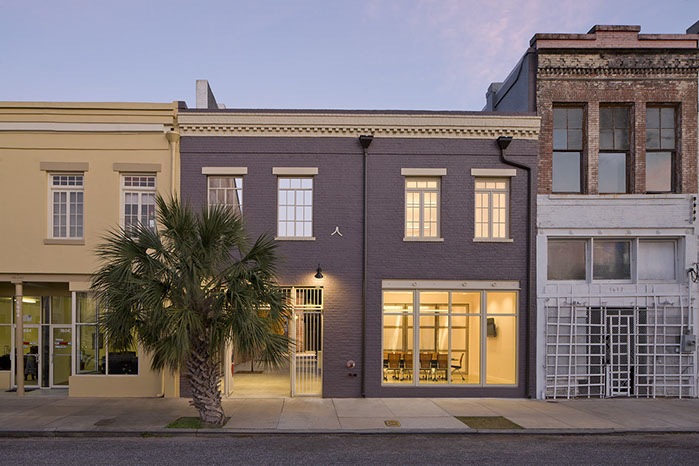
The historic 19th-century building, made up of two townhouses, was once two “Main Street” style storefronts—Lane’s Shoe Store and Mill End Remnants. After many years of exposure to the elements, the building went through a significant rehabilitation in the last decade and was awarded a 2013 Merit Award for Adaptive Reuse by American Institute of Architects (AIA) New Orleans.
Building history and historical photos courtesy CCWIV Architecture. Present-day photos courtesy of Will Crocker. View the full gallery of historic and present-day images on CCWIV Architecture’s website.
Our new location is just five blocks outside of the Central Business District, so we’re still conveniently located to our downtown clients while making it even more convenient for all our clients and partners to visit our office, thanks to the plethora of free parking near Oretha Castle Haley Blvd.
The new building offers a large courtyard and multiple balconies, where we plan to have outdoor collaboration sessions and space for individual work. The ease of access to the outdoors will be cherished with the beautiful fall weather coming up in New Orleans.
“I’m glad Search Influence held out for a space that fits our company culture and workplace dynamics. Exploring our new location will be fun, but I’m most excited about the opportunity to work outside!” says Emily Breaux, Digital Copy Editor.
We’ve been very agile in the way we approach our office space throughout our 14-year history. As our business changed over the years and our team size and dynamics have changed, so too did our office needs. The added bonus is that we have the chance to explore the offerings (in particular the restaurants!) of so many different neighborhoods of our city.
Planting new roots in this part of town aligns with our core purpose: We Optimize Potential. We are investing in this developing area in hopes that more businesses will continue to be attracted to this part of town. This is much like our move to Oak Street in 2011 and to Gravier Street in 2015. Each location was early in their revitalization when we made them our home. Both areas are now bustling with new and now well-established businesses that our team was there to support in the early days.
We look forward to welcoming our clients, prospects, and partners to our new space!
Search Influence
1610 Oretha Castle Haley Blvd.
New Orleans, LA 70113
Happy Small Business Week from the Search Influence team!
We were founded in 2006 with the goal of helping small businesses succeed online. Today, we work to optimize the potential of businesses of many sizes, but this week, it’s all about our small business clients!
Today we share with you five small business clients and a little bit of their story—it was hard to choose just a handful to feature, as we have so many that inspire us each day to help them grow their businesses.
Nugget Markets
California
Nugget Markets is the grocery store we all we wish we had right down the street. Their 12 locations in Northern California offer specialty items and “Gourmet to Go” at lower prices than conventional grocery stores. No wonder they’ve been thriving since 1926!
Pascal Architects
New Orleans, LA
Pascal Architects is a well-established architecture firm in New Orleans. The company and its principles have been involved in some of the most impressive projects in the city, including the original construction of the Superdome, the restoration of the Cabildo, and the creation of the Ritz-Carlton from the historic Maison Blanche department store.
Paisano’s Pizza
Virginia and Maryland
Paisano’s Pizza is a Virginia-based local pizza chain. We began working with them in 2011 when they had 10 locations. They now have over 40 locations across Virginia and Maryland, and even one in Florida! Talk about a small business success story.
Oracle Lighting
New Orleans, LA
Oracle Lighting is a New Orleans-grown auto light manufacturer, specializing in premium LED halo lights,owned by husband and wife Justin and Tiffanie Hartenstein. They have hundreds of resellers across the country and were named Exporter of the year by The Small Business Administration!
Caluda’s King Cake
New Orleans, LA
Caluda’s began focusing on direct-to-consumer king cake sales in 2018. They were breaking into a crowded market with lots of long-established competitors. With some smart branding, relationship building, and targeted advertising, Caluda’s is now a top tier king cake in New Orleans!
We express a sincere THANK YOU to all our clients and those we’ve had the honor of supporting in the past. We truly wouldn’t be Search Influence without you!
If you’re looking to grow your small business and become one of our success stories, start a conversation with the digital marketing experts at Search Influence.
Facebook is going cross-country with a free conference, bringing it to 30 cities, including New Orleans! This is part of Facebook’s mission to better educate businesses in using their platform. They state that… “By 2020, we’re committing to provide 1 million US workers and entrepreneurs the digital skills they need to compete in today’s workplace.”
My evaluation is that their goal of this effort is to increase and improve business use of Facebook (and ultimately advertising dollars) and try to make up for their data privacy blunders earlier this year.
Given that 2.07 billion people access FB monthly, and ¾ of those users come back daily, there’s an appropriate way for most businesses to engage with consumers.
I really enjoyed seeing traditional advertising promoting this free event as I drove around New Orleans, from downtown digital billboards to suburban bus stop ads. While it may seem ironic that Facebook would use out-of-home media to promote their conference, it is not that surprising since part of their strategy is likely to reach NEW businesses in addition to improving the skills of those already on the platform.
In case it’s not coming to a city near you, check out these tips from our team of Influencers who attended various sessions!
Build Creative for Mobile
Because 90% of time on Facebook is spent on mobile, businesses must get out their desktop-focused world and think about the screen size of their audience.
One key media type for mobile optimization is video—your typical rectangle, landscape video (16:9 aspect ratio) videos are suboptimal for mobile. Square is better, but the best is to create vertical, full-screen videos—think Snapchat, Instagram Stories, and Facebook Live style.
In addition to it being a more immersive and engaging experience, a key benefit is you aren’t sharing the screen with other content.
If you use Instagram, you may not be surprised to hear that ⅓ of the content that people are engaging with on Instagram is BRAND content!
Thanks to Alison Zeringue & Amanda Ball for this takeaway!
Mobile Creative Doesn’t Have to Be Hard or Expensive
All you need is a phone, lighting and a $20 Amazon tripod (for video) to make something look REALLY nice!
These 10 apps can enable you to enhance your photos and videos on your mobile device, on the fly.
Considering that by 2020, 75% of content on Facebook will be videos, it is time to put on your videographer hat!
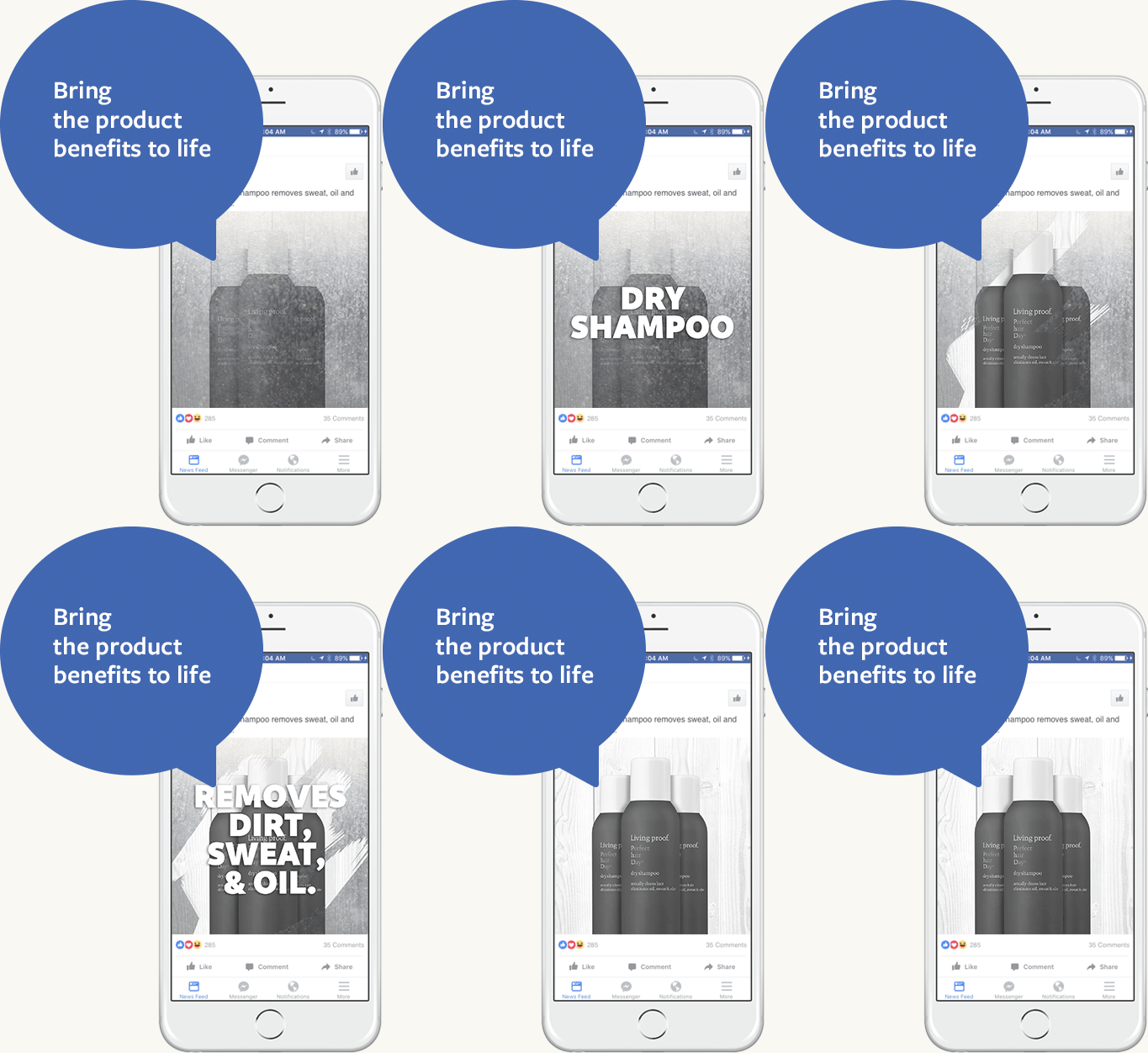
The apps above and others allow you to “remix.” Easily take images you already have and create gifs and videos to better engage your audience, including overlaying text (love the Living Proof example… ask me how many bottles of Living Proof I have stocked—major “life hack” for professionals on the go!).
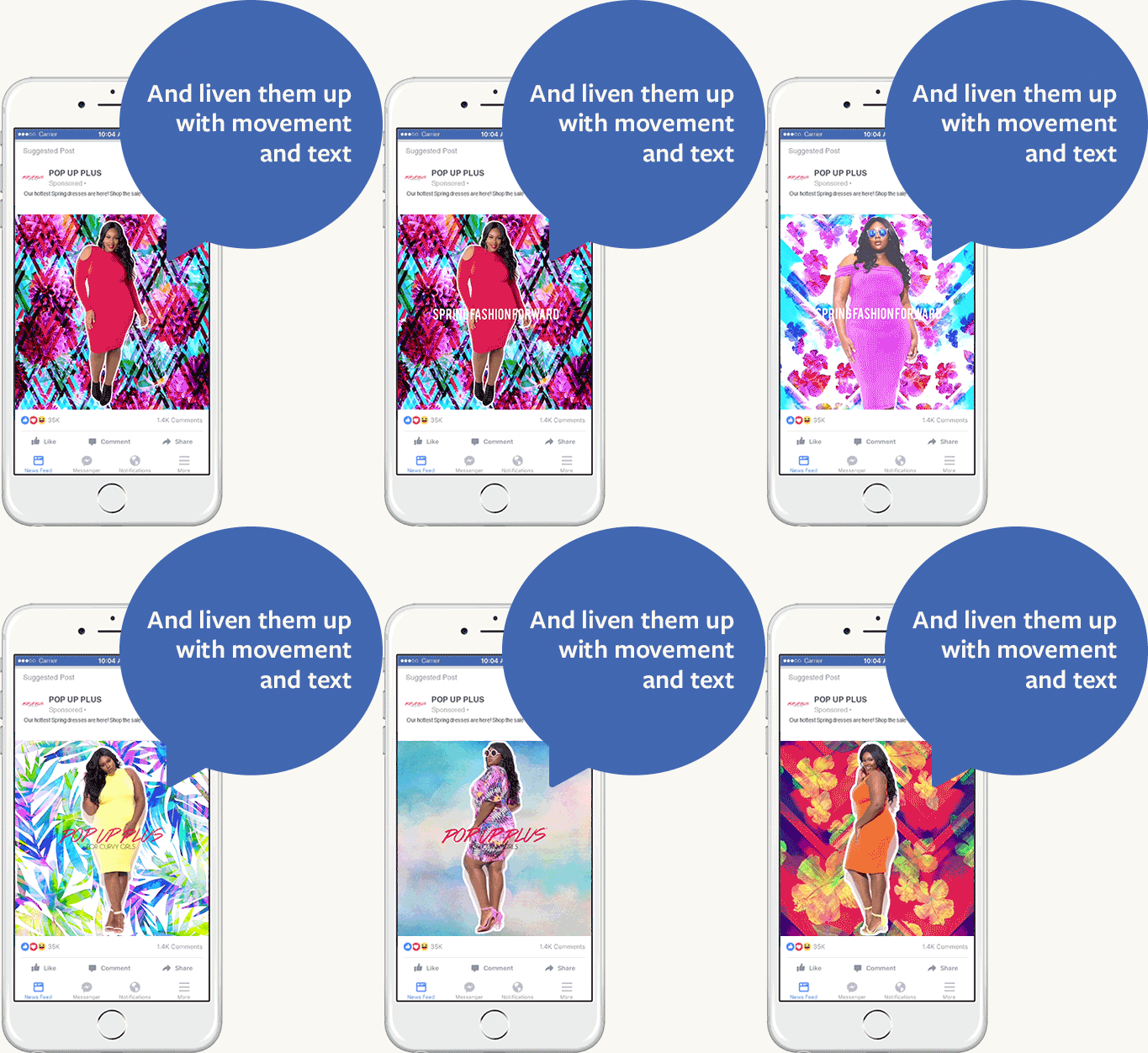
Amanda Ball likes the Pop Up Plus example, which uses e-commerce product images and “remixes” them into fun videos with vibrant colors and movement. An app called Videoshop can help do this FOR FREE.
Shooting from Scratch
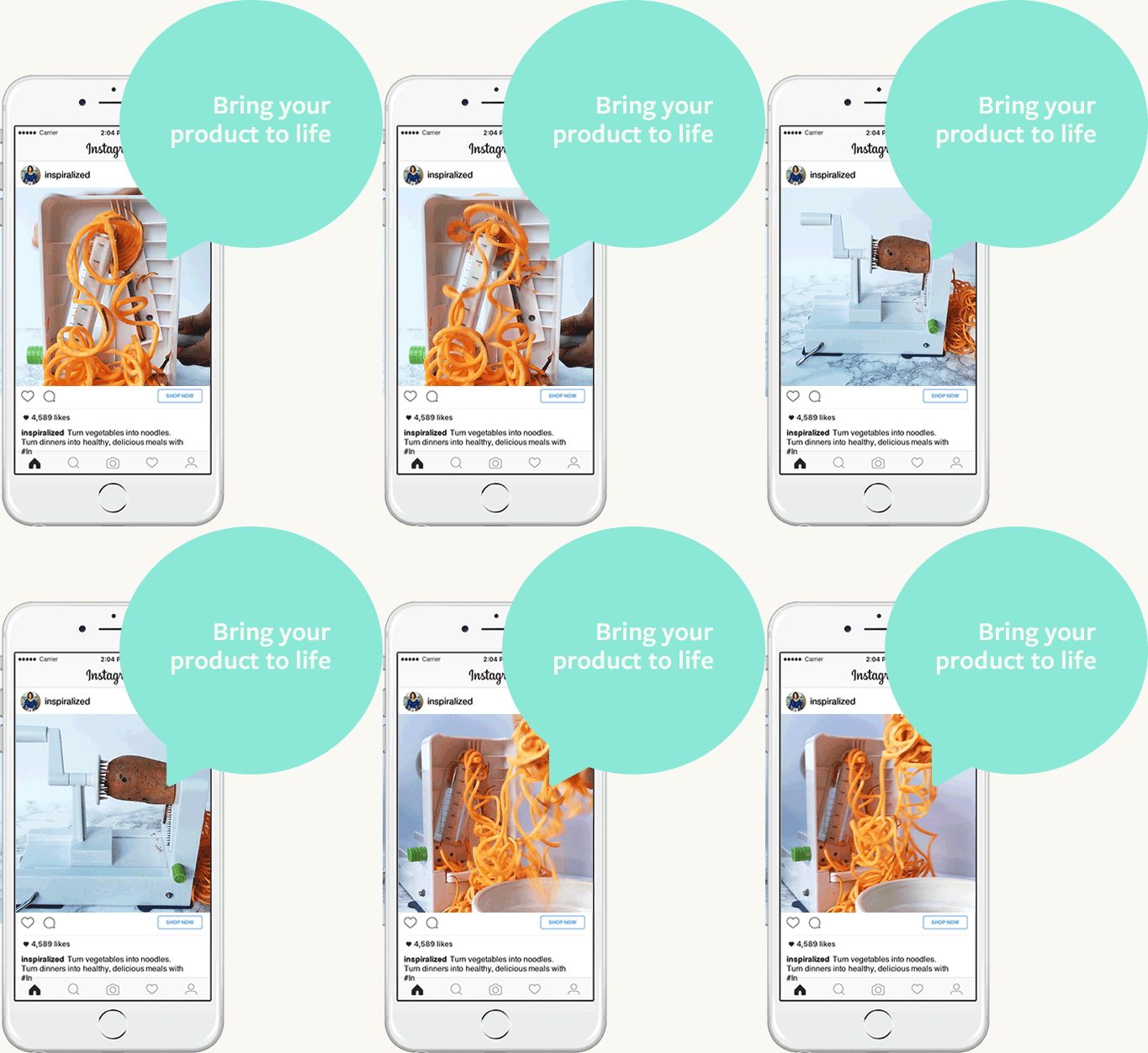
Facebook also provides tips on making great videos from scratch for ads and posts. Check out this savvy use of Boomerang to show a spiralizer in action. As Amanda Ball describes it, “Potential buyers are prompted to feel like they know how the product works, making them more on board to dig deeper into your brand and products.“
Thanks to Amanda Ball, Account Management Team Lead, for this tip!
Secret Boomerang Menu
Did you know Boomerang has a secret menu!? Learn how a four finger tap can bring up options on options to edit your video. You can smooth it out, speed it up, slow it down, and so much more.
Thanks to Alison Zeringue, Director of Account Management, for this tip!
Custom Contact Methods on Instagram Profile
On a standard Instagram profile, call, email, and directions are standard calls to action that you can add.
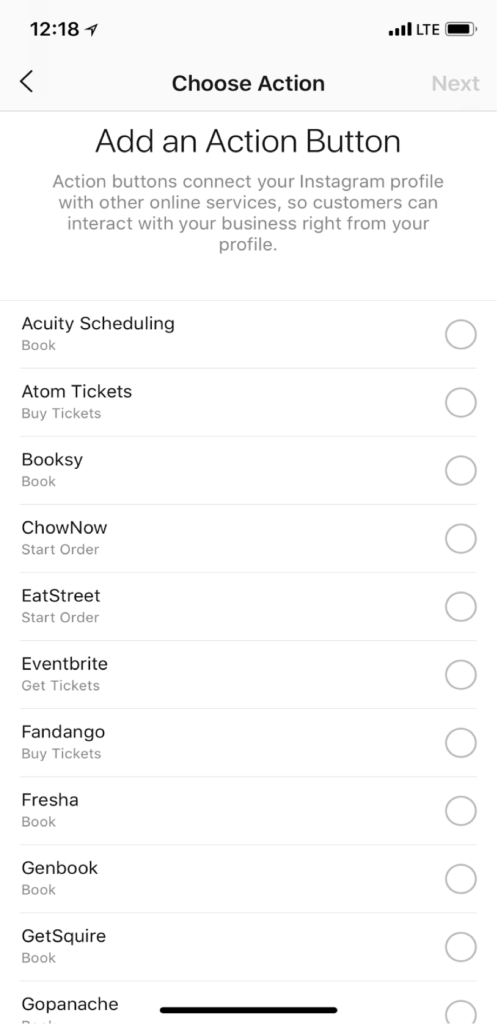
Through settings, you can hook up third-party apps like Open Table and Eventbrite.
Go to your profile
Click “Edit Profile”
Click “Contact Method”
Choose from the ever-growing list of action buttons that correspond with other apps and services you may already be using
Thanks to Alison Zeringue, Director of Account Management, for this tip!
Get a “Shop” Button on Your Instagram Profile
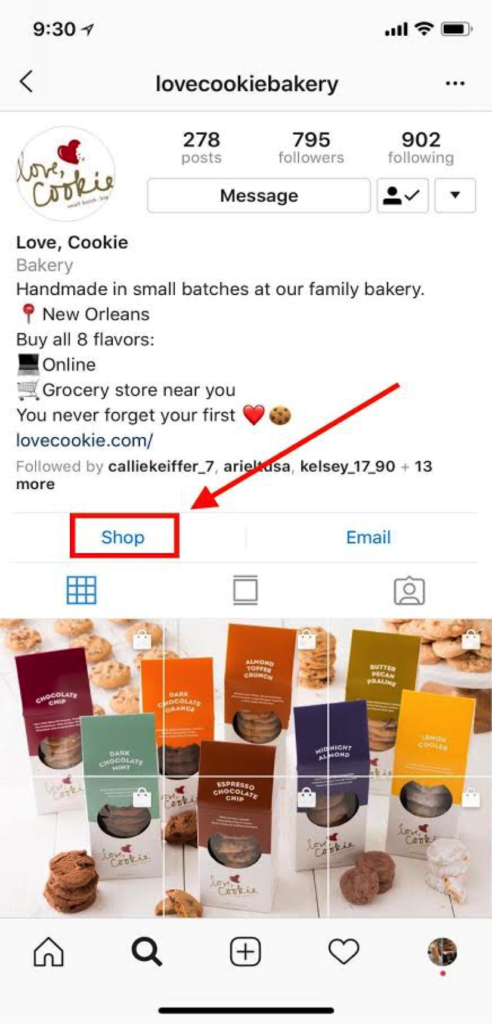
Those who sell products may wonder how to activate the “Shop” button of their Instagram profile. After you’ve created nine “shoppable” Instagram posts, a “Shop” button will appear on your profile. It will direct users to all of your shoppable posts, making it that much easier for users to buy your product on their phone.
Thanks to Ariel Tusa, Account Manager, for this takeaway!
Vying for “Swipe Up for More”?—What to Do in the Meantime
We're all vying for the "Swipe up for more" feature on Instastories, but, alas, you must have 10,000 followers for this feature to show up. In the meantime, use the "screen record" feature on your iPhone to create a video that guides users to important content. Then you can add that video to your Instastories.
Thanks to Ariel Tusa, Account Manager, for this takeaway!
Donate Button on Facebook Live
Facebook has offered a selection of calls to action (CTAs) for your page and ads for some time. One way non-profits can use CTAs creatively is by using the “Donate” CTA button on a Facebook Live video. For example, you can “go live” at a fundraising event so those who aren’t in attendance can check out the action, and you can feature the “Donate” button on this post to capture their wallets while you are capturing their hearts. Bonus—giving a sneak peek into your event this year can create a buzz that translates to more attendees next year (as we talk about in our blog post with more tips to increase event attendance).
Requirements for Fundraising on Facebook:
In order to have access to features like the “Donate” button, you must be an approved non-profit.
501c3
US-based
Verified page
Page meets community standards
Application approved
Thanks to Ceallaigh Montgomery, Sales Executive & Digital Marketing Strategist, for this takeaway.
Audience Network
I find the Audience Network isn’t talked about nearly enough. By default, ads set up on Facebook will run on Instagram as well as the Audience Network, which is a collection of sites around the web. This idea is core to Google Display, which leverages the Google Content Network as the avenue for showing all ads. When people talk about Facebook ads, they take for granted this opportunity to be in front of people when they are “surfing the web”—not just browsing the “ ‘book.”
Thanks to Shawn Kelly, Sales Manager, for this takeaway!
Also, thanks to Shauntae Joseph, Account Manager, & Jenna Mire, Account Coordinator, for takeaways worked in throughout!
If you need help implementing these tactics, let’s start a conversation about how we can help you.
With a growing number of travelers using mobile search to book their vacations, it’s a great time to be in the tourism industry, assuming you have an e-commerce option for your customers. Whether you’re offering hotel rooms, dinner reservations, or curated experiences, your customers are more likely than ever before to make their travel purchases online and on the go. But, how can you tell if the e-commerce side of your business is operating at peak performance? With a strong track record of successful marketing for zoos, museums, and other tourist attractions, Search Influence is here to help! We’ve compiled the top five Google Analytics metrics that your business should be tracking to make sure you’re optimizing your potential.
1. E-commerce Conversion Rate
Google divides the number of completed sales by the number of visitors to your website to provide your e-commerce conversion rate. This metric is one way to measure your business’ success in terms of online sales. While it does not measure how much revenue each sale brings in (that’s the average order value, and we’ll talk about it next!), your e-commerce conversion rate tells you how many visitors to your site have become paying customers. It’s an especially important metric to keep track of because converting current visitors into customers is much more cost effective than acquiring a new customer base.
Of course, e-commerce isn’t the only conversion rate you can measure. Break down conversion points on your site into micro and macro. In the world of e-commerce, your macro conversion would be a purchased products/tickets. Micro conversions are smaller actions that lead up to the end goal of purchases. For tourism, this would likely include visits to key pages (like ticket pricing page), to adding something to a shopping cart, to email signups. You should watch your success of micro conversions and tune your campaigns to those as well, as each of these actions should be designed to drive customers toward macro conversions—increasing that e-commerce conversion rate of visitors turned into paying customers.
2. Average Order Value
Average order value tells you how much revenue online purchases generate for your business, on average. It is calculated by finding the total revenue generated from online orders and dividing it by the number of orders. According to some experts, like Databox, it could be the one most important metric for your e-commerce business to focus on.
So, how do you improve your average order value? MonsterInsights provides some key suggestions.
First, price your products with upselling in mind. For example, if you’re a photographer shooting on-site family vacation photos, you might offer a base package of 20 photos, with the option to add more at an increased price-per-photo rate.
Second, offer product bundles at discounted prices. For example, if you’re running a walking tour company, you could bundle together a daytime and a nighttime tour. Customers will be enticed by the promise of extra touring for their dollars, and you’ll still gain more income than if they had just purchased a single tour.
Finally, offer savings with a minimum order—something like, spend $100 and get $20 free. Customers may spend more than they ordinarily would just to access the discount. All three of these strategies can drive up your average order value, bringing in more revenue for your e-commerce tourism business.
3. Revenue Per Visitor
Revenue per visitor is a crucial metric – increasing it can mean revenue growth for you without having to drive new visitors. You can increase this metric by both converting more visitors into customers and increasing your customers’ average order value. Revenue per visitor is calculated by dividing your total online revenue by the number of unique visitors.
You can increase revenue per visitor by using any of the previously discussed methods, like upselling, bundling products, and offering discounts with a minimum spend. Keep in mind that a low revenue per visitor is not necessarily an indication that your business is struggling. For example, if you’re selling lower priced items, like postcards or other tourism souvenirs, your revenue per visitor will be much lower than for a company selling high-dollar items like cruise tickets or hotel suites. You’ll just need a larger number of unique visitors to boost your sales and drive revenue overall, and this should play heavily into your marketing goals and strategy.
4. Customer Lifetime Value
Customer lifetime value tells you the total value that an individual customer, acquired during a particular time period, has spent with your online business.
This metric is best used for estimating appropriate marketing costs for your business, and for analyzing your customer acquisition strategy. For example, if your average customer will only spend $100 at your business over the course of their life, it isn’t worth paying hundreds of dollars to attract this customer. Maximize your return on investment (ROI) by keeping your marketing and advertising expenses reasonably lower than the income your average customer is likely to generate for your business. Most businesses are willing to spend 5-10% of revenue to acquire a new customer. (See more in our blog “What’s The Perfect Marketing Budget For Your Company?”)
5. Return on Advertising Spend
Speaking of ROI, let’s discuss return on advertising spend—or ROAS as it’s sometimes called—which is a key metric for determining the effectiveness of your digital advertising. It tells you how much income you earn for every dollar spent on advertising campaigns. If you’re running online ads and want them to be as effective as possible (who doesn’t?), you need to raise your return on advertising spend. Ideally, your ads should drive about three times as much income as you paid to advertise.
So, how can you raise your return on advertising spend to this ideal 3x level? Conversion Fanatics Blog offers some great tips. First, do some testing to figure out what channels work best for your business. For example, if your Facebook ads tend to perform better than your Google ads, channel your dollars to Facebook, where your ads drive the most revenue. Similarly, test the times at which your ads have the best results. If you notice that holiday ads bring in more clients for you than summer ads do, it could be worth concentrating your ad dollars on that crucial time of year. Finally, you can dive into even more metrics. Monitor the user journey by tracking how many customers click on your ad, how long they stay on the resulting landing page, and so on. If you can pinpoint which stages of the user journey are working well for you, and which stages are losing potential customers, you can fine-tune your ads and landing pages for an improved user experience.
These five metrics, all available through Google Analytics, are key components of e-commerce tracking for any online tourism company. For more information about how to optimize your travel business’ potential, contact Search Influence at 504-208-3900, or request a proposal today to hear opportunities from our strategists.
Cision, an ever-growing resource for media and businesses, released their 2018 State of the Media report, which is based on a survey of journalists globally.
Over 1300 journalists responded from six countries, 48% of which work in print (newspaper and magazine), and most of which no doubt have an online version of their publication.
Per the Report, These Are the “Key Takeaways”
• Being accurate is more important than being first.
• Journalists are concerned about fake news and trust in the media.
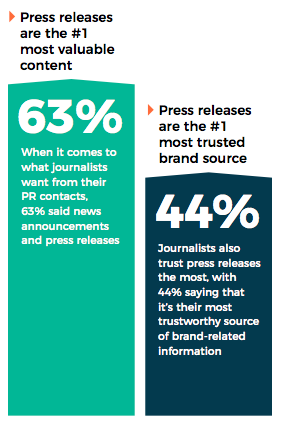
• Reporters and editors still trust the press release the most.
• PR professionals are being asked to provide accurate, newsworthy information.*
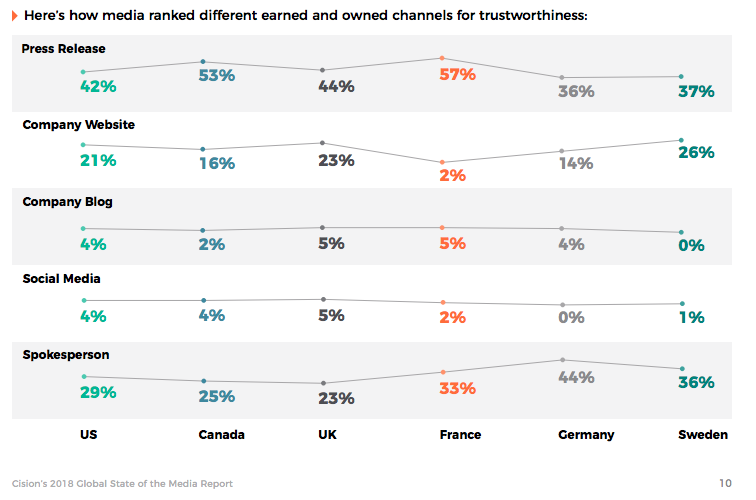
The most actionable insight for businesses is that “reporters and editors still trust the press release the most”—42% rank press releases as the piece of owned media they trust most for accurate information, followed by 29% for a spokesperson, 21% for a company website, and just 4% each for company blog and social media.
This was in some way surprising, as, there are so many articles online that reference other news stories. I’m sure you can recall reading something like “…according to a report by The New York Times.” This may be taboo for some publications, so, for your news to be considered as a topic, it’s critical you are publishing press releases for your company news.
The Best Ways for You to Distribute Press Releases Are:
Publishing on your own website (even if the info lives elsewhere like on your blog)
Distributing through a service like Cision (PRWeb & PRNewsWire)
Sending directly to journalists that have a specific interest in your industry, topic, or business—as the survey says, 27% of journalists say to “tailor the pitch to their beat” (a surprisingly low percentage in this age of personalization).
SEO & Press Releases Have a Complicated History
In 2013, with the release of Google’s Penguin algorithm update, there was a lot of chatter in the SEO community about stopping press releases as a link-building tactic. At the time, it was a paid way to generate links back to your site, which is frowned upon. At that time, many services, including PRWeb, changed outbound links to assure they would not penalize your Google rankings (by updating the links to be “nofollow”). Of course, companies continued to publish press releases, especially those who never once thought of PR as an “SEO tactic.”
In short, take backlinks out of the discussion—distribution of press releases via reputable online sources like Cision is about getting news about your brand out there in a scalable way, which can have a positive downstream impact on your search engine rankings via brand building.
Tell Me More!
To fully dive into the State of the Media report, which goes deeper into thoughts on trust and “fake news,” download it from Cision’s website.
Graphics courtesy of Cision’s State of the Media Report.
We’ve come a long way from lugging around heavy guidebooks and drawing out routes on paper maps. In fact, we’ve even come a long way from planning vacations on desktop computers. Google shares that a growing number of travelers are planning vacations on their mobile devices, with mobile’s share of travel visits growing 48 percent in 2016, and mobile web conversions for travel sites growing 88 percent that same year. As a result, it’s increasingly important for businesses in the tourism and travel industries to optimize their websites for mobile and make researching and booking trips easy for mobile customers. Here’s how!
“Micro-Moments”
According to the same source from Google, the key to a successful mobile travel site is leveraging micro-moments. These are moments of intent when someone acts on a need—for example, looking for a hotel once they’ve booked a flight to that city. Google names the core four micro-moments of planning a trip as I-want-to-get-away, Time-to-make-a-plan, Let’s-book-it, and Can’t-wait-to-explore. Different businesses in the travel industry will prioritize different micro-moments—for example, an influencer on Instagram might focus on I-want-to-get-away while a local tourism bureau might concentrate on Can’t-wait-to-explore. But, catering to customers across all four micro-moments certainly can’t hurt!
1. I-want-to-get-away
Also called Dreaming Moments, these are the times when people start thinking about their next vacations—and Dreaming Moments happen often. Again, according to Google, 37 percent of U.S. travelers think about planning vacations once a month, and 17 percent think about it once a week or more. In 2015, 38 percent of non-branded travel searches came from mobile devices. Today, that number is only increasing. So, how can travel and tourism businesses cater to this growing audience?
One option is using SEO services to help your website rank higher in search engine results for questions like, “What to do in [destination]?” and, “Where is [destination]?” These are two of the top travel questions people ask Google. Another great resource is YouTube. Google estimates that roughly 106 million of YouTube’s monthly unique visitors are travelers, and 64 percent of people who watched travel-related videos did so during Dreaming Moments. This means that learning to attract customers on YouTube is a must for businesses catering to I-want-to-get-away micro-moments.
2. Time-to-make-a-plan
Also called Organizing Moments, these are the times when travelers have decided to take a trip but are still considering different hotels and airlines with an open mind. During these moments, travelers are figuring out the logistical details of their journey—like how long flights will take or how much hotels will cost. And, they’re figuring out these logistical details on mobile. On Google, mobile flight-related searches are up 33 percent year over year, and mobile hotel searches are up 49 percent.
To reach customers during Time-to-make-a-plan Moments, consider online advertising campaigns, or Google services such as Hotel Ads and Google Flights. And, of course, make sure that your website is fully optimized for mobile!
3. Let’s-book-it
Booking Moments are incredibly important—not only because they’re the times when travelers start spending money, but also because these moments may have the most room for newcomers to make an impact. Going back to data from Google, 46 percent of travelers who do mobile travel research made their final booking decisions on mobile but did the actual booking itself on a desktop or laptop computer. This means that customers are likely not getting everything they need from mobile during Booking Moments. Businesses that improve their mobile booking have an opportunity to rise above the competition.
Google recommends Book on Google as a way to increase conversion rates for mobile Booking Moments. But, other ways to improve customers’ mobile booking experience include streamlining the check-out process to remove any unnecessary steps and making sure your site is secure. Customers will be more likely to book on-the-go if they trust that their information is safe and secure.
4. Can’t-wait-to-explore
Also called Experiencing Moments, data from Google proves that these are also areas of huge potential. Travelers are increasingly planning their vacation activities while they’re on the trip, with 85 percent of 2016 leisure travelers deciding on activities after arriving at their destinations. Here again, travelers are making these plans on mobile. In fact, mobile searches from hotels increased 30 percent in 2016. Companies who aren’t catering to this growing audience are missing out on potential business.
So, how can a travel industry business appeal to customers in Experiencing Moments? Provide travelers with information! The same source from Google found that 53 percent of leisure travelers are interested in visiting new places, compared to just 18 percent who want to return to previous destinations. This means that the majority of vacationers are somewhere they’ve never been before. Offer recommendations for restaurants or attractions, and make these recommendations location-aware—Google searches for “places to eat near me” more than doubled in 2016.
Travel is increasingly becoming a mobile-centric industry, and businesses have a lot to gain by targeting customers in these core travel micro-moments. Whether it’s improving YouTube reach to grab viewers during I-want-to-get-away Moments, or making sure a site is hosted on a secure server for Let’s-book-it Moments, Search Influence is here to help. Bon Voyage!
With the right marketing strategy, your event will be the topic that everyone seems to be discussing. Potential attendees will feel compelled to join in the fun. Millennials have coined a term for this pervasive social anxiety: “FOMO,” for “fear of missing out.” This social enthusiasm is great at motivating that final step for a successful gathering: converting people who are merely aware of the event into participants who actually attend. Whether you’re still sending invitations or collecting RSVPs, every event planner needs to know how to make their big bash the talk of the town.
Email Marketing
You know the contact information for your most dedicated fans and colleagues. Give newsletter subscribers and loyal customers the inside scoop, and they’ll be happy to make plans in advance. Include links to any special promotions or contests leading up to the event to help encourage your fans to spread the word and invite friends through social media. And be sure to tease out the event over a few targeted emails, building excitement and revealing new surprises that your customers can’t get enough of.
Whether it is your regular newsletter or promotional messages for the big event, less is more, especially when it comes to emails. Flooded inboxes are a familiar experience, and many people cull through their incoming mail on a smartphone, further limiting the time and screen space allowed for each message to make its case. When you’re promoting an event, don’t send out too many emails to the same recipients, or you may turn potential attendees into unsubscribers.
Facebook Promotion
Facebook events allow you to track RSVPs and disseminate essential information. People need clear details about the time, location, and parking. Facebook makes key logistical information easily accessible, and it also provides a platform for easy promotion. With event marketing on Facebook, you can pay for promotion to get more views and attendees. Even without paying for advertising, you can design posts that encourage engagement. Produce exciting promotional infographics, and your fans will be happy to spread the word.
Schedule important posts for the early afternoon, preferably from Wednesday to Friday. Those times allow a larger number of active Facebook users to see your posts, and they can still share the news before the weekend. Social media also allows you to gauge enthusiasm and adjust your promotional strategy, depending on which posts get more engagement. Learn more about how social media management can help you find attendees for your big event on Facebook and other platforms.
Remarketing
Not everyone who clicks on your page will attend, but people who visit your website and event page have demonstrated interest. Target those undecided visitors with remarketing through Google Display or Facebook Display to remind them about the event and keep it top of mind. This is especially important if your event tickets typically sell closer to your event. As with other forms of targeted advertising, you can put your message in front of local viewers with relevant interests, and you can even filter by age groups and other demographic variables. Remarketing is special because it is tailored to potential guests who have demonstrated a very specific interest.
Not everyone checks Facebook more than five times a day, and it’s easy to forget about upcoming events. Online advertising provides reminders for converting interested viewers into actual attendees. Even users without a social media presence will still see advertising on search engines and other web page banners.
Influencer Marketing
Advertisements are great reminders for upcoming occasions, but trusted online personalities can have an even more profound influence on attendance. Make your gathering popular by getting relevant influencers on board. In some ways, the internet is still a lot like high school, and influencers are the popular kids with a lot of sway over which parties and trends are “cool.”
Reach out to the internet personalities relevant to your industry and audience, and they may be interested in helping to spread the word. Some influencers are content creators who rely on sponsorship. Others are bloggers who share reviews and news relevant to their followers. Influencers make great VIPs, and they may also be interested in giving away tickets, further spreading the word.
Snapchat and Instagram Stories
If you’re targeting a younger audience, you need to keep up with the latest trends. Snapchat and Instagram allow you to tell a compelling visual story. The week and day of the event, be sure to have someone on staff dedicated to updating your feed with behind-the-scenes videos, live updates, and reactions from attendees. You can even get your influencer to take over your social account during the event to stir more excitement. Publishing a lot of content during the event, and encouraging your guests to do the same, is the best way to jumpstart your marketing and attendance for the following year.
From underwater welders to teenaged musicians, a surprising range of communities are active on Instagram and Snapchat. If you aren’t sure about the best place to reach your audience, then it’s worth getting professional help. Consulting services can help you determine which outlets are most effective for your industry and target audience, while lead tracking and analytics will help you determine how best to elicit reactions from followers.
Event marketing is about more than spreading the word. Use your established branding to show how every attendee will have a great time. With the right impression and frequent reminders, your local community will be FOMO-ing all the way to your big day. Whether you’ve booked an exclusive venue or amazing guest speaker, promotion (through advertising or social media) is just a way to spread the exciting news. Once you’ve done the hard work of planning a gathering, FOMO is the natural reaction of people who understand what a great time you have pulled together.
Have a big event coming up but no time to promote it? Request a proposal to learn how Search Influence can help you succeed.
“According to the National Partnership for Women and Families, Louisiana has one of the widest gender pay gaps in America. Women in Louisiana are paid 68 cents for every dollar paid to men, amounting to an annual wage gap of $15,898.”
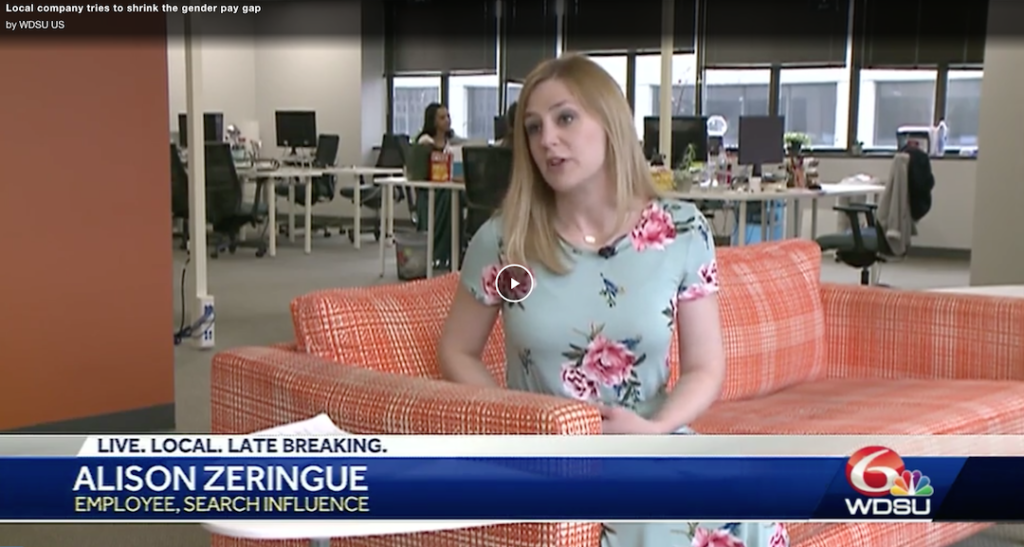
“Because of their traditional role as family caregivers and a lack of flexibility and support from full-time employers, women often feel forced to choose lesser paying positions or to work in lower-paying industries to get the flexibility they need to support their families,” says Alison Zeringue, our Director of Account Management. Alison is part of our 75% female leadership team, and, the mother of a one year old.
At Search Influence, our compensation strategy, including both our pay and benefits package, is intended to create an equally rewarding and flexible work environment to allow all employees – from entry level positions through senior leadership – to not have to make the choice between being present for their families and maintaining a full-time position. This helps lessen the pay gap as it allows for women to feel more confident in their choice to return to their full-time responsibilities here after maternity leave, knowing that they’ll be supported. We believe this shows in our 74% female company, and, even more so in our leadership team.
Our local NBC affiliate, WDSU, visited with us last week as well as Anna Mahoney, Ph.D., from Tulane University to dive into this story and learn how it is affecting the workforce, and what our company is doing about it.
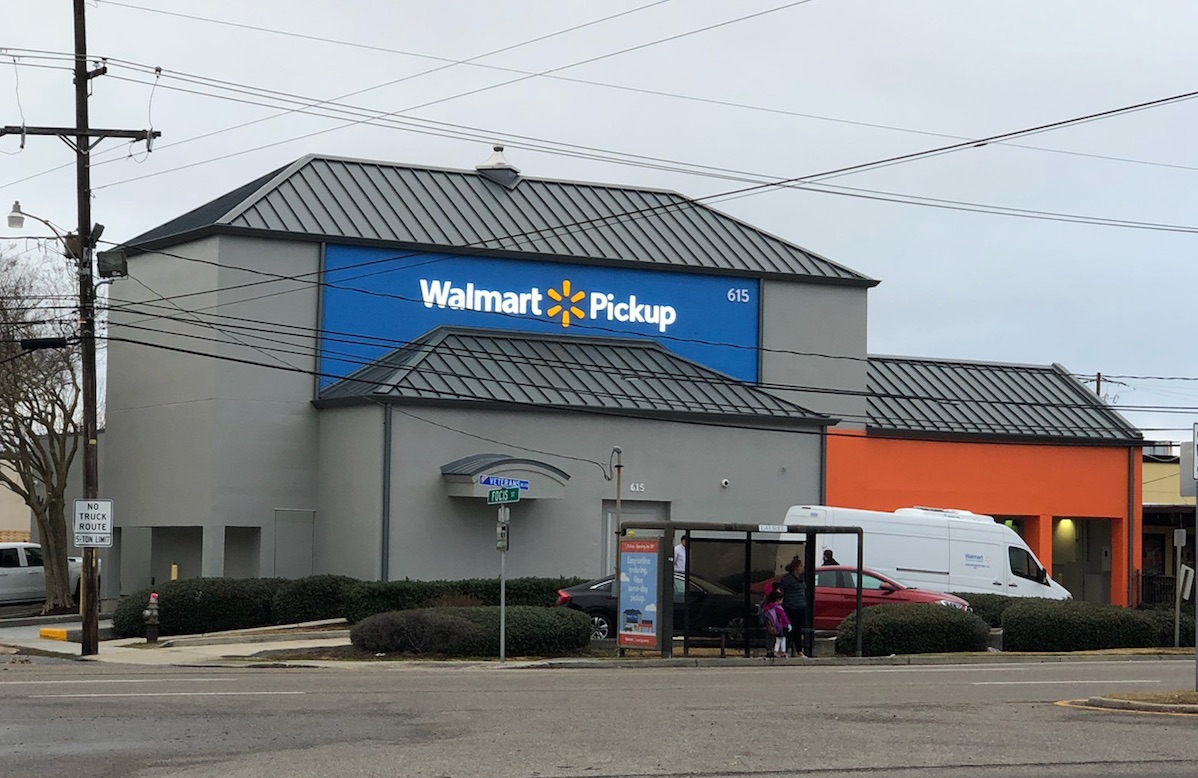
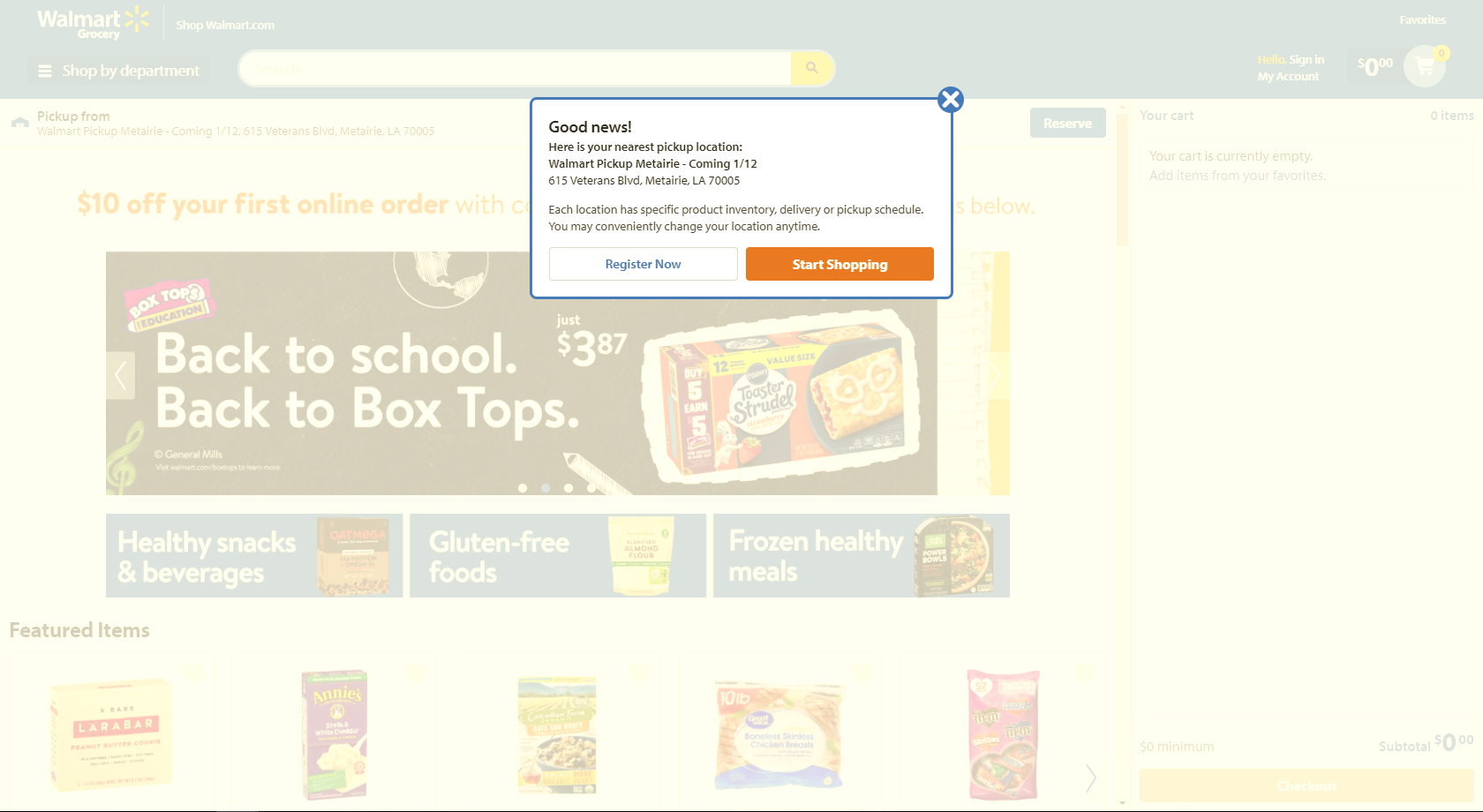
A drive-thru only Walmart Pickup is set to open in a former Whitney Bank in Metairie, LA, immediately outside New Orleans. It’s been a somewhat quiet effort that went largely unnoticed until the location appeared as an option on Walmart.com, stating it’s opening today, January 12, 2018, and as the sign finally went up on the building.
While many banks have been consolidating locations due to the prominence of online banking, former branches, which of course are conveniently located, present an interesting expansion opportunity for companies like Walmart. This is especially true for the former bank at this site – previously a Whitney Bank location, which is a casualty of the Hancock Whitney merger of 2011, which finally embraced a rebrand and consolidated 20+ locations.
The drive-thru pickup will be powered by online orders, where, according to a November 2017 Fox8 article, you’ll be able to choose from over 30,000 grocery and toiletry products.
In 2014, a Forbes article cited this concept as a “head scratcher.” Today, in 2018, this seems like an obvious move for a company competing with Amazon’s incredibly popular free 2-day Prime shipping.
Why do we care?
Well, companies like Amazon and Walmart set the standard for the convenience of both online and offline customer experience, to which small and medium sized businesses must pay attention and respond. Many consumers were formerly accustom to calling ahead to a local store or shop to reserve something, and then swing by and pick it up.
Today, most are looking online first for in-store availability. Stores have begun catering to this convenience to which we have all grown accustom to. A practical example of this comes from Home Malone, a local shop that carries only local artists’ work and goods, advertised an in-store pick up online option this year for the holidays as a way to compete with the ease of online ordering.
Look forward to a follow up post on ways small and medium sized businesses should be using Amazon and Walmart to improve their customer experience.
Sophie Kirk, Search Influence Account Manager, was selected as a finalist for US Search Awards category of “Young Search Professional.”
The US Search Awards are presented as part of Pubcon Las Vegas, a week-long search and social conference with deep roots in sharing search engine optimization industry insights.
Finalists for the Young Search Professional shortlist are chosen by an international panel of judges based on results driven for their clients, challenges overcome, and early career accomplishments. All nominees must be 25 or younger.
Search Influence chose Sophie to represent the company in this category based on her results-oriented approach and her relentless drive for quality.
“Sophie is one of the most hard-charging young marketers I have seen,” says Paula French, Director of Sales & Marketing. ”She is not afraid to say ‘that is not going to work’ and identify new and creative strategies to get results in today’s competitive space, even when they are a challenge to implement.”
Sophie’s strategy and management of a completely reimagined website for Center for Restorative Breast Surgery is one of her key accomplishments. While the 9 month project to build the site concluded with the launch in October 2016, the mission to educate women about their options for breast reconstruction continues today with additional content creation and promotion.
Prior to working at Search Influence, Sophie graduated with a Bachelor of Arts in Public Relations from the Manship School of Mass Communication at Louisiana State University, during which she marketed events for St. Jude Children’s Research Hospital.
Thank you, Sophie, for all you have done to make your clients successful!





 A drive-thru only Walmart Pickup is set to open in a former Whitney Bank in Metairie, LA, immediately outside New Orleans. It’s been a somewhat quiet effort that went largely unnoticed until the location appeared as an option on Walmart.com, stating it’s opening today, January 12, 2018, and as the sign finally went up on the building.
 Why do we care?