Author: Alison Zeringue

  • Read This Before You Switch to Google Analytics 4

    Read This Before You Switch to Google Analytics 4

    Key Insights

    • A new version of Google Analytics is available and comes with some major changes.
    • The Google Analytics 4 release is the largest update in the last decade or more to Google Analytics. It impacts the way users are tracked and the way their behavior is reported to us as marketers.
    • Google hopes to future proof and improve user analytics by updating to tracking technology that doesn’t rely on browser cookies.
    • Google Analytics 4 includes changes to both reporting and measurement – which are currently still a work-in-progress, by our assessment.

    Google Analytics data being displayed on a tablet

    There’s no doubt 2020 was a whirlwind for many reasons. Adding to the chaos for digital marketers everywhere, Google snuck in a major update for Google Analytics, with the official rollout of Google Analytics 4 (GA4) in late 2020.

    Chances are, you probably depend on Google Analytics to understand your website traffic and user experience, track your digital campaigns and make decisions. W3 Techs reports that Google Analytics is used by “86.1% of all the websites whose traffic analysis tool we know.” So, major updates to Google Analytics naturally have sweeping impacts for marketers. Adapting (or not) to the new technology could impact your long-term ability to analyze the success of your marketing.

    Google rolls out updates and changes to Google Analytics over time, and in some cases, users continue to track their data with past versions. The GA4 release is the largest update in the last decade or more to Google Analytics. It impacts the way users are tracked and the way their behavior is reported to us as marketers.

    We expect websites will be forced into switching at some point. That said, there are considerations to adopting early. On one hand, it’s recommended to begin collecting data via the new technology so that when you are required to switch, your historical data is built out. On the other hand, you don’t want to solely rely on GA4 just yet. This post will review what makes GA4 notable and provide some guidance (in layman’s terms) on whether or not you need to consider switching.

    If you’re a developer or looking for a more in-depth technical perspective, check out “Should You Switch To Google Analytics 4” by my colleague David, our resident conversion tracking authority.

    What is Google Analytics 4?

    Google Analytics 4 is effectively an entirely new form of Google Analytics which makes “App + Web” configuration standard for all online properties. The foundational metric of reporting has changed from Pageviews within a Session to Events. This means it’s better designed for those who have both an app and website and who want to more seamlessly track and understand individual behavior across those platforms.

    How is Google Analytics 4 different from Universal Analytics? What are the key reporting differences?

    Usually, Google Analytics updates are just code updates in the background and no change to the reporting user interface. But this update is significantly different.

    There are some benefits to the reporting changes, but since GA4 is still a work-in-progress, there are some significant differences that may present challenges to the typical Universal Analytics user. Bounteous covers them in-depth here. Here are a few key points:

    • Reporting dashboard differences
      • No e-commerce reports
      • No available cost data from ads
      • Marketing channels are associated with conversion events rather than visitor sessions
    • Currently, there are very few pre-built reports, filters, and views. For example, you cannot exclude internal traffic.

    Should I switch to Google Analytics 4?

    The short answer to “Should I switch to Google Analytics 4?” is… maybe. The answer depends largely on what type of web/app properties you have and want to track, among other considerations. Keep in mind that the analytics community as a whole expects there could be significant progress and updates to GA4 as time goes on. GA4 will eventually replace Universal Analytics as the standard, so it is appropriate to be paying attention and considering how you may transition.

    So what are the considerations for switching to GA4 now? Here are the things you should consider:

    • Do you have a website and an app?
    • How dependent are you on your current Analytics reporting metrics and data?
    • Do you have the bandwidth to manage the switch, learn and understand the differences in reporting metrics and rework existing reports?
    • Do you work with an outside agency or other third parties on marketing efforts? What do they recommend?
    • Do you use any other application to tie into Google Analytics (like Google Data Studio or a custom reporting dashboard)? If yes, are you prepared to update those connections?

    Our recommendations for switching to GA4 now:

    • If you only need to track behavior on a website (not an app), the short-term benefits of transitioning to GA seem insignificant and will likely demand a lot of resources to adjust to the new configurations, reporting, etc.
    • If you want to unify reporting and improve tracking across apps and websites you manage, some of the immediate benefits may make the transition worth your while.

    Regardless of which boat you are in, we recommend to track Universal Analytics properties and GA4 properties concurrently for now.

    Using a tablet to evaluate Google Analytics data

    Can I use both Google Analytics 4 and Universal Analytics?

    Yes, you can use both Google Analytics 4 and Universal Analytics at the same time, and we recommend it as the immediate option to set you up for a long-term successful transition.

    If it excites you to adopt “the new thing” but want to play things safe, you can install both tracking codes and check out the differences yourself. Since these are separate properties, they don’t interfere with one another, and per our testing, we can set up both to work simultaneously without any conflicts.

    An important note is that historical data from Universal Analytics will not be available in Google Analytics 4, so you might consider installing it alongside Universal Analytics to begin to collect data in the new landscape.

    For more information about running GA4 and Universal Analytics parallel, check out this blog written by our CEO Will Scott

    Do I Have to Switch Now?

    If you walk away with nothing else, here’s what I hope you gained from reading this post:

    • It’s new, it’s developing, and we’ll be watching along the way. It’s generally expected that Google will continue to iterate and improve on GA4 in the upcoming year.
    • If your goal is to track both an app and website, an early adoption plan for GA4 is a good idea to explore.
    • You don’t have to switch yet! There’s no risk in setting up GA4 to work concurrently with Universal Analytics and begin collecting data so that you are ready in the future for a transition. In fact, we recommend it.

    Do you want advice specific to your situation on Google Analytics 4 or any other tracking and analytics challenges? Reach out to our expert team at Search Influence through our site form and let’s discuss how we can help you begin tracking your website performance accurately!
  • Facebook Ads Boycott: What Advertisers Need to Know

    Facebook Ads Boycott: What Advertisers Need to Know

    Key Insights:

    • A Facebook Ads boycott is taking shape under the hashtag #StopHateforProfit aimed at forcing action from Facebook regarding its policies on hate speech, political ads, and disinformation.
    • While the list of brands pausing Facebook Ads grows, so does the opportunity for smaller or competitor brands to eat up some of the market share, likely at lower costs due to the already high usage rates of social media and apps, as well as decreased competition.
    • SMBs and values-driven organizations, especially those already in a fragile state due to the economic impact of COVID-19, will need to take a hard look at opportunity costs.

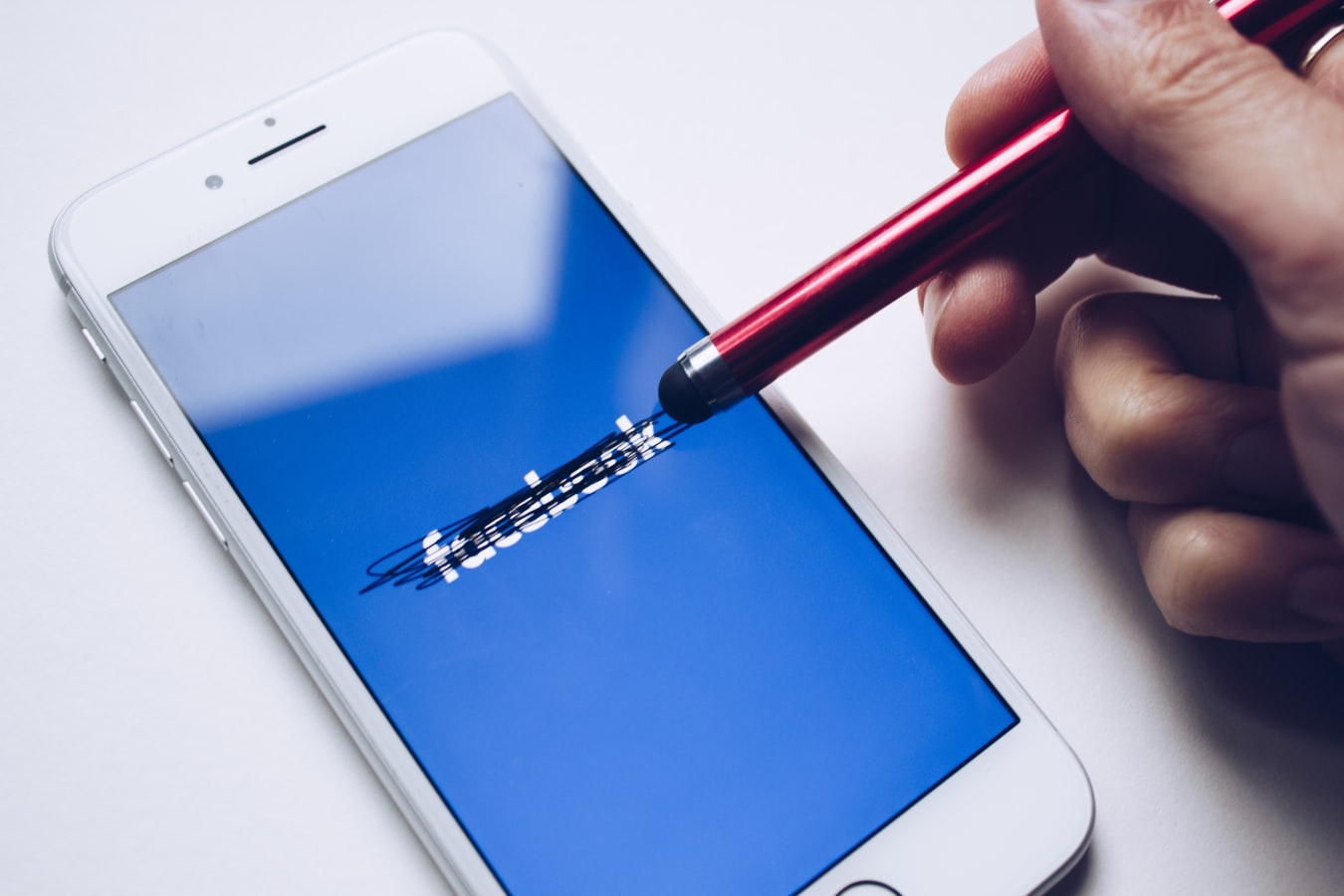
    A person scratching out Facebook's name on a smart phone with a stylus

    What do Coca-Cola, Birchbox, Eddie Bauer, The Hershey Company, Verizon, and The North Face have in common? At least this: you won’t see their ads on Facebook in the next month.

    In the last week, an advertiser boycott of the highly effective Facebook Ads platform has taken shape under the hashtag #StopHateforProfit, a campaign that picked up steam when civil rights groups backed it in June. So far, full support comes from groups including the Anti-Defamation League, Color of Change, Common Sense Media, Free Press, the NAACP, and Sleeping Giants.

    Many believe Facebook has a history of refraining from action against misleading political advertisements, hateful content, and disinformation. They have called for brands to pause advertising on the platform in July to make Facebook feel the heat.

    What do these groups want? The call to action for Facebook involves stopping hateful content— in particular, generating ad revenue from offensive content—and a further list of demands. This list includes (but is not limited to) policing Facebook groups over 150 members in size and flagging hateful content for review. Learn more about what is included in this AdWeek article.

    The social media giant has weathered other scandals and criticism in the past, most recently the Cambridge Analytica scandal over privacy. Facebook, with its 7 million advertisers, is likely to weather this boycott as well. But some in the industry believe this time is “different” due to the current climate and public sentiment among Americans.

    The boycott organizers have called on more advertisers to follow suit. At Search Influence, we’ve had at least one client consider pausing their advertising to take part in this boycott.

    A neon sign of a heart and a 0

    How should an advertiser decide if they should take part? Consider these facts:

    Facebook Ads Are Still Highly Effective

    In the first quarter of the year, thanks to quarantine and economic shutdowns, people spent more time in apps and on social media than ever before. Worldwide, average weekly time spent in apps and games on Android phones grew 20% year-over-year in Q1 2020, and experts expect this to normalize going forward.

    For companies who depend on Facebook Ads for the growth of their livelihoods, joining this boycott will be a difficult task. Costs and targeting options available in Facebook Ads are unmatched in the digital advertising industry. The knowledge of their effectiveness for advertisers is evidenced by the fact that many of the advertisers participating in the boycott only committed to pausing their ads for one month, only in the US, and only on Facebook—but not Instagram, which is owned by Facebook and still managed through Facebook Ads platform.

    Opportunity Will Be Created by Advertisers Who Pause

    At the onset of the COVID-19 pandemic, consumers in quarantine spent more time than ever on social media and in apps, which created more “inventory” for ads to be served. At the same time, advertisers pulled their campaigns due to budget cuts. Less competition drove down costs dramatically. Due to these reduced rates, we saw our clients’ budgets stretch farther than ever and their campaigns experience record engagement rates. Portfolio wide, our clients who continued spending on Facebook Ads saw improved costs across the board for every campaign objective. For conversion-objective campaigns—which we typically use for our clients who need to generate leads or purchases—costs per acquisition were down 32%.

    Some industry experts predict this boycott could create similar conditions to the early days of the pandemic. While the list of brands pausing Facebook Ads grows, so does the opportunity for smaller or competitor brands to eat up some of the market share, likely at lower costs due to decreased competition and already high usage rates of social media and apps.

    Pausing Digital Ads Can Affect Your Campaigns’ Performance

    If you plan to pause and restart your Facebook or other digital advertising campaigns for a boycott (or any other reason), it’s important to understand the opportunity cost created by the downtime. Disrupting your data can send your campaigns back into “learning” mode, and create a setback. It won’t be as simple as turning your campaigns back on and expecting results at the same pace as when you stopped. Platforms like Facebook Ads are designed to nurture campaign improvements the longer a campaign runs because the platform collects more data and optimizes as time goes on. For example, a conversion-objective campaign will gain more conversions as data is collected about what parts of the audience are converting at higher rates than others.

    Big Brands Benefit in Publicity

    Brands like Starbucks and Ben & Jerry’s may (or may not) take a sizable hit from suspending their Facebook advertising for a month or more, but they certainly benefit from publicity. By joining this cause, they’re being featured in the media and press coverage on the boycott. If we could place a valuation on the earned media as a result, it could certainly make a dent in the share of voice lost from their campaign pauses.

    Also of note are companies joining the boycott likely for the goodwill who don’t stand to lose much. The Clorox Company plans to maintain its total advertising budget, but shift it’s spending to other media. Surely a company with soaring stock prices that profited from the global pandemic can afford to risk their advertising results for the rest of the year… but can a small business with less prior experience testing and tuning other advertising platforms afford the risk?

    Is Joining the Boycott Right for Your Organization or Business?

    While you may feel compelled to take part in a boycott backed by civil rights groups should it align with your values, it’s important to weigh the consequences fully. With many SMBs already in fragile financial states due to COVID-19’s economic impact, now may not be the ideal time to risk losing additional business. Could more jobs be at stake? As an advertiser, you should also consider how this aligns with your target customer. Will you be perceived as insensitive, or “not down for the cause,” if you continue to advertise?

    Five factors you should consider:

    • What is your opportunity cost of pausing advertising on Facebook?
    • How significantly are Facebook, Instagram, and Audience Network ads contributing to your overall performance?
    • If you pause, what would it take for you to be comfortable resuming your Facebook Ads, What is the likelihood that those conditions will be met? In the meantime, can you withstand the pause in advertising?
    • If you pause, where will you funnel that media spend? What are the results you could expect from those channels?
    • As an alternative to boycotting, are there other ways your organization could support civil rights groups?

    As a small or medium-sized business or organization, we recommend consulting with your digital advertising team or an expert here at Search Influence to fully evaluate whether joining a boycott of Facebook Ads is the right move for your short and long term growth. Contact us today to learn how you can enhance your online marketing efforts with our recommendations.

    Images:

    Facebook

    Neon Sign

  • In Uncertain Times, Stretch Your Budget with Online Advertising

    In Uncertain Times, Stretch Your Budget with Online Advertising

    Throughout these past few months, our industry has experienced roadblocks, challenges, and changes that alter the way we look at the work we do for our clients. We will take a look at three clients and how their experiences measure up to what the experts say about advertising and marketing in the current landscape.

    March/April 2019 vs. March/April 2020

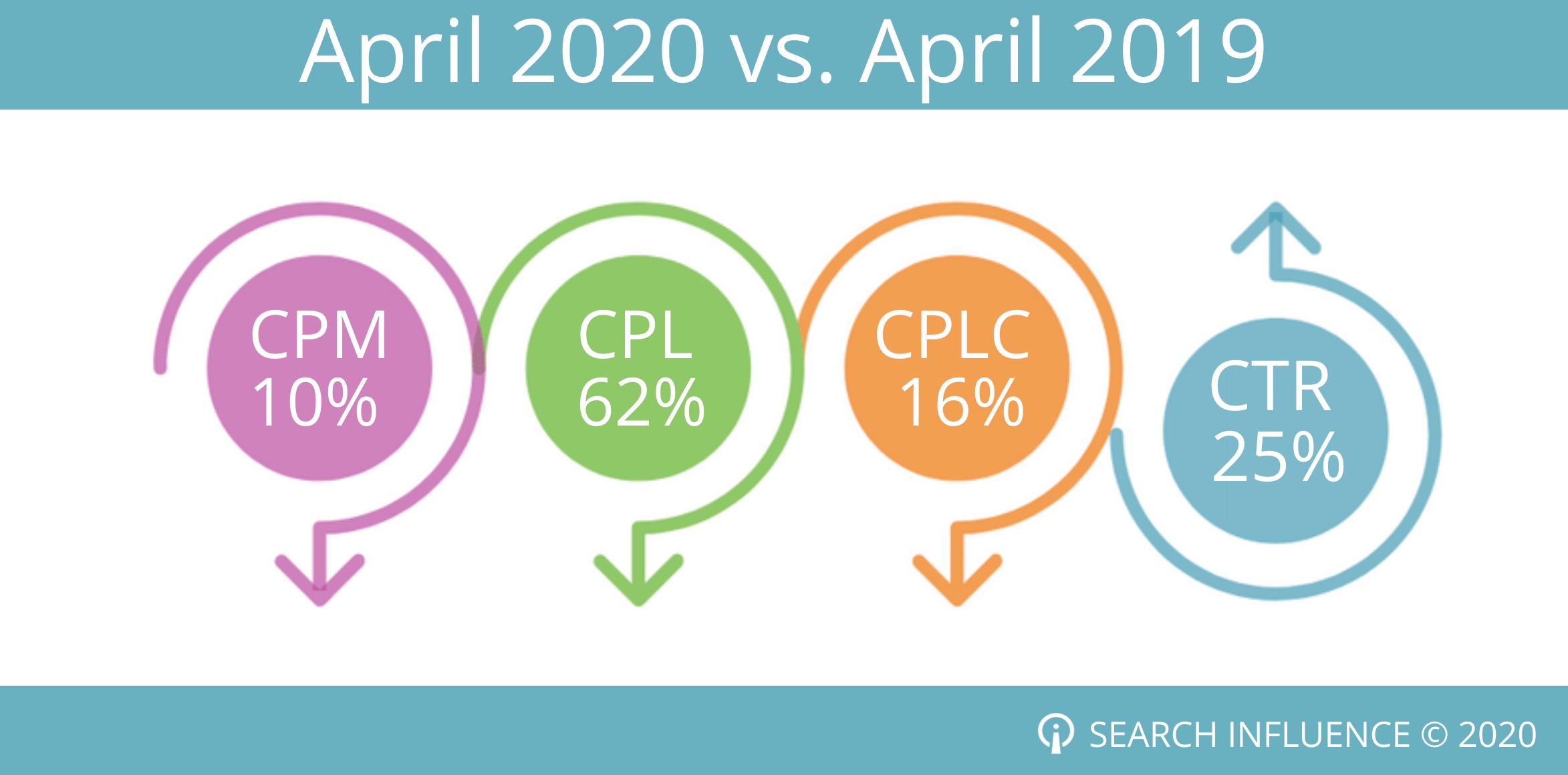
    • All cost metrics have improved across the board—aligning with the fact that experts say it is cheaper to advertise right now.
    • Campaigns with Brand Awareness, Lead Gen, Reach, Traffic, and Video View objectives perform especially well.
    • Engagement has increased, demonstrated by a 25% improvement in Click-Through-Rates (CTR)—the percent of impressions who clicked on an ad.

    March/April 2019 vs. March/April 2020
    We see that increased digital ad inventory and lower competition generate low-cost ads. Digital media and social media usage are up with advertiser competition down, which means it costs less than ever right now to reach larger audiences.

    • Campaigns leveraging video ads, Cost per ThruPlay decreased 64%.
    • Cost Per Engagement has decreased for every objective, which demonstrates a higher level of engagement.
    • CPM and Cost Per Click (CPC) decreased for every objective.
    • 32% in Cost Per Lead (CPLs) for conversion campaigns.

    A Search Influence branded graphic showing CPM, CPL, PCLC, CTR from April 2019 to April 2020

    Client Impacts

    Audiology and Speech Therapy Client

    Since the start of COVID-19, an audiology and speech therapy client found itself in flux due to restrictions on non-emergency medicine & procedures. The practice was quick to adopt teletherapy and virtual speech therapy options for its patients. New services and forced closures of the physical clinics created an urgent need to inform existing patients of these new services. It was also imperative to continue the acquisition of new prospective patient leads. The client needed a new gameplan.

    Strategy & Tactics

    • Communicate clearly on the website and via email marketing for current patients.
    • Implement Facebook and Instagram Display Network ads with careful monitoring & adjusting.
    • Change advertising creative quickly to promote teletherapy options.
    • Pause all other messaging.

    The client found success running advertising in March. The campaign hit a new performance threshold and exceeded the typical monthly lead volume by 69%, at the lowest CPL to date. In April, the lead volume grew an additional 25% and CPL reduced further, by 16% month-over-month. This indicates that the campaign budget is being spent more efficiently than ever on the Facebook Ads platform, with a highly engaged audience.

    Higher Education Client

    This client offers degree programs and continuing education for a non-traditional student with a focus on online classes. The client was poised for potential growth due to the online nature of their product, but new uncertainties surrounding the future of higher education and the traditional in-person instruction created potential problems.

    Our client had to focus on yield while building their pipeline for future semesters. Also, the non-traditional student decision cycle and the journey are typically a long one.

    Strategy & Tactics

    • Transition remaining courses online.
    • Play up financial aid, transfer policies, credit for life/work experience messaging.
    • Continue digital advertising—no spending reduction.
    • Leverage client-produced Facebook Live Series for top-of-funnel.
    • Shift blog post strategy focus to online learning & other timely topics.

    In March, Facebook Display generated the highest number of inquiries in a single month since its launch, primarily from our lead generation campaign. We saw a 111% increase in inquiries from Google Smart Display month-over-month. In Q1 of 2020, our client achieved 47% of 2019’s inquiries and spent only 29% of the budget.

    Reconstruction Surgery Client

    A multi-physician cancer reconstruction client with national and international clients had their operations limited by state restrictions on non-emergency medicine. Unfortunately, cancer doesn’t stop in a pandemic, but with fewer people attending routine medical appointments, we wondered if the diagnosis would slow down? With restrictions in place requiring the practice scale back, the client also had to figure out how to be productive and build the pipeline for the future. It was clear we needed to keep their medical marketing plan running full-steam.

    Strategy & Tactics

    • Communicate clearly on the website and via email marketing for current patients.
    • Add to top-of-funnel strategy.
    • Continue paid advertising with careful monitoring and adjusting.

    During the month of March, our client continued advertising in paid search and saw its lowest CPL in three years on Google Ads and patient inquiries were up 27% in March compared to February 2020 (on Google). In April, based on a drop of impressions, we decided to redirect the budget from Google Paid Search to Facebook Advertising while still keeping the Google Paid Search campaign on.

    After this adjustment, we hit our lead volume goal and reduced the CPL acquired via Facebook by 14%. All-in-all, this resulted in exceeding our pre-COVID-19 stated goal for leads from Facebook & Google advertising.

    Search Influence branded graphic showing Facebook CPM totals between March 2020 and April 2020

    Lessons

    • Rapid pace of technology adaptation among the greater population has changed consumer behavior for the long haul—those who already offered online options and services see growth.
    • The low cost of Facebook Ads make budgets stretch farther than ever. On Google, while search volume is down, those who search have high intent.
    • Online courses within your industry could offer new revenue stream opportunities. Do you have a special way of doing something that you can share with others in your industry?
    • Facebook lead generation campaigns are making up for volume drops in other lead gen avenues, due to a massive increase in usage of Facebook’s platform.
  • Should You Advertise During COVID-19? Here’s What the Experts Are Saying

    Should You Advertise During COVID-19? Here’s What the Experts Are Saying

    The dramatic increase in media consumption due to global stay-at-home orders has led to changes in consumer behavior. The data from Facebook, Instagram, and streaming services for television gives us insights as to how we can adapt digital marketing to align with these consumer shifts.

    A phone, person, and dollar sign icon

    Before this time, video was producing the highest engagement rates and often the best advertising results. Now, Nielson predicts homebound consumers could account for an almost 60% increase in the amount of global time spent watching video.

    People are also spending significantly more time on social media. While people use social media to catch up on current events, it’s clear they’re also spending time there for entertainment as a break from the barrage of virus-specific news.

    In a public Facebook report, the company openly discussed massive increases in traffic, messaging, and bandwidth usage. They have seen a 50% increase in messaging across their platforms.

    More than ever, people are also spending time on apps and downloading. This is noteworthy from a digital marketing perspective because display network advertising can reach potential customers while they use apps.

    • On average, consumers around the world spent 20% more time playing games and using apps each week in Q1 2020 than they did in Q1 2019.
    • In Q1 2020, consumers spent over $23.4 billion in app store purchases, the largest quarter ever in terms of consumer spending.
    • There were over 31 billion new app downloads, a 15% increase from Q4 2019.

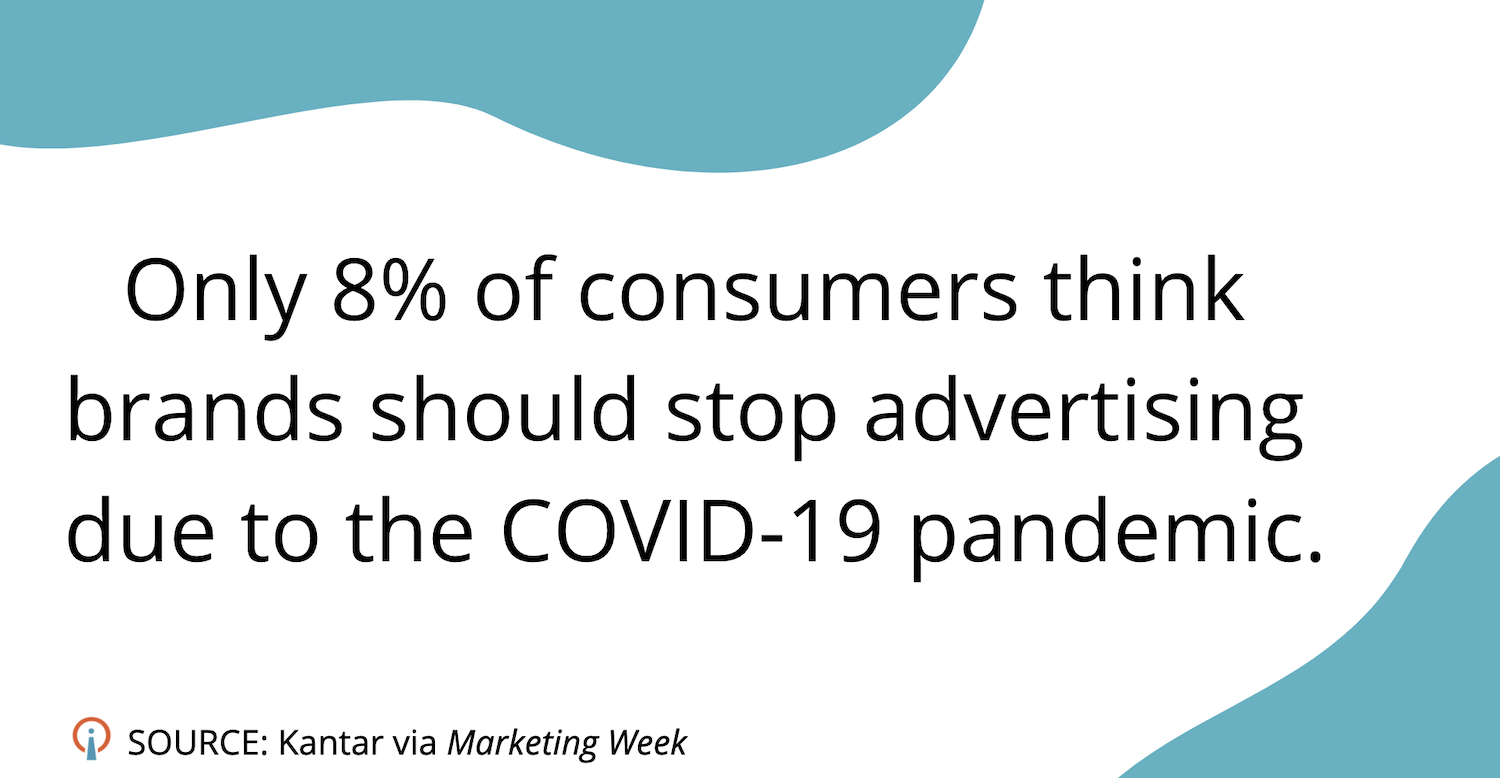
    Kantar Media, a global data consulting company, surveyed more than 35,000 consumers globally and found that only 8% of people think companies shouldn’t stop advertising due to the pandemic.

    8% of people think companies shouldn’t stop advertising due to the pandemic graphic

    88% of the U.S. population uses a computer or mobile device while watching either digital video or traditional TV, and this number is likely to be even higher during social distancing.

    In the week of March 9, Nielsen tracked a 10% increase in viewership of local news in the 25 to 54-year-old demographic. These viewers are probably browsing Facebook, Twitter, or Instagram on their phone while the news is on in the background.

    Current Increases:

    • The local CBS affiliate in New Orleans, WWL-TV, has seen its viewership quadruple.
    • Medical, legal, and home improvement industries have increased their advertising.
    • Feel-good advertising has become more common, including large organizations sending out “thank you” messages to their staff and front-line workers.

    Facebook Advertising

    With people consuming digital media at such a high rate, there are more opportunities to show ads to potential customers. That, coupled with the fact that many advertisers have reduced their budgets, means there is less competition for each impression, which lowers the cost and increases the effectiveness of your ads.

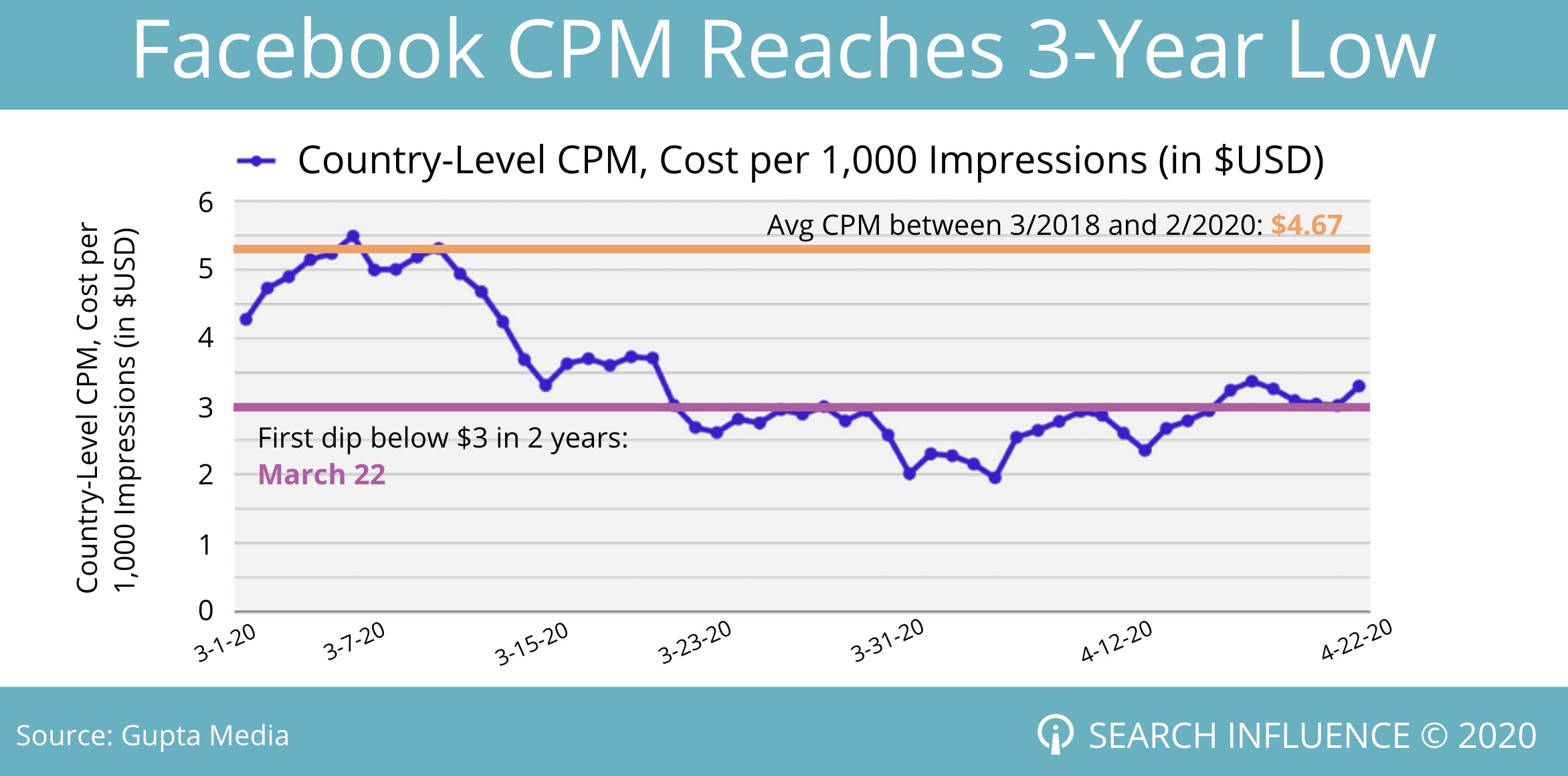
    In the US, the average cost per thousand impressions (CPM) for Facebook ads fell below $3 for the first time in two years on March 22. The average CPM has remained close to this $3 average for about two months. For comparison, the average CPM in the US from March 2018 to February 2020 was $4.67.

    The Costs to (Dis)Engage

    Kantar conducted an experiment to see how a popular beer company’s sales and market share would be affected if it cut its ad spend. Their research found that if the beer company paused all of its marketing campaigns, it would see a 13% decrease in sales and struggle to recover that lost market share.

    Kantar’s global head of media, Jane Ostler, shared an impactful insight, “Brand health becomes vulnerable when companies stop advertising…If they do this for longer than six months, it destroys both short- and long-term health.”

    Studies have also shown that during the Great Recession, brands that continued advertising recovered 9x faster than those who didn’t. All of the data from 2008 and the models for the current situation point in the same direction: not advertising for six months or more will have drastic effects.

    Lessons From the Great Recession

    While “unprecedented” may be the word of the year, we do have the examples from the Great Recession from 2007-2009 to draw upon for insights when it comes to the economic impact of a recession.

    During the Great Recession, two primary changes emerged in the packaged goods industry: shifting channel preference and reduced brand loyalty.

    • By channel, consumers were more likely to shop through dollar and value stores. They weren’t as concerned about shopping at their usual grocery and big box stores.
    • Reduced brand loyalty meant shoppers were more likely to choose cheaper, private-label items, such as Walmart’s Great Value brand, over big-brand favorites like Dawn and Bounty.

    This created a huge opportunity for brands to sell products to consumers who would otherwise not have made the switch. This also meant established brands needed to protect their relationships with customers by keeping them engaged.

    Ten years later, we predict that these trends in consumer behavior will return, except this time the shift in preference is to online shopping.

    For your business to be competitive online, consumers need to know that you exist, what you’re offering, and how to initiate a transaction with you online—whether that is through submitting an inquiry, a virtual consultation, or actually purchasing something.

    The Path Forward

    There’s a natural instinct to cut back on advertising to reduce expenses. Instead, you should focus on how to improve the efficiency of your marketing.

    There are more and more business transactions happening online. Properly set up analytics will allow you to track your leads to give you a better idea of which marketing efforts are driving your leads and sales.
    Industry-wide, there’s no question that digital advertising is the most cost-effective option for advertisers because of the surge in digital media usage and reduced competition. The low CPMs and lack of competition will not last forever.

    With the right team of experts, you can help secure the health of your company. At Search Influence, we provide businesses with an array of digital marketing services to help them reach customers online. Contact us to chat with an expert on our team.

  • Business Continuity Messaging During COVID-19: What You Need to Do Right Now

    Business Continuity Messaging During COVID-19: What You Need to Do Right Now

    Now more than ever, the internet is the first and primary source of information about local businesses. The messaging (or lack thereof) that companies disseminate may affect the quality and quantity of their customers when the economy begins to open back up. 

    We’ve seen far too many businesses fail to communicate their situation, regardless of whether they are open at this time. You already have the tools to communicate to your customers: 

    • Your website
    • Social media
    • Your CRM or customer email list
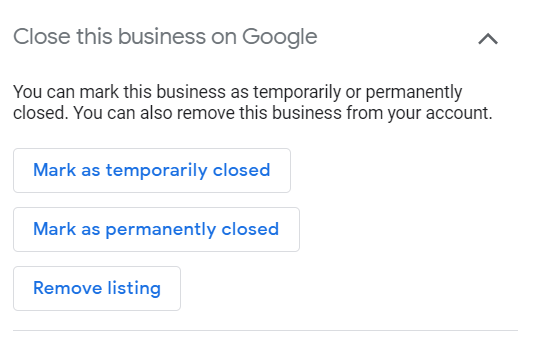
    • Google My Business

    Ensure that you’re poised for recovery by addressing your messaging strategy now. Create a plan to keep or build your audience’s trust. 

    To remain top-of-mind, you must cultivate customer intent. It will be more competitive when the economy opens back up, so you want potential customers to be further down the sales funnel at that point. Many people want and intend to spend their money with local businesses or on causes impacting their communities. 

    Messaging Guidelines

    Prior to the pandemic, Millennials (in 2020, this includes people who are 24-39 years old) were projected to represent $1.4 trillion in buying power this year. They now make up the largest segment of the workforce, are the most common users of social media and most likely to buy online. 

    Millennials spend their money in alignment with their values and often spend more on a product if the brand contributes to charitable causes. In March 2020, Millennials indicated they expect brands to step up their communication during this crisis:

    • One-third of respondents said that brands should communicate more than normal.
    • Half of the respondents thought that brands should continue their marketing efforts during this time.
    • One in four of those surveyed also said that they believed brands have the power to be “as impactful as the government” during this crisis. 

    Ensure Clarity in Your Messaging

    Marketing messaging now needs to focus on making positive brand impressions. Whenever possible, demonstrate social responsibility and clarify to your current and prospective customers how your business is operating during this period. 

    If your business is operating: 

    • Which steps do customers need to take to get in touch?
    • What is your plan for the short and long term?
    • How are you ensuring customer and employee safety?
    • Is your business supporting the community with donations, fundraisers, etc.? 
      • If so, how are you doing this?
      • How can your audience help?

    If you are unable to do business as usual:

    • How has this situation impacted the business and your employees? 
      • How can your audience help?
    • Is your business supporting the community (i.e., donations, fundraisers, etc.)?
      • If so, how are you doing this? 
      • How can your audience help?

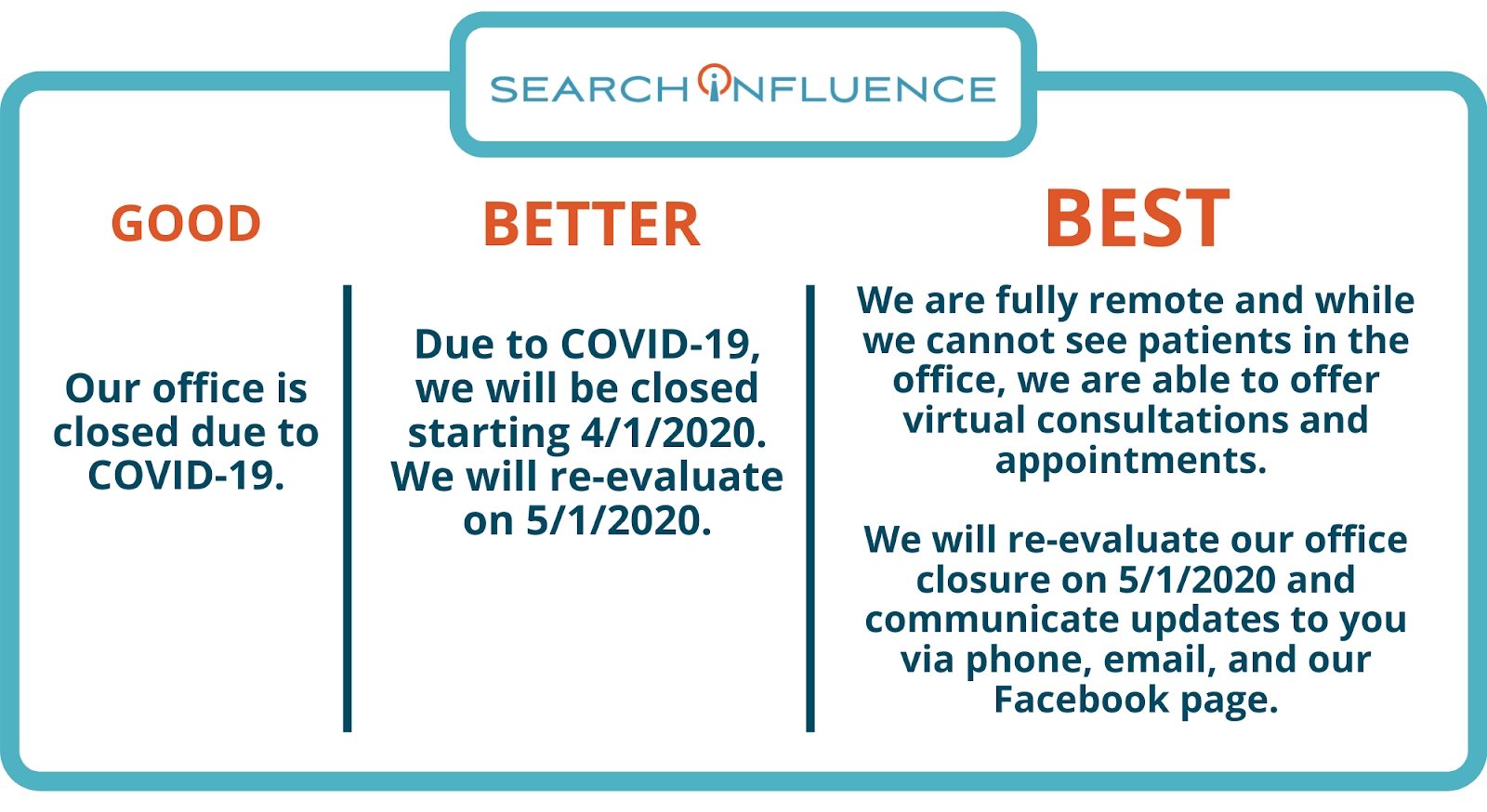
    Good Better Best messaging by Search Influence for COVID-19 Marketing

    Don’t Add to the Noise: Make Relevant and Meaningful Updates

    If you’re in a community with stay-at-home orders or one that has been hit particularly hard, it’s important to keep your audience up-to-date. An update of “No change in business at this time. We will keep you updated,” is better than radio silence.

    Savvy consumers understand the dynamic nature of doing business today and are more tolerant than normal about changes. Don’t withhold an update because you fear things may change. Even if you’re a small business that has relied on in-store sales and light social media posting to drive business, there are opportunities to be agile. 

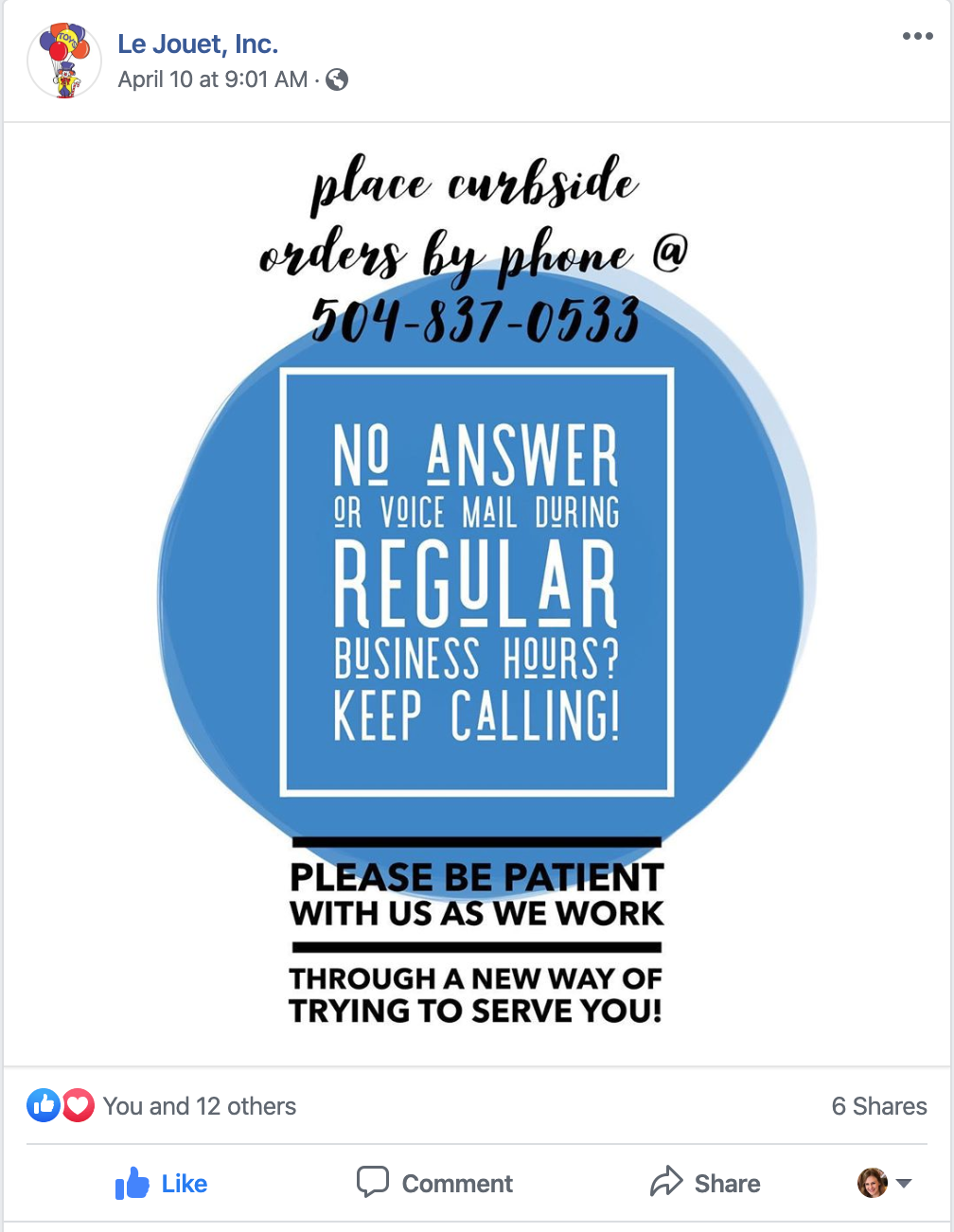
    For example, an iconic New Orleans toy store initially closed to comply with stay-at-home orders. As they realized they could keep people safe and still move inventory by offering personal shopping and curbside pickup services, they made adjustments and kept their customers informed.

    Do Good. Get Good: Earned Media for Those Who Communicate

    A strong communication plan helps earn customer loyalty and saves a deferred investment due to lost customers. In the short term, you may even get some added exposure by earning media mentions and placements because of the good you are doing. 

    One of our clients, Audubon Nature Institute, allowed an African penguin to tour the empty Aquarium of the Americas and used the hashtag #ClosedButStillCaring. The public loved it and demanded more, so Audubon produced a video of the penguins roaming the Aquarium. Local media outlets always look for feel-good stories and they picked up this one!

    Messaging Tactics

    Ensure this information is accessible to anyone who needs it.

    Audit All Messaging

    Audit and create a list of all customer / prospect touchpoints. Look at everything, from the obvious (social media and website content) to the less obvious (your voicemail recording when someone calls). 

    Examples of communications to audit: 

    • Your voicemail recording
    • Any automated responses someone might receive if they fill out an inquiry on your website. 
      • Online appointment confirmation emails
      • Online order confirmation emails
    • If someone on your Houzz.com profile (or any other 3rd party website), do they receive a different automatic email? If you have the ability to update the content, make sure you include this in your audit. 

    Google My Business COVID-19 Considerations

    Website traffic data indicates people are more likely to Google you first, even loyal customers. With Google presenting more and more information in the search results, people will often read the information in Google’s knowledge panel without making it to your website. 

    Update your Google My Business by using these features:

    Write a COVID-19 Business Statement

    Now that many states and communities are on the cusp of re-opening some businesses, it’s critical to communicate clearly and effectively with customers and employees about what is and isn’t expected at your establishment. 

    Make a specific page on your website dedicated to your COVID-19 statement and updates. We recommend that you also add a sticky banner or pop-up that links to this page site-wide. This should be obvious because it’s the first info people are looking for when they visit your site right now. 

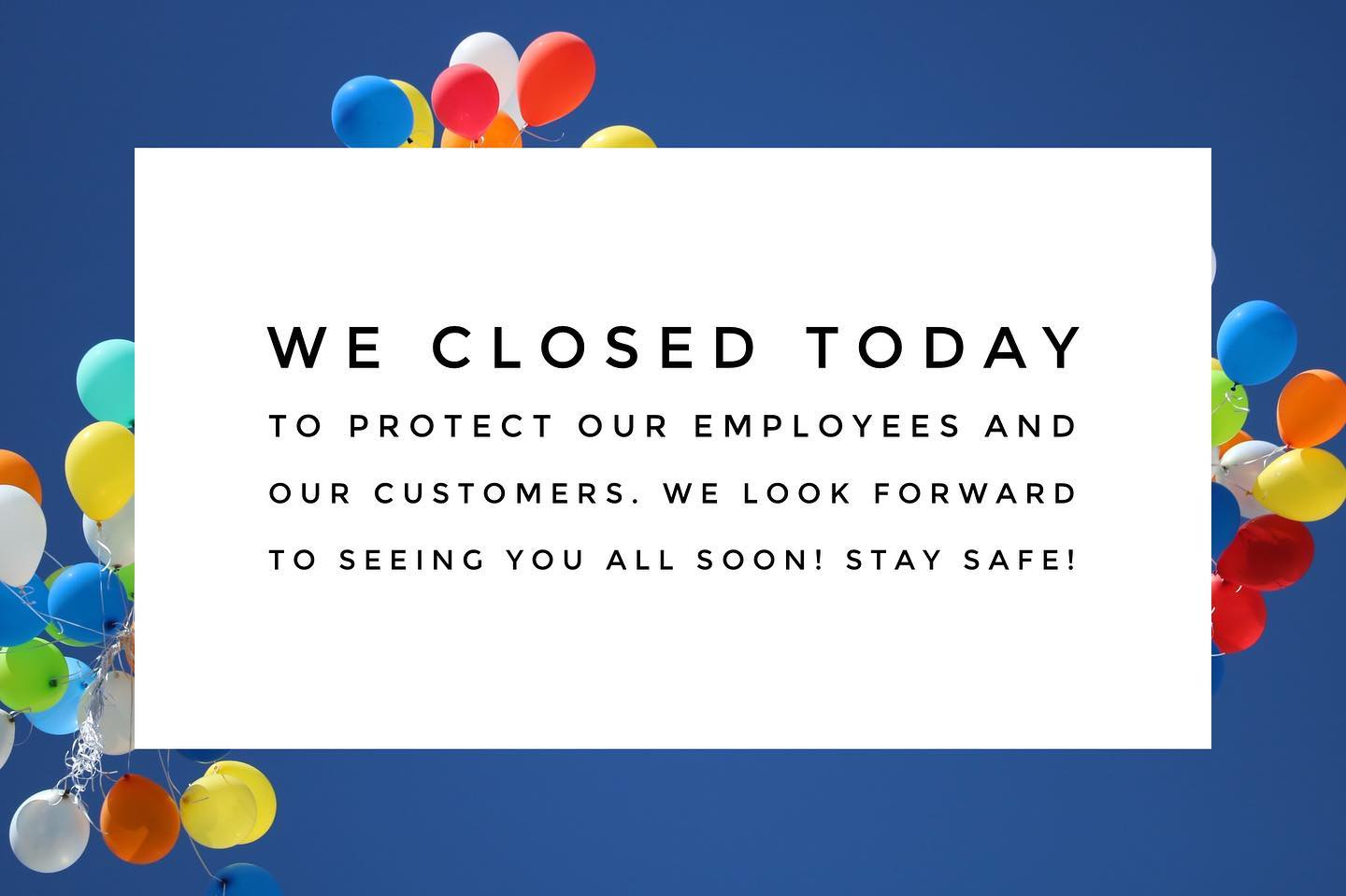
    There is a free WordPress plugin for this feature, and tools like Unbounce can also accomplish this. Here are some examples from our clients: 

    In our next post, we’ll dive deeper into what the experts say about marketing during the COVID-19 outbreak, including how you can make messaging effective if you do continue advertising. Stay tuned for more COVID-19 marketing content from the team at Search Influence!

  • A Look Back at 2019: Search Influence Style

    A Look Back at 2019: Search Influence Style

    I’m fairly certain that at some point in the first quarter of this year, I fell into a wormhole and recently emerged to discover that 2019 is coming to an end. How did this happen so fast?! And not just 2019, it’s the end of the DECADE, people!

    It’s like it happened in the blink of an eye, yet this year was jam-packed with exciting happenings.Happy 2020 New Year from Search Influence

    Whether you’re still suffering from the nationwide White Claw shortage or re-binge-watching the last season of Game of Thrones while eating Popeye’s new chicken sandwich, you probably agree that 2019 was a doozy. Lizzo rose to stardom, there was a new royal baby, and Stranger Things graced us with a third season.

    Clients and employees of Search Influence had an equally eventful year! This Year-in-Review post reflects on and celebrates the many exciting accomplishments of our team and our clients in 2019.

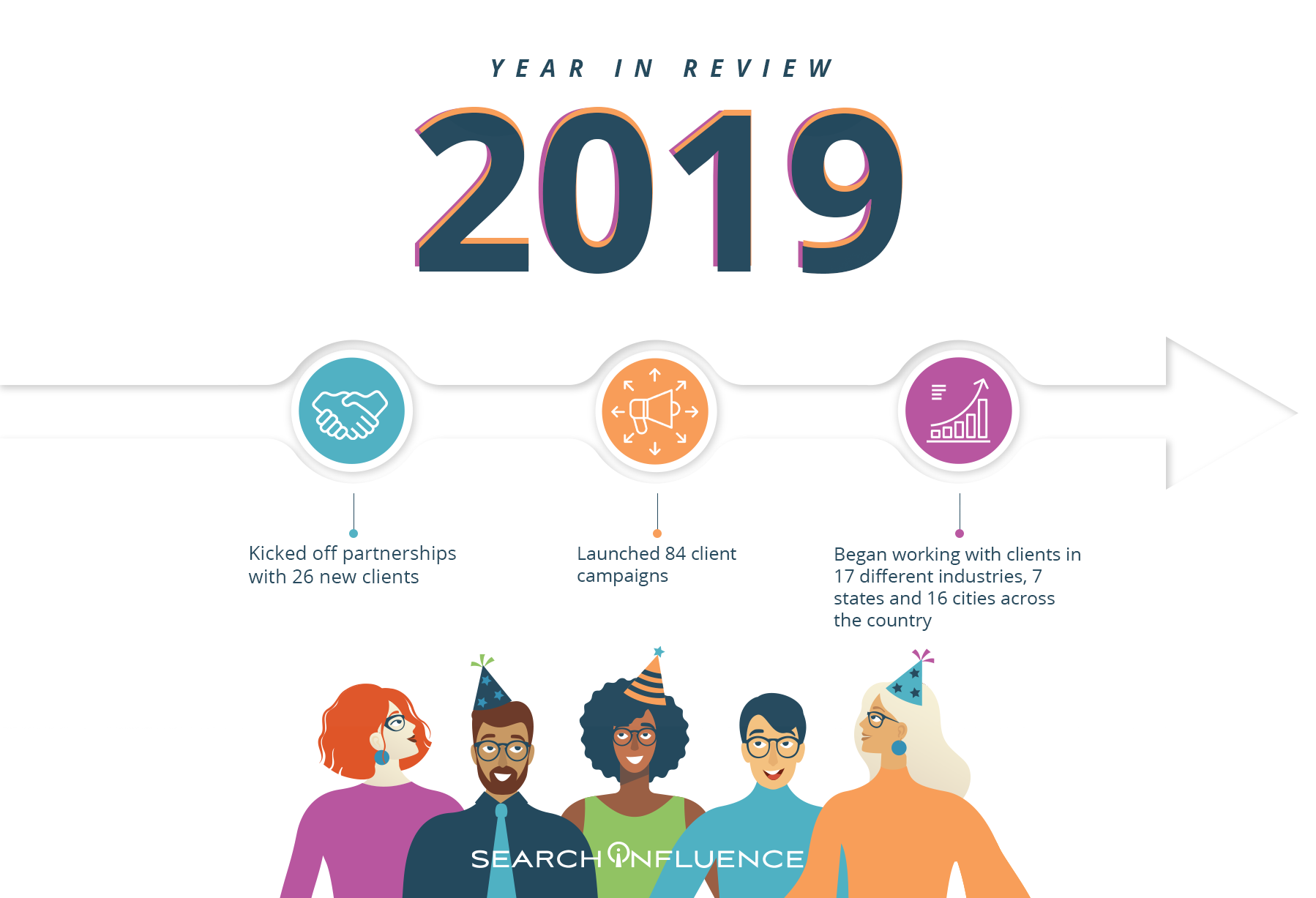
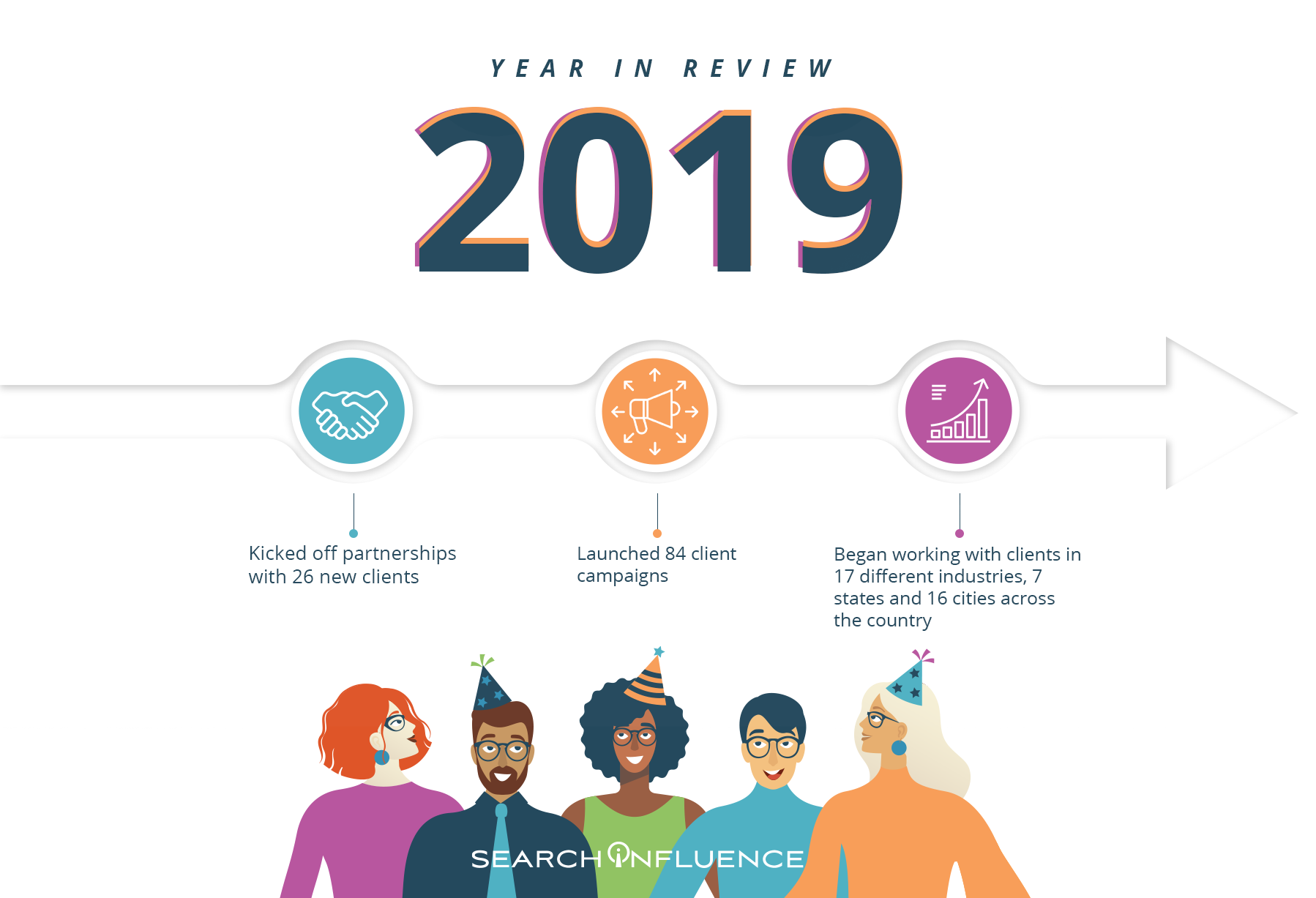
    Here’s the TL;DR version of our 2019. More on all of this below!

    In 2019, we…

    • Kicked off partnerships with 26 new clients 👟
    • Launched 84 client campaigns 🚀
    • Congratulated 5 newly married Influencers
    • Welcomed back 2 more Influencers who “boomeranged” back to Search Influence after going to work elsewhere ♻️
    • Said “Happy birthday” to 5 new Influencer babies in the last 12 months
    • Moved from downtown NOLA into a historic three-story building in Central City with our own courtyard
    • Initiated SMART Goal setting for each of our clients, an effort to hold ourselves accountable while focusing on our clients’ marketing objectives
    • Won a PRAL Flambeaux award for our successful digital campaign to produce a favorable vote to evenly distribute taxes among NOLA’s parks and greenspaces
    • Traveled to 6 cities in 5 states (Austin, TX; St. Paul and Minneapolis, MN; Denver, CO; Nashville, TN; and Torrance, CA) to develop our expertise, share our knowledge, and visit with our clients
    • Began working with clients in 17 different industries, 7 states, and 16 cities across the country
    • Achieved a company-wide profit threshold as a unified team through a culture of transparency and collaboration
    • Achieved an above-industry standard client retention rate by focusing on client ROI and employee education
    • Shared our expertise with speaking engagements at MN Search, Zenith, New Orleans & Company’s Tourism University, 2019 UPCEA Marketing and Enrollment Management Seminar, Mississippi Alliance for Nonprofits, Public Relations Association of Louisiana, and Public Relations Society of America, New Orleans Chapter
    • Blushed when three of our leaders were nominated for Ada Lovelace Awards
    • Topped off our 14th year in business and marveled at the change from early days around Will & Angie’s dining room table to now

    Search Influence 2019 Year in Review

    A Happy & Prosperous 2019 for Our Clients

    This year our Account Management team put a focus on strategy and client ROI, spending significant time ensuring that our campaigns align with our clients’ ultimate goals. Leveraging the methodology of SMART Goal setting, we worked hard to ensure all aspects of our campaigns are connected to the greater purpose of achieving client goals. And we have made these goals transparent to every member of our agency so that each individual can understand how their work is connected to the big picture.

    We launched and ran successful campaigns for key clients, including New Orleans City Park, Creole Cuisine Restaurant Concepts, the Tulane School of Professional Advancement, New Orleans Wine & Food Experience, and many more.

    Through a newly-formatted quarterly feedback survey, we solicited valuable insights from our clients about their experience with us and gathered some amazing testimonials:

    On Data and Analytics Reporting:

    “One of the biggest advantages to using Search Influence is their transparency and collaboration in reporting on analytics. The SI team worked with the Tulane School of Professional Advancement (SoPA) to determine what analytics and benchmarks were most important to us and made sure to align them to our outcomes. Each month, the SI team presents these data and analytics to the SoPA team and we ask questions, discuss strategy, and make data-informed decisions. Search Influence works with us each month to refine both the gathering and reporting of data. As a result, not only do we have a better understanding of the impact of our digital strategy, we are part of a continuous improvement process.”
    From Christa Payne, Assistant Dean at the Tulane School of Professional Advancement

    On Expertise and Client Experience:

    “I tell pretty much anyone who will listen how much I love working with y’all. Jordan and Ariel are both amazing—they’ve done so much for our Editorial Team and our overall approach to content on the site. On top of being incredibly knowledgeable, they do a great job of explaining oftentimes complicated subject matter to our team in a way that’s approachable. 10/10—y’all are the best!”
    From Hartley Casbon Wasser, Director of Editorial & Content Marketing of New Orleans Tourism & Marketing Corporation

    On Holistic Marketing Strategy:

    “Search Influence has been an integral and essential part of the New Orleans Wine and Food Experience’s marketing. The team goes above and beyond to make sure we are happy and taken care of. At the beginning of each season for NOWFE, Search Influence sees our vision and then brings it to life, offering advice and suggestions along the way to help meet our goals. I know that when I give the Search Influence team a task that it will be done, and having that kind of trust and loyalty in this industry is everything to us.“
    From Aimee Brown, Executive Director of New Orleans Wine & Food Experience

    A Productive & Rewarding 2019 for Our Employees

    The biggest development in 2019 for our team was our move from downtown New Orleans to a historic building in Central City! Moving from the CBD resulted in savings for both the company and each individual employee thanks to FREE PARKING! We also gained several outdoor spaces for our team to enjoy and use for collaboration. We’ve already enjoyed using our new space to host clients for in-person meetings and lend meeting space to organizations in need. We hosted our first Careers Open House this December, welcoming 20+ prospective employees and others looking to network.

    Ribbon cutting at Search Influence's new office at 1610 Oretha Castle Haley Blvd, New Orleans, LA

    We’re proud to say that our team rallied around a collective goal to achieve a profit threshold this year, and we accomplished it months earlier than planned! Through a culture of transparency (we share financials in our company-wide meetings monthly) and collaboration, we worked together to exceed our own expectations. No doubt this is thanks to the hard work of each individual team member staying connected to client goals and delighting our clients with strong results.

    A Focus on Professional Development

    Members of our team traveled to Austin, Denver, and Nashville to further their education in key areas of our work, from Local SEO to Analytics and tracking. A key initiative for the year was a renewed commitment to our employees’ personal and professional growth. We kicked off a program enabling all employees access to a mentor from our leadership team (from any department) and empowered them to set SMART Goals for their personal and/or professional lives.

    A Focus on Fun

    When we worked together to achieve milestones set by our leadership team through quarterly planning, we celebrated with a Stranger Things themed party that featured Eggo waffles and just about any topping you can dream up. We mused. We boozed. We watched movies. We played Clue. We found fun ways to unwind together. Our work—and more importantly our clients—are better because of it!

    Can’t-Miss Content From 2019

    Our core purpose is to “optimize potential,” the potential of our clients, our employees, and the community in which we work. One way we live this is by constantly growing and sharing our knowledge with the larger community, whether within our industry or to small businesses or nonprofits in need.

    This year, our team produced presentations, blogs, and oodles of content to educate the larger community of which we are a part. We spoke at several conferences, luncheons, and community organizations. And we consistently kept our blog updated with useful information. Here are five of our most-read blogs in 2019:

    Cheers to 2020

    Writing this post has made it clear that capturing the happenings in a digital agency like ours over the course of a year is nearly impossible! With such a fast pace to our work and industry and a company goal of continuous improvement, it was a year packed with fun, exciting changes, and growth. We look forward to dialing up the fun and prosperity—here’s to seeing you in 2020!

  • Three Lessons From the Fried Chicken Frenzy: Popeyes’ Brilliant Marketing Moment

    Three Lessons From the Fried Chicken Frenzy: Popeyes’ Brilliant Marketing Moment

    The drive-thru line on Sunday, Nov. 3 at a Popeyes Louisiana Kitchen in Metairie blocked traffic and almost caused an accident in the traffic lanes as I drove by. The highly anticipated fried chicken sandwich that had sold out just two weeks after its original release was back on the menu. Meanwhile, tumbleweeds blew through the local Chick-Fil-A parking lot because… they’re closed on Sundays.

    The Chicken Sandwich War: How It All Started

    With the launch of Popeyes’ first-ever chicken sandwich in August 2019 and the Popeyes marketing team’s quick reply to a tweet by their rival Chick-Fil-A, The Great Chicken Sandwich War began. In case you were wondering, Twitter is most definitely still relevant in today’s marketplace and can have a direct impact on consumer behavior when used well. And, people are still petty.

    Chick-Fil-A, while not without its own political controversy, remains one of the most popular fast-food chains in the nation and is known for its chicken sandwiches: bun, pickles, chicken. In the midst of Popeyes new product release on August 19, Chick-Fil-A touted their sandwich as “the original” on Twitter, seemingly throwing shade at Popeyes’ chicken sandwich:

    In a matter of 15 minutes, the marketing team at Popeyes decided to reply quite simply with “…y’all good?” and Twitter went bananas. Chick-Fil-A’s original tweet had ~3,000 retweets while Popeyes’ response earned ~86,000.

    From there, the Internet did its thing. Memes, gifs, homemade videos, and taste tests that compared the two chains’ sandwiches flooded social media feeds while the lines at Popeyes grew. Within two weeks, the 3,102 location restaurant chain ran out of its seven-week supply of chicken sandwiches.

    Positioning: A Limited Time Offer or Just the Best Dang Chicken Sandwich?

    Popeyes couldn’t have planned a better product release, and they really have social media to thank for its wild success. When they first announced the product (during Wendy’s campaign announcing the return of spicy nuggets), they made no mention of it being a limited time offer (LTO), which has become a frequently used tactic in the fast food industry. LTOs include things like Taco Bell’s nacho fries and the McRib at McDonald’s. Typically LTOs are launched with creative or gimmicky advertising messages making it known that the product is not a permanent menu item, creating a sense of urgency for the consumer to get it while it lasts.

    Popeyes didn’t take that stance. Instead, they added the sandwich to the menu specifically positioning it to compete for Chick-Fil-A’s top spot in the chicken sandwich standings. And they used their advertising to challenge their competitor rather than pressure the consumer.

    And well, people love a good competition. As the social media buzz grew, it caught the attention of news outlets, who are always looking for content the general public is interested in engaging with. And so began their coverage about Popeyes running out of product, celebrities joining in on the fun, and partaking in taste tests. This is when Popeyes experienced a huge jump in earned media value, according to Apex Marketing Group, who placed a $65 million media valuation on the national coverage Popeyes earned before, during, and immediately after the time the sandwich stock sold out.

    UGC: The Power of User Generated Content

    It’s the digital marketer’s dream: an idea, product, or creative approach that goes viral and sets the world on fire, creating more demand for the product than there is inventory. In today’s world of completely saturated and constantly flowing feeds, achieving that level of buzz can seem impossible. The key, as this case study shows, is to consider the opportunity for consumers to actively participate. Everyone’s a content producer (or “influencer” in their own right), so give the people something to talk about.

    The perfect recipe in Popeyes’ case was starting slow and kicking it up a notch by engaging in some banter with Chick-Fil-A. This ignited a fire of user-generated-content which is inherently more viral than any single advertising or marketing message published by a brand. Wendy’s has been engaging in similar hilarity on Twitter for quite some time with its competitors and customers, but given Chick-Fil-A’s political notoriety, this was just the right chicken fight to pick.

    Although the wave of UGC wasn’t even intentional on Popeyes’ part, their team did a great job of highlighting customers and showing social proof when announcing that the sandwich was returning (see: the first tweet embedded in this post).

    3 Key Lessons Learned From Popeyes Brilliant Marketing Moment

    • Twitter is still relevant and people are still petty. They love a good competition and will jump at the chance to back a brand they feel loyal to. This nationwide game of chicken sandwich thrones began because of two tweets between rival fast food chains.
    • Smart competitive positioning can make or break a new product launch. When launching its first ever chicken sandwich, Popeyes did NOT focus on gimmicky advertising pushing that the product was only available for a limited time, which is a common tactic in fast food marketing. Instead, they positioned it for what it was, a challenge to direct competitor Chick-Fil-A, and it paid off in droves.
    • To truly ignite a viral fire digitally, marketers must give customers the opportunity to actively participate and then leverage the power of user-generated content.
  • 4 Reasons Why Digital Marketing Spend Keeps Growing & Isn’t Stopping

    4 Reasons Why Digital Marketing Spend Keeps Growing & Isn’t Stopping


    Digital marketer working on strategies at a computer in New Orleans, LA

    Cambridge Analytica. GDPR. Brexit. The 2016 presidential election. Privacy has been at the forefront of national news related to Facebook as well as social and digital media in general for the last few years.

    Yet, spending on digital marketing and advertising continued to climb in 2017 and 2018, with spending on social advertising growing more sharply in 2018 than it had in any other year since Duke began its CMO Survey. In fact, according to the same survey (the largest of its kind), digital marketing currently makes up 44 percent of marketing budgets and is expected to increase to 54 percent in five years.

    Interestingly, companies report a lack of confidence in their digital marketing capabilities and, despite increased spending, are having difficulty proving its impact on their revenue.

    So, with all the privacy concerns and difficulty proving its value, why are more and more advertisers and marketers shifting more of their budgets towards digital marketing?

    It’s Changing. Quickly.

    With the maturation of digital media, tech innovations, and younger generations growing up with constant access to the internet, the marketing landscape has changed dramatically in recent years, significantly more than it had in decades prior. To keep up, marketers need to invest time, resources, and media spend in the digital space.

    The largest opportunity for most companies is access to skilled capabilities to ensure these growing digital expenditures are impacting the company’s bottom line. Sixty percent of marketing leaders reported growing capabilities and skills by training and hiring, while a much smaller portion seek out relationships with agencies, specialists, or consultants.

    Sounds like a lot of wheel-reinvention to me. Working with a professional digital marketing agency can mean the difference between growing investments for the sake of growing ROI vs. growing investments because you’re falling behind.

    It’s Where Americans Are Spending Their Time.

    Like it or not, advertising funds most of the content and media we consume, and it drives popular culture in the U.S. Since TV’s inception, advertisers have paid big bucks to produce the content that people watch.

    Today’s digital media is no exception. YouTube stars rise to fame and fortune by producing content that viewers watch, earning the attention of advertisers and sponsors. Social media influencers make their living by producing content for the masses to consume that promotes products to certain interest groups.

    Today, most Americans have a smartphone. When Pew Research first started collecting data on smartphone ownership in 2011, they calculated 35 percent of Americans owned a smartphone. The share as of February 2018 was up to 77 percent.

    There’s no contest. Digital media is where nearly every demographic, in every market of the U.S. (and the world) is spending their time. For advertisers, digital media offers the opportunity to do more than just make an impression, which is about all one could expect from a billboard or traditional TV ad.

    It’s Highly Influential in Purchase Decision Making.

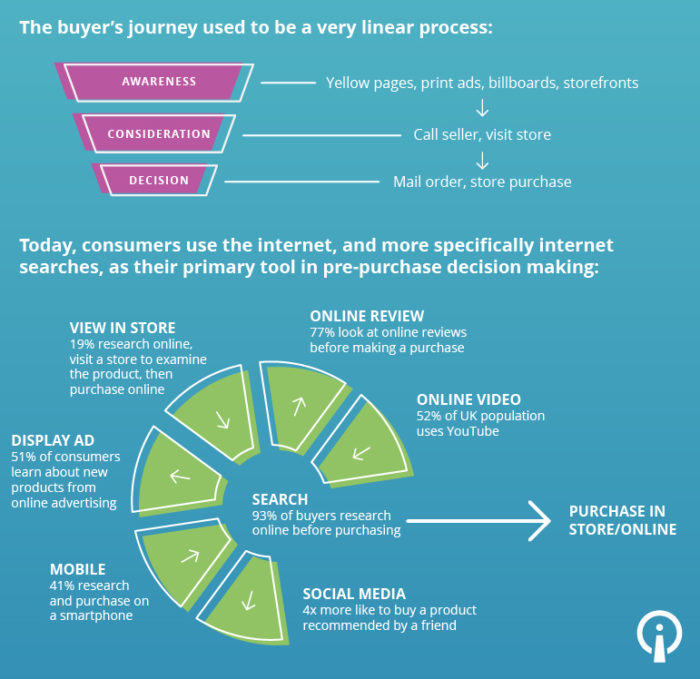
    The buyer’s journey used to be a very linear process: the buyer becomes aware of a need, they consider their options, they express intent, and make a decision. Today, consumers use the internet, and more specifically internet searches, as their primary tool in pre-purchase decision making.

    According to Google, 93 percent of consumers do research online before making a purchase. And, in general, people find user-generated content (like reviews and testimonials) to be highly influential in their purchase decision making. The internet is bursting with this type of content, and digital marketing helps brands share it with the masses in a cost-effective manner.

    Because of marketers’ ability to target specific audience segments based on their interests and online behavior, digital marketing can be far more personalized than traditional marketing. Billboards, TV, and print advertising broadly segment an audience and provide the same messaging to one large group. Digital marketing allows businesses to increase engagement and brand loyalty through personalization that anticipates potential customers’ needs and desires.

    It’s Trackable and Offers More Insights on Effectiveness Than Traditional Advertising.

    As digital marketers, we love data. So what we love most about digital marketing is its trackability.

    With the right amount of expertise and technical know-how in place, digital marketers can often tell you which channels are producing the most business and highest ROI. When’s the last time a billboard or TV campaign could do that?

    What’s key is making sure you’re focused on the metrics that matter, otherwise you might get totally lost in the information overload.

    These aren’t the only reasons for the continued growth in digital marketing expenditures worldwide. Accessible technology is the way of the world today, so businesses who want to keep up in the increasingly competitive digital space should carefully consider their digital marketing capabilities and hire experts who can prove their ability to produce a real ROI. Let’s talk about how we can help you.

    Images:

    Working at Laptop

  • How to Align Your Marketing Team Around a Successful Strategy

    How to Align Your Marketing Team Around a Successful Strategy

    With the explosive growth of the marketing technology landscape in the last several years, it can be easy to get completely lost in tactics, technology, and metrics. “Digital marketing is so awesome,” they say, “because you can track everything,” they say.

    True, but what’s also true is that the 6,000+ vendors of MarTech platforms overwhelm us with SO. MUCH. DATA. How does a company know they are making the right decision when one can easily twist and turn data and draw correlations to tell a desired story? Confirmation bias is a real thing, and it can plague the effectiveness of any given marketer’s plan.

    So how does one manage to take advantage of the right data and make strategic marketing decisions without finding themselves adrift in a sea of marketing bologna? It’s easy to say, but less simple to execute: start with a solid strategic plan.

    In this post, I’ll review the essential steps to creating a highly organized and well-researched marketing strategy, which should then serve as the anchor for all future decision-making in your marketing journey. That is, until the next time you review and update your strategic plan (a bit of foreshadowing: it’s an ongoing process).

    How to Create a Successful Marketing Plan

    Start With Gaining Alignment

    The most successful marketing plans we’ve developed for clients have started with gaining alignment from all the stakeholders involved in marketing the business. From the top of the marketing department to the most front-line sales executives, making sure all parties are heard is important to gaining an understanding of the current state of sales and marketing and gathering input on the future ideal.

    Get an Outside Perspective

    Bringing in professionals for the research and development of a strategic marketing plan can help to make sure your plan is truly objective. Wrangling a lot of stakeholders, some of whom are more dominant than others, can leave you feeling like you’re chasing your tail and not making progress. When you hire a marketing agency for the development of your marketing plan, the third-party perspective can help to ensure the project not only stays on track, but also that all voices are heard.

    One way we’ve done this is to host workshop-style meetings with all stakeholders, facilitating discussions of their ideas on strengths and weaknesses, opportunities and threats, as well as their best customers, gaining insights on what marketing tactics were perceived as successful or not in the past.

    We bring to the table some initial research, like competitor profiles and trends in their marketing, as well as data analysis of existing customer profiles, if provided in advance. This information serves as the foundation for the discussion, and we prompt the stakeholders with specific questions to get them thinking more deeply about where and how marketing can help the business grow. In this process, we’ve seen clients experience some internal revelations and uncover operational opportunities for improvement, which are incredibly valuable to identify.

    We take away all the inputs and begin the fun part: planning a strategic marketing plan that accomplishes a measurable goal. And on that note…

    Define a Measurable Goal

    It’s critical for a marketing strategy to be informed by a S.M.A.R.T. goal. Digital marketing is indeed awesome because it’s measurable, but you have to know WHAT to measure up front. Otherwise, you’ll waste a lot of time on the wrong tactics and pulling reports on the wrong metrics.

    It’s critical for your sales and marketing stakeholders to be aligned on this measurable goal. If you have enough data to understand your sales pipeline, you might be able to identify a specific number of inbound leads that marketing should deliver per month or week. As a part of planning your marketing strategy, make sure you align everyone on how you will determine whether the marketing strategy was successful, at both a high level and an individual-tactic level.

    What to Include in a Marketing Plan

    There are tons of resources out there regarding what to include in a marketing plan, but the key elements are:

    • Competitive Analysis
    • SWOT Analysis
    • Buyer Personas
    • The Buyer’s Journey
    • Strategic Tactics
    • Key Performance Indicators

    Competitive Analysis

    In order to know where you stand in the marketplace, it’s important to take a close look at the competition your prospects are likely considering. Typically, we like to note basic business information for context, such as the number of employees, revenue (if available), years in business, and how they compare from a pricing perspective. Next, we review their marketing and brand presence, specifically noting key differentiators, how they’re appealing to the audience via messaging and measurable-goal visual communication, and, of course, the products or services for which they are a true competitor.

    SWOT Analysis

    SWOT stands for strengths, weaknesses, opportunities, and threats. Strengths and weaknesses are meant to look inward, whereas opportunities and threats look to the external marketplace, industry, and geographic landscape. An in-depth analysis here on the state of your business, not just marketing, can be incredibly insightful from the top down, and the key to a successful SWOT is stepping back and being as objective as possible. Questions you can ask yourself and your team include the following:

    Strengths

    • What advantages does your company have?
    • What do you do better than anybody else?
    • What unique resources can you draw on that your competitors cannot?
    • What are the reasons your clients choose you?

    Weaknesses

    • For what reasons might your prospective clients not choose your company?
    • What do other companies offer that your company does not or cannot?
    • What could be improved about the products or services that you offer?
    • What types of clients are you at risk of not serving well?

    Opportunities

    • What opportunities do you see in the marketplace?
    • What new ideas could you be taking advantage of?
    • What trends are popping up in your industry?
    • What positive changes in the market do you see?

    Threats

    • What obstacles does your company face in growing sales?
    • What are competitors doing? Is competition increasing?
    • What negative changes in the market do you see?

    Buyer Personas

    A buyer persona is intended to serve as a representation of a business’ “ideal” or target customer. It should be based on research and data about your existing and prospective customers, including their demographics and psychographics. The best process for buyer persona development involves surveying or interviewing actual customers, asking them deeper information than simply gender, age, and household income. An ideal buyer persona may include the following: background, demographics, identifiers, goals, challenges, how you help their challenges, and what marketing messaging will speak to the persona. You may find that you have several personas, or maybe you have just one. There’s no hard and fast rule about what a buyer persona should include or how many a business should have.

    The Buyer’s Journey

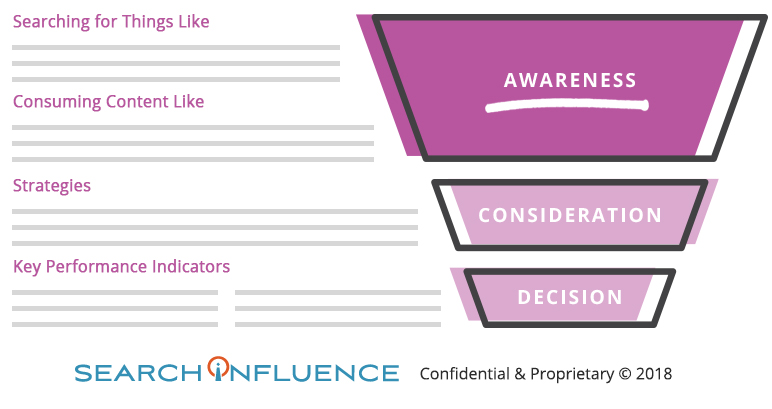
    When the Search Influence team develops a marketing plan for a client, the buyer’s journey is where we spend the majority of our time and is what informs the strategic tactics and key performance indicators (KPIs). Once your buyer personas are identified, the buyer’s journey maps out your prospective customer’s behavior at each stage of the marketing funnel, which allows you to think strategically about how you can reach the audience at each stage. When complete, our buyer’s journeys typically look something like this:

    Strategic Tactics

    Specific marketing tactics you hope to employ to achieve your goals are outlined here. This may include everything from traditional media and print collateral all the way through your digital campaign strategies and creative direction. It’s a good idea to spend time evaluating these tactics and considering a realistic budget required to deploy them all. Perhaps you will need to do a phased implementation due to your budget or internal resources. Now’s the time to make that plan.

    Key Performance Indicators

    In addition to outlining a marketing plan’s overall goal and objective, we recommend that your plan defines Key Performance Indicators (KPIs) for each phase of your marketing strategy and, if necessary, specific tactics. Defining this up front will help ensure that all stakeholders fairly evaluate the performance of a given tactic as time goes on and keep them anchored to the ultimate goal.

    Finish With Gaining Alignment…Again

    Remember the work you did with your team to collect their input early in the process? Call another meeting with them and present the finalized plan. Use this as an opportunity to set expectations for ongoing roles and responsibilities and get the team moving on the plan. They’ll enjoy seeing how their input shaped the finished product and be more willing to pitch in to make it happen. Trust us, you will need their support!

    We’ve led the charge through this arduous process several times with our clients. I say WITH our clients because, if you couldn’t tell by now, it requires a lot of collaboration and partnership. If you are looking for full support in leading this endeavor or even just some hours consulting with our team on the process, we’ve got your back! Speak with a strategist today at (504) 208-3900 or fill out this form to ask for a consultation within 24 hours.

  • The Travel Marketer’s Guide to Capturing the Romance Market

    The Travel Marketer’s Guide to Capturing the Romance Market

    With the right targeting and audience intelligence, it can be easy for travel marketers to sweep romantic travelers off their feet. Many businesses in key travel markets are missing the opportunity to market to romantic travelers. The latest data shows that romantic travel trends go beyond the obvious honeymooners and destination wedding travel, though those segments shouldn’t be ignored! According to the Travel Industry of America, romantic getaways are trips “with a spouse or other love interest without children to rekindle the romantic feelings in the relationship.” From outdoor adventure travel to “foodie” trips, today’s couples are doing things differently and travel marketers should take notice. Whether you market a destination city or you’re a business within a destination city, positioning carefully to appeal to romantic travelers is a good idea for 2018 and beyond. Read on for more details on the latest romantic travel trends all marketers need to know.

    Top Romantic Travel Trends in 2018

    Romantic travel is booming, and it’s more than just the honeymoon. According to statistics from TripSavvy, a quarter of all American weddings are destination weddings. On average, couples who plan destination weddings are a little older with more disposable income compared to other newlyweds. With travel to a beach or somewhere overseas, the average budget for a destination wedding is $28,000. The added expenses make for a shorter stack of invitations, but the guests who attend destination weddings also plan to spend more than $600 on average.

    After the wedding, couples currently spend three times as much on honeymoons as they do on other vacations making honeymoons a$12 billion dollar industry. Other popular trends in romantic travel surfacing in 2018 include would-be grooms planning getaways around the proposal (thanks to social media for the increased pressure for the perfect proposal!). All kinds of couples enjoy “foodie” trips, choosing destinations with the best dining options as a top priority. Where entertainment and music drew travelers in earlier decades, cuisine is a top priority for today’s travelers.

    Not Just for the Newlyweds: Who Are Today’s Romantic Travelers?

    While family trips need to balance the different preferences of all the kids, couples traveling romantically tend to spend more on dining and activities when it’s just the two of them.

    Marriage drives a high percentage of the travel in America, but households with children travel less often, shocking, right?! While single households were responsible for 21 percent of trips, married households took a whopping 61 percent of trips, according to the same research from TripSavvy. Couples without children have taken an average of 3.1 trips in the past year, compared to couples with children, who took 1.9 trips indicating the sweet spot for the travel market is married couples without children.

    When planning a romantic getaway, a strong majority of those surveyed said that they traveled to a particular city for the local cuisine and entertainment. The next most popular getaway option was bodies of water, such as lakes or beaches. Other common, but significantly less popular plans centered around gambling, outdoor sports, and cruises. Romantic couples are interested in local attractions, but they also want a setting where they can enjoy each others company. By emphasizing a quiet, relaxing atmosphere, nearby nightlife, and quality restaurants, most cities have something to offer couples trying to unwind.

    Romance For All: LGBTQ Travel Trends

    Now more than ever, it pays to be inclusive. LGBTQ travelers are especially aware of the attitudes in different parts of the world.  Just as some countries still require a marriage certificate to share a hotel room, many regions still have laws and prejudices against homosexuality and other lifestyles. Because some travel agents are unaware of those nuances in different regions, many LGBTQ travelers use agents who specialize in serving clients with similar priorities.

    If there are festivals like Pride Parade in your area, think about whether your business can participate in some way. Decorating for the occasion, offering special discounts, and sponsoring a local non-profit are a few ways to show support. Make sure to share the ways in which your business shows support via your social media channels and look for ways to make your imagery more inclusive by default.

    Most of these travelers want a safe place where they won’t be excluded on the basis of their orientation, identity, appearance, or anything else. That said, your employees have a big impact on the perception of your brand. Employees who bring prejudices into the workplace can be a complicated problem, especially in politically divisive times. While it’s impossible to satisfy every customer, a negative review that implies intolerance can be especially impactful. The best course of action is prevention, making sure that you create a safe and inclusive environment both for customers and employees. In the event you suffer a negative review from a customer, make sure to respond publicly stating that your company does not share the views of this individual though feedback is appreciated.

    Not A Tropical Oasis? “Romantic” Doesn’t Have to Mean Bikinis

    Commercials have marketed beaches as the “ultimate” romantic getaway, but there are loads of alternatives for landlocked businesses. = With employment up and cautious optimism about the economy, Americans are looking to travel frequently, and in smaller doses. Over the past 12 months, Google Trends has shown an increase in the search terms “weekend getaways” and “couples getaway near me,” Indicating growing demand for this information online. With the help of local SEO professionals, you can dominate the search results for travelers within driving distance.

    All kinds of activities and attractions can be adapted for a romantic audience. Historic districts, museums, festivals, and even agriculture can be romantic. With a scenic overlook and the right photographer, your area’s cotton fields start to look as romantic as a vineyard or a country album cover.

    In all, romantic travel is about a lot more than honeymooning couples. A growing number of adults are looking at travel as an investment in their relationship and their own quality of life. At Search Influence, we have everything you need to market to those couples and drive leads to your business. If you’re interested in honing your local SEO strategy, then request your marketing analysis today to get started.

    Images:

    Couple at a Scenic View

    Couple Walking in Hand