Author: Alison Zeringue

  • The Latest SEO Trends and Challenges You Can’t Ignore

    The Latest SEO Trends and Challenges You Can’t Ignore

    A robotic arm pointing at connections being made

    Key Insights

    • Search Is Evolving Beyond Traditional Rankings: AI Overviews, social search, and video SEO are changing how users find content, making engagement and authority more important than ever.
    • Brands That Adapt Will Stay Competitive: Search success comes from aligning with current trends — structuring content for AI and optimizing for social discovery.
    • SEO Requires a Multi-Layered Approach: Visibility in today’s age depends on strong content, technical optimization, and authority-building strategies working together.
    • Search Influence Delivers Expert SEO Solutions: Our SEO services, roadmap, and audit give brands the tools to improve rankings, drive traffic, and navigate search changes with confidence.

    From social search and AI Overviews to the rising influence of video, emerging trends are shaking up the SEO playing field.

    Although these developments create new opportunities to engage audiences and drive conversions, they can just as easily hurt organic rankings without an agile SEO strategy. Brands that fail to adapt risk losing visibility, while those that embrace these changes will build authority, attract more traffic, and stay ahead of the competition. 

    This blog will unpack today’s top SEO trends and strategies to transform them from looming challenges into actionable opportunities.

    Latest SEO Trends & Challenges

    The rise of social search

    Social search is changing the way people discover brands, and it’s boosting visibility far beyond the feed. Today’s most engaging social content isn’t just influencing users on platforms like TikTok, Instagram, and LinkedIn. It’s also showing up in Google results. 

    For brands, that means a single post optimized for social search can appear in both social feeds and traditional search engine rankings, doubling the opportunity to get noticed.

    Social search refers to the growing practice of using social media platforms as search engines. Rather than heading straight to Google, many users, especially younger demographics, turn to these platforms for quick answers, product insights, and peer recommendations. 

    According to HubSpot, social media is now the leading channel for product discovery among Gen Z, Millennials, and Gen X, highlighting just how ingrained this trend has become. 

    Beyond increased visibility, social search also plays a key role in building trust, allowing potential customers to see real-time engagement, authentic interactions, and proof of a brand’s credibility. 

    Ignoring this search method means losing visibility, as more consumers naturally gravitate toward brands they see actively engaging on popular platforms. 

    How to accommodate social search

    With social platforms influencing discovery and rankings, brands need to intentionally optimize their content for visibility and engagement. Simply posting isn’t enough — success comes from creating interactive, search-friendly content that resonates with target audiences.

    For example, a boutique skincare brand launching a vitamin C serum might have informative blog posts on its website, but potential customers are searching TikTok and Instagram for real reviews, application tips, and before-and-after results. To capture this audience, the brand could:

    • Encourage engagement: Posting Q&A sessions, polls, and comment-driven discussions increases interactions, signaling relevance to social algorithms and improving content reach.
    • Use search-friendly hashtags: Tagging posts with relevant, high-traffic keywords (e.g., #VitaminCSerum or #GlowingSkin) helps surface content when users search within social platforms.
    • Repurpose content: Transforming blog insights into Instagram carousels, TikTok tutorials, or LinkedIn infographics extends the lifespan of content and reaches users in their preferred format.
    • Leverage video: Short clips showing product application techniques, expert insights, or customer testimonials create a compelling visual experience that builds trust.
    • Feature user-generated content: Sharing authentic customer reviews, before-and-after photos, or influencer collaborations reinforces brand legitimacy and encourages further engagement.

    AI Overviews in Google Search

    Google’s AI Overviews (AIOs) are summarized responses that appear at the top of the search engine results page (SERP), providing users with quick answers to their queries. These automated summaries often include links to original sources but take up prime space on the SERPs, pushing traditional organic listings further down the page.

    As AIOs become more common, brands that rely on organic visibility for educational or informational content may see a drop in traffic. According to Ahrefs, 99.2% of AIO keywords are informational, meaning many brands that produce educational or research-based content could see fewer click-through rates.

    AIOs also reduce the visibility of featured snippets, previously key positions for capturing search traffic.

    At the same time, AIOs offer an opportunity for brands that structure their content to be seen as authoritative. If Google’s AI consistently pulls information from your site, you gain valuable exposure at the top of the results, reinforcing credibility and positioning your brand as a trusted source.

    How to navigate AI Overviews

    AIOs are changing how users interact with search results, often providing direct answers before they ever click on a website. That means fewer opportunities for your content to drive traffic, generate leads, or convert visitors — even if you’re ranking on page one.

    To adapt, brands must rethink how they present their content, ensuring it’s structured in a way that AI recognizes as trustworthy while also offering depth that encourages users to seek out more details. 

    For example, a personal injury law firm might notice that AIOs are summarizing legal timelines, filing deadlines, or compensation estimates for common searches related to personal injury claims. If the firm doesn’t adapt, potential clients may get surface-level information from AIOs without ever clicking through. To remain competitive, they could:

    • Use clear, structured formatting: Organizing content with direct, well-labeled answers (such as FAQ sections or bullet points) makes it easier for Google’s AI to recognize and pull from their site.
    • Target long-tail, case-specific searches: While AIOs address general topics, users searching for detailed legal guidance, such as “personal injury statute of limitations in Texas,” are more likely to click for in-depth information.
    • Provide interactive resources: Tools like a settlement calculator or a case eligibility quiz offer personalized insights that AIOs can’t replicate.
    • Reinforce credibility with authoritative sources: Citing legal codes, court rulings, or expert analysis can position the firm as a trusted reference from which AIOs are more likely to pull.
    • Leverage multimedia content: AIOs can summarize text, but they can’t replace a video explaining the claims process or an infographic breaking down compensation factors.

    Growing importance of E-E-A-T

    E-E-A-T — short for Experience, Expertise, Authoritativeness, and Trustworthiness — serves as Google’s framework for evaluating the credibility of a webpage.  If your site doesn’t meet these standards, it may struggle to appear in both traditional search ranking and AI-based, quick-answer summaries.

    Since Google aims to provide users with the most accurate and relevant answers, content that reflects strong E-E-A-T consistently outperforms material that lacks depth or credibility. This is especially crucial in the age of AIOs, where Google prioritizes information from sources it deems highly authoritative. 

    Beyond search engine rankings, E-E-A-T helps build trust with your audience. Readers are more likely to engage with, return to, and convert on sites that demonstrate expertise and reliability. Neglecting these factors can weaken both user confidence and visibility, making it harder to compete and capture the right attention.

    How to establish E-E-A-T

    Google rewards websites that demonstrate clear expertise and credibility, but strong E-E-A-T doesn’t happen by chance. It requires a deliberate approach to content creation, reputation building, and transparency. Strengthening E-E-A-T means proving to both Google and users that your website is a trusted source of information.

    For example, a higher education institution looking to improve the visibility of its degree programs must ensure its website reflects academic authority and reliability. To build stronger E-E-A-T, the institution could:

    • Publish well-researched, high-quality content: Program pages, course descriptions, and faculty research should include clear, credible information backed by reputable sources.
    • Showcase faculty expertise: Creating faculty bio pages highlighting professors’ credentials, publications, and industry experience signals high authority in their fields.
    • Earn authoritative backlinks: Links from government sites, research institutions, and respected academic organizations strengthen the university’s credibility in Google’s eyes.
    • Incorporate testimonials and case studies: Featuring student success stories, alumni career outcomes, and employer partnerships builds trust with prospective students.
    • Maintain transparency with accreditation and policies: Clearly listing accreditation details, admission requirements, and tuition policies reinforces transparency and, thus, trustworthiness.

    Increasing competition in Google’s “People Also Ask”

    If your content isn’t answering common user questions clearly and effectively, it risks being buried beneath competitors in Google’s “People Also Ask” (PAA) feature. PAA typically appears alongside or below the main search results, listing a series of related questions that expand to reveal concise, snippet-style answers. When a user clicks on a question, Google sources a short response from a page it deems both relevant and authoritative.

    These boxes are appearing more often, with data showing a 34.7% increase on mobile and a 37.5% increase on desktop in the U.S. from February 2024 to January 2025.

    Much like AIOs, snagging a PAA placement can significantly boost your visibility by surfacing your content when users seek more context or deeper insights beyond their initial query. However, competition for these coveted spots is fierce as brands increasingly recognize PAA’s potential to capture high-intent traffic. 

    By structuring your content to address common questions directly (and ensuring it’s credible, well-labeled, and keyword-optimized), you will improve your chances of ranking in these high-value SERP positions and engage users at their highest point of curiosity.

    How to use “People Also Ask” for SEO gains

    Because competition is growing for PAA placement, brands need to anticipate the types of follow-up questions potential customers have and structure their content to align with those search patterns. By providing direct, well-formatted answers, brands will improve their chances of being featured in this highly visible SERP element.

    For example, a zoo looking to increase ticket purchases might find that searchers commonly ask:

    “What animals can you see at [Zoo Name]?”
    “Does [Zoo Name] offer behind-the-scenes tours?”
    “Are there interactive exhibits at [Zoo Name]?”

    To optimize for PAA and drive more visitors, the zoo could:

    • Add a detailed FAQ section: Attraction pages should include well-structured answers to common visitor questions, making it easier for Google to pull relevant content.
    • Use clear, structured responses: Answers should be concise yet informative, directly addressing the user’s query in a way that aligns with search intent.
    • Incorporate headings that match search patterns: Formatting content with H2 and H3 headings that mirror commonly searched questions could improve the chances of ranking in PAA.
    • Implement structured data markup: Adding schema markup helps search engines recognize key information and increases the likelihood of appearing in PAA results.
    • Optimize for location-based searches: Ensuring details like hours, ticket pricing, and special events are easily accessible increases relevance for users searching for local attractions.

    The move toward video SEO

    As video consumption continues to rise, it has become a major force in modern search behavior. Whether users are looking for quick product demos or in-depth research, video offers an engaging, easily digestible format — and audiences are paying attention. 

    In fact, Americans now spend an average of four hours per day watching digital video content, making it one of the most powerful ways to capture interest and drive engagement.

    Google has responded to this shift by prioritizing video in search results, giving brands direct access to users right on the SERP.

    However, simply publishing a video without a focused plan makes it difficult to stand out in such a saturated environment. To effectively reach searchers who rely on video for information, brands need a video marketing strategy that aligns with audience demand for visually engaging, easy-to-consume insights.

    How to optimize videos for SEO

    Businesses that integrate video effectively into their SEO strategy will enhance brand authority, increase engagement, and drive meaningful traffic. However, search engines don’t automatically prioritize every video — content must be structured and optimized well to ensure visibility. Maximizing the impact of video requires a strategy that aligns with user intent and search-friendly best practices.

    For example, a plastic surgeon aiming to educate potential patients and build trust could enhance their video content by:

    • Creating procedure-focused videos: Short explainer clips on treatments help answer common questions and keep viewers engaged.
    • Optimizing video titles and descriptions: Using targeted keywords like “Facelift Recovery Timeline” or “What to Expect After Liposuction” improves visibility in search.
    • Encouraging audience interaction: Prompting viewers to like, comment, and share increases engagement signals, helping videos rank higher.
    • Adding captions and transcripts: Providing text versions of video content makes it more accessible while giving search engines more text to crawl, which is highly beneficial for SEO.
    • Maintaining a consistent posting schedule: Regular uploads improve channel authority and attract returning viewers.

    Get Ahead of the Latest SEO Challenges With Search Influence

    Letter tiles spelling out the word Search

    A full suite of SEO services

    Staying competitive in the evolving world of SEO demands a well-rounded strategy. At Search Influence, we offer a comprehensive range of SEO services designed to help you navigate the trends of today and tomorrow. 

    From content marketing (including text and video creation) to technical optimizations, our team ensures your website is primed for maximum visibility in organic search. We conduct deep-dive keyword research tailored to your target audience, which helps inform on-page optimizations and drive sustainable growth.

    Offsite authority building is another core component of our approach. By cultivating high-quality backlinks and managing your online reputation, we help your brand establish the credibility needed to thrive in an era where E-E-A-T is critical. 

    Our consistent reporting further ensures you stay informed about your website’s performance, enabling data-driven decisions that keep you on track for long-term success.

    SEO Roadmap for higher ed marketers

    Higher education marketing requires a strategic approach to search, especially when competing for prospective students exploring degree options online. Our SEO Roadmap is a focused plan designed to improve search visibility for one top-priority program, giving you clear, actionable recommendations tailored to your institution’s needs.

    This roadmap covers four essential areas: keyword strategy, content strategy, technical SEO, and authority building. Each component is informed by deep research into how prospective students search for programs like yours, ensuring your strategy aligns with real opportunities in search.

    With straightforward, easy-to-implement recommendations, the SEO Roadmap helps you take immediate action to improve visibility. It’s also a practical way to explore working with an SEO agency, offering a focused strategy without the commitment of a long-term engagement.

    SEO audit for all industries

    Not in the higher ed space? Our SEO Audit is an excellent resource for organizations across all industries. This report provides a clear assessment of your current SEO performance, highlighting technical issues, content gaps, and opportunities to strengthen your online presence.

    Our experts keep the latest SEO trends top of mind, recommending best practices for structured data, E-E-A-T, and even emerging features like AIOs. By the end of the audit, you’ll have a clear, actionable plan to improve your rankings. 

    Whether you’re a budding e-commerce store or an established B2B enterprise, our customized recommendations help you compete and adapt to whatever the search landscape throws your way.

    Optimize Your SEO Strategy for Success Today

    At Search Influence, we’ve spent nearly two decades helping brands navigate search shifts and adapt to new user behaviors with agile, data-backed tactics. 

    If you’re ready to safeguard your rankings and grow your digital footprint, our team is here to guide you through recent SEO changes with custom solutions. 

    Contact us today to discover how to leverage the latest SEO trends for greater online visibility, stronger audience engagement, and measurable results.

    Images:
    Image 1
    Image 2

  • Turn Clicks Into Customers With Smarter Ad Data – March Client Insider

    Turn Clicks Into Customers With Smarter Ad Data – March Client Insider

    The Client Insider - Search Influence

    Boost Ad Results with Enhanced Conversion Tracking

    Optimize campaigns for quality leads, not just any leads

    We’ve tested a new strategy to improve your ad results and are now rolling it out to eligible clients. Your Account Manager may reach out to discuss how integrating your CRM data can enhance your ad performance.

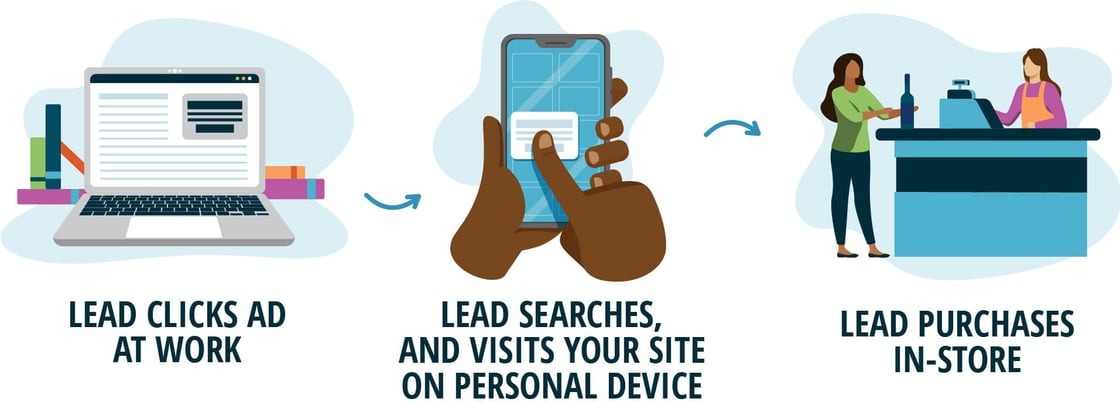
    Enhanced conversion tracking connects Google Ads clicks to actual conversions, even for offline or “in-store” purchases. This gives you a complete view of a complex prospect journey so we can optimize campaigns for your ideal customer.

    A graphic showing ad clicks turning into conversions

    By integrating your CRM or customer data with Google Ads, we can:

    • Target high-quality leads who are more likely to convert
    • Track in-person and phone sales influenced by your ads
    • Optimize campaigns to get more qualified leads, not just any leads

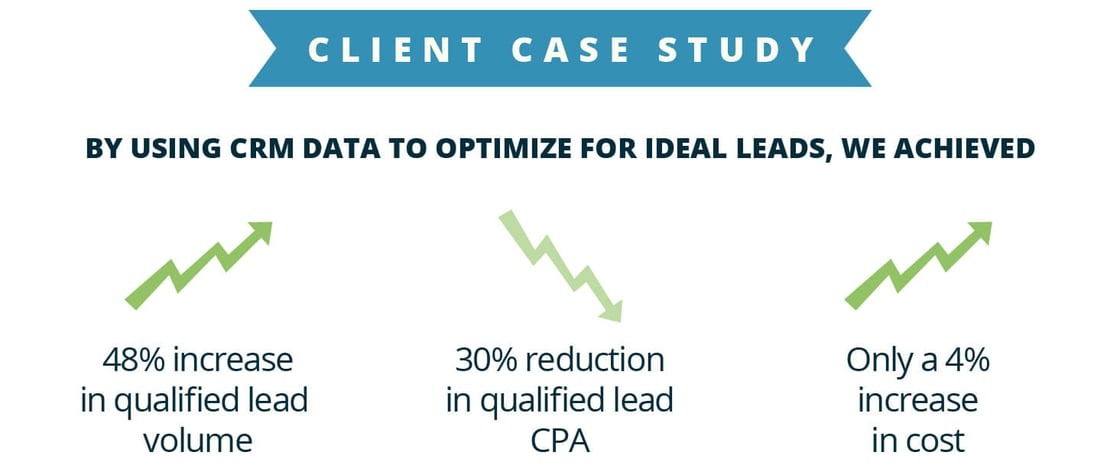
    Enhanced conversions enable us to attribute that first ad click as part of the full purchase journey, even if it wasn’t the final conversion touchpoint. Clients using enhanced conversions have seen significant ROI improvements without increasing ad budgets.

    A graphic for a client case study for optimizing for leads

    By using enhanced conversions, we can track how digital ads generate both online and in-person purchases in a privacy-friendly way, and optimize ad spend to drive more qualified leads.

    Want your ad spend to reach more of your ideal customers?

    Your Account Manager will assess whether this upgrade would improve lead quality for your campaigns and discuss next steps with you.

  • What Does “Optimize” Really Mean? – January Client Insider

    What Does “Optimize” Really Mean? – January Client Insider


    Trust your Marketing to a Team, Not a Machine

    Expert oversight, constant adjustments, and data-driven strategies to drive results.

    Success in advertising requires more than just automation—it takes a human touch. Ever wondered what goes into managing your campaigns?

    Your management fee is an investment in expert-driven strategies to deliver results consistently, not just a line item on an invoice. While tools like Google Ads offer advanced automation, such as automatic bidding, they require expert oversight to ensure lead quality and maximize ROI. That’s where our team comes in.


    Here’s what your management fee covers:

    1. Ongoing Campaign Optimization: This isn’t a one-and-done setup; it’s an evolving process requiring human expertise to refine ad copy, targeting, and strategy based on real-time performance.
    2. Data-Driven, Professional Management: Our certified professionals leverage their expertise to monitor and adjust your campaigns, pairing the power of automation with expert judgment for maximum ROI. They use your data—like lead quality ratings and offline sales, which automated campaign tools often can’t access—to make adjustments that will impact your bottom line.
    3. Fresh Creative Insights: The best ad campaigns creatively evolve. Our optimizations include testing multiple ad variations, identifying the most resonant messaging, and creating new ad materials and messaging to enhance results.

    Why does this matter? Machines are powerful, but they can’t replace the insight of the skilled Search Influence marketers who manage your campaigns.

    Ready to optimize your success in 2025? Reach out to your Account Manager today to discuss new digital advertising channels to expand your reach.

  • Lights, Camera, Action: Add Video Marketing to Your 2025 Strategy

    Lights, Camera, Action: Add Video Marketing to Your 2025 Strategy

    Transform Your Marketing Strategy With Video in 2025

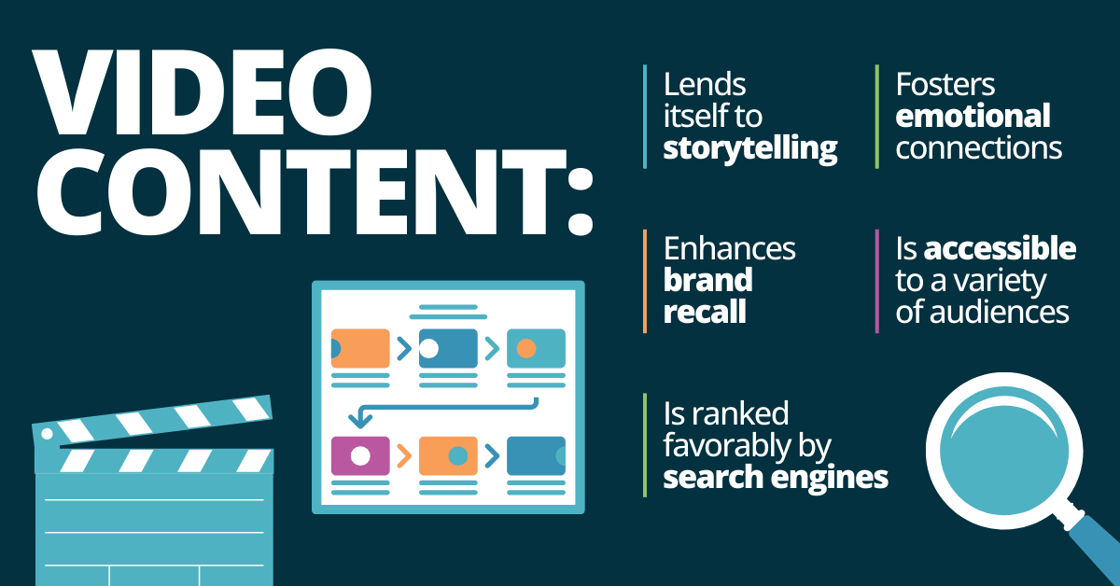
    Video content stands out by fostering connection, enhancing brand recall, and driving action.

    With consumers exposed to an average of 5,000 ads a day — ten times the number from 50 years ago — cutting through the noise demands a more strategic approach than ever. That’s why it’s imperative to incorporate video content into your 2025 marketing strategy.

    Illustrations

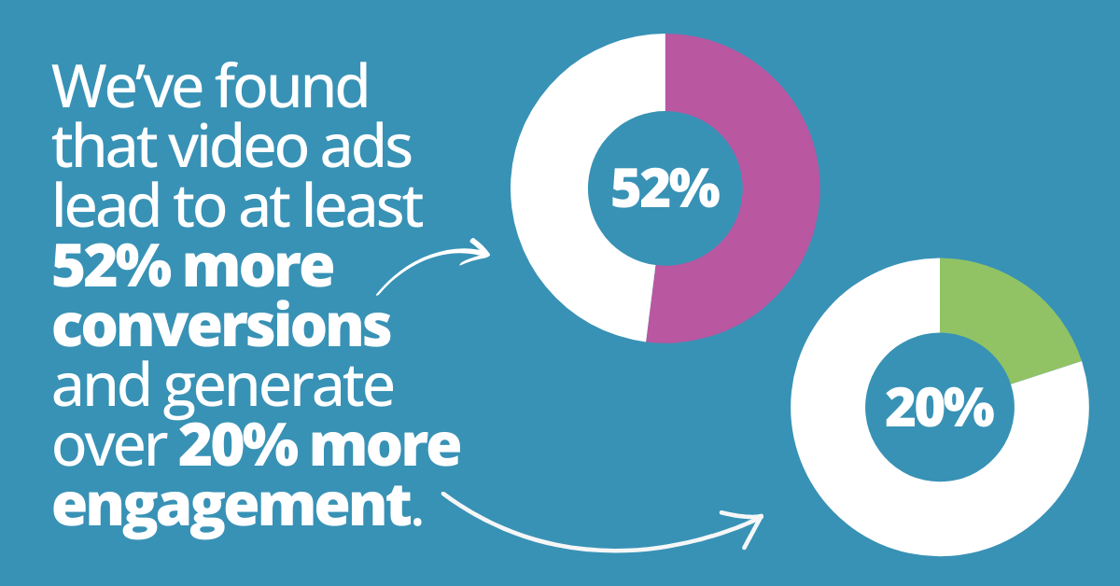
    Videos compel viewers to action more effectively than static image ads. We’ve found that on average, video ads lead to at least 52% more conversions and generate over 20% more engagement.

    While it’s essential on social media — where the share of time US social users spend watching videos will reach 58.2% this year — video is also an impactful content form on display ads, connected TV, and owned channels like websites and email.

    Circle charts

    If you’re hesitant about the time investment required for video marketing, we’re here to help you seamlessly integrate video into your strategy from campaign ideation to execution.

    We offer:

    1. Content Creation:
      From display ads and information montages to testimonial videos, our content captures your audience’s attention.
    2. Production Management:
      We handle all aspects of production, from strategy ideation to managing logistics, including on-site shooting at your location.
    3. Partner Selection:
      We help identify and select the best partners for your project, providing examples of previous work and inspiration to ensure alignment with your vision.

    Learn how we can elevate your 2025 marketing strategy with impactful video content.

    Contact us today to explore our advanced video marketing solutions.

  • Track and Report the Right Higher Ed Marketing Analytics to Improve Your Strategy

    Track and Report the Right Higher Ed Marketing Analytics to Improve Your Strategy

    Track and Report t

    Key Insights

    • Many institutions don’t track crucial metrics like cost per inquiry (CPI) and cost per enrolled student, missing opportunities to optimize their marketing efforts and better allocate resources.
    • Higher education institutions need precise tracking and insights to enhance their marketing strategies, effectively engage prospective students, and drive enrollment.
    • Institutions that actively track key metrics like CPI and cost per enrolled student see higher satisfaction with their marketing campaign performance.

    In the high-stakes arena of higher education, every marketing decision counts.

    Without precise tracking and insightful analysis, your marketing efforts are like a ship navigating without a compass — directionless and bound to get lost in the sea of competition.

    For years at Search Influence, we’ve partnered with institutions like Tulane SoPA and Tufts University College, helping them leverage analytics to optimize their marketing campaigns.

    Our experience has shown that those satisfied with their ability to track success are also more likely to be satisfied with their campaign performance.

    To further underscore the importance of tracking, this year we collaborated with UPCEA on a research study, “Higher Education Marketing Metrics Research Report: What Gets Measured Gets Managed.

    This report provides valuable insights into how data-driven marketing can lead to greater accountability, smarter decisions, and, ultimately, success in attracting and retaining students.

    Read on to learn how tracking the right metrics can empower your institution to thrive in a crowded higher education market.

    Why Tracking Marketing Metrics Is Important for Higher Ed Institutions

    As higher education institutions face increasing competition and evolving expectations from prospective students, it’s essential to track and analyze key performance indicators (KPIs).

    Higher education marketing metric tracking allows institutions to:

    • Measure their return on investment (ROI)
    • Manage campaign performance
    • Allocate resources effectively

    Tracking key metrics provides a clear picture of what’s working and what’s not, enabling higher education institutions to make informed decisions that directly impact student recruitment.

    By focusing on data, institutions can:

    • Determine which marketing channels yield the highest engagement
    • Identify the content that resonates most with their audience
    • Adjust their strategies in real-time to enhance results

    This kind of accountability is critical for marketers, program managers, and faculty who need to develop courses and offerings that align with market demand and student interests.

    Effective higher education marketing tracking can also have a significant impact on resource allocation and budgeting. When institutions measure their efforts to engage adult learners, they create a framework of accountability that drives smarter decisions.

    Track and report the right higher ed marketing analytics to improve your strategy - Search Influence

    Search Influence and UPCEA’s Higher Education Marketing Metrics Study
    Higher Ed Marketing Metrics Research Study 

    To gain a deeper understanding of the marketing metrics and costs associated with online and professional education programs, Search Influence partnered with UPCEA to conduct a comprehensive study.

    The findings of this research highlight the importance of data-driven decision-making for higher education marketing strategies.

    Follow along as we break down key findings from this study that can help your institution boost online conversions.

    Less than half of higher ed marketers track cost per inquiry

    One of the study’s top takeaways is the critical role of tracking specific metrics like cost per inquiry (CPI) and cost per enrolled student.

    Despite the significance of these metrics, less than half of higher education marketers track them. While nearly three-quarters (73%) of marketing units track the source of inquiries, only 46% track CPI, and just 43% track cost per enrolled student.

    Shockingly, nearly 17% of institutions don’t track any of these metrics.

    This gap in metric tracking reveals a missed opportunity for many universities to optimize their marketing efforts and ensure they effectively reach their target audience.

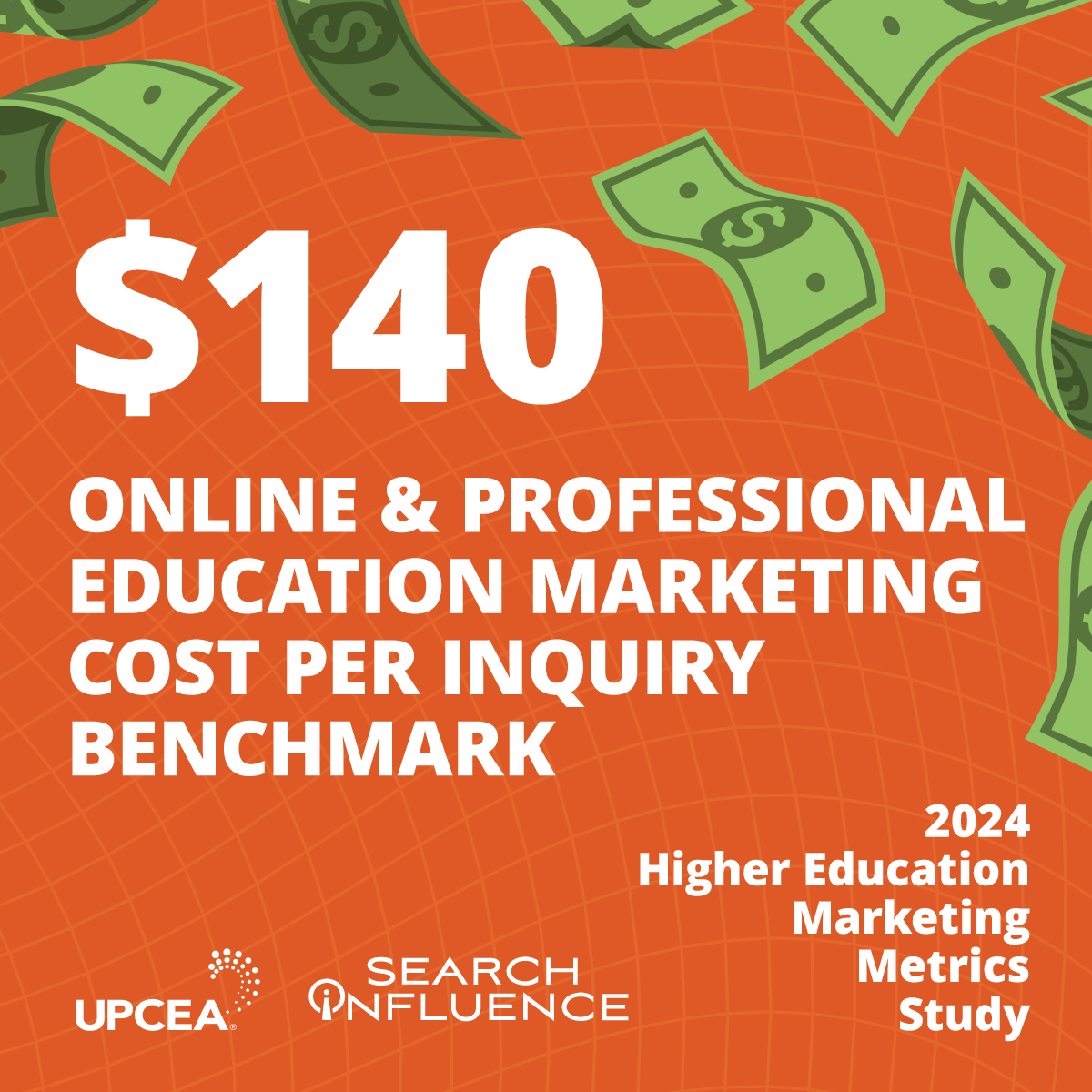
    The average professional and online education cost per inquiry is $140

    Online and Professional Education Marketing Cost Per Inquiry Benchmark - Search Incluence

    For those tracking cost per inquiry, the study found that the average CPI for online and professional education programs is $140, with a median of $106.

    This metric is a crucial indicator of how well marketing dollars are being utilized to attract prospective students. Tracking these costs allows university marketing departments to make informed decisions about where to allocate their resources, ensuring that digital marketing efforts are cost-effective and impactful.

    Email marketing is most often managed in-house, while digital advertising is most often outsourced

    The study reveals that while 73% of higher education institutions manage email marketing in-house, half outsource their digital advertising (such as Google paid search) to external agencies.

    This trend indicates a potential missed opportunity for maximizing ROI, especially given email marketing’s high return of 36:1.

    When email campaigns and SEO are managed internally without adequate resources, universities may not fully optimize these channels, contributing to dissatisfaction with results.

    Conversely, outsourcing digital advertising allows for continuous tracking and optimization, often leading to better performance.

    Marketers who track their campaigns are more happy with performance

    Another significant finding is the correlation between tracking marketing metrics and overall satisfaction with campaign performance. Only 47% of respondents expressed satisfaction with their marketing campaigns’ performance, and just 29% were content with their ability to track campaign success.

    However, those who actively track metrics like cost per inquiry and cost per enrolled student report higher satisfaction levels, indicating that effective metric tracking is linked to better marketing outcomes.

    Analytics, Tracking, and Reporting Opportunities for Higher Education

    If you’ve read this far, we’ve made the case that it’s important and effective to track key metrics. You might be asking — what exactly are these key metrics?

    Below are the two most important metrics we recommend you track.

    Cost per inquiry

    By monitoring cost per inquiry, institutions can identify the most cost-effective methods for attracting inquiries and allocate resources accordingly, ensuring that marketing dollars are spent where they yield the highest return.

    CPI is a widely recognized metric, yet less than half of higher education marketers actively track it. This metric calculates the total marketing and advertising spend divided by the number of inquiries received, providing a clear measure of budget efficiency and effectiveness.

    Tracking CPI allows marketing teams to gain insights into which campaigns generate interest and drive students into the enrollment funnel.

    Cost per enrolled student

    Another crucial metric for higher education institutions is cost per enrolled student, which measures the total expenses involved in securing each student’s enrollment. This includes all costs from the initial marketing outreach through to the point of a student’s matriculation, encompassing media spend, agency fees, salaries, and other related marketing activities.

    Our study highlighted that less than half of higher education marketers track this metric, even though it offers invaluable insights into spending efficiency and the overall effectiveness of recruitment strategies.

    Understanding cost per enrolled student helps marketing departments optimize their strategies by identifying which campaigns are most successful at converting inquiries into enrolled students. This metric serves as a vital tool for aligning marketing efforts with enrollment goals.

    By integrating systems capable of tracking both cost per inquiry and cost per enrolled student, higher education institutions can make data-driven decisions that enhance the efficiency of their marketing plans and improve outcomes across the enrollment funnel.

    Tracking metrics can lead to new opportunities

    When you better understand your ad spend, you can reallocate funds to other areas of need.

    As our 2023 SEO research study found, 51% of universities don’t have an established SEO plan.


    Higher Ed SEO Research Study 

    Without a strong SEO focus, university websites may become challenging to navigate, leading to frustrated users who quickly leave the site. This can result in lower search engine rankings and less visibility among the target audience. By contrast, investing in SEO helps universities improve user experience, making it easier for prospective students to find information about programs, admissions, and campus life.

    For universities aiming to attract the modern adult learner, SEO offers a strategic way to capture attention and stand out in a competitive market. With an effective SEO plan, universities can ensure their websites rank higher in search results, making prospective students more likely to find them when searching for educational programs. This visibility is especially crucial as more students turn to online searches to explore their educational options.

    Reallocating budget and resources toward SEO could be a game-changer for universities. By gaining a deeper understanding of their website’s performance metrics and ad spend, marketers can identify gaps in their current strategy and shift focus to overlooked areas.

    Search Influence’s Higher Education Marketing Tracking Success

    Track and report the right higher ed marketing analytics to improve your strategy - Search Influence

    At Search Influence, our strategic approach to marketing tracking has consistently driven impressive results for higher education institutions.

    For Palo Alto University, we increased average monthly inquiries from 185 to 272 by expanding focus on key degree programs, optimizing paid advertising, and refreshing campaign messaging. This resulted in a 49% increase in leads within just two quarters.

    Similarly, we helped Tulane SoPA surpass its goal of 500 inquiries per month by implementing a full-funnel marketing strategy. Our efforts, including targeted paid advertising and optimized landing pages, led to an average of 791 inquiries per month — a 58% increase over the initial target.

    These successes demonstrate our commitment to helping higher education institutions enhance their enrollment strategies through effective marketing tracking and optimization.

    Learn More About Higher Education Marketing Analytics

    Accurate marketing tracking is essential for higher education institutions to optimize their campaigns, attract prospective students, and drive enrollment.

    Our UPCEA x Search Influence study sheds light on how universities can better measure the success of their marketing efforts through metrics like cost per inquiry and cost per enrolled student.

    By leveraging these insights, institutions can make data-driven decisions, improve resource allocation, and ultimately achieve their enrollment goals.

    Download our Marketing Metrics Research Study and SEO Research Study to gain valuable insights and start transforming your higher education digital marketing strategy today.


    Image Credits:

  • Save Your Google Universal Analytics Data from Deletion on July 1

    Save Your Google Universal Analytics Data from Deletion on July 1

    UA Storage Studio with Search Influence

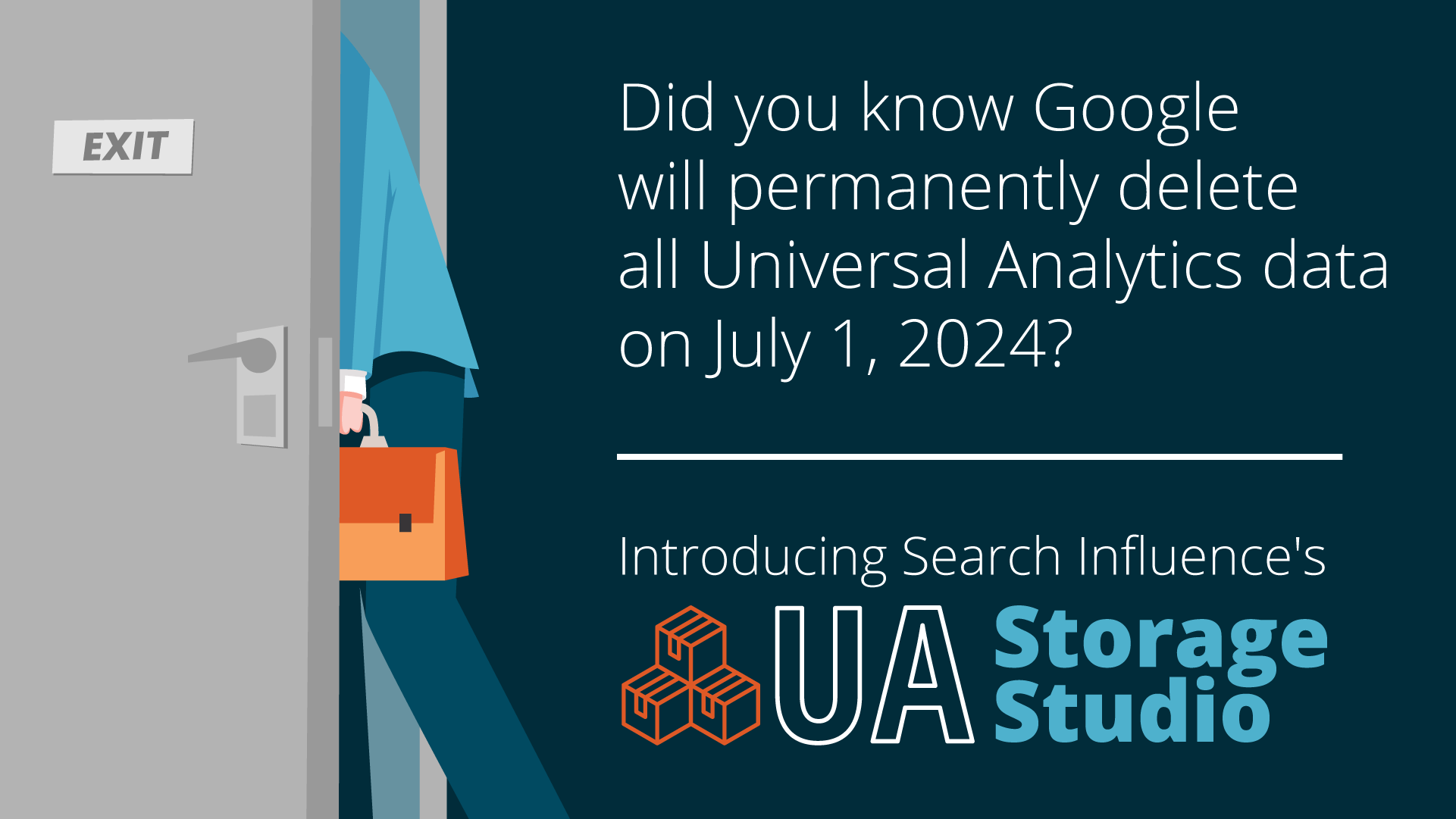
    Did you know Google will permanently delete all Universal Analytics data on July 1, 2024?

    Sign up by June 14th, and we can help save your Google Universal Analytics data from deletion.

    Universal Analytics has existed since 2005 and was retired last year. It will cease to exist on July 1 and all historical data will be permanently deleted. Moving forward, Google expects businesses to leverage data tracked in Google Analytics 4, which may limit your ability to make marketing decisions.

    Reasons why Google is deleting Universal Analytics data:

    • To free up server space
    • To streamline their operations
    • To ensure they comply with updated consumer privacy standards

    While that’s all fine and good for Google, what does it mean for the countless businesses that utilize this data?

    When Will Universal Analytics Data Be Deleted?

    According to Google:

    “Starting the week of July 1, 2024: You won’t be able to access any Universal Analytics properties or the API (not even with read-only access), and all data will be deleted. While the standard sunset took weeks to complete, the full Universal Analytics shutdown will happen within a week. We know your data is important to you, and we recommend that you export your previously processed data before this date.”

    What This Means for You

    Google will delete your historical website analytics data, which means you won’t be able to log into the UA interface to examine past performance on anything prior to when GA4 was installed.

    If you need to maintain access to your historical website analytics data, now is the time to act.

    The benefits of saving historical data

    Historical data is a valuable tool for businesses looking to optimize their digital advertising campaigns.

    Retaining historical data makes it easier for you to:

    • Analyze past performance
    • Identify trends
    • Make data-driven decisions to improve future strategies

    Historical data allows for a deeper understanding of customer behavior, helping you tailor your digital marketing campaigns to meet consumer needs.

    Implications if you don’t save historical data

    If you decide not to save your historical data, some implications you should be aware of include:

    • You won’t be able to compare current or future performance to anything prior to when GA4 was installed.
    • It could be harder to make decisions about future marketing strategies.
    • It could be difficult for you to understand the results/outcomes of your current campaigns.
    • You miss out on analyzing seasonal trends data that can help to inform your campaigns.

    How Search Influence Can Help

    Introducing Search Influence’s UA Storage Studio dashboard!

    Search Influence will support you with a quick and efficient process for backing up your Universal Analytics data.

    We will:

    • Export and back up your Universal Analytics data before the deadline
    • Create your very own UA Storage Studio dashboard to allow you ongoing visibility into those metrics, which gives you access to usable and actionable data for future campaigns
    • Make the data accessible for future dashboards you may wish to build

    You’ll fully own both the backup and the dashboard, meaning they’ll be yours forever, regardless of your future marketing decisions.

    Current pricing is valid through May 24, so act now for the best rate. June 14 is the final date to sign up to ensure your backup will be completed by the deadline.

    Who Should Consider Backing Up Universal Analytics Data?

    Backing up historical data benefits businesses of all types.

    You should consider backing up your data if:

    • It is important to your business to compare your website performance to prior years
    • Your business has seasonality
    • You want to be able to create dashboards that show website analytics over multiple years

    If you’re still having trouble deciding if saving your UA historical data is the right move, the analytics and lead-tracking specialists at Search Influence are here to help.

    How to Back Up Universal Analytics Data With Search Influence

    Search Influence will back up your Universal Analytics data by exporting the data to one of two destinations for long-term storage. Then, we’ll use that as a data source to produce a new dashboard allowing you ongoing visibility into the data.

    The cost of the dashboard and backup depends on how much data we back up — which is driven by how many years of data, the amount of data, and if you want monthly, weekly, or daily data.

    We have recommendations for these parameters and can help you decide the best backup strategy.

    Current pricing is valid through May 24, so act now for the best rate. June 14 is the final date to sign up to ensure your backup will be completed by the deadline.

    If you are a client and would like to take advantage of our backup Universal Analytics data service, contact your account manager.

    This service is available to you even if you are not a current Search Influence client!

    If you are not a client, please fill out our website contact form, and we’ll respond quickly. You can also call our office at (504) 208-3900 and press 1 for sales.

  • Google Renames Conversions in Google Analytics 4 (GA4) to “Key Events”

    Google Renames Conversions in Google Analytics 4 (GA4) to “Key Events”

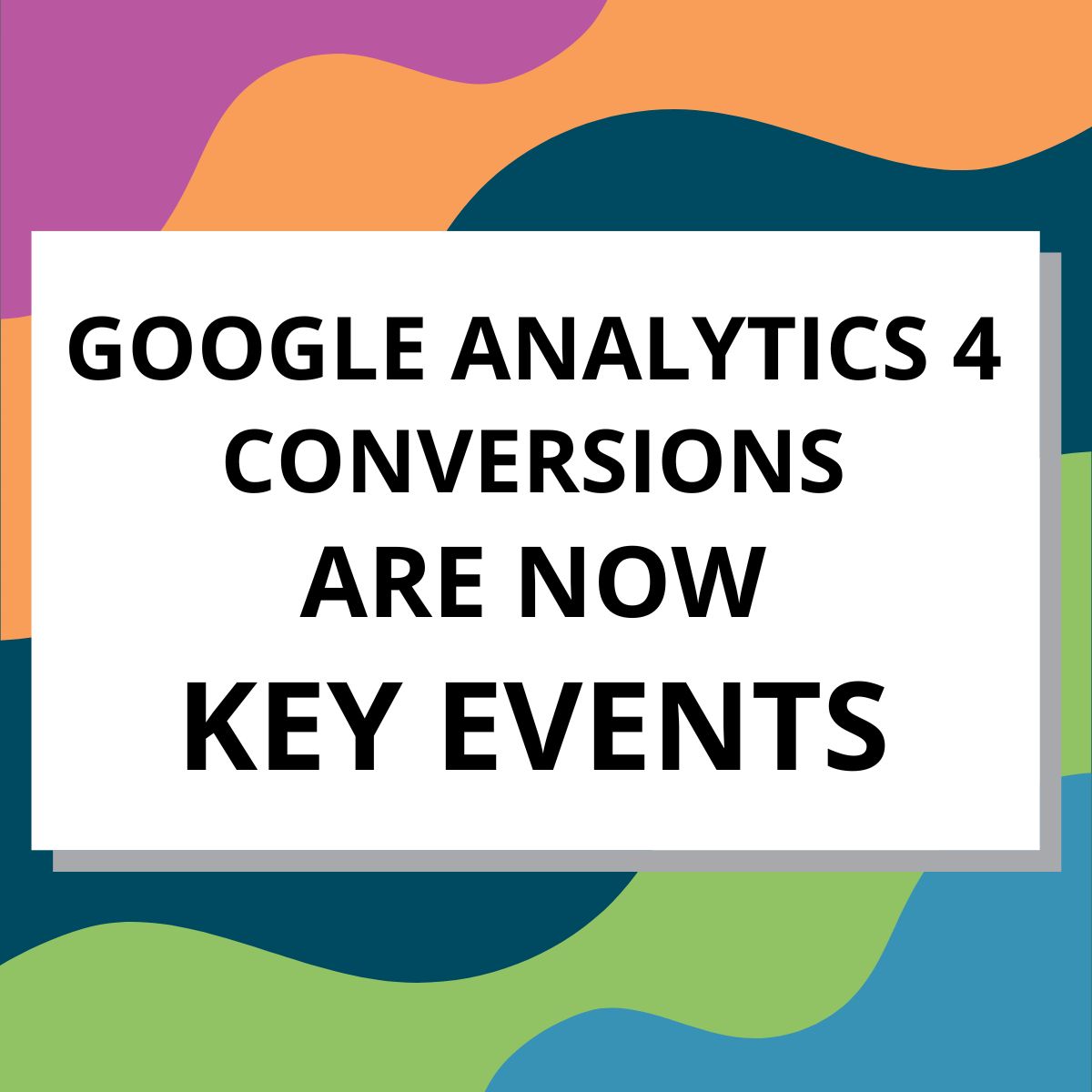
    Vector Illustration: Google Analytics 4 Conversions are now Key EventsTo differentiate from Google Ads, GA4 has renamed conversions to “key events.”

    What You Need to Know:

    • Analytics conversions have been renamed as “key events” in GA4 to distinguish them from conversions in Google Ads.
    • “Conversions” still exist, in the context of Google Ads which are also reported as Ads conversions in GA4. Advertisers can create conversions from Analytics key events, and optimize for those conversions in their ad campaigns.
    • No action is required from your end as key events are created and reported in the same way as previous conversions in Google Analytics.
    • If you have a linked Google Ads account, conversions created from Analytics key events will appear as conversions in the Analytics advertising section.

    Key events in Google Analytics measure the interactions most important to your business, such as form submissions or newsletter signups. These will now appear as key event metrics in Analytics reports.

    While changes like renaming an important metric can be hard to get used to, we believe that these changes will provide more clarity and consistency in reporting, ultimately helping agencies like us, and businesses like you better understand and optimize your digital marketing efforts.

    Learn more in Google’s resource about conversions vs. key events.

    Search Influence clients, reach out to your Account Manager if you have any questions about how this change may affect your data or campaigns.

    If you aren’t a Search Influence client (yet) and need help understanding how this and other Google Analytics 4 updates impact you, contact us to speak with a member of our sales team or learn more about our Analytics and Lead Tracking services.

  • Higher Education Marketers: Here’s How to Convince Your Boss to Invest in SEO

    Higher Education Marketers: Here’s How to Convince Your Boss to Invest in SEO

    Key Insights

    • SEO is critical for higher education institutions, yet only 51% have an established SEO strategy.
    • If your institution isn’t investing in SEO, you’re missing opportunities to reach prospective students and keep up with your competition.
    • Understanding and communicating the long-term benefits of SEO to your higher-ups can help your institution make the case for more resources.
    • Pitching the value of SEO to your boss doesn’t have to be a massive undertaking. All you need is a little bit of industry insight, institutional data, and the right angle.

    For today’s tech-savvy students, the quest for higher education starts with a simple Google search.

    Prospective students are looking for your institution online, but will they find you? Search engine optimization, or SEO, is a term often tossed around in marketing meetings, and it’s never been more relevant.

    So, how do you move it from a buzzword to a budgeted line item?

    And, more importantly, how do you get your decision-makers to hop on board?

    In this blog post, we’ll show you how to convince your boss to invest in SEO and make bigger waves in the search engines with a proper strategy.

    Business team members in a conference room discussing investing in SEO - Search Influence

    Benefits of SEO in Higher Education Marketing

    You’ve likely heard that a quality SEO strategy leads to better search performance.

    But what does SEO for higher ed really do? And what makes it such an influential marketing tactic?

    When you invest in the SEO process, you get:

    • Increased Visibility: A well-optimized website can dramatically increase your institution’s visibility in the search engines. This makes it easier for prospective students and their families to find you while searching for educational opportunities.
    • Higher Quality Traffic: Effective SEO efforts attract users actively seeking information related to higher education, thereby improving the quality of organic traffic to your website. These high-intent visitors are more likely to take desired actions, such as applying or requesting more information.
    • Better User Experience: SEO is not just about pleasing search engines; it’s also about providing a good user experience. A well-optimized website is generally more user-friendly. This positively impacts metrics like time spent on the site, bounce rate, and conversion rate, which in turn can boost your SEO rankings.
    • Competitive Advantage: A strong SEO strategy can give you a crucial edge over competitors. If your institution ranks higher in search results than other schools, students are more likely to visit your site first, giving you the first shot at making an impression.
    • Analytics and Insights: SEO tools provide valuable data on visitor behavior, popular content, and more. This data can be used to make informed decisions about your marketing strategy, academic programs, and even campus facilities.
    • Improved ROI: SEO allows you to reach the right audience at a lower cost by focusing on target keywords most relevant to your institution and its programs. This offers a better return on investment (ROI) than other marketing channels.

    Despite all the benefits, SEO in higher education lags. As we found in our Higher Education SEO Research Study conducted with UPCEA, 51% of universities don’t have a strategic SEO plan.This means over half of participating universities miss out on opportunities to grow their awareness, analytics, and applications.

    To truly win in the higher ed landscape, SEO must be a priority.

    Luckily, it’s not too late to make the financial case for SEO investment and start climbing the search engine results.

    But, if you keep pushing off investing in SEO, you just might pay later — in losses.

    How to Convince Your Boss to Invest in SEO

    While the merits of SEO are evident to those immersed in the digital realm, making them resonate with leadership is a different ballgame.

    Approaching the conversation with a combination of data, foresight, and understanding can be the key to unlocking the coveted resource you need: SEO buy-in from your boss.

    Follow this blueprint to advocate for SEO services in your marketing budget.

    Build a Strong Case

    Decision-makers want facts before dishing out dollars.

    Start by laying solid groundwork.

    • What is SEO?
    • What skill sets are needed?
    • What are the benefits?
    • How does it strategically fit within your institution’s goals?

    Be sure to also emphasize its return on investment (ROI) potential. Money talks.

    Show the Gaps

    Presenting an audit or analysis of your institution’s current website and online marketing strategy can highlight the areas where you’re falling short.

    You can tap tools like Sitebulb, Screaming Frog, Semrush, and Ahrefs for handy website analysis insights. But if you’d prefer to pass the baton to experts, you also could lean on an experienced SEO agency to conduct a professional-grade audit for you.

    Maybe you’re missing meta descriptions. Or you’re dealing with poor site speed and insufficient keyword research.

    Your task at hand is to show how SEO bridges these gaps.

    Leverage Competitor Analysis

    You may not invest in SEO. But your competition does.

    It’s one thing to understand the benefits of SEO. It’s another to see competitors already capitalizing on them.

    Creating a competitive analysis can be a strong motivator, especially if those competitors are outranking your institution in organic search results.

    Doing keyword searches of certain degrees or programs is one easy way to get started on your competitive analysis. Take note of who ranks in the top positions, compared to where you rank, and you have a baseline of where you currently stand — and where you need to go.

    Demonstrate to your higher-ups what SEO is doing for your rivals, and you increase your chances of seeing what it can do for you.

    Offer Scalable Solutions

    Don’t bite off more than you can chew. Present a phased SEO strategy that starts small and expands as you show results.

    A scalable approach ensures that initiatives will mature, evolve, and provide value over time.

    Your decision-makers are more likely to approve budgets if they see this sense of scalability.

    Scalability is sustainability. The SEO strategies that can adapt and grow are the ones that endure.

    Use Real-World Examples

    For the higher-ups, seeing is believing.

    Don’t just talk about what SEO can do for your university. Show its potential, armed with solid proof.

    Bring out higher education case studies and results from other institutions who’ve invested in SEO. Take, for example, New Orleans-based university Tulane SoPA, which saw a 569% increase in keyword ranking in the top 1-3 spots on Google — with help from frequent blogging.

    These real-world SEO examples can make the concept more relatable, compelling, and actionable.

    Connect SEO to Broader Initiatives

    SEO isn’t an isolated tool; it’s a cog in the larger machinery of a higher ed digital marketing strategy.

    It works best when used in tandem with paid search marketing, like Google ads or other well-performing marketing efforts. Therefore, it fits — not trumps — your institution’s broader marketing and outreach initiatives.

    This can make it easier to get buy-in if decision-makers see SEO as a component of a larger strategy rather than a stand-alone effort.

    Break down the big-picture, complementary value of SEO, and you may just seal the deal.

    Large group of spectators watching a presentation in a lecture hall - Search Influence

    Common Objections From Decision Makers

    Every proposal faces scrutiny, and SEO is no exception. It’s a natural part of the advocacy process.

    However, preparing for and addressing these objections head-on can turn potential setbacks into stepping stones.

    Prime yourself to deal with these common objections before setting up the proposal:

    • Objection: SEO is expensive! Think of the initial setup, the ongoing monitoring, and the potential need for hiring an external SEO company.
    • Counter-Argument: While SEO is an investment, the effects and impact on our website traffic are long-term, versus paid advertising, where once we stop paying, the traffic stops coming.
    • Objection: SEO typically doesn’t provide immediate results, so what’s the point?
    • Counter-Argument: SEO is a long-term strategy that requires time to yield results, but once it does, the benefits endure. A well-optimized website can maintain high rankings for a long time, ensuring a consistent inflow of targeted traffic.
    • Objection: SEO doesn’t align with our institution’s core goals and objectives.
    • Counter-Argument: Improved online visibility and targeted traffic can directly impact key performance indicators like student recruitment, donor contributions, and brand reputation — a goal any institution wants to reach.
    • Objection: We’re already ranking pretty well without investing in SEO.
    • Counter-Argument: There’s no way all of our web pages rank #1, or even on the first page, of the organic search results. Plus, there’s always the opportunity to increase our rankings for keywords that our competitors currently rank for.

    The Consequences of Neglecting SEO

    Ahrefs data shows that 90.63% of webpages receive no organic search traffic from Google.

    Why?

    They don’t prioritize SEO. Or, at least, they don’t prioritize it the right way.

    If your institution turns a blind eye to all that SEO has to offer, you risk:

    • Loss of Visibility: With numerous higher education institutions vying for the attention of prospective students and parents, failing to invest in SEO means your institution may not show up in search engine results. This results in lost opportunities to drive students to your website.
    • Decreased Enrollment Rates: Students nowadays often begin their college or university search online. If your institution isn’t visible during these crucial moments, you’re missing out on a large number of potential applicants, affecting your enrollment rates.
    • Increased Marketing Costs: Without a solid SEO strategy, your school may rely more heavily on paid advertising channels, which can be significantly more expensive in the long term. In contrast, organic search traffic generated through SEO is essentially free.
    • Losing Ground to Competitors: Other institutions that invest in SEO will take the top-ranking spots in search results, garnering more attention and credibility. This competitive advantage can result in a cycle where they continue to attract more students, donors, and faculty, widening the gap between you and them.
    • Damaged Reputation: A poorly optimized website that doesn’t rank well may be perceived as less reputable or authoritative. It’s a psychological factor — many people equate high search engine ranking with credibility.
    • Missed Opportunity for Data-Driven Decisions: SEO tools like Google Analytics provide valuable data that can help your higher ed institution understand what prospective students are looking for. Without this insight, you won’t be able to make more informed decisions on everything from course offerings to campus facilities.

    Be sure to drill these risks into the minds of your decision-makers. No one likes consequences or the act of underperforming, and these looming threats can help accelerate their decision.

    Higher Ed SEO Leads to Greater ROI

    UPCEA Chief Research Officer Jim Fong summed it up perfectly in our Higher Ed SEO Research Study webinar: “SEO is not something institutions can kick the can down the road on. It’s going to become increasingly important, especially as the number of programs increases and the number of potential students stays the same or even decreases.”

    As SEO industry veterans, Search Influence has the skills, expertise, and bandwidth to take on all of your SEO initiatives. Convince your higher-ups to invest in SEO, and we’ll take the heavy lifting off your plate with our expert SEO services.

    Ready to get started with SEO? Contact us today to learn about our SEO Roadmap and see how we’ll put our higher education marketing experience to work for you.


    Image sources:

    1. https://images.unsplash.com/photo-1573164574572-cb89e39749b4?ixlib=rb-4.0.3&ixid=M3wxMjA3fDB8MHxwaG90by1wYWdlfHx8fGVufDB8fHx8fA%3D%3D&auto=format&fit=crop&w=2938&q=80
    2. https://images.unsplash.com/photo-1492538368677-f6e0afe31dcc?ixlib=rb-4.0.3&ixid=M3wxMjA3fDB8MHxwaG90by1wYWdlfHx8fGVufDB8fHx8fA%3D%3D&auto=format&fit=crop&w=2940&q=80
  • Beat Brand Boredom: Bringing Rebranded Creative to Market Digitally

    Beat Brand Boredom: Bringing Rebranded Creative to Market Digitally

    Key Insights from Higher Ed Branding Project

    • There are five key steps to deploy new creative within persistent digital campaigns successfully. Each step is detailed in this case study for our client at Tulane University.
    • Set short and long-term goals for how you want the new creative to impact performance. These goals should serve as your guideposts for all adjustments and decision-making.
    • Resist the urge to drop your old creative cold turkey, even if you believe it is fatigued. Learn how to do this tactically in your digital ad sets.
    • Digital ads provide a great testbed and allow you to learn and iterate. 
    • “Creative doesn’t have to be beautiful work; it needs to be effective at differentiating …and you will know that by looking at the performance data.”

    Introduction

    A branding or creative refresh is hard work. You’ve wrangled the stakeholders and the creative team and worked through the big egos that were likely at the table in the process. Now, you have to figure out marketing deployment, a step often forgotten about when planning the rebranding effort itself. 

    If you’re already running digital advertising campaigns, it can be daunting to roll out your new brand. You can’t afford downtime in your campaigns — stopping all marketing to update and re-launch.

    And, you are concerned about measuring leading indicators of success for the new brand, ideally BEFORE seeing a negative impact on the enrollment pipeline.

    In the last year, I led the digital deployment side of our client Tulane School of Professional Advancement’s rebranding effort. In our recent collaborative session at UPCEA MEMS 2022 in New Orleans, I shared a five-step process for bringing your new creative to life in persistent digital marketing campaigns.

    Read on for a step-by-step guide to bringing refreshed branding or creative to life and share your feedback in the comments or on social media.

    But First, Some Context…

    Before the rebranding effort, we had persistent digital campaigns running on Facebook Ads, Google Paid Search, and other display networks, including OTT and CTV advertising. We had more than 250 different graphic creatives in play at the time following the old style. Our client depends on these campaigns to fuel their enrollment pipelines with new contacts and inquiries year-round. We couldn’t afford to have a major dip in performance or for campaigns to come to a halt during a rebrand.

    5 Steps to Deploy New Creative in Persistent Digital Campaigns

    At a high level, these are the five steps to deploy your new creative successfully. We’ll break down each of these steps in this blog below.

    1. START WITH THE RIGHT EXPECTATIONS
    2. MAKE A TRANSITION PLAN
    3. SET SHORT AND LONG-TERM METRICS-BASED GOALS
    4. CHECK AND ADJUST
    5. ITERATE ON YOUR NEW CREATIVE

    Step 1: Start With the Right Expectations

    When implementing new creative into existing campaigns, you need to go into the process with realistic expectations. And, we all know that there are sometimes stakeholders disconnected from marketing who may expect a creative overhaul to produce instant results. 

    Major adjustments to your campaigns will always make an impact on campaign performance as the digital platforms adjust. Whether you follow a solid plan will determine if that impact is net positive or negative in the long run.

    This is because digital advertising platform campaigns have what is called the “learning phase” for new creative. During this time, the delivery system — the machine — still has a lot of data to collect to “learn” about how to best deliver your ad set. So, during that time, performance will be volatile and cost per result will be higher.

    You should expect it to take up to three months for your campaign performance to normalize and your campaigns to exit the “learning” phase.

    Up front, set expectations with your stakeholders so they DON’T expect instant magic.

    Step 2: Make a Transition Plan

    Do create a careful transition plan, especially for a major overhaul. I’ve broken this down further into three key components.

    • Time it right. We intentionally timed our implementation during a slower period for recruitment. For us, this meant we started the process in January and completed it by EOM February so that the new creative could be fully in place for the Fall recruitment cycle.
    • Implement new creative alongside existing ads. Rather than creating all new campaigns in our existing ad platforms, we implemented new ads while they ran alongside the older assets for some time. This allowed the ad platforms to begin serving the new ads, collect performance data, and learn how to deliver those ads to the audience best. In doing so, we were able to mitigate an immediate negative impact and continue to recruit new prospects into the pipeline. 
    • Pause old creative based on data. Then, we paused the old ads when we saw the new ads were converting at a comparable cost per conversion. Resist the urge to drop your old creative cold turkey, even if you do feel it is fatigued.

    Step 3 – Set Short and Long-Term Metrics-Based Goals

    Set short and long-term goals for how you want the new creative to impact performance. 

    We’ve gone over in detail why we cannot expect a huge positive impact on results immediately. These goals should always be SMART: specific, measurable, attainable, relevant, and time-bound.

    You may start with an immediate goal of keeping your cost per conversion within a certain acceptable range of your historical or seasonal average.

    Consider what else you have going on that may impact the campaign performance.

    Step 4 – Check and Adjust

    Once implemented, check your key metrics against your goals. These goals should serve as your guideposts for all adjustments and decision-making.

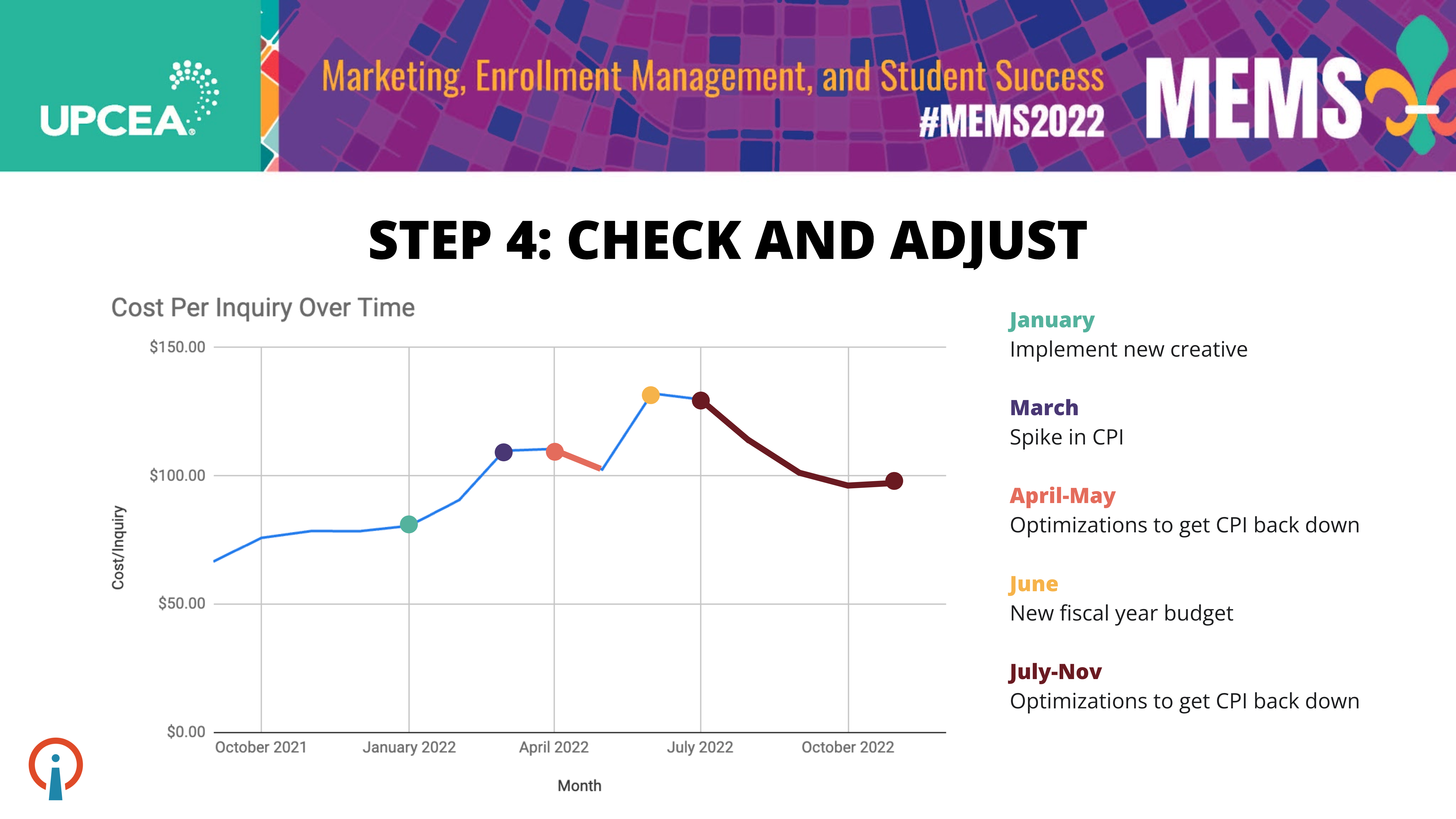
    Slide Highlighting the need to Check and Adjust your Higher Education Marketing deployment

    This chart shows our cost per inquiry (CPI) from digital advertising over time. Here are the highlights:

    • The first dot on the slide is our CPI in the first month of the new creative deployment. You’ll notice that it rises from there and spikes at about three months. By this time, our old creative was fully paused, and we believed our campaign performance was beginning to normalize.
    • With focused energy on optimizations from that point forward, our CPI began to trend back down, achieving one of our short-term goals.
    • Now, for the long term — In June (gold dot), we felt the effects of shifting priorities and a new fiscal year budget. Our budgets actually increased for the first time in a couple of years, and, with some advertising priorities adjusted, we saw the CPI jump up.
    • We continuously check and adjust. Since then, we’ve consistently optimized the CPI back down to now nearing our initial cost at the time of new creative implementation.

    And, we continue to have a cost per inquiry significantly lower than client-approved benchmarks. 

    So, what’s the impact?

    Tulane SoPA’s Fall 2022 term compared to Fall 2021 had a better yield, with significantly fewer inquiries at the top of the funnel. The creative rebrand was one of several tactics in play to intentionally improve the quality of inquiries over time — so fewer inquiries was actually a GOOD thing!

    What this tells us is that, among other factors, we are reaching the right audience with the right message at the right time

    Step 5 – Iterate on Your New Creative

    The story doesn’t stop there. 

    Digital ads provide a great testbed and give you the opportunity to learn and iterate. After your campaigns have normalized and your new creative is fully adopted, review the performance of your key messages or creatives and make adjustments.

    Once we saw our results normalize and our branding effort fully implemented, we moved into the next phase. We began to iterate on our creative with bigger, bolder messages that we either wanted to test or that we believed were strong selling points for our audience.

    Our tests have been running since the summer, and we’ve already taken away some big learnings! 

    One Iteration Success Story

    Previously, we had not significantly promoted our accelerated master’s program before. At Tulane SoPA, undergraduates can earn a bachelor’s and master’s degree in five years. After running some test creative across several campaigns and placements, we found that our audience is really interested in this.

    Once we had a statistically significant volume of conversions, we could see:

    • High volume of conversions on this messaging compared to other message tests we tried
    • Cost per result was looking great — it was lower than our typical and significantly lower than the benchmark

    Now, we are taking additional steps to get this information in front of our undergraduate audience through email drip campaigns, landing pages, ad copy, and more.

    This is the step that will perpetuate — until it is necessary to refresh your branding again.

    When will that be?

    When the data tells you that your messaging is no longer effective for your audience.

    Branding evolution is never done. Use data to evaluate and iterate on your brand voice and identity. In a professional development course, Jim Fong said, “Marketing should be strategically and data-driven, not driven by the creative. Creative doesn’t have to be beautiful work, it needs to be effective at differentiating.” 

    I would append that by adding “…and you will know that by looking at the performance data.”

    If you’ve taken the time to create new branding and need help deploying it digitally, contact my talented team at Search Influence for more information

  • 5 Minute Power-Session: Solving 3 Key Higher Education Marketing Data Challenges

    5 Minute Power-Session: Solving 3 Key Higher Education Marketing Data Challenges

    When it comes to marketing and recruitment pipeline data and analytics in higher education, there are a few common challenges universities and professional, continuing, and online education units (PCOs) often face:

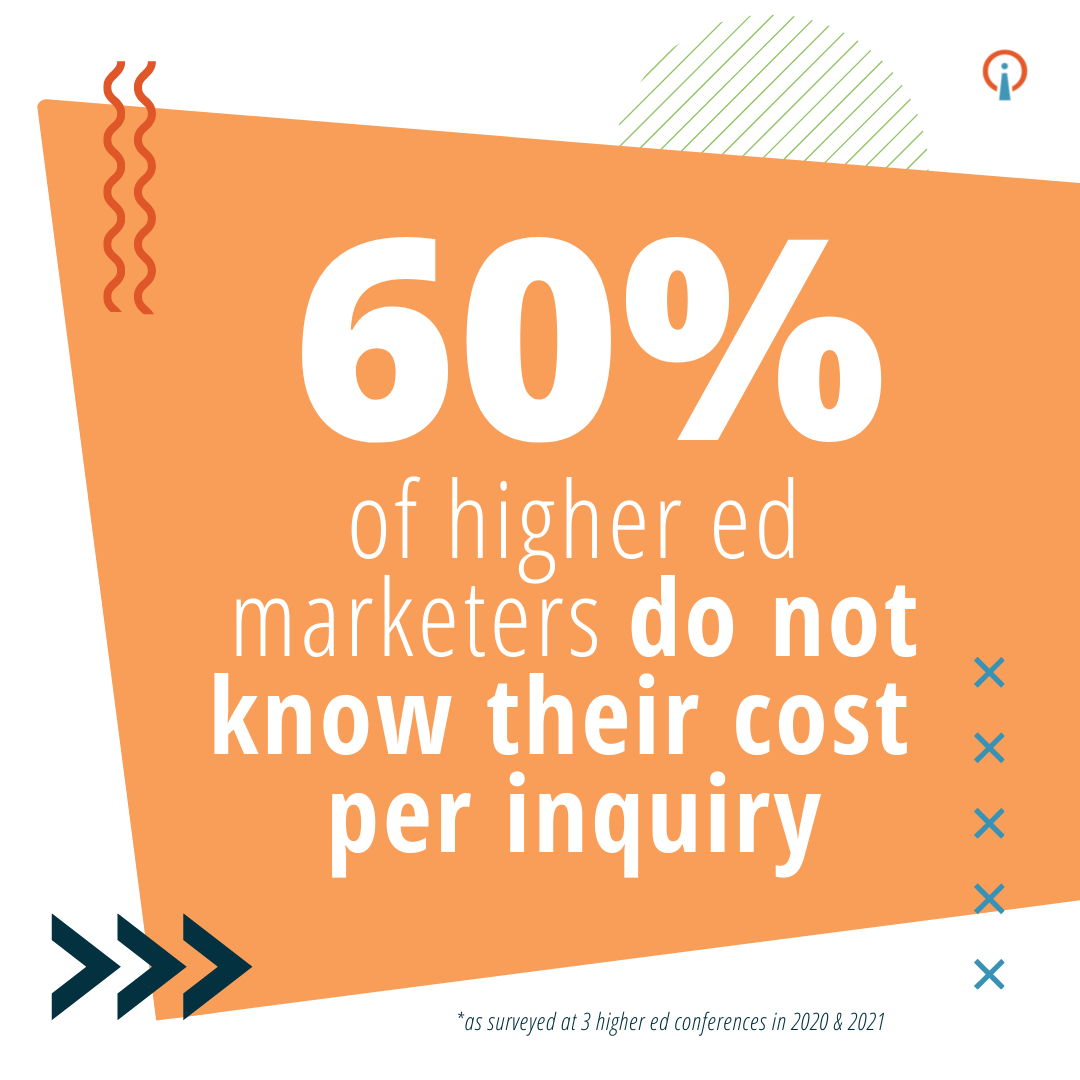
    60% of Higher Ed Marketers do not know cost per inquiry

    Silos within the university

    Marketing is responsible for owned and paid media including the website, social media channels, and placing media buys but it often has limited or no access or insight into the enrollment CRM. Meanwhile, the recruiting team isn’t even aware of the depth of rich data available to them about prospects and current students. The existence of this data presents an opportunity for marketing to better understand the ideal student, and adjust their strategy to reach more of them, in a more effective way.

    Data systems challenges

    Many institutions have data about their students and prospects living in disparate systems, there’s simply too much of it, and it is incredibly time consuming to collect and understand, much less piece it together for insights.

    Fragmented data

    There’s largely an inability to string together information about a single prospect all the way through the recruitment to enrollment funnel, or even to understand the funnel end-to-end.

    Recently we were honored to present a quick 5-minute power sessions at HighEdWeb Analytics Summit, where we dove into Marketing Data, Dashboards, and Decisions, with a goal of helping universities and PCO’s understand the impact they can have when they’ve done the work to better understand their own first party data and overcome these common data challenges.

    Higher ed marketer looking at marketing metrics

    As we’ve presented this and similar insights to higher education stakeholders and conferences over the last 3 years, we’ve polled to get an understanding of where most institutions fall within those 3 key data challenges. The results are telling: 60% of our respondents didn’t know how much they currently spend on marketing for an inquiry. As an analytical marketer I can tell you – that pains me!

    Check out our presentation for more on where to start to overcome the most common data challenges facing universities today, tools you can use to facilitate deeper insights, and examples of how access to data can influence key decisions and strategic direction.