Author: Search Influence Alumni

  • Five for Friday: Facebook P2P Payments, Social Media Madness, SXSW recap, & more!

    1. Are P2P Payments on Facebook Messenger Just the Beginning? – Marketing Land

    It seems that every other week, Facebook rolls out a new feature to keep the social media mammoth at the forefront of its industry. Now, Facebook is looking to become a leader in peer-to-peer payment. Recently, Facebook added the option to send and receive money via its messenger app, immediately positioning itself as a direct competitor to successful companies like PayPal and Venmo. Marketing Land discussed how the new process works and the possible next innovations for Mark Zuckerberg and the team.

    UK Basketball Chet White UK Athletics

    2. Social Media Lessons from NCAA Top 10 Men’s Basketball – Rival IQ

    March is clearly the month for madness. These teams have excelled on the basketball court this season, but how have they performed on social media? Rival IQ takes a look at six social media lessons we can learn from 10 of the top men’s college basketball programs.

    3. The Ultimate Roundup of 2014’s Biggest April Fools’ Day Pranks – Mashable

    April Fools’ Day is almost here. In previous years, this holiday has become a successful way for companies to spread their brand across the Web. Mashable provides a nice recap of the greatest corporate April Fools’ Day pranks from 2014. Do you think this year’s pranks can live up to them?

    4. SXSW Interactive Wrapping Up: 5 Things to Remember – Inc.com

    South by Southwest—a set of film, interactive, and music festivals—recently wrapped up in Austin, Texas. Among the topics discussed, one highlight was a panel discussion on gender bias in tech. WWL-TV and WDSU-TV recently featured Search Influence in stories about New Orleans leading the way for women in tech. Inc.com put together a great list of five things to remember from SXSW 2015.

    5. 7th Annual Shorty Award Winners for Best Use of Social Media, Apps and Video – Adweek

    Each year, the Shorty Awards attempts to recognize the top brands and organizations producing real-time short form content across various social media outlets. The seventh annual Shorty Award winners were recently announced, and Adweek featured a recap of all the winners and honorable mentions. Check out the full list of winners, and who knows, maybe you’ll make the list next year!

    Image Sources:

    April Fools’ Dog Image

    Awards Reaction Image


  • The Spring Influence: Our Team Continues To Blossom!

    The Spring Influence: Our Team Continues To Blossom!

    Search Influence continues to grow! We are very excited to announce that three new Influencers have joined our Content Team.

    Jesse-LaierJesse Laier – Junior Internet Marketing Associate

    Jesse defines himself as a bit of an eccentric. Originally from Miami, he spent most of the past decade going to school in Tallahassee and Chicago. In his free time, he conceives new story ideas, even if he never actually writes them. The most important things to know about him are that he’s a staff writer for a music blog and an avid NBA fan, and his secret talent is that he’s a trained mime!


    JoshSheltonJosh Shelton – 
    Junior Internet Marketing Associate

    Freshly returned from two years in Cameroon with the Peace Corps, Josh grew up in Shreveport and went to school at Louisiana College in Pineville, once known (locally) as “Harvard on the Red.” He put his English degree to good use by working for private ambulance companies in Shreveport and New Orleans. Josh is thrilled to finally have a job focused on writing and editing. His free time is spent folding origami frogs and making fruity wine.


    RaymondWhitlowRaymond Whitlow
     – Junior Internet Marketing Associate

    Ray Whitlow grew up in California, but he bounced around Iowa and Upstate New York before eventually settling in New Orleans. He studied anthropology in college and graduate school, all while conducting research in Romania, where he visited many of Dracula’s castles (all fake). Ray started editing in college and has since worked with a number of corporate, academic, and governmental clients from around the world. Now he lives in the Upper Ninth Ward, where he’s slowly rebuilding a shotgun double into a little paradise for him, his partner Claire, and their rescue dogs.

    Welcome to Search Influence, Jesse, Josh, and Raymond! We’re glad to have you on the team.

  • Social + SEO: Better When They’re Working Together

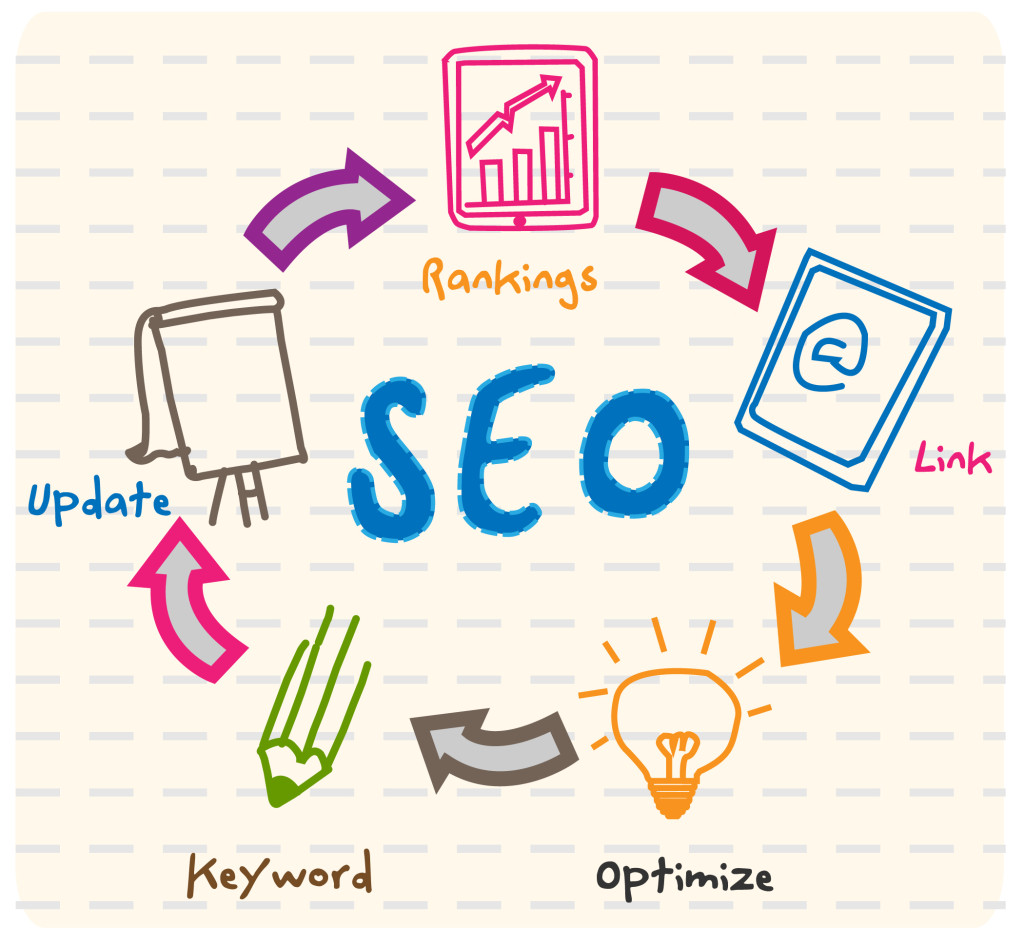
    SEO Cycle Image - Search Influence

    Modern search engine optimization has become inextricably linked with content marketing. Yet in many companies, social media strategies are developed separately from the SEO and content marketing plan. This can work—but you’ll realize optimal results by aligning social media with SEO for an overall strategy that boosts brand awareness, improves domain authority, and increases your rankings.

    Here are some tips for social media strategies that can fuel your SEO and help you rank higher in all types of user searches.

    Grow your Following

    In the early days of social media, building a massive following was the number one goal for most marketers. Today, the emphasis has shifted from quantity to quality—but the number of followers you have is still an important factor for domain authority.

    Of course, it’s equally important to develop an authentic audience. Google, in particular, can tell when most of your following is made of spam and bot accounts, so “buying” likes or follows doesn’t help—and in fact can harm your online reputation. Instead, grow your following naturally by posting interesting content on a regular basis. Engage your followers with interactive content and by responding to comments or starting discussions.

    Share your Other Content

    Posting links to your content—such as articles, blog posts, and downloads—along with brief commentary on social media, is a great way to repurpose your content and boost your SEO. Of course, sharing on social media will give you more eyes for your content, but the benefits to SEO go beyond that.

    In addition to extra traffic to your website or blog, which is a peripheral SEO benefit, social media sharing encourages others to share your links. The more often your links are posted on other social media accounts and websites, the more domain authority you’ll build. This type of inbound link-building is much faster than traditional or manual methods.

    Optimize Social Media for Search

    It’s important to know that your social media posts can show up directly in search results—if they’re optimized. When you’re composing posts, be sure to apply basic SEO strategies such as including keywords, placing them strategically and naturally, and tagging image, video, and infographic posts with relevant keywords. Even if your posts don’t make it into search engine results, they’ll still increase your brand authority and contribute to a stronger online reputation.

    Increase Social Shares with Viral Content

    The more shares and retweets your posts have, the greater your domain authority—and the higher your search engine rankings. In order to get your content shared more often, you need to create content that people want to talk about.

    Of course, every marketer wants to release the next viral sensation. There is no guaranteed strategy for making something go viral, but you can increase your chances of catching lightning in a bottle by creating content with a strong visual component (either a visual medium or a blog post that’s heavy on images, for example), and make sure it has the following characteristics:

    • Informative
    • Relevant
    • Entertaining
    • Practical
    • Surprising
    • Unique

    Of these characteristics, the last one is the most important. Create content your audience has never seen before, and they’ll be eager to share it with friends.

    Connect with Similar Companies

    In the world of social media, your “competition” can be your friend—and that’s good for your SEO. Engaging with similar businesses, particularly local companies or those in similar industries, can help you grow your audience and your relevance, which in turn increases your search engine ranking.

    Share content with other companies like yours and comment on their posts. Usually, they’ll return the favor by engaging with you, which will attract their audiences to your social profiles. Google will also start associating you with other brands when you engage with them, which improves your overall authority.

    When it comes to online marketing, social media and SEO should go hand-in-hand. How does your social media strategy complement your SEO approach?

  • Five for Friday: Ditch the Phone, Google Your Cells, and Reconnect to Real Life

    In the past few decades, we’ve seen a major shift in communication venues. We used to meet in the town square or pick up the phone, but now we belly up to a screen to share stories. In a world full of devices, it’s easy to feel disconnected, so this week’s Five for Friday highlights some of the ways companies have begun using digital assets to connect users with the world around them.

    1. Getting the Party to You Gets You to the Party! – Tech Crunch

    Event and ticketing site Splash just received $6 million in funding to further develop its invitation and ticketing platform. This engaging events management platform entices (no doubt hungover) party attendees back to the site the morning after. Splash allows party hosts to capture and share video footage and photos for days after the event. Both the opportunity for engagement as well as Splash’s advanced event page analytics make it intriguing for the host of any party, from a backyard kegger to a multi-million dollar event.

    the help animated GIF 2. Don’t We All Just Want to Feel Special? – Marketing Land

    British apparel brand Ted Baker may have cracked the code on how to engage loyal followers on Instagram. The company recently began posting coded images that require diehard fans to regram them using a new filter in order to crack the secret message. Is this a cool new way to leverage those Insta-followers, or will fans of the brand be reduced to advertisements on autocorrect?

    3. Google: It’s in Your Blood – SEO by the Sea

    Google’s latest patent is getting so up close and personal that it may even gain access to your cells. The company recently filed a patent for a device that can zap cancer cells as they’re forming in the bloodstream. Google has changed so much more than the way we search, but this patent provides further evidence for our theory that Google’s on a path to take over the world.

    4. Absence (of Your Phone) Makes the Heart Grow Fonder – Mashable

    What if keeping your phone private could enhance your real-life relationships? Recent studies show that limiting phone use with colleagues and friends can make you seem more trustworthy and empathetic. After a week without public phone use, one writer reported more in-depth conversations and connections with his colleagues. It just goes to show you that losing your phone can actually be beneficial for your social networks.

    5. Think Twice Before You Swipe – CNN Money

    Tinder claims that in an effort to get users to be more willing to connect with each other, they have set limits on the number of rejections a user can make within a twelve-hour period. This limit directly corresponds to the release of Tinder’s paid version, Tinder Plus, which allows users unlimited left swipes on subpar suggestions. To add insult to injury, the app’s Plus version is more costly if you’re over the age of 27. Tinder, can’t you see your users are lonely and desperate enough?

  • Keywords: Now All-Natural and Gluten-Free

    Google has officially divulged that it rewards the mobile optimization of your website. Hooray! For most people, this doesn’t come as much of a surprise. There are studies dating back to last year claiming that up to 60% of consumers use mobile searches when making purchase decisions. The bottom line is that people are becoming increasingly hooked to their phones as each day passes.

    LookingAtPhonesImage

    How Has Search Intent Changed?

    Okay, so people love their phones—shocking. But what are the larger implications here? How might the mobile revolution affect the way you rank for specific keywords? Well, to answer that question, we need to delve into how search intent is evolving. With the mounting prevalence of semantic searches compared to conventional keyword-happy searches, users are now searching on the go and in an increasingly natural way. Gone are the days where using singular, valuable keywords are getting you exposure. In the ever-evolving search intent environment, content may be king, but nuance is noticed. One 2012 study estimated that “16 to 20% of queries that get asked every day have never been asked before.”

    What Does This Mean For Me?

    It’s officially time that we start thinking outside of the box when it comes to the keywords we are using in our content. Creating helpful, educational content for your users is about anticipating needs and answering questions. To keep up with the changing landscape of SEO, keyword brainstorming sessions need to become less about singular words and more about descriptive phrases.

    thinkoutsideimage

  • How A Little Nip And Tuck Can Improve Your SEO

    Makeovers aren’t just for mommies looking to restore and improve their post-pregnancy appearance through multiple, personalized plastic surgery procedures. Makeovers can also work wonders for websites in the cosmetic medicine industry. If your website isn’t bringing you a consistent stream of new patients, it may be time to give your site a much-needed SEO facelift. Learn how adding graphics to your website can help you get results!

    DoctorImageQuick—what do professional skin care, breast augmentations, and braces all have in common?

    Give up? Well, first of all, if you want any of these things, you’ll need to seek the help of an accredited medical professional—a dermatologist, cosmetic surgeon, or orthodontist, respectively. More importantly, however (at least for the sake of this blog post), is the fact that you can actually see the end results of these types of medicine. So how can medical professionals incorporate these visible results into their SEO strategy?

    If your medical specialty provides some sort of aesthetic benefit, there is a good chance you could (and should) be doing more to improve your rankings in organic search results. “More” in this context doesn’t mean “more keyword-rich text” or “more high-quality links to your site.” Instead, it means taking advantage of industry-specific SEO opportunities. Optimizing and adding images, educational infographics, or patient testimonial videos can have a significant impact on your site’s search visibility.

    Optimize Existing Images

    Optimizing image file names, alt text, and title text will give search engines information about the image and the content on your site. Any images can be optimized with keywords, but before and after images of your patients are an excellent industry-specific opportunity to naturally incorporate relevant keywords into your site’s content.

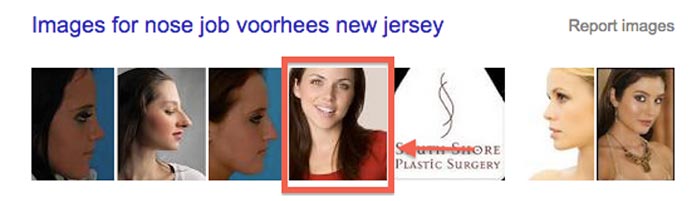
    One of our clients, a plastic surgeon, has a before and after image gallery on his site. We optimized each of the images in the gallery and saw some interesting results. Links to the gallery outperform the corresponding page on his site for the majority of his targeted keywords. The same client even has images that rank in organic search results!

    NoseJobSearchImageResults

    Add Relevant Images

    It’s important to note that Google can’t read or understand images without alt text or title text. But a page with relevant images that have no alt text or title text will most likely still rank better than a page without images! Why? The answer is simple—the ranking algorithm also pays attention to user behavior. If your site’s visitors are happy with what they see, search engines will recognize a pattern and reward your website for providing quality content.

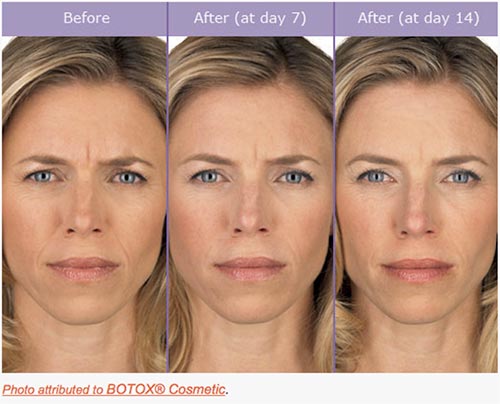
    Another one of our clients, a plastic surgeon in New York, didn’t have a before and after image on his BOTOX® page. As an authorized physician, our client was allowed to use some images provided by Allergan, the manufacturer of BOTOX® Cosmetic. We chose this relevant image and placed it on his site:

    BotoxBeforeAndAfterImage

    In the 30 days after we implemented this image, the average visitor spent 13% more time on the page compared to the previous 30 days. When visitors landed on the page from organic search, the bounce rate improved by 24%. Both of these stats demonstrate to Google that users are not only finding the information that they’re looking for on this page, but that it’s also engaging enough to keep them on the site.

    Create Custom Graphics

    Another behavioral signal that has become increasingly more important is social behavior. Adding custom graphics to your site is a great way to promote social media sharing and demonstrate positive social signals to search engines. And, like other images, custom graphics also give you the opportunity to create keyword-rich file names, alt text, and title text.

    PlasticFantasticInfographicImage

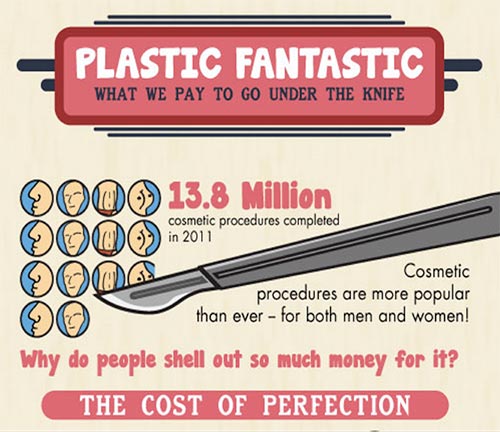
    The infographic above was shared more than 2,000 times on Facebook. The month it was published, the site saw a 25% increase in referral traffic compared to the previous year. It’s relevant, informative, and interesting for viewers. In other words, it’s exactly the kind of content that helps with SEO.

    Upload Testimonial Videos

    There are other options if you don’t want to use before and after images or infographics. Another one of our clients in the field of plastic surgery uploads patient testimonial videos to his site. Generating nearly 9,000 page views in 2014, these testimonials have certainly had a positive impact on his site’s search rankings. The fact that these patients were so happy with their results has also helped to bring in new business.

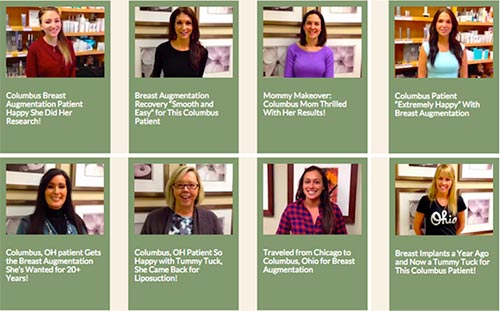
    TestimonialVideoGalleryImage

    *Note the keywords in the video titles.

    Get Results

    In the end, people considering a cosmetic procedure want to know that they’ll be satisfied with the results. Search engines want to see that your site is providing quality results for the people who are searching. Using images, graphics, and videos can help kill both of these birds with one stone. You’ll be rewarded with better organic rankings, website traffic — and, ultimately, more business.

  • Filter In New Clients – The SEO Benefits of Instagram

    As a business, it’s important to connect with potential customers in as many ways as possible. You maintain your website, attend networking events, and post regularly on Facebook, but could you be doing more? Enter: Instagram.

    InstagramForBusinessLogo

    As of December 2014, there are 300 million monthly active users on Instagram and over 75 million daily users, which offers great potential to broaden your brand’s reach. You’re probably familiar with some of the benefits for adding your businesses on Instagram: it’s a visual medium, there’s potential for marketing contests, it has interesting filters, and the list goes on. But did you know there are also SEO benefits

    Increased Social Activity

    The debate rages on over the correlation between social presence and higher search engine rankings. Search engines deny a relationship, but the data overwhelmingly suggests that increased social activity for specific webpages means higher rankings. No matter which side you believe, I think we can all agree that positive branding and increased online presence isn’t a bad thing.

    Optimized Profiles

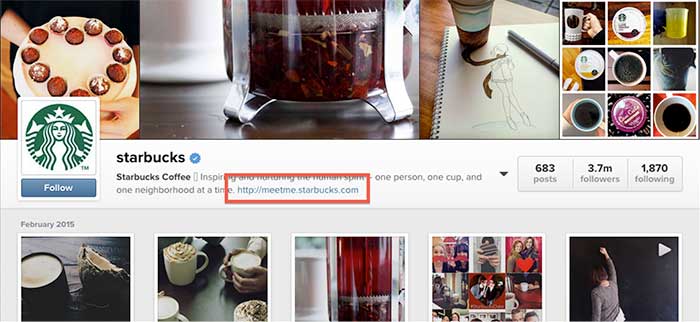
    On Instagram, you can create an optimized profile for your business with a clickable link back to your site, which contributes to your overall link profile. Additionally, Instagram is both searchable and indexed by search engines, contributing to your business’s overall real estate for a branded search.

    StarbucksInstagramImage

    Although images aren’t indexed directly through Instagram, there are third-party sites that utilize their API and make the images indexable by search engines, which furthers your business’s potential to appear in image searches. Some popular web viewers are Websta, Gramfeed, and Followgram.

    Keeping Posts Relevant

    Regardless of whether your potential customers are viewing your Instagram photos through a computer or mobile device, it’s very important to align your business with the interests of your target demographic. A basic guideline to follow is the rule of threes: ⅓ promotional posts, ⅓ informational posts, and ⅓ engagement posts.

    What might that look like on Instagram?

    Let’s say you are a fitness company. Your promotional post might be a photo of your company’s new running shorts right out of the box as they’re hitting the shelves. An informational post could be a photo of a healthy lunch that encourages your followers to eat well. You might also post a scenic landscape of a morning run with a fantastic filter to engage with your followers.

    NikeRunningInstagramImage

    Using #hashtags

    All posts should include #hashtags to increase the likelihood of your content being liked and shared. You can also enable sharing permissions that automatically post to other social media platforms, like Facebook and Twitter, whenever you share on Instagram. By seeding your content to additional social networks, it has the potential to be picked up and shared by even more people in the social space.

    Mobile Benefits

    Since many users access Instagram on a mobile device, there are additional SEO benefits that are more unique to the platform.

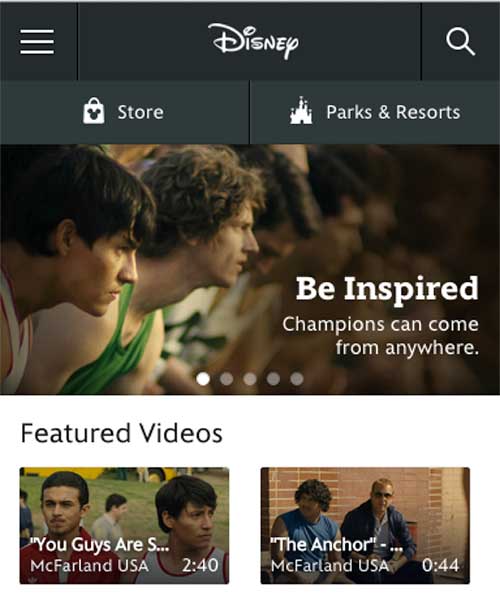
    Even though Instagram doesn’t currently offer clickable links on individual posts, you’re still encouraging followers to interact with your business through mobile devices. Since Instagram users are often looking at your posts on a mobile device, they’re more likely to visit your business’s website on their mobile device as well.

    Websites that are optimized for mobile perform better in search engine results because Google looks at a website’s mobile capabilities as part of their algorithm. By encouraging users to visit your mobile site by interacting with them on Instagram, you’re helping your overall SEO efforts.

    DisneyInstagramImage

    As you can see, there are more reasons for your business to be on Instagram than the awesome filters. This platform enables you to boost your SEO efforts while also connecting with your target demographic and increasing your brand’s reach.

    Sources:

    http://www.litony.com/wp-content/uploads/2014/11/Instagram-for-Business.jpg

    http://blog.instagram.com/post/104847837897/141210-300million

    http://www.theverge.com/2013/12/12/5203578/instagram-now-has-150-million-active-monthly-users

    https://instagram.com/starbucks/

    https://help.instagram.com/147542625391305

    https://instagram.com/nikerunning/

    https://help.instagram.com/365696916849749

    http://m.disney.com/


  • Don’t Celebrate Too Soon: What to Know About Disappearing Manual Actions

    The topic of manual actions disappearing from Google Webmaster Tools is not a new issue, but it has come up a few times in the last week, which automatically deems the topic worthy to write about.

    Do manual actions have expiration dates?

    Manual actions do expire, and when they expire, they disappear from Webmaster Tools. The expiration date is not published in Webmaster Tools, but Matt Cutts states in this older video that manual penalties do expire and that the length of the penalty is dependent on the maliciousness of the problem.

    In my experience, I have seen these disappear from GWT most commonly at one year, but that is not an absolute expiration date.

    If the penalty is gone, is the problem is still there?

    Eric Kaun sums it up nicely:

    It looks like the manual action that was applied by the webspam team on your site expired. Right now there are no manual actions affecting your site in Google’s search results. However, even when a manual action expires, if the reason for the original manual action is still relevant, it’s possible that the manual action will return later on.

    I’d strongly recommend that you continue removing any inorganic links to your site to prevent any future manual actions on your site.

    John Mueller adds more in this GWT forum:

    While manual actions will expire at some point, I would strongly not recommend sweeping them under the carpet and hoping that they go away on their own – at least if you’re interested in having your site be optimally represented in our search results. Even when a manual action expires (which might take quite some time), if the reason for the original manual action is still relevant, it’s always possible that the manual action is returned later on. In my opinion, if you’re aware of issues that are negatively affecting your site’s performance in search, and if its performance there is important to you, then resolving those issues is often a good use of time.

    Should I still submit a disavow file?

    If a website had a manual action, and that manual action notice is gone, a disavow file should absolutely still be submitted. The site likely still has the unnatural links, thin content, or other problems that originally warranted the manual action. It’s just basic cleanup and common sense. You want to rank in Google, but Google has directly told you that your site has signs of unnatural behavior. Go clean up your act, and you may win a little favor back from Google.

    Also, note that it is possible for a manual action to return. If it returns, Google is generally stricter this time around and requires much more cleanup. If you get two manual actions, Google tends to no longer trust your site, and you have to work a little harder to earn back that trust.

    What will happen to my rankings?

    It’s worth noting that after an MA is lifted, rankings don’t always increase, especially if you just had a partial match manual penalty. Sometimes rankings won’t increase because the site also had a hit from a Panda or Penguin filter or there aren’t enough quality references to get to the top of the SERPs.

    If the pages of your site were ranking from unnatural behavior before, what’s left now that those tactics are edited and the bad behavior is fixed? Among other factors, the site needs some new, engaging content and some strong, relevant backlinks as first steps on the path to bouncing back.

    Do I need to submit a reconsideration request?

    If a manual action disappears from Webmaster Tools, a reconsideration request cannot be submitted because the submission goes through the manual action message, which is now gone. All you can do is edit the unnatural behavior you have on the site, remove or edit the links that you can, then submit a disavow file.

  • Pick up the Phone: Google is Calling With A Mobile-Friendly Update

    With Google’s recent announcement that mobile-friendliness will be a ranking signal, we have been fielding impressive numbers of emails and phone calls from website owners asking how this affects them.

    Google has been moving toward rewarding websites that are addressing consumer demand with mobile-friendliness. In the official announcement published on February 26, Google says, “Starting April 21, we will be expanding our use of mobile-friendliness as a ranking signal.”

    Two factors to consider regarding this algorithm launch:

    1. This rollout will affect mobile search rankings only.
    2. This rollout will likely be a period of rollouts rather than a single-day launch.

    Mobile Search Rankings Only

    In a hangout the day after the announcement, John Mueller, Web Trends Analyst for Google, mentions at about 9:42, “These ranking changes are effective on smartphones for smartphone users.”

    Again at 44:40, he reiterates that this algorithm is specific to mobile search. Mobile SERPs and desktop SERPs may become significantly different starting in late April.
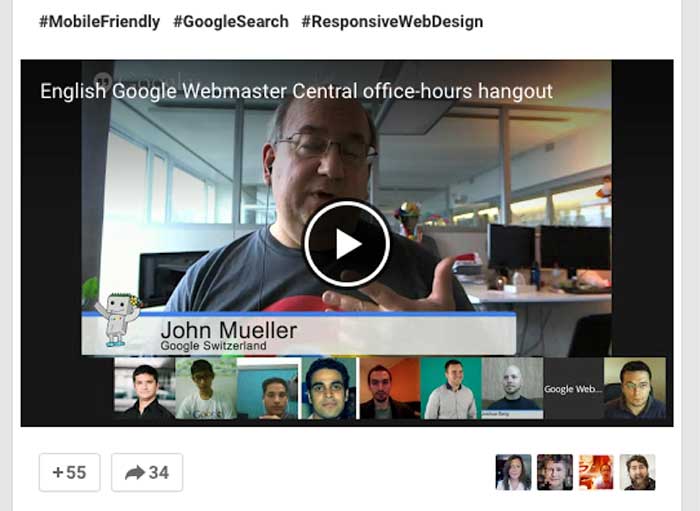
    JohnMuellerGoogleMobileFriendlyYouTubeImage

    (Thanks, Joshua Berg, for the G+ post with topics time stamped).

    Why is Google launching a mobile-specific algorithm?

    Because mobile use is growing so quickly and is approaching 50% of Internet use, Google wants mobile users to experience relevant, high-quality websites that are designed for mobile use specifically. It’s a recurring theme that Google wants to provide for the user by offering a quality experience.

    Um, is my site mobile-friendly?

    In November, Google announced the addition of “mobile-friendly” tags in mobile search results.
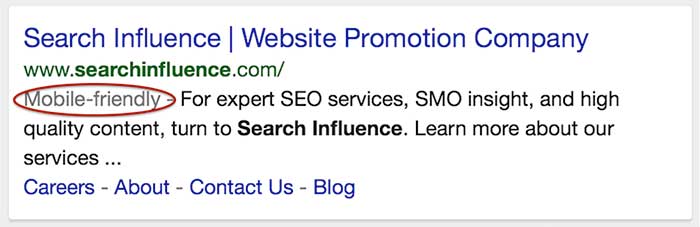
    mobile-friendly tag in iphone search results

    At the same time, they also gave us a mobile-friendly testing tool. Take note that this testing tool shows you how the Google bots see your site, which is not necessarily how your site resolves on an actual smartphone.

    Passing the test means you qualify for getting the mobile-friendly tag in mobile search.

    However, even if you have a mobile-friendly (“mobfr” per Joshua Berg) site, if the Google bots can’t get to all of the page elements, the testing tool image result may not be how your site really looks on a phone.

    Not passing the test generally means you don’t have a mobfr site. However, I have seen a few sites that are responsive but don’t pass the test. They look great on my iPhone but don’t look great to the Google crawlers.

    This is an example of a responsive website that looks and functions well on my phone, but the mobfr tool just doesn’t see it that way. (The good news is that this website owner has been working on an improved responsive site that should launch soon, well ahead of the April 21 deadline.)
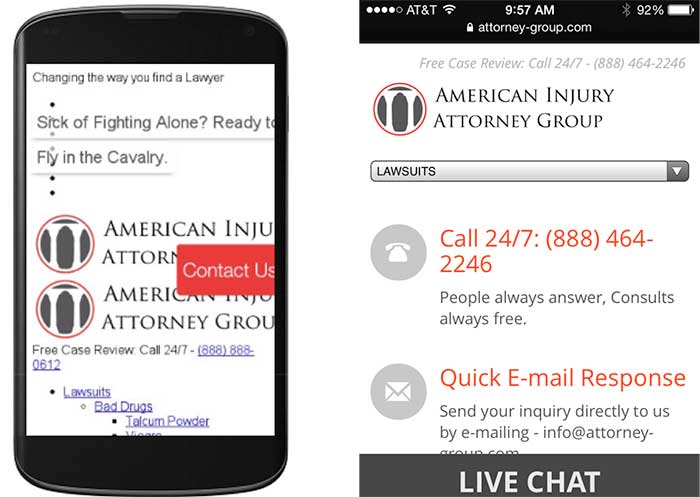
    errors in mobile friendly testing tool show the site different than on iphone

    Do I have to get a mobile site if I want to rank?

    In the hangout video, this question is discussed at about minute 12:00. The summary is that mobile-friendly websites will be getting the edge in mobile rankings. Paraphrasing the hangout conversation, non-mobile-friendly sites will not be dropped out of mobile search completely.

    Any time you boost the position for a specific set of sites, it will naturally result in the loss of position for another set of sites. Giving precedence to mobfr sites just means not-mobfr sites have to move out of the way.

    John Mueller also mentions that if a not-mobfr site renders decently on mobile and is highly relevant, it would be a disservice to the searcher to not serve those sites up in results. It’s all about the searcher.

    How much do I really need to worry about mobile traffic?

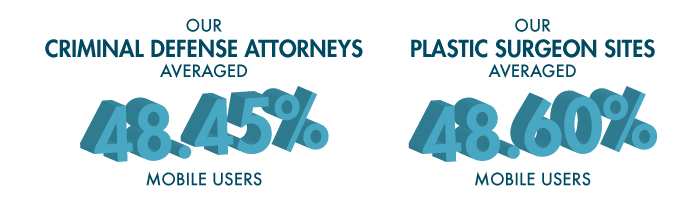
    The number of visitors using a mobile device to access websites has increased dramatically over the last few years. The current average hovers at around 50%, depending on the industry. This is half of a website’s traffic coming from smartphones. I looked at some of our clients to see if I could confirm this stat. I dug around in Analytics and pulled mobile (not tablet) stats for the last six months for two industry types.
    SI-stats-blog-1

    For some industries, this algorithm may not be as big of a concern as it is for the criminal defense and plastic surgery industries. I looked at an admittedly small set of clients to get these two percentages:

    •      Independent insurance agents average 17.48% of traffic as mobile.
    •      K-12 schools have mobile traffic at an average of 13.87%.

    If the mobile traffic to your site is in the double digits but may not be at 50%, you can look at other data points in Analytics. Look at bounce rates, pages visited, and repeat visits from smartphone users to see how satisfied or dissatisfied they were with their visit to your site.

    What are the options to make my site mobile-friendly?

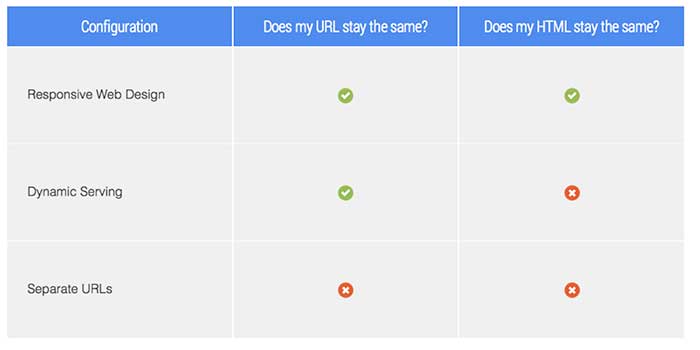
    There are three options for developing a mobile-friendly site version. The most common option is to have responsive and mobile serving separate URLs. Here are three options for mobile sites thatGoogle discusses in detail on their developer site:
    GoogleDeveloperURLConfigurationOptionsImage

    What’s better, mobile or responsive?

    Personally, I love a responsive site because the site has the same HTML, the same URLs, and the same design across all devices: desktop, mobile, tablet.

    It should be noted that a responsive design is an investment because it usually requires a complete rebuild of the site. However, if you rely heavily on website traffic for lead generation and if you haven’t redesigned your site in a few years, this may be the time to invest.

    A mobile version of your site is a good option as well. You can have either a full version or just a portion of your website in a mobile design. Creating a mobile site with a handful of important pages, or the pages most people visit, may be all you need to deliver to mobile users the information they need.

    For websites with an already high percentage of mobile users, I have to recommend responsiveness over mobile. For websites with double-digit mobile traffic, but not 50%, a mobile site may serve you well.

    Also, make sure your developer optimizes images and pages for fast page load. Google has been testing with page load speed tags in SERPs too, and if you’re investing in a site upgrade, you should address as many factors as you can at one time.

    What about duplicate content?

    If you have a mobile site and a desktop site with the same content on two different URLs, these can be seen as duplicate content, which can dilute your content’s authority. Example:

    Domain.com/about-us

    m.domain.com/about-us

    John Mueller commented on this topic: “You don’t have to worry about duplicate content—definitely not when it comes to mobile versions when they’re annotated appropriately.”

    You should make sure to get your developer’s assurance that content will be referenced properly between a mobile site and a desktop site.

    Your website is an asset for your business.

    One small business owner I talk to frequently is in an industry that does not get a lot of leads online. The owner is not interested in anything online, but he knows his customers use his website frequently as a resource, and his site is an asset to the business. He gritted his teeth and devoted a lot of his 2014 budget to technology. He converted his website to a responsive design, and while he was at it, he had the developers add encryption, and he was able to have an app created (which can be an expensive investment for a small business, but in his industry it’s almost required). It’s 2015, and he feels some satisfaction (and relief) that he took care of all of these things last year.

    The takeaway is that a business’ online properties are assets that need regular maintenance and upgrades to keep up with the ever-changing Google and consumer demand. If your site is not mobile-friendly, you should talk to your SEO manager as a first step in finding out what you need.

    For even more information, see:

    March 4, 2015 Google’s Gary Illyes Q&A on Upcoming Mobile Ranking Change

    March 5, 2015 Google: The Mobile-Friendly Ranking Factor Runs In Real-Time & Is On A Page-By-Page Basis

    “…if you have 10 web pages on your web site and 5 of them are mobile-friendly and 5 are not, then only the pages that are mobile-friendly will benefit.”


  • Defibrillate Your Clinic’s Social Media Plan in Five Steps

    Over the past decade, there have been steady increases in the acceptance, usage, and number of social networks. With membership in the hundreds of millions and even billions, social media networks like Facebook, YouTube, and Twitter have become excellent platforms for businesses that want to reach and engage their audiences. Because they form part of a more niche industry, it is crucial for hospitals, healthcare practitioners, pharmaceutical companies, and others in the healthcare industry to have a detailed online strategy in place across various social media platforms. Below are five steps to designing a comprehensive social media plan that take into consideration the challenges and specific needs of the healthcare industry.

    Challenges

    Healthcare providers face a number of unique obstacles when entering the world of social media. Businesses in this industry typically have multiple stakeholders, from existing patients to future patients to other physicians. Each stakeholder has unique expectations regarding communication standards and topics, and a fully fleshed out plan that follows these steps should take these expectations into consideration.

    The healthcare industry is strongly regulated by organizations like the FDA. However, in the recent surge of social media outlets and usage, the healthcare industry has faced a unique challenge: the reigning regulatory offices have not cited clear guidelines regarding the use and management of these social media platforms. Seeing as some information on the topic has been released, it is important that you review these sources before creating a social media plan for a business in the healthcare industry.

    Creating Your Plan

    1. Define Your Personality

    As a business and as a brand, you will need to define your online social personality: how do you want your stakeholders and audience to perceive you? Thinking of your brand as an individual will allow you to adopt a more coherent voice across your chosen social media platforms. To help define your voice, ask yourself questions like the following:

    • What color would you associate with your brand?
    • If your brand was a person, what kind of clothes would they wear?
    • What type of car would this person drive?
    • How would his or her friends describe him?
    • Does this person have likes or dislikes?

    Although it may be difficult in the beginning to uncover the personality of your practice, carefully designing this aspect of your social media strategy will allow you to create a more concrete tone and voice.

    Along with defining your voice, take the time to study and understand your stakeholders. Decide which groups you would like to reach: existing patients, future patients, other healthcare professionals, insurance companies, or any combination of these. This decision will impact the tone and purpose of your social media campaign, as each of your audiences will react best to content that is specifically designed for them. By keeping your target audience in mind, you will enhance your ability to focus your social media updates, allowing you to promote audience engagement and build a stronger, more trusting relationship.

    2. Listen

    After you have settled on the tone and audience of your social media strategy, pause to listen to the existing conversation. Determine how your audience and competitors interact within the social space, monitor conversations about your industry, and track the ways in which your brand is discussed online. Using tools like Google Alerts and hashtags, Sprout Social, monitoring forums and other online spaces to understand the existing conversations.

    Listening to the discussions that are in place across the spectrum of social media platforms will allow you to gain a sense of which healthcare topics are currently trending. It will also help you to identify the concerns, questions, and interests of your target audience, allowing you to build a strategy to address these topics during your social media campaign.

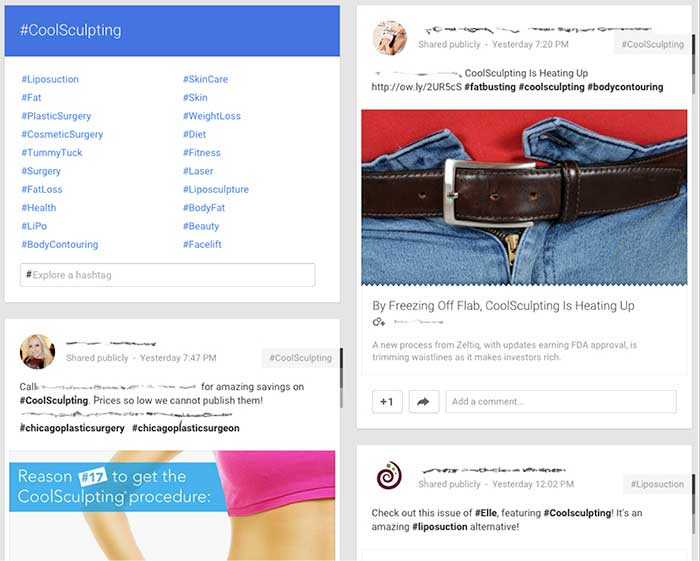
    GooglePlusIndustryHashtags

    Example using Google+ to review similar hashtags and industry competitors

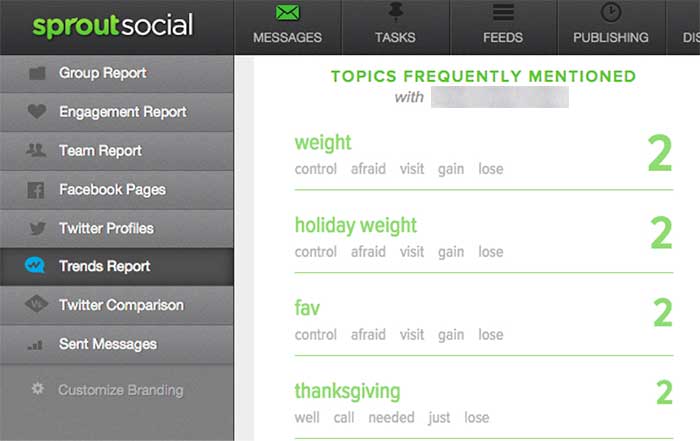
    SproutSocialConsumerConversation

    Example of using Sprout Social to understand how consumers are talking about your brand.

    3. Find Your Voice

    Next, begin your own conversations! Look for areas in the industry that lack a strong voice. Use that space to make a name for your brand and to demonstrate your expertise. Also, provide topics and the secure space for conversations regarding the health industry and health issues. Help moderate conversations to keep the discussions moving and the connections building. Encourage your audience to converse with you and with each other to foster a sense of community.

    To make use of your influence on social media, you can use a number of strategies:

    • Add personal, authentic stories: Depending on your goal, these can consist of success stories, anecdotes of achievement, or triumphs over a disease or disability.
    • Facilitate conversations and actions: Give healthy-eating challenges or build a place to help raise awareness for widespread health issues.
    • Wow the crowd with numbers: Build credibility by showing your audience the bigger picture. Share statistics, infographics, and other information about your industry or practice.

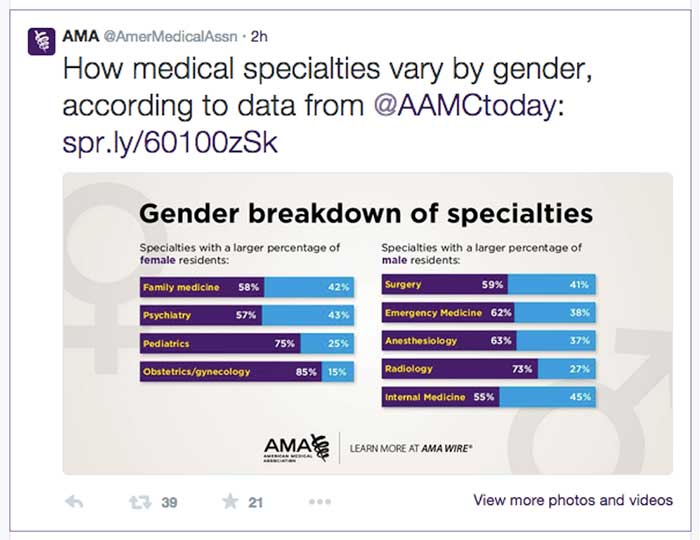
    AmericanMedicalAssociationExample

    Example from the American Medical Association using numbers to engage in a conversation. Only 2 hours after being tweeted this post received 39 retweets and 21 favorites.

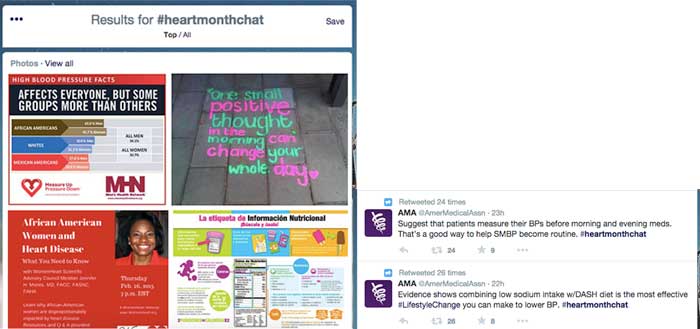
    TwitterHealthcareDiscussion

    Example of Twitter healthcare community discussing heart health online via #heartmonthchat and how the American Medical Association was able to find their voice in the conversation giving advice and statistics. Both tweets were retweeted and favorited several times.

    4. Collaborate

    Social media has become a frequent place of feedback for companies, and you can take advantage of this fact by using the social space to collaborate with your audience and with others in your industry. Do not be afraid to talk to your audience about their experiences and how to improve them in the future.

    Use social media as a place to work with other practitioners and organizations to raise awareness regarding healthcare topics. By working with others, you can increase your audience reach and further your message.

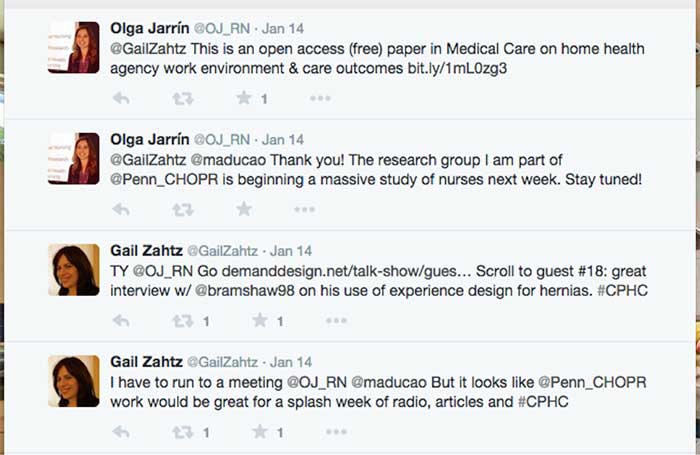
    GailZahtzHealthcareTwitterAdvice

    Example of Gail Zahtz (expert in patient-doctor relationships, offers advice to healthcare industry) collaborating with others in the healthcare industry to make information more readily available.

    5. Measure Your Success

    Although the last step in this plan is to measure your success, it is important to review your achievements on a regular basis and throughout each step of the process. Measure growth and success in the online space by an increase in followers, consistent interaction, and rising mentions across social media platforms.

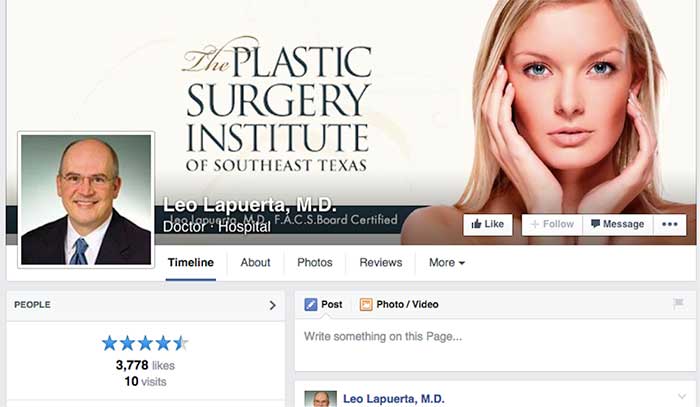
    ThePlasticSurgeryInstituteFacebookLikes

    Example of growth of likes on Facebook using these steps. Prior to this campaign beginning, The Plastic Surgery Institute of Southeast Texas ~500 page likes.

    Consider the steps above when designing your own social media strategy. For more inspiration, check out some of these healthcare companies that have successfully created an empowering online presence!