Tag: Twitter

  • 12 Worst Social Media Mistakes of 2012 (And How to Avoid Them)

    2012 was truly a year of phenomenal social campaigns by many national companies. However, with the good came plenty of bad. Here are some of the year’s worst campaigns, and how you can avoid these gaffes in your own businesses’ online marketing.

    Screen Shot 2012-12-27 at 12.12.27 PM 12. Kansas City Chiefs
    disappointed fan tweeted at the Kansas City Chiefs in September, calling the owner greedy and unethical. Unfortunately for the Chiefs, the fan took a screenshot of the offensive direct message he received back and posted the message to Reddit, where it went viral within hours.

    The main takeaway from this blunder? The customer (or fan) is always right, and you are never speaking for yourself when representing a brand on social media.

    Screen Shot 2012-12-27 at 12.25.05 PM

    11. Progressive Auto Insurance
    The auto insurance company faced a huge Twitter backlash this year after a popular blogger released a post titled “My Sister Paid Progressive Insurance to Defend Her Killer in Court”. Instead of responding to their detractors, the company replied to every tweet with the same robotic response. This, of course, attracted even more negative attention on the social media network.

    Our lesson: if you’re going to respond to negative comments or tweets, take the time to personalize the replies.

    10. Southwest Airlines
    Southwest accidentally overcharged thousands of customers in August. While they acknowledged that their site had experienced some “technical difficulties,” they failed to note that many customers were going to have multiple charges on their credit card statement. Angry patrons took to their Facebook page, where many left displeased comments after being unable to get through to the company via phone. Southwest did not address any of these complaints, and then updated their brand cover photo, which many viewed as insensitive in the midst of an unanswered crisis.

    Be proactive: You should remove any regularly “scheduled” posts during a crisis — angry consumers don’t want to see that you have time to update your status when you haven’t fixed their problem.

    Screen Shot 2012-12-27 at 12.06.52 PM9. American Apparel
    Although they weren’t the only brand to send insensitive messages in the wake of Hurricane Sandy, they are the only one who failed to apologize for their hurricane puns. They sent out a nationwide sale email that included the phrase, “In case you’re bored during the storm,” and was only available in affected states.

    What more can we say? It’s never a good idea to make light of a national disaster in order to move product.

    8. Chick-Fil-A
    The chicken company came under fire in early 2012 for its anti-gay campaign donations. Protesters took to their Facebook page, where thousands left angry comments and disappointed messages for the company. Instead of responding to the comments with their brand page, they allegedly created a fake Facebook account to comment on each attacker’s post. This technique was outed pretty quickly, and viewed with scorn by many.

    How can you avoid this? Don’t make fake profiles! It is far too easy to be tempted by this scheme in today’s digital society, but it is generally quite easy to spot a fake Facebook account.

    Screen Shot 2012-12-27 at 12.15.43 PM 7. KitchenAid
    A common theme in Twitter gaffes this year involved accidental tweets. KitchenAid profusely apologized for its tweet making light of President Obama’s grandmother’s death, but the damage was done. A better question is why anyone would hire someone to manage their brand’s online identity who abbreviates the word “before”.

    Learn from their mistakes:  Keep politics off your company’s account, and make sure you are hiring competent, careful employees to manage your social media channels.

    6. National Rifle Association
    The NRA’s social media strategy seems to have been updated to going dark recently, but earlier this year they faced plenty of criticism. The gun advocates tweeted “Morning Shooters – Happy Friday! Weekend plans?” the morning after the Aurora, CO theater shooting. The tweet drew tons of ire from the press, and may have lead to their silence following the Newtown, CT shooting earlier this month.

    Protect yourself from controversy: Make sure your social media team is aware of national happenings and in touch with local news.

    5. Hitman’s Disastrous Foray Into Social Gaming
    Square Enix’s hyper-violent, edgy Hitman game series has been a huge money-maker for the gaming giant, but their attempts at capitalizing on Facebook gaming proved to be a complete failure on every level of content QA. The Hitman social media game included a variety of motivations for placing a “virtual hit” on your friend, with crass and juvenile reasons such as “her muffin top,” “her small tits,” or “his tiny penis.” Apparently blasting your friend in the face with a sniper rifle just isn’t enough of an insult.

    Our (obvious) takeaway? Including blatant misogyny and insulting content in your endeavors doesn’t make you look “edgy” — it just makes you look like a jerk.

    Screen Shot 2012-12-27 at 10.12.38 AM 4. Olympic Games
    The Olympic committee applied Rule 40 to every aspect of athlete’s lives this year, including Twitter. Athletes stirred up a huge controversy on the social networking site using the hashtag #WeDemandChange2012 over their right to represent brands during the Olympic Games. They argued that they received no compensation for participating in the games, while the organizers got rich off official endorsements. It raised great debate about censorship, and athletes’ right to use social media as they pleased.

    Learn from the Olympics: it’s impossible to censor your opponents on social media channels.

    Screen Shot 2012-12-27 at 10.30.58 AM3. Toyota Camry
    The car giant kicked off the year with a Super Bowl campaign intended to get users to tweet with the hashtag #camryeffect. Unfortunately, their campaign centered around sending spammy tweets back at anyone who used the hashtag, encouraging them to enter a contest to win a free Camry. Their accounts eventually got suspended by Twitter, which drew even more attention since they had already been verified on the social network.

    Our lesson? Even legitimate contests can easily look like spam and offend users. Don’t use organic interaction on your channels as a way to push sales.

    2. Celeb Boutique
    The online clothing retailer tweeted a promotional bit this year using the hashtag #Aurora, which they mistakenly thought had to do with their clothing line. Unfortunately for them, it instead referred to the tragic shooting in a Colorado theater.

    Don’t tweet blindly: This could’ve been easily avoided if their team had simply researched the hashtag before using it.

    Screen Shot 2012-12-27 at 12.42.24 PM 1. McDonald’s
    This year’s worst social media campaign came from the fast food giant, whose #McDStories hashtag was described by Forbes as being a “bashtag”. The twitterverse jumped at the chance to use the branded hashtag, but not to promote the company, but rather to ridicule its food and company principles. Tweets such as “Dude, I used to work at McDonald’s. The #McDStories I could tell would raise your hair” were everywhere on the social media network, and the hashtag is still being used negatively almost a year later.

    Know your brand’s reputation: Encouraging consumers to share stories involving a company that already gets a lot of negative press is probably not the best idea. Stick with campaigns that inspire positive interaction, rather than open-ended tweet requests.

    There you have it, the 12 worst social media gaffes of 2012. Fortunately, there are ways to bounce back even after the worst mistakes. See any that we missed? Let us know in the comments!

  • Taking the Twit Out of Twitter: How To Bounce Back From A Gaffe With Grace

    We’ve touched on the importance of having a good Twitter handle, but just as important is the content of your tweets. While in the past you could expect to be chastised for a misspelling or typo in the classroom, social media platforms like Twitter now make your mistakes public in a way that they weren’t before — and people of the Internet are far less forgiving.

    Twitter blunders can range from comical misspellings on your personal account…

    to accidentally tweeting from an employer’s account.

    Or it could include the posting of insensitive and/or offensive material.

    By the time you realize the mistake (or, as is usually the case, the mistake is pointed out to you), it’s often too late. In a day where followers are aplenty, you often can’t simply remove the gaffe and pretend it never happened. It’s already been viewed and possibly shared by any number of people.

    The best way to avoid these mistakes is obviously by proofreading your tweets, especially if you are acting on behalf of a business. One missed letter could change the entire meaning of a tweet (or even prompt followers to click on an unintended link). Whether you’re representing yourself or a brand, it’s important to put your best foot forward, and it all starts with attention to detail.

    However, if you do find yourself the object of Internet ridicule, there are a few things you can do to smooth over the situation. First, know when to own it. A simple misspelling might not be worth drawing more attention to, but if you accidentally share a bad link or were unintentionally (or intentionally, for that matter) offensive, then you might owe your followers an apology. Feel free to keep it short and sweet: like anything involving Twitter, brevity is key. If offensive material is in the mix, make sure to explicitly detail what you’re doing to remedy the problem and provide a sincere apology (and for Pete’s sake, not a “sorry you were offended” style one).

    Finally, keep up your sense of humor. Whether you accidentally tweeted that you love the smell of your boyfriend’s colon or you simply never learned the difference between you and you’re, have a laugh about it. Besides, it’s likely that you’ll be able to return the favor to the follower who pointed out your blunder at some point in the future anyway.

  • Twitter and Your Business: Harnessing The Goliath

    Since its initial launch in 2006, social media goliath Twitter has expanded into a vital part of our daily lives, 140 characters at a time. The microblogging platform provides a flexible platform for 14-year-old Jessica to share her flirtatious encounter with the boy from 3rd period Science while simultaneously hosting serious discussion and real-time world events. Twitter even feeds our celebrity obsession, allowing fans an interactive look into their favorite celeb’s personal life.

    If your topic is hot enough, this constant influx of viewer traffic translates to millions of potential eyes on your company’s product information. A good example of this was the marital dispute between Oprah-proclaimed “king” of Twitter, Ashton Kutcher (@aplusk), and his former wife Demi Moore (@justdemi). The couple brought their issues to the public eye by posting comments, photos, and replies to both each other and their fans throughout the ongoing affair. While it’s unlikely that small businesses have the starpower of a dramatic split between two A-list celebrities, a compelling storyline and personal interaction can go a long way in drawing attention to your message.

    Twitter has been instrumental is social movements as well. Millions of tweets were broadcasted during the initial stages of last year’s “Occupy” movement, in addition to being an invaluable source of real-time information broadcasting in the wave of revolution that became known as the “Arab Spring” in late 2010. Even journalists began tweeting updates on current situations when access to their media sources was unavailable. Poignantly, renowned journalist and filmmaker Tim Hetherington’s last words were shared via his mobile Twitter app for iPhone.

    Clearly, Twitter makes a dynamic impact on modern-day society. But how can you put this force to work for your business?

    Start with choosing a good handle. This name will be what consumers use to @ reply and retweet your posts. Therefore, the name should adequately reflect your company, as well as be simple and catchy enough for people to remember. Make sure to do your research on this aspect. This name is shown next to your profile, and is typically what directly draws search results. Therefore, you might want to consider looking at which variations of your company’s keywords receives the best monthly search traffic before deciding on a name.

    This same optimization should be used for posted tweets as well. The first 42 characters of each post are devoted to the tweet’s title tag and account name, which directly affect search results. Keep in mind that Google will still index the rest of the characters in the tweet.

    If you provide links in your tweets, make sure that the copy consumers are directed to is accurate, helpful information as well. Good links will be shared across various accounts — but not if viewers are forced to search through your site to find the information they need.

    Using Twitter to promote your business is an easy, free way to bring attention to your company. Find out if tapping into the social media storm that surrounds Twitter could be a beneficial tool in your SEO arsenal—it’s only a click away.

  • Linkedin and Twitter Post Split: The Best Decision for Both

    From the time Twitter uttered those dreaded words to Linkedin — “I want my (API) keys back” — fast forward one month. In its wake, the separation has left the intended higher ad revenues for both, as well as better user engagement for Linkedin.

    An odd couple indeed.

    It was an odd pairing to begin with, a one-off that was a bit out of left field even when Linkedin and Twitter joined forces in late 2009. It was much like that couple in your friends group with different values and nothing in common, but who work… for a time. Linkedin is a B2B paradise with a focus on member engagement, lead generation and advertising. Twitter, on the other hand, is B2C utopia due to the brand awareness and engagement-driving “promoted tweets” feature.

    Linkedin is now being used for what it was initially intended: to build engagement, drive leads and sell their advertising product for companies and job openings. Twitter is now “working on themselves” — and no, this doesn’t mean a yoga membership and a few dates to get over Linkedin. They’re back to the lab and focused on growing their applications.

    All Linkedin posts that were synced to Twitter in the past automatically optimized each post specifically for Twitter. Now, they are completely standard if you share to Twitter. These changes come from Twitter creating more uniform guidelines around API sharing and a more in-depth focus on their own applications and tools. Raven Tool’s Courtney Sieter (who was one of the most engaging and educational speakers of Search Exchange this year) came out with 10 Linkedin Shortcuts for a Post-Twitter World which I found extremely helpful.

    You can still share your Linkedin updates on Twitter, but not the other way around. For some, this is a tragic loss; for other tweeple whose feed represents a birds-eye view of Texts From Last Night’s “Best Ever” category, it’s a hidden blessing (seriously, just un-link your accounts at that point). This severance has also greatly reduced the amount of frivolous and ill-suited posts that used to clog the Linkedin feed.


    Pre-breakup Linkedin Engagement Level:

    Now: Chock-full of Goodness!

    Like that one mismatched couple who had their good years, this split seemed sudden at the time; however, they’re just better off doing their own thing. Both companies made the best move possible to not only grow their own revenue and product, but to separately work on custom initiatives important to their users. Since the split Linkedin has had a facelift, redesigning their look and feel to engage users by keeping them on the page longer. Conversely, Twitter makes 90 percent of its revenue in advertising, and it’s time to focus on themselves. Historically, they were giving too much of themselves through third party applications and at the end they had a smaller piece of the pie. For Twitter, it’s time to stop self-sacrificing and be a little selfish for more lucrative results.

  • Twitter Medium Launch: The Next Big Social Network?

    Last Tuesday, Twitter founders, Evan Williams and Biz Stone of Obvious Co., unveiled a new web platform, Medium, a publishing tool where people can submit photos and text. But this ambitious new publishing tool is still a bit of mystery. Medium is still in its preview stage, and it’s unclear as to what will set it apart from all other web platforms.

    The dynamic duo, Williams and Stone, collectively created Blogger in 1999 and then later the ever-popular Twitter in 2006. Social networks and the way people use them has evolved dramatically since the launch of the pair’s first web platform, Blogger. Williams and Stone have seen much room for improvement in the social networking/blogging world. Stone states in his blog, “We felt compelled to build a content network for the technology age we’re living in now, and we have a vision for what publishing should be.”

    The two have used what they have learned over past 13 years in an attempt to create an “evolutionary leap” in the publishing world. Creating Medium “from scratch,” Obvious Corporation has taken on this ambitious project to better connect people to media as well as prompt people to become more creative with the content they are posting.
    Now, what actually is Medium? What can it do?

    This is where some of the mystery comes into play. Medium has been described as a cross between Pinterest and Reddit and even called a “Frankensteinish PinTumblReddit.” With Medium, people can share content under different categories that show up in visual grid much similar to Pinterest. Williams describes in his blog that Medium allows users to choose their level of involvement, publishing content to “collections;” people can click to indicate if they like something as well as give feedback. Over time, many users will add content to one collection creating an array of different people’s ideas and experiences.

    Okay, so besides the way this new platform is organized, Medium sounds very similar to existing social networking sites. Is Medium really as innovative as Williams and Stone describe in their blog? It’s hard to say, because the platform is still in its beginning stages. Obvious Corp. has launched what they have built so far and seek to learn and make adjustments as they observe users, describing what was launched as only a “sliver of what it could be.” Currently, anyone with a Twitter account can log in and give feedback, but posting content is limited to a small number of people.

    What are your thoughts on Medium? Have Williams and Stone successfully created the “evolutionary leap” they were attempting, or will this new publishing tool fall short of the founders’ expectations?

  • How To Twitter: Using Hashtags at San Diego Comic-Con

    Since I’m an Level 9000 bona fide nerd, I traveled to San Diego last weekend to celebrate Comic-Con. Of course, I took lots of pictures of what was going on when I was there. If you don’t already know, you can join the Twitter party of any major event by using the hashtag associated with it. This year’s Comic-Con used #SDCC — by hashtagging all of my related tweets, I was able to add my feedback to the public conversation about the convention, which anyone looking for the hashtag can read. If one of the people that reads one of my tweets wants to know more about me (or my business!), they might just follow me. What a neat way to network, right? (Don’t forget to check the “wrong” hashtags, too. It’s definitely not called “San Diego Comiccon“, but a lot of people searching the internet think it is.)

    Another key to getting involved in hashtags is trending. On Twitter’s Discover page, you can always see a list of the most popular hashtags for any given day. If you can get enough people talking about your topic, it will trend. While this is no small feat, it does mean TONS of exposure for you … not to mention for your business. If you have a strong Twitter following, it’s well worth it to engage your user base and ask them to use the hashtag if you are trying to promote an event. The best part about promotion like this is that it’s completely free, and you’re using one of the most popular social platforms out there today. What a deal!

    Of course, hashtags aren’t the only way to show your participation in an event. In the last few years, Tweetups have been popular, which are basically in-person meetups of your Twitter followers. It’s a great way to unify people and allow internet friends to meet in real life. It’s also an excellent way to meet business contacts.

    While hashtags like this are priceless way to be included in any event’s buzz, there’s no reason you can’t create your own as well. Geek goddess Felicia Day has put her own Twitter to work in this way, promoting several events, including her own @GeekandSundry project. Since Day has well over a million followers, plenty of people are listening.

    So how do you use Twitter hashtags on your own to best take advantage of the trend? If you’re at an event, make sure to find out what the hashtag is (and make sure its the right one!). Once you do, make a point of adding it to the end of all your tweets. That way, when people click the hashtag, they will see what you have to say along with everyone else.

    Want to create your own hashtag for an event? Make sure to keep it short. The easier it is to type, the more likely people will use it. Up to the date of your event, announce the hashtag and ask your followers to retweet it. That way, once your event begins, they will already know what to expect. If you’re lucky, they’ll use it too, and the more of them that do, the closer you are to that sweet high of a trending hashtag.


  • Twitter Ditches LinkedIn, Says It’s Not Personal

    twitter linkedin split
    I'm a fan.

    “It’s not you. It’s me.” That’s what Twitter proclaimed to LinkedIn this morning, ending a two-year partnership between the micro-blogging giant and the social network site for job seekers. Breakups are hard to do, as the saying goes, but according to LinkedIn, they didn’t even care in the first place.

    “If you had previously synced your LinkedIn and Twitter accounts, and selected the option to share Tweets on LinkedIn, those Tweets generated from Twitter will no longer appear on LinkedIn,” says Ryan Rolansky on the official LinkedIn blog. “There will be no other changes to your LinkedIn experience.”

    In other words, you can still post updates to Twitter from LinkedIn, but not the other way around. ‘Cause Twitter totally blocked LinkedIn, bro. So uncool.

    Jokes aside, Twitter has been getting pretty fussy lately. Developers using their application programming interface (API) have their work cut out for them — it’s notoriously tricky to handle — and the initial Spartan interface has gotten more and more tricked-out over recent months. With all these new bells and whistles, Twitter wants its branding to remain as consistent as possible, which is why sites like LinkedIn are getting kicked off the bandwagon.

    While Twitter may seem like an infallible giant to the hyper-focused social media contigent, the truth of the matter is that most people are reading it through a variety of secondary services. If you connect your Twitter stream to Facebook, for example, you can read it all there at the same time as you read about Aunt Margaret and her eighteen cats. So why go to the source site when you can get it all in one place?

    Even though the service became famous for its brilliantly minimalistic-efficient service, the company seems determined to expand. Twitter Cards, a new option that offers partner websites a way to show off more content, seems interesting, but not necessarily what I want out of Twitter as a user. Just give me my feeds in Tweet form, let me post dumb photos, and I’ll be fine. Is the majority of the user base really craving more than that? Or is the thrust of Twitter’s new direction less about what the general consumer wants, and more about how Twitter can serve as a business tool?
     

  • Where Do We Get Our News — the Source of Social Media or Social Media as Source?

    It’s always up for debate on what’s “newsworthy.” In the time before computers, newspaper and newscasts were the ones that dictated what was important in the world.  What they considered “news” and a “must-know” became what was published and what we did know.

    But now things are different — very different.  With social media sites like Facebook, and Twitter, we are seeing more and more that the applications of social media as news source are quickly growing. 

    Let’s take the recent death of singer Whitney Houston, for example. Within the first hour of her death, over two and a half million people tweeted about the tragic story, averaging about 1,000 tweets per second.  The traditional news outlet will not go live about such a story without proper verification, which takes precious time. By the time those outlets did go public, the story was “old news” to these two and a half million viewers: an entire 42 minutes late, in fact. Twitter was indisputably the first one to the finish line.

    This is a prime example of the growing collective consciousness caused by these sites. Think about how many followers each person may have, then think about how rapidly a story as gripping as a long-beloved singer’s tragic death can spread from person to person. While this system has its advantages in quickly disseminating stories, though, its speed can be a double-edged sword; Twitter rumor-mongering can spread like wildfire, with false reports of celebrity deaths and other incidents gaining legs where traditional journalism’s insistence fact-checking would have prevented the publication of such a story.

    Other “newsworthy” incidents that spread like fire at a gas station include the death of Michael Jackson, which averaged at about 493 tweets per second in 2009.  The announcement of Grammy-winning chanteuse Beyoncé’s pregnancy had one of the highest ever with 8,868 tweets per second. Now let’s take something like the death of Osama Bin Laden, who is obviously not in the entertainment industry. This incident let to an average of about 5,000 tweets per second. The list can go on.

    Can you imagine if another war would to start?  How quickly the world would know.  If Twitter was around in the 60’s, how fast would people Tweet about the death of JFK?  The landing on the moon?  The fall of the Berlin Wall? Single-source outlets and the “gatekeeping” of which stories are publicized are obsolete: all people need is a computer or a cell phone to have the entire web, with its intricacies and viewpoints and thousands upon thousands of stories at their fingertips.

    These sites are not only used for the quick spread of breaking news, but for event gathering as well. For instance, the Occupy Wall Street movement seems to have popped up overnight across America.  How did they do it?  It wasn’t thousands of dollars of advertising: Occupy Wall Street was a completely Internet-based movement.

    Using a great tagline, “We are the 99%,” Occupy Wall Street used tweets, Facebook events, and Youtube videos to get its message across.  The effect of such a movement will definitely go down in future generation’s history books.

    So let’s look at this from a business point of view: with the way that social media is evolving, how can marketers get themselves into the mix?  The answer is that they must find a way to get people to tweet, Facebook share and interact with their product, service, or brand the same way the social media consciousness does for events and topics it finds important.

    This is the future of getting your news heard and many successful businesses are already on top of this.  They’re using these social media networks to get themselves talked about.  Letting the consumer be the advertiser.  The more a business’s product or service is shared and spoken about via these networks, the more brand targeting and awareness they get.

    For example, on October 4th, 2011, millions tweeted and posted about the iPhone 4S.  Over seven thousand people alone posted something about Siri, the new voice assistant application.  Yes, Apple spent millions on advertising its obvious success — but a good chunk of the advertising work was being done for them by the social network community.

    So where can this go?  A stronger bond between companies and customers or celebrities and fans?  A greater union between the citizens of Planet Earth?  Time will tell, but the most important thing is to keep sharing, keep tweeting, keep posting, keep your place in social media — and the social web will evolve on its own.

    Right now, we are in a crucial time in human communications, when the entire world is more connected than ever before and information spreads at the blink of an eye.  Click like, share this post, or leave a comment — you’ll never know who you’ll connect with!

  • Twitter SPAM can get you BANNED!

    No one likes SPAM! I’m not talking about the canned meat product. I happen to like the stuff myself. It reminds me of camping when I was a kid. What I am talking about is that which clogs our inboxes, dilutes and degrades the integrity and usefulness of … well, pretty much every new form of communication that arises.

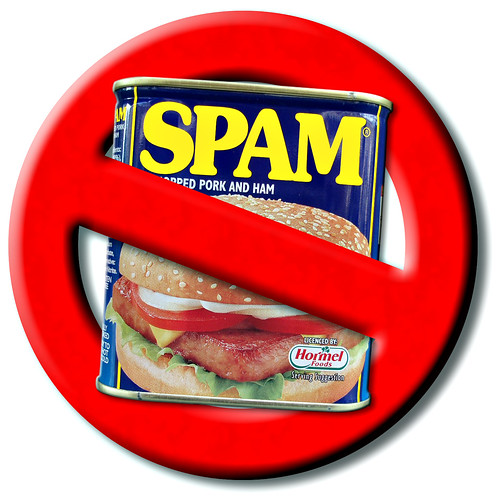
    No Twitter Spam

    In Twitter’s blog post “State of Twitter Spam” they identify

    Twitter SPAM as “behaviors that range from insidious to annoying. Posting harmful links to phishing or malware sites, repeatedly posting duplicate tweets, and aggressively following and un-following accounts to attract attention”

    Their progressive and aggressive approach to taking down the spammers has been a good fight. I’ve had numerous odd accounts follow me who seems to disappear due to “suspicious behavior” before I even got around to seeing who it was. I don’t know about you but I like that, a lot. It gives me confidence that I won’t be completely inundated with crap – I mean spam.

    Some forms of Spam as identified under Twitter’s rules are (as quoted from their forum):

    • If you post duplicate content over multiple accounts or multiple duplicate updates on one account;
    • If your updates consist mainly of links, and not personal updates;
    • If you repeatedly post other users’ Tweets as your own;
    • If you have attempted to “sell” followers, particularly through tactics considered aggressive following or follower churn;

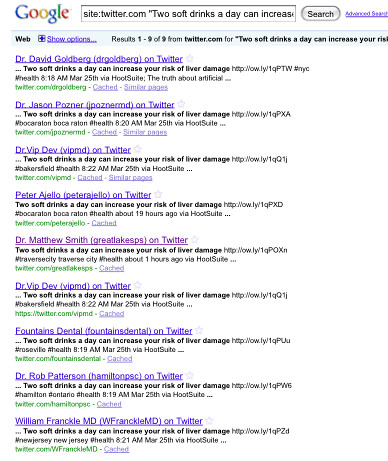
    Here are a few perfect illustrations of Twitter SPAM “duplicate content over multiple accounts”

    Twitter Spam Example

    and the next one ….

    Twitter Spam Example

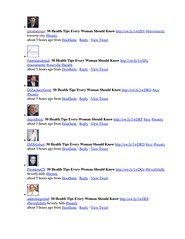
    And another….

    Twitter Spam-50 Health Tips Every Woman Should Know

    And another…

    Twitter Spam - Best Hair Accesories

    If you were to partake in this sort of evil for yourself or on the behalf of clients, the consequence could be an immediate termination of the account or accounts in question. 

    Obviously, as marketers we need to consider the consequences of what we do for our clients. Ignorance of rules and policies does not exclude anyone from the repercussions of not following or understanding them.

    If your client’s account is terminated, you put them at risk. Your efforts to create your Twitter brand awareness and embrace their customer base will alienate those customers and tarnish their name.

    In the least, a lot of time and effort is lost. All of your building then has to start from over step one. If you did this in a client’s name, I would say it’s a safe bet their Twitter rebuilding efforts will be with someone else.

    As users and viewers we can practice vigilance. If you see this type of behavior, flag it! Let Twitter know. If you’re not sure how, find out here. By all means, don’t follow the links or buy the products. Sometimes it’s hard to spot, but it’s important to be prudent in your clicking and buying.

    Remember, every action is a vote. Don’t vote in favor of spam …

    … unless it’s the salty, occasionally delicious, when-sitting next-to-a-campfire meat product.

    Related reading:

    Internet Marketing for Plastic Surgeons – Less Scary than You Think

    You Can Buy Brand Love on Twitter?,

    The Secret of Small Business Social Media – You Must be Present to Win

    (Thanks for the pics! “hegarty_david” and “pabo76“)

  • You Can Buy Brand Love on Twitter?

    Need Twitter Followers for Your Client’s Brand? Buy Quality Twitter Followers Now!

    This is a Twitter Post If this statement appealed to you, you want to read what I have to say. If you read this statement and wondering what’s Twitter, stop reading right now. I’m serious – Go! This post isn’t for you. This post if for the Twitter marketing elite – the Twitterati.

    This post will reveal the TRUTH about buying Twitter followers. The TRUTH is…

    (more…)