Tag: Twitter

  • 5 for Friday — Links, Stories, & Posts for Your Weekend

    five1. Google Acquires Waze to Improve Local Search Experience – Brafton

    On June 13, Google announced that it had acquired Waze, a social-sharing platform that uses crowdsourcing to gather real-time information about road closures and traffic jams to give mobile searchers accurate, up-to-the-minute directions. The deal will provide new data for Google Maps that might improve local search capabilities and help fuse online content marketing with in-store sales.


    2. Apple Makes Bing The “Default Search Engine” For Siri – Search Engine Land

    Apple announced this week that when iOS 7 comes out this fall, Siri will have a new integrated web search feature powered by Bing. This update could go a long way toward making the voice activated virtual assistant a better web search option for iPhone users, and could potentially drive a lot of new traffic to Bing.


    3. Twitter Offers Free Analytics For All Users – Search Engine Watch

    New analytics are available on Twitter to help users identify trends in their accounts without having to go to a third-party tool. While the data is basic, it may provide marketers and small businesses with valuable insights into the behavior of their followers.


    4. Marketers See Big Data Analysis As Critical Skill for Success – Marketing Pilgrim

    A recent study shows that the “ability to use data analysis to extract predictive findings from big data” is the most prized skill for a marketer to have. You might be surprised by which skill ranked second. Overall, the list shows that some “old school” skills still have a lot of value.


    5. How to Build Links to Your Blog – A Case Study – Moz

    Proper link building is a key ingredient in developing a successful blog. Paid advertising and social media strategies will only take so far. This author shares the story of how he got the links he needed to get his travel blog out to a wide audience.

  • 5 For Friday — Links, Stories & Posts For Your Weekend

    Screen Shot 2013-05-03 at 2.46.16 PM (2)1. HTML5: An Essential Weapon for SEOs – Search Engine Journal

    The new HTML5 is set to receive a major upgrade and there are 5 key SEO innovations coming :

    1. Nofollow’s little brothers and sisters
    2. Alt-text gets some much needed support
    3. Identifying the most important links on your page
    4. No more Flash for videos
    5. AJAX gets search engine friendly


    2. Which Finds the First-Ever Website Better, Google or Bing? – Search Engine Land

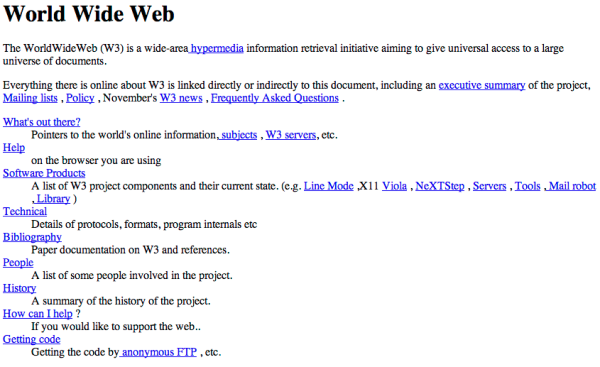
    May 1, 2013 was the 20 year anniversary of CERN making the Internet available to anyone. Using today’s technology, which search engine do you think would be able to find the site considering that neither engine existed back then?

    This is what the world's first website looked like.
    This is what the world’s first website looked like.


    3. The Complete Guide to Reconversion – SEOmoz

    Getting new customers is great for any business, but the real challenge is retaining your existing customers. This 5 chapter guide explains why it’s important to focus your energy on remarketing and reconverting.


    4. University Study Shows Happy News Leads to More Twitter Followers – Marketing Pilgrim

    Keeping your tweets positive  and informational will lead to an increase in followers. This article highlights the do’s and don’ts of tweeting


    5. Meet Vine’s Most Creative Stop-Motion Animator – Mashable

    Twitter launched Vine on January 24, 2013. On January 25th, Khoa Phan created his first vine…and the rest is history. Check out his creative and colorful stop-motion vines in this article.

  • 5 for Friday – Links, Stories, and Posts for Your Weekend

    Round 1-065 Ways To Pay For Twitter Exposure – Crazy Egg

    We’re all used to the ads on Google and Facebook, but paid campaigns on Twitter are still unfamiliar for many businesses thinking about a paid advertising campaign online. Here are five different methods to get your tweets seen by more people.

    Digg Banned From SERPs (Updated) – Search Engine Journal

    Here’s a doozy for you! Last week, popular social bookmarking site Digg.com disappeared from Google’s SERPs! Read for the full report from Search Engine Journal.

    Three Easy-to-Make Content Marketing Blunders – Blue Glass

    Here are three big content marketing blunders that companies may find themselves falling into. This is a good guide if you find yourself getting stuck.

    How Quick Sprout Gets 176 Comments Per Blog Post – Quick Sprout

    This is an interesting and engaging article on how and why blogger Neil Patel gets comments on his blogs. His methods are tried and true and it’s interesting to watch him prove his points in the comments below!

    Local Search Optimization, It’s All About Timing – Search Engine Journal

    Enhancing your local search presence is one of the most important things a business can do to begin to build authority in the eyes of search engines, including Google. Here’s an easy guide for anyone looking to enhance their local search presence – no SEO knowledge required!


  • 5 Tips for Proper Hashtag Usage


    I love social media. I also love staying organized. The great thing about hashtags is they bring the two together. For those who don’t know, hashtags are a way to categorize a post on social media platforms, like Twitter and Instagram, by tagging it with descriptive words or phrases. Hashtags are also helpful for businesses running specific campaigns to monitor what followers are saying about their company. Although we all love reading about the latest social media blunders, we never want to fall victim to them ourselves. That is why I’ve compiled a list of questions to ask yourself when choosing a hashtag.

    1. Is this hashtag trending?

    Trending hashtags are a great way to get your message out there, and even help you brainstorm interesting, relevant tweets. If you can seamlessly incorporate your message with a trending topic, others will be able to see your post when browsing that hashtag. Although trending topics are a great first step in choosing a good hashtag, you should be careful to understand why the hashtag is trending. This takes me to the next question…

    2. How is this hashtag currently being used?

    Before hitting the submit button, you absolutely want to see how the hashtag is being used. Learn a lesson from Entenmann’s. Back in 2011 when Casey Anthony’s trial ended with a verdict of “not guilty,” Entenmann’s tweeted the following using a trending hashtag:

    Angry, Entenmann’s followers made their disapproval known causing the company to delete the message and issue an apology.
    3. Is this hashtag concise, yet descriptive

    You want to make sure your audience can read and understand the hashtag, whether you are posting for a business or your own personal account. This is important if you are a business trying to start a hashtag campaign, like Dominos or Edge shave gel, or simply telling friends about your new shoes. While it may seem funny to have a long hashtag (example: “Gabrielle stole my favorite sweater AGAIN #mysisterdrivesmecrazy”) it is not easily read at first sight. One way to make hashtags easier to read it to capitalize the first letter of each word in the hashtag. However, if you find your hashtag looking something like an excerpt from a Charles Dickens novel, you should probably just shorten the whole thing altogether. If your hashtag is easily read by your audience, it has a greater chance at being effective.

    4. Is this hashtag too broad?

    While it may be topical to your message, broad hashtags are generally not searched. If you are a business, ideally you would like your hashtags to be interesting and search-worthy, as this could bring new eyes to your message. If your hashtag is not searched, it will not help you reach new audiences. Another problem with broad hashtags, for both business and personal profiles, is that they do not add additional value to your message.


    In this example, the hashtag #hat does not offer any additional insight, and causes the tweet to become repetitive.

    5. Does the place I am posting to recognize hashtags?


    As funny as it may seem, it is important to know that the hashtag you send your friend via text is not recognized online. That being said, here is a list of a few places that do and do not recognize hashtags.

    These places DO recognize hashtags
    -Twitter
    -Instagram
    -Google+
    -LinkedIn
    -Pinterest

    These places DO NOT recognize hashtags
    -Text messages
    -Facebook (although they are working on incorporating hashtags now)


    Whether your posts are seen by millions of viewers or just your closest friends, the important idea here is to think before you post. Let’s make 2013 a year with no social media mistakes!

  • 5 for Friday — Links, Stories, & Posts for Your Weekend

    Round 1-101. Top 4 Strategic SEO Trends to Watch for in 2013 – Search Engine Journal

    Don’t get lost in the mix! Take a broad look at your organization to make sure you’re producing top quality content, including social media, making your site mobile friendly, and understanding the knowledge graph.


    rss2. Google Announces Retirement of RSS Reader – The Content Standard 

    Google has just announced that on July 1, 2013 Google Reader will retire. This is part of Google’s plan to remove irrelevant and no longer useful services. If most of your audience is using this to get your updates, now is the time to transition them to a new service.


    twilert-1

    3. How To: Use Twitter as a Listening Station – Small Business SEM

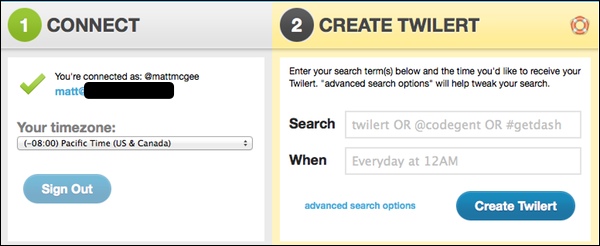
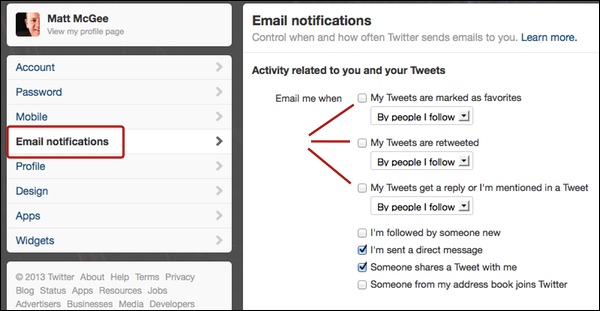
    If being active on Twitter doesn’t seem to be producing the results that you’re looking for, then try being passive by listening first and then responding. Twilert allows you to create timed alerts for when certain phrases, handles, or hashtags are used. If that is too much, you can always go the traditional route by creating email notifications through Twitter itself.

    twitter-alerts


    4. Mobile Searchers Do It at Night – Marketing Pilgrim

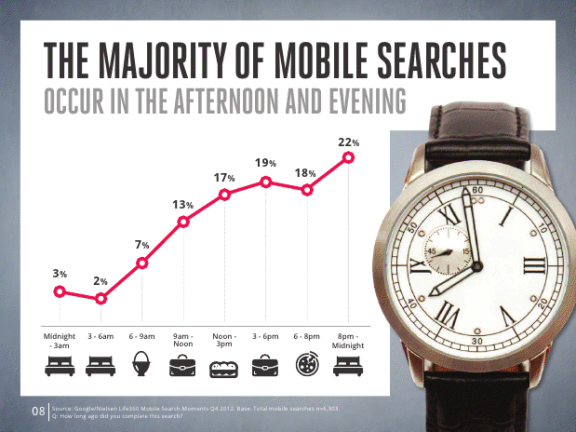
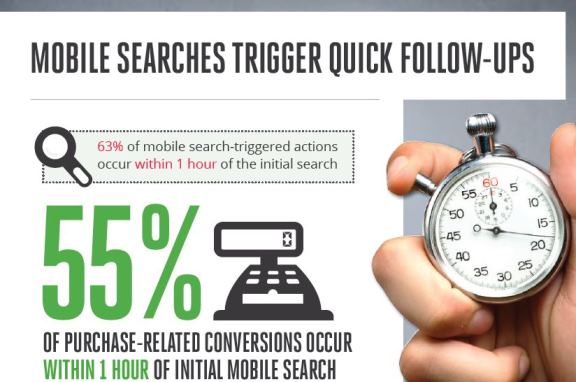
    Google and Nielsen recently put together a new report using data from 6000+ mobile searches to discover how it drives conversions. Did you know that 77% opt to use their mobile over a PC? So it’s important to make sure that you’re showing up in the first few results of a search otherwise you’ll never even make it onto their mobile screen.

    mobile-search

    mobile-followup

    5. Deadeye Keyword Research: Advanced Tips for Choosing the Right KWs from #SMX – aimClear Blog

    The better the research, the better the keywords…even if Google stopped providing all referring keywords in analytics for “privacy reasons.”

    privacywhat

    Key Relevance’s Christine Churchill provides some alternatives to gathering this information because as Avalaunch Media’s Matt Siltala stressed, “you can’t skip over keyword research. You can’t get annoyed with it. You HAVE to do it.” Read on for more about keyword intent and keyword research tools.

  • New Orleans: A Growing Tech City

    For those of you who don’t know, before Hurricane Katrina ripped through the Gulf South, New Orleans was on a steady rate of decline. However, the city we love to call home here at Search Influence is in the middle of a major renaissance. News sources across the nation have reported New Orleans is the fastest growing city in America.

    • Population in April 2010: 343,829
    • Population in July of 2011: 360,740
    • Change in population: 4.9 percent (national average 0.73%)
    • Unemployment rate May 2012: 7.2%
    • Unemployment rate December 2012: 6.8 % (national average 7.8%)


    With all of these growth changes and increase in jobs, New Orleans has also become a hub of entrepreneurial activity. Forbes recently said New Orleans is one of the biggest brain magnets in the country, attracting young, innovative minds. It is reported that 427 out of every 100,000 adults started up a new business in the New Orleans metro area, which is 40% above the national average.

    Many of these entrepreneurial efforts are tech-based. Companies such as Idea Village and LaunchPad have helped young tech and digital media entrepreneurs start their businesses, giving them advice, a place to work, and grants. Marketing firms, apps, and software are all being developed in this city, which is quite shocking considering this has always been a city known for being 10 years behind everyone else. Kickboard, started by Jennifer Medbery after teaching at a charter school, is software that provides a centralized location for teachers to record their students’ progress.

    Even Search Influence was founded during Katrina’s aftermath, and along with this city, we have grown at a rapid rate. In 2011 we made it on Inc. 500’s list of fastest growing companies, and we are now the largest online marketing firm in New Orleans. Digital media has many different facets, and we are proud to offer SEO, social media, and paid search services.

    New Orleans institutions such as the Audubon Institute, Naked Pizza, and Southern Costume Company have integrated the digital space into their marketing efforts. Naked Pizza tweets on a regular basis, and they have truly embraced pop-culture (I strongly encourage you to watch their Harlem Shake video).


    The Audubon Institute and Southern Costume Company have opened their marketing efforts to include social media promotions and building their brand on Facebook.


    Digital Media, online marketing, and social media have become vital factors for today’s businesses to succeed. It’s all about the conversation and being transparent with your customers. We are so happy to report that our city and businesses are flourishing due to technology and media advancements.


  • 2013: The #YearoftheTweet

    Tweet-of-the-yearAlthough some consider Twitter the redheaded stepchild to the social media behemoth that is Facebook, brands are beginning to recognize and harness the “real time value” of Tweeting. No one can deny that Twitter is growing in both users and usage. The number of tweets per day has increased from 95 million in 2010 to a staggering 340 million per day in 2012, that’s 236,111 tweets per minute! Brands have started advertising on the fly, attempting to engage and interact with their audiences via #Twitter.

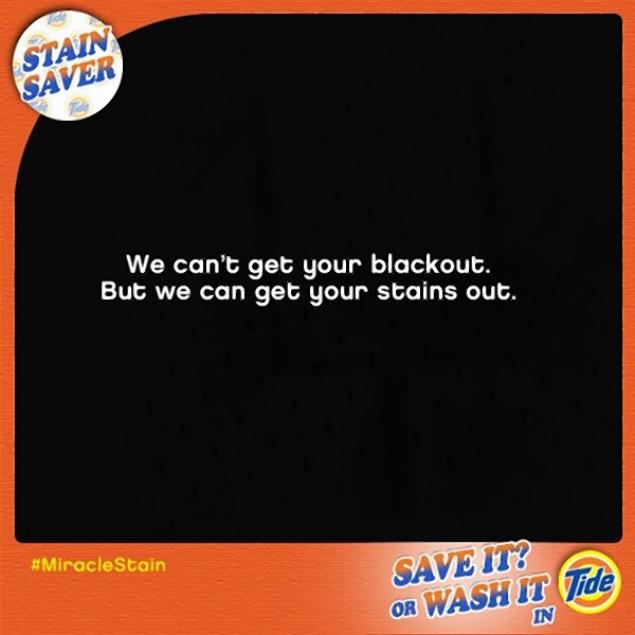
    A picture may be worth 1,000 words, but a tweet is worth 140 characters, and brands are capitalizing on spontaneous televised hiccups (such as Blackout Bowl of 2013) and classic entertainment award shows (like the Oscars). This type of instantaneous and off the cuff marketing is a new and exciting frontier in the advertising world. Many brands, such as Oreo and Tide, dedicate entire teams to audience interaction via social media and specifically Twitter. The relevance and quick wit both brands displayed during the 2013 Super Bowl black out generated thousands of retweets and responses in an organic and viral way.

    dark5n-5-web


    Seeing how far brand advertisements have progressed in the Twittersphere, it’s easy to forget that the first hashtagged Super Bowl spot appeared on television only three years ago. The 2013 Super Bowl saw over half of the ads display a hashtag call to action. Yet, Twitter isn’t only for the young and hip brands. Older skewed organizations, such as AARP, are also taking advantage of the social site. AARP used the State of the Union address and appropriate hashtags to lobby for retirement protection. At one point, President Obama singled out a 102-year-old retiree in the audience, Desiline Victor, and AARP immediately began Twitter promotions on Desiline’s name.

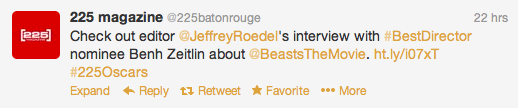
    Local brands fear not! While we all saw how JCPenney had a strong Twitter presence during the Oscars,  Twitter’s real time advertising isn’t just for the big boy advertisers. Local businesses customized their hashtags in order to stay relevant within their geographic market. For example, Baton Rouge tweeters used #225Oscars during the awards ceremony, and the Baton Rouge magazine, 225, used the opportunity to promote an interview with an Oscar nominee found on the magazine’s web site.

    Screen Shot 2013-02-25 at 3.21.35 PM

    As a brand looking to capitalize on your tweeting demographics, it’s important to keep in mind a few key points about the platform. It’s important to tweet about relevant events or topics, and timeliness is of the upmost importance. Witty observations or comical tweets may generate the most audience interaction, and including a link to your site will generate web visits. Marketers are still analyzing whether these viral tweets deliver revenue, but the brand awareness of a well-crafted hashtag may just be priceless.

  • Surprise Oscar Winner: jcpenney’s #YoursTruly Real-Time Marketing Campaign

    During this evening’s 85th Academy Awards, jcpenney used real-time marketing to capitalize on our here and now, instant gratification tendencies by launching a strong activation through social media. The goal of the Oscars campaign was to grab new viewers and continue to update their more-than-outdated, less-than-classy image.

    To begin, their Twitter page, much like many Oscar attendees, put its best face forward with a glitzy makeover. Before this evening it’s very likely that you, your wife, girlfriend, or 20 something daughter certainly didn’t think of jcpenney as fresh, on trend, glitzy, luxurious, or modern. Some of you may not have even thought it was still a surviving entity.

    Well, as long-time believer that shopping at this store was calm, easy, and reliable, I have been having so much fun spreading the news of the come-back-company. About 15 months ago, Ron Johnson, the man who made the Apple Store the addictive adult version of a candy store, stepped in as CEO of jcpenney and vowed to not just turn the company around, but completely transform it.

    There has been a slow, but certainly not subtle, roll out of a new store layout including mini brand shops, major tech updates and store renovations, and even a dramatically new “everyday low price” structure that so strongly alienated long-time customers and enraged critics that jcp back-pedaled and brought back the idea of traditional “sales” within months.

    Throughout this time, Johnson had a flurry of critics but I always believed and still do believe they will succeed at their task of complete rebranding, taking the “affordable luxury” phenomenon to the next level.

    Their most significant splash into the homes of their target demographic? Oscars 2013, when the company our children will know as “jcp” and my mom will always call “Penney’s” launched a feel good real-time cross-channel campaign that spanned from our televisions to our tweets.

    In the commercial that aired this evening, jcp writes us a personal love letter stating, “Dear America, you deserve to look better and live better.”  Why wouldn’t I want to shop somewhere that tells me I deserve more!?

    The Key Components of the Real-Time Marketing Campaign:

    In addition to appealing to our egos, let’s discuss the other aspects of the award-winning combination that made this campaign effective.

    On-Time and On-Point Tweets

    Early in the evening, @jcpenny tweeted a back-stage peek inside their social media command center. Many team members were on hand, watching the show on a larger than life projector, all well-situated for quick tweeting and ad targeting. I’m sure they were ready for quick fire graphics in case they needed to step up to the plate to try to out-Oreo Oreo, who gathered with their marketing team to attempt to re-create the magic of their Super Bowl 2013 social media win.

    jcp Oscars 2013 Social Media Command Center

    Demographically Targeted Twitter Ads

    I am clearly in jcp’s target demographic. As I launched Twitter, this was the first thing I saw:

    Even if I had not been popping open my computer to pen this post on the very campaign that was being targeted to me, I, or those out there with similar demographic profiles as me, would have been pulled into the well composed and thought out campaign.

    Shareable Graphics

    The rapid fire team rolled out right-on-time, clearly pre-planned graphics that tied in with the “Dear America” theme all while promoting niche, desirable products.
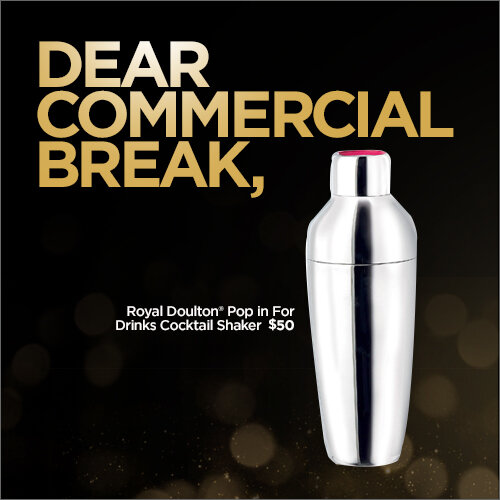
    jcp Oscars 2013 campaign - Dear Commercial Break,  jcp Oscars 2013 Campaign - Dear Red Carpet  jcp Oscars 2013 Social Media Campaign - Dear Plunging Necklines  jcp Oscars 2013 Social Media Campaign - Dear Mani-Cam

    Strong Television Placement

    Not only was the “Yours Truly” spot placed early in the broadcast, it had all the makings of a 90 second must-keep-watching commercial: the “who’s ad is this” mystery, a montage of memories, a cinematic soundtrack, clever word play, and continuing bold use of text throughout. All ending with the most important piece of the pie…

    Calls-to-Action

    If you happened to catch the ad, you saw the strong close driving you to jcp.com/yourstruly, a buy-now optimized mini site that directed you straight to the promoted products. In case you may have landed straight on jcp.com, they had a nice reminder of the evening’s festivities and invited all their new admirers to join them on Twitter.

    The Free Prize Inside: $100 Gift Cards Galore

    For many of those that jumped in the conversation, @jcpenney quickly returned their tweet with a $100 gift card. 2 big benefits here: 1. getting new customers into the store to see the new changes 2. creating social buzz. If you were given $100, you would tweet it, wouldn’t you?

    That’s right. Congratulations, jcp. Although you didn’t have to try too hard here as I’ve always been a fan, I am sure you have turned a number of heads this evening on the red carpet.

    You have our attention, and now, we’re tipping our hats to you.

    Yours Truly,

    plmk

  • TV’s Next Social Media Superstar Is…

    In 2012, the number of people using social media grew to 1.43 billion users. This stark increase in tweeting, posting, and pinning has grabbed the attention of traditional marketers – most notably: Television. TV shows are not only leveraging social to increase brand awareness and interactions but to increase ratings. While some shows are “duh, winning”, there have been some shows that are just doing it all wrong. This post is going to take a look at my winner and loser of TV social media in 2012.

    Winner: RuPaul’s Drag Race

    Before everyone started mopping their marketing, THE BEST REALITY SHOW EVER, RuPaul’s Drag Race, realized the importance of social media. In 2011, they started watermarking the Twitter hash tag #DragRace during the show. This humble hash tab would eventually birth such memorable hash tags as:
    #SnatchGame
    #TheLibraryIsOpen
    #RuPocalypse
    #RuPologize

    And my personal favorite…

    #indabuttru
    “That’s #InDaButtRu”

    Drag Race’s use of hash tags is genius because it encourages interesting conversations between fans and generates social buzz in real-time.

    But of course like any good lover, RuPaul’s Drag Race is versatile. The show encouraged viewers to vote on Twitter and Facebook who would be the winner at the end of the season. By including viewers on multiple social media platforms in the decision making process, Drag Race season 4 finale was up 33% the previous year’s.

    In a sentence: RuPaul’s Drag Race really know how to burn rubber get the most out of its social media MPG and leave others in the dust.

    I apologize for the racing puns…

    Loser: America’s Next Top Model

    RuPaul isn’t the only supermodel of the world using social media. In an attempt to generate its former success, America’s Next Top Model decided to include a “social media score” in their 19th cycle. While I’m not sure how one averages catty comments about terrible makeovers and catalog poses, ANTM has managed to get its remaining audience more involved. Unfortunately Top Model saw their ratings take a tumblr (urgh more puns) down to 1.22 million viewers.

    It’s not surprising that ANTM’s attempts at social media went so poorly. If you are going to declare the new judge is “social media”, it should actually be social media. You know, Twitter, Facebook, etc. Instead Ty-Ty put together a small select group of viewers and passed this off as social media.  This bothers me (and about 1.22 million teenage girls) for three reasons:

    1. Being selective on whose opinions matter isn’t social, its fascist. Not that I expect Tyra to know the difference, you can bank on that (oh god another pun).
    2. The comments from social media were filled with so many Tyra-isms you would think they were excerpts from Modelland and instead of real people.
    3. A numeric voting system used to vote on physical appearance isn’t social media, it’s hotornot.com

    Also Bryanboy was a poor choice to present “results”.  His delivery was Sahara (RIP). The numero uno rule of social is to be sharable (i.e. fun, interesting, and outlandish) which BB simply was not.  This media boner could have actually worked if you had one of the Jays – it would have at least been entertaining to watch.


    I think calling it social media was Tyra’s way to continue to live in her fantasy world that her show is relevant and people are still hopeful it will produce a supermodel.

    Hate to do this Tyra but here is what social media is really saying about your show:

    I think the lesson TV shows should learn is social media is like ballroom culture. If you are serving “realness,” the children will live and you will be legendary.  You can’t make grandiose claims about the viewer having control over programming when in reality the show has been taped, shipped, and ready for airing months before the premiere. Good or bad, encouraging discussion on social media will reward your show and organically grow your audience, just look at GLEE.

  • Super Bowl Social Media: A Touchdown Pass for National Brands

    Super Bowl advertising spots are one of the most sought after 30 seconds in television each year. With the event having an estimated viewership of well over 110 million, many national companies view the hefty $4 million dollar price tag as money well spent. In fact, the New York Times reported that the ad spots were already sold out on January 8th, almost a full month before the big event. In recent years many companies have amped up their traditional television campaigns to include YouTube sneak peeks, dedicated websites, hashtags, Facebook campaigns, and apps designed to garner appeal and catch their audience’s attention on the second screen. Social media is a growing factor in many major corporation’s 2013 Super Bowl advertising campaigns, which is a huge change from the surprise element and secretive campaigns of years past.

    The YouTube teaser video is a popular move by many major national brands. This year, one of the most viral involves model Kate Upton “washing” a Mercedes-Benz, a clip that has already been viewed by over 5 million people. The video directs the audience to the Mercedes USA Facebook page, where more teaser clips of their Super Bowl promo are linked. This method of social integration leads to viewers interacting with the brand on several different forms of media, all well before the Super Bowl kickoff, and creates a great deal of buzz for the 30 second ad spot.

    Coca-Cola was the first brand to launch their Super Bowl campaign this year, which features a gamified “choose your own ending” storyline that asks viewers to vote on the official Super Bowl commercial. Like the Mercedes campaign, Coke has also expanded the storyline on their Facebook page. With polls, character bios, additional video clips and more posted on their Timeline, Coca-Cola also seeks to engage with their audience in an unpaid, organic manner. The use of polls and competition between the three video endings adds an additional level of interaction and has fans gunning for their favorites.

    Other companies have taken a social approach to the entire advertising process. Popular deodorant company Speed Stick ran a contest through its Twitter profile with the hashtag #handleit to solicit pitches for its very first Super Bowl spot. The winning tweets are all already up on Tongal and lead to a funny and viral campaign for an everyday product. They’ve tied the campaign in to their Youtube Channel, which features dozens of “Handle It” moments. It’s definitely a nontraditional move to release a full Super Bowl ad ahead of the big weekend, but it works for Speed Stick’s entirely social campaign.

    Major corporations’ Super Bowl social media campaigns extend their advertising buzz well beyond the big game. By harnessing organic user interest on multiple channels, the expense of a 30 second ad spot seems almost worth it. Do you like the modern trend of brands releasing their Super Bowl commercials ahead of the big game? Let us know in the comments!