Tag: Twitter

  • Five for Friday: Twitter Trends, #Mobilegeddon, the State of Moz, and More!

    1. Twitter Is Rolling Out Trends with Descriptions on the Web – Marketing Land

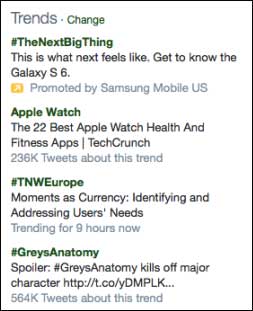
    TwitterTrendsListImageIn an effort to improve engagement with its more casual users, Twitter has made multiple changes to its platform. The most recent has just rolled out on mobile and web, offering descriptions and metrics on trending topics. Now, you can see what a trending topic means and how many other users have shared it.

    2. Moz’s 2014 Annual Report – Moz

    SEO authority Moz has just released their annual report for 2014, showing “many ups and downs.” Despite a few challenges this year, CEO Sarah Bird still proudly showcases the decrease in cost-of-revenue, increase in workplace diversity, and interesting work perks like charity donation totals and paid vacation. In this bid for transparency, we see another interesting example of tech company work culture.

    3. Mobilegeddon Is Here: Google’s Mobile-Friendly Algorithm Is Live! – Search Engine Journal

    Wondering what all the hubbub is about with Google’s new update? Normally, Google doesn’t give much warning ahead of its changes, but this one has been on the SEO world’s radar since last October. Google’s major mobile-friendly push will affect more sites than either Penguin or Panda. But don’t worry: if your site is already mobile-friendly, your ranking won’t be affected. If not, Google’s Webmaster Tools feature will tell you how to fix it.

    4. How Mobilegeddon Impacts Paid Search – PPC Hero

    Speaking of #Mobilegeddon, it’s very likely Google’s Ad Rank formula will be affected by the new mobile criteria. With the changes leading up to the algorithm rollout, we saw both organic search results and AdWords ads labelled with the “mobile-friendly” tag. So it’s not a stretch that AdWords ads will also be affected by how mobile-friendly a website is, both as a factor in the ranking formula and as it affects ad extensions and formatting.

    5. Game of Angels Maps Tech Influence Networks – Tech Crunch

    influencermapimage

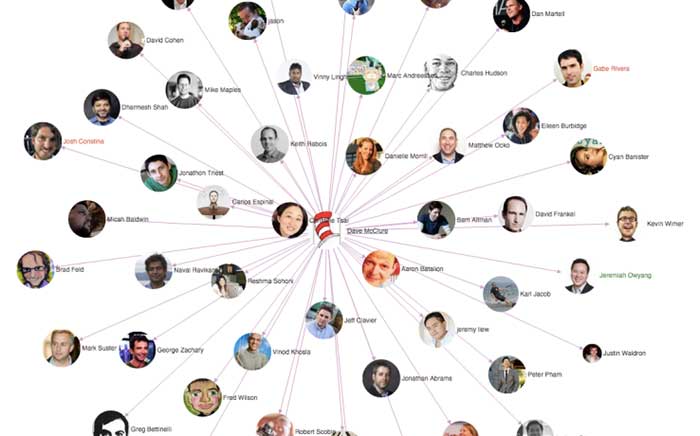
    Developer Pierre-Jean Camillieri is trying to answer the question “who influences the influencers” with his new tool, Game of Angels. Though the program is in its early stages, it could help entrepreneurs connect with industry leaders who have the most online clout.

    The tool gives a visual map of influencers and their major connections based on the number of interactions they have. However, it’s currently limited to those Camillieri himself deems major influencers and industry leaders.

    Image Sources:

    Twitter Trends

    Influence Map

  • Google & Twitter Rekindle Old Flame with New Deal

    Today, I’m going to tell you a love story between two Internet powerhouses. There’s drama, there’s intrigue, and there’s a rekindling of romances. Is it for the money? Is it for the power? That’s for you to decide.

    You may have heard that in February, Twitter CEO Dick Costolo announced that Twitter and Google have rekindled a former partnership. Apparently, the two companies have agreed to a deal that would put a real-time feed of tweets from Twitter back into Google’s search result pages at some point in the first half of this year.

    In this post, I’ll lay out what we do know about these star-crossed lovers: a little bit of background on the duo’s previous tryst, how this new partnership benefits Google and Twitter individually, and what this means for you (especially if you’re a business owner).

    The Skeletons in the Closet

    Back in 2009 (or centuries ago in Internet time), when Twitter was a mere three years old, the two companies formed a similar agreement. As that young relationship took off, Google unleashed something it called Real-Time Search, which featured current tweets and other instant information appearing right alongside your searches. Real-Time Search was well on its way to becoming pretty awesome when, suddenly, in 2011, that feature and the relationship met a tumultuous end. Twitter decided not to renew partially due to growing pains and partially because the COO at the time, Ali Rowghani, was into keeping Twitter’s content proprietary to its users. As a result, Google was left to crawl Twitter’s site in order to index tweets, which is clearly a recipe for failure, and thus, the two were left to go their separate ways. Until now.

    What’s in it for Google?

    When Google was a young, nascent startup, the founders formed a list of the 10 things that comprise the company philosophy. Topping this (pretty tender) list is, “Focus on the user and all else will follow.” If you keep reading, you’ll find that numbers three and four respectively are, “Fast is better than slow,” and “Democracy on the Web works.” The list also includes several items oriented towards the power of and need for information.

    With Twitter, Google gets fast, user-focused information. And as that old adage goes, information is power. Or is it knowledge? Regardless, you get the idea. Twitter is powerful: it has facilitated uprisings, coordinated revolutions, encouraged dialogue on important issues, revolutionized protests, and most of all, it’s user-generated. That kind of authority and relevancy is pretty invaluable.

    Search Influence Twitter Firehose Image

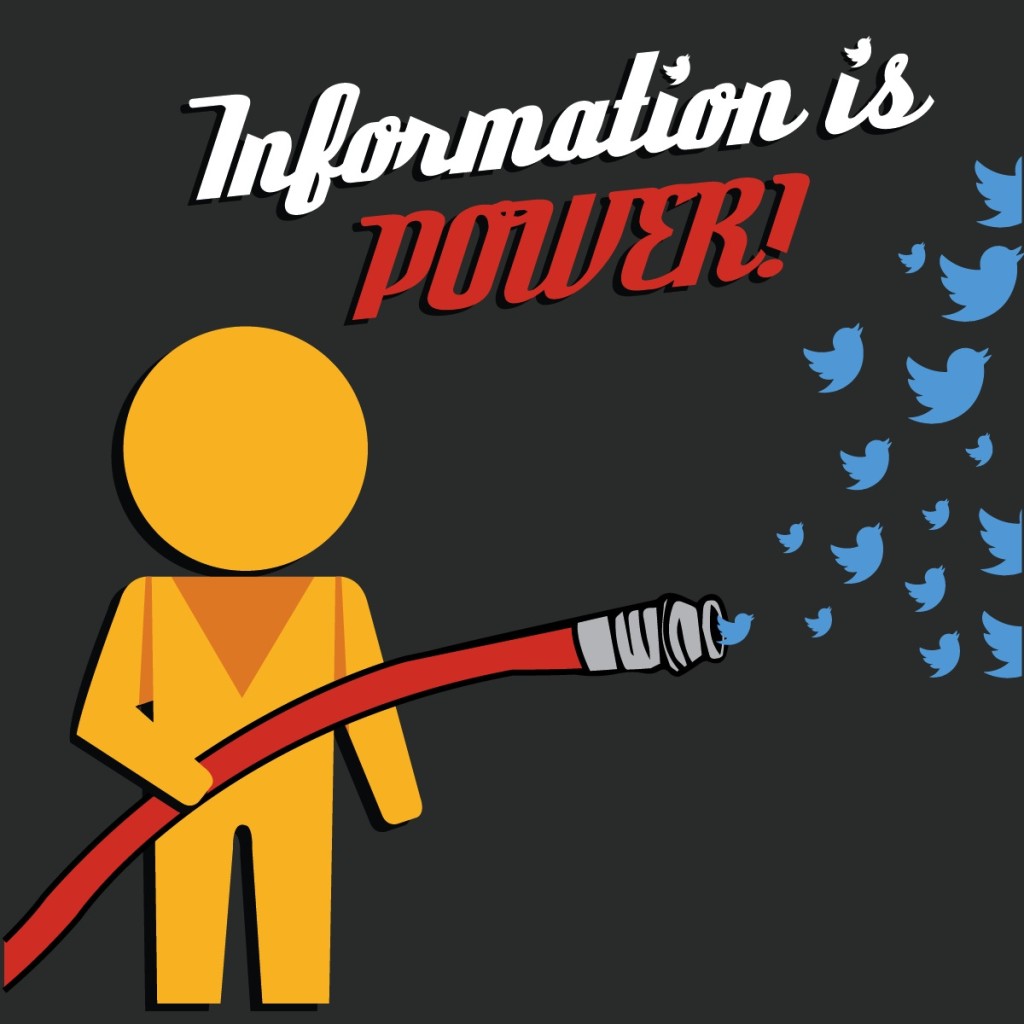
    So, in this partnership, Google gains access to what’s known as the “fire hose” of tweets, which basically means it gets a stream of 9,000 tweets per second, giving it immediate access to whatever is going on in the Twitter-sphere at the time. This kind of power allows Google to provide even more relevant, reliable information to its users.

    At this time, it is unclear whether or not Google will be paying for these tweets, though it did last time. If it does pay this time, however, there’s a good chance it won’t be very much, given that Twitter came to Google asking to rekindle this flame. So, who can really blame Google for wanting to try this whole partnership thing again?

    What’s in it for Twitter?

    In case this wasn’t already clear, I’ll give you a short answer: GLOBAL EXPOSURE. Google is a socialite with connections to everyone, everywhere, and Twitter is just trying to get in on a piece of that sweet pie. If you’re anything like me, you may be thinking, “Well, isn’t Twitter doing just fine on its own? Can’t it be successful without returning to its almighty ex?”

    The answer to that, apparently, is…not so much. In 2013, 46 percent of Twitter users visited the site daily. In 2014, that stat dropped down to 36 percent. On top of losing grip on what was once seen as a stalwart user base, Twitter has the smallest market share out of the top five social media sites. Finally, only 19 percent of the U.S. adult population uses Twitter, which seems fine, but that is the lowest amount of all the top five social media platforms. Who knew Twitter was the runt of the social media litter?!

    They did. And this is their effort to remedy that. By partnering up with Google again, Twitter gets a marketing cachet like never before. They’ll likely see more signups, more engagement, and higher ad revenue. As Costolo so eloquently put it in a recent earnings call, it’s all about the eyeballs:

    “We’ve got the opportunity now to drive a lot of attention to and aggregate eyeballs, if you will, to these logged-out experiences, topics, and events that we plan on delivering on the front page of Twitter. And that’s one of the reasons this makes a lot more sense for us now.”

    Though this almost certainly does not mean tweets will magically get favor from the Google gods and outrank other types of content, it does promise lots of rewards for Twitter.

    What does this mean for YOU?

    Basically, it means you should use Twitter. If you’re a business that works online in any capacity, this will likely be a positive development. Through this agreement, you can expect better, localized SEO results and new advertising benefits every time Google picks up your tweet.

    However, it’s important to keep in mind that this also means tweets have a bit more longevity now. There’s a chance that Google will archive relevant tweets, which means they could show up on a search results page six months down the road.

    In the same vein, any negative tweets from disgruntled customers have the potential to leave a more enduring imprint on a related Google search. It could be best practice to invest in some kind of social media/Google monitoring service so you can stay up to date on what’s being said. If you opt to respond to a negative Tweet, make sure you remain professional and work to mitigate the issue.

    On the other hand, positive feedback from clients on Twitter will also show up on those results pages, meaning the invaluable customer testimonial is making a mean comeback.

    What happens now?

    Now, we wait. As tweets enter the public domain, it’s hard to say what will happen to the importance of Twitter followers and Google+. If you’re wondering where exactly the tweets will appear, Bloomberg theorizes that they “will start to be visible in Google’s search results as soon as they’re posted.” This leads us to believe they’ll probably show up in a section like the existing Knowledge Graph; however, it’s also possible that they’ll position the feed to the right of the current search results.

    Who’s to say where this Internet powerhouse duo will take us next? Share your thoughts, predictions, and questions in the comments section below. We’d love to hear from you!

    Image source:

    Hashtag Burn

  • Five for Friday: Social Media Ad Wars, De-Spam Yourself, Text for Food, & More!

    1. Google Fiber Launches New Product! – Google Fiber

    This week, Google Fiber introduced its newest Web connectivity feature, Fiber Dial-Up, to help us all get back some of the time that’s constantly being consumed by ever-present technology. The folks at Google were able to recognize that many of us can’t seem to find enough time during our busy days to get back to the little things, like “texting your mom, hugging your child, running to the restroom …” This is where the dial-up mode idea started, and now Google has found a way to give us our time back so we can go back to enjoying the little things in life. Check it out here and get ready to meditate to the relaxing and nostalgic sounds of dial-up. What will you do with your time?

    Thanks, Google! (April Fools!)

    2. E-Commerce and Text: Two Sides of the Same Coin – Tech Crunch

    Two important messaging announcements hit the tech world recently:

    1. 600 million users of Facebook Messenger will soon be able to order food, buy products, and text directly with businesses.
    2. Magic messaging company is raising an astonishing $12 million from Sequoia to allow you to order any on-demand service simply by sending a text message.

    In short, this means that mobile messaging is now a commerce platform in which the user can seamlessly go from text messaging to ordering food, products, and direct business communication. This is the beginning of the “conversational commerce” revolution—a term coined by Chris Messina—that will open up much more opportunity for companies to join the texting revolution and ditch their countless applications. This will absolutely simplify companies’ paths to their consumers by eliminating the need for apps and non-compatible services and allowing marketing messages to reach users directly through their texting service. Put more simply: we all text more than ever, so why not expand texting’s potential to sending payments, buying products, ordering on-demand services, paying bills, and more? What do you think about this development—will the ability to text a business or make online purchases via text increase your participation in e-commerce?

    3. Twitter and Facebook vs. Google and Yahoo – Marketing Land

    Last week, online research firm eMarketer released data predicting that Twitter and Facebook are poised to surpass both Yahoo and Google in terms of display advertising revenue in the United States. Additionally, Yahoo and Google are both predicted to see a share decrease in online display ad revenue in 2015.

    The financial success in ad space for both Facebook and Twitter is attributed in large part to marketers allocating more of their budgets to mobile display advertising. This goes to show that advertising on social media outlets is paying off for both marketers and social advertising platforms. How do you think these trends will play out over the course of the year? Will Google and Yahoo hold their own against these competitors, or is social media the wave of the future for online advertising?

    4. Moz Releases New Spam Score Feature – Moz

    Over the past year or so, Moz has been developing a metric that can determine whether or not a site may trigger a negative reaction from Google. Utilizing 17 different factors, the folks at Moz have compiled an algorithm that calculates the “spamminess” of a given website in order to predict any penalties or bans that Google might graciously bestow upon that site. This calculation will assign a site with a “Spam Score” of either “Looks Good,” “On The Borderline,” or “Trouble’s Lurking.” For now, this tool only operates on the subdomain level, but it will soon launch on a larger scale to be able to grade full pages or root domains. Subscribe to Moz.com or start a free trial to learn more about this feature and access your Spam Score now!

    5. Dive Into Your Content With Analytics – Moz

    When such a large part of our business has to do with content marketing, it’s important to stay up to date on the latest creative trends and most successful channels. However, sometimes the best information is in your Google Analytics data. Last week, Jeff Sauer from Moz published a thorough analysis showing how reviewing performance metrics in Google Analytics can inform your content strategy, thereby validating your content marketing efforts and producing greater traffic and revenue results.

    Sauer dives into Google Analytics and provides examples of how we can explore content groupings, specific dimensions, and even coding features to highlight common content topics, adjust our definitions, and monitor the effectiveness of our content. These practices can be extremely helpful for advertisers who are looking to get the most out of their marketing and really optimize their content to its fullest potential. Check out Sauer’s article here for his full analysis, along with some helpful tips!

    Image Sources:

    Gotcha!

    This Means War

    I Don’t Like Spam

  • Social + SEO: Better When They’re Working Together

    SEO Cycle Image - Search Influence

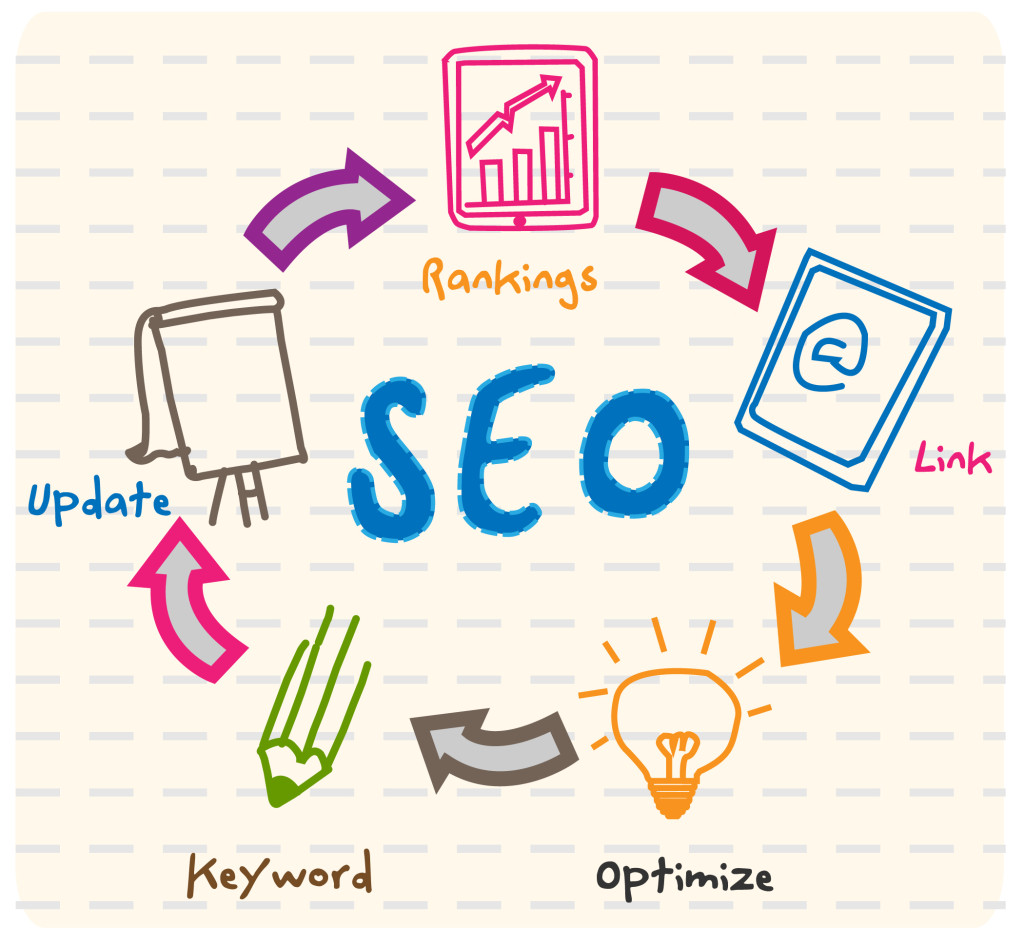
    Modern search engine optimization has become inextricably linked with content marketing. Yet in many companies, social media strategies are developed separately from the SEO and content marketing plan. This can work—but you’ll realize optimal results by aligning social media with SEO for an overall strategy that boosts brand awareness, improves domain authority, and increases your rankings.

    Here are some tips for social media strategies that can fuel your SEO and help you rank higher in all types of user searches.

    Grow your Following

    In the early days of social media, building a massive following was the number one goal for most marketers. Today, the emphasis has shifted from quantity to quality—but the number of followers you have is still an important factor for domain authority.

    Of course, it’s equally important to develop an authentic audience. Google, in particular, can tell when most of your following is made of spam and bot accounts, so “buying” likes or follows doesn’t help—and in fact can harm your online reputation. Instead, grow your following naturally by posting interesting content on a regular basis. Engage your followers with interactive content and by responding to comments or starting discussions.

    Share your Other Content

    Posting links to your content—such as articles, blog posts, and downloads—along with brief commentary on social media, is a great way to repurpose your content and boost your SEO. Of course, sharing on social media will give you more eyes for your content, but the benefits to SEO go beyond that.

    In addition to extra traffic to your website or blog, which is a peripheral SEO benefit, social media sharing encourages others to share your links. The more often your links are posted on other social media accounts and websites, the more domain authority you’ll build. This type of inbound link-building is much faster than traditional or manual methods.

    Optimize Social Media for Search

    It’s important to know that your social media posts can show up directly in search results—if they’re optimized. When you’re composing posts, be sure to apply basic SEO strategies such as including keywords, placing them strategically and naturally, and tagging image, video, and infographic posts with relevant keywords. Even if your posts don’t make it into search engine results, they’ll still increase your brand authority and contribute to a stronger online reputation.

    Increase Social Shares with Viral Content

    The more shares and retweets your posts have, the greater your domain authority—and the higher your search engine rankings. In order to get your content shared more often, you need to create content that people want to talk about.

    Of course, every marketer wants to release the next viral sensation. There is no guaranteed strategy for making something go viral, but you can increase your chances of catching lightning in a bottle by creating content with a strong visual component (either a visual medium or a blog post that’s heavy on images, for example), and make sure it has the following characteristics:

    • Informative
    • Relevant
    • Entertaining
    • Practical
    • Surprising
    • Unique

    Of these characteristics, the last one is the most important. Create content your audience has never seen before, and they’ll be eager to share it with friends.

    Connect with Similar Companies

    In the world of social media, your “competition” can be your friend—and that’s good for your SEO. Engaging with similar businesses, particularly local companies or those in similar industries, can help you grow your audience and your relevance, which in turn increases your search engine ranking.

    Share content with other companies like yours and comment on their posts. Usually, they’ll return the favor by engaging with you, which will attract their audiences to your social profiles. Google will also start associating you with other brands when you engage with them, which improves your overall authority.

    When it comes to online marketing, social media and SEO should go hand-in-hand. How does your social media strategy complement your SEO approach?

  • Five for Friday: Pay for Twitter Verification, Snapchat Goes Local, and More!

    1. If You Want to Be Verified on Twitter, All You’ll Have to Do Is Pay! – Mashable

    If you’ve ever tried, you know that getting verified on Twitter is a lengthy process. Twitter does not accept requests for verification, so users just have to wait until the site feels that your page should be verified—and the process can take an extremely long time. But not anymore: Twitter is considering letting people pay to get that little blue check mark symbol. Hopefully, if this change is adopted, the days of waiting for verification will be gone!

    2. Google Answers the Question “Is Link Building Good?” – Search Engine Round Table

    In any discussion about link building, the conversation usually turns into a debate about whether the strategy is good or bad for a website. If you’ve been searching for the answer, you may finally have it: in a recent Google+ hangout, Google’s John Mueller was asked to answer this common question. Ultimately, Mueller stated that he would “try to avoid” link building in general, but he also gave helpful tips on how to allow others to link to your site.

    3. Snapchat Wants to Show You What’s Happening in Your City – Tech Crunch

    Have you ever ignored a Snap from Team Snapchat because it relates to an event taking place in a different state or even a different country? Well, Snapchat has caught on. The company is currently experimenting with regional Our Stories, which will add content that will be visible only to locals within a specific area. Keep an eye out for these relevant Our Stories!

    4. 4 SEO Landmines to Avoid if You’re Updating Your Website – Search Engine Watch

    From time to time, it becomes necessary for all of us to update our websites—but how do we manage the change without losing the authority our sites have built up? Whenever you update your website, you may leave yourself vulnerable to changes in domain authority and search engine indexing. If you’re thinking about changing your website, a few tips from this recent Search Engine Watch article can teach you what to avoid in order to keep your SEO intact.

    5. Facebook Will Be Revealing the Relevance Score of Your Ad – Marketing Land

    Ever wonder how Facebook chooses which ads to show? The company uses a combination of bid price and relevance scoring to decide which ads will make an appearance, but the process might seem confusing. Well, Facebook has begun to allow marketers to see the relevance score of their ads. In doing this, Facebook hopes to incentivize the creation of better ads that are more relevant to target audiences.

    Image Sources:

    All You Have To Do Is Pay

  • Five for Friday: Beef Up Your Local SEO, Twitter Welcomes Newbies, and More

    1. Google’s Domain Registration Service Now Open To All US Residents – Search Engine Journal

    Google now has a proprietary domain registration service! What’s great about this service is that, like most Google products, it’s fully integrated with Gmail forwarding as well as other goodies provided by Google’s partners – Squarespace, Weebly, Wix, and Blogger. Streamlined and familiar, domain registration starts at $12, with additional add-ons available. For more information about this service in different countries, you can sign up to a mailing list.

    2. A Step-By-Step Introduction to Amazon Product Ads – PPC Hero

    Amazon has always been kind enough to direct customers to your product, and it sometimes even directs them straight to your website. With Amazon Product Ads, the company helps you become better at selling your wares the right way – with the consumer in mind, but the seller at heart. This article details the step-by-step process on how to utilize APAs to the fullest, and it educates you on the nuances of selling products online.

    3. How to Have a Successful Local SEO Campaign in 2015 – Moz

    These tips are typically a no-brainer for us optimizers, but as evinced by our recent SI Conference, there are nuances to local SEO, and SEO in general, that we sometimes just don’t see right off the bat. With the new Google updates, optimizing is getting more personal and organic than ever. Check out the interesting click map to see just how organic SERPs are becoming.

    4. The Big List: 80 Of The Hottest SEO, Social Media & Digital Analytics Tools For Marketers – Marketing Land

    Note: this is not a ranked list of SEO tools, but rather a running total of great tools out there at the moment. Perhaps we will see some of these in our near future as employees of Search Influence. It’s nice to see kind things said about the tools we currently use, if not only to solidify the reasons why we chose the ones we did.

    5. Report: Twitter Planning New Home Page For Logged-Out Visitors – Marketing Land

    As an avid Twitter user, I’ve always been concerned with the esoteric universe that is Twitter’s inner sanctum. What’s in a homepage, you ask? Well, currently Twitter leaves a lot to be desired (a marketing ploy perhaps); there’s no indication of what the user interface even remotely looks like based on their homepage. Reports indicate that, unlike many social media home pages, Twitter may give in to human curiosity and allow potential users to glimpse its inner workings.


    Image Sources:

    Oh Boy Gif

  • Behind the Scenes: How Social Media Is Being Used in the Local Film Industry

    Unless you have been living under a rock for the past ten years or so (and not just any rock, but one without TV or Netflix), chances are you have watched a movie that was filmed here in New Orleans. The city – and the state as a whole – has seen an explosion of film and television productions over the past several years, earning the region the title of “Hollywood South.”

    From comedies like 21 Jump Street to Oscar-winners like 12 Years a Slave, Louisiana has even surpassed film production stalwarts like Los Angeles and New York City to become the country’s production capital – all thanks to the highly lucrative tax credits introduced in 2002.

    And while the big-budget movies are driving the local industry (check out NOLA-shot blockbusters Jurassic World and Terminator: Genisys in theaters this year), this influx has also helped inject momentum into the independent film industry – more specifically, the micro-budget indie film scene. These are projects made by passionate local filmmakers looking to find a foothold in the industry at large.

    These are not films the average moviegoer is typically going to be able to see or even hear about. So how do these filmmakers get the word out? How do they raise the funds to even get it made? And how do people find out where they can see these smaller films?

    The best and easiest way is through social media, an umbrella term that can be divided into several different platforms (Facebook, Twitter, Instagram, etc.). The most effective social media strategies take a multi-faceted approach into account and are tailored to suit each medium’s strengths to maximize effectiveness.

    I talked to a few local filmmakers about the importance of social media and other Internet marketing strategies. I found that first and foremost on these filmmakers’ minds is exposure, whether for fundraising or promotional purposes.

    Fundraising and Promotion

    “Facebook is a useful platform that enabled a community to form around the project. It is very useful in promoting fundraisers and screenings,” explains Sam Bass, who has helped with the social media campaigns for two films, How to Disappear Completely and Give Light: Stories from Indigenous Midwives. “Twitter is better for engaging with people outside of your immediate community with the potential to lead to significant opportunities and connections.”

    “We began our social media campaign to draw attention to our Kickstarter,” says Hunter Burke of Construct Films, who is using social media to raise funds for and promote the film Atchafalaya. “It was the quickest and most effective way to get our message out.”

    Greg Tilton, director-producer of reddit doc, had a similar mindset, but he wanted to lay the groundwork for their project before asking for fundraising help. “Social media was key because I did not want our IndieGoGo campaign to be the first time someone had heard of the project,” he states. “It’s been successful because people who don’t know me or my immediate network are following and engaging the project.”

    Mac Alsfeld, the writer-director-star of Father-Like Son, found social media to be most effective after the film was made. “We heavily relied on Twitter to build a relationship with festivals,” he explains. “I think it is important to show festivals that you are the type of filmmaker that will market yourself and that festival to potential filmgoers.”

    Getting Help

    For these filmmakers and others, this was a very important part of the behind-the-scenes process. For the most part, they were navigating the tricky waters of social media without any substantial professional Internet marketing experience – though some had help.

    Burke turned to a friend who had social media marketing and crowdfunding experience. “I really owe a lot to him for educating me on what is standard, what has worked in the past, and also coming up with some wonderful ideas. Without him, I would have been totally lost.”

    Lucky enough to be dating someone in the tourism and marketing industry, Tilton found it helpful to have someone more experienced to bounce ideas off of. “As I experimented, talked to her, and read a lot of articles online, I slowly built up my knowledge. She was a great sounding board for ideas.”

    Thoughts on Social Media

    Even without much prior experience, these filmmakers now have some very astute thoughts about the medium overall gained from their newfound experience.

    “I do believe that it is VERY important to have a presence within the social media community,” declares Kenna J. Moore of Ghost of Elysian Films, who was awarded the Emerging Vision Award for a Louisiana Filmmaker at the 2013 New Orleans Film Festival and the Louisiana Shorts Jury Award in 2014. “It is crucial that our image and what is being put out there is closely monitored. I like to have a presence but stay away from all of the ‘look-at-me’ syndrome that one can easily fall victim to in most social media settings.”

    “The thing about social media is that it is, at its core, incredibly voyeuristic,” says Tilton. “Many people do follow the musings of their interests, so there is a large audience to be engaged and many want to be a part of something big. You can find that audience.”

    Tips for Fellow Filmmakers

    As for fellow indie filmmakers feeling overwhelmed by social media, all the filmmakers have useful tips to share:

    Bass: “Have a social media strategy. Know how to work it. And don’t panic when nothing happens for a week. The most important things are follow-through and relationship building.”

    Alsfeld: “Show people that you have passion. Use your social media to blast information. And even more importantly, have fun. Don’t be boring.”

    Burke: “We performed the best when we released media. Posting a picture, an interview with the filmmaker, or a sample of the score really got our audience interested. People really responded to something they could interact with. Make it a fun experience. Keep it simple. Leave them wanting more.”

    Moore: “I’ve learned that social media has pros and cons. Some people gain opportunity and references from it. Some social media activity allows for negativity and distraction. I would encourage people to stay focused.”

    Tilton: “If you have nothing to say, don’t say anything. So many people are retweeting and posting haphazardly. It’s just a jumble of buzzwords and hashtags. Just make sure it’s always quality and you will find that pays off bigger.”

    Additional Resources
    Here are some more tips directed specifically at indie filmmakers on making the most out of social media:

    7 Tips for Promoting Your Indie Film on Social Media via Premium Beat

    6 Tips on Using Social Media for Your Indie Film via Media-Match

    Image Sources:

    3, 2, 1 Film Image

    Social not-working Image

    The End Image

  • Don’t Be An Advertising Grinch: Grow Your Profits 3 Sizes This Holiday Season

    Can you believe we’re already on the verge of December? Are you prepared for the holidays? I’m not asking if you have your Christmas tree (or Hanukkah bush) picked out or if your travel plans are confirmed…we’re talking about advertising, and specifically online advertising. Hopefully, you’ve already adopted online advertising into your business’s ad strategy (if not, I just happen to know of an exceptional company that can help you get started), but this year, having an online presence for your products or services is more crucial than ever.

    Therefore, it’s only appropriate that we at Search Influence help prepare you and your business for the upcoming season! Here are 8 Questions, Tips, and Best Practices to get you in the right mindset and bring some holiday cheer to your ad strategy.

    1. What channels are you using?

    It’s common knowledge that there are a plethora of ways you can reach potential customers online, whether it’s via email marketing, PPC, social media, etc., but which is the best for your message?

      1. Email Marketing
      2. PPC
      3. Facebook
      4. Social Media in General
      5. Retargeting

    It’s easy to get overwhelmed if you think about utilizing all of these channels, especially if you consider how much it could cost you. So if you don’t have an unlimited budget, try and think about it this way: which channels are you already utilizing that you can focus on during the holidays? Which one (or two) channels might you add, even if it’s just for the holiday season, in order to build awareness and not get lost amongst all the other businesses advertising during the holidays? As with anything else during the holidays, the most important thing is to try not to spread yourself too thin. It’s better to put more budget and effort into a couple of channels than to lose your message by trying to use them all.

    2. Let the Christmas creativity flow!

    Your audience is already primed for the holidays – feed into it!

    Creative is extremely important this time of year. Keep your ad copy fresh by changing up your creative from the rest of the year and integrating topical messages into your ads. And don’t worry about sounding cheesy — this is one of the few times you can get away with it! When people are bombarded with holiday messages, think outside of the box. How do your products or services apply to this time of year? For example, are you a culinary business with an audience inclined to embrace your new recipes and cooking supplies at this time of year? Or are you a travel agency whose key demographic might be looking to escape from the cold weather with one of your vacation packages? There are many lenses you can look through when selling your product, so don’t lose sight of the way your consumer will be feeling during the holidays. Just ask yourself: how can your business/brand help enhance the message of the holidays?

    3. What are you prepared to offer?

    Use “giftable” language.

    This is crucial, especially if you have an online business or utilize e-commerce. It’s the holiday season after all, so people are looking everywhere for – and expecting to see – holiday deals. Remember to use gift-centric language in your ad copy. Could you market your service as a gift for your customers? Make it less about you trying to sell them something and more about what they’ll be getting from you if they turn to you during the most competitive time of year.

    Think about advertising sales/offers/discounts that are time sensitive. Putting out an offer that must be utilized before the new year is a good option because it encourages people to buy now, and it could be more trackable and traceable to a holiday campaign.

    On the other hand, if you’re a “resolution-related” company, your holiday advertising might expand past Christmas into the new year. No one wants to hear about gym memberships when they’re wolfing down the cranberry sauce.

    BraceYourselvesNewYearsImage

    Finally, if you’re going to advertise offers during the holidays, be sure to utilize offers that are truly compelling. Don’t announce something as including free shipping unless it is paired with something else; your message certainly won’t stand out if you’re offering only free shipping along with everyone else.

    4. Christmas isn’t the only holiday in December,

    nor should it be the only thing on which you focus your advertising efforts.
    Is your product or business Christian-centric? If not, would you risk alienating a subset of your audience if you mention “Christmas” in your ad copy and/or message? This may seem like a minor opportunity, but it could be a great chance to demonstrate self-awareness and show your customers how well you know them.

    Additionally, be sure to think about the time surrounding the holidays, not just the holidays themselves. For example, if you’re utilizing a mobile campaign, use the pre-holiday weeks to increase your customer base and drive mobile app installs ahead of the holiday season, and focus your post-holiday time for new device owners activating apps and devices for the first time. Lastly, remember that a lot happens in the buying cycle after December 25th. Consider using after-holiday clearance or Boxing Day specials, and keep in mind New Years and everything that comes with that – hello, resolutions!

    5. Think device.

    If you’re an online advertiser, multi-device targeting for this time of year is crucial. Consumers are omni-channel. People shop online and in-store; therefore, you should really boost your visibility and advertise on as many devices as possible. This may sound easy, as on Google Adwords all you need for this is to make sure your device targeting is set to “All.” However, just because your ads can show up on mobile or tablet does not mean they are automatically optimized to do so. Here are some thoughts to keep you focused on multi-device targeting:

      1. Mobile is where it’s at! This year, there are more people using more devices than ever before.
      2. According to this year’s Facebook Holiday Webinar, over 60% of people in the US use at least 2 devices every day.
      3. Facebook also found that over 40% of all online adults start an activity on one device and finish it on another (think conversions); therefore, cross-platform and cross-device marketing are extremely important. Simply put, more consumers are starting their holiday shopping in-store and finishing it online (or vice versa).
      4. Do not think of mobile as a technology, but as a consumer behavior. Why is your consumer searching on mobile? What do you want to tell them when you show up on their mobile device?
      5. Mobile optimized ads should have creative that accommodates a small screen. For example, utilize a click-to-call function and display a very short, user-friendly menu so your site is easily navigable on a smartphone display. To learn more about using mobile ads or optimizing your site to fit mobile parameters, check out what Google has to say on the matter: Google Mobile Ads.

    6. Account for Black Friday/Cyber Monday.

    The holiday season seems to be getting earlier and earlier each year. This year, the retail space seems to have forgotten about Thanksgiving by skipping straight from Halloween to Christmas.

    Technically, you as an advertiser should be thinking similarly (thoughts about holiday shopping and marketing do start in October), but it’s certainly ok if you’re late to the party! Everyone knows the real “gifting” takes off around Thanksgiving and Black Friday.
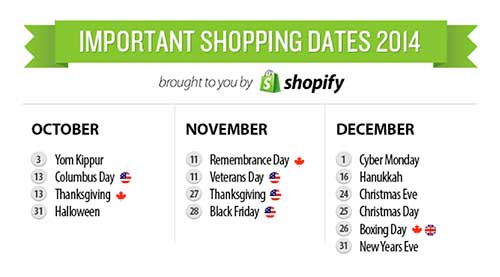
    ImportantShoppingDatesImage

    That being said, there are certain days that have evolved online regarding holiday shopping. If you’re into e-commerce, you’re already familiar with Cyber Monday, but it might help to organize your holiday advertising efforts even more granularly, as every year there seem to be more “dates to remember.”

    1. Black Friday – November 28th

    2. Cyber MondayDecember 1st – keep in mind: Facebook announced that this year, 25% of online shoppers will place their orders from a mobile phone on Black Friday and Cyber Monday! (https://www.facebook.com/business/success).

    3. Green Monday – December 8th – usually the shipping cut off for most postal outlets to get standard-shipped packages to customer before Christmas.

    4. Free Shipping Day – December 18th – a one-day event held in mid-December. Merchants are encouraged to offer free shipping with guaranteed delivery before Christmas. Like I said earlier, don’t think free shipping alone will give you an edge above everyone else – but it certainly helps! Sign up to be listed as a participant of Free Shipping Day here.

    5. Super Saturday – December 20th – the last Saturday before Christmas, Super Saturday is a big revenue day, as it technically marks the end of the shopping season that is considered to begin on Black Friday. Super Saturday targets last-minute shoppers. Typically, this day is a good day to offer one-day sales in an effort to accrue a great deal of last-minute Christmas revenue.

    6. Boxing Day – December 26th – As mentioned in #5, people are opening the new devices they received over the holidays, downloading apps, and/or looking to trade gifts in for something else. Online and in-store advertisers oftentimes offer deeper discounts on remaining merchandise, which can be a great way to get rid of leftover inventory.

    7. Social Media Presence is Crucial.

    GrinchMemeSocialImage

    The holidays are a very popular time for social media presence; your audience is online more often, whether it’s for shopping or to connect with friends and family. Therefore, make sure you increase your presence as well! Up your post load, produce more articles, and sponsor more updates to make sure you’re seen by your target audience and to show them you’re not “out of office” for the holidays.

    However, you may have to do some shopping yourself in order to make this happen. Advertising inventory prices will be rising for the holidays across Facebook, Twitter, and LinkedIn, so you must decide if you want to expand your budget in order to adequately boost your social media involvement.

    Before you grinch out on this, consider that your potential profit might be worth a slightly (and temporarily) elevated budget. After all, Facebook reports that 46% of shoppers who used Facebook before shopping used it to look for deals, promotions and holiday gift ideas, and they often discovered these things through their news feed. (Facebook Holiday Webinar).

    8. Stay organized!

    This last “tip” isn’t so much about online advertising as it is about advertising in general! Like anything concerning your business, staying organized is key, but it can be even trickier around the holidays when we seem to be juggling our personal and professional lives more than usual.

    Regarding your online presence, we recommend creating a promotional calendar before the month even begins. Know what days you’d like to run what ads, and become as comfortable as possible with the seasonality of the month. You can also take advantage of the ad-scheduling features on certain ad platforms – this way, you can create your ads, post promotions, sponsored updates, etc. ahead of time and then schedule them to run on certain dates/times without you having to be around the computer.

    Simply put, plan ahead as much as possible! This will leave less work for you to do later when you’re trying to baste a turkey, or when your luggage inexplicably gets lost by the airline…

    Now some might think this goes without saying, but remember to breathe. You do not need to implement all of these suggestions into your ad strategy! Whatever you do decide to do this holiday season, the most important thing is to document and remember the results for next year and to ultimately strengthen your marketing strategy. Just because it’s the holiday season doesn’t mean you need to stress about your advertising. But unlike the holidays, just try not to get your family too involved.
    SIHappyHolidaysImage

    Image Sources:

    Brace Yourselves

    Important Shopping Dates

    The Grinch
  • Five For Friday: A Very Twitter Christmas, Facebook Gets Scroogy With Likes, & More!

    iphone5borderimage

    1. Are Twitter Users the Most Efficient Holiday Shoppers? – MarketingLand

    Given their 160-character count limit, Twitter users are clearly efficient communicators. And now, we are learning that they are super efficient holiday shoppers as well. The popular social platform released a study highlighting its ability to influence shoppers in their decisions on retail establishments and which specific items to purchase. 54% of users are more likely to purchase an item if they saw it advertised on Twitter. The study also shows that Twitter users not only shop earlier, but they also shop more frequently for holiday purchases. I guess now we know where retail shops should be marketing during the holidays.

    2. Secrets to Properly Linking on LinkedIn – Business2Community

    We all have a LinkedIn page. We’ve entered in our resume details, uploaded a picture, maybe got endorsed by a friend or two, and received a glowing recommendation from our moms, but now what? How exactly can you benefit from this?

    Here are 12 secrets from LinkedIn pros! Adopting some of these habits will help you increase your presence and improve your network. Some tips include:

    • Message people in groups for free!
    • Share useful and relevant news (mainly for attention).
    • Use tools, like FiveHundredPlus, to stay organized.
    • Follow first; Like, Share, and Comment second.

    LinkedIn can be confusing, and it may seem unnecessary, but with the growing number of companies and business people joining and actively using the platform, it has become more beneficial to understand how it works. Creating a substantial network will help in the long run. So, go forth and connect!

    3. How-To: The Most Perfect List Post – Business2Community

    Everyone loves lists! However, with their increasing popularity and Internet users’ ever-prevalent short attention spans, how do you keep readers reading?

    Business2Community offers a near-perfect list of tips for creating the best and most effective list post. There are several things to consider when writing out a list, and remember, every detail matters. Some of the tips provided are:

    • Always, always, always have an introduction and a conclusion (excluding the distinguished SI Five for Friday posts).
    • Pick the right number (10 instead of 5, 7 instead of 8). Trust us, it’s science.
    • In the title, use “10” instead of “ten.” Seriously, it matters.
    • Write longer posts.

    These tips are guaranteed to help make your list go viral, or at least make sure your readers actually read through to the end.

    YouArePerfectImage

    4. The End of Facebook Like-Gate as We Know It – MarketingLand

    Say goodbye to the days of entering a contest on Facebook with the simple click of a Like button. Facebook engineers have dismantled the ability for companies to use Likes as the entrance fee for contests and prize drawings.

    The effects of this are two-fold. For one, companies will now have to engage users on a deeper level in order for them to connect with the business. This change effectively ends the use of “artificial incentives.” Two, they also expect to see more conclusive results when determining demographics, as opposed to the scattered results received when companies were giving away iPads haphazardly to gain social media presence.

    However, it is also being argued that ending Like-gating is solely meant to gain revenue for Facebook. The belief is that companies will pay for Likes if they have to. And now, they have to.

    5.  What’s the About Page Supposed to Be About? – CopyBlogger

    The About page seems pretty self-explanatory, but it has actually evolved over the years and is no longer a place for you to just describe your business/products. For a more effective page, use it to start a conversation with your reader and emphasize to potential clients that you have what they are looking for. Because this is often the most visited page on your site, it is wise to grab the reader’s attention from the get-go. Let your personality shine! This will assure your visitors that they are in the right place, and they are more likely to continue browsing your site.

    There are 5 steps to creating a superior About page:

    1. Engage with readers by introducing your personality and humor on the site. Don’t be afraid to be different.
    2. Get into the readers’ heads. Make them think you’re reading their mind by showing them you have exactly what they are looking for.
    3. Brag, but humbly. Include some testimonials so others are singing your praises.
    4. Near the end, insert a bit of your biography. Make sure you express why you do what you do, and why you love it.
    5. Call to action! Invite your readers to sign up for your email list, call, or contact you. Most of the time, they will!

    Image Sources:

    Thanks to Mariah Summers for the “You Are Perfect” gif.

  • HashTag, You’re It: Tagboard Allows Businesses To Display Hashtags In One Place

    Do you use a certain hashtag to promote your business on social media? Do your customers have a popular hashtag they use when posting about your business?

    If you answered yes, then it’s time to get excited because TagBoard makes it a whole lot easier to keep track of popular hashtags from your fans across multiple social media platforms.

    What is Tagboard?

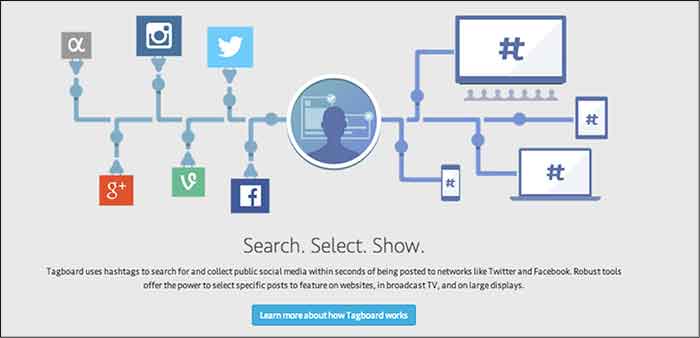
    Tagboard is a tool that lets you see all similar hastags across multiple social media platforms. The platforms that Tagboard searches are:

    TagboardPlatformsDiagramImage

    How can your business benefit from Tagboard?

    Tagboard uses an easy way to search for specific hashtags! All you have to do is search any hashtag to see a feed of all related hashtags and updates from the various social networks Tagboard scans.

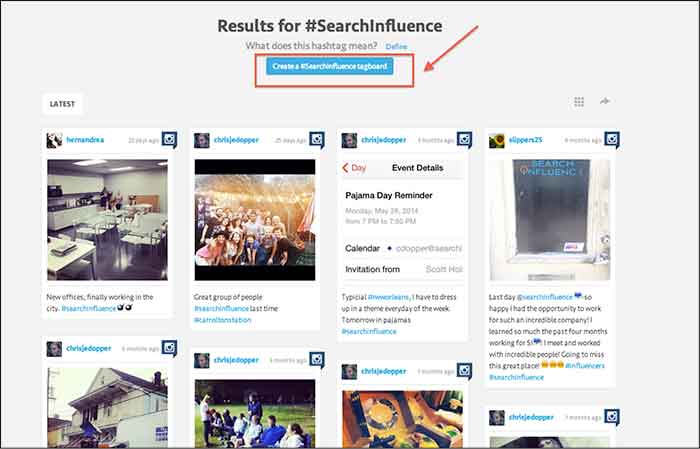
    Take Search Influence as an example. When searching for #SearchInfluence, multiple posts populate the board. If you want to use this hashtag as your own and custom brand it, you simply click on “Create #Hashtag Tagboard.” This is beneficial to getting your hashtag out there once created and seeing the interaction once the hashtag goes viral across multiple platforms.

    TagboardResultsImage

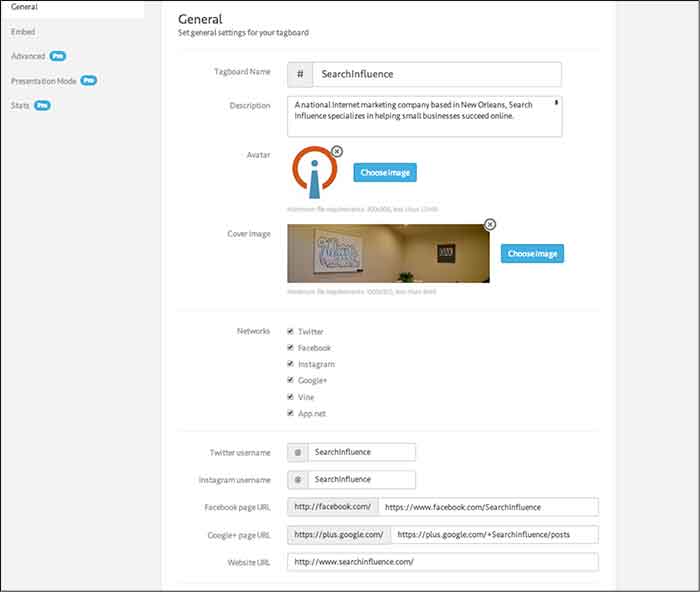
    Once “Create #Hastag Tagboard” is selected it prompts you to complete a short form to fill out and customize to your brand and business.

    TagboardSettingsImage

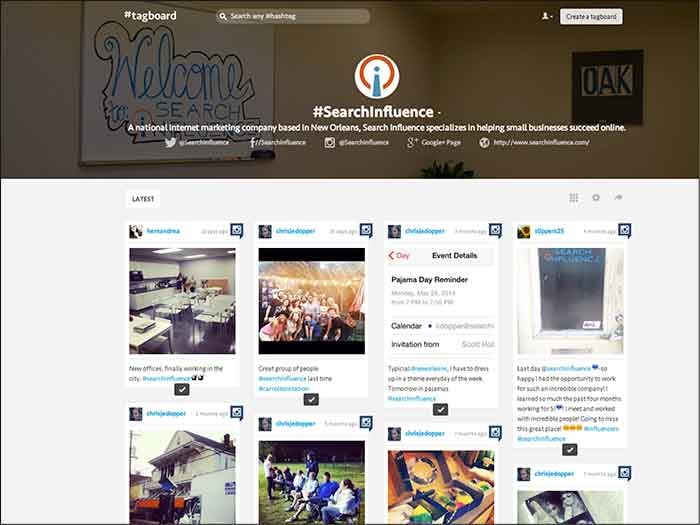
    After filling out the form, your tagboard is complete and ready to be shared. Simply click on the “Share Tagboard” button and copy and paste the link into anywhere you want to promote or share you Tagboard.

    TagboardHomepageImage

    You can make multiple custom Tagboards for multiple hashtags. The possibilities are endless.

    Bonus SEO Benefits!

    As a bonus, Tagboard.com is an authoritative website in itself! Moz’s Open Site Explorer reports Tagboard has a domain authority of 68/100. When you go through the steps above to create your own hashtag Tagboard, the resulting page provides a followed link back to your website and other social media networks.

    Using Tagboard to claim your hashtags is a great way to further your website’s SEO and online reputation.

    What hashtag do you use to promote your business? Comment below to share your successes in using hashtags.