Tag: marketing

  • Is Anti-Social Media On the Rise?

    This year will make a decade since Facebook was launched and social media usage has skyrocketed, but is social media turning us anti-social? Parents who were unhappy about their children’s texting habits in the early 2000’s would be appalled by today’s society of Instagraming, Tweeting, FourSquaring and Pinteresting fiends across all age ranges. However, the pendulum may have swung too far, and it seems that parents aren’t the only group fed up with obsessive social media behavior.

    There are many signs that we are entering an age of ANTI-social media.

    SocialMediaGuardVideo

    Many corporations and industry leaders have voiced their advocacy for more human interaction through traditional media. Coca-Cola invented the Social Media Guard in the sarcastic commercial pictured above, which blocks people from the ability to see their phones.

    Dentyne used print and commercials to encourage more “face time” by comparing human interaction with social media actions in an ad.

    DentyneAdClip

    Professionals working within the social media industry may even capitalize off of the anti-social tendencies of those who are active online. Here are a couple of examples of how.

    Cloak

    Facebook, Twitter, Instagram and FourSquare aid this new mobile application in locating where you are. Cloak asks you to login to one of your social media accounts, which pinpoints where you are on a map, along with the locations of other friends who are also logged into Cloak.

    The app is advertised as a way to avoid people that you do not want to run into. You can set alerts that warn you when certain users come into a selected radius of you. Couldn’t this also be used as a way to stalk people? Guess that wasn’t a catchy advertising pitch…

    CloakAppScreen

    Self Control

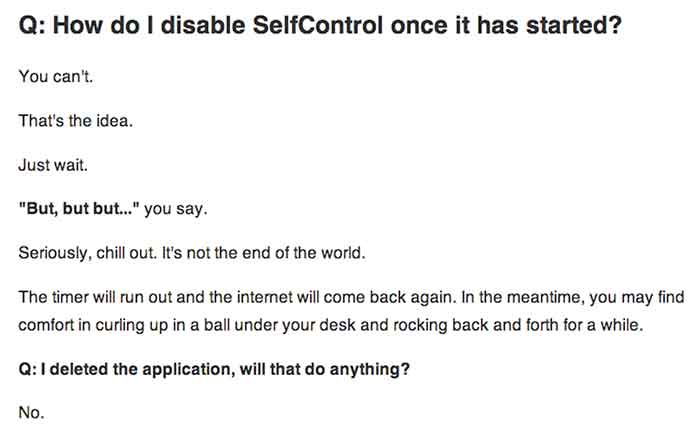
    This app allows you to choose time periods when you do not want the ability to access specified apps or programs at all. This could be used to stop yourself from checking your email, playing games, checking Facebook, etc.  A screenshot of the app is below, followed by their honest answer on how to stop the app when it is activated. The interest in this app shows that people want to be detached from their online world every once in a while but might need a little help to disconnect.

    SelfControlApp

    HowDisableSelfControl

    This discussion will continue on for years, but has social media gone too far? Check out the signs.

  • Social Media, Your Personal Red Carpet

    Coined ‘Fashion’s Latest Muse’ by the New York Times in September of 2013, it’s no secret that Instagram has been the leading source of social media in the fashion industry  for quite some time. Naturally, marketers and retailers alike have picked up on this trend, using Instagram as the latest and greatest promotional tool. But what makes the difference between a chic social media campaign and a total tragedy? Let the experts guide you with five basic rules to live by:

    What Are You Doing?

    fashion social media

    Although social media is all about promoting your products, there is something more important to promote….your brand. No one wants to follow an Instagram that solely pushes this season’s must haves. Yes, it’s all about fashion. But people want to know what makes you tick. Where do you hang out? Where do you dine? It’s no coincidence that Rag & Bone, True Religion, Hudson, J Brand, Free People, Joie, Stuart Weitzman, Jimmy Choo, Harpers Bazaar, Mercedes-Benz Fashion Week, We Wore What, and Lookbook were all at the major music festival #Coachella this weekend. And what instapost got the most attention? With 41,872 likes, Free People takes the lead with this shot of Australian fashion blogger Natascha Elisa, who by the way, isn’t sporting a look by Free People. Helping other like-designers get press to support the Free People way of life: How’s that for lifestyle branding? #Genius.

    We Can Still See the Background…

    social media marketing for the fashion industryOne question: Where are you taking your Instagram photos? Wherever it is, please remember that your audience can still see what’s going in the background of your post. Your Instagram can only look as professional as it’s location, so if you’re guilty of taking all of your pictures in a dressing room, it’s time to change your ways! Taking the extra few minutes to find a scenic location will go a long way, I promise. And it doesn’t have to be a runway – go to the street, or into a room with great decor. Fashion blogger Danielle Burnstein, known for her blog We Wore What, is a perfect example of taking great street shots. Here she is pictured on a city street, in front of a wall with only a few posters and some graffiti behind her. But with the few pops of color and great lighting, it makes for an amazing background. This is probably why she is followed by major designers like Alice + Olivia, Tibi, J Brand, Theory, Jimmy Choo, Stuart Weitzman, and Kurt Geiger.

    Social Media Marketing for the Fashion Industry

    Let Me Take a Selfie

    While the infamous ‘selfie’ is sometimes a must in order to properly display an outfit (sans the duck face), remember that the focus is on the product…not the person modeling them. There is a reason that professional models are very thin. Models are meant to be background, they are there to display the clothing or product, and not to distract from them. That being said, models are a critical element to any campaign. Clothing never looks the same on a hanger as it does on a person. The viewer needs to see the fit of the garment, as well as know how to style it. There is an entire Instagram account that puts this rule to the test called Up Close and Stylish. The stylist (and model) posts ‘selfies’ daily, however she chooses to remain entirely anonymous. She has never shown her face to the public, only her outfits. And how many followers does this mystery fashion lover have? As of right now, she has the attention of 898,000 viewers, with the majority of her posts getting well over 20,000 likes.

    Social Media Marketing in the Fashion Industry

    All Things Beautiful

    The fashion industry strives to create beauty in the form of wearable art. And as art lovers know, there is inspiration everywhere. Do you see something absolutely gorgeous that makes you smile? Share it! Whether it’s a garden in full bloom, a picturesque park, or an amazing presentation of food – we appreciate the post.Take it from the Instagram guru’s at Alice + Olivia, who are known for their unbelievably colorful and whimsical pictures. They recently posted this bouquet of flowers, which caught the attention of 5,761 viewers, so it’s safe to say the public responded.


    Social Media Marketing in the Fashion Industry

    Use Your Tools…Wisely

    There are some great tools on Instagram for fashion designers, bloggers, and retailers alike. The video tool is great for behind the scenes clips of photo shoots, or taking your favorite outfits and turning them into a montage. Of course it’s always popular to do a video recap of all of the looks you’ve put together at the end of the year…but personally, I prefer the sneak peeks. It’s also easy to credit someone within Instagram (designer, stylist, brand) whether it’s via tag or hashtag. But please – easy on the hash tags. No one likes an over enthusiast blowing up their Instagram with #unnecessary #borderlinespam #hashtags. Let the creativity of your post speak for itself. Yvan Rodic (of Face Hunter) spotted model Ash Walker making a statement on subject….

  • 5 For Friday – Links, Stories, & Posts for Your Weekend

    5-Dice

    1. SEO 101: Getting the On-Page SEO Basics
    – Search Engine Journal

    This article provides a ground-floor explanation of some of the basic, on-page SEO elements. Though this article may not seem useful for experts, this article takes into account that the rules for SEO are always changing. A refresher to update readers on what’s changed slightly and what’s stayed the same can help a new site get started and an old site get freshened up. The article also offers some useful tools to help with implementing the basics it suggests.

    2. Fix These 5 Email Marketing Missteps
    – Mashable

    Emails are such a normal part of our daily lives that we forget how to treat it during marketing campaigns. This article describes 5 problems that are commonly found and offers solutions to overcome these issues. It’s important to use whatever tools we have on hand when it comes to marketing, and email is no exception.

    3. How to Identify Non-Ranking URL Page Types Using Google Site Search
    – Search Engine Watch

    The author provides the benefits of using Google’s site search in order to identify and find “valuable indexation metrics” for non-ranking page types. Though the author doesn’t state that this should replace crawling a site, he does state that there are useful details to gleam from a slower and more in-depth study of a site.

    4. Marketing 101: How to Create a Successful Influencer #Marketing Plan
    – Search Engine Journal

    Reaching your target audience means enlisting the help of people with a good voice in the industry, known as an influencer. The article provides a definition of influencer marketing, as well as the benefits that can come from it. There are also a few simple ways suggested in designing the marketing strategy, reaching out to influencers, and keeping them with you. The author also puts emphasis on making sure to have something to offer when reaching out to influencers. Anyone with a steady audience and a good voice does not need or wish to offer any favors for free.

    5. 6 Changes We Always Thought Google Would Make to SEO that They Haven’t Yet
    – Moz

    This article gives an interesting insight into the Google changes and updates that experts have expected, but haven’t seen implemented yet. The notes are sensible, and when it comes to changing SEO rules, it’s extremely important to try and stay ahead of the game and to figure out the path that Google is trying to take search.

    FridayPeople

  • Social Media Goes Sci-Fi

    Continuing the trend of the recent push towards wearable tech, Facebook recently announced that they have acquired the virtual reality company Oculus VR, for a price tag of around two billion dollars. If you have no idea what Oculus is, or does, their flagship product, the “Oculus Rift,” is depicted below:

    10166365646_9d9a2ea50c_z

    If you thought Google Glass was intense, the Oculus Rift will most likely not be for you. Unlike the Glass, the Rift headset is specialized for HD gaming and full submersion into virtual reality. If the headset looks familiar, this isn’t the first time this type of technology has hit the consumer markets. The company started as a Kickstarter in 2012 with the goal of reviving the type of gaming headsets depicted in the 1990s Sinbad classic “First Kid.”

    00000065

    Benefits

    Even though the technology came and went over a decade ago, this doesn’t mean that history is destined to repeat itself. Stanford University’s Virtual Human Interaction Lab has been conducting research on how virtual reality can improve education, help the environment, and teach altruism. Their findings on how we can utilize virtual reality simulators have drawn the attention of several social media companies, including Mark Zuckerberg.

    Integrating Oculus

    Whether or not the gaming technology will cross into the social media world is yet to be determined. As of now, Facebook has not announced any specific plans for integrating the Oculus technology into their platform. However, Chaotic Moon Studios produced a concept video of what a Facebook themed virtual reality experience may look like. The video depicts the headset’s possible ability to create a user friendly shopping experience, similar to the one Facebook already uses.

    Unfortunately, we probably won’t be seeing this kind of social media experience gain popularity for a while. Mark Zuckerberg called it a “long-term bet on the future of computing.” Until then, could you see yourself using the Rift instead of going to the mall?

  • 5 for Friday — Links, Stories, & Posts for Your Weekend

    five-5

    1. Google To Protect Paid Search Keyword Data, Making it ‘NotProvided’
    – Search Engine Journal

    This article discusses a report that Google will stop passing keyword data to analytics software, even for AdWords advertisers. The three main points of the article state that Google will likely stop providing referrer data for paid clicks on AdWords ads, Advertisers may see [not provided] in their Google Analytics reports or other analytics provider reports for paid search clicks, and Google AdWords reports will remain unaffected. How will this change effect you?

    2. The Art of Thinking Sideways: Content Marketing for “Boring” Businesses
    – MOZ

    Here the author speaks about different ways to create unique content for your clients. We have all had clients where we wondered if there was any way to promote their brand. As marketers it is our goal to raise brand awareness, improve search engine rankings, and increase sales for our clients.

    3. 73% Lose Trust in Brands Due to Inaccurate Local Business Listings [Survey]
    – Search Engine Watch

    If a business has incorrect information in an online listing will you lose trust in the business and look elsewhere? Have you ever looked up an address to a service or a business only to find yourself driving in circles because the info was incorrect? This happened to me personally a few weeks ago while looking for a restaurant. After I found myself lost for about 10 minutes I gave up and moved on to a new restaurant. This article has some interesting info about how potential customers will research your business information.

    4. How Brands Are Using Twitter’s Redesigned Profile Pages
    – Mashable

    This has some excellent examples of a few major brands who have recently updated their Twitter profiles. I agree that these new profiles provide the client the opportunity to add more content, but immediately thought they looked like a Facebook profile. Twitter is rolling this function out slowly to the general public. Check out the examples and let us know what you think!

    5. 80% of Local Searches on Mobile Phones Convert
    – Search Engine Watch

    Here is a study on local search on mobile devices. The stat that stood out to me was that four out of five local searches on a mobile device end in a purchase. Check out the infographic at the bottom of the article for more interesting data they found.

  • Determining and Leveraging Your Brand Advocates

    At Pubcon New Orleans, Rob Fuggetta of Zuberance led a seminar on “Activating Brand Advocates.” Rob wrote a book called Brand Advocates that I encourage you to read if you’re a business owner looking to learn more about this game-changing topic.

    Reviews

    Rob talked about how brand advocates are people who recommend your products or services without being paid. They are your best salespeople because they are free and other people trust their opinion greatly. In fact, 92% of customers trust word of mouth referrals, compared to 70% trusting reviews, and 33% trusting ads. Since they are a very trustworthy recommendation, businesses should leverage them to help their business grow.

    You may be wondering how you determine if one of your customers is a brand advocate. Rob offered three ways to figure this out. The first is to ask your customers a one question survey: “How likely are you to recommend us?” On a scale of one to ten, your brand advocates are those that give you a nine or a ten. Another way to find brand advocates is to invite your customers to recommend you. This can be done by asking them why they love your company. Lastly, listening and engaging with your customers is a great way to find your advocates. If someone is talking about how much they love you on social media, you can consider them a brand advocate.

    Once you’ve determined who your brand advocates are, Rob offered three ways to leverage them to help your business. One way is to make it easy for your advocates to give you reviews. For example, ask customers to write you a review in your email correspondence, landing pages, newsletters, and on social media. Once you have several reviews, publish them wherever you can think of, including social media, your website, and email marketing.

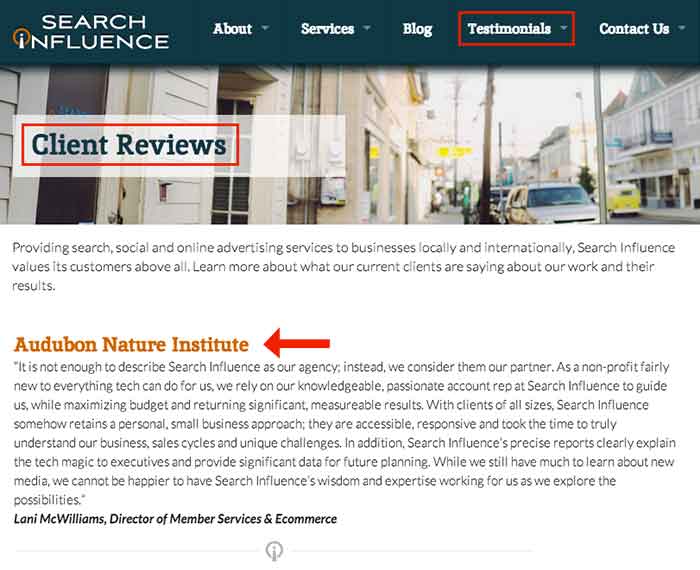
    Testimonials

    The second way is to gather and publish stories from your customers about how they use your brand and why they love your brand. If sales increased by 50% because of your help, write a case study about it and get the customer involved with providing the statistics and quotes. Finally, ask your brand advocates for referrals! For those that are passionate about your brand, they should be excited to help others by recommending your company to their circle of influence. Think about it: if you enjoyed a restaurant or a hotel, wouldn’t you recommend it to your friends and family? Why should it be different for your business?

    Submit your comments below on how you will leverage your brand advocates!

  • Social Media And Viral Content: Tips From Matt Siltala

    If you haven’t heard of Matt Siltala, get your butt to Google right now and start searching. As an online search industry leader and president of Avalaunch Media, Matt came to New Orleans this week to present at Pubcon, a social media and optimization conference and expo featuring multiple days of multiple-track sessions, leading-edge keynotes, and an all-day intensive Pubcon Masters Group training program.

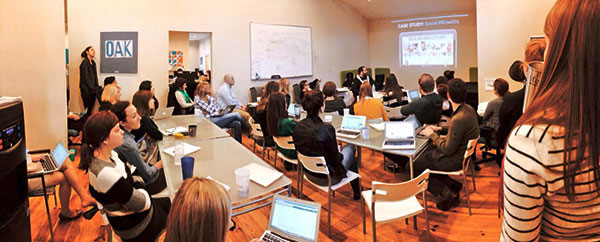
    Prior to wowing the crowds at Pubcon, Matt was kind enough to visit Search Influence and give us the skinny on social media, content, and how to make things go viral. His presentation was amazing, informative, humorous, and vastly helpful in terms of SEO. So, I’ve put together some key takeaways businesses can and should focus on in order to promote their brands and make a name for themselves online.
    MattSiltala-01

    Find Your Target Market By Talking To The Right People

    When you’re trying to reach a target market, knowing who to talk to in order to get results within that market is most important. When you talk to someone with power, authority, and a willingness to help, there is a higher probability of getting your brand noticed and increasing awareness among your target market.

    Pro Tip: If you know who you want to target, use Followerwonk to compare, analyze, track, and group users. That way, you know exactly who you’re reaching, and what to say in order to entice them.

    What Makes Good Content?

    Oddly enough, controversy increases viewers and makes for some great content. Think about it. When do people get the most involved in content? During a debate! Any topic people disagree on will get more viewers. This is a theory that withstands the test of time. For example: Republican vs. Democrat, Mac vs. PC, Coke vs. Pepsi, and Matt’s popular Evolution of the Electric Guitar infographic, which includes a Guitar Hero controller, featured below.

    music history timeline evolution infographics electric guitars 3660x1186 wallpaper_www.wall321.com_28

    Build Up Your Instagram Following With Deals

    bdb414e7b829806b2e3cdd921638042f

    With millions of users posting pictures every day, Instagram has exploded in terms of social media marketing and brand promotion. Boutiques, restaurants, and more post photos of products, specials, daily deals, and location information daily, giving viewers a reason to follow them and stay consistently engaged in the brand. By monitoring hashtags and paying attention to channels, businesses will learn whom to target and how to peak people’s interests and gain followers.

    Pro Tip: Show products in context to help viewers visualize a final product. Whether that is a meal, an outfit, or a piece of furniture, demonstrating what the product will look like in conjunction with other products peaks interest and makes things easier to relate to.

    Processes On Pinterest

    More frequently, businesses are turning to Pinterest to gain a customer base. In fact, the “Pin It” action has gained more popularity than the Facebook “Like” and Twitter’s “Retweet.” Checklists, how-tos, recipes, and detailed processes are hugely popular on Pinterest because they get people thinking and and keep their interest longer than a simple image.

    Pro Tip: In terms of repinning vs creating new pins, employ 4:1 ratio. Remember that it’s not just about repinning for content, you repin to network. And make sure you get yourself noticed by commenting regularly.

    Focus On Visuals On Facebook And Twitter

    As with all other forms of social media, building a following and growing your popularity is key to brand success on both Facebook and Twitter. So, what is the key to getting lots of retweets, likes, shares, and comments? Images! Think about it, what is the most retweeted post of all time? Ellen Degeneres’ Oscar Tweet! Only three days after the Oscars the tweet had a record 3.2 million retweets. Now that’s a powerful image.

    Pro Tip: Identify influencers relevant to your industry and interact with them as much as possible on social media to grow your online presence and brand popularity.

    I could go on and on about the wealth of knowledge Matt dispelled on the Search Influence family, but rather than rambling I’ll leave you with a few of his final tips and tricks:

    1. Pay attention to Linkedin groups. If you get in contact with the owner of a relevant group to your industry they can help you tremendously. Not only can they contact a large group of people easily via email, the group they’re contacting will be the exact target market you need for shares and online visibility.

    2. Sign up for alerts from Help A Reporter Out. You can find experts, get free publicity, and gain tons of helpful contacts.

    3. The gift category in Pinterest is wildly popular. By using a dollar sign ($) in your post description, your post will automatically show up there.

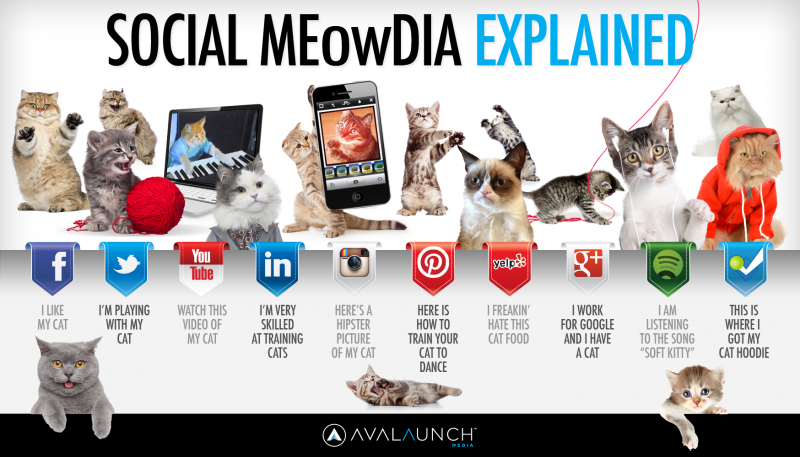
    4. Find a way to repurpose everything. Much like Matt’s wildly successful Social Meowdia Explained infographic (featured below), post, images, content, and more can be repurposed to gain popularity in a variety of forms. For example: an infographic can be turned into a blog, memes, content, etc.
    Social_Media_Explained4-800x457

    1. Remember that everything you do contributes to authorship. Every post you write, share, retweet, favorite, etc has your brand name attached to it. Everything you do online grows your authorship, so take advantage of that and be creative in what you post.

    For more information on Matt Siltala, check him out at Pubcon or visit his website! And for any questions on the information above, feel free to ask in the comments!


  • Content: The Beginning

    In the beginning there was the Internet.

    At least, that’s what I tell myself when I try to think back to my early childhood. Kids (whatever, I’m a kid, kids younger than me) are glued to smart phones, they have these things called tablets and nooks… but what of books? What of literature? These are some of the questions people had about television back when the youths first sat their little rumps down in front of the tube. Now, the eye of Sauron has turned to the Internet.

    internet.gif

    Don’t get me wrong, the Internet is chock-full of copious amounts of information (all the information, in my opinion—if it’s not on the Internet, it doesn’t exist) and can be extremely useful. Ah, but therein lies the issue!

    The Internet is an extremely powerful thing, a great source for random, trivial, and (sometimes) useful knowledge. However, with great power comes great responsibility. Although many can argue that the Internet is killing language (lik3 wut3v3r dude), excusing poor spelling, grammar, and vocabulary, the Internet has also bred a whole new generation of nit-picky grammar specialists. You know who I am talking about, that one person who loves to correct your use of words, followed by a sweet, misleading asterisk.

    What am I getting at?

    hercmeme.jpg

    Although a lot of time goes into straightening out the aesthetic and function of websites, many forget to think about the words.

    To quote the great V, “Words will always retain their power. Words offer the means to meaning, and for those who will listen, the enunciation of truth.”

    However, choosing those words can be a difficult, sometimes even Herculean, task. On the one hand, your content needs to be purposefully crafted, tailoring to those aforementioned language *specialists*, but on the other hand, your content needs to be clear, concise, and easily understood by a diverse audience, i.e. everyone.

    Good Content = Good SEO

    But how do I write good content? You may ask. Obviously, content will vary depending on your site, your brand, and your audience. But, say we were to tackle “good” content on a broad scale

    Check back for my next blog where I break down the concept of content, starting first with: The What — What Your Content Needs To Say.

  • New Search Influence Production Members

    Take a look at our newest Internet Marketing Associates!

    Alex Talbot

    AlexAlex is a native New Orleanian. He grew up in Gretna and went to Jesuit High school. Alex recently graduated from Loyola University with a degree in marketing and economics. Before joining us at Search Influence, he worked in sales and brand management at a cable and satellite company. In his spare time, Alex plays in a punk rock band called Pears, previously known as the Lollies.  One of Alex’s most recent performances was on Mardi Gras day at Siberia! Alex joins the technical Internet Marketing Associate side of the SI production team. His focus includes interpreting web marketing trends and search optimization plans for national SMBs in a variety of different industries. Alex also analyzes web traffic statistics to create detailed reports of link building campaigns and marketing initiatives.

    Nakia Thomas

    photoNakia grew up in Gonzales, Louisiana. She attended Louisiana State University, where she graduated with a degree in communications. Before becoming a part of the Search Influence team, Nakia was a Formal Wear Specialist (She helped pick out gowns and tuxedos!) at a wedding boutique, and did some freelance and ghost writing work.  Additionally, Nakia writes songs, and helps one of her good friends with his record label. Check out this single she helped write! NGWY (No Good Without You). Nakia adds to the growing content focused Internet Marketing Associates group of the production team here at SI. She focuses on writing and optimizing content for our client’s websites, video scripts, blog, social media, and more. Nakia also performs Internet research, website edits, quality assurance, and editorial review.

    We’re so excited to add these two multi-talented people to our growing team! If you’re interested in becoming an Internet Marketing Associate, or any part of the growing Search Influence team, check out our list of available careers!

  • Content Marketing: Doing It Right in 2014

    Feb14You might have heard the buzz: content marketing is not only here to stay, it’s critical for business success in 2014. The Internet noise is getting louder every day, and discoverability is becoming a greater challenge as the data streams expand with chatter from websites, blogs, and social media.

    If you’re looking to capture an audience online, you need an effective content marketing strategy in place.

    Why Content Marketing is Key

    Backlinks, keywords, and automated social tools just aren’t going to cut it anymore. Part of the reason is an increasingly Internet-savvy consumer base that can sort the authentic from the spammy at a glance—and the rest is due to major shifts in search engine algorithms, particularly Google.

    Google Hummingbird, the search engine giant’s most recent algorithm update, is all about promoting quality content and pushing it to the top of search engine results. In a definitive acknowledgment of the sharp increase in mobile search, Hummingbird aims to provide results that reflect the way people talk—delivering a conversational and contextual experience, rather than treating searches as keyword strings.

    In order to improve your search engine rankings, you need content that informs, answers questions, and adds value.

    Mistakes that Hold Your Content Marketing Back

    In order to get content marketing right, there are certain objectives you have to accomplish. Your content marketing should attract, engage, expand, and ultimately convert your audience.

    Some of the common mistakes that prevent content marketing from reaching those objectives include:

    • Producing in a vacuum. If your marketing department handles all of the content generation, from conception to execution, they’re eventually going to sound stale. Consider soliciting content ideas from other departments, working with a freelance copywriter, or seeking guest bloggers.
    • Publishing static content. To engage your audience, you need to win them over. This means providing something more than dry facts or market-speak—and giving readers a way to respond with thoughts of their own. Value quality over quantity, and produce content that informs, intrigues, and entertains. Make sure you’re always responding to comments and questions from readers.
    • Sharing on the wrong channels. When it comes to social media, a lot of companies have decided that more is more—and thinned out their efforts in order to reach as many social platforms as possible. This dilutes your brand and wastes your time. Most businesses can’t go wrong with Google+, Facebook, Twitter, and LinkedIn. As for the rest, experiment: keep what works, toss the rest.
    • Failing to analyze results. Content marketing is useless to your organization without analytics. You need to know what, where, and how your marketing efforts are working—where visitors are coming from, why they stay (or leave), and whether they come back.

    So What’s the Right Way?

    The real secret to effective content marketing in 2014 is quality. But what is “quality,” and how can you produce it?

    Quality content starts with defining your audience. Who are you creating this content for, and what do they want or need? What engages them? Find out as much as you can about your target audience—where they are online, what they respond to, even what they don’t like.

    When you move to the content creation phase, keep your target audience in mind. This includes the format of your content, whether your audience prefers text, images, video, interactive apps, or some combination of media. Finally, post your content on the channels your target market is most likely to frequent.

    The Internet changes, but content marketing remains one of the most effective strategies for online marketing success. Make 2014 the year you embrace content marketing done right.

    What’s working for you? Let us know in the comments!

    Image courtesy of Gerd Altmann

    Megan Totka is the Chief Editor for ChamberofCommerce.com. She specializes on the topic of small business tips and resources. ChamberofCommerce.com helps small businesses grow their business on the web and facilitates connectivity between local businesses and more than 7,000 Chambers of Commerce worldwide.