Tag: local search

  • Website Promotion – 7 Common Lies & Misconceptions

    After many conversations with existing and potential clients, I have come to find there are many misconceptions and straight-up lies about our industry. Some of these lies are just bogus and everyone should be aware, so I’ve whipped up this handy guide with explanations!

    7. You cannot make money with social media

    This is simply a lie. Social media can be a great source of revenue. The biggest complaint about social media I often hear is, “I cannot measure the success of social media.” With the use of iFrames and reporting tools, success can now be more easily measured. An iFrame allows us the ability to create a welcome tab on your page that acts like a website, so we can install analytics, implement a form and utilize call tracking to get a detailed and effective overview of what’s going on.

    Social media is the only outlet that allows you to target your proper demographic. Through the use of highly targeted Facebook display ads, we have the ability to put your brand in front of your target audience.  Social media is also one of the easiest and most effective ways to create interaction with your existing and potential customers.  There is no reason you cannot see profits through social media.

    6. SEO is a set-it-and-forget business

    I wish obtaining the best rankings was as easy as that.  I often hear potential clients ask me “Why am I paying for a monthly service?” to which I respond, “Your competition isn’t asleep.”  Much of the work for optimizing a site is done off-site. This comes a shock to many people who believe you can just make a few edits on your site and magically you are now in position 1.

    Yes, having your site speak properly to the keywords that potential customers are searching is very important, but it is not everything. This will not get you to the top position in a competitive industry. Ongoing link building is a key element to the success of any SEO campaign. Google looks at links as a form of “popularity contest” that proves to Google you really do what your site says.

    5. I need a new site before I do any SEO

    We can help almost any site rank, including ones that are not as attractive as others. There are a few exceptions to this rule, such as Flash and templates that do not give you access to the backend management. Many time people believe that their site needs to be “pretty” to rank well, when in reality, it is more about the conversion optimization of your site. This includes prominent display of your phone number and a small form located on every page of your site. Your design has no effect on the organic rankings.

    4. Guaranteed rankings

    Since my email also attached to [email protected], I have the privilege of receiving all of the spammy SEO emails we get on a daily basis. My favorites are the ones that use scare tactics and money back guarantees. These guys are full of it! I recently read one that was trying to make you believe the paid results were part of SEO. Ultimately, the money back gaurantee is just a ploy to get you in the door, give them some money, and sure enough a few months down the road you’ll be calling me cursing everything SEO.  These scammy SEO companies can offer these guarantees by choosing keywords that are so irrelevant there is no search-around and by paying to be on page one.

    Why we not guarantee results? Hint: it isn’t lack of confidence! We would have never been able to earn placement in the INC. 500 (with no sales team!) if we did not produce results. Unfortunately we do not have control of Google; if we did, I would be on a beach enjoying a Mojito right about now. Earlier this month Google made a change to the display of search results.

    3. Article marketing does not work

    I have recently read a number of blog post questioning the effects of using articles as an effective form of obtaining backlinks. For those of you who question the effectiveness, ask any of our clients who are in the top positions for their most popular searches. We have been and continue to use articles as an effective way to obtain backlinks. What doesn’t work is spammy, zero-effort articles with poor-quality or even plagiarized content. We put a great deal of effort into this part of our services and it shows. Article marketing works!

    2. Paid search affects organic rankings

    Paid search results have zero effect on organic rankings. They can not help nor hurt your organic rankings. You can do things to optimize for both organic rankings and paid search rankings, but you cannot affect one without the other.  Its that simple!

    1. TopSEOs.com is a legitimate SEO rankings site

    I won’t mince words: TopSEOs.com is the biggest bunch of bullshit out there. According to their website:

    “The independent authority on search vendors, topseos.com, evaluates and ranks the best in the internet marketing industry. Through in-depth vendor analysis, review of work completed, and client evaluation, we put together a list of the top search engine optimization companies in the industry. Our in-depth analysis delves into a vendor’s business practices and compares them against industry standards to ensure that the work is quality. Often times we connect directly to the clients of a vendor and ask about their overall experience as well as details about the processes, reporting, and success of the campaign.”


    Sound legit, right? Wrong! Companies like Webimax.com pay for their placement in TopSEOs.com so they can tout the fact that they have been ranked “#1” SEO company. Garbage! It’s complete garbage.  For just a few thousand dollars a month Webimax gets to claim to be the “#1 SEO Company in the U.S.” There are many blogs and forums that expose the scam for what it is. Oh yeah, and if you attempt to leave a negative comment about Top SEOs or one of their “valued clients,” they will filter your post to ensure only positive messages can be seen.

    Below are just a handful of resources that expose Top SEOs and Webimax for the scams they are:
    How Top SEO Companies like WebiMax Scam Clients – P.T. Barnum Unique Method
    TopSEOs.com – A Review of the Top SEOs Paid Rating Service – Aaron Wall
    Sphinn.com – Multiple posts about TopSEOs Scam

  • Crossed Over Into… The Nofollow Zone: Livejournal SEO And What Nofollows Mean For You

    It’s been a bit over three years since I’ve used the once-titanic blogging site LiveJournal for anything. LiveJournal’s still got an active community, but it’s true that asking “What’s your LJ name?” of a new acquaintance is a little bit more embarrassing today than it was in 2003. My account’s dead (nah, it’s not on DeadJournal), but every few months, some brave archaeologists attempt to set up some horrible advertisements within the internals of this hibernating brute.

    Here’s one of the emails I got:

    Here we see a knucklehead posting a comment in a misguided attempt at link building. It’s not really the fault of the “spammer” that the link building attempt is for naught: this is an obvious mass-submission. Really, enough sites were probably hit by this submission machine that this message had some kind of benefit, and if so, congratulations to your diet supplements, dude.

    Still, the fact stands that this carpet bombing of links missed its target with any LiveJournal comment fields it was posted on. Not because of LiveJournal’s disabling of HTML-formatted links on anonymous comments, or because this little comment is formatted in BB-code, but because of a little attribute on links that Google doesn’t like:

    After joking with our very own Anthony Coleman about offering “LiveJournal SEO” services at our company, he admitted to researching the viability of this. Sadly or possibly as expected, he said that this was an empty pursuit, letting me know that every external link on LiveJournal is “nofollow,” as depicted and highlighted in the above picture. While my area of expertise in this company does not qualify me to comment on the exact benefit (or lack thereof) a “nofollow” link provides to a page’s rank, such links are certainly less desirable for SEO.

    LiveJournal’s not the only site practicing the nofollow tactic to dissuade would-be spammers: Twitter takes the same approach, and so do the other social media giants. Even so, this doesn’t stop Search Influence from getting our clients a nutritious glass of “link juice” when we put links into our proverbial Juiceman Juicers all around the web. While “LiveJournal SEO” may not be a service that Search Influence will offer anytime in the future, we’ll always hold the site dear to us, and I’d personally like to thank my new pal “Odzywki” for reminding us of the respectable approach that Search Influence takes to SEO.

  • INFOGRAPHIC: Why Content Marketing Matters

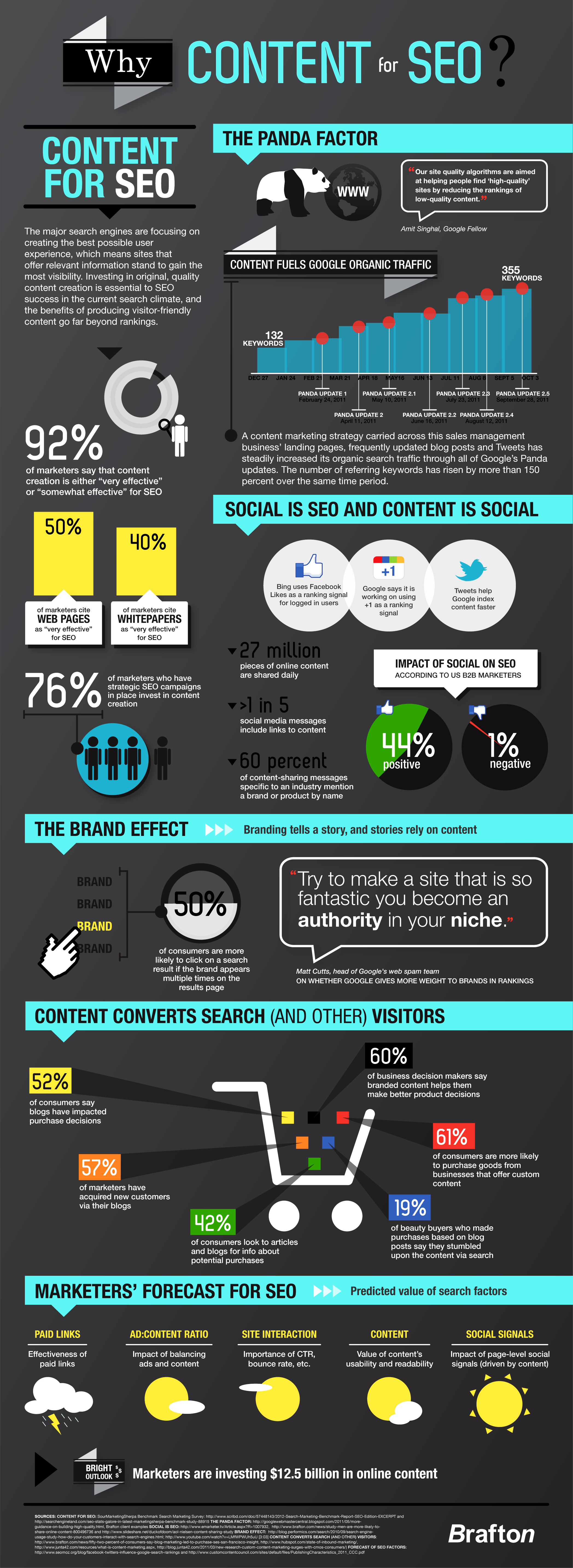
    Our friends at BraftoN have put together a great infographic on the importance of content in the world of SEO. It’s an established fact that search engines give preferential ranking to sites with the freshest and most pertinent content, but it’s eye-opening to really dig into how important content really is.

    As Google Fellow Amit Singhal is quoted as saying, “Our site quality algorithms are aimed at helping people find the ‘high-quality’ sites by reducing the rankings of low-quality content.” That quote alone should make everyone with any kind of Internet presence at all scramble for fresh, high quality content.

    Here are some other incredibly interesting facts from the infographic that deserve some consideration:

    • Ninety two percent of marketers say that content creation is either “very effective” or “somewhat effective” for SEO. The same percentage of Americans believe in God. Correlation, or causation?
    • Twenty seven million pieces of online content are shared daily. The same number of people eat at McDonald’s every day.
    • Sixty percent of content-sharing messages specific to an industry mention a brand or product by name. Sixty percent of adults can’t digest milk.
    • Fifty two percent of consumers say blogs have impacted purchase decisions. The same percentage of Americans don’t know who Pippa Middleton is. They obviously don’t read the blogs.
    • Marketers are investing $12.5 billion in online content. We could have just bought Motorola Mobility for the same price.

    So take a detailed look at the content you are offering on your website. Will it make Google jump for joy, or bump you 20 spots down the rankings? The quality of your online content is simply too important to ignore.

    Not sure what to do about your content? Contact us. We’re here to help.

  • Savvy Online Business Builders: The New Snake Oil Salesmen

    A Look at the Growing Trend of Internet Marketing Con-men

    We’ve all seen these people at conferences, pimping out their extra shiny business cards and talking like late-night infomercials – the online business strategists and social media experts. They claim to have the secrets to creating a successful online brand and promise “more profitable business now” if only you are willing to hear the pitch. They use buzz words like “online reputation score” and “viral marketing” to excite business owners into trusting their expertise and ultimately signing up for expensive year long contracts but never promise actual results.

    I hate these type of people.

    They prey on ignorance, offering fly-by-night schemes which promise efficient ways to generate more revenue at a low-cost for small businesses. Of course that low-cost is for the online expert’s one-size fits all advice.

    Advice that seems to always involve action plans centered around mediums that have no measurable results *cough* Twitter *cough*. These experts rarely provide their clients’ with monthly performance reports – just monthly invoices. And clients would be hard pressed to get details on how that “low-cost” investment has translated into online business.

    Who should you trust with your web presence? I’ve got a few questions you should ask before you sign on the dotted line.

    Top 5 Questions To Ask An Online Expert To Avoid A Scam*

    1. What makes you an expert?
    2. Do you have experience in my industry?
    3. Can I see some examples of your success stories?
    4. What should I expect in terms of results? In what timeframe?
    5. How do you measure your success?

    Be sure to remember question #5 – online business experts who fail to measure qualified results, such as # of leads, improved rankings, or increase in traffic, are to be avoided.

    If they can’t prove their worth with data, they aren’t worth hiring.

    In the end, someone who promises to rapidly grow your business with inspirational coaching and Twitter spamming is probably not an expert. So when you are looking for help with your web presence, find someone who sets quantifiable goals to measure success. An Internet expert should not be determined by how convincing his words are, but rather how his contribution to your business generated revenue and results.

    *Adapted from Google‘s useful questions to ask an SEO

  • 5 For Friday — Links, Stories & Posts For Your Weekend

    We’re back with another 5 for Friday, a collection of the freshest and tastiest SEO news stories, blogs and recommendations from across the web!

    Google’s Spam Report Page Gets “Biggest Refresh” In Years — Search Engine Land

    The Webmaster Tools spam report form has been completely updated and refreshed, heralding the biggest change to the feature in a good 10 years. There are now several discrete forms for different kinds of spam instead of one catch-all field, with options for “paid links” and “malware” among other specific spam issues.

    The 3 Pillars of Local Search Reviews — Search Engine Journal

    Local search is a significantly dynamic and shifting branch of web search — just think of the onslaught of check-in services that have cropped up in recent memory — and this changeability has led to what SEJ’s Mike Ramsey dubs as “storm chasers,” those who are so quick to cash in on the next big thing that they abandon their efforts as soon as shiny new feature or social app comes onto the scene. This has proven true with Google’s recent focus on user-generated reviews and all but exclusion of third-party sources. Here, Ramsey gives a few pointers on the discerning review-seeker’s strategies for the local search industry.

    Outbrain for Mobile Integrates Content Recommendation Links for Mobile Websites — Social Times

    In some circumstances, a well-placed related content link can do a lot more for your viewing stats than the most carefully targeted advertisements. Outbrain, the recommendation engine that powers related content discovery services for high-profile sites such as USA Today, the New York Post and the Atlantic, has now adapted this strategy for mobile websites to “[enable] publishers to boost their mobile traffic and revenue, while enhancing the user experience by providing personalized links to recommended content for readers who are accessing the site from their mobile device.”

    Small Business SEO: How to Check Your Backlinks — Search Engine Watch

    Are you a small business just starting to navigate the wide world of SEO? Take a gander at this handy guide to basic backlinking and kick-start the journey into off-site marketing, monitoring your links and figuring out the numbers.

    Google Buys The Dealmap for Offers — ProNet Advertising

    Google has acquired DealMap, a local deal-mapping service that provides location-based deals to potentially tens of millions of bargain shoppers. For a company that was only just started in 2010, DealMap has had an impressive growth rate, already breaking the 2 million users mark with a substantial 85 million US visitor demographic. With the recent launch of Google Offers, the company’s foray into local Groupon-like deal networking could be picking up steam.

  • Google Isn’t Bowing Down

    So, in case you haven’t heard, there was a major update to Google Places late last week. My Friday was filled with confusion, frustration and a feeling of something worse to come. It was sort of like a David Lynch movie with a Local twist. Now that the smoke has cleared, one question remains. What is Google up to?

    Google Places Update

    Before I get into the possible reasons for this update, here is a rundown of the most prominent changes that have been made to business listings on Google Places.

    • Google reviews are the only ones to include snippets now.
    • Third-party reviews have been relegated  to a  “Reviews from around the web” section at the bottom of the page.
    • Third-Party citations have been removed completely.
    • A big red “Write a review” button has been added in two prominent positions.
    • The “More about this place” section is gone.
    • The “What people are saying” section has been replaced by “descriptive terms”.

    Now, back to the question-at-hand. What is Google up to? The Wall Street Journal’s Amir Efrati suggests that Google is bowing down to it’s competitors under growing pressure from the FTC’s antitrust investigation. Saying that, by removing third-party reviews from Places pages, Google is distancing itself from the claims that they “steal” content from the likes of Yelp and Citysearch, post it on their own Places pages, and give those pages preferential rankings in search results. While I see where Amir is coming from, I don’t think that Google is bowing down at all. Quite the contrary, actually. I believe that Google is putting their attack plans into motion.

    Google was initially designed to index third-party content in an easily searchable and user-friendly format. By removing third-party citations and review snippets and promoting their own reviews in what is usually the #1 ranked search result within it’s own #1 ranked search engine, Google has formatted their local search results in a way that obviously favors their own content over that of their rivals. This is the exact reason why the FTC is investigating Google in the first place.

    In other words, Google isn’t interested in displaying reviews from Yelp, Citysearch, and other prominent sites, they want to make those reviews obsolete. If you look at the changes to Google Places from this perspective, it doesn’t seem like Google is that worried about the FTC’s investigation. With all that money they are spending on federal lobbying, I guess Big G thinks they’ll come out on top like Microsoft did in the 90’s.

    Ultimately, not much has changed when it comes to what really matters… getting results. Google Places is still the holy grail of Local SEO. There haven’t been any reported drops in rankings due to this update, so no major algorithm changes are believed to be involved. This means that while Google may not be displaying third-party reviews and citations, they still matter when it comes determining the rankings of local search results, for now.


  • Google Transparency – Is It Really That Bad?

    Could it hurt Google to be a little bit more clear? Mr. Kohn at Blind Five Year Old thinks not. Google’s public persona can be unclear and capricious, while the size of their user base is so large that noise from their algorithm can have deep effects on the livelihood of those users. Are his principles of “real” engagement, transparency, and amplification already seen across Google’s user interactions? Or does the the SEO community and the SEO dominatrix take care of the rest?


    Support Forums – MUST GET FIX BEFORE SOMEONE GET KILL!!!

    The ecosystem of the Google Forums allows professionals, amateurs, and Google professionals to come together and try to solve the problems that come up in the daily life of a website owner. However, the average website owner or business professional doesn’t have the faintest idea of how Google is organized or to whom even to address problems.

    When a Map Error puts customers in danger, you’d like to see a fast response and some targeted information to help your specific situation. The first response to the thread is by a Google Employee, probably on the Maps team. However, the responder who is best situated to directly take a look at the problem and at least explain what’s going on to cause the error simply puts a boilerplate answer.

    It takes a community member to explain in detail what’s going on. This could be Google awaiting a naturally crowdsourced solution to support problems, but that sounds like a euphemism for “we don’t have time for this through inappropriate channels.” That’s fair, of course, but those channels are hard to find and cold copypasta doesn’t reheat well, especially when it’s an error so far beyond the ken of most business owners.


    Blog Posts – “In short. This articles fails it’s own goals.”

    For those without a “MUST GET FIX,” researching Google through their corporate blogs would seem to be a worthy pursuit. But even when giving deep information about what factors enter into the search algorithm, Google isn’t immune to denouncements of “unmitigated prevarication.” Again, the complaint is that it’s PR instead of real help.

    To be fair, I can’t see this complaint, especially in the Panda algorithm change posts. Through sticking to their guns about not releasing too much algorithm data, Google has provided intuitive, i.e. non-technical, ways to check the perceived quality of a site. Here, despite claims of “misdirection” and “saying one thing and doing another,” Google might even be giving better information than they’re credited with, saying that the algorithm is using techniques that are either fuzzy or heuristic or some other kind of higher statistics that somewhat accurately model real human interactions — basically, don’t bother chasing the algorithm, it chases you.

    Compounding this problem of transparency, webmasters only see the noise; that is, they don’t see how well the algorithm works overall and are only concerned with their own site, a little statistical blip that is hard to reconcile with the overall trends. Furthermore, well-educated webmasters also see where Google policy and practice diverge, whether it’s for Ads, Maps, or Snippets. In addition, the wheedling that can happen when a site owner talks directly to Google and the mystique of getting that number for that red phone undermines the transparency Google works to show.


    ThinkInsights – Data Beats Opinion

    When it comes to the state of search, Google offers a set of studies they’ve conducted and compiled at their ThinkInsights, giving a glimpse at what Google is interested in right now. Since April, they’ve been pushing Mobile internet, which affects most areas of internet marketing: PPC, website design, and specified marketing. These reports are published as slideshows in Powerpoint and PDF formats.

    These studies are Google’s way to keep everyone up to date while pushing its products. Like the early videos for learning AdWords, this kind of infotising does a lot for Google, but may not give the kinds of in-depth information some might hope. Here, Google could  improve two areas. Firstly, they need to amplify. These things could be better shown to the average person if they were one-shot infographics or otherwise promoted for easy sharing and larger reach. But it’s not just that — format and distribution might not be a problem if the information were targeted, but it’s neither juicy enough for the common reader, nor specific or new enough for the marketer. The information is often more of a middle-ground, possibly good for the part-time marketer, but not for keeping up with new trends or finding the next big thing. But is that Google’s job?


    Matt Cutts – Yes, there is a Santa

    Regardless of whose job it is, Google has its own unofficial mouthpiece in its head of Search Quality, Matt Cutts. While he’s a bit of a god among mortals in the search community, his position allows him to discuss with professionals and semi-professionals on forums, blogs, and other social arenas. Most recently, his role in shutting down incorrect speculation on ranking penalty factors puts him at the forefront of any transparency discussion. In this case, he seems to follow the debunking flowchart Danny Sullivan created. He sees a fairly bizarre claim, but didn’t respond until he saw the same claim repeated on Hacker News.

    Looking at the comments, you immediately see issues with the one-man show. Not only is a real person capable of mistakes and poor wording, but the nature of a small industry gives people long memories. Furthermore, his direct connection to Google and his dislike of discussing specifics of the algorithm give way to vagueness and expected corporate doublespeak. Finally, the high level of technical savvy of his audience lets them research well, leaving others to repeat the supporting data to undermine his transparent claims.

    I feel for Mr. Cutts — he doesn’t have to trawl messageboards and blogs to help people understand his business better, but he does, often to a less than warm welcome. But his position is somewhat self-made as the most vocal Google Guy, leaving the door open for the last line of transparency, the SEO community, who are the alternative to top-down transparency.


    SEO Community – Publishing the Factors

    Google is a corporation, and therefore sometimes has to avoid certain topics or cloud the waters to dissuade people from gaming the system. The SEO community comes to the rescue and fills in the blanks. Anecdotal reports, such as case studies, forum posts, and SEO blogs, are incredible sources, especially when you find yourself in the same situation. But it’s not these that provide the greatest transparency for those under Google’s will; it’s things like Rand Fishkin’s Search Ranking Factors and David Mihm’s Local Search Ranking Factors that fill in the blanks that Google leaves through its inability to talk about the algorithm or provide meaningful search data.

    These factors reports are the result of serious research and collected soft feelings from knowledgeable industry professionals — a good combination of information. Furthermore, since they provide methodologies and even raw data, you can double-check or even focus on a subset of their data, allowing the ultimate kind of transparency.

    These information sources beyond Google’s reach are the real transparency for the Search Industry. They are the ones who give as unbiased as possible information (minus high-level trade secrets of course) and unplug the bung for much of the meaningful search truths.


    It’s hard to be a large, looming company and give enough care and information to your users to make them feel like you’re being transparent. Giving credit where it’s due, Google is often meeting the criteria asked; however, meeting the criteria and meeting the small business owners’ expectations of those criteria are two separate issues.

    The biggest issue for Google’s transparency, despite the multiple sources of information and moderately high level of involvement, is amplification. They aren’t making their information particularly easy to access, nor are they making the answers they give very public. But that’s not the worst thing — bloggers, researchers, and other SEO kings are more than happy to throw their two cents in, letting independent sources keep the information lines clear. Finally, the quest for transparency, especially on the internet, is a bit of a red herring: the Internet is not the democratic utopia we hoped it was.


    Is Google doing enough to make its products, services, and policies clear for you?

  • SEO for Musicians: Take Advantage Of Your Audience!

    With a little SEO sauce, your website can go from air-guitar…

    If you’re involved in any kind of creative endeavor, chances are you’re waiting to be discovered. The duty of the artist is not just to make art, but to share it with others; this goes doubly for musicians, whose opportunities for media expansion have exploded in the last several years.

    Getting discovered by an agent who happens to be at your show is so 90’s. With sites like Myspace, BandCamp, Twitter, Last.fm, Facebook, Soundcloud and others, bands now have a wealth of tools to choose from to stay in touch with their audience, as well as personal sites and blogs where they have full control over the message. While maintaining all of these entities can be an overwhelming amount of work, practicing basic SEO and maintaining a strong, cohesive media profile throughout a few selected ones can be just as or more effective than spreading yourself thin.

    It’s important to remember that people aren’t just searching text these days; make sure that your music samples, videos and other media knick-knacks are available for your audience. Allowing for streaming makes your music accessible for the casual web-surfer, while putting up a selection of singles for download can increase loyalty and brand retention among those who enjoy your sound enough to hang on to it. And please — if you’re making tracks available for download, make sure your ID3 tag ducks are in a row. You don’t want your listeners to download a track, listen to it once and delete it a few days down the line because they have no idea where it came from. Everything should be consistently titled and formatted for maximum ease of consumption.

    On-page SEO is a must, particularly if you’re a hometown outfit. This doesn’t have to be an involved, link-intensive campaign, but covering your touring area is necessary if you want to be seen by the casual Googler. Basic keyword research from AdWords can help with this. Additionally, backlinking from community sites such as Digg, Reddit and various music forums (both local and non-), while not particularly weighty as far as pagerank, can contribute to visibility and drum up community interest — your music connecting with the real ears it needs to find. Similarly, maintaining an active profile on Youtube is a must. Even if you don’t have a full-on music video, the ‘tube is another place to put up tracks and offers more opportunity for keyword insertion.

    … to rock star!
    On the more tech end of things, hreviews are a new and trendy kind of metadata that’s easy-to-implement and offers more bang for your buck than the traditional flavor. Avoid Flash whenever possible, as Google doesn’t index it (and everyone hates unnecessary Flash interfaces anyway), and consider making your site mobile-friendly with HTML5. Making the switch is less difficult than it sounds, particularly for less complex sites, and it allows for the possibility of listeners checking out your product anywhere — on the street, at the gym, and on the way home from the (hopefully) impressive gig you’ve just played. If you’re a smaller band, chances are you’re friendly with other acts in your immediate hometown and greater touring area. Find out whose links are worth more and offer to swap — this will both boost your pagerank and draw in new views from areas you may not have made a significant impression on yet.

    Once your flagship .com site is up and running, utilize the wealth of free tools at your disposal to figure out where your traffic is coming from. Google Analytics and Urchin are invaluable to help figure out what you’re doing wrong, what you’re doing right and where to concentrate your efforts. Sonicbids will allow you to connect with the right promoters for your sound, as well as develop an EPK — electronic press kit — which will lend you a great deal of professional appearance and credibility.

    Lastly, blog blog blog your little heart out. Besides being an excellent way to stay in touch with fans and a good creative outlet in general (stimulating the old writing muscles can only help your lyrics!), blogging is a fantastic way to continually update your site with fresh information — which, as we all know, Google loves. Let your home base languish with nary an update or new media for eight months and you’ll surely see a drop in both ranking and pageview.

    The scary and exciting thing about contemporary music marketing is the immense egalitarianism that presents itself in the face of all these tools. A fledgling band should first and foremost know its audience; the younger and more tech-savvy your ideal crowd is, the more you should invest in your Internet presence. While a good marketing campaign won’t win you mass fan adoration or an instant record deal, it gets your product out there in the public eye (or ear!) to be reviewed, discussed and enjoyed.

  • Top 5 Search Marketing Bloggers You Should Be Stalking in 2011

    Why hasn't Matthew Lesko written a get rich with SEO book yet?
    Why hasn't Matthew Lesko written a get rich with SEO book yet?

    I’m a search marketing guy, have been since my first job out of college (if we are not counting that liquor store on Ponce I worked out for 2 weeks in the summer of ’06. You can’t beat a 30% discount…). Most people can’t grasp what I do or even understand why the company I work for exist (my mother thinks I’m everything from a telemarketer to an Internet panhandler) but it is what I do and love. Recently I have become increasingly more serious about being able to do my job better and become a more rounded internet guy (I mostly just hang out on the fringe of the internet with the /b/tards and tweeps heckling e-celebs for my own amusement). Now I feel I have to pour myself into learning new search marketing strategies in order to keep with the constant changes and competition.

    Finding good information is not always easy for search marketers.

    There are no continued learning programs for SEO backlinking strategies or creating compelling keyword rich content. So I decided to put together a list of my favorite internet marketing bloggers and explain why you should be reading them if you are serious about SEO.

    #1) Matt Cutts is Better Than You

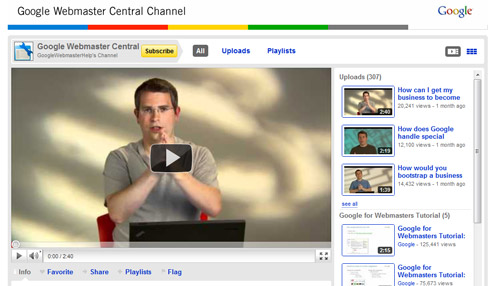
    If you are lazy like me you prefer to just listen to Matt Cutts talk.
    http://www.youtube.com/user/GoogleWebmasterHelp

    If you don’t know who Matt Cutts is and you are in Search Marketing, ctrl+alt+delete your resume. Best known as being the smilin’ enforcer of Google Webmaster Guidelines, Cutts provides guidance to search marketers through his Youtube videos and blog posts.

    Why You Should Care: Matt Cutts is Google’s Prometheus.  He presents SEO guidance in several different formats (videos, blog posts, guest speaking, etc). Having so many different formats make the information he provides easier to digest. If you are like me, hitting the play button is a lot easier to do than reading three paragraphs of insights.

    What Should You Stalk: While you can always follow his blog, I find his information most useful from the Youtube Channel – Google Webmaster Central Channel

    #2) The eWhisper

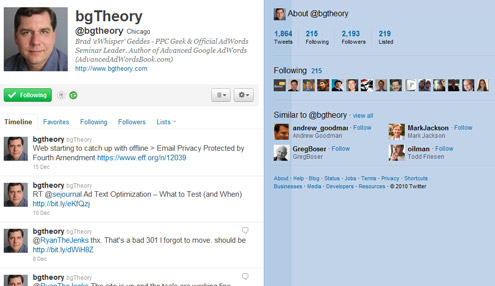
    @bgtheory on Twitter
    @bgtheory on Twitter

    bgTheory’s Brad Geddes is a world-class PPC Geek and Adwords affacionato. Besides being the Official Adwords seminar leader, he is also the author of Advanced Google Adwords.

    Why You Should Care: If you want to know what you should be doing with your Adwords account, Geddes is the man to follow. He is a well of information and ideas about how you be better use your Adwords campaign for generating and sustaining ROI.

    What Should You Stalk: His Twitter account – http://twitter.com/#!/bgtheory

    #3) David and the Paid Goliath

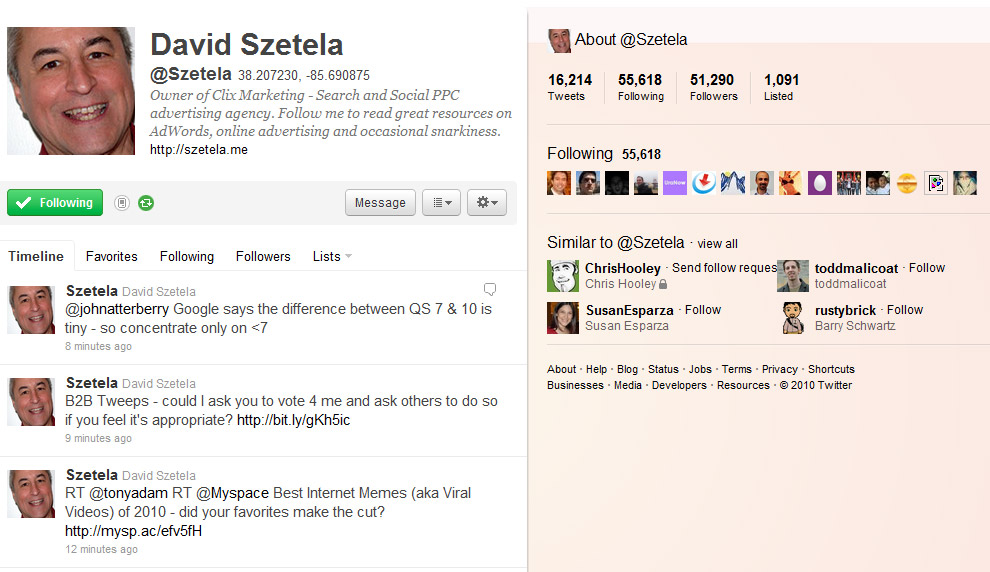
    @Szetela on Twitter
    @Szetela on Twitter

    David Szetela – the occasional snarky owner of Clix Marketing, David Szetela is one of my go-to sources for PPC news and updates.

    Why You Should Care: His knowledge of cross-platform paid search is extensive and an quick follow on Twitter will have your timeline full of information on tweets on paid search strategies and general SEO information.

    What Should You Stalk: Like with Brad, David is most active on Twitter – http://twitter.com/#!/szetela

    #4) Moz-el tov

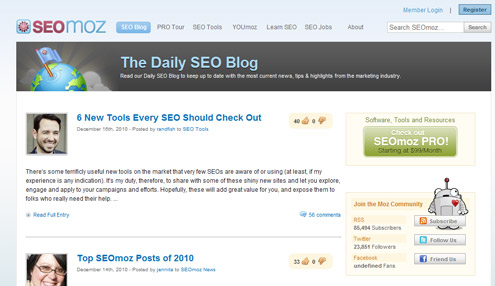
    http://www.seomoz.org/blog
    http://www.seomoz.org/blog

    SEOmoz  has some of the most informative blog post on SEO benefits, keyword mining, and PPC tips.

    Why You Should Care: I’ve been faithfully reading SEOmoz’s blog for up-to-date information on SEO, PPC, and SMM from some of the best and brightest. If you are not following this blog, you are missing out.

    What You Should Stalk: I highly suggest daily readings of the blog – http://www.seomoz.org/blog

    #5) Mike Maps It All Out

    [/caption]

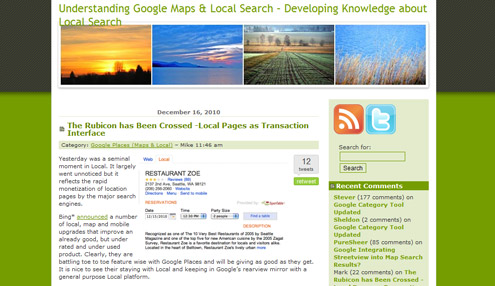
    A student of life, political economy & local search, Mike Blumenthal is a Google Maps and local search guru. He frequently authors articles at Search Engine Land and his blog Understanding Google Maps and Local Search.

    Why You Should Care: Local search, local search, and local search. Oh and maps.

    What You Should Stalk: : Mike’s blog is a warehouse of data points and Google Maps techniques

  • The Effect of Google Instant on Long Tail Search Behaviors

    We have been watching some recent Google product changes over the last few months to monitor the effects on site traffic, and in November we see most websites moved along at a positive level with their organic search numbers.  Nothing startling.  Everything is on track.  But for a significant few websites, digging into the Google organic search data in November elicited responses of “Help!” or “what in the world!?!”

    With drops in Google organic traffic in the double digits, some at 13% decrease, some at 20%, and some with a 32% nose dive, something clearly is going on for these few sites. Of course, my first thoughts turn straight to the two different Google product rollouts over the last 2 months and how they must be changing search behavior and traffic percentages.

    Trying to find an answer or at minimum, a clue, I am paying attention to three specific areas of organic decreases:

    1) geo specific searches

    2) branded searches

    3) photo organic search

    For an example, Google organic search for 1 website for November dropped 17% or 57 visits, of which 27 were geo specific related phrases.  His organic rankings are super strong so that’s not the cause. He is in the SERPs in some great spots, so where is the traffic going?

    I have another website in a different industry which lost 156 Google organic searches in November – 74 of these were geo specific.

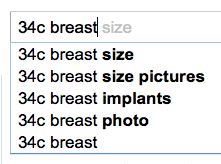
    I believe these losses are largely a consequence of Google Instant where the results differ with each letter typed in search.  I believe Instant is pulling searchers away from their intended search when these alternatives are dynamically generating as they type.  I know when Instant first rolled live, some SEO experts opined that Instant was going to be a non-event.   I can’t agree.

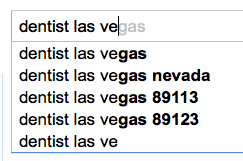
    As I type “dentist Las Vegas” Google Instant offers several options to divert my search.  Well, I didn’t think about searching by zip code, but maybe I live in 89113, and that alternative search might be better than the one I was going to type.

    dentist las vegas

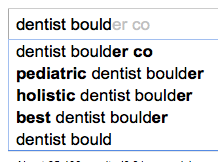
    Instant is offering some pretty specific options that may mean a wider keyword universe for SEO.  The “best dentist?”  Well, I would like to see who is best…

    dentist boulder

    Branded search is not safe from these Google product changes either.  From my first example site, of the 57 dropped searches, 30 were branded search related (the doctor’s name).

    For the branded search drops, I wondered if people were clicking on his 1 box instead of his website with his name search.

    Or maybe searchers were finding a different results set for his name and were clicking on his profile or other directory listings, but I don’t see ANY increase in directory referrals.  Frankly, I’m a little stumped.

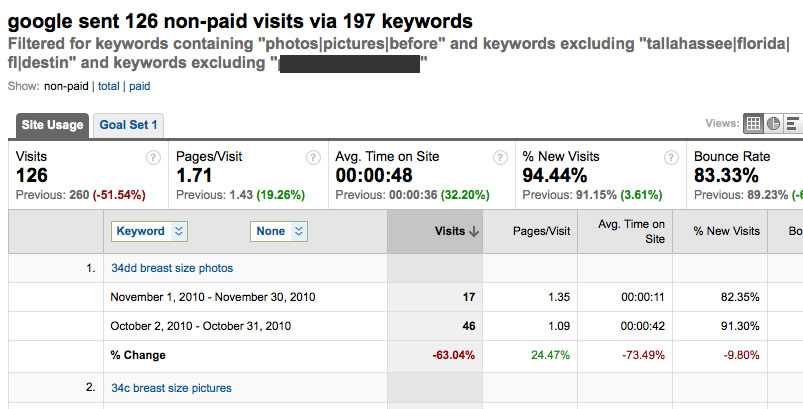
    A third trend I found his month is more specific to the plastic surgery industry.  Each month there is a lot of organic search around “photos,” “pictures,” or “before and after.”  These are not search in Google Images.  I have 1 surgeon based on the West coast, who lost 37 visits from lost “photos” searching.  And 1 practice on the East coast, which lost 134 visits – dropped in half!, and I filtered out all other factors that would affect it.

    google instant results

    I attribute these traffic losses to both Google Instant – I can see where searches can get distracted from their intent –34c breast size

    And to SERPs.  I’m pretty sure that where our docs once ranked for those non-localized phrases have been given over to directories.  Unfortunately, I don’t have historical data on where they once ranked for non-geo phrases in location based search and where they rank today.  Bummer.  That would have been cool to know.

    I haven’t figured it all out yet.  doh!Surely, I am missing something in the data even though I have been combing through Analytics, probably something right in front of my face. Someone may be kind enough to point it out to me, forcing me to say “doh!”

    Thanks to cytoon for the great nose dive image http://www.flickr.com/photos/cytoon/

    Thanks to LuChOeDu for the iconic Homer http://www.flickr.com/photos/luchoedu/