Tag: influencers

  • #FreelanceFriday: Freelancing Tips for College Students

    This blog is part of our Freelance Friday series, where we discuss everything and anything related to freelancers. For more freelance information, tips, and trends, follow us on Twitter.

    College is expensive. Tuition is sky high, textbooks cost an arm and a leg, and everyone needs a little extra income to go out and fully enjoy the college experience. Even with scholarships and saving accounts, it is nearly impossible to avoid some kind of financial strain during these years pursuing higher education.

    So, with time and experience typically at a premium for students, are there any legitimate ways to make some extra money on the side?

    Yes! Freelancing!

    Freelancers, digital nomads, work-at-home parents, and all independent workers currently comprise 33% of the U.S. workforce (approximately 53 million people). Freelancing is an umbrella term that encompasses writers, editors, graphic artists, designers, photographers, videographers, and many more people with specialized, in-demand skills. And, what’s great about freelancing is that it is open to anyone, including cash-strapped students.

    President Obama Asking You To Join The Movement - Search Influence

    Freelancing is a great way to get relevant work experience, which–whether through part-time jobs, internships, or freelancing–is incredibly important for a college student.

    Where freelancing offers a distinct advantage over a normal job is in its flexibility. Most jobs have a fixed schedule, whereas freelancing (in most cases) offers you the chance to work on your own schedule. It also allows you to work from anywhere–your dorm room, apartment, library, classroom, or when you go home for the holidays.

    If you decide to give freelancing a shot (and you totally should!), here are a few things you need to consider first, as well as a few things you need to do to position yourself for success.

    Figure out How Much Extra Time You Have

    Life as a college student is busy. You are already balancing classes, labs, papers, exams, presentations, and various extracurricular activities. Adding freelancing to the mix is only going to make you busier.

    A commitment to weekends and holidays will help you as a freelancer, but no matter when you work, prioritization and productivity are key. Because you are a student, schoolwork should also come first, but beyond that, you will need to figure out how to find more time in your schedule to freelance. You can prioritize your freelance work based on things like deadline, pay, research/planning/setup, estimated time to complete, and other markers.

    Determine What You’re Good At

    Your freelancing side gig does not need to relate to your major, but it can’t hurt. Freelancing opportunities can fall into all, one, or a combination of three things: something you are passionate about, something you are knowledgeable or skilled in, or something that is in high demand.

    Every topic with a web presence needs content creators. There are tons of niche markets you can work your way through, especially as a writer. If you really want to flourish, especially at first, stick to what you know best, but don’t be intimidated by exploring something new. College is the time when you should be exploring new things to help discover what you want to do in life.

    Identify Your Goals

    What do you want to gain by freelancing? More money? Of course. Experience? Always a plus. But what else are you looking to gain from this? Are you looking for a gateway to a full-time job? Do you just want to try out a field before committing to it? Will you continue freelancing after college?

    These are all great questions to ask yourself before and during your time as a freelancer. The answers should not dictate whether or not you do it, but they should provide guidance and purpose to what you are doing.

    Get the Right Tools

    What do you need to be successful as a freelancer? For most, a computer and reliable internet access should go without saying, but what else?

    Well, that depends on the field you are operating in. For some, that is all you need. The internet can help with the rest. Other more specialized skills will need more–graphic designers may need the latest software programs, while photographers will need a good camera, lighting, and other equipment.

    Know what you need upfront and familiarize yourself with these tools. Freelancing may be a side job for many, but that doesn’t make it any less important when it comes to planning, preparedness, professionalism, and time management.

    Understand You Will Have to Start From the Bottom

    This is a tough pill for many to swallow. Like most jobs, you have to start at the entry-level position. It’s a nearly unavoidable rite of passage. Accept it and work your way up. Thankfully, ascending the freelance food chain is typically easier and quicker than climbing the corporate ladder.

    It is important to build your skills and constantly improve your services and presentation. The more you freelance, the more you will learn how things are done, what you should and should never do, etc. Reaching out to other freelancers for advice and support is always a great idea.

    Betty White Informing Us That She's On The Twitter And On Facebook - Search Influence

    Self-Promote

    Once you have been working for a while, it is important to create a portfolio of your best work as an example of your skill and proficiency. This is a crucial tool for landing other gigs. You can even include some pertinent school assignments as well, especially when you are just starting out.

    Creating a personalized website or blog as well as engaging on social media are also great ways to showcase past projects and seek out new work. Many freelancers today use Twitter and Facebook to stay up to date on industry news and find relevant opportunities.

    You shouldn’t feel bad about this kind of self-promotion. It is a crucial part of freelancing. And speaking of the importance of self-promotion, check out our freelance Twitter account. We frequently share the latest freelancing trends, tips, and best practices.

    Build Your Professional & Adult Skills

    Freelancing can help you build valuable workplace skills. Just like school, deadlines are extremely important, as are promptness and efficiency. Similarly, freelancing often calls for collaboration with a wide variety of people. While you may already be using these skills in school, freelancing will allow you to put better hone them in a more professional setting.

    As an independent contractor, you will learn to deal directly with your clients and gain valuable experience handling a variety of situations as they arise. You will also learn more about contracts as well as taxes.

    Treat Freelancing Like a Real Job

    Many people have made this mistake, especially those who have never freelanced before. They contract for a little while before quickly realizing that it is a real job. You are getting paid to provide a skill or service. You have to consider deadlines and often collaborate with others. How is that not a real job?

    In essence, freelancing is even more than just a job. You are essentially starting your own microbusiness. If you go into it knowing this, you can somewhat avoid the learning curve and work through any missteps early on that could cause you to lose clients, doubt your own abilities, or even quit.

    Use Your Freelance Career to Jumpstart Your Post-College Career

    Because freelancing is a real job, don’t be hesitant to include it on your resume and discuss it a significant positive in job interviews after you graduate. The work you’ve done has given you experience in the workplace–use that to your advantage! Be confident about your transition into the job market. You will have more experience than your fellow graduates.

    Of course, you can also continue, and likely expand, your freelancing business after school. You have spent the time and effort to build these relationships and skills, why not continue utilizing them!


    Image Sources:

    President Obama

    School Supplies Animation

  • How to Write Clear CTAs That Convert

    According to Small Business Trends, “70% of most B2B websites lack a call to action.”

    With millions of websites in existence, the odds are slim that a user will visit your site and miraculously remember your URL or bookmark it for later viewing. Without a continued, personal connection through an email newsletter, a white paper download, a podcast subscription, a special offer, or another form, it may be the last time that person connects with your business online.

    A call to action, or CTA, attempts to establish that connection with your potential customers once they click on your PPC ad and head to your landing page. Even if you’ve got a CTA on your site, it may be deterring visitors rather than inviting them to explore your business. Here are some tips to make your CTA convert visitors into customers.

    Start Strong With Action Verbs

    There’s not a lot of space to get your point across, so it’s important to get straight to the point. Use an action verb to start your call to action. If you’re in the eCommerce world, consider using words like “shop” to start your CTA, possibly followed by “and save 50%.” The goal is to be direct and informative, highlighting the exact action you want your potential customer to take.

    Image of CTA Get Your Guide - Search Influence

    Focus on Value and Benefits

    As a general rule, think of how you might be able to finish your potential customer’s thoughts for their desires/pain points/expectations, and then use that action verb at the end of the following sentence: “I want to _______.” What was the first thing that came to mind that your clients might choose? Grow more leads? Find shoes that slay? Get My Custom Ad Analysis? Start My Free Software Trial? The answers to this hypothetical question are completely dependent upon your business, but one thing remains true—they need to focus on how you can delight your customer by providing them relevant solutions and unique selling points that make their life or job easier. Instead of phrases like “Buy Now,” which focus on an action a user has to do, get more creative by emphasizing what he or she will get out of clicking that CTA.

    In a case study from Unbounce, a B2B website owner reported a 38.26% increase in conversions after replacing just one action verb—Order Information vs. Get Information. With the former, “order” puts the customer in a difficult position—there’s either purchasing the service or not. But with “get,” the potential customer gets to see advantages or rewards. He or she is potentially awarded valuable, relevant information for choosing to continue the buyer’s journey. It’s this combination of value and relevance that can make or break a click.

    Another tip about delivering benefits: Don’t make claims or offers you can’t deliver on. This is going to be the start of a potential relationship with a new customer. The last thing you want to do is promise something you can’t afford.

    Image Of Girl Writing On A Blank Card At Her Desk - Search Influence

    Keep It Short and Be Specific

    According to research performed by Dan Zarrella at Hubspot, the most engaging Press Release headlines are between 90–150 characters. The same holds true for crafting landing page headlines and their corresponding CTAs. Be concise, focused, and goal-oriented. Going back to emphasizing value for the customer, consider these more focused and value-driven options.

    Generate Leads ⇒ Generate {higher quality} leads by {unique qualifier}

    Drive Sales ⇒ Drive {higher value or more} sales by {unique feature}

    Measure ROI ⇒ Measure ROI {across all channels} with our {unique product}

    Sure, the first versions were about as short as you could get, but the amended CTAs remain concise while giving a more in-depth and accurate portrayal of what the customer will get. Clear copy should help reduce any anxiety or confusion that someone may have about exploring your company. And let’s face it; people have a limited amount of time to explore your content. Make the time they spend on your site valuable, not wasted.

    Use Natural Language—Submit or Click Now? No Thanks.

    These antiquated terms used to be exciting when it really was a novel concept to be able to click on something and get immediate results. After all, most CTAs before the internet involved a number that you had to call. Now, though, that novelty isn’t the selling point; what you can provide your customer is. When thinking about writing your CTA, think about how you can connect with them. One way to use this in your writing is to use the words “you” and “my/our.” For example, “Drew Brees Can’t Stop Talking About Our Training Program. Learn Why and Get Fit.”

    Steer clear of using ornate language by cutting unnecessary adverbs and adjectives. These words may seem like they add value to your copy, but they’re hiding the value that you can provide your customer.

    Also, avoid using industry jargon in your copy. This can include words like, “franchise,” “utilize,” “virtualization,” “capitalize,” and especially acronyms that only a limited number of potential customers would even understand, like these marketing big ones: KPI, RSS, CAC, CSS, CRM. Doesn’t look too inviting does it?

    Does the Size and Layout of the CTA Matter On a Landing Page?

    Just like your copy, your page layout should be neat and clean. Kissmetrics recommends: “The size of your CTA buttons is also important. A too-small version won’t command attention, while a supersized one will make you seem desperate.”

    Think about how your landing pages look from a visual standpoint. Avoid the color red for your CTA. There are too many associations with danger, stop signs, stoplights, aggression, etc. You’ll likely see more positive results from calm colors like blue or green.

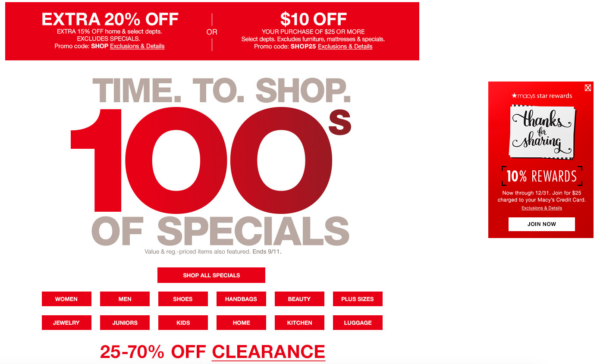
    Also, consider the size and spacing of your text on the page. It should be scannable so that a visitor can instantly pick out the information they’re interested in. Cut out the clutter. For instance, here’s an example from Macy’s current main landing page. Aside from the mixed messaging of the different values, can you spot the call to action?

    Image Of Macy's Landing Page Sale - Search Influence

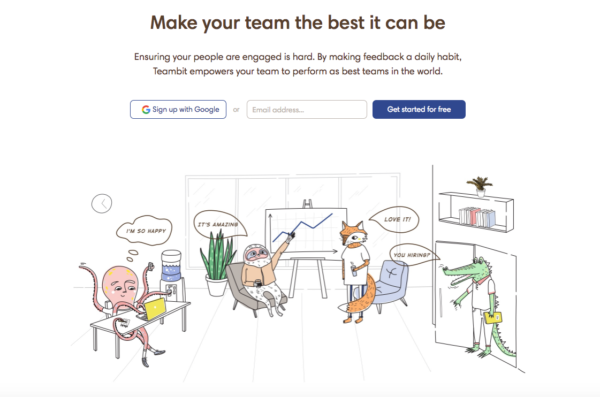
    Their “star rewards” offer is shifted to the right of the page. The goal for a button’s CTA is to predict where the user will look next. This one missed that mark. Also, it’s hard to tell what “JOIN NOW” means until you read the tiny print at the top indicating this CTA is for their rewards program. And finally, they’re asking a lot of their visitors to read the fine print on all of these different offers. A cleaner example of a landing page with less clutter and more clarity would be like this one from Teambit, an employee feedback, recognition, and survey startup.

    Image of Teambit Landing Page - Search Influence

    The value? Your team could be the best it can be. Sounds great. How do I go about doing that? Oh, I’ll get started for free. They have detailed information if you scroll through their page about just how they help people. But the reason why it succeeds is because it doesn’t worry about that up front. It focuses on the why with a compelling headline followed by clean copy and a simple CTA. Sometimes, it really is that simple.

    A Few Final Ideas for Crafting Great CTAs

    In addition to the previously mentioned points, here are a few examples of how you can make your CTAs stand out and drive conversions.

    1. Make sure to always display the benefits. If you’re offering a free guide, then say so right away (e.g. “Get the Knowledge You Crave – Download Our Free Guide.”).
    2. Try using a pain point that your potential customers may be hitting. For example, “Tired of Not Seeing Results In Your Ad Campaign? Watch Our Free Webinar to Find Out…”
    3. Also, you can try using an Influencer who supports and promotes your brand. This adds authority and intrigue to your CTA. Viewers who see that “Mark Zuckerberg Is Crazy About Our Team’s Marketing Ideas” will likely want to click on the corresponding, “Discover Why” button.
    4. Lastly, utilize testimonials from your current clients. This is a source that people often overlook. Your customers should be the biggest proponents of your brand. If a client has said that you’re the best company they’ve ever worked with, then take that and condense into copy to go along with a short, action-oriented CTA. Of course, always make sure to attribute ownership of the testimonial, and it goes without saying that creating a fake testimonial is a horrible idea for your brand. You’ve got to earn them.
    5. Numbers are great. If you have some success metrics, consider including them on your landing page. Are 100% of your employees certified in the service you’re promoting? Visitors should know that.

    Have any great examples of CTAs in landing pages or other types of content that you’ve seen? Share them with us! A great CTA can have your business seeing more conversions and fewer bounces. Need some more guidance on building a landing page that has strong calls to action that focus on your company’s brand and values? Reach out to us at any time.


    Images:

    Macy’s

    Teambit

  • SI Is Ending Summer With a BANG — Welcome Our New Influencers!

    SI Is Ending Summer With a BANG — Welcome Our New Influencers!

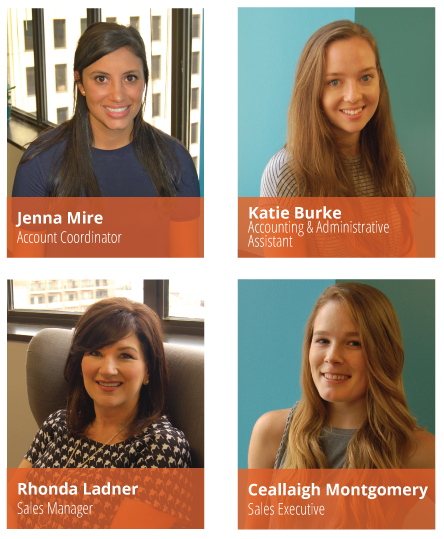
    This month, Search Influence welcomed a lot of new faces to the office! Meet the newest members of our team.

    `

    Jenna Mire – Account Coordinator

    Jenna recently moved to New Orleans from Atlanta, GA after the horrific fall of the Falcons in the 2017 Super Bowl. Jenna graduated from Centre College where she received degrees in Behavioral Sociology and Anthropology while playing basketball. She is also the winner of the 2007 Hot Dog Eating Contest, women’s division, sponsored by Energizer Batteries. Jenna enjoys playing Sudoku, parallel parking, and eating Cheetos Puffs.

    Katie Burke – Accounting & Administrative Assistant

    Katie grew up in Liberty, New York and moved to New Orleans to attend Tulane University. She recently graduated from Tulane with her Master’s degree in Accounting. When she has free time, she loves to bake and sometimes sell specialty cakes for weddings, birthdays, and special events.

    Ceallaigh Montgomery – Sales Executive

    Originally from the North Dallas area, Ceallaigh (pronounced Kay-Lee) graduated from LSU with a bachelor’s degree in Marketing. Before joining the team at Search Influence, she worked as a Benefits Consultant with Aflac for a year where she really got a taste for Business-to-Business selling. While in school, she was in the LSU Tiger Band. So, it’s safe to say she is an avid LSU football fan. In her spare time, she loves cooking up good food and tailgating.

    Rhonda Ladner – Sales Manager

    Rhonda has spent the majority of her career in some form of sales & sales management. She grew up in technology sales at BellSouth and then AT&T, and over the years she has owned two different sales-related businesses: Sandbox Solutions (focused on sales training) and Ladner Consulting (focused on sales/process consulting).  She is a proud born-and-raised New Orleanian with a husband and two sons. In her free time, she loves cooking, traveling, and spending time with family & friends.

    To Jenna, Katie, Ceallaigh, and Rhonda—welcome to Search Influence! We’re excited to see all of the great things you’ll do here.

  • Search Influence Compensation Philosophy, New and Improved for 2017

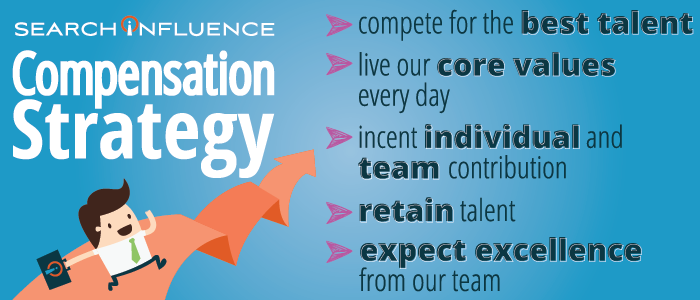
    Search Influence Compensation Strategy

    We’ve made some big changes for the Search Influence team in 2017, and the year is only half over.

    Whether you’re an employee (current or future) or a client, these changes will have a direct impact on you. Our goal is to improve the employee experience so that our employees continue to produce great work for our clients.

    We know that an investment in our employees is an investment in growing our capabilities as a business. It benefits us all—employees, Search Influence, and the clients we serve. That’s why we’re excited to share with the world what we’ve been working on.

    Read on for a discussion with Angie Scott, COO of Search Influence and my co-founder in all things since around 2002, on how all of this came about. A detailed explanation of what we changed and what you can expect from our team moving forward will follow the Q&A below, so read to the end!

    Will: So Angie, why after 11 years a shift in pay and benefits? Isn’t this a big change?

    Angie: The idea of checking in on our compensation isn’t really a new thing.

    We did a pay analysis a couple of years ago and there was another done prior to that. So the team who’s been with us throughout all of those has seen this happen before. As the New Orleans tech community grows, we have to be agile in our approach to comp. This time, though, we wanted to be more transparent with the team on the process and decisions that were made.

    This analysis also resulted in some broader, more sweeping changes than our analyses did in prior years. And, we touched more perks and benefits than just base compensation, too.

    It was clear to us (and the market was reinforcing) that comp is not just about the salary you make for the job you do. Compensation can and should be a total package including base pay, monetary benefits like 401k and health insurance, as well as perks and flexibility.

    Will: So you’re saying it’s not a new thing. That, in fact, we’ve gone through and looked at pay and benefits before, and in each case come back with what seems to be better opportunities for the team that stays with us, right?

    Angie: Right.

    Will: So tell me a bit about the process which got us here?

    Angie: We made a game plan, which included a survey by a third-party HR consultant, reaching out to our talent competitors throughout New Orleans, including tech companies, marketing companies, a bunch of different industries around New Orleans. The goal was to figure out what their pay structures look like and try to compare them to our team.

    That wasn’t as fruitful as we had hoped, but it still helped us frame some of our perks discussions. And then we looked at PayScale.com which provides employee reported compensation, and we looked at Salary.com for employer reported pay structure.

    Will: So what are some of the things that changed in this analysis? As you already said, what started with just pay turned into a pretty big review of comp and perks overall, right?

    Angie: Right. In addition to base compensation, we also analyzed our paid time off, health insurance that the company covers, and working remotely. We reviewed our core hours to see if we could change so that we could allow for more flexibility for the team. And we looked at doing a transportation stipend.

    Will: So we got the information we could from New Orleans companies, which wasn’t much. We got aggregated information from these big websites. And in the process, some of our team reached out to friends and family who were in markets that might be more advanced in the employment market, including New York and some on the West Coast, to see what some of perks they have access to involved. What came back from that was actually this idea of core hours.

    When we started the process, we weren’t even thinking about core hours, were we? It was about “summer Fridays,” which was kind of a hot button for some folks. But then, we live in New Orleans, we’ve got summer, pretty much, year round. So we decided instead to create what we’re calling “core hours” where our team can decide the length of their day as long as their day includes being in office during those times that we specify as must-haves.

    Our new core hours are:

    Monday through Thursday: 9 a.m. – 2 p.m.

    Friday: 9 a.m. – 12 p.m.

    Now, this is not to say that they only have to come to work six hours a day. If they want to work 2 10-hour days and take a half day off on Friday, then they can do that.

    Angie: Right! Because our core hours on Friday are 9 – noon.

    Will: We were hopeful that the team will balance out with different people having different desired times off, and we’ll keep an eye on it. It seems like a great way to accommodate the desire for more control over time off and to be really flexible.

    There was something else, too. We’ve gotten, historically, a lot of requests for working remotely. So why don’t we set the stage for that?

    Angie: We decided that the team could work from wherever they want two days per month, as long as they have internet access. So anybody on the team, after you’ve worked with us for six months, can go and work from a coffee shop, or from your house, or from a friend’s house, whatever it is.

    Will: This is one of those which was interesting to us because we’ve always been very accommodating with people that have a special need to be somewhere else. The feedback we got was that some employees felt like they were taking advantage when they asked for a slightly different treatment. This way, we can accommodate the desire or need to work remotely and employees don’t feel like they’re asking for special treatment or getting away with something.

    Angie: Two of the biggest perks that we’ve heard the most excitement around were actually paid time off getting increased (we went up quite a few days for each tier, based on how long you’ve been with the company), and the transportation stipend.

    Will: Oh, and Lundi Gras.

    Angie: Lundi Gras, that’s right.

    Will: Such a challenge.

    Angie: I knew there was something else.

    Will: Yeah, a challenge that our non-New Orleans colleagues might not be aware of is that Mardi Gras is not just a holiday. The entire city shuts down for Mardi Gras. And in the weeks leading up to it, there are parades many evenings. And Lundi Gras, Lundi being French for Monday, is the day immediately prior to Mardi Gras day, the culmination of a big party leading into the observance of Lent. And many of our team members didn’t understand why they had to work while their other, local friends had Lundi Gras off.

    In the past, we believed that we needed to be available to our clients since we have customers all over the United States, and, throughout the North American continent.

    But still, it was a pain point for our team. We’re hopeful that in support of a great team dynamic, and hopefully the kind of work that they’re looking to us to provide, that our clients will understand why on one Monday and Tuesday in February or March, our team is not there.

    Will: So, Angie, what’s your favorite of the perks?

    Angie: Hmm… my favorite is the core hours, because they’ll allow the whole team to have more flexibility. When I think of people who are like me, I think of our working moms. I hope the new core hours will enable them to pull a couple of longer days, and then go pick up the kids early from daycare or school. I’m proud that we can offer them the opportunity to be more flexible with their hours so that they can be there for their team at work but also be there for their family at home.


    Will: I think that’s a great one. The idea that as long as you’re getting your work done, you can do it on your time is the most important thing. And I’m glad that through the inclusion of core hours, and the remote work benefit, that we are going to start living this belief as well.

    Angie: So what’s your favorite perk?

    Will: It’s a tough one. Honestly, my favorite perk is the transportation stipend. Because we’re in a downtown location, and I know that transportation costs have been a challenge for some folks. But the real reason why I like this one is that we didn’t just say, “We’re gonna cover parking.” We said, “It’s for whatever transportation looks like for you.”

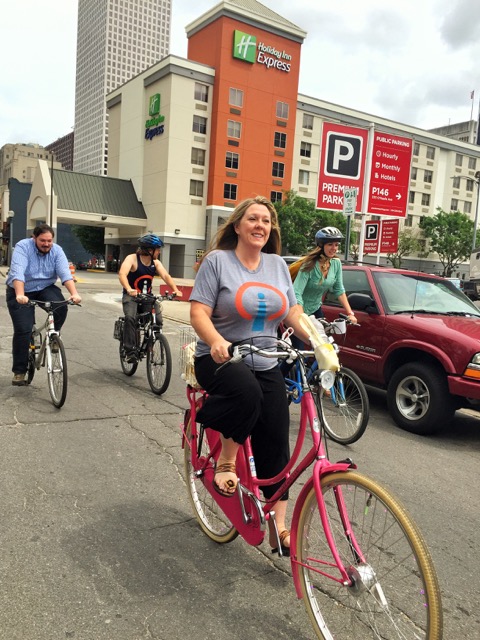
    Because we’re in New Orleans, it’s a great environment to ride bikes, and we’ve got public transportation. The way that we’re doing it is through a stipend. We don’t need to see receipts. It’s not a reimbursement, but it is specifically for transportation. And therefore, if your version of transportation is two new tires for your bike and a couple of Po-Boys, then you can do that and nobody’s going to give you a hard time about it. So that’s my favorite. Do you have any last thoughts, Angie, on these changes we’ve made?


    Angie: I’m really excited to see how it plays out with the team, and to actually get all of the perks into action so that we can have a lot of happy faces around the office.

    Will: Yeah, I’m with you. I think that the key here, and you’ll see this in greater detail when you read the actual, outline of the new philosophy, is that we want to be able to expect the best of our team. We want to work like professionals, with professionals, in the kind of professional environment which I think is becoming more the norm in other parts of the country, but to which New Orleans has not yet caught up. I’m hopeful that with these changes, prospective employees and our current team members, will see Search Influence as a very progressive employer when it comes to pay, benefits, paid time off, and the ability to work hard, do great work, and also have a life and take advantage of all of the great things that the New Orleans area has to offer.

    Search Influence Compensation Philosophy

    The Search Influence Compensation Strategy is designed to:

    …compete for the best talent

    Our employees are our greatest investment and we’re selective about whom we hire. We will conduct regular market analyses and make adjustments to compete for the best talent in the most relevant labor market(s).

    …live our core values every day

    To enable employees to “live CHARGED” at every level, we offer a progressive total compensation strategy including abundant benefits and flexible perks that support a healthy balance and encourage productivity and creativity.

    …incent individual & team contribution & retain talent

    We encourage dedication by rewarding individuals who contribute above and beyond their job descriptions, deliver excellent client results, and support colleagues in their pursuit to do the same.

    …expect excellence from our team

    We won’t settle for less than excellence for our clients or in our employees’ work.

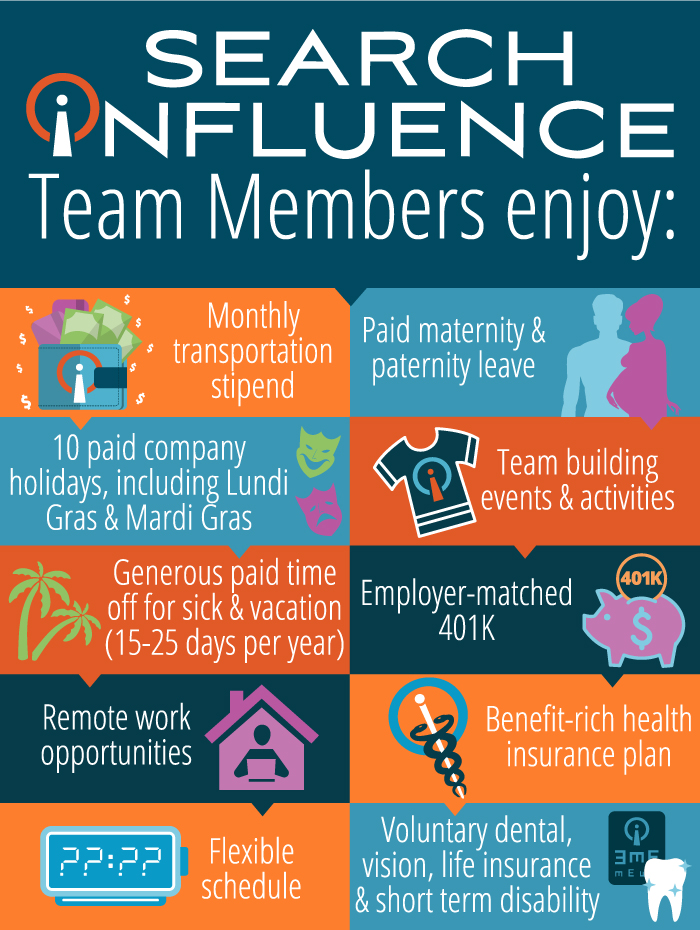
    Search Influence team members enjoy these benefits

    Outline of Perks

    • Monthly transportation stipend for each employee
      • No need for reimbursements or submitting receipts
    • Total of 10 paid company holidays annually
      • Including the addition of Lundi Gras beginning in 2018
    • Generous and progressive Paid Time Off accrual rates, for employees to use as they choose whether sick or vacation (no doctors’ notes needed!)
      • Employees with the company less than 2 years = 15 days annually
      • Employees with the company 2 – 5 years = 20 days annually
      • Employees with the company 5+ years = 25 days annually
    • Remote work opportunities
      • Employees with the company for 6+ months are allowed 2 remote working days per month, no questions asked
    • Core hours and flex time allowing employees to design their own work week around 24 core in-office hours
      • Core hours:
        • Monday through Thursday: 9 a.m. – 2 p.m.
        • Friday: 9 a.m. – 12 p.m.

    In addition to other benefits, which include:

    • Benefit-rich health insurance plan
    • Voluntary Dental, Vision, Life Insurance and Short Term Disability
    • Employer-Matched 401(k)
    • Team Building events and activities
    • Paid maternity and paternity leave
  • Join Us in Welcoming Our Newest Team Member!

    SI is happy to have new team member Shelby Emens in the office, adding a bright new face to our endless summer of Influencers.

    Shelby Emens (Junior Web Developer)

    Recently relocated from rural Michigan, Shelby completed her Bachelor of Science in Technical Writing from Grand Valley State University. She is excited to join the Search Influence team and is looking forward to not dealing with snow during the winter! Outside of work, Shelby enjoys spending her free time reading, playing video games, and spending time with friends.

    Welcome to the team, Shelby!

  • AI and How It’s Affecting, and Enhancing, Voice Search

    If 2016 was the year of the Internet of Things, 2017 has become the year of AI, and, in particular, voice search. The way people search on their phone, tablet, or computer is changing thanks to devices like Amazon Echo, Siri, Cortana, and Google Home—as of May 2016, 20% of mobile queries are through voice. You can now search for a business, order pizza, turn on your home’s lights, ask for movie reviews, and more just by asking a question or stating an instruction. According to the 2016 Internet Trends Report, by 2020, at least 50% of searches are going to be through images or voice, whereas in 2015, only 1 in 10 search queries came through voice. Understanding how your content is optimized for voice search can help your business succeed in the near future.

    AI, RankBrain, Machine Learning, Deep Learning…What’s the Difference?

    With all of the talk about AI these days, it’s best to separate different terms that get tossed around, like RankBrain, Machine Learning, and Deep Learning. The easiest way to understand their relationship is to think of them as smaller parts of a larger whole. AI has been around since Alan Turing first started trying to decode the Nazi’s Enigma in WWII. In the 1980s, we started to see more advancement with machine learning, which provided computers with the ability to learn predictions and statistics without being explicitly programmed. In the current decade, we have begun to see large advancements in deep learning.

    Image Of A Formula - Search Influence

    Deep Learning

    Also known as deep structured learning or hierarchical learning, deep learning uses neural networks with many hidden layers of processing and information. It mirrors the way the human brain works, learning from mistakes to come up with the best, new solution to an input, not one that it was given with code. For instance, Marie Dollé from SocialMediaToday explains how it recognizes your face in a Facebook photo.

    “For a face, it will first correlate pixels on a photo, then group them and conceptualize its features (eyes, nose, mouth). Finally, it’ll group all these concepts to recognize the unique collection of features as a single face.”

    It’s also how the world’s best Go player, Lee Sedol, got beat by Google’s DeepMind AI dubbed AlphaGo. Go is an ancient game of immense complexity—there are more possible positions on the game board than there are atoms in the universe. This is precisely why we never thought a machine could master a human in this game; it’s more about intuition and instinct. Wired Magazine said that the pivotal play in the game was also the moment that “machines and humanity finally began to evolve together. While the move that set up the machine to win was puzzling to humans, it opened Lee Sedol’s eyes to strategies he hadn’t considered before.” We’ve come a long way since the first game mastered by AI in 1952—Tic Tac Toe.

    Image Of An Artificial Intelligence Brain Versus A Human's - Search Influence

    What About RankBrain?

    It’s best to think of RankBrain as a facilitator for deep learning. Unveiled by Google in 2015, RankBrain converts words and phrases into mathematical vectors that can then be used by deep learning. One of the more interesting things about RankBrain is that it searches for phrases that have never been used before on Google and then attempts to find similar words or phrases that may relate, i.e. your rich content that may not match up perfectly with a user’s search but is close. To put it simply, Greg Corrado, a senior research scientist at Google involved with RankBrain states, “If RankBrain sees a word or phrase it isn’t familiar with, the machine can make a guess as to what words or phrases might have a similar meaning and filter the result accordingly, making it more effective at handling never-before-seen search queries.”

    So, why are we getting these never-before-seen queries? Well, in some way or another, this will always happen. New products will be released, and people will want to find them. However, the introduction and evolution of voice search as a viable tool has transformed the way we talk to search engines.

    The Importance of Semantic Content Marketing in the Age of Voice Search

    Gone are the days of planning your content marketing strategy based on one or two keywords. Sherry Bonelli from SearchEngineLand posits, “Now keywords are no longer just keywords. Keywords in the voice search world are long-tail+. The ‘plus’ refers to the conversational phrases that you need to add when optimizing for conversational voice search.” Because people speak things differently than typing, we have to start adjusting marketing strategies accordingly. In comes long-tail+ keywords and semantic SEO.

    Long-tail+ keywords should mimic the way people actually talk. Think about what types of questions people ask when they call your business, and then think about any follow-up Q&A you have with them. Also, in addition to thinking about what people might be asking or searching, it’s time to start thinking about all of the synonymous and relative topics to that search. The age of the “best digital camera” keyword could likely fall away. Instead, consider the question, “Google, where can I find a digital camera that is waterproof and can also sync w/ and stream Facebook Live?” Look at everything that’s in that question. It mentions streaming and Facebook Live capabilities, it specifies waterproof, and the whole thing is rooted in a local question: the “where.”

    So, if you were to then take a hard look at your content, does it mention syncing devices with live streaming, have you written a blog about waterproof devices that you offer, are all of your physical location pages up to date, and have you claimed your Google My Business listing? Or, have you made the mistake of optimizing for “best digital camera” and called it a day? We’re starting to get to the point wherein Google’s AI technology is becoming as quick thinking, on-the-fly, and complex as us. So, we need to optimize accordingly.

    Image Of OK Google Icon - Search Influence

    Optimizing for Voice and Conversational Searches

    Using long+tail keywords is a good first step to optimizing your content for voice search. Try to understand and predict the user’s next intent or action after finding the answer to their first query. For alternate words or keywords, instead of trying to go for the “be all end all” keyword, think, “tell me how to get to the store,” alongside, “directions to the store.” Experiment with different versions of the same idea.

    Local is going to continue to be a big part of success for a business. Research what interests customers in a targeted area and optimize all of your physical location pages by making sure they’re marked up with schema. Structured data markup from schema.org is crucial because it makes it easier for search engines to parse your site and understand your content within context. Here’s a helpful list of additional best practices that can help with showing up in voice search:

    • Claim Your Google My Business Listing: A large part of voice search is based around local. By claiming your Google My Business Listing, you provide Google with more rich information about your business, giving its AI more tools to serve your potential customers with rich, accurate answers to their questions.
    • Use Conversational Keywords: This goes without saying, but if people are searching more naturally, then you should be writing more naturally in your content.
    • Make Sure Your Content Is Trustworthy: Just as AI can evolve to find us the best possible answers to our queries, it also has the ability to learn from and reject black hat SEO practices. Steer clear of link spamming, keyword stuffing, and untrue statements in your content.
    • Set Up a FAQ Page: This may seem like a minor addition to a website, but it’s a simple way to get a lot of good answers to questions, providing content for a vast amount of subjects about your business that could then make it easier for Google to find you.

    Because RankBrain plays a big part of voice search, finding never-before-used phrases and pairing them with trustworthy, on-topic content, it’s worth remembering some advice from a former Influencer: “If your content is written in accord with Panda and Hummingbird, meaning it is rich text, educational, and really on topic, RankBrain should not be a problem for you.”

    How Google’s Cloud Video Intelligence Is Changing Video Search

    Ever wish you could search for a video online or in your cloud library just by asking certain words? Like, “Hey, Google, show me videos with fun cartoon animals,” and getting a result of Zootopia from your library. With Google’s Video Analysis, we’re getting to do just that. This can have a large impact on more than just personal queries. Pretend you’re a Realtor in your local area. By using this tool, you can make your videos more discoverable for potential clients. It’s just another way AI is changing the way we search.

    Image Of Google Adwords Icon - Search Influence

    The Future of Google AdWords

    Google recently held their Google Marketing Next event. One of the features that they mentioned talks about Life Event Targeting. In the past, Google’s AI had been able to run basic “if, then” scenarios for target buyers. Now, they’re able to parse through multiple languages to predict a similar response for the same event. For instance, they gave the example of those recently engaged. They were able to recognize the different but similar terms and phrases that cultures use when people are in a wedding life stage and then provide them with solutions to queries.

    Also, Google is learning to adjust ads and tailor them to each user’s preference. Instead of three people doing the same search getting the same ad display, there will be advertising that suits each person’s preferences for style, graphics, tone, or display. They may have alternate text that is highlighted, one focusing on price and another on the value of a product or service.

    Where Have We Seen This Before?

    Whenever I used to think about artificial intelligence, I would typically conjure images of a Terminator landscape, or a young Haley Joel Osment sentient robot in A.I., or the philosophical complexities that Harrison Ford faces as a replicant (or not?!) in Blade Runner. There have always been predictions about future technology that we can find in pop culture, from space invaders to complete AI domination. However, I think one that best represents where we’re currently exploring and where we may end up being is seen in Spike Jonze’s film, Her.

    Photo From The Movie Her - Search Influence

    There’s no dominating technology that overtakes our lives, no artificial intelligence that turns evil. Instead, it’s a future in which technology is doing what we’re trying to teach it to do now. An operating system’s AI is learning from conversations and adapting and adjusting accordingly. The OS can also see people and judge their facial reactions, something we can already do with facial recognition. Mark Zuckerberg even implemented it in his home.

    To quote the film’s production designer, K.K. Barrett, “This is not a future of harshness, but of bespoke details.”

    What Does the Future Hold for Search and SEO in Its Relation to AI?

    Voice should continue to rise in use; there’s nothing to suggest otherwise. And while this is a bit of a“Wild Wild West” time of development, there’s one nice thing that should placate marketers’ worries—the relationship between the marketer and the client isn’t going to change in some cosmic or complicated way. In fact, it’s the opposite. It gets more personal. Ideally, we’re headed for a future in which our old anxieties about technology are gone—a future in which we no longer worry about technology ruling or destroying us.

    Instead, it may be like what we’ve seen in the movie Her. It’s getting more intuitive. More seamless. More subtle. More adaptive. More inseparable from who we are. It may not be too much longer before voice commands aren’t even necessary—Deep Learning may evolve to where simply walking into a room turns on the lights, and those lights then adjust to a brightness or dimness reflecting your facial features and mood…maybe.

    Instead of a future of wild advancements of technology, of jetpacks and holograms (well, kind of not those), it’s more a future of subtlety. One where we’ll hopefully be able to teach a program to learn from us so well and so naturally that it doesn’t even feel like teaching. To quote a reaction from those watching Google’s AlphaGo win its matches of Go over Lee Sedol, “The machine did a very human thing even better than a human. But in the process, it made those humans better at what they do.” So, instead of tech moving to the forefront of our lives, in front of our faces on the ride home from work, disrupting family dinners with scrolls and feeds, it could dissolve to be part of the background, one that not only knows when to talk to us but also when we can be left alone to be better at what we do.

    Images:

    Math

    Brain

    Ok, Google

    Google AdWords

    Her

  • #FreelanceFriday: Finding More Time in Your Schedule to Freelance

    This blog is part of our Freelance Friday series, where we discuss everything and anything related to freelancers. For more freelance information, tips, and trends, follow us on Twitter.

    Image Of Michael Scott Saying No Time - Search Influence

    “I don’t have time…”

    As writers, we have all said it at one time or another, most likely as an excuse for not writing more. And let’s not kid ourselves here, it is most certainly an excuse. There are 24-hours in the day for everyone. So, why can only some people pull off a freelancing side gig?

    Deciding to add freelancing to your daily schedule probably didn’t seem like that big of a deal at first. You can make your own schedule and work from anywhere at anytime. That all sounds great (and it really is!), but you still have to find the actual time to do it. It can certainly be tempting to let freelancing take a back seat to other tasks and priorities in your life—but don’t let it happen!

    For those who truly want to do it, they find the time. Freelancing (and writing in general) are choices. Likewise, you have to choose to find the time. Time management techniques and organizational skills can be developed and utilized easily. In the end, freelancing is all about scheduling and prioritization, especially when you are still working full-time at another job. Make those and other strategies for time management work for you and you will discover the time.

    Of course, this is all easier said than done. Here are a few tips that will help you fit your freelance business into your schedule.

    Image Of Parks And Recreation Saying Jammin On My Plane - Search Influence

    Assess and Make A Schedule

    We have talked about time management tips a lot—and for good reason. It is the key to freelancing. Start by evaluating your daily schedule. When do you wake up? Eat lunch? Work at other jobs? Go to bed? Fill in the intervening times with potential availability to freelance. Not all of it; just when it works well for you. There are tons of time management tools to help you with this.

    When you are getting started or overhauling your time management, try timing how long it takes you to complete this work. Work on improving that time, as well as adjusting your schedule as you need or see fit.

    Strengthen Time Management Skills

    Even if you are able to find the time, it is equally important to use that time well. Because this time is so valuable, you need to have a clearly defined time management schedule—prioritize, avoid distractions, stay organized, etc.

    Try working in small pockets of time in between bigger tasks. While you are waiting for the water to boil while cooking, on breaks at your normal job, during your commute, etc. The start and stop nature of this doesn’t work for everyone, but all of these small increments can add up quickly for those who can make it work.

    Image Of John Candy Saying No - Search Influence

    Don’t Be Afraid to Say No

    Such an easy word to say, but one that most people are so hesitant to utter. Learning to say no can help your freelance life in more ways than one.

    First, it allows you to decline jobs that you are not fully interested or invested in. Why waste precious time on something you don’t want to do in the first place? Doing this could prevent you from working on an assignment or project that is more aligned with your thoughts and aspirations.

    Second, saying no can also be employed in order to free up more time to do the actual work. If you made previous plans for multiple nights of the week, think about canceling or turning one of them down beforehand. A lot of work can be accomplished in a single extra evening.

    For best performance, you also need to learn how to say no to TV, social media, and other time-consuming forms of entertainment as often as possible.

    Find Your Peak Hours

    Most people already know if they are night owls, early birds, or in-betweeners. Whatever time of day, it’s all about finding that time period where your drive and mental capacity are at their highest and you are able to do your best work (speed and quality-wise).

    That is not to say that your peak hours have to be consecutive. Maybe you can work well at multiple points throughout the day. In fact, you can probably train yourself to work better at one time or another. Try to get as much done as you can in those times—as long as you keep things consistent and don’t waste time figuring out where you left off before.

    By finding and using these hours effectively, you will be able to get more done faster without the common plague of interruptions. Whether you like working into the wee hours of the morning or you are an early riser who can get things done with a hot cup of coffee, there exists a time especially for you.

    Image Of Dog Doing Chores - Search Influence

    Outsource Your Work

    Admittedly, this tip may not be for everyone. But, if you are capable, it can be a huge timesaver to help you budget time. By subcontracting out lesser, but still necessary, chores, you can free up time to perform your freelance work.

    So many things (some obvious, others not so much) can be outsourced, including house cleaning, bookkeeping, laundry, cooking, lawn maintenance, house repairs, child care, pet care, and grocery delivery. Not all of these are needed, of course. But find one that fits your budget and schedule, then get to work—this isn’t new found free time, it’s extra time.

    In the end, to find more time for freelancing is a gradual process. Find what works for you and allow for adjustments and new routines along the way. Freelancing is still a job, no matter how much time you devote. The changes may not be easy at first, but they are more than doable if you want your freelance career to succeed.

    Image Sources:

    No Time

    John Candy—No

    Dog Doing Chores

  • Three New Team Members Join Search Influence

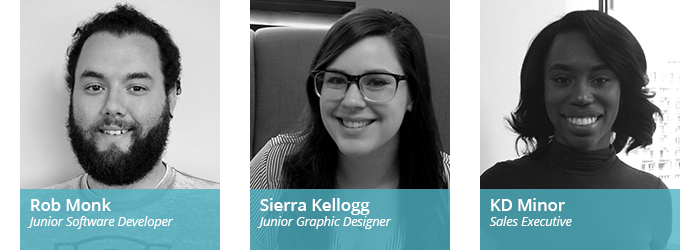
    While New Orleans is busy with festival season, Search Influence has hired three new Influencers. We are excited to welcome Rob Monk, Sierra Kellogg, & KD Minor!

    New Influencers blog image - Search Influence

    Robert Monk – Junior Software Developer

    Born and raised in southern Louisiana, Rob grew up building and taking apart computers and any other electronic he could get his hands on. After advancing his skills through a coding boot camp in Boston, he decided to come back to the city he loves. Rob enjoys poboys, crawfish, and local festivals. In his free time, he can be found riding his bike around the city, enjoying anything and everything it has to offer.

    Sierra Kellogg –  Junior Graphic Designer

    Born & raised in New Orleans, Sierra graduated from Delgado Community College with an Associates Degree in Graphic Design & a Certificate in Photography. Previously, she worked at a newborn photography studio. In her spare time, you can find her doing arts & crafts & watching (highly addictive) makeup tutorials on YouTube.

    KD Minor – Sales Executive

    A native of Lake Charles, LA, KD got her start in marketing at the InterContinental New Orleans Hotel as their Content Marketing Manager. To stay ahead of the curve, she became a certified Advanced Social Media Strategist and enrolled in Tulane’s School of Professional Advancement where she studied Media Arts. In her free time, KD enjoys spending time with her kitten “Dr. Manhattan,” cooking for friends, and visiting her favorite bartenders for their latest cocktail creations.

    Welcome to the Search Influence team, Rob, Sierra, & KD!

  • A Day in the Life of a Sales Executive at Search Influence

    Meet Bailey Colomb! Here’s a glimpse into what an average day looks like for Bailey as a Sales Executive working at Search Influence. From her favorite breakfast food (hint: think Ron Swanson) to some of her favorite perks of the job, you’ll get an insider glimpse into what it’s like to join the SI sales team.

    Bailey Colomb, Sales Executive at Search Influence

    Where did you grow up? Where did you go to school?

    I’m from New Orleans. I was born and raised in Lakeview and went to Mount Carmel for high school. I went to college at the University of Southern Mississippi in Hattiesburg, MS. I graduated in Hospitality and Tourism. I wasn’t interested in working at a job that was behind a desk with no social interaction.

    When you’re not working, what are some of your favorite things to do around New Orleans?

    I’m very close with my family. Almost my entire family lives in New Orleans. Every Sunday we’ll do lunch or dinner at my mom’s and my family will all come over. I also have a lot of friends here from college and high school, so we like to do a lot of happy hours. A lot of us after work will go out for happy hour, too. Anywhere that has live music, alcohol, and fries—I’m interested!

    What is your ideal breakfast to get you through a busy workday?

    Anything that includes bacon. I’m not a huge breakfast person before work, but my ideal breakfast would definitely be bacon oriented.

    What led you to this position at Search Influence?

    I was an account manager for almost a year and a half. I’ve been in sales a month, so it’s a very recent transition. I think as an account manager (AM), there are a lot of great things about it, and everybody on the AM team really enjoys being creative and thinking of out of the box ways to help clients, but sometimes the day-to-day responsibilities cloud that. That was an area of opportunity that I wanted to pursue. Being in sales lets you focus on this fresh canvas. These new potential clients have never been approached by anyone, and I get to create this really broad creative strategy to help them.

    What was the craziest job you had before you started at SI? Did you learn anything from that experience that you apply to your sales position today?

    I worked at the Royal Sonesta, which is in the 300 block of Bourbon. My shift that I normally worked was 7 a.m. to 3 p.m. I would get to work when people were going to bed.

    I think that everyone should work in some sort of customer service job because it teaches you about literally everything. It taught me to listen first and hear what people really needed, and then figure out how to help them instead of just assuming. Sometimes you’re so quick to get to the solution that you’re not actually listening to the problem.

    If I talked to your co-workers, what are some adjectives you think they’d use to describe you?

    I would say outgoing and definitely chatty. People always make fun of me because I have a story for everything. I would hope that they would say knowledgeable because I feel like I really have learned so much since being here. It’s cool to be in a position where people are asking you the questions, instead of you asking the questions.

    What is the first thing you do when you arrive at the office?

    The first thing I do is make my coffee. And then I check my email, I check my calendar and get my whole day forecasted. At 8:45 we have our sales meeting, which is great. It’s a touchpoint at the beginning of the morning to see where we are, if there are any updates, check our metrics and any deals we’re working on. Then, we share our daily priority. That is the most important thing we think needs to get done. A lot of the priorities will be making calls if there are prospects to reach out and call. Or, if you have a call that’s in the presentation stage, then preparing the presentation to have ready for the next call.

    Describe an average day at work.

    Right now we are working through our cadences. The cadence is setup to have different touch points throughout the week to try to make that connection with someone who could use our help. After the initial conversation, if they are interested in learning more, then we set up a discovery call so we can get to know their business and get as much information as we can to put together a broad strategy. If all goes well, the next step would be to send a contract and have a kickoff call with an AM who gets into the nitty gritty details of the deliverables.

    What are some big milestones your team is currently working toward?

    We just rolled out our sales playbook, which has been really great. It’s a huge resource for all of us to turn to with tips and tricks for the best ways to leave a voicemail, best ways to send an email, or how to handle pushback when we’re on the phone. It’s been a really good resource for all of our new team members to use. The cadence is also something we recently rolled out that has been really successful. Since the cadence, we’ve had about five outbound calls that have turned into sales presentations.

    What is the most challenging aspect of your job?

    The most challenging is, coming from an AM perspective, you have a lot of platforms that tell you exactly what you need to do, so you know what your day looks like. I’ve had to adjust how I come in and organize since there’s less structure. It’s made me change the way I stay productive and organized throughout the day.

    What is the most fulfilling part of your job?

    The most fulfilling part of the job, for me personally, is that everything is a trial and error right now because it’s so new. We’re all learning together to figure out what works and what doesn’t. I get to be one of the people who is helping to get the department up and running. It’s all the more fulfilling to be able to build new relationships with people here who have so much knowledge.

    What skills do you utilize from previous positions in your career to succeed in sales?

    Definitely customer service, and with that, having no shame. The worst they can do is hang up on me or tell me no, so I might as well just call them. Being in the service industry for so long has helped me be a good communicator and make people comfortable. That’s important in sales because you want to be as conversational as possible and the least sales-y as possible.

    What are some of the perks of a sales job?

    Happy hours! Getting out of the office to mingle more. The second week I joined the sales team was New Orleans Entrepreneur Week, and we got to go out and network and hear speeches. That’s definitely been fun to meet new people.

    What stands out about the culture at Search Influence that makes your job more enjoyable?

    The people. I feel like everybody says that, but it really is what keeps people motivated, keeps morale up, and keeps people here as long as they’ve been here. I remember when I interviewed here, seeing the people coming in and out of the office, I knew I wanted to work here because everyone looked so cool and laid back. Everyone is so easy to work with and collaborative. I think that is one of our strongest competitive advantages.

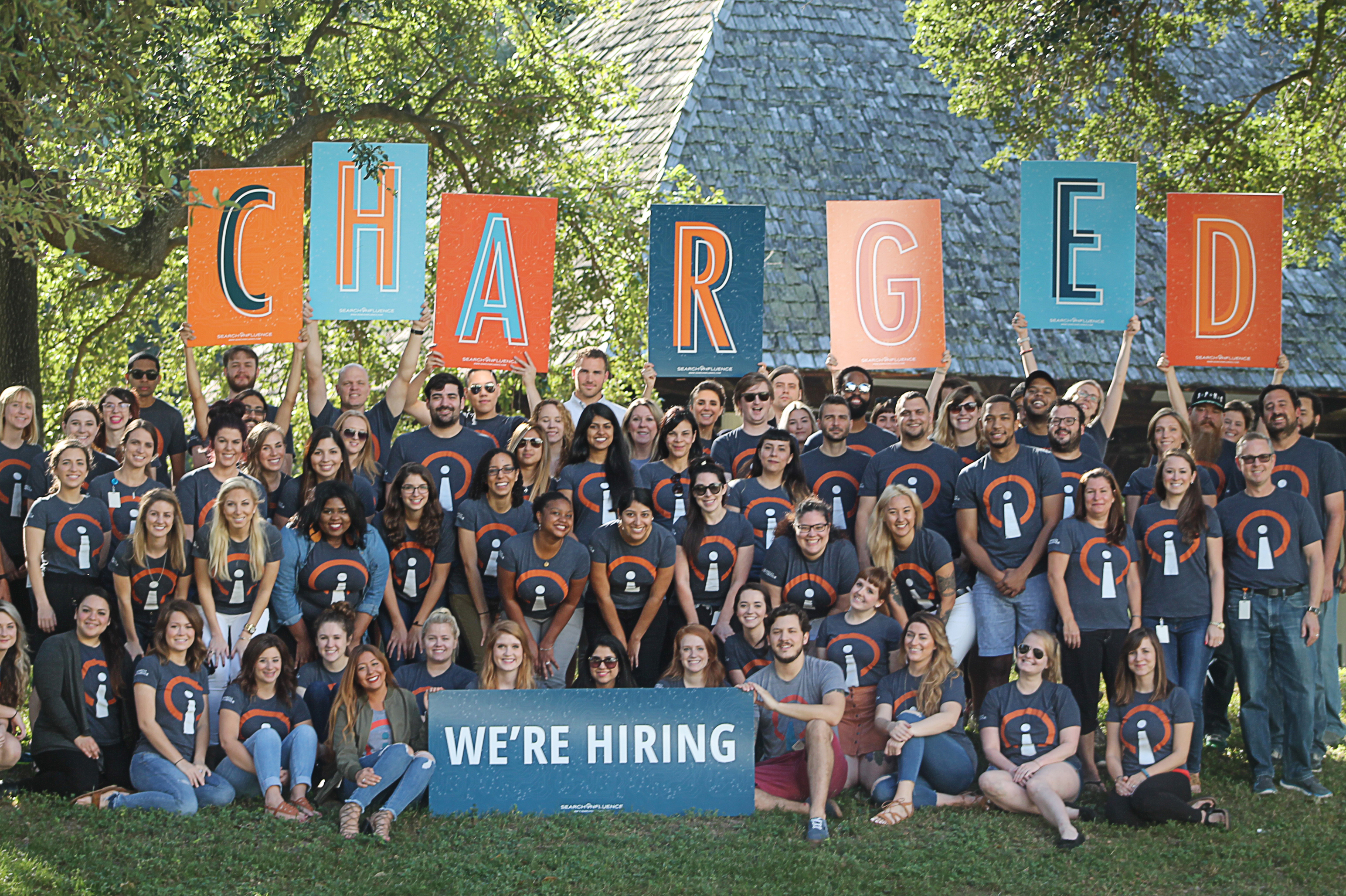
    Charged Employees of Search Influence

    What’s your favorite work memory at SI?

    Me and my friends at SI have a “Ladies who…” group, which is just an event once a week where we do something different. Like ladies who lunch, who happy hour, etc. It is super fun to not only build those relationships in the office but also build those friendships out of the office, too.

    What would you like others to know about your job that they may not expect?

    I think, for me, it was hard switching my AM brain to a sales brain. But, it was interesting to see how much in common the positions had—sales encompasses a lot of the things that each department does each day. Also, it’s just not that scary. I thought it would be really intimidating to pick up the phone and talk to a doctor, but we don’t know what they know, and they also don’t know the things that we know.

    What are your biggest goals for your career in the next 5 years? Beyond?

    My biggest goal in the next few years is just not to get too comfortable and to always stay challenged and learn something new every day. It’s easy to get in a rut and just do what you do because it’s a routine and not because it’s challenging.

    Looking ahead, what are you most excited to achieve and take part in at SI?

    Some big sales! I’m excited now that we are really focusing in on the direct side; it’s exciting to be part of the team that is supporting and growing that. I think we have great clients now who have supported us for a long time, and it’s cool to be a part of the team that’s going to help contribute to that.

    Sometimes it can be hard to explain what we do in the SEO world. What are some successful tactics you’ve used to inform new clients about our industry?

    The way I always describe it is that I help local businesses rank on Google. Obviously, there are a lot of little technical things that go into it. But at the end of the day, our main goal is that when a user searches for something and types in a keyword related to one of our local businesses, it’s our client that shows up in the first five rankings. That’s who the user clicks on and engages with. Everyone Googles things, so it’s easy to relate to that.

    In your opinion, why does online marketing matter for small business? What role does it play in the local economy?

    I think it’s important for small business because people might not know that you’re there unless you tell them. You do that through online marketing. That’s how you make your brand known in this day and age; not doing it is not an option.

    What are prospective clients most surprised to learn when you talk to them about the benefits of online marketing?

    I think that a lot of people obviously know about Google and know how it works, but I don’t think they know how or why those businesses are ranking. They are surprised by all the things you can do to improve your rankings. I don’t think that they understand the actual manpower it takes to manage all these things so that when you do type something into Google, it’s your business that shows up.

    What were you most surprised to learn about this industry when you started working at SI?

    I literally knew nothing. I straight up Googled, “What is SEO?” Every day was different; it was an uphill battle because it’s such a vast level of knowledge. My surprises were very similar to our clients’ surprises.

    What advice would you offer to someone considering a sales position in this industry?

    I would say go for it! I definitely do not regret trying something new. I had never done sales before. There’s an aspect of selling in everything you do, but I had never picked up the phone and tried to sell something. It’s changed the way I think about my work. It’s helped me build on the character traits I already had, and also build new ones as I get more comfortable and gain more experience.


    If you’re interested in learning more about a sales position at Search Influence, please visit our careers page to view our current positions available. We look forward to meeting you and discussing a potential career at Search Influence!

  • #FreelanceFriday: Best Places to Work Remotely (Other Than a Coffee Shop)

    This post is part of our Freelance Friday series, where we discuss everything and anything related to freelancing. Follow us on Twitter (@SIfreelance) for more freelance-focused content—from writing tips to industry-related best practices.

    Everyone knows that freelancing = freedom. And one of the major draws of that freedom is the ability to work from anywhere.

    So, where do most freelancers work? Well, to be honest, mostly at home and in coffee shops.

    Many people have delusions of grandeur when it comes to working remotely, picturing themselves on a far-off beach somewhere with their laptop in one hand and a cocktail in another. While certainly feasible, that is not really how freelancing works for most people.

    But, that does not mean you are restricted to the confines of your home or apartment as a freelancer. You don’t even have to join the countless clichéd coffee shop denizens clacking away on their laptop amidst the distracting chatter and overpriced macchiato.

    Here is a list of the best places to work remotely (other than a coffee shop):

    Library

    Today, the world’s information may be collected primarily online, but for centuries before, libraries possessed this wealth of knowledge. So, why not surround yourself with both? Plus, it is quiet and littered with big desks and comfy chairs.

    Image Of Ferris Bueller In The Library Dancing With Children - Search Influence

    Museum

    Seeking similar worldly inspiration in a different setting? Surround yourself with great art. Also, like the library, museums offer peace and quiet and lots of space to get lost in thought.

    Park

    Nature can also be a great source of inspiration–from the towering trees to the serene green fields. Enjoying the sun and fresh air is always better than being hunkered down in an office. Just make sure you have access to Wi-Fi.

    College Campus

    Campuses are kind of like a combination of all the above. There is a library, student center, and lush green spaces spread throughout. You spent hours and hours studying here while in school, so why not go back to get some actual work done?

    Mall

    The food court can be a rowdy place, but if you can tune out the ambient noise, malls are a great place to get work done—especially on weekdays. Free parking and close access to food never hurts either!

    Image Of Robyn Sparkles Let's Go To The Mall - Search Influence

    Hotel Lobby

    Likewise, during the week, hotel lobbies are typically deserted, leaving copious amounts of room and silence to get work done. Wi-Fi may be password protected, but a passing employee likely won’t mind divulging the access code if you ask nicely.

    Bar

    During the day, bars are just like coffee shops, only better. You also likely won’t have to fight for table space with all the other writers crammed into the coffeehouse.

    Fast Food Restaurant

    McDonald’s, Burger King, Wendy’s, Subway, Taco Bell, and others all offer free Wi-Fi. In the ongoing fast food wars, these restaurants are all trying to one-up one another with new amenities. Take advantage of it to get some work done—just take it easy on the snacking.

    Image Of Good Burger Kennan And Kel - Search Influence

    Airport

    Not just a great spot to people watch. Most airports offer the same amenities as those mentioned before—Wi-Fi, food, bathrooms, plenty of space, ambient noise, inspiration, etc. Plus, you don’t have to deal with the hassle of traveling or missing your flight.

    Co-Working Spaces

    This option is definitely great, but can end up being fairly expensive. Co-working spaces are a hot new trend and growing fast. Every major city and most mid-major cities are filling up with these unique shared spaces. Typically, they can be paid by the day or monthly, and certainly gives the feel of “going” to work, but on your own terms.