Tag: higher ed marketing

  • Grow Traffic to Your Higher Ed Content With a Personalized Marketing Strategy

    Key Insights

    • Just like other businesses, higher education institutions need to use marketing tools and strategies to broaden awareness of their brand and attract new students.
    • Education marketing can help a higher education institution to present relevant, personalized information to prospective students, which in turn spurs their interest in enrollment.
    • When you use data to better understand prospective students and provide them with tailor-made content, they will be more likely to engage with you directly on the content you produce.

    When prospective students look for new schools online, they often focus their searches on programs and institutions that will help them achieve their educational and professional goals. The higher education market is extremely competitive, so it can be challenging for prospects to navigate their options and find the right program.

    With a personalized marketing strategy, your higher education institution can more effectively promote your program offerings, highlight what sets you apart from the competition, and attract more students.

    Student at university holding textbooks

    What Is Education Marketing?

    Like businesses, higher education institutions need to use marketing tools and strategies to broaden awareness of their brand and reach new students. In addition to traditional marketing techniques, schools also use digital marketing to increase traffic to their websites, giving prospective students valuable information about their programs and benefits. Education marketing efforts on the web often include search engine optimization (SEO), digital advertising, content creation, and outreach using social media and email.

    Benefits of Education Marketing

    Brand recognition

    Education marketing helps schools increase awareness of their brand, which can be especially useful for attracting new students. The more visible, compelling, and reputable a school’s brand is online— and out in the world — the more that students will be interested in attending.

    Lead generation

    One of the primary goals of any marketing strategy is lead generation, gathering contact information from potential consumers. Education marketing can help a school to present relevant, personalized information to prospective students, encouraging them to provide information via website form submissions, content downloads, or calls to the school. This allows the school to identify and develop a list of prospective students to engage with throughout the marketing funnel.

    What Is a Personalized Marketing Strategy?

    To stand out from competitors, businesses have started to ramp up their marketing efforts by using personalized marketing strategies. Personalized marketing uses data collected from consumers to deliver brand messages tailored to individual prospects. When educational institutions use personalized marketing strategies, they get the chance to know more about prospective students—their interests, browsing behaviors, and search terms, for example—and can then market their brand to them more effectively.

    This attention to detail is paying off for brands across the globe. According to SmartHQ, 72% of consumers claim that they respond to marketing messages that are exclusively crafted to their choices.

    Benefits of Using a Personalized Marketing Strategy for Your Education Marketing Content

    Gain a better understanding of prospective students

    When an educational institution uses a personalized marketing strategy, they learn more about their prospective students’ interests, habits, and desires. This crucial information helps higher education marketers develop smarter marketing strategies and create student-centric journeys through the marketing funnel, giving schools an advantage over competitors when it comes to enticing and recruiting new students. It can also help schools tailor their program offerings and incentives to better match what incoming generations of new students look for in their higher education options.

    Lead nurturing

    Lead nurturing is the process of developing relationships with potential consumers in order to nurture them through the student’s journey. When schools use data to better understand prospective students, they can more effectively market to them as they transition from interested prospects to enrolled students.

    Prospective student engagement

    When you use data to better understand prospective students and provide them with tailor-made, personalized content, they will be more likely to engage with the content you produce. Targeting users with relevant content leads to a 73% higher conversion rate, according to Aberdeen. Increased engagement is a good sign that prospects are interested and can be nurtured toward a final decision.

    Prospective student social sharing

    If your content is useful and engaging, it’s also more likely that prospective students will share it using social media and word-of-mouth. This is a great way to increase awareness of your brand and have your content distributed organically to other prospective students, even those who may not yet be in your personalized marketing strategy.

    Prospective student retention

    A personalized marketing strategy enables you to build closer relationships with prospective students. This helps to retain them from their initial interest in your institution to the moment they decide to enroll.

    Professor giving lecture in a college lecture hall

    Basics of Implementing a Personalized Marketing Strategies for Higher Education Institutions

    Student personas

    Student personas are semi-fictional profiles that mimic the demographic information, goals, and challenges of real prospective students you’re trying to reach and recruit. Personas are a great way to refine your messaging across all marketing tactics, improve your content strategy, and increase applications.

    Remarketing through digital ads based on actions and/or funnel stage

    Remarketing tailors digital ads to prospective students who have already shown interest by visiting pages on a school’s website or interacting with other brand content. This form of re-engagement is useful for nurturing prospects through the marketing funnel and keeping them interested in your brand.

    Program-specific email nurture

    Having data about your prospective students’ interests enables you to send them program-specific emails. These are far more engaging than generalized emails, and they give students valuable information about programs they’re interested in, which helps to nurture them as they consider enrollment.

    Action-driven email nurture

    Emails can also encourage recipients to take action that furthers their engagement with your brand. For example, effective action-driven emails may include a clickable link to a new blog post or video, an invitation to sign up for an event, or an opportunity to start a conversation with a student advisor.

    Appropriate calls to action

    Calls to action in emails and other communications should always be appropriate for the intended recipient. A call to action for a prospective student who is earlier along in the marketing funnel might ask them to request more information about a program, while a call to action for a prospect who’s in later stages of the marketing funnel might ask them to begin filling out an application.

    The Education Marketing Experts at Search Influence

    A personalized marketing strategy enables your educational institution to reach and engage prospective students. Our team of experts at Search Influence will help you to develop a strong marketing strategy and provide you with the digital marketing tools you’ll need to broaden your audience, including SEO, analytics and lead tracking, and content marketing.

    To learn more about the services we offer, fill out our online contact form.

    Images

    Student

    Lecture Hall

  • 5 Minute Power-Session: Solving 3 Key Higher Education Marketing Data Challenges

    5 Minute Power-Session: Solving 3 Key Higher Education Marketing Data Challenges

    When it comes to marketing and recruitment pipeline data and analytics in higher education, there are a few common challenges universities and professional, continuing, and online education units (PCOs) often face:

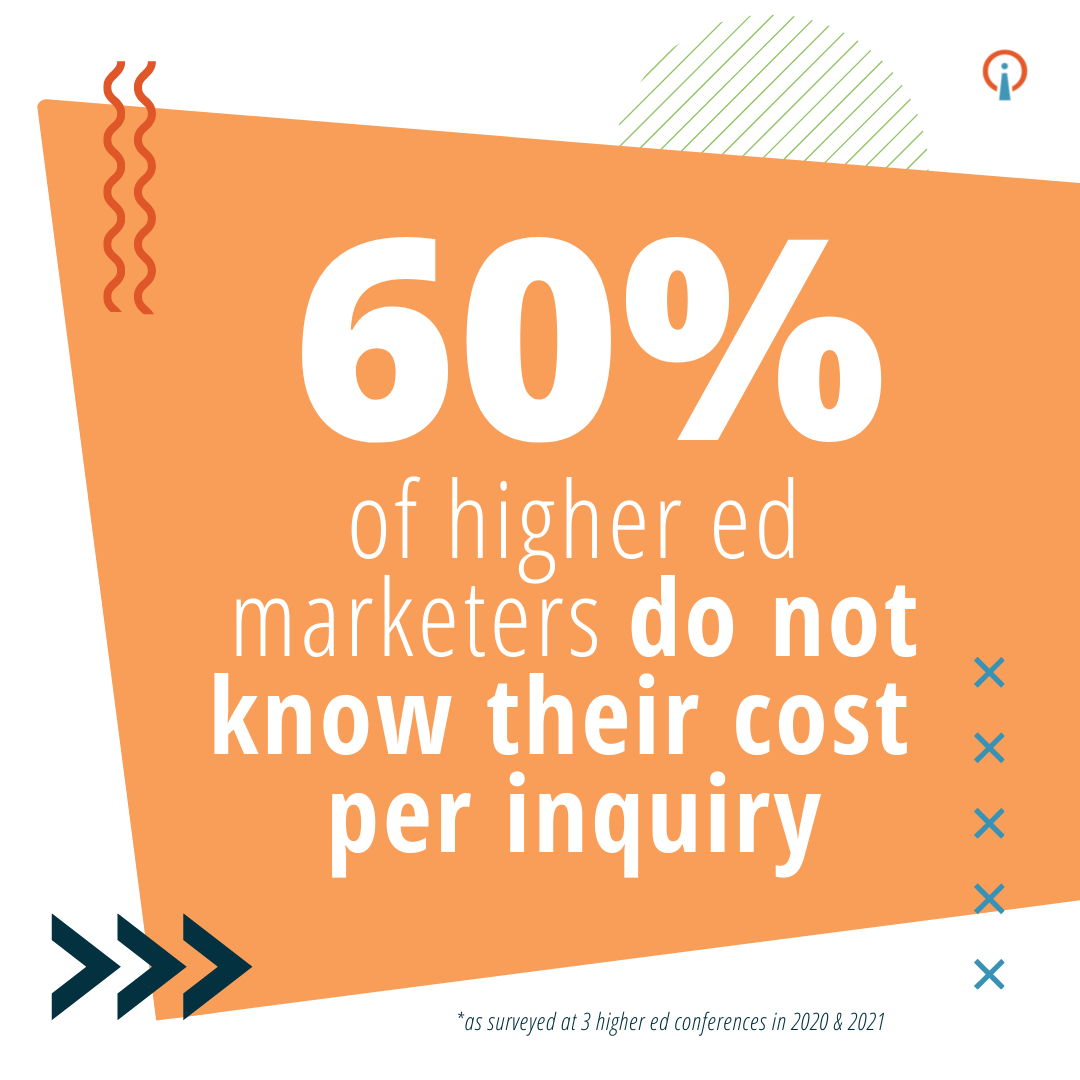
    60% of Higher Ed Marketers do not know cost per inquiry

    Silos within the university

    Marketing is responsible for owned and paid media including the website, social media channels, and placing media buys but it often has limited or no access or insight into the enrollment CRM. Meanwhile, the recruiting team isn’t even aware of the depth of rich data available to them about prospects and current students. The existence of this data presents an opportunity for marketing to better understand the ideal student, and adjust their strategy to reach more of them, in a more effective way.

    Data systems challenges

    Many institutions have data about their students and prospects living in disparate systems, there’s simply too much of it, and it is incredibly time consuming to collect and understand, much less piece it together for insights.

    Fragmented data

    There’s largely an inability to string together information about a single prospect all the way through the recruitment to enrollment funnel, or even to understand the funnel end-to-end.

    Recently we were honored to present a quick 5-minute power sessions at HighEdWeb Analytics Summit, where we dove into Marketing Data, Dashboards, and Decisions, with a goal of helping universities and PCO’s understand the impact they can have when they’ve done the work to better understand their own first party data and overcome these common data challenges.

    Higher ed marketer looking at marketing metrics

    As we’ve presented this and similar insights to higher education stakeholders and conferences over the last 3 years, we’ve polled to get an understanding of where most institutions fall within those 3 key data challenges. The results are telling: 60% of our respondents didn’t know how much they currently spend on marketing for an inquiry. As an analytical marketer I can tell you – that pains me!

    Check out our presentation for more on where to start to overcome the most common data challenges facing universities today, tools you can use to facilitate deeper insights, and examples of how access to data can influence key decisions and strategic direction.

  • Search Influence Presents Virtual Higher Education Marketing Training, “How to Gain Stakeholder Trust in Your Marketing Plan ”

    About the Virtual Training

    As an education marketer, it’s your job to help deans, admissions, and other stakeholders understand how new marketing strategies fuel student growth.

    Search Influence will guide you through how to build a case for new marketing efforts, including ways to demonstrate how your strategies impact your institution.

    Learning objectives:

    • How to use quantitative goals to plan and pitch marketing strategies.
    • Tactics to demonstrate how a given strategy will help you reach a specific target audience.
    • Guidance to tailor your discussion based on personality styles and role.

    Plan, Track, & Earn Buy-In for Your Marketing Strategy webinar graphic

    This is the third part of our free training series, “Plan, Track, and Earn Buy-In for Your Higher Education Marketing Strategy. The series helps higher education marketers create a strategic and measurable marketing plan and build excitement for the plan among stakeholders.

  • Gen Z is the Next Non Traditional Student: Move Them Down the Funnel with These 2 Tactics

    Key Insights

    • Since Generation Z (Gen Z) is the next generation of non-traditional learners, it’s essential to provide accessible and relevant information to this new generation of life-long learners.
    • Two tactics in higher education marketing—Facebook/Instagram Lead Generation and Email Nurture campaigns—can help move prospective students through the funnel and one step closer to applying and registering.
    • Facebook/Instagram Lead Generation creates a friction-less conversion point for users at the consideration stage of the funnel.
    • Email Nurture campaigns allow you to send personalized, targeted messages to prospects in the consideration and decision phase of the funnel, addressing key decision points in their journey.

    Woman working at a laptop in front of a window

    Higher education marketing isn’t an easy A—it’s always evolving because the upcoming generation heavily influences the industry. As Gen Z is added to the typical prospective non-traditional student pool, marketing strategies must also change to appeal to prospective students in a relevant and engaging way.

    One of the most prominent characteristics of Gen Z is their tech savvy. This generation was born into the interconnected world of the internet, smartphones, tablets, and other smart devices. Digital marketers targeting Gen Z must provide easily accessible information at their fingertips and across social media platforms to compete for their attention.

    When first targeting prospective students, universities need to clearly display the attributes that make them different. Once the intended audience recognizes an institution’s brand and starts engaging with their social media and web content, it’s time to shift the strategy from brand awareness to the next phase in the marketing funnel: consideration, and ultimately through to decision (applying) and to registration.

    During the consideration phase, the prospective student is more familiar with a school. They may schedule a virtual tour or download a brochure. Students may even start imagining themselves attending—but they aren’t quite ready to commit. Prospective students are likely still researching other schools and weighing their options. During this stage, universities need to provide the information prospective students are looking for. Universities can use first-party data, like past inquiries, to directly target and speak to prospective students in this stage of the funnel.

    Facebook/Instagram Lead Generation Ads and Email Nurture campaigns can engage digitally savvy prospective students and move them through the marketing funnel to take the next desired action.

    Facebook/Instagram Lead Generation Ads

    What is a Facebook/Instagram Lead Generation Ad?

    During setup, Facebook gives marketers the option to create campaigns based on objectives (i.e., goals). All campaigns can also be converted to Instagram (73% of Gen Zers actively use Instagram, while only 40% use Facebook).

    Universities can select a Traffic campaign if the goal is to send their target audience from Facebook/Instagram to an external URL, like a blog page. This campaign would be most applicable at the top of the funnel.

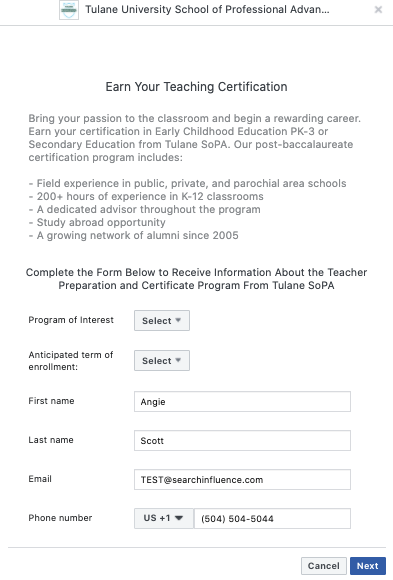
    In the consideration phase of the funnel, Lead Generation campaigns can be a convenient way to convert prospective students. Ads in Lead Generation campaigns look similar to other campaign ads, but instead of linking to a website outside of Facebook, Lead Generation ads send the user to an “Instant Form” directly in the Facebook (or Instagram) platform. Here, the user is prompted to fill out basic contact information.

    Then, in the decision stage, when it’s time to focus on driving potential students to fill out applications, marketers can show ads just to people who have completed that lead generation form. It’s best practice to run this campaign with a Conversion objective to optimize for users to take specific action on their site, such as an application.

    Why are Facebook/Instagram Lead Generation campaigns relevant?

    These campaigns are very user-friendly because the form fills are pre-populated with the user’s Facebook contact information, a feature many Gen Zers have come to expect. In a few seconds, the user can click the ad, retrieve the relevant information, and send over contact information that creates a new qualified lead. It’s that simple. (With some custom configurations, that conversion can automatically input into an enrollment management system like Slate!)

    Screenshot of Facebook ads campaign for higher education client

    Facebook/Instagram Lead Generation campaigns can also help universities gain more qualified prospects. Users don’t want to give their contact information to just anyone—if they’re submitting their contact information, they probably trust the business.

    It’s critical to target a lower-funnel audience to be most effective with this type of ad. Users who are already somewhat familiar with a university’s brand are more likely to be comfortable providing their information if they’re interested in learning more.

    How do Facebook/Instagram Lead Generation campaigns produce high-quality leads?

    When starting a new campaign, it’s common to feel like many of the prospects that come in aren’t high-quality leads. At first, it will take Facebook and Instagram’s machine learning some time to analyze and make changes to optimize a campaign to attract leads that fit neatly into a target demographic. Don’t be discouraged!

    If lead quality is still an issue after a few months, adding the “high intent” feature to forms can help. This feature adds a review screen for users to confirm before submitting a form. Adding this step helps ensure the user is consciously aware that they’re submitting their information. But note, this “high intent” feature is only available for users on mobile devices, so it will limit placements. Before turning this feature on, assess what percentage of impressions and past form submissions are coming from mobile devices.

    Email Nurture Campaigns

    The second critical tactic to move prospects further down the funnel is an Email Nurture campaign.

    What is an Email Nurture Campaign?

    In a previous blog post about engaging prospective college students, we define an Email Nurture campaign as “an intentional and strategic set of messages sent to a prospect over a period of time to guide them through the decision-making process to an ultimate desired action.”

    These email campaign strategies are built with conversion in mind and are sent to individual prospects directly, not to a bulk list at one time. The prospect’s action will trigger the type of email messaging sent to them. Each action the user takes will determine the next email they receive.

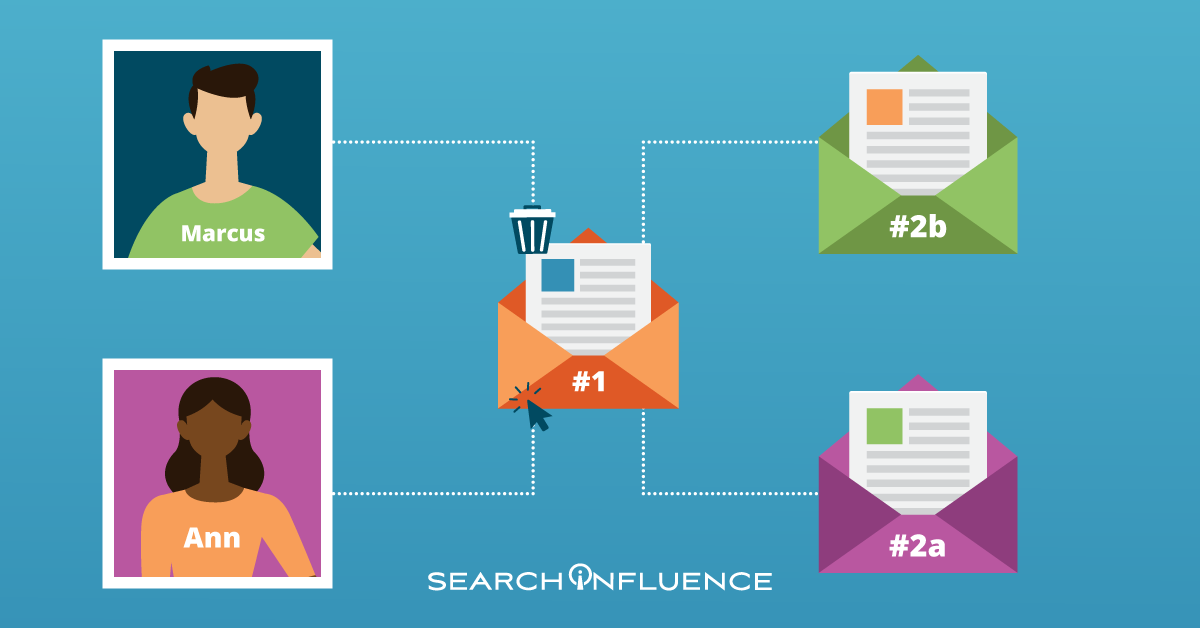
    Graphic showing higher education marketing funnel

    For example, let’s say Ann (Lead A) and Marcus (Lead B) are both interested in studying urban planning and have submitted an online form on a university’s program page to receive more information.

    From that form submission, both Ann and Marcus will receive Email #1. Ann opens the email immediately and clicks through some of the included links. Based on her actions in that email, she might receive Email #2a one week later, which gives details about next steps and applying.

    Marcus, however, did not interact with Email #1 like Ann did. He deleted it after opening it. Marcus might then receive Email #2b, which contains different content focused on re-engaging him.

    Why are Email Nurture campaigns relevant?

    According to Statista, 90% of U.S. internet users used email each month in 2019.

    As a reminder, the prospective student is already aware of several universities and weighing their options at this point in the marketing journey. Targeted email allows a university to provide interested students with the answers they are looking for before they even search for them.

    In a webinar, Blackboard reported that prospective students have new concerns and questions related to the pandemic, including potential economic fallout, changes to the campus environment, and job prospects after college. Prospective students have stated they would like to hear from admissions counselors at least once a week via email.

    To address this, higher education institutions can implement an Email Nurture campaign to ensure prospective students are getting relevant information based on where they stand in their journey, in addition to personalized outreach from admissions counselors.

    Facebook/Instagram Lead Generation campaigns and Email Nurture campaigns are excellent tactics for engaging with prospective students and providing them with the information they’re looking for, pushing them one step closer to applying to your institution.

    Ready to start building a marketing campaign tailored to your ideal prospective students? Search Influence has helped local and national higher education clients create effective campaigns to target prospective students at all stages of the marketing funnel. Contact one of our experts to learn how you can enhance your current marketing strategies.

    Images

    Laptop

  • Stairway to Higher Ed Website Heaven: Seven Steps to Engage Prospects and Students

    This post was updated by Ariel Tusa on September 24, 2020 to reflect recent trends and refreshed statistics. It was originally published on May 2nd, 2019.

    Key Insights

      • Make sure your website is an easily accessible tool that prospective students can use to find information.
      • Cater to mobile users by having a mobile-friendly site that loads quickly.
      • Maximize your public relations staff and media contacts for mentions and high-quality backlinks.

    Universities have a leg up in search rankings, thanks to the authority of “.edu” domains and brand recognition. However, many university websites aren’t set up to make the most of these advantages, and the added uncertainty of COVID-19 has put a strain on the marketing budgets of organizations around the world. So, what’s an educational institution to do? Maximize the potential of your university’s brand with our seven tactics to improve your search visibility among prospective students!


    A stairwell covered and surrounded by clouds leading into a blue sky

    To market effectively, it’s important to understand the buyer’s journey—or in the case of higher education—the student journey. Online searches are a critical part of the student journey that help people decide where they will apply.

    According to a study by Google, 58% of students use search engines to begin their research for higher education.

    With that in mind, let’s dive into our seven steps! We’ll take a look at some examples from one of our education clients, Tulane School of Professional Advancement.

    1. Mobile Experience: Mobile Experience Must Be on Par With (or Better Than) Desktop

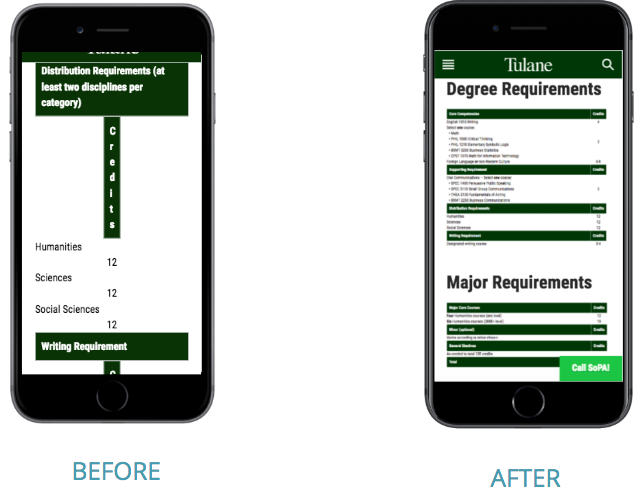
    Beginning in the summer of 2018, Google rolled out their “mobile first” algorithm, making your mobile site more important than ever. Sometimes, developers edit websites on a computer without testing them on both a desktop and a mobile device. However, most prospective students will only visit your site on a mobile device. For Tulane SoPA, mobile traffic has increased from just under 43% in 2016 to nearly 75% in 2020.

    Before and After of Tulane School of Professional Advancement's mobile website

    Many websites end up with a user experience that looks like the “before” image when their design focuses on desktops. When you set your sights on improving the mobile version of your site, you’ll end up with something that’s more like the “after” image. Providing a high-quality experience to mobile users can improve your conversion rates and boost your search rankings.

    PRO TIP: Google offers a free Mobile-Friendly Test that reviews the size of graphics and technical elements to assess the user experience on mobile devices. The test’s assessment generates feedback you can pass on to your web development team to review and update your website.

    2. Site Speed: Your Site Should Load Quickly

    Keep more of your visitors on your site by solving the most common speed issues for websites. Google wants to provide a seamless experience and answer a user’s query as quickly as possible, meaning that site speed is becoming a more important factor for keyword rankings.

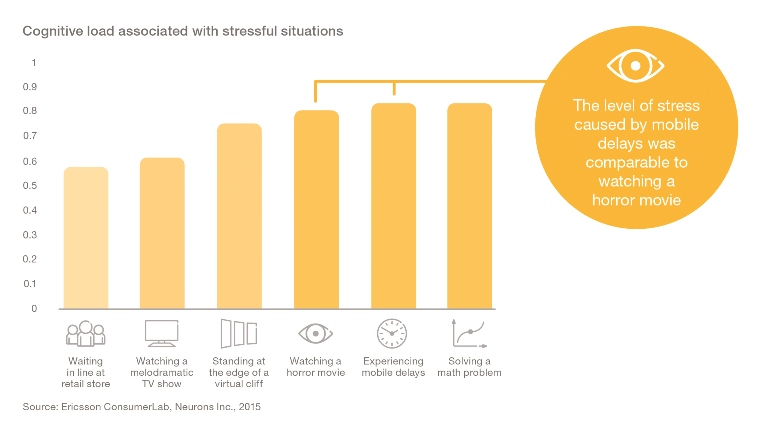
    This chart illustrates how important your site’s speed is to users. A study by Google equated the cognitive load of waiting for a slow mobile website to be on par with solving a math problem and watching a horror movie… and worse than standing on the edge of a cliff!

    A bar chart showing cognitive load associations with stressful situations

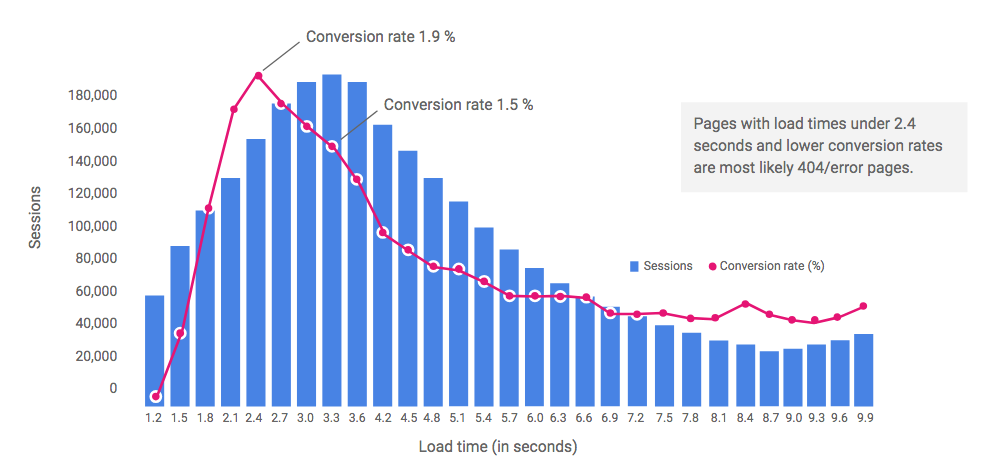
    On a more positive note, sites with load times under 3 seconds garner the most sessions and peak conversion rates, showing that load time has a real impact on user experience and, therefore, conversion. The ideal load time is 3 seconds or less. Even just improving load time from 3.3 seconds to 2.4 seconds, you can increase your conversion rate by 27%.

    Correlation chart between sessions and load times

    Google free Mobile Site Speed Test tool can demonstrate how your site compares to those of other universities. The report generated by the Mobile Site Speed Test estimates how much you’ll speed up your load time by implementing its recommended changes.

    3. Content: Should Provide Helpful Information to Prospects (and Search Engines)

    Universities often think of their websites as tools for current students and less about prospects. When creating your content strategy, think about where users may be in the student journey—their decision making process—and speak to them at all levels:

        • Some are just starting to search for answers to everyday problems
        • Some might be further along in their journey, researching options at your school
        • Some may be even further in their journey and are ready to take action and need to find a way to contact you QUICKLY!

    Many universities lack specific content for their programs, degrees, and courses, requiring prospects to speak to an advisor to get details. Instead, break down barriers for prospects by assuring this info is easily accessible on the site. As you begin identifying ideal content for a page, whether it’s a homepage or internal page, think about the different ways people consume content:

        • Skimmers read the headings, bullets, and key stats to quickly make a decision on how to move forward.
        • Swimmers may read some of the sub-content, watch a video, and click onto a deeper page.
        • Divers will read all of the content on the page, watch a video, and most certainly would go to other pages on the site.

    Having a dedicated page for a topic also makes it more accessible to search engines, which helps prospects find the information more easily. When building content for your university’s website, use this content checklist:

    ✓ Does your site have dedicated pages for each program/degree?
    ✓ Is content crafted to speak to “skimmers, swimmers, and divers” (a mix of bullets, infographics/media, and paragraphs with details)?
    ✓ Are online and on-campus options clearly stated?
    ✓ Do you have one-pager downloads that require visitors to input their email address to build a prospect pool for email marketing?
    ✓ What are the top five questions your front desk and advisors are asked?

    4. Optimize for Branded Searches

    Branded searches describe searches conducted by prospects that include your school’s name in the query. They may search by name only or with a combination of your name and a degree, major, or academic program. Optimizing for branded search supports prospects who are in the consideration and decision phase of their journey—they’re already familiar with your school and searching for it by name.

    Help prospects and students find information more easily when searching for specifics like “Tulane SoPA Tuition” or “Parking on Smith campus” by optimizing for branded searches.

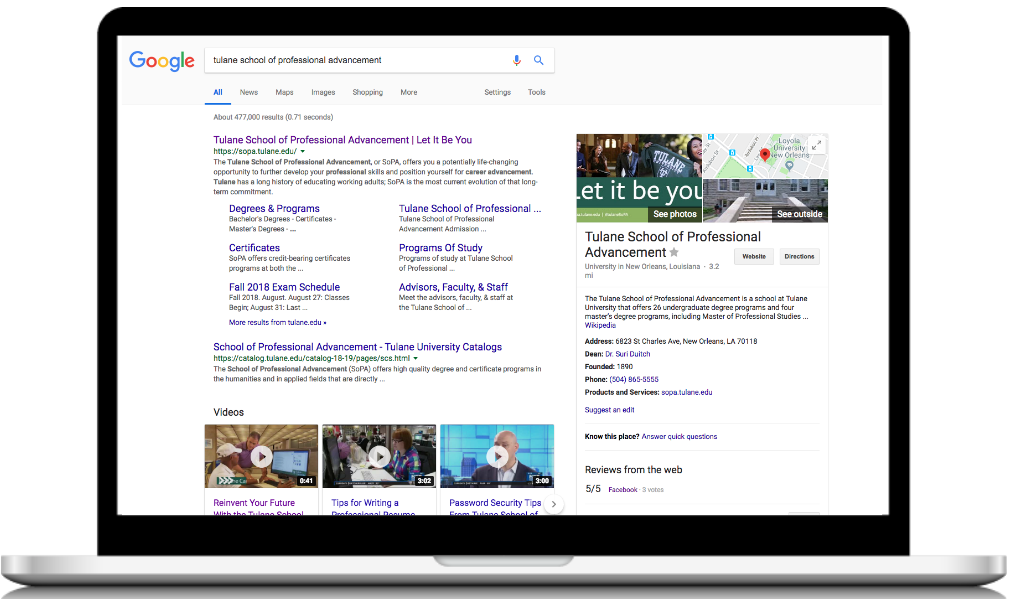
    A laptop showing a google search for tulane school of professional advancement

    When performing a branded search for your own university, you should see your website. If your site is established, you’re also likely to see “sitelinks,” which are Google’s top suggested pages for users. The Knowledge Panel on the right offers location information from Google My Business, Wikipedia, and reviews from around the web. Of the many parts of the SERP (search engine result page), there are pieces you can and cannot control.

    What you can control:

          • Your website
          • Info on Google My Business (photos, accurate location data, posts)
          • Content you’ve posted on other websites (YouTube videos)
          • First-party reviews

    What you can’t completely control, but can work on:

          • Third-party reviews, including Google
          • Third-party mentions
          • Wikipedia (more on this later)

    5. Earn Backlinks That Are Relevant to Your Target Audience

    Links to your website from other sites are like positive reviews to search engines. Building links supports your university’s website ranking by building authority and relevance. Google uses backlinks to judge if you are a trustworthy and relevant source for a topic. Which websites link to your site is more important than how many. Backlinks from authoritative national sites, like The New York Times or Wall Street Journal, give you national authority in Google’s eyes. Earning backlinks can be a challenge, but approach this tactic with a quality-over-quantity mindset. A strong PR strategy is critical to earn genuine, valuable links.

    Any accredited university should also pass the “notability” test and be listed on Wikipedia. If you are established, you likely already have a Wikipedia page. Wikipedia pages can be edited for accuracy and provide links to your website. However, the language should be strictly factual and have a neutral tone.

    When authoritative local sites, like a local news outlet, link back to your site, this adds to your local authority.

    Sites that are both relevant and authoritative, like a list of the Top 10 humanities programs on USnews.com, support both your relevance and authority even when you are simply on the list and don’t get a backlink! Some lists require payment for inclusion. Here are the key questions we ask when considering paying for placement:

    ✓ Is it a reputable website?
    ✓ Does it rank well on Google compared to competitors within its industry?
    ✓ Does the feature include a link back to your website? (Remember, if not, that’s okay)
    ✓ Do you get to approve the content that will be listed about your school or program?

    6. The Press and Media Are Highly Effective Tools

    Media mentions are one the best sources of links and branding. Your university may receive some attention from the media, but you can’t sustain or control this without a PR strategy. Local media sources are often excellent contacts to work with.

    The key is finding a strong PR partner—someone who already has relationships in the industry—and a process. Most colleges and universities have enough going on to produce newsworthy stories consistently. With a dedicated PR effort for Tulane SoPA, they are earning an average of five to six media appearances per month. To be successful, you need to frequently communicate with your PR team, as well as ensure that your staff is available for interviews, providing quotes, and more.

    Here’s a checklist your marketing team can use for quality backlinks and media mentions:

    ✓ Wikipedia
    ✓ Top lists
    ✓ Partner community colleges, universities, and high schools
    ✓ Scholarship search websites
    ✓ Scholarship partners
    ✓ Local directories
    ✓ Local media outlets
    ✓ National media outlets

    PRO TIP: When responding to requests for quotes, be sure to include which specific page should be linked to (don’t always choose your homepage).

    7. Technical Elements Support Search Success

    Key technical settings on your site can help Google understand and process the info on your webpages, which leads to a stronger search presence. Master these four elements:

          1. Your site runs HTTPS and you have purchased and properly installed an ”SSL certificate.” This tells Google and users that any information a user inputs on your site (such as their name, email, or phone number) is being transmitted securely. Google’s most recent version of Chrome calls out non-secure sites more strongly by making the text red, instead of a subtle gray warning.
          2. The robots.txt file is the first file that Google crawlers read when they visit your website. It provides a directory that tells crawlers which pages you want to appear in search results and which you do not. If configured improperly, prospective students may see this in search results. There’s a technical check your web developer can do to assure this setting is accurate.
          3. An updated sitemap hands your list of URLs to Google on a silver platter. HTML sitemaps are good for users and search engines. XML sitemaps are more technical and exist primarily for search engines. While this may sound redundant, you want to take advantage of all of these elements to make it as easy as possible for search engines to index all of your important website pages. Your developer can list your sitemaps within your robots.txt file, which, again, gives Google what it needs to know.
          4. Schema is a technical tactic for labeling your data on the backend of your website to help Google better understand the content. Google can usually understand and parse content easily, but this helps avoid any ambiguity. The simplest example of schema is labeling your address and phone number data. On the front end, it looks the same to the user. On the backend, you’re saying “Hey, Google. I have three distinct locations. This is location one, and this is the address and phone number.” Things get really interesting when you start to mark up more niche types of content on your website, like your course information. Schema.org is your source for the details you need to do this. This can improve your rankings for niche keyword searches because Google can then understand very specific details about your offerings. Leveraging schema markup language can also help you achieve “rich answer snippets,” which is when Google serves up the answer directly to the user in the search result, citing your website as the source.

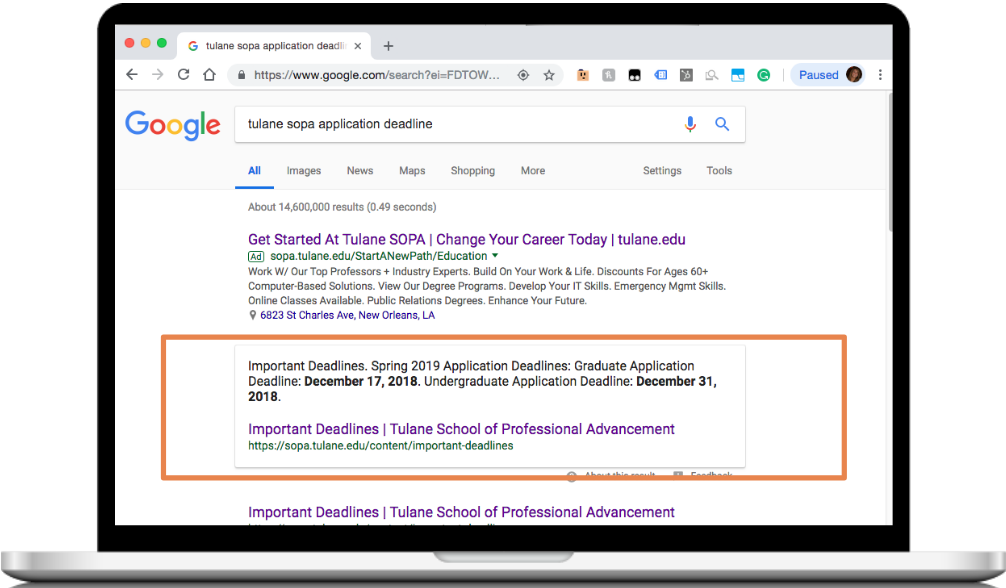
    A laptop showing a google search for tulane's application deadline

    Here is an example of a very specific search, for which a “rich answer” comes up—this is also often referred to as “Position Zero.” Google is beginning to show more and more of these “rich answers.” Schema markup is the first step to earning them.

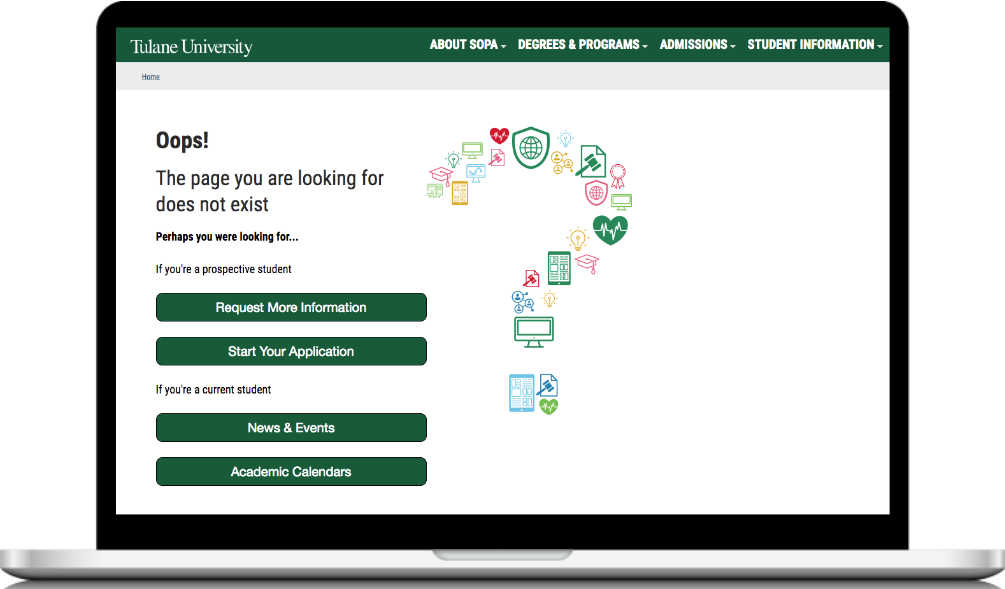
    PRO TIP: Once you’ve worked on these four technical elements, create a custom 404 Page for your university’s site. When a user lands on a page that no longer exists, they’ll then be taken to a page on your site that can help them find the information they were looking for initially.

    Tulane University's 404 page

    Congratulations! With our seven key steps to search success, you’ve officially graduated! Wondering how to take your learnings and apply them to your institution’s website? Download our self-assessment to score your marketing strategies and uncover the opportunities you have to drive leads into and down the funnel!

  • Capture More Potential Applicants With Lead Generation Ads

    Students rely on search engines to research and evaluate the colleges they are interested in attending. As an institution of higher education, you should nurture them from the early stages of research to when they begin applications. The applicant cycle, according to PerfectSearch, can take up to two or more years and should consist of multiple tactics, including targeted emails, paid search, SEO, and social media.

    Lead generation ads are great for capturing potential applicants who are close to converting, as well as those who are earlier in the process. Because of this, they are a great way to capture people who want to move quickly through the application process.

    Lead generation ads can be utilized on Facebook, Instagram, and LinkedIn. Since Facebook and Instagram are both under Facebook, if you set ads live on Facebook, they’ll also show on Instagram.

    Person setting up Facebook lead generation ads for their business

    What Are Lead Generation Ads?

    Lead generation ads are just that—ads that run on Facebook that are meant to generate leads. According to Facebook, lead generation ads let people show their interest in a product or service by filling out a form in the ad with their details and encouraging a business to follow up with them.

    Once a user clicks on the ad, a form will populate with the pre-filled information from the user’s profile. Meaning, they don’t have to type in their name, phone number, or email address. It’s a simple concept with a great return.

    Facebook’s lead ads can help you meet the following goals:

    • Finding new customers for your business
    • Finding out more about people’s interests
    • Getting people to sign up or register for your service
    • Getting people to enroll in your program
    • Getting people to download a brochure or manual

    Why Should You Use Lead Generation Forms?

    Depending on the type of form, filling in the information can be time-consuming and overwhelming. Collecting data and customer information is the key to success, so the more information you are able to collect, the better. According to data from Facebook, lead generation ads usually have high conversion rates because there are fewer steps in the conversion process. The mobile-friendly forms are created for easy converting.

    Leilani Bruce of Pacific54 states, “according to Adobe’s State of Digital Advertising 2018 report, 50% of Gen Z (18-19 year olds) and 42% of millennials (20-36 year olds) think social media is the most relevant channel for ads.” So the question should be WHY NOT use lead generation forms?

    You can customize the questions and information you collect. So, it would be a great idea to ask which programs or courses the potential applicant is interested in. From there, follow up with additional questions based on that user’s answers, but keep them simple and to the point.

    The forms run in more places than just Facebook’s newsfeed; they can also show up in Instagram feeds, stories, etc. Whether you’re using carousel ads, videos, or static ads, they all support lead generation ads. Using videos is recommended because users engage with videos more often than static ads.

    One great feature of Facebook is its self-learning and optimization, meaning that Facebook will automatically optimize your campaign to show your ads to people who are more likely to fill out the form. This leads to more conversions and highly qualified leads.

    As mentioned before, make sure to reach out to potential applicants in a timely manner, whether you follow up with more information or are just using remarketing to drive applications.

    Group of digital marketers working on Facebook lead generation ads

    Tips on Using Lead Generation Ads

    After capturing data from a pool of potential applicants, you can create a remarketing campaign to continue to target them. This allows you to remarket to someone who might have already interacted with one of your ads.

    Also, potential applicant information can be used to create a lookalike audience. According to Facebook, a lookalike audience is a custom audience that’s used to reach new people who are likely to be interested in your university because they are similar to your existing students. Make it easy for potential applicants to get in touch with you by utilizing a specific call to action (CTA) like click-to-call.

    Another thing Facebook is capable of is connecting with your university’s internal platforms. Facebook can easily integrate with MailChimp, Salesforce, Google Drive, or custom CRMs. Facebook recommends integrating CRM software since it allows you to see your leads in real time, letting you reach out to your leads more quickly. And the sooner you reach out to a potential applicant, the more likely they are to convert.

    If you’re looking for new techniques to drive more students to your university, the team at Search Influence has years of experience helping institutions of higher education increase the quality and size of their applicant pools. To learn more about our services, contact us online.

    Images

    Woman Typing

    Team Meeting