Tag: higher ed marketing

  • Search Influence and UPCEA to Present Webinar: “What Gets Measured Gets Managed: Higher Ed Marketing Metrics Research Report”

    Search Influence - Webinar

    53% of our higher ed marketing research respondents aren’t satisfied with their campaigns’ performance. How are you doing?

    On Wednesday, March 13, at 2 PM ET/1 PM CT, Search Influence and UPCEA will host the live webinar, “What Gets Measured Gets Managed: Higher Ed Marketing Metrics Research Report.” We’ll cover our latest research study, which establishes an industry-wide cost-per-inquiry (CPI) benchmark and explores whether higher ed institutions track critical metrics that inform outcomes.

    Join us to see how your campaigns measure up to others in your industry — and which metrics best assess your success.

    What You Will Learn

    Attend the live higher education marketing webinar to learn:

    • The metrics peer institutions track
    • How your university’s CPI metrics compare to peer institutions
    • The most popular sources of inquiries for professional and online programs

    Plus, we’ll give an exclusive first look at our most recent research in collaboration with UPCEA to develop a cost-per-inquiry and cost-per-enrolled student benchmark.

    Bonus: Don’t miss out on our live event giveaway! By registering, you automatically enter the draw to win a $50 prize redeemable across a wide range of over 1,000 top gift cards, prepaid cards, and charitable contributions. We will select four winners — register now to be one of them!

    Your Higher Ed Marketing Presenters

    In “What Gets Measured Gets Managed: Higher Ed Marketing Metrics Research Report,” you’ll hear from industry experts:

    • Jim Fong, Chief Research Officer, UPCEA
    • Bruce Etter, Senior Director of Research and Consulting, UPCEA
    • Paula French, Director of Sales and Marketing, Search Influence
    • Alison Zeringue, Director of Account Management, Search Influence

    Register for the Webinar

    Search Influence became Platinum Partners with UPCEA in 2022. Over the course of our two-year partnership, we’ve co-authored SEO and paid advertising research for higher education institutions looking to elevate their strategy standards.

    “What Gets Measured Gets Managed: Higher Ed Marketing Metrics Research Report” will
    offer an in-depth analysis of current marketing strategies within higher education, highlighting the importance of data-driven decisions. The webinar is a must-attend event for anyone looking to gain insights into optimizing their marketing efforts, understanding industry benchmarks, and improving overall campaign performance.

    Register for the live webinar today to see how tracking the right metrics can impact your school’s bottom line.


    LIVE WEBINAR: 2024 Higher Ed Marketing Metrics Research 

  • UPCEA Webinar Highlights: The Power of CPI in Measuring Higher Ed Marketing Success

    UPCEA Webinar Highlights: The Power of CPI in Measuring Higher Ed Marketing Success

    SI Cost Per Inquiry

    Key Insights:

    • Search Influence and UPCEA have teamed up to create a nationwide benchmark for cost per inquiry (CPI) specifically for professional, continuing, and online education institutions.
    • With an industry-standard benchmark, higher education institutions can better understand how effective their marketing efforts are in attracting prospective students and the factors influencing their success, from media spending to agency fees.
    • To truly harness the power of calculating your CPI, you need a team/system in place that can properly interpret your data.

    Search Influence recently co-hosted a webinar with UPCEA titled “The Power of CPI to Measure Higher Ed Marketing Success.”

    UPCEA is a leading online and professional education association whose members constantly push higher education to new heights. Through everything from professional development to conferences and seminars, UPCEA and its members are diligently working to improve educational access and outcomes.

    Since partnering in 2022, Search Influence and UPCEA have hit the ground running with webinars, research studies, and countless blog posts.

    In our latest collaborative webinar, we stressed the importance of measuring CPI.

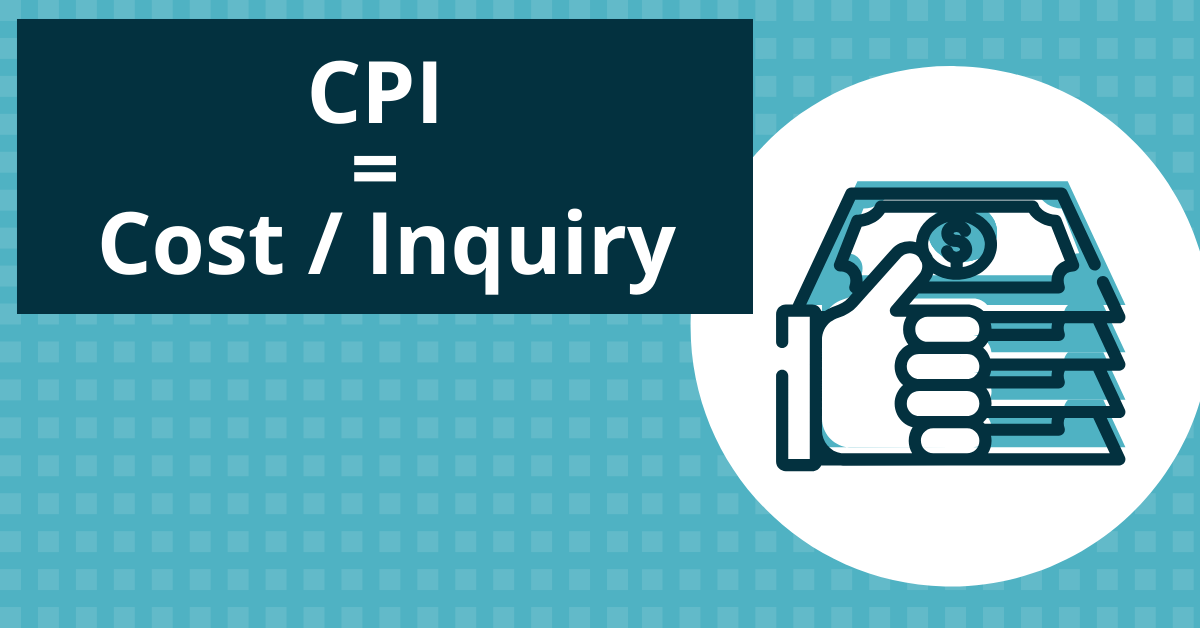
    Cost per inquiry (CPI) is the ratio between the amount spent on your online advertising campaign and the actual inquiries made. You can utilize this in your higher education marketing toolkit to measure your campaign’s effectiveness.

    But to truly master the art of measuring cost per inquiry in higher education, you’ll need more details from the experts.

    Watch the recording from our CPI Webinar for a roadmap to guide you through the challenges of calculating CPI for your institution.

    Hear from UPCEA’s Chief Research Officer Jim Fong, Senior Director of Research Bruce Etter, and UPCEA Platinum Partner Search Influence as they provide their insights on the best place to start and how to remove common roadblocks to keep you on your path.

    In this blog post, we’ll summarize the webinar’s highlights and help you determine the best way to utilize cost per inquiry in higher education.


    On-Demand: Cost Per Inquiry Higher Ed Webinar

    What Makes Cost Per Inquiry in Higher Education Important?

    marketing budget

    In higher education marketing, CPI is a vital metric that helps you understand how effective your marketing efforts are in attracting prospective students.

    CPI provides a clear, quantitative way to assess the efficiency and quality of your marketing strategies in engaging with your target audience. It refers to the cost of generating a single inquiry or lead from a prospective student through advertising or promotional campaigns.

    Multiple dimensions of CPI

    When diving into the world of CPI, it’s crucial to consider the various dimensions through which you can examine this metric, including:

    1. Media Spend: This dimension focuses on the direct advertising expenses incurred in generating inquiries. It helps institutions analyze the cost-effectiveness of their digital advertising campaigns, ensuring they allocate resources wisely to reach prospective students. This is most common.
    2. Media Spend and Management Fees: This accounts for both internal and external costs associated with marketing efforts. In addition to direct media expenses, including management fees provides a more comprehensive view of the total investment required to generate inquiries. This is less common than looking at just media spend.
    3. All Marketing Leads and All Leads From Marketing Efforts: Institutions more accurately understand their marketing funnel by considering all leads, not just those that ultimately enroll. This broader perspective allows for the evaluation of the entire journey, from initial inquiry to the conversion of prospective students into enrolled students. This is the least common way to calculate cost per inquiry.

    Benefits of Measuring CPI in Higher Education Marketing Campaigns

    cost per inquiry


    Cost per inquiry holds significant importance for colleges and universities:

    1. Confidence in Inquiry Generation: A calculated CPI instills confidence that an institution’s marketing efforts drive an appropriate volume of inquiries from prospective students. Assurance is vital for ensuring institutions’ marketing campaigns align with their goal of attracting high-quality leads.
    2. Benchmarking Against Industry Standards: CPI allows colleges and universities to benchmark their performance against industry standards. By comparing their CPI to broader industry metrics, higher education marketers can assess whether their outcomes align with expectations and identify areas for improvement.
    3. Vendor Assessment: When working with third-party vendors or partners in higher education marketing, having a clear CPI enables institutions to evaluate the realism of promises made by these vendors.

    Top CPI Questions From the Webinar Audience

    Q. What is the first step in trying to calculate CPI?

    It all starts with the tracking. Most institutions have CRM (customer relationship management) systems and know their spend.

    CRMs can determine the source of the inquiry (which marketing channel brought in that inquiry), but that data isn’t always leveraged, or isn’t viewed in aggregate. If you’re unfamiliar with how to pull this data, seek admin support.

    Determining the source, and pulling high-level reports, will allow you to get more granular with your CPI.

    But data is just data until you have a skilled marketer to interpret it.

    Similar to the need for a thoughtful editor to adjust AI-written copy, a human touch is necessary to truly get nutrition from the data salad your CRM prepares.

    Not interpreting the data from your online advertising campaign is like having a gold mine in your backyard but never buying a rock hammer and picks.

    Utilize tracking data to optimize your future campaigns and help inform decision-makers on the proper next steps for your institution.

    Q. When will the results of the CPI benchmark survey be published?

    Search Influence and UPCEA anticipate publishing the results of our higher ed research survey in Spring 2024.

    Q. How often should schools analyze CPI?

    It depends on your campaign strategy and consistency. Monthly, at a minimum.

    If your school has a more aggressive digital marketing strategy with ads running consistently throughout the year to attract students, analyzing CPI monthly might work best.

    If you are making adjustments and watching them closely, and your spend is large enough, you may look at CPI just a few days after a change.

    You do want to take a step back and look at quarterly, yearly, and monthly trends. Perform seasonal comparisons (YOY) and compare to the same semester the prior year.

    Q. What’s the relationship between cost per enrollment and cost per inquiry?

    Unfortunately, we don’t always have access to cost per enrollment because it can be complicated, especially in the online and professional education world, where adult learners might take a while to decide if they want to go through with the application process and return to school.

    That being said, we have seen that when cost per inquiry is optimized down, your cost per enrollment should also decrease — assuming quality is maintained.

    Search Influence & UPCEA CPI Benchmark Survey

    si & upcea benchmark survey

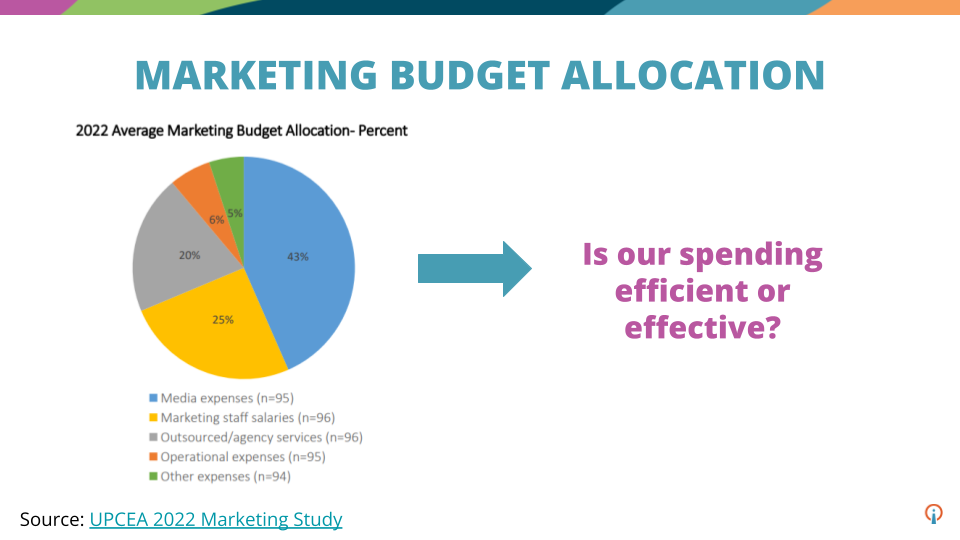
    According to UPCEA, higher ed institutions had an average marketing budget of $1,294,630 in 2022.

    No matter your institution’s budget, you need some standardized measurement to know exactly what your ad spend is getting you.

    That’s why Search Influence and UPCEA have partnered to create a nationwide benchmark for cost per inquiry. This initiative seeks to standardize the measurement of CPI, ensuring uniformity and consistency in how higher education professionals evaluate this critical metric.

    UPCEA and Search Influence believe this metric can help democratize success in higher education marketing.

    Our latest endeavor with UPCEA is a response to the industry’s long-standing need for a credible, industry-specific benchmark for measuring success. The foundation of this benchmark is the CPI Benchmark Survey, an initiative designed to collect diverse insights and data from digital marketers across higher education.

    This initiative is poised to elevate the landscape of higher education marketing strategies, fostering a community of shared knowledge and best practices for engaging new students and optimizing the enrollment funnel.

    With the implementation of an industry-standard benchmark, our shared goal is to enable universities to measure their CPI accurately and gain comprehensive insights into the myriad factors that influence it. From media spend to agency fees, each component plays a pivotal role in determining CPI, and these variables vary from institution to institution.

    If you’re uncertain about your institution’s CPI or are seeking ways to optimize your marketing budget, we designed a CPI Worksheet. You can use it to calculate your CPI and, in the near future, compare it to the broader industry standard we are diligently working to establish.

    Gain a Better Pulse on Your CPI

    With nearly two decades of experience in digital marketing, including higher education digital advertising and search engine optimization, Search Influence is your trusted partner for understanding your institution’s cost per inquiry.

    Our experts simplify CPI analysis, allowing you to effectively assess marketing efforts, evaluate lead generation, and enhance your enrollment funnel.

    Contact Search Influence today to learn more about our lead tracking, reporting, and data analytics services.

    And be sure to watch our recording of The Power of CPI to Measure Higher Ed Marketing Success to gain more valuable insights.

  • What is Cost Per Inquiry (CPI) in Higher Ed Marketing?

    What is Cost Per Inquiry (CPI) in Higher Ed Marketing?

    What is CPI?

    Key Insights

    • Cost per inquiry is the most important metric to measure and drive the efficiency of campaigns.
    • Cost per inquiry is most frequently tracked as a KPI for digital marketing channels (i.e., CPI from paid search or CPI from organic), and it can also measure the effectiveness of digital marketing spend across all platforms.
    • Search Influence and UPCEA’s 2024 research established a reliable industry benchmark for cost per inquiry and cost per enrolled student in online and continuing education.
    • The joint study found a strong link between metric tracking capabilities and overall campaign performance satisfaction.

    As the education sector evolves and marketing programs — especially to adult learners — become more complex, understanding and harnessing the power of cost per inquiry (CPI) is essential for staying competitive and achieving your institution’s goals.

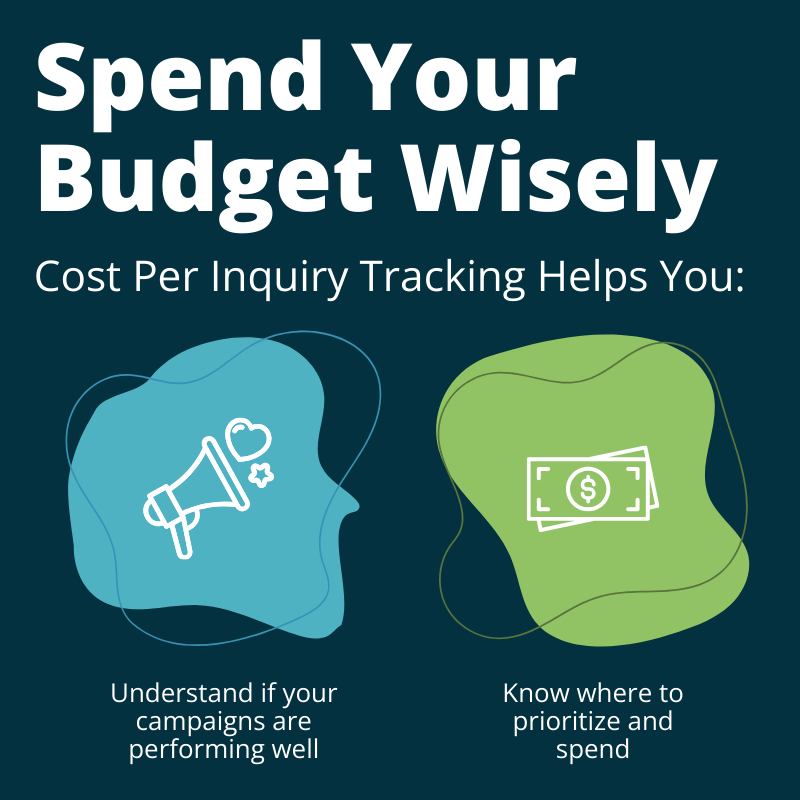
    CPI is the definitive key performance indicator for higher education marketers to track advertising campaign success. Serving as a dual compass, this metric guides your higher education marketing endeavors toward optimal campaign performance and strategic budget spending. It also empowers you to gauge your efficiency, optimize your ad spend, and make data-driven decisions.

    For far too long, higher education digital advertisers haven’t had a benchmark for this critical metric, and certainly not one specific to professional, continuing, and online (PCO) education.

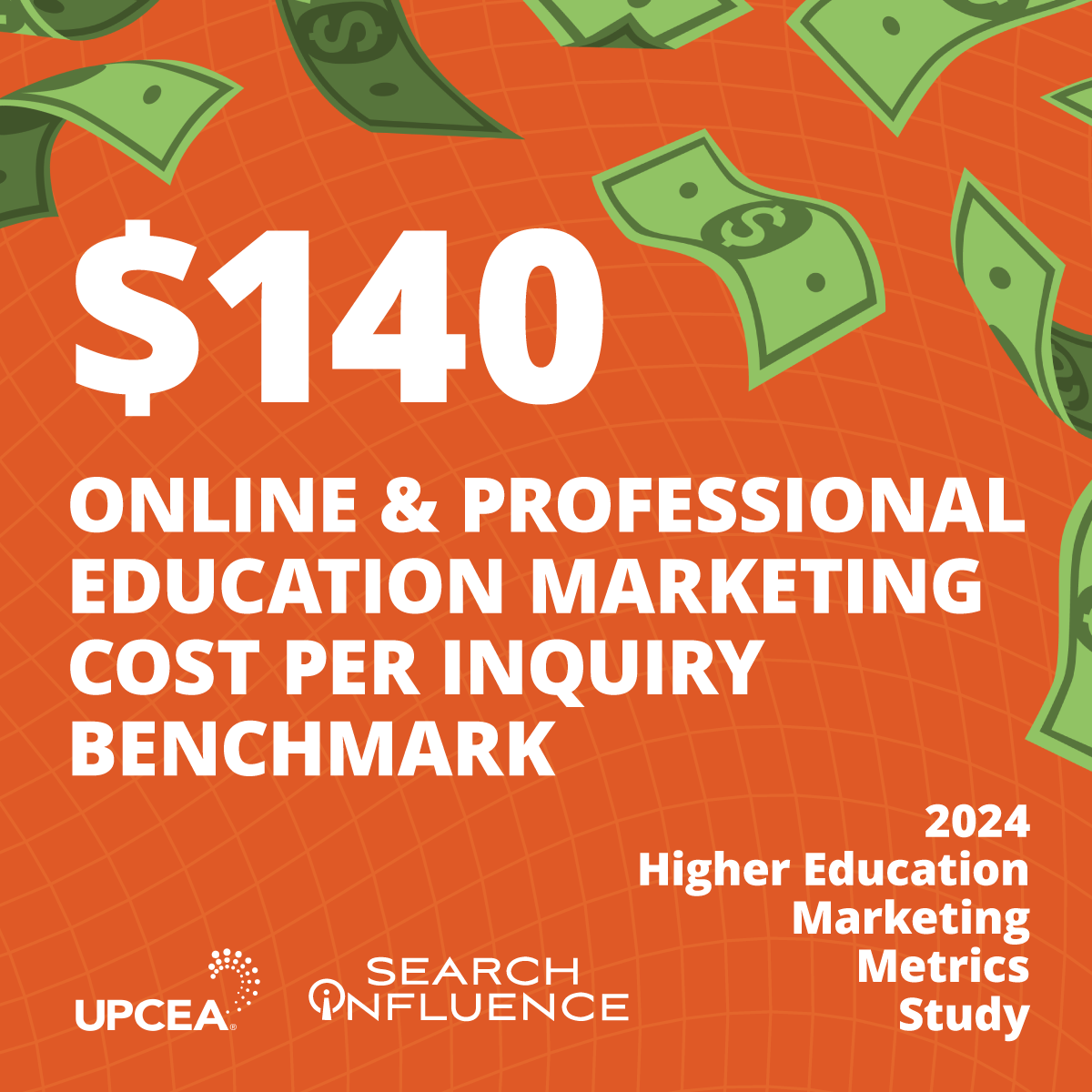
    That’s why Search Influence and our higher education partners at UPCEA (the leading online and professional education association) collaborated to establish the first industry-wide benchmark for CPI — to the tune of $140.

    An infographic courtesy of Search Influence detailing CPI information when doing Higher Education marketing

    In our 2024 study, “Search Influence and UPCEA Higher Ed Marketing Metrics Research Report: What Gets Measured Gets Managed,” we took a look at the state of CPI tracking among PCO units and what marketers need to know to get the most value from their budget spend.

    Before you dive into the research, here’s what to know about CPI in digital marketing, how it’s calculated, and why it should be your school’s top tracking priority.

    What is Cost Per Inquiry in Higher Education Marketing? How Do You Calculate Cost Per Inquiry?

    Cost per inquiry is a fundamental metric that plays a pivotal role in higher education marketing. CPI measures the financial investment required to generate a single inquiry or lead.

    CPI = Cost / Inquiry

    SI CPI Blog

    In the context of higher education digital marketing, an “inquiry” refers to a prospective student expressing interest in your institution’s programs, courses, or services. This expression of interest could manifest as filling out a contact form, requesting a brochure, or making direct inquiries via email or phone.

    The “cost” in the calculation depends on what marketing campaigns you are trying to measure, your marketing mix, and tracking technology (for example — are you able to track an inquiry back to the source?).

    Cost per inquiry is most frequently tracked as a KPI for:

    • Digital marketing channels (i.e., CPI from paid search or CPI from organic)
    • Digital marketing spend across all platforms

    Some may look at it:

    • CPI per program
    • Organic CPI (leads from organic search visitors)
    • Overall CPI across all marketing expenses

    Different ways to calculate CPI in marketing
    Cost Per Inquiry Worksheet for Higher Education Websites

    In our CPI worksheet, we provide two foundational calculations to help you get started:

    • Digital Advertising Media Spend ÷ # of Inquiries Attributed to Digital Advertising = Digital Advertising Cost Per Inquiry
    • Marketing Expenses ÷ Total Inquiries (All Sources) = Overall Cost Per Inquiry

    This industry-standard cost per inquiry calculation creates an “apples-to-apples” comparison, helping institutions like yours know the real cost and payoff of your marketing efforts.

    Why Measure Cost Per Inquiry in Higher Education Marketing?

    SI CPI Budgeting

    The significance of measuring CPI cannot be understated for marketers.

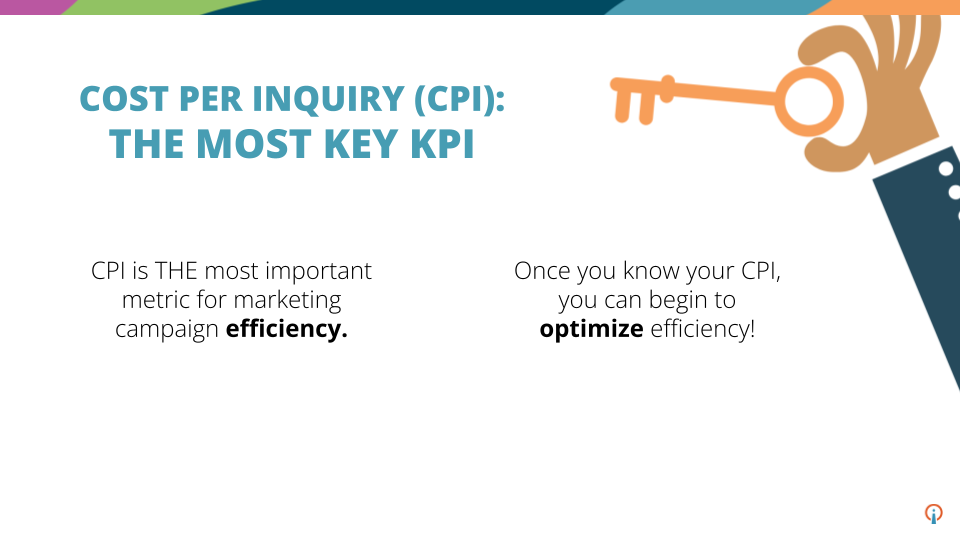
    CPI in advertising is THE most important metric for campaign efficiency.

    Once you know your CPI, you can begin to optimize your efficiency!

    When you consistently measure cost per inquiry in your higher ed marketing campaigns, you can:

    • Have confidence that you’re driving an appropriate amount of inquiries and yielding the desired results
    • Evaluate your outcomes against broader industry standards
    • Project your marketing results and how quickly you can generate necessary inquiries
    • Judge if the promises from third-party vendors are realistic

    Research Numbers at a Glance

    In our 2024 Marketing Metric Research Study, we examined not only whether PCO units tracked cost per inquiry but also their level of campaign performance satisfaction. Our findings yielded a strong correlation between CPI tracking and perceived campaign success — thus bringing to life the old adage, “What gets measured gets managed.

    Key Research Findings:

    • Less than half of PCO units track cost per inquiry (46%) and cost per enrolled student (43%).
    • Nearly one out of five (17%) higher ed marketers do not track the source of their inquiries, nor CPI or cost per enrolled student.
    • Among the PCO units that track cost per inquiry, the average CPI is $140, with a median of $106 and a range of $29.03 to $450.
    • 92% of those satisfied with their tracking capabilities also express satisfaction or strong satisfaction with the effectiveness of their marketing campaigns.

    For further insights into CPI, how it works, and why it works, be sure to check out our full research study. For more tactics to improve your marketing results, take a look at our Higher Education Marketing Resources & Guides.

    Learn More About CPI in Higher Education Marketing

    What is CPI?

    Search Influence and UPCEA are committed to elevating strategy standards in higher education marketing. We hope that, with this industry-wide benchmark for measuring cost per inquiry, you can implement practical strategies for achieving efficient ad spend.

    And, in a world where nearly one in five dollars of programmatic advertising goes to waste, this pivot to efficiency is much needed.

    Ready to see how you measure up to others in the sector? Download the Marketing Metrics Research Study today to take the guesswork out of CPI in advertising.

    Image Sources:

    Image 1: Unsplash

    Image 4: Unsplash

  • UPCEA MEMS Conference Insights: SEO Strategy for Higher Education

    UPCEA MEMS Conference Insights: SEO Strategy for Higher Education

    SI MEMS Conference

    Key Insights:

    • Research indicates that most people’s first interaction with a brand occurs through a search. This makes it critical to optimize your university’s online presence for SEO.
    • Despite 84% of marketing departments considering SEO as a core part of their strategy, 51% of institutions surveyed still lacked an established SEO strategy. This gap in readiness can result in missed opportunities to attract prospective students and increase enrollment numbers.
    • Building a successful SEO strategy for higher education starts with understanding search intent, conducting keyword research, and creating high-quality content that addresses these keywords. It’s also important to build authoritative links both internally and externally.
    • Beyond content, universities must focus on website architecture, user-centric design, site speed optimization, and mobile responsiveness to improve discoverability and enhance the user experience.

    For the second year in a row, Search Influence presented at UPCEA’s MEMS (Marketing, Enrollment Management, and Student Success) conference.


    The UPCEA MEMS conference serves as a watering hole for higher education marketers, specifically those within professional, continuing, and online education.

    At Search Influence, we help higher ed institutions ride the ever-changing waves of SEO strategies. We’ve spent years working on higher education SEO strategies that support universities nationwide in increasing organic traffic and attracting prospective students.

    This dedication to building high-level SEO strategies for educational institutions led us to partner with UPCEA to connect with like-minded individuals.

    Search Influence and UPCEA collaborated on a three-part research study to look at institutional and marketing leaders’ perspectives on SEO and evaluate the readiness of PCO (professional, continuing, and online education) units.

    Our findings shaped our 2023 MEMS presentation. Armed with the understanding that universities need guidance in their higher education SEO strategies, we wanted to show real examples, from multiple schools, of what they have done to improve their visibility in search engines. It was important for us to show not just what the tactics are, but how they drove results. We partnered with 3 great institutions who we knew were effectively executing SEO to share how they have found success.

    Keep reading to learn about our in-depth higher education SEO research and real-world SEO strategies you can implement on your university’s website.

    Search Influence / UPCEA SEO Research Study: Key Findings

    Our collaborative SEO for higher education research study with UPCEA began with a readiness audit of 100 UPCEA member institutions. This audit led to some surprising findings.

    When those surveyed were asked, “How would you rate the SEO capabilities of your PCO unit on a scale of 1 to 5, where a 1 is not very capable and a 5 is extremely capable?,” 3.5 was the average capability rating. 41% of those surveyed rated their SEO capabilities as average or below.

    An even more surprising finding is that 84% of marketing departments see SEO as a core part of their marketing strategy, but 51% do not have an established SEO strategy.

    This missed opportunity leads to fewer clicks from prospective students and lower enrollment numbers for your higher education institution.

    So, how can you improve your higher ed website’s SEO?
    What are the first steps you should take to create an established SEO strategy for your higher-ed website?

    Search Engine Optimization 101


    You must utilize these strategies to keep search engines happy: keywords, content, and links. Think of these three things as your university website’s building blocks.

    Keywords – what are people searching for when looking for your offerings?
    Content – how well does your website provide information that speaks to those keywords?
    Links – how well do other websites reinforce that you are an authority on those keywords?

    Let’s talk through how that might look when you actually do this foundation work:

    Every SEO for higher education strategy must start with determining a prospective student’s keywords (in other words, what terms do they search?).

    For example, say you do some digging in Google Search Console and see your website receives a lot of website traffic for the phrase “online master’s programs.” Recognizing your audience is searching “online master’s programs” is your first win.

    Now that you know your prospective students are scanning through search engines for “online master’s programs,” it’s time to do some keyword research to dial in your strategy.

    You choose to use one of the many SEO tools (even a free tool will work) on the market to take an in-depth look at the search volume of “online master’s programs.”

    Search volume looks good, but your SEO tools inform you this keyword will likely take much work to rank for. Not to worry, “flexible online master’s programs” has a similar search volume but will be much easier to rank higher for.

    After thorough keyword research, it’s time to write high-quality content that uses your focus keyword, “flexible online master’s programs.”

    You decide the best action is to write a 1,400-word blog titled “The Benefits of Flexible Online Master’s Programs for Working Adults.”

    While you’re writing, you link to the pages you want to be associated with this idea, which are the degree pages that offer flexible online master’s programs. You also include links from highly authoritative external sites — you’re really getting the hang of things!

    At the end of this process, you have an informative blog that answers your students’ search intent.

    Now to earn authority, you leverage online profiles, media and PR mentions, and partners to build links back to this blog post as well as related program / degree pages.

    Lather, rinse, and repeat this process continually. Over time, you’ll see your site’s search traffic rise.

    After you’ve mastered SEO 101, it’s time to move on to the next course.

    Search Engine Optimization 201

    You’ve established relevance with your high-quality content.

    You’ve taken the steps to earn authority with link building.

    Now, it’s time to improve your discoverability by focusing on your higher-ed website’s architecture.

    To earn rankings on a search engine, higher education websites must address three things: relevance, authority, and discoverability.

    Fixing the foundation of your virtual storefront

    Think of your website as a virtual storefront that welcomes and engages visitors. Sometimes, you need to fix things inside the walls or under ground to create a welcoming place for visitors, or perhaps improve signage to make it easier for visitors to find their way around. On a website, this is akin to the technical foundation and settings as well as the navigation and user experience.

    Similar to how a brick-and-mortar retail operation would welcome a walk-in customer, the virtual storefront should prioritize the visitor’s experience and ensure that it is user-friendly, informative, and tailored to their needs.

    One common pitfall many universities fall into is designing websites that prioritize their institution’s programs over the potential student’s needs. Additionally, while aesthetically pleasing, overly creative websites might lack a clear target audience, ultimately hindering their effectiveness.

    To succeed in the competitive landscape of higher education, universities must shift their focus and design their websites around students, as well as break down technical barriers that may prohibit a site’s performance.

    A few ways you can design your website around prospective students include:

    • Creating a user-centric design
    • Removing all broken links
    • Creating clear navigation
    • Ensuring your website is easily navigable when used on mobile phones (not just desktop)
    • Prioritizing site speed optimization

    Increase Lead-to-Application Conversion With Blogs — LSU Online

    Our MEMS conference presentation partners at LSU Online increased their lead-to-application conversions with blogs.

    The challenges they navigated included:

    • Their programs’ official names are “distinguished” (not what people actually search for).
    • They competed with on-campus version pages of the same degree.
    • Many adult learners don’t know what degree they want to pursue.

    LSU Online tested varying blog topic strategies to see results on search engine results pages, including:

    • Start your career blogs
    • Comparison content for two programs
    • Faculty/director authored blogs
    • Online student tips blogs
    • Student story blogs

    While these blog topics worked with varying success, this influx in targeted content led to an app increase of 17% in just one year. Moral of the story — high-quality content works.

    Search Influence/LSU Online - Lead to Application Conversion

    Leveraging SEO audit tools for direction and monitoring

    Like any other journey, you need a map to travel to the top of search engine rankings.

    LSU Online found success using site audit tools to guide their rise in organic search traffic. Their SEO audit revealed broken links, broken pages, and program pages missing basic meta information (title tag, meta description, etc.)

    These tools allowed LSU Online to bring their site audit score from 72% all the way up to 90%+.

    Keywords + Content When Launching New Degrees — Tulane SoPA

    In November of 2022, Tulane SoPA launched two new online bachelor degrees: An Online BS in Organizational Behavior & Management Studies and an Online BA in Human Resources.

    SoPA went all in on SEO, primarily content creation and smart optimization, for these two programs as the primary means of promotion, as there was no specific paid advertising budget.

    In one year, Tulane SoPA published 12 blogs that had high SEO value, including: “5 Reasons Every Business Needs An Organizational Management Professional,” “4 Key Legal Considerations for Starting a Small Business.”

    As a result of these higher education strategies, Tulane SoPA had 32 students declared as business majors in just over a year.
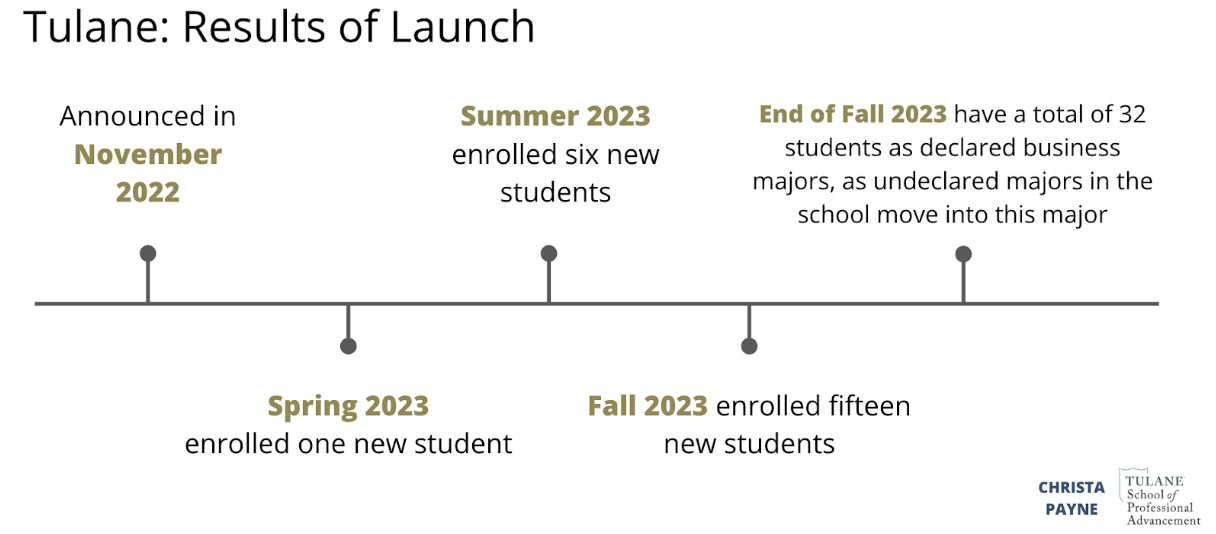
    Search Influence Keywords + Content When Launching New Degrees — Tulane SoPA

    Profiles and public relations to build links

    Search Influence also assisted Tulane SoPA in finding sites with premium (paid) placement for external link building that had value – meaning, they were both authoritative and relevant.

    We went through over 20 sites to help Tulane SoPA find the ones that might be worth it. In the end, Niche and Peterson’s had a fair price, high page and domain authority, and a relatively high percentage of followed links.

    These backlinks helped to build Tulane SoPA’s authority.
    Search Influence Backlink Authority - Tulane SOPA

    Tulane SoPA also used public relations and earned media to enhance online visibility.

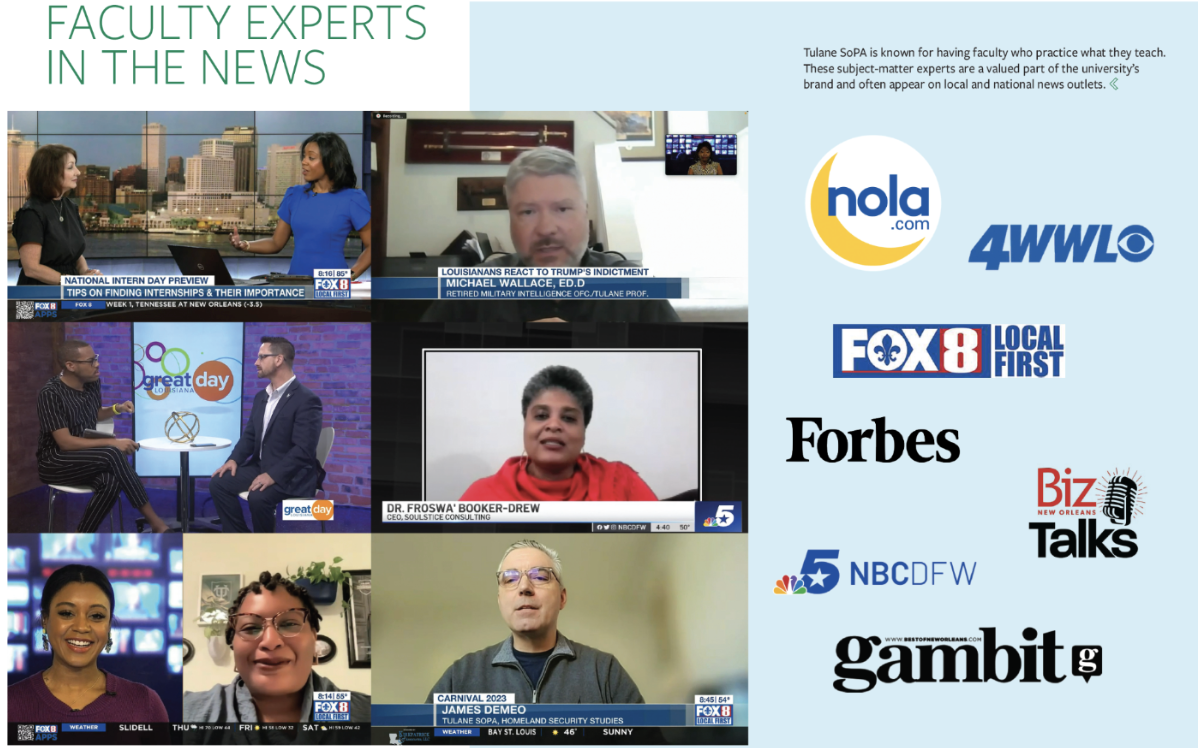
    Tulane SoPA faculty completed over 100 earned media appearances in a year. Each appearance is shared on the Tulane SoPA news site, optimized for SEO value, as well as on social media.

    The above content strategy helped Tulane SoPA rise in search rankings, thus increasing their visibility to potential students.

    Drive New Website Users With Blogs — CCAPS at the University of Minnesota

    CCAPS (College of Continuing & Professional Studies) at the University of Minnesota used blogs to drive web traffic.

    Their content strategy goals:

    • Generate brand awareness
    • Increase web traffic and, ultimately, inquiries
    • Earn backlinks from other sites and pass link authority to program pages through internal links
    • Gain featured snippets

    To do this, CCAPS did the following:

    • Partnered with a digital marketing agency
    • Posted 2–3 blogs per month
    • Completed keyword research and targeting
    • Combined content with schema markup, internal links, and backlinks to improve authority
    • Amplification

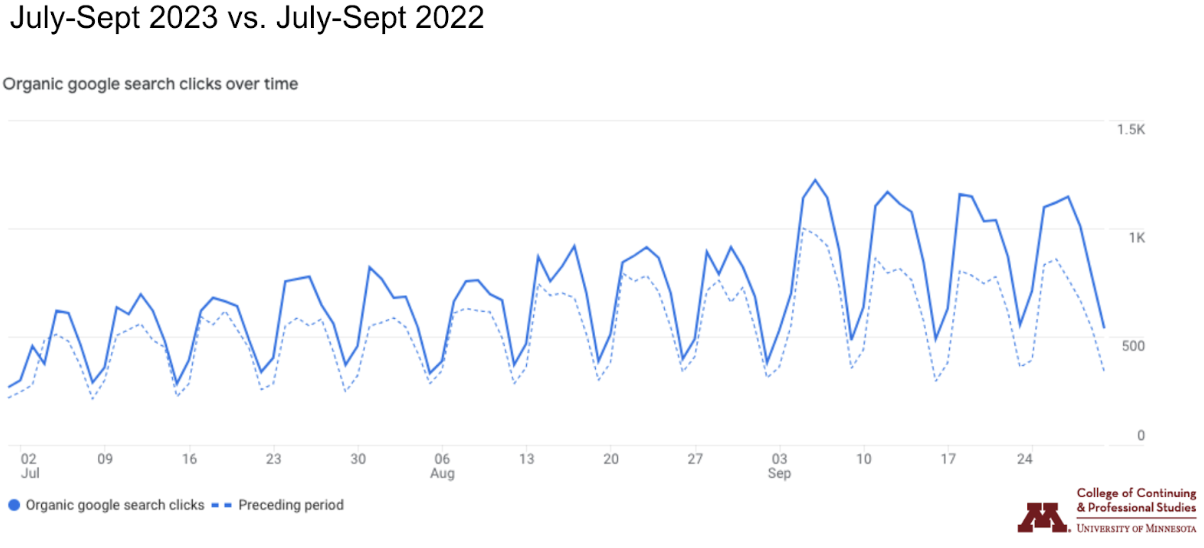
    Search Influence CCAPS Blog Content Performance

    Since July 2022, CCAPS published over 40 blogs, generating over 50,000 users by September 2023.

    Core web vitals for SEO health

    To climb search engines like Google Search, you must dive deeper into core web vitals for SEO health.

    CCAPS used LCP (Largest Contentful Paint) to measure website load speed, TBT (Total Blocking Time) to measure their website’s interactivity, and CLS (Cumulative Layout Shift) to measure their website’s stability.

    All of these web vitals allowed CCAPS to gauge their SEO health and adjust their strategies to rank higher on search results.

    Learn More About SEO for Your Higher Education Strategy With Search Influence

    Search Influence has helped organizations boost their search engine results and organic traffic for over 15 years.

    From our years of driving results for Tulane SoPA to helping our partners at Palo Alto University exceed their expectations, we understand the factors that can help you rank on Google search and beyond.

    Are you ready to identify keywords and Google trends on your own? Download our SEO Workbook for Higher Education Websites for SEO tips you can implement yourself.

    Need a little more hands-on help to understand Google Analytics and local SEO? Contact the higher education marketing moguls at Search Influence to learn more about successful strategies.

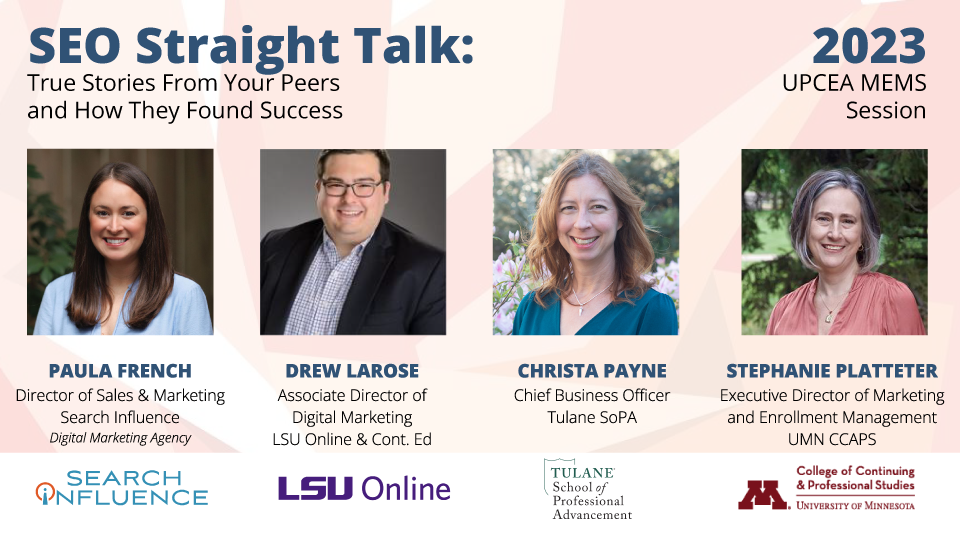
  • Search Influence and UPCEA to Present at the 2023 UPCEA MEMS Conference

    2023 UPCEA MEMS Conference

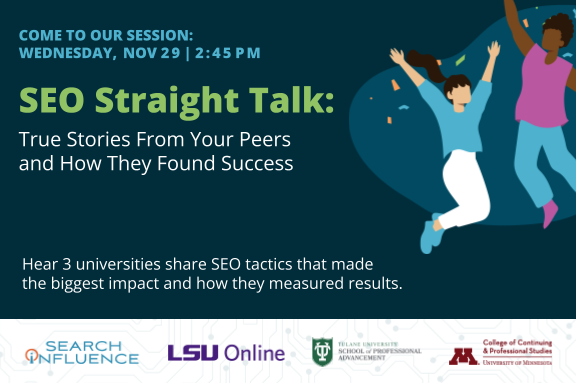
    This year at UPCEA’s 32nd annual MEMS Conference, Search Influence Director of Sales & Marketing Paula French will present “SEO Straight Talk: True Stories From Your Peers and How They Found Success” alongside:

    • Drew Larose, LSU Online & Continuing Education Associate Director of Digital Marketing
    • Christa Payne, Tulane SoPA Chief Business Officer
    • Stephanie Platteter, UMN CCAPS Executive Director of Marketing and Enrollment Management

    This year’s Marketing, Enrollment Management, and Student Success Conference (MEMS) will take place at the Hilton Portland Downtown from November 29th – December 1st.

    The conference offers all who attend networking opportunities, engaging programs, and a chance to learn the latest higher ed marketing strategies from energized thought leaders.

    Higher Education SEO Session Description

    Paula French and the other industry experts mentioned above will discuss a critical gap in higher education digital marketing: PCO units lack SEO strategies to attract new adult learners and nurture them down the recruitment funnel.

    Thankfully, our experienced higher education marketing presenters offer solutions.

    To address this gap, universities must prioritize SEO tactics that make it easy to access information about their programs or certificates via search.

    During the presentation, our presenters will review real-world examples of SEO strategies and tactics that addressed this gap for Search Influence, LSU, Tulane SoPA, and the University of Minnesota.

    The higher education SEO strategies and tactics they will explore include:

    • Using blogs to increase lead-to-application conversion
    • Leaning on keywords and content when launching new degrees
    • Using blogs to drive new website users
    • Utilizing profiles and public relations to build links
    • Leveraging tools for direction and monitoring
    • Using core web vitals to measure SEO health

    2023 UPCEA MEMS Conference

    Learn More About Higher Education SEO With Search Influence

    Since becoming an UPCEA Platinum Partner in 2022, Search Influence and the PCO industry leader have worked diligently to help higher ed marketers bridge the SEO gap.

    From our higher ed research study to our MEMS presentation in 2022 and now this year, we are dedicated to pushing higher education SEO to new heights.

    Contact us today to learn more about all our SEO services, or download our SEO workbook to identify three months of SEO techniques you can execute immediately.

  • Higher Education Marketers: Here’s How to Convince Your Boss to Invest in SEO

    Higher Education Marketers: Here’s How to Convince Your Boss to Invest in SEO

    Key Insights

    • SEO is critical for higher education institutions, yet only 51% have an established SEO strategy.
    • If your institution isn’t investing in SEO, you’re missing opportunities to reach prospective students and keep up with your competition.
    • Understanding and communicating the long-term benefits of SEO to your higher-ups can help your institution make the case for more resources.
    • Pitching the value of SEO to your boss doesn’t have to be a massive undertaking. All you need is a little bit of industry insight, institutional data, and the right angle.

    For today’s tech-savvy students, the quest for higher education starts with a simple Google search.

    Prospective students are looking for your institution online, but will they find you? Search engine optimization, or SEO, is a term often tossed around in marketing meetings, and it’s never been more relevant.

    So, how do you move it from a buzzword to a budgeted line item?

    And, more importantly, how do you get your decision-makers to hop on board?

    In this blog post, we’ll show you how to convince your boss to invest in SEO and make bigger waves in the search engines with a proper strategy.

    Business team members in a conference room discussing investing in SEO - Search Influence

    Benefits of SEO in Higher Education Marketing

    You’ve likely heard that a quality SEO strategy leads to better search performance.

    But what does SEO for higher ed really do? And what makes it such an influential marketing tactic?

    When you invest in the SEO process, you get:

    • Increased Visibility: A well-optimized website can dramatically increase your institution’s visibility in the search engines. This makes it easier for prospective students and their families to find you while searching for educational opportunities.
    • Higher Quality Traffic: Effective SEO efforts attract users actively seeking information related to higher education, thereby improving the quality of organic traffic to your website. These high-intent visitors are more likely to take desired actions, such as applying or requesting more information.
    • Better User Experience: SEO is not just about pleasing search engines; it’s also about providing a good user experience. A well-optimized website is generally more user-friendly. This positively impacts metrics like time spent on the site, bounce rate, and conversion rate, which in turn can boost your SEO rankings.
    • Competitive Advantage: A strong SEO strategy can give you a crucial edge over competitors. If your institution ranks higher in search results than other schools, students are more likely to visit your site first, giving you the first shot at making an impression.
    • Analytics and Insights: SEO tools provide valuable data on visitor behavior, popular content, and more. This data can be used to make informed decisions about your marketing strategy, academic programs, and even campus facilities.
    • Improved ROI: SEO allows you to reach the right audience at a lower cost by focusing on target keywords most relevant to your institution and its programs. This offers a better return on investment (ROI) than other marketing channels.

    Despite all the benefits, SEO in higher education lags. As we found in our Higher Education SEO Research Study conducted with UPCEA, 51% of universities don’t have a strategic SEO plan.This means over half of participating universities miss out on opportunities to grow their awareness, analytics, and applications.

    To truly win in the higher ed landscape, SEO must be a priority.

    Luckily, it’s not too late to make the financial case for SEO investment and start climbing the search engine results.

    But, if you keep pushing off investing in SEO, you just might pay later — in losses.

    How to Convince Your Boss to Invest in SEO

    While the merits of SEO are evident to those immersed in the digital realm, making them resonate with leadership is a different ballgame.

    Approaching the conversation with a combination of data, foresight, and understanding can be the key to unlocking the coveted resource you need: SEO buy-in from your boss.

    Follow this blueprint to advocate for SEO services in your marketing budget.

    Build a Strong Case

    Decision-makers want facts before dishing out dollars.

    Start by laying solid groundwork.

    • What is SEO?
    • What skill sets are needed?
    • What are the benefits?
    • How does it strategically fit within your institution’s goals?

    Be sure to also emphasize its return on investment (ROI) potential. Money talks.

    Show the Gaps

    Presenting an audit or analysis of your institution’s current website and online marketing strategy can highlight the areas where you’re falling short.

    You can tap tools like Sitebulb, Screaming Frog, Semrush, and Ahrefs for handy website analysis insights. But if you’d prefer to pass the baton to experts, you also could lean on an experienced SEO agency to conduct a professional-grade audit for you.

    Maybe you’re missing meta descriptions. Or you’re dealing with poor site speed and insufficient keyword research.

    Your task at hand is to show how SEO bridges these gaps.

    Leverage Competitor Analysis

    You may not invest in SEO. But your competition does.

    It’s one thing to understand the benefits of SEO. It’s another to see competitors already capitalizing on them.

    Creating a competitive analysis can be a strong motivator, especially if those competitors are outranking your institution in organic search results.

    Doing keyword searches of certain degrees or programs is one easy way to get started on your competitive analysis. Take note of who ranks in the top positions, compared to where you rank, and you have a baseline of where you currently stand — and where you need to go.

    Demonstrate to your higher-ups what SEO is doing for your rivals, and you increase your chances of seeing what it can do for you.

    Offer Scalable Solutions

    Don’t bite off more than you can chew. Present a phased SEO strategy that starts small and expands as you show results.

    A scalable approach ensures that initiatives will mature, evolve, and provide value over time.

    Your decision-makers are more likely to approve budgets if they see this sense of scalability.

    Scalability is sustainability. The SEO strategies that can adapt and grow are the ones that endure.

    Use Real-World Examples

    For the higher-ups, seeing is believing.

    Don’t just talk about what SEO can do for your university. Show its potential, armed with solid proof.

    Bring out higher education case studies and results from other institutions who’ve invested in SEO. Take, for example, New Orleans-based university Tulane SoPA, which saw a 569% increase in keyword ranking in the top 1-3 spots on Google — with help from frequent blogging.

    These real-world SEO examples can make the concept more relatable, compelling, and actionable.

    Connect SEO to Broader Initiatives

    SEO isn’t an isolated tool; it’s a cog in the larger machinery of a higher ed digital marketing strategy.

    It works best when used in tandem with paid search marketing, like Google ads or other well-performing marketing efforts. Therefore, it fits — not trumps — your institution’s broader marketing and outreach initiatives.

    This can make it easier to get buy-in if decision-makers see SEO as a component of a larger strategy rather than a stand-alone effort.

    Break down the big-picture, complementary value of SEO, and you may just seal the deal.

    Large group of spectators watching a presentation in a lecture hall - Search Influence

    Common Objections From Decision Makers

    Every proposal faces scrutiny, and SEO is no exception. It’s a natural part of the advocacy process.

    However, preparing for and addressing these objections head-on can turn potential setbacks into stepping stones.

    Prime yourself to deal with these common objections before setting up the proposal:

    • Objection: SEO is expensive! Think of the initial setup, the ongoing monitoring, and the potential need for hiring an external SEO company.
    • Counter-Argument: While SEO is an investment, the effects and impact on our website traffic are long-term, versus paid advertising, where once we stop paying, the traffic stops coming.
    • Objection: SEO typically doesn’t provide immediate results, so what’s the point?
    • Counter-Argument: SEO is a long-term strategy that requires time to yield results, but once it does, the benefits endure. A well-optimized website can maintain high rankings for a long time, ensuring a consistent inflow of targeted traffic.
    • Objection: SEO doesn’t align with our institution’s core goals and objectives.
    • Counter-Argument: Improved online visibility and targeted traffic can directly impact key performance indicators like student recruitment, donor contributions, and brand reputation — a goal any institution wants to reach.
    • Objection: We’re already ranking pretty well without investing in SEO.
    • Counter-Argument: There’s no way all of our web pages rank #1, or even on the first page, of the organic search results. Plus, there’s always the opportunity to increase our rankings for keywords that our competitors currently rank for.

    The Consequences of Neglecting SEO

    Ahrefs data shows that 90.63% of webpages receive no organic search traffic from Google.

    Why?

    They don’t prioritize SEO. Or, at least, they don’t prioritize it the right way.

    If your institution turns a blind eye to all that SEO has to offer, you risk:

    • Loss of Visibility: With numerous higher education institutions vying for the attention of prospective students and parents, failing to invest in SEO means your institution may not show up in search engine results. This results in lost opportunities to drive students to your website.
    • Decreased Enrollment Rates: Students nowadays often begin their college or university search online. If your institution isn’t visible during these crucial moments, you’re missing out on a large number of potential applicants, affecting your enrollment rates.
    • Increased Marketing Costs: Without a solid SEO strategy, your school may rely more heavily on paid advertising channels, which can be significantly more expensive in the long term. In contrast, organic search traffic generated through SEO is essentially free.
    • Losing Ground to Competitors: Other institutions that invest in SEO will take the top-ranking spots in search results, garnering more attention and credibility. This competitive advantage can result in a cycle where they continue to attract more students, donors, and faculty, widening the gap between you and them.
    • Damaged Reputation: A poorly optimized website that doesn’t rank well may be perceived as less reputable or authoritative. It’s a psychological factor — many people equate high search engine ranking with credibility.
    • Missed Opportunity for Data-Driven Decisions: SEO tools like Google Analytics provide valuable data that can help your higher ed institution understand what prospective students are looking for. Without this insight, you won’t be able to make more informed decisions on everything from course offerings to campus facilities.

    Be sure to drill these risks into the minds of your decision-makers. No one likes consequences or the act of underperforming, and these looming threats can help accelerate their decision.

    Higher Ed SEO Leads to Greater ROI

    UPCEA Chief Research Officer Jim Fong summed it up perfectly in our Higher Ed SEO Research Study webinar: “SEO is not something institutions can kick the can down the road on. It’s going to become increasingly important, especially as the number of programs increases and the number of potential students stays the same or even decreases.”

    As SEO industry veterans, Search Influence has the skills, expertise, and bandwidth to take on all of your SEO initiatives. Convince your higher-ups to invest in SEO, and we’ll take the heavy lifting off your plate with our expert SEO services.

    Ready to get started with SEO? Contact us today to learn about our SEO Roadmap and see how we’ll put our higher education marketing experience to work for you.


    Image sources:

    1. https://images.unsplash.com/photo-1573164574572-cb89e39749b4?ixlib=rb-4.0.3&ixid=M3wxMjA3fDB8MHxwaG90by1wYWdlfHx8fGVufDB8fHx8fA%3D%3D&auto=format&fit=crop&w=2938&q=80
    2. https://images.unsplash.com/photo-1492538368677-f6e0afe31dcc?ixlib=rb-4.0.3&ixid=M3wxMjA3fDB8MHxwaG90by1wYWdlfHx8fGVufDB8fHx8fA%3D%3D&auto=format&fit=crop&w=2940&q=80
  • Search Influence and UPCEA to Present Webinar: “The Power of CPI to Measure Higher Ed Success”

    Higher Ed Marketing

    On Tuesday, October 24, Search Influence and UPCEA will host the live webinar, “The Power of CPI to Measure Higher Ed Marketing Success.”

    Join us for a discussion on all things cost-per-inquiry (CPI), calculating this metric, and what it means for your institution’s bottom line.

    The Power of CPI in Higher Education

    In higher education digital marketing, your CPI assesses your success. When you take the time to measure it, you can determine whether:

    • Your marketing spend derives the outcomes you’re after
    • Your results are competitive in the broader industry
    • Your promises from third-party vendors are realistic

    One roadblock: Many higher ed marketers don’t know where to start and where to go when calculating their CPI.

    Search Influence joined forces with UPCEA to bridge this gap and designed a comprehensive CPI roadmap in our upcoming webinar, “The Power of CPI to Measure Higher Ed Marketing Success.”

    What You Will Learn

    Attend the live webinar and learn:

    • The multiple ways to measure CPI and the best method for your institution
    • How to take existing data and use it in your calculation
    • Pro tips on navigating challenges when capturing your CPI

    All attendees gain access to a free worksheet that helps you calculate your CPI more easily.

    Plus, we’ll key you in on a survey in progress by UPCEA and Search Influence aimed at establishing a benchmark for higher ed CPI. We’ll share how you can be a part of this sweeping discussion, set to revolutionize the way we measure higher education marketing success.

    Your Presenters

    Join us to hear from higher education marketing veterans:

    • Jim Fong, Chief Research Officer, UPCEA
    • Bruce Etter, Senior Director of Research and Consulting, UPCEA
    • Paula French, Director of Sales and Marketing, Search Influence
    • Alison Zeringue, Director of Account Management, Search Influence

    Attend Live for the Chance to Win Big

    Live attendees will also have the exclusive chance to win two prizes! Join our live webinar and get automatically entered in our giveaway of:

    • A $200 credit to a global reward catalog with 1,000+ gift cards, prepaid cards, and charitable donations
    • A FREE, professional CPI analysis with Search Influence. Our marketing experts will help you identify data for your calculations, interpret it, and compare your results against our industry-grade benchmarks.

    Pioneering Advancements in Higher Ed Marketing

    Search Influence has been a proud Platinum Partner of UPCEA since 2022.

    We’re excited to take our partnership to new heights with “The Power of CPI to Measure Higher Ed Marketing Success,” another initiative that helps higher ed marketers think smarter, not harder, about their success.

    Watch the recording to see what calculating your CPI can do for your marketing strategy.

  • Higher Ed SEO Metrics Must Be a Priority: Unpacking Paula French’s UPCEA Blog

    higher ed seo

    Data is the key ingredient of any successful search engine optimization (SEO) strategy. But for many higher ed institutions, tracking and reporting of the proper metrics falls to the wayside, and the consequences are more than just deans and directors left in the dark. Failing to use data properly means your institution may be wasting funds and missing opportunities to engage with prospective students.

    In our latest blog for our partner UPCEA, Search Influence Director of Sales and Marketing Paula French discusses the importance of leveraging the right higher ed SEO metrics to inform both your team and strategy informed.

    Paula French’s Take on Vital SEO Metrics

    As we found in our 2023 Higher Ed SEO Research Study conducted with UPCEA, institutional leadership often lacks SEO reporting. 62% of institutional leaders want reporting on SEO metrics, but just 31% receive regular updates.

    SEO success and health metrics, two crucial pieces of trackable data, have a direct impact on how well you perform in search results. When you don’t track or report on them, you miss out on valuable insights you can strategically use to your institution’s benefit.

    In her blog post, French demonstrates how this neglected priority can affect your success in generating inquiries and increasing enrollment. Read the full blog to learn:

    • The key SEO metrics for higher ed digital marketing
    • How SEO success metrics and SEO health metrics differ
    • Tools for tracking the right SEO metrics
    • Tips for leveraging SEO metrics to set goals and create more informed strategies

    Search Influence’s Platinum Partnership With UPCEA

    In 2022, Search Influence partnered with UPCEA, the leading association for professional, continuing, and online (PCO) education. Together, the pair shares their industry expertise on how higher education institutions can use SEO to drive more qualified prospects to their digital marketing channels.

    Smarter SEO for Better Results With Search Influence

    Investing in SEO yields long-term results, but neglecting to track vital metrics could stall your progress.

    At Search Influence, we specialize in monitoring and reporting higher education digital marketing metrics, empowering you to convert insights into actionable strategies.

    Do more with your institution’s SEO. Contact our team today to get started on your path toward better search tracking, reporting, and performance.

  • Will Scott’s Higher Ed SEO Blog: A Must-Read Journey on Search Engine Land

    higher education seo

    Search Influence CEO and Co-Founder Will Scott had the opportunity to contribute a blog to Search Engine Land — a leading publication on digital marketing, advertising technology, and the MarTech landscape.

    In his blog, “How Higher Education Is Failing at SEO,” Will shares his vast knowledge and the findings of Search Influence and UPCEA’s 2023 Higher Ed SEO Research Study.

    Will Scott’s Search Engine Land Blog SparkNotes

    Will’s blog pulls highlights from the UPCEA SEO research study to discuss the perception and comprehension of higher education SEO amongst marketing leaders.

    The research findings might surprise you.

    “84% of marketing departments see SEO as a core part of their marketing strategy, but half (51%) do not have an established SEO strategy.”

    Will explains some possible reasons for this disconnect and how higher ed institutions can overcome these challenges.

    Will believes there is SEO opportunity for higher ed institutions

    While “there’s no silver bullet for higher education SEO,” higher ed institutions do have a unique competitive advantage.

    “Given the importance of relevance and trust (surely you’ve heard of E-E-A-T), there are few more trusted websites than those associated with educational institutions. So as an academic unit within a university, your ability to appear for relevant searches is amplified. All you need is great content,” Will writes.

    In true Will Scott fashion, the experienced SEO expert describes how higher ed institutions like yours can leverage Google Search Console and optimized content writing to your benefit.

    The Higher Ed SEO Experts at Search Influence

    We get it — SEO can seem overly complex and, because of that, daunting to implement.

    But no matter where you are in your SEO journey, we are here to provide the support you need to flourish online.

    Contact us today to learn more about all of our digital marketing services.

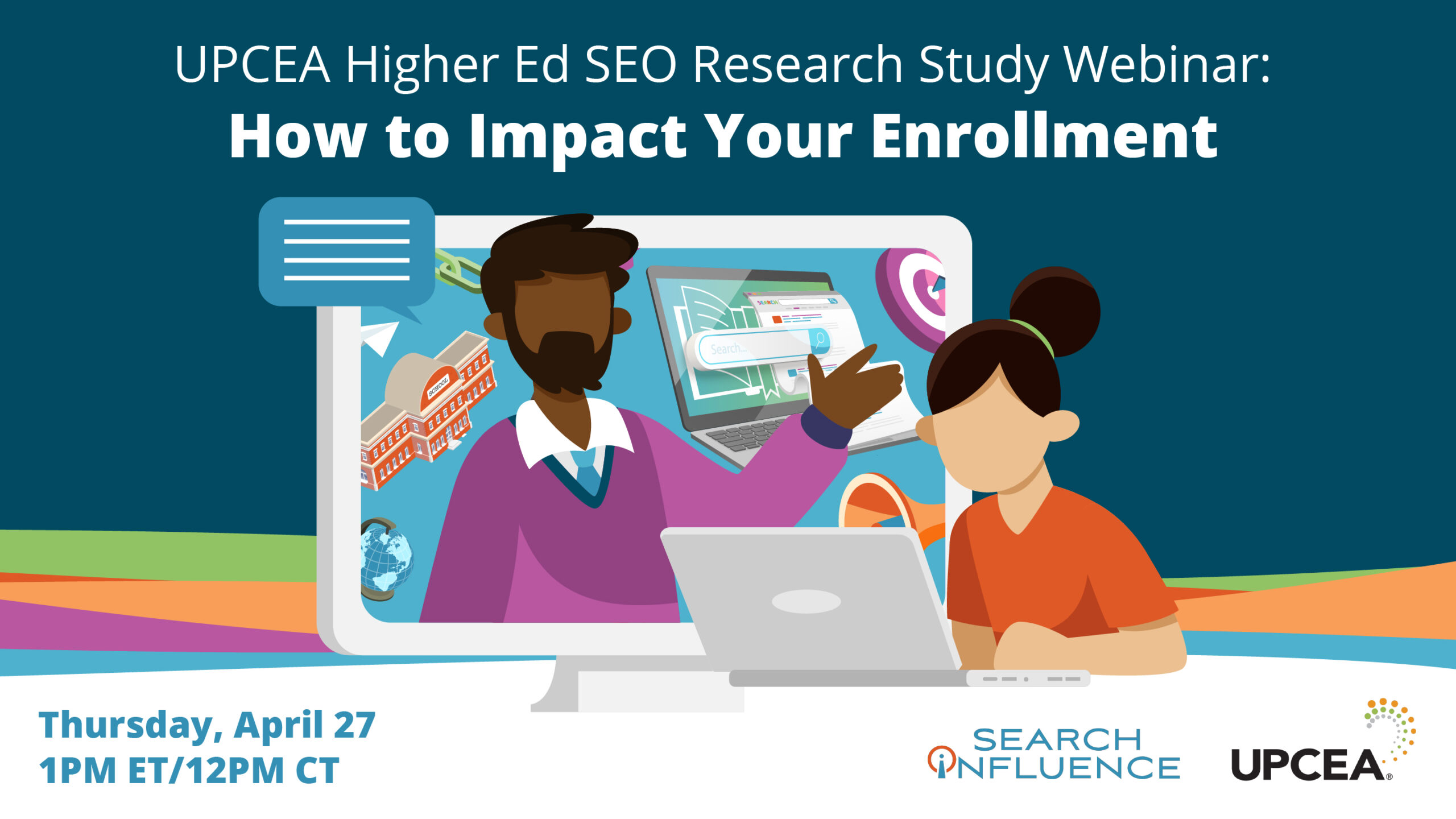
  • Improving SEO In Higher Education Must Be a Priority: Insights From UPCEA Webinar

    Improving SEO In Higher Education Must Be a Priority: Insights From UPCEA Webinar

    Priority: Improving SEO in Higher Education

    Search Influence joined the UPCEA team, Jim Fong and Bruce Etter, as they unveiled the highly anticipated UPCEA Higher Education SEO Research Study in a lively and informative webinar.

    We’re grateful for the engaged audience, who brought us compelling questions. It was obvious from what they asked that we had some tech-savvy folks attending.

    UPCEA Higher Ed SEO research study webinar: top takeaways to grow your enrollment

    For those who have yet to dive into the study, we’ve got you covered with a summary of the key takeaways:

    • Marketing and institutional leaders see SEO as foundational but admit their PCO units lack SEO strategy.
    • Institutional leadership often lacks reporting.
    • UPCEA members performed poorly in an SEO audit.

    In fact, in the SEO readiness audit of 100 random UPCEA member institutions, only 19% had an excelling score.

    And to pre-answer a question some may ask, this is an UPCEA metric. Search Influence collaborated on the factors, but the grades came from the research itself.

    Why Is SEO Important in Higher Education?

    From our discussions with higher ed marketing leaders, individual PCO units spend significant dollars on paid online advertising and next to nothing on SEO.

    The ROI of SEO is obvious to anyone paying for paid search. Keywords in search can inform your SEO strategy. If you’re paying for it and you don’t rank #1, that’s an opportunity.

    Any department that has in-house web management, social media, or content creation staff has the makings of an SEO team already in place.

    In short, SEO is foundational — most know it, and few are doing it.

    Higher Education SEO Questions From the Audience

    The following questions came directly from the audience in the webinar Q&A section. We clearly had a smart audience and appreciated all the great questions.

    Q: Which other tools do you use for keywords?

    In the webinar, we talked about how we used Semrush data for part of the SEO audit done by the UPCEA team, hence the “other tools.”

    A: One of the best “keyword” tools any organization can use — especially resource-strapped higher ed marketers — is Google Search Console. GSC gives you the ability to see page-by-page and query-by-query where your opportunity is.

    It also shows you what Google thinks you’re relevant for already, which can identify a shorter path to execution.

    In addition to GSC, at Search Influence, we rely on a few tools depending on the use case:

    • Ahrefs – Great overall tool, with an especially good view of page and subdomain level authority
    • Semrush – Another great tool overall, with reporting and site auditing capabilities
    • Surfer SEO – This one is newer in our toolbox. It’s not a pure “Keyword” tool. It’s actually an optimization tool that can help identify content clusters for building topical authority, as well as auditing and outlining SEO optimization of individual pages.

    Q: How do you navigate building backlinks without buying backlinks in a way that Google “disapproves” of?

    Google says, “Any links that are intended to manipulate rankings in Google Search results may be considered link spam.”

    That doesn’t mean that all “backlinks” are bad. It just means you should look for good links. What is a good backlink? A good backlink is one that is relevant, directional, and on a site likely to drive real users.

    Just because you ask for it doesn’t make it bad. It’s about intent.

    Some easy opportunities:

    • Local citations, such as directory listings
    • Other schools within your parent university or college
    • Institutions you collaborate with in real life
    • Local organizations with which you support or partner

    Q: Are internal links counted as backlinks?

    No. They’re internal links, which are awesome, too.

    There are a bunch of great things about internal links:

    • You get to control the anchor text used.
    • They can help to reinforce topical authority, e.g.:
      • You have portfolio pages
        • Which have program pages
          • Who have individual courses and
          • Instructors and
          • Resources and
          • Etc.
    • They’re navigational — in other words, they support the student journey, moving prospects down the funnel toward their eventual application.

    Photo of colorful books stacked on top of one another

    Q: Advice on structuring some complete revision of websites? Would you recommend program by program, or another way?

    This is a classic “it depends” kind of situation. From a business and organizational perspective, what matters most?

    Is it most important to categorize by type, e.g., on-campus, hybrid, certificate, non-degree, etc.?

    Or by program, e.g., homeland security, human resources, organizational management, etc.?

    Once you make that decision, stick to it, build your silos — but not too deep — and think about reasonable interlinking between them.

    Q: From the user side, have you noticed any impact on CTR with truncated title tags?

    Not really, but it’s not something we’ve studied.

    Q: Any concern with title tags and truncating on Google?

    No. In our opinion, this is an opportunity. It’s Google telling you what great looks like. What we’ve seen is that these are most often picked up from some on-site content.

    If you find it happening, consider recrafting your title tag and your leading H1 to match. That should give the machine what it wants.

    Q: Any advice on how to shift the narrative that SEO is free or should be very low cost and doesn’t need as much investment?

    Echoing what I said above:
    The ROI of SEO is obvious to anyone paying for paid search. Keywords in search can inform your SEO strategy. If you’re paying for it and you don’t rank #1, that’s an opportunity.

    The keyword ranking tool we use just came out with a new “forecasting” feature. It allows you to build a keyword group, assign dollar value and conversion rate, and see the business impact of moving from position X to position Y over time.

    We looked at paid search accounts, grabbed keywords we know to convert, and built forecasts. The impact, in many cases, is staggeringly obvious.

    Reach out and we can run a limited version for you.

    Conclusion

    The UPCEA Higher Education SEO Research Study shed light on the critical need for SEO in PCO marketing and beyond. Many, perhaps most, institutions have a lot of room for growth and optimization.

    It’s crucial for universities to recognize the value that SEO can bring to their marketing and seize the opportunity to be present for all their prospective students.

    The webinar showcased that, while leaders acknowledge SEO as a foundational element, there’s a gap in implementing effective strategies within PCO units. Additionally, the need for improved reporting for institutional decision-making and better SEO performance among UPCEA members was clear.

    It’s time for universities to embrace SEO and reap the benefits of higher visibility, engagement, and growth.

    We encourage you to join the conversation, share your own experiences, and learn from others. Feel free to comment below to keep the conversation going.

    If you’re looking for expert guidance to help you navigate the world of SEO, don’t hesitate to get in touch with Search Influence.

    We’re here to support you in optimizing the potential of your organization.

    Images

    Books