Tag: google algorithm

  • Survive Google’s ‘Mopocalypse’ with these Tips for Your Mobile Strategy

    Survive Google’s ‘Mopocalypse’ with these Tips for Your Mobile Strategy

    Mobile Friendly Image Search Influence

    Google’s new mobile-friendly update, which I originally discussed in my Search Engine Land column, is rolling out this month, and it’s time to put the focus on mobile. But with all this buzz about mobile websites, you may be thinking, “My website looks fine on my smartphone when I pinch and zoom, so what’s the big deal?”

    Well, there’s much more to it than that.

    Step 1: Get a Mobile Website

    Just because your Web developer tells you your site is mobile doesn’t necessarily make it true. Make sure you’ve used Google’s handy mobile-friendly testing tool to check your website. In Google’s eyes, businesses have three main options for becoming mobile-friendly: responsive website design, dynamic serving, and separate URLs.

    So what option is right for your business? The bottom line is this: for businesses with growing mobile traffic that has not yet reached a critical percent of site traffic, a purely mobile version on a separate URL is a viable option. But for businesses with mobile website traffic pushing 50 percent or more of all site traffic, it is time to invest in a responsive website. While a responsive website typically requires a complete overhaul, your customers will probably thank you when your website can display differently based on the screen size.

    Step 2: Use ‘Barnacle SEO’

    Even before your mobile website is in action, your business needs to attach itself to large, fixed objects, and then wait for mobile customers to float by in the powerful current. I like to call this Barnacle SEO, also known as the “If you can’t beat ‘em, join ‘em” strategy. Basically, this means identifying large, high-ranking online directories such as Yelp, for example, and adding your information there in the hopes of “borrowing” some of their page one rankings. And there are many trusted online directories like Yelp out there you can barnacle up to: Angie’s List, Foursquare, Google+, Avvo (for lawyers), HealthGrades (for doctors), even TripAdvisor.

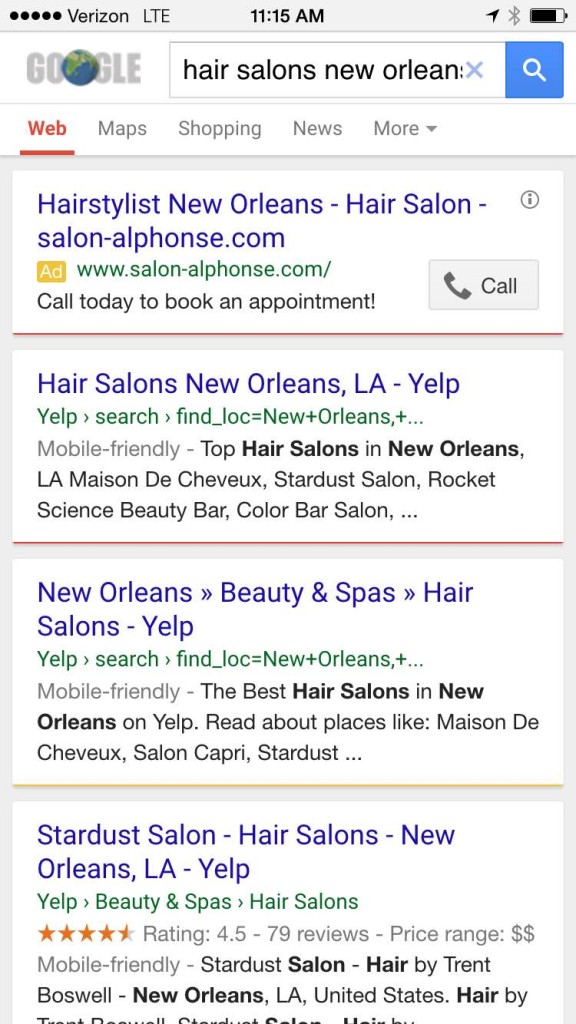
    This strategy works well in mobile because these websites are optimized for the mobile experience—providing the targeted information that local customers searching on their smartphones really need. When you perform a Google search for “hair stylists New Orleans,” for example, the top results are mostly from Yelp:

    Yelp Mobile Screenshot Image - Search Influence

    Step 3: Focus on Location, Location, Location

    Let’s face it: when mobile matters, location matters. Consider this: 50 percent of consumers who performed a local search on a smartphone visited a store within a day, according to a recent study from Google. So that’s good news for brick-and-mortar businesses with a mobile-friendly website. Those businesses will enjoy the additional ranking factors from the upcoming mobile-friendly algorithm, getting these small businesses in front of their target market at the time and place searchers are looking.

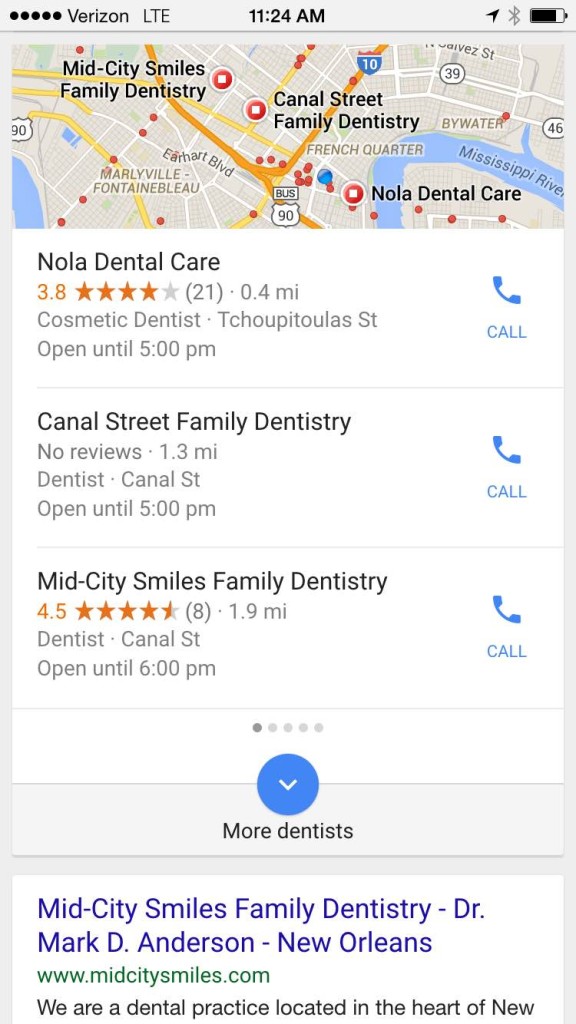
    The challenge? Local businesses must break into the top three local results—the ones typically seen on your smartphone. For example, if I search for “dentists,” Google is going to give me dentists near me … and I see only the first three results:

    Dentists Near Me Search Image - Search Influence

    To wrap it up, these are three steps you can get started on now. But remember, as with all Google algorithm updates, stay calm and give it time. April 21 was not the end-all-be-all date. This rollout will likely be a period of rollouts rather than a single-day launch. We usually recommend giving an update 60 days to see the full impact. And even then, there are revisions and updates and you just don’t know.

    So what’s your next move? Keep an eye on your website traffic to see if the update is impacting your mobile traffic. If you need help, give us a call at 504-208-3900. We’re here to help ease your “Mopocalypse” fears.

  • Googleplasty: How to Reshape Your Search Results (Part 2)

    As more businesses begin to take efforts to improve their online presence, standing out in search results of highly competitive markets and areas becomes even more difficult—and nowhere is this perhaps more true than in the cosmetic medicine industry.

    In order to reshape your search results through the art of “Googleplasty,” you must know what factors make your business rank high in a Google search. Since we now know all about the different types of search results from part one of this two-part blog series, let’s talk about the most important factors that play a role in how high your practice ranks.

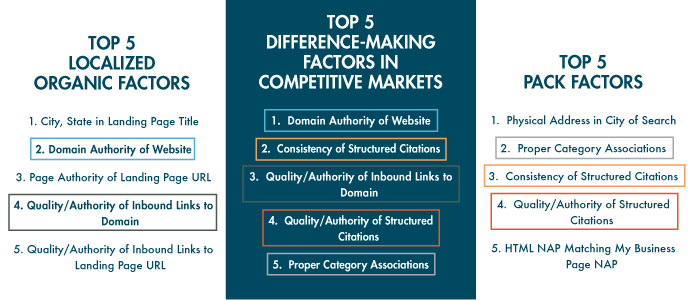
    The following three “Top 5” lists of factors are from from Moz’s 2014 Local Search Ranking Factors survey. The information came as a result of surveying 40 industry experts to determine what had the most influence on ranking in Google search results.

    top 5 search ranking factors

    As you can see, all of the factors that are integral in competitive markets also play a part in either localized organic or maps pack results. Due to their repeat importance, I think they’re the five factors most worthy of discussing in detail.

    1. Domain Authority of Website

    domain authority

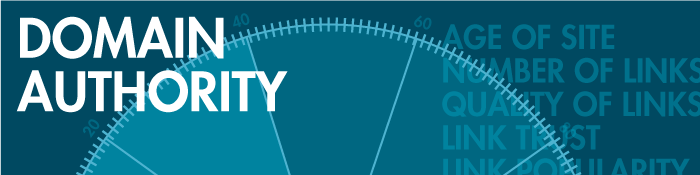
    First up on our list as the most important factor in competitive markets is Domain Authority, which isn’t much of a shocker. Domain Authority is a proprietary measurement (created by Moz geniuses) of a domain’s power within a 100-point scale. This score can be used to predict if a site is likely to rank in Google’s search results and can also be used to track a site’s growth and increase in strength.

    It is a metric that combines other metrics such as age, number of links, and quality of links, so it’s not easy to manipulate through singular or direct efforts. As it is directly put on Moz’s site, “The best way to influence this metric is to improve your overall SEO.”

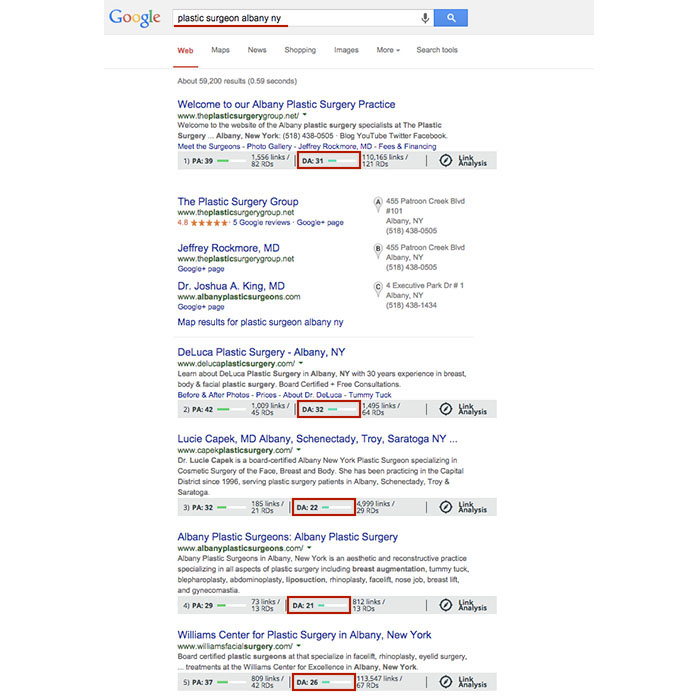
    Using Moz’s MozBar to see domain authority of pages in search results, you’ll see that the top five business sites in the localized organic results for “plastic surgeon albany ny” have Domain Authorities of 31, 32, 22, 21, and 26, respectively. As you can see here, having a score that is higher by a single point won’t guarantee that you rank above your competitor, but in this search example, business sites past the first page of results tended to have Domain Authorities lower than 20.

    Domain Authority Search Results

    2. Consistency of Structured Citations

    structured citation consistency

    While this factor isn’t as high ranking for localized organic results, it is third for the top maps pack factors and second here in the top factors for competitive markets. One reason for this is that in many competitive markets, such as plastic surgery or cosmetic dermatology, you’ll find maps packs in search results.

    To start, a citation is a place on the Web where a business’ name, address, phone number, and often website can be listed (sometimes referred to as the NAP of a business – name, address, phone). Any combination of the NAP, with or without all parts, listed on a site is considered a citation. A structured citation in particular is a listing of business information found on a directory website (e.g. YellowPages.com and Yelp.com). On the other hand, an unstructured citation can be business information on non-directory sites like newspaper sites, press release sites, and blogs, to name a few.

    By increasing the number of matching information sources (and therefore matching signals) to Google, you also increase your chances in having Google match this information to search queries, according to a recent webinar with Google’s Heather Wilburn. So if you want to be matched with potential patients searching for businesses like yours in your area, consistent business information across the Web is one of your best bets, especially in competitive industries like cosmetic surgery.

    3. Quality/Authority of Inbound Links to Domain

    inbound links to domain

    An inbound link to your domain (aka inlink or backlink) is exactly what it sounds like, a link leading to your website. The relevance to your industry or location and the authority of a website linking to yours in and of itself are the two best traits for quality links. Buying links or having links from random, spammy sites will hurt, not help you. Links from local sites and popular sites are a pretty safe bet. You can seek out local sponsorship opportunities as a good link-building effort or help other sites clean up their broken backlinks by using your working ones.

    To differentiate between natural link building versus spammy link building, remember that it’s all about user experience and what makes sense to the user. If your efforts don’t uphold the ideal of providing the best user experience possible, then they’re probably not good.

    4. Quality/Authority of Structured Citations

    structured citation quality

    As mentioned above, a structured citation can be any directory site that lists any variation of your business’ NAP or website. While consistency is most important, you also want to make efforts to build high-quality, authoritative citations in directories.

    Just like there are many factors to improve your own site’s authority, there are also many factors to determine the quality of a directory. You can delve into Whitespark’s blog on how to identify quality citation sources for a detailed breakdown, but basically a good rule of thumb is to look for high domain authority and human moderation in directory sites. Examples of human moderation include how DMOZ requires submission review by its team before a link goes live or how Google Plus, Yelp, and Bing listings all require verification via phone call or a postcard sent to the business.

    Google also considers niche directories highly authoritative. A niche directory is an industry-specific or location-specific directory. Since the Pigeon algorithm update, this kind of citation building has become especially important, and searching for your industry’s keywords will often help you identify these niche directories. If you search for “plastic surgeon columbus oh,” you’ll see that the directories healthgrades.com, vitals.com, and smartplasticsurgery.com appear on the second page of search results. Often, these types of directories require either verification or payment for those seeking to be listed on their site. If you understand the concept of barnacle SEO, you know that being listed on these types of big, authoritative sites is a great way to improve your own visibility to potential customers. Use your discretion to decide if the opportunity cost of getting on a directory isn’t too high to be worth the effort.

    Warning: If a site ever requests a “reciprocal link” to its site on your site in order to be listed, this is NOT A GOOD practice, and they are not worth your time.

    5. Proper Category Associations

    category associations

    Having proper category associations is another important factor for ranking in the maps pack that can set you apart from the rest in a competitive market. It’s a pretty simple concept, and it basically boils down to the part of the guidelines for representing your business on Google that tells businesses to “Choose categories that are as specific as possible, but representative of your main business.” A cosmetic surgeon with the primary category on the Google Plus local listing set to “surgeon” is less likely to rank above one with a primary category set as “plastic surgeon” in the maps pack, for example.

    Though this is a lot to grasp and take action on all at once, having the foundation and understanding of best practices to improve user experience and to better your business online will greatly improve your successes online in the long run.

  • Googleplasty: How to Reshape Your Search Results (Part 1)

    As businesses grow more in touch with their online presence, it becomes more and more challenging to stand out in the search results of highly competitive markets and areas—and nowhere is this perhaps more true than in the cosmetic medicine industry.

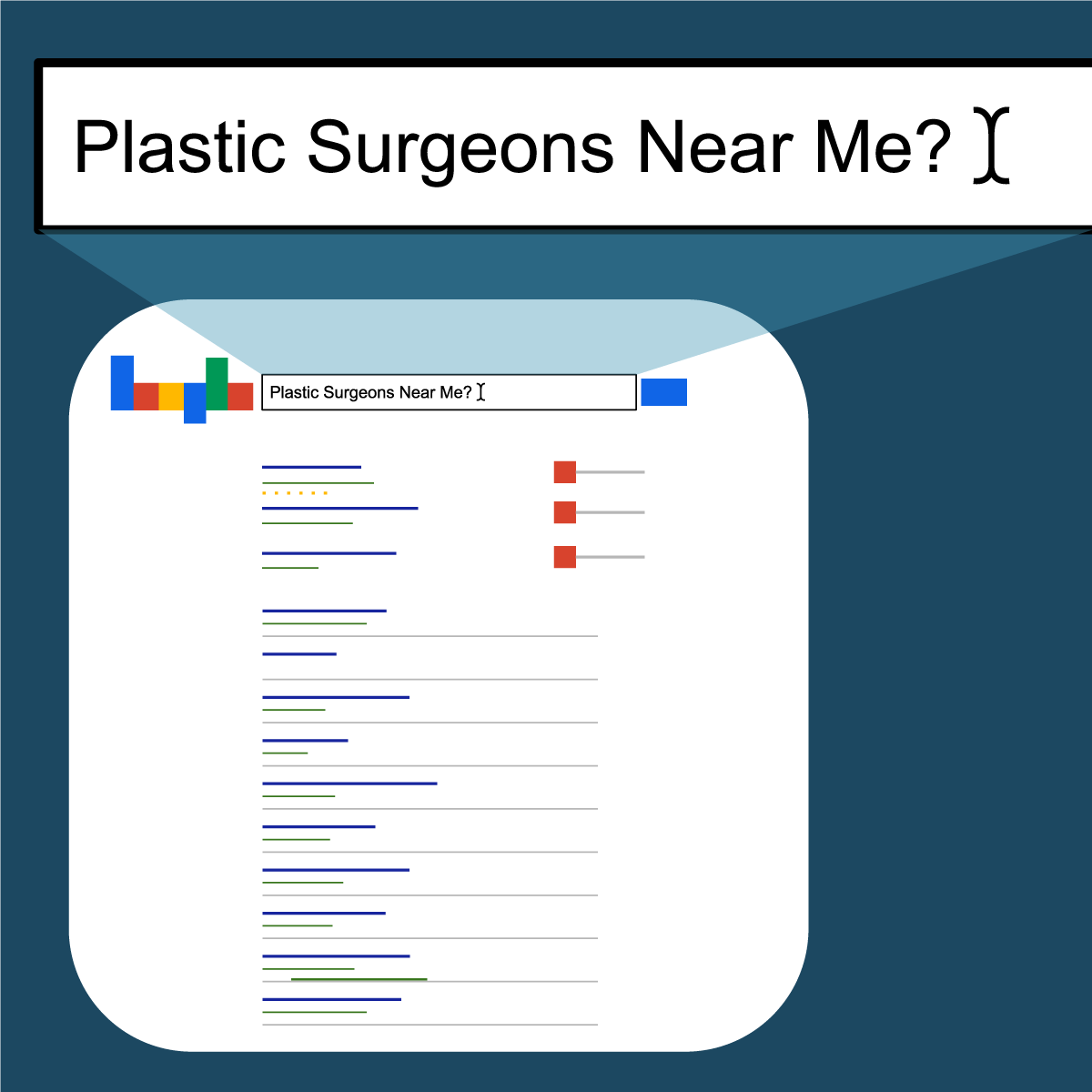
    Search Influence - Plastic Surgeon Local Google Search Results

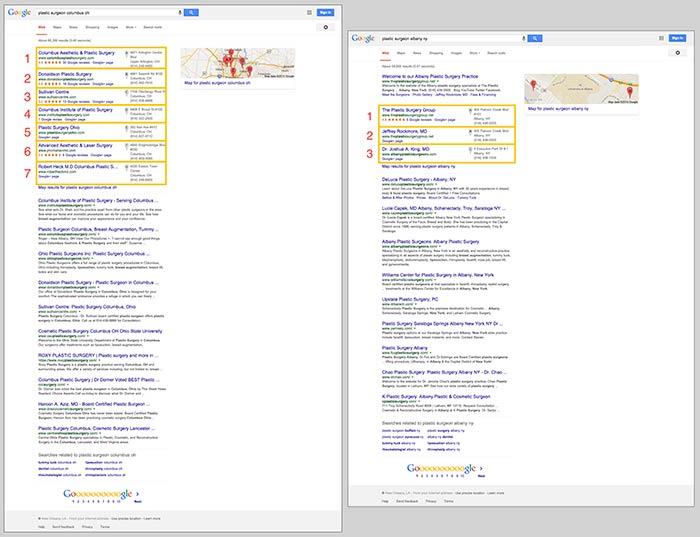
    First things first, let’s make sure we’re on the same page about the two major kinds of results that we see in desktop results for plastic surgeons. “Localized organic” search results and “maps pack” results typically appear together in what is referred to as “combined” search results. The factors that determine what appears in these two areas are not the same, as you can tell by the the difference in results and by the appearance of a site more than once between the two. Maps packs can come in a variety of forms and don’t show up for all search queries, which is also important to note.

    In the screenshot below on the left for the search “plastic surgeon columbus oh,” you’ll see 10 localized organic results below a 7-count maps pack. In the screenshot on the right for “plastic surgeon albany ny,” you’ll see 10 localized organic results, but the 3-count maps pack appears below the first organic result.

    Search Influence - Google Maps Pack Plastic Surgeon

    Stand Out in the Maps Pack

    In the maps pack itself, the most striking features are the review stars and rating display. The data in the maps pack area is pulled directly from Google Plus local listings in Google Maps. So, to make your practice stand out in the maps pack, you should claim and verify your Google Plus listing via Google My Business.

    Once you’ve claimed and verified your listing, you’ll want to get reviews from your patients. It’s important to understand that one or two reviews a month over a few months is better than 15 reviews in one week. As with most online marketing strategies, natural behavior is the best behavior.

    Stand Out in Localized Organic

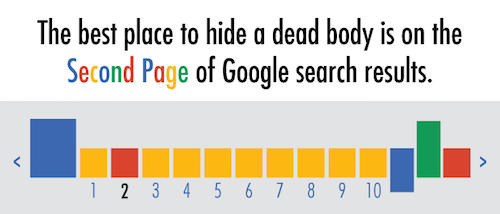
    The most obvious way to stand out in the localized organic results is to be ranking as high as possible and to AT LEAST be in the top 10 so that you’re on the first page. As the age-old SEO joke goes, “The best place to hide a dead body is on the second page of Google search results.” Hardly anyone looks past the first page, and—according to eye-tracking data—not many look past the top half of the search results page.

    Search Influence - dead body Google Search Results meme

    The Google PageRank algorithm that determines these rankings takes into account somewhere around 200 factors, so it’s not as simple as pinpointing one or two efforts to be made.

    Now that we’ve got a better understanding of what we’re looking at in search results, we can start to understand the major factors that affect ranking in each of these sections. Stay tuned for my next blog, where we’ll talk about the top five ranking factors in the maps pack, in the localized organic results, and in competitive markets!

  • Avoid Customers Crying In Your Parking Lot: A Cautionary Tale

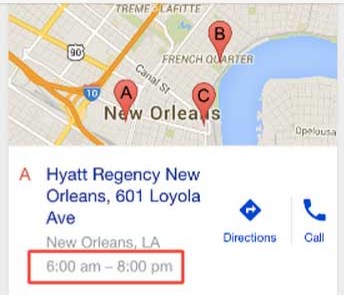
    If you’ve ever done a Google search for a business, you’ve likely seen this kind of result.

    MapsTimeViewImage

    And I’m sure at least once, you’ve seen this result, driven to the location, and found it to be closed.

    CatDrivingImage

    In that crushing moment, did you hear your heart beating in your ears? Did you see black spots? Did you curl up into a fetal position?

    Google lied to you. It clearly said the business was “open.” You had a full 8 hours before they closed! Rapidly stalking the business’ multiple social media platforms, you finally find one tiny post that says “Closed for the holidays.”

    If this has happened to you, you definitely are not alone. Rest assured that I have cried in a coffee shop parking lot due to this very scenario.

    QuoteImage

    With Great Power Comes Great Responsibility

    Know this, my comrades: it is not the fault of Google—nay! This falls on the responsibility of business owners as part of properly managing and maintaining a Google My Business profile.

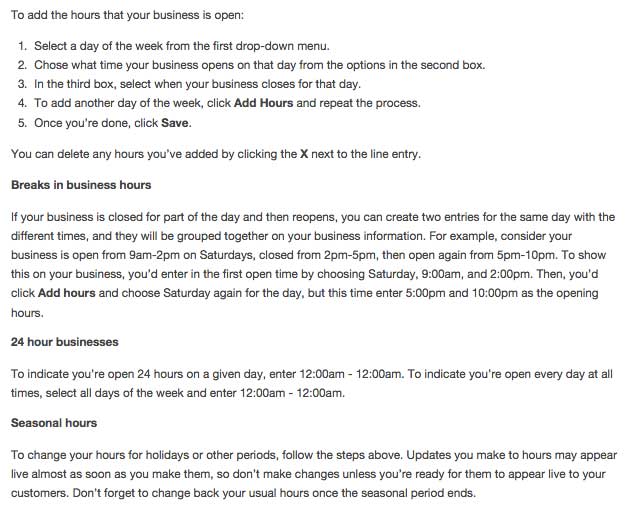
    Currently, Google has not built out the functionality for saving holiday-specific hours ahead of time. As the profile setup currently stands, you’ll need to manually edit the hours of operation on a given day when your business is open (or closed) outside your standard hours of operation.

    See Google’s steps on how to update your business’ hours.

    InstructionsOnAddingHoursImage

    After scouring Google’s forum for topics related to holiday-specific hours, it doesn’t seem like they’ll be adding the ability to set such hours ahead of time. Many of you may grumble and say that this is the last thing you’d think about during the holidays and, man, I get it, but know this:

    If customers have just one instance where they very much look forward to coming to your establishment and are discouraged by misleading information, they have less of a chance of coming back. How can they know if you’ll be open?

    This issue, however, is not specific to the holidays. It’s also applicable to businesses that have season-specific hours, and … really, all businesses! Companies with out-of-date or incorrect hours will quickly lose favor with customers. Really, take this as a larger lesson for why displaying accurate information across the World Wide Web is essential to a business’ success.

    As Google’s search engine becomes increasingly more sophisticated, results will become increasingly more accurate. Online users already rely on the Internet to supply the most up-to-date information on any given topic, so why should your business be immune to this demand? The point is, it isn’t.

    Google Time Stops For No Man

    Set a calendar reminder the day before to update your hours. Set an alarm on your phone! Put post-it notes all over the place. Tie a ribbon to your finger. Pay your tech-savvy kid to do it. Or hire an Internet marketing company to manage your profile for you. Whatever method you choose, just know that you are doing a great service to your customers—and to the world!

    In addition to managing an accurate and up-to-date Google My Business profile, it’s a good idea to update your social profiles as well. Facebook has easy-to-manage settings on your business’ page. Additionally, if your website has a built-out blog, it might be a good idea to have a holiday-specific post. In addition to alerting your customers about abnormal hours, a holiday-specific blog post opens the door to great time-sensitive content marketing opportunities.

    Opportunistic Marketing

    For instance, let everyone know your restaurant is open on St. Patrick’s Day and post your holiday-specific menu for the day, highlighting any specials you may have on account of the holidays.

    Contracting company closed for Christmas? Make a blog post about being unavailable on certain days, but highlight necessary winter-related structural checks or services that you will be offering when you return to normal business hours. Share the blog post across your social media platforms.

    Medical practice open for limited hours over Easter? Post a piece highlighting choking hazards for Easter-related paraphernalia, common food dye allergy reactions, or the importance of a dental check-up after candy-centric holidays.

    CatBunnyHatImage

    Clothing boutique open on the Fourth of July? Embellish a blog post with photos of your cutest red, white, and blue outfits. Have a friendly contest amongst shoppers and get them to post the Fourth of July outfits they purchased at your store. Who wore it best?

    Sno-ball stand closed for the winter? Write up a cute post about how you’ve gone north to collect more “snow” for the next coming season and when your customers can expect you to return! Also, post new flavors that they can anticipate for next season (or new combinations of old flavors). Or have a contest over the winter to see who can come up with the best flavor!

    CatAbeLincolnImage

    Go Forth And Update

    So, let this be a warning to you. Every time a search result for your business shows inaccurate information, you may just be losing a customer. Don’t think of maintaining accurate information as a chore but as an opportunity to engage and educate your customers.

    Have questions about maintaining other aspects of your Google My Business profile or opportunistic content marketing? Have an incorrect-business-info experience you’d like to share? Let us know in the comments below!

    Image Sources:

    Grumpy cat

    Easter cat

    Bearded cat

  • Search Influence launches Mobile SEO truck helping businesses with mobile-friendly websites

    Internet marketing company launches Web truck, not food truck, in time for ‘Mobile Apocalypse’

    SEARCH INFLUENCE PRESS RELEASE – APRIL 1, 2015

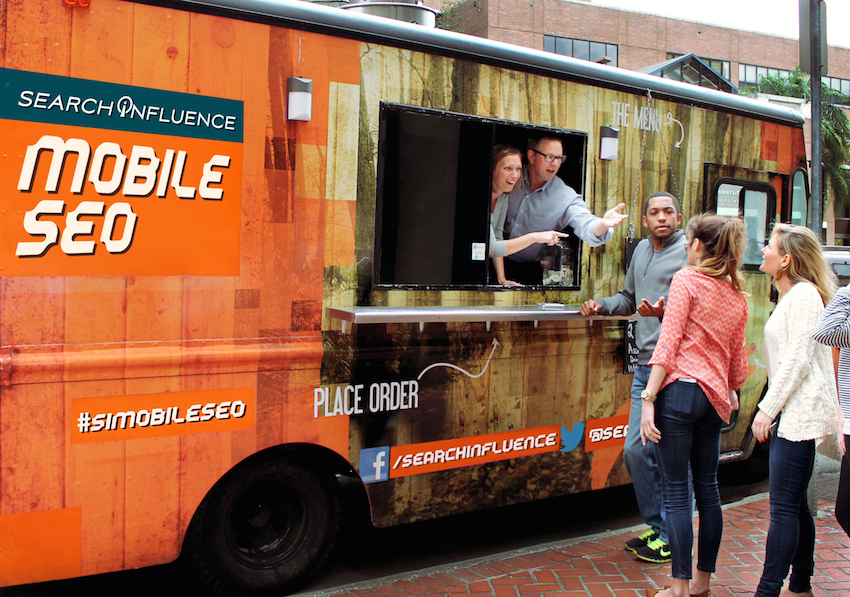
    Search Influence Mobile SEO Truck Image April Fools

    New Orleans-based online marketing company Search Influence launched a new twist on the food truck—the Mobile SEO truck to help businesses become more mobile friendly in advance of Google’s “Mobile Apocalypse” or “Mobilegeddon” deadline Tuesday, April 21. Google’s new focus means businesses with websites that are not mobile friendly may suffer in mobile search results. The Search Influence Mobile SEO truck offers targeted, hands-on services convenient for America’s small- and medium-sized businesses.

    The Mobile SEO truck functions similar to a food truck, but instead of the latest in trendy food, it offers affordable search engine optimization services designed to kick-start a heightened mobile online presence for businesses. The Mobile SEO truck will begin its tour in New Orleans, La., April 1–4. Other cities in the tour include Birmingham, Ala., April 5–8; Atlanta, Ga., April 9–12; Nashville, Tenn., April 1–16; and Washington, D.C., April 17–20.

    The Mobile SEO truck is staffed with Search Influence SEO experts and website designers, and is also equipped with several hands-on stations, including an interactive Responsive Website Booth, an Automatic Click-to-Call Website Button Generator and Driving Directions Optimizer Portal to help companies attract new business from the near majority of customers who search for products and services via smartphones.

    “A mobile-friendly online presence is no longer optional—no matter the size of your business. Our Mobile SEO truck is the perfect solution for any business struggling with Google’s new mobile-friendly algorithm,” said Search Influence CEO Will Scott. “To reach business owners in their own backyard, we’ve given new life to a defunct New Orleans food truck, so we can take these priority services on the road.”

    Early this year, Search Influence purchased an out-of-commission food truck in New Orleans and retrofitted it with the latest hands-on website technology. What was originally a $6,000 fixer-upper was morphed into a $750,000 state-of-the-art online marketing machine.

    “As a business owner, I appreciate the kind of hands-on online marketing help that literally drives to my office. For the best website strategies, you can’t beat the Mobile SEO truck,” said David Scheuermann of PayrollRx. “If they only served food along with the technology, it would be perfect!”

    Search Influence Spacer

    For media interviews or high-resolution photos, please contact Mikel Pak, PR/marketing manager at Search Influence. Please note, this is an April Fools’ Day joke. We hope you enjoyed the humor. Remember, mobile-friendly websites are key to a successful local business.

  • Pick up the Phone: Google is Calling With A Mobile-Friendly Update

    With Google’s recent announcement that mobile-friendliness will be a ranking signal, we have been fielding impressive numbers of emails and phone calls from website owners asking how this affects them.

    Google has been moving toward rewarding websites that are addressing consumer demand with mobile-friendliness. In the official announcement published on February 26, Google says, “Starting April 21, we will be expanding our use of mobile-friendliness as a ranking signal.”

    Two factors to consider regarding this algorithm launch:

    1. This rollout will affect mobile search rankings only.
    2. This rollout will likely be a period of rollouts rather than a single-day launch.

    Mobile Search Rankings Only

    In a hangout the day after the announcement, John Mueller, Web Trends Analyst for Google, mentions at about 9:42, “These ranking changes are effective on smartphones for smartphone users.”

    Again at 44:40, he reiterates that this algorithm is specific to mobile search. Mobile SERPs and desktop SERPs may become significantly different starting in late April.

    JohnMuellerGoogleMobileFriendlyYouTubeImage

    (Thanks, Joshua Berg, for the G+ post with topics time stamped).

    Why is Google launching a mobile-specific algorithm?

    Because mobile use is growing so quickly and is approaching 50% of Internet use, Google wants mobile users to experience relevant, high-quality websites that are designed for mobile use specifically. It’s a recurring theme that Google wants to provide for the user by offering a quality experience.

    Um, is my site mobile-friendly?

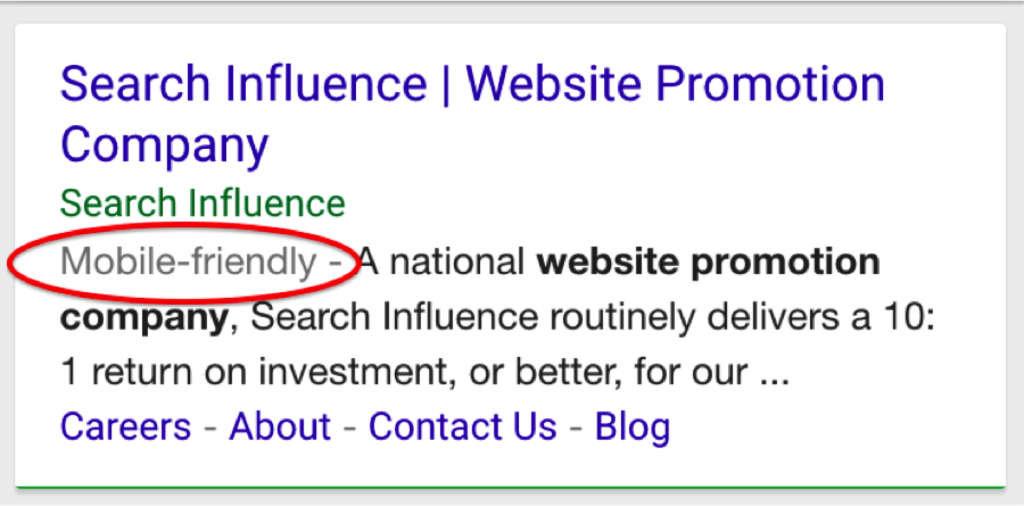
    In November, Google announced the addition of “mobile-friendly” tags in mobile search results.
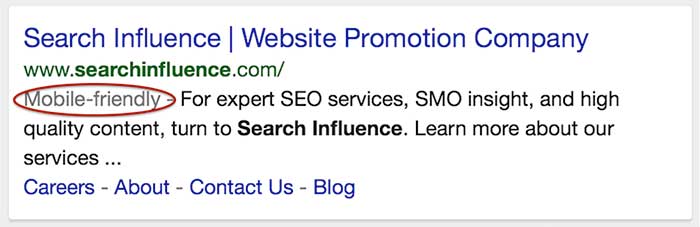
    mobile-friendly tag in iphone search results

    At the same time, they also gave us a mobile-friendly testing tool. Take note that this testing tool shows you how the Google bots see your site, which is not necessarily how your site resolves on an actual smartphone.

    Passing the test means you qualify for getting the mobile-friendly tag in mobile search.

    However, even if you have a mobile-friendly (“mobfr” per Joshua Berg) site, if the Google bots can’t get to all of the page elements, the testing tool image result may not be how your site really looks on a phone.

    Not passing the test generally means you don’t have a mobfr site. However, I have seen a few sites that are responsive but don’t pass the test. They look great on my iPhone but don’t look great to the Google crawlers.

    This is an example of a responsive website that looks and functions well on my phone, but the mobfr tool just doesn’t see it that way. (The good news is that this website owner has been working on an improved responsive site that should launch soon, well ahead of the April 21 deadline.)
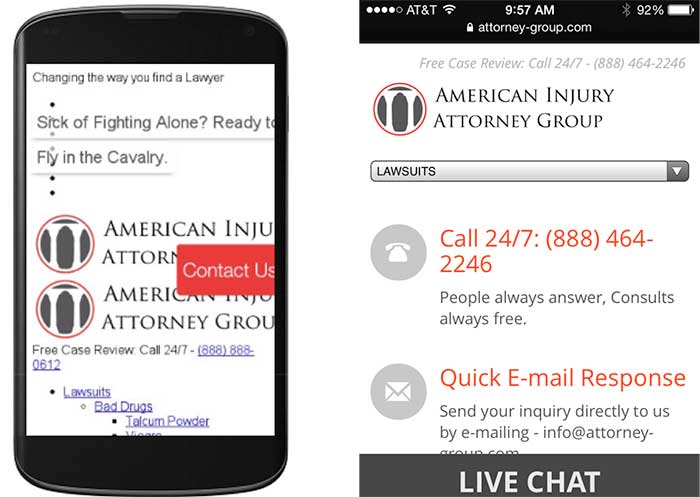
    errors in mobile friendly testing tool show the site different than on iphone

    Do I have to get a mobile site if I want to rank?

    In the hangout video, this question is discussed at about minute 12:00. The summary is that mobile-friendly websites will be getting the edge in mobile rankings. Paraphrasing the hangout conversation, non-mobile-friendly sites will not be dropped out of mobile search completely.

    Any time you boost the position for a specific set of sites, it will naturally result in the loss of position for another set of sites. Giving precedence to mobfr sites just means not-mobfr sites have to move out of the way.

    John Mueller also mentions that if a not-mobfr site renders decently on mobile and is highly relevant, it would be a disservice to the searcher to not serve those sites up in results. It’s all about the searcher.

    How much do I really need to worry about mobile traffic?

    The number of visitors using a mobile device to access websites has increased dramatically over the last few years. The current average hovers at around 50%, depending on the industry. This is half of a website’s traffic coming from smartphones. I looked at some of our clients to see if I could confirm this stat. I dug around in Analytics and pulled mobile (not tablet) stats for the last six months for two industry types.
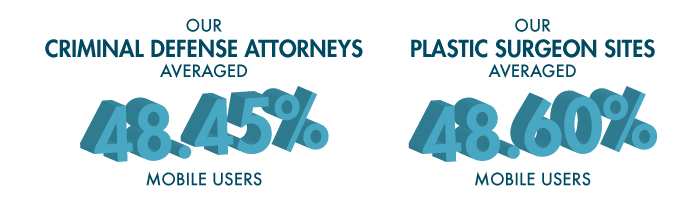
    SI-stats-blog-1

    For some industries, this algorithm may not be as big of a concern as it is for the criminal defense and plastic surgery industries. I looked at an admittedly small set of clients to get these two percentages:

    •      Independent insurance agents average 17.48% of traffic as mobile.
    •      K-12 schools have mobile traffic at an average of 13.87%.

    If the mobile traffic to your site is in the double digits but may not be at 50%, you can look at other data points in Analytics. Look at bounce rates, pages visited, and repeat visits from smartphone users to see how satisfied or dissatisfied they were with their visit to your site.

    What are the options to make my site mobile-friendly?

    There are three options for developing a mobile-friendly site version. The most common option is to have responsive and mobile serving separate URLs. Here are three options for mobile sites thatGoogle discusses in detail on their developer site:
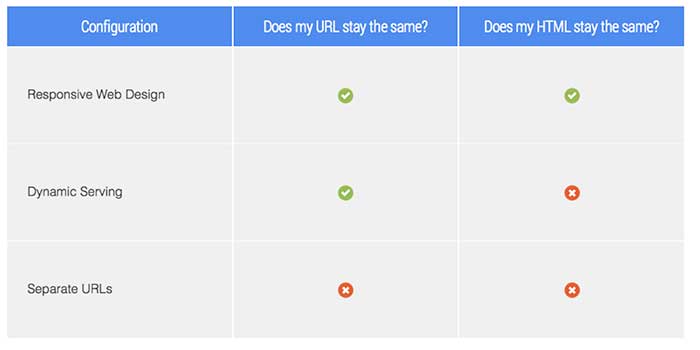
    GoogleDeveloperURLConfigurationOptionsImage

    What’s better, mobile or responsive?

    Personally, I love a responsive site because the site has the same HTML, the same URLs, and the same design across all devices: desktop, mobile, tablet.

    It should be noted that a responsive design is an investment because it usually requires a complete rebuild of the site. However, if you rely heavily on website traffic for lead generation and if you haven’t redesigned your site in a few years, this may be the time to invest.

    A mobile version of your site is a good option as well. You can have either a full version or just a portion of your website in a mobile design. Creating a mobile site with a handful of important pages, or the pages most people visit, may be all you need to deliver to mobile users the information they need.

    For websites with an already high percentage of mobile users, I have to recommend responsiveness over mobile. For websites with double-digit mobile traffic, but not 50%, a mobile site may serve you well.

    Also, make sure your developer optimizes images and pages for fast page load. Google has been testing with page load speed tags in SERPs too, and if you’re investing in a site upgrade, you should address as many factors as you can at one time.

    What about duplicate content?

    If you have a mobile site and a desktop site with the same content on two different URLs, these can be seen as duplicate content, which can dilute your content’s authority. Example:

    Domain.com/about-us

    m.domain.com/about-us

    John Mueller commented on this topic: “You don’t have to worry about duplicate content—definitely not when it comes to mobile versions when they’re annotated appropriately.”

    You should make sure to get your developer’s assurance that content will be referenced properly between a mobile site and a desktop site.

    Your website is an asset for your business.

    One small business owner I talk to frequently is in an industry that does not get a lot of leads online. The owner is not interested in anything online, but he knows his customers use his website frequently as a resource, and his site is an asset to the business. He gritted his teeth and devoted a lot of his 2014 budget to technology. He converted his website to a responsive design, and while he was at it, he had the developers add encryption, and he was able to have an app created (which can be an expensive investment for a small business, but in his industry it’s almost required). It’s 2015, and he feels some satisfaction (and relief) that he took care of all of these things last year.

    The takeaway is that a business’ online properties are assets that need regular maintenance and upgrades to keep up with the ever-changing Google and consumer demand. If your site is not mobile-friendly, you should talk to your SEO manager as a first step in finding out what you need.

    For even more information, see:

    March 4, 2015 Google’s Gary Illyes Q&A on Upcoming Mobile Ranking Change

    March 5, 2015 Google: The Mobile-Friendly Ranking Factor Runs In Real-Time & Is On A Page-By-Page Basis

    “…if you have 10 web pages on your web site and 5 of them are mobile-friendly and 5 are not, then only the pages that are mobile-friendly will benefit.”

  • SEO for 2015: Meet the New Boss, Same as the Old Boss

    The world of SEO is constantly changing. Google, the big prize for search engine ranking, may change its search algorithms from 500 to 600 times a year, and major updates like Panda, Penguin, and Pigeon are rolled out on a fairly regular basis. And while your business can’t shift SEO strategies daily to incorporate every change Google unveils, it makes sense to take a fresh look at your SEO approach at least annually—or does it?

    The answer is yes, and no. While there are some aspects of SEO that can and should be refreshed or updated to keep up with changing algorithms and your audience’s needs and tastes, the good news for online marketers is that the basic SEO strategies you’re already familiar with will continue to be effective—in 2015 and beyond.

    Here’s a look at what will change in the SEO landscape for 2015 and what will remain the same.

    Sticking to the basics still works

    Best practices for SEO strategies have always revolved around delivering high-quality, targeted, and useful content with a few well-chosen, naturally incorporated keywords—and for 2015, that won’t change. Google-sanctioned “white hat” SEO tactics continue to be the most effective strategies for driving SEO and boosting search engine rankings.

    Another basic element of SEO that will remain the same is the need for both on-page (what you say about yourself) and off-page (what others say about you) factors. Successful SEO includes creative, useful, and engaging content creation for your website, social media, and other online channels, along with promotion that drives off-page SEO by attracting links to your content from other authoritative sites.

    Going mobile will be an imperative

    By now, most companies are aware that a responsive, mobile-friendly website is essential for attracting and retaining customers—but mobile SEO is more important than ever when it comes to Google. Responsive site design will be a crucial aspect of ranking high on Google, since the search engine now reports whether or not a site is mobile-friendly to both users and webmasters.

    If you’re not sure whether your business website is mobile-friendly enough, Google offers a free online testing tool, along with a link to information about their mobile-friendly criteria and how it may affect your search engine results.

    For small business, local SEO will be king

    In 2015, it will be important for businesses—especially small businesses—to make sure their websites are optimized for local area searches. Google and other search engines are giving more attention to local directories and citations, including hyperlocal content (relevant content authored by local experts within their geographic areas).

    One effective SEO strategy for optimizing local search is to make sure your phone numbers, addresses, and location pages are consistent with off-page directory listings. If you haven’t done so already, check out third-party business directory and review websites such as Yelp, Google+, and Yahoo Business to ensure that your local information is correct.

    Thinking like a publisher will benefit your SEO

    As search engine algorithms continue to shift weight away from obvious marketing and promotional content and toward contextual relevance, individuals are becoming more important than companies with regard to search engine rank. To take advantage for SEO improvement, more companies are transferring authorship credit to individuals—including text article writers, infographic designers, and video and podcast producers. Giving content creators their own voice will lend your content more weight with search engines.

    Links and keywords will lose center stage

    For a long time, keywords and links have been the cornerstones of SEO. But with a massive shift toward contextual search and high-value content, these primary factors no longer carry the same weight. Inbound and outbound links still matter for search, but their importance has been dwindling as more algorithms place relevance over popularity and authority.

    The same shift is apparently underway with keywords. While a few well-chosen and well-placed keywords still serve to help search engines determine the overall meaning of a page or piece of content, it’s more important that your content answers the right user questions and remains useful and engaging.

    If you’ve been sticking to SEO best practices, your strategy for 2015 is likely to only require minor changes in order to remain effective for the coming year and beyond.

  • Those Who Do Not Learn From The Past Are Doomed To Have Poor Search Value

    If you’re reading this blog you’re probably already aware that Google has been busy updating their algorithms. If you work in the Internet marketing industry you may be on edge, cowering at the very mention of any animal whose name begins with the letter P. Ever since the first Panda update in 2012, followed by the introduction of the infamous Penguin algorithm that laid waste to the search engine rankings of many a carefully formulated marketing campaigns, ended careers, crushed SEO companies, and changed the hierarchy of competing businesses across the globe, people have kept an ear to the ground for the approach of further updates.

    Unfortunately, the secrets behind these algorithms are tightly guarded, and only general guidelines and information are provided to the public by the clandestine data giant, Google. So what are we to do? How can we avoid being penalized for our efforts and implement a lasting marketing strategy that won’t blow up in our faces like some Looney Toons derived Acme product?

    Threading Through the Maze: Birth of the Search Engine

    In search for the most strategic tactics to create a future-perfect website, I believe we must first visit the distant past, the primordial pre-digital world of 1945. Yes, its time for a flashback.

    BackToTheFutureImage

    The heated global conflict of World War II has induced a brave new world of scientific development spurred on by allied nations sharing research to gain a technological edge in the war. In the wake of the conflict, a newly established international science community, having proven itself as an invaluable resource in every aspect of the war, is continuing to progress at an unprecedented rate. As the head of the U.S. Office of Scientific Research and Development, Vannevar Bush, has been coordinating between a broad range of scientific disciplines from all over the world since 1941. Frustrated with the inefficiencies involved with sharing massive amounts of data between specialized fields of study, namely the inability to quickly find pertinent information, Bush devised a solution that he described in his essay As We May Think.

    “The summation of human experience is being expanded at a prodigious rate, and the means we use for threading through the consequent maze to the momentarily important item is the same as was used in the days of square-rigged ships.”

    Bush’s vision was to create a system that more naturally indexed information by association, implementing “associative trails”  allowing a person to further explore particular ideas within an article as opposed to having to put down one resource to take up the search for information anew. He envisioned the ability to view multiple articles on a single screen, with the ability to add comments that could be stored and recalled with the article thereafter and the creation of links between related articles, allowing users to map out a network of information easily accessed and built upon by future users.

    Of course, in that day, the technology did not exist to implement Bush’s machine. Bush’s device, the “Memex”, he proposed would use every 60’s spy film’s favorite storage format — microfilm. His vision inspired further development within the scientific community that above all other things resulted in streamlining the exchange of information making exponential leaps and bounds in development and implementation of new science possible.

    Back to the Future

    WhereWereGoingDontNeedRoadsImage

    So you’re probably thinking at this point. “Awesome. A guy back in the 1940’s thought up something vaguely search-engine like. Great. Maybe next time I need to change the oil in my Nissan you can tell me about the inception of the steam engine.”

    Okay. I like nerding out about history. Guilty as charged, but this brief walk through the annals of history does have some significance to the modern webmaster. As much as technology changes and improves, the demands that drive development remain unaltered. The desire for an intuitive means to access a large network of information led to a series of advancements that reshaped modern society.

    The entire history and continued development of search engines lies within the scientific community as an effective means to index and provide relevant information to those that are looking for it. Every search engine adheres to these concepts and despite the negative association with algorithm updates in the Internet marketing community these updates are, at the very least, intended to improve on Google’s ability to provide the most relevant and desirable information to the user.

    For those looking to the future, bare in mind that Google isn’t just getting better at devising its algorithms and penalizing what it interprets to be undesirable marketing practices, Google also provides ever increasing access to information and incorporates more user behavior into how they determine the validity of a website. As the #1 search engine in the world, and largest provider of analytics solutions, Google has access to massive amounts of user data which is being actively used to determine search rankings. While you can fool search engine crawlers and automated ranking processes, Internet users of today are savvy, experienced, and don’t take kindly to spammy or misleading marketing practices.

    Preparing for the Inevitable

    The oversimplified answer to how to implement a website that will succeed on the search engines, and continue to do so, is one that embraces the ideals on which Bush’s Memex was based and all search engines were built — to put useful information into the hands of the people that are looking for it.

    STEP 1: To best do this, the important first step is determining what information your clients need and want most. Don’t get tripped up analyzing at this part of the process. Think simple. If it’s a product you’re selling, generally a wealth of user reviews on the Internet will tell of the user’s opinions and desires. Tap into these for inspiration.

    STEP 2: Next, create original, well-written and researched content. The content should provide users with the information they are looking for, clearly labeled and organized to enable a user to quickly find the tidbits that are most relevant to their search. Updating or adding to this information often is important. Keeping your site current and error-free will help continue visits to your site and an upward progression in ranks.

    Step 3: In addition to text, it’s important to provide high-quality images, videos, and other media, and it’s even more important to label these properly. The more original media you provide the better.

    Step 4: Established social media sites and Internet communities relevant to your industry are important places to have a presence in order to connect directly with potential clients and establish your site’s authority.

    I know these tips are nothing new. These are the time-tested practices for Internet success that have barely changed since the genesis of the Internet.

    I understand the general reaction to algorithm updates. It’s crushing to struggle up the ranks using all your know-how just to have those efforts ripped to pieces. And when battling for exposure in the dog-eat-dog world of marketing, many, if not most, will turn to any competitive advantage they can muster.

    It’s important to realize, however, that with regular updates occurring that further marginalize the gains of shady marketing practices, anyone looking for more than a flash in the pan needs to embrace the ideals from which the search engine was born and connect people to the information they are looking for.

    Image Sources:

    Thanks to Don’t Count Your Chickens and to halbschwer for the Back To The Future Gifs. Also, thanks to Mark Bourne for the Wile E. Coyote image.

  • What’s Black and White and Impacts 3-5% of Search Queries? Panda 4.1!

    In the last two months, Google has been busy improving the Panda. In early August (Aug. 8, 2014, to be exact), there was a lot of chatter from the SEO community seeing the flux in Google Analytics accounts, which was generally accepted as an unconfirmed monthly Panda data refresh.

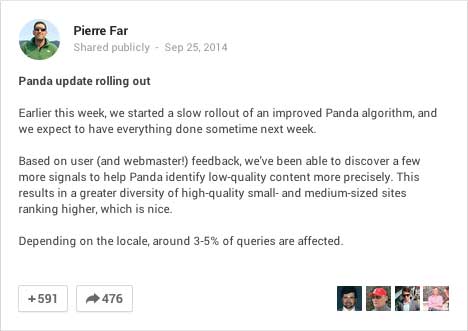
    In early September, there was a large Panda data refresh, and on Sept. 25, Google’s Pierre Far announced yet another Panda algorithm update, (the previous Panda algo update was May 19).

    GooglePlusPostPandaAnnoucedImage

    And just to keep you on edge, ceaselessly examining your Analytics data, the rollout of this Panda has been sloooowwwwslothlike. Google confirmed that some Google data centers were not updated until “October 6 or later.” So, your website could have seen the algorithm at some point before Sept. 25 and after Oct. 6 – that’s a two-week time frame to analyze!

    What is Panda?

    There are so many blog posts out there describing the Panda algorithm, I will just summarize it briefly. If you’re interested in reading about it in more detail, here’s a good blog post, and some excellent reading here.

    Panda is an algorithm that filters the search results to:

    1. Reward high-quality content with more presence
    2. Push sites with thin content down to rank lower

    Google says low quality or thin content is text that

    •   Is very short in length
    •   Offers very little useful information to the consumer
    •   Is unoriginal or copied

    Your website content should not be self-serving; it’s all about providing information to the consumer to educate them with detailed and authoritative information.

    PandaContentPullQuoteImage

    This most recent Panda is an algorithm update, which is supposed to reward more high-quality small and medium-sized websites. From Par’s G+ post:

    “Based on user (and webmaster!) feedback, we’ve been able to discover a few more signals to help Panda identify low-quality content more precisely. This results in a greater diversity of high-quality small- and medium-sized sites ranking higher, which is nice.”

    This update is significant because it added more signals to better identify lower quality sites. Earlier algo updates have rewarded big directories for local searches, so this update is exciting because small- and medium-sized websites have a fighting chance for ranking in their local markets.

    Google Updates vs Data Refreshes

    To paraphrase, an update is a change in the algorithm. A data refresh is when the algorithm has not changed, and new data that is pushed through the data centers, such as new crawl data, is updated in the various data centers across the Google universe.

    Updating the data centers is one reason why updates are seen at different times for different geographies.

    I am quoting this really old Matt Cutts blog post here:

    Algorithm update: Typically yields changes in the search results on the larger end of the spectrum. Algorithms can change at any time, but noticeable changes tend to be less frequent.

    Data refresh: When data is refreshed within an existing algorithm. Changes are typically toward the less-impactful end of the spectrum, and are often so small that people don’t even notice. One of the smallest types of data refreshes is an:

    Index update: When new indexing data is pushed out to data centers. From the summer of 2000 to the summer of 2003, index updates tended to happen about once a month. The resulting changes were called the Google Dance.”

    What are data centers? Google crawls the websites out there and caches those in their gigantic index. That index is huge and is stored on thousands of machines. Those thousands of machines live in various Google data centers around the world. To truly geek out, read more about Google data centers here – these centers are where the Internet exists.

    Did Panda Help or Hurt Your Site?

    When you look in Google Analytics, it may be easy to see a drop off or dramatic increase. For example in the graphic below, I’m guessing Panda rolled out in the business’ local area around Oct. 6, and it didn’t go well for the site:

    Panda rolled out Oct 6, 2014

    And on Sept. 29, this site was Panda-happy:

    increase in Google organic traffic after Panda September 2014

    For most of the sites I looked at, the visual changes were more subtle, so I usually toggle between the data by week vs. the daily data. The weekly data shows me a week where the decreases started, which correlates to the earlier rollout dates:

    weekly analytics view to pinpoint Panda rollout

    When I switch to the daily data, I can clearly see the dips in traffic. I have to pinpoint Saturday, Sept. 20t or Wednesday, Sept. 24 as the day this site got the Panda.

    daily Analytics shows dips in Google organic traffic after Panda

    The Sept. 20 might be a little early to fit in the Panda time frame, and I am accustomed to seeing a spike immediately before an algo filter, so I’m going for Sept. 24. Using Sept. 24 as the before and after date, this website has seen 12% decrease in Google organic traffic.

    12% decrease in Google organic traffic after Panda Sept 2014

    This website with the 12% decrease in Google organic traffic after Panda is a good website for an authoritative local business. What this drop tells us is even if the content on the site offers really great information for the consumer as this one does, it might be old and/or thin. Someone may have copied it over the years. We might need to add other content to our pages with images and videos. Content is not just text. We need to take a good look at the age of the text and the variety of the content on the page. With this review, we can create a strategy for improving the content for the next Panda data refresh.

    What to Do Now

    PandaImageWebsite owners or managers who see a Panda smack really need to take a critical look at the content on the site. To succeed, the content needs to be information rich, and not self-serving.

    An example of self-serving content is content that is stuffed with keywords, abundant keyword use on a page not only in the body text, but also in the URL and alt tags. This is also sometimes referred to as over-optimization.

    Self-serving can also mean the content talks too much about the business instead of talking about the product or service the consumer is trying to learn about. Talking about the business is great as long as it’s on the About page or the home page. Leave products or service pages to be about those topics.

    This is a great list compiled by Josh Bachynski “The Complete Google Leaked PANDA Do & Don’t LIST – 2011 to Present.”  This list really dives into the aspects of good and not-so-good content.

    Google published a list of questions to ask when writing content. The full list is here. I have chosen some to republish below:

    • Would you trust the information presented in this article?
    • Is this article written by an expert or enthusiast who knows the topic well, or is it more shallow in nature?
    • Are the topics driven by genuine interests of readers of the site, or does the site generate content by attempting to guess what might rank well in search engines?
    • Does the article describe both sides of a story?
    • Does this article provide a complete or comprehensive description of the topic?
    • Are the pages produced with great care and attention to detail vs. less attention to detail?

    Diversity of content and freshness of content are also factors to consider.

    Diversity of content helps readers in various ways. Content can mean images. Original images are best rather than stock images, but stock images work. Content can also mean videos, charts, calculators, and reviews. Content is anything that helps the consumer learn more to make well-informed decisions.

    For content freshness, a blog is probably the easiest approach to keep the website updated regularly without having to rewrite your page’s content too often.

    If you have a specific owner or practitioner who is the authority on the information, claim that using Author markup – authorship thumbnails are gone from SERPs but that doesn’t mean the Author authority is gone.

    There are so many tactics for coming back after a Panda smack, and the best strategy is a mix of tactics. It will likely take time to create really good content and build back your website credibility, but it is a necessary investment for your site’s success.

    If you think your site is suffering from the Panda, give us a call. We would be glad to help.

  • Five For Friday: Paging Dr. Google, Panda 4.1 Is On The Loose, And More!

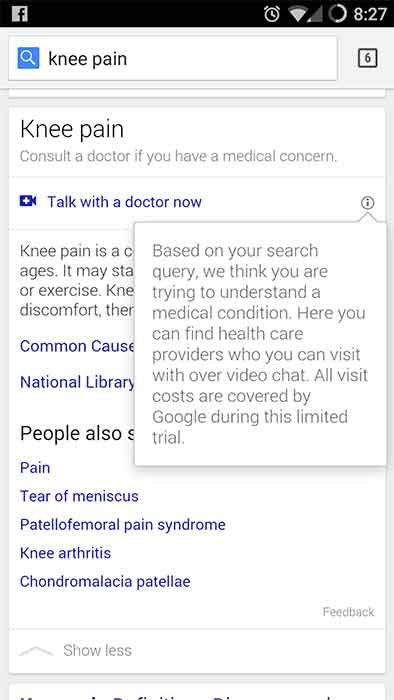
    GoogleKneePainAnswerImage

    1. Google Gets a Medical Degree
    -Mashable

    In what may prove to be the coolest Google project all year, reports have surfaced that the search engine plans to implement a feature to their already lauded Helpouts initiative. The new project will attempt to take health-related symptomatic searches and connect users with real doctors online. All costs are being covered by Google during the limited trial period, however it may cost you as the service is refined. The impact this will have on health professionals is exciting, and could transform an entire industry. The opportunities this service poses are truly endless, especially when you consider the degree of Google’s philanthropic endeavors.

    2. The Forgotten Curriculum
    -Moz

    Carla Dawson of MobyDigital discusses the pros and cons of teaching SEO at universities.

    As a recent graduate frustrated with the absence of tech-related courses being taught at my alma mater, I strongly believe in this move to educate the average university student on the subject of SEO. The article poses quite a few points of contention and agreement, here are a few that stuck out:

    1) Pro: Everyone says they know SEO. Without a standard for learning SEO, there can be no true credibility among firms. Teaching these skills at universities will quell [most] questions about a persons knowledge base.

    2) Pro: Today’s student is tomorrow’s potential client. Students who learn SEO in a formal setting will be able to sell [and be sold] SEO services more effectively.

    3) Con: Google algorithmic changes are frequent, and transform the industry.  The single most significant obstacle to teaching a standard course on SEO is the fluid nature of the industry.

    3. Panda Does Not Approve of Average Content
    -Business 2 Community

    The most recent tweak to the Panda Algorithm is in full swing. Nothing about this update is drastically different from what we have seen before, but Google is making it clear that authentic, well-vetted content from small and medium sized businesses remains a staunch priority.

    This checklist, provided by Google, is a great resource for those writing content for their business:

    • Would you trust the information presented in this article?
    • Is this article written by an expert or enthusiast who knows the topic well?
    • Does this article have spelling, stylistic, or factual errors?
    • Does the page provide substantial value when compared to other pages in search results?
    • Was the article edited well, or does it appear sloppy or hastily produced?

    TheAngryPandaCommercialSquareGifImage

    4. The Semantic Future of Link Building
    -Moz

    In his most recent submission to the MOZ Blog, Paddy Moogan discusses the impact on link authority, as Google continues to prioritize semantic search over exact-match keywords. As Google continues to understand search intent more and more, the rules surrounding link building will change. Paddy argues that the quantity of links, the anchor text of the links, and deep linking will matter less and less in the coming years.

    5. What Is Your Take on B2B Marketing Strategy?
    -Search Engine Land

    The recent banishment of the Google Authorship markup inspired annoyance in people like Derek Edmond, of KO Marketing. The impact on B2B Marketing from this discontinuation is very real to a certain niche, but as the wild world of SEO ebbs and flows, Derek reminds us of four tactics employed by B2B marketers that have had success in the past. Will marketers continue to build on these tactics, or abort them entirely?

    1) Purchasers prioritizing “thought leaders” in their industry. This tactic was primarily employed by the use of Google Authorship and Derek believes some kind of platform will fill this void in the future.

    2) Infographics are well respected, and oft-cited, however the market for infographics is so saturated that it is becoming increasingly difficult to create effective infographics.

    3) Derek argues that guest-blog posting is tricky game. The useful expertise provided by credible commenters can boost your authority as a business. On the contrary, Google considers guest blogging to be spammy, and it is easy to have unreliable sources hurt your authority.

    4) Derek warns against the dangers of spammy content, and questions the SEO usefulness of using Twitter to market your business. Matt Cutts of Google has stated that the search engine does not consider social signals when it comes to rankings. However, Derek argues that using Twitter as a tool to build relationships proves to be invaluable.

    Thank you to Panda Cheese for the great angry panda commercial!