Tag: google algorithm

  • How a Debate About Onions Showed Google Might Not Be Infallible

    A couple of weeks ago, I was driving to meet a friend for dinner when I heard a segment on NPR’s Marketplace that featured Tom Scocca talking about his article on Gizmodo about caramelized onions. At first, it seemed like many a segment on NPR we’ve come to expect—interesting and mildly entertaining. It wasn’t until the segment got to the point of the matter that I was hooked. When people were searching on Google for “how long does it take to caramelize onions?” they were getting misinformation. How could such a simple question turn up a false response from the world’s largest, and arguably smartest, search engine? I wondered, are there other moments like this that have happened between users and Google?

    How Did Google Misinterpret What Is Common Knowledge to Most Chefs?

    To be fair to Google, this wasn’t entirely their fault. The initial blame goes back to the thousands of recipes that live on the internet telling readers how to caramelize onions, from an at-home amateur cook’s blog to the New York Times. For whatever reason, instead of telling home cooks to patiently take their time to cook the onions on a low to medium heat for upwards of 30-45 minutes, a lot of recipes listed the expected cooking time as 5-10 minutes. If you’ve ever attempted to caramelize onions in this amount of time, I’ll go ahead and break it to you—it’s impossible. To save you from a bunch of food chemistry, I’ll just say that it has to do with the sugar content in onions.

    Purple Onion Cut In Half - Search Influence

    So, why is there so much content online that gives users, and in turn Google, misinformation? The simplest answer is that writers of recipes were trying to simplify a process that would turn an ordinarily easy recipe for a weeknight meal, like French Onion Soup, into a 1 ½ –2-hour ordeal. In Scocca’s Slate article written in 2012, he gave many different examples of well-known chef’s attempts and failures at trying to achieve caramelization in less than 20 minutes. The article is littered with keywords Google would love and came from a highly reputable source. At its beginning, he references the 5-10 minute myth, and for a while, this had a positive response—The New York Times changed their language when talking about caramelization in their recipes, and even the Wikipedia page was updated as a result.

    But, when people typed “how long does it take to caramelize onions” into Google, they continued to see the false expected cooking times appear in Google’s search result box that is supposed to give users “one true answer,” a term coined by Danny Sullivan, founder of SearchEngineLand.
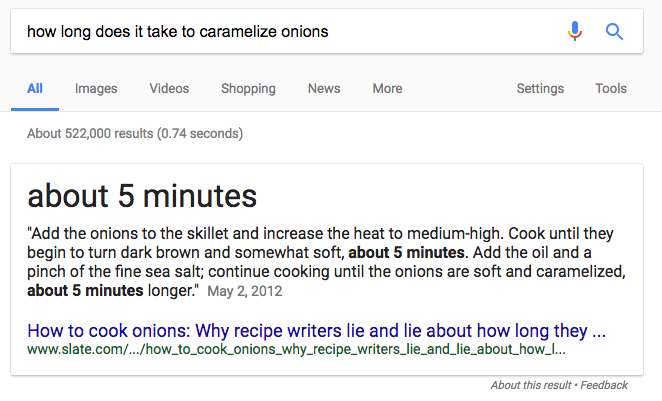
    How Long Does It Take To Caramelize Onions Google Search - Search Influence

    It turns out, Google was looking at Scocca’s Slate article, with all of its high word count and keyword-laden, well-written text, as the authoritative source. The only problem was that its algorithm focused on and crawled the first paragraph that referenced the 5-minute cooking time. The myth Scocca was trying to debunk ended up getting “bunking,” to use his inverse take on the word.

    Users Push for Quick Answers

    Google hasn’t always answered questions. Users typed in what they were looking for, and they got a list of web pages that may help them find it. But Google realized people wanted short, quick answers to questions, so they developed the short answer box. It’s virtually set apart from the search results and has a slight drop shadow.

    This also isn’t the first time Google has had issues with its short answer box. About a month ago, if you were to ask “Is Obama planning a coup d’etat against the U.S. government?” the response was that he indeed was planning a communist coup at the end of his term. Ask why a fire truck is red and you got a Monty Python joke. While the latter could lead to some harmless John Cleese quotes passed around the office, the former could actually misinform the public in a harmful way.
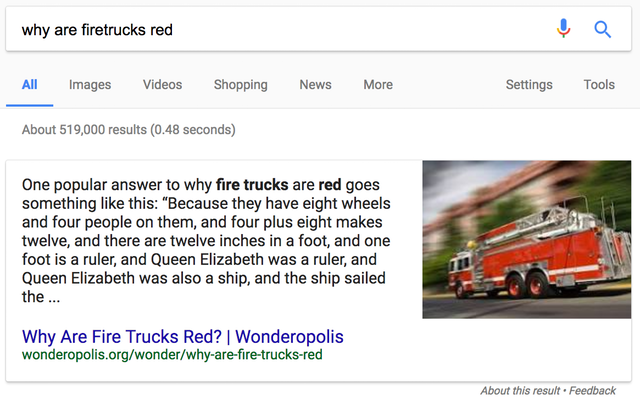
    Why Are Firetrucks Red Google Search - Search Influence

    Google’s Response and Their Plan to Fight False Information and Fake News

    Google has been dealing with this for a couple of years now. In 2015, they announced that they were using RankBrain, an artificial intelligence algorithm, in combination with Knowledge Graph, which pulls information for short queries from sources like Freebase, Wikipedia, and the CIA World Factbook—very reputable sources. It currently contains 3.5 billion facts. And, with all of these instances of inaccurate snippet responses, Google was quick to fix the issues. Searching for the cooking time for caramelizing onions now brings up the correct answer. Also, along with Facebook, Google also upped their fight against fake news by using fact check systems in their searches and feeds. So the big question is, how does all of this relate to your small business, practice, firm, bakery, brewery, insurance agency, etc.?

    The Importance of Rich, Accurate Content

    Whether you’re working on new content or need on-site or local search optimization, the importance of producing educational, on-point, authoritative content is key. The Knowledge Graph’s “panels” pull information from your “about us” page, including contact information. These show up in the sidebar of searches and can include photos from your Google+ page as well as any reviews of your business. So, it should be a no-brainer that your Google+ page should be up to date and any reviews of your company are responded to promptly. Above all, make absolutely sure that your NAPs are consistent and current; an incorrect address showing up in a panel is not the quick answer that potential customers want.
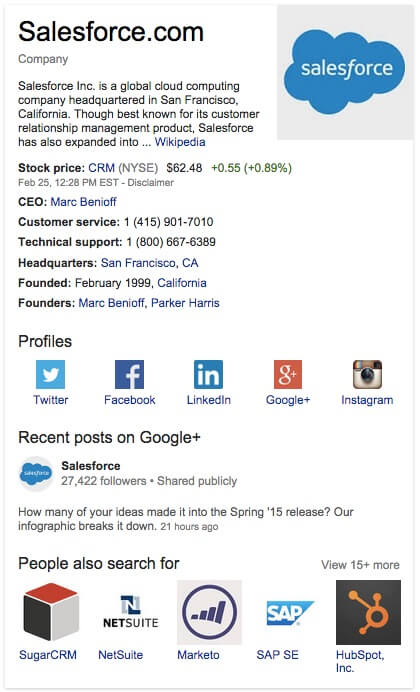
    Salesforce Google Plus Account Screenshot - Search Influence

    There’s also the chance that your longer content could be pulled into a short answer box. At first, Google’s Knowledge Graph was pulling just short answers to questions, but it has since gotten smarter at pulling answers from longer content, like how-to guides with 20-point checklists or in-depth, 1,000+ word content that gives users lots of useful information to peruse. As always, make certain your content is not only accurate but also engaging enough to pull viewers deeper into your site and actually convert.

    Does This Completely Change SEO?

    In short, no. As this article from SearchEngineLand points out, in most cases, “the source getting pulled into the Knowledge Graph is already in the first few organic search results anyway.”
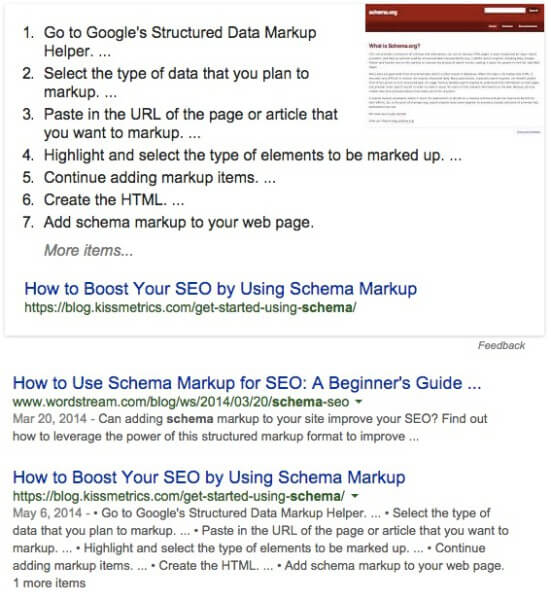
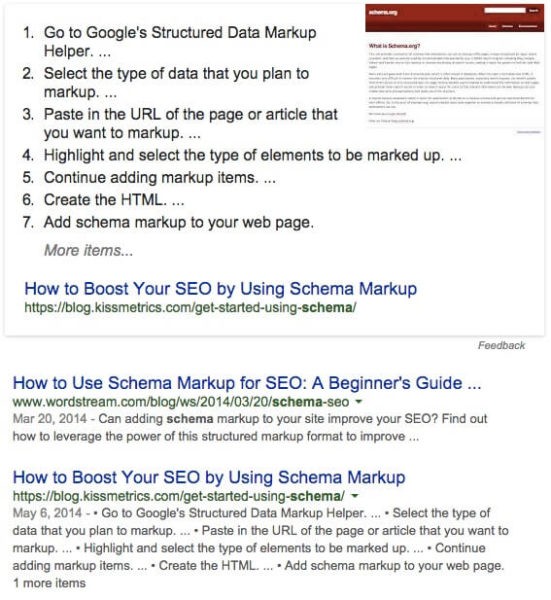
    How To Boost Your SEO Using Schema Markup Screenshot - Search Influence

    Good SEO will improve your ranking regardless and will, in turn, improve your chances of showing up in a short answer box. But even if your business never shows up there, your target audience is still searching for more than just a quick answer. They’ll want to dive into your site for in-depth, relative information. Similar to previous algorithm updates with Hummingbird and Panda, there may be some minor ups and downs in organic search numbers. But if your content is consumer-focused, educational, expertly written, and optimized, then your SEO plan will help out Google’s Knowledge Graph as well.

    If anything, these inaccuracies in Google’s AI have taught us that the search begins and ends (ideally in conversion) with the user. Keep in mind the unique relationship between your business and your potential client.

    Make It Easier for Google

    So, what are some additional steps you can take to make sure your site is up to current SEO best practices? Check out our recent white paper on things to avoid when building or optimizing your website. It includes valuable information, like configuring your URLs and making sure you’re mobile-friendly. Have any more questions on how to increase website traffic? Reach out to us at any time.

    Images

    Onions

    Short Answer Box via Gizmodo

    Fire Truck via TheOutline.com

    Knowledge Graph Panel via SearchEngineLand

    Short Answer Box via SearchEngineLand

  • Top 10 Search Influence Blogs of 2016

    The year 2016 was filled with memes, the Olympics, superhero movies, and the election. You can bet, with over 46% of people now online worldwide, there were plenty of changes to online marketing, too. If you haven’t kept up, here are the top 10 blogs of 2016 to make sure your business is poised for the #bestyearever.

    Lieutenant Dan And Forest Gump At New Years - Search Influence

    1. What Happened to Facebook’s 20% Text Grid Tool?

    Our Internet Marketing Team Lead, Michelle Neuhoff Boyd, created this informative blog post that eased the confusion of Facebook’s 20% text grid tool. Find out how this new rule may affect your business.

    2. An Update: How to Get Rich (Answers, That Is) with Google

    Jim Carrey Typing - Search Influence

    Not rich with money, but with Google. Over the years, Google has changed their algorithm, and our team at Search Influence is making sure to stay on top of every change. Read this post from 2015 to learn more about rich answers.

    3. Getting Hands on With the New Google My Business

    Having a hard time understanding the new Google My Business? This engaging blog post can clear up any confusion on listings, editing, and more.

    4. Three Top Picks for The Big Idea at New Orleans Entrepreneur Week

    During New Orleans Entrepreneur Week, The Big Idea picked 10 entrepreneurs’ ideas in front of a large crowd, and everyone got to vote their favorite. See the top three picks that Paula Keller, our director of sales and marketing, enjoyed the most by reading this post.

    5. Email Marketing for Small Business: 9 Things Not to Do

    Find out how not to email your customers when just starting your business. Originally published in 2010 by a Search Influence Alumni, read all about effective email marketing.

    6. A Dentist’s Guide for Choosing Target Audiences on Facebook

    Jean-Luc Picard Star Ship Enterprise - Search Influence

    Ever wondered how to market your dentistry on Facebook? This guide will help you understand the most successful dental campaigns in the industry. You’ll know what age group and interests to target.

    7. Should You Be Using Google’s URL Shortener in Your Social Media Campaigns?

    Are you still unsure if you should use Google’s URL shortener? This blog post talks about the benefits of using their shortener, such as the URL analytics, redirects, ease-of-use, and more.

    8. Barnacle SEO – Local Search Engine Optimization for the Sam’s Club Crowd

    Will Scott, CEO and co-founder at Search Influence, published this post back in 2011. Learn more about the term Barnacle SEO and which sites to trust for small businesses.

    9. Nix the Wix SEO Challenge: Tips & Tricks

    This post from 2015 helps you make the most out of your Wix website by guiding you on the meta tags updates, sharing your site on social media, making your site visual, and more.

    10. 10 SEO Blogs You Should Be Following

    Do you want to read reliable SEO blogs? Here’s a list of the most informative SEO blogs that Monica Shariffskul put together. Many of these are on my top list, too.


    Be sure to subscribe to our Search Influence blog, and you’ll be the first to know when a new blog has been posted. Also, Happy New Year!

  • Google’s Ascent With User Experience

    Being found on the internet is essential to any business. We all know it, but few understand what it takes to be found. Luckily, there is an easy approach to beginning your own online marketing journey.

    Start by looking at Google, not as a search engine where businesses tirelessly compete to appear at the top spot, but as a user tool. Back in the ancient times of the internet, Yahoo had a $125 billion market cap, and Google was hoping to be acquired for $1 million. As time marched on, Google surpassed Yahoo as the number one search engine because of one key difference between them: the user experience. Google didn’t provide results promoting Google brands or its own material. Instead, it happily delivered the most relevant search results to the user. Results that took the user to a different website.

    While this may seem counter-intuitive—helping users leave your site and go to another—it has proved successful. Sure, users temporarily left Google by clicking on a third party’s link; it also guaranteed their return. Such a great user experience will entice anyone to return time and again for a similar experience. This is how Google surpassed Yahoo as the leading search engine, and it’s the best way for you to start your online marketing process.

    User Experience Vs. Design - Search Influence

    The lesson for you to take away as you embark on your journey is to put user experience first. When creating your website or content, don’t try to be overly fancy or technical. Start by making it simple and convenient. Websites become popular when users can easily navigate and find content that is relevant to their search. Don’t try to force your consumer into a Corvette when they are really looking for a minivan. Your customers will thank you when they can easily access your website, it loads quickly, and the information they are searching for is plain for them to see and understand.

    Going forward, as you build out your website, keep the consumer in mind each step of the way. How would you want to interact with the website of a business like yours? If you don’t know where to start, talk to the friend who doesn’t quite understand what you do. They can be your guide, explaining how they would want to navigate your site and their desired outcome. Use this to cater each step of the user experience to your actual users.

  • Search Influence Year in Review: Our Top 10 SEO Blog Posts of 2016

    With this year drawing to a close, now is the time to reflect on the year and prepare for a successful and productive 2017. In keeping with this, we’ve highlighted our top SEO blog posts of 2016 to get you extra pumped for your New Year’s re-SEO-lutions.

    Image Of Happy New Year Script - Search Influence

    1. An Update: How to Get Rich (Answers, That Is) With Google

    In 2016, it’s estimated that approximately 40 percent of queries on Google resulted in “Rich Answers.” So what are these Rich Answers, and how can your website get selected for a Rich Answer on Google’s search engine results page (SERP)? This updated post gives you all the details.

    2. Barnacle SEO – Local Search Engine Optimization for the Sam’s Club Crowd

    3745255

    For small businesses with small budgets, the “Barnacle SEO” approach may have big payoffs. Learn how attaching yourself to the white whales of the SEO world can expose you to new markets and customers.

    3. Nix the Wix SEO Challenge: Tips & Tricks

    Sure, Wix is the uber-easy-to-use, code-free web developing platform for dummies, but just how well do Wix sites get along with search engine optimization? Thanks to these quick tips and tricks, it’s easier than you may think for Wix sites to play nice with SEO.

    4. 10 SEO Blogs You Should Be Following

    Fancy yourself a true SEO connoisseur? This list outlines all the insider blogs you should be reading to stay up to date on the constantly changing world of search engine optimization. Hey, even if you’re new to the game, resources like the Google Blog and MOZ Blog provide a plethora of information to get started.

    5. These 10 Expert Tips Will Drive Traffic to Your Business’s Website

    Driving traffic to your website means driving sales for your business. Our in-house experts share their insights when it comes to getting people in the online door. Hint: If you’re promoting on Facebook and publishing press releases, then you’re off to a good start.

    6. 5 Tips to Improve Local Search Rankings Even If You Don’t Have a Physical Location

    Many businesses are opting for prime real estate on the interweb instead of brick and mortar locations, but that doesn’t mean you need to sacrifice website optimization. Check out these five tips for increasing your ranking.

    7. Google My Business for Doctors: Visibility, Authority, & SEO

    Claiming or creating a Google My Business listing can have big search impacts for medical practices. Follow this step-by-step guide for single practitioner practices, multi-practitioner practices, and multi-location practices.

    8. Local SEO: How to Clean up Citations for Better SERP Visibility

    A citation is the presence of a business’s name, address, and phone number (NAP) on any website. The consistency and accuracy of your NAP across sites will improve your local SEO rankings. Learn the four basic steps to complete an effective citation cleanup.

    9. 12 Things You May Not Know About Online Marketing

    Are you ready to be shocked and awed by the amazing (and hard to predict) world of online marketing? Here’s a list of some of the things that caught our Search Influence team members by surprise when they were rookies in the game.

    10. The Importance of Content Marketing to Your SEO Strategy

    Content marketing is the bread and butter of your SEO strategy and, in many ways, the success of your brand. Are you telling a relevant and compelling story about your business? Are you targeting the right audiences? This post will help you answer these important questions.

    What better way to bring in the new year than with a new online marketing strategy? We hope these posts offer some helpful insights and maybe even a little motivation for a productive and optimized 2017.

  • Here Are Our Top 5 Blogs From September

    Another month, another top five blogs from Search Influence! All of these posts are chock-full of information that will help you keep your website in tip-top shape and give you some insight into life at Search Influence. Subscribe to our blog to stay up to date on what’s going on in the world of SEO and Search Influence.

    #5: How Google Possum Has Affected 3 Pack: A Before and After Review

    Google’s newest update has had some drastic effects on the search results 3 pack. Amy Arnold gives us the lowdown on some listings that are pretending to be dead.

    Google Possum Update

    Look at that beautiful Google update devouring those listings.

    #4: What Happened to Facebook’s 20% Text Grid Tool?

    Michelle Neuhoff Boyd is back at it again this month and refuses to leave the top five standings. Whether you’re a Facebook fiend or a business taking advantage of the social platform, this blog entry has mountains of information about the inner workings of the Social Media giant.

    #3: Happy Working Parents Day: 10 Influencers on Lessons From Their Working Parents

    To celebrate National Working Parent’s Day, Mary Silva whipped up a heartfelt blog post complete with written and video interviews of some of our employees. Tears may be shed by the time you reach the end of the video, so be sure to have that tissue box ready.

    Kid nodding head

    #2: Search Influence Adds 3 New Hires in August

    Search Influence added three more employees in August and a lot of people were interested. Learn more about our new team members in this post compiled by Melissa Verzwyvelt.

    #1: Barnacle SEO – Local Search Engine Optimization for the Sam’s Club Crowd

    Last but not least, Mr. Barnacle SEO himself, Will Scott, saw a massive resurgence in popularity of his blog where he coined the industry changing term. Take a gander at this super informative blog.

    While you’re at it, follow our blog to get the latest updates from Search Influence.

  • How Google Possum Has Affected 3 Pack: A Before and After Review

    Google Possum Update

    Throughout September, the local search industry has been watching the results of the dubbed Google Possum update.

    In August 2015, Google shook up local search results, which changed the Map Pack from a 7 Pack to a very exclusive 3 Pack. This change was a dramatic one by omitting many local businesses and by making inclusion nearly impossible for businesses in the exterior of city limits and in suburbs.

    Fast-forward two years, and we now have Possum.

    “Possum?”

    Joy Hawkins wrote an excellent blog post summarizing the effects observed by the Possum update, and in that post she attributes Phil Rozek with creating the Possum moniker because “it is fitting since many business owners think their Google My Business listings are gone, when in fact they are not. They have just been filtered — they’re playing possum.”

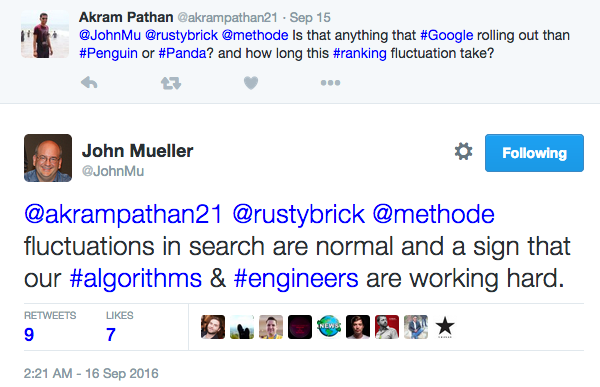
    And officially? … Possum is an unannounced update, meaning the SEO community collectively compared notes and decided this was an algo update. Google did not directly announce or confirm this update. However, John Mueller did Tweet a comment, which I completely paraphrase as “if you see stuff happening, maybe the Google Engineers are doing something.”

    Possum Update Tweet


    “Google is now filtering based on address and affiliation.”

    In her post on all things Possum, Joy Hawkins cleanly lists the effects of this change. Among her list is the observation that Google is now filtering results based on duplicate address, website, or affiliation.

    We see duplicates all the time in map results for local searches for any place that has multiple practitioners:

    • Doctors (plastic surgeons, orthopedists, dermatologists … )
    • Lawyers
    • Dentists and orthodontists
    • Hair salons
    • Etc.

    For example, a doctor’s clinic can have numerous Google-allowed listings: one for the practice and one for each physician or practitioner seeing patients at that practice. Each of these listings will have the same address, phone number, and website, so one clinic or practice can end up with multiple listings and dominate the results landscape.

    But user experience for such a repetitive Local Pack is not ideal, and Google is all about user experience. We have a plastic surgeon client, Deluca Plastic Surgery in Albany, NY, who has been fighting this battle for a long time.

    Dominating the Local Pack No More

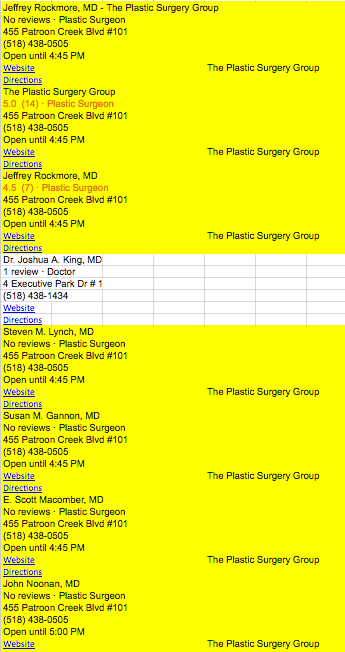
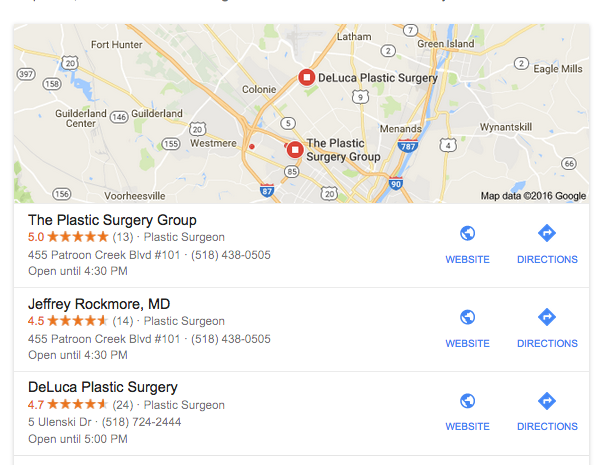
    Anyone searching “plastic surgery Albany NY” back in April 2016 would have seen the 3 Pack all leading to the same practice. In fact, in the “More Places” Maps results, the same practice completely dominated with positions 1, 2, 3, 5, 6, 7, 8, and 16. What the heck, Google?!

    I had copied and pasted the Maps results into a spreadsheet just for fun back in April. I’m glad I did, because I can share this story with you. Here are just the first eight results from that April 2016 Maps search—those in yellow all lead back to the same practice:

    April 2016 Maps Search Results

    Our client was ranked at 18th and 20th. Our client is in Albany, and the website had and has stronger Domain Authority, stronger NAP, more reviews, and on and on, so it just didn’t make sense.

    We did some work to mitigate those results. We had some minor success, but fighting a battle against Google’s algorithm, you might not always come out a winner.

    And Then Possum Came Along

    Today, we now see Deluca in the 3 Pack. Woo hoo!
    Google maps results after Possum roll out

    We are feeling pretty good about this (don’t take the wind out of my sails), but we acknowledge that all is not perfect in this scenario. In this 3 Pack, the doctor in the second listing is a plastic surgeon at the practice represented in the first listing.  He has the same address and phone number, but he has his own, personally branded, website.

    This is one example among millions of searches, but it may suggest that domain is a primary indicator of the duplication filter. This needs lots more observation and input, and I encourage you to let us know if you have seen 3 Pack changes this September.

  • Top 5 Most Read Search Influence Blogs of August

    It’s back to school time, and you know what that means—time to catch up on your reading! Here are the top five most read Search Influence blog posts of August. Study up!

    1: What Happened to Facebook’s 20% Text Grid Tool?

    Ranking in the top five for yet another month, this updated blog post gives the ins and outs of Facebook’s latest text grid update. Peruse this popular post to learn what this update means for your advertising.

    2: Search Influence Jobs: What Does an Account Associate Do?

    Get a sneak peak into daily life at Search Influence! This upbeat post talks about three great aspects of working as an Account Associate: personal growth, great team members, and helping businesses.

    3: Local SEO: How to Clean up Citations for Better SERP Visibility

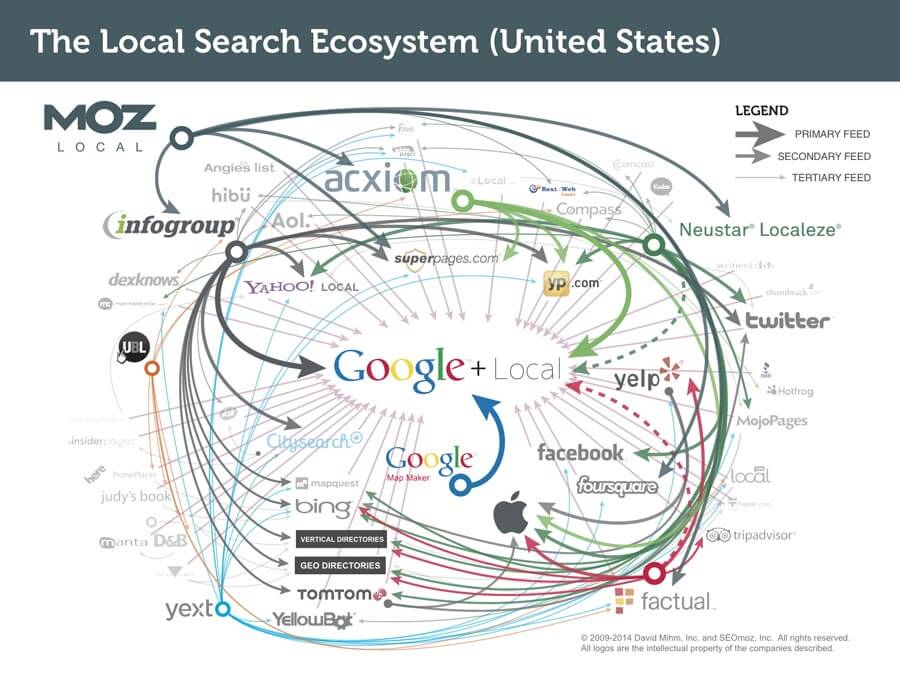
    Local_Search_Ecosystem_USIf the image above makes zero sense, then you should probably read this post. Learn all about how consistent citations can increase your website’s visibility to search engines.

    4: 5 Ways Technology Has Changed the Olympic Games

    There’s no better remedy for Olympic withdrawal. Instead of mourning the sudden lack of Michael Phelps and Simone Biles in your life, learn about technology’s impact on the Olympics.

    5: Two New Hires Join Search Influence

    Welcome Kayla and Mildred! Get to know the two newest members of the Search Influence team, complete with fun facts about cars, Google Android, and Wolverine 3.

    Image 1 Credit

  • SEO & Chill: Google’s Penguin Algorithm Will Sink Sites With Spammy Links

    Every business owner who uses the internet to advertise or display their product (which should be every business owner) needs to know about the importance of Google’s Penguin algorithm. Penguin was introduced way back in April of 2012 as a way to combat some “black hat” SEO practices, such as link buying and link trading with very low-quality and low-authority links. Just like Chill Penguin, Google’s Penguin algorithm is a bit dated, with its last full, confirmed update being back in October 2014, but it was still very active in stopping spammy backlinks. Even before its launch, Google sent out warnings to users of its Webmaster Tools to get rid of their spammy backlinks. Those who heeded the tech giant’s words were rewarded with high rankings in the search engine result pages; those who didn’t ended up on ice.

    Continuous Updates

    The newest Penguin update won’t be an Earth-shattering update like its previous versions, but this version will have continuous updates that will affect searches. What exactly does that mean? That’s anyone’s guess, but only Google knows the true answer. What we can do is try to prepare. Re-evaluating the information we already possess is a great start. We already know that Google hates super spammy, low-quality links and that they love high-authority links. Using this knowledge, you can pretty much assume that having highly authoritative backlinks would lead to Google liking your website a lot more. As far as this update being continuous, that more than likely means that the algorithm will auto-update based upon information that ends up getting collected.

    So What Are Good Links?

    Here’s an analogy: let’s say Google’s Penguin algorithm is a real penguin, your website is the penguin trainer, and your backlinks are fish. Low-quality backlinks would be akin to spoiled mullet, whereas high-quality backlinks are more like freshly caught wild Alaskan salmon. Doesn’t take a marine biologist or an ornithologist to figure out that your penguin will like you more if you continue to feed it salmon. High-quality backlinks will eventually lead you to increased SERP rankings. Not having backlinks is similar to starving your penguin; it makes your page look as if it isn’t an authority on its subject, which is bad news.

    Where Can I Start Getting Good Backlinks?

    Our very own Mary Silva outlined a pretty good strategy of procuring high-authority backlinks. The process itself isn’t easy and requires some inherent knowledge of the internet and the ability to rummage through links extensively and identify what would be the best moving forward into the outreach portion. What it entails is auditing all of your backlinks and clearing out all of the weak and low-authority backlinks. Then comes the hard part: reaching out to other high-authority sources to link to your site is one part of the next step. The more high-authority sources linking to your site, the more likely you are to gain Google’s praise. Another way to link build is to create unique and engaging content so that others can share it and create backlinks for you.

    If you don’t think you’re up for intense link building, Search Influence offers many different search engine optimization packages that can be custom tailored to fit both your budget and needs.

    Image Credits:

    Chill Penguin GIF
    Penguin Trainer GIF

  • How To Fix A Manual Action

    How To Fix A Manual Action

    In recent weeks, there’s been chatter about a large influx of manual actions. This got me thinking: how many people actually know how to fix manual actions? Stay tuned, ’cause you’re gonna learn today!

    But First, the Basics: What Is a Manual Action?

    A manual action is a manual penalty applied to a website by a member of Google’s Web Spam team. According to Google, there are a few common types of manual actions:

    • Hacked site
    • User-generated spam
    • Spammy freehosts
    • Spammy structured markup
    • Unnatural links to your site
    • Thin content with little or no added value
    • Cloaking and/or sneaky redirects
    • Unnatural links from your site
    • Pure spam
    • Hidden text and/or keyword stuffing

    In today’s post, we’ll be discussing a few of the most common types of manual actions.

    How Do I Know My Site Has a Manual Action?

    SEO practitioners know that performance fluctuations are expected, especially since Google’s algorithm is constantly changing. If you’re beginning to see your website rankings drop consistently, that’s usually an indicator of a possible manual action (or partial manual action). However, if you’re unsure, check out Google Search Console (aka Webmaster Tools for those late to the name-change party)! Once in the Search Console, you will see one of two actions displayed on the Manual Actions page:

    1. Site-wide matches
    2. Partial matches

    Each action will display a reason as to why your site received the action, as well as how the action will affect your site.

    So My Site Has a Manual Action…What Now?

    The good news: we can fix this! The bad news: fixing a manual action takes quite a few steps. The first thing you will want to do is determine what kind of manual action your site has. If you see this message, this means that Google has detected a pattern of unnatural deceptive or manipulative links pointing to your site. According to Google, here are the recommended actions to take:

    First, review Google’s Webmaster Guidelines on linking.

    Next, follow the steps below to identify and correct the violation(s):

    1. Download a list of links to your site from Search Console. You can download your links arranged either by hostname (Links to Your Site > Who links the most > Download more sample links) or in chronological order (Links to Your Site > Who links the most > Download latest links).
    2. Check this list for any links that violate our guidelines on linking. If the list is large, start by looking at the sites that link to you the most or links that were created recently (in the last few months).
    3. For any links that violate our guidelines, contact the webmaster of that site and ask that they either remove the links or prevent them from passing PageRank, such as by adding a rel=”nofollow” attribute.
    4. Use the Disavow links tool in Search Console to disavow any links you were unable to get removed.

    Once you’ve removed or disavowed the unnatural links, the last step is to submit a reconsideration request. A reconsideration request is a formal request to Google to reconsider giving your site a penalty. You will want to let Google know about everything you did to clean up your site, including documentation about the links you removed or tried to remove.

    Here comes the bad news: once you submit the request, you have to be patient.

    ryan reynolds ugh annoyed eye roll

    I know, people. I know. Ain’t nobody got time for that! BUT it will all pay off on that beautiful day when Google sends you that wonderful message in Search Console and approves your reconsideration request!

    FYI, this will be you:

    love actually hugh grant

    Hacked Site…Uh Oh!

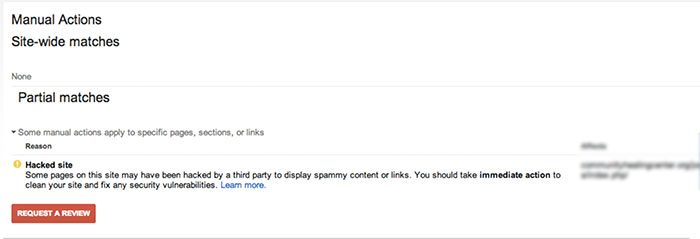
    Google may give your site a partial manual action if it notices that your site has been hacked. If you check the manual actions tab in Google Search Console, you will see a notice called “Hacked Site.”

    ManualActionsSiteWideMatchesImage

    According to Google’s Web Spam team, there are a few steps you will want to take if you’re the victim of a hacking:

    • Contact your host provider.
    • Quarantine your site by taking your site offline (change all passwords and check new user accounts).
    • Check the Google Search Console.
    • Assess the damage. If your site was hacked with spam, the display warning will be “This site may be hacked.” If you’ve been hacked with malware, the display warning will state “The site may harm your computer.”
    • Identify the site’s vulnerabilities and list them out.
    • Clean up the website to prevent future security problems.

    Once all hacked content is removed, “Request a Review” in the Google Search Console. Again, patience. Ugh.

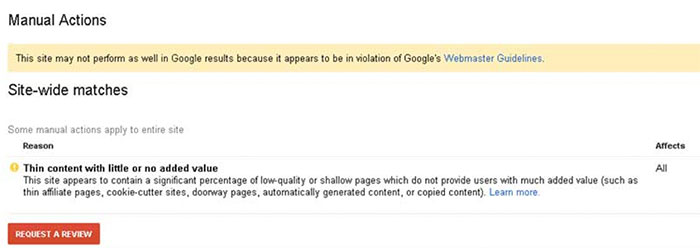
    Thin Content with Little or No Value

    For the non-SEO practitioners, you might be thinking, “What does that mean?” In a nutshell, Google launched a quality update in May 2015, specifically for onsite content. This means Google is placing more of an emphasis on sites producing quality content and penalizes those with content that is not useful to visitors.

    ManualActionSiteWideMatchesThinContent

    How to Fix Your Content, According to Google:

    • Remove any duplicate content from your site that is found anywhere else on the Internet.
    • Eliminate affiliate links on pages with little to no valued content, or add some value to the page’s content.
    • Get rid of auto-generated content pages.
    • Improve the website content to provide significant value for your site visitors!

    Once again…cue the reconsideration request.
    Remember, patience is a virtue!

  • Five for Friday: Facebook’s Payment Feature, DuckDuck Go, & More!

    1. Facebook Messenger Payments Service Is Nationwide – Mashable

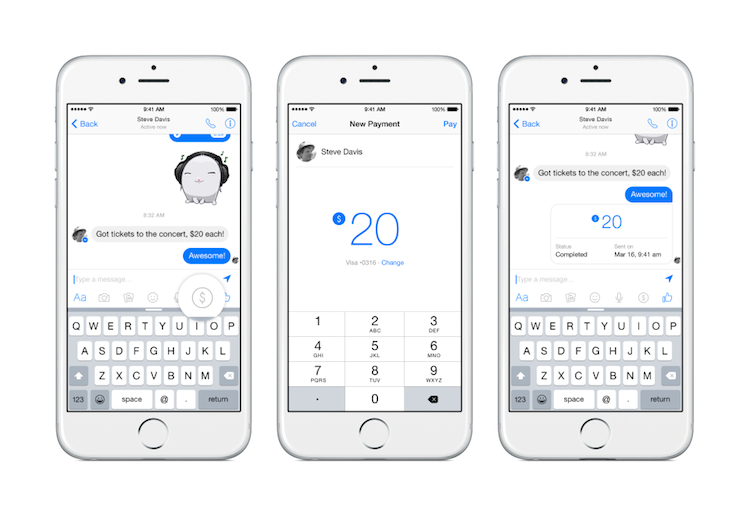
    Facebook’s vice president of messaging products, David Marcus, recently announced that Facebook Messenger has rolled out its payment feature. Users can add their debit card information in the Messenger’s settings. You can then send payments by starting a conversation with a friend and clicking the “$” icon followed by the “Pay” button. If you are on the receiving end of this transaction, you will be prompted to accept the payment at the appropriate time. Marcus has been quoted saying that the payment feature is “easy and safe.”

    Facebook Messenger Payments Image - Search Influence

    2. Google Earth Turns 10 – Google Blog

    Google Earth celebrated its 10th birthday on June 29, 2015. Google Earth allows users to see the world from a variety of viewpoints, from 3D versions of cities across the globe to striking photos of our planet shot from space. Happy belated birthday, Google Earth!

    3. Google: Panda Refresh Coming Soon – Search Engine Roundtable

    It looks like we’ve made it through the holiday weekend without seeing the newest Panda update, but the “refresh” is coming soon. During a recent Google Hangout session, John Mueller announced that he expected the Panda refresh to happen in a few weeks. (The Panda update was first introduced in 2011 with the goal of preventing sites with poor quality content from ranking in Google’s top search results.)

    4. DuckDuckGo Surpasses 10 Million Search Queries – Search Engine Land

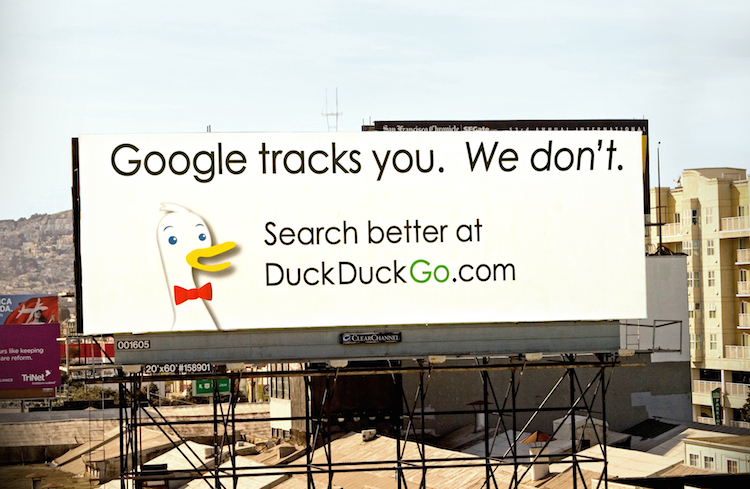
    DuckDuckGo, a search engine launched in 2008, hit the 10 million daily query mark on June 22. The company has promised not to collect or share your information while searching—a rare feature for any company in the search engine industry. DuckDuckGo has also announced that they will be giving out 10,000 t-shirts to users who promote their search engine to three additional users!

    Duck Duck Go Search Engine Image - Search Influence

    5. Instagram Makes Content More Accessible With Place Search – Search Engine Watch

    Instagram has granted users the ability to search by location, allowing them to access other users’ location-tagged photos from the Explore page. Now, anyone with an Instagram account can peer into the most interesting places in the world. This new search feature also allows users to search people, places, and tags simultaneously.

    Image sources:

    Facebook Messenger payments

    DuckDuckGo image