Tag: Facebook

  • Top 10 for the Weekend- August 13

    We’re back with another thrilling installment of our bi-monthly series: Top 10 for the Weekend! Keep reading to find out tips and tricks, as well as what’s new in the world of SEO

    Great Apps to Customize Your Facebook Fan Page

    Facebook recently hit a new milestone: 500 million users! With this high volume it is a perfect platform for marketing, and people are already taking advantage of this opportunity. Here is a list of great apps that allow you to customize your fan page to its fullest potential.

    35 of the Best Facebook Fan Pages

    To go along with the above link, here is a fantastic list of fan pages that have taken full advantage of Facebook’s customizable applications. Some examples include pages from the likes of Skittles, Red Bull, and Harley Davidson.

    Forrester to Advertisers: Hold Off on Foursquare

    Forrester Research recently came out with a study that revealed 84% of people polled are not familiar with location-based applications, a la foursquare. This is useful information, but they conclude that businesses should hold off on using these FREE services because of it. This article explains why their conclusion should not follow their results.

    Foursquare Means Businesses: Have you checked-in yet?

    We’ve never been shy in our support for foursquare, and this link is a perfect follow-up to the previous one. The article just lists some more of the many advantages to utilizing this and other location-based applications.

    10 Sources For Better Conversion

    Getting people to your site is only half the battle. Once they’re there, you need to get them do whatever it is you want them to do. In the SEO world, this is known as conversion. This is a list of 10 resources that explain how to get better conversions on your site.

    Local Citation Finder: Must-Have SEO Tool

    From the article: “The tool looks at the businesses ranking for your keyphrase, grabs their phone numbers, and then does a Google.com search (or .ca or .co.uk) for those numbers, collecting and collating all of the mentions/citations that it finds.” In other words, you can get a list of citation sources your competitors use, and mimic them. Nice and easy!

    10 Great Local Search Tools That Don’t Exist Yet

    It’s pretty clear what this article is about, so I won’t bore you with an explanation. I will say that these tools would be incredibly easy to make, and some of these developers need to get on the stick!

    On-Site SEO: How to Optimize Your Blog Posts

    A blog is a great tool for SEO, but simply posting one every week or so won’t be that great of a help. This is a great guide on how to optimize your blog to maximize your exposure on the web.

    Using Bing’s New Webmaster Tools For SEO

    Bing recently released a new version of their Webmaster Tools. Upon being asked by Bing to give feedback on how to improve it, Chris Smith decided to provide this advice via blog post for the world to see.

    Google’s New Local UI Proving Conspiracy Theorists Right

    In our last installment of Top 10 for the Weekend, we discussed some changes Google made to their SERPs and Places listings. It looks like the conspiracy theorists were right. This article explains why.

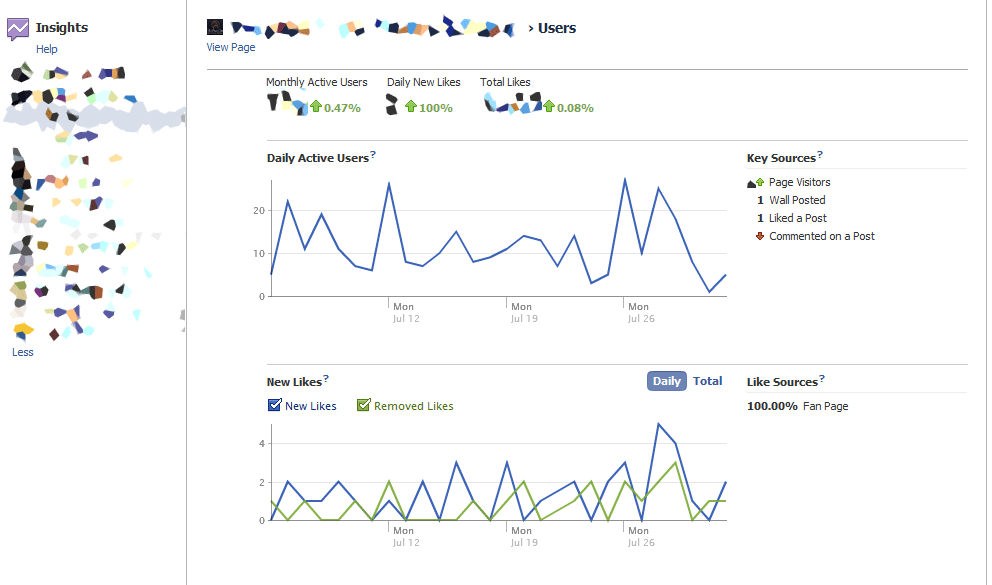
  • Facebook Insights UI Problems

    Why I Dislike Facebook Insights

    As I was checking up on the performance of a few fanpage campaigns today, I was hit with the revelation that Facebook Insights is a terrible web metric tool.

    What is Facebook Insights you may ask?

    Here’s the abridged FB definittion: “Facebook Insights provides Facebook Page owners and Platform application developers with metrics around their content.

    Facebook Insights Update

    Basically it is the tool that you use to measure how successful your social media endeavors on Facebook really are. The problem I have with this tool is the lack of functionality. I guess if I was the average Joe, the how I can interact with the metrics wouldn’t be such a big deal but I spend a great deal of money on Facebook advertising for community development. Maybe I’m just spoiled by Google Analytics but Facebook Insights is just tedious to me. Sure the graphs are nice and the dashboard is set up nicely for at a glance viewing but I need more. I hope that with the increasing number of internet marketing utilizing Facebook Advertising , Facebook development team will overhaul Insights. I guess for the time being this search marketer can only dream…

  • Facebook Local Search: Facebook Declares War on Google’s Empire

    Is Facebook the next evolution of Local Search?

    We all knew it was a matter of time before Facebook started expanding into web search and they’ve finally done it by unveiling their own Facebook local search option: Open Graph search engine. What is Open Graph, you might ask, here’s what Facebook reps are saying, according to an allfacebook.com story:

    “all Open Graph enabled web pages will show up in search when a user likes them”

    Why is this important? Imagine a more personalized web experience where community feedback drives interaction and search position. You can search for a cosmetic surgeon or dentist and immediately be able to contact his patients for real feedback. This is huge! No longer will you type in “Atlanta dentist” and dozens of sleek websites – you’ll be able to find information on the dentist, his office location, and talk with his clients. As Facebook continues to develop this open graph search, you will see Facebook profiles and page results as well as websites being ranked by user feedback from REAL people.

    If this catches on, not only will the face of SEO change, how people think about searching will change as well. It’s like Facebook is developing Deathstars and photon rifles, while Google is reloading the Spaniard cannons.

    Do I think this is the end of Google local search? No, but I do think that Facebook is moving in the right direction. Users having control over results and ranking seems like a no-brain. My only concern is potential spammers hindering the evolution of search.

  • Facebook Advertisting – The Internet Marketing Gold Rush

    I am frequently asked what the next big thing in paid marketing is – while I tend to keep my online marketing secrets close to my chest, I always answer Facebook. With hundreds of millions active users, it is Sutter’s Mill in the pay-per-click Gold Rush. As paid search platforms are experiencing exponential growth and decay, it offers advertisers an opportunity to target potential leads at a significantly lower cost than traditional PPC.

    As the world’s largest social media site, Facebook has become the popular choice for the local and niche businesses. By allowing marketers to directly interact with people through paid ads, interest groups and applications, it adds a level of engagement lacking in traditional online marketing.

    What Not To Do On Facebook
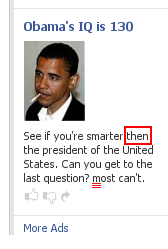
    Grammar Fail. Picture Win?

    Facebook Paid Ads

    With the increasing cost of paid search marketing, advertisers are looking for more cost effective alternatives. As previously discussed on this blog, FB advertising yields a much higher conversion rate for a significantly lower cost. This is attributed completely to demographic targeting and graphical ads. Running an ad with ad content that appeals to your targeted demographic is key to conversion.

    Little Nugget: Paid ads are great for new and niche businesses trying to generate brand awareness locally.

    Using Facebook Groups and Fan Pages

    Active engagement with potential leads is priceless – literally. The best way to do this is through groups and fan pages. Free to set up and great for social media and SEO, groups and fan pages give businesses an opportunity to strengthen customer interest. Because of Facebook’s social nature, they also give businesses the human element that websites lack.

    Little Nugget: Groups and fan pages can be used to market to leads before they reach the business’ website.

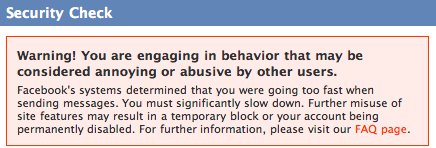
    Facebook Spam Warning
    If you get this message, you're doing it wrong.

    Facebook Applications

    While many only think of Facebook apps in the terms of Farmville and the endless number of “gifts”, there are many applications that are indispensable for brand building. Two personal favorites of mine are Extended Info and Blog RSS Feed Reader.

    Extended Info allows you to integrate custom HTML to create new and interesting fields on the page. Instead of being overly pushing with daily reminders on their timelines, you can designate areas on the page for contest and promotional offers.

    Like with Extended Info, Blog RSS Feed Reader can be used to incorporate content you are discussing on your blog with your profile without the use of status updates. Reader always allows fans a chance to share this information via other social media outlets.

    Internet marketing is no longer the Wild West. It’s becoming more interactive, sophisticated, and accessible to people of all walks of life. While there has always been a question of how to leverage social media, Facebook is making it easier to build communities and generate higher quality leads. I am positive that as it continues evolving, there will be feverish migration of online marketers looking to capitalize on its success.

    Thanks to larcher the Facebook ad image!

  • Top 10 for the Weekend

    Once again we’ve collected some handy links that we thought you’d find enjoyable and useful. Have a look and maybe you’ll get some ideas for what to do on Monday when the clients and customers start calling…

    1. GoogleSpeak – “We currently do not support the location” = Banished?

    As much as we love Google Maps… it’s got a long way to go until it’s a fully reliable business tool. It works perfectly for many, but some businesses end up with a problem-laden listing or market and just can’t seem to get it straightened out. If you’re a small business struggling to get your business details out there, you are not alone! Stay tuned for future posts on how to manage it!

    2. ComScore: Now 30% Browsing Mobile Web

    ComScore’s finding that approximately 75 million people are surfing the web on their mobile phones proves the importance of the tool mentioned in the link above. With the Maps application available for all Andriod, Blackberry, iPhone, Palm, and Windows Mobile, that means it’s available to 97% of smartphone users as of February 2010.

    3. Facebook Posied to Enter the LBS Game

    From the company who only first turned a profit just over 6 months ago, comes another reason why their long-awaited IPO is going to have investors running to Wall Street when it finally comes up. If you haven’t heard of LBS, or “location based service,” you certainly will soon, and you’re probably already using one: Google Maps, Foursquare, and soon 400 million people will be using one: Facebook. It seems they’ll be integrating advertising like no other into their location-based status updates that will roll out later this month.

    4. Three for Thursday

    Mobile seems to be the hot topic this week… Tom Martin details three mobile services or overall ideas that will help some daily tasks just a bit easier: ordering and paying for your lunch via your mobile, the location-based app answer to Craigslist’s “Missed Connections,” (too bad I’m not single), and a possible solution to trying to schedule a call with a potential client on your boss’s jam-packed schedule, which has proven itself a challenge lately.

    5. Buying Yelp Reviews is BAD for Business

    There’s been a lot of talk about proper social media use these days. Yelp seems to usually be at the center of such discussions. This blog by fellow Search Influencer Amy Arnold shows the varying degrees of small businesses’ attempts to “buy” reviews and if you should or shouldn’t do it.

    6. How to Use Facebook for Business and Marketing

    What would a collection of internet marketing posts be without a mention of how to create a fabulous Facebook Page that everyone will want to visit?? Tamar Weinberg explains here how while the typical Facebook user really is on there only for personal use, it is possible to sneak a little marketing in here and there.

    7. Linkbait: The Most Linked to Articles

    Trying to get links back to your site or blog? Often even the most well constructed posts don’t get all the linking attention they deserve. The SEO Doctor shares some research he found about some of the most linked-to blogs AND shares the golden resources and tools he used to conduct it.

    8. Is your blog chasing numbers or dollars?

    Your blog may be attracting readers, but is it attracting them in such a way that they want to buy your product of service? Mack Collier points out something we’ve probably all committed as SEOs. Sorry, potential customers, we’ll be sure to dial down the use of the search lingo!

    We’re not the only ones who love to share the knowledge we come across. See below for Matt McGee’s round up of the best posts in April, and Search Engine Land’s SearchCap, a daily collection of posts.

    9. Matt McGee’s April ’10: Best Search/Marketing Posts

    10. Search Engine Land’s SearchCap for May 6, 2010

  • Buying Yelp Reviews Is BAD for Business

    Yelp is intended as a review site where users can write and read reviews for local businesses to help make informed buying decisions. It’s a powerful tool in that users trust the real opinions and feedback from their friends and neighbors. Yelp’s user-driven reviews allow everyone to add in their opinions of products and services at local clubs, restaurants, and businesses in all forms.

    There is obvious value to a small business owner in getting users to leave positive reviews. The question is how much should a business pay for a review? No, no, no … I’m joking. The question really is how do you encourage customers to leave Yelp reviews naturally and organically without abusing the intent of the site?

    To Solicit or not to Solicit

    Yelp is clear about incentives for reviews: “Yelp has advised business owners not to offer incentives for reviews. For starters, paying people to write reviews about your business is another form of shilling and that’s just wrong. Second, very often you’ll offend a customer and the offer will be quickly outed in your reviews, resulting in unintended negative reviews and/or negative publicity. Finally, it’s typically a fruitless exercise.”

    It’s a fruitless exercise because of the Yelp review filter.  Yelp knows their site is a great opportunity for illegitimate behavior, and they have built tools to attempt to minimize the spam and attempt to maintain the authenticity of the site. They haven’t been entirely successful. Says Luther Lowe of Yelp,

    ‘It’s very tough to design algorithms that can tell the difference between the guy who’s cranking out a fake five-star review about himself, and the guy who’s flipped that laptop around and handed it to his customer and said, “Hey, write a five-star review about me.” So, you know, I know that businesses are going to ask people to write reviews. If you do that, you need to be prepared for pretty violent review fluctuation.”

    From Yelp Common Questions: “Some reviewers are more credible than others. For the most part, users can decide for themselves which reviewers they trust the most. We remove some of the guesswork by filtering out reviews that are written by less established users. We do this in order to provide more trustworthy and useful content to our users and to help protect against fake reviews from malicious competitors and disgruntled former employees.”

    Control Yourself on Yelp

    Every small business wants testimonials to help drive traffic. Yelp is tremendously trusted by real world users. (Isn’t it more encouraging to try the new restaurant in town after you read 10 great reviews online?)

    And Yelp is tremendously trusted by search engines, and being so trustworthy makes it ripe for abuse by some businesses and internet marketers. The prime example is Google Local map rankings, which are influenced by some degree by the presence of online reviews on select review sites.

    But Yelp advises you to control yourself:

    “Should I ask customers to write reviews for my business?

    While we understand that there is a temptation to solicit reviews from your customers, it is not something we encourage. The most successful businesses on Yelp have had their reviews come organically. This is for a couple of reasons:

    1. Potential customers can sometimes have an adverse reaction to a business that looks like it has solicited reviews.

    2. Quite often those solicited reviews will be filtered out (see above) based on the activity level of those users within the Yelp community.

    If you do ask your customers for reviews, please be prepared for the review number fluctuation that might follow.

    Also, keep in mind — success on Yelp is primarily measured by the number of people who view your page and thus walk in the door or set an appointment, not the number of reviews you have. Yelp users are savvy: they care about quality — not quantity — when it comes to your business reviews.”

    To be completely genuine, solicitation of reviews even without incentive is frowned upon. And incentivized reviews (buying Yelp reviews) are absolutely unethical …

    This picture taken in the store suggests completing a review, and not only a review … but “as good as it gets” review, to get 20% off the next purchase. One reviewer complains on this business’ Yelp profile about the incentivized review request in the store; Mel T comments on Yelp:

    “How would they base the authenticy of a Yelp review? What if I just claimed ownership of Jane D.’s (as in Jane Doe – I’m not trying to impersonate any fellow Yelpers here) review? How would they know if I was really Jane D.?

    – Would I still get a discount if I had written a review, but it wasn’t “raving?”

    Well, I’m sorry, Pure Beauty. You cannot buy a five star Yelp review from me. Instead, your blantant bribary is going to cost you two whole stars. Yep, that’s right; I’m knocking you down TWO full stars. Had it not been for your sign, I would have given you three stars – an A-OK for decent employees during my visits, a relatively clean shop, and reasonable prices.

    But, again, I will not stand for your bribary. Hmph. (Hmm..wonder if I can get 20% off with this review..?)”

    This beauty supply store has bigger issues than their Yelp spamming. There are quite a few reviews blasting their customer service. Perhaps, they should consider better ways to combat negative publicity.

    Asking for Help on Yelp

    One self-proclaimed newbie small business on Yelp asks help of the Yelpers, Greg “GSKChicago” K., asks, “I am relatively new to Yelp and still learning my way around … What do Yelpers look for from a business owner on Yelp?”

    The answers:

    Miguel “the Coach” R. says: “honesty!”

    Lauren “Order” H. says: “if you do anything related to your own busines, disclose that you are the owner. and don’t use the talk boards or other parts of the yelp site as free promo or spam.”

    nikki c. says: “just be real, honest and your own worst critic.”

    Seems legitimate enough. This business owner wants to do the Yelp thing correctly, but Miguel “The Coach” R. comes back later to point out some problems, and all of Greg’s good intent evaporates:

    Miguel “the Coach” R.:  “Greg -No offense but after reading the reviews for your business, I am a little disappointed. Everyone who did a review on your business – only did a review on your business. So, that means that you either made several profiles, had your friends make profiles, somehow convinced your customers to make a profile and only rate your company – or – some combination of the three.

    If you want my opinion. No company will EVER completely 100% satisfy each and every customer. And to see nothing but 5 stars for each review is flat out unbelievable.

    As of right now I feel as though you have already been dishonest by doing what you did, and that will eventually hurt your business rather than help it.”

    Using Social Media to Drive Fans over to Yelp Profile

    (Some text has been edited from original post.)

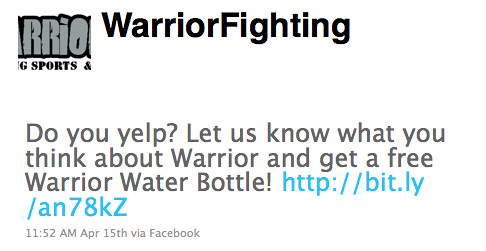
    If your small business has a strong Facebook Fan base, you can attempt drive Fans over to your Yelp profile and hope that some percentage of them will actually leave reviews. These businesses on Facebook are technically soliciting reviews but offering nothing in return, so their Yelp review building may be considered more legitimate. They are still soliciting, but they aren’t buying Yelp reviews.
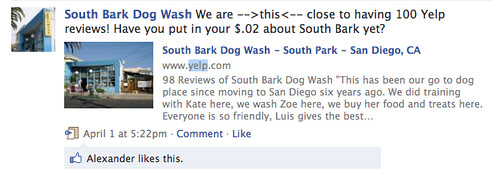
    This Facebook-er is more blatant. The Lone Star Salon tells Fans if they leave a review on a review site, Lone Star Salon will give them $10.   Totally buying a review.

    And ….
    And …

    We’re talking about pretty low value transactions here – a water bottle, a free cookie, etc. – but any incentive can be enough for a reviewer to take a few moments to drop a review into a Yelp profile that they would not have done if not incentivized.

    Raffle Your Incentive … is Still Incentive

    Another way to buy a review is a little more subtle, but it is still crossing Yelp’s guidelines for good Yelping. Essentially it is offering a chance to win a free product or gift certificate in a raffle. It’s not a direct exchange like Lone Star’s program, but these are still incentive for leaving a review.
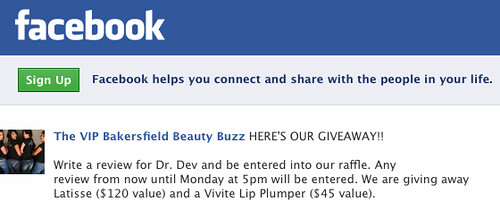
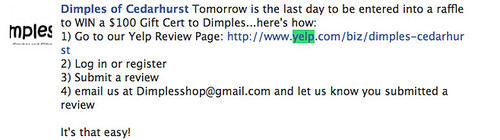
    Any reviews on Yelp from these campaigns are not the natural and organic reviewing that is Yelp has struggled to maintain. From Yelp Terms of Service:

    “You agree that you will not, and will not assist or enable others to: use the Site in a manner that may create a conflict of interest, such as trading reviews with other business owners or writing or soliciting shill reviews”

    And there are a few abusers on Twitter too …

    Again, offering a chance to win free product or discount is not directly buying a Yelp review, but it is definitely incentive for the reviewer, warranting the review as forced.  Not natural behavior for Ramona Family Naturals.

    They tweeted on the 14th and got 2 5-star reviews on the 15th. (I wonder who won the box of organic produce?  They should tweet that.)

    And The Spot Yogurt in Santa Monica appear to be naively direct in their request.
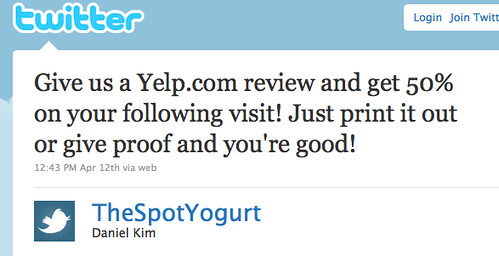
    And before that, they requested on March 31st too.

    Of course, we know that ignorance of the rule is not exception from it.  Yelp says of this type of false reviewing:

    “very often you’ll offend a customer and the offer will be quickly outed in your reviews, resulting in unintended negative reviews and/or negative publicity”

    Luther Lowe on business owners aggressively soliciting reviews from customers:  “it just looks spammy and decreases the authenticity of your overall presence. That can turn the customers off to you.”

    Charles Grumblemouse O. has a more virtuous Yelper attitude. He says of being Paid to write reviews:

    “… the impetus for writing reviews is surely different if you’re paid than if you were just doing it for the love right?”

    And finally, it’s important to be creative and sincere. Here’s a great case study of a New York Locksmith. He’s got a great perspective on how to get Yelp reviews without direct solicitation.

    Image credits: Thanks to “twonjosh,” “Silver Smith,” ZDNEt, and Steve Rhodes for the images!

  • Facebook Introduces Conversion Tracking for Advertisers

    Data.

    This is the most fundamental building block when trying to determine the success of a Pay-Per-Click campaign.

    Data tells you if that “iffy” ad copy you wrote is actually paying off and it also tells you when something’s gone belly up and is stinking up your cost per lead. But despite being extremely useful, data is also extremely problematic especially when you are using third party report tool with unrelated PPC platform.  The data gets well… unpleasant. This statement has been especially true for me using tools such as Analytics to track Facebook advertising performance.

    Don’t misunderstand, I am a huge fan of Google Analytics because it is useful and free (two of my favorite software attributes). While Analytics has proven to be useful in determining the actual run-of-the-mill site metrics, figuring out specific Facebook ad details has been tedious. I mean we’ve all seen that highlighted message they displays when you start using expressions and Advanced Segments – “This report is based on sampled data. Learn more.

    Google Analytics Sample Data Warning
    Google Analytics Sample Data Warning.

    I hate this message.

    I especially it when I’m trying to figure out performance of a Facebook ad. I constantly ask myself, “Why is Analytics ignoring all the information built into the URL? Is this bounce rate even correct? Why doesn’t Facebook allow conversion tracking so I don’t have to deal with these messy urls?”

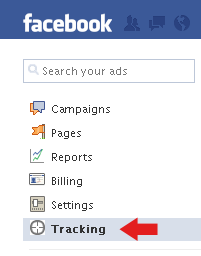
    Whether it was other advertisers demanding more functionality or FB’s development team telepathically sensing my frustration, Facebook is now offering conversion tracking! Even though it is still in beta, Facebook conversion tracking is going to allow advertisers to see at a glance how well new images and adcopy is converting visitors. No more relying completely on Google Analytics and its jaundiced sampled data!

    Facebook Tracking
    Facebook new "Tracking" tool.

    Another benefit of Facebook conversion tracking, conversion data can be compared for accuracy. This is huge for me because having Facebook conversion data allows me to see how accurate the Analytics conversion data is. I trust Analytics but ultimately things do fall through the virtual cracks because of outages, page load errors, or malformed urls. Plus having multiple  sources of data allows advertisers to determine the percent of data loss between platforms.

    While I will never know why Facebook didn’t include conversion tracking initially, I am happy after months of tedious URL building and endless data confusion it’s being offered. With an increasing number of advertisers using Facebook, we should see more advanced conversion tracking options. Now if only they’d do something about the archaic reporting tool…

  • Will Scott at SMX West March 2-4, 2010

    SMX West Expo

    Search Influence’s president, Will Scott, will be speaking at Search Marketing Expo (SMX) West on March 3, 2010.

    The topic of discussion will be Facebook Ad Tactics For Search Marketers.

    For the full agenda and exhibitor list, please visit Search Marketing Expo West.

  • Exploring the Successfulness of Facebook Advertising

    Hi, my name is Anthony and I am a recovering search marketing luddite.

    Facebook Yields High ROI on PPC Ads
    Facebook Yields High ROI on PPC Ads

    For years there have been only three internet ad services I viewed successful: Google Adwords, Yahoo Sponsored Search, and MSN Adcenter.  Don’t misunderstand; I was aware of other services.  I am a social media packrat after all, but I never considered them realistic alternatives to the holy SEM trinity. They seemed like gimmicks. As PPC manager at Search Influence, I provide these services to our clients but I never realized how truly profitable social media advertising was until I started comparing the conversion rates. The numbers spoke loud and clear – Facebook (to my surprise) was generating a high return with a significantly lower cost because of demographic targeting and editorial-like advertisements.

    Relevant Facebook Ad
    Facebook ad that targets keyword's in an user profile

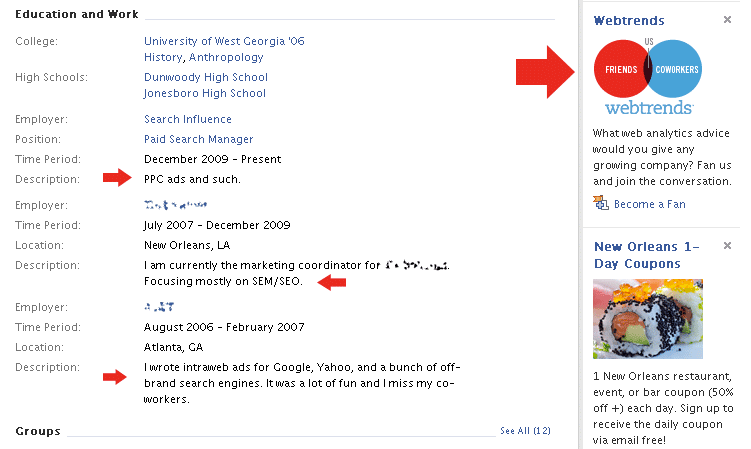
    Demographic targeting has always been the corner of successful search marketing.  Though Google Adwords has demographic targeting capabilities, it lacks Facebook’s knowledge of its users. Facebook allows internet marketers to directly advertise to their core audience based not only geo-location, age, and sex, but a plethora of user define information.

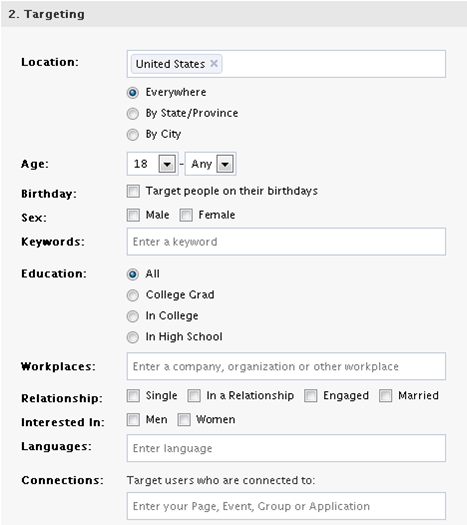
    Facebook Demographic Targeting
    Facebook Demographic Targeting

    Facebook Advertising allows you to target by:

    • Geo-location
    • Age
    • Sex
    • Education Level
    • Relationship Status
    • Sexual Orientation
    • Keywords

    Instead of trying to convince a “researcher” to click through (as you compete with nine other ads and organic results), you can use demographic targeting to directly advertise to your potential client. Showing highly relevant ads to a smaller and more focused group of viewers leads to higher quality leads and lower cost per click (cpc).

    While demographic targeting is key to finding your audience, the proper verbage is also needed. Unlike search engine advertising, these users are not looking for tax specialists or new-age spa retreats. This type of user is uploading pictures from their kid’s birthday and accepting event invites.

    Facebook Editorial Ads
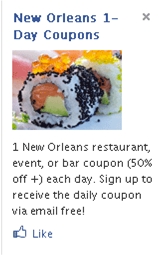
    Example of Facebook Ad

    So how do you engage these users?

    Write magazine-like editorial ads for your targeted demographic.

    The reason magazine and newspaper ads are so successful is they provide a great value proposition to a targeted user. Incorporating graphical elements gives Facebook ads a stark advantage over search engine advertising. This element not only allows user to visually convey the ad purpose, it is also a good way to generate a higher quality click-through rate (CTR). A relevant image will always be worth a thousand plus words.

    In the end, while search engine paid advertising is beneficial in capturing high-level researchers, Facebook allows you direct access to a potential client. With a well-written advert, you can lead the horse to water instead of yelling at him to drink.