Tag: Facebook

  • The Return… of the Website

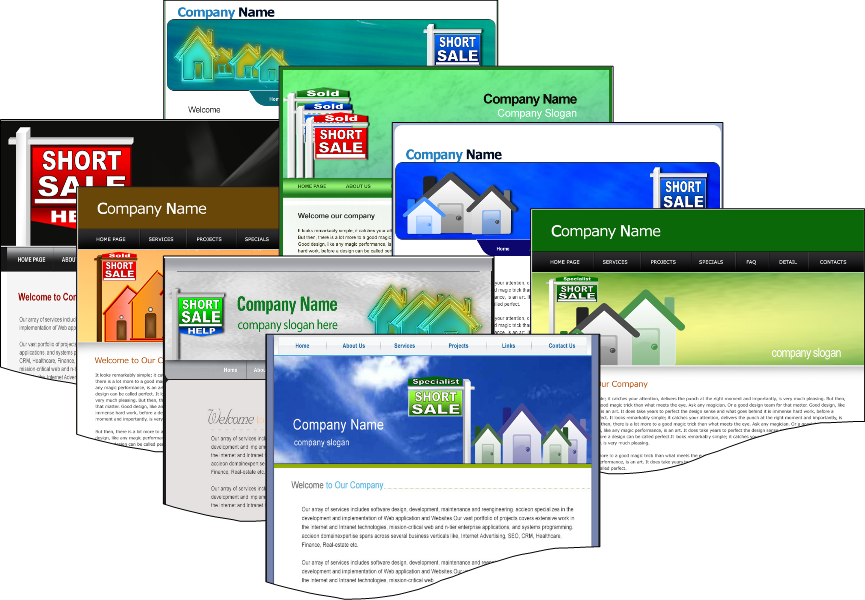
    Website examples

    The website is back, y’all!  Yeah yeah, we know they didn’t go anywhere, but for the last few years we have had a large shift to companies investing in their social media presence and building out experiences that their fans can interact with on Facebook.

    It made sense 100% of the way at that point in time. That’s where the users were — on Facebook. That’s where MANY users still are. Facebook is still growing; albeit, not quite as rapidly as 2 years ago, but doesn’t it feel like you see at least one new aunt and uncle popping up on Facebook each week?

    If it’s growing, then why does it feel like it has become stale?

    The challenge here lies in the evolution of Facebook over the more recent years. Facebook started with a wall for each person. That was the only place, besides on your own profile, that you could write anything on Facebook.

    If you wanted to see what someone was saying, you had to visit individual Facebook profiles. Since 2006–and then expanded upon by “the new Facebook” in 2010–we have the News Feed. Facebook prioritizes what it thinks is news based on an algorithm of what it thinks you want to see. The problem is, I am pretty bored with checking my Facebook because the algorithm hasn’t quite got it right, and it’s too far gone to ever get corrected.

    If you are a business, Facebook admits only 16% of your fans (I refuse to call them “like-ers”), are seeing your posts that you are putting all of that thought and energy into. Now I am not recommending you abandon Facebook — as you shouldn’t — buyers (especially women) are on Facebook, so learn how to improve your EdgeRank with our recent post by Laura Manning.

    When Facebook users see only a couple new posts every time they check, they get bored. And bored on Facebook means your user starts to think “hmm… what else can I do on my mac, iPhone, or iPad?

    I have found that I have started to wander the internet much more than I did a year ago. Facebook used to consume about 90% of my leisure internet use. Now it consumes about 20%.

    Website Under Construction

    What I am starting to find is an appreciation for websites again: a place where you can go and dive deeper into a product or service and really discover your options. Kind of how it was in 2000.

    So for those of you who have truly been investing in your websites in the right ways over the past decade, who have recently started, or  want to make an investment now, my prediction is that is the right time to do so.

    The Key Things You Need to Remember:

    1. Make sure they can picture themselves using your product.

    Got a spa? Make sure they can see themselves in it. Got a house cleaning business? Make sure they can picture themselves sitting in their clean living room when you are done.

    2. Sell it.

    Sell what you’ve got to offer. Whether you’ve got, again, a spa or a house cleaning service, buyers want to read all the juicy details of how they’re getting a quality, comprehensive service for their hard earned cash. Explain every aspect of your packages, down to the last detail. Even if you think it’s insignificant, your buyers will appreciate it. Your customers want to know the benefits!!

    3. Update your website. 

    Feature all of your products or services on your website. I want to know what you can do for me. No one wants to ask “do you do stump grinding?”

    4. “Give away a little bit of the store.”

    Search Influence’s Director of R&D, Amy Arnold, often preaches that each website needs to “give away a little bit of the store.” This means provide info on your site that you would typically share with someone when you have an initial call, consultation, or meeting with them. Yes, yes, it may be more than you want to put out because “what if they don’t call me” but trust me, this is the right thing to do. We have low bounce rates on sites that support this recommendation.

    If you provide them the information they are looking for without them having to call you, you are proving to them that you have the knowledge — when you competitors are probably not.

    The key learning here is simple — don’t ignore your website — your website should be updated almost as many times as your aunt comments on your recent pics on “the Fbook.” Your customers are searching, and they will likely find you if you continue to keep your website up to date. Of course, doing some off-site promotion of your site never hurt either, but that’s not the point of this post 🙂

    Your website is being looked at more than you think. And if you don’t know how many visits you are getting to your site and from where they are coming, for heaven’s sake, install Google Analytics on it!

  • Improving EdgeRank on Facebook Pages: Chasing the Mythical 16%

    EdgeRank FormulaFacebook has been rather straightforward about the fact that Pages only reach about 16% of their fans on average organically. The social media giant recommends posting engaging content, such as videos and photos, or asking questions of your fans in order to reach a wider audience. Of course, they also heavily recommend promoting your content so that more of your fans have an opportunity to see it and interact with your page. But, what if you simply don’t have the budget to spend on social influence?

    We typically don’t sponsor posts on Search Influence’s Facebook account, so it seemed like the perfect candidate for a case study on organic reach. I started the project in March with no real goal other than figuring out if our reach could grow just by changing the type of content we were sharing on our page. I was already posting on a daily basis, but we saw very little interaction with our fan-base, and practically no interaction from fans who were not directly connected to our office (employees, spouses, my mom…).

    The Experiment (and a little trial and error):

    Viral Poll on Facebook

    I began posting much more image-heavy content and focused a lot more on interacting with our biggest brand advocates– our employees. Sharing photos increased post reach from the get go, but reach grew exponentially larger when we tagged our employees in photos of them. That simple act could take a photo from a reach of 350 to 500 or more. We also took some of our internal contests to the Facebook page, asking our fans to weigh in on the “Best April Fool’s Day Meme” and “Best Group Costume”. These questions were seen by thousands of users, because a News Feed “story” is created for each person who answers a question. We also posted photo albums of company events, which were quite successful in terms of reach.

    Screen Shot 2013-07-22 at 5.23.44 PM

    After only two weeks of focusing on sharing pictures, albums and videos on our page in addition to our daily blogs, the results were glaringly obvious. The reach difference between a link post and an image post ranged anywhere from 15-40%, which is a sizable amount when you’re looking at our total fan count. On average, the image posts were reaching 34% of our fans, with some reaching upwards of 54%. The link posts featuring our blogs? Not so much. They reached only 14% of our fans on average and often much less than that. I will happily admit to being a big data nerd, and these numbers certainly don’t lie.

    But… what does this have to do with EdgeRank?

    EdgeRank Blog

    To calculate EdgeRank, Facebook looks at three main factors for each post (or “edge”): Affinity, Weight, and Time Decay. The “Weight” factor is where post type plays in, and clearly has a huge impact on how frequently your “Edge” gets seen by your fans. By utilizing post types with a heavier Weight, you are more likely to show up on users’ News Feed, and therefore much more likely to get interaction (which increases your “Affinity” score for that fan). When you really think about the algorithm, these two elements are so intertwined that one distinctly begets another.

    By increasing the Weight of our posts, we reached a wider variety of our fans. As those fans began seeing more of our content, they interacted with it, which further increased our Page’s reach amongst our audience. After a few weeks of posting more heavily weighted content, we were seeing a larger Reach for ALL of our posts, not just those with images. We also took the knowledge we gained about post types and applied it to our blog posts– posting a blog with a photo instead of just a link improved its organic reach significantly. By slightly modifying our posting, we greatly improved our interaction level and reach. Have any other good ideas to improve Facebook Page EdgeRank or Reach? Let us know in the comments!

  • Turn Quiet Customers into Brand Ambassadors with the Right Social Media Content Strategy

    Thanks to Panda and social signals becoming more prevalent than ever in Search Engine algorithms, content both on and off-site is moving to the forefront of most SEO and online marketing strategies. Truly exceptional content not only ranks well, but is shared virally and provides a real value to the reader.

    Something I really began believing at PubCon NOLA this year is that social signals for search go beyond just whether someone likes or shares your content. The social signals Google is looking for have more to do with whether your customers are talking online about their experience with you after their purchase.

    Source: mvellandi Flickr http://bit.ly/8vqROG
    Source: mvellandi Flickr http://bit.ly/8vqROG

    The problem here is the ratio between people who want to shout it from the rooftops when they have a bad experience to those who openly share when they are excited or had a positive experience. In today’s social age, everyone is a journalist, food critic, secret shopper and referral source. The average Facebook user has 229 friends on the social network, meaning that if they so choose, they can instantly alert at least 229 friends to stay far away from the new Italian restaurant in the neighborhood after finding a hair on the pizza.

    That’s pretty powerful. There aren’t many other platforms that allow one individual to communicate with so many others so quickly, and to be so expressive while doing it.

    As a business, you’ve probably been told that you need to be marketing on social media to protect your reputation online and grow your business by generating leads or driving more customers into your store. I would challenge you to think beyond that.

    When is the last time you had a great experience at a local restaurant? Did you tell anyone about it? If so, how many people? Now think about the reverse. Chances are, you told a few more people about the negative experience than you did the positive one.

    Source: LetoLab.comIt is time to change our thinking when it comes to social messaging, beyond the traditional “lead gen” mindset. Rather than trying to push your product on someone who’s never used it or heard of it, why not look for opportunities to engage your existing happy but quiet customers and get them talking? Social media gives marketers and businesses the opportunity to turn a customer into a brand ambassador.

    Yes, we have to make sure we watch out for Panda and keep an eye on that pesky Google and their algo updates when it comes to on-site content strategy. I don’t mean for my focus on social to suggest that you should move your entire content strategy off your own website and onto social platforms. But, if we think about using our online content strategies to lift up our happy customers, get them sharing and engaging with us, just imagine the viral potential to reach their friends and family–new business you haven’t yet tapped into.

    You’re probably like, “Ok, I get your point, but how do I DO that?” Funny you should ask! Social media content strategies will vary by business and industry, but here are some tips for converting your social media following into brand ambassadors:

    1. Tone down the sales messages and pushy language. No more than about 20% of your social messaging should be self-referential or portray a sales message. Within this 20%, remember that the goal of these posts should be to provide a real value proposition to the audience. This could include specials, deals or contests.

      Content Strategy for Social Media - Provide a Value
      While this is basically a self-promotional post for Shutterfly, an online photo service, they are providing a value to their customers with a create-your-own cover photo featuring dad for Father’s Day.
    1. Reward your loyal customers and followers with exclusive information. Whether is a sneak peak into an upcoming in-store special or just a “Did You Know” fact, people love to feel like they have the inside scoop, so give it to them!

      Social Media Content - Give Fans Exclusive Info
      Online retailer HauteLook hosts designer pop-up sales for a limited time until inventory is sold. They effectively use social media to make their audience feel like they’re getting the inside scoop while also promoting the upcoming sale.
    2. Feature your fans. Everyone loves to be recognized, so give your fans a moment to shine by choosing to feature them every once in awhile. They’re more likely to share the content with their friends and family (increasing the potential reach of your future posts).
      Content Strategy - Fan Features

    3. A little subtlety goes a long way. I’m a big proponent of including a call to action in your post, but it’s best not to take it to the extreme. Providing a share-worthy piece of content to your pre-qualified audience with a slight nudge can never hurt.

      Social Media Strategy - Calls to Action Increase Engagement
      Disneyland provides a great piece of content with a direct call to action: share. And share they did! The piece resonates well with their audience and was timely for the Mother’s Day holiday.
    1. Post well and post often. At PubCon New Orleans this year, Alison Zarella (another AZ girl!) said it best: “the newsfeed is crowded.” As a business or brand, your competition on Facebook is not limited only to the business across the street that sells the same product. You’re also competing for your audience’s attention with the likes of their moms, distant cousins, besties and frenemies. If you don’t post great content and do it consistently, you’ll never be seen.

    2. Reply, reply, reply! Make sure to reply to your customers who comment or post with questions! Facebook and social networks are where people spend a lot of their time these days, so getting a quick reply and notification of that reply is what they expect.
      Social Media Content - Reply to Your Customers' Questions

    3. Be flexible and test for yourself. Above all else, try new things and test multiple approaches with your fans. There’s lots of information and data out there about what works, when to post and how to do it, but the truth is that every industry is different. You’ll never know what is the most effective for your brand until you try new things, compare results and adjust your approach.

  • Company Profile: Culture Shock LLC

    One of the reasons I love New Orleans is that living local is part of everyday life. People love shopping and eating at local businesses. Thankfully, you won’t find many chains in the New Orleans zip codes (you need to go out to Metairie for that)! My friend Christine Alex recently started a jewelry business that imports handmade pieces from several countries across the world. This Q&A profiles her company, touching on why it totally fits in with the local New Orleans vibe.


    New Orleans Local Business


    How did you come up with the idea for your business?
    I came up with the idea for Culture Shock when I was traveling abroad. I thought it was cool to bring back jewelry instead of postcards to my friends and family. The jewelry became a hit and eventually more and more people began giving me money and asking me to bring items back for them.  That’s when I thought it would be really neat for people to be able to buy handmade items from all over the world without having to leave their couch. Culture Shock became an LLC in October 2012 and officially launched on January 18, 2013.

    What is the goal/vision for your business?
    When I studied abroad, I gained a deep level of respect for other cultures and as a result, appreciated my own culture so much more. My goal is to educate my customers about other cultures while selling them a piece of someone else’s culture to wear.

    What products do you offer?
    I sell jewelry that I hand picked from all over the world. The biggest countries that I receive my inventory from are Nicaragua, India, and Nigeria. Aside from offering a selection of imported items, I also began creating my own ethnic inspired items. In addition, as a way of honoring my own Creole culture, I created an apparel line under Culture Shock called Naturally Creole. This line offers a selection of Creole-themed apparel and accessories.

    Jewelry & Accessories


    Do you have an online presence? Website, Facebook, Twitter, Pinterest?
    Yes, I have a website, Facebook, Twitter, Pinterest, and Instagram. Facebook and Instagram receive the most engagement from followers. I have noticed usually the same people follow us across social media platforms.

    Why do you use Facebook? What is the benefit that it is bringing to your business?
    I use Facebook because it’s where my customers are, and I want to develop a relationship with them. Facebook allows my customers to understand the personality of my brand and learn more about my company and the products that I offer.

    On the content she posts to her platforms:
    I try to post content related to the countries that I import my items from. I post photos, videos, and open-ended questions. Pictures usually receive the most activity from our followers. On Pinterest, I pin items from our website.

    Do you run any contests on Facebook? If so, what kind?
    Yes, giveaways.

    On her customers:
    Word of mouth and social media have been important in building brand awareness and getting people to buy our great pieces. I’d love to get more interaction from our social media followers to continue to build the brand!

    Business Info:
    Culture Shock, LLC
    P.O. Box 2217 Harvey, LA 70059
    504-256-3337
    www.cultureshock101.com
    www.facebook.com/cultureshockllc
    Twitter: @cultureshockllc
    Pinterest: cultureshockllc
    Contact email: [email protected]

    About Us Page


  • #Facebook #Hashtag #Apocalypse

    I love a good hashtag, y’all. I think everybody does! They are great engaging pieces of content in social media posts that can really build engagement among your followers. They are also extensions of your post that allow you to specify your tone and point of view. Pinterest, Twitter, Google+, and several other platforms have all integrated hashtags into their interface and users love them. Personally, I’ve been using hashtags with these platforms for years, and I find that it really allows my sarcastic personality to shine through!

    Well I have BIG news for y’all. Between 11pm last night (when I last checked my facebook) and 9:30 am (when I first checked my facebook today), Facebook rolled out the use of hashtags. And I gotta say… I’m not sure how I feel about it.

    Now, we all knew this was coming. There have been rumblings of it for weeks! But, it is finally here. I feel like an apocalypse has happened in the social media world. I mean, c’mon… hashtags are just for Twitter and Pinterest right? Right?! Apparently not.

    What I’m interested in is how the hashtags will be incorporated considering Facebook’s privacy settings. I am hashtagging under the pretense that hashtags are for trending purposes. But if my settings are “Friends Only”, does that mean that my post will not be part of what is trending on Facebook? I’d love to know the answer to that one!

    Here are some shots from the trending hashtag, #hashtag, as of this morning. Some people are stoked, and some are not so stoked. How do you feel about this?

    Hashtag Haters:

    Hashtag Lovers:


  • 5 For Friday — Links, Stories & Posts For Your Weekend

    1.  A New Google Search Result in Beta – Search Engine Land

    fiveforfriday As usual, Google is always testing new search results and the way the results display. Dr. Peter Meyers of Moz recently noticed a change in the Google search interface. The results displayed included restaurant reviews from Reason, New York Times, and the Wall Street Journal when he searched [mexican restaurants].

    2.  Facebook Cuts Ad Units – Facebook

    In a recent announcement, Facebook plans to consolidate its ad offerings down from 27 to close to half of that. Offers for online deals will disappear and they are changing way “Sponsored Stories” are laid out. Expect these changes to slowly roll out.

    3. Beware of Big Brother – The Guardian

    If you have heard of this NSA PRISM program, you should pay attention now. The Guardian uncovered a top secret document that showed that officials had direct access to systems of Google, Facebook, Apple and other internet bigwigs. The document was allegedly used to educate intelligence operatives on the program.

    4. Google is now Displaying Option to Claim Local Business in Search Results – Mike Blumenthal

    Jade W of Google announced that Google will now start displaying “Are you a business owner?” to direct branded search results. Although it is a minor change, it seems as though Google is attempting to engage small business owners more. Have you started seeing this change for other SMBs?

    5.  Yahoo’s New Search Results – Search Engine Journal

    For those who still use Yahoo as their primary search engine will notice a change in the search results. Yahoo has attempted to de-clutter the SERPs and moving search results higher up on the page. Do you like the new changes? Will you start using Yahoo?


  • 5 Tips for Non-Profits to Get Social

    Due to financial limitations, many non-profits find it difficult to increase their online presence. It may be difficult for local non-profits to compete with the big brands that are creeping on their digital space. Yet there are a few ways for non-profits to interact with their target audience online for very little out of pocket expense. What is this magical tool that non-profits should be utilizing? Social media, of course.

    Social media outlets prove to be great tools to capture, engage, and inform your supporters. It works as a way to provide a face to your cause and keep your loyal audience up to date. A recent study by Craig Newmark reported that 92% of non-profits are on Facebook and 90% are on Twitter.  Non-profits are spending more and more time investing in their social media marketing. However, simply signing up for your social media account isn’t enough. How do you reach your audience? What do they want to hear? What will get them excited?

    Five quick tips for non-profits when crafting your social posts:

    • Sneak Peeks: everyone appreciates a good inside scoop! Are you about to launch a new product or event? Why not let your social media audience get the inside information first. This will create buzz around your brand!
    • Insider Photos: you most likely know that pictures are a great addition to your social posting and should be worked in whenever possible. Including behind the scenes pictures is a great way to engage your fans and highlight your supporters.  It provides a great “this is what happens when you aren’t here” anecdote. Team Gleason does a great job of including behind the scenes shots to keep their Facebook Fans engaged and sharing interesting content!

    Nonprofits Behind The Scenes Sharing

    • Keep your posts relevant: is there an upcoming organization event? Post about it! Is there local breaking news? Tweet it! The beauty of social media is that you’re able to comment on things as they’re happening. You want to stay relevant and timely.
    • Link to your site: how do you expect your social media to impact your web traffic if you don’t link to your site? When appropriate, link back to your site so fans can learn more information. Links work best when paired with an eye-catching graphic. Check out what The Museum of Modern Art did with a link to purchase tickets online.

    MOMA Nonprofit Site Link

    • But don’t always link to your site: yes, you want to drive site traffic, but you have to do it carefully. There is nothing social media users hate more than the self-obsessed page. The majority of your posts should be great and engaging content. Self-promotion should be the minority of your updates.


    And don’t worry, non-profits. The social media sites want you to succeed! Facebook even recently released a resource center for non-profits. So get to posting and watch the fans and site visits increase!

  • 5 For Friday — Links, Stories & Posts For Your Weekend

    2068779988_4422f1bf5e_b1. Dusting The Website For Spring: Optimization and SEO Cleaning — SEOmoz

    How long has it been since you spent some time cleaning up your website? I’m sure for many of us, it’s been far too long. In this post, Scott Wyden Kivowitz gives some great tips for dusting on-site and off. A cleanup might be exactly what you need to increase your web presence. A good deal of the post focuses on social media and the benefits of linking your website to your various accounts. When it comes to off-site initiatives, social media is important once again, as you want to make sure you’re active on your accounts. Overall, this article has a lot of great advice when it comes to the little things you can do to get your website out there!

    2. Facebook To Add More Support For Emoji Within Status Updates, Comments — AllFacebook

    According to AllFacebook, the “Unofficial Facebook Blog,” the social media giant is fully embracing the popularity of Emojis. I’m sure you’ve noticed the recent addition to your status bar, where Facebook now asks how you are feeling. Apparently this was only the first step. Comments are now Emoji-laden as well, and Facebook is adding new support for the animated addition. Unlike most Facebook changes, the presence of Emojis seems popular with users, who are apparently grateful for an additional way to express themselves—especially such an adorable way. I’m sure you can all expect to see many more cartoon cats on your newsfeed in the upcoming weeks.

    3. Hipstamatic Battles Instagram With Oggl iPhone App — PC Mag

    Apparently Hipstamatic is making attempting to regain lost popularity with a new product called Oggl. Could this possibly be enough to replace Instagram in our hearts? As a latecomer to the iPhone, I’ve never used Hipstamatic, as Instagram was already the go-to photo app by the time I switched from Droid. Maybe this makes me biased toward Instagram, but I don’t foresee a big shift. Apparently Oggl allows you to edit photos after you’ve already taken them. The same filters and lenses from Hipstamatic are still available, though. According to this post, it seems like the makers are marketing the new venture as a more art-focused app (Oggl is NOT for selfies!). I guess we’ll just have to wait and see if edgy marketing can overtake Instagram’s immense popularity.

    4. Instagram Now Lets Anyone Tag You [Or Brands] In Photos, Adds Them To “Photos Of You” Profile Section — TechCrunch

    In case you missed, it, last week Instagram launched photo tagging. I know what you’re thinking: “It’s about time!” There’s now even a Photos Of You section, so you can keep track of pictures you’ve been tagged in. I’m still trying to decide if I like this switch, as I kind of enjoyed Instagram’s focus on photos rather than people. In this post, TechCruch’s Josh Constantine explains how this signals a new emphasis on identity for Instagram. (He has another interesting blog post linked on this page that further examines the issue.) He also tells you exactly how to use it, in case you’re interested!

    5. Google Removes Related Searches – Blind Five Year Old

    For those who haven’t noticed, Google has removed the Related Searches feature from Search. For many of us, this was an important tool when it came to keyword research and will be sorely missed. In this post, Blind Five Year Old owner AJ Kohn, who’s pretty upset about the change, laments Google’s neglect of SEOs. It’s really interesting to hear his take on why Internet marketing matters, and how individuals working in SEO actually benefit Google. According to the post, it’s SEOs that are “demystifying search,” to help websites, which helps Google in turn. In fact, spurning SEO may end up hurting Google in the long run.


  • 5 For Friday — Links, Stories & Posts For Your Weekend

    1. Back to Basics: Meta Descriptions 101 – Search Engine Journal
    If you haven’t looked at your meta descriptions in over a year or 6 months, it may be time to refresh your meta data. Meta descriptions are the ones that will show up in search results, so they should sound coherent to humans. Read this refresher on meta tags.

    five-for-friday2. Thinking about adding 10,000 pages to your site at once? Take caution. – Search Engine Land
    If you are adding a large number of pages to your site, it is better to do so in stages according to Google’s Matt Cutts. Adding them in batches may be better. Releasing thousands of pages at once may cause Google to manually review your site for any suspicious behavior.

    3. Want to learn how to segment out your image search in Google Analytics? – Blind Five Year Old

    Google image search, universal image search, Bing image search. How do you keep them all separate? AJ Kohn from Blind Five Year Old walks you through the process of setting up filters for image searches in Google Analytics. Read and implement.

    4. Foursquare emphasizes its local search in its latest app update.  Search Engine Land

    Attempting to take on Facebook and Yelp, the social check-in company rolls out its 6.0 update for its app. With local search as the primary focus of the new update, Foursquare users will see nearby recommendations and discovery features. Check it out.

    5. Are Facebook fans really worth it?  – Mashable

    According to a Syncapse report, a Facebook fan is valued at $174. The study takes a look at Facebook fans versus non-fans and analyzes their spending behavior along with their brand loyalty and several other factors. Would you agree with their estimation?

  • Getting Personal With My (Promoted) Posts

    The Promoted Post
    Writing this blog post: $8.09

    Medium-size bag of Lay’s Chicken & Waffles chips: $1.09

    Sponsoring this post on Facebook: $7.00

    Being funny and popular on Facebook: Priceless

    Why Should You Care?
    Well besides the fact that Lay’s is pushing three atrocious new flavors on consumers, this was an exercise in “eating your own dog food.”

    As the Paid Search Manager, I often recommend posting exciting content to increase engagement on Facebook fan pages. However due to algorithmic changes (which always reminds me of Pool’s Closed), just posting to Facebook will not reach all your audience. In fact, it has recently been shown that organic posts only reach about 16% of your audience!  Facebook “solution” for this problem is sponsoring your posts. Sure, this isn’t new, but sponsoring your personal posts is (kind of…not really). So after I made the above post, I decided to open the can of Alpo and dig in.

    Getting Started
    It is a pretty painless process. You just click the Promote link at the bottom of your post, FB determines how much you can spend based on your total reach, and then you choose an payment option (either credit card or PayPal).

    Due to my limited number of friends (I’m pretty exclusive), I was only able to buy 70 Facebook Credits.

    Results
    So what do I get from my $7.00 USD investment?

    • 21 comments (6 unique commenters)
    • 14 Likes
    • 1 Share

    That’s 19¢ cost per action*
    *<filler text>There was once three exclamations after the word “action” but then I realized it read like I was more excited than I really was </filler text>
    To give you some reference on cost per action, it can range from $1.59 – $3.00 for some advertisers.

    How do you know you wouldn’t have had the same reaction from just posting organically?

    I don’t.  BUT, I do know my previous ten posts averaged 2.7 actions per post. Which would make this a +1233.3% increase interaction total and +307.40% if we just look at uniques.

    “That’s that $#!+ I don’t like” – Pusha T
    One major thing I didn’t like about promoted profile post was the lack of reporting. Having the total impressions, reach, and frequency would give users the action rate which can be used to gauge what content should be promoted in the future.  Instead Facebook thought a notification was enough reporting.

    Hey FACEBOOK, I need more than this. Notification ≠ Results.

    imageWhy Does This Matter?
    A wise man once said, “Just because you paid for it doesn’t make it less satisfying”. This perfectly explains the Facebook landscape. It is no longer just about good content; it is also about how much you are willing to invest in that content. This also shows that people with major followings, like gay Star Trekker George Takei, can stop being so frustrated with their lack of reach. If you are so invested in your audience you should be willing to shill out a few coins to stay top of feed. I mean Facebook has to pay their code monkeys and keep the lights on somehow…right?


    Editorial Note: Mr. Coleman’s official title at Search Influence is Online Advertising Supervisor. However he will answer to Paid Search Manager and money.