Tag: facebook ads

  • Success Story: ALCC American Language

    Learn how we helped ALCC American Language new inquiries while delivering higher site traffic and more frequent engagement on social media.

    The Situation

    The client is a language school located in New York City whose mission is to help international and local students learn English in a supportive atmosphere. The client’s goal was to increase the number of enrolled students and increase their number of fans on Facebook.

    The Approach

    Our strategy included a mix of campaigns that would ultimately increase the volume of leads via forms, calls, and social media engagement by making the client more visible and accessible online.

    We did this using the following campaigns:

    The Outcome

    Paid Search:

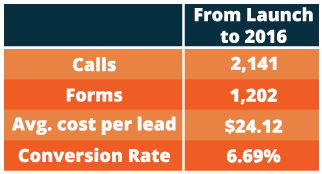
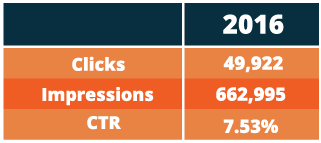
    When analyzing their paid ads campaign, even 2 years after initial launch, ALCC American Language saw continued growth in new student inquiries and conversion rate. During 2016, they averaged 279 new inquiries per month (179 calls and 100 website contact form submissions). Testing and tuning the campaign resulted in a conversion rate of 6.69%, which is an increase from the start of their campaign in 2013 at 2%. Additionally, in 2016 the paid ads averaged 55,250 impressions and 4,160 clicks per month.

    Graphic image of increased inquiries - Search Influence

    Graphic image of increased clicks, impressions, and CTR - Search Influence

    Facebook:

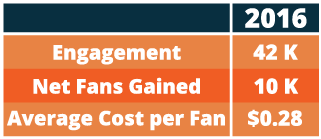
    Looking year over year from 2015 to 2016, the client saw a significant rise in Facebook engagement. Their fans increased from 10,000 to 18,000 fans and the engagement, which includes reactions, comments, and shares, increased from 34,000 to 42,000.

    Graphic image of social media engagement increase - Search Influence

    Search Engine Optimization:

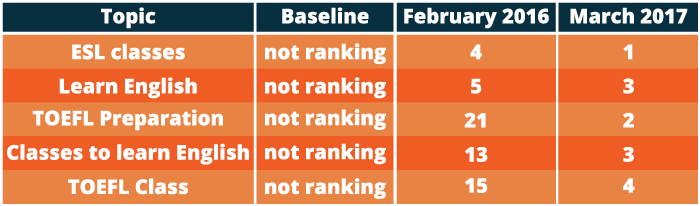
    Through methods such as monthly blogging, press releases, user experience improvements, authority building, and helpful website content, the client gained increased Google rankings for top key search terms and overall website traffic. At the start of ALCC American Language’s campaign, they weren’t ranking for industry relevant keywords and common search terms. As of this year, they are ranking in the top 5 positions of Google for the majority of their important keywords. Additionally, they saw a 57% increase in their goal conversion rate from their total website traffic and a 38% increase in web page visits per session from their organic website traffic when comparing 2015-2015 to 2016-2017.

    Graphic image of keyword ranking for ALCC - Search Influence

    By using a comprehensive, custom strategy, we were able to help ALCC American Language bring in more prospective students so that they can continue to do what they do best—help those striving to learn English. Interested in learning how we can help improve your online presence? Reach out to us at any time.

  • Facebook Ads vs. Boosted Posts: Here are 4 Reasons to Always Choose Facebook Ads

    The world is filled with many ways to advertise a product or service. Simply hoping that your message makes its way to the perfect target audience is never the best practice to ensure your advertising efforts are successful and profitable for your business. With the increase of paid digital advertising on many online platforms, it is becoming more difficult than ever to reach potential customers the old fashioned organic way. As more content continues to flood these platforms, knowing how to utilize their advertising tools is more important than ever before. Facebook is continuing to reinvent the way the world does advertising. With the platform being a rich and unique source of users’ personal interests and behaviors, combined with the ability to present advertising information in compelling and creative ways, using Facebook to advertise your business is becoming a no brainer for both newbies and advertising professionals alike.

    With that being said, busy business owners might ask themselves, “Why should I spend the time to create Facebook ads with Facebook Ads Manager when there are simple tools like Boosted Posts that do the same exact thing?” The ease and simplicity of boosting an already posted Facebook post cannot be denied. With the click of a button and for as low as $5, your post can reach more people, potentially resulting in more engagement, increased traffic, and even better sales. Sounds great, doesn’t it? The major problem that many business owners come across with boosting posts is simply wasting money due to a lack of strategy tied to a specific business goal. Using Facebook ads can come with a bit of a learning curve. It is not as quick and simple and can’t be done directly for your page. Facebook ads can, however, bring some distinct advantages to the table that you can’t get with boosted posts. These advantages can help you grow your business by not only helping you to narrow in on your ideal customer, but also by presenting your business in a way that truly personalizes the experience and connects with these individuals.

    Here are 4 reasons to always choose Facebook ads over boosted posts for your advertising efforts:

    1. Facebook ads provide in-depth targeting options that go beyond just interest-based targeting used by boosting a post.

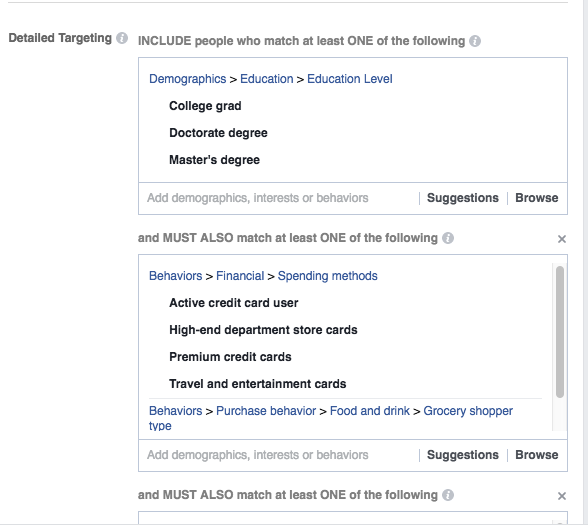
    Unlike Facebook ads, boosted posts are extremely limited in who you can actually target. There are only three targeting options: people who have already liked your page, friends of people who have liked your page, and people who you choose through a few basic targeting options. Though the first two options can provide some value to your business, just because someone likes your page doesn’t necessarily mean they are your ideal customer. Likewise, though there are a few targeting options with boosted posts, you cannot target behaviors or utilize detailed targeting, which means, for example, you can’t target someone who is a college grad AND an active credit card user. Instead, you can target users by their location, age and gender, and interests.

    Example Of Detailed Targeting Image - Search Influence

    Example of detailed targeting.

    Though Facebook Ads Manager can be daunting at times, it is certainly one of the best tools on the market to get in front of the perfect audience for your business. If you have a good understanding of your customers, what they are interested in, and how they behave, Facebook has the big data analytic capabilities to back your knowledge. Understanding how to use these targeting capabilities to your advantage can provide long-lasting value to your business.

    2. Facebook Ads Manager allows you to schedule ads during times that matter most to your business.

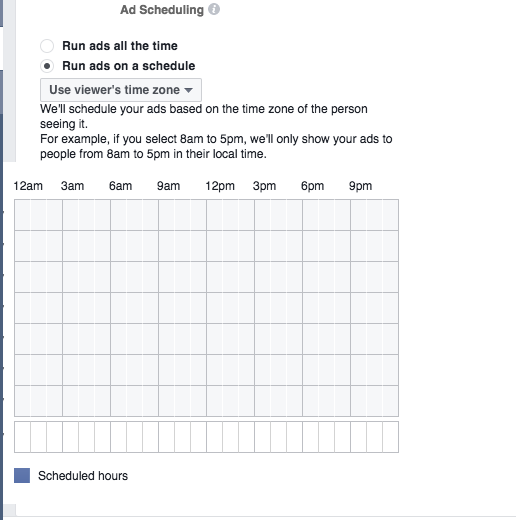
    When using boosted posts, the advertiser has very little control, if any, over how and when a post is delivered. A boosted post can only run between one to seven days, limiting your ability to show ads during the time your ideal customer is on Facebook as well as during hours of the day that might be most important to you and your business, i.e. when your store is open or for the duration of a special event. Using Facebook ads allows you to pinpoint exactly when you want your ad to run. This can help to save your advertising dollars for when you need them most!

    Example Of Ad Sampling - Search Influence

    Example of ad scheduling.

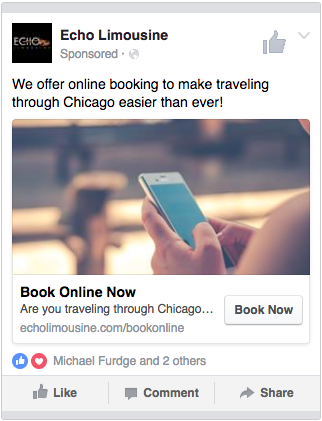
    3. Take advantage of unique call to action buttons that tell your users exactly what action to take!

    Boosted posts are optimized for engagement, or likes and shares. If you are trying to entice a potential customer to click on your post’s call to action, this is not going to be the best way to do that. With Facebook ads, businesses have more of an opportunity to increase sales and traffic to their websites by using call to action buttons. These buttons help your audience understand the action you want them to take after seeing your ad. Including these in your ads urges users to move away from the ad and onto your site, giving them more of a chance to shop, sign up for an account or email list, or learn more about your product or service.

    Example Ad Using The ‘Book Now’ Call To Action Button - Search Influence

    Example ad using the ‘Book Now’ call to action button.

    4. Unique creative and placement options.

    Boosted posts come with only a few creative and placement options within Facebook. These ads can typically be spotted within your target audience’s News Feed. With Facebook ads, on the other hand, ads can be seen using Instagram and on the right-hand side of the Facebook platform. Facebook ads also come equipped with a number of creative possibilities, including multiple image ads, video ads, and slideshow ads. These can be used to entice and excite your target audience, making for a more enjoyable experience when discovering information about your business.

    Ultimately, Facebook Ads Manager is the perfect tool for all advertisers to get in front of their ideal customer using in-depth targeting and advanced delivery options alongside unique creatives. Though boosting posts might always be a simple and easy tool for advertisers with less experience, using Facebook ads is certainly the way to go to grow your customer reach in a creative and personalized way.

    Need help using Facebook Ads to impact your business? Search Influence is equipped with the expertise and experience needed to help you grow! Contact us today.

  • Why Do Digital Agencies Have Setup Fees for Online Ads?

    Why Do Digital Agencies Have Setup Fees for Online Ads?

    We often get the question from prospective clients of why we have setup costs for our online advertising programs. They ask this question because some of the companies that they speak with either don’t seem to have setup costs or don’t communicate a setup cost as such. Even those who say they don’t have setup fees have some costs associated with building campaigns, but the extent to which they are or are not thinking strategically on behalf of their customers is a big factor in whether or not they will indeed charge for it.

    How Can a Media Company Not Charge a Setup Fee?

    Often, media companies choose not to charge setup costs. Sometimes this is because they use a third party that automates the process for them, eliminating some of the complexity and control of digital media buying.

    In other cases, a media company (TV, Radio, Newspaper or Cable outlet) may choose not to charge a setup cost because the difference between what they’re spending on advertising and what you’re paying is sufficient—they know they will make up whatever their actual costs are in a very short period. In other words, they may be keeping excessively high margins for what is, in essence, a commodity.

    The challenges of these perspectives are not very different

    In short, the advertiser—the merchant, the customer, the office—who is buying advertising services or other digital offerings doesn’t realize that in order to have those setup costs, the actual money spent on advertising has to, by definition, be lower. And, if the amount spent on advertising is lower, unless there are significant efficiencies in automation—which there seldom are—one will have a less effective advertising program.

    So, there really is no such thing as a “free lunch”

    When deciding how to advertise online, the most important thing to consider is whether or not your ads are going to be seen by your targeted prospects. With less money to spend on advertising, you have a choice of either targeting less precisely or displaying fewer ad impressions over time. With those two options, it’s easy to see how your campaign is less effective when a greater amount of the dollars are going to fat margins rather than the management of the campaign.
    Automation can be good

    In fact, we use automation to assure we don’t overspend and to do some interesting things like changing ads in the case of weather changes and special circumstances. But, there’s a dark side as well. For all the good automation does, it can also lead to irrelevant traffic, i.e. people who will never become customers but are still targeted by the automated ad buys. And, if not managed well, automation can lead to overspending the budget.

    To allow automation to work efficiently, the companies that use automated platforms for management of online advertising must, in the main, set and forget the campaigns. They are hopeful they will be able to deliver results through automation, not through active management.

    How Is Search Influence Different?

    We typically don’t think of ourselves as competition to traditional media companies who’ve decided to launch a digital agency arm. When we think of competitors, it’s typically the traditional agencies— traditional marketing agencies and pure-play digital marketing agencies. The reason that we identify these as the potential competitors is that within their advertising programs, there’s typically a focus placed on strategy.

    Strategy requires people. Digital and traditional agencies have grown over time based on the expertise of their team members. They are therefore able to deliver strategic plans rather than just automated processes. We have the people in place to deliver. Every one of our online advertising team members goes through a rigorous training process and must be certified in multiple areas of expertise before they get to own campaigns.
    As traditional media companies have come to realize that people are buying much less television, radio, newspaper, and Yellow Pages advertising, they need a replacement product. They have seen the value of digital advertising as an item of sale. As an item of sale, it’s not something in which they have invested significant strategic knowledge and development. The agencies with whom Search Influence competes have invested in at least some strategic development in their teams, whether it be through continuing education, certification, or years of experience.

    We are always looking for ways to optimize the potential of our clients and our team members, and that’s why we review automation systems with some frequency. We have yet to find one that delivers the results we can achieve with our human intervention. Of those we’ve tested, they may hit target budgets and costs per click (CPC), but they don’t deliver the same results. Again, what we’re after is not just traffic, not just customers, but the right traffic and the right customers. That said, we’ll always keep looking and exploring.

    As such, while we often find ourselves selling against traditional media “agencies,” we do not think that, when it comes to digital, they represent real competition or the value we know we can deliver.
    How Search Influence Helps Digital Advertising Clients

    Our core purpose at Search Influence is to Optimize Potential.

    So before anything, we engage in a thorough review of your existing assets, both digital and traditional analog media. We also engage in an equally comprehensive business review to assure we understand your goals for your possible future campaigns. This way, we can strategically map all of the relevant information to an effective digital campaign to deliver the best results.

    When thinking about what goes into the business decisions around advertising, we know that it’s much more than clicks or even calls. It’s about the right click and the right call at the right time. The goal is to deliver that refined prospect to your business with the expectation that they will move from prospect to customer. Before we spend one dollar on Google or Facebook, we will have investigated all of the facets of your needs and how they might impact our execution of your campaign.
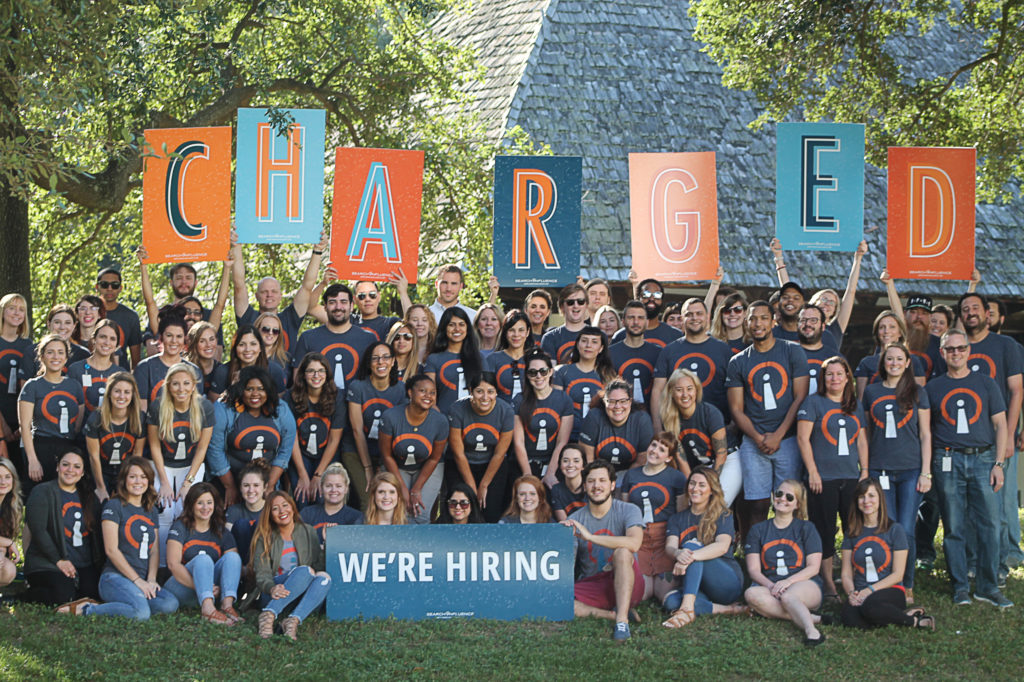
    Charged Employees of Search Influence

    Why You Should Care How About How We Get It Done

    You may think to yourself, “It doesn’t really matter how it gets done, as long as I get more traffic to my website, more calls, and more inquiries coming through.” The unfortunate truth is this: the wrong kind of contacts can cost you time and money.

    As the Pareto Principle implies, 20% of the prospects who might get in touch with you are going to be responsible for 80% of the business you will ultimately do.

    If you could tailor your marketing and advertising so that you only spoke to the 20% of customers who were going to drive the greatest value to your business, wouldn’t you have a much more successful business? Wouldn’t your team be more engaged if they knew that each client engagement, or patient interaction, was putting them with the right customers?

    We know it’s a lot of work to get this right, and only when you work with a strategic partner can you have an expectation that you will get what you need as early in the process as possible. When we work with clients, whether they’re spending $1,000 or $100,000, we work strategically to assure them we’re delivering the greatest value possible for their advertising dollars.

    Wouldn’t you rather spend your money on the most valuable customers? We think you should, and that’s why we believe that we are not competing with the mass-market automated systems that don’t deliver the kind of value you need. With a fundamental understanding of technology-enabled marketing and the expertise and know-how to back it up, we can be true partners to our clients regardless of their budget.

    If you’d like to learn more about the why and the how, we’d love to hear from you. Please fill out our contact form or give us a call. We’ll be glad to review your current situation and come up with some strategic recommendations.
  • Growing Your Practice on Facebook, Part 4: Reach Your Audience

    Now that you’ve gained valuable insights on the many uses of Facebook paid ads, the importance of engaging with your followers, and why all of this matters in the first place (spoiler alert: yes, social media is worth your time), we’re going to get into the specifics of understanding and capturing your audience. After all, if you don’t understand your users, how are you ever going to reach them?

    We’ll share how to use the Audience Insights tool on Facebook to analyze when your users are active and what’s catching their attention. Then, we’ll share some surprisingly easy ways to update your Facebook page and grow your followers—as well as your actual patients.

    Ready for the PhD-level course on using Facebook to grow your medical practice? Download our free e-book today.

    How Can You Use Audience Insights to Grow Your Reach on Facebook?

    With nearly 2 billion monthly users on Facebook, it’s important to narrow the scope and understand who is engaging with your practice, as well as what they are looking for from your page. That’s where the Audience Insights tool plays a vital role. Audience Insights allows page administrators to understand their users and target their reach according to demographics, purchase behaviors, geography, and activity on Facebook.

    By creating a custom audience using this tool, you can target your ads to a specific group of users on Facebook. Say you know that your typical patient is a female in greater New Orleans with an average household income of $150-250K and a bachelor’s degree or higher. You can create a new custom audience using these demographics and build an ad campaign on Facebook to target that audience. While that’s a pretty narrow scope for a medical practice that isn’t quite so sure of their ideal patient, experimenting with a few different test audiences to gather data on successes and misses is a great first step.

    On the other end of the spectrum, you can also use Facebook insights to gain more knowledge about your active users and cater your posts and ads to the types of demographics that are most engaged with your page. You can even learn the best times of the day and week to post and the type of content that achieves the highest engagement. Perhaps you see a spike in engagement when you post patient testimonial videos on your page and dedicate more marketing spend on creating videos. Or, maybe your analytics show that users are more engaged in the mornings, so you schedule your posts in advance for time slots between 8 a.m. and 11 a.m. to capitalize on your users’ behaviors.

    These insights can all inform your future social media marketing strategy to focus on what works and build on your successes.

    Picture Of A Medical Doctor's Desk - Search Influence

    How Can You Connect Your In-Person Audience With Your Social Presence?

    While tools like Audience Insights allow you to understand your online audience, it’s just as important to understand and connect to the people visiting your office and living in your community. The more you can bridge these two segments, the better your chances of building a loyal fan base and creating meaningful social media content.

    Events are a great option for bridging these two audiences. If you’re hosting an event at your office, like a drive for flu shots or a fundraiser for a local nonprofit, be sure to create a Facebook event so guests can RSVP, invite friends, and receive reminders as the date approaches. If your event is public on Facebook, the platform will also suggest it to other users based on friends who are attending. Now your online users also have a reason to visit your office and speak with you in person about a subject they are already interested in.

    Community events that focus on the values of your practice are also important for building trust and humanizing your online presence. By showcasing the causes that are important to your industry, work, or community, users can connect with your page through those similar interests. For example, if your company is participating in a community event like March of Dimes or you have a team participating in a local 5K, share updates on your fundraising efforts, highlight photos from the event, and link to informational articles about the cause. All of these strategies help create dynamic social media content while also connecting you to the broader community of users with shared interests and passions.

    How Can Fan-Building Campaigns Help Engage & Grow Your Audience?

    Now that you have a better understanding of who your target audience is and how to build a bridge between your online and IRL communities, it’s time to increase the number of actual fans connected with your page. The first step may seem obvious, but it can’t be overlooked. You have to have an active, established page with helpful content and consistent posts. Make sure you’re dedicating time to posting new content as well as responding to inquiries to build engagement.

    Image Of Stethoscope With Breast Cancer Ribbon At Medical Practice - Search Influence

    Another great tactic to generate new followers is through a fan-building initiative such as a “Like for Lives” campaign. Remember when we said that connecting your social media content to your values and industry is important? “Likes for Lives” does just that. The basic premise is that for each additional Like that your page receives for a set period of time, your medical practice will make a donation or take an action to help save a life. This could be a monetary donation to a charity, a volunteer commitment, or any other creative action your practice can take to help others.

    The goal is to generate excitement on your page and in your office, giving you plenty to post about in order to raise awareness about your campaign and encouraging your fans to share your initiative with their friends in support of a good cause. Be sure your staff is informed of the campaign, and encourage or incentivize them to share the information within their own networks on Facebook. If you work with a nonprofit to raise money, they may also want to share the content, further increasing your reach.

    With a combination of tactics like these and consistent posts on your Facebook page, you’ll start seeing your audience steadily grow. By targeting the right demographics, you can also see this growing audience translate to more patients. Remember, social media is here to stay, and leveraging its power and reach can have a big impact on your medical practice.

    Stay posted for the next update in our series where we’ll discuss the importance of patient confidentiality on Facebook.

    Eager for more tips and tricks to grow your social media IQ, or ready to get started with digital marketing campaigns for your business? Contact an expert from our team.

  • Growing Your Practice on Facebook, Part 3: Advertising

    In our previous blogs, you’ve learned that Facebook is crucial for promoting your medical practice and that shareable content is the number one component of your social media strategy.

    As the next step in your journey to increase your social presence, Facebook ads are another highly effective way to promote your practice online. In this blog post, we’ll answer your questions about the importance of paid promotions on Facebook, the difference between promoted posts and ads, the primary advantages of Facebook ads, and whether your ad copy complies with HIPAA and other guidelines.

    Why Not Just Use Free Posts?

    With so many opportunities to post for free on Facebook, it might seem like paid promotions aren’t necessary. However, due to recent Facebook algorithm updates, overtly promotional posts are receiving less organic distribution on the platform. This is due to a Facebook survey in which users named highly promotional posts as the number one thing they would like to see less of in their news feeds. As a result, your followers will be unlikely to see any of your posts that push products, urge people to enter contests, or reuse advertising content. Below are some examples of highly promotional posts.

    Image of a highly promotional Facebook post - Search Influence

    Image of an overtly promotional post on Facebook - Search Influence

    However, in the same survey, Facebook users reported that they aren’t bothered by promotional content when it has been identified as advertising. This means that paid promotions are not only ways to get around Facebook’s algorithm updates and reach your target audience, but also ways to engage your followers without coming across as annoying or spammy.

    What’s the Difference Between Promoted Posts and Ads?

    The two main types of paid promotions on Facebook are promoted posts and advertisements. Understanding the difference can help you determine where each best fits into your social media strategy.

    Promoted posts are formatted like traditional free posts, but they are marked as sponsored content and appear higher in your followers’ news feeds. The main advantage of promoted posts is that you can test them out as free posts before investing in them. If one of your free posts is performing especially well, Facebook will often prompt you to “boost” or promote it. Promoted posts can also be easier to use because they follow the traditional Facebook post format.

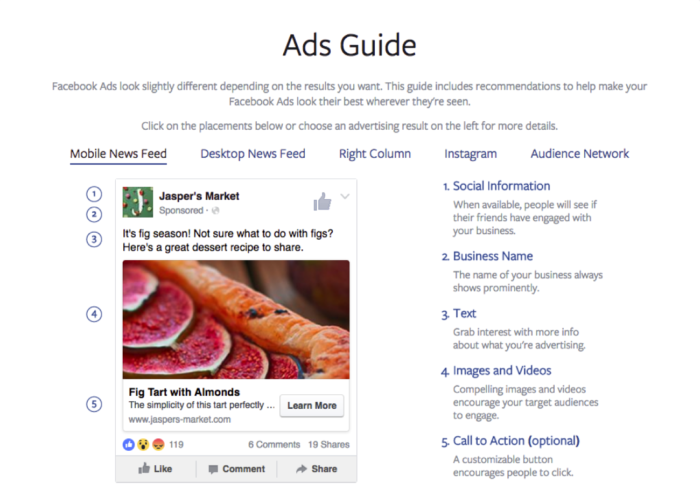
    Advertisements, on the other hand, can follow a wide range of formats. Facebook’s Ads Guide allows you to customize based on your campaign’s objective, be it brand awareness, lead generation, website traffic, or one of many others. The guide can also walk you through the different ad placements, focusing on which fields will be included in which type of ad. As shown in the images below, mobile and desktop news feed ads have space for social information, business name, text, images or videos, and a call to action.

    Image of Facebook's Ads Guide for mobile feeds - Search Influence

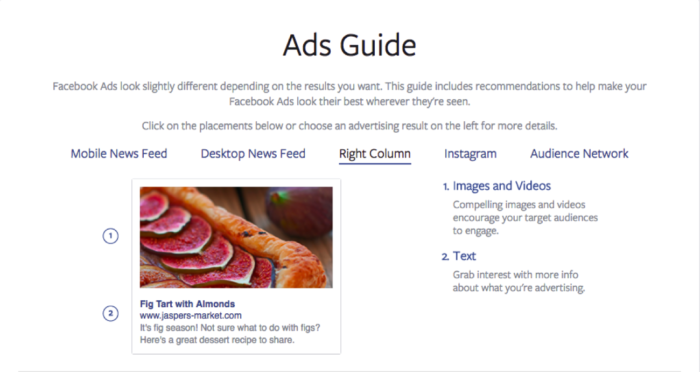
    Right column ads, on the other hand, only have space for text and images or videos:

    Image of Facebook's Ads Guide for right column information - Search Influence

    While all of these options make advertisements a bit more challenging than promoted posts, they also allow ads to achieve more diverse objectives. Promoted posts are great for growing brand awareness and driving engagement, but if you have goals outside of social media—for example, getting potential patients to fill out a consultation form on your website—then Facebook ads are the better way to go.

    What Are the Main Benefits of Facebook Ads?

    The reason why ads are more effective than promoted posts for driving off-Facebook conversions is the call to action (CTA) button. While exact numbers vary based on the industry, type of content, and action the reader is being called to do, statistics show that conversion rates increase dramatically when a CTA is present. While CTAs can be included in the text of a promoted post, the CTA button in ads allows your message to stand out even more. More importantly, it explicitly tells readers what action you want them to take, and allows them to accomplish it with just one simple click. Facebook also provides an easy drop down menu of popular CTAs for you to choose from, ranging from “Contact Us” to “Download” to “Watch More.”

    The second major benefit of Facebook ads is the platform’s detailed targeting options. These are available for promoted posts as well, and they can be set or altered within Facebook’s Ads Manager. While traditional advertising channels, like billboards or newspaper ads, can’t guarantee that your message reaches your goal demographic, Facebook ads can be carefully targeted to the people you want them to reach. For example, if you run a geriatrics practice in New Orleans, you can ensure that Facebook shows your ads to users aged 65+ in the Greater New Orleans area. Using Facebook’s targeting feature allows you to run a more efficient ad campaign. You can direct your time and money only toward the demographics that are most likely to become your patients, without wasting advertising resources on anyone else.

    What Legal and Ethical Guidelines Govern Medical Facebook Ads?

    As you’re certainly aware, the medical industry is heavily regulated. Everyone from the American College of Physicians to the Health Insurance Portability and Accountability Act (HIPAA) to Facebook itself has rules for medical advertisements. If you break them, your ads will likely be taken down, and in some cases, legal action may even ensue. While Facebook’s Advertising Policies provide a detailed list of prohibited and restricted content, the two biggest red flags for physicians are misleading content and patient confidentiality violations.

    Misleading content includes anything that could be considered deceptive or ambiguous to patients. The most obvious examples are photoshopped images or exaggerated guarantees; however, even subtle wording variations can lead to misleading content violations. For example, it’s generally okay for a physician to claim that Botox can contribute to a more youthful appearance. Yet, it could be considered misleading to claim that Botox will make patients look ten years younger or eliminate signs of aging. Although these statements are quite similar, only the first one is acceptable because it does not make any specific promises about the product’s outcomes. Some of the best precautions against misleading content include citing studies or journal articles whenever claims are made, and labeling all non-patient photos with the word “model.”

    While misleading content might get your practice in trouble with Facebook, violating HIPAA rules about patient confidentiality can get your practice in trouble with the law. As with misleading content, some precautions are obvious. For example, you should never post any identifying information about patients, such as names or faces. However, many HIPAA violations are less apparent. For example, it is prohibited to post images that do not clearly identify a patient, such as a rash on someone’s foot, unless you have clear legal permission to do so. Similarly, be careful that no pictures of the office have patients or medical records in the background. To avoid any issues, require patients to sign a consent form before using their images, or stick to model-labeled images and stock photos.

    Interested in learning more? Don’t forget to check back for the next post in our medical industry blog series, which will help you reach your target audience.

    For more information about getting started with Facebook Advertising for your hospital or practice, contact us here.

    Images:

    Ads Guide Mobile Feed

    Ads Guide Right Column

  • Google Paid Search vs. Facebook Paid Social: Team Players or Adversaries?

    When it comes to choosing between Facebook and Google advertising, it’s important to note what your business’s goals are. Both platforms are beneficial to business in their own ways and often work in conjunction to help businesses achieve maximum online visibility, gain more customers, and increase leads and sales. In order to best understand the opportunities with these two advertising channels, it’s important to know what each has to offer.

    Google Paid Search and Facebook Paid Social

    No one can deny that as far as search engines go, Google takes the cake. With more than 3.5 billion searches being conducted every day, Google is by far the world’s most popular and widely used search engine. Because of this, advertisers are able to reach a broad potential audience who may be seeking their products or services. Google AdWords, the PPC advertising platform for Google, allows advertisers to utilize the Search Network and the Display Network. Through the Search Network, advertisers can bid on keywords and phrases to trigger certain Google searches. The Display Network offers visual ads and can reach those who are not just searching on Google, but on other sites as well (i.e. a banner displaying your business’s logo on YouTube).

    Image Of Don Draper Discussing The Future Of Advertising - Search Influence

    Considered the pioneer of paid social advertising, Facebook has refined its process and has become an important part of many businesses’ marketing strategies. Like Google, Facebook is an extremely prominent website, with more than one-fifth of the entire world’s population active on the site monthly. Because Facebook users tend to share a lot of personal information—interests, relationship status, political views to name a few—Facebook advertising can target very specific demographics, showing Facebook users what they want to see.

    What Types of Ads Does Each Channel Offer?

    Both Facebook and Google include a variety of ad formats to appeal to a variety of audiences.

    Google Ads:

    • Text – These ads are only words, and can immediately reach customers as they search on Google.
    • Responsive – Size, appearance, and format can be adjusted depending on the ad spaces.
    • Image – Graphics that are static or interactive, and can be animated in .gif and Flash format. These can show on websites that partner with Google through the Display Network.
    • App Promotion Ads – As the name states, these ads can drive app downloads and engagement for your business. These will only show on devices that can support the app.
    • Video – These can stand alone or show in streaming video content on websites that partner with Google.
    • Product Shopping Ads – These show a photo, title, price, store name, and other details about a product you are selling.
    • Showcase Shopping Ads – This type of ad shows a product but expands when it’s clicked on to show related products and store information.
    • Call-only Ads – Ads that include your business’s phone number to drive phone calls. These types of ads only show on devices that support phone calls.

    Facebook Ads:

    • Domain Ads – With a simple format, this ad displays on the right column. This type of ad does not display on mobile.
    • Page Post Link – The most common of all Facebook ad types, this type of ad links to your external website and includes a large image for grabbing the attention of Facebook users.
    • Carousel Ads – A relatively recent development in Facebook advertising, these ads allow e-commerce advertisers to showcase up to five of their products, each with its own picture, link, and title.
    • Dynamic Product Ads – These ads target based on past actions on your website, also known as remarketing.
    • Lead Ads – Allows Facebook users to fill out a form on either desktop or mobile directly from Facebook.
    • Canvas – Only available on mobile, customers can interact with the ad by swiping through the carousel, zooming in and out or even tilting the images.
    • Page Like – This allows users to immediately like a Facebook page.
    • Page Post Photo and Video – Showcases pictures and videos from your business. Video advertising is especially engaging as Facebook video receives up to 8 billion video views per day!
    • Mobile and Desktop Apps – Similar to Google’s app promotion ads, these drive installs of a business’s app to mobile and desktop.
    • Event – Allows a business to promote their event to visitors.
    • Offer – This type of ad can only be created on a page with at least 50 likes, and it allows a user who clicks on the ad to redeem a special promotion.

    Google and Facebook: Friends or Foes?

    As previously stated, it’s highly common for Facebook and Google to be utilized together in a marketing campaign for their different advantages. Many marketers are drawn to Google because of the search volume and opportunity for exposure there. Google allows for targeting based on location, keywords, demographics, devices, and languages, as well as re-marketing, which can target users based on searches that have previously been conducted. While PPC ads are text-based, advertising opportunities are versatile. Extensions, user reviews, map data, and shopping ads are just a few examples of how Google advertising can be further optimized.

    Facebook advertising is not only extremely targeted but also highly visual, which many see as an advantage over Google. Facebook ads are essentially unavoidable, appearing in your target audience’s News Feed or the right column of their page. Because advertising on Facebook is based on specific insights and interests, chances are that the ad will be more engaging to the user.

    Image Of the Internet Being Friends - Search Influence

    Perhaps the biggest difference between each platform is the behavior of the users. When searching on Google for products or services, users have an idea of what they are looking for. Facebook, on the other hand, is not typically used to seek a product or service. However, the likelihood of a Facebook user to be exposed to a product or service that appeals to them is very high.

    While Google and Facebook are often seen as adversaries in the marketing world, the possibilities with each vary greatly. Try this team together for utmost potential in maximizing any campaign’s performance.

    Image Sources:

    Don Draper & The Future Of Advertising

    The Internet Shaking Hands

  • Marketing to Males: How Can Your Cosmetic Surgery Practice Draw in More Men?

    In a society that remains focused on physical appearance, plastic surgeons have plenty of healthy competition to appeal to the audience in their community. Because plastic surgery procedures are being purchased overwhelmingly by women—in 2016, women purchased 90.7% of plastic surgery procedures compared to 9.3% purchased by men—most marketers target female prospects. However, research shows that doctors could be doing a lot more with their marketing strategies when it comes to targeting men.

    A New York University Medical Center study demonstrated the highly female-centric marketing campaigns being implemented by plastic surgeons. After analyzing 453 websites and 4,239 images on plastic surgeons’ websites, only 5% of the pictures included males, and 0.9% depicted both men and women together—not to mention that only 22% of these websites included any services related directly to males. In fact, some plastic surgeons completely ignore the male market in online marketing efforts or minimize them significantly.

    While popularity in some procedures has risen in male patients, plastic surgeons are seeking appealing and effective ways to market their services to men. What exactly is drawing in the men who are getting these procedures? Research shows that the following factors could help influence men to feel comfortable undergoing plastic surgery procedures for issues they want to resolve, ultimately helping them to gain more confidence.

    Dos Equis Man Jazzed About Plastic Surgery - Search Influence

    Pay Attention to What’s Already Popular

    When it comes to marketing to male consumers, it’s important to note trends. At the top of the list of surgical procedures performed on men in 2016 were liposuction, breast reduction, eyelid surgery, nose surgery, and facelifts. Popular non-surgical cosmetic procedures included injectables like Botox and Sculptra, as well as skin rejuvenation procedures like dermabrasion. Choosing to focus on these procedures and providing a plethora of before-and-after photos of men who have had these procedures done could prove beneficial to your plastic surgery ad campaign. Plus, the images can demonstrate the natural results that men may be seeking if they associate cosmetic procedures with highly noticeable and dramatic results.

    Focus on Youth and Energy

    The last thing that any male—or person, for that matter—wants to hear is that they look “tired.” Appearing to lack energy can be detrimental in a lot of ways, especially in a busy workplace that may be riddled with young people vying for the next promotion. By decreasing wrinkles and folds through plastic surgery, the fatigued look improves dramatically. Many men want to restore that youthful, energetic look that they had in their twenties, and this could provide effective fuel for your ad campaign. Again, consider highlighting before-and-after photos that demonstrate the great results men might not know they’re looking for!

    Target the Dads

    After years of raising kids, it’s hard for the stress and work not to take a toll on the body and appearance in general. Child raising years are common for the appearance of wrinkles and weight gain. Fathers are an excellent and relatively untapped market for plastic surgeons, in a similar way that mothers have been an effective marketing target. Try changing the dialogue in your ads to focus on hardworking fathers who deserve to treat themselves to a naturally younger look—a.k.a. the “Daddy Do-Over.”

    New Girl's Schmidt Celebrating Himself - Search Influence

    Emphasize a Natural Yet Rugged Look

    While many men may attribute plastic surgery to women and femininity, in reality, strong, masculine features can be enhanced with procedures that can provide natural-looking results. Some of Hollywood’s most notable and masculine heartthrobs haven’t come by their looks completely naturally. Even Dwayne “The Rock” Johnson confessed to having liposuction performed on stubborn flab, and George Clooney admitted to having an eyelid lift to help achieve his youthful glow. Men’s grooming is increasingly popular and less taboo than it has been in previous years, and the idea of shaving off ten years is now a highly acceptable idea.

    Beauty And The Beast Gaston Showing Off His Manly Chest - Search Influence

    Market to Couples

    Perhaps one of the more effective tactics is to reach men through their girlfriends or wives. It isn’t uncommon for a husband or boyfriend to use his girlfriend’s or wife’s products and to become hooked on the results. This can translate to cosmetic procedures as well: if a female significant other comes back from a cosmetic treatment with a refreshed glow, this becomes a recommendation in itself. Target your marketing to couples by age, encouraging them to enhance their bodies together or to reclaim their youthful looks.

    Pay Attention to Male Shopping Trends Online

    Men are increasingly turning their shopping experiences into social experiences, comparing prices and discussing them with others via social media. While this type of online behavior has been typically associated with women in the past, it is becoming increasingly popular among males. An online study from ManScan shows that 72% of men compare prices online, 56% read reviews of products and services, and 44% share this information with others. In many cases, the products and services discussed involve health and wellness. This information bodes well for the sharing of information about potential surgical procedures. By using a cost/benefit analysis with cosmetic procedures, plastic surgeons may see positive results with the male market.

    The male market provides an excellent opportunity for cosmetic surgeons to grow their practice through online advertising. By focusing on trends and behaviors, targeting men in ads can prove highly beneficial when done well. Consider these ideas and get more clicks to your website.

  • What You Can’t Do On LinkedIn: Hacking LinkedIn and Getting Results

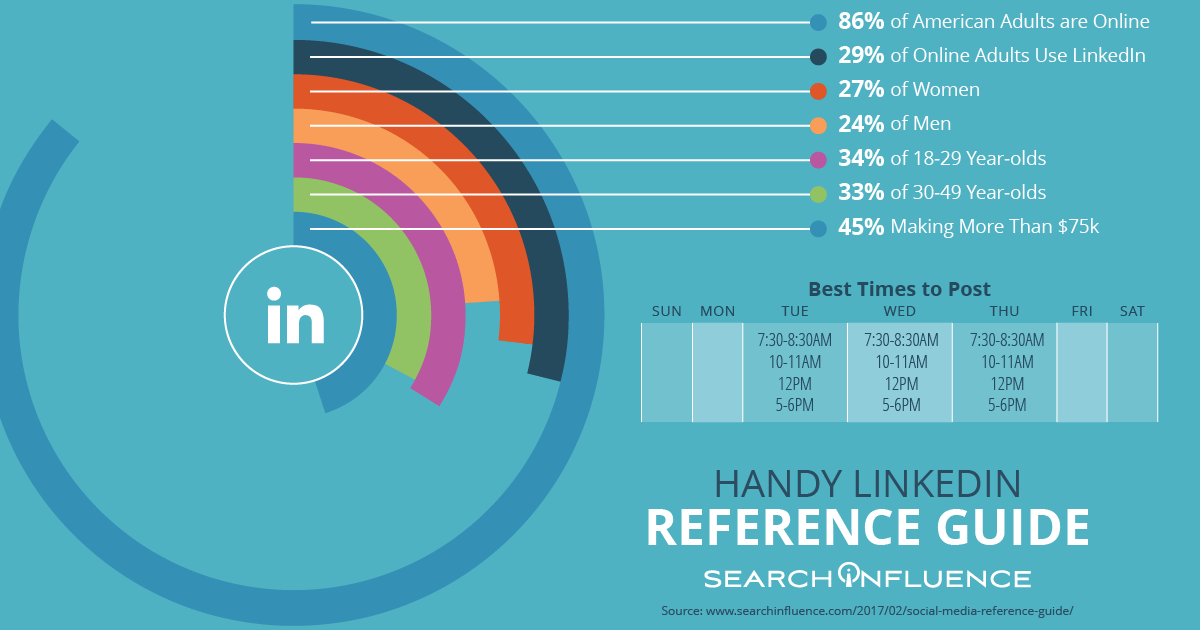
    Hypertargeting. Automated bid management. Ad scheduling. We take for granted these social media advertising features available on platforms like Facebook. But, what do you do when these “advantages” are not available on other sites, like LinkedIn? Here at Search Influence, we decided to design some experiments to see if we could manually hack these features within the LinkedIn advertising platform.

    Targeting Options

    We all know how great Facebook’s targeting is with purchase behaviors and in-market audiences backed up by actual third-party data. There’s no way that LinkedIn can touch Facebook in this realm, right?

    According to Business Insider, LinkedIn is gradually increasing its user base, even as other platforms like Facebook and Twitter have seen decelerating growth. What LinkedIn has to offer is the opportunity to reach one of the fastest-growing groups of business-minded professionals when they are in “work-mode,” browsing for new career opportunities, exploring professional affiliation groups, and researching industry-specific content. In fact, Buffer reports that 60% of LinkedIn users are interested in seeing industry-related content with company news as a close second. So how can you capitalize on this information-hungry audience?

    LinkedIn offers the opportunity to target all levels of the professional hierarchy, from young company influencers, performing research and reporting on their findings, to higher-level corporate decision-makers looking for their next business partnership. The targeting opportunities on this platform are specifically geared towards a professional audience. With these options, you can:

    • Target specific Companies by name and narrow in your Job Titles to reach the exact people you want to hear your message,
    • Use specific Degrees or Skills to seek out only the users who meet your qualifications or
    • Sift through Member Groups to find people with similar or desirable professional or educational affiliations.

    With all of these occupation-oriented targeting options, LinkedIn offers advertisers the ability to closely align your social engagement goals with your company’s brand and mission to reach users who are demanding industry-relevant content.

    Ad Scheduling

    Facebook offers ad scheduling, and while it’s not as granular as other platforms, such as AdWords, which allows you to schedule your ads in 15-minute increments, it still provides a heightened level of control over when your ads are shown.

    Unfortunately, LinkedIn does not afford advertisers these same features, so we took it upon ourselves to apply manual ad scheduling to see if the benefit was worth the time. Research has shown that the best time to publish content on the LinkedIn platform is Mondays through Fridays, during business hours. Makes sense, right? Target working individuals with work-related content during work hours.

    Linked-In-Best-Times-to-post imge - Search Influence

    Our online advertising team put this premise to the test. Many of our clients suffer from budgets that are too small to run ads for the duration of the month. When you factor in LinkedIn’s $10 daily minimum and the fact that the platform allows you to spend up to 20% more than your daily budget on any given day, and you most often will, this effectively makes the minimum daily spend $12. If we extrapolate that figure across a 31-day month, an individual campaign needs AT LEAST $372 to run. To be most effective with our clients’ monthly spends, we wanted to capitalize on the users who are most likely to engage with the content, i.e. people who are on LinkedIn during the weekdays.

    We implemented a “Weekend Pausing” test for a few of our clients. This test included Sponsored Updates campaigns, and we ran our test from November of 2016 through December 2016, pausing on weekends and holidays when users are least likely to be browsing the platform with intent.

    We began by establishing baseline performance for each of the clients and decided that our main metrics for measurement would be engagement and cost per engagement.

    Image Of Engagement Metrics For Online Advertising LinkedIn - Search Influence

    So, what did we find? One client saw a 28% decrease in cost per social action and an 18% overall decrease in spend for a 14% overall social action increase. One client spent 23% less budget and received 63% more social actions for a cost per social action that was 53% less than the baseline. However, when we looked at overall engagement, which includes clicks as well as social actions, we saw an overall engagement decrease of 13% and a 39% decrease in engagement rate, refuting the idea that LinkedIn users are most active during weekdays. An extended period of testing would be required to investigate the full impact of weekend pausing on LinkedIn engagement rates.

    Bid Management

    Other platforms offer automatic bidding options to get you the lowest cost per result. Facebook does this across all of its placements, including Instagram and the Audience Network, to achieve the lowest average cost per result. There are also manual bidding options on the Facebook platform for those advertisers who want a little more control.

    Luckily, LinkedIn does provide some competitor bidding data so that you can make an informed decision when setting your manual bids, which is the only option available on this platform. Previously, the consensus for LinkedIn bidding best practices was to bid as high to the top of the bidding range provided by LinkedIn in the Bid & Budget tabs of the campaign manager as the client’s budget allows.

    Image Of Competitor Bidding Data For Online Advertising LinkedIn - Search Influence

    What we were curious to test was whether we could maximize clicks and decrease overall cost per click by strategically bidding down, towards the middle of the bidding range. Our online advertising team devised a test across multiple clients in various industries with different budgets. Since our goal was to maximize clicks and engagement, we chose clients with Sponsored Updates campaigns. We established baseline metrics for each of our client’s prior performance and began strategically lowering and raising our bids from the top of LinkedIn’s provided range to the bottom in predetermined increments each day.

    Once our bids were set towards the lower bound of the range, clicks and impressions significantly decreased. After moving up and down the range a couple of times, we hit a “sweet spot” right around the middle of LinkedIn’s bidding range where performance was optimized. We discovered that bidding around the middle of LinkedIn’s bidding range resulted in an average click increase of 39%, an average CTR increase of 14%, and an average CPC decrease of 30%. Through the manual manipulation of our bids, we were able to generate more engagement for our clients at a lower price!

    What Can You Do With LinkedIn?

    While many advertisers might suggest channeling efforts from LinkedIn to Facebook, I suggest rethinking the platform’s purpose. What our experiments have revealed is that if you can devise a strategy that considers the platform’s utility as a connector of business-minded individuals, and you’re willing to put in the effort to manually optimize your campaigns for the highest level of budget efficacy, you can churn out excellent results.

    If you have strategic questions about using Linkedin or need support getting started with Linkedin advertising, contact a member of our team.

  • Want to Grow Your Medical Practice? Here’s 4 Ways Facebook Ads Can Help

    A How-To Guide for Growing Your Practice Using Facebook Image - Search Influence

    The world is filled with many ways to advertise a product or service. Simply hoping that your message makes its way to the perfect target audience certainly isn’t the best practice to ensure that your medical advertising efforts are a success. For medical professionals, it may be particularly tricky to target those individuals in your practice’s geographic reach, specialty area, or even other physicians looking to refer their patients to another trusted healthcare provider. Though it can seem nearly impossible to reach the perfect audience through traditional mediums like television or radio, Facebook is continuing to provide proven results for advertisers in the medical realm. A rich and unique resource of user personal interests and behaviors, Facebook is truly a health care advertiser’s dream!

    Image Of Baby Making A Joke About Doctors - Search Influence

    Whether you’re a specialist or a general family doctor, Facebook has the right tools to not only narrow down your ideal patient but also present your service in a way that truly connects these individuals with the personalized healthcare you can provide them.

    Here are 4 ways to use Facebook ads to your advantage:

    1. Use Facebook Display Ads to portray real people and satisfied patients in your ads.

    Facebook Display Ads can be the perfect way to send your audience to important areas of your website using striking images and creative calls to action. When using these types of ads, appealing to more potential patients is key. Using photos of real people and happy patients not only shows the success of your practice but makes ads more relatable to the audience. Finally, Facebook allows you to utilize their call-to-action buttons to tell users exactly what you want them to do when they see your ad. Consider using “Contact Us” or “Learn More” to drive potential patients to convert to actual patients!

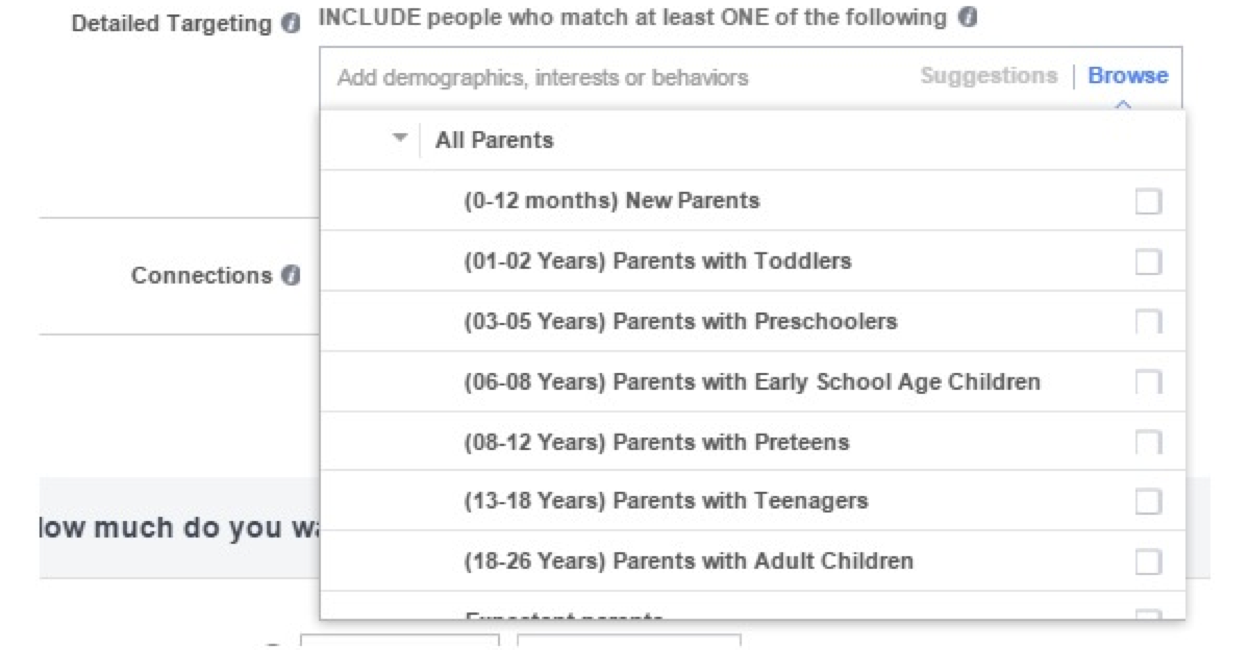
    2. Use Facebook’s ‘Detailed Targeting’ to your benefit.

    Facebook comes equipped with a number of targeting options that can be extremely helpful in identifying individuals that fit your target demographic. Everyone needs to see a doctor at some point, right? How about targeting people who have recently moved into your geographic area who might be looking for a new physician? You could also try targeting women who have recently become pregnant or seniors who might make more regular trips to the doctor.

    Picture Of Facebook Detailed Targeting Tool - Search Influence

    3. Referrals are your friend.

    Targeting other healthcare practitioners might not seem like the most effective idea at first, but using Facebook’s ‘Detailed Targeting’ to show your ads to other physicians or important referral sources always helps to keep your name at the tip of their tongue when talking to their staff and patients. Likewise, we all know that people seek advice on health care providers from their friends and family. It might be beneficial to target the connections of people who currently follow or Like your page. These tactics can only help drive more business!

    4. Don’t forget about HIPAA!

    It is always important to remember to follow HIPAA rules and regulations. When writing Facebook ad copy, never imply that you have knowledge about a sensitive health condition. Also, never collect or share personal information such as phone numbers or addresses. There are many successful ways to use Facebook ads to grow your practice that still align with HIPAA’s guidelines.

  • Get More Views on Your Company’s #Facebook Page

    The term “pound sign” has become obsolete and even deserving of ironic quotes these days. The “#,” now the almighty hashtag, is generally associated with where it originated: Twitter. The hashtag’s aim was to unify groups of individuals discussing similar topics across the social media platform. However, hashtag usage has now expanded to Facebook, and using them properly can guide more traffic to your business’s page.

    How Do Hashtags Work?

    The popularity of hashtags is still on the rise, and more and more Facebook users are typing in “#[insert topic]” to seek common ground with others online. Want to promote your nonprofit organization? When typed into a Facebook search bar, hashtags such as #nonprofit and #donate will lead to news articles, Instagram posts, and more that discuss these topics. Used appropriately, your hashtag can generate engagement among social media users who are browsing for a service that your company offers.

    Image Of Schmidt From New Girl Being Excited #Excitement - Search Influence

    #Don’t #Get #Carried #Away

    When deciding what hashtag seems the most appropriate, using a trending topic just for the sake of site traffic is a bad idea. If you’re looking to promote your law firm, adding #KanyeWest to a post would probably generate views, but ultimately would make your page look spammy —and desperate. Plus, doing so could result in ruining your online reputation. It’s also important to keep it short and sweet. Will Facebook users be typing in “#IneedatriallawyerinNewJersey”? Probably not. But #NewJersey and #TrialLawyer could certainly yield some positive engagement while sounding natural.

    Image Of Jimmy Fallon And Justin Timberlake Singing The Hashtag Song - Search Influence

    Facebook as a Search Engine?

    With Facebook generating around 1.5 billion searches per day, it’s easy to say that the platform is getting used as a search engine. With the proper use, hashtags can be excellent in online promotions and business news. However, too many hashtags can generate less traffic, so choose no more than two relevant tags per post. Once you’ve gotten a couple of trial runs with your hashtags, watch your analytics and see where the strengths lie. If a post’s views are going down as a result of your tags, try different ones!

    Photo Of Spongebob And Patrick - Search Influence

    Being clever with Facebook hashtags can enhance your business’s discoverability. Try inserting them into posts and let the results speak for themselves.