Tag: digital advertising

  • How Medical Professionals Use Google Display Ads to Win New Patients

    Google Display Network Ads Image

    By now, most professionals in the medical industry know that a robust Internet marketing campaign is necessary to achieve maximum exposure in the digital age. Doctors, practice managers, and other medical professionals may have an SEO plan that is designed to improve their search engine rankings with web crawlers such as Google. They may even have discovered AdWords, Google’s PPC (pay-per-click) advertising program. However, many aren’t aware of the visibility available to them via Google’s most powerful tool: Google Display Ads.

    GDN Banner Sizes: Get the Most for Your Money

    All ads come in various shapes and sizes and are measured in pixels. Depending on GDN banner size you opt for, the number of partner sites available to you may dwindle. Generally speaking, the options available are as follows:

    • 200×200 Small Square: Appears on the right-hand sidebar on a limited number of sites.
    • 250×250 Square: As above.
    • 300×250 Medium Rectangle: Appears within or toward the end of an article, with a good number of sites to choose from.
    • 336×280 Large Rectangle: As above.
    • 300×600 Half-Page Ad: Appears on the left or right hand of the site, with a growing number of participating websites.
    • 728×90 Leaderboard: Appears inside or at the top of an article, with a good number of sites to choose from.
    • 468×60 Banner: Appears in small spaces inside an article or to the left side, with few participating sites.
    • 234×60 Half Banner: As above.
    • 120×600 Skyscraper: Appears on the sidebars of sites, with few participating sites.
    • 160×600 Wide Skyscraper: As above, with a good number of sites available.
    • 970×90 Wide Skyscraper: This ad appears at the top of websites, with few participating sites.

    What Is the Google Display Network (GDN)?

    AdWords promotion will get your business and services noticed, as it bumps your site toward the top of SERPs (while simultaneously flagging it as an advertisement), but the GDN is slightly different. Google has said that the GDN reaches over 90% of Internet users worldwide, expanding across 2 million pages, including Google-owned sites like YouTube and Gmail, popular news outlets like The Huffington Post and, best of all, a large number of webpages devoted to the medical and healthcare industry. Not only do these ads display when a consumer is already searching for your services, but they also appear on related sites and target the lead while not in “shopping mode.” This unique ability to shape and direct the scope, reach, and target audience for your ad makes the GDN an invaluable tool in anyone’s digital marketing strategy.

    Donaldson Plastic Surgery Ad BannerWhere to Begin: Types, Formats, and Focus
    Though you can opt for a text ad, researchers have found that maximum impact occurs with image ads, which Google places into four categories; static, animated, interactive, and video.

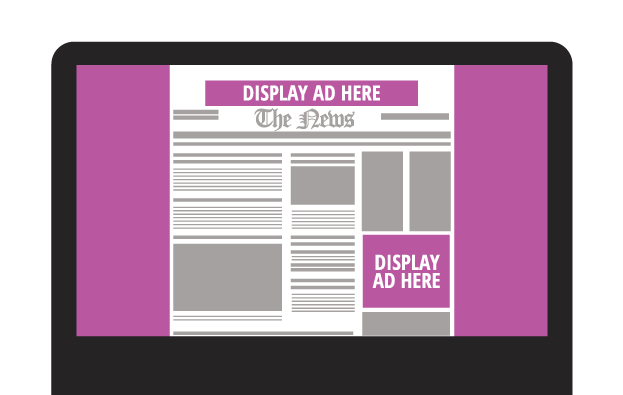
    Static ads: These are just what you might imagine: banners of different sizes that occupy space (usually at the top, bottom, or sides) of a website. The GDN allows these in the most common image file formats: JPG, JPEG, PNG, and non-animated GIF. The example to the left is a static ad created for Donaldson Plastic Surgery.

    Animated ads: This type of ad often generates more interest, as the eye is drawn to movement on an otherwise still display. This type of image also has the benefit of including more information, as you can phase from one still image to the next without having to take up a large amount of page space. These can be uploaded as an SWF or GIF.

    Interactive ads: These encourage input from the user, whether it be by including a link to sign up for a newsletter or showing a photo gallery of products that requires the user to click to view more. These ads can only be uploaded in SWF format. Studies suggest that people are 2.5 times more likely to take action after viewing an interactive ad; however, it’s worth noting that opting for static ads gives you a greater number of sites to advertise on.

    Video ads: These ads can be particularly eye-catching, and they allow you to market on sites that display video content, like YouTube.


    Here is an infographic that will help you easily remember the sizes.
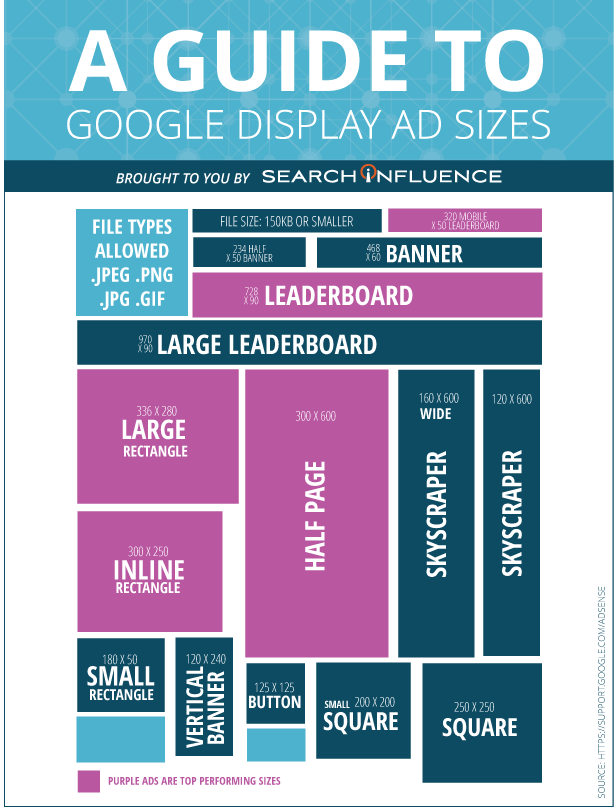
    Search Influence Ad Size Infographic

    When selecting a size for your Google Display Ads, it’s paramount to consider the both the click-through rates and the number of potential clients who will be exposed to your campaign.
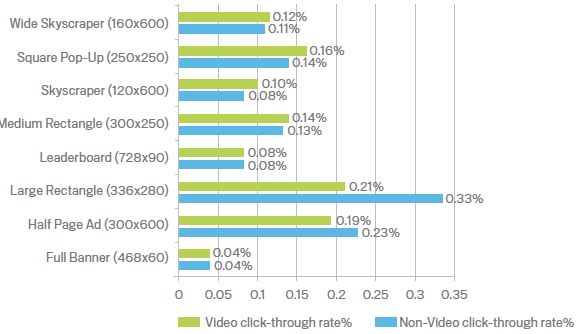
    A large interactive ad may seem like a good idea, but if it only appears on a handful of websites, it may not be worth the cost—or the effort.

    Technical & Content Requirements

    The GDN will not accept ads that are larger than 150KB. Reducing image size—particularly for animated or interactive files—without sacrificing quality can be difficult, which is why it’s always a good idea to consult with a professional design and marketing team. While animated ads can be looped (effectively playing forever), they cannot be more than 15 seconds long consecutively. Ads in GIF format must be 5 frames a second, whereas Flash ads (whether video or animated) can be considerably longer—up to 20 frames a second and sometimes slower.

    Google Display Ads also carries content guidelines that are particularly pertinent for those in the medical profession. Some of these rules are self-apparent, like not duplicating site content, not tricking users into clicking your ad by pretending to be a virus warning, and making it clear that the material is an advertisement. However, Google also has rules regarding adult-oriented content that can impact healthcare professionals, particularly in fields like OB/GYN and plastic surgery. For example, images containing exposed skin and nudity are not allowed, nor is content that is sexually suggestive. Again, consulting an Internet marketing specialist may be the best way to get your brand out there without inadvertently violating Google’s policies on restricted content.

    Tips for Successful Ads

    There’s no question about it: Google’s paid advertising options are powerful, but they’re complicated. Making the most of the GDM requires completely rethinking the way you market your services and products. You need to be intimately acquainted with your target audience, what sites they’re likely to visit, and what types of advertisements they’re most likely to respond to. Additionally, what works for a general practitioner isn’t going to work for an inpatient addictions clinic. Doctors who specialize in breast augmentation may encounter more problems than those who specialize in psychiatry and counseling—it all depends on your business and your prospective clientele.

    With years of experience in paid search and display advertising for medical practices, Search Influence is uniquely qualified to help you and your business harness the extraordinary power of Google Display Ads. Get in touch today, and we’ll be happy to come up with a plan to increase your visibility and enhance your bottom line.

    Image Credits:

    Ad Click-Through Rates

  • Small Business, Big Difference: Social Media Use on the Rise

    Small Business Social Media Use Image Search Influence

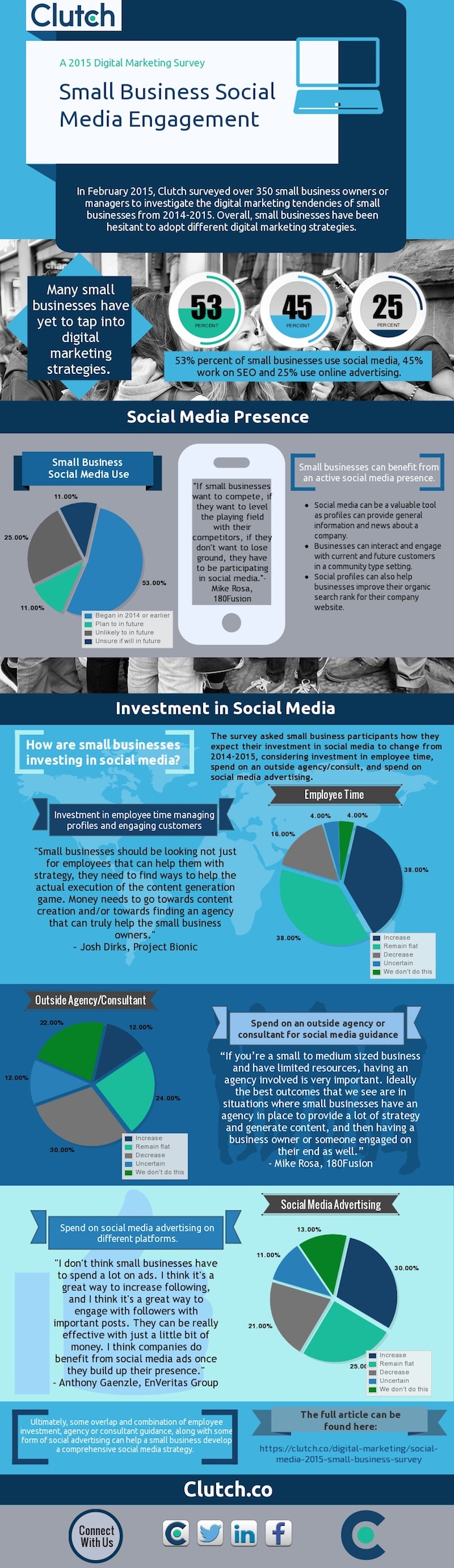
    Clutch, a B2B research firm, has released the results of its 2015 survey on small business practices in social media. The survey, which received more than 350 submissions, asked small business owners or managers to give insight into their social media and Internet marketing practices.

    The Findings

    Here are some highlights of the small businesses surveyed:

    Small business digital marketing strategies

    • 53% of small businesses use social media
    • 45% of small businesses work on SEO
    • 25% of small businesses use online advertising

    Company size

    • 60% of responding businesses have fewer than 10 employees
    • 14% have between 11 to 50 employees
    • 18% have between 51 and 250 employees
    • 8% have over 251 employees

    Investment (employee time, agency spend, ad spend)

    • 38% expect to increase their investment
    • 38% plan on keeping the same investment
    • 16% plan to decrease investment

    Clutch Infographic Small Business Survey Image Search Influence

    What Does This Mean?

    It’s weird to think back to 2006, when Facebook was essentially just for high school and college students to interact with each other through basic status updates. Nine years later, Facebook has around 1.44 billion monthly active users, yet only 53% of businesses surveyed indicated they use social media. In today’s social media age, having an active social presence is one of the easiest and most inexpensive options available to small businesses. It’s free to create a business page on Facebook, Twitter, and the other myriad of social media pages. Additionally, with the abundance of users on these sites, your customer base and target audience is already available to you; you just need to bring them to your page.

    Benefits of Social Media for Small Businesses

    When customers shop at small businesses, they tend to value the qualities of these stores versus their big-box competitors. Having a question answered on a local bike shop’s Facebook page is usually easier than reaching out to a large retailer’s customer service team. Allowing customers to post to your business’ page also gives other viewers the ability to see reviews, photos, and that the business cares about its customers by maintaining an active social presence. Maintaining a strong social presence can work as a way to “warm up” your potential customers and introduce them to your brand for a relatively low initial cost.

    Small Business Investment

    Besides simple statistics, the survey discusses the necessary investment of small businesses to ensure that their social media strategy has the best chance to be successful. While it may seem that just having a profile is enough to effectively market your business, there is additional effort that should be taken if you want to see your desired results. Employees should have a hand in the content strategy and the day-to-day operations. Various opinions can help diversify your strategy and give additional insight into your broader customer base. By spreading the responsibilities of managing the page across a few employees, each individual’s workload should not be greatly affected, while the overall product will be of high quality. Wondering how you can make time for social media and continue to run your small business? Check out these social media tips for time-starved entrepreneurs.

    Content Strategy

    In addition to diversifying where your content is coming from, it helps to vary the content you’re sharing with your followers. If you’re only talking to your current customers about products or direct business promotions, people new to your page may dismiss your content, as it doesn’t apply to them. Try to think outside of the box and delve into your potential customers’ other interests. By using this practice, your pages and posts can be beneficial in more ways than reminding customers of your weekly promotions. Writing about the best local bike trails may bring more people to your page through liking, sharing, and commenting, and it can help to organically get your store’s name into your community.

    Takeaway

    Seventy-six percent of the companies surveyed responded that they would either keep the same investment moving forward or increase it. Facebook and Twitter have shown over the past five to 10 years that the sites are not simply the most visited social media pages, but two of the most visited websites of any kind. When establishing your small business, it is important that your business could be found on Google. But in 2015, it is becoming important that your business be available on social media sites as well. Moving forward, each company should take the necessary time to see what resources can be used to begin a social media campaign. Start off by managing a page yourself, working your way up to reach an ideal social media campaign, and involving an overlap of employee involvement, agency guidance, and some use of social media advertising such as Facebook fan-building campaigns, for example, which have shown to have the best results for success with these small businesses.

    To view the complete report, visit Clutch.

    Image source:

    Clutch infographic

  • Taking Flight in 140 Characters or Less: Twitter Advertising 101

    Twitter advertising can be a great way to increase your follower base and drive traffic to both your social media pages and your website. It is relatively cost efficient, and it can help you drive the right traffic to your pages. There are three different types of Twitter ads all used for different purposes.

    Promoted Accounts

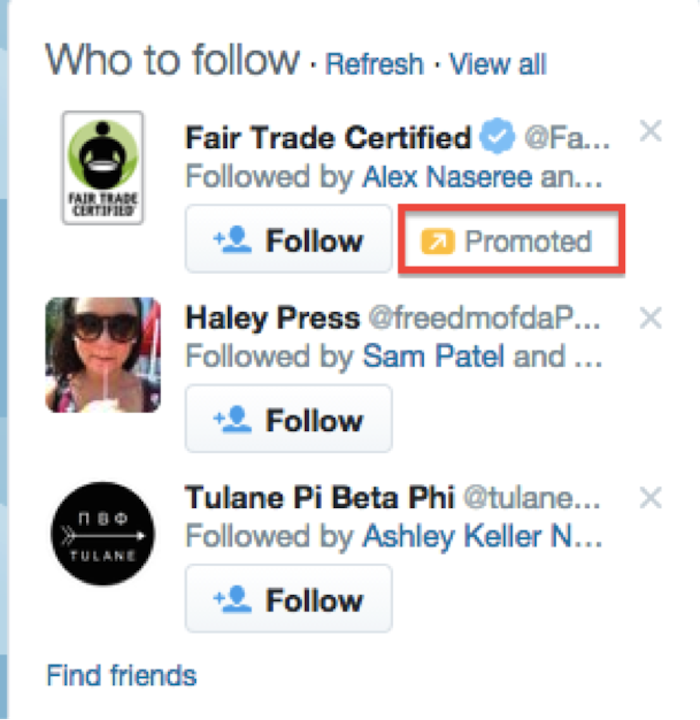
    For those of you who are familiar with Facebook advertising, this type of ad is very similar to Facebook fan-building ads. They are used to grow your follower base and draw more attention to your Twitter account. Promoted accounts typically range between $2-4 per follower. This price is dependent upon targeting: the more specifically targeted the ad is, the more it costs. The cost of these ads is subject to results, because you are charged when a user clicks on the ad and follows your account, but you do have the ability to set a maximum budget.

    Who to Follow Twitter Ads Image - Search Influence

    Promoted Tweets

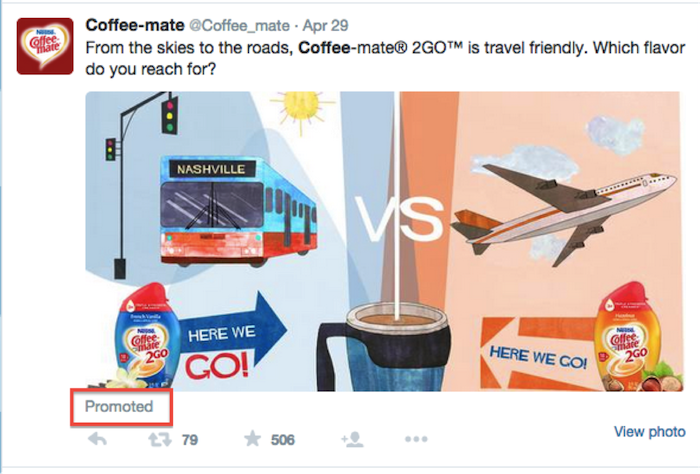
    Promoted tweets can be used to promote a specific product or service, and they can also be used to get more attention and exposure for your quality tweets. These ads help promote user engagement and show your content to people who are not necessarily following you on Twitter. These ads are also on a “pay per” basis, but instead of paying per follow, you pay per interaction. “Interacting” includes clicking, replying, retweeting, or favoriting your tweet. These interactions typically cost between $0.50-$2, depending on your targeting. Just like with the promoted accounts, you can set a budget so that you don’t end up spending more than you can afford (due to the awesome success of the campaign, of course).

    Twitter Advertising Promoted Tweet - Search Influence

    Promoted Trends

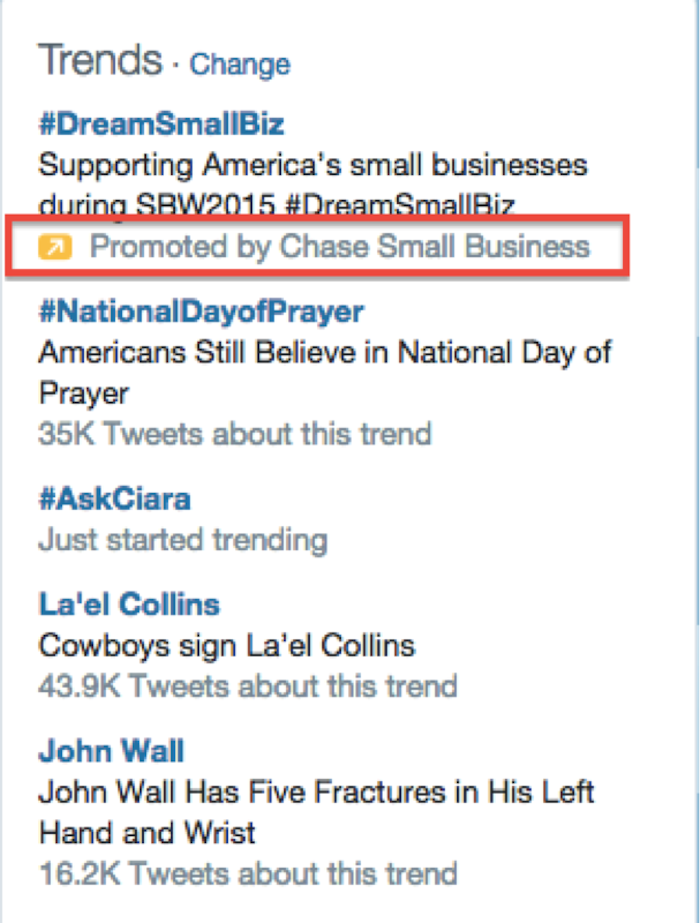
    This type of Twitter advertising is really meant for the iconic brands of the world. These will only work for you if you are looking for significant exposure in a short amount of time. Promoted trends are guaranteed placement in the “trends” section and are shown to everybody. The types of businesses that do this appeal to the masses (McDonald’s, Nike, Chase, etc.). Another reason that this type of ad only appeals to huge companies is the large price tag: it costs $200,000 to run a promoted trend for one day.

    Twitter Advertising Trends Image - Search Influence

    Targeting

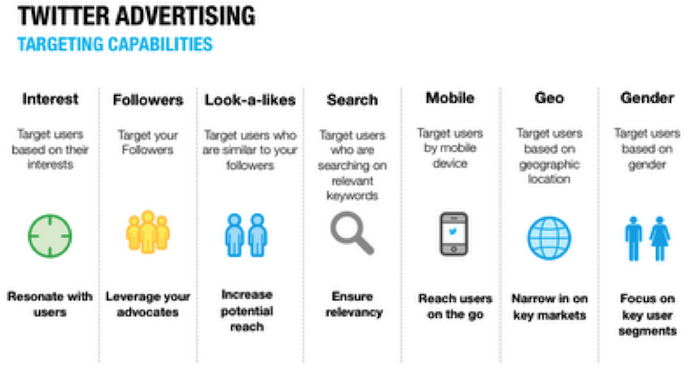
    For promoted accounts and tweets, you can get pretty granular with the targeting. Twitter allows you to target based on a multitude of different demographic and behavioral factors. Advertisers can target based on behaviors, gender, region, device (mobile, desktop, or tablet), and more. Social media targeting is a delicate balance because as you get more specific, the price per click or interaction goes up, but it is important to be specific enough that you are targeting people who are likely to convert.

    Twitter ads can be a really great way to drive more followers, engagement, and even traffic to your website. Using this ad platform also allows advertisers full access to Twitter analytics so they can see what types of tweets perform the best, which helps them choose which ones to promote in the future. Happy tweeting!

    Twitter Advertising Targeting Image - Search Influence

    Image sources:

    Twitter targeting image


  • Instagram is “Ad” it Again!

    Screen Shot 2014-03-06 at 11.46.49 AM

    Does it seem like, eventually, everything turns into a platform for advertising? For social media, that seems to be the trend when comparing networks over the years. Everything from Facebook, Google, Twitter, Pinterest, and Pandora have all followed the same trend. Using a great business plan (and a lot of foresight), they open their online “doors,” create a massive following, and after a few years succumb to the massive potential profit that is advertising.

    Instagram Ads

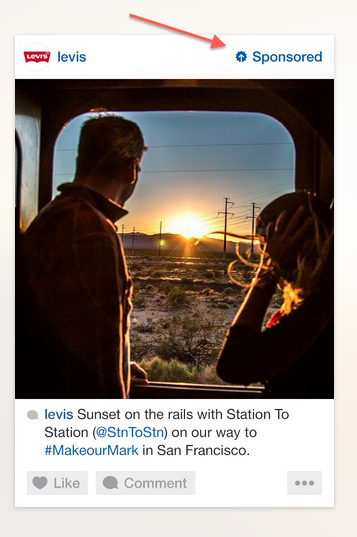
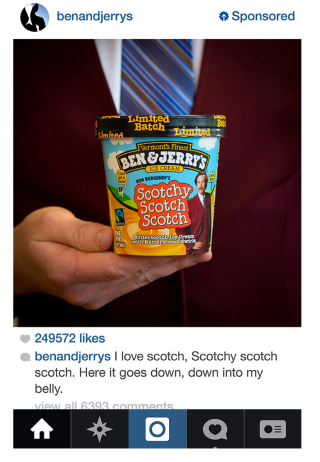
    Even though it took some time, it is clear that the mega success of our beloved Instagram has followed suit. After Facebook bought the ultra popular image sharing platform for a cool $1 billion, they didn’t waste time reaping a return on their investment. In late 2013, Instagram announced that they would start releasing “sponsored” posts that would look and feel like the other images users were already sharing. The Beta version of these sponsored posts were designed to “underwhelm” users so that they might not even know they were looking at an advertisement.

    Who Sponsors Posts?

    Screen Shot 2014-03-06 at 11.47.44 AM
    These sponsored posts were only given to a select number of brands like Ben & Jerry’s, Macy’s, Michael Kors, Lexus, and Levis, in order to test out consumer reactions. However, recent studies show that these advertisements were highly successful due to the limited number of competitors on the site, the quality of the advertisement, and the fact that it is an image instead of text. Many advertisers understand that images are far more powerful than words, which is why Instagram, along with its huge user base, is an ideal platform for marketing.

    Personalized Ads

    But how will Instagram know what brands you like or images you’re drawn to? The beauty and genius of the merger is that Facebook already knows everything about you! Between the information Facebook has already collected about you (likes, interests, hobbies, etc.) and the images that you like and follow on Instagram, advertisers are able to put more customized and targeted ads in front of you. The hope is that these ads will be so successful that companies will eventually pay more to advertise. So watch out, you might actually start seeing ads that you enjoy!

    Have you seen an ad on Instagram that grabbed your attention? Let us know in the comments!

  • Kickstarter For Advertising and Funding


    159396590Crowdfunding has been around for a while now, from major sites like Kickstarter to more niche spots, like Indiegogo. Crowd funding is a process in which a project finds its funding from a vast pool of minor investors as opposed to the traditional approach of loans, private partners, and venture capitalists. Proper utilization of this funding option has lead to product launches across a variety of fields, from independent films to music to video games.

    Recently, major artists and established companies have turned to crowdfunding to act as both an additional revenue stream as well as viral marketing. By allowing fans and potential customers to feel included in the creative process, you can increase loyalty to the brand and to the project itself. Most projects have rewards associated with different levels of fund contribution, from early copies of products to names appearing in the credits of films and albums.

    Small businesses can even capitalize on this process by starting projects to fund future store or service expansions, and future product lines. A great example of a potential user would be a clothing boutique that sells a mixture a vintage clothing and modern, locally sourced products. The boutique could start a crowdfunding project to expand the production of an in-house jewelry line, setting a funding goal of slightly higher than the cost of an item. This essentially results in pre sales of these items, as well as viral advertising amongst current and potential customers.

    Avoid potential pitfalls, the major one being over promising. Make sure you understand the entire cost and potential extra expense associated with any new line or expansion and set your funding goal for above that amount. This way you will have all the capital you need to deliver the final product to your numerous investor/customers. And if you don’t meet your fundraising goal, sites like Kickstarter refund the money to the investors so you don’t have any unmet obligations among your existing customers.

  • Top 3 Things to Check in AdWords “Dimensions” Tab

    The Dimensions tab in AdWords is a very useful area. You can really dig into a variety of different data sets to analyze your PPC performance. This data can give you valuable information on how best to optimize your campaign to maximize your budget, especially if you are limited by budget. There are a TON of things you can see and analyze in the Dimensions tab, but below are my three favorites.

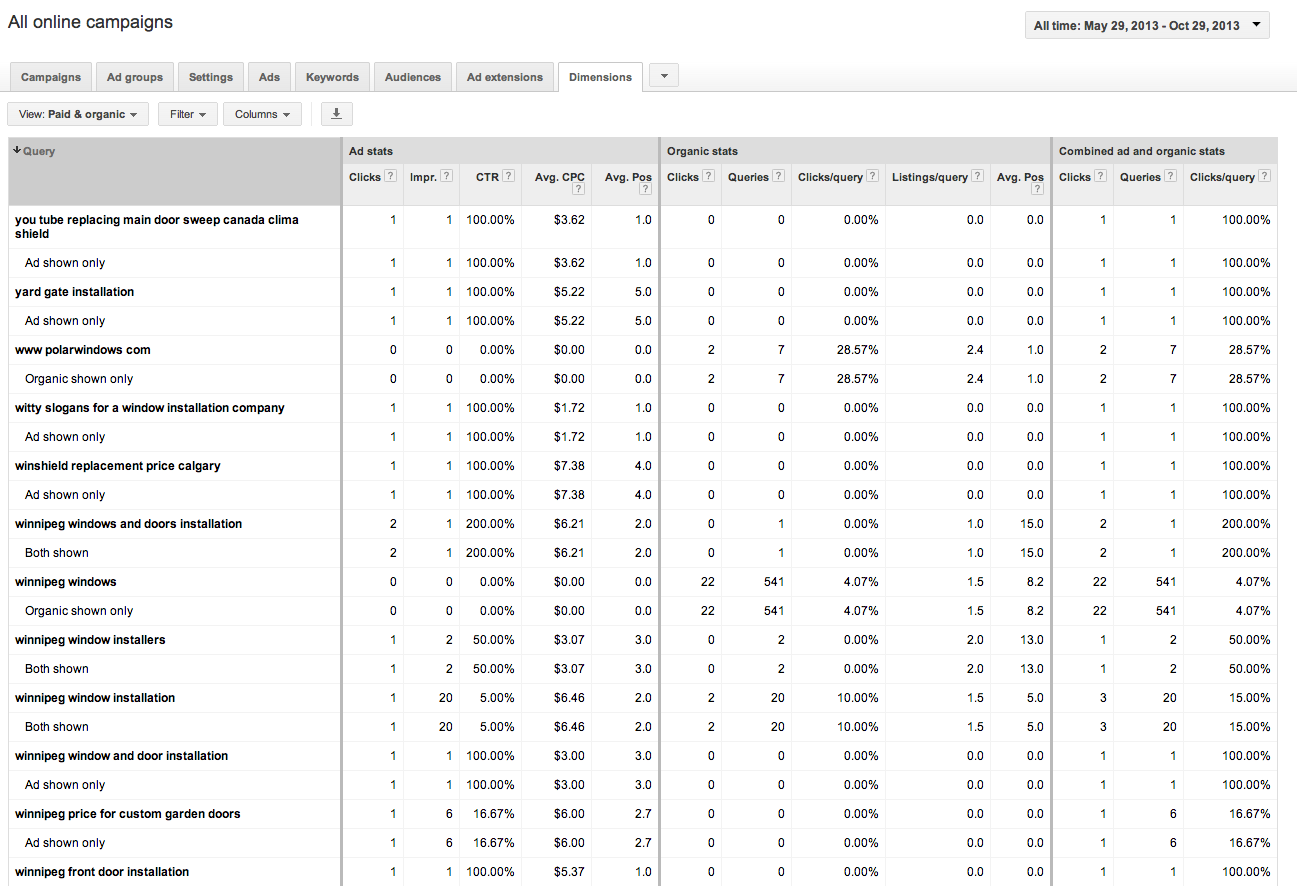
    1. Paid & Organic

    A recently added feature, this table shows how your paid and organic results performed for every search that triggered an ad or organic listing. You can view your click through rates (CTR) for both paid and organic searches individually, but also the CTR for when you have both an ad and an organic listing displaying in the SERPs. This tool can be great to convince clients the value of paid search (even if they have great organic results!). You can also use this to gather some keyword data for making decisions for your SEO campaign given that Google’s decision to make all organic searches (not provided).

    Best Use: Gather information on how your ads perform when they are shown with your organic results.

    Learn how to link your AdWords account and Webmaster Tools account to view this data.

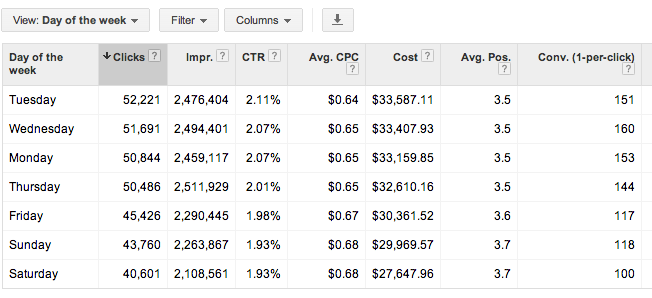
    2. Time > Day of the Week

    This report shows you all stats for each day of the week over your selected date range. You can determine which day performs the best by meeting your defined KPIs. You can then adjust your bids based on the performance you see. Are Tuesdays and Wednesdays higher converting than Saturdays? Focus on those days!

    Best Use: Determine which day of the week is highest converting, and spend budget there.

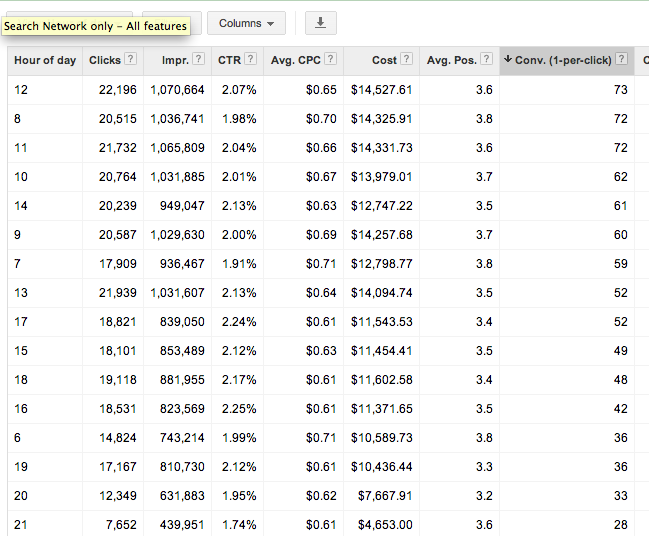
    3. Time > Hour of day

    Shows you cummulative stats for hours of the day for the selected date range. As with the above, you can determine which hours of the day best meet your goals (impressions, clicks, conversions) and adjust your bids accordingly. Be mindful that if you are limited by budget, the hours later in the day may have lower performance due to the budget constraints. You may want to test day parting for hours later in the day if you cannot adjust your daily or monthly budget to determine if those later hours are actually more successful.

    Best Use: Determine which hours of the day convert best and set up dayparting to spend more budget during these times.

    Check out the dimensions tab for yourself and get familiar with the data that is available. There are many more reports available that give you actionable information to better optimize your campaigns. Which are your favorites? Let us know in the comments!