Tag: digital advertising

  • 10 Winning Higher Education Marketing Strategies

    10 Winning Higher Education Marketing Strategies

    [ez-toc]

    Research shows that 93% of Americans think they are better drivers than average, 90% of teachers think they are more skilled than their peers, and this overestimation is pervasive across many skills — including logic tests.

    For the typical higher education institution, effective marketing strategies are like that.

    Mathematically speaking, it’s not possible for a majority to be “above average.”

    We analyzed the top 10 results in Google for “Higher Education Marketing Strategies” and extracted some really useful learnings. First, I’ll share the most commonly cited strategies, and then give you a skimmable summary of each article.

    Top 10 Higher Education Marketing Strategies

    These strategies are the most frequently cited in the following articles, in order of prominence.

    • SEO (Search Engine Optimization): Emphasized across multiple articles. Ensuring high visibility on search engines is critical for Higher Education SEO.
    • Social Media Marketing: Highlighted in almost all articles for engaging authentically on each social media platform preferred by younger generations.
    • Email Marketing: A recurring theme emphasizing personalization, automation, and AI-powered programs.
    • Video Content: Both short-form and long-form videos, including live streaming and platforms like TikTok and YouTube, are great ways to educate prospective students.
    • Personalization: Tailoring content and communication to individual preferences, including personalized messaging and content.
    • PPC (Pay-Per-Click) and Digital Advertising: Discussed in multiple articles for targeted advertising on platforms like Facebook Ads and Google Ads.
    • Content Marketing: The importance of creating engaging and informative content, such as blogs, podcasts, and videos.
    • Branding: Consistent branding across all marketing channels, including a recognizable voice and image.
    • Chatbots and Conversational Marketing: Highlighted in several articles for real-time, one-to-one connections and instant answers.
    • Data-Driven Strategies: Using data to inform marketing decisions, track KPIs, and understand the audience.

    Digital Marketing and Marketing Strategy Opportunities

    What we learned in the UPCEA SEO research study was that there are some big gaps in the university marketing strategy and the typical higher education website for attracting prospective students.


    When we got deeper into the data, we saw that the higher education industry is overly reliant on certain digital marketing channels. A good marketing campaign addresses the full funnel. To attract students, you must increase search engine visibility, maintain a strong social media presence, and ensure you’re doing all you can to target prospective students.

    So, with all the great tactics and technologies to attract prospective students (virtual campus tours, student ambassadors, and taking advantage of digital technology to highlight student activities), one has to wonder why other higher ed institutions seem to be attracting more new students.

    As I’m sure you’re aware, Google and the other search engines know everything, right? So, I thought, why not let Google guide me? I wanted to see how other higher ed marketers were thinking about the strategy to build brand awareness and get in front of prospective students.

    I think it’s important to take content created by marketers talking about a marketing strategy with a grain of salt. We can, however, learn a lot when we analyze the frequency with which these articles cite specific tactics, platforms, or strategies to get in front of prospective students for educational institutions.

    Effective Higher Education Marketing Strategies
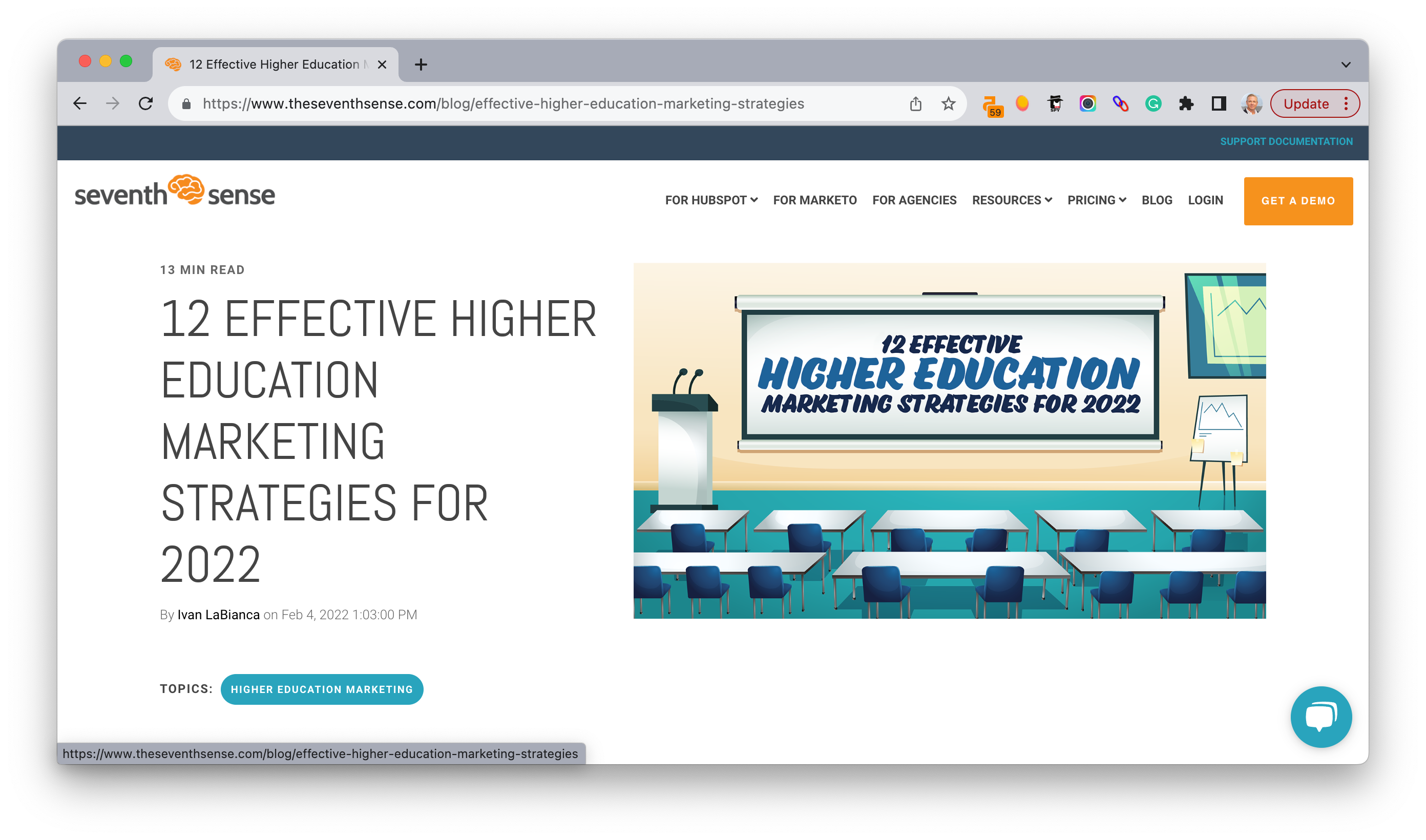
    Effective Higher Education Marketing Strategies -www.theseventhsense.com-blog-effective-higher-education-marketing-strategies

    https://www.theseventhsense.com/blog/effective-higher-education-marketing-strategies

    My perspective: It’s surprising to see this continued focus on the pandemic. From what we’ve seen, things are different — the pandemic is done in most people’s minds, and we’re now in the “new normal.”

    The article discusses the challenges faced by university marketers due to the pandemic and the downturn in undergraduate student enrollment. It provides 12 strategies for higher education marketing:

    1. Centralize Strategy and Reporting: Emphasizes the importance of centralizing marketing expenditures and standardizing KPIs.
    2. Track the Right KPIs: Highlights the importance of tracking call-to-action conversion rates, traffic sources, social media engagement, and cost of acquisition.
    3. Use Marketing Automation: Discusses the benefits of tracking digital interactions with prospective students.
    4. Optimize Your Email Program With AI: Offers email deliverability and engagement solutions.
    5. Improve SEO: Stresses the importance of using relevant keywords and answering prospective students’ queries.
    6. Build a Digital-Friendly Brand: Talks about updating branding to be more digital-friendly.
    7. Live Streaming: Suggests using live streams as an authentic way to connect with potential students.
    8. Personalized Communication: Emphasizes the importance of segmenting audiences and tailoring communication.
    9. Higher Education Marketing on Social Media: Provides various strategies to maximize social media efforts.
    10. Personalized Mobile-Friendly Website: Highlights the importance of a responsive and personalized website.
    11. Chatbots for Higher Education Marketing: Discusses the benefits of using chatbots for immediate responses.
    12. Don’t Forget Visuals and Aesthetics: Emphasizes the importance of appealing visuals for the Gen Z audience.

    Unique Positions:

    • The article emphasizes the importance of data-driven strategies, especially in the context of the challenges posed by the pandemic.
    • It highlights the significance of understanding and catering to the preferences of Gen Z, who are the next in line for higher education.

    Conclusion: The article concludes by emphasizing that marketing shouldn’t be stagnant but should evolve with the university’s overall goals.

    Higher Education Marketing: Strategies and Trends to Know
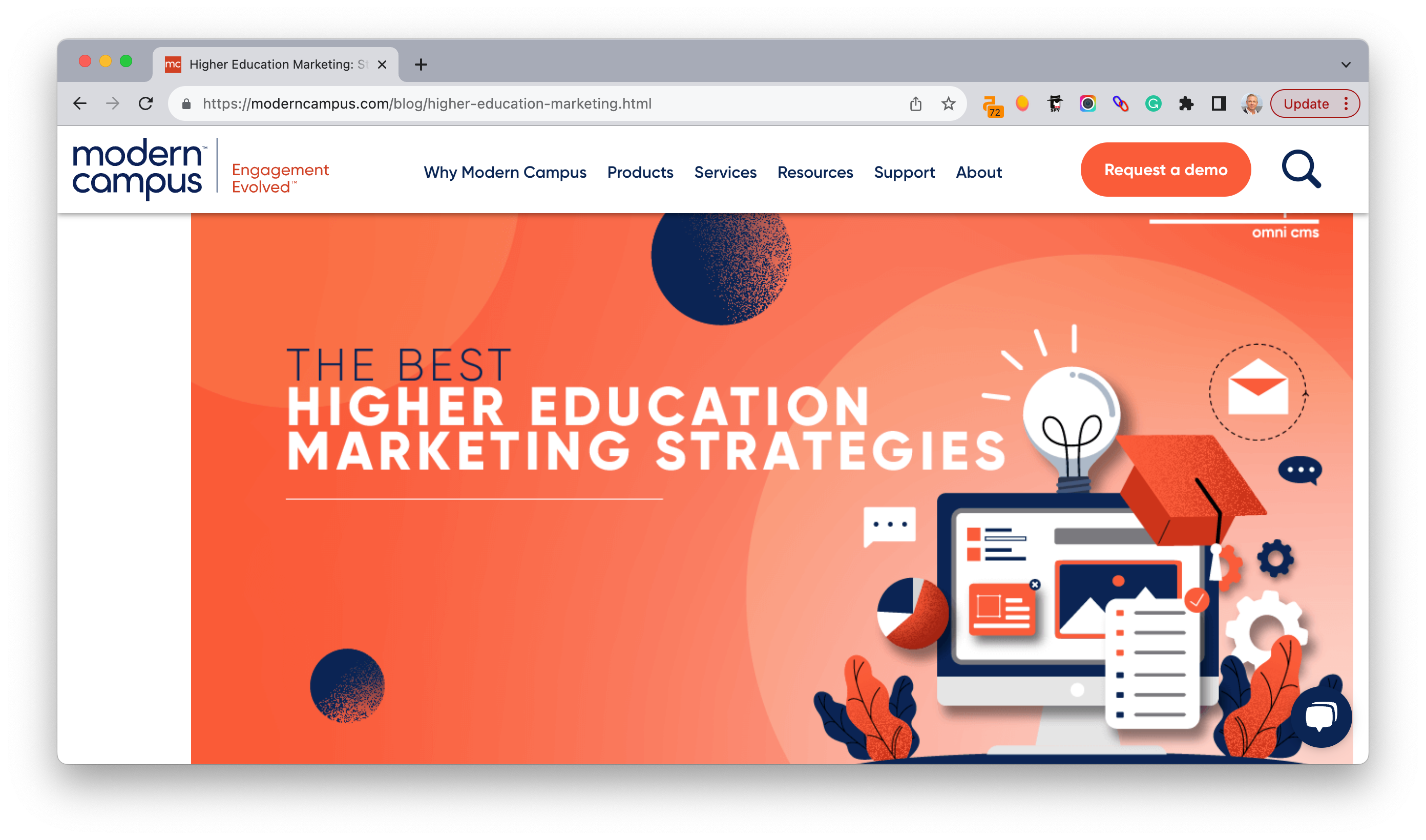
    Higher Education Marketing - Strategies and Trends to Know-moderncampus.com-blog-higher-education-marketing

    https://moderncampus.com/blog/higher-education-marketing.html

    My perspective: It’s interesting to see a focus on the rise of Instagram. TikTok is more timely and clearly the place where Gen Z and beyond are starting their product experiences.

    The article emphasizes the importance of refining marketing strategies for higher education institutions, especially in light of decreasing college enrollments.

    It provides insights into current higher ed trends and offers strategies to enhance student recruitment.

    Key Questions for Your Higher Education Marketing Plan:

    • Identifying target audience and personas.
    • Determining KPIs for engagement.
    • Establishing the cornerstone of the marketing plan.
    • Differentiating from other institutions.

    Platforms to Market Your Educational Offerings:

    • Text messages, especially during the student enrollment process.
    • Social media platforms like Twitter, Facebook, LinkedIn, Instagram, and Snapchat.
    • Email, direct mail, phone calls, and websites.

    Higher Education Marketing Strategies:

    1. Use a CMS Built for Higher Education: Implement a quality web content management system (CMS) tailored for educational institutions to address challenges like outdated content, complicated coding, inconsistent branding, and low search rankings.
    2. Get Current Students Involved: Engage existing students to provide authentic insights into campus life.
    3. Choose a CMS With an Email Module: Emphasizes personalized and targeted email marketing.
    4. Focus on Video Content: Highlights the importance of integrating video content into marketing strategies.
    5. Keep Track of Your Brand: Monitor the digital image and reputation of the institution.
    6. Use the Power of Social Media: Utilize a mix of social media platforms for effective messaging.
    7. Use Videos and Images on Social Media: Emphasizes the growing preference for visual content on platforms like Instagram, YouTube, and TikTok.
    8. Personalize at Scale: Deliver personalized content across various platforms.
    9. Include SEO and Conversion in Your Program Pages: Optimize program pages for search engines and conversions.
    10. Target Parents: Recognize the influential role of parents in students’ college decisions.

    Unique Positions:

    • The article underscores the importance of authenticity, especially when involving current students in marketing efforts.
    • It highlights the shift in the relevance of different social media platforms, noting the rise of Instagram and the decline of Facebook in the context of college planning.

    Conclusion: The article concludes by emphasizing the significance of a quality website and the potential of a CMS to fine-tune a college or university’s marketing strategy.


    Analyzing Effective Higher Education Marketing Strategies
    Analyzing Effective Higher Education Marketing Strategies-www.ama.org-analyzing-effective-higher-education-marketing-strategies

    https://www.ama.org/analyzing-effective-higher-education-marketing-strategies/

    My perspective: I wonder if the author’s suggestion of the value of traditional marketing is pandering to the old guard. Sure, brochures, commercials, etc., may appeal to the parents, but the students are on social media and search.

    The article delves into the unique challenges of marketing in the higher education sector, emphasizing the need for institutions to create a superior academic environment while facing intense competition.

    It underscores the importance of an effective marketing strategy blending traditional and digital methods to achieve institutional goals.

    Why Is it Important to Prioritize Marketing?

    • Higher education institutions need to maximize enrollment and diversify their student and faculty demographics.
    • They must cater to various stakeholders: students, parents, faculty, and donors.

    Traditional Marketing in Higher Education:

    • Print: Newspaper or magazine ads, billboards, and stationery.
    • Mail: Targeted ads, imagery, and product samples.
    • Radio: Over-the-air ads, jingles, and testimonials.
    • Television: Video ads, customer reviews, and product demonstrations.
    • Unique Assets: Campus tours and visits, research and development, arts, music, and sports.

    Digital Marketing Strategies:

    1. Email Marketing: Deliver branded messages, newsletters, and offers.
    2. Social Media Marketing (SMM): Disseminate content across channels and engage with influencers.
    3. Content Marketing: Use blogs, podcasts, videos, etc., to enhance branding.
    4. Search Engine Optimization (SEO): Enhance online presence and search engine ranking.
    5. Search Engine Marketing (SEM): Utilize paid placement and digital ads.
    6. Pay-Per-Click (PPC): Cost-effective advertising where payment is made only when the ad is clicked.

    Ideal Marketing Strategy for Higher Education:

    • Blend traditional and digital methods.
    • Maintain a dynamic website showcasing institutional value.
    • Engage in SEO and SEM efforts.
    • Execute a comprehensive digital advertising strategy.
    • Implement a multifaceted SSM plan.
    • Produce diverse content across various media.
    • Secure advertising spots in local, regional, and national media.
    • Leverage unique assets like research, campus visits, arts, music, and sports.
    • Highlight notable faculty and alumni.

    Unique Positions:

    • The article emphasizes the two-way nature of digital marketing, allowing institutions to have meaningful conversations with interested parties.
    • It suggests that, while traditional marketing methods remain relevant, digital marketing has taken precedence in the modern age.

    Conclusion: The article concludes by promoting the benefits of joining the American Marketing Association (AMA) for institutions looking to elevate their marketing strategies.


    The Ultimate Guide to Higher Education Marketing Strategies
    The Ultimate Guide to Higher Education Marketing Strategies-myemma.com-blog-the-ultimate-guide-to-higher-education-marketing-strategies

    https://myemma.com/blog/the-ultimate-guide-to-higher-education-marketing-strategies/

    My perspective: Ultimate is a bit of a stretch, but I do appreciate the view on good copy and the needs of various university stakeholders, like advancement, athletics, and current students.

    The article addresses the challenges higher education marketers face in today’s digital age. It emphasizes the shift from traditional mass marketing methods, like glossy brochures, to more personalized strategies that resonate with modern students.

    Defining the Goals of Your Higher Education Marketing Strategies:

    1. Marketing for Enrollment: With declining enrollments, targeting prospective students and their parents using digital channels is crucial. Strategies include:
      • Publishing informational blog posts and podcasts.
      • Engaging authentically on social media.
      • Collaborating with micro-influencers.
      • Creating video content, including live streams.
      • Adopting a mobile-first marketing approach.
    2. Marketing for Advancement: This focuses on building relationships with alumni and friends of the institution, often for fundraising purposes.
    3. Marketing for Athletics: Promoting athletic programs to boost interest, spirit, and revenue.
    4. Marketing for Student Involvement: Inform enrolled students about on-campus activities and opportunities.

    The Role of Email in Higher Education Marketing Strategies:

    • Email marketing offers a high return on investment (ROI) across various aspects of higher education marketing.
    • Effective email strategies include automation, mobile-friendliness, relevant content, inclusion of images and videos, and personalization.

    Using Segmentation and Personalization for Prospective Students:

    • Personalized email subject lines are more likely to be opened.
    • Segmentation ensures content relevance, further increasing open rates.

    Consistent Branding:

    • Emails should maintain consistent branding, using recognizable colors, fonts, and logos.

    Killer Subject Lines and Captivating Content:

    • Subject lines should be personable, actionable, and unique.
    • Content should be relevant and valuable to the reader.

    The Importance of Testing:

    • A/B testing or split testing is crucial to determine the effectiveness of email campaigns.
    • Testing provides data to refine campaigns for optimal results.

    Conclusion: Higher education marketing strategies are essential for institutions to overcome challenges and achieve their goals. Email marketing, in particular, is a powerful tool that can be tailored for various purposes, from boosting enrollment to promoting athletic programs. The article emphasizes the importance of personalization, segmentation, and consistent branding in email campaigns to engage and convert recipients effectively.


    12 Higher Education Marketing Strategies for 2022
    12 Higher Education Marketing Strategies for 2022-comboapp.com-higher-education-marketing-agency-higher-education-marketing-strategies

    https://comboapp.com/higher-education-marketing-agency/higher-education-marketing-strategies

    My perspective: I find the idea of marketing “Higher Education” as a concept compelling. I recently had a conversation with one of our summer interns in which he asked, “Do I even need a degree?”

    There are definitely fields, like computer science, for instance, where we’re learning that degrees don’t necessarily separate the wheat from the chaff.

    The article emphasizes the long-term changes in higher education institutions due to the pandemic, highlighting the importance of distance learning programs, local student outreach, and improved campus safety. It presents 12 techniques for an effective higher education marketing strategy:

    1. Branding: Focuses on crafting an identity that represents both the school and its student body. Authenticity is key.
    2. Search Engine Optimization (SEO): Highlights the importance of high rankings on search engines and lists several SEO techniques.
    3. A Great Website Experience: Stresses the importance of mobile-first design, speed, and ease of use.
    4. Social Media Marketing: Discusses the significance of authentic engagement on social media platforms, especially for Gen Z and millennials.
    5. Live Streaming: Emphasizes the use of platforms like Facebook Live, Instagram Live, and YouTube for events, Q&A sessions, and classes.
    6. Email Marketing: Highlights the preference of students for email communication and the importance of personalization and segmentation.
    7. Interactive Advertising: Describes the potential of interactive ads, such as games and story-based video ads.
    8. Leveraging Alumni and Students: Discusses the power of word-of-mouth marketing and the importance of reviews and testimonials from current and former students.
    9. Distance Learning: Highlights the increasing demand for distance learning options post-pandemic and the opportunities it presents for institutions.
    10. Pay Per Click Advertising: Discusses the benefits of targeted advertising on platforms like Facebook, Google Ads, and Bing Ads.
    11. Short-Form Video Content: Emphasizes the importance of platforms like TikTok, Instagram Reels, and YouTube Shorts in engaging potential students.
    12. Focus on Positive Career Outcomes: Addresses the ongoing discussions about the value of higher education and the importance of showcasing the tangible benefits of a college education, such as high-paying jobs after graduation.

    Unique Positions:

    • The article stresses the need for institutions to market themselves and the very idea of higher education in light of recent discussions questioning its value.
    • It highlights the blend of traditional and modern marketing strategies, emphasizing the importance of authenticity in all communications.

    Conclusion: The article concludes by promoting ComboApp as a full-cycle higher education marketing agency that can assist institutions in crafting a comprehensive digital marketing strategy.


    8 Higher Ed Digital Marketing Tactics & Trends for 2023
    8 Higher Ed Digital Marketing Tactics & Trends for 2023-www.oho.com-blog-8-higher-ed-digital-marketing-tactics-trends-2023

    https://www.oho.com/blog/8-higher-ed-digital-marketing-tactics-trends-2023

    My perspective: Social will continue to be a tremendous way to get in front of future university students. Even though we’re no longer talking about the “Zero moment of truth” (thank goodness), students will continue to be exposed to our schools and programs before they even know they’re looking.

    The article sheds light on the evolving landscape of higher education marketing in 2022, emphasizing the need for institutions to adapt to the digital age and the unique preferences of Gen Z.

    1. Understanding the Crowdsourcing Habits of Gen Z: Gen Z’s decision-making is described as “crowdsourcing,” where they seek opinions from peers, influencers, and reviewers. Institutions should involve them in conversations and connect with their sense of humor, especially on platforms like TikTok.
    2. Reaching Gen Z With Conversational Marketing: The trend of “conversational marketing” is growing, emphasizing real-time, one-to-one connections to answer questions and assist consumers. University websites should incorporate a human voice and chat opportunities.
    3. Data Insights Shedding More Light on Higher Ed Audiences: Research indicates that understanding the audience leads to better marketing outcomes. Universities are using CRM systems and other software to analyze the student journey and understand their motivations.
    4. Growing Emphasis on Personalized Messaging: Digital content engages young people, but they are wary of overt marketing. Personalized, targeted messaging helps universities connect with students and boost conversions.
    5. Growing Preferences for Short-Form Video: Universities should incorporate short-form videos (around 90 seconds) into their marketing strategies. Examples include video campus tours, answers to FAQs, and student-guided mini-tours.

    Unique Positions:

    • The article emphasizes the importance of understanding and connecting with Gen Z’s unique preferences, especially their reliance on crowdsourcing for decision-making.
    • It highlights the significance of conversational marketing and the need for human interaction, even in the digital age.

    Conclusion: The article concludes by promoting Unibuddy, a platform designed for students that offers tools to enhance higher education marketing strategies in line with current trends.

    15 Best Marketing Strategies for Universities
    15 Best Marketing Strategies for Universities- penji.co-marketing-strategies-for-universities

    https://penji.co/marketing-strategies-for-universities/

    My perspective: It’s not surprising Penji would focus on social and ad creative since they are a marketplace for creative work. I’m not familiar with Penji, but it looks like a new-style iteration of a “99 Designs” concept.

    The article underscores the importance of marketing in universities, especially given the competitive nature of higher education marketing. It provides a comprehensive list of strategies to enhance university branding and appeal to a younger audience.

    1. Social Media: Emphasizes the shift from traditional mail to social media platforms to engage with prospective students. Universities should be present where students are active and ensure their content aligns with the platform’s audience.
    2. User-Generated Posts: Encourages universities to monitor and engage with content created by students about the institution. This provides insights into the university’s perception and offers opportunities for authentic engagement.
    3. Define Your Brand Image: Universities should have a consistent voice and image across all marketing channels. This helps in creating a recognizable and trustworthy brand.
    4. Focus on the Students: Marketing strategies should prioritize the needs and interests of students, both current and prospective. This includes promoting events, assistance, and showcasing the university’s supportive environment.
    5. Video Marketing on All Platforms: Highlights the increasing importance of short-form video content on platforms like YouTube. Videos offer a dynamic way to showcase campus life, events, and more.
    6. Statistics: Using data to showcase the university’s achievements, such as high graduation rates, can be a compelling marketing tool.
    7. Promote Sitting in Classes Before Enrolling: Offering prospective students the chance to experience lectures can help in their decision-making process.
    8. SEO (Search Engine Optimization): Ensuring the university’s website ranks high on search engines is crucial for visibility.
    9. Showcase Success: Highlighting the achievements of alumni can serve as a testament to the quality of education provided.
    10. Embrace Diversity: Marketing campaigns should reflect the diverse student body and cater to non-traditional students as well.
    11. Use Infographics: Visual representations of data can be more engaging and easier to digest than text-heavy content.
    12. Paid Traffic: Utilizing paid ads, especially on platforms like Instagram, can help in reaching a wider audience.
    13. Interactive Webinars: Hosting webinars can provide valuable information to prospective students and give them a taste of the university’s teaching style.
    14. Downloadable Guides: Offering resources to help students prepare for college can be a valuable tool in the decision-making process.
    15. Email Marketing: Automated email series tailored to the student’s application process stage can provide personalized guidance.

    Unique Positions:

    • The article emphasizes the importance of understanding the younger generation’s preferences and adjusting marketing strategies accordingly.
    • It highlights graphic design’s role in enhancing marketing campaigns’ effectiveness.

    Conclusion: The article concludes by promoting Penji, a graphic design service, as a valuable tool for universities looking to enhance their marketing strategies with quality designs.

    16 Effective Digital Marketing Strategies for Higher Education in 2023
    https://www.thinkorion.com/blog/digital-marketing-for-universities

    My perspective: I appreciate the focus on real-time and alumni engagement. We’ve been spoiled by instant responses and always on media.
    And, students want to know what’s out there after attainment of that degree or certificate. Alumni can help tell this story much better than administrators or (gasp) marketers.

    The article delves into the competitive landscape of higher education marketing, emphasizing the importance of standing out to attract the best students. It provides a comprehensive list of strategies to enhance university visibility and appeal:

    1. Maximize Organic Traffic through Optimized SEO Techniques: Emphasizes the importance of SEO for attracting the right students. It covers aspects like keyword research, internal linking, backlinking, technical audits, and on-page optimization.
    2. Accelerate Your Sales With Proven PPC Techniques: Discusses the benefits of pay-per-click advertising for promoting university programs and increasing web traffic.
    3. Attract, Engage, and Retain Students With a Winning Content Marketing Strategy: Highlights the importance of creating engaging and informative content to resonate with potential students.
    4. Elevate Your Brand Visibility With Google Display Advertising: Discusses the effectiveness of digital display ads over traditional billboard ads, especially on Google’s Display Network.
    5. Unlock the Power of Social Media: Explores the role of social media platforms like Twitter, Instagram, LinkedIn, and Facebook in connecting with potential students.
    6. Use Exclusive Email Marketing Campaigns to Promote: Emphasizes the continued relevance of email marketing, stressing the importance of personalization and using AI-powered email programs.
    7. Make Informed Decisions With Advanced Analysis and Tracking: Discusses the importance of setting specific tracking goals beyond what Google Analytics provides.
    8. Utilize Video Marketing to its Fullest Potential: Highlights the engagement potential of video content, both in long and short formats.
    9. Inspire Student Success With Real-Life Stories: Advocates for sharing student success stories to showcase the value of the university’s programs.
    10. Maximize Your Reach With Influencer Marketing: Discusses the power of influencer marketing, especially leveraging successful alumni.
    11. Boost Engagement With Short and Snappy Video Content: Emphasizes the importance of short video content, especially in the wake of reduced on-campus visits due to COVID-19.
    12. Optimize for Featured Snippets: Discusses the importance of ranking in Google’s featured snippet for increased visibility.
    13. Reach Your Ideal Customers With Lookalike Audience Targeting: Highlights the benefits of using lookalike audience models to improve brand reach.
    14. Improve Customer Service With Chatbots Integration: Discusses the rise of conversational marketing and the effectiveness of chatbots in providing instant answers.
    15. Build Connections With Live Streaming: Emphasizes the engagement potential of live streaming over traditional content.
    16. Hire a Professional Higher Education Digital Marketing Agency: Advocates for seeking professional assistance if universities lack the resources or expertise for effective digital marketing.

    Unique Positions:

    • The article emphasizes the blend of traditional and modern marketing strategies, highlighting the importance of adapting to the evolving digital landscape.
    • It underscores the importance of personalization, real-time engagement, and leveraging alumni for effective marketing.

    Conclusion: The article concludes by emphasizing the importance of current marketing strategies for universities to attract future leaders. It also suggests hiring a higher-ed marketing agency for those lacking the time or resources to run effective campaigns.


    Effective Higher Education Marketing Strategies
    Effective Higher Education Marketing Strategies-shorthand.com-the-craft-effective-higher-education-marketing-index.html

    https://shorthand.com/the-craft/effective-higher-education-marketing/index.html

    My perspective: OK, I know it’s shallow, but I like the look and feel of this site. It’s got a very medium-esque vibe.

    On a more serious note, the authors point out one of my constant refrains: The decentralized nature of a higher education marketing strategy is costing universities dearly. Very few schools have central oversight and are therefore cannibalizing their own messaging and budgets.

    The article delves into the complexities of marketing in higher education, highlighting the unique challenges faced by universities. One of the primary challenges is the siloed nature of marketing in universities. While universities typically have a central marketing team focused on boosting student enrollment and driving donations, there are also numerous smaller teams across various academic departments and schools, each with slightly different target audiences.

    These smaller teams often work independently on their marketing strategies, employing a wide range of tactics such as social media, SEO, email marketing automation, PPC campaigns, live streaming video content, direct mail, in-person events, and even chatbot scripts. This decentralized approach can lead to several issues:

    • Dilution of the Brand: Inconsistent application of messaging and brand guidelines can weaken the overall brand identity.
    • Missed Opportunities: Due to weak communication channels, potential marketing opportunities might be overlooked or not fully capitalized upon.
    • Decreased Morale: Teams or individuals working in isolation can experience reduced morale.

    Despite these challenges, the article offers hope by suggesting nine strategies to promote more cohesive and effective higher education marketing. While the specific strategies aren’t detailed in the provided excerpt, the article emphasizes the importance of cohesive marketing efforts across the institution.

    Unique Positions:

    • The article highlights the unique challenges higher education institutions face due to the decentralized nature of their marketing efforts.
    • It underscores the importance of a unified approach to marketing to ensure consistent branding and messaging.

    Noteworthy Mentions:

    • The article references recent engagement examples related to the pandemic, suggesting that universities have proactively created content around COVID-19.
    • The University of Queensland is highlighted for its digital publication, “Contact,” which offers an engaging and interactive user experience while catering to those who prefer traditional print magazines.

    Final Thoughts

    As you can see, there are a number of ways to get in front of students for your school.

    The consensus seems to be that SEO, social media marketing and advertising, email, and PPC are great ways to invest your marketing dollars.

    It’s surprising to see how little attention is paid in the articles to analysis, tracking, and reporting, given how many of the UPCEA Higher Education SEO Study respondents indicate this is lacking.

    As management icon Peter Drucker is famously quoted, “What gets measured gets managed.” All the landing pages, tactics, and strategies in the world won’t make us successful if we don’t know what’s working.

    For more tips to create a winning higher education marketing strategy, check out our Higher Education Marketing Resources & Guides. For more information about higher education marketing – and to learn more about services like our SEO Roadmap for universities, contact our team at Search Influence today.
     

  • Why Advertising Costs Spiked in 2021, Particularly in Q4 (and What You Can Do About It)

    Key Insights

    • Advertising costs tend to be higher in Quarter 4 for all industries
    • The iOS14 update in 2021 and the pandemic in 2020 magnified these trends in 2021
    • Plan ahead and anticipate this spike by creating a full-funnel strategy in advance to help offset these costs

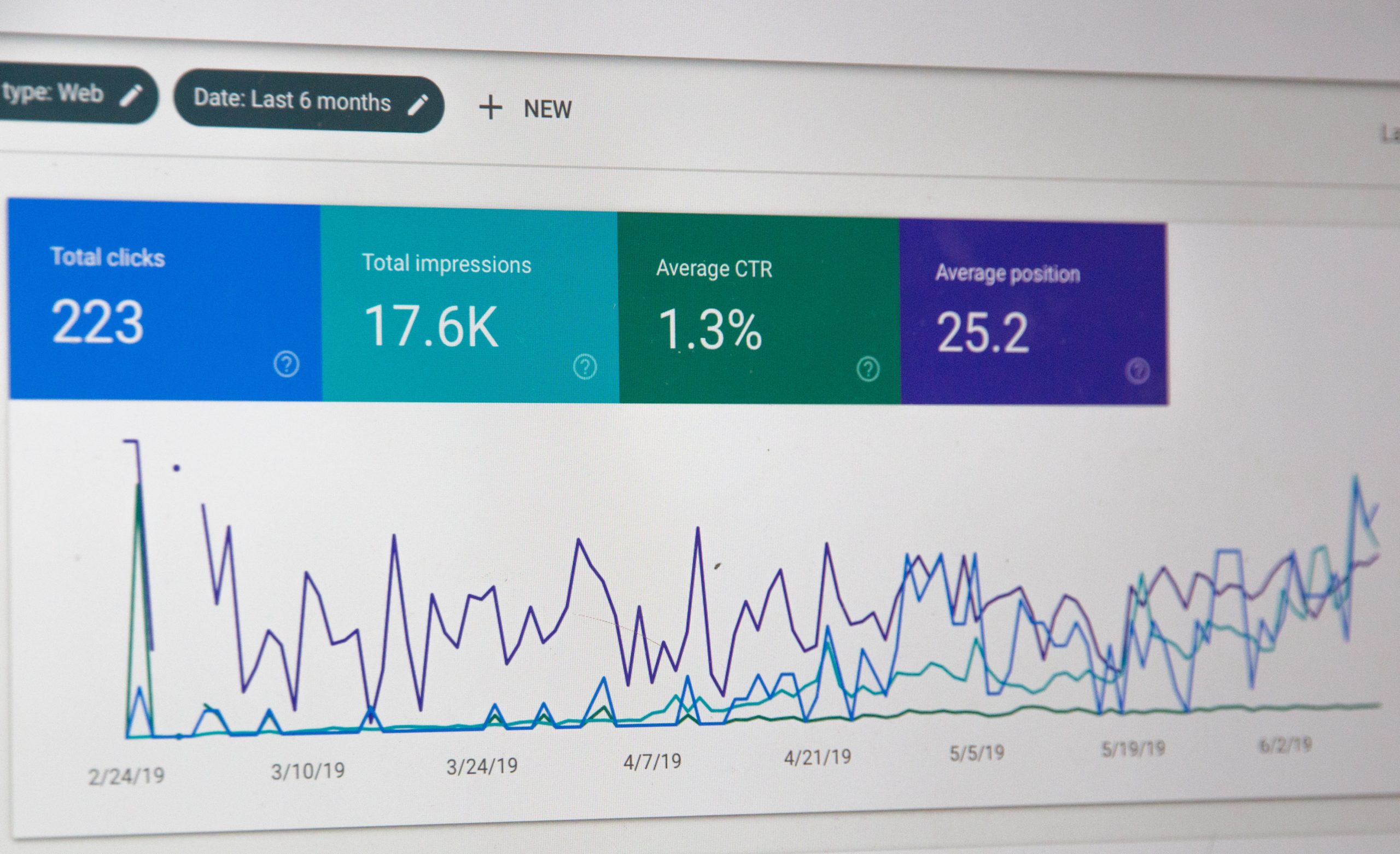
    Screenshot of google search console data platform

    As we make our way into 2022, you may be high-fiving your team as you happily report that cost per impression has dropped across your Facebook campaigns, particularly for month-over-month comparisons. While this is exciting to see in the first quarter of the new year, it’s not exactly a coincidence. In fact, it’s actually the result of a trend we see in quarter 4 of the year prior. Q4 is notorious for driving advertising costs to their highest rates of the year. This is an important topic to address because it affects nearly all industries and can negatively affect your bottom line as the year comes to a close. The biggest driver of elevated CPMs during this time is increased competition.

    Starting with Black Friday, more and more marketers are rushing to push their ads live in time for the holidays, meaning more competition and higher advertising costs for you. While this likely doesn’t come as a huge shock, you might be surprised to learn that 2021 advertising costs were particularly high.

    To find out just how high, Search Influence has pulled our internal Facebook data to best answer this question. We have also included three proactive measures to help you plan for and cut these costs down each year.

    Internal Case Study

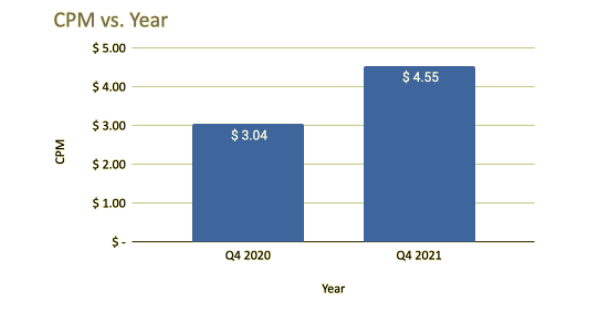
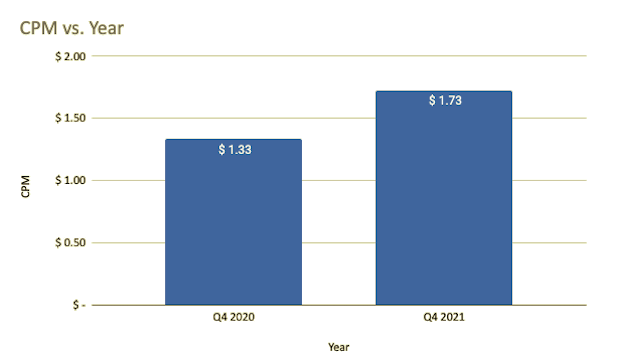
    In this review, we compared our 18 active Facebook clients, regardless of campaign objective, to the 17 Facebook clients active in 2020 during the same period. The results showed that Facebook cost per impression rose 29.48% in quarter 4 of 2021 compared to Quarter 4 of 2020.

    CPM versus year in quarter 4 2020 versus quarter 4 2021

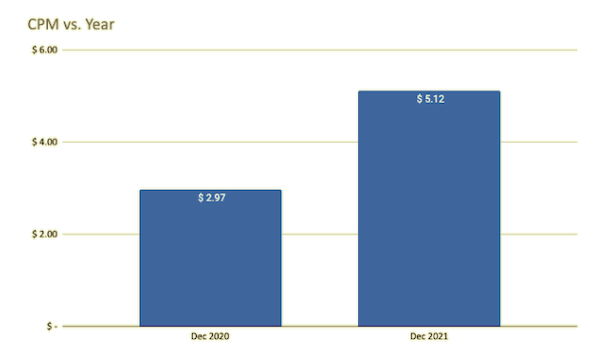
    The results were even more drastic in December. In December alone, CPM rose 43.07%!

    December data for CPM versus year for December 2020 against December 2021

    For our higher education clients, in particular, we saw even more fluctuation. In quarter 4 of 2021, Higher Education CPMs rose 49.51% compared to the year prior.

    CPM comparison from Q4 2020 to Q4 2021

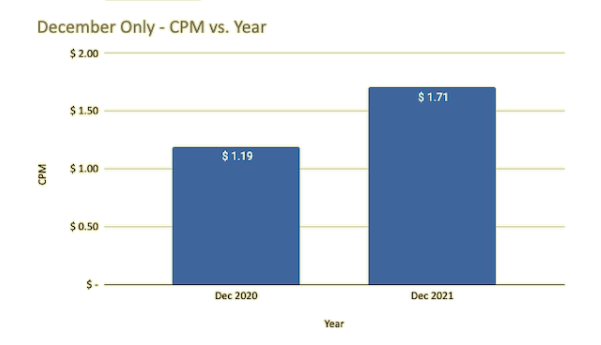
    And in December alone, CPMs grew 72.13% for this industry compared to December 2020.

    December only higher education CPM versus year data

    But, Why 2021?

    The most likely culprit is the iOS14 update that went into effect earlier in the year. Now that privacy is under the magnifying glass, Facebook has to revamp. Retargeting and Lookalike audiences are largely unavailable or tanking in performance due to most iOS users opting out of tracking. The result? Much smaller retargeting audiences.

    Additionally, Lookalike audiences, which come from Pixel data, aren’t being tracked the same way. Therefore, the data source for much of your Lookalike audience quality has been falling, and performance will suffer as a result. In sum, your ads are targeting a broader audience than before. Add that with the seasonal trends we see in Q4, and what do you get? Record high CPMs.

    Lastly, 2020 was a truly difficult year for everyone. As companies made cuts across their business, advertising budgets were often the first item on the chopping block. If you could keep your advertising campaigns running during this time, you might have been pleasantly surprised by the reduced competition. Now that the world is growing more and more accustomed to the new “normal” in light of the pandemic, companies can get back in the marketing game, and boom, competition is back, as are high CPMs.

    So What Does This Mean for You and Your Industry?

    Higher CPMs are here to stay, and you can expect them to be the highest towards the end of the year. The biggest spikes will likely hit in November and December, beginning around Black Friday.

    At Search Influence, we recommend the following strategies to help you counterbalance the increased costs in the final quarter:

    • Plan and execute a full-funnel strategy
      • The best way to prepare for this is to be proactive about your advertising strategy and plan at least six months in advance again. We would recommend allocating additional budget towards the end of the year to help compensate for the seasonality OR start running your campaigns earlier to ensure your ads are out of learning and optimizing towards your goals before the holiday rush hits. Beginning early in the year with a brand awareness strategy that leads into a conversion or lead generating strategy closer to the busy season allows users to grow familiar with your brand before it’s time for them to convert.
    • Create early incentives
      • Another strategy we recommend would be to set initiates for users to convert early. For example, an education client might waive an application fee if submitted before November 20. Likewise, an eCommerce click might benefit from offering an early bird promo code to encourage shoppers to purchase before marketing costs surge.
    • Increase awareness with high-quality video assets
      • Using video assets is an excellent way to improve performance. They almost always outperform static images, and 81% of customers decide to buy a product or service by watching a brand’s video content. Videos are also a great tool because you can use them to remarket to users that have viewed them before.

    Failing to plan ahead of this seasonal push could have a detrimental impact on your business. At Search Influence, we believe it is essential to build a full-funnel strategy throughout the year that can help you with most of your marketing budget. Reach out to our expert team at Search Influence to find out how you can improve your marketing strategy today!

    Images

    Search Console

  • Four Steps to Adapt to Apple iOS 14’s Impact on Your Facebook Ads

    This post was updated by Marissa Wehrer on August 24, 2021 to reflect updated news. It was originally published on January 20, 2021.

    Key Insights

    • Apple’s iOS 14.5 privacy update has had an industry-wide impact on businesses that use web conversion events to optimize, target, and report using Facebook’s business tools, such as the Facebook Pixel.
    • The update will allow users to opt-out of having their activity tracked across other companies’ apps and websites.
    • Take these four steps to adapt to this industry-altering change and run conversion campaigns in the future.
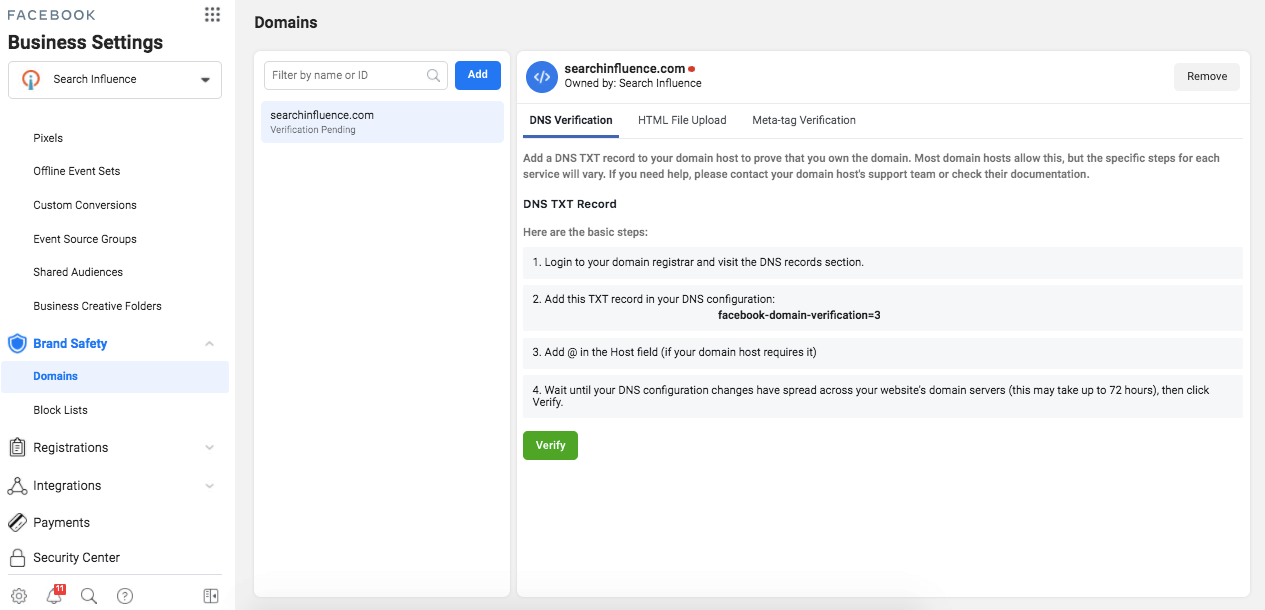
      1. Complete domain verification to configure pixel conversion events for Aggregated Event Measurement.
      2. Prioritize up to eight conversion events that are most important to your business.
      3. Understand how reporting changes will affect your ability to measure success and optimize your campaign.
      4. Identify new campaign strategies and best practices.

    How Does the Apple iOS 14 Update Impact My Digital Ads?

    On April 26, 2021, a significant update came to iOS 14 devices that asked users if they would like to “Allow Tracking” or “Ask Apps Not to Track” their activity across other companies’ apps and websites. The general consensus is that the majority of iOS 14 users will opt-out of tracking, thus preventing marketers from sending personalized advertising to those who opt-out.

    Apple’s new policy has an industry-wide impact on personalized advertising.

    This update will impact businesses that use web conversion events to optimize, target, and report using Facebook’s business tools, such as the Facebook Pixel. Effects include, but are not limited to, the inability to do the following:

    • Target the right audience with the right message at the right time
    • Allocate budget efficiently to produce the lowest cost per acquisition or return on ad spend
    • Get the same amount of data and granularity of reporting to inform decision-making

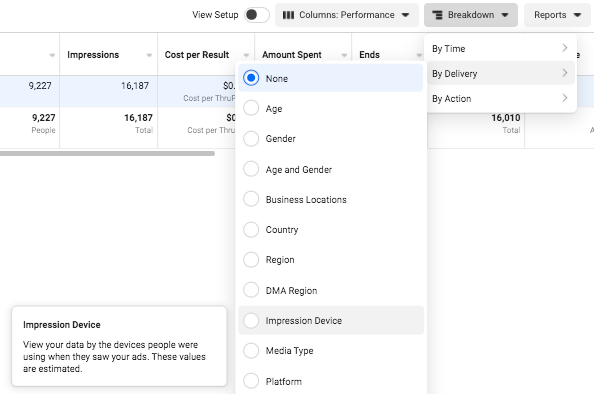
    Understand the scale that your campaign performance could be impacted by reviewing your ad account’s Impression Device delivery breakdown. This will help you analyze the percentage of your impressions served to Apple devices.

    Facebook campaign options in iOS14

    Despite these daunting changes, personalization is not at a total loss. Facebook Ads will remain an effective advertising channel if you rethink your current strategies and best practices.

    If you plan to use Facebook Advertising as a lead driver and revenue generator, the following four steps will be vital to run conversion campaigns due to Apple’s upcoming AppTrackingTransparency framework for iOS 14.5 users.

    Step 1: Complete domain verification to configure pixel conversion events for Aggregated Event Measurement.

    Aggregated Event Measurement is a new Facebook tool that “processes pixel conversion events from iOS devices” in compliance with Apple’s new policy while ensuring advertisers can still run effective campaigns. This tool can only be accessed once your domain is verified.

    As a new best practice for all businesses, you must complete domain verification. Domain verification is a way for you to claim ownership of your domain in Business Manager.

    Following Facebook’s instruction, “Domain verification needs to be done at the effective top-level domain plus one (eTLD+1). For example, for www.books.jasper.co.uk, books.jasper.co.uk, and jasper.co.uk, the eTLD+1 domain is jasper.co.uk. This can help ensure that your domain verification will encompass all variations.” (Source)

    How to verify domains on Facebook

    Step 2: Prioritize the Eight Conversion Events That Are Most Important to Your Business.

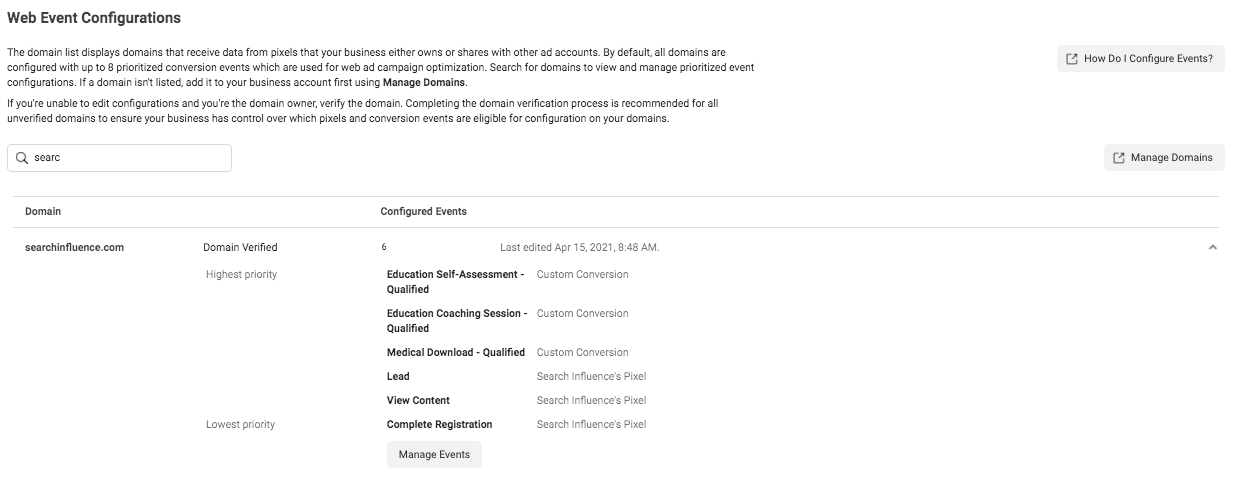
    Once domain verification is complete, you must use the Aggregated Event Measurement tool within Events Manager to set up the events that you want to track and their corresponding priorities. As a reminder, events allow Facebook’s machine learning to better target, optimize, and measure campaign performance.

    With the Aggregated Event Measurement tool, Facebook is requiring you to define up to eight conversion events, whether standard events or custom conversions, per domain (this includes subdomains) and to put them in order of priority.

    When it comes to prioritizing the events, you are going to put the most valuable action first and the least valuable action last. When a user completes multiple actions within a conversion window, only the highest priority event will be counted, and the conversions for the lower-prioritized events will not be counted.

    If your campaigns are currently optimizing for over eight events across the same domain, make it a priority to strategize and select the eight events you will optimize for moving forward. If you are currently operating under the limit of eight events, then prioritizing your events is quite simple.

    Follow Facebook’s documentation to configure Aggregated Event Measurement with your conversion events.

    Screenshot of web event conversions in Facebook backend

    Once you have prioritized your events, adjust your conversion campaigns’ ad set optimization events accordingly. You’ll also need to ensure your conversion ads are attached to the proper domain at the ad level in the Tracking section.

    Step 3: Understand how reporting changes will affect your ability to measure success and optimize your campaign.

    There are new reporting limitations that you should note, as they may affect how you measure campaign success and optimize campaign performance.

    Delayed reporting:

    Data may be delayed up to 3 days, which could severely impact optimizing short-run campaigns. Another key difference is that conversions will now be reported at the time the conversion actually happened, instead of getting attributed to the last ad impression or click.

    Estimated results:

    Statistical modeling may be used to account for conversions from iOS 14 users.

    No support for breakdowns:

    Delivery and action breakdowns, such as age, gender, region, and placement will not be supported. This could greatly impact how you review and optimize campaign performance.

    To test theories based on delivery and action, you will need to manually run tests, likely by creating more targeted ad sets. However, be mindful that this directly goes against Facebook’s best practice to use broad targeting to improve machine learning. (Source)

    Changes to account attribution window settings:

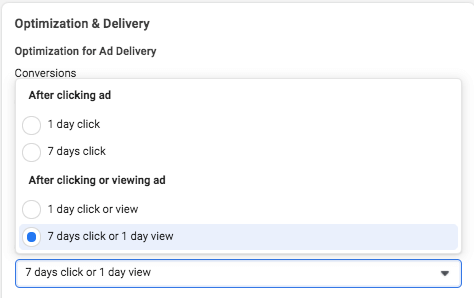
    First, the attribution window for all new or active ad campaigns is now set at the ad set level to ensure that the conversions measured are the same ones used to optimize ad delivery.

    How to do Facebook optimization and delivery

    Additionally, the new default window is a seven-day click attribution window, and 28-day attribution will not be supported for new or active campaigns. The following windows will be supported under the new attribution setting:

    • 1-day click
    • 7-day click (default after Apple’s prompt enforcement in April)
    • 1-day click and 1-day view
    • 7-day click and 1-day view

    As of January 2021, we saw a decrease in conversions due to the new attribution window settings set by Facebook.

    Step 4: Identify new campaign strategies and best practices.

    Optimizing: Test new optimization events

    By being limited to only eight events, this may force you to determine new best practices on how to optimize your campaigns. If you previously optimized your campaign with low-funnel custom conversions, you may need to test broadening your optimization events to less-granular or higher-funnel actions to encompass more website touchpoints.

    And if you haven’t switched to Campaign Budget Optimization (CBO) yet, then now may be a good time to let Facebook’s machine learning take some of the guesswork out of optimizing your campaign.

    Targeting: Test new audiences and targeting

    Our ability to target and remarket to your ideal customer with personalized ads will be severely limited. Mitigate the effects of the iOS update first by leveraging in-app products such as Facebook and Instagram Shops, lead gen forms, and using video. On-Facebook, engagement tends to be remarketable, which could replace some of the website data you’ll lose.

    Take advantage of the most available data by using customer list custom audiences to build remarketing and lookalike audiences with website audiences using the pixel.

    You may also want to consider removing the Audience Network as a placement from your ad sets because Facebook is not confident in its ability to deliver personalized ads for this placement to iOS 14 users.

    Facebook stated, “Ultimately, despite our best efforts, Apple’s updates may render Audience Network so ineffective on iOS 14 that it may not make sense to offer it on iOS 14.” (Source)

    Reporting: Test new key metrics

    If you currently report using breakdowns by delivery or action, determine how or if you will continue reporting on this granular data moving forward. Since these reporting breakdowns are no longer available for conversion data, you may need to determine new key metrics to report on.

    Navigating a New Digital Landscape

    Apple’s iOS 14.5 privacy update is transforming the digital advertising landscape. Campaign performance may see its biggest impact around Q4, which is the six- to nine-month mark from the iOS 14.5 update. This is mostly because audience sources using website tracking will shrink even more since we can’t collect the same amount of data we once did. We’ll also see more adoption of the updated iOS as people upgrade their phones.

    Stay on top of the upcoming changes and create new best practices for optimizing, targeting, and reporting to maintain control of your accounts.

    It’s okay to feel a bit confused about the effects on your Facebook Ads because no one has all of the information or answers yet. If you have questions about how you can still generate leads for your business despite these changes, one of the experts at Search Influence can help. Contact us today to learn more.

    Resources:

    Images:

    Mobile phone users

  • How to Target Adult Learners and Non-Traditional Students With Digital Advertising

    Key Insights

    • Use information about current students to find new ones
    • Your platform and messaging will depend on your student personas
    • Prioritize degrees or programs that contribute to overall success
    • Follow the data and don’t be afraid to change your targeting plan

    College graduation ceremony with graduates in caps and gowns

    No one would dispute the value of a college degree in the current job market. Not all schools are created equal, though. Each institution has its own values, strengths, and community. That’s why it’s important for college marketers to display the best values of their organizations.

    Marketers can support this goal by delivering high-quality leads by targeting the right audience. This is especially important when universities target non-traditional students, also known as “adult learners.” This blog post details some great ways to target non-traditional students and create effective campaigns to reach them.

    Analyze the Profiles of Enrolled Students to Define a Target Audience

    So, how can marketers figure out which audience to target? Start by painting a picture of the student body. Student profiles, or personas, give marketers a proxy target for prospective students. Colleges often have terabytes of data from inquiries, applications, and enrolled student profiles. This data can be invaluable for determining your personas.

    Different programs and schools within the university will have their own student persona (or several personas). The student body in the engineering program will probably look different from the MBA program’s student body. Most importantly, non-traditional students won’t look like newly graduated high school seniors, so it’s critical to know the differences between each student population.

    For each program, marketers will also need a good sense of what prospective students look like at each stage of the admissions process. Ideally, marketers should know when people make inquiries, apply, accept admission, and pay tuition to start classes.

    What if you don’t have robust data? In these cases, it’s important to work with other departments to build the best profiles possible and develop a strategy.

    Find Prospective Students on the Internet

    After using data to create a profile of the target audience, the next issue is where to advertise. Marketers can reach prospective students on a variety of websites and apps based on their affinities.

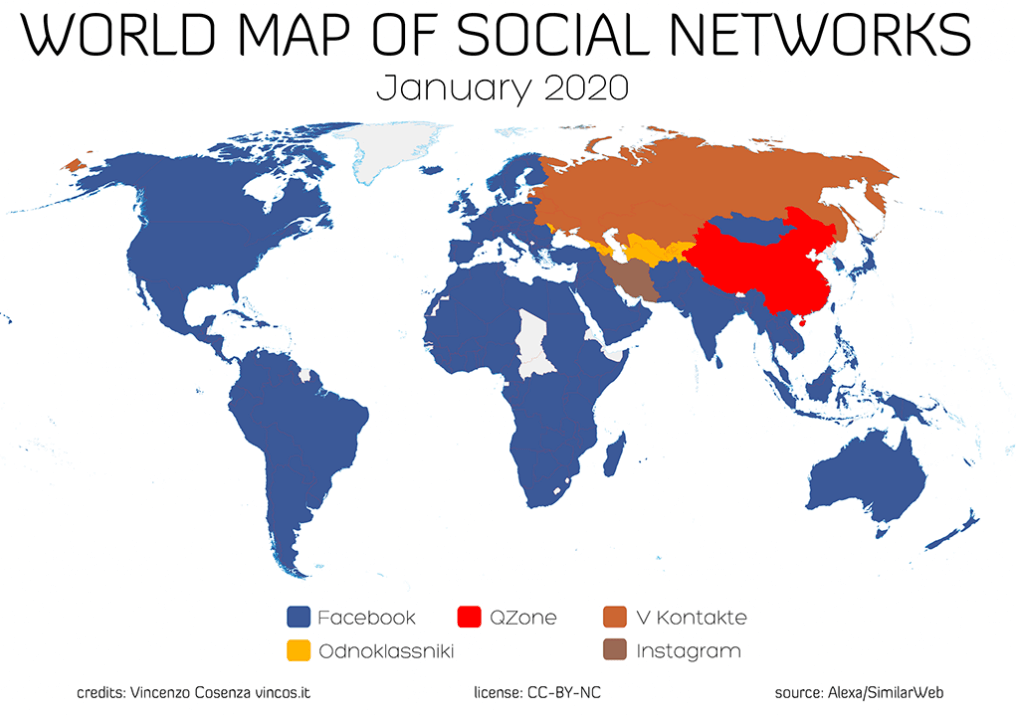
    The answer depends on the relevant student persona:


    Map of worldwide social media channel usage

    Luckily for marketers who want a simplified campaign, all of these groups have Facebook in common (considering that Instagram and Facebook are integrated). It’s not surprising that so many education marketers use Facebook. The platform has great targeting options and 2.7 billion monthly users. Facebook is great for college marketers in general because of the ability to target prospective students based on their locations, ages, and interests. There are other options that are more specific, such as occupation, education, family situation, life events, and more.

    Of course, there are always Google Ads campaigns. Placing ads on Google will help with targeting non-traditional learners who are looking for degree programs or the education requirements for making a career change. However, for increased targeting, Google Display is the way to go.

    Campaign Structure Tips

    With a well-defined audience and various platforms for targeting, the next step is translating this information into a structured campaign. Segmenting ad campaigns based on each degree is a logical first step because messaging can be so different for each program.

    For example, a culinary arts program may have two primary personas:

    • Entrepreneurs who want to open a restaurant
    • Current restaurant employees who want to move up in the industry

    Marketers can build one campaign for the entire culinary program and create different messaging and targeting to reach both of these personas.

    An effective campaign will also have separate messaging for prospective students who are in different stages of the sales funnel. For example, marketers probably won’t have much luck with a call-to-action like “APPLY NOW!” with people who have only just found out about their culinary program. On the other hand, something lower-touch like “Request more information” or “Sign up for a free admissions webinar” can help nudge prospects from Awareness to Consideration and Conversion.

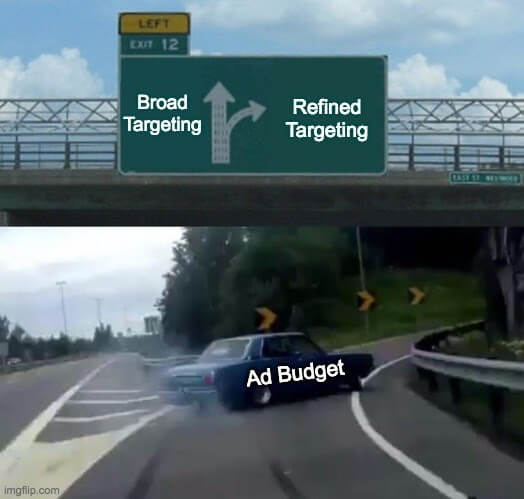
    Car veering into an exit showing broad vs refined targeting for ad budget

    When setting up targeting, marketers need to compile a list of characteristics for each persona and set up their campaigns to reach those people. Becoming more familiar with each platform’s targeting options will help reach more prospects. For Google Search ads, the most basic targeting is choosing geographic areas. For other campaign types, this usually means additional targeting options. For example, marketers could target people in the market for master’s degrees on Google Display or current community college students on Facebook.

    The last step is creating a budget. Each department will have an opinion about where the most budget should go. It may be tricky to come to an agreement everyone likes. The important thing, though, is to focus the budget where it’s most likely to help reach the school’s goals.

    Once a campaign is running smoothly, it’s time to sit back, relax, and… constantly optimize your campaigns. If you’d like to talk to a strategist about a campaign you’re planning or are already running, Search Influence has a team of experts ready to help you meet your goals. Contact a member of our team today.

    Images

    Graduation

    World Map

    Left Exit Meme

  • Healthcare Marketing Laws: Language to Keep Your Ads Legal

    This post was updated by Jordan Polhemus on December 21, 2020 to reflect recent trends and refreshed statistics. It was originally published on November 26, 2019.

    Key Insights

    • Review your current Facebook targeting strategies to determine how the recent changes to Facebook’s targeting options will impact your campaign’s performance.
    • Review your entire messaging and targeting strategy with your legal team before launching any marketing campaigns.
    • Prepare for more health regulations within the Facebook advertising platform.

    Doctor's stethoscope on desk next to laptop

    The healthcare industry, unlike almost any other industry today, has incredibly strict advertising regulations that both individual physicians and large hospitals must follow. Violating these regulations could lead to anything from ads not being permitted on certain platforms to legal action—or even a revocation of a physician’s license.

    This post covers the do’s and don’ts for ad copy and demographic targeting to keep your ads legal in an ever-changing healthcare marketing landscape. Please note that this is not an exhaustive list of everything you should and shouldn’t do for medical marketing. It’s an overview of advertising best practices within the medical industry. Additionally, these recommendations do not include all the specifics for every state.

    Changes to Facebook Advertising Targeting

    Facebook has made several changes to their targeting options since 2019.

    The Removal of Third-Party Information

    The most impactful difference is the removal of third-party information that gave organizations the ability to target users based on personal information, such as (but not limited to):

    • Income
    • Cars owned
    • The age of user’s house
    • The age of the people in the user’s household

    Before this update, many data providers partnered with Facebook to create a more descriptive profile of their users that allowed marketers to create extremely detailed and specific targeting.

    After the Cambridge Analytica scandal, Facebook decided it didn’t want to be responsible for the data that third parties brought in, so it eliminated Partner Categories and other third-party data programs.

    The Removal of Potentially Discriminatory Targeting

    Facebook has worked to remove potentially discriminatory targeting to prevent misuse of the ad platform in the future, including:

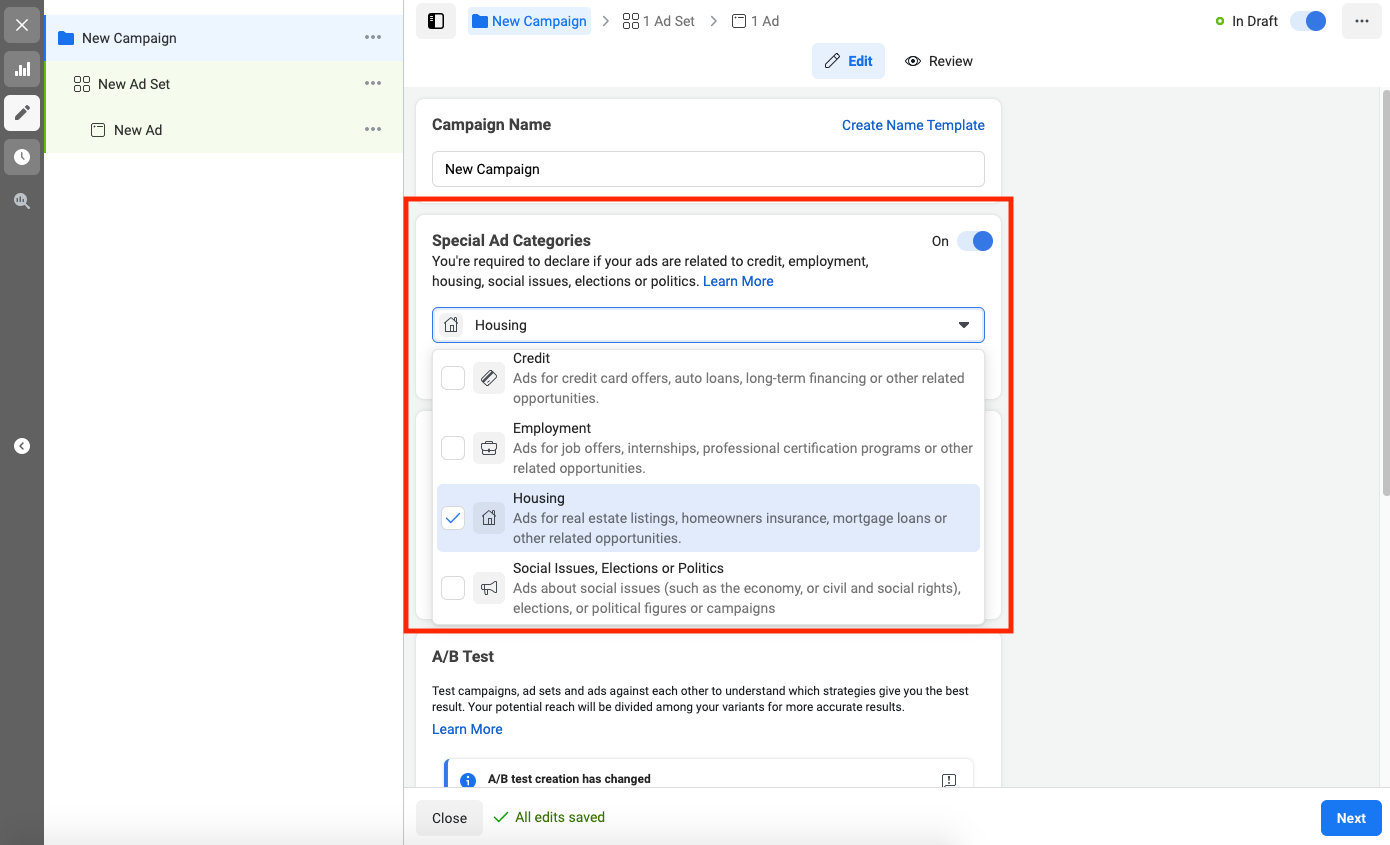
    Facebook’s “Special Ad Categories”

    In the last few years, we’ve seen a considerable tightening in what marketers can do when promoting organizations in certain industries. The types of ads impacted include:

    • Housing
    • Employment
    • Credit card
    • Political

    Screenshot showing Facebook's special ad category options

    Predictions for the Medical Industry

    Although this isn’t the case yet in the medical industry, we believe that Facebook will move in this direction soon and require all medical providers to follow additional guidelines, which will place further restrictions on their targeting and messaging. Although not currently in place, you will likely have to choose a “special ad category” to advertise in the medical industry on Facebook in the future.

    For example, if you are running ads for any political organization, such as a political candidate, PAC (political action committee), or even for small local elections, the advertiser and the ads must comply with a very strict set of rules, including:

    • Verifying the page
    • Providing special documentation proving the identity of the page manager
    • Complying with specific messaging guidelines

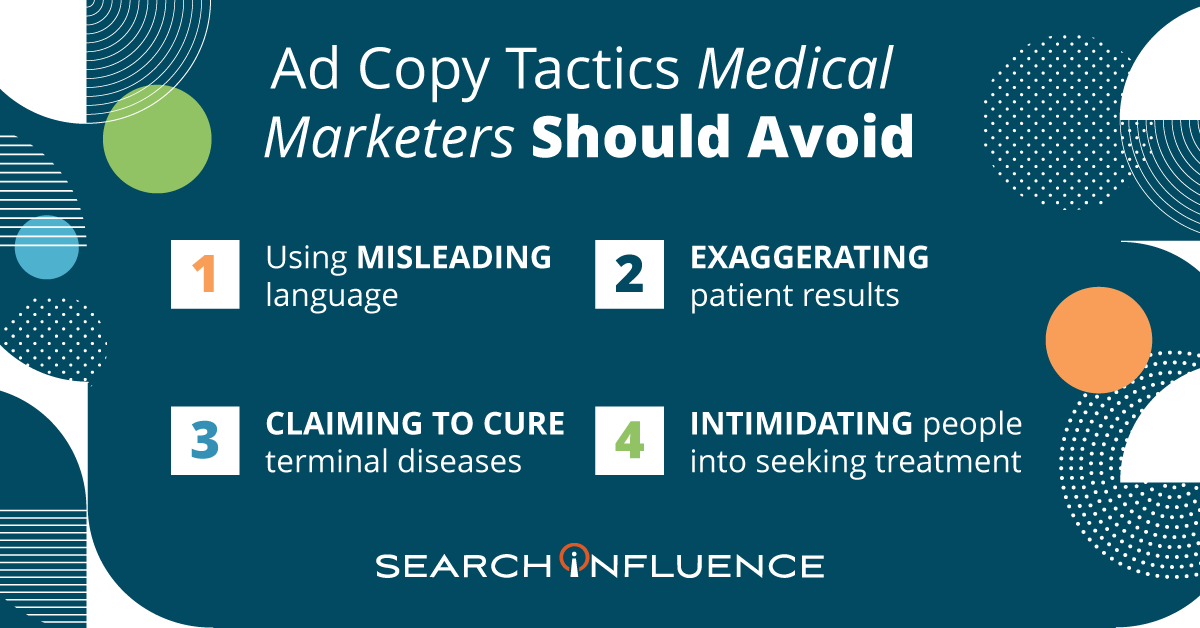
    Ad copy tactics medical marketers should avoid

    Advertising Language Do’s and Don’ts

    Advertising cannot be misleading in any way

    Misleading or deceitful language is strictly forbidden in all medical advertising. This includes implications that would cause a reasonable person to misunderstand or be deceived. Consider the impact of the words you choose in your Healthcare SEO strategy as well.

    Examples:

    • “This procedure will heal you.”
    • “You will look just like Kim Kardashian.”
    • “You will never need to see another doctor again”.

    Don’t use words like “best” or “superior”

    Unless there is objective evidence to support the claim, practices cannot claim professional superiority in any way.

    Examples:

    • “We are the best plastic surgeons in the world.”
    • “You will be under the care of the greatest ophthalmologist in your area.”
    • “Make an appointment with the most talented doctor.”

    Don’t use hyperbole when describing your techniques or results

    A potential patient’s health should be discussed factually and without embellishment, so using exaggerated statements or claims (even if they’re not meant to be taken literally) can be seen as deceptive and misleading.

    Examples:

    • “Your skin will be softer than silk.”
    • “Make an appointment for the best day of your life.”
    • “You’ll be as skinny as a toothpick.”

    Don’t assure a permanent cure for an incurable disease

    Don’t use intimidation or undue pressure for services, products, or procedures

    Examples:

    • “If you don’t get this procedure done by ____doctor, then you will die”
    • “If you don’t see Dr. X, then you are doing a disservice to your children”

    Don’t make any scientific claims unless you provide a reliable, peer-reviewed study as evidence

    Because of the amount of trust patients put in their healthcare providers, physicians are required to provide truthful information when making healthcare decisions and recommendations.

    Therefore, it would be an ethical violation for any practice to claim results or benefits that cannot be scientifically proven, whether or not that physician is talking to their own patient.

    Example:

    • “Getting X surgery will extend your life by 15 years”

    Don’t show before and after photos without the proper disclaimers

    Because before and after photos can influence a patient’s decision-making process, each practice must clearly state that results may vary and the results shown are not guaranteed. Otherwise, patients could reasonably expect to see similar outcomes.

    Practices must include disclaimers alongside perceived claims, even if the claims are direct quotations from past patients.

    Don’t reveal patient details

    Anonymizing patient information isn’t as simple as changing a name. Under HIPAA, there are more than 18 categories of personal health information (PHI) that can result in patient identification.

    It is best to either create a fictional scenario in your messaging or work with your attorney to secure a no-compensation, signed patient release before using any of their PHI in advertising.

    Don’t make any claim about the cost of a service or product that your practice cannot substantiate

    Due to differences in medical coverage based on health insurance, advertisements should never include prices—unless the practice can ensure that all patients receive that price regardless of their healthcare coverage.

    Don’t use a competitor’s name or any other trademarked name in ad copy or advertising without written permission

    If you wouldn’t say it in the elevator, don’t put it online

    Try reading the content of a post out loud and to others before posting. If it sounds like something you wouldn’t say in an elevator (where you can be overheard), then it shouldn’t be something that you put in advertising.

    Have your marketing plan, including ad copy, reviewed by an attorney to confirm that no laws are being broken in any of the states your ads will appear.

    By working with both large hospitals and small private practices, we’re well-versed in medical marketing and have years of experience running successful campaigns for our clients. Our digital marketing agency keeps up to date with the latest medical search trends, as well as updates to regulations and best practices.

    As a Google Premier Partner, the majority of Search Influence’s employees are certified in Google’s advertising platforms, including Search, Video, Mobile, and Display, just to name a few.

    For more information about how we can help promote your practice on Facebook and other social media platforms, start a conversation with us today.

    Resources

    Images

    Stethoscope

  • Client Spotlight & Campaign Success: Caluda’s King Cake

    If you are from or live around New Orleans you are VERY familiar with the delicious treat that is king cake. One of our client’s, Caluda’s King Cake, is a top king cake bakery in the New Orleans area and continues to see success year-round. Caluda’s King Cake is a local business with over 35 years of experience. We have been pleased to work with them for the last two years and love the knowledge and success our collaboration has brought.

    2018/2019 Digital Marketing Strategy and Success:

    During the 2018 Holiday and 2019 Mardi Gras season, Caluda’s King Cake saw a 2,393% return on investment (ROI) during their digital marketing campaign with Search Influence. With target advertising, smart branding, and relationship building, Caluda’s continues to bring high value to the market. Let’s take a look at some of the efforts Search Influence completed to support this ROI and success:

    Search Engine Optimization (SEO):

    When comparing 2019 to 2017 we saw a 158% increase in organic sessions. This means more than two times the amount of users were able to discover Caluda’s site from search results. When comparing 2019 to 2018 we saw a 45% increase in organic sessions. Efforts to support this were a new website build, content creation, and continual website optimizations throughout the campaign.

    Mardi Gras King Cake from Caluda's getting ready to be shipped via FedEx

    Social Media:

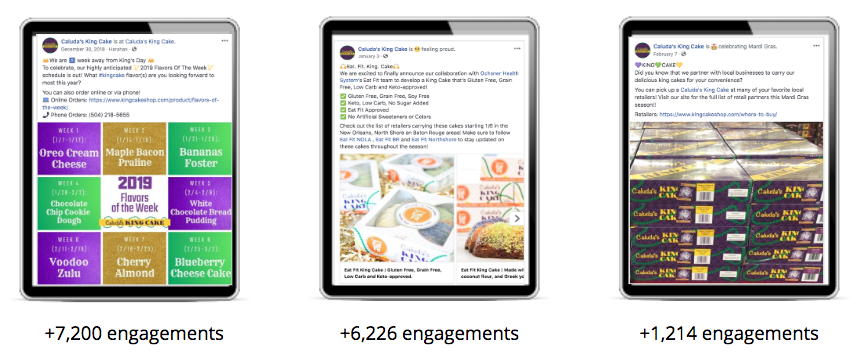
    Social following and post engagement have continued to be an important and successful strategy for Caluda’s. During their 2018/2019 social media campaign they gained over 3,000 NEW fans. They currently have over 10,400 fans on Facebook and 2,000 followers on Instagram. Their social posts continue to reach high audience engagement, ensuring that their brand is top notch with the community!

    Examples of social posts done by Search Influence for Caluda's King Cake

    Review and Testimonials:

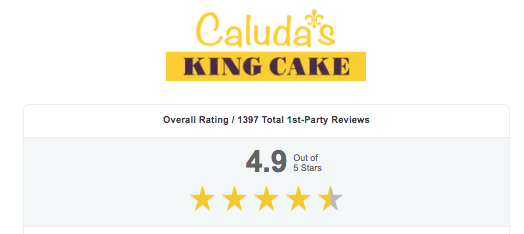
    Caluda’s King Cake gained over 580 new reviews during their campaign. They also gained over 1,000 page views on their onsite reviews page. With more than 80% of consumers admitting that they trust online reviews as much as they trust a personal recommendation, this gain in reviews is extremely beneficial to the brand!

    Accumulated reviews for Caluda's King Cake during Search Influence digital marketing campaign

    Caluda’s King Cake Unique Propositions

    Eat Fit King Cake

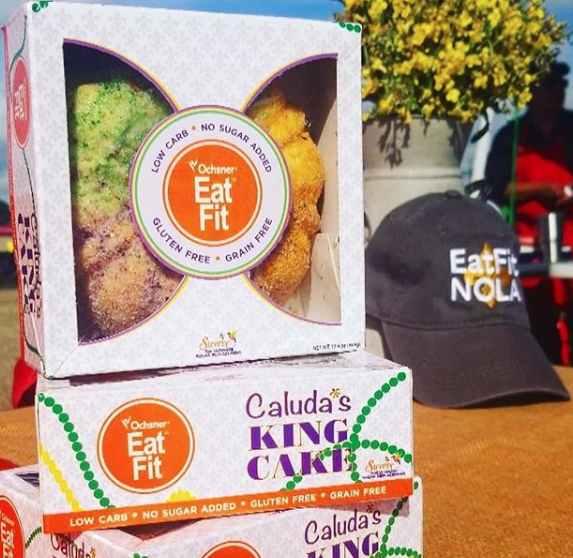
    In 2019, Caluda’s collaborated with Ochsner Health System’s Eat Fit team to develop a king cake that’s gluten-free, grain-free, low carb, and keto-friendly! Centered on an all-natural clean ingredient label, the Eat Fit King Cake is made with almond flour, coconut flour, and Greek yogurt. It’s sweetened with Swerve, a natural, plant-based sweetener based here in New Orleans, with no artificial sweeteners or food dyes. This collaboration was a HUGE success for both Caluda’s and Eat Fit. Caluda’s continuation of brand awareness and providing high-quality products continues to open doors for exciting new ventures.

    Low carb king cake from Caluda's King Cake in New Orleans

    King Cakes Year-Round

    Caluda’s King Cake offers king cakes year-round! You heard that right—you can get delicious king cakes any time! They offer specialty king cakes via online or phone orders. Whether you are a local or live in another state, Caluda’s offer you the opportunity to enjoy king cake 12 months a year. Bring a delicious treat to your next holiday event or party and be the hit of the event

    If you’re ready to grow your business like Caluda’s King Cake, start a conversation with one of Search Influence’s digital marketing experts. We’re ready for you to become one of our success stories!

  • Facebook Remarketing Explained – 4 Steps to Increase Your ROI

    How Does Remarketing Work?

    Have you ever window shopped for a new pair of running sneakers online and noticed they followed you around the Internet? Advertisements for those sneakers in the same color and size appear on almost every website you browse! You might even be scrolling through your Facebook News Feed and the sneakers pop up again. You may be thinking, “This is fate!” But no, this is not fate or the magic of the Internet.

    I’m going to let you in on a little secret called remarketing. One of the hottest trends in remarketing right now is using Facebook to target a select group of ideal customers with tailored ads. Your company’s marketing team can use this powerful marketing tool to nurture relationships with qualified customers and increase sales.

    What Is Remarketing?

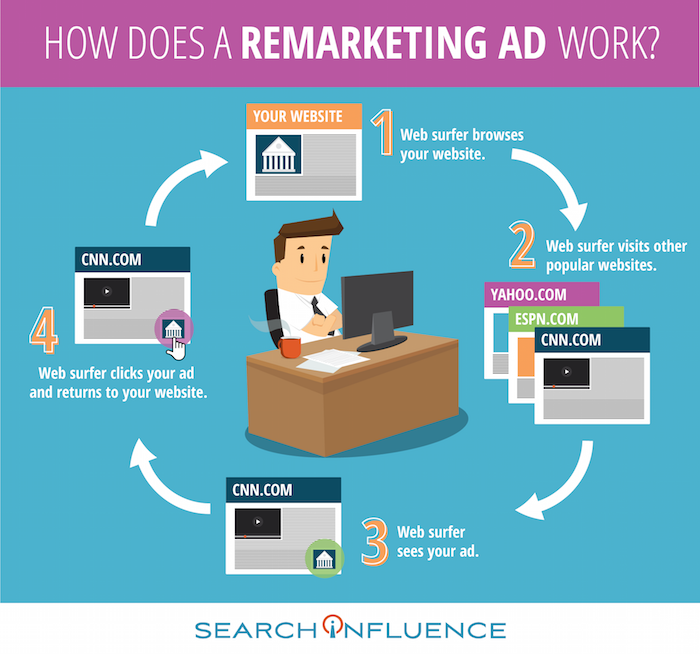
    Let’s say someone clicks on your brand’s Facebook ad. They’re instantly brought to your website, and they can browse your offerings. These people are generally qualified leads because they took the time to navigate away from their cluttered News Feed and click on your ad. However, they may not always complete an action like making a purchase, downloading an e-book, or providing their contact info. In fact, people rarely make a purchase the first time they visit a brand’s website or see an offer from the brand. These lost prospects are valuable, and you will want to continue your business experience with them.

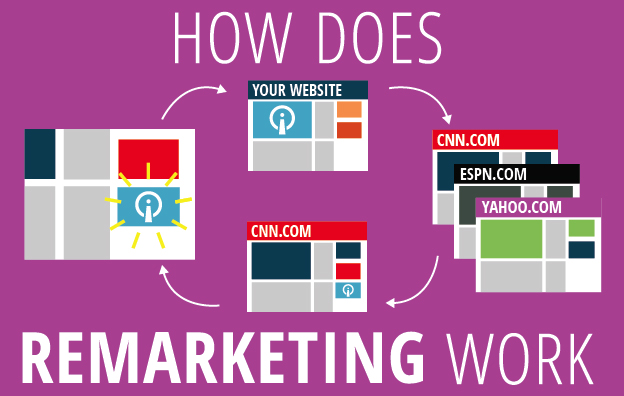
    How Does a Remarketing Ad Work Infographic Image - Search Influence

    The overarching goal of remarketing is to place your brand at the top of consumers’ minds. Remarketing allows you to reach people who have previously visited your website and may not have made a purchase.

    A great way to revive your relationship with them is by showing tailored ads to them again on Facebook. To do this, you can use your brand’s Facebook pixel to create a Custom Audiences for Website Traffic that builds an audience based on your brand’s website traffic. The opportunities to nurture and build relationships with current and prospective customers on Facebook are endless.

    Why Should I Remarket on Facebook?

    Facebook remarketing ads get three to four times the response rate of regular Facebook ads. With over 1 billion people using the social media platform daily, making sure that you’re reaching the right people is critical! The Custom Audiences for Website Traffic feature seamlessly reaches your ideal customers by creating a Facebook audience representing a group of prospective customers and current customers who have visited your website. This feature has a few benefits:

    • Reach people who are genuinely interested in your brand through targeted Facebook Ads
    • Bring people back to your website to complete an action
    • Find new people who have similar characteristics to your website

    By targeting your ideal customers, you will grow your brand’s fan base, drive website traffic, build a rock-solid email list, and increase ROI. You will also avoid burning a hole in your advertising budget by lowering cost-per-click, driving higher conversions, capitalizing on social proof, and expanding market reach.

    How Do I Use Facebook Custom Audiences for Remarketing?

    Now that you’re an expert in remarketing, let’s dive in and set up a Facebook remarketing campaign for your brand. I’ve created a 4-step guide that outlines the setup process.

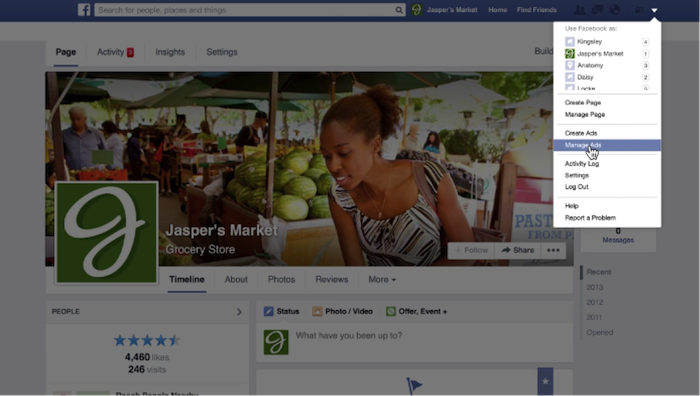
    1. Access Facebook Ads Manager. Log in to your Facebook account and navigate to the drop-down menu on the top left of your screen. Select “Manage Ads” from the drop-down menu.

    1 - Remarketing Drop Down

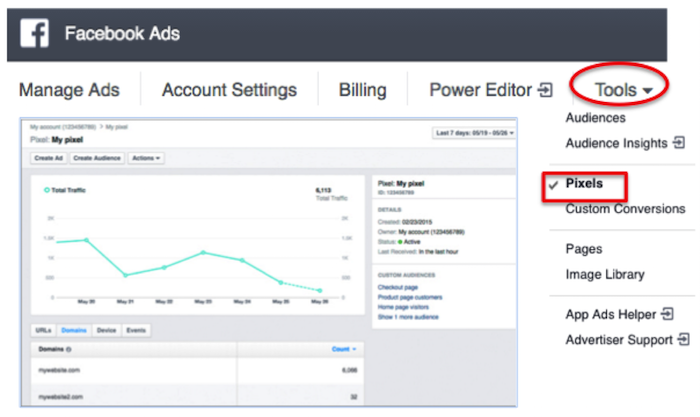
    2. Create a Facebook pixel. To pinpoint your website visitors so you can retarget them on Facebook, create a Facebook pixel and insert it on your site. Now that you are in Facebook Ads Manager, click on the “Tools” drop-down menu and select “Pixels.” Click “Create a Pixel” and give it a name. Then, copy and paste the pixel code into your website code.

    2 - Facebook Ads

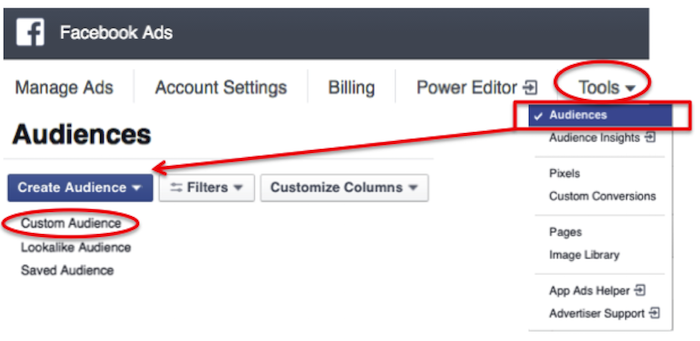
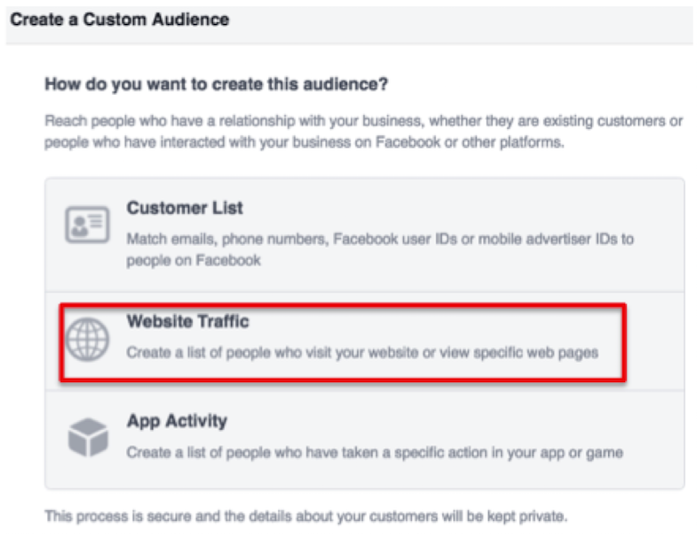
    3. Build a custom audience. Click on the “Tools” drop-down menu and select “Audiences.” You’ll see a blue button that says “Create Audience.” Click on that button and hit “Custom Audience” from the drop-down menu.

    3 - Audiences

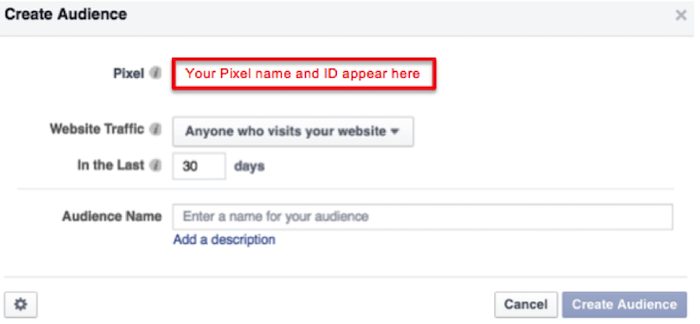
    Then, select “Website Traffic” and name your audience.

    4 - Website Traffic

    5 - Create Audience

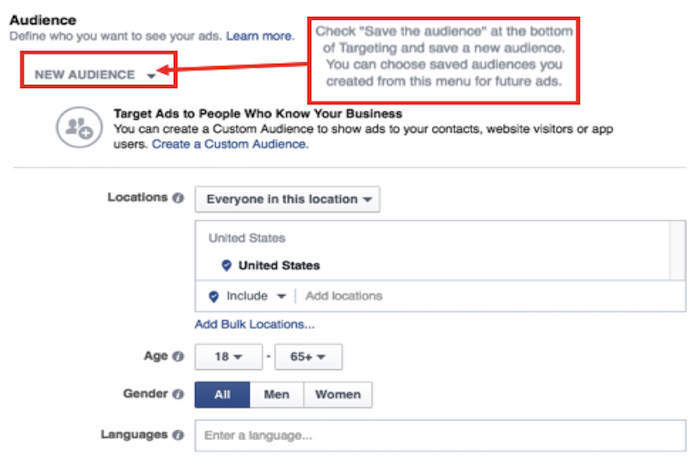
    4. Craft an Ad. In the ads create tool, you can access your custom audience when you choose who you want your ad to reach.

    6 - New Audience

    Voila! You’ve successfully created your remarketing campaign. If you have any more questions along your remarketing journey, you can reference Facebook’s simple remarketing guide.

    Image Credits:

    “Manage Ads” Menu Screenshot – from Video
    Pixel Graph Screenshot

  • Successful Physicians Do This to Quickly Increase Their Online Presence

    Doctor greeting patient

    Gone are the days when Americans simply used the Internet to merely research symptoms they or their loved ones were experiencing. Instead, they are now going online to determine which doctors to see, what treatment to get, and what services a hospital might provide — and using that information to drive their choices.

    According to Manhattan Research, which surveyed 5,210 adults who use the Internet as a health resource, 54% of respondents said they did online research to decide what services they might need and who should provide them. Other surveys like this one from Pew Research have said that roughly 75% of American adults search for health information online.

    No doubt, one thing is certain: people are becoming more comfortable with using the Internet for health-related decisions. And this upward trend isn’t likely to stop anytime soon. One out of every five patients uses online health information to choose a primary care physician, according to Manhattan Research.

    What’s that mean to health care professionals? It’s time to put more effort into beefing up your online presence. Communicate who you are and what you do. The quickest way to increase your visibility is to advertise on the Google Display Network. Watch this SlideShare or read this blog to learn more.

    Image Credit:

    Doctor Shaking Hands With Patient Image

  • How to Keep Your Law Firm’s Ads Legal

    With the recent death of Justice Antonin Scalia, the Supreme Court is on arguably on track for confusion, gridlock, and bipartisanship. This uncertainty could affect the future of affirmative action, abortion, union rights, and several other topics that are scheduled to go to court within the year. In the face of this uncertainty, we have been looking back at the famous Bates v. State Bar of Arizona ruling of 1977, which held major implications for digital marketing even before the World Wide Web was invented. In this case, the Court emphasized the benefits of advertising as a means of informing consumers of goods and services. A five to four opinion ruled that any restrictions on advertisements for legal services was in violation of the first amendment. The majority decision continued, however, to stipulate that advertisements that are “false, deceptive, or misleading, of course, [are] subject to restraint.” The opinion went on to address the grey area between perceptions of advertisements: “we recognize that many of the problems in defining the boundary between deceptive and nondeceptive advertising remain to be resolved…”

    In light of this acknowledged grey area, the question is: How do you keep your online legal ads legal?

    Legal Definition of Online Advertising

    Online advertising is not just limited to email blasts, pop-ups, or those dreaded YouTube clips that you must watch for at least five seconds. The legal definition varies by state, but in many states, online advertising is broadly defined to include your website and maybe even social media accounts. To be safe, assume that everything you or your firm publishes online is an advertisement.

    Avoid Misleading Claims

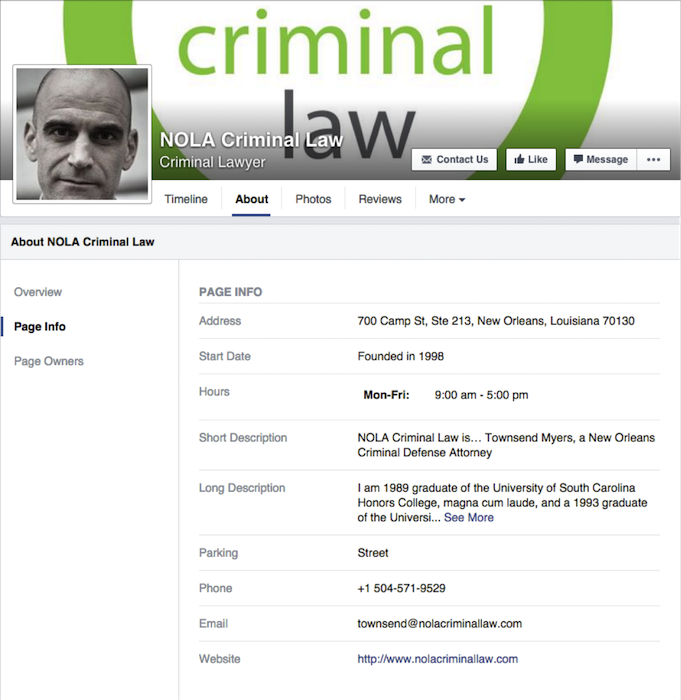
    To avoid false advertisement, everything you publish must be truthful and accurate. In terms of digital content, you will want to hook readers but not make over-exaggerated claims. This might take some creativity from your digital marketing team, but misrepresentation of services could lead to legal repercussions. It’s common sense. Don’t lie.

    NOLA Criminal Law Facebook Image

    Ad Targeting

    Because state laws vary, targeted ads are a great resource a firm can use to ensure ads only appear within a certain geographical region, avoiding inadvertently breaking another state’s regulations. You should keep all of your online ads relevant and targeted to your state or area. On top of staying within the realms of your state’s advertising laws, ad targeting also helps save you money. You can avoid appealing to people outside of your legal jurisdiction and reduce waste on your advertising budget.

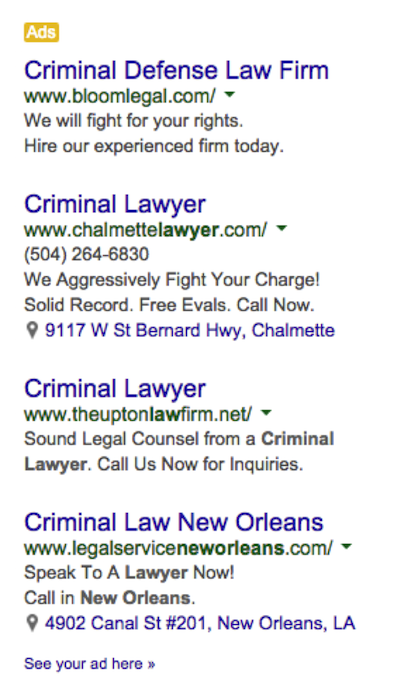
    Criminal Lawyer Google PPC Ads

    Creative Commons

    An image in an advertisement, whether a pay-per-click or on Facebook, needs to be creative and eye-catching. But all material published online or used in an advertisement still needs to comply with copyright laws. To ensure compliance, you can use creative commons material, join a stock photo website, pull images or graphics from a public domain repository, or ask the owner. A firm needs to get creative while staying safe.

    Even though the 1977 Bates v. State Bar of Arizona ruling solidified an attorney’s right to advertise, laws regulating the legality and specifics of Internet advertisements have yet to develop. We are operating in a grey area. To stay in the clear, make sure you everything you publish online is not a misrepresentation.

  • 5 Tips to Improve Your Franchise’s Online Display Ad Campaign

    Blog4

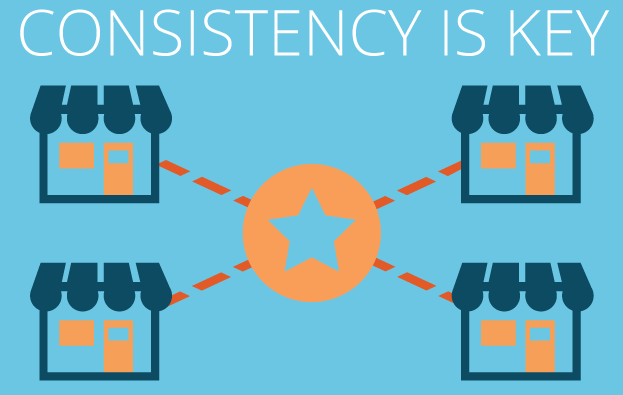
    If you are a franchise business owner, you may have already encountered the difficulties that come along with trying to create brand consistency and improved user experience across all of the online marketing for your franchise businesses. If your primary goal up to this point has been to employ a streamlined strategy to ensure your online ads are yielding the most successful results, then you’ve likely already created quality content throughout all of your websites and set up a structure for your branded sites with consistent business location information across the Internet. You may have also gone the extra step to manage reviews and testimonials. Now that you’ve optimized your sites, you’re ready to apply your focus to online display ads to generate new consumer leads. If you’re just getting started, these five tips will help you set up the most successful display ads for your franchises.

    1. Keep It Simple

    With spending on online display ads projected to increase 90 percent between 2014 and 2019, it’s crucial to get ahead of the competition and get your franchise campaign set up properly the first time around. In short, creating a successful franchise display campaign involves reaching the right people with the right message at the right place. So you’ll want to focus on one service or product per ad and keep your message tailored to the consumer you’re trying to reach by making the content of your message relevant and easy to understand. Be sure to also include a clear call to action so the consumer knows what they get by clicking on your ad.

    2. Use the Company’s Recognizable Look

    One aspect of online display ads that can easily set you apart from the competition is the distinctive look of your brand. If your company uses the same logo, colors, and fonts across all of the franchise businesses, a consumer should see your ad and be immediately drawn to its recognizable look. When designing your ads, consider placing your logo at the top center for optimal results.

    3. Use Contextual Targeting

    Employing contextual targeting allows you to design your campaign so that your ads will be placed on sites whose content relates to what you’re selling. For example, if you are a frozen yogurt franchise with multiple locations, your ad might appear on a food blog or restaurant review site.

    4. Use Remarketing Ads

    Taking placement of online display ads to an even more sophisticated level, you may want to consider implementing a remarketing campaign. Remarketing lets you show ads to people who have visited your website or used your mobile app before. When people leave your website without buying anything, for example, remarketing helps you reconnect with them by showing relevant ads as they browse the web, use mobile apps, or search on Google.

    How Does a Remarketing Ad Work Infographic Image - Search Influence

    5. Target All Desktop and Mobile Devices

    As trends rapidly change and consumers rely more heavily on their mobile devices, it’s important to also target your ads across all desktop and mobile devices for maximum reach. Eventually, as you start measuring the clicks and leads generated from your online display ads, you’ll have a better idea as to what devices to spend more on. Make sure that you’re targeting by user and not by device for the most accurate results.

    If you follow these five tips and continually make adjustments as the campaign progresses and you get measurable results, you should see how big an impact display ads can have on all of your franchises.