Tag: advertising

  • ‘Tis the Season to Get Creative: Using Social Media for Holiday Marketing

    Many of your customers are gearing up for numerous holiday festivities that involve family, friends, and coworkers. This time of year also inspires lots of shopping. According to a study done by Deloitte, the average American will purchase 15 gifts during the holidays with the months of November and December generating 30 percent more revenue than non-holiday months. With all the gift giving and celebration, a stellar online presence, particularly on social media, is key to your business having a shining season. Keeping your customers engaged and informed of specials, events, and general happenings in the behind-the-scenes aspect of your business builds trust but also can build sales. In 2015, 75 percent of shoppers used the internet to research which gifts to purchase. So, don’t be afraid to get creative and light up your customers’ timelines with compelling copy. Need a little inspiration of your own? Here are some social media marketing tips that will get you in the holiday spirit.

    Christmas gift giving from 22 minutes - Search Influence

    Deck The Halls…With Lots Of Images

    Photos, videos, and other images are paramount to a healthy social media presence and they also present the perfect opportunity to engage potential shoppers on all levels. Create an Instagram video and show quick, behind-the-scenes clips of your store or showcase a new product or one of your lesser-known services. According to Wyzowl, 74 percent of shoppers who watched a demonstration video about a product or service subsequently bought it. So, show off your Spielberg skills and put together a product video to demonstrate how a featured item in your store is used. Remember, this doesn’t have to be a costly high-tech venture; just use a smartphone and tell a short and sweet story about how your shop is preparing for the holidays. Upload to your social media or even YouTube. If stills are more your thing, take some high-quality photos using your iPhone or a more professional camera and post images of employees who are in the holiday spirit. You can even include some shots of that huge order fulfillment you and your crew are working tirelessly on. Make the images personal and easy to share. If you are running low on your own photos, try incorporating user-generated photos from your customers.

    Tinsel Everything From Wall to Wall

    In other words, cover your bases when it comes to social media. Since your potential customers are more than likely shopping for other people, you are not necessarily trying to gain the attention of your traditional customer base. You may be trying to appeal to a mother buying a gift for her 20-year-old son, or a 30-something purchasing something for his niece. If dad is buying something for his daughter and your business has the perfect gift, let him know. Facebook has proven to be a wonderful resource that really does appeal to pretty much every demographic. With tools like Facebook ads, it’s becoming easier to target your potential shopper, so make sure the language that you’re using in your content speaks directly to your audience.

    Tinsel being placed on a tree in It's a Wonderful Life - Search Influence

    Spread the Joy of Your Business

    Today’s consumers want to know the ethics behind the companies they are shopping with. According to a 2015 Nielsen report, 66 percent of respondents were willing to pay more for products and services that came from companies who were committed to positively impacting social and environmental issues. So, tell your customers who you are and what you stand for. Are you doing any fundraising or charity events for the holidays? Share it! Are you participating in a food drive or giveaway? Tell us about it! Does your company’s mission align with the spirit of the season? Even better. These are positive events that can not only create a space for your company to give back but also encourage trust with your customers and impact sales, too.

    Give the Gift of Hashtags

    Added to the Oxford Dictionary in 2010, the hashtag is social media’s way of organizing ideas, keywords, and campaigns. Search some of the current trends and see if an existing hashtag fits your company’s voice or vision for the season. If not, jump start your own! Consider running a promotion based on your customers reposting or sharing a specific photo or post. Have them use a catchy hashtag you’ve created that is personal to your holiday messaging. To incentivize their repost or share, offer participants a small discount.

    Jimmy Fallon and Justin Timberlake using hashtags - Search Influence

    Embrace All the Holidays

    Facebook is a wonderfully diverse platform that will surely get you views from people of all walks of life, so don’t narrow your focus on just one holiday. Show love to each one of them and give them a shout out on your page. Let everyone know how inclusive you are across age groups, interests, and religious and cultural holidays alike. Take the time to wish your current and potential customers a happy holiday season and welcome them to your store.

    This time of year, after all, is about love, celebration, and gratitude. Let your customers know you care with a thoughtful social media campaign that will inspire them. If you need assistance with creating a holiday strategy and managing your social media, contact our team. We are happy to help you deck the halls with holiday content that will get your customers into the spirit of the season!

    Images:

    Gift Giver

    Tinsel

    #Hashtag

  • Meet & Greet : Your Buyer Personas and What You Should Know About Them

    When you ask a small business owner what kind of customers they want to attract, it’s not uncommon to get an answer like “everyone” or “anyone who can use our service.” When you’re creating marketing content, however, it’s not often possible to create something that will appeal to every single person on the planet—some people simply won’t be interested. For example, it doesn’t make a lot of sense to try and convince a college-age renter to install a new roof. It’s a more efficient use of your marketing resources to zero-in on people who are most likely going to be your customers. The best way to do this is to create buyer personas. Doing this will help you to define exactly who you are trying to reach.

    Zoolander Who Am I Image - Search Influence

    What is a buyer persona?

    A buyer persona is the Everyman of your customers. It combines all the characteristics your customers have in common and puts them into one fictionalized person who represents your average consumer. The buyer persona is based on real information about your clientele, and it defines their age range, gender, income, common pain-points, and what they’re hoping to get from your product. It also combines your demographics with psychographics to build a buying character that is pretty much human.

    Why are buyer personas important?

    Having a well put-together buyer persona helps two people: you and your potential customer. According to a survey by Rapt Media, 63% of consumers would think more positively about a brand that gave them content they found valuable, interesting, and relevant. Whether you’re reaching out via a direct mail campaign, emails, or Facebook, no one wants to be stalked by content they’re not interested in.

    Wedding Crashers Image Of Gloria Saying I'd Find You - Search Influence

    By focusing your marketing efforts on your buyer persona, you’re ensuring your message gets in front of people who are most likely interested, without alienating those who aren’t.

    At the same time, knowing your buyer persona means you can give your customers exactly what they’re looking for, ensuring they trust you when it’s time to make a decision. For example, if your buyer persona is an on-the-go business traveler who doesn’t want to waste time during the research stage, you can present them with content in an easy to digest infographic. The potential customer is now more likely to engage with your content and come back to you next time they need a problem solved.

    How can I build a persona for my business?

    Your buyer persona should be based on who your real customers actually are. You can do this by directly surveying your current or past customers. Ask them about their background and demographics, as well as more probing questions like how they heard about your product, why they bought it, how they’re using it, and what (if any) difficulties or reservations they’ve had since their purchase.

    Talking directly to your customers is the preferred method, but if you’re not getting enough information, supplement it with searches on sites like Quora and industry forums to see what kinds of information people are seeking. Content Marketing Institute recommends you ask these three questions when searching: 1) What is the first thing my customer thinks of in the morning; 2) What are their last thoughts at night; and 3) Why is this so. The first thoughts they think about will reflect their daily to-dos and frustrations.

    Image Of Titus Telling Kimmy That He Already Did Something Today - Search Influence

    By the end of the day, they’ll start considering the macro level of what they’re doing with their life. The ‘why’ gives context to the first two questions. If you end up getting a couple of different answers for some of the above questions, that’s totally okay. It just means you probably have more than one buyer persona.

    What does a great buyer persona look like?

    A strong buyer persona will read much like a character description from a play or TV show. Describe Olivia Pope from the TV show “Scandal.” What does she do for a living? How old is she? Does she live in a city, the country, or a suburb? East Coast, West Coast, the South, or Midwest? What kind of clothes does she wear and what is her favorite pastime? With her line of work and hobbies, what kind of products would she be most interested in and find to be most helpful? This is a short list, but you get the picture. Buyer personas completely flesh out your customer base, creating what may look like a complete person or personality. The more detailed, the better. The sharper your assessment of your client base, the better targeted your marketing and the more likely you will attract your most likely customer.

    Image Of Scandal's Olivia Pope Saying It's Handled - Search Influence

    Need an expert to help you build your buyer persona? We offer a variety of great services to target your customers and engage them online. For help creating a digital marketing campaign that speaks directly to your potential customers, contact our team!


    Images:
    Zoolander

    Wedding Crashers stalker

    Titus To-Do List

    Olivia Pope

  • “Where You At?” 4 Attractions That Are Owning and Winning the Social Media Game

    If you’re anything like me, you’re likely to experience an immediate rush of nostalgia when you hear the phrase “where you at?” Probably because you can recall the early 2000’s when Boost Mobile coined the famous tagline. However, with updates to technology happening all around us, the popular tagline has never been more applicable. Thanks to social media, we’re no longer limited to experiencing some of the world’s greatest wonders and destinations through a fashion magazine or a dusty book at the neighborhood library. Now, with a finger scroll, you can experience live snaps from the Louvre in Paris by night and wake up to astounding images of Tokyo’s Imperial Palace by morning.

    Travel Glasses - Search Influence

    Although some attractions have found the path to social media enlightenment challenging, enticing content can generate the right kind of attention and turn your historic venue or neighborhood candy store into the next viral sensation. Here’s a look at four different attractions that have used social media to help skyrocket their brand’s popularity and engage audiences.

    The Tate Collective

    It’s not every day that you see dancing art from the 1840s, but The Tate Collective, a collection of four UK art galleries, managed to change the way millennials saw classical art with their 1940s GIF party. Using their wide reach in the area and the innovation of a growing young population, their site saw one GIF re-blogged over 100,000 times, increasing the Tate Collective’s Tumblr followers by 25,000 users throughout the campaign.

    Grand Central Station

    While it’s not your typical attraction, Grand Central Station provides a great example of an entity whose making the most of social media. With 750,000 people trekking through the station every day, this travel hub has turned into a true social experience. Creating their own easy to remember hashtag (#ShareGCT), their Instagram, @GrandCentralNYC encourages visitors to share the sights and sounds of one of the world’s busiest travel stations. Not only does this provide visibility through user sharing but it also creates great content for them and an awesome way for travelers to occupy their time.

    The Metrograph

    Utilizing a cool backdrop to attract visitors, the Metrograph has made the most of their newly acquired foot traffic by also using it as a teaching experience. Metrograph’s designer accidentally created one of New York’s hottest new Instagram backdrops by “Sharing the magic of cinema beyond the rectangle of the movie frame.”

    New Orleans Tourism and Marketing Corporation

    Last but not least, we have the city of New Orleans. The city has perfected its social media campaigns just in time for its tricentennial celebration. With what’s slated to be one of the city’s largest celebrations, the New Orleans Tourism and Marketing Corporation (NOTMC) took to social media to coin the giant fête’s theme and slogan, “One Time In New Orleans.” Having had ample time, they’ve perfected the pitch using their captivating #FollowYourNOLA campaign across all social media platforms. NOTMC has set the precedent for how an entire city can showcase itself to the world!

    The Bachelorette Second Line - Search Influence

    Although you may lack the budget of an entire city, not to worry—you too can generate revenue simply by capturing engaging photos and videos from some of your city’s most unique landmarks and busiest hubs.

    How to Make Yourself #Instagrammable

    Becoming a viral sensation doesn’t require in-depth knowledge of string theory, but it does take some strategic planning in order to execute it effectively. So, how can you do it? We’ve gathered a few simple tips:

    Pay Attention!

    Make sure to pay close attention not just to the trends on social media, but also your customers’ behaviors. If you notice that your visitors are drawn to a particular window or centerpiece, then encourage them to share it on their social media! Whether it’s a cool Instagram frame prop or your own clever hashtag, encourage avid and amateur photographers to capture and share their vision with the world. Consistency is key here—the more engaging the content the better!

    Keep It Simple, Silly!

    Social media, while ever-changing, has always stayed true to one principle: Everyone can do it.

    Ease of access to social media has made networks like Twitter and Instagram catapult to the forefront of experience sharing. Don’t believe me? Try social listening to gauge just how many users are on board with Instagram’s change in chronology, or Twitter’s new testing feature that now allows users to tweet with a 280-character limit.

    #DontOverkillTheHashtagTitle

    When curating your hashtag, make sure it’s easy to remember. The last thing you want is for a spelling error to donate your hard earned traffic to another profile. Not only will your hashtags generate lots of attention, but also the constant onslaught of user-generated content will make for weeks of recyclable posts! You’ve filled your content calendar without even having to schedule a professional photo shoot. Keep it simple yet provocative, and you, too, can be #Instagrammable.

    Time to Empty Your Plate

    Got the creativity but don’t have the time? Or, have the time and not the creativity? There’s a professional for that! Let our team at Search Influence help you create a social media campaign that will engage your clients and potential customers.

    Here at Search Influence, we’ve established ourselves as leaders in digital marketing by executing social media strategies for the likes of The National WWII Museum and the Audubon Nature Institute. Learn more about how you can Up Your Social Media Game!


    Image:

    Sunglasses

    Bachelorette

  • Rookie Website Mistakes, Part 4: You Have a Single Page Website

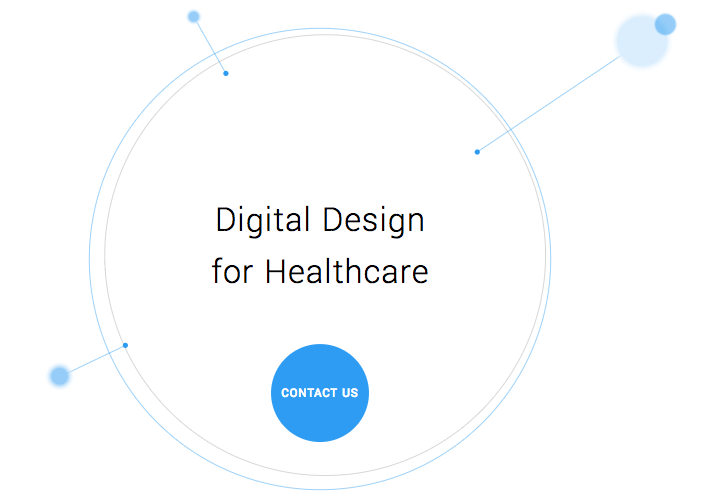
    Single page websites are very popular right now with web designers. With so many new ways to develop websites, they’ve become a unique and scroll-friendly way for users to interact with a company in a way that they’re used to (cue the token image of people scrolling through phones). And, to be fair, they can be quite beautiful. For example, take this design from 415-Agency, a San Francisco-based design firm that works with healthcare companies to make their digital products user-friendly, seamless, and as they put it, “awesomely good looking.”

    Image Of Screenshot of Digital Design for Healthcare One-Pager - Search Influence

    It’s an understatement to say that ton of work went into this site—it won them an honorable mention award from Awwwards, an organization that gives awards for the best designs, talent, and web dev agencies across the world. I’m a huge fan of exciting visual content, interactive graphics, and designs that enthrall. But, where some entrepreneurs get into trouble is when they try to manage a killer single page website while also optimizing it for SEO. They may come to discover that, for all its glitz and beauty, they’re the only ones actually finding it online.

    Photo Of Stock Of Boxes - Search Influence

    Form Must Follow Function

    Just as the customer is always the top priority, your website should follow that same line of logic. When thinking of how to design your website, think of not just how users will react to the visuals, but also how they will eventually interact with the site’s navigation. Give them clear avenues for finding more information, ordering products, or exploring your blog or testimonials. While a single-pager may seem simpler, it can often be easier to get lost and frustrated with trying to find a relevant page of content. To quote marketing guru Neil Patel, “website usefulness is more important than website beauty.”

    If a user comes to your site and thinks, “wow,” then give your web designer a bonus or yourself a pat on the back. But, the more important thing you should worry about is if their next word they is, “how?” Users should know how to interact with your site pretty easily. If they don’t know what to do or how to do it, then your site is harming you, not helping you. This can also lead to high bounce rates—users will eventually get frustrated and leave your site for one with better navigation.

    Another thing that can contribute to high bounce rates from your one-page design? Slow load times. I wrote about this in a previous blog in this series, but it’s worth mentioning here as well. Whether you’re using Flash (which, please don’t) or not, data-heavy load times due to unoptimized, large images that occupy your page’s whole screen can strangle your page load times.

    Single Page Websites Lack the Opportunity for Detail Laden Content

    Single page websites don’t have the space to allow for specific, rich content. From a user perspective, this limits the opportunity to provide a visitor with detailed, relevant content on topics they want to learn more about. Instead, they’re likely only able to view around a paragraph on specific topics. From an SEO perspective, this also gives search engines fewer opportunities to crawl your site for content that can help you move up in rankings while asserting yourself as an authority on your subject. It puts a great amount of pressure on a small amount of words. And, if you do manage to get a lot of content onto a single page, it ends up looking like it’s fighting for space.

    Image Of Post-It Notes - Search Influence

    Google likes to see that you’re updating your site with relevant content. If you have a single page site, you could make the argument that new content could be added to the bottom, creating an endless scroll of text and images. But, that method still doesn’t address the problem of not allowing search engines to crawl multiple pages of relevant content, and it also creates a headache of a user experience for visitors.

    By building out pages for your content to live, you give visitors designated, clean spaces with which they can explore your services, products, or ideas (blog posts) to their heart’s content. They don’t have to scroll for a minute or two to find your latest blog post, and search crawlers can find it easier, too.

    Forget About Performing Wide Keyword Targeting

    Since single page sites are generally designed around one main concept, the opportunity for using multiple keywords is very limited. With a multi-page site, every page has a chance to introduce a new topic or genre that can include different types of keywords that target different users and open up multiple avenues for ranking.

    With a single page site, it becomes extremely difficult to rank for varying keywords. For example, say you’re an owner of an HVAC company. You provide installations and repairs for furnaces, A/C systems, ductless A/C, water heaters, as well as air quality testing. By building separate pages for each of those services, you have an opportunity to move them each up in Google’s rankings, all while showing an increase in your authority. Putting all of your content in one page is like putting all of your keyword goals in one basket and hoping Google magically picks them up.

    Missed Opportunities for Quality Tracking

    Having multiple pages means multiple opportunities to track user behavior. You can track if someone spends 5 seconds or 5 minutes on a page about one of your services. With that valuable data, you can then focus your goals on what pages need work to bring in more visitors and convert them into customers. Obviously, this would be a difficult task for a single page site. The data showing time spent by your users will be very general, leaving you unable to tell what they love and what they dislike.

    Are There Examples of Single Page Designs That Work?

    There should and will always be design diversity on the internet. And sometimes, a single page site may work for you. For instance, take this site made by firm Gin Lane for GE that explores everything about the inside of volcanoes. Not only is the site visually satisfying, filled with video and interactive graphics, but the scroll feature of a single page makes sense because you’re literally venturing down into a volcano. Educational sites like this can have the luxury of not worrying about how SEO-friendly their content is because their main goal is to inform, not sell a product or service. Also, it doesn’t hurt that GE has the budget to build a site like this.

    Image of Screenshot of Volcanoes Single Page Website for GE - Search Influence

    Another example of a single page site working to your advantage can be when you’re utilizing it as a promotion. FBC Creative Tech Design created a site for FOX’s upcoming show, “The Gifted,” a show based on the X-men series of comics. The site, using the fictional “Sentinel Services” organization from the show, details the reasons why people should get tested for the “x-gene.” There have been numerous pre-launch sites built to create a buzz around upcoming movies or shows, and this is a fantastic way to build awareness. They’re almost like temporary landing pages. It’s worth noting again that it’s no coincidence that some of the better single-pagers are tied to large organizations—they simply have the budget to pull it off.

    Combining the Storytelling Approach of Single-Pagers Into Traditional Navigation Sites

    There’s no denying that some single page websites create curiosity. They can encourage the user to explore by simply scrolling instead of clicking, and they (ideally) tell a story about their company along the way. Businesses looking to wow users with a cool site while also being optimized for SEO should try to incorporate this same type of organic curiosity into a multiple-page, traditional navigation website. It’s completely possible. Take this blueprint of a popular WordPress design scheme from Undsgn—Uncode.
    Make each page a rewarding experience for users, where they can sit and really get comfortable with your content. If you design your multi-page site with the same goal of clean content without a lot of clutter and clear calls to action, then you’ll achieve a lot of the same aesthetic ideals of a single-pager, and with better SEO capabilities! Also, consider using visual content on your pages, like animation headers and background video. Just make sure they’re optimized so that they don’t slow down your load times.

    The ultimate decision on whether or not you choose a single page website for your business will be up to you. Every website is different; it may work for you. But, it will also be that much trickier to see your site move up in Google’s eyes and, inevitably, in rankings. If you decide that more than one page fits your business, you should learn more about SEO services which are imperative to the health of your website.

    Stay tuned for our next blog in the series, Rookie Website Mistakes, Part 5: The Content Is Weak.


    Images:

    Digital Design for Healthcare

    Volcanoes

    Blog Masonry

  • How to Write Clear CTAs That Convert

    According to Small Business Trends, “70% of most B2B websites lack a call to action.”

    With millions of websites in existence, the odds are slim that a user will visit your site and miraculously remember your URL or bookmark it for later viewing. Without a continued, personal connection through an email newsletter, a white paper download, a podcast subscription, a special offer, or another form, it may be the last time that person connects with your business online.

    A call to action, or CTA, attempts to establish that connection with your potential customers once they click on your PPC ad and head to your landing page. Even if you’ve got a CTA on your site, it may be deterring visitors rather than inviting them to explore your business. Here are some tips to make your CTA convert visitors into customers.

    Start Strong With Action Verbs

    There’s not a lot of space to get your point across, so it’s important to get straight to the point. Use an action verb to start your call to action. If you’re in the eCommerce world, consider using words like “shop” to start your CTA, possibly followed by “and save 50%.” The goal is to be direct and informative, highlighting the exact action you want your potential customer to take.

    Image of CTA Get Your Guide - Search Influence

    Focus on Value and Benefits

    As a general rule, think of how you might be able to finish your potential customer’s thoughts for their desires/pain points/expectations, and then use that action verb at the end of the following sentence: “I want to _______.” What was the first thing that came to mind that your clients might choose? Grow more leads? Find shoes that slay? Get My Custom Ad Analysis? Start My Free Software Trial? The answers to this hypothetical question are completely dependent upon your business, but one thing remains true—they need to focus on how you can delight your customer by providing them relevant solutions and unique selling points that make their life or job easier. Instead of phrases like “Buy Now,” which focus on an action a user has to do, get more creative by emphasizing what he or she will get out of clicking that CTA.

    In a case study from Unbounce, a B2B website owner reported a 38.26% increase in conversions after replacing just one action verb—Order Information vs. Get Information. With the former, “order” puts the customer in a difficult position—there’s either purchasing the service or not. But with “get,” the potential customer gets to see advantages or rewards. He or she is potentially awarded valuable, relevant information for choosing to continue the buyer’s journey. It’s this combination of value and relevance that can make or break a click.

    Another tip about delivering benefits: Don’t make claims or offers you can’t deliver on. This is going to be the start of a potential relationship with a new customer. The last thing you want to do is promise something you can’t afford.

    Image Of Girl Writing On A Blank Card At Her Desk - Search Influence

    Keep It Short and Be Specific

    According to research performed by Dan Zarrella at Hubspot, the most engaging Press Release headlines are between 90–150 characters. The same holds true for crafting landing page headlines and their corresponding CTAs. Be concise, focused, and goal-oriented. Going back to emphasizing value for the customer, consider these more focused and value-driven options.

    Generate Leads ⇒ Generate {higher quality} leads by {unique qualifier}

    Drive Sales ⇒ Drive {higher value or more} sales by {unique feature}

    Measure ROI ⇒ Measure ROI {across all channels} with our {unique product}

    Sure, the first versions were about as short as you could get, but the amended CTAs remain concise while giving a more in-depth and accurate portrayal of what the customer will get. Clear copy should help reduce any anxiety or confusion that someone may have about exploring your company. And let’s face it; people have a limited amount of time to explore your content. Make the time they spend on your site valuable, not wasted.

    Use Natural Language—Submit or Click Now? No Thanks.

    These antiquated terms used to be exciting when it really was a novel concept to be able to click on something and get immediate results. After all, most CTAs before the internet involved a number that you had to call. Now, though, that novelty isn’t the selling point; what you can provide your customer is. When thinking about writing your CTA, think about how you can connect with them. One way to use this in your writing is to use the words “you” and “my/our.” For example, “Drew Brees Can’t Stop Talking About Our Training Program. Learn Why and Get Fit.”

    Steer clear of using ornate language by cutting unnecessary adverbs and adjectives. These words may seem like they add value to your copy, but they’re hiding the value that you can provide your customer.

    Also, avoid using industry jargon in your copy. This can include words like, “franchise,” “utilize,” “virtualization,” “capitalize,” and especially acronyms that only a limited number of potential customers would even understand, like these marketing big ones: KPI, RSS, CAC, CSS, CRM. Doesn’t look too inviting does it?

    Does the Size and Layout of the CTA Matter On a Landing Page?

    Just like your copy, your page layout should be neat and clean. Kissmetrics recommends: “The size of your CTA buttons is also important. A too-small version won’t command attention, while a supersized one will make you seem desperate.”

    Think about how your landing pages look from a visual standpoint. Avoid the color red for your CTA. There are too many associations with danger, stop signs, stoplights, aggression, etc. You’ll likely see more positive results from calm colors like blue or green.

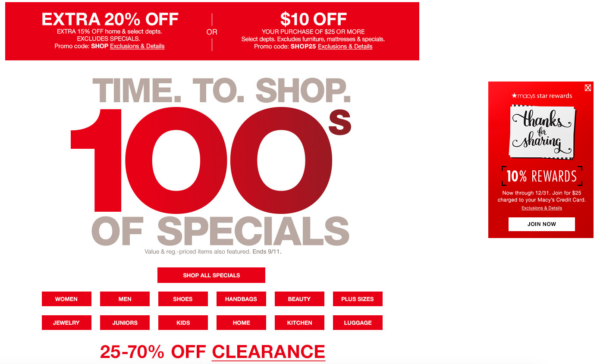
    Also, consider the size and spacing of your text on the page. It should be scannable so that a visitor can instantly pick out the information they’re interested in. Cut out the clutter. For instance, here’s an example from Macy’s current main landing page. Aside from the mixed messaging of the different values, can you spot the call to action?

    Image Of Macy's Landing Page Sale - Search Influence

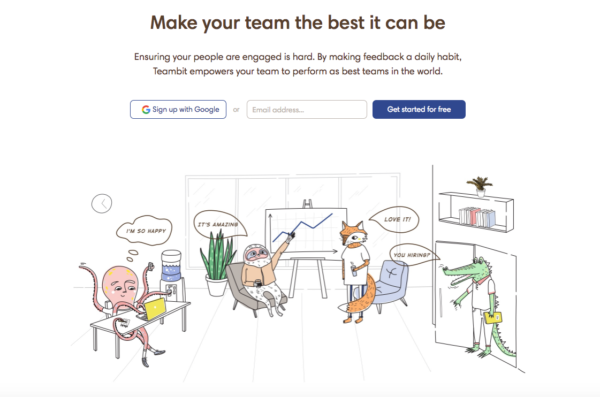
    Their “star rewards” offer is shifted to the right of the page. The goal for a button’s CTA is to predict where the user will look next. This one missed that mark. Also, it’s hard to tell what “JOIN NOW” means until you read the tiny print at the top indicating this CTA is for their rewards program. And finally, they’re asking a lot of their visitors to read the fine print on all of these different offers. A cleaner example of a landing page with less clutter and more clarity would be like this one from Teambit, an employee feedback, recognition, and survey startup.

    Image of Teambit Landing Page - Search Influence

    The value? Your team could be the best it can be. Sounds great. How do I go about doing that? Oh, I’ll get started for free. They have detailed information if you scroll through their page about just how they help people. But the reason why it succeeds is because it doesn’t worry about that up front. It focuses on the why with a compelling headline followed by clean copy and a simple CTA. Sometimes, it really is that simple.

    A Few Final Ideas for Crafting Great CTAs

    In addition to the previously mentioned points, here are a few examples of how you can make your CTAs stand out and drive conversions.

    1. Make sure to always display the benefits. If you’re offering a free guide, then say so right away (e.g. “Get the Knowledge You Crave – Download Our Free Guide.”).
    2. Try using a pain point that your potential customers may be hitting. For example, “Tired of Not Seeing Results In Your Ad Campaign? Watch Our Free Webinar to Find Out…”
    3. Also, you can try using an Influencer who supports and promotes your brand. This adds authority and intrigue to your CTA. Viewers who see that “Mark Zuckerberg Is Crazy About Our Team’s Marketing Ideas” will likely want to click on the corresponding, “Discover Why” button.
    4. Lastly, utilize testimonials from your current clients. This is a source that people often overlook. Your customers should be the biggest proponents of your brand. If a client has said that you’re the best company they’ve ever worked with, then take that and condense into copy to go along with a short, action-oriented CTA. Of course, always make sure to attribute ownership of the testimonial, and it goes without saying that creating a fake testimonial is a horrible idea for your brand. You’ve got to earn them.
    5. Numbers are great. If you have some success metrics, consider including them on your landing page. Are 100% of your employees certified in the service you’re promoting? Visitors should know that.

    Have any great examples of CTAs in landing pages or other types of content that you’ve seen? Share them with us! A great CTA can have your business seeing more conversions and fewer bounces. Need some more guidance on building a landing page that has strong calls to action that focus on your company’s brand and values? Reach out to us at any time.


    Images:
    Macy’s

    Teambit

  • 5 Questions Your Medical Practice Should Ask Before Hiring a Paid Search Firm

    5 Questions Your Medical Practice Should Ask Before Hiring a Paid Search Firm

    When it comes to choosing a marketing firm for your paid search campaign, it’s important to do your homework—especially if you’re in the medical industry. According to Pew Research Center, 8 in 10 online health inquiries start with a search engine, and 72 percent of internet users said they looked online for health-related information. Beyond patients frantically Googling their symptoms, they’re also searching for medical care providers. The right ad agency will make sure you show up on page one of the search results.

    But on top of a highly competitive and saturated market, medical practices also face added challenges to adhere to strict medical guidelines and discuss sensitive and highly personal topics appropriately. All said, a paid search campaign can do wonders to both improve your brand awareness and get new patients in your door. Here are five questions you should ask your prospective paid search agency before signing a contract.

    1. What Experience Do You Have Working With Clients in the Medical Industry?

    Your ad agency shouldn’t just know costs per click and search engine optimization, they should also know how to speak your language. More than that, they should know how to speak your language to your prospective patients. Search Influence has been helping clients in the medical industry stand out and rank in search results since 2007. In that time, we’ve worked with medical clients in 30+ cities across 18 states. Our experience ranges from plastic surgeons and dermatology clinics to hospitals, counseling services, and physical therapists. We use a holistic approach for every campaign to create brand recognition, improve ranking, and—most importantly—deliver qualified leads.

    Our years of experience have helped us build a database of technical and demographic knowledge in order to strategically reach your desired patients where they’re at. In fact, we have helped our clients stay on the frontline of innovation by optimizing their sites for procedures as soon as they are approved and available to the public. For example, when the FDA approved gummy bear implants in 2013, we already had content written for our clients and were ready to run promotions to highlight this highly desirable option at the time.

    We also understand the meticulous detail required to accurately reflect the standards and restrictions of medical societies, HIPAA, and the platforms where we promote your content. We know how to accurately post images in accordance with both American Society for Aesthetic Plastic Surgery (ASAPS) and American Society of Plastic Surgeons (ASPS) promotional guidelines or how to use language that aligns with Google’s expectations for websites in the medical industry—an issue that can even cause Google to suspend your site.

    Stethoscope on a computer keyboard

    If you’re curious about the current state of your website or worried about a site suspension, you can contact us to help you get on the right track.

    In addition to meeting all of the medical industry standards, it’s also important that you position your practice as a thought leader. Our deep knowledge of the subject matter ensures that your content is optimized and technically accurate. More than just knowing that gynecomastia is the condition and breast reduction surgery is the procedure, we also understand the discreet and laser-precise writing required to appeal to men who are searching for this sensitive topic. As your PPC agency, we will deliver results because we start with strategy, and we understand your business.

    2. What Is My Cost Per Lead?

    Your cost per lead will depend on market factors such as seasonality, the size of your city, and the number of advertisers in your area. However, at Search Influence, our typical target for plastic surgeons is $50-$60 per lead. For us, we care most about delivering you qualified leads that actually become patients.

    So how do we actually calculate your cost per lead (CPL)? Let’s say, as an example, that you offer a procedure for $5,000, and you’re willing to pay 10 percent (or $500) in order to get a lead for that procedure. However, you know that not every lead that contacts you is going to become a patient. Let’s say that 1 out of every 10 leads who contact you about the procedure will actually become a patient. That’s a 10 percent conversion rate, which results in a CPL of $50.

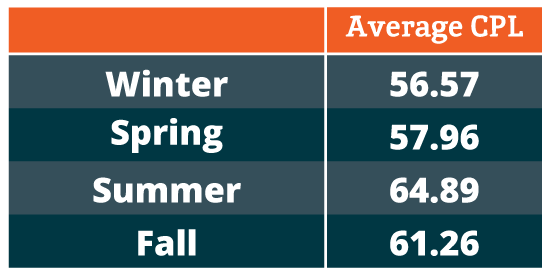
    Of course, if your conversion rate is higher or if your cost for acquisition is higher or lower than the example, we can adjust accordingly. The table below outlines seasonal averages for some of our plastic surgery clients to show how we can achieve results for your practice.

    As a medical practitioner, your bottom line all comes down to how many patients are walking through your door (and how much you paid to get them there). For you, a worthwhile investment in paid search results in qualified leads that can translate into actual patients. We get that. That’s why we have built-in systems to seamlessly track your leads, and a post-launch schedule to fine-tune your campaign as quickly as possible. Not only will you have clear reporting, but you can also use our lead tracking system to create an organized database of qualified leads, allowing your team to close leads faster.

    3. How Do You Measure Return on Investment?

    PPC is not a “set it and forget it” machine. Successful online ad campaigns should run on a continual loop. You have to look back to determine what’s working and adjust in real-time to build on successes. Our reporting can help you pinpoint the average cost per patient so you know your exact return on investment. You’ll know if your leads prefer to call or fill out a contact form, and you’ll gain valuable insights like location demographics.

    Physician holding a tablet

    Your PPC agency should also collect continual feedback from you about the quality of your leads in order to apply that information directly to your campaign and avoid any wasted ad spend. With endless customization opportunities—not a prix fixe package—your marketing firm should have a system in place to make things easy, but also be ready to break the rules to fit your budget and make your campaign a success for you.

    4. What Procedures Are You Promoting and What Drives the Most Leads?

    Remember that thing about endless customization? Yeah, that applies here, too. Your ad agency should have the know-how to build a holistic strategy that both grows your brand and promotes your most important services.

    Brand building and search engine optimization are definitely comparable to the age-old chicken and the egg situation. You have to have some brand recognition if you want to rank high on search engines, and once you rank, you’ll get greater brand recognition. So what does that mean for you? Well, if you don’t rank yet, you’ll need to do more than simply optimize your content and build your link profile. You’ll have to create a dynamic strategy to build the overall awareness of your brand. After all, in the age of the internet, who says you can’t have all your eggs in your basket and eat some chicken, too?

    Your online marketing agency can help you do just that. That’s why at Search Influence we start with a comprehensive kickoff meeting to understand the details of your business. Why? It’s simple. Formulating the right strategy first will save you money and get you the right leads.

    Once we understand your business goals, we can target the right procedures and help you establish your brand around specialties and services that matter to you. We can also help you identify missed opportunities. For example, while aesthetic services aren’t the highest revenue driving procedures, they’re a great way for plastic surgery practices to continue generating revenue even when the doctor is booked with another client. Or, perhaps you specialize in rhinoplasty and want to be established as the leader in your market for that procedure. We can center your campaign on your qualification as a rhinoplasty surgeon to build your brand as the preferred specialist. It all depends on your needs, and your ad agency should do the setup work to understand those needs from day one.

    5. On What Page Do Leads Land During a Campaign?

    You can have beautifully written ads, but without the right landing page, your leads are highly unlikely to convert into patients. Especially when it comes to AdWords, you have to optimize for both your human readers and Google’s Quality Score. Google can spot landing pages that don’t align with the search term in the ad and actually make you pay more as result. For example, if someone searches for liposuction, clicks on your ad all about liposuction, then lands on a general page about body contouring services, then you’re missing the mark on user experience and Google’s best practices.

    Without optimized content and a dedicated landing page, your chances of converting are slim.

    A recent report from Unbounce placed the average conversion rate in the healthcare industry at only 2.9 percent. And if you’re using your homepage as your landing page, then you’re totally missing out. Your ad agency can create dynamic landing page content that makes it easy for prospective patients to take an action, with custom forms and click to call buttons that prove your return on investment. In fact, the same Unbounce report shows that healthcare businesses in the 90th percentile achieve conversion rates at 9.3 percent, and the right content and strategy can help get you there.

    Landing pages are just one key element in a successful ad campaign. At Search Influence, we care about delivering a holistic advertising strategy focused on results. Contact our team to see how we can help optimize your medical practice’s online presence.

  • How to Use Google’s New Quality Score Columns to Drive Lower Costs Per Conversion

    If you’re a hands-on business owner using Google AdWords, you’ve no doubt come across the term “Quality Score.” You know it’s an important metric for the success of your account, but what does it mean? What factors contribute to this important number? And how does improving the overall quality of your account result in more leads? In this blog post, I’ll take you through a quick introduction to Google’s Quality Score and several strategies for monitoring, analyzing, and optimizing this metric.

    What Is Quality Score?

    According to Google, “Quality Score is intended to give you a general sense of the quality of your ads. The 1-10 Quality Score reported for each keyword in your account is an estimate of the quality of your ads and the landing pages triggered by them.” The main components of a keyword’s Quality Score are the Expected CTR for your account’s keywords and how your performance stacks up against that expectation, Landing Page Experience, and Ad Relevance. As your account runs and your keywords begin to receive impressions and clicks, Google ranks each keyword as Above Average, Average, or Below Average for the following criteria:

    • Ad Relevance – This component quantifies how closely related your keyword is to the ads in your ad group.
    • Landing Page Experience – Google rates your site based on the relevancy of your keywords to your landing page and the ease of navigation. Can the user find what they’re looking for on your landing page?
    • Expected CTR – AdWords knows the historical CTR of your ads. Using this information, the platform determines an Expected CTR for a given keyword and each keyword is then measured by how close actual performance is to that pre-determined expected performance.

    A keyword’s Quality Score used to be based on the keyword’s historical performance on Google until it achieved a significant number of impressions in your account. However, now Google reports a null score until that threshold has been reached. Once the keyword receives a significant number of impressions, its Quality Score will start to reflect how it performs in your account, and historical performance will be a lesser factor.

    Theoretically, your account level Quality Score is the cumulative result of the historical performance of all keywords in an account. It would be a painstaking process to capture this information on an individual keyword basis to determine the average Quality Score across the account. Luckily, there are wonderful geniuses who have developed scripts to do this for us. Google doesn’t confirm this Quality Score’s existence, but it’s generally accepted that there are different levels of Quality Score other than the visible keyword level Quality Score.

    Why Is Quality Score important?

    The components of Quality Score along with your set bid and the expected impact of your ad extensions are factors in the calculation of your Ad Rank. Your Ad Rank determines the position in which your ad will show as well as how much you pay for each click. Improvements in your Quality Score can lead directly to decreased Costs per Click. Without raising your monthly digital advertising budget, reduced CPCs allow you to generate more traffic to your site. The additional, cheaper traffic to your site creates more opportunities for Conversions at a reduced cost.

    Where Can I Find the Quality Score?

    Whether you’re using the new AdWords experience or the old interface, navigation is similar. However, there are a few additional functions currently only available in the old AdWords that we’ll explore in a later section.

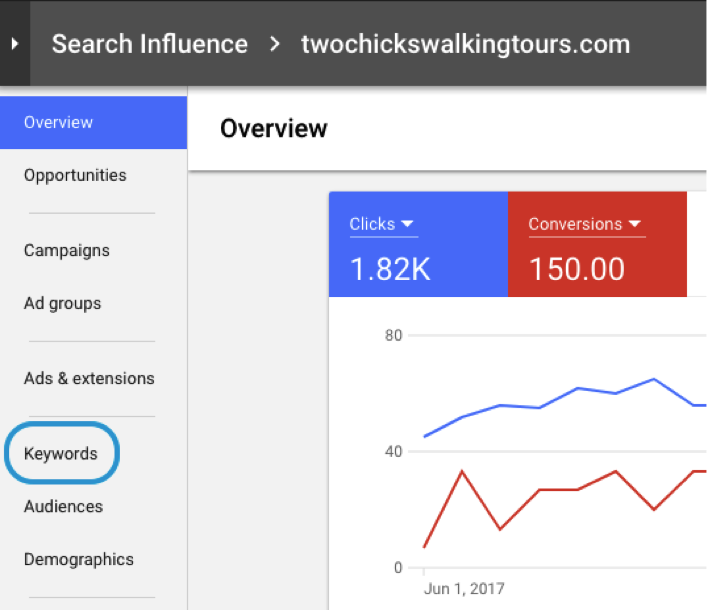
    1. Navigate to AdWords and select Keywords in the page menu.

    Screenshot of a keywords tab in Google AdWords - Search Influence

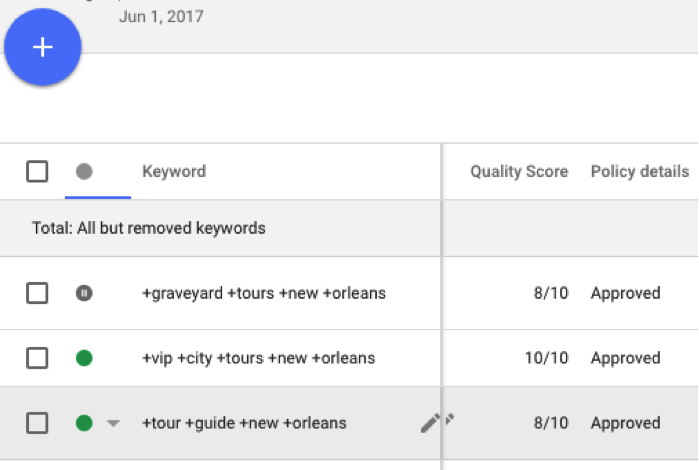
    1. If not already present, you may need to modify your columns to include the Quality Score column.
    2. Now you will be able to compare Quality Score across keywords.

    Screenshot of a Quality Score comparison in AdWords - Search Influence

    • You can sort by Quality Score or use the filter function to view only keywords with a specific Quality Score threshold.

    What Is a “Good” Quality Score?

    If a keyword’s Quality Score is 1-3, this is cause for concern. You’ll want to identify specific criteria needing improvement. If the score is 4-5, you can definitely make a couple of improvements, but you’ll want to focus on improving the areas that will have the biggest impact on your overall Quality Score. If the keyword’s Quality Score is 6 and above, the keyword is performing quite well, and you might only make minor adjustments.

    How Can I Diagnose My Quality Score?

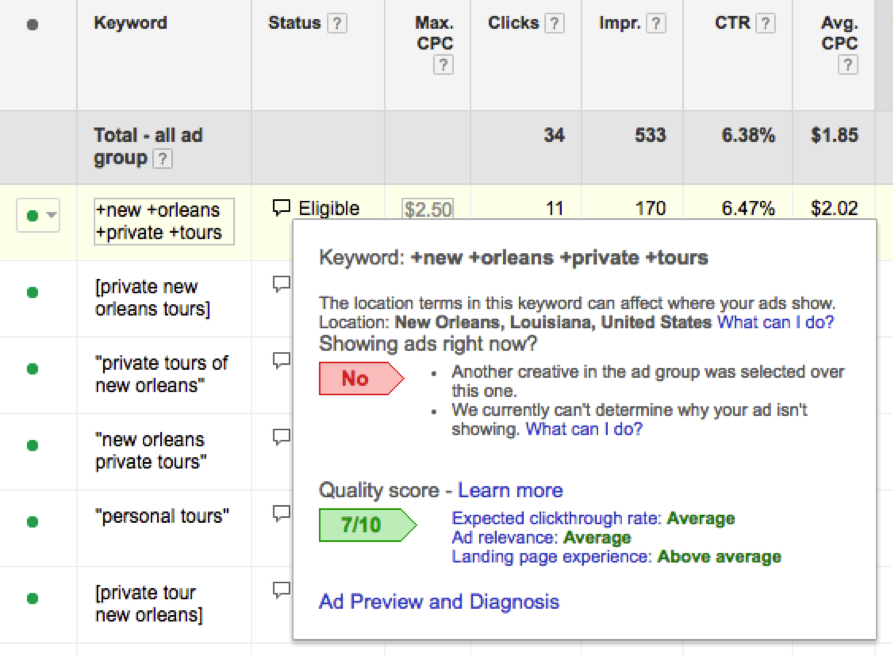
    You know that a Quality Score of 2 isn’t great, but how do you figure out where to start with improvements? In the old AdWords, you used to have to hover over the speech bubble next to the keyword to see Google’s rating of each of the three factors.

    Screenshot of keyword analysis in AdWords - Search Influence

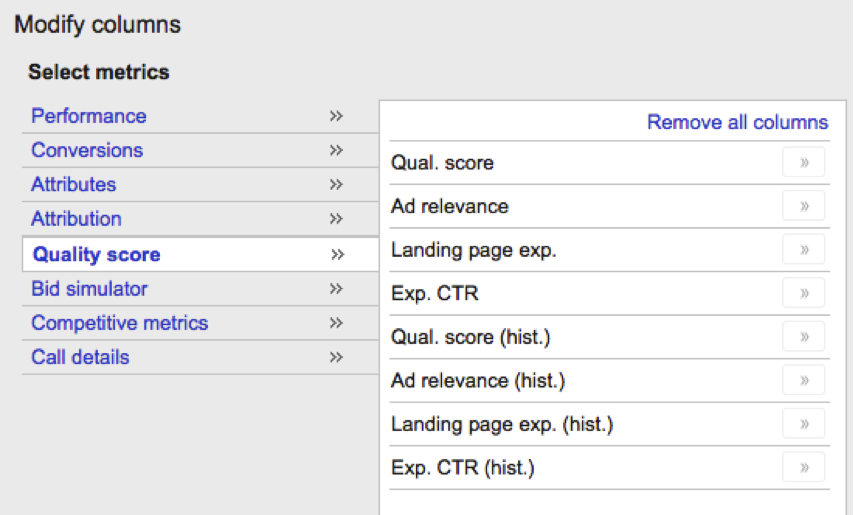
    This is extremely time-consuming. In the past, we’ve used a script to make this process a little more automated, but in early May of 2017, Google released brand new Quality Score columns to make the large-scale analysis of this data even easier. In the old AdWords, modify your columns and review the parameters available under the Quality Score heading. Unfortunately, these columns are not yet available in the new AdWords experience as of this posting.

    Screenshot of Quality Score columns - Search Influence

    Google now allows you to add columns to see your criteria rankings—Above Average, Average, or Below Average—within the platform. If a keyword has Above Average ratings for 2 out of 3 factors, you can easily identify which factor is having the greatest impact on the Quality Score for that keyword. There are also historical measurements of these metrics that can help you determine whether changes to your account positively or negatively affect the various components of Quality Score. For instance, reviewing historical Quality Score performance alongside current performance can help you determine if the new ads you implemented improved Ad Relevance or if the edits to your Landing Page contributed to improving the overall experience.

    How Can I Improve My Quality Score?

    So now that you’ve identified areas for improvement, what steps can you take to fix these issues? If your keyword has a Below Average Expected CTR, this is the easiest element of Quality Score to improve. Here are some strategies for improving this criterion:

    • Review the Search Term Report for this keyword for opportunities to implement more relevant keywords that users are searching and clicking in place of the keyword with a low expected CTR.
    • This could also mean that your ads are not compelling enough for people to click through. A quick way to give your account a natural CTR boost is including Dynamic Keyword Insertion (DKI) in your ads.

    If Ad Relevance is an issue in your account:

    • An ad is deemed relevant to a keyword when the keyword appears in the ad. Review your ads alongside your keyword to determine if the keyword in question is highly relevant to the ads for that ad group.
    • As I’ve already mentioned, account organization is key. Would the keyword be more relevant to another existing ad group? Is the keyword important enough to warrant the creation of a separate ad group?
    • You can also duplicate an existing ad and edit the copy to include a keyword with a low Quality Score to try and give that keyword a boost.
    • Ensure that your ads are answers to the queries the ad group most often receives. Reviewing your Search Term reports can help you figure out the information that users are most curious about.
    • Google also takes into account keyword density on the site, so improving your Landing Page could also be a factor to improving ad relevance.

    If your Landing Page Experience is subpar:

    • Don’t ignore the impact of your site’s mobile landing page experience!
    • Make sure that your keywords and ads are relevant to the content on the landing page.
    • Implement image optimizations like meta text, title tags, and alt text to include relevant keywords.
    • Brainstorm better CTAs for your buttons.
    • Improve your content.
    • Create more visible conversion points, like a highlighted click to call button on mobile, a click to call button at the top of the body content, and a corresponding form below.
    • Work to improve the navigation experience.
    • Forms or downloads on the landing page should clearly indicate what will happen if clicked by the user.

    You can’t have a “set it and forget it” mindset when it comes to Quality Score, especially considering the potential impact on your overall Cost per Conversion. I recommend performing a quarterly Quality Score analysis on your account and using insights from that analysis to drive the next quarter’s account optimizations, pacing out your changes, and using the historical Quality Score columns to judge the impact of your optimizations. If you have any other Quality Score tips, tricks or insights, please leave us a comment. If you’re new to AdWords and need some help setting up your account for success, please reach out to our team. We would love to help you optimize your potential!

  • Success Story: ALCC American Language

    Learn how we helped ALCC American Language new inquiries while delivering higher site traffic and more frequent engagement on social media.

    The Situation

    The client is a language school located in New York City whose mission is to help international and local students learn English in a supportive atmosphere. The client’s goal was to increase the number of enrolled students and increase their number of fans on Facebook.

    The Approach

    Our strategy included a mix of campaigns that would ultimately increase the volume of leads via forms, calls, and social media engagement by making the client more visible and accessible online.

    We did this using the following campaigns:

    The Outcome

    Paid Search:

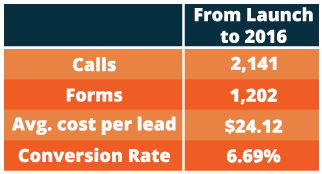
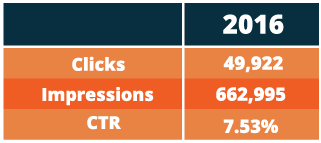
    When analyzing their paid ads campaign, even 2 years after initial launch, ALCC American Language saw continued growth in new student inquiries and conversion rate. During 2016, they averaged 279 new inquiries per month (179 calls and 100 website contact form submissions). Testing and tuning the campaign resulted in a conversion rate of 6.69%, which is an increase from the start of their campaign in 2013 at 2%. Additionally, in 2016 the paid ads averaged 55,250 impressions and 4,160 clicks per month.

    Graphic image of increased inquiries - Search Influence

    Graphic image of increased clicks, impressions, and CTR - Search Influence

    Facebook:

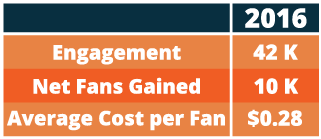
    Looking year over year from 2015 to 2016, the client saw a significant rise in Facebook engagement. Their fans increased from 10,000 to 18,000 fans and the engagement, which includes reactions, comments, and shares, increased from 34,000 to 42,000.

    Graphic image of social media engagement increase - Search Influence

    Search Engine Optimization:

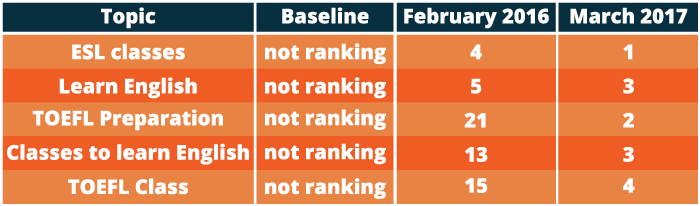
    Through methods such as monthly blogging, press releases, user experience improvements, authority building, and helpful website content, the client gained increased Google rankings for top key search terms and overall website traffic. At the start of ALCC American Language’s campaign, they weren’t ranking for industry relevant keywords and common search terms. As of this year, they are ranking in the top 5 positions of Google for the majority of their important keywords. Additionally, they saw a 57% increase in their goal conversion rate from their total website traffic and a 38% increase in web page visits per session from their organic website traffic when comparing 2015-2015 to 2016-2017.

    Graphic image of keyword ranking for ALCC - Search Influence

    By using a comprehensive, custom strategy, we were able to help ALCC American Language bring in more prospective students so that they can continue to do what they do best—help those striving to learn English. Interested in learning how we can help improve your online presence? Reach out to us at any time.

  • Google Attribution Allows Clear, Seamless Campaign Analysis for Marketers

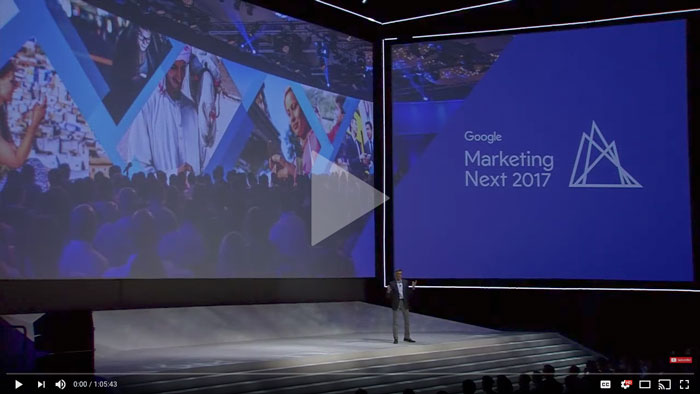
    How do you know which of your interactions with a customer mattered the most? How do you measure an organic search that someone performed for a product on one device compared to an ad clicked right before the point of purchase on another? Well, Google set out to solve some of these and other problems that marketers face daily with their newest rollout from their Marketing Next event—Google Attribution. Now, marketers can finally begin to answer the age-old question that is typically at the forefront of their minds—is my marketing working?

    How Google Attribution Streamlines Data

    Google Attribution uses machine learning and data to help marketers measure the impact of each of their marketing touch points, across multiple channels, and across multiple devices. It uses data that’s already there from Adwords and Google Analytics; it just takes that data and shows you how each customer moved through their buyer’s journey and attributes those conversions respectively. It provides a single view of the path to purchase to help marketers learn what is actually working compared to what seems to be working.

    “The aim of Google Attribution is to simplify the complex problem of multichannel, multi-device attribution by leveraging data advertisers already have in Google Analytics, AdWords, or DoubleClick Search,” said Kishore Kanakamedela, director of product management at Google.

    To give an example of how a richer lens of an entire campaign was able to better benefit a business, Virgin Holidays utilized store sales measurement to look at store sales after users clicked on a search ad:

    “Virgin Holidays discovered that when it factors in store sales, its search campaigns generate double the profit compared to looking at online KPIs alone. A customer purchasing in-store after clicking on a search ad is also three times more profitable than an online conversion.”

    Google already rolled out a store visits measurement in 2014. They’ll be rolling out store sales measurements as yet another touch point that marketers can analyze through Google Attribution.

    And possibly the best part? Attribution is free for anyone to use. It’s in its beta version right now and will be more readily available this fall.

    A Shift Away From Last Click

    Until now, many marketers were left to use last-click attribution to measure the value of their efforts. With last click, the reward for the conversion often went to the last touch point that the user made, often with a sale after a click on an ad. This could lead to false impressions about the effectiveness of an ad campaign versus display ads, organic search, social, email affiliates, and many other interactions that a customer made with a business along the buyer’s journey. Maybe organic search is actually more important display ads or vice versa.

    With Attribution, users can see how effective each step of a campaign is instead of just pointing to the last click of an ad before purchase. There are so many micro-moments that happen on the path to purchase. Now, marketers can have a more accurate view of business, and in turn, can then update bids or move budgets between channels based on such results.

    Image Of Woman Typing On A Computer With Media App Logos Flying Around - Search Influence

    This move to a more holistic view of a campaign makes sense. Video ads, banner ads, carousel ads, emails, social campaigns, and all other types of digital materials work together to drive solid leads to become conversions, so why would it make sense for only the final ad to get all of the credit and influence a business’ campaign and budgeting decisions?

    There is already a slew of companies that have seen the benefit of implementing the data-driven results of Attribution. Check out the success stories that Google has touted so far.

    Eliminating Waste and Annoyance With Unique Reach

    Most people use multiple devices to access their multimedia channels, whether that be a phone, a tablet, a smart TV, or a computer. For example, let’s say you’re shopping for a new laptop. You may first see a search ad when searching on your phone and then find a display ad while on your tablet. Then, you’ll come across a shopping ad by the time you decide to purchase the laptop on your current computer that needs replacing. According to Bill Kee, Google’s Group Product Manager for Attribution presenting at Marketing Next, “30% of people use 5 or more devices today. If you reach each of those devices three times, you’ll reach that person 15 times.” It’s safe to say that’s a bit of an overkill.

    With Unique Reach reporting in AdWords and DoubleClick, marketers will be able to measure how many people were shown display and video ads. It will show unique users and their average impressions. This helps marketers better understand how many people they reached in their target audience and how many times they reached them. This will allow businesses to find any wasted budget in over-saturated placements and, more importantly, better please their potential customers by not wasting their time with endless ads.

    People are expecting a simple, frictionless user experience on their path to purchase. Unique Reach is, well, unique in that it puts the customer right at the heart of the journey. Unique Reach is available in AdWords now and will be available in DoubleClick in the coming months.

    Image Of Person Sitting Out By The Water At Sunset - Search Influence

    The Customer Is the New Channel

    Instead of the mindset of measuring your reports within online or offline channels, Google has highlighted the importance of recognizing the customer or user as the new channel. The line between being online and offline has disappeared.

    Consumer expectations are higher than ever. So, the best way to meet those expectations is to try our best to understand consumers’ intent. Google also shared their Surveys 360 product connected to AdWords and Google Optimize. It helps marketers deliver more relevant ads with targeted surveys that seek to understand a customer’s intent along with their buyer’s journey.

    Marketers are already working hard to develop a strategy that brings conversions for their potential and current clients; Google Attribution helps them work smarter with data. By using their machine learning to put context into the consumer journeys, this new tool should help marketers create a simple, more streamlined campaign that their users will love and respond to. To quote Sridhar Ramaswamy, Senior Vice President of Ads and Commerce at Google and opening speaker at the Marketing Next event: “To really assist people, we need to become smart in how we use data to assist them.”

    Interested in learning how we can better market your business? Reach out to us at any time.


    Image Sources:

    Google Marketing Next

    Woman Checking Her Phone At Sunset

  • Facebook Ads vs. Boosted Posts: Here are 4 Reasons to Always Choose Facebook Ads

    The world is filled with many ways to advertise a product or service. Simply hoping that your message makes its way to the perfect target audience is never the best practice to ensure your advertising efforts are successful and profitable for your business. With the increase of paid digital advertising on many online platforms, it is becoming more difficult than ever to reach potential customers the old fashioned organic way. As more content continues to flood these platforms, knowing how to utilize their advertising tools is more important than ever before. Facebook is continuing to reinvent the way the world does advertising. With the platform being a rich and unique source of users’ personal interests and behaviors, combined with the ability to present advertising information in compelling and creative ways, using Facebook to advertise your business is becoming a no brainer for both newbies and advertising professionals alike.

    With that being said, busy business owners might ask themselves, “Why should I spend the time to create Facebook ads with Facebook Ads Manager when there are simple tools like Boosted Posts that do the same exact thing?” The ease and simplicity of boosting an already posted Facebook post cannot be denied. With the click of a button and for as low as $5, your post can reach more people, potentially resulting in more engagement, increased traffic, and even better sales. Sounds great, doesn’t it? The major problem that many business owners come across with boosting posts is simply wasting money due to a lack of strategy tied to a specific business goal. Using Facebook ads can come with a bit of a learning curve. It is not as quick and simple and can’t be done directly for your page. Facebook ads can, however, bring some distinct advantages to the table that you can’t get with boosted posts. These advantages can help you grow your business by not only helping you to narrow in on your ideal customer, but also by presenting your business in a way that truly personalizes the experience and connects with these individuals.

    Here are 4 reasons to always choose Facebook ads over boosted posts for your advertising efforts:

    1. Facebook ads provide in-depth targeting options that go beyond just interest-based targeting used by boosting a post.

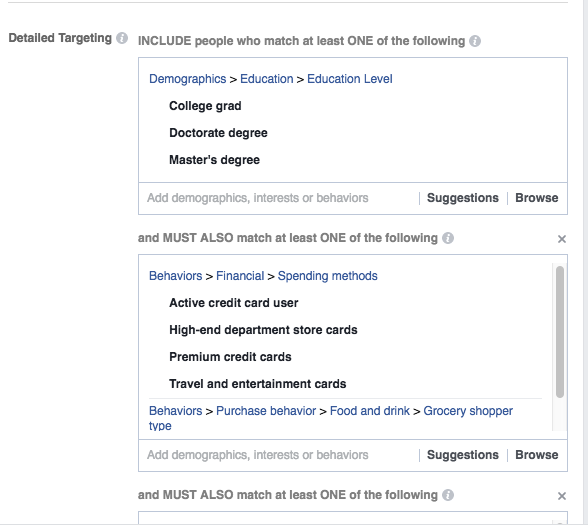
    Unlike Facebook ads, boosted posts are extremely limited in who you can actually target. There are only three targeting options: people who have already liked your page, friends of people who have liked your page, and people who you choose through a few basic targeting options. Though the first two options can provide some value to your business, just because someone likes your page doesn’t necessarily mean they are your ideal customer. Likewise, though there are a few targeting options with boosted posts, you cannot target behaviors or utilize detailed targeting, which means, for example, you can’t target someone who is a college grad AND an active credit card user. Instead, you can target users by their location, age and gender, and interests.

    Example Of Detailed Targeting Image - Search Influence

    Example of detailed targeting.

    Though Facebook Ads Manager can be daunting at times, it is certainly one of the best tools on the market to get in front of the perfect audience for your business. If you have a good understanding of your customers, what they are interested in, and how they behave, Facebook has the big data analytic capabilities to back your knowledge. Understanding how to use these targeting capabilities to your advantage can provide long-lasting value to your business.

    2. Facebook Ads Manager allows you to schedule ads during times that matter most to your business.

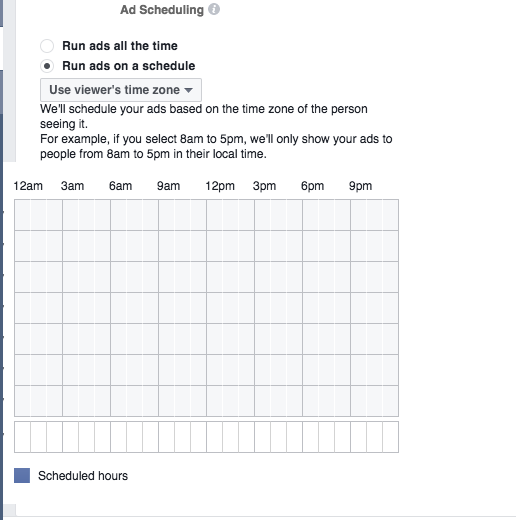
    When using boosted posts, the advertiser has very little control, if any, over how and when a post is delivered. A boosted post can only run between one to seven days, limiting your ability to show ads during the time your ideal customer is on Facebook as well as during hours of the day that might be most important to you and your business, i.e. when your store is open or for the duration of a special event. Using Facebook ads allows you to pinpoint exactly when you want your ad to run. This can help to save your advertising dollars for when you need them most!

    Example Of Ad Sampling - Search Influence

    Example of ad scheduling.

    3. Take advantage of unique call to action buttons that tell your users exactly what action to take!

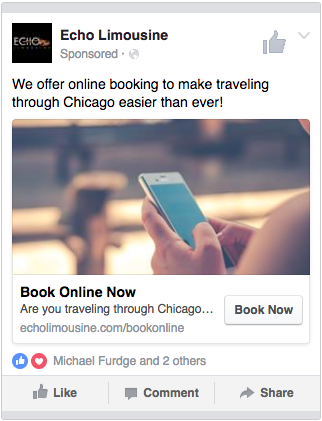
    Boosted posts are optimized for engagement, or likes and shares. If you are trying to entice a potential customer to click on your post’s call to action, this is not going to be the best way to do that. With Facebook ads, businesses have more of an opportunity to increase sales and traffic to their websites by using call to action buttons. These buttons help your audience understand the action you want them to take after seeing your ad. Including these in your ads urges users to move away from the ad and onto your site, giving them more of a chance to shop, sign up for an account or email list, or learn more about your product or service.

    Example Ad Using The ‘Book Now’ Call To Action Button - Search Influence

    Example ad using the ‘Book Now’ call to action button.

    4. Unique creative and placement options.

    Boosted posts come with only a few creative and placement options within Facebook. These ads can typically be spotted within your target audience’s News Feed. With Facebook ads, on the other hand, ads can be seen using Instagram and on the right-hand side of the Facebook platform. Facebook ads also come equipped with a number of creative possibilities, including multiple image ads, video ads, and slideshow ads. These can be used to entice and excite your target audience, making for a more enjoyable experience when discovering information about your business.

    Ultimately, Facebook Ads Manager is the perfect tool for all advertisers to get in front of their ideal customer using in-depth targeting and advanced delivery options alongside unique creatives. Though boosting posts might always be a simple and easy tool for advertisers with less experience, using Facebook ads is certainly the way to go to grow your customer reach in a creative and personalized way.

    Need help using Facebook Ads to impact your business? Search Influence is equipped with the expertise and experience needed to help you grow! Contact us today.