Blog

  • Growing Your Practice on Facebook, Part 6: A Facebook Success Story

    Part 6 of The Ultimate Guide for Growing Your Medical Practice Using Facebook

    Welcome to the final installment of our series on using Facebook to promote your medical practice. Now that we’ve covered best practices, we’ll show you how we put them in action using one of our own clients as a case study—Donaldson Plastic Surgery.

    Remember, if you want more information about using Facebook for your medical practice, make sure you download our e-book.

    But First, Let’s Recap

    Before we show you how to put everything together, here’s what we’ve learned so far:

    Part 1: Why Facebook Matters – The introduction to our blog series showed how Facebook can be used for medical practices in particular, and why it’s an important tool for engaging with patients and creating a personal connection with them.

    Part 2: Shareable Content – We gave easy-to-follow tips for creating shareable content as well as advice on the often forgotten second step of Facebook: engaging with your followers in response to their interest in you.

    Part 3: Advertising – Taking a slightly different approach, we went into detail about paid promotions, discussing the difference between promoted posts and ads, and laying out Facebook’s restrictions that govern medical advertising.

    Part 4: Reaching Your Audience – We explained how to leverage Audience Insights to target your ads to your ideal patient, making them more effective, and how to bridge the gap between your online audience and the real patients who walk through your door.

    Part 5: Patient Confidentiality Concerns – This blog brought it all home with clear examples of how to stay HIPAA-compliant while posting on social media.

    Now, it’s time to see how all of these elements work together with a real medical practice.

    Facebook Campaign in Action: Donaldson Plastic Surgery

    Dr. Donaldson has been our client since 2009, the year he opened his practice. Since he was just starting out, there was a lot of work that needed to be done in terms of digital marketing, including a new Facebook page that had a grand total of zero Likes. Since launching his Facebook campaign in 2011, Dr. Donaldson’s page Likes have increased to over 11,000. This was accomplished through a comprehensive Facebook marketing campaign.

    This campaign was comprised of Facebook management, fan building, and Facebook display ads. We created posts that established Dr. Donaldson’s professional brand and consistently published engaging, informational, and promotional posts that appealed to current and potential patients throughout the area. We also created ads that increased brand awareness, brought Dr. Donaldson’s practice to those who didn’t know him already, and promoted the full range of his services, all utilizing Facebook’s targeting abilities.
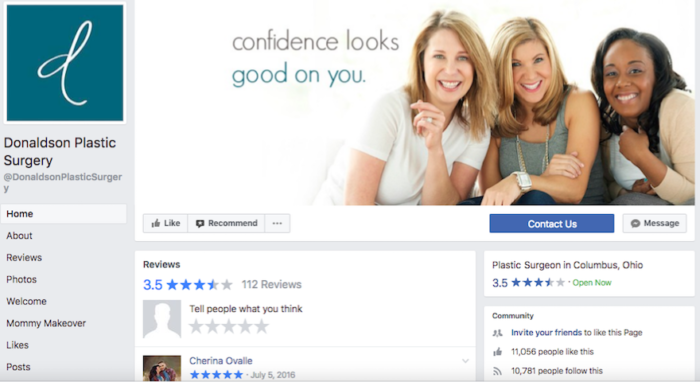
    Image Of Facebook Page Likes For Donaldson Plastic Surgery - Search Influence

    Combining paid ads with an increased frequency of organic posts expanded the practice’s fan base. A large chunk of Dr. Donaldson’s Facebook fans, totaling 11,000+ Likes, have come from annual fan building campaigns (over 6,400 of the Likes, in fact). Campaigns such as Likes for Lives encourage Facebook users to Like your page in exchange for a donation to a charity organization. These campaigns increase followers while also giving insight into your practice’s values and the importance of giving back to your community.

    Dr. Donaldson is proof that a well-managed Facebook page, full of engaging posts and targeted ads, can work to create a campaign strategy that gets patients through the door and establishes your practice as the medical resource in your area.

    Armed with the best practices we’ve covered in our blog series, you can accomplish results like this for your medical practice as well! If you have any strategic questions or need help growing your practice on Facebook, contact one of our experts here.
  • Growing Your Practice on Facebook, Part 5: Patient Confidentiality Considerations

    In our last blog, you learned how to capture your audience with engaging content and analyze the results. Now that you understand what it takes to connect with your patients, we’ll take a look at common obstacles medical practices face when posting on Facebook.

    Social media and the healthcare industry can seem in opposition at times. One is about sharing and transparency, while the other hinges on patient confidentiality and privacy. But the irony is that the medical industry is not immune from the benefits and trends of platforms like Facebook.

    Facebook is a wonderful resource for any industry looking to grow their business. Potential clients and patients desire access to the goings-on of a medical facility or hospital, and similar to peeking in on the page of a friend or associate, patients expect to see their doctor’s office online, too. Uploading staff happenings or posting about a new procedure is invaluable to the cause. But what happens when patient confidentiality is violated? In the era of “clicks,” the two opposing parties of health care and social media must become friends. Although there’s a fine line to walk when working within HIPAA rules, here are some helpful tips to consider when using Facebook for your medical office.

    Image of doctor using a tablet - Search Influence

    Get Written Permission Before Posting

    Nothing can replace the power of pictures on your Facebook page. According to a Hubspot survey, Facebook posts with images receive 53% more Likes than those without. Images serve as testimony to what your practice can do and how you can help other patients achieve their desired results. They are also a way for your patients to discuss and identify symptoms that may need a doctor’s immediate attention. However, posting photos without explicit consent from all parties can lead down a very hairy path—even if the image isn’t of someone’s face.

    According to Privacy Rule requirements, physicians must obtain a signature from the patient that specifically spells out the what, when, and where of the shared item. Some medical facilities have recently opted to send out a blanket consent statement, but this is not best practice. Be sure the statement includes details such as a full description of your purpose in using the image, an expiration date on the image consent, as well as a note describing the patient’s right to revoke consent. Send a copy of the signed document to the individual and keep one for your records as well. Working this into your protocol prior to posting photos will keep a clear line of communication between your practice and patients, and it will also create a streamlined process for your social media marketing needs.

    Avoid Talking About Specific Patients

    Posting about patients can be helpful to your practice. You can highlight testimonials, success stories, and interesting procedures that can be used to engage new and current patients alike. However, when posting on Facebook, even if given permission to use a patient’s medical situation, you’ll want to be explicit in not identifying the individual.

    Confidentiality and privacy are two sides of the same coin. Confidentiality limits the details of a patient’s health exclusively to the medical team unless given informed consent. Privacy, on the other hand, relates to the patient’s right to be treated with respect and dignity. HIPAA goes even further, stating that information given about a patient in a public forum should not disclose individually identifiable information. This information includes anything that could be used to hone in on a specific person, such as past, present, or future physical or mental health details. Understanding the difference between the two, and how they relate to the language and images used in Facebook posts, will help you and your staff to find that happy medium.

    Image of doctor's stethoscope on top of patient's records - Search Influence

    Don’t Take Pictures Around Sensitive Materials

    Where you take the picture can matter just as much as the picture you take. When capturing images to share with your patients, be aware of any medical records or other confidential materials laying around. With zoom features on devices, potentially threatening information can become more decipherable when viewed from apps on a cell, tablet, or another mobile device. Avoid this mistake by thoroughly surveying the area before snapping a shot around the office. Put away any files or paperwork containing information that is private or for medical office use only. It may also be a good idea to only take more candid photos in certain areas of the facility where sensitive items are least likely to be an issue. Also, be sure to avoid taking pictures that may have a patient in the background. Having a designated spot for photo ops can minimize the chances of mistakenly exposing information that would break patient confidentiality and put your office in a compromising position.

    Facebook doesn’t have to be a no man’s land for physicians and medical practices. Healthcare and social media can play on the same team. Building your brand online and strengthening relationships with your patient base is invaluable, especially with Facebook’s almost 2 billion monthly users. Don’t be intimidated by HIPAA; instead, embrace the rules, implement best practices for your staff, and walk the line to marketing and confidentiality success. The exposure you’ll get will be well worth it.

    Check back next week for the final installment of our medical industry blog series, which will walk you through one of our case studies and show you how to put everything together!

    If you are ready to chat about your digital marketing opportunities today, contact one of our experts.


    Images:

    Tablet

    Patient Records

  • Growing Your Practice on Facebook, Part 4: Reach Your Audience

    Now that you’ve gained valuable insights on the many uses of Facebook paid ads, the importance of engaging with your followers, and why all of this matters in the first place (spoiler alert: yes, social media is worth your time), we’re going to get into the specifics of understanding and capturing your audience. After all, if you don’t understand your users, how are you ever going to reach them?

    We’ll share how to use the Audience Insights tool on Facebook to analyze when your users are active and what’s catching their attention. Then, we’ll share some surprisingly easy ways to update your Facebook page and grow your followers—as well as your actual patients.

    Ready for the PhD-level course on using Facebook to grow your medical practice? Download our free e-book today.

    How Can You Use Audience Insights to Grow Your Reach on Facebook?

    With nearly 2 billion monthly users on Facebook, it’s important to narrow the scope and understand who is engaging with your practice, as well as what they are looking for from your page. That’s where the Audience Insights tool plays a vital role. Audience Insights allows page administrators to understand their users and target their reach according to demographics, purchase behaviors, geography, and activity on Facebook.

    By creating a custom audience using this tool, you can target your ads to a specific group of users on Facebook. Say you know that your typical patient is a female in greater New Orleans with an average household income of $150-250K and a bachelor’s degree or higher. You can create a new custom audience using these demographics and build an ad campaign on Facebook to target that audience. While that’s a pretty narrow scope for a medical practice that isn’t quite so sure of their ideal patient, experimenting with a few different test audiences to gather data on successes and misses is a great first step.

    On the other end of the spectrum, you can also use Facebook insights to gain more knowledge about your active users and cater your posts and ads to the types of demographics that are most engaged with your page. You can even learn the best times of the day and week to post and the type of content that achieves the highest engagement. Perhaps you see a spike in engagement when you post patient testimonial videos on your page and dedicate more marketing spend on creating videos. Or, maybe your analytics show that users are more engaged in the mornings, so you schedule your posts in advance for time slots between 8 a.m. and 11 a.m. to capitalize on your users’ behaviors.

    These insights can all inform your future social media marketing strategy to focus on what works and build on your successes.

    Picture Of A Medical Doctor's Desk - Search Influence

    How Can You Connect Your In-Person Audience With Your Social Presence?

    While tools like Audience Insights allow you to understand your online audience, it’s just as important to understand and connect to the people visiting your office and living in your community. The more you can bridge these two segments, the better your chances of building a loyal fan base and creating meaningful social media content.

    Events are a great option for bridging these two audiences. If you’re hosting an event at your office, like a drive for flu shots or a fundraiser for a local nonprofit, be sure to create a Facebook event so guests can RSVP, invite friends, and receive reminders as the date approaches. If your event is public on Facebook, the platform will also suggest it to other users based on friends who are attending. Now your online users also have a reason to visit your office and speak with you in person about a subject they are already interested in.

    Community events that focus on the values of your practice are also important for building trust and humanizing your online presence. By showcasing the causes that are important to your industry, work, or community, users can connect with your page through those similar interests. For example, if your company is participating in a community event like March of Dimes or you have a team participating in a local 5K, share updates on your fundraising efforts, highlight photos from the event, and link to informational articles about the cause. All of these strategies help create dynamic social media content while also connecting you to the broader community of users with shared interests and passions.

    How Can Fan-Building Campaigns Help Engage & Grow Your Audience?

    Now that you have a better understanding of who your target audience is and how to build a bridge between your online and IRL communities, it’s time to increase the number of actual fans connected with your page. The first step may seem obvious, but it can’t be overlooked. You have to have an active, established page with helpful content and consistent posts. Make sure you’re dedicating time to posting new content as well as responding to inquiries to build engagement.

    Image Of Stethoscope With Breast Cancer Ribbon At Medical Practice - Search Influence

    Another great tactic to generate new followers is through a fan-building initiative such as a “Like for Lives” campaign. Remember when we said that connecting your social media content to your values and industry is important? “Likes for Lives” does just that. The basic premise is that for each additional Like that your page receives for a set period of time, your medical practice will make a donation or take an action to help save a life. This could be a monetary donation to a charity, a volunteer commitment, or any other creative action your practice can take to help others.

    The goal is to generate excitement on your page and in your office, giving you plenty to post about in order to raise awareness about your campaign and encouraging your fans to share your initiative with their friends in support of a good cause. Be sure your staff is informed of the campaign, and encourage or incentivize them to share the information within their own networks on Facebook. If you work with a nonprofit to raise money, they may also want to share the content, further increasing your reach.

    With a combination of tactics like these and consistent posts on your Facebook page, you’ll start seeing your audience steadily grow. By targeting the right demographics, you can also see this growing audience translate to more patients. Remember, social media is here to stay, and leveraging its power and reach can have a big impact on your medical practice.

    Stay posted for the next update in our series where we’ll discuss the importance of patient confidentiality on Facebook.

    Eager for more tips and tricks to grow your social media IQ, or ready to get started with digital marketing campaigns for your business? Contact an expert from our team.

  • Growing Your Practice on Facebook, Part 3: Advertising

    In our previous blogs, you’ve learned that Facebook is crucial for promoting your medical practice and that shareable content is the number one component of your social media strategy.

    As the next step in your journey to increase your social presence, Facebook ads are another highly effective way to promote your practice online. In this blog post, we’ll answer your questions about the importance of paid promotions on Facebook, the difference between promoted posts and ads, the primary advantages of Facebook ads, and whether your ad copy complies with HIPAA and other guidelines.

    Why Not Just Use Free Posts?

    With so many opportunities to post for free on Facebook, it might seem like paid promotions aren’t necessary. However, due to recent Facebook algorithm updates, overtly promotional posts are receiving less organic distribution on the platform. This is due to a Facebook survey in which users named highly promotional posts as the number one thing they would like to see less of in their news feeds. As a result, your followers will be unlikely to see any of your posts that push products, urge people to enter contests, or reuse advertising content. Below are some examples of highly promotional posts.

    Image of a highly promotional Facebook post - Search Influence

    Image of an overtly promotional post on Facebook - Search Influence

    However, in the same survey, Facebook users reported that they aren’t bothered by promotional content when it has been identified as advertising. This means that paid promotions are not only ways to get around Facebook’s algorithm updates and reach your target audience, but also ways to engage your followers without coming across as annoying or spammy.

    What’s the Difference Between Promoted Posts and Ads?

    The two main types of paid promotions on Facebook are promoted posts and advertisements. Understanding the difference can help you determine where each best fits into your social media strategy.

    Promoted posts are formatted like traditional free posts, but they are marked as sponsored content and appear higher in your followers’ news feeds. The main advantage of promoted posts is that you can test them out as free posts before investing in them. If one of your free posts is performing especially well, Facebook will often prompt you to “boost” or promote it. Promoted posts can also be easier to use because they follow the traditional Facebook post format.

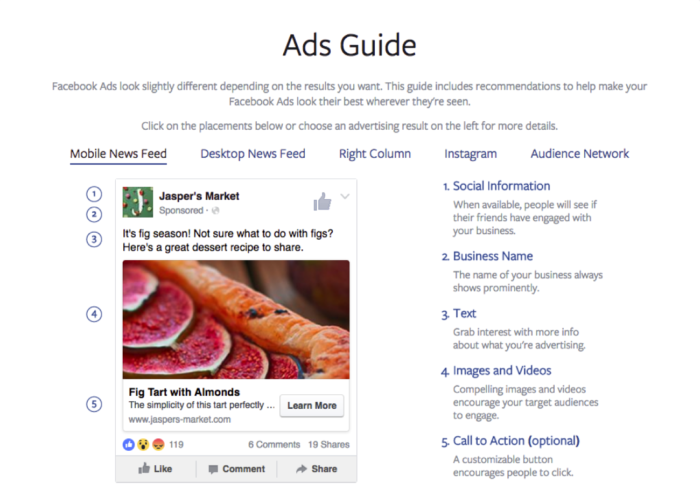
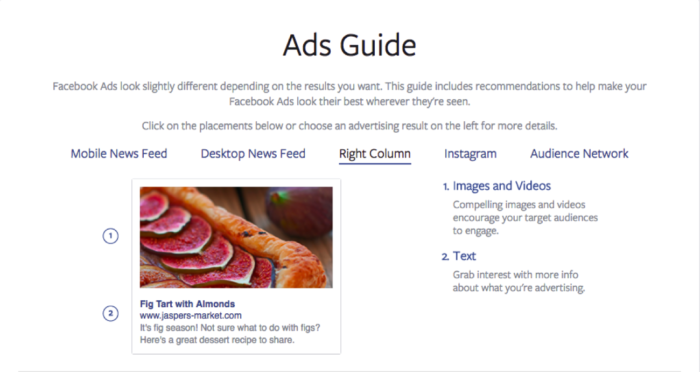
    Advertisements, on the other hand, can follow a wide range of formats. Facebook’s Ads Guide allows you to customize based on your campaign’s objective, be it brand awareness, lead generation, website traffic, or one of many others. The guide can also walk you through the different ad placements, focusing on which fields will be included in which type of ad. As shown in the images below, mobile and desktop news feed ads have space for social information, business name, text, images or videos, and a call to action.

    Image of Facebook's Ads Guide for mobile feeds - Search Influence

    Right column ads, on the other hand, only have space for text and images or videos:

    Image of Facebook's Ads Guide for right column information - Search Influence

    While all of these options make advertisements a bit more challenging than promoted posts, they also allow ads to achieve more diverse objectives. Promoted posts are great for growing brand awareness and driving engagement, but if you have goals outside of social media—for example, getting potential patients to fill out a consultation form on your website—then Facebook ads are the better way to go.

    What Are the Main Benefits of Facebook Ads?

    The reason why ads are more effective than promoted posts for driving off-Facebook conversions is the call to action (CTA) button. While exact numbers vary based on the industry, type of content, and action the reader is being called to do, statistics show that conversion rates increase dramatically when a CTA is present. While CTAs can be included in the text of a promoted post, the CTA button in ads allows your message to stand out even more. More importantly, it explicitly tells readers what action you want them to take, and allows them to accomplish it with just one simple click. Facebook also provides an easy drop down menu of popular CTAs for you to choose from, ranging from “Contact Us” to “Download” to “Watch More.”

    The second major benefit of Facebook ads is the platform’s detailed targeting options. These are available for promoted posts as well, and they can be set or altered within Facebook’s Ads Manager. While traditional advertising channels, like billboards or newspaper ads, can’t guarantee that your message reaches your goal demographic, Facebook ads can be carefully targeted to the people you want them to reach. For example, if you run a geriatrics practice in New Orleans, you can ensure that Facebook shows your ads to users aged 65+ in the Greater New Orleans area. Using Facebook’s targeting feature allows you to run a more efficient ad campaign. You can direct your time and money only toward the demographics that are most likely to become your patients, without wasting advertising resources on anyone else.

    What Legal and Ethical Guidelines Govern Medical Facebook Ads?

    As you’re certainly aware, the medical industry is heavily regulated. Everyone from the American College of Physicians to the Health Insurance Portability and Accountability Act (HIPAA) to Facebook itself has rules for medical advertisements. If you break them, your ads will likely be taken down, and in some cases, legal action may even ensue. While Facebook’s Advertising Policies provide a detailed list of prohibited and restricted content, the two biggest red flags for physicians are misleading content and patient confidentiality violations.

    Misleading content includes anything that could be considered deceptive or ambiguous to patients. The most obvious examples are photoshopped images or exaggerated guarantees; however, even subtle wording variations can lead to misleading content violations. For example, it’s generally okay for a physician to claim that Botox can contribute to a more youthful appearance. Yet, it could be considered misleading to claim that Botox will make patients look ten years younger or eliminate signs of aging. Although these statements are quite similar, only the first one is acceptable because it does not make any specific promises about the product’s outcomes. Some of the best precautions against misleading content include citing studies or journal articles whenever claims are made, and labeling all non-patient photos with the word “model.”

    While misleading content might get your practice in trouble with Facebook, violating HIPAA rules about patient confidentiality can get your practice in trouble with the law. As with misleading content, some precautions are obvious. For example, you should never post any identifying information about patients, such as names or faces. However, many HIPAA violations are less apparent. For example, it is prohibited to post images that do not clearly identify a patient, such as a rash on someone’s foot, unless you have clear legal permission to do so. Similarly, be careful that no pictures of the office have patients or medical records in the background. To avoid any issues, require patients to sign a consent form before using their images, or stick to model-labeled images and stock photos.

    Interested in learning more? Don’t forget to check back for the next post in our medical industry blog series, which will help you reach your target audience.

    For more information about getting started with Facebook Advertising for your hospital or practice, contact us here.

    Images:

    Ads Guide Mobile Feed

    Ads Guide Right Column

  • Growing Your Practice on Facebook, Part 2: Shareable Content

    Now that you’ve learned why Facebook is such a crucial tool for your practice, it’s time to master one of the most important aspects of Facebook: engagement. Facebook is all about conversation and interaction. If you aren’t creating compelling content and engaging with your followers on a regular basis, your social media campaign will fall flat—making the next steps in this series much harder for you. Here’s how to polish up your content and keep your followers invested on Facebook.

    1. Create Shareable Content

    At one point or another, we’ve all come across a Facebook post that just speaks to us; one we couldn’t help but share with a friend or add to our timeline. The act of sharing a Facebook post seems simple enough, but for your business, these shares are crucial to your social media campaign.

    According to Kissmetrics, more than 30 billion pieces of content are shared on Facebook each month. Facebook shares are powerful stuff for business because they help your message to grow exponentially. Friends share content with Facebook friends in a way you couldn’t have managed organically on your own. So, how do you help make this happen?

    Well, if your practice wants to be included in those 30 billion pieces of shared content, it’s essential that you start writing interesting and relevant posts your fans will really want to read. If you’ve followed our blog for a while, you’ve probably heard us quote the great Bill Gates saying “Content is king.” This saying holds true across websites and platforms, and Facebook is no exception. Compelling, authentic, and viral content is what earns you those valuable shares, which in turn means more fans and more social influence.

    Just one thing to clarify: we’re not saying Likes aren’t valuable in their own way. They can be a sign of popularity, a mark of agreement, or a note that “I agree,” or “I’m with you.” However, if your goal is to get your content in front of more potential patients, you should always be on the hunt for the ever-elusive Share. Got it? Let’s get started.

    How to Create Shareable Content

    The tricky thing for medical practices is that you’re busy, and your staff might not always have the time or expertise to sit down and brainstorm ideas for compelling content. But don’t worry—here’s a list of tips to get you on the road to those shareable posts.

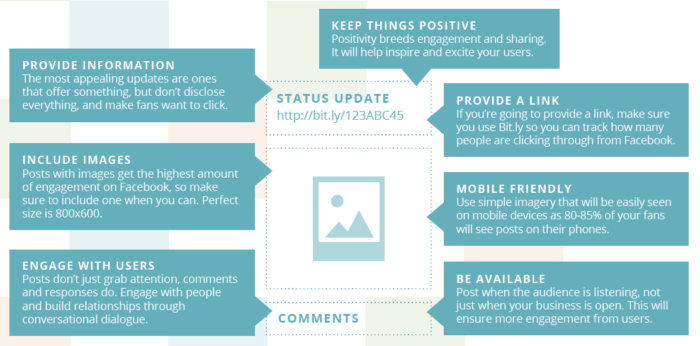
    • Keep it short and sweet. The ideal length for Facebook is around 40 characters.
    • Don’t use too much industry jargon. The medical industry is notorious for its jargon. Just don’t forget to consider your audience when posting. Complex terms can be off-putting, and your busy readers will appreciate your effort to break things down.
    • Don’t make every post promotional. Patients will find it helpful to know your biggest and most relevant updates, including new staff members, upcoming events, and special deals. But keep in mind that no one wants to read a revolving door of the same products and services your practice offers. This type of repetitive content is unlikely to be shared.
    • Know when to post for best results.
    • Use images whenever possible. According to Hubspot, Facebook posts with images get 2.3x more engagement than those without images. Consider adding more personal images as well, such as photos of your office, your team, or your patients. This lets readers get a glimpse at the faces behind the computer, and it adds a personal, familiar touch to your posts that can’t be gained with stock images alone.
    • Consider creating a weekly themed post. This gives your fans something unique and interesting to look forward to on a regular basis. Maybe you want to highlight a recent article you read, inspirational images, or products your practice recommends.
    • Share or repost interesting updates from other businesses. Give your readers a range of information by sharing relevant information posted by other practices, industry leaders, or medical associations. This can also be a good way to help build a referral network.
    • Share something silly every now and then. It’s true that the medical industry has a reputation for being serious, but adding silly content to your page just for the sake of sharing the joy can make you more relatable. Funny yet relevant comics, relatable e-cards, cute videos, and even animated reaction GIFs might seem off-topic, but these types of posts are often widely liked and shared. These can be great for extending your reach if your practice’s name is attached to the content.
    • Come up with interesting topics. Don’t be afraid to change things up! If you need help with this, try one of our favorite tools, Answer The Public, which can help you get an idea of what your patients might be searching for or interested in.

    Image Of The Ins And Outs Of Shareable Content - Search Influence

    These tips can go a long way in shaping your existing Facebook posts into something your fans will naturally be interested in. It can take time to master all of this, but even small steps can help increase your content’s shareability—and don’t forget that we’re always here to help!

    2. Engage With Your Audience

    Now that you’ve created your shareable posts, it’s time to sit back, relax, and watch the Shares and Likes roll in. Just kidding! The hidden “Part 2” to your shareable content journey is the engagement factor. Your audience will react and respond to your content, and they’ll also voice their own questions, comments, and concerns. Everyone wants to feel like they’re being heard, and responding to these inquiries shows your patients and potential patients that you’re invested in the discussion.

    One thing to keep in mind with Facebook is that if you’re in the habit of responding quickly, users will see your estimated response time right on the page. This estimate shows your attentiveness, which can be a great signal for potential patients on Facebook. So, don’t forget that taking even a few minutes to respond to your followers can go a long way.

    With the skills you’ve learned in this post, you’re already on your way to growing your medical practice on Facebook. Next time in our blog series, we’ll teach you how to enhance your Facebook campaign with promoted posts!

  • Growing Your Practice on Facebook, Part 1: Why Facebook Matters

    It’s no secret that Facebook isn’t going away anytime soon. Even with predictions a couple of years ago that the social media giant would lose a significant portion of its users to other contenders like Instagram, Twitter, WhatsApp, and Snapchat, they’ve managed to see steady growth. Since that prediction in 2015, they’ve gone from 1.2 billion monthly users to nearly 2 billion.

    So, let’s address the elephant in the digital room here. Is your practice on Facebook?

    In this series, we’ll break down the ins and outs of the best ways to reach your patients through Facebook, going over everything from advertising and shareable content to privacy rights and how to find the right images.

    Before we get into details of using Facebook to bring in more patients, let’s break down a broader question: Why is Facebook so important for your practice?

    Social Media Humanizes Medical Practices

    When’s the last time you talked with your patients outside of the office? In a report from the Health Research Institute, Ed Bennett, who oversees social media efforts at the University of Maryland Medical Center, notes, “If you want to connect with people and be part of their community, you need to go where the community is.”

    By using Facebook to interact with patients, physicians can create a dialogue that builds trust. Some patients may feel uncomfortable scheduling an appointment when all they wanted was to ask a personal medical question. Sometimes questions are just easier to ask through a direct message or comment rather than over the phone or in person.

    Medical Patient Sitting On Treatment Couch - Search Influence

    By commenting on, responding to, and answering questions directly through Facebook, unforeseen walls begin to break down. The best part? That starts to become what your practice is known for. Your medical office gets a reputation for being the place to go where people won’t feel afraid to ask about a diagnosis or procedure, how it affects them, or what their options are. It becomes the ideal venue for open communication. You’re no longer just a resource for patients when they come to your practice; you’re there for them at any time.

    Think about it this way. The average user checks their Facebook account daily. Will your practice be there to start a conversation when they log on?

    Expertise, Industry Experience, Specializations—Go Ahead and Tout It

    To go along the philosophical questioning of whether the falling tree in the forest makes any sound, are a physician’s best certifications and qualifications of value to patients if nobody knows about them?

    According to Search Engine Watch, nearly 90% of respondents aged 18–24 said they would trust medical information shared by others on their social media networks. This is also coming from a demographic that is more likely to share this information. Facebook gives physicians the tools to share their specific knowledge and expertise. Got a recent press release or blog post about a new technique offered exclusively at your practice? Put it on Facebook. It will demonstrate your expertise in your field while providing a great avenue for your patients to engage with and share this information.

    Also, in a time where anyone can share information and claim it as fact or scientifically true, physicians have the capability and responsibility to make sure accurate, helpful information is reaching their current and potential patients.

    Medical Patients Waiting In The Physician's Office On Facebook - Search Influence

    It’s All About Relevance

    Just as you shouldn’t make updating your Myspace page or LiveJournal your top priority anymore, you should be posting and staying up-to-date on Facebook to make your medical practice more relevant to what’s going on in your patients’ lives. It shows you’re a part of the online community, and ideally, it garners more traffic to your website and office.

    Ultimately, Facebook is more than just a place to share family pictures, an exciting recipe, or an awkward political conversation with an uncle. It’s a powerful resource for medical practices to reach their patients on a more personal level. Your patients are already there. We can show you how to utilize social media to find them and make them advocates for your practice. Reach out to us to learn how to implement a social media plan for your practice.

    For more information, stay tuned for our next blog post, which will teach you how to create and share content that moves your audience.

  • #FreelanceFriday: Finding More Time in Your Schedule to Freelance

    This blog is part of our Freelance Friday series, where we discuss everything and anything related to freelancers. For more freelance information, tips, and trends, follow us on Twitter.

    Image Of Michael Scott Saying No Time - Search Influence

    “I don’t have time…”

    As writers, we have all said it at one time or another, most likely as an excuse for not writing more. And let’s not kid ourselves here, it is most certainly an excuse. There are 24-hours in the day for everyone. So, why can only some people pull off a freelancing side gig?

    Deciding to add freelancing to your daily schedule probably didn’t seem like that big of a deal at first. You can make your own schedule and work from anywhere at anytime. That all sounds great (and it really is!), but you still have to find the actual time to do it. It can certainly be tempting to let freelancing take a back seat to other tasks and priorities in your life—but don’t let it happen!

    For those who truly want to do it, they find the time. Freelancing (and writing in general) are choices. Likewise, you have to choose to find the time. Time management techniques and organizational skills can be developed and utilized easily. In the end, freelancing is all about scheduling and prioritization, especially when you are still working full-time at another job. Make those and other strategies for time management work for you and you will discover the time.

    Of course, this is all easier said than done. Here are a few tips that will help you fit your freelance business into your schedule.

    Image Of Parks And Recreation Saying Jammin On My Plane - Search Influence

    Assess and Make A Schedule

    We have talked about time management tips a lot—and for good reason. It is the key to freelancing. Start by evaluating your daily schedule. When do you wake up? Eat lunch? Work at other jobs? Go to bed? Fill in the intervening times with potential availability to freelance. Not all of it; just when it works well for you. There are tons of time management tools to help you with this.

    When you are getting started or overhauling your time management, try timing how long it takes you to complete this work. Work on improving that time, as well as adjusting your schedule as you need or see fit.

    Strengthen Time Management Skills

    Even if you are able to find the time, it is equally important to use that time well. Because this time is so valuable, you need to have a clearly defined time management schedule—prioritize, avoid distractions, stay organized, etc.

    Try working in small pockets of time in between bigger tasks. While you are waiting for the water to boil while cooking, on breaks at your normal job, during your commute, etc. The start and stop nature of this doesn’t work for everyone, but all of these small increments can add up quickly for those who can make it work.

    Image Of John Candy Saying No - Search Influence

    Don’t Be Afraid to Say No

    Such an easy word to say, but one that most people are so hesitant to utter. Learning to say no can help your freelance life in more ways than one.

    First, it allows you to decline jobs that you are not fully interested or invested in. Why waste precious time on something you don’t want to do in the first place? Doing this could prevent you from working on an assignment or project that is more aligned with your thoughts and aspirations.

    Second, saying no can also be employed in order to free up more time to do the actual work. If you made previous plans for multiple nights of the week, think about canceling or turning one of them down beforehand. A lot of work can be accomplished in a single extra evening.

    For best performance, you also need to learn how to say no to TV, social media, and other time-consuming forms of entertainment as often as possible.

    Find Your Peak Hours

    Most people already know if they are night owls, early birds, or in-betweeners. Whatever time of day, it’s all about finding that time period where your drive and mental capacity are at their highest and you are able to do your best work (speed and quality-wise).

    That is not to say that your peak hours have to be consecutive. Maybe you can work well at multiple points throughout the day. In fact, you can probably train yourself to work better at one time or another. Try to get as much done as you can in those times—as long as you keep things consistent and don’t waste time figuring out where you left off before.

    By finding and using these hours effectively, you will be able to get more done faster without the common plague of interruptions. Whether you like working into the wee hours of the morning or you are an early riser who can get things done with a hot cup of coffee, there exists a time especially for you.

    Image Of Dog Doing Chores - Search Influence

    Outsource Your Work

    Admittedly, this tip may not be for everyone. But, if you are capable, it can be a huge timesaver to help you budget time. By subcontracting out lesser, but still necessary, chores, you can free up time to perform your freelance work.

    So many things (some obvious, others not so much) can be outsourced, including house cleaning, bookkeeping, laundry, cooking, lawn maintenance, house repairs, child care, pet care, and grocery delivery. Not all of these are needed, of course. But find one that fits your budget and schedule, then get to work—this isn’t new found free time, it’s extra time.

    In the end, to find more time for freelancing is a gradual process. Find what works for you and allow for adjustments and new routines along the way. Freelancing is still a job, no matter how much time you devote. The changes may not be easy at first, but they are more than doable if you want your freelance career to succeed.

    Image Sources:

    No Time

    John Candy—No

    Dog Doing Chores

  • Gotta Go Fast! The Impact of Page Speed on Your Rankings

    “We have so much time and so little to do. Strike that, reverse it.”

    Roald Dahl, Charlie and the Chocolate Factory

    That may be a bit dramatic, but time is extremely important. In the digital age where a lot of people barely have the time to stop and say hello unless it was explicitly planned out in their schedule, a slow site can easily get lost in the abyss that is known as the internet. Though the forever relevant Bill Gates quote “content is king” should echo through anyone with a website, there are other factors that can make or break you as well. The best content in the world means nothing if no one sees it. If a tree falls in the woods and no one is around to hear, it does not make a sound; it makes vibrations that will never be converted into sound by ears. If a website has amazing content but a Page Speed as slow as molasses, does anyone ever read it? Probably not.

    How Optimized and Fast Page Speed can Bring in More Customers

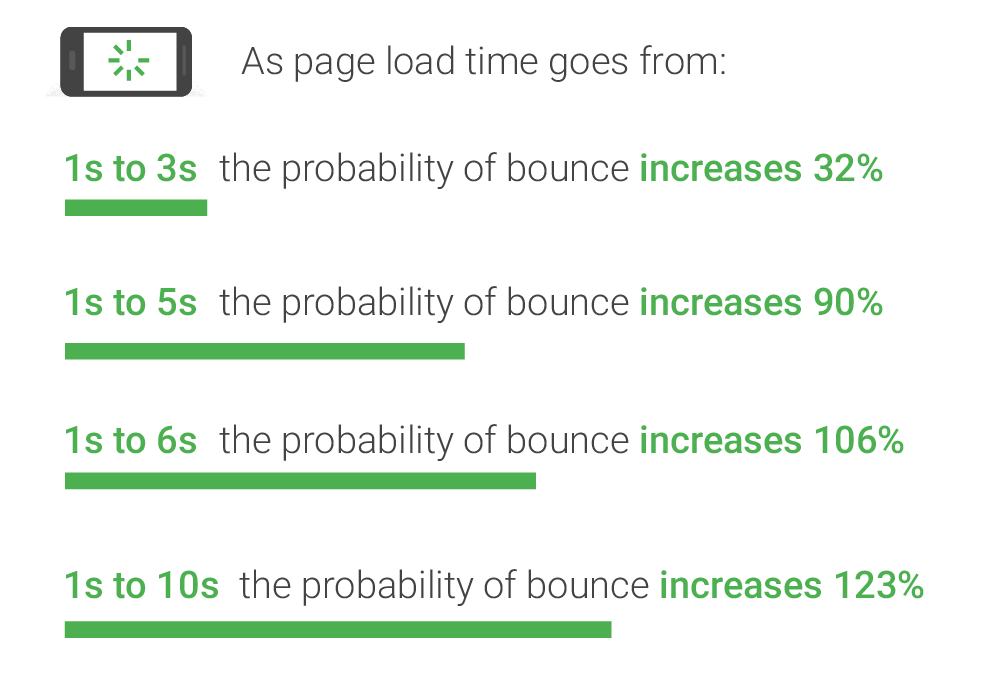
    As you may (or may not) have guessed, page speed is the amount of time it takes for your website to load. On the surface, slow page speed will turn visitors and potential conversions away from your site simply based on the fact that they can’t “use” it, per se. But surely someone would wait 7 seconds to view your homepage or interesting product, right? No. Straight from the source, Daniel An from Google provides this handy chart on the correlation of page speed and bounce rates:

    Image of bounce ratio percentages relative to page load time - Search Influence

    As you can see, if your page takes longer than one second to load, you may see a bounce, which is when a user leaves your site after viewing only one page. The bounce risk increases dramatically the longer it takes for your site to load. This stat doesn’t just apply to your home page either—these statistics will affect every single page on your website. Imagine running an online shop and having someone abandon an order because it takes their cart too long to load. Having engaging content is only half the battle; it has to be seen and digested for it to maximize its potential.

    Page Speed from the SEO Point of View

    From an SEO standpoint, Page Speed has a two-pronged effect on the ranking of your website. Back in 2010 (which is literally forever in internet time), Google spilled the beans on speed having a direct effect on the rankings of websites and encouraged everyone to analyze their page speed to ensure their pages were loading in a timely fashion. Looking at complex Content Management Systems that automatically add mountains of bloat to every single page you publish, it doesn’t seem like many people heeded the warning of Google.

    Image of a snail using a rocket to go fast - Search Influence

    From an indirect standpoint, Page Speed can have an impact on your website’s speed in relation to the crawl speed. Google’s web crawler has an allotted amount of time that it likes to spend crawling a website. Faster loading pages mean that Google’s web crawler can crawl the page faster and move on to the next one, which can lead to more of your pages being indexed. Mix that up with some spicy content and you’ve got a great stew going that can lead to increased Search Engine Rankings!

    Tips for What Website Owners Can Do to Improve

    I personally like to think of Google as the tough love parents that will always steer you in the correct direction, give you the tools to succeed, but punish you if you stray from the light. With that said, Google gives the entire internet a handy tool to test the speed of their website. My favorite online game, League of Legends, will be the topic of example for this go round. After running their URL through Google’s PageSpeed Insights tool, a score is given for both the desktop (61/100, Poor) and mobile (40/100, Poor) versions (it defaults to mobile speed, perhaps because mobile users are using the internet more than desktop users now) along with some details on how to fix the issues and exactly which files are causing the issues. An alternative to Google’s own tool (because we want to show our parents we can succeed our own way) is the Pingdom Website Speed Test. From my experience using both of these tools to compose Site Audits for our clients, Pingdom does give some more in depth information. For instance, the main reason for the League of Legends website taking so long to load is a video (listed below) that has to load twice before the website is considered to be loaded.

    Screenshot of video load time - Search Influence

    This video took over 17 seconds to load. Now for a website such as League of Legends that has the clout of millions of gamers fiending to see the details of the next character being released or an overview of the latest patch notes, these 17 seconds are no big deal. However, if your website was discovered by someone using the Google search “boutique new orleans,” that may be a different story, especially if they’re on the other end of our historic Magazine Street. They may have thought about venturing to your end of Magazine Street had they seen the flashy new “romphims” that your store was offering. Unfortunately for your shop, Magazine Street is loaded with boutiques, and potential customers may just tire themselves out on the other end instead of planning their Magazine Street romp around your boutique.

    Don’t fret, a lot of these fixes aren’t all that difficult to fix, so here are a few common fixes.

    1. Leverage Browser Caching: This fix allows some files on your site to be saved on a user’s local computer so that the next time they visit your site, they won’t have to be downloaded again. In addition to increasing Page Speed, it also lessens the stress on your server.
    2. Optimize Images: This fix involves formatting and compressing your images, which will drastically reduce their size.
    3. Minify CSS: Minifying your CSS is removing spaces, removing line breaks, and combining elements that have the exact styling to reduce the size of your CSS files (yes, even spaces increase the size of your files). You could do it yourself or use a tool such as CSS Minifier to do it for you, but make sure you test it before you completely remove your old CSS.
    4. Minify JavaScript: If you read the previous fix, you can guess what this section is about, just replace styling with functions and that’s the gist of it. JSCompress can take care of this for you.
    5. Enable compression: Using gzip to compress your resources allows them to transfer over the server quicker, which leads to faster page load speeds.

    These fixes are a great way to start pushing your Page Speed close to preferred industry benchmarks and are also among the easiest to implement. There are many more metrics that can be improved as well, but don’t fear—head to Google PageSpeed Insights and plug in your own URL to see how you fare and what you can do to improve. League of Legends has a team of web experts to make sure that even though their videos take close to 17 seconds to load, the rest of their site renders much faster. Here at Search Influence, we also have a team of web experts that are able to analyze and implement fixes to your website to improve its performance and rankings.

    The Importance of Mobile Page Speed Benchmarks

    As revealed in an article earlier in this blog, in November of 2016, the number of mobile and tablet internet users surpassed desktop internet users. This adds increased importance on your website’s mobile speed. With a society that is ever on the go, having a high level of accessibility and a mobile friendly website is considered a necessity for every business. A slow mobile site has a large chance of sending business elsewhere.

    An important addition to keep in mind is the impending rollout of Google’s “mobile-first index,” which should be rolled out soon according to Google and industry experts. This index will reportedly factor mobile content at a higher priority than desktop content. Though all details have not been made public as of yet since Google likes to release this info intermittently after the fact, mobile website speed will probably be one of the factors that are taken into account.

    With cell phones and tablets becoming more powerful and useful in everyday life, it is imperative that your website is optimized to be viewed on mobile if you want any hope of making a splash in the sea that we call the internet. No matter how powerful the receiving device is, there will always be the limiting factor of how quickly files can be transferred across the server. The simplest solution is to ensure that your website is optimized to make it as easy as possible to ford the data transfer river.

    If that sounds like a scary thought, feel free to reach out to the experts at Search Influence. We will gladly take the stress out of it and add you to the list of our many satisfied customers that continue to use our services year after year.

    Images:

    Bounce Rate Percentages

    Snail

    Screenshot

  • NEW ORLEANS, May 24, 2017 — The Plastic Surgeon’s Guide to Press Releases

    Search Influence has done a little blogging about press releases in the past, but now it’s time to kick things up a notch—or 16 billion notches. According to the American Society of Plastic Surgeons, Americans spent roughly $16 billion on plastic surgery in 2016, which is an all-time high. With thousands of plastic surgeons vying for a place in this lucrative industry, your practice should be using every tool at its disposal to keep up with the competition. One such tool is the press release.

    All About Press Releases

    The press release is THE classic public relations tool. It’s over 110 years old, but don’t worry—it’s still very relevant. The modern press release is published online and distributed through networks like PRWeb. A press release can inform media outlets about a newsworthy event related to your practice. Not only is this great for publicity, but it also helps with SEO. When reputable news sites run your press release or write a story about it, they provide authoritative backlinks to your website, which makes your website more authoritative in turn.

    Now, if you’re low-key panicking about what PRWeb, SEO, and backlinks even are, stop. Take a deep breath. Then, contact Search Influence to get all your questions answered.

    Image of a woman trying to decipher the workings of the internet - Search Influence

    If you’re already an SEO pro, great! Let’s move on to exactly what you should talk about in your practice’s press releases.

    Good, Newsworthy Topics

    Step one of writing a good a press release is choosing a newsworthy topic to write about. You should think of it as an announcement, not an advertisement. Press releases are not intended to hype your friendly customer service, compassionate care, or other unique selling propositions. They should not include a personal point of view, like “we” or “you,” and they should not include any promotional language. You probably are an exceptional surgeon who provides stunning, natural results, but PRWeb will probably reject your press release if you say as much. Instead, focus your press release on important recent events or developments.

    Here are some great ideas for topics to write about, courtesy of InboundMD:

    • Celebrating Milestones or Anniversaries
    • Participating in Community Events
    • Hiring New People
    • Acquiring New Equipment
    • Offering New Services or Treatments
    • Opening a New Location
    • Winning Awards or Honors
    • Speaking at a Conference
    • Publishing a Study

    All of these topics let you announce a new event or development that might capture readers’ attention. They also all provide the opportunity to frame your business as an objective leader in your field. A lot of practices could run ads claiming top-of-the-line equipment, but fewer practices could back up their claim with an objective and authoritative news story about acquiring new equipment. Press releases are a factual way to set yourself apart from other practices and stand out to potential patients.

    Sections of a Press Release

    Now that you have an idea of what to write about, let’s move on to some practical how-tos. Press releases follow a very specific format, and the sections are as follows:

    • Title
    • Summary
    • Body
    • Boilerplate

    The title should concisely announce your newsworthy topic. It should include your company name and an action verb.

    The summary should build on your announcement with engaging details to draw in the reader. For example, if the title announces that you published a study, the summary can explain how that study might impact surgical procedures or medical treatments in your field.

    The body is where the majority of the writing takes place. It should begin with a dateline, formatted like the image below:

    Image of a standard press release dateline example - Search Influence

    The dateline should be followed by a strong hook or lead to capture the reader’s attention. Then, the rest of the introduction paragraph should provide the reader with all the key details they need to know about your announcement. The following paragraphs should build upon these core details, until the final paragraph, which should briefly include your contact information.

    The body should be written in the third person, and language should remain objective, rather than promotional. However, you can include one or more quotations, from yourself or another knowledgeable figure, that can bend these rules a bit. A quotation can say, “I am proud of my practice’s dedication to technological advancements.” The rest of the body cannot. This is because the quotation is clearly attributed to an individual and framed as an opinion.

    The final section is the boilerplate, which is a brief, objective description of your practice.

    Pitfalls to Avoid

    Unfortunately, no list of things to do is complete without a list of things NOT to do. Press releases have fairly strict editorial guidelines, and as you know, the medical industry is heavily regulated. The following are some common mistakes made in plastic surgery press releases and how you can avoid them.

    It’s been mentioned several times already, but do not use promotional language or treat your press release like an ad. Objective language will not only get your press release accepted by PRWeb and news outlets, but it will also lead to more compelling writing. Again, tons of doctors claim that their practice offers experienced, well-trained care. You can prove that your practice offers such care by running a press release about the impressive experience and credentials a new hire brings to your practice.

    Don’t include general business information, except for your contact information and the boilerplate. It isn’t news that your practice offers Juvederm, Radiesse, and other injectable fillers. A lot of practices offer that. It is news, however, that your practice is the first in your area to offer a brand new line of injectable fillers. If you find yourself filling space with general business information, it might be a sign that you should choose a more in-depth topic.

    Don’t make any promises unless they are backed up by studies and statistics. This is not only because such promises can be too promotional for a press release, but also because everyone from Google to the American Medical Association has strict rules against misleading patients. Even seemingly innocuous claims about natural-looking or proportionate results can be flagged as misleading, as results can vary based on a large number of genetic and situational factors. To be safe, include reputable citations for all claims, and it doesn’t hurt to follow up with a disclaimer like “results may vary.”

    Ready to Start?

    This information should put you well on your way to writing the perfect press release for your plastic surgery practice. If you still have questions, or would rather leave the writing work to us, contact Search Influence! We’re happy to help.

    Images:

    Deciphering the Internet

  • Top 5 Ways to Bounce Back from a High Bounce Rate

    Growing up in New Orleans, hearing the word “bounce” means something completely different to most people. I hear the word “bounce” and immediately think of the music! After starting at Search Influence at the end of 2014, I learned that “bounce” also had a meaning in the digital marketing world.

    Artist Big Freedia at a parade - Search Influence

    Bounce rate is a value given to hits on a website from users that don’t stay on the site after viewing a page. This value indicates to Google that you might have uninteresting content or spammy content that users aren’t interested in.

    Though I’d like to take this blog in my usual direction (Beyoncé-themed), I will be paying homage to bounce music, the only bounce reference in my life until I was 29 years old. With the help of some local talent, here are the top five ways to help decrease bounce rate on your site.

    1: Interesting Content Updates

    Image of Rapper Juvenile at a basketball court in New Orleans - Search Influence

    Updating your website content to get Google to crawl your site is a great way to decrease your bounce rate. If you find yourself with a high bounce rate, try updating your content with industry news or new services you are providing. The best way to show Google, and your potential customers, that you are an expert in your field is to use fresh, up-to-date, informative content on your site.

    The way your content is displayed is also a part of this. Bulleted lists and paragraphs that are broken up into smaller “chunks” to display your information in a reader-friendly way are helpful in getting clients engaged and staying on your site.

    2: Navigation Updates

    Your navigation should be incredibly user-friendly so that users will be able to learn about you and your business. There should be a clear path a client can follow with your top level navigation, but not too packed where the user is overwhelmed. If there are too many options, then your user experience might need some work.

    This is also true for sidebars. If you have a sidebar on your site that is embedded in the template (i.e. it shows up on every page) make sure the links here are relevant for all the pages on your site. This  is usually a call to action button (learn more, get a quote, etc.) Having an attractive sidebar can help lead people further into your site and decrease bounce rate.

    3: Become a Google Analytics Wizard

    Image of Birdman rubbing his hands together - Search Influence

    Bounce rate is something that is documented in Google Analytics. Understanding where these numbers come from, what pages they are occurring on, what referral sites they are from, and almost 100 other factors are keys to decreasing your bounce rate. This step could be the trickiest, but that’s OK!

    Hiring a company like Search Influence is the easiest way to accomplish this step. Google has special training and certifications for their products so that people like me (and my fellow co-workers) can be masters at reading all of this amazing data so that you don’t have to.

    4: Enhance the User Experience

    There are a few things that you can add or take away from your site to enhance the user experience. If you currently have multiple pop-ups or widgets on your site to help push for sales, this may be an indicator of why your bounce rate is high. Users are less likely to click on these if they aren’t engaged in your site. Make sure that these aren’t bombarding the client during their natural reading of your content.

    Inversely, if you have a high bounce rate but no particular ad experience on your site, add some! Just be thoughtful about it. Adding catchy call-to-actions to get people to click further through your site is helpful in decreasing bounce rate.

    5: Update Metadata

    Image of Rapper Lil Wayne adjusting his glasses - Search Influence

    Making your site reader friendly for SERPs will not only decrease your bounce rate but also increase your organic ranking for Google. It’s a two-fer! If your landing pages have descriptive, catchy titles along with meta descriptions to entice the reader, you will be guiding Google and its users to the page they are looking for. Bounce rate commonly occurs when someone has landed on a page that they aren’t looking for. They quickly click off of the page because it’s not the information they need. If you have strong metadata, Google will know exactly which user you should be targeting and bring them to you.

    Bounce rate can affect your site’s performance as well as your business goals. Knowing what could be the culprit for your high bounce rate or preemptively updating your site to keep a low bounce rate is a marketing must for your strategy. It’s something that is manageable with the help of an expert digital marketing guru who also knows a thing or two about “bounce.”

    Images:

    Big Freedia

    Juvenile

    Mannie Fresh

    Birdman

    Lil Wayne