Blog

  • Unethical Customer Reviews Can Cost You Big

    Lifestyle Lift is learning the cost of unethical customer reviews. The New York State Attorney General has reached a $300,000.00 settlement with cosmetic surgery company Lifestyle Lift in response to fabricated consumer reviews.

    It appears that Lifestyle Lift was directing employees to spend their time in reviewing their own facilities.

    Lifestyle Lift is a plastic surgery chain store. From those online customer reviews one finds, which appear truly authentic, they’re not doing so great in good old fashioned customer service. According to the article in the NY Times it seems that Lifestyle Lift is resorting to aggressive reputation management techniques to suppress bad reviews and advance their own message.

    Where did Lifestyle Lift go wrong?

    According to the article, it appears that Lifestyle Lift fabricated reviews of their own facilities and even went so far as to create entire new “review” sites to advance their message.

    To be clear, user reviews are great. The creation of alternate sites for search or more targeted messaging are a long accepted technique to obtain ranking and spread the message.

    Where it becomes a problem is when these reviews and sites are presented as authentic user generated content and they are, in fact, a fabrication in support of public relations.

    In short, the creation of false consumer reviews with the intent to deceive is the problem. It’s long been held to be unethical and now, in the state of New York, it’s illegal

    Examples of likely fabricated reviews:

    These aren’t for Lifestyle Lift, but for other plastic surgery searches. I’m not saying the following are specifically relevant to bunk reviews, but there are a couple listings – you can find them yourself – which have an abundance of positive or non-informative, yet 5-star, reviews.

    http://www.google.com/search?q=breast+augmentation+san+francisco
    http://www.google.com/search?&q=plastic+surgery+new+jersey

    And we don’t know that these are definitely a fabrication but “cool” has 3 reviews, all of which are for the same plastic surgeon, focusing on different locations (1 of which includes “Plastic Surgery” as the business name) and no reviews for other businesses.

    And “Happy”, whose reviews look more authentic has a similar instance of 1 each for business name”Plastic Surgery” and for the doctor’s name itself – again, with no reviews for other businesses.

    At a minimum, what the above demonstrate is how not to ask for customer reviews. Whether “Happy” and “cool” are real people or employees of the practice, a little digging makes it appear these are inauthentic and calls into question the validity of all the reviews.

    So what’s a small business to do?

    As the examples show it’s a dog-eat-dog world in online reviews.

    Ironically we’re preparing a much more focused post on how to get reviews but in the meantime remember:

    • Be authentic! Chances are if you fake it you’ll get caught.
    • Have customers tell their story. They’ll be much more believable than you.
    • In doubt? Don’t do it! Lifestyle Lift should be a lesson – it might cost you $$

    Of course, this case is different than most because Lifestyle Lift got busted. The New York State Attorney General has drawn the line for us with regard to clearly egregious behavior but I think we can all agree they’re not the only ones.

    Where does that line get drawn for you? As with every ethical question there are many shades of gray between here and there.

    I’d love to hear your thoughts.

    Thanks to the Blog Herald for tipping me off to this story. It’s very relevant to our livelihood and that of our customers.

  • Tweet and Grow Rich – Identify And Amplify Your Ideal Followers

    Twitter, a popular microblogging service and social media platform, can be an extremely valuable asset when conducting your internet marketing campaign.

    Through Twitter, your company can find and build relationships with prospective clients, promote your products and services or quickly draw traffic back to your website by adding links in the twitter stream.

    On the other hand, Twitter can be an absolute waste of time if you aren’t following the right people or engaging enough people.

    So to assure you’re getting the most out of Twitter for your internet marketing campaign, we’ve identified the top ways to grow your network on Twitter.  They are as follows:

    1. Identify WHO is your prospective client or customer.  Do you sell a product nationally or are you a local practice?  Do you market to moms, the “green” community, the over-40 crowd, etc.?   Do most of your clients live within driving distance from the practice or can they order your products online?  The answer to these questions will determine how to proceed in step 2.
    2. Start looking for “ideal” followers on Twitter using the “find people “link at the top of the main web page or through Twitter directories.  If you are looking for local consumers or clients, try typing in your city or state (i.e. NJ, LA, NYC) and see who pops up.  However, if you are looking for something more specific (i.e. people that tweet about health), use directories such as Twellow (http://www.twellow.com) or WeFollow (http://wefollow.com/) for a better match.
    3. Once you’ve found people to follow- do so, but slloooowwwwllyy.  Especially when just starting out, you don’t want to follow more people than those that follow you.   Instead, find a handful of people, follow their accounts and wait a few days to see if they follow back.  Thank the ones that follow you publicly and quickly unfollow the ones that don’t respond to your request.
    4. Pay attention to the people your followers are talking to.  You’ll be amazed at the wonderful people and potential clients you can find by following “friends of friends” on twitter.
    5. Finally-be sure to TALK to the people you are following!  Comment on their status updates or just make small talk.  It goes along way when people feel like you really care about them and what they have to say.  That’s when your twitter following will start to grow naturally and beyond your wildest expectations!

    On a final note-DO NOT SEND AUTO DM’s (Direct Messages) to people that follow you back.  Auto DM’s are private messages that basically spam your followers with company information or links to your products/services.  This does not make for good “social networking” and can actually cause you to lose followers very quickly.

    Just remember-the point of social media is to be social. Use this service to create a “face” behind the brand and you’ll develop recognition and loyalty for life!

    Editor’s note: “Tweet And Grow Rich” is an allusion to the famous “Think and Grow Rich” by Napoleon Hill and not some evil online money-making scam.


  • Business Incentives, Power Networks and a Whole Lotta Soul

    So, I’m sitting in a fancy sushi restaurant in LA a couple weeks ago with a friend, who’s also a client. Everybody’s thin and beautiful (except us, of course), the decor is slick and gorgeous and the sushi and company were awesome.

    Picture: Katsuya Brentwood, Los Angeles

    We’re talking business and Marc says to me “why do you stay in New Orleans”?

    Look, if you live here, you know why I stay in New Orleans. But for the rest of you, here’s a few:

    • I can often wear shorts in January
    • When you go out to see music, people are dancing
    • When you go to morning meeting at your kids’ school people are dancing
    • It’s funky, eclectic, exotic and refined
    • It’s a small town with an international vibe
    • There is a warmth that’s real, I mean real
    • There is a thriving business community who gets what’s important
    • It’s easy

    Why not stay? I’ll leave that for someone else, I don’t know where else to go, you know? I love New York, I love San Diego, I love Paris, but none of them is this easy.

    And, regardless of what the papers say, it’s a great place to start a business.

    Ok, enough rah, rah, how bout some facts!

    • in 2008, Louisiana was 5th in the nation in Entrepreneurial activity
    • The Louisiana Angel Investor Tax Credit
    • The Digital Media / Motion Picture and Sound Recording Tax Credits
      Measures are underway to extend this to all technology firms
    • Unlike the rest of the country our unemployment rate is going down

    And finally, we have GNO Inc. who is putting together the GNO Digital Media Alliance to advance the cause of Digital Media and Media as the next growth industry in Louisiana.

    Michael Hecht of GNO Inc was kind enough to come speak with us and told us that GNO Inc has put together a data sheet with some key facts about New Orleans. At our Net2NO meeting on Tuesday night I suggested everyone with a blog should take it upon themselves to spread the good news.

    On their web site it’s an image. I had it transcribed below:

    GREATER NEW ORLEANS: A GREATER REALITY

    The Greater New Orleans Reality Check

    • The Greater New Orleans region has international trade assets, such as six-class A railroads, excellent highway access and a location at the mouth of the Mississippi, that are unmatched anywhere in the country.
    • Our port system, taken from Plaquemines to Baton Rouge, is one of the largest in the world.
    • We have 88% of the nation’s oil rigs off our coast, and are in the top three in the country in oil and gas production. We are America’s Energy Coast.
    • Every single manned flight that has gone into space since Apollo has done so with a massive fuel tank built in one of the largest and most advanced manufacturing facilities in the world, right here at Michoud.
    • We are now the center of the third largest film producing region in the country, behind only Hollywood and New York.
    • The GNO region has a collection of colleges and universities that is as good, in quantity and quality, as that of any city of comparable size in our country. And these schools have come back strong: admissions at Tulane is up 180% from pre-storm levels.
    • 94% of our region is above sea level.
    • And, the technology exists to restore our wetlands and protect the remainder.
    • 9l% of the regional population is back.
    • And the population that is back is filled with highly educated and motivated “brain-gainers.”
    • Our region is experiencing a level of civic and business engagement that hasn’t been seen in decades.
    • Our region is embarking on one of the most ambitious educational reform programs in the history of our nation.
    • Here you can find a sense of place, a value for dollar and an overall quality of life that city planners have discussed since Jane Jacobs, but few actual regions can offer. In an ever more homogeneous world, the GNO region increasingly shines as a unique beacon of culture.
    • While the rest of the country is reeling from a massive financial crisis, we are relatively better-off thanks to billions of recovery dollars, a surplus from formerly high oil and gas prices, and record-breaking exports.

    This is our reality. This is Greater New Orleans.


    So, get out there and spread the good news. Post a comment with a link to your blog post and I’ll add it below with the others who are:

  • 2009 Local Search Ranking Factors

    Local SEO consultant and Portland, OR web designer David Mihm has just published his second annual Local Search Ranking Factors Survey and for the second year running, Search Influence has been chosen to participate.

    This is the definitive document on Local Search Ranking.

    The study asked participants to rate 49 factors on their impact on Google and Yahoo Local’s universal search algorithms, calculating their positive or  negative impact on ranking as well as the level of agreement the participants had on each issue. The following are some of the highlights of the survey:

    • Positive Impact –  According to the 27 participants, local business listing address in the city of search currently has the most positive impact on ranking, followed by citations from major data providers, and properly categorizing local business listings.
    • Negative Impact – Top factors to avoid according to the study include using multiple local business listings with the same address, multiple local business listings (Google) with the same phone number, and including a PO box with no physical address.
    • Increased Positive Impact since 2008 –  Within the past year, participants say LBL with marginal categories has increased its positive impact the most, followed by LBL with videos, and KLM file submission.
    • Decreased Positive Impact since 2008 –  Top factors that have fallen in positive impact since last year include the number of inbound links, the age of the LBL, and using a PO box without a physical address.
    • Most Controversy –  Study participants had the least agreement on the importance of using the same address for multiple LBLs, using the same name on multiple LBLs, and naming products and services in the inbound keyword text.

    The study surveyed 27 participants in the local search market field and was designed to help small businesses prioritize their web marketing needs.

    Click for full results of the Local Search Ranking Factors study.

  • Social Media Club of New Orleans 1st Meeting

    I’ve posted pictures online of the first meeting of the Social Media Club, New Orleans.

    It was a good time and I’m hopeful to see it evolve into something worth doing.

    More from the Social Media Club of New Orleans:

  • Taxes are the price we pay for civilization.

    I was reminded of this quote at least twice this week.  Once by my CPA and once by my friend and Local Search Engine Optimization Expert, David Mihm

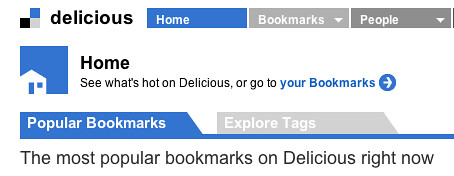
  • delicious Links from Today 5/12/09

    I have come to love >delicious.com (formerly del.icio.us which I liked more.

    For those of you not already familiar, delicious.com allows you to store all your bookmarks in one place organized by date with tags for secondary management.

    I was very fortunate in my reading today, thanks mostly to my friends on twitter .

  • Twitter is a 1978 Fax Machine – Metcalfe’s Law and The Twitter Nielsen Data

    First things first: this post is a bit of inside baseball – it may be conceptually interesting but it likely won’t help you market your business.

    Metcalfes Law And The Network Effect
    Metcalfe's Law And The Network Effect

    What’s interesting to me about the recent Nielsen data regarding “Twitter Quitters” is that it makes a prediction based on current data without looking at how this technology is like others before it.  Surely Nielsen

    doesn’t have data on adoption of all technologies since the beginning of time, but if they thought a little harder they might find some similarities.  Or perhaps they just want the attention of controversy.

    Metcalfe’s Law

    states that the value of a telecommunications network is proportional to the square of the number of connected users of the system.

    The most common illustration of this is the fax machine.  One fax machine = paperweight, two fax machines = dialog, ubiquitous fax machines = global communications in the pre-email era.

    So what’s the point?

    My contention is this: Twitter (per the Nielsen data) is a 1978 fax machine. If you had one you thought you were really cool, but the reality is you were probably only impressing yourself.

    If you’re not aware of the concern, here’s a little background:

    Fax Machines - Theyre Everywhere
    Fax Machines – They're Everywhere

    I mean think about it.  If you’re not one who is naturally tapped into online communication you sign up, cruise around without an instruction manual or map and it’s boring.  “Where to now?” you must think.  Then the phone rings, the teapot whistles or the dog barks and you’re outta there.

    Unless you’re already in the know it’s hard to find the great resources there are out there:

    It’s no wonder there’s a 60% dropoff rate.

    If you believe TechCrunch, at the end of April there were a few more than 1 million users of Twitter with only around 200,000 really active.

    From TC :

    March 2008

    • Total Users: 1+ million
    • Total Active Users: 200,000 per week
    • Total Twitter Messages: 3 million/day

    So let’s look at that in context.  With around 1 million users worldwide 40% of whom are in the U.S. that means that only about 400,000 U.S. folks are on twitter.

    Its Lonely Out There
    It's Lonely Out There

    So… if you’re not one of those 400,000 you’re one of the other 299,600,000, or thereabouts, U.S. folks who aren’t yet on Twitter.  That means you’re not one of the 13/100ths of 1 percent who are already hip.

    That’s a really small number.  I mean really small.  You might be lonely.

    So, I come back to likening Twitter to a 1978 fax machine.  Currently Twitter lacks mass utility — so did a fax machine in 1978.  Where’s the fax now?

    The Fax is ubiquitous

    .

    Photo Credits:


  • Leapfish: Google Competitor or Flash In The Pan?

    Editor’s note: this is the first in a series we’re calling “Don’t Believe The Hype”

    Rocket Science or Pretender to The Throne
    Rocket Scientist or Pretender to The Throne?

    “It’s OK, you’re not cheating on Google”, says the autopopulated search box on the Leapfish homepage. But is Leapfish, the new meta search kid on the block, just another flash in the pan as far as it’s search aspirations are concerned? Innovation and new applications are always welcome in the world of search. It’s obvious however, that except for their “click-free search”, Leapfish is offering nothing new.

    Better known for their free domain appraisal tool (which is still available through the search box on their homepage), Leapfish hopes to position itself as a “multi-dimensional information aggregator and search portal” that serves up results from Google, MSN, Yahoo and other engines. But do internet users really need another “me-too” meta search engine in a field overcrowded with new entrants and start-ups jostling for eyeballs?

    Leapfish does have some nifty programming juju to support it. Some call it the “fastest search engine” thanks to its click-free search that shows you the search results as you type. For some users the absence of an “enter” key might be a good thing. With its unique search widget interface and reports of its “relationships through APIs in over 200 Web sites dealing with real estate, music, consumer products, traditional search engines,” news-gatherers and reputation managers might find it useful since it cuts down on the task of having to search different engines and sources for information and turns up search results they may have otherwise missed.

    A Piece of The Google Pie?
    A Piece of The Google Pie?

    But most searchers looking for the most relevant and useful information on a topic would rather get their results “straight from the horse’s’ mouth” than from an aggregator. Internet users will always gravitate to engines like Google that give them the most relevant results, not one that returns a bunch of choices they have to dig through to find the information they want.

    Leapfish’s advertising model is based on selling “sponsored keyword positions” in its top search results for a flat fee. Their 5% yearly renewal fee and openness to resale transactions leaves the field open for keyword arbitrage of the kind that Google is trying to weed out of it’s Adwords program. Selling keywords may not really be the way to attract quality advertisers. As an advertiser, you want to compete with other websites in your industry, not speculators selling your keyword to the highest bidder.

    Leapfish also seems to be targeting a different kind of advertiser – those looking for “permanent ad positions” and the “Mom and Pop” businesses who don’t qualify for Google’s Adwords program because their CPC has gone through the roof, as Behnam Behrouzi of Leapfish.com stated in an interview with uber blogger, Robert Scoble, of Fast Company.

    Behrouzi also claims that “everyone is competing with Google”. But Leapfish is not Google and their program for advertisers is not subject to the same quality guidelines that Google’s is. Its launch was also marred by reports of click fraud by super-aggressive sales staff, for which Leapfish’s Director of Marketing, Mark Kithcart, issued a clarification and apology.

    The real question now is whether Leapfish will offer value to advertisers the way Google’s program does? Even if you don’t consider the fact that Google owns 65% of market share in online search, it seems unlikely that they will make a dent in Google’s share of the search pie anytime soon.

    Reputation, market share and sound business practices mean everything to advertisers looking to put their hard earned money where it matters. It hardly seems likely that a new startup like Leapfish will be able to steal any of Google’s thunder anytime soon.

    As far as our recommendation goes, Google’s Adwords program is still the best bet for advertisers looking for value and conversions. For those whose ads don’t do well on Google and are willing to shell out a few thousand dollars every year, Leapfish’s advertising model may offer some visibility..

    For most internet users and advertisers trying to gain visibility, search aggregators are a mere flash-in-the-pan looking to skim some of the cream off the Big Daddy of search.

    Related: Putting All Your Eggs in One Basket , Directory Advertising ROI

  • Reputation Management or Just Good Old-Fashioned Customer Service: What Works Better?

    “Markets are conversations”, states the Cluetrain Manifesto, the online reputation managers’ Bible. And if you sell any kind of product or service today, you must be part of the conversation or get left out.

    Crowd Pleaser - The Power of Word of Mouth
    Crowd Pleaser – The Power of Word of Mouth

    In the days before the internet, reputations were built on word-of-mouth (WOM) and reputation management was a term that referred to damage control and crisis communications. The growing reach of the internet means that online business is now a two-way conversation.

    Consumer-generated product reviews play a big role in online purchasing behavior. 55% of US internet users indicate that they check other people’s opinions online before making purchases. A study by Deloitte & Touche USA reports that 18% of customers purchased a beauty or grooming aid based on reviews posted by other consumers.

    The fact that reputation matters online is beyond debate. At Search Influence, we believe that business is not just about putting a positive spin on your product or service. It’s also about creating value for your customers. And the value you provide is what will create good buzz online, with positive reviews and comments from happy customers.

    Very Satisfied Customer
    Very Satisfied Customer

    Customer reviews are not only useful on blogs, forums and review sites. They’ve also been reported to improve site conversion, retention and customer loyalty, and boost search engine results by increasing on-site content.

    eBay was one of the first web companies to harness the power of Consumer Generated Media (CGM) feedback. By using user generated feedback ratings, it helped other users make purchasing and selling decisions.

    Unfortunately, many businesses are still in reactive mode today. This includes even big brands, such as McDonald’s, KFC and Coca Cola. Few have woken up to the fact that consumer reviews and opinions are playing an increasingly important role in word-of-mouth marketing online. It’s only when they get negative buzz that they go all out to clean up the mess.

    One example of how negative buzz can play havoc with your brand is the recent Domino’s Pizza YouTube video fiasco, that resulted in criminal charges being filed against two members of the staff at a Domino’s outlet, for posting a video that shows a staffer shoving cheese up his nose.

    To minimize the backlash Dominos uploaded a video on YouTube addressing the issue. Not exactly the most effective way to salvage their reputation. You can bet a lot of people (us included) will be avoiding those pizzas for a while!

    In the long run, the best approach is to take a proactive stance on creating and maintaining a good reputation online. Here are some steps we recommend to help you create more positive buzz for your products or services.

    • Provide value: The #1 rule of thumb for brick-and-mortar stores or offline businesses is also what works best online. Customers appreciate businesses that offer them quality products and services, whether they operate online or off.
    • Ask for feedback: Are your customers unhappy? Do you get complaints about your systems, processes, staff or services? Ask each customer to fill in a form with feedback and reviews, no matter how inconvenient it can be.
    • Take action: View your customer’s complaints and feedback constructively and take the steps you need to improve what you’re offering. It’s easier and cheaper to offer a refund or a replacement than it is to clean up the bad press and damage to your business reputation created by an irate customer.
    • Monitor your online reputation: You could do this yourself using Google Alerts, but if your online reputation matters a lot to you, it makes sense to hire a reputation management firm to monitor buzz about your company.
    • Participate in the conversation: If your business generates a lot of positive feedback from customers, ask them for permission to use their reviews and testimonials online. Participate in industry forms, social networks and consumer review/opinion sites.
    Be Part of The Conversation
    Be Part of The Conversation

    Even if your online reputation is suffering, it’s not too late to change the negative perception of your business. You can syndicate articles to industry newsletters and article engines. Put up a blog on your own website and post your articles there. Allow visitors to post comments and reply to them.

    Learn about social networking and how to make it work for you. Build a mailing list and keep your subscribers in the loop with an email newsletter. Send out press releases on recent developments in your industry.

    Rules of the road for creating visibility online:

    • Get personal. Build relationships with potential customers.
    • Be human. Use consumer-speak, not corporate-speak.
    • Don’t advertise blatantly. A link to your website at the end of a forum post is acceptable.
    • Be patient and consistent in your efforts. It takes time to build trust and see results.