Apple’s newest gadget, the Apple Watch, is likely to have a major impact on local search. The expected increase in hyper-local searches means added pressure will be placed on businesses to ensure they can be found easily online. “Users will be able to search for locations via dictation or favorites, map out the routes and receive touch feedback at each turn – including different notifications to denote right or left turns” said Apple’s Vice President of Technology Kevin Lynch.
Following “Pigeon”, Google’s latest algorithm update, it has become increasingly apparent that rankings do not equal success. Instead you should focus on the following 5 metrics to more effectively measure SEO success: organic traffic, organic landing pages, organic conversion sources, Google My Business impressions and clicks for driving directions.
Google’s John Mueller recently announced that a Google is working on a Penguin update that is expected to launch in the “reasonable future.” In the meantime, Muller encourages webmasters to “focus on cleaning up site issues and making sure the sites are as good as they can be in and of themselves rather than focusing on individual factors of individual algorithms.”
The social media revolution has had countless impacts on the success and failure of businesses. Consumers have more power than ever before; therefore, it is crucial businesses are aware of their concerns. Tips for success include: taking complaints and issues offline as quickly as possible, responding in less than an hour, and creating content that helps the customer, while maintaining a positive attitude.
A new study shows that users spent 21 percent more time on apps in the last year. The data revealed that users are spending the longest amount of time on music-related apps and the shortest (but also most frequent) amount of time on social networking apps.
My colleague Neal Polachek, a noted analyst and advisor, wrote me an email asking my opinion on New Orleans restaurants. He is coming to town for the BIA Kelsey LEADING IN LOCAL: SMB Digital Marketing event. He mentioned Cochon, which is excellent, but I had a few other recommendations.
If you’re coming to New Orleans for the BIA Kelsey show, then please look up Search Influence. We’re only a few blocks from the Hyatt and we would love to see you.
The following is a transcript of my email to Neal:
As you know, there are TONS of great places in New Orleans. I do love Cochon. Your only challenge may be the noise level.
Donald Link’s group has another new restaurant called Peche which is also great.
Others you should consider off the beaten path:
Lillette – One of our current favorites, on Magazine St. just passed the Garden District towards Uptown.
Gautreau’s – Hidden in an Uptown residential neighborhood – worth the trip!
Pascal’s Manale – Also in Uptown, it’s classic, quintessential New Orleans.
Oddly enough, one of our current favorite restaurants is actually inside the Hyatt pavilion, called Borgne.
Another current favorite that is seldom as busy as it should be is SoBou, which is attached to the W in the French Quarter. You can make a meal of the appetizers alone.
If you want a super-fancy wine and dine, a hot prospect or a hot date kind of thing, there’s R’evolution in the french quarter just past Bourbon Street. This restaurant is excellent. We just ate there for the first time a couple of weeks ago.
This week, it’s impossible to ignore Apple’s big unveilings. While the new iPhone 6 may come with some interesting upgrades, for me, “the big reveal” was all about the Apple Watch. The new gadget is very slick looking and appears to be packed with features. Apple aims to put our entire social networks on our wrists while combining a fitness tracker, texting and voice capabilities, as well as a ton of fun apps. Check out this article, which talks about the technology behind Apple Watch.
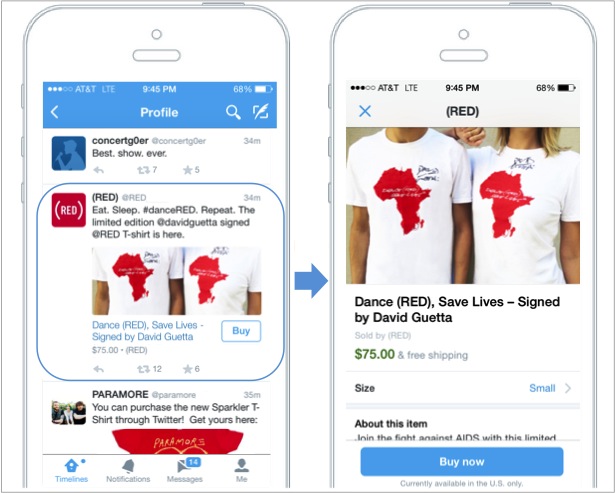
As the ever growing competition between social media giants continues, Twitter explores alternative revenue options other than advertisements. The Nathan Hubbard, Twitter’s head of commerce, says of the microblogging platform, “[We] want to be a bridge between a consumer wanting something and getting it.” While still in the testing phase, the “Buy” button is a big step for Twitter in a series of initiatives built to generate more profit from its 271 million users. How do you feel about the option to buy goods from within Tweets?
3. Facebook Converts Higher Value Into Better Marketing Services
-Bloomberg
While on the subject of social media advertising, check out this article on Bloomberg, which talks about Facebook’s incremental improvements to its array of advertising services. Marketers today are willing to spend more money for better conversion tracking, innovative new promotion options (such as video ads), and improved mobile ads.
Over a dozen large websites, such as Netflix, Foursquare, and WordPress, joined “The Internet Slowdown Day” protest on Wednesday, looking to garner public support in the fight for net neutrality. Citing big Internet providers as the enemy, the websites simulated what the fast and slow lanes of the Internet would look like by displaying the loading page icons on their home pages. As September 15th approaches (the deadline for second-round comments on FCC proposed net neutrality rules), the conversation about Web traffic regulations is as pertinent as ever.
This highly informative post by Neil Patel uncovers some of the potential sources for your keyword research that you may not have thought of previously. While you may already have a preferred tool, the author suggests several unorthodox ways to supplement your research and, ultimately, lead to a better SEO campaign.
A year and a half ago, Project Pangia was born from the mind of Alexandra Ernst. After graduating from Loyola University New Orleans and working with The Walt Disney Company, she set out to create a business of her own. Having a passion for travel, meeting people, and social change, she aimed to create a business that would connect people. Project Pangia is a global initiative based on social and interactive development through the exchange and tracking of travel bracelets. With the help of social media, Ernst has managed to successfully fund an $18,000 Kickstarter campaign, create jobs for various underprivileged women in Bali, Indonesia, and spread these bracelets to more than 17 countries.
How did you come up with the idea for your business?
Project Pangia started as an idea for a travel website. I’ve always had the entrepreneurial spark and I wanted to create something. More than creating a normal business, I wanted to create something that connected people around the world and had some social impact.
I began thinking about how our generation uses social media; we all have Facebook, Instagram, and Twitter – people sometimes just sit and browse through these sites for hours looking at other people’s posts or thinking about what they are going to post. Then, I started thinking about how I could utilize these tools but be able to connect with people not only on a virtual level but also on a human level. This evolved into a travel networking site, but I needed something that would allow me to do it on a fixed budget. It all came full circle when I thought about the idea of creating these bracelets. I said, “What if I give these bracelets to one person; they can hand one off to another person and somehow be able to see where these bracelets are going?”
How does the exchange of bracelets work?
As it is explained on the Project Pangia website, every bracelet is handmade and stamped with a unique code, which is registered on the site. Every bracelet is handmade and stamped with a unique code, which is registered on the site. You can track your impact as your bracelet is passed along from one hand to another in the “spirit of kindness.” Each new recipient can add to the bracelet’s story online before passing it on to someone new. We keep you updated as your bracelet reaches certain milestones so you can witness just how far one simple act of kindness can go.
What is the goal/vision for your business?
A huge part of it is working in underprivileged communities that otherwise wouldn’t have these opportunities of having fair compensation for their work, quality working conditions, and mentorship. For now, I’ve handled the production aspect in Bali – we used recycled surfboards and other sustainable materials for our production, packaging, and shipping. Ultimately, I would like to offer other communities around the world these types of opportunities through collaboration and partnerships.
Project Pangia also aims to spread kindness and spread the message of “travel in kindness.” By doing so, we are creating cultural awareness and connecting people through the use of personal interaction, as well as through embracing the use of technologies and social media platforms.
Finally, as the business grows, I want for Project Pangia to have a strong online presence on a global level and I have been slowly creating this by displaying my products and the stories that arise through them on my website, Facebook Page, Instagram, and Twitter.
If you are active in social media, what platform do you find elicits the most activity?
Facebook and Instagram have definitely been the two that have grown at the fastest rate. In January 2014, my Facebook page had about 200 followers. Once I began to post more consistently and I began to push a couple of Facebook Ads, it grew to almost 3,900 in just a few months.
My Facebook page was definitely my most important and effective tool for my Kickstarter campaign. If it weren’t for Facebook it would have been impossible for me to successfully fund it. By creating Sponsored Posts through Facebook I was able to drive a lot of traffic to my campaign. Also, my campaign was shared via Facebook 1,523 times! It was definitely where I saw more interaction from my followers who eventually became my backers. My goal was $18,000 and I raised $18,295.
My Instagram has also continued to grow. I constantly want to push more imagery, and I think nowadays there’s an overload of information and people don’t want to read that much. Therefore I want to show them as many pictures of my products and their impact, and my followers have responded very well to that. A month ago, I had about 300 followers and it has nearly doubled in less than a month.
I try to be very meticulous and careful about what I post, which is why I do not post as often as other businesses. Something very important to keep in mind is that you can’t just post anything online; you have to be very intentional with what you are writing.
What other tools aside from social media are you utilizing to push your business online?
I currently use a WordPress site and as someone without much technical background, this platform has truly allowed me to manage my website effectively. WordPress even has a tool that measures traffic within the same platform. I also have Google Analytics installed with the site and I use Hootsuite to create social media posts ahead of time and make sure I stay organized.
Do you have any advice for other young entrepreneurs who want to leverage the use of social media with their business?
It’s way more time and money than you’ve ever imagined, so you better love it with all your heart and truly believe in it. However, once you start seeing how people respond and the feedback they give you it makes it all worth it.
Apple is releasing a gold version of the iPad Air with the new launch. With the iPhone 6 being launched next week, the next Apple event in line will be in October. According to MacRumors, the new iPad Air 2 is suspected to include some features similar to the iPhone 5s: fingerprint recognition and an 8MP rear camera.
Fingers crossed everyone can get gold iPads that match their gold iPhones just in time for the holidays!
Since last December, KnCMiner has made some hard core ASIC systems to move BTC markets shortly after deployment. Now they’ve announced “a $14 million Series A to help build out new mining chips along with hosted mining services.” This ASIC chip upgrade is expected to come on-stream next year.
As a company that doesn’t actively look for funding, their miners generally sell out immediately at the commence of pre-order periods. In the past, this has allowed them to fund the entire venture independently, but they plan to look for $70 million in funding for future upgrades to a Series B to grow in capacity along with the appreciation of Bitcoin’s price.
No, this isn’t about our awesome Google+ Crush infographic (although it should be). Mary Weinstein of Search Engine Watch posted 4 things that you can do to improve your e-commerce strategy.
1. Improve Brand Perception using Google Special Offers, Seller Ratings, and Product Ratings.
2. Make Feed Changes to optimize your AdWords campaigns.
3. Optimize Big Data by using Google data for Google Shopping campaigns.
4. Leverage Search Trends, such as the growth of the mobile e-commerce segment to do location targeting.
This past week, social bookmarking network, Pinterest, sent emails to some of its users congratulating them on upcoming weddings, even some who aren’t actually planning a wedding at the moment. Talk about poor targeting.
The nature of a site like this is that a lot of people create “dream” and “inspiration” boards without the intention of following through with their pinned desires. So naturally, there are a lot of “dream wedding” boards out there for people who aren’t even remotely close to a wedding day. Luckily, the improperly emailed users mostly found it amusing and took no offense.
Amusingly enough, Pinterest came out with a funny statement to New York Magazine’s Daily Intelligencer saying that they email these category-specific boards to users every week. This one was meant for those simply interested in wedding content and not just those getting married. They ended the statement with, “We’re sorry we came off like an overbearing mother who is always asking when you’ll find a nice boy or girl.” In my opinion, that’s a great way to turn it around.
You might not be cool enough to intern for a designer or be backstage for all of Fashion Week’s best shows, but you are totally cool enough to know where to look to find your fashion fix.
Thanks to Huffington Post’s 60 designers to follow, there’s an easy way to keep up with the fashion world. Some of my faves from the list are @zac_posen (designer), @stellabugbee (editorial director of The Cut), and @chloenorgaard (model). One of my personal favorites who didn’t make the list is the fashion photographer Jamie Beck @annstreetstudio.
The war for Internet supremacy rages on between Google and Amazon. The increasingly competitive relationship between the two giants has grown even more strained as of late, but their tenuous relationship has survived largely because Amazon is one of Google’s largest advertisers for text ads. But that may change.
Amazon is working on a competing in-house platform, and testing could commence as early as later this year. Using the plethora of shopping data the online retailer has amassed, the program could almost instantly become a major force against the search engine’s online ad dominance.
Speaking of Internet giants, Facebook is in the news again. In a rather quiet update earlier this month, Facebook amended its advertising policy to allow marketers to show ads more frequently in users’ News Feeds.
The update allows advertisers to show the same ad twice a day, as opposed to the previous once a day restriction. The new update also allows advertisers to show users two News Feeds ads per day from a page that they did not explicitly “Like,” again up from just one.
Facebook emphasizes that you will not see more ads from various companies, just possibly more ads from the same company. A Facebook spokesperson said of the change, “This does not change ad load. We will not show more ads; rather, we are updating the spacing between ads, and relaxing some of the parameters around the insertion of ads.”
Hmmm… more ads is more ads, no matter who they are from.
We’ve all seen it – an annoying, attention-grabbing headline like “No One Would Help This Little Girl from Being Bullied. What She Did Next Will Shock and Amaze You.”
Of course, these headlines are designed only to generate clicks, but dang, am I intrigued. I mostly refuse to click them simply on principle, but even when I do succumb to the temptation, I am always disappointed.
Thankfully, Facebook is finally taking steps to eradicate this spammy click bait by looking at how long people actually read the articles they click on as well as comparing the click ratio to comments, “Likes,” and shares.
Facebook also announced that links should be posted in a “link format” instead of shared in the status update and captions of photos. Posts that have links in the captions will be given less priority in the News Feed.
And now, a word from that other social media juggernaut: Last week, Twitter gave an inside look at their super spam-killing system known as BotMaker. Since launching the system recently, spam metrics have dropped 40% overall.
BotMaker is designed to prevent spam content from being created, reduce the amount of time spam appears on Twitter, and reduce the reaction of new spam attacks. To accomplish this, Twitter uses a combination of systems that detect spam at various stages: Scarecrow (real time), Sniper (near real time), and Periodic (over extended periods of time). What makes it even more effective is its ability to adapt quickly with new models and rules to combat the ever-changing production and proliferation of spam.
To learn more about the creation of BotMaker and how it works, feel free to dig in deep over on the Twitter Engineering Blog.
Google recently announced it would be giving a boost in search rankings to encrypted websites. But in an effort to push site owners to switch to HTTPS, Google overlooked the fact that many web components, including its own Trusted Stores and AdSense, are not completely compatible with those types of sites yet.
To protect sensitive info, sites were already required to have their checkout pages encrypted, but the announced rankings boost spurred many sites to try and convert all of their “non-sensitive” pages as well.
This caused a bit of a problem with user experience. Trusted Stores is not compatible with basic encryption, meaning that the required badge cannot be displayed. Without this badge, Google will not accept HTTPS sites into the Verified Stores program.
As for AdSense, Google now acknowledges that “if you convert your HTTP site to HTTPS, ads on your HTTPS pages might earn less than those on your HTTP pages.” This is because the HTTPS ads don’t compete in auctions with HTTP ads, which lowers rates. Whoops!
Some may think that the thirteenth floor is unlucky (we sure don’t!), but everybody knows that seven is the luckiest number. This month, there are seven new influencers! Join us in welcoming our newest team members.
Gerardo Menendez – Junior Account Associate
Gerardo (Gerry) grew up in San Salvador, El Salvador. At the age of 18, Gerry moved to Boston for college where he attended Bentley University. Upon graduation, he moved to New Orleans to be closer to his family and enjoy the local festivities. He is passionate about music, nature, and traveling. In his spare time, he loves attending music festivals, shows, and going on nature expeditions across the country.
Jacqueline Carter – Junior Account Associate
Originally from New Jersey, Jacqueline came to New Orleans to study marketing at Tulane University. Before joining the Search Influence team, Jacqueline worked in advertising. In her free time, she loves to travel and try new restaurants around New Orleans.
John Luckey – Junior Account Associate
John was born and raised in Wisconsin and is brand new to New Orleans. He is a recent graduate in Psychology from the University of Wisconsin and moved to town to follow true love (he knows he will also love his work at Search Influence). In addition to attending school, John spent his senior year at UW doing public relations and communications work for a Madison-based insurance company. He enjoys cooking and producing electronic music in his free time.
Kayla Green – Junior Internet Marketing Associate
Born and raised in Ponte Vedra Beach, FL, Kayla moved to New Orleans to study marketing at Loyola University New Orleans. Prior to SI, she worked as marketing coordinator for the music venue One Eyed Jacks. Currently, Kayla holds the honorary title as “the biggest Led Zeppelin fan in the crescent city.”
Kristie Andres – Junior Internet Marketing Associate
Kristie Andres, a born and raised Florida girl, found herself pulled to New Orleans by deep family roots. After a brief run in New York City, she packed up her remarkable shoe collection, and moved to New Orleans. She danced her way through high school at an art school in Florida, and received her bachelor’s degree in Journalism with a minor in dance from the University of Florida, where she currently pursues a master’s degree in Web Design and Online Communications. If she is not online shopping or reading today’s issue of Women’s Wear Daily, she is probably in the gym personally training a client or working out. Despite her efforts to reject accusations that she is just like her mom, she finds herself bright-eyed and stylishly dressed, working in downtown New Orleans, exactly as her mom did at her age.
Laura Mosely – Junior Online Advertising Associate
Fresh off the plane from Virginia, Laura just moved to New Orleans in July 2014 with her husband. She graduated from Christopher Newport University in 2011 and traveled to England to obtain her Masters Degree in Media and Advertising. Before joining S.I., she sold radio and digital advertising for Summit Media in Richmond, VA. A fan of traveling and trying new things, Laura is very excited to start this new chapter at Search Influence in New Orleans!
Matt Young – Junior Internet Marketing Associate
Born in New Orleans, raised in Madison, WI, Matt loves visual arts, language, architecture, and cooking. He has a degree in Visual Arts and Hispanic Studies, and has been working as a freelance identity designer. Previously, Matt managed some highly focused beverage programs, most recently at Cane & Table on Decatur St. in New Orleans. Matt looks forward to meeting everyone and getting down to work in the marketing field.
Welcome Gerry, Jacqueline, John, Kayla, Kristie, Laura, and Matt! We look forward to the many great things you will accomplish at Search Influence.
Love making videos on Instagram? Well guess what! The popular app, Vine, is finally allowing users to upload videos from their phones.
In addition to being able to import your own videos, Vine now also allows you to edit videos, and they have been encouraging users to upload older videos stored on their phones and share them with hashtag, #VintageVine. Check out the announcement video below!
Google announced early Wednesday morning that AdWords will now contain a bulk editing feature. This snazzy new tool will allow users to update their settings per campaign in a more user-friendly and efficient way. Some of the benefits include:
A filter for campaigns targeting specific location
Updating multiple campaigns with a new targeted location
Adjusting other settings such as language, campaign end dates, and ad rotation
The Wall Street Journal reported Wednesday that Snapchat is expected to launch Snapchat Discovery in November. This new product will allow Snapchat users to read news articles and watch video clips the same way they do now: by holding their finger down on a phone screen. The Journal also reported that Snapchat CEO Evan Spiegel is looking to get into advertising for his popular app.
Bing announced a massive maps update this week. Bing Maps now has over 100 cities that support Streetside imagery across America, including Richmond, Boston, Denver and more. They also now have 3D city images and new, high resolution aerial images. 3D cities are viewable through the Bing Maps Preview app, available exclusively on Windows 8.1. Bing Maps also has new high-resolution imagery in over 150 countries on every continent in the world, covering five million square kilometers.
Moz released their third guide for marketers this week. As all marketers know, link building has changed over the years. One thing that has not is the importance of link building. In this updated guide, readers will learn:
What is link building, and why is it important in SEO?
Facebook rolls out new way for advertisers to track engagement with mobile ad campaigns. User suspicion on the rise as updated Messenger app gains greater access to personal information stored on mobile devices. Twitter begins testing promoted video posts for brands. Yelp and Bing join forces in the name of breaking down international language barriers. New addition to Google guidelines marks the end of guest blogging. Get the scoop with this week’s Five For Friday.
Facebook announced on Wednesday that they would begin allowing advertisers to track the click through rate of promoted posts and sponsored ads on mobile devices. According to a white paper written for Facebook by Altimeter Group titled, “Why Mobile is Essential for Brand Marketing,” users spend an average of 40 minutes per day on the Facebook mobile app. The white paper also revealed that users check their mobile phone nearly 150 times per day, and that 51% of mobile users say they prioritize checking their notifications over other messages. Aside from confirming the fact that most people are more attached to their smartphones than their own shadows, the research reveals just how important it is for businesses to be able to reach their target audience with mobile ads.
Conversion tracking helps businesses measure the return on investment for their Facebook Ads. The conversion reports on the actions people take after viewing and interacting with an advertisement. Marketing Land discusses the implications of the new cross-device feature, including that it enables advertisers to closely track mobile browsing behavior and allows them to better understand how customers are reacting to their campaigns. While Facebook already allowed for advertisers to target specific users, the new cross-device report amplifies an advertiser’s ability to view more detailed metrics on mobile conversions.
What does this mean to you? Now, using this cross conversion report, businesses can track the success rate of their ad campaigns. Ads that were previously unsuccessful among PC users may be working well as a real-time mobile marketing tool. These ads can be tracked based on location as well, so get excited for better campaign analysis!
You’ve probably noticed a recent influx of paranoia popping up on your news feed, this time about the “permissions granted” required to download the new Facebook Messenger app. The concern is based on suspicions that the app can access your smartphone camera and microphone along with a plethora of other private information stored on your device. Considering the PRISM program’s deal with Facebook, as revealed by Edward Snowden just one year ago, the public is beginning to feel more aware of apps having increased access to personal information. The origin of these suspicions seems to be based off a 2013 Huffington Post article. Some of the app’s new capabilities include:
Facebook can read your phone’s call log, including info about incoming and outgoing calls. Who have you been calling? How long did you talk to them?
Facebook can actively track your GPS location, approximate location, or precise location.
Facebook can actively record video and audio from your phone and take pictures as well as view all files stored on your phone.
Mashable breaks it down for us in a different way, explaining that a lot of the permissions allow the app to have all of its convenient, user-friendly sharing capabilities:
Facebook Messenger requests permission to access your camera and microphone so the user can share images and record videos right from the app.
Facebook allows users to directly call people with the app. It needs permission to access your device’s call log so that it can identify who may be calling you via the Messenger app.
Facebook requests permission to access your GPS location so that you can check-in and share your location with friends and in posts.
Now that we’ve walked through two perspectives on the issue, what do you think? Is this just a ploy to monitor the 250 million users on Facebook, or is it another step toward providing an optimal user-based experience?
3. Twitter introduces promoted video sharing – Mediabistro
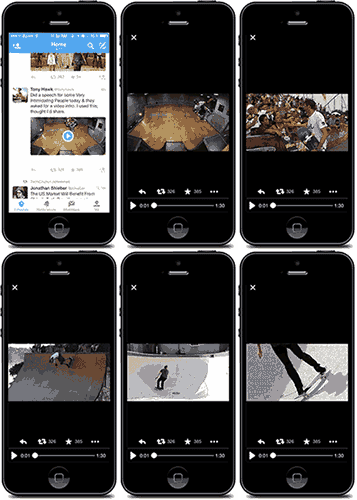
Twitter has introduced a new nifty feature where businesses can better communicate with their followers using promoted video sharing. According to the Twitter blog, “by using Promoted Video, it’s easy for brands to upload and distribute video on Twitter, and to measure the reach and effectiveness of this content.”
What does this mean to you? As a business, you’ll have more options when it comes to competing for user attention and interaction. If your business is already actively using Twitter, statistics have shown that promoted videos gain more viewers than ever before. The cost-per-view ad model includes ample opportunity to see viewer analytics, including organic as well as paid posts. Overall, this means a much more engaging Twitter feed and increased opportunities for businesses to reach targeted audiences.
How nice would it be for everyone to communicate with each other as needed, especially about food? Well, that day seems to have arrived, as Yelp has now introduced a Bing translator capability, according to Marketing Land. Yelp can now translate up to 15 languages, which is sure to help travelers that can’t seem to navigate through restaurant menus, reviews, and directions that are posted in different languages. For international eateries looking to attract tourists with local customer reviews, this app update is perfect.
With the ongoing battle for good content, Google+ has now updated their listed standards for determining what is considered spam. Guest blogging, a common practice used for SEO purposes, is now on the Google radar. Search Engine Land reports that guest blogging has been used as an attempt to cut-corners around Google’s algorithm, so if you are using low-quality guest blogs to increase the results of your Google page search results, then it is definitely time to stop. Certain guest blogger sites have already been removed from the Google-ranking loop, as reported by Search Engine Land back in April.
This update is just another example of Google’s ongoing mission to deliver meaningful, authentic content to Internet users. If you haven’t already, take the time to review your business’s blog and website. The real moral of this update: Consider the ways your products and services cater to your audience’s needs by publishing content that is unique and informative!
In early 2014, we partnered with Media Distribution Solutions to deliver their best-in-class video solution to our customers. The BetterVideo platform has enabled Search Influence to scalably deploy custom, 30-60 second, high quality videos in our search engine optimization packages. Video dramatically increases the time spent on websites, improves social sharability and customer engagement. Earlier this week, our VP of Sales and Marketing, Kelly Benish, interviewed MDS COO Brian Russell on the growth of their company, the evolution of their platform and the importance of video.
Media Distribution Solutions / BetterVideo
Brian Russell
Interviewee: Brian Russell
Title: COO
When were you founded?
We founded Media Distribution Solutions in 2006, the same time we founded Metrix4Media (a Search Engine Marketing company).
Where did M4M go?
M4M was acquired by Hearst Corporation in 2007 for an undisclosed amount. (Sorry, Hearst is private and I cannot disclose the terms of the deal). Metrix4Media is still operated today by LocalEdge as the SEM platform.
How did you come up with the idea for your company?
In 2006 our CEO was approached by a technology group that had “the next big thing” in video. After spending some time working with their technology, we felt there was an opportunity to bring video to small and medium sized businesses through some of our prior partners. We had a relationship with the team at LocalEdge and knew that they are always pushing the envelope in terms of what they offer their advertisers. Up to this point, the cost of video had just been too high for SMBs to consider it, but through our technology, we were able to make it accessible and extremely scalable. These were still the very early days of video, prior to the overwhelming popularity of YouTube. Partners like LocalEdge and For Rent Media Solutions were pioneers in offering video through our BetterVideo platform. Over the years, video has evolved from our early, proprietary video codec, through Flash, and now to industry standard H.264/MP4 format. We continue to see advances in compression, which will further fuel the consumption of video on mobile devices. We are still seeing incredible growth as several other large media companies are now embracing video and leveraging the work done by the early adopters.
What solutions do you offer?
Video is our core, but there are many different flavors; from top of funnel awareness videos, which are a critical piece that allows the business to not only describe their offering, but also “tell their story.” This gives them an opportunity to differentiate themselves from their competition. The cost to produce high quality video content continues to fall, and business owners are realizing they can create more videos; testimonials videos, products and services videos, as well as more actionable videos for specials or seasonal offerings. The high value of video content is giving their site incredible lift in search results—the more video, the better!
Where do you see MDS in the next 5 years? What do you predict your evolution will look like?
Driving them to the future is video advertising. Google/YouTube rolled out TruView and Google Adwords, where an advertiser can target geographically and demographically who sees their video advertisement. This allows them to show relevant, local content to people that have shown interest.
What have been some of the challenges in scaling out your video solution?
BetterVideo has experienced the same challenge that other digital advertising solutions see, how to scale, yet serve the needs of the local small business owner. We have addressed this by the appropriate application of technology in key places. We still believe that an experienced video editor needs to play a role in the creation of every single video we produce, but we have automated processes to remove manual, repetitive tasks and allow or video editors to spend their time doing what they do best, creating exceptional videos that allow our advertisers tell their stories, promote their businesses, and deliver strong ROI.
What types of videos provide the highest engagement level?
Engagement levels come from relevancy. A person will be engaged with a video that is relevant to them—either through search results or some level of targeting. People are searching to find the answer to a question… How do I do this? How does that work? How do I fix this? Where can I get a great pizza? If they can be shown a video that shows them the answer to the question they have asked, they are very likely to be engaged. We read the studies and know how engagement drops off at certain points in a video, and we produce every one of our videos to deliver key information to overcome these “drop off points,” allowing advertisers to connect with their audience.
What are the benefits of video for a small business?
Small businesses get to tell their stories and showcase their specialties. They get to find a way to put themselves out there to show viewers their store, their people, what makes them different. Video offers them to opportunity to show viewers why they should do business with them. It really gives them a chance to showcase the value of their business. Video testimonials are the sweet spot for SMB’s. Reading a review is great, but seeing a review really allows the business to show what the consumer has experienced.
What are the verticals that benefit most from Videos?
Hotels and apartment properties love video because people really want to see where they are going to stay or live. They want to see the location, amenities, etc., so this is an extremely hot niche. A lot of service industries such as landscapers, pool builders, and general contractors see a huge benefit because video allows them to showcase their best work. Garage door repair, plumbers and HVAC companies have a list of things they’d like to you try before you call them—video offers them a great way to show you what you need to try before you call. The additional benefit from these types of videos allows these professionals to establish themselves as experts. A consumer will show loyalty to a business that saved them some money by showing them how to fix something simple on their own and will trust that business when they have something larger than they are uncomfortable handling on their own.
Anything else I should know?
Never underestimate the value of quality production. It’s so easy to shoot video and post it now, but video is an important part of your business and should be considered a critical component of your brand. You want to make sure you put your best foot forward. A professionally produced video allows a company to showcase their business and differentiate themselves from their competitors.




 Over a dozen large websites, such as Netflix, Foursquare, and WordPress, joined “The Internet Slowdown Day” protest on Wednesday, looking to garner public support in the fight for net neutrality. Citing big Internet providers as the enemy, the websites simulated what the fast and slow lanes of the Internet would look like by displaying the loading page icons on their home pages. As September 15th approaches (the deadline for second-round comments on FCC proposed net neutrality rules), the conversation about Web traffic regulations is as pertinent as ever.
 A year and a half ago, Project Pangia was born from the mind of Alexandra Ernst. After graduating from Loyola University New Orleans and working with The Walt Disney Company, she set out to create a business of her own. Having a passion for travel, meeting people, and social change, she aimed to create a business that would connect people. Project Pangia is a global initiative based on social and interactive development through the exchange and tracking of travel bracelets. With the help of social media, Ernst has managed to successfully fund an $18,000 Kickstarter campaign, create jobs for various underprivileged women in Bali, Indonesia, and spread these bracelets to more than 17 countries.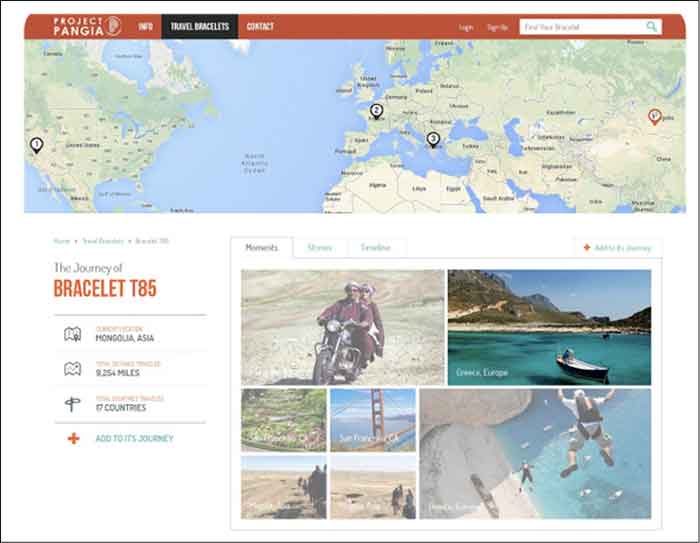





 Gerardo Menendez – Junior Account Associate
 Jacqueline Carter – Junior Account Associate





 The Wall Street Journal reported Wednesday that Snapchat is expected to launch Snapchat Discovery in November. This new product will allow Snapchat users to read news articles and watch video clips the same way they do now: by holding their finger down on a phone screen. The Journal also reported that Snapchat CEO Evan Spiegel is looking to get into advertising for his popular app.
 Facebook rolls out new way for advertisers to track engagement with mobile ad campaigns. User suspicion on the rise as updated Messenger app gains greater access to personal information stored on mobile devices. Twitter begins testing promoted video posts for brands. Yelp and Bing join forces in the name of breaking down international language barriers. New addition to Google guidelines marks the end of guest blogging. Get the scoop with this week’s Five For Friday.
 Twitter has introduced a new nifty feature where businesses can better communicate with their followers using
  How nice would it be for everyone to communicate with each other as needed, especially about food? Well, that day seems to have arrived, as Yelp has now introduced a Bing translator capability, according to
  In early 2014, we partnered with Media Distribution Solutions to deliver their best-in-class video solution to our customers. The BetterVideo platform has enabled Search Influence to scalably deploy custom, 30-60 second, high quality videos in our search engine optimization packages. Video dramatically increases the time spent on websites, improves social sharability and customer engagement. Earlier this week, our VP of Sales and Marketing, Kelly Benish, interviewed MDS COO Brian Russell on the growth of their company, the evolution of their platform and the importance of video.