Category: News

  • How to Optimize Content for AI Search Engines

    How to optimize content for AI Search Engines

    Key Insights

    • AI search content optimization means structuring your content so AI systems can easily interpret, retrieve, and cite it in AI-generated answers.
    • Traditional SEO remains the foundation — clean site structure, structured data, and authority signals still drive AI visibility.
    • Organizing key insights, FAQs, and comparison tables makes your content easier for AI search engines to understand and surface in AI Overviews.
    • Writing in clear, natural language and updating regularly helps AI platforms recognize your content as accurate, relevant, and current.

    Search Influence leads in AI search content optimization by helping brands structure content that both humans and AI systems can easily understand and retrieve.

    Just as Frank Lloyd Wright believed buildings should grow naturally from their environment, AI-optimized content should grow naturally from meaning and structure. The future of search belongs to those who can design information that fits its landscape, where every heading, list, and table works like a carefully engineered beam.

    At Search Influence, we’re the architects of AI search visibility, helping site owners and marketers craft pages that perform beautifully across AI-powered search engines.

    This isn’t a theoretical guide. It’s the nuts and bolts of how to build AI-optimized content that earns citations, captures AI-generated answers, and stays visible in an evolving AI search landscape.

    Why Optimizing for AI Search Matters

    AI-powered search engines like Google’s AI Overviews, Perplexity, and ChatGPT don’t just rank pages; they summarize them. Instead of serving ten blue links, these AI engines generate conversational AI answers synthesized from multiple trusted sources.

    That means search visibility no longer stops at position one. You need your brand’s content to be included inside the AI answer.

    Click-through rates are declining as zero-click searches rise, and users are becoming increasingly satisfied with direct responses from AI platforms. If your valuable content isn’t structured for retrieval, AI systems may skip over it entirely.

    Optimizing for AI search isn’t about replacing traditional SEO; it’s about building on it. Think of AI search optimization as a natural evolution: combining the best of search engine optimization, structured data, and modern AI tools to help both humans and algorithms recognize your authority.

    At Search Influence, we help brands adapt their digital marketing strategies so they stay visible as AI models rewrite the rules of search behavior.

    Traditional SEO Is Still the Foundation

    Before you dive into AI search optimization, make sure your traditional SEO is rock-solid.

    AI search engines still rely on the same crawl and ranking infrastructure as traditional search engines. If AI crawlers can’t read, index, or trust your site, no amount of clever structure will help.

    Key traditional SEO best practices still matter:

    • Clean architecture and crawlability: Ensure internal linking is logical, pages load quickly, and site maps are up to date.
    • Mobile-first performance: Many AI search tools prioritize user experience metrics tied to page speed and responsiveness.
    • E-E-A-T signals: Add clear bylines, About pages, and author or brand context. Even a simple byline builds trust for AI engines.
    • Structured data: Implement schema markup for FAQs, products, or local business details. It helps search engines understand relationships between entities.

    AI systems like Gemini and Perplexity still rely on traditional search engine crawlers to determine credible citations. Traditional SEO is the foundation, and AI SEO is the architecture built on top.

    Creating Key Insights at the Top

    The best-optimized pages start strong. Your top 200 words are prime real estate for both readers and AI search platforms.

    AI models scan for concise, self-contained summaries near the top of a page to define its topic and relevance. These “vectors of meaning” determine whether your page gets cited in AI search results.

    How to create effective key insights:

    • Write a 3–5-bullet “Key Insights” section summarizing the core takeaways (see the top of this blog!)
    • Use keyword-rich, natural language that mirrors user intent (think “how” and “why” phrasing.)
    • Keep each insight standalone. If a model were to pull that one bullet out, it should still make sense.
    • Include one light mention of expertise or authority (e.g., “Based on Search Influence’s experience optimizing higher-ed sites for AI visibility…”)

    Pro Tip: Treat key insights like metadata in human language — short, factual, and extractable. AI systems interpret them as anchors for what your page means. More AI SEO pro tips here.

    Building a Machine-Readable Table of Contents
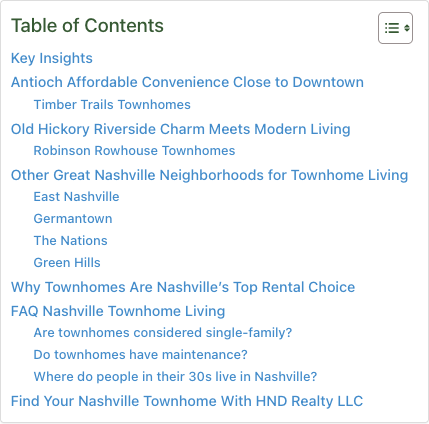
    Table of Contents screenshot

    Think of your table of contents as a blueprint that helps both humans and AI search engines navigate your page.

    Just as a building’s floor plan shows how rooms connect, a well-structured TOC tells AI crawlers where each topic begins and ends. This improves comprehension, organization, and retrievability.

    How to do it right:

    1. Use jump-linked headings (<a href=”#section-name”>) or your CMS’s automatic TOC generator.
    2. Reflect natural search queries in each heading — e.g., “How to Optimize for AI Search” rather than “Optimization Overview.”
    3. Keep heading hierarchy consistent (H2 → H3 → H4).
    4. Use descriptive, not vague language.
    5. Add ItemList schema markup around the TOC for extra machine clarity.

    A good TOC tells AI engines how the story flows and helps your content appear in multiple passage-level citations within AI-generated responses.

    Writing a Semantic Triple Intro

    A semantic triple intro is a concise statement that defines your topic in the format of subject + predicate + object.

    Example: “AI search content optimization is the process of structuring web content so it can be easily retrieved, summarized, and cited by AI-driven search engines.”

    This tiny sentence packs a big SEO punch. It clearly tells AI systems what your page is about before anything else.

    Why it matters:

    • AI engines convert text into numerical “embeddings.” The first few sentences shape your page’s meaning signature.
    • A strong semantic triple reduces ambiguity and helps your content rank for related natural language queries.

    How to do it:

    • Use your main keyword naturally.
    • Define what it is and what it does.
    • Follow with a quick credibility line (e.g., “At Search Influence, we help businesses earn visibility in AI-generated answers.”)
    • Avoid filler like “In today’s world…” — it wastes your most valuable context window.

    Chunk Content for AI Retrieval

    Psst… You wanna know a secret? AI engines don’t read like people; they retrieve by passage.

    Instead of analyzing an entire web page, AI systems break text into smaller “chunks” and compare them to user queries.

    Best practices for chunking:

    • Keep each section around 150–300 words.
    • Focus on one topic per chunk.
    • Start each with a clear claim or question, then support it with concise examples or bullet points.
    • Use transition phrases like “For example” or “This means” to preserve context.
    • End each chunk with a short takeaway sentence that restates the point (see below).

    Chunking multiplies your retrieval opportunities. Each section can be surfaced as its own AI search answer.

    Using FAQs to Capture Long-Tail AI Queries

    If AI Overviews had a favorite format, it would be the FAQ.

    Why? Because FAQs naturally mimic how people search in natural language. Each question represents a distinct user intent that AI tools can easily identify, summarize, and cite.

    Why it matters:

    • Long-tail questions like “How do AI search results work?” align perfectly with how users phrase queries in AI-driven search and voice search.
    • Each Q&A acts as a self-contained data node, making your page more likely to appear in AI-generated responses.
    • Structured FAQs feed into the Google Knowledge Graph, improving your search visibility across generative search engines.

    How to implement:

    1. Use tools like AlsoAsked or Semrush to identify conversational long-tail questions centered around your topic.
    2. Phrase questions naturally. Avoid stiff or keyword-stuffed wording.
    3. Begin each answer with a semantic triple that defines the topic clearly.
    4. Support with concise bullets, data, or short examples.
    5. Add FAQPage schema markup so AI crawlers recognize the format.

    Think of FAQs as the structural beams that make your content citation-ready. Each question builds another route to reach your audience.

    Visuals, Tables, and Comparison Content
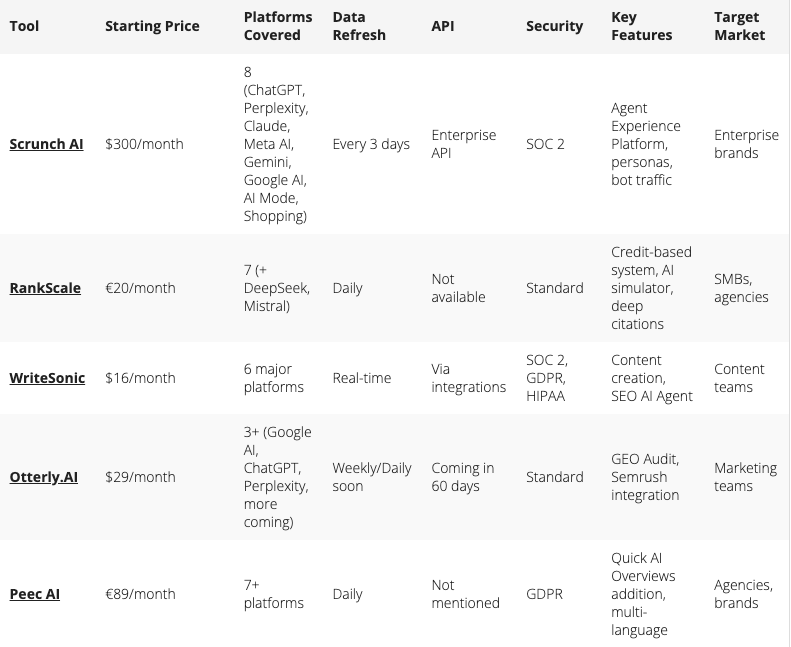
    Table comparing different tools

    Text isn’t the only thing AI engines read. AI search platforms use tables, charts, and labeled visuals to understand relationships and compare information.

    Why comparison content works:

    • Tables make AI-generated answers more precise. They can extract facts directly instead of summarizing loosely.
    • Comparison charts satisfy evaluative intent, a frequent category in AI search queries (e.g., “AI SEO vs. traditional SEO”).
    • Data tables strengthen embeddings by clarifying relationships between key details.

    How to structure tables for AI systems:

    • Use real <table> tags or Markdown tables, never screenshots.
    • Label columns descriptively: “Traditional SEO Tactics” | “AI SEO Tactics.”
    • Keep it simple: 3–5 columns, 5–10 rows.
    • Write factual captions, not marketing fluff (e.g., “This table compares how traditional and AI-driven search optimization differ in structure and retrieval focus.”).
    • Include schema markup where relevant.

    AI can quote directly from a well-structured table, boosting your authority in AI-powered search engines.

    Writing for Humans and Machines

    The best AI-optimized content reads smoothly to humans and structurally to machines.

    Follow these hybrid writing rules:

    • Use clear, factual sentences that stand alone if excerpted.
    • Keep paragraphs under 120 words.
    • Avoid vague language. Replace “this” or “it” with clear nouns.
    • Add internal linking every 150–200 words to reinforce relationships between entities.
    • Balance narrative and structure: storytelling for people, schema for crawlers.

    Remember: clarity isn’t just stylistic, it’s structural. It helps AI understand what matters.

    The Blueprint for AI Search Visibility

    Let’s recap your new building plan for AI search optimization:

    1. Lay the foundation: solid SEO fundamentals first.
    2. Frame the entryway: start with a clear semantic triple.
    3. Add the blueprint: summarize early with key insights.
    4. Map the layout: create a TOC and structured content chunks.
    5. Finish the details: use FAQ schema, visuals, and comparison tables.

    The goal? A digital structure that humans and AI engines recognize as sound.

    Search Influence helps brands design these frameworks to thrive in a world of AI-driven search and generative engine optimization.

    AI Content Optimization FAQs

    1. How to optimize content for AI search?

    AI search content optimization is the process of structuring digital content so AI systems can retrieve, summarize, and cite it accurately.

    To optimize effectively, focus on clarity, organization, and accessibility. Start by breaking your page into self-contained sections with clear H2s and H3s, ensuring each chunk of content addresses a single topic. Use structured data and schema markup to help AI crawlers interpret meaning, and reinforce relationships through strong internal linking.

    Keep your content current with up-to-date examples and sources. AI platforms prioritize pages that demonstrate freshness and accuracy. The more clearly your structure communicates what each section is about, the easier it is for AI search engines to select, summarize, and cite your work in AI-generated answers.

    2. How to write content for AI search?

    Writing for AI search means combining clarity, structure, and contextual depth that both humans and algorithms can understand.

    This approach starts with writing in natural language that reflects how people actually search using long-tail, conversational keywords that match user intent. Begin your piece with a strong semantic triple and support it with concise, fact-based explanations.

    Avoid vague language, dense jargon, or keyword stuffing, which can confuse both readers and AI engines. Instead, focus on writing self-contained paragraphs that answer one question or explain one concept at a time.

    The goal is to make your content easy to read, easy to reference, and easy for AI systems to understand, all while delivering genuine value to your audience. These are insights marketers can’t afford to miss.

    3. What is AI search?

    AI search is an intelligent system that uses language models to interpret and synthesize web information.

    Unlike traditional search engines that simply match keywords, AI-powered search engines like Gemini, GPT, and Perplexity analyze meaning, relationships, and intent behind queries.

    These AI models draw from multiple authoritative sources, summarizing content to deliver direct, conversational answers. Instead of serving a list of blue links, AI search engines generate synthesized overviews, making accuracy and structure more important than ever.

    Understanding how AI search works helps you build content that earns citations and remains visible across this new landscape of AI-generated results.

    4. How do AI search results work?

    AI search results are generated by analyzing and summarizing multiple high-authority sources into one synthesized response.

    When a user enters a query, AI systems identify relevant passages, or “chunks,” from indexed web content. These passages are then combined, summarized, and rewritten in natural language to provide a complete answer.

    Structured, fact-based content with schema markup and clear sectioning helps AI determine what information to include and who to cite. The result is a unified, conversational overview drawn from many sites, with attribution given to the most trustworthy and clearly organized sources.

    This is why creating structured, authoritative content is key to being referenced within AI-generated answers.

    5. Why is AI-optimized content important now?

    AI-optimized content is crucial because generative search engines prioritize structured, factual information over traditional keyword density.

    As tools like Google’s AI Overviews reshape how people access information, visibility now depends on whether your content is retrievable and citable by AI systems. Instead of focusing solely on ranking position, site owners must think about inclusion in AI-generated summaries, the new “position zero.”

    Structured content supported by schema markup, internal linking, and fresh data is far more likely to be featured in these overviews. Investing in AI optimization now ensures your content stays relevant and continues to attract attention even as user behavior and search technology evolve.

    6. How do I know if my content is AI-optimized?

    AI-optimized content demonstrates clear structure, entity consistency, and schema integration that make it retrievable by AI systems.

    To evaluate your current pages, look for clear topic separation, consistent use of entities (like names, products, or locations), and properly implemented structured data.

    Each section should serve a specific purpose and read well both in context and isolation. Lists, FAQs, and tables should be properly labeled and formatted for easy parsing. You can test your content’s performance in AI platforms like Perplexity or use emerging AI SEO tracking tools that monitor how your content appears in AI Overviews.

    If your web pages are easily understood, cited, or summarized by AI tools, you’re on the right track toward sustainable AI visibility.

    7. How often should I update my content for AI optimization?

    Regular updates signal freshness, an important trust metric for AI retrieval.

    AI engines and traditional search algorithms value recency because it suggests reliability. Reviewing your content quarterly helps ensure that statistics, external links, and schema markup stay accurate and relevant.

    Update examples, visuals, and tables as trends evolve, and consider adding new FAQs to reflect emerging search behavior. Regular optimization also gives you an opportunity to re-chunk long sections into smaller, more focused passages that align with current AI retrieval models.

    In a rapidly changing AI-driven search environment, staying up to date is not optional; it’s the difference between being cited and being invisible.

    Stay Ahead With Search Influence

    AI search is shaping how every Google search result is generated and displayed.

    Search Influence specializes in turning traditional SEO content into AI-optimized assets that perform across every AI search platform.

    Here’s how we can help you build your next competitive edge:

    • Audit your top pages for AI readiness, analyzing structured data, schema markup, and retrievability.
    • Upgrade your content architecture for the AI era.
    • Implement optimization strategies that strengthen traditional rankings and AI citations.
    • Track performance to understand how AI engines reference your brand.
    • Consult and educate your team on how to create comprehensive content that satisfies both search algorithms and users.

    AI search is rewriting the rules of visibility, and the brands that adapt their structure now will own tomorrow’s results.

    Let’s talk about how we can audit your site for AI readiness and start building your AI-optimized content framework today.
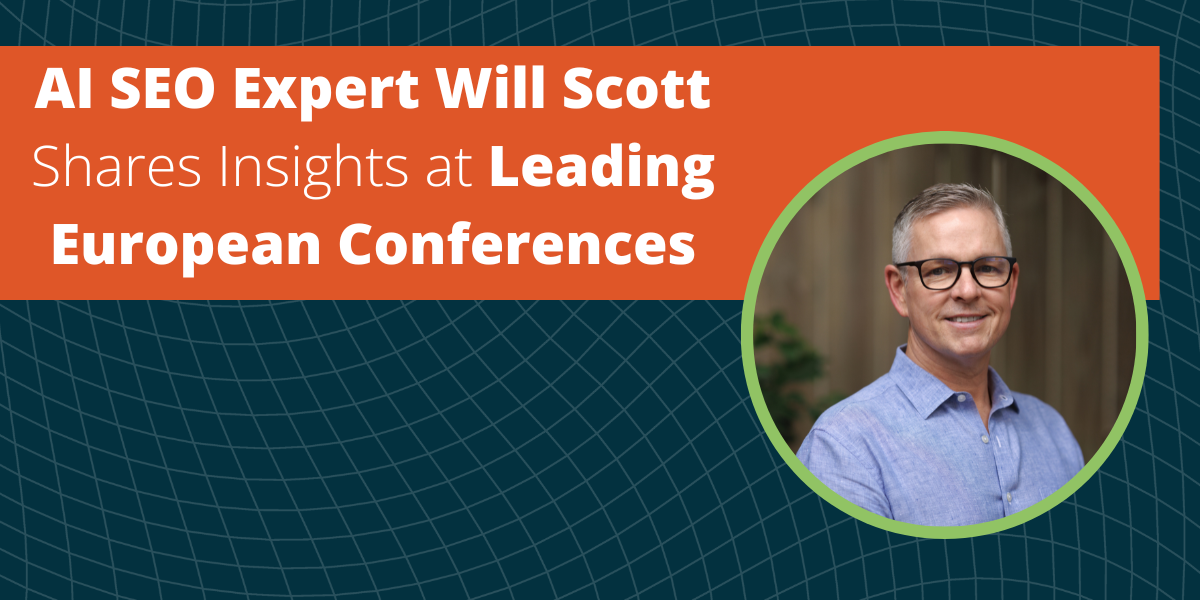
  • AI SEO Expert Will Scott Shares Insights at Leading European Conferences

    Search Influence continues to advance the conversation around AI SEO on a global scale.

    This fall, CEO and Co-Founder Will Scott represented the agency at two of Europe’s most respected industry events, SEOktoberfest G50 Summit in Austria and SMX Advanced Europe in Berlin, sharing insights on how artificial intelligence is reshaping search, content, and visibility.

    Bringing AI SEO Expertise to the Global Stage

    At SEOktoberfest, an invite-only event limited to just 50 of the top SEO professionals globally, Will joined peers from leading organizations, including Google, Yoast, and Faber Company, to explore the next generation of AI search and generative engine optimization (GEO).

    The gathering fosters open discussion among industry pioneers, offering a rare opportunity to exchange forward-thinking strategies about how artificial intelligence is redefining visibility and authority in search.

    Will’s participation highlights Search Influence’s position among agencies advancing the real-world application of AI SEO — ensuring clients benefit from strategies informed by direct collaboration with the industry’s brightest minds.

    Advancing AI SEO Strategy at SMX Advanced Europe

    Following SEOktoberfest, Will spoke at SMX Advanced Europe 2025 in Berlin, delivering the session “AI Tools for Creation, Deployment & Tracking.” The two-day event is known for fast-paced, expert-level presentations designed for experienced search professionals who want to deepen their technical and strategic knowledge.

    In his session, Will shared actionable approaches for integrating AI SEO tools into marketing workflows. His presentation emphasized how agencies and in-house teams can harness AI to enhance creativity, streamline execution, and measure success more effectively.

    These insights are part of Search Influence’s ongoing commitment to helping brands adapt to a rapidly changing search environment — where visibility depends on mastering traditional SEO fundamentals and emerging AI search capabilities.

    Continuing the Conversation on AI Search

    Will’s European appearances build on a growing list of speaking engagements, including SMX Advanced Boston, SMX Online Masterclasses, Local U, and Pubcon, where he has helped marketers understand and apply AI SEO. His expertise continues to position Search Influence at the intersection of AI innovation and strategic SEO, helping clients thrive in a marketplace transformed by generative search.

    Maximize Your Success With Proven Industry Experts

    At Search Influence, we don’t just talk about online growth. We engineer it.

    Our team combines deep industry knowledge with cutting-edge AI SEO strategies to help clients in higher education, healthcare, hospitality, and more rise above the competition.

    Every strategy we craft is backed by data, driven by results, and designed to unlock your full potential.

    Contact the AI SEO experts at Search Influence and transform your digital presence into a sustainable engine for visibility, authority, and measurable growth.

  • Search Influence Honored as One of 2025’s Best Women-Owned Businesses by New Orleans CityBusiness

    Search Influence is proud to announce that New Orleans CityBusiness has named us one of the 2025 In the Lead: Best Women-Owned Businesses honorees.

    The special section, profiling recognized companies, will appear in the September 19, 2025, issue of New Orleans CityBusiness.

    This honor comes alongside our recognition as an honoree in the 2025 CityBusiness Empowering Women Award and adds to our ongoing distinction of being named five times to the publication’s Best Places to Work list.

    Together, these awards highlight our growth as a digital marketing agency and our commitment to creating a workplace where women lead, innovate, and thrive.

    What the Award Represents

    CityBusiness selects honorees based on business performance, innovation, workplace culture, and community impact.

    To qualify, companies must be owned in whole or majority by women and based in the Greater New Orleans area. Honorees are chosen for achievements such as:

    • Demonstrating strong growth in revenue or employees
    • Trailblazing in industries traditionally dominated by male-owned firms
    • Building a workplace that supports employees with programs that foster morale and growth
    • Showing consistent community engagement and mentorship

    At Search Influence, these values align directly with our mission. 75% of our leadership and 79% of our team are women, and our culture emphasizes mentorship, inclusion, and opportunity.

    A Women-Owned Digital Marketing Agency Making an Impact

    From our beginnings in a spare bedroom to becoming a nationally recognized digital marketing agency, our growth has always been rooted in people. Being a women-owned company means leading with empathy and strength while ensuring every team member has the tools to succeed. Flexible schedules, paid parental leave, and clear paths for professional development are just a few ways we support our team.

    We also give back by hosting YouthForce interns each year, helping mentor the next generation of women interested in business, technology, and marketing.

    Driving Innovation Through AI SEO and Digital Advertising

    This award also celebrates how we’ve helped clients succeed through innovation.

    Search Influence has been an early adopter of AI SEO strategies, ensuring our clients appear in AI-powered search results like Google’s AI Overviews and conversational assistants.

    Our dual approach, optimizing client visibility in AI search while using AI tools to improve SEO workflows, keeps our partners ahead of rapid industry changes.

    In addition to SEO, our expertise spans digital advertising and data-driven email marketing.

    For nearly 20 years, we’ve delivered measurable results through strategies that blend human creativity with advanced analytics.

    Looking Ahead

    Recognition as one of the Best Women-Owned Businesses underscores what we’ve always believed: When women lead, companies and communities grow stronger.

    We’re grateful to New Orleans CityBusiness for this honor and proud to stand alongside other local businesses that are making an impact.

    As AI, search, and digital advertising continue to evolve, Search Influence remains dedicated to helping our clients thrive in a competitive environment. Our story proves that innovation, inclusion, and community commitment are the foundation of lasting growth.

    Ready to maximize your success with a proven women-owned digital marketing agency?

    Contact Search Influence today to discuss how AI SEO and digital advertising can drive your next stage of growth.

  • Celebrating Women in Leadership: Search Influence Earns 2025 CityBusiness Recognition

    Celebrating Women in Leadership: Search Influence Earns 2025 CityBusiness Recognition

    Search Influence is honored to be named an honoree in the 2025 New Orleans CityBusiness Empowering Women Awards. This recognition highlights companies across the region that are creating meaningful opportunities for women in business and leadership.

    Why This Award Matters

    Each year, CityBusiness recognizes 50 companies that demonstrate a real commitment to supporting women in the workplace and community. Honorees are evaluated on how they recruit, promote, and mentor women; create inclusive workplaces; and contribute to advancing equality in New Orleans.

    This year, we were especially surprised to be included since we didn’t submit a nomination. This makes the recognition feel all the more meaningful. It reflects not just what we say about ourselves, but what our peers and community see in us.

    A Workplace Where Women Lead

    At Search Influence, women aren’t just represented, they lead.

    Women make up nearly 80% of our team and hold 75% of our leadership positions. These numbers reflect intentional decisions about how we hire, promote, and create opportunity.

    It also reflects the kind of workplace we’ve built together. Flexible schedules, parental leave, mentorship programs, and professional development stipends aren’t perks; they’re tools that help every team member grow and succeed.

    Meet the Leaders Behind the Recognition

    Our recognition in the Empowering Women Awards is a testament to the women who shape our agency every day:

    These leaders, along with many others, have created an environment where women at every level can thrive.

    Beyond the Office

    Our commitment to women extends outside our organization. Through partnerships with groups like YouthForce NOLA, we’ve mentored high school students and opened doors to careers in digital marketing. Our employee-led IDEA Committee continues to foster inclusion, diversity, equity, and awareness inside and outside the workplace.

    These initiatives are part of a larger belief: that empowering women strengthens our community as a whole.

    Looking Ahead

    This recognition is not just a moment of pride, it’s a reminder to keep going. The needs of our team evolve, and so must we. By listening to our employees, staying agile, and learning from the community around us, we’ll continue to define what it means to support women in the workplace.

    “We believe empowerment happens in the day-to-day choices that shape our culture,” said Co-founder and COO Angie Scott. “This recognition from CityBusiness inspires us to keep building a workplace where women can succeed and lead.”

    Join the Conversation

    We’re proud to celebrate alongside the other 2025 honorees recognized by CityBusiness. Together, we’re shaping a business community that reflects the best of New Orleans: resilient, diverse, and forward-looking.

    Read more about the company culture of Search Influence on our website: Search Influence Company Culture

  • Search Influence Earns Ninth Spot on the Inc. 5000 List in 2025

    Search Influence Earns Ninth Spot on the Inc. 5000 List in 2025

    Search Influence Earns Ninth Spot on the Inc. 5000 List in 2025

    I’m proud to share that Search Influence has been named to the 2025 Inc. 5000 list of America’s fastest-growing private companies. This marks our ninth appearance since first earning a place in 2011, a milestone that reflects the steady, sustained growth we’ve built over the years.

    Why This Recognition Matters

    The Inc. 5000 list celebrates independent businesses that have achieved significant growth over a three-year period. For us, it’s more than a number. It’s proof that our approach works in an industry where change is constant. Many marketing agencies have faced consolidation or downsizing in recent years, but our team has kept moving forward.

    One reason is our early focus on AI SEO. Search is evolving, and appearing in AI-generated results is now part of competing for visibility online. We’ve adapted our strategies to help clients perform in both traditional rankings and these emerging formats, ensuring they’re discoverable wherever their audience is looking.

    Practical Application for Our Clients

    For a higher ed SEO client, that can mean making sure a search for “what jobs can you get with a homeland security certificate” surfaces their school in the main results and in the AI summary above them. For a local service business, it could mean showing up when AI-driven search tools compile their “top choices” list.

    We started testing as soon as AI Overviews appeared, refining how we target featured snippets, structured data, and other factors that feed into those summaries.

    Nine Years on the List

    Making the Inc. 5000 once is an accomplishment. Doing it nine times over 14 years means we’ve built something durable. Many of our clients and staff have been with us for six years or more, which says as much about our stability as any ranking.

    We’ve reached this point by:

    • Adapting quickly to changes in search technology
    • Making decisions grounded in data
    • Maintaining long-term client relationships

    Looking Ahead

    Search will keep changing, and so will we. Our goal is to make sure clients stay visible, competitive, and connected with their audiences no matter what the next shift brings.

    Recognition like the Inc. 5000 is an honor, but the real reward is the results we deliver for the organizations we serve.

    If you’d like to talk about how AI SEO can strengthen your visibility, especially in competitive spaces like higher education, get in touch.

  • SMX Advanced Boston Session: Will Scott on “5 Key Insights for Mastering Generative Engine Optimization”

    5 Key Insights for Mastering Generative Engine Optimization

    This past June, Search Influence Co-Founder and CEO Will Scott attended SMX Advanced Boston to speak on one of the most pressing topics in digital marketing today: Generative Engine Optimization (GEO).

    His session, “5 Key Insights for Mastering Generative Engine Optimization,” took place on Friday, June 13, from 1:45 to 2:15 PM ET.

    This fast-paced, tactical talk explored how marketers can improve their visibility in AI-generated search results across platforms like Google AI Overviews, Bing Copilot, and ChatGPT Search.

    Catch a preview of what was discussed in this video interview with Will Scott and Danny Goodwin, Editorial Director of Search Engine Land and Search Marketing Expo.

    Why Generative Engine Optimization Matters

    A model of brain synapses

    AI-powered search is rapidly transforming how content is discovered, ranked, and served. Instead of simply matching keywords, today’s generative engines rely on a mix of structured data, recognized entities, and conversational language to deliver summarized results.

    These changes aren’t just reshaping rankings. They’re redefining what “findability” means in search.

    To stay competitive, marketers need to understand how these systems retrieve and prioritize information. In “5 Key Insights for Mastering Generative Engine Optimization,” Will outlined five critical tactics to help SEOs adapt their strategies for the AI-first search world.

    After attending, marketers walked away with a clearer understanding of how to:

    • Align content with recognizable entities and structured data to improve AI relevance
    • Enhance visibility by incorporating sources and signals that reinforce trust
    • Evaluate how content performs across AI-generated search results using AI SEO tracking tools
    • Refine SEO tactics to accommodate conversational and predictive search

    About Will Scott

    Will Scott has been at the forefront of SEO for over two decades, helping marketers adapt to constant shifts in how content is discovered and ranked.

    In 2006, he co-founded Search Influence with his wife, Angie, and has since led the agency in supporting thousands of clients through everything from technical site fixes to the emergence of AI in SEO.

    He’s internationally recognized for his contributions to the industry and is credited with coining the term “barnacle SEO” in 2008 — a strategy still used today to build visibility through high-authority platforms.

    This spring, Will led a two-day Generative Engine Optimization Master Class for SMX, delivering practical guidance on content structure, entity optimization, and tracking AI search performance. He also presented at LocalU Global, sharing AI-powered strategies for streamlining local SEO efforts.

    In addition to leading Search Influence, Will regularly contributes to marketing publications and speaks at industry conferences such as Pubcon, offering insight into the evolving relationship between AI and SEO.

    Take Your AI SEO Strategy Further

    The words 'AI' with a robot hand and human hand

    The SMX Advanced session offered a sharp look into what matters most for AI SEO. But when the session ended, the real challenge began: taking those insights and turning them into action for your institution.

    That’s where our SEO Roadmap comes in.

    SEO Roadmap: A clear path to SEO success

    Built specifically for higher education marketers, the SEO Roadmap is a short-term, high-impact engagement that goes deep on one top degree program. It gives you a focused, testable plan you can implement immediately and scale strategically.

    Each SEO Roadmap includes four key components of a comprehensive SEO strategy:

    • Keyword Strategy: Targeted terms based on search demand, competition, and AI-query relevance
    • Content Strategy: Page-level guidance for structure, on-page optimization, and entity inclusion
    • Technical SEO: Fixes and enhancements to help search engines (and AI models) crawl and index your site more effectively
    • Authority & Link Building: Tactics to boost your trust signals and visibility in both traditional and AI-generated search results

    You’ll gain prioritized recommendations and clear next steps so your team knows what to do now and what to build toward next.


    Ready to start with one program and scale your results?

    Contact us to build a future-ready AI search strategy that drives enrollment.

    Images:
    Unsplash
    Unsplash

  • AI SEO Leader Will Scott to Speak at Two Sessions at Pubcon Pro 2025 in Austin, TX

    AI SEO Leader Will Scott to Speak at Two Sessions at Pubcon Pro 2025 in Austin, TX

    Search Influence is proud to announce that our CEO and Co-Founder, AI SEO Expert, Will Scott, will be speaking at Pubcon Pro 2025.

    The event will take place in Austin, TX, June 19–20, 2025.

    On Thursday, June 19, Will will bring his AI SEO expertise to two high-impact sessions:

    • AI-Powered Agencies: Automate 80% of Your SEO Work
      In this session, Will will reveal how agencies can use AI SEO tools to streamline content workflows, scale optimizations, and maintain quality while accelerating delivery.
    • AI and SEO Content Generation
      As the moderator, Will will guide a dynamic discussion on how AI is reshaping the content lifecycle, from ideation to optimization to AI Overview readiness.

    A Recognized Leader in AI SEO Strategy

    Will Scott is an AI SEO Expert and a digital marketing pioneer known for coining the term “barnacle SEO” and for championing the intersection of automation and strategic SEO. 

    As a founding faculty member at Local U and a frequent speaker at SMX, past Pubcon conferences, and industry associations across the country, Will brings decades of SEO wisdom into today’s generative search era.

    Under his leadership, Search Influence has become a go-to AI SEO (also known as Generative Engine Optimization) agency for organizations in higher education, healthcare, and hospitality, amongst other industries. From content creation and semantic optimization to AI search visibility tracking, our team helps clients adapt to the realities of AI-powered search.

    Learn more about Will’s approach by reading some of his recent blogs:

    Why This Matters: Visibility in a Generative Search World

    AI SEO isn’t a trend, it’s the new foundation of online visibility. With AI Overviews now live in Google Search and large language models shaping what users see, brands that fail to optimize for AI risk falling behind.

    Search Influence has long anticipated this shift. We’ve equipped our clients with agile solutions, including content structured for AI retrievability and scalable workflows using AI SEO tools. 

    Ready to Future-Proof Your SEO?

    If you’re attending Pubcon Pro 2025, don’t miss Will’s sessions.

    From automation strategies that can scale your SEO output to real-world guidance on AI-powered content generation, Will will share practical insights you can put into action immediately.

    Can’t make it to Austin? No problem. 

    Our award-winning AI SEO agency is ready to help you launch your strategy into the future.

    In higher ed? 

    Start with our Higher Ed SEO Roadmap to assess your visibility in an AI-driven search world.

  • UPCEA Webinar Top Takeaways: SEO for AI Search

    \This post was updated by Ren Horst on 05/01/2025 after the webinar took place. It was originally published on 04/02/2025.

    Key Insights

    • AI is driving a shift toward instant answers, changing how online content is found and reducing the need to click through to webpages.
    • To compete, your content must reflect people’s intent, not just what they type.
    • Institutions that act now can maintain visibility where it matters most: at the decision point.
    • Pages that emphasize clarity, structure, and real-world context are more likely to be picked up by AI tools.
    • External signals like mentions, citations, and schema help reinforce your authority.

    As artificial intelligence reshapes how prospective students search for information online, higher education marketers are under growing pressure to adapt.

    In the recent webinar “SEO for AI Search: Protect Your Student Enrollment Pipeline,” presented by Search Influence and UPCEA, Search Influence Director of Paula French (Director of Sales and Marketing, Search Influence), Will Scott (Co-Founder and CEO, Search Influence), and Bruce Etter (Senior Director of Research and Consulting, UPCEA) broke down what institutions need to know — and do — now.

    The session covered three critical areas: how AI is transforming search behavior, why core SEO practices still matter in this new search world, and what your team can start doing today to remain visible.

    If you missed it live, here are the top takeaways to help shape your AI SEO strategy.

    SEO for AI Search Webinar: Top Takeaways

    Understanding AI search

    What is AI search?

    AI search is a search experience powered by artificial intelligence that delivers complete, synthesized answers to queries, instead of the traditional list of clickable links.

    Platforms like Google’s AI Overviews, ChatGPT, Gemini, Microsoft Copilot, and Perplexity don’t always send users to web pages—instead, they generate answers using large language models (LLMs) trained on vast datasets, sometimes enhanced by retrieval-augmented generation (RAG), which pulls in real-time web content.

    However, these models also rely on entities, citations, and structured data to decide what gets included in responses.

    These tools prioritize clarity and credibility, reshaping how content is surfaced. This shift is changing how users interact with search and how institutions must approach their content strategy.

    How is AI search changing user behavior?

    Instead of scrolling through organic results, users increasingly receive answers to search queries directly from tools like Google’s AI Overviews and ChatGPT.

    This has led to a sharp increase in zero-click searches, where the search ends with the summarized response, without a need for the user to visit a website.

    The trend is accelerating fast as AI usage grows. ChatGPT reached 100 million users within two months of launch, and generative AI adoption has already hit 39.4%, outpacing the early growth of both the internet and personal computers.

    As these platforms prioritize quick, in-platform answers, some sites are seeing organic traffic drop by as much as 15% to 64%.

    The space for traditional organic links continues to shrink. It’s not just AI-generated results pushing them down—today’s search engine results pages (SERPs) are packed with product carousels, featured snippets, People Also Ask boxes, and other dynamic elements that crowd out classic blue links.

    But the window isn’t closed. It’s simply shifting. Clear, structured, and credible content still has a shot at visibility, especially if it aligns with how people phrase questions and how AI systems choose what to surface.

    Rethinking SEO in the age of AI

    What is SEO for AI search?

    SEO for AI search is the strategy of optimizing digital content to be surfaced, cited, or featured in answers generated by AI-powered search tools.

    This approach focuses on helping AI platforms recognize your content as authoritative, relevant, and structured enough to use in their responses.

    Instead of focusing on organic search engine results rankings, the intent is to be referenced directly in the answer, whether through a citation or inclusion in the response itself.

    To achieve this, your content must be semantically clear, supported by schema markup, and aligned with what AI considers trustworthy. The goal is to build pages that speak fluently to both human intent and machine logic.

    How does traditional SEO differ from AI search SEO?

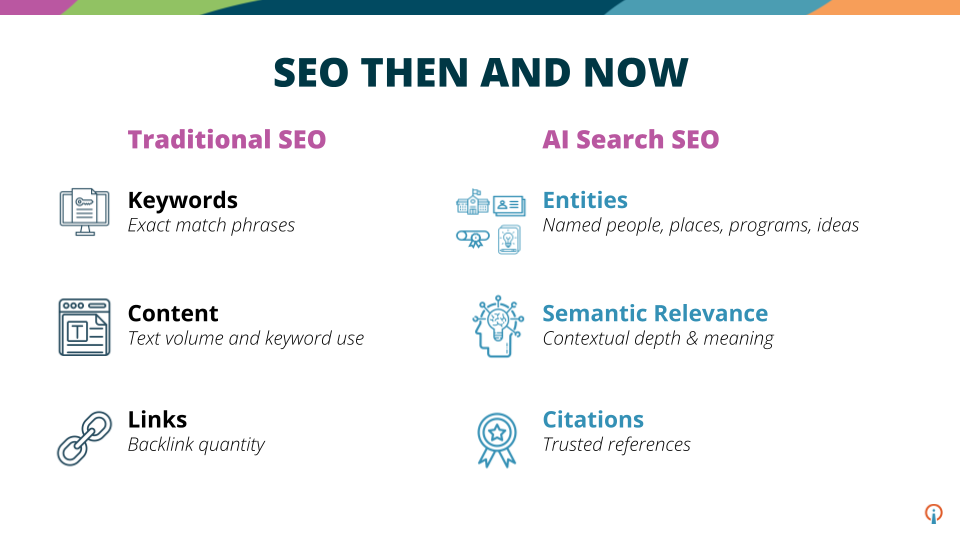
    SEO THEN AND NOW. Traditional vs AI Search SEO

    Traditional SEO is driven by ranking factors like exact-match keywords, content volume, and backlinks. AI search SEO takes a different approach, one that aligns with how artificial intelligence models gather, interpret, and present information.

    Instead of keywords, it prioritizes entities: clearly defined people, programs, places, or concepts that AI can recognize and connect across sources.

    Rather than focusing on content volume, it values semantic relevance: how well your content reflects user intent and contextual meaning.

    And instead of relying solely on backlinks, it rewards citations: trusted references that help AI validate your authority.

    Some refer to this evolving strategy as Generative Engine Optimization (GEO). At Search Influence, we prefer AI SEO or AI search SEO, because it’s still SEO, just built for visibility in the next generation of search.

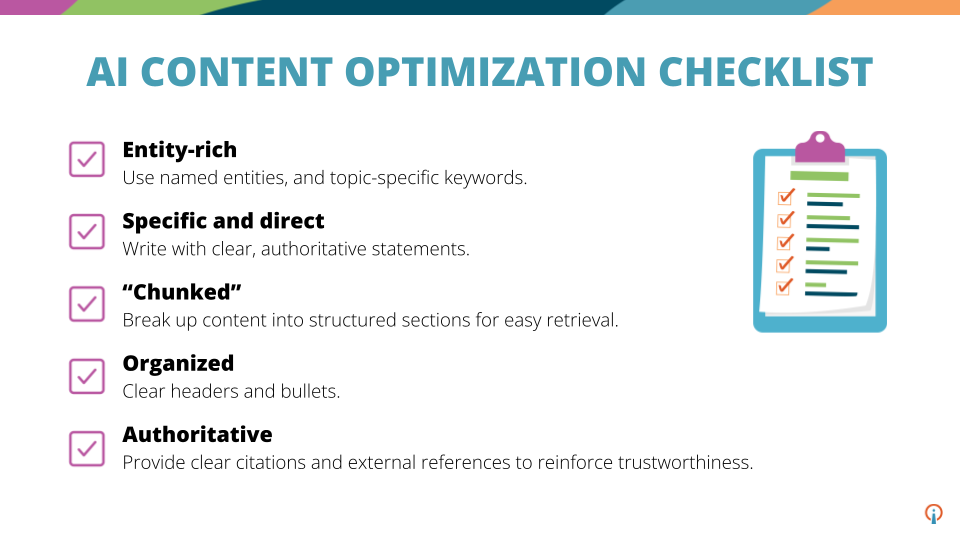
    AI Content Optimization Checklist

    Improving visibility in AI-driven search

    How can you make your content entity-rich?

    The more your content aligns with how entities are framed in trusted sources, the better chance you have of being included in AI-generated responses.

    To show up in AI-powered search, your content needs to be entity-rich. That means using clear, recognizable references to your university, schools, programs, and related topics, so AI knows exactly what you’re talking about.

    But getting there takes more than keyword tools. You need to look at the places where entities already “live,” like Wikipedia.

    For example, if you’re trying to rank for higher education, it helps to know that Wikipedia actually treats that as part of a broader entry: tertiary education. Inside that page, you’ll also find related concepts like continuing education and vocational education, all tied to the same entity. In this example, you can use structured data and clear language to help AI connect your content to those recognized ideas.

    Why is schema markup important for entity optimizations?

    A traditional SEO tactic, schema markup is a type of behind-the-scenes code that helps search engines understand your content and relate it to the right entities.

    It’s not visible to site visitors, but it gives AI extra signals about your content’s topic and structure.

    While it’s still unclear how directly AI tools use schema, we know it plays a key role in organic search, and strong organic signals are still one of the best ways to boost your website’s visibility in AI results.

    On university websites, schema can clarify who you are, what you offer, and how different pieces of content relate to your institution. It helps reinforce entities like your university name, academic programs, and faculty, especially when paired with clear language on the page.

    Some helpful types of schema include:

    • Article schema: Tells AI the headline, description, and type of content
    • Publisher schema: Links content back to your institution as the source entity
    • SameAs schema: Connects your content to other relevant entities and concepts across the web

    There are also education-specific options, like EducationalOrganization and Course schema, that help AI connect your site to topics like higher education and online learning.

    How do you optimize for semantic relevance?

    AI-driven search engines and tools prioritize meaning over keywords. To stay visible, your content needs to reflect how real people think, search, and ask questions.

    1. Write with intent: Answer specific questions, connect related topics, and provide helpful context, even if you’re not writing in a Q&A format. This shows AI your content is built to inform, not just rank.
    2. Keep it chunked: Use short, focused blocks of around 170–200 characters. That’s how information appears in AI Overviews and featured snippets, and it increases your chances of being included.
    3. Prioritize structure: Use clear headings (H1s, H2s) and make sure your page titles say exactly what the content delivers. When your content is easy to scan, it’s easier for AI to understand and surface in results.

    How can you use semantic triples to make your content more findable?

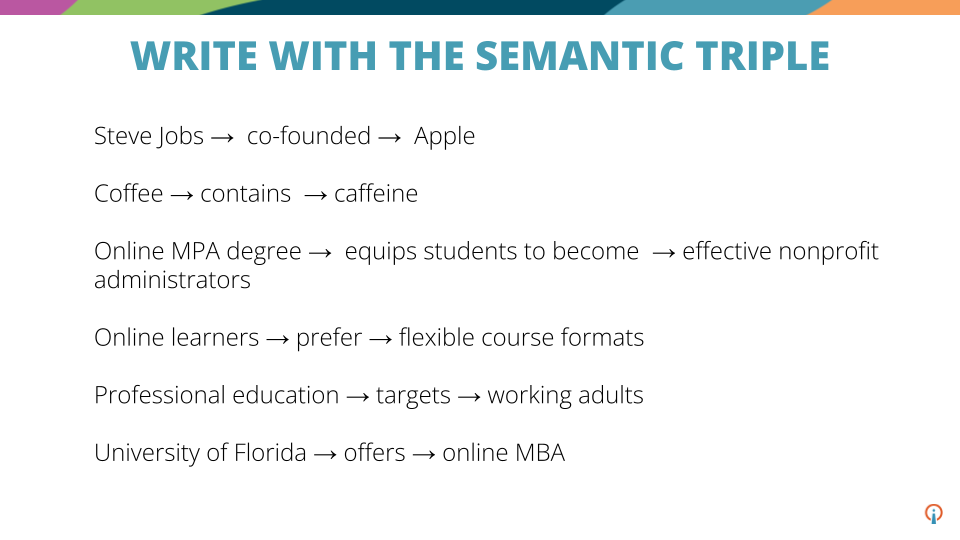
    Write with the Semantic Triple
    Semantic triples are foundational to AI-powered search. From Google’s Knowledge Graph to AI Overviews, these tools rely on clear, structured relationships to understand what your content means and when to surface it.

    Each semantic triple follows a simple format: subject → predicate → object.

    For example:

    University X → offers → a nationally ranked online MBA
    That MBA → leads to → career advancement for working professionals

    This structure helps AI connect the dots between your institution, your programs, and the outcomes students care about. The more often these relationships appear, both on your site and across trusted sources, the more likely AI is to recognize your relevance and elevate your content in search.

    To use semantic triples effectively:

    • Identify the core relationships in your messaging (Who? Does what? Why does it matter?)
    • Express those ideas in short, direct statements, especially in headings, intros, and metadata.
    • When possible, link related triples together in a way that still sounds natural to readers.

    For instance, you can combine two triples into a persuasive sentence:

    University X offers a nationally ranked online MBA that leads to career advancement for working professionals.

    This kind of structure isn’t just good writing. It’s exactly what AI is built to understand.

    What are citations in SEO, and how do they help AI understand your authority?

    Citations (mentions of your institution, programs, or people across the web) help AI connect your brand to the topics you want to rank for.

    These references don’t always need to be clickable links. What matters is consistent, contextual mentions in trusted places.

    AI-powered search engines look for co-occurrence, which is how often your name appears near relevant terms on authoritative sites. These mentions could come from news articles, faculty bios, higher ed directories, speaker bylines, or awards listings.

    The more often your institution is tied to specific keywords or subject areas, the more likely AI is to recognize you as an authority.

    To strengthen your citation signal:

    • Choose a consistent, “locked-in” phrase that reflects your niche (e.g., top-ranked online business program).
    • Use it in boilerplate descriptions, press releases, faculty bios, and guest content.

    However, citations work both ways. When your site links out to reputable sources, it shows AI that you’re part of a trusted information network. Referencing government data, academic research, or respected media outlets adds credibility and helps AI understand the context of your content.

    Where can you build citations?

    There are plenty of places to earn citations — if you know where to look.

    Some require cross-team coordination, while others are quick wins you can act on immediately. The key is to show up consistently in trusted, topic-relevant spaces.

    Ideas include:

    • Online directories like Niche, Peterson’s, and BestColleges
    • Media coverage in outlets such as Inside Higher Ed, The Chronicle, or local press
    • Alumni stories and features on industry-specific sites
    • Conference speaker bios and event listings
    • Professional associations like UPCEA, GMAC, and CIC

    Tools for tracking AI search performance

    What are the best tools to track your visibility in AI-powered search?

    Despite popular belief, it is possible to track your AI SEO performance. New tools are emerging fast to meet that demand.

    At Search Influence, some of our top picks include Scrunch, RankScale, and Profound. These platforms offer insights tailored specifically to AI-powered search, helping you understand how your content is being surfaced in tools like Google’s AI Overviews or ChatGPT.

    Other helpful tools include:

    Some platforms focus on surface-level AI visibility metrics, while others dive deeper into entity tracking, co-occurrence analysis, and content structure. The right tool for you ultimately depends on your goals, budget, current tech stack, and reporting needs.

    Q&As From the Webinar

    If you’re a resource-strapped institution, what’s the most important place to start?

    Many academic websites are weighed down by long, unbroken blocks of text. Start by structuring your content in semantic-friendly chunks.

    Chunking your content is one of the simplest, highest-impact ways to improve visibility, especially when time and resources are limited.

    By breaking that content into clear sections, with meaningful headers, concise paragraphs, and scan-friendly formatting, you improve readability for users and make it easier for AI to understand and surface your content.

    Is there a limit to how many external links you should include, or does it depend on the content?

    It depends on the type and length of the content.

    For shorter or more narrative-driven pieces, you may have fewer opportunities to link out. In those cases, it’s better to focus on clarity and flow than forcing in links.

    More external links can be valuable for technical, research-based, or program-specific content, especially when pointing to trusted sources that support your claims.

    If there’s relevant data, industry standards, or authoritative context available off-site, link to it. Just make sure every link adds real value and helps AI understand the credibility and depth of your content.

    How do paid search ads influence AI SEO?

    Paid search doesn’t directly impact how your content is pulled into AI-generated responses, but it can still play an important supporting role. It’s still important to bid on your branded terms. Even if your content appears in an AI-generated answer, paid search helps you control what users see and where they land next.

    There are two layers to how AI search tools work today:

    • LLMs generate responses based on pre-trained data.
    • RAG systems ground those responses in real-time web content pulled from traditional search indexes.

    That means traditional search ranking signals still matter, including engagement metrics like time on site, click-through rate, and user behavior. And that’s where paid search comes in.

    Paid ads can boost visibility and drive more engagement with your content. In turn, that engagement feeds into ranking signals, making your site more likely to be included when AI systems pull from live search data to shape responses.

    There’s another layer to consider: In tools like Google’s AI Overviews, when users click on suggested links, they’re often sent to a follow-up Google search, not directly to your website.

    The first thing they see? Your paid search ad, if you’re running one.

    Why Partner With Search Influence

    Search Influence can help protect your student pipeline with AI SEO strategic and Practical Support

    SEO is evolving fast. If your institution wants to stay visible as search engines shift toward AI, your strategy needs to reflect how search works now, not how it worked five years ago.

    At Search Influence, we help colleges and universities take practical steps to improve visibility, increase qualified traffic, and support enrollment goals amidst emerging trends. We’ve spent nearly two decades working with higher ed teams to turn complex websites and limited bandwidth into measurable results.

    We’re here to help you where it makes the most sense, whether that’s full-service execution, in-house team support, or a hybrid approach.

    Ready to explore what’s possible? Book a call with our team, and let’s talk AI search optimization strategies for your institution.

    More resources for higher ed marketers

    • SEO Research Study: Our original research with UPCEA on how colleges and universities are approaching SEO, including gaps, priorities, and benchmarking data you can use to advocate for strategy updates.
    • SEO Roadmap: A done-for-you strategy (updated for AI search) that focuses on one top program or degree. Built by our team, this roadmap delivers a clear, prioritized plan you can implement over three months, covering keyword strategy, technical updates, content improvements, and authority-building tactics.
    • SEO Workbook: A guided, do-it-yourself resource that helps you uncover site issues, understand your authority, define keyword priorities, and more. You’ll walk away with at least three months of actionable SEO tactics your team can put into place immediately.

    Missed the Webinar? Watch the Replay

    If you want to see the full conversation, including live examples, audience Q&A, and deeper discussion from our panel, watch the complete recording of “SEO for AI Search: Protect Your Student Enrollment Pipeline” on YouTube.

    Whether you’re building your strategy from the ground up or refining what you already have, the full session will give you the clarity, context, and insights you need to make smart decisions in the age of AI search.

  • AI in Higher Education: UPCEA Conference Takeaways to Improve Your SEO Strategy

    AI In Higher Education: Search Influence Insights to Improve SEO Strategy

    This post was updated by Ren Horst on April 16, 2025 following this year’s conference. It was originally published on March 18, 2025.

    Key Insights

    • At the 2025 UPCEA Annual Conference, speakers emphasized that higher ed marketers need to adapt their strategies to keep up with changing search behaviors, rising student expectations, and evolving enrollment trends.
    • With more students relying on AI and social platforms to answer queries, strategic SEO keeps institutions searchable, relevant, and competitive.
    • Whether institutions decide to manage SEO in-house or work with an agency depends on the team’s size, skills, and available time, especially if SEO isn’t a core focus.
    • To create better student onboarding, institutions must use retention data to understand early disengagement and support lasting learner success.

    This past March, Search Influence headed to Denver, Colorado, for the 2025 UPCEA Annual Conference.

    Paula French (Director of Sales and Marketing), Jeanne Lobman (Director of Operations), and Will Scott (CEO and Co-Founder) hosted a booth and discussed the state of higher education marketing, with a focus on AI’s impact on SEO and student recruitment. 

    Paula also led two speaking sessions on emerging SEO trends, while Jeanne moderated a panel on using retention data to improve onboarding. Each presentation explored the most pressing marketing insights institutions need to stay ahead in 2025 and beyond.

    In case you missed it, here’s your recap of our high-impact sessions at the AI in higher education conference.

    “2025 Recruitment SEO Trends: Strategic Solutions to Emerging Challenges”

    Presenters: 

    • Paula French, Search Influence
    • Liz Turchin, University of Minnesota College of Continuing and Professional Studies

    During this roundtable session, Paula and Liz discussed how changing search behaviors are reshaping recruitment strategies in higher ed. With Google’s AI Overviews and social platforms playing a growing role in how students research institutions, many schools must rethink how (and where) they show up online.

    The conversational format allowed marketers to share challenges, exchange ideas, and dig into what’s actually working. Paula highlighted emerging SEO trends and shared guidance for leading internal conversations that help marketing teams adapt. 

    She also emphasized the importance of aligning SEO, paid search, and social efforts to increase visibility and keep prospective students engaged.

    To support continued SEO planning beyond the session, Paula introduced our SEO Workbook. This hands-on resource is designed to help higher ed teams assess their current strategy and prioritize tactics that support enrollment in today’s AI-influenced search world.

    “SEO: In-House or Outsource? That Is the Question.”

    Presenter: Paula French, Search Influence

    In this Industry Insights session, Paula addressed one of today’s most common challenges in higher ed marketing: deciding whether to manage SEO internally, bring in outside expertise, or go for a hybrid team

    As search trends continue to disrupt how prospects discover and evaluate colleges, SEO is no longer a “nice to have.” It’s foundational. Effective SEO ensures your content ranks well, nurtures interest, and guides students toward the next step.

    Paula explained why every marketing touchpoint — ads, social media, email, and conferences — ultimately leads prospects back to your website. If your site isn’t well-optimized, you risk losing them before they even make it into your funnel. 

    To help teams choose between an in-house, outsourced, or hybrid SEO team, Paula shared a straightforward framework for evaluating capacity, skill sets, and goals. The session challenged institutions to be realistic about their resources and commit to an approach that ensures SEO isn’t just happening but actually making an impact.

    Not sure which SEO staffing model fits your team best? Take our SEO Quiz for quick, personalized recommendations to guide your in-house vs. outsource decision.

    “Is It Enough? Using Retention Data to Inform New Student Onboarding Practices”

    Presenters: 

    • Jennifer Murray, Fitchburg State University
    • Peter August, Fitchburg State University

    Moderator: Jeanne Lobman, Search Influence

    With more mid-career professionals entering graduate and continuing education programs, the question isn’t just how to recruit them, but how to truly support them from day one. 

    This session offered actionable ideas for using data to improve communication, set clearer expectations, and create more effective onboarding experiences that support engagement and retention.

    The discussion asked institutions to take a hard look at their onboarding processes: Are they assuming too much about new students’ familiarity with academic expectations, technology platforms, and graduate-level demands? Are current onboarding practices truly preparing students for success?

    With our Director of Operations, Jeanne, leading the discussion, the conversation focused on how retention data can, and should, inform onboarding strategies. The presenters emphasized that while retention is often viewed as a long-term outcome, it begins with a student’s earliest interactions. How well they’re welcomed, informed, and supported during onboarding directly impacts whether they stay and succeed.

    Top FAQs from the Higher Education Conference

    How will AI influence higher ed in 2025?

    AI is quickly changing how prospective students search for college information. Tools like Google’s AI Overviews (AIOs), Perplexity, Gemini, and ChatGPT are becoming common starting points for researching programs, requirements, and outcomes.

    These platforms generate quick summaries by pulling from multiple sources to answer user questions directly. While traditional rankings still matter, institutions may see reduced click-through rates if key information surfaces before a user ever reaches the organic listings. While this shift introduces new challenges, it offers new opportunities to stand out.

    AIOs and other AI search platforms often cite the sources they pull from. By creating clear, well-structured content that directly addresses common student questions, your institution can increase its chances of being referenced. Optimizing for AI search builds on your existing SEO efforts and positions your content to appear where students now begin their decision-making process.

    Is traditional SEO still important in the age of AI?

    Yes, traditional SEO is still important, and it also plays a direct role in how your content performs in AI-driven search experiences.

    AI platforms and tools don’t operate in a vacuum — they pull from existing content across the web and often favor sources that already rank well in organic search. In other words, the stronger your SEO, the more likely your content is to be cited in AI-generated summaries.

    Many strategies that support strong SEO also position your content for AI visibility. That includes writing clear, structured content, using descriptive headers and FAQs, and following E-E-A-T best practices. Optimizing for entities — such as specific programs, degrees, and locations — also helps AI tools understand how your content aligns with user queries.

    When paired with technical fundamentals like schema markup and clean metadata, these tactics help ensure your content remains visible across both traditional and AI-powered search experiences.

    How do I decide between in-house vs. agency SEO?

    The right approach depends on your team’s size, skill set, available time, and current SEO strategy’s performance.

    In her Industry Insights session at the AI higher education conference, Paula shared five key factors to help you evaluate the best approach for your institution:

    • Team size: Small teams often need full external support, mid-sized teams may benefit from a hybrid model, and larger teams with dedicated SEO roles can often manage more internally.
    • Search visibility: If your top programs don’t rank, or you’re unsure, that’s a sign your current approach needs attention.
    • What’s in place: Consider whether you have key SEO elements like target keywords, specialized tools, updated content, and performance tracking.
    • Specialized skills: Strong SEO requires technical, content, and analytical expertise, not typically found in just one role.
    • Time investment: In-house SEO takes time. Without 40 or more hours of internal capacity available per month, it may be more efficient to outsource.

    Still unsure? Our 5-question SEO Quiz takes the guesswork out of the decision. In just a few minutes, you’ll get personalized insights to help you optimize your resources and choose the path that best supports your university’s goals.

    What is a social search marketing strategy?

    A social search marketing strategy involves optimizing content to appear in search results on social platforms like TikTok, Instagram, and YouTube.

    An increasing number of prospects use these platforms as search engines, looking up programs, career advice, and campus experiences directly through social apps rather than Google. That shift makes it all the more important to create content that’s discoverable beyond traditional search.

    At the same time, social media content can also appear in Google search results, giving your institution even more visibility across platforms.

    Some tips for optimizing for social search include:

    • Creating engaging, keyword-friendly content native to each platform
    • Repurposing existing site content into short, shareable posts
    • Prioritizing video content, especially formats like Reels, TikToks, and YouTube Shorts

    The goal is to meet students where they’re searching and make sure your content is part of what they find.

    How are adult and online student recruitment strategies different than marketing to college-aged prospects?

    Adult and online learners often need more flexibility, clearer communication, and stronger onboarding support than traditional college-aged students. 

    Unlike traditional students, they’re often managing full-time jobs, families, and other responsibilities. Many are returning to school after time away, which means onboarding plays a critical role in helping them navigate systems, build confidence, and stay engaged early on.

    This focus has become even more critical as the demographic cliff reduces the number of college-aged applicants. To attract and retain adult learners, institutions must communicate clearly, offer accessible support services, and deliver learning options that fit their lives.

    Retention data can reveal where existing students struggle or disengage, whether due to unclear expectations, lack of support, or program inflexibility. By identifying those trends, colleges can adjust their recruitment messaging and onboarding strategies to better meet the needs of adult learners from the start.

    Build a Stronger Higher Ed Marketing Strategy to Drive Enrollment

    The 2025 UPCEA Conference highlighted just how quickly student behavior and the search environment are evolving. To stay competitive, institutions need marketing strategies that align with how today’s prospects search, engage, and make decisions.

    At Search Influence, we work with colleges and universities nationwide to navigate this shift with strategies rooted in data, clarity, and long-term impact. A great starting point is our SEO Roadmap — an actionable plan designed to help you strengthen search performance for one of your most important academic programs.

    The roadmap delivers tailored recommendations for traditional search, AI-generated results, and emerging social search behaviors. It’s a strategic resource built to elevate your authority and visibility, refine your content, and drive meaningful enrollment outcomes. 

    See how the SEO Roadmap can help focus your efforts and reach more students today.

  • AI SEO Expert Will Scott to Deliver Zenith 2025 Conference Keynote

    AI SEO Expert Will Scott to Deliver Zenith 2025 Conference Keynote graphic

    Search Influence Co-Founder and renowned AI SEO expert Will Scott will headline the Zenith 2025 Marketing Conference with his keynote address, “AI Isn’t the End — It’s Your Next Beginning,” on Thursday, April 10, 2025, in Duluth, Minnesota.

    Having presented at past Zenith conferences, Will returns this year to offer fresh insights into harnessing AI technology to amplify your marketing strengths and position yourself ahead in an evolving digital landscape.

    About Will Scott’s Keynote

    In his keynote, “AI Isn’t the End — It’s Your Next Beginning,” Will will illustrate how marketers can leverage artificial intelligence to amplify their existing skills instead of replacing them.

    Will will offer actionable strategies for marketers to maintain their competitive edge in an increasingly AI-driven search world by drawing parallels between his personal journey of rebuilding after a health crisis and navigating the rapid evolution of AI technology.

    With extensive experience in integrating AI into SEO strategies, Will has been at the forefront of developing methods that enhance visibility and engagement through AI-powered tools. His insights reflect deep expertise in blending human creativity with AI-driven analytics, positioning marketers to excel in a technology-first environment.

    Read more of Will’s insights:

    Will Scott: A Leading Voice in AI SEO

    Will is internationally recognized as a trailblazer in digital marketing and AI SEO, known for coining the influential term “barnacle SEO” in 2008.

    Will co-founded the f SEO agency Search Influence with his wife, Angie, where he serves as CEO. Alongside building the business over the past two decades, Will serves as  faculty emeritus of LocalU. His extensive career has positioned him as a sought-after speaker at premier industry events, including Pubcon and SMX.

    His diverse professional background, including a degree in Architecture from Tulane University and background in higher education technology and online learning, informs his holistic perspective on problem-solving and strategic growth.

    About Zenith 2025

    Hosted by marketing agency Aimclear and the Duluth Area Chamber of Commerce, the Zenith Marketing Conference is celebrating its 12th year of empowering digital marketers.

    Zenith brings together forward-thinking marketing professionals to share innovative strategies and practical tools for driving revenue and boosting online engagement.

    Attendees will leave equipped to optimize their digital marketing efforts, from generating quality leads and maximizing social media reach to ensuring cost-effective marketing spend.

    Achieve Your AI SEO Potential

    Curious about the role AI SEO can play in your marketing strategy?

    Search Influence is your trusted AI SEO agency, ready to guide you through the opportunities and complexities of leveraging AI for digital marketing success.

    Get in touch with Search Influence today, and let’s start reaching the right audience, no matter where they are.