For online businesses that depend on customer reviews to improve visibility in local search, social media engagement has become even more relevant with companies like Yelp giving reviewers the option to seamlessly broadcast their Yelp reviews to Facebook and Twitter.
According to the official Yelp blog, any photos that reviewers upload to Yelp.com will also be included when sharing reviews for that business via Facebook Connect. Users also have control over which reviews they want shared and which ones they don’t.
So if your local search visibility matters, let your customers know how they can share their feedback of your business with all their Twitter and Facebook friends with a one-time signup at Yelp and watch your rankings rise.
Many clients ask what the point of an e-mail newsletter is and how it can help them grow their business. Will people read it? Will it clog up potential customer inboxes? How much is it?
There are several reasons I recommend e-mail newsletters. Not only do they provide free information, they are also one of the least expensive and most effective tools to draw attention to a site. Below are some additional advantages to implementing a company e-mail newsletter.
Stay in Touch
Stay in contact – Keep your business top of mind to your customers so that when they need a service you provide, they will contact you. Newsletters serve as a reminder to customers to come back to your site.
Develop relationships and trust – You become familiar to your subscribers. Familiarity encourages return visits and establishes customer loyalty.
Promotional tool – A great way to communicate new products and announce new services. Specials or discounts are a way to attract customers back to your site. Offers entice subscribers who may not necessarily need the service but will be prompted to act during a special.
Increase site traffic – Again, good to send out when launching a new product or service. Gives subscriber a reason to visit the site, helping drive additional traffic .
Set specific delivery time – Complete control of when information is disseminated.
Trackable – Use the newsletter as a research tool to see what people read about most and what they are most interested in hearing about. Research will allow you to write a newletter for a specific target audience.
Provides immediate results – Real time statistics and data provide you with the information needed to evaluate the effectiveness of the newsletter. Tweak future newsletters from that information.
When developing your newsletter consider the following:
Content has to engage readers. Articles should be more informative and less like an advertisement.
Keep articles brief.
Use images to attract reader’s attention.
Use links and provide URL’s as additional resources.
Frequency is key. Stick to a regular schedule. Try to send out same time every month or week.
So if you are looking for a cost efficient way to target and reach a large group of customers or potential customers, consider an e-mail newsletter.
I have most recently become a fan of “ProBlogger”, Darren Rowse. His website problogger.net contains rich insight and useful tips that can be used by both a blogger newbie up to a more seasoned one. I have found that his suggestions transcend to Internet Marketing and are easily applied to one of our favorite topics – increasing site traffic.
We always want our clients to have a steady increase in website traffic, the reality is that there will be occasions when a dip may occur. A recent post published by Rowse offers explanations and suggestions to better understand declines in blog, or in our case, website traffic, 6 Reasons Your Blog Traffic Might Be Declining [And What to Do About It].
I found this post especially helpful as I am always monitoring my Client’s website traffic and I don’t ever like seeing lulls occur. So instead of fretting when I see a dip I can use this post as a check off list. There will be certain factors that we can take control of and improve to boost traffic and others that will just have to run their course before we can once again increase site traffic.
Facebook far exceeds the other major social networking sites in popularity and value, because it has the most loyal users, states a new social media study by Anderson Analytics. According to the news report, Facebook members were the most loyal among regular users of the four major social networking service (SNS) destinations – Twitter, MySpace and LinkedIn being the other three.
Staying Connected
Facebook is used by many people to share photos, post updates and keep in touch with family and friends, especially by the older population. The site launched Fan Pages in November 2007 to give brands and celebrities an official presence on Facebook.
Many companies and celebrities use Facebook to create profiles or share widgets for brand-building and promotion. Fan pages of celebrities like Barack Obama and brands like Coca-Cola and Nutella now attract millions.
Facebook is also helping brands and celebrities promote their pages by introducing features and widgets like the “Facebook Fan Box,” that can be embedded into web sites allowing businesses and celebs to better interact with their fans.
Social media experts recommend fan pages as a cost-effective way to engage with raving fans of your business. But to work well, they should ideally be setup professionally, kept interesting, and updated regularly with useful content and promotions that keep users coming back for more.
Social media experts like Mari Smith and Dan Schwabel recommend that businesses can earn more brownie points and attract more fans to their Facebook page by
• Being authentic and engaging
• Offering fresh and exclusive content
• Getting a vanity URL
• Controlling your page
• Holding contests and promotions
• Engaging with fans
• Promoting your causes
• Buying social ads
I have most recently become a fan of “ProBlogger”, Darren Rowse. His website problogger.net contains rich insight and useful tips that can be used by both a blogger newbie up to a more seasoned one. I have found that his suggestions transcend to Internet Marketing and are easily applied to one of our favorite topics – increasing site traffic.
We always want our clients to have a steady increase in website traffic, the reality is that there will be occasions when a dip may occur. A recent post published by Rowse offers explanations and suggestions to better understand declines in blog, or in our case, website traffic, 6 Reasons Your Blog Traffic Might Be Declining [And What to Do About It] .
I found this post especially helpful as I am always monitoring my Client’s website traffic and I don’t ever like seeing lulls occur. So instead of fretting when I see a dip I can use this post as a check off list. There will be certain factors that we can take control of and improve to boost traffic and others that will just have to run their course before we can once again increase site traffic.
Lately I have been doing a lot of research on landing page strategy and as I read about what not to do and what you must do, I think someone needs to break it all down into a simpler form. Where are we going wrong, maybe it’s all just too much? Make it simple. All you need are these 5 things arranged properly and it is most likely going to perform better than what you are using now:
Coming in for a smooth landing
1.) Your Company Logo clearly marked in the top left corner of your landing page.
Your company logo is your brand and it is what is going to clearly connect your landing page to your website. You do not need or want the exact navigation that exists on all of your web pages, it offers too many distractions and takes up too much room, most likely forcing the more important information (the Form) below the fold.
2.) The only content needed is a few credible and useful facts that must satisfy the users search inquiry.
Display this text concisely using bullet points. The messaging should match the ad copy and try to use relevant keywords. Only add relevant images that will enhance the users intent to take action. Do not use stock photos for design because it will likely distract the user from the intended action.
3.) Make the point of your page loud and clear with clear and obvious calls to action.
To be golden be loud and clear
If you want the user to fill out the form or call a number don’t make it difficult for them. Add the phone number clearly in the top right of the page. Add a visible contact form that is above the fold, and does not ask irrelevant questions like “how did you hear about us?” Since, we can track all of our leads in analytics, we do not need to ask this question, so don’t ask it!
4.) Add your credibility symbols above the fold.
This is very important, because the users need to immediately see a reason to trust your brand, if they do not see it right away, they will not scroll to the bottom of the page, but they will hit the back button to find it somewhere else.
Visible trust symbols are also very important for the ad copy. For example many of our client’s are plastic surgeons, and we cannot say, “board certified” in the ads unless it is proven on the landing page.
5.) Offer links to more information or to other pages on your website.
Link to the website at the top and the bottom of the landing page and from your logo. Add “read more” links to your bullets points, which will allow the uses to find more information. Remember you do not want to use too many links out because this will distract them from the purpose of the page, but not using any, the user will use the back button and navigate off the page, which is the last thing you want to have happen.
Everyday we get emails about online, marketing webinars. “How to increase your ROI on the web”, “Why you need to supplement your campaign with PPC”, “Why do trains no longer have cabooses”. It’s endless!
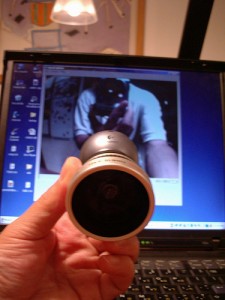
Fisheye Webcam – Don't try this at home
As a website promotion company we get requests for all manner of online marketing services and I was given a task of creating and broadcasting a marketing webinar for one of my clients.
My first thought was, “Oh cool- a webinar. This should be interesting.” My second thought was, “holy crap, I have never done this before.
Webinars are like – LIVE. Where do I start? I knew this gig would get me into trouble. My mind was racing in every direction and I was off to create my first webinar, with the help of my trusty team.
Here are a few items that I learned along the way (that I wish I had known before). They may be obvious to some, and even if that’s the case I encourage you to continue reading. Maybe there is a glimpse of something that may help you in the future.
Create a Topic: Webinars are very “in the moment,” so make sure your topic is relevant to “now.” Make sure you can speak intelligently on the topic – your audience is expecting an expert in the broadcast.
Develop a Webinar Wish list:
Do you want to:
Show a PowerPoint
Have Live Video
Poll Participants
Have an Interactive Q & A
Stream existing video
The list could be endless, but remember this is a “WISH LIST” so list everything you want your webinar to do – EVERYTHING.
Research Marketing Webinar Platforms: There are numerous webinar platforms. Price points vary from free (for up to so many users), to affordable, to very expensive. Some require a download onto the computer, while others are streamed through the web. Some provide live video, some don’t, etc., etc.How to decide? Go back to the wish list and get to testing. Which platform achieves all (or the majority) of the objectives on your wish list? If you find this platform and it’s in your budget – sign up and thank your lucky stars! If you are having trouble achieving your wish list, decide which areas you are willing to budge on and what is necessary?
This step requires testing, testing and more testing. Eventually you will hash out the best program to achieve your main objectives and fit your budget.Also, don’t forget the awesome information resource of the web. Check out blogs and articles on webinars. They can provide useful, honest feedback about other peoples experiences with the different platforms.
Create an Outline: Begin organizing the webinar. The process is completely relevant to your topic and your speaker. Is your webinar interactive? If so, where do these portions go in the agenda? Will you have one Q&A or two? Where will the online polls be located and how many are needed? How and who is introducing the speaker?The outline should stay active as it can change throughout the entire process depending on testing outcomes, which platform you use, how many people sign up for your webinar, etc.
PROMOTION: This is HUGE! A webinar is not really effective unless you have an audience – otherwise you would be talking to yourself (not cool). There are many ways to promote offline (fliers, radio, word of mouth), but being a huge proponent of the web, here are a few ways to promote online Remember that some of these (i.e. Twitter/Facebook) will need a previous following to be effective.
TEST: Test and test and test until you can’t test anymore. A live webinar is a one shot deal. You get one shot to make it or break it. You want to have everything down pat before the big moment where you are broadcasted across the World Wide Web. Think about it – you could have 3 viewers or 3,000, but the webinar reputation could go from 0 stars to 5 in an instant with just a little positive feedback online. You want to NAIL it.
Like I mentioned above, those are just some preliminary things that I learned while preparing for my first webinar. Oh, another piece of advice – watch as many other webinars as possible. This will give you ideas on how to make yours more successful. My parting words- Good Luck!
—
Web cam image courtesy of Flickr user: rafael_mizrahi Bush experiment image courtesy of: Reprise Media blog
In conversation one day, I mentioned to Will that for what we charge some of our clients, I can put a real value on it when I compare it to yellow pages spending. And what I mean by that is for what a plastic surgeon or a dentist or a wedding photographer might pay for a large display ad in their local yellow pages, they could be spending the same or less in search engine optimization (SEO – Organic Search) / search engine marketing (SEM – Paid Search) and getting so much more return on investment for their marketing budget.
Orlando Plastic Surgery Yellow Pages Ads
I worked in the yellow pages industry for just short of 10 years at a CMR, Certified Marketing Representative, where all of my clients were national clients in multiple markets. So I’ve spent a full decade of my life working in the yellow pages industry, which is not a glamorous media, but at one time it was incredibly profitable for clients based on their return on investment (ROI). That ROI in yellow pages is now dropping dramatically with every year because of the overwhelming competition from internet for media dollars.
It is in the yellow pages industry where a lot of tracking techniques were started. I can’t tell you how many tracking phone numbers I have set up and used in a yellow pages ad. And given a client’s number, had to track a very real ROI each month based on the calls made.
I have organized split run comparisons where we run 1 ad in half of the distribution area of a phone book and another ad in the other half of the distribution area, and then sit back and watch the tracking phone numbers data.
When Will first asked me to work with his company, Search Influence, I hesitated – I mean what did I know about search engine optimization?!?
It turns out, it’s a lot of the same stuff. Getting our clients in the right directories, listed under the right categories, tracking incoming calls, proving value …
It is this last, “proving value,” that is the most telling. Knowing what a large display ad costs in the yellow pages which a lot of our clients would have been doing 10 years ago, and comparing it to what Search Influence charges for SEM and SEO, I realize that the value is definitely in the internet.
In yellow pages, a plastic surgeon might buy a full page or a half page ad for a large percentage of their annual advertising budget. In some larger metro markets, this can easily reach up to $100,000.00, over $8,000.00 each month, with a yellow pages industry average of 5% increase each year.
This gets the surgeon an ad that is in print for a year, and that’s what you get. Hope that people pick up the fat book shoved in the back of the cabinet, find the heading, (not under “Doctors,” not under “Physicians & Surgeons-Cosmetic Surgery,” but buried under “Physicians & Surgeons-Plastic & Reconstructive Surgery”) and choose your ad to call.
Most people today are already in front of the computer for work. They just type it in exactly what they want, no digging, “Plastic surgery Houston“. It’s too easy to use the internet.
The internet is a living, breathing medium. For the same amount of money or, amazingly, much less in some big metro markets, SEO actively finds the people searching for your product.
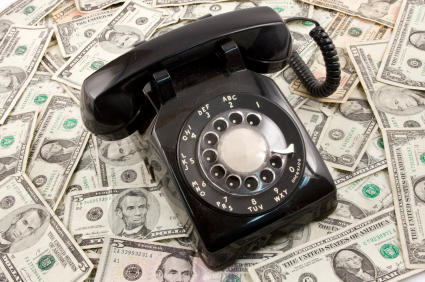
Ringing Phone = Profits
Changes can be made daily or hourly for specials and promotions. Yellow pages ads are in print for 12 months.
Tracking is not limited to phone number tracking – we can find which pages are working and which pages users are most likely to leave the site on, edit some graphics and compare the traffic patterns week to week instead of year to year.
The average yellow pages display ad attracts over 440 calls per year (Source: YPPA Media Impact Study, 2004). Search Influence has many client sites with thousands of visits each month, with hundreds of contacts each month.
Businesses are moving their marketing dollars to the internet from yellow pages more and more every day because it’s smart money spent. I mean I don’t want to glorify SEO for more than it is, but dollar for dollar, internet marketing gives so much more impact for money spent by bringing in real customers.
I did a very informal survey which I think sums up America’s use of their phone books. Here are some responses to “Where is your print phone book?”:
“I may have thrown it away, if I have it, it is in the pantry.”
“I threw out the new ones.”
“I saw it this weekend when I was trying to make room (in the kitchen cabinet)”
“I don’t have one.”
Another, “I don’t have one.”
Of course, my survey of 5 people may not be fair because I did only ask people who sit in front of a computer all day, and so I ask, do you know where your phone book is?
GNODRP ("No Drip") Greater New Orleans Disaster Recovery Partnership
“No Drip” (GNODRP) – Hurricane Preparedness and Hurricane Recovery Partnership
Greater New Orleans Disaster Recovery Partnership (GNODRP)
Formed in November of 2005
Gulf coast residents know all too well what June – November mean: Hurricane Season!
Thankfully all has been calm out in the ocean water but that does not mean New Orleans isn’t engaged in serious preparation. The Greater New Orleans Disaster Recovery Partnership (GNODRP) pronounced “no drip’ is just that. In the coming months the greater New Orleans area will need to be on guard and preparing for tropical storms and hurricanes. GNODRP offers services to help the community prepare before a disaster and to recover after. GNODRP is also working in many ways with people still recovering from hurricanes Katrina and Rita.
The Mission of the Greater New Orleans Disaster Recovery Partnership (GNODRP) is to regionally support long-term recovery and preparedness.
What You Should Know Now
The GNODRP is working on two large projects that benefit the greater New Orleans area.
RECOVERY SUPPORT: GNODRP provides long-term recovery support to victims of Katrina and Rita. The number of people still needing recovery is extensive and GNODRP wants to get the word out that they’re here to help.
FUTURE DISASTER PREPAREDNESS: GNODRP will be serving as the central point of contact for nonprofit organizations for preparedness and recovery efforts of future disasters. GNODRP will serve as the leader in organizing nonprofit recovery efforts in the event of a future disaster. Referred to as Greater New Orleans Voluntary Organizations Active in Disaster (GNO VOAD)
Hurricane Katrina Satellite Image
Who and What GNODRP Serves
GNODRP currently has 7 member parishes: Jefferson, Orleans, Plaquemines, St. Bernard, St. Tammany, Tangipahoa, Washington & the River Parishes: St. John the Baptist and St. Charles.
GNODRP offers services to aid in the disaster recovery process, these include but are not limited to rebuilding and repairing homes, case management, advocacy, emotional and spiritual care, donations collection and distribution, preparedness and volunteer coordination.
Through the GNODRP Donations Warehouse Program, rebuild agencies and case management agencies can pick up furnishings and materials on behalf of clients still in need of recovery. The materials are donated from a hodgepodge of sources. The partnerships that GNODRP has are extensive.
Who Is Involved?
GNODRP is made up of a coalition of over 70 organizations who give support by meeting community needs in the recovery process that have gone un-met by other sources The coalition is made up of faith-based, non-profit, government liaisons and long term recovery organizations.
A full list of member agencies and resource partners can be found by click the corresponding link. Some representative members include the United Way of New Orleans, the Red Cross and Catholic Charities and there are many more.
How You Can Get Involved
The GNODRP is always looking for people and organizations to join in their effort to collaborate and share resources. There are many ways to support GNODRP some include putting your name on the mailing list, signing up to volunteer, or making a donation. GNODRP is looking for many skill sets including social services, construction expertise, grant writing, PR, and most of all friendly and passionate people who want to make a difference in the local community.
For more information about GNODRP and to get Involved visit their site at: http://www.gnodrp.org/