Author: Search Influence Alumni

  • 5 Medical Professionals Who Use Twitter Effectively and What You Can Learn from Them

    With 319 million people on Twitter and 100 million daily users, it’s clear that this social media platform offers huge potential for growing a medical practice. For doctors striving to attract more patients, 42% of individuals viewing health information on social media look at consumer reviews to guide their medical decision-making. For doctors aiming to spread medical knowledge online, 60% of consumers say they trust the information in doctor’s posts—almost twice the number of people who trust information from pharmaceutical companies. And these numbers are expected to grow, as 18–24-year-olds are over two times as likely as 45–50-year-olds to use social media for health-related discussions.

    Yet, in spite of Twitter’s huge potential, it can be difficult for physicians to justify taking time away from patient care to focus on social media. In the medical industry, it’s especially important for tweets to reach the most people possible in as little time as possible so that doctors can spend less time on marketing and more time on medicine.

    Check out five of the most successful doctors on Twitter for some great inspiration and examples.

    1. Dr. Mehmet Oz

    Handle: @DrOz

    Followers: 4.05 million

    Before you write off Dr. Oz as more television host than medical professional, consider this: He has more followers than any other doctor on Twitter. While Oprah certainly helped him gain this following, he couldn’t keep it if he wasn’t engaging his followers with the media they find valuable. Dr. Oz knows what his audience wants to read, and he regularly posts health tips, news, and advice catered to this demographic. Check out Dr. Oz’s tweets for examples of medical articles you can share to engage your own following.

    2. Dr. Kevin Pho

    Handle: @kevinmd

    Followers: 151,000

    Unlike Dr. Oz, Dr. Pho rose to social media stardom largely through his own savvy use of integrated digital marketing. While he also regularly posts engaging articles, with topics ranging from science to politics to personal health journeys, much of this media comes from his own blog. Dr. Pho also publishes many posts written by guest bloggers, which not only cuts down the time required to maintain an active social media presence but also offers a great opportunity to collaborate and network with other doctors online. Visit Dr. Pho’s Twitter and blog for a great example of an integrated marketing plan.

    3. Dr. Joseph Kim

    Handle: @DrJosephKim

    Followers: 31,000

    If you’re worrying because Dr. Oz and Dr. Pho share a lot more personal stories than cold, hard science, never fear! Dr. Kim proves that you can take a largely academic approach to social media and still become a Twitter star. His posts strike the perfect balance of career resources and medical studies, appealing to both doctors and patients. Check out Dr. Kim’s twitter feed for strong examples of how to post academic information while still keeping your following engaged.

    4. Dr. Mike Sevilla

    Handle: @DrMikeSevilla

    Followers: 26,000

    Much more than the other doctors on this list, Dr. Sevilla projects a goofy, jovial personality into his tweets. He makes Family Medicine seem friendly and approachable, posting kooky holiday selfies and words of encouragement for residents going through the stressful match process. He is also a generous re-tweeter, interacting not only with other online physicians but also with local news and fundraising organizations. Scroll through Dr. Sevilla’s posts to see how to have fun with social media while still maintaining the knowledgeable persona of a physician.

    5. Dr. Val Jones

    Handle: @drval

    Followers: 25,800

    Women make up roughly 1/3 of all physicians in the United States, but they are underrepresented among the top doctors on Twitter. Nevertheless, Dr. Jones has fought her way to the top as a prolific author and lecturer, as well as the founder of Better Health, LLC, one of the largest networks of medical bloggers. Like Dr. Pho, she offers a great example of an effective integrated marketing plan, using her tweets to drive traffic to her blog and other writings, and her writings to provide engaging content for her Twitter following. Check out Dr. Jones’s Twitter feed and blog for examples of how to use social media to build on your professional accomplishments.

    Top Takeaway

    While these five physicians are great sources of inspiration, it can seem daunting to apply their successes to your own practice. If Oprah doesn’t introduce you to daytime television, where do you start?

    One main takeaway from successful physicians on Twitter is targeting the right demographic. Dr. Sevilla runs a Family Medicine practice, so his ideal audience includes parents and young children. Therefore, a friendly, goofy personality is appealing. No parent wants to bring her kids to a stern, intimidating doctor. Dr. Oz, on the other hand, is more interested in an audience that watches his daytime television show. Thus, his posts feature more “popular science” topics, such as popular diets or healthy recipes.

    The good news is you can easily apply this strategy to your own practice. As an expert in your field, you know what topics would interest your target demographic, be it low-sodium snack suggestions for dialysis patients or skin care tips for dermatology patients. So, post about it!

    With your target demographic in place, you are well equipped to take the next steps in growing and maintaining your Twitter following. Like the successful physicians in this post, you can collaborate online with other medical professionals, or write relevant, engaging blog posts to share on Twitter as part of an integrated social media marketing campaign.

    If you don’t want to go through this process alone, we can help you there as well! For a do-it-yourself approach, download “Up Your Social Media Game With This Handy Reference Guide.” It’s an infographic to equip you with insights into which social media platform and what time of day would be most effective for targeting your ideal demographic. For a more assisted approach, see how our social media services can help you.

    Happy tweeting!

    If you don’t want to go through this process alone, we can help you there as well! Contact an expert from our team today.
  • Meet Amy Cannon, Our Hardest Working Woman in New Orleans Contest Winner!

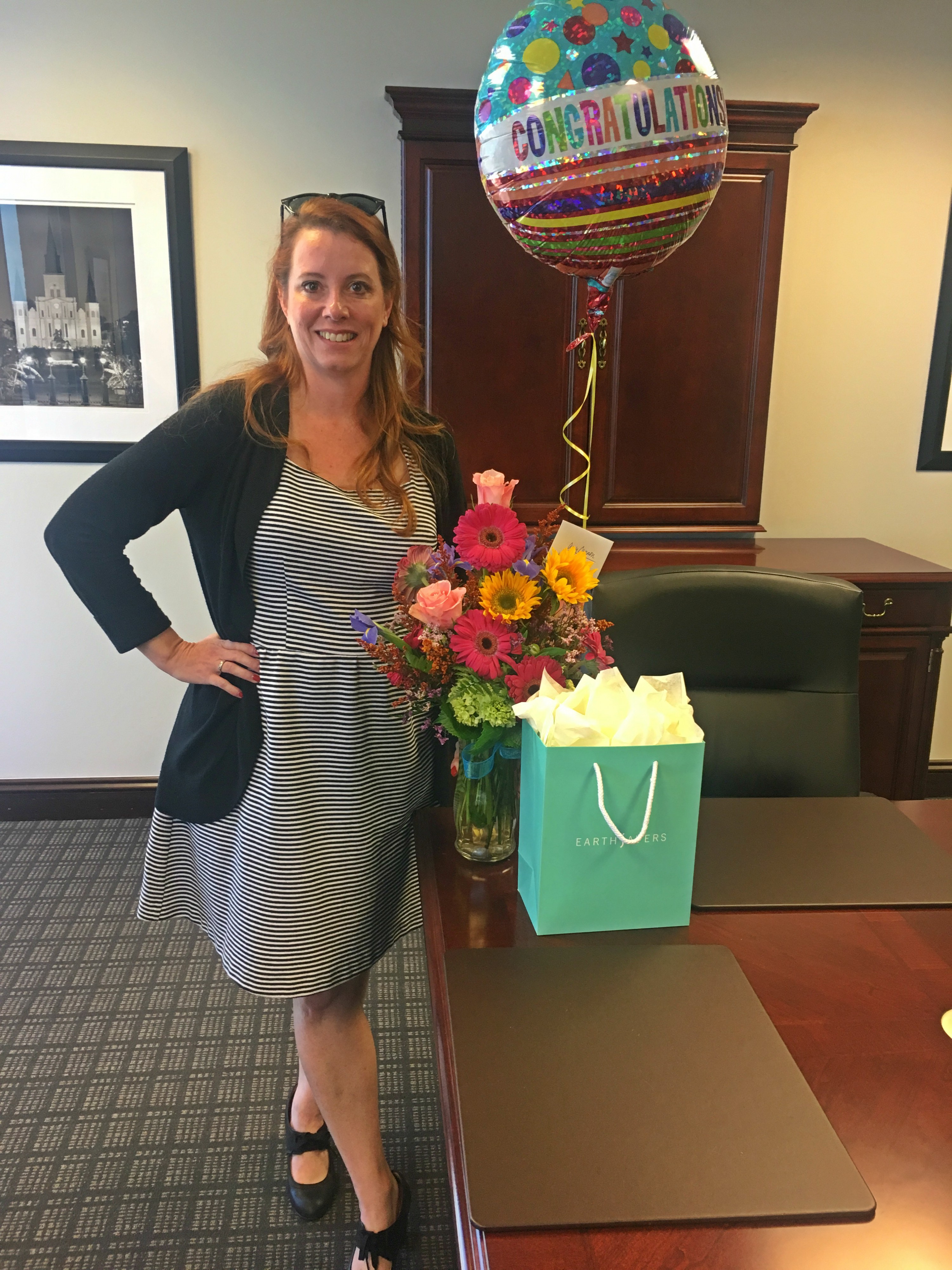
    Image Of Amy Cannon, Hardest Working Woman In New Orleans - Search InfluenceIn celebration of International Women’s Day on March 8, 2017, and in the spirit of last month March being Women’s History Month, Search Influence held a contest to honor the hardest working woman in New Orleans. Local businesses and individuals were encouraged to nominate a woman who either owns her own business or works 40+ hours making a difference with a New Orleans company. The goal of the project was to raise awareness about the importance of equal pay for women and company benefits that allow women to succeed in the workplace without sacrificing the responsibilities of motherhood. After receiving countless nominations, Search Influence selected Amy Cannon as a true example of a hard-working woman who has made a difference and achieved great success.

    Amy Cannon is a Corporate Director of Human Resources at Hammerman & Gainer Inc., a Louisiana-based firm that provides a wide range of third-party administrative management services, business process outsourcing, and project management services. Amy works at the New Orleans office where she plans, develops, and implements the firm’s HR functions and performance to build a world-class human resources department.

    Outside of her dedication and long hours at work, Amy is committed to her family. She is a single mother to three children—one in college, one in high school, and one in elementary school. It’s no easy feat, but Amy manages to financially and emotionally support her children, as well as work immeasurably hard at her job. Her family, friends, and colleagues who nominated her describe Amy as selfless, amazing, hard working, kind hearted, and genuine.

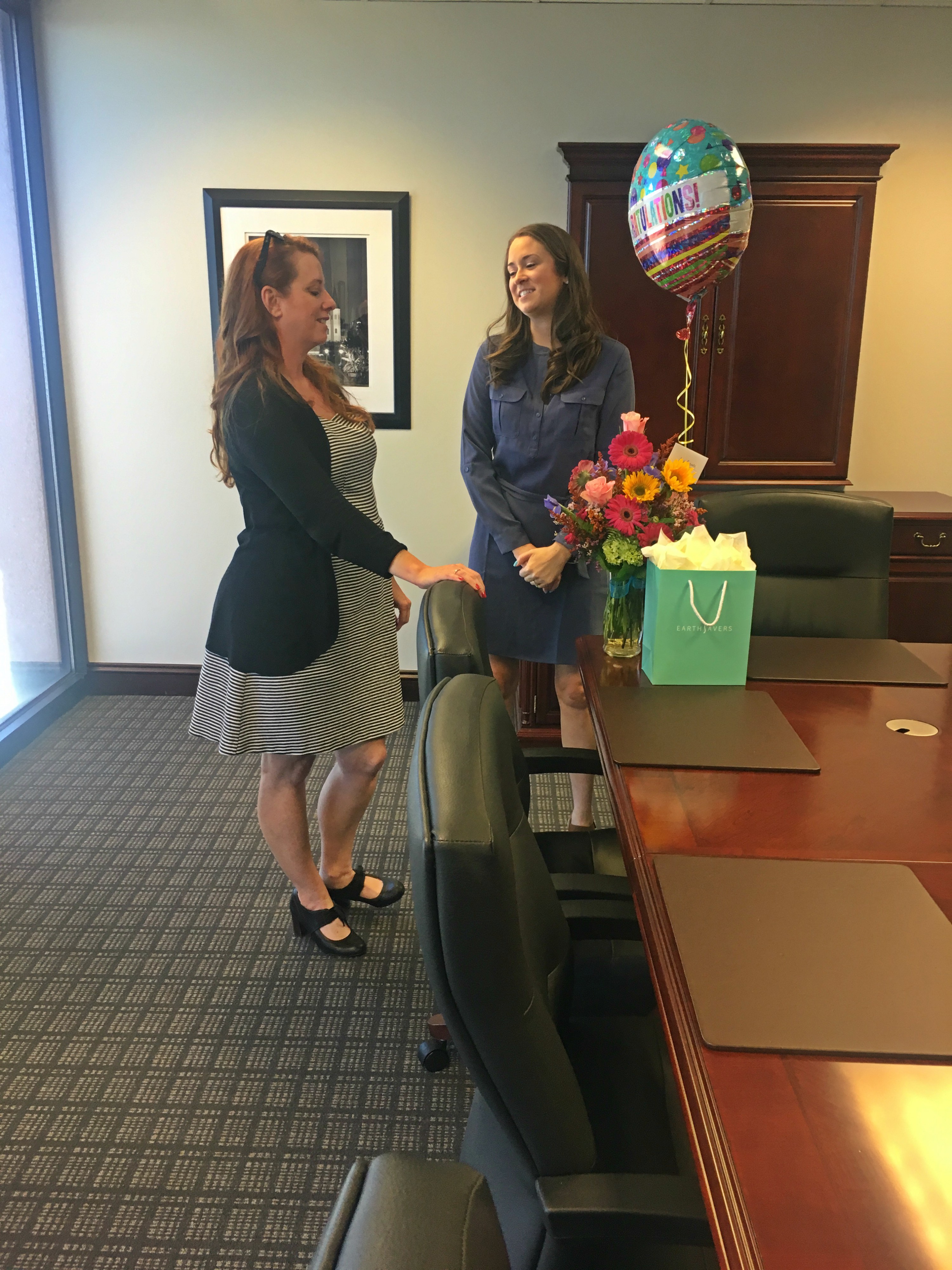
    Photo Of Amy Cannon With Paula Keller French - Search Influence            Image Of A Spa Day Package - Search Influence

    Search Influence is thrilled to have presented Amy Cannon with a spa day of relaxation for her continued hard work, contributions to her job, family, and community, and for not sacrificing being a wonderful mom.

  • Lost about LinkedIn? Here Are 7 Tips for Legal Professionals

    Image Of Worker Using LinkedIn - Search Influence

    LinkedIn was used by 467 million users in 2016. A simple search in LinkedIn showed 384,071 lawyers. Not only are these numbers worth giving LinkedIn some notice, but the B2B and B2C client acquisitions are increasing at rates over 100% each year as well. There is no longer a reason to put off establishing yourself and your law firm on LinkedIn. If you are lost on where to start, here are seven simple tips to improve your LinkedIn presence.

    1. Know the Laws and Ethical Guidelines for Your Area

    This is the legal profession after all, so there are very particular rules to follow when marketing yourself. Depending on the state in which you practice, the words “specialist” and “expert” may be against ethical guidelines. The New York City Bar came out with a formal opinion on the matter in late 2015, which applied general advertising rules to social media explicitly. Though this is a great platform to reach out to colleagues and clients, make sure to follow the guidelines.

    2. Create Your Profile

    If you have already done this step, you are already ahead of the game. If not, signing up for a free profile is the easiest way to start. This will open the wide world of LinkedIn to you. You can also associate yourself with a firm profile. If your firm does not already have a profile, you can check to see if it meets LinkedIn requirements for company profiles and follow the steps to get one created yourself.

    3. Optimize Your Profile

    Once you have created your profile, there are some things that you should add to your personal profile to help you stand out. These include:

    • A professional photo
    • A headline
    • Title and description of your legal experience
    • Skills sections
    • Interest section
    • Education section
    • Volunteer experience & causes

    These sections have varying character counts, ranging from 100 to 1000 characters. All of these sections need to be unique and targeted to give clients a good view of the kind of attorney you are. However, these sections, especially skills, can lead to ethical issues so make sure to follow guidelines.

    4. Make Connections on LinkedIn

    After making and optimizing your profile, it’s time to make connections. These can easily be drawn from your already existing email connections through some simple downloading steps. This will automatically give you instant connections to people that you already interact with, both colleagues and clients. Adding yourself to your firm’s page will also allow other attorneys at your firm to find you easily.

    Continually adding more connections from outside of LinkedIn and through LinkedIn will build a network to interact with, share information with, and get new clients from.

    5. Join LinkedIn Groups

    Groups on LinkedIn are a great place to find pertinent information to share with your colleagues and clients. You should join your local Bar Association page, your former law school, and other ABA organizations that apply to your practice areas. Those can just be a jumping off point for what groups you should join. The possibilities are endless.

    6. Engage with Other Users

    Engaging with users on LinkedIn can be done in a large variety of ways. Just made a new connection? Message them and remind them how you know each other. See an excellent article? Comment on it. Know a fellow attorney you have seen in action? Verify one of their skills. Not only will this build the strength of your connection but it will also get others to interact with you. 50% of LinkedIn members said they are more likely to buy from a business they interact with on the site.

    Another good way to keep up to date is, if you have a smartphone, download the LinkedIn app to keep up to date without your computer.

    Image Of Coworkers Using A Mobile App - Search Influence

    7. Post Content

    This is the last tip on the list, but it just might be the biggest. LinkedIn is a professional network that connects professionals with each other. This is a perfect place to share industry specific news. If you already run a blog, make sure to share the content on your profile. Found an article that pertains to your practice area? Share it on your page with your take on the information. Have some information to share about a case? Share that on your page. The more content you post with your unique voice, the more you build your authority on LinkedIn on the topic. However, make sure to include proper disclaimers with any content you share that could be construed as legal advice.

    Great content on LinkedIn can grow your connections with those within the industry and those that need the help of attorneys. By following these tips and making your presence known on LinkedIn, you can increase your impact online and offline. For more strategic advice about LinkedIn, contact an expert from our team.

  • We Are MAD About These Two New Influencers

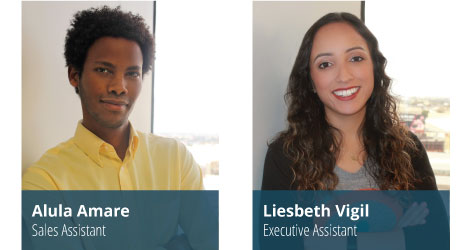
    Search Influence is kicking off March Madness with two new Influencers on our team. We are excited to welcome Alula Amare and Liesbeth Vigil!

    Picture Of New Influencers Alula Amare And Liesbeth Vigil - Search Influence

    Alula Amare – Sales Assistant

    Alula was born and raised in Kenner, bruh. He went to NYU and majored in Marketing and Creative Writing. Although he loved the city, he missed New Orleans. So a couple years ago, he moved back on Endymion. In his free time, he’s probably playing soccer, listening to music, or using the Oxford comma.

    Liesbeth Vigil – Executive Assistant

    Liesbeth joins Search Influence as our new Executive Assistant. She is from the greater New Orleans area, where she graduated from Tulane with a B.A. in Communication and a minor in Spanish. Shortly after college, Liesbeth lived in NYC for 5 years and is happy to have recently returned to her hometown. In her spare time, Liesbeth enjoys morning runs, takes salsa dance classes, loves cooking, and attends sporting events and music shows.

    Welcome to the team Liesbeth and Alula!

  • Fake News, Audience Targeting, and the Death of the 4th Estate

    Content marketing. Political marketing. Fake news. Content amplification. These are all instruments in providing pertinent information to audiences who will become newly inspired and be provided with valuable takeaways. What happens when you elevate content? Your audiences increase, consumption rises, and you essentially engage and “steal” influencers. Here are 3 key ways to leverage more devoted and more precious followers.

    1. Understanding the Traditional Media Tailspin

    Though traditional media has been effective throughout the history of marketing, it is important to realize the descent and, in some cases, collapse it has experienced in the last few years. Newspaper advertising looks to take the hardest hit with a decline in revenues between now and 2020, falling from $18.8 billion to $14.9 billion. (Source: Marketing Charts) While print dropped, digital advertising soared. As consumer behavior shifted online, this new media rose and grew tremendously over the years. Digital advertising has demonstrated continued growth where revenue rose 6 percent last year to $209 million. (Source: NYT) Surviving the tailspin and crash of traditional media and understanding digital marketing is essential to getting re-established as a marketer and to attracting audiences.

    Image Of Papers Writing - Search Influence

    2. Attach Yourself to Amplified Content

    Seek audiences floating by in the online and social media currents and latch onto them by serving them pertinent, targeted content. You will need to learn what interests your targeted audiences and how to keep them engaged at the right time. Once you know your audience, have and maintain a large online presence.

    Social interaction vector image - Search Influence

    To obtain online existence that lasts,  you will have to create valuable and amazing content. Venture into using infographics, videos, memes, guides, reviews, etc. These are all great ways to persuade and capture. But, you must realize your wonderful content will need help.

    Though your content is at it’s highest quality, it is competing with countless information out there. To wean out the competition, you should look into Content Amplification Tools. Taboola, Polar, and Nativo are some tools to name a few. These resources all strive to streamline the creation of producing ads, optimize ads in real time, deliver ads across devices, and drive traffic to your content.

    3. Learn from Political Marketing and Fake News

    Want to “steal” and keep influence and get away with it? You can!

    We’ve seen “fake news” in the news in the last year and a half and the tremendous amount of influence it’s had on audiences worldwide. We’ve seen it influence the 2016 presidential election, and we’ve witnessed big brands such as Pepsi and New Balance endure its pitfalls when their statements were misconstrued as political biases that went viral. What is the lesson here? Though brands should be careful not to get involved in sticky situations, it’s vital to realize what has made audiences so enthralled and how to keep them.

    Image Of Fake News Keyboard Button - Search Influence

    When we revisit the 2016 presidential election, we remember just how loyal audiences were to the candidate they supported. They were essentially brand loyal, and the victory of their candidate was the product they sought and trusted. How can other big brands gain such loyalty and following? It’s using social media, like Facebook, to promote content. It’s considering sponsored posts to reach even more audiences and raise awareness. More importantly, it’s big brands considering and creating a plan of action to think more strategically and to elevate the truth of their brand. The big lesson here is, “Will our audiences believe us?” If they believe, “How do we build and keep their trust?”

    Brands will, more than ever before, think critically, keep demonstrating authenticity, and share valuable insights while taking back what fake news has stolen.

  • What You Can’t Do On LinkedIn: Hacking LinkedIn and Getting Results

    Hypertargeting. Automated bid management. Ad scheduling. We take for granted these social media advertising features available on platforms like Facebook. But, what do you do when these “advantages” are not available on other sites, like LinkedIn? Here at Search Influence, we decided to design some experiments to see if we could manually hack these features within the LinkedIn advertising platform.

    Targeting Options

    We all know how great Facebook’s targeting is with purchase behaviors and in-market audiences backed up by actual third-party data. There’s no way that LinkedIn can touch Facebook in this realm, right?

    According to Business Insider, LinkedIn is gradually increasing its user base, even as other platforms like Facebook and Twitter have seen decelerating growth. What LinkedIn has to offer is the opportunity to reach one of the fastest-growing groups of business-minded professionals when they are in “work-mode,” browsing for new career opportunities, exploring professional affiliation groups, and researching industry-specific content. In fact, Buffer reports that 60% of LinkedIn users are interested in seeing industry-related content with company news as a close second. So how can you capitalize on this information-hungry audience?

    LinkedIn offers the opportunity to target all levels of the professional hierarchy, from young company influencers, performing research and reporting on their findings, to higher-level corporate decision-makers looking for their next business partnership. The targeting opportunities on this platform are specifically geared towards a professional audience. With these options, you can:

    • Target specific Companies by name and narrow in your Job Titles to reach the exact people you want to hear your message,
    • Use specific Degrees or Skills to seek out only the users who meet your qualifications or
    • Sift through Member Groups to find people with similar or desirable professional or educational affiliations.

    With all of these occupation-oriented targeting options, LinkedIn offers advertisers the ability to closely align your social engagement goals with your company’s brand and mission to reach users who are demanding industry-relevant content.

    Ad Scheduling

    Facebook offers ad scheduling, and while it’s not as granular as other platforms, such as AdWords, which allows you to schedule your ads in 15-minute increments, it still provides a heightened level of control over when your ads are shown.

    Unfortunately, LinkedIn does not afford advertisers these same features, so we took it upon ourselves to apply manual ad scheduling to see if the benefit was worth the time. Research has shown that the best time to publish content on the LinkedIn platform is Mondays through Fridays, during business hours. Makes sense, right? Target working individuals with work-related content during work hours.

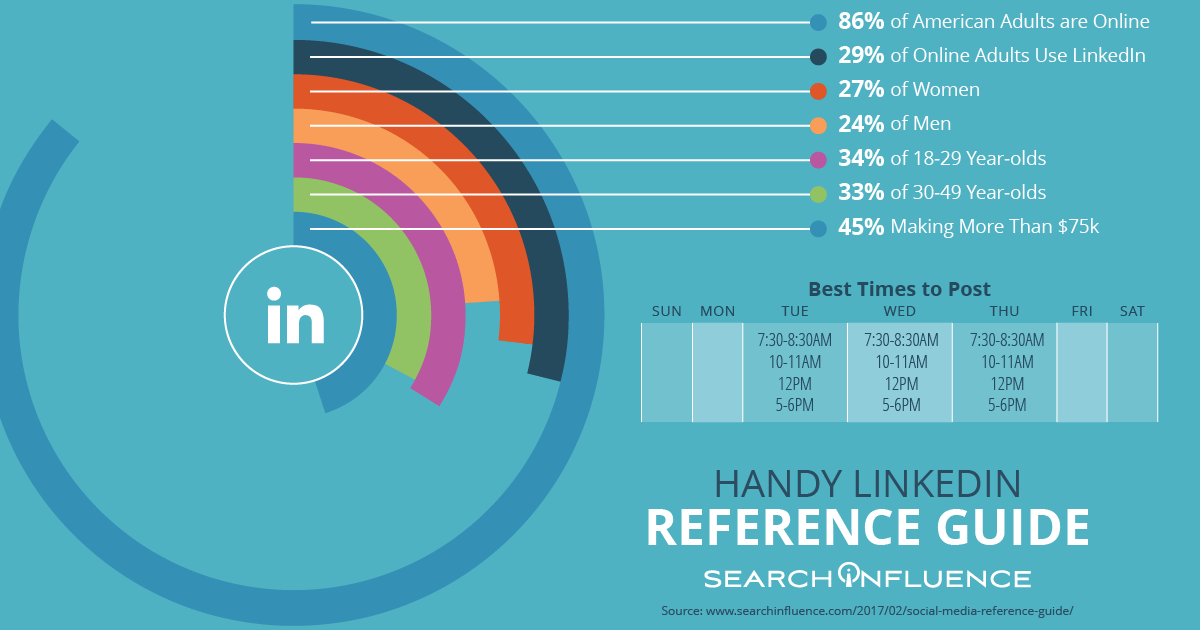
    Linked-In-Best-Times-to-post imge - Search Influence

    Our online advertising team put this premise to the test. Many of our clients suffer from budgets that are too small to run ads for the duration of the month. When you factor in LinkedIn’s $10 daily minimum and the fact that the platform allows you to spend up to 20% more than your daily budget on any given day, and you most often will, this effectively makes the minimum daily spend $12. If we extrapolate that figure across a 31-day month, an individual campaign needs AT LEAST $372 to run. To be most effective with our clients’ monthly spends, we wanted to capitalize on the users who are most likely to engage with the content, i.e. people who are on LinkedIn during the weekdays.

    We implemented a “Weekend Pausing” test for a few of our clients. This test included Sponsored Updates campaigns, and we ran our test from November of 2016 through December 2016, pausing on weekends and holidays when users are least likely to be browsing the platform with intent.

    We began by establishing baseline performance for each of the clients and decided that our main metrics for measurement would be engagement and cost per engagement.

    Image Of Engagement Metrics For Online Advertising LinkedIn - Search Influence

    So, what did we find? One client saw a 28% decrease in cost per social action and an 18% overall decrease in spend for a 14% overall social action increase. One client spent 23% less budget and received 63% more social actions for a cost per social action that was 53% less than the baseline. However, when we looked at overall engagement, which includes clicks as well as social actions, we saw an overall engagement decrease of 13% and a 39% decrease in engagement rate, refuting the idea that LinkedIn users are most active during weekdays. An extended period of testing would be required to investigate the full impact of weekend pausing on LinkedIn engagement rates.

    Bid Management

    Other platforms offer automatic bidding options to get you the lowest cost per result. Facebook does this across all of its placements, including Instagram and the Audience Network, to achieve the lowest average cost per result. There are also manual bidding options on the Facebook platform for those advertisers who want a little more control.

    Luckily, LinkedIn does provide some competitor bidding data so that you can make an informed decision when setting your manual bids, which is the only option available on this platform. Previously, the consensus for LinkedIn bidding best practices was to bid as high to the top of the bidding range provided by LinkedIn in the Bid & Budget tabs of the campaign manager as the client’s budget allows.

    Image Of Competitor Bidding Data For Online Advertising LinkedIn - Search Influence

    What we were curious to test was whether we could maximize clicks and decrease overall cost per click by strategically bidding down, towards the middle of the bidding range. Our online advertising team devised a test across multiple clients in various industries with different budgets. Since our goal was to maximize clicks and engagement, we chose clients with Sponsored Updates campaigns. We established baseline metrics for each of our client’s prior performance and began strategically lowering and raising our bids from the top of LinkedIn’s provided range to the bottom in predetermined increments each day.

    Once our bids were set towards the lower bound of the range, clicks and impressions significantly decreased. After moving up and down the range a couple of times, we hit a “sweet spot” right around the middle of LinkedIn’s bidding range where performance was optimized. We discovered that bidding around the middle of LinkedIn’s bidding range resulted in an average click increase of 39%, an average CTR increase of 14%, and an average CPC decrease of 30%. Through the manual manipulation of our bids, we were able to generate more engagement for our clients at a lower price!

    What Can You Do With LinkedIn?

    While many advertisers might suggest channeling efforts from LinkedIn to Facebook, I suggest rethinking the platform’s purpose. What our experiments have revealed is that if you can devise a strategy that considers the platform’s utility as a connector of business-minded individuals, and you’re willing to put in the effort to manually optimize your campaigns for the highest level of budget efficacy, you can churn out excellent results.

    If you have strategic questions about using Linkedin or need support getting started with Linkedin advertising, contact a member of our team.

  • Up Your Social Media Game With This Handy Reference Guide: The When, How, and Where of Social Posting

    Up-Your-Social-Media-Game-With-This-Handy-Reference-Guide - Search Influence
    Another year, another seemingly endless parade of social media posts gone by. If you haven’t jumped on the social marketing bandwagon yet, 2017 is the year to begin because things are continuing to go up and up. Here are some highlights.

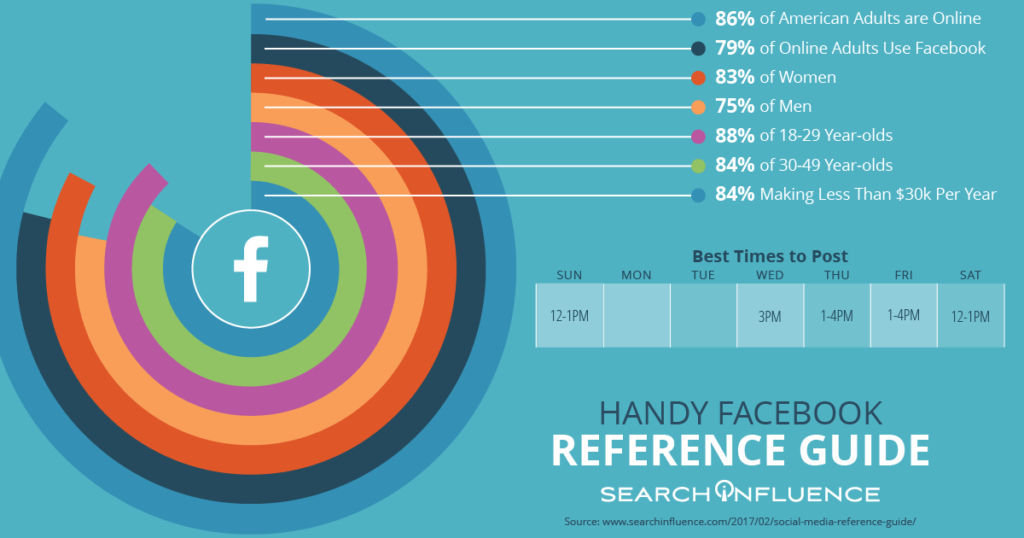
    79% of Online Adults Use Facebook

    The Pew Research Center has done a lot of work tracking the social media usage of American adults. Of all platforms, Facebook has a staggering reach among adults across demographics.

    Handy-Facebook-Reference-Guide - Search Influence

    Of these Facebook users, 76% check in every day and use Facebook as a way to learn about the news, local businesses, trending topics, and more. Facebook is truly on the way to becoming all pervasive, even among adults aged 65 and older.

    57% of Consumers Are Influenced by Online Information

    More than half of internet users surveyed said that they are influenced to think more positively of a business after reading positive reviews or comments about the business online. This means that creating a space for customers to give reviews and interacting with these reviews has tangible benefits and can convert potential customers that are lurking in the background of your social media.

    Social Media Ad Spending Has Hit $35.98 Billion – and Keeps Climbing

    Businesses are learning the advantages of using social media to market to their customers and using that knowledge to their advantage. Social media advertising is becoming the new normal, and we have abundant experience creating campaigns that convert. Contact us if you are ready to get started with paid ad campaigns for your institution or business.

    Sources:

    http://www.pewinternet.org/2016/11/11/social-media-update-2016/

    http://webbiquity.com/social-media-marketing/47-superb-social-media-marketing-stats-and-facts/

    http://www.pewinternet.org/2016/11/11/social-media-update-2016/

    http://coschedule.com/blog/best-times-to-post-on-social-media/

    https://www.emarketer.com/Article/Social-Network-Ad-Spending-Hit-2368-Billion-Worldwide-2015/1012357#sthash.eESedQLL.dpuf

    https://www.emarketer.com/Article/Facebook-Twitter-Will-Take-33-Share-of-US-Digital-Display-Market-by-2017/1012274#sthash.0WToy3rM.dpuf

  • Want to Grow Your Medical Practice? Here’s 4 Ways Facebook Ads Can Help

    A How-To Guide for Growing Your Practice Using Facebook Image - Search Influence

    The world is filled with many ways to advertise a product or service. Simply hoping that your message makes its way to the perfect target audience certainly isn’t the best practice to ensure that your medical advertising efforts are a success. For medical professionals, it may be particularly tricky to target those individuals in your practice’s geographic reach, specialty area, or even other physicians looking to refer their patients to another trusted healthcare provider. Though it can seem nearly impossible to reach the perfect audience through traditional mediums like television or radio, Facebook is continuing to provide proven results for advertisers in the medical realm. A rich and unique resource of user personal interests and behaviors, Facebook is truly a health care advertiser’s dream!

    Image Of Baby Making A Joke About Doctors - Search Influence

    Whether you’re a specialist or a general family doctor, Facebook has the right tools to not only narrow down your ideal patient but also present your service in a way that truly connects these individuals with the personalized healthcare you can provide them.

    Here are 4 ways to use Facebook ads to your advantage:

    1. Use Facebook Display Ads to portray real people and satisfied patients in your ads.

    Facebook Display Ads can be the perfect way to send your audience to important areas of your website using striking images and creative calls to action. When using these types of ads, appealing to more potential patients is key. Using photos of real people and happy patients not only shows the success of your practice but makes ads more relatable to the audience. Finally, Facebook allows you to utilize their call-to-action buttons to tell users exactly what you want them to do when they see your ad. Consider using “Contact Us” or “Learn More” to drive potential patients to convert to actual patients!

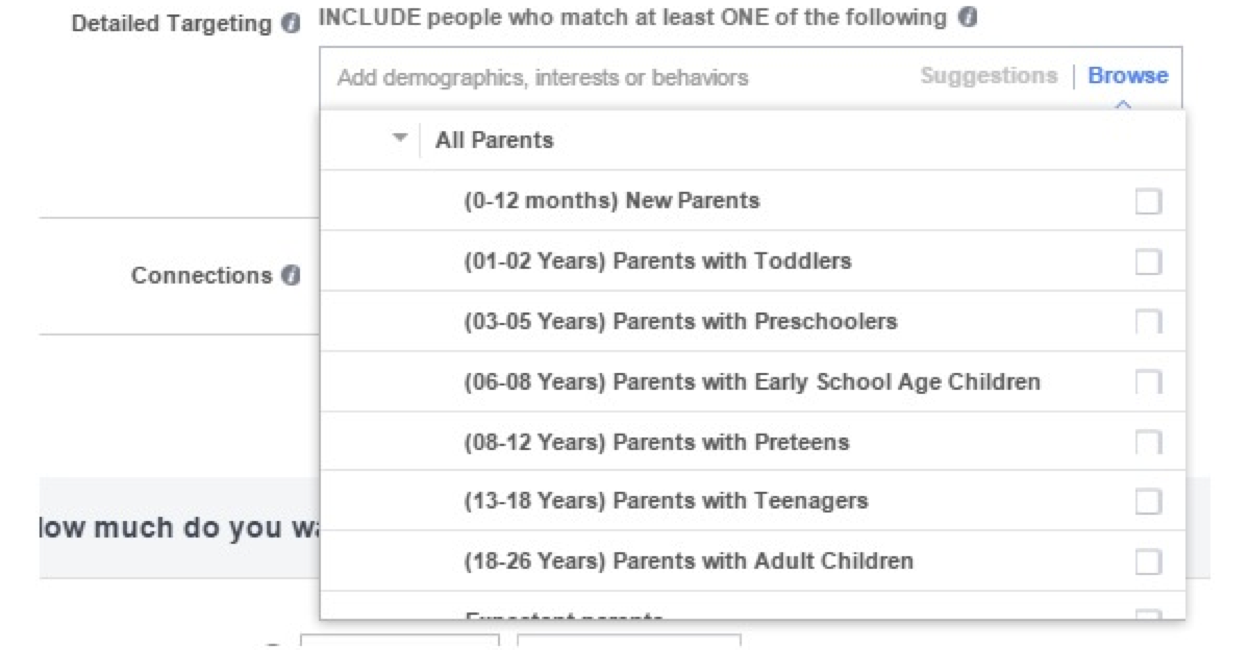
    2. Use Facebook’s ‘Detailed Targeting’ to your benefit.

    Facebook comes equipped with a number of targeting options that can be extremely helpful in identifying individuals that fit your target demographic. Everyone needs to see a doctor at some point, right? How about targeting people who have recently moved into your geographic area who might be looking for a new physician? You could also try targeting women who have recently become pregnant or seniors who might make more regular trips to the doctor.

    Picture Of Facebook Detailed Targeting Tool - Search Influence

    3. Referrals are your friend.

    Targeting other healthcare practitioners might not seem like the most effective idea at first, but using Facebook’s ‘Detailed Targeting’ to show your ads to other physicians or important referral sources always helps to keep your name at the tip of their tongue when talking to their staff and patients. Likewise, we all know that people seek advice on health care providers from their friends and family. It might be beneficial to target the connections of people who currently follow or Like your page. These tactics can only help drive more business!

    4. Don’t forget about HIPAA!

    It is always important to remember to follow HIPAA rules and regulations. When writing Facebook ad copy, never imply that you have knowledge about a sensitive health condition. Also, never collect or share personal information such as phone numbers or addresses. There are many successful ways to use Facebook ads to grow your practice that still align with HIPAA’s guidelines.

  • The Ultimate Guide on How to Get Facebook Reviews

    5-star-reviews image - Search Influence

    There’s no introduction needed for Facebook—it’s one of the top social media platforms, and with over 1.79 billion users online, it’s hard to ignore when it comes to online marketing for your business. You have to encourage customers to not only like your page but also leave a positive review. It’ll help boost sales and excite others to leave a review as well. In summary:

    How To Get Facebook Reviews

    1. Ask customers to check-in to your business
    2. Utilize Email marketing
    3. Respond to reviews, whether positive or negative

    Reviews are becoming more and more common on the internet. According to the 2015 Social Recommendations Index, about 71% of Facebook users trust the content they see on this social media platform. Also, about 66% users will share their thoughts, experiences, and opinions on the company or their recent purchase. Facebook reviews are critical when it comes to being successful online. Here’s a guide on how to get more for your business.

    Image Of Fresh Prince And Uncle Phil Dancing - Search Influence

    Just Checking-in on You

    Users checking-in to your place of business on Facebook can help prompt reviews. They can tell their friends what they’re thinking or feeling, and they can add a photo or video to their post. The number of users that check-in to your business will also be added to your Facebook page. The more check-ins, the more people are attracted to your business!

    But how do you ask people to check-in? Often something as simple as signage in your place of business reminding customers to check-in can work. It can be a sticker posted on your register or a flyer in the front window. You can also provide rewards or discounts for those who check-in. Your customers will be prompted to tell their friends and family about the discount they can receive for checking-in on Facebook.

    Image Of Buzz Lightyear Describing The Abundance Of Emails - Search Influence

    Emails, Emails, and More Emails

    You can ask customers to leave a Facebook review through email marketing. It’s best to ask right after their visit since their experience will be fresh in their mind. Send them an offer, newsletter, post-purchase email, post-visit email, or confirmation. Make sure to provide a direct link to your Facebook page in the email to make it easier for consumers to leave their review.

    However, you don’t want to sound too pushy when asking for reviews. When sending customers a post-purchase email, make it personal. Mention their name in the email, thank them, and ask them how their visit went and if they have any ideas on improving your business. If you come across as genuine, you’re likely to get genuine reviews in return. Most importantly, don’t forget to tell them that you would like to hear from them. Their opinion matters!

    Image Of Office Employees Raising The Roof - Search Influence

    Respond to the Good and Bad

    It’s important to respond to customers who leave a review. That includes both positive and negative reviews. This will help build your reputation as a dependable business owner who cares about customers. When responding to reviews, stay professional and courteous, even if the commenter was unprofessional or impolite.

    There may be a time when you’ll have to deal with a Facebook troll. It’s best to respond to them professionally, but if their response is out of hand, you can send them a direct message to help solve the problem. You can also delete and block certain users who are truly trolling your business. Steer clear of deleting and blocking every person who posts a negative comment, because not every negative commenter is a troll.

    Facebook marketing is important for those who want to gain local reviews. Be sure to check out our previous blog about using hashtags on Facebook and how they can help benefit your online presence.

  • Two Days of Local Brilliance at LocalU Advanced and MozCon Local Conference Today

    Local-U logo image - Search Influence

    Next month, a two-day event filled with local search marketing goodness is coming to Seattle: LocalU Advanced on Monday, February 27th, and MozCon Local on Tuesday, February 28th.

    Online marketing experts from across the country will drop serious knowledge featuring tips and tricks to build your SEO success maximizing local search ranking factors. In addition to the knowledge, there will be fantastic networking opportunities throughout.

    The Program

    Through informative presentation and discussion, LocalU Advanced aims to help marketing professionals with tactical advice they can use on day one. LocalU conferences focus on adding skills to their attendees’ online marketing toolboxes, including advice on how to increase engagement and customer loyalty. The sessions will offer up-to-date information on local search best practices, tracking and reporting and managing business listings.

    The Speakers

    Some of the biggest names in Local Search, including Mike Blumenthal, Mary Bowling, Mike Ramsey and more will be sharing their vast knowledge. Search Influence’s Director of Sales and Marketing, Paula Keller French, will speak at Monday’s event, discussing the importance of content in SEO. Paula will also co-present a real-life competitive analysis sure to educate by example. LocalU Advanced will also include a representative from Google My Business to answer questions and to help resolve issues that businesses may be facing.

    Sign Up Today

    These events will provide ample opportunity to meet others in the industry, engage in valuable learning discussion, and unwind. With plenty of time for Q&A and advice on building your company’s online visibility from search marketing experts, these events are not to be missed!

    Register to attend here.