Author: Search Influence Alumni

  • Growing Your Practice on Facebook, Part 6: A Facebook Success Story

    Part 6 of The Ultimate Guide for Growing Your Medical Practice Using Facebook

    Welcome to the final installment of our series on using Facebook to promote your medical practice. Now that we’ve covered best practices, we’ll show you how we put them in action using one of our own clients as a case study—Donaldson Plastic Surgery.

    Remember, if you want more information about using Facebook for your medical practice, make sure you download our e-book.

    But First, Let’s Recap

    Before we show you how to put everything together, here’s what we’ve learned so far:

    Part 1: Why Facebook Matters – The introduction to our blog series showed how Facebook can be used for medical practices in particular, and why it’s an important tool for engaging with patients and creating a personal connection with them.

    Part 2: Shareable Content – We gave easy-to-follow tips for creating shareable content as well as advice on the often forgotten second step of Facebook: engaging with your followers in response to their interest in you.

    Part 3: Advertising – Taking a slightly different approach, we went into detail about paid promotions, discussing the difference between promoted posts and ads, and laying out Facebook’s restrictions that govern medical advertising.

    Part 4: Reaching Your Audience – We explained how to leverage Audience Insights to target your ads to your ideal patient, making them more effective, and how to bridge the gap between your online audience and the real patients who walk through your door.

    Part 5: Patient Confidentiality Concerns – This blog brought it all home with clear examples of how to stay HIPAA-compliant while posting on social media.

    Now, it’s time to see how all of these elements work together with a real medical practice.

    Facebook Campaign in Action: Donaldson Plastic Surgery

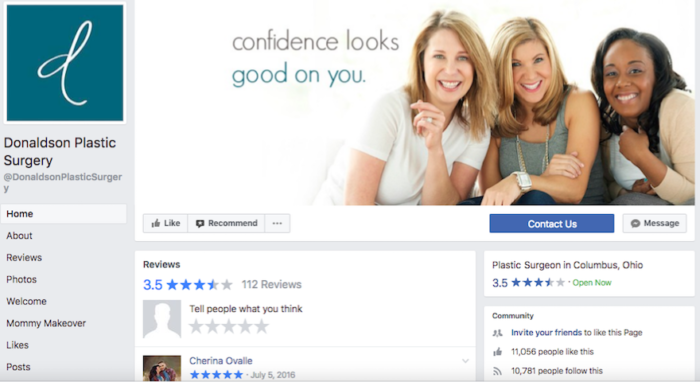
    Dr. Donaldson has been our client since 2009, the year he opened his practice. Since he was just starting out, there was a lot of work that needed to be done in terms of digital marketing, including a new Facebook page that had a grand total of zero Likes. Since launching his Facebook campaign in 2011, Dr. Donaldson’s page Likes have increased to over 11,000. This was accomplished through a comprehensive Facebook marketing campaign.

    This campaign was comprised of Facebook management, fan building, and Facebook display ads. We created posts that established Dr. Donaldson’s professional brand and consistently published engaging, informational, and promotional posts that appealed to current and potential patients throughout the area. We also created ads that increased brand awareness, brought Dr. Donaldson’s practice to those who didn’t know him already, and promoted the full range of his services, all utilizing Facebook’s targeting abilities.

    Image Of Facebook Page Likes For Donaldson Plastic Surgery - Search Influence

    Combining paid ads with an increased frequency of organic posts expanded the practice’s fan base. A large chunk of Dr. Donaldson’s Facebook fans, totaling 11,000+ Likes, have come from annual fan building campaigns (over 6,400 of the Likes, in fact). Campaigns such as Likes for Lives encourage Facebook users to Like your page in exchange for a donation to a charity organization. These campaigns increase followers while also giving insight into your practice’s values and the importance of giving back to your community.

    Dr. Donaldson is proof that a well-managed Facebook page, full of engaging posts and targeted ads, can work to create a campaign strategy that gets patients through the door and establishes your practice as the medical resource in your area.

    Armed with the best practices we’ve covered in our blog series, you can accomplish results like this for your medical practice as well! If you have any strategic questions or need help growing your practice on Facebook, contact one of our experts here.

  • Growing Your Practice on Facebook, Part 5: Patient Confidentiality Considerations

    In our last blog, you learned how to capture your audience with engaging content and analyze the results. Now that you understand what it takes to connect with your patients, we’ll take a look at common obstacles medical practices face when posting on Facebook.

    Social media and the healthcare industry can seem in opposition at times. One is about sharing and transparency, while the other hinges on patient confidentiality and privacy. But the irony is that the medical industry is not immune from the benefits and trends of platforms like Facebook.

    Facebook is a wonderful resource for any industry looking to grow their business. Potential clients and patients desire access to the goings-on of a medical facility or hospital, and similar to peeking in on the page of a friend or associate, patients expect to see their doctor’s office online, too. Uploading staff happenings or posting about a new procedure is invaluable to the cause. But what happens when patient confidentiality is violated? In the era of “clicks,” the two opposing parties of health care and social media must become friends. Although there’s a fine line to walk when working within HIPAA rules, here are some helpful tips to consider when using Facebook for your medical office.

    Image of doctor using a tablet - Search Influence

    Get Written Permission Before Posting

    Nothing can replace the power of pictures on your Facebook page. According to a Hubspot survey, Facebook posts with images receive 53% more Likes than those without. Images serve as testimony to what your practice can do and how you can help other patients achieve their desired results. They are also a way for your patients to discuss and identify symptoms that may need a doctor’s immediate attention. However, posting photos without explicit consent from all parties can lead down a very hairy path—even if the image isn’t of someone’s face.

    According to Privacy Rule requirements, physicians must obtain a signature from the patient that specifically spells out the what, when, and where of the shared item. Some medical facilities have recently opted to send out a blanket consent statement, but this is not best practice. Be sure the statement includes details such as a full description of your purpose in using the image, an expiration date on the image consent, as well as a note describing the patient’s right to revoke consent. Send a copy of the signed document to the individual and keep one for your records as well. Working this into your protocol prior to posting photos will keep a clear line of communication between your practice and patients, and it will also create a streamlined process for your social media marketing needs.

    Avoid Talking About Specific Patients

    Posting about patients can be helpful to your practice. You can highlight testimonials, success stories, and interesting procedures that can be used to engage new and current patients alike. However, when posting on Facebook, even if given permission to use a patient’s medical situation, you’ll want to be explicit in not identifying the individual.

    Confidentiality and privacy are two sides of the same coin. Confidentiality limits the details of a patient’s health exclusively to the medical team unless given informed consent. Privacy, on the other hand, relates to the patient’s right to be treated with respect and dignity. HIPAA goes even further, stating that information given about a patient in a public forum should not disclose individually identifiable information. This information includes anything that could be used to hone in on a specific person, such as past, present, or future physical or mental health details. Understanding the difference between the two, and how they relate to the language and images used in Facebook posts, will help you and your staff to find that happy medium.

    Image of doctor's stethoscope on top of patient's records - Search Influence

    Don’t Take Pictures Around Sensitive Materials

    Where you take the picture can matter just as much as the picture you take. When capturing images to share with your patients, be aware of any medical records or other confidential materials laying around. With zoom features on devices, potentially threatening information can become more decipherable when viewed from apps on a cell, tablet, or another mobile device. Avoid this mistake by thoroughly surveying the area before snapping a shot around the office. Put away any files or paperwork containing information that is private or for medical office use only. It may also be a good idea to only take more candid photos in certain areas of the facility where sensitive items are least likely to be an issue. Also, be sure to avoid taking pictures that may have a patient in the background. Having a designated spot for photo ops can minimize the chances of mistakenly exposing information that would break patient confidentiality and put your office in a compromising position.

    Facebook doesn’t have to be a no man’s land for physicians and medical practices. Healthcare and social media can play on the same team. Building your brand online and strengthening relationships with your patient base is invaluable, especially with Facebook’s almost 2 billion monthly users. Don’t be intimidated by HIPAA; instead, embrace the rules, implement best practices for your staff, and walk the line to marketing and confidentiality success. The exposure you’ll get will be well worth it.

    Check back next week for the final installment of our medical industry blog series, which will walk you through one of our case studies and show you how to put everything together!

    If you are ready to chat about your digital marketing opportunities today, contact one of our experts.


    Images:

    Tablet

    Patient Records

  • Growing Your Practice on Facebook, Part 3: Advertising

    In our previous blogs, you’ve learned that Facebook is crucial for promoting your medical practice and that shareable content is the number one component of your social media strategy.

    As the next step in your journey to increase your social presence, Facebook ads are another highly effective way to promote your practice online. In this blog post, we’ll answer your questions about the importance of paid promotions on Facebook, the difference between promoted posts and ads, the primary advantages of Facebook ads, and whether your ad copy complies with HIPAA and other guidelines.

    Why Not Just Use Free Posts?

    With so many opportunities to post for free on Facebook, it might seem like paid promotions aren’t necessary. However, due to recent Facebook algorithm updates, overtly promotional posts are receiving less organic distribution on the platform. This is due to a Facebook survey in which users named highly promotional posts as the number one thing they would like to see less of in their news feeds. As a result, your followers will be unlikely to see any of your posts that push products, urge people to enter contests, or reuse advertising content. Below are some examples of highly promotional posts.

    Image of a highly promotional Facebook post - Search Influence

    Image of an overtly promotional post on Facebook - Search Influence

    However, in the same survey, Facebook users reported that they aren’t bothered by promotional content when it has been identified as advertising. This means that paid promotions are not only ways to get around Facebook’s algorithm updates and reach your target audience, but also ways to engage your followers without coming across as annoying or spammy.

    What’s the Difference Between Promoted Posts and Ads?

    The two main types of paid promotions on Facebook are promoted posts and advertisements. Understanding the difference can help you determine where each best fits into your social media strategy.

    Promoted posts are formatted like traditional free posts, but they are marked as sponsored content and appear higher in your followers’ news feeds. The main advantage of promoted posts is that you can test them out as free posts before investing in them. If one of your free posts is performing especially well, Facebook will often prompt you to “boost” or promote it. Promoted posts can also be easier to use because they follow the traditional Facebook post format.

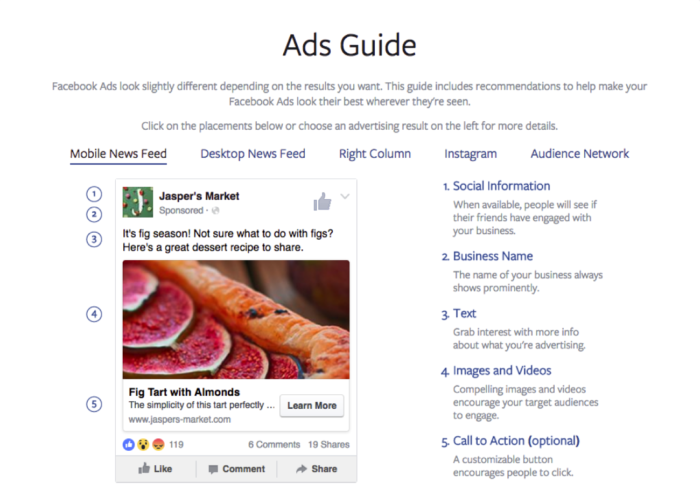
    Advertisements, on the other hand, can follow a wide range of formats. Facebook’s Ads Guide allows you to customize based on your campaign’s objective, be it brand awareness, lead generation, website traffic, or one of many others. The guide can also walk you through the different ad placements, focusing on which fields will be included in which type of ad. As shown in the images below, mobile and desktop news feed ads have space for social information, business name, text, images or videos, and a call to action.

    Image of Facebook's Ads Guide for mobile feeds - Search Influence

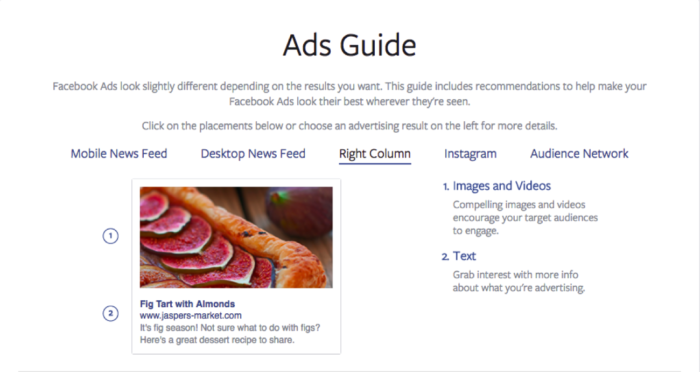
    Right column ads, on the other hand, only have space for text and images or videos:

    Image of Facebook's Ads Guide for right column information - Search Influence

    While all of these options make advertisements a bit more challenging than promoted posts, they also allow ads to achieve more diverse objectives. Promoted posts are great for growing brand awareness and driving engagement, but if you have goals outside of social media—for example, getting potential patients to fill out a consultation form on your website—then Facebook ads are the better way to go.

    What Are the Main Benefits of Facebook Ads?

    The reason why ads are more effective than promoted posts for driving off-Facebook conversions is the call to action (CTA) button. While exact numbers vary based on the industry, type of content, and action the reader is being called to do, statistics show that conversion rates increase dramatically when a CTA is present. While CTAs can be included in the text of a promoted post, the CTA button in ads allows your message to stand out even more. More importantly, it explicitly tells readers what action you want them to take, and allows them to accomplish it with just one simple click. Facebook also provides an easy drop down menu of popular CTAs for you to choose from, ranging from “Contact Us” to “Download” to “Watch More.”

    The second major benefit of Facebook ads is the platform’s detailed targeting options. These are available for promoted posts as well, and they can be set or altered within Facebook’s Ads Manager. While traditional advertising channels, like billboards or newspaper ads, can’t guarantee that your message reaches your goal demographic, Facebook ads can be carefully targeted to the people you want them to reach. For example, if you run a geriatrics practice in New Orleans, you can ensure that Facebook shows your ads to users aged 65+ in the Greater New Orleans area. Using Facebook’s targeting feature allows you to run a more efficient ad campaign. You can direct your time and money only toward the demographics that are most likely to become your patients, without wasting advertising resources on anyone else.

    What Legal and Ethical Guidelines Govern Medical Facebook Ads?

    As you’re certainly aware, the medical industry is heavily regulated. Everyone from the American College of Physicians to the Health Insurance Portability and Accountability Act (HIPAA) to Facebook itself has rules for medical advertisements. If you break them, your ads will likely be taken down, and in some cases, legal action may even ensue. While Facebook’s Advertising Policies provide a detailed list of prohibited and restricted content, the two biggest red flags for physicians are misleading content and patient confidentiality violations.

    Misleading content includes anything that could be considered deceptive or ambiguous to patients. The most obvious examples are photoshopped images or exaggerated guarantees; however, even subtle wording variations can lead to misleading content violations. For example, it’s generally okay for a physician to claim that Botox can contribute to a more youthful appearance. Yet, it could be considered misleading to claim that Botox will make patients look ten years younger or eliminate signs of aging. Although these statements are quite similar, only the first one is acceptable because it does not make any specific promises about the product’s outcomes. Some of the best precautions against misleading content include citing studies or journal articles whenever claims are made, and labeling all non-patient photos with the word “model.”

    While misleading content might get your practice in trouble with Facebook, violating HIPAA rules about patient confidentiality can get your practice in trouble with the law. As with misleading content, some precautions are obvious. For example, you should never post any identifying information about patients, such as names or faces. However, many HIPAA violations are less apparent. For example, it is prohibited to post images that do not clearly identify a patient, such as a rash on someone’s foot, unless you have clear legal permission to do so. Similarly, be careful that no pictures of the office have patients or medical records in the background. To avoid any issues, require patients to sign a consent form before using their images, or stick to model-labeled images and stock photos.

    Interested in learning more? Don’t forget to check back for the next post in our medical industry blog series, which will help you reach your target audience.

    For more information about getting started with Facebook Advertising for your hospital or practice, contact us here.

    Images:

    Ads Guide Mobile Feed

    Ads Guide Right Column

  • Growing Your Practice on Facebook, Part 2: Shareable Content

    Now that you’ve learned why Facebook is such a crucial tool for your practice, it’s time to master one of the most important aspects of Facebook: engagement. Facebook is all about conversation and interaction. If you aren’t creating compelling content and engaging with your followers on a regular basis, your social media campaign will fall flat—making the next steps in this series much harder for you. Here’s how to polish up your content and keep your followers invested on Facebook.

    1. Create Shareable Content

    At one point or another, we’ve all come across a Facebook post that just speaks to us; one we couldn’t help but share with a friend or add to our timeline. The act of sharing a Facebook post seems simple enough, but for your business, these shares are crucial to your social media campaign.

    According to Kissmetrics, more than 30 billion pieces of content are shared on Facebook each month. Facebook shares are powerful stuff for business because they help your message to grow exponentially. Friends share content with Facebook friends in a way you couldn’t have managed organically on your own. So, how do you help make this happen?

    Well, if your practice wants to be included in those 30 billion pieces of shared content, it’s essential that you start writing interesting and relevant posts your fans will really want to read. If you’ve followed our blog for a while, you’ve probably heard us quote the great Bill Gates saying “Content is king.” This saying holds true across websites and platforms, and Facebook is no exception. Compelling, authentic, and viral content is what earns you those valuable shares, which in turn means more fans and more social influence.

    Just one thing to clarify: we’re not saying Likes aren’t valuable in their own way. They can be a sign of popularity, a mark of agreement, or a note that “I agree,” or “I’m with you.” However, if your goal is to get your content in front of more potential patients, you should always be on the hunt for the ever-elusive Share. Got it? Let’s get started.

    How to Create Shareable Content

    The tricky thing for medical practices is that you’re busy, and your staff might not always have the time or expertise to sit down and brainstorm ideas for compelling content. But don’t worry—here’s a list of tips to get you on the road to those shareable posts.

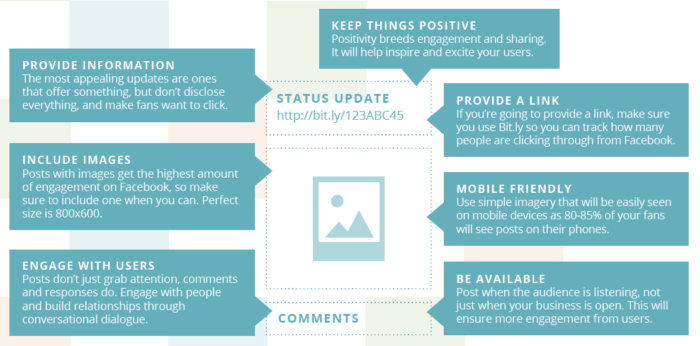
    • Keep it short and sweet. The ideal length for Facebook is around 40 characters.
    • Don’t use too much industry jargon. The medical industry is notorious for its jargon. Just don’t forget to consider your audience when posting. Complex terms can be off-putting, and your busy readers will appreciate your effort to break things down.
    • Don’t make every post promotional. Patients will find it helpful to know your biggest and most relevant updates, including new staff members, upcoming events, and special deals. But keep in mind that no one wants to read a revolving door of the same products and services your practice offers. This type of repetitive content is unlikely to be shared.
    • Know when to post for best results.
    • Use images whenever possible. According to Hubspot, Facebook posts with images get 2.3x more engagement than those without images. Consider adding more personal images as well, such as photos of your office, your team, or your patients. This lets readers get a glimpse at the faces behind the computer, and it adds a personal, familiar touch to your posts that can’t be gained with stock images alone.
    • Consider creating a weekly themed post. This gives your fans something unique and interesting to look forward to on a regular basis. Maybe you want to highlight a recent article you read, inspirational images, or products your practice recommends.
    • Share or repost interesting updates from other businesses. Give your readers a range of information by sharing relevant information posted by other practices, industry leaders, or medical associations. This can also be a good way to help build a referral network.
    • Share something silly every now and then. It’s true that the medical industry has a reputation for being serious, but adding silly content to your page just for the sake of sharing the joy can make you more relatable. Funny yet relevant comics, relatable e-cards, cute videos, and even animated reaction GIFs might seem off-topic, but these types of posts are often widely liked and shared. These can be great for extending your reach if your practice’s name is attached to the content.
    • Come up with interesting topics. Don’t be afraid to change things up! If you need help with this, try one of our favorite tools, Answer The Public, which can help you get an idea of what your patients might be searching for or interested in.

    Image Of The Ins And Outs Of Shareable Content - Search Influence

    These tips can go a long way in shaping your existing Facebook posts into something your fans will naturally be interested in. It can take time to master all of this, but even small steps can help increase your content’s shareability—and don’t forget that we’re always here to help!

    2. Engage With Your Audience

    Now that you’ve created your shareable posts, it’s time to sit back, relax, and watch the Shares and Likes roll in. Just kidding! The hidden “Part 2” to your shareable content journey is the engagement factor. Your audience will react and respond to your content, and they’ll also voice their own questions, comments, and concerns. Everyone wants to feel like they’re being heard, and responding to these inquiries shows your patients and potential patients that you’re invested in the discussion.

    One thing to keep in mind with Facebook is that if you’re in the habit of responding quickly, users will see your estimated response time right on the page. This estimate shows your attentiveness, which can be a great signal for potential patients on Facebook. So, don’t forget that taking even a few minutes to respond to your followers can go a long way.

    With the skills you’ve learned in this post, you’re already on your way to growing your medical practice on Facebook. Next time in our blog series, we’ll teach you how to enhance your Facebook campaign with promoted posts!

  • NEW ORLEANS, May 24, 2017 — The Plastic Surgeon’s Guide to Press Releases

    Search Influence has done a little blogging about press releases in the past, but now it’s time to kick things up a notch—or 16 billion notches. According to the American Society of Plastic Surgeons, Americans spent roughly $16 billion on plastic surgery in 2016, which is an all-time high. With thousands of plastic surgeons vying for a place in this lucrative industry, your practice should be using every tool at its disposal to keep up with the competition. One such tool is the press release.

    All About Press Releases

    The press release is THE classic public relations tool. It’s over 110 years old, but don’t worry—it’s still very relevant. The modern press release is published online and distributed through networks like PRWeb. A press release can inform media outlets about a newsworthy event related to your practice. Not only is this great for publicity, but it also helps with SEO. When reputable news sites run your press release or write a story about it, they provide authoritative backlinks to your website, which makes your website more authoritative in turn.

    Now, if you’re low-key panicking about what PRWeb, SEO, and backlinks even are, stop. Take a deep breath. Then, contact Search Influence to get all your questions answered.

    Image of a woman trying to decipher the workings of the internet - Search Influence

    If you’re already an SEO pro, great! Let’s move on to exactly what you should talk about in your practice’s press releases.

    Good, Newsworthy Topics

    Step one of writing a good a press release is choosing a newsworthy topic to write about. You should think of it as an announcement, not an advertisement. Press releases are not intended to hype your friendly customer service, compassionate care, or other unique selling propositions. They should not include a personal point of view, like “we” or “you,” and they should not include any promotional language. You probably are an exceptional surgeon who provides stunning, natural results, but PRWeb will probably reject your press release if you say as much. Instead, focus your press release on important recent events or developments.

    Here are some great ideas for topics to write about, courtesy of InboundMD:

    • Celebrating Milestones or Anniversaries
    • Participating in Community Events
    • Hiring New People
    • Acquiring New Equipment
    • Offering New Services or Treatments
    • Opening a New Location
    • Winning Awards or Honors
    • Speaking at a Conference
    • Publishing a Study

    All of these topics let you announce a new event or development that might capture readers’ attention. They also all provide the opportunity to frame your business as an objective leader in your field. A lot of practices could run ads claiming top-of-the-line equipment, but fewer practices could back up their claim with an objective and authoritative news story about acquiring new equipment. Press releases are a factual way to set yourself apart from other practices and stand out to potential patients.

    Sections of a Press Release

    Now that you have an idea of what to write about, let’s move on to some practical how-tos. Press releases follow a very specific format, and the sections are as follows:

    • Title
    • Summary
    • Body
    • Boilerplate

    The title should concisely announce your newsworthy topic. It should include your company name and an action verb.

    The summary should build on your announcement with engaging details to draw in the reader. For example, if the title announces that you published a study, the summary can explain how that study might impact surgical procedures or medical treatments in your field.

    The body is where the majority of the writing takes place. It should begin with a dateline, formatted like the image below:

    Image of a standard press release dateline example - Search Influence

    The dateline should be followed by a strong hook or lead to capture the reader’s attention. Then, the rest of the introduction paragraph should provide the reader with all the key details they need to know about your announcement. The following paragraphs should build upon these core details, until the final paragraph, which should briefly include your contact information.

    The body should be written in the third person, and language should remain objective, rather than promotional. However, you can include one or more quotations, from yourself or another knowledgeable figure, that can bend these rules a bit. A quotation can say, “I am proud of my practice’s dedication to technological advancements.” The rest of the body cannot. This is because the quotation is clearly attributed to an individual and framed as an opinion.

    The final section is the boilerplate, which is a brief, objective description of your practice.

    Pitfalls to Avoid

    Unfortunately, no list of things to do is complete without a list of things NOT to do. Press releases have fairly strict editorial guidelines, and as you know, the medical industry is heavily regulated. The following are some common mistakes made in plastic surgery press releases and how you can avoid them.

    It’s been mentioned several times already, but do not use promotional language or treat your press release like an ad. Objective language will not only get your press release accepted by PRWeb and news outlets, but it will also lead to more compelling writing. Again, tons of doctors claim that their practice offers experienced, well-trained care. You can prove that your practice offers such care by running a press release about the impressive experience and credentials a new hire brings to your practice.

    Don’t include general business information, except for your contact information and the boilerplate. It isn’t news that your practice offers Juvederm, Radiesse, and other injectable fillers. A lot of practices offer that. It is news, however, that your practice is the first in your area to offer a brand new line of injectable fillers. If you find yourself filling space with general business information, it might be a sign that you should choose a more in-depth topic.

    Don’t make any promises unless they are backed up by studies and statistics. This is not only because such promises can be too promotional for a press release, but also because everyone from Google to the American Medical Association has strict rules against misleading patients. Even seemingly innocuous claims about natural-looking or proportionate results can be flagged as misleading, as results can vary based on a large number of genetic and situational factors. To be safe, include reputable citations for all claims, and it doesn’t hurt to follow up with a disclaimer like “results may vary.”

    Ready to Start?

    This information should put you well on your way to writing the perfect press release for your plastic surgery practice. If you still have questions, or would rather leave the writing work to us, contact Search Influence! We’re happy to help.

    Images:

    Deciphering the Internet

  • Top 5 Ways to Bounce Back from a High Bounce Rate

    Growing up in New Orleans, hearing the word “bounce” means something completely different to most people. I hear the word “bounce” and immediately think of the music! After starting at Search Influence at the end of 2014, I learned that “bounce” also had a meaning in the digital marketing world.

    Artist Big Freedia at a parade - Search Influence

    Bounce rate is a value given to hits on a website from users that don’t stay on the site after viewing a page. This value indicates to Google that you might have uninteresting content or spammy content that users aren’t interested in.

    Though I’d like to take this blog in my usual direction (Beyoncé-themed), I will be paying homage to bounce music, the only bounce reference in my life until I was 29 years old. With the help of some local talent, here are the top five ways to help decrease bounce rate on your site.

    1: Interesting Content Updates

    Image of Rapper Juvenile at a basketball court in New Orleans - Search Influence

    Updating your website content to get Google to crawl your site is a great way to decrease your bounce rate. If you find yourself with a high bounce rate, try updating your content with industry news or new services you are providing. The best way to show Google, and your potential customers, that you are an expert in your field is to use fresh, up-to-date, informative content on your site.

    The way your content is displayed is also a part of this. Bulleted lists and paragraphs that are broken up into smaller “chunks” to display your information in a reader-friendly way are helpful in getting clients engaged and staying on your site.

    2: Navigation Updates

    Your navigation should be incredibly user-friendly so that users will be able to learn about you and your business. There should be a clear path a client can follow with your top level navigation, but not too packed where the user is overwhelmed. If there are too many options, then your user experience might need some work.

    This is also true for sidebars. If you have a sidebar on your site that is embedded in the template (i.e. it shows up on every page) make sure the links here are relevant for all the pages on your site. This  is usually a call to action button (learn more, get a quote, etc.) Having an attractive sidebar can help lead people further into your site and decrease bounce rate.

    3: Become a Google Analytics Wizard

    Image of Birdman rubbing his hands together - Search Influence

    Bounce rate is something that is documented in Google Analytics. Understanding where these numbers come from, what pages they are occurring on, what referral sites they are from, and almost 100 other factors are keys to decreasing your bounce rate. This step could be the trickiest, but that’s OK!

    Hiring a company like Search Influence is the easiest way to accomplish this step. Google has special training and certifications for their products so that people like me (and my fellow co-workers) can be masters at reading all of this amazing data so that you don’t have to.

    4: Enhance the User Experience

    There are a few things that you can add or take away from your site to enhance the user experience. If you currently have multiple pop-ups or widgets on your site to help push for sales, this may be an indicator of why your bounce rate is high. Users are less likely to click on these if they aren’t engaged in your site. Make sure that these aren’t bombarding the client during their natural reading of your content.

    Inversely, if you have a high bounce rate but no particular ad experience on your site, add some! Just be thoughtful about it. Adding catchy call-to-actions to get people to click further through your site is helpful in decreasing bounce rate.

    5: Update Metadata

    Image of Rapper Lil Wayne adjusting his glasses - Search Influence

    Making your site reader friendly for SERPs will not only decrease your bounce rate but also increase your organic ranking for Google. It’s a two-fer! If your landing pages have descriptive, catchy titles along with meta descriptions to entice the reader, you will be guiding Google and its users to the page they are looking for. Bounce rate commonly occurs when someone has landed on a page that they aren’t looking for. They quickly click off of the page because it’s not the information they need. If you have strong metadata, Google will know exactly which user you should be targeting and bring them to you.

    Bounce rate can affect your site’s performance as well as your business goals. Knowing what could be the culprit for your high bounce rate or preemptively updating your site to keep a low bounce rate is a marketing must for your strategy. It’s something that is manageable with the help of an expert digital marketing guru who also knows a thing or two about “bounce.”

    Images:

    Big Freedia

    Juvenile

    Mannie Fresh

    Birdman

    Lil Wayne

  • Google Paid Search vs. Facebook Paid Social: Team Players or Adversaries?

    When it comes to choosing between Facebook and Google advertising, it’s important to note what your business’s goals are. Both platforms are beneficial to business in their own ways and often work in conjunction to help businesses achieve maximum online visibility, gain more customers, and increase leads and sales. In order to best understand the opportunities with these two advertising channels, it’s important to know what each has to offer.

    Google Paid Search and Facebook Paid Social

    No one can deny that as far as search engines go, Google takes the cake. With more than 3.5 billion searches being conducted every day, Google is by far the world’s most popular and widely used search engine. Because of this, advertisers are able to reach a broad potential audience who may be seeking their products or services. Google AdWords, the PPC advertising platform for Google, allows advertisers to utilize the Search Network and the Display Network. Through the Search Network, advertisers can bid on keywords and phrases to trigger certain Google searches. The Display Network offers visual ads and can reach those who are not just searching on Google, but on other sites as well (i.e. a banner displaying your business’s logo on YouTube).

    Image Of Don Draper Discussing The Future Of Advertising - Search Influence

    Considered the pioneer of paid social advertising, Facebook has refined its process and has become an important part of many businesses’ marketing strategies. Like Google, Facebook is an extremely prominent website, with more than one-fifth of the entire world’s population active on the site monthly. Because Facebook users tend to share a lot of personal information—interests, relationship status, political views to name a few—Facebook advertising can target very specific demographics, showing Facebook users what they want to see.

    What Types of Ads Does Each Channel Offer?

    Both Facebook and Google include a variety of ad formats to appeal to a variety of audiences.

    Google Ads:

    • Text – These ads are only words, and can immediately reach customers as they search on Google.
    • Responsive – Size, appearance, and format can be adjusted depending on the ad spaces.
    • Image – Graphics that are static or interactive, and can be animated in .gif and Flash format. These can show on websites that partner with Google through the Display Network.
    • App Promotion Ads – As the name states, these ads can drive app downloads and engagement for your business. These will only show on devices that can support the app.
    • Video – These can stand alone or show in streaming video content on websites that partner with Google.
    • Product Shopping Ads – These show a photo, title, price, store name, and other details about a product you are selling.
    • Showcase Shopping Ads – This type of ad shows a product but expands when it’s clicked on to show related products and store information.
    • Call-only Ads – Ads that include your business’s phone number to drive phone calls. These types of ads only show on devices that support phone calls.

    Facebook Ads:

    • Domain Ads – With a simple format, this ad displays on the right column. This type of ad does not display on mobile.
    • Page Post Link – The most common of all Facebook ad types, this type of ad links to your external website and includes a large image for grabbing the attention of Facebook users.
    • Carousel Ads – A relatively recent development in Facebook advertising, these ads allow e-commerce advertisers to showcase up to five of their products, each with its own picture, link, and title.
    • Dynamic Product Ads – These ads target based on past actions on your website, also known as remarketing.
    • Lead Ads – Allows Facebook users to fill out a form on either desktop or mobile directly from Facebook.
    • Canvas – Only available on mobile, customers can interact with the ad by swiping through the carousel, zooming in and out or even tilting the images.
    • Page Like – This allows users to immediately like a Facebook page.
    • Page Post Photo and Video – Showcases pictures and videos from your business. Video advertising is especially engaging as Facebook video receives up to 8 billion video views per day!
    • Mobile and Desktop Apps – Similar to Google’s app promotion ads, these drive installs of a business’s app to mobile and desktop.
    • Event – Allows a business to promote their event to visitors.
    • Offer – This type of ad can only be created on a page with at least 50 likes, and it allows a user who clicks on the ad to redeem a special promotion.

    Google and Facebook: Friends or Foes?

    As previously stated, it’s highly common for Facebook and Google to be utilized together in a marketing campaign for their different advantages. Many marketers are drawn to Google because of the search volume and opportunity for exposure there. Google allows for targeting based on location, keywords, demographics, devices, and languages, as well as re-marketing, which can target users based on searches that have previously been conducted. While PPC ads are text-based, advertising opportunities are versatile. Extensions, user reviews, map data, and shopping ads are just a few examples of how Google advertising can be further optimized.

    Facebook advertising is not only extremely targeted but also highly visual, which many see as an advantage over Google. Facebook ads are essentially unavoidable, appearing in your target audience’s News Feed or the right column of their page. Because advertising on Facebook is based on specific insights and interests, chances are that the ad will be more engaging to the user.

    Image Of the Internet Being Friends - Search Influence

    Perhaps the biggest difference between each platform is the behavior of the users. When searching on Google for products or services, users have an idea of what they are looking for. Facebook, on the other hand, is not typically used to seek a product or service. However, the likelihood of a Facebook user to be exposed to a product or service that appeals to them is very high.

    While Google and Facebook are often seen as adversaries in the marketing world, the possibilities with each vary greatly. Try this team together for utmost potential in maximizing any campaign’s performance.

    Image Sources:

    Don Draper & The Future Of Advertising

    The Internet Shaking Hands

  • Grow Your LinkedIn Network With These 3 Optimizing Tips

    With over 400 million users, LinkedIn has become a social networking must for companies large and small. While other platforms like Facebook and Twitter are commonly used in marketing and SEO campaigns, LinkedIn can have a significant impact on online visibility and SEO opportunities. Instead of neglecting your LinkedIn account, utilize it to grow your business’ traffic and network.

    1. Be Consistent

    The Devil Wears Prada Who Are You - Search Influence

    For your traffic to increase, customers have to know it’s you. One of the biggest mistakes a company can make is not maintaining brand consistency across all marketing platforms. LinkedIn provides you with the opportunity to upload banners, background images, videos, and photos. Utilize all of these to tie back into your brand, logo, tagline, and color scheme.

    This also applies to the written content on your LinkedIn profile. If your business’ website uses a formal tone, don’t be overly casual on your social media. This creates brand confusion and can lead to customers not connecting with you because they think you’re someone else. Don’t lose out on growing roots with a client because someone can’t figure out if your profile is the right one.

    2. Engage Your Network

    Parks And Recreation Aziz Ansari On Social Media - Search Influence

    While you may have a lush profile, if it’s not active, no one is looking at it. It’s important to create, share, and like fresh and relevant content to your industry. Shower your followers with content at least twice a day and watch your network grow. This keeps your profile engaging as well as current. When creating or sharing content, make sure to add variety. For example, it can be good to post an interesting article in the morning and then ask an engaging question in the evening. This allows for different types of client interaction and can make a profile look more personable.

    As I’m sure you’re aware, blog posts are great when it comes to a site’s SEO. By posting your company’s blog posts on LinkedIn, you not only help your profile, but you also improve your website’s ratings, which can lead to more business.

    3. Let Your Keywords Shine

    SEO Friendly - Search Influence

    While your company can be searched on LinkedIn by name, it can also be found by keywords. The keywords used in your SEO campaign are the same words you should be using on your social media platforms. Your keywords should shine through your content from your posts, to your description, and to your headline. While it’s still important to stay natural, try to fit in a keyword or two in the first 156 characters of content on your profile. Google previews these first characters, and with the help of keywords, your profile can be more easily found.

    LinkedIn Superman - Search Influence

    By not growing your LinkedIn network, you’re leaving opportunities like referrals and website traffic in the dust. Social media platforms are crucial to interacting with current and potential clients. As LinkedIn’s numbers grow, so can yours. Make sure your profile is the cream of the crop and optimize.


    Image Sources:

    Devil Wears Prada Image

    Aziz Ansari On Social Media

    LinkedIn Superman


  • Marketing to Males: How Can Your Cosmetic Surgery Practice Draw in More Men?

    In a society that remains focused on physical appearance, plastic surgeons have plenty of healthy competition to appeal to the audience in their community. Because plastic surgery procedures are being purchased overwhelmingly by women—in 2016, women purchased 90.7% of plastic surgery procedures compared to 9.3% purchased by men—most marketers target female prospects. However, research shows that doctors could be doing a lot more with their marketing strategies when it comes to targeting men.

    A New York University Medical Center study demonstrated the highly female-centric marketing campaigns being implemented by plastic surgeons. After analyzing 453 websites and 4,239 images on plastic surgeons’ websites, only 5% of the pictures included males, and 0.9% depicted both men and women together—not to mention that only 22% of these websites included any services related directly to males. In fact, some plastic surgeons completely ignore the male market in online marketing efforts or minimize them significantly.

    While popularity in some procedures has risen in male patients, plastic surgeons are seeking appealing and effective ways to market their services to men. What exactly is drawing in the men who are getting these procedures? Research shows that the following factors could help influence men to feel comfortable undergoing plastic surgery procedures for issues they want to resolve, ultimately helping them to gain more confidence.

    Dos Equis Man Jazzed About Plastic Surgery - Search Influence

    Pay Attention to What’s Already Popular

    When it comes to marketing to male consumers, it’s important to note trends. At the top of the list of surgical procedures performed on men in 2016 were liposuction, breast reduction, eyelid surgery, nose surgery, and facelifts. Popular non-surgical cosmetic procedures included injectables like Botox and Sculptra, as well as skin rejuvenation procedures like dermabrasion. Choosing to focus on these procedures and providing a plethora of before-and-after photos of men who have had these procedures done could prove beneficial to your plastic surgery ad campaign. Plus, the images can demonstrate the natural results that men may be seeking if they associate cosmetic procedures with highly noticeable and dramatic results.

    Focus on Youth and Energy

    The last thing that any male—or person, for that matter—wants to hear is that they look “tired.” Appearing to lack energy can be detrimental in a lot of ways, especially in a busy workplace that may be riddled with young people vying for the next promotion. By decreasing wrinkles and folds through plastic surgery, the fatigued look improves dramatically. Many men want to restore that youthful, energetic look that they had in their twenties, and this could provide effective fuel for your ad campaign. Again, consider highlighting before-and-after photos that demonstrate the great results men might not know they’re looking for!

    Target the Dads

    After years of raising kids, it’s hard for the stress and work not to take a toll on the body and appearance in general. Child raising years are common for the appearance of wrinkles and weight gain. Fathers are an excellent and relatively untapped market for plastic surgeons, in a similar way that mothers have been an effective marketing target. Try changing the dialogue in your ads to focus on hardworking fathers who deserve to treat themselves to a naturally younger look—a.k.a. the “Daddy Do-Over.”

    New Girl's Schmidt Celebrating Himself - Search Influence

    Emphasize a Natural Yet Rugged Look

    While many men may attribute plastic surgery to women and femininity, in reality, strong, masculine features can be enhanced with procedures that can provide natural-looking results. Some of Hollywood’s most notable and masculine heartthrobs haven’t come by their looks completely naturally. Even Dwayne “The Rock” Johnson confessed to having liposuction performed on stubborn flab, and George Clooney admitted to having an eyelid lift to help achieve his youthful glow. Men’s grooming is increasingly popular and less taboo than it has been in previous years, and the idea of shaving off ten years is now a highly acceptable idea.

    Beauty And The Beast Gaston Showing Off His Manly Chest - Search Influence

    Market to Couples

    Perhaps one of the more effective tactics is to reach men through their girlfriends or wives. It isn’t uncommon for a husband or boyfriend to use his girlfriend’s or wife’s products and to become hooked on the results. This can translate to cosmetic procedures as well: if a female significant other comes back from a cosmetic treatment with a refreshed glow, this becomes a recommendation in itself. Target your marketing to couples by age, encouraging them to enhance their bodies together or to reclaim their youthful looks.

    Pay Attention to Male Shopping Trends Online

    Men are increasingly turning their shopping experiences into social experiences, comparing prices and discussing them with others via social media. While this type of online behavior has been typically associated with women in the past, it is becoming increasingly popular among males. An online study from ManScan shows that 72% of men compare prices online, 56% read reviews of products and services, and 44% share this information with others. In many cases, the products and services discussed involve health and wellness. This information bodes well for the sharing of information about potential surgical procedures. By using a cost/benefit analysis with cosmetic procedures, plastic surgeons may see positive results with the male market.

    The male market provides an excellent opportunity for cosmetic surgeons to grow their practice through online advertising. By focusing on trends and behaviors, targeting men in ads can prove highly beneficial when done well. Consider these ideas and get more clicks to your website.

  • Home Sweet Home: Think of Your Website Like a House to Help Your Business

    It’s the American dream: work hard, build your business up, start a family, and buy a house with a white picket fence. Most of us are cruising for the same kind of idyllic dream for our business as well, even if we have a harder time figuring out how to get there. But what if I told you that one of the biggest factors contributing to business growth was, basically, a house? One you don’t need a mortgage to buy.

    Ok, so it’s not really a house: it’s your website.

    Image Of A House Working Like A Website - Search Influence

    But a website is a lot like a house. Its construction and design both build on top of each other and work to create a structure that is your business’s online home where people come to visit you. If you need a general contractor to make sure your house isn’t going to cave in, you can request a site analysis from us. But if you’re unsure if that’s necessary, or you’re just really obsessed with House Hunters and need to see where this is going, read on.

    Building From the Ground Up

    Your realtor wants you to see a new house on the market. First things first: you have to drive to it. The road you’re on is like the internet. You can get pretty much anywhere, and each road feeds off into more roads, creating the path you take (or the black hole you find yourself in when you’re “taking a five-minute break”). To avoid following random roads and hoping you get where you want instead of the Arctic, you need to know what your destination is. For a house, that’s the address. For a website, that’s the domain, also called the web address. See, I’m not making this all up; they’re completely related. The domain name in the example URL www.exampleswag.com is “exampleswag.”

    Image Of Floating House From Disney's Up - Search Influence

    So you know how you’re getting there, and you know the address, but what are you going to? Houses don’t float in the sky, and it would be very difficult for municipalities to enforce building regulations if they did.

    Just as a house sits on a physical lot, so too does a website have a physical home—the hosting and server. The server is a physical machine that sits somewhere out in the world, storing all the files that comprise your website onto its hard drive. Your hosting administrator owns and maintains the servers. When you pay someone like GoDaddy or HostGator to host your site, you’re asking them to host your website’s files on their servers, essentially renting land from them to build your house on. Sketchy real estate practice, but totally normal and secure for websites.

    Front End and Back End

    So you roll up to the house with your realtor for the walk-through. What exactly are you looking at as you’re exploring the property? On a website, there are essentially two different halves: the front end and the back end. The front end is everything a visitor to your site can see and interact with, similar to the walls, furniture, and doorknobs in your house. The back end involves the more structural aspects of the site: the wiring, plumbing, and framing of your house. When you’re buying a house, you want it to look nice on the front end and to have all the features you need (clawfoot bathtub, anyone?), but you also need it to function well on the back end. It doesn’t matter how beautiful the granite countertops are if the roof leaks every time it rains. This is why it’s so important to ensure your website has good bones. You can request a site analysis from us to find out where yours stands.

    The Foundational Platform

    Your website is built on a platform just like your house is built on a foundation. Popular platforms include WordPress and SquareSpace, but there are others. These two, in particular, are so popular because they are CMSs (content management systems) with really user-friendly interfaces. Once you get your CMS “key,” meaning the CMS platform has been installed on your site, you get easy access to all the contents of the house and can move furniture around and paint walls to your heart’s content.

    You could, of course, build your house without a foundation, or build your website from scratch one line of code at a time instead of using a CMS. It’s a pretty big job, and it really only works best for websites with few, static pages. Best to leave the roughing it to the survivalists and Mainer moose hunters.

    Bricks and Mortar: What Is Your Site Actually Made Of?

    The first known use of lime mortar was in 4th century BC Greece and Egypt. The first publically available description of HTML was in 1991. Times are a-changing, but structural integrity never goes out of style. HTML stands for HyperText Markup Language, but essentially it’s just the basic coding language used to create a website. Its primary use is to create each page of the site. It’s the framework that holds all of your stylish branding and outstanding content. Speaking of style…

    External Stylesheets Are the New Black

    HTML can be used to add some style to your website, but it’s a bit limited to tinted plaster and popcorn ceiling—think of the oldest website you can remember visiting because it was probably all HTML. The reason it looks so basic is that HTML is also what makes the bones of the house, so it ends up being a bit like trying to use the insulation of your house to create the wall color when that’s just not the insulation’s job.

    CSS (cascading style sheet), however, exists outside of the construction of the functional aspects of the site. All the CSS code is accessed separately from the HTML, so the style is rendered on top of each page as it loads. If HTML is the framework, CSS is the paint, wallpaper, and fancy flooring of your house. You can go crazy with customization and design whatever you can envision (I’m thinking mauve, personally).

    CSS can be housed above the fold content, the chunk of code that fits within the frame you see when the page first loads, but it’s better when it’s kept on an external stylesheet. An external stylesheet is a separate file from the page file and is accessed from the server individually to render a given page. When your site keeps the styling on an external stylesheet, search engines can clearly distinguish between style and substance as they go through the page code, leading to faster and more accurate crawls.

    Bringing In Personal Style

    The house has been bought and built, it’s all spruced up with trendy finishings, and now it’s time to fill it with furniture. Website copy is your site’s furniture. Having stellar copy is important for two reasons: it gives function and form. Each room in your house is divided into different functions by the furniture. Having content on each page of your site that is focused on the topic of the page tells visitors what information they should be expecting from that page and makes it easier to navigate to the information they want. When a guest comes to your house looking for a bathroom, for example, they’ll know which room is the bathroom because they will see bathroom furniture, and they will skip over the room with a bed because they know beds don’t live in bathrooms.

    In addition to having informational and focused content, you need to have strong content. If your copy is full of typos, lacks value, or has a tone that is off-putting to your readers, they’re going to leave, no matter how well the rest of your site functions. Would a guest notice your stunning parquet floors if they’re covered in dirty rugs and chairs that probably aren’t safe to sit on?

    Putting All the Pieces Together

    In the end, each piece of your website ends up working with the others to create the site, and if one isn’t receiving top marks, the whole site isn’t meeting its potential. After all, it only takes one dealbreaker to turn a dream house into a fixer-upper. But you can make your dream house work for you and your business. Take a good hard look at how your website looks now (or use the audit you’ve cleverly gotten from us as a guide), and decide what work needs to be done. If you’re not the DIY home improvement type, don’t worry—Search Influence has master carpenters on staff, so reach out to us for help!

    Image Of A Beautiful House Revealed - Search Influence