Author: Search Influence Alumni

  • 5 Rookie Mistakes That Will Ruin Your New Website’s SEO

    SEO Mistakes to Avoid

    Here at Search Influence, we take pride in providing valuable SEO information and tips for our clients, from the nitty gritty of Google’s algorithms to the basics of designing a great website. Our recently published white paper covers 5 SEO mistakes that could be lurking in your web design. Here’s a rundown of the rookie mistakes you may not know you’re making.

    Your Site Is Too Slow to Load

    Large, unoptimized images on the landing page can significantly decrease site speed. Not only does this lead to poor user experience, it affect how Google ranks your site in searches.

    You’re Not Allowing the Site to Be Crawled

    Web crawlers are how search engines know pages of your site exist and what the pages are about, so restricting their ability to crawl and index essentially renders your site invisible in search results.

    Your Site Isn’t Mobile Friendly

    Mobile Phone

    More and more people use phones and tablets to access the internet. You can miss a large percentage of your target audience if you do have have a mobile friendly site.

    It’s the Wrong Kind of Flashy

    Relying too much on Flash elements can slow down your site and causes complications for mobile users. And while single page sites can be visually appealing, you can miss many optimization and analytical opportunities.

    The Content Is Weak

    When it comes to Google’s algorithms, text is more important than visuals. Good content gives a better understanding of what the page is about, for crawlers as well as human readers. And old fashioned SEO techniques, such as keyword stuffing, can do more harm than good.

    If you’re concerned that your site may be suffering from any of these problems, fear not. Check out our white paper for more detailed information on each of these concerns. Once you have a better understanding of the issues at hand, you can reach out to your web developer or one of our SEO specialists to begin addressing your concerns.

    Image 1 Credit

  • Did You Catch All of That? A Rundown of Our Top May Blogs

    It’s summertime! May was full of so many informative and fun Influencer blog posts, not to mention the laugh-out-loud-worthy gifs. If you haven’t caught up with all of our blogs yet, here’s a quick run-down of all the top blogs from May.

    Kitten Gif

    What Happened to Facebook’s 20% Text Grid Tool?

    The Cliff’s Notes version is that Facebook has 4 categories for the amount of text allowed on an ad: “OK”, “Low”, “Medium,” or “High.” A “High” amount may not reach your audience, but you may also have more room to be flexible with the ad. To every rule there is an exception: Movie posters, book covers, and product images don’t “count” as text.

    Why Social Media Is Critical for the Growth of Your Business

    We all know that social media is here to stay, but here’s the nitty gritty with the reasons why. Bottom Line: your customers are active on social media—a whopping 76%—and Facebook remains the real winner with the most users.

    13 Things We Wish We Could Tell Our Younger Selves: A Guide for Graduating Seniors

    As graduating seniors, there’s so much pressure to go out in the world and do great things. Fear not, 13 of our employees provided solid advice for those entering the workforce. From knowing it’s okay to ask for help, keeping your goals in mind, or reminding yourself that you shouldn’t just accomplish things just to check them off your list, these pieces of advice are bound to make an impact on a young graduate’s mind.

    Oh No! Where Did Medical Schema Go?

    For anyone in the medical field, or anyone interested, there’s a new version of medical Schema. The changes involved include a new extension, which have been moved to another subdomain and more extensions are most likely on their way.

    Seeing Colors? Google Expands Paid Ads

    Hopefully you didn’t miss a major Google update, which involved paid ads in two new areas, Local Finder ads and Maps ads. With the Local Finder, the reduction of five displays to three wasn’t enough for users, so Google integrated some paid ads. Regarding Maps ads, ads are now shown in purple font, positioned at the top of the results, and a purple icon is added directly in the map.

    Kramer Gif

  • Paper Vs. Digital To-Do Lists? Influencers Give Their Opinions

    1608-SI-TheInfluencer-KL-A-05Large

    If you take a moment to look around today’s workplace, you will probably notice two sets of distinct people: those that use technology for everything, including their to-do lists, and those “old schoolers,” who embrace technology but are quick to pull out a tablet and pen to write down everything they need to do. I wanted to find out more about this phenomenon here at Search Influence, so I interviewed four colleagues to get the scoop on how they complete their tasks. Here is what I found out.

    Influencers:

    • Chris Roberts – Software Developer
    • Jensen Quadros – Account Associate
    • Presley Brouillette – Account Manager
    • Mary Silva – Internet Marketing Team Lead

    How do you get your projects done on time? Do you prefer writing your to-do list down, or do you use an online reminder system?

    CR: Dev Team uses two software programs, Trello and Pivotal, to keep track of projects. We check these routinely throughout the day and keep most project related information stored there.

    JQ: I prefer writing down my task list on a notepad. All the work we do is on the internet and all of our systems are on the computer, so being able to write a to-do list down is something I like. I get all my work done on time by making sure I’m getting as much crossed off of my list as possible by the time Friday comes around. Sometimes, I put items with later due dates on my list just in case I have extra time to get ahead.

    PB: I don’t have an online reminder system; however, I just use a Google Sheet and type everything in there. Each day, I highlight the things that I need to get done that day, whether it be client related, internal project related, or follow ups. That way, I know how I should manage my time. If for some reason I cannot get something done, I will re-date it for tomorrow and make it a first priority.

    MS: HANDWRITTEN TO DO LISTS ARE THE BEST! I use a journaling bulleted list system—but I developed some of my own symbols outside of traditional bullet journaling—in my Search Influence Moleskin.

    How does your organizational system help you or your team stay organized?

    CR: It facilitates collaboration between team members and visibility to management, plus our team is familiar with these two systems.

    JQ: I use this list system because I like having a physical copy of my list in front of me at all times. I frequently have lots of different tabs and windows open, so even if I did keep my to-do list in a Google Doc, I wouldn’t be looking at it as much as I look at my physical copy. I also like organizing my list by client because, when I check on each client’s campaign to create my to-do list, I get an idea of where the client is overall. Thus, I’m not blindly writing down tasks on my list; I have an understanding of where each task item is in the scope of the client’s campaign. This is especially helpful when you’re working in account management.

    PB: The best thing about having something in a spreadsheet is that you can link directly to other things. Because we work in online marketing, most of the things we do are online. That being said, in my spreadsheet, I can directly link to client websites or our internal task management systems.

    MS: I prefer a handwritten to-do list for two reasons. For one, I think actually writing what I have to do down helps me think through things more critically and also helps each thing on my to-do list stick and stay top of mind. The other reason I prefer writing my to-do lists is that in my role working on the technical production side of Search Influence, I often have at least 20 tabs or windows open in Chrome and ten applications open on my computer throughout the day. Having a digital to-do list would add to the clutter and also make it harder to navigate to quickly. I like being able to just look down at my bullet journal and get to my next to-do easily. Bullet journaling in particular is great because it works well for longer to-do lists—I often have 30 to-dos on my list a day. It allows me to get everything down as it comes up while still prioritizing along the way, not having to create a new list as new things come like you would for a chronological-type list where the first thing is highest priority.

    How do you prioritize your to-do list: by importance or by due date?

    CR: Currently, our managers meet weekly to prioritize software tasks.

    JQ: I prioritize by order of importance and by due date. I have an understanding in my mind of what items will be most important to get done by each day of the week. It’s really common for other things to pop up in the middle of the day and divert my attention from my to-do list, but after I’m done with the one-off item that needs my attention, I go back to my list.

    PB: A little of both. I highlight everything that has a due date of today. From there, I prioritize things by importance.

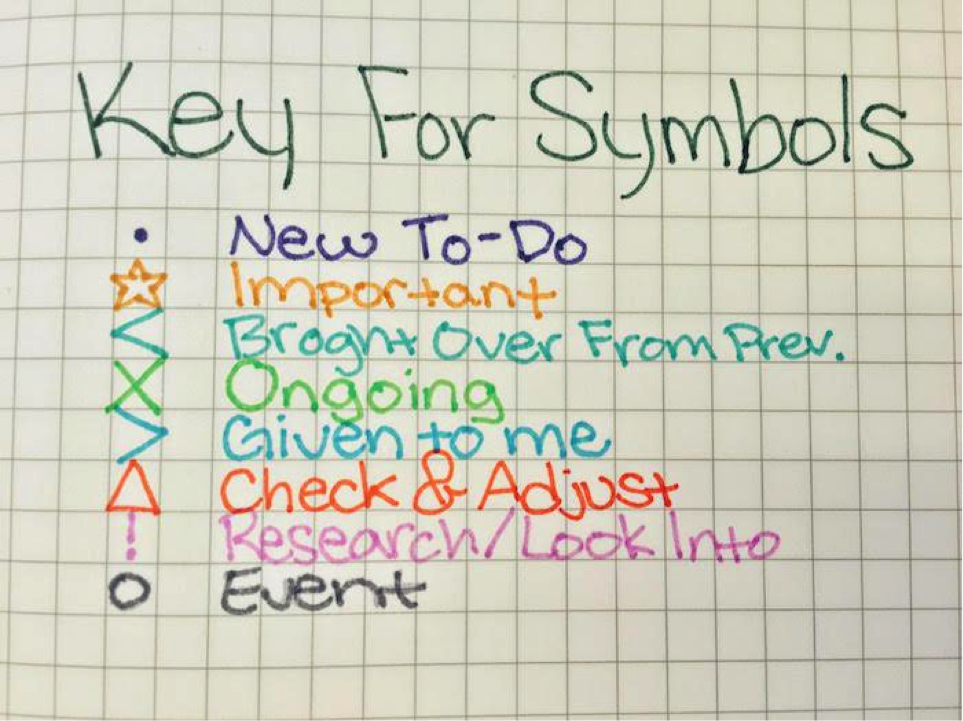
    MS: The bullet journaling makes prioritization easy. Here’s a picture of my “key” for marking objects:

    Bullet Journaling

    I don’t usually color code my actual lists because the symbols themselves are great enough to easily differentiate to-do list entries. The symbols not only allow me to tell that obviously something that has a star next to it is really important but also indicate that something with an exclamation mark, which means to research or look into something, might take longer and be less time sensitive. So it might also be lower priority.

    How often do you update your to-do list?

    CR: Multiple times a day.

    JQ: I update my to-do list once a week. Every Monday morning, I spend a good bit of time checking through each client’s campaign. After I figure out what items need to be completed for the week, I start working right away.

    PB:  Literally all day, everyday! Nothing better than deleting something that you completed!

    MS: Daily. When I create my new list for the day, new items are marked with a dot. For old items, the dot becomes a left facing angle bracket (“<“), indicating that I let it go a day and therefore increased its priority. I also just really enjoy the satisfaction throughout the day of physically crossing things off my list when they’re done.

    What would happen if you lost your to-do list system?

    CR: We would probably attempt to recover the data and switch to another system.

    JQ: If I lost my to-do list, I would have to create another one. However, I wouldn’t want to do that because I spend a lot of time creating my to-do list!!

    PB: I don’t even want to think about it. Die from a heart attack probably.

    MS: I’d probably forget to do a few of the things, but generally since I hand write my lists, I think I have them pretty firmly etched in my brain.

    Feature Image Credit

  • 5 Tips to Improve Local Search Rankings Even If You Don’t Have a Physical Location

    SAB Image

    If you’re new to the world of SEO, trying to optimize your business on the internet can feel like you’re trying to solve a Rubik’s Cube: You have an idea of what the finished result should look like, but the process leading to the final product may feel convoluted. Given that SEO strongly emphasizes the importance of NAP consistency, it’s possible to feel even more puzzled on how to optimize your website if your business does not have a physical storefront.

    Follow these five tips and you will be on the path to success.

    Do I own a service area business (SAB)?

    Before diving into how to optimize for a service area business (SAB) website, it’s important to identify whether or not your business is a SAB. A SAB is a business that does not service customers at the business’s physical location. Instead, an employee will travel to the customers to provide goods or services. Examples of SABs include HVAC companies, limousine companies, house cleaning services, landscaping services, mailing services, etc. (My favorite example of a SAB happens to be the ice cream truck that comes to my neighborhood during the summer.)

    Ice Cream Truck

    Know thy service area.

    If your business is a SAB, you will need clear answers to the following questions for a successful online optimization campaign:

    1. What is your service area, and how far will you travel?
    2. Do you have multiple service areas? If so, where?

    Tips & Recommendations

    1. Targeted Area Pages – A targeted area page is content that is specific to the area you are trying to service. The title tag, on-site content, H1, and meta description can be optimized to the specific location you service. For targeted area pages, the content should contain location specific information, such as specials that apply only to that area, customer testimonials from locals, completed projects in the area, and even location-specific videos.
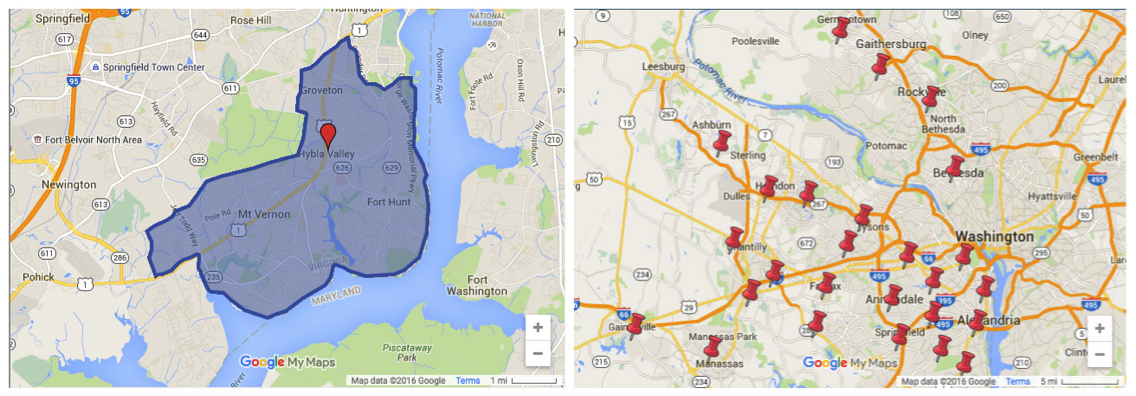
    2. MyMap – A MyMap is a custom map that outlines the specific areas your business serves. It implements a visual on your website for a better user experience. You can create a standard one, shown below on the right, or even customize your MyMap, like the one shown on the left.SAB Search Results
    3. Categorical Directories – When you submit your business to a directory, you are receiving an authoritative link back to your site, which provides referral traffic and in turn strengthens your site authority in the eyes of Google. (The saying “You are judged by the company you keep” is a common expression that is helpful in understanding link building from authoritative sites.) While directories can advance your SEO goals, be sure to submit your business to a categorical directory instead of a local directory. Unlike a local directory that is organized by a business’s NAP, a categorical directory is organized by industry.
    4. Get5Stars – Reviews are a great way to reinforce that your business services multiple areas. Get5Stars is a tool that allows for customers to leave reviews on your website. In turn, you can review the client feedback before publishing it live on your website.
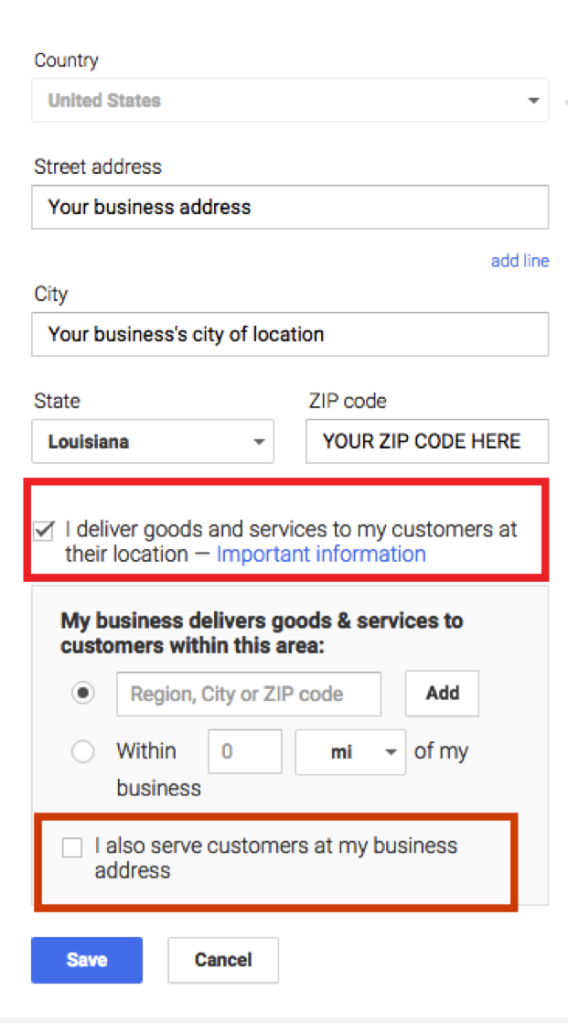
    5. Optimize your Google+ correctly – When you are setting up your Google+ page, be sure to select the box that says “I deliver goods and services to my customers at their location.”

    Google My Business Screenshot

    Follow this up by filling out the ZIP codes you service. If you are a SAB that also accepts customers at your storefront, you can check off the second box. Optimizing your Google+ page correctly will hide your physical location from the viewer while also increasing your page’s authority on the maps pack for the areas you serve.

    Words for the Wise

    When optimizing your SAB online, avoid from these common mistakes:

    1. Advertising your P.O. Box address as a physical location
    2. Portraying an existing business as your own
    3. Using a virtual office address
    4. Creating identical targeted area pages (also called “Find and Replace” pages where the content is exactly the same but only the geo modifiers are different)

    Still have questions? Watch our recent webinar for more information and tips.

    Ice Cream Truck Image Credit

  • Should Each Franchise Location Have a Separate Facebook Page?

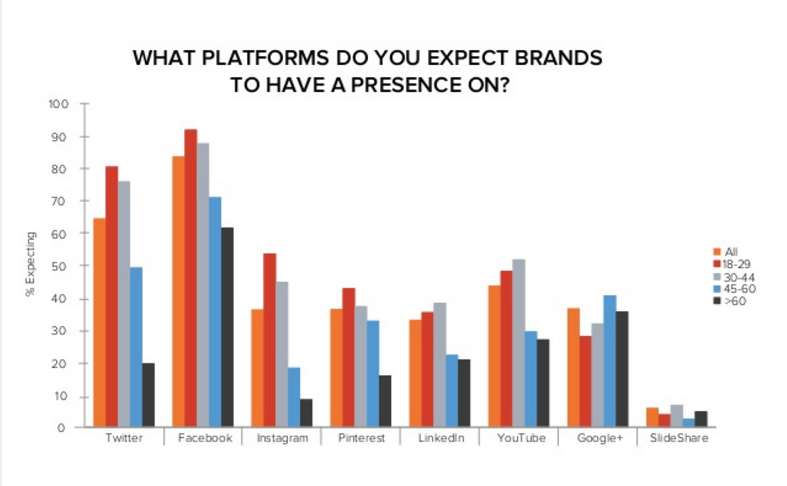
    It’s no secret that Facebook is a social media powerhouse. With an average 1.09 billion daily active users, the platform has transformed the way people interact with each other and the world around them, and has revolutionized the way and speed at which we can access information. As consumers turn to Facebook more and more for information and as a means to connect with people, it comes as no surprise that an increasing number of people expect companies to be active on Facebook. According to a study performed by Hubspot, 95% of Millennials expect brands to have a Facebook presence.

    Hubspot Facebook Survey

    Having an active presence on Facebook is no doubt a great way for brands to connect with their consumers on a more personal level, as well as a cost effective means to target new customers. However, what does this mean for franchises with multiple locations? Should each location have its own Facebook page, or should the franchise have one page that represents the brand but not necessarily each location?

    Dan the Man ??

    According to Mashable, there are several questions a franchise should answer before deciding upon its Facebook strategy.

    Does your business have components that vary based on the location?

    For example, does your business offer different promotions, products, pricing, decor, etc. based on the location? If so, your business may benefit from delegating Facebook management to individual locations. By allowing franchisees to post their own content, each location can have more personal interactions, something that is very important if your business varies slightly based on location. Take McDonald’s, for example. Their menu varies based on the culture of the location. Therefore, they take a decentralized approach—they have a corporate Facebook page but also allow each location to manage their own pages.

    Does your business benefit from a close relationship with its customers?

    Service businesses are the perfect example of businesses that benefit from a close relationship with its customers. These businesses rely on positive interactions with customers. Because so many people are on Facebook, this is a great way to reach and interact with consumers on a personal level. Allowing franchisees to post their own content allows the brand to take on a personality as well as establish themselves as an involved player in the local community. Having a positive and strong presence on social media can be very beneficial in building strong customer relationships.

    Are your industry’s consumers on Facebook?

    It’s important to analyze if your target demographic is active on Facebook. For example, while 90% of Millennials are active on social networking sites, only 46% of seniors use the platforms. It’s important to analyze this to ensure that your marketing efforts are not falling on deaf ears.

    Where are your locations?

    While all of the above data seems to point towards a decentralized approach, there are many businesses that benefit from a centralized Facebook strategy. For example, if all of your locations are within one city or region, one Facebook page makes sense. Instead of oversaturating the market with multiple pages, it’s better to have one page that represents all of the locations within that city or region.

    It’s also important to note that by allowing franchisees to post content, you forfeit complete control over your brand. By entrusting franchisees with managing their own Facebook presence, you are allowing them to represent your brand in every post, comment, or picture posted. However, in order to help guide your franchisees in post content and tone, a franchisor can provide them with Social Media Guides outlining their dos and don’ts for posting. Planet Fitness is a great example of this. While they do have a corporate Facebook page, they also empower each of their locations to manage their own Facebook page. The goal of the location pages is to drive local engagement and interaction within the community by posting about community events, special club promotions, and specific club information.

    Unfortunately, there is no hard and fast rule. However, by assessing your industry, customer demographics and company culture, you can choose the best Facebook strategy for your franchise.

  • 10 Things Your Medical Practice Should Be Doing on Facebook

    A How-To Guide for Growing Your Practice Using Facebook

    We all like to think of ourselves as Facebook experts. This is 2016 after all, and Facebook has been around for over eight years. But the resting state of the online world in our internet age is continual flux, with updates and improvements becoming available quicker than you have the time or energy to research and evaluate. We know you’re busy, so let us give you the tl;dr (too long; didn’t read) version, with some easily employable tips and tricks that you should be using on Facebook.

    1. Engagement, Engagement, Engagement!

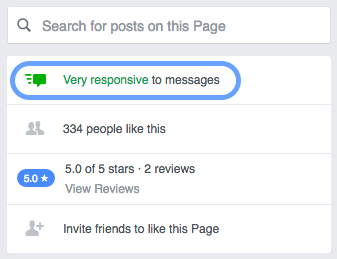
    Relationships can’t be one-sided, so make sure your Facebook fans see the benefit in keeping up with your page by responding to their comments, questions, and concerns. Just like your patients, your growing fan base wants to feel like they’re being heard. Taking just a few minutes to reach out to them and address their inquiries will keep your current fans happy and could even help you gain more interested Facebook followers. And, with Facebook providing users with an estimated response time right on your page, it’s more important than ever to quickly and thoroughly respond to your fans.

    Facebook screenshot: Very responsive to messages

    There’s a reason it’s called social media! For more tips on posting irresistibly engaging content, check out this post by a fellow influencer.

    2. Create Shareable Content

    The key to great Facebook messaging is shareability. Creating compelling, viral content that your fans can’t help but pass on increases your reach outside of your social network, earning you more fans and more influence. Consider curating a monthly list of debunked medical myths or posting an article detailing easy lifestyle changes that result in major prevention benefits.

    3. Show Me the Money!

    Facebook Y U No Keep Algorithm?

    With subsequent Facebook algorithm updates, overly promotional posts are receiving less and less organic distribution on the platform. Thus, it has become increasingly important to put some spend behind your posts in order to engage specific audiences, especially since gaining fans doesn’t necessarily mean your content will reach those fans. Appealing to your growing fan base and encouraging engagement and familiarity with your products, services, and industry through post promotion is an extremely cost-effective way to combat these updates.

    4. Practice Events

    Facebook events are a great way to get your business and services in front of the community. Create your own events around prevention, fundraisers, and community outreach. Is your practice offering free flu shots? Create an event and allow people to invite their friends. Watch your RSVP list grow!

    5. Community Events

    Events can also be a great way to express your involvement in your community. Do you have a team participating in Relay for Life or a March of Dimes event? Show your solidarity, and encourage your fan base to support your favorite cause by creating your own Facebook event or attending one!

    6. Know Your Audience

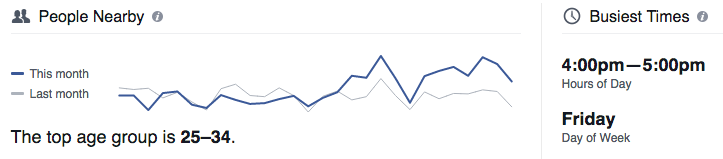
    Being familiar with your fan base can help you provide content and services tailored to your fans’ interests. The Audience Insights tool can provide you with an invaluable cache of information. You can analyze the times of day your fans are most active on Facebook, the makeup of the Reactions your posts receive, and even the demographic makeup of Facebook users near your place of business.

    Facebook screenshot: People nearby

    7. Analyze Your Reactions

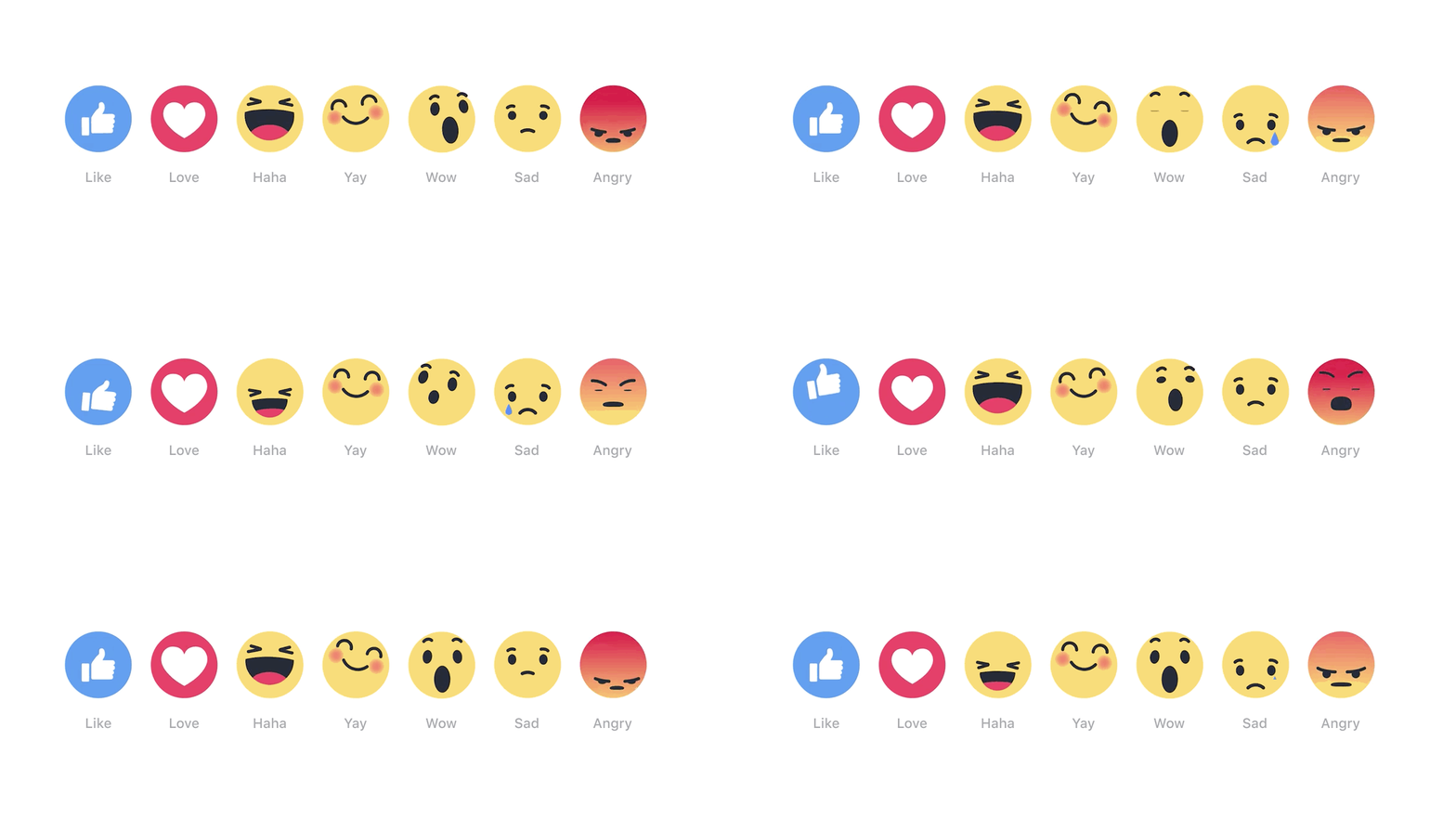
    Also available through the Audience Insights tool, or by viewing individual posts on your page, are the myriad of Facebook Reactions users can now express. Taking a look at the various responses like Love, Haha, Yay, Wow, Sad or Angry can give your practice a good feel for the type of content your Facebook fans are interested in seeing more of as well as the content they’re definitely not interested in.

    Facebook Reactions Giphy

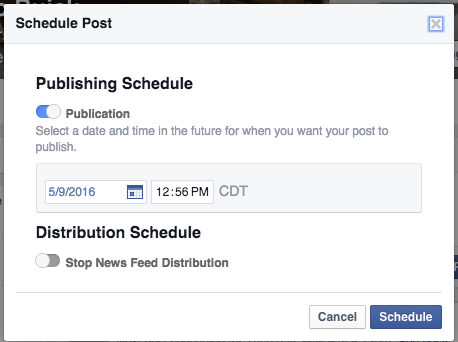
    8. Make Posting Easier with Scheduling

    Don’t have a dedicated social media team for your practice? If you rely on a few helpful individuals, and especially if you’re taking on the task of social media management yourself, you will definitely want to familiarize yourself with Facebook’s post scheduling tool. If you want your page and its content to be consistently at the forefront of your fans’ newsfeeds, and trust us, you do, the ability to “set it and forget it” is priceless.

    Facebook Screenshot: Scheduling

    Check out this post for a step by step on how to get started with this feature.

    9. Update Your Page!

    Just as you stay up-to-date on the latest medical innovations and techniques, you must maintain currency in your social media efforts! Keep your contact information current and accurate, and post content with an eye towards the future (i.e. new developments in the field and what this means for the patient). This up-to-date and active approach will help make your practice’s page more likeable.

    10. Consistency Is Key

    In addition to keeping your post content current, maintaining branding consistency across different channels, such as your website, blog, and social media profiles, is a must for any practice wanting to build authority in the community. A user should be able to seamlessly navigate between your multiple online presences without a jarring change in the consistency of color and imagery, helping your brand to project a pervasive, qualified influence.

    Set of flat design concepts for online medical services

    As they say, practice makes perfect. So go, implement these tips and tricks to see what works for you and your practice, and keep checking back with us for the latest updates!

  • The Rise of the Silver Surfers: Engaging Older Americans Online

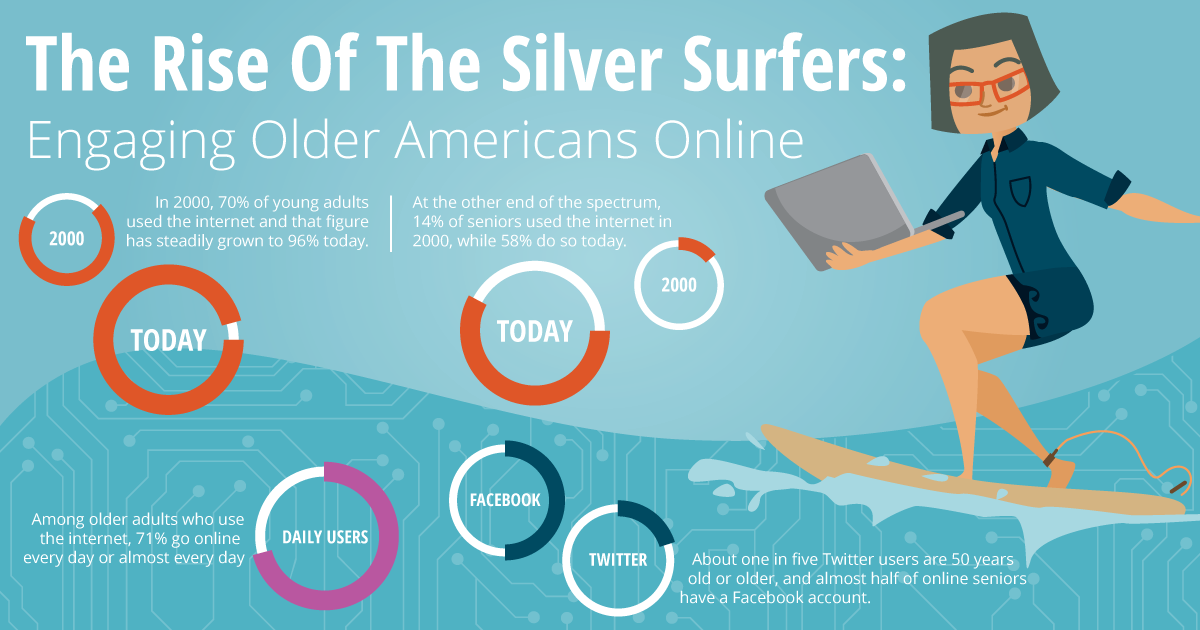
    Mini Infographic Silver Surfers Older Americans Month - Search Influence

    In honor of Older American’s Month, let’s take a look at the latest trends and talk about engaging this audience!

    “So, who exactly is considered an older American?” you might ask yourself. Well, based on the Older Americans Act of 1965, you could say anyone over 60, basically Baby Boomers and older. These are the people who were working in businesses and actively using technologies like PalmPilots and beepers/pagers during the early stages of the rapid technology growth in the 20th and 21st centuries. You may have also previously heard the term “silver surfer” used to refer to anyone over the age of 50 who is an avid internet user.

    According to 97 surveys conducted by Pew Research over the past 15 years (2000-2015), internet usage gaps between older and younger Americans still persist, though they’re lessening. Now about six in ten seniors go online. While adults 65 and older rank the lowest in internet usage between age groups, the number of older Americans online has grown in the past 15 years and will continue to grow in the coming years.

    Another report from Pew Research digs deeper into technology usage trends by analyzing seniors within their age group. Among the older Americans who currently go online, about three-quarters of them go online every day. Just over a quarter of seniors use online social networks.

    The Stat:

    “Older adults have lagged behind younger adults in their adoption, but now a clear majority (58%) of senior citizens use the internet.” — Pew Research Center

    What It Means for Marketers:

    While the previous usage numbers and perceptions would’ve indicated to online marketers that the older age groups aren’t very active online, that is definitely no longer the case. As of 2012, more than half of the senior population is online, and you can bet that number will continue to grow. The silver surfers are now an important and very present audience to consider when marketing online.

    The Stat:

    Seniors have the largest adoption rate change from 2000 to 2015 of any age group (14% to 58% respectively). — Pew Research Center

    What It Means for Marketers:

    This rapid increase in adoption rates shows an increase in technological intelligence among this age group. The previous parallels between chronological age and cognitive age are shifting and advertisers would do well to adjust accordingly. While practicing “ageless” marketing is all well and good, when trying to target this specific audience, be authentic and thoughtful of “the new 65,” a more-tech savvy and a now younger cognitive age group.

    The Stat:

    77% of older adults have a cell phone, but just 18% are smartphone owners. — Pew Research Center

    What It Means for Marketers:

    As many of you reading this know, mobile marketing is quite the focus of today. While a little less than a quarter of older adults have smartphones, over a quarter own tablets or e-book readers. This means that mobile searching and browsing is highly likely for this audience. Consider your potential to reach these seniors when optimizing your website and its content.

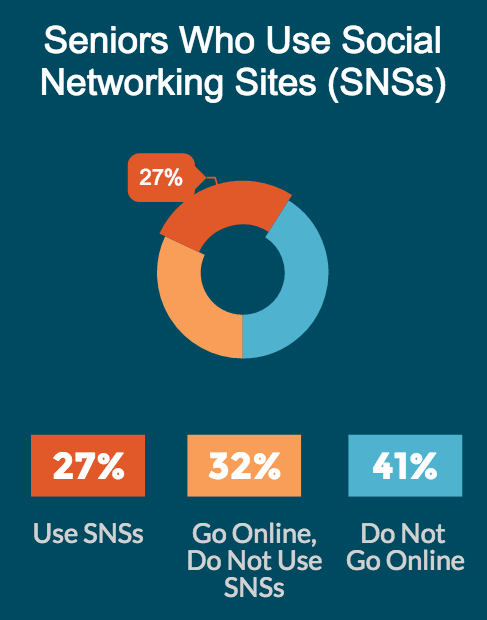
    Seniors Older Americans Online Using Social Networking Sites - Search Influence

    The Stat:

    “Today 46% of online seniors (representing 27% of the total older adult population) use social networking sites such as Facebook.” — Pew Research Center

    What It Means for Marketers:

    These silver surfers aren’t just surfing the web; they’re socializing, too! About one in five Twitter users are 50 years old or older, and almost half of online seniors have a Facebook account. Engage with the older American audience to help grow your brand online.

    Biggest Takeaway:

    When you think older Americans, you shouldn’t think, “my grandma who makes me fix her Wi-Fi router and doesn’t understand smartphones.” Instead, think of the generations before you who were in their prime for the technological boom that gave us the first cellphones, computers, and video games. These generations were the first to experience technology and were fortunate enough to grow and adapt with it. So, in reality, they’re part of your market and audience whether or not you realize it. The silver surfers are here and growing, so don’t discount them when you’re planning your marketing campaigns!

    All data and stats came from the following sources:
    http://www.pewinternet.org/2014/04/03/older-adults-and-technology-use/
    http://www.pewinternet.org/2015/06/26/americans-internet-access-2000-2015/
    http://blogs.forrester.com/gina_sverdlov/12-06-08-the_data_digest_digital_seniors

  • We Like to Bike: Search Influence Teams Up with Bike Easy

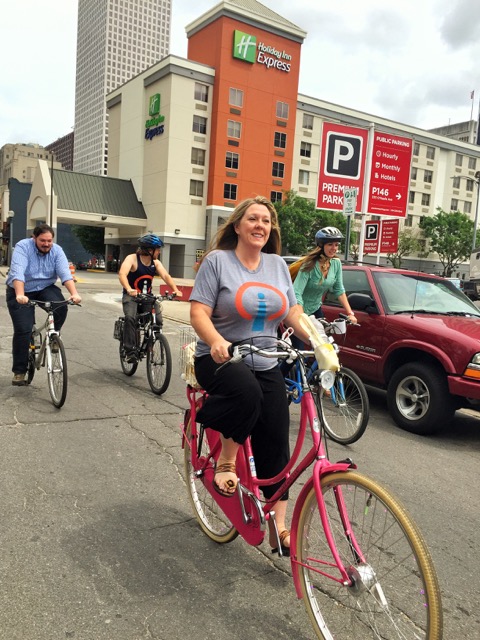
    Influencers Biking to Work
    Whether they’re biking to work, the Fly, or Bayou Saint John, Influencers are big supporters of the city’s growing number of bike lanes. In our recent blog about ways to de-stress, Kiersten talked about her favorite biking destinations around the city. Bike commuters at Search Influence come to New Orleans from cities across the country and commute from neighborhoods all around town.

    “I lived in Portland before and NOLA is definitely not as bike friendly, but it is flat and doesn’t rain as much. Biking in NOLA is getting better every week—bike lanes are being added and drivers are becoming more aware.” — Kristin

    When the Search Influence headquarters moved downtown in July 2014, our CEO, Will Scott, began riding his bike to work. “It only takes a few minutes more at rush hour and it makes my day go much smoother,” he said. “Granted, in the heat of summer I have to add 20 minutes to shower, but it’s worth it.” Will is definitely energized by what he sees of the cycling culture in New Orleans, “From the Lafitte Greenway, to new types of businesses like the one opening soon at 601 Baronne — ‘Rouler’ — a bike destination offering coffee, adult beverages, bike repairs, and accessories. It’s an integration of New Orleans and biking in a really new way, and it’s just one instance.”

    We Like to Bike

    Community Involvement

    Pictured from left to right are Dan Favre, Executive Director of Bike Easy, Angie Scott, COO of Search Influence and Will Scott, CEO of Search Influence.
    Pictured from left to right are Dan Favre, Executive Director of Bike Easy, Angie Scott, COO of Search Influence and Will Scott, CEO of Search Influence.

    Search Influence is also a Silver sponsor of the semi-annual Bicycle Second Line, hosted by the non-profit Bike Easy. Scheduled for Sunday, May 22, the next Bicycle Second Line appropriately falls near the end of Bike to Work Month. The team members at Search Influence, however, have found plenty of their own reasons for biking to work year-round.

    “I started riding my bike because I was frustrated with the inconsistency and slowness of the streetcar line. I kept riding my bike because of the feeling of satisfaction I got zooming past all of the cars stuck in 5 o’clock traffic.” — Laird

    Bike to Work Week

    Search Influence has been a consistent participant (and runner-up for companies with less than 100 employees) in Bike to Work Week. We also made a strong showing last year. Partially because the week in April seems to coincide with the start of NOLA’s rainy season, Bike to Work Week brings special challenges, even for the more seasoned bike commuters.

    “On the last day of Bike to Work week, I got stuck behind a train at the Bywater tracks for 20 minutes and then blew a tire half a mile from the office. If I was in a car, these two incidents would have tarnished the rest of my day. Instead, I was fortunate enough to spend some time talking to other bike commuters waiting at the tracks. Then, quickly replacing my tire and getting up and running again led to a modest sense of accomplishment. ” — Ray

    Our Bike Rack is Famous!

    Our famous bike rack

    Ultimately, our bike commuters enjoy a number of added perks besides the free parking that make Search Influence a great place to work. Our office building has a gym where we can clean up before work, and the secure bike rack area was even featured in a movie! That’s right—around the 38 minute mark of the movie Parallels, the characters emerge into the futuristic cityscape of the CBD.

    Image 1 and 2 by Mary Silva.

  • 13 Things We Wish We Could Tell Our Younger Selves: A Guide for Graduating Seniors

    Younger Self Advice
    Life is hard, and the realization that hindsight is 20/20 truly resonates the older we get. From lighthearted life lessons to heavy-hitting hardships, 13 Influencers share the raw, real, honest, and wholehearted advice that they would give to their younger selves.

    1. “My mother died when I was 17. It was about three weeks after Hurricane Katrina uprooted me from my freshman year down here at Loyola, and the combination one-two punch really traumatized me. The entire trajectory of the rest of my younger years definitely hinged on those two incidents. I’d love to be able to tell my younger self that it’s okay to get help when you need it, and that bottling up all of my anxiety just to release it as anger, while natural, isn’t healthy. Being stuck in a mental rut isn’t a weakness. It’s a chance for strength.” — Mattie, Web Developer

    2. “I’d tell my younger self that she’s on the right path. Right after college, it felt like I dropped off into a pit of nothingness. I had planned out my whole life, and then when I got to taking the next step, it wasn’t what I wanted anymore. I took some time to reflect, took a big leap of faith, and it all worked out. So, I’d tell myself to keep passionately following whatever has caught her interest most recently. As long as you are moving forward, it’s all going to be okay!” — Shaye, Internet Marketing Team Lead

    3. “Just go with the flow. Once I stopped trying to fit myself into a particular life path, I started to actually find out what I wanted to do and who I wanted to be.” — Sarah Jane, Senior Internet Marketing Associate

    Optimize Your Mind

    4. “Don’t waste your time with people that don’t deserve it! Keep your goals in mind.” — Anthony, Senior Account Associate

    I Give Myself Good Advice

    5. “I once got some great advice from a teacher, even though I’m still working on following it: Don’t forget that the only person you’re really competing with in life is yourself. So your goal should be to grow stronger every day than you were the day before, and to make yourself proud!” — Aubrey, Internet Marketing Team Lead

    6. “To my kid former-self: Never bully someone, and don’t sit idly by when you see it happening to someone else.  To my teenage former-self: Don’t get hung up on the dumb stuff that happens in high school. It won’t matter in five years. To my college former-self: Prepare yourself better for adulthood. Loans are bad. Experience is imperative. And finally, just in general: Don’t be afraid to step outside of your comfort zone when you are young. You’ll be glad you did later.” — Chris, Senior Internet Marketing Associate

    7. “Don’t be pressured by all those cute pictures on Instagram. I have found that women (especially) tend to negatively compare themselves against where their friends are in life — ‘If she is engaged, married, having a baby, etc. then I need to be doing that stuff, too.’ I implore you — DON’T RUSH THROUGH THOSE LIFE EVENTS JUST SO YOU CAN CHECK THEM OFF OF YOUR TO-DO LIST. People progress at different times. Fall in love at different times. It is ok to be a bridesmaid 10 times and an aunt two times. Wait for the right one and the right time for you. And, yes, it will come.” — Melissa, Marketing and PR Manager

    Note to Self: ALL is Good

    8. “I would tell my younger self not to worry so much. Everything is going to work out. Just keep focusing on the goal. Let all the noise fade. #KeepCalmAndCarryOn” — Candice, Junior Internet Marketing Associate

    9. “Always do your best to live in the moment and appreciate what you have!” — Erica, Production Manager

    10. “If I could tell myself one thing, it would be DON’T devalue yourself! Whether that relates to relationships, jobs, or even smaller aspects of life, don’t forget that you are worth something. Look at your accomplishments, how far you’ve come since high school, and don’t discount your potential. Some people seem to be born with confidence, and others have to work at it. If I could go back to my younger self, I would tell her that she doesn’t have to stay in a dying relationship; she doesn’t have to accept a minimum wage job with a master’s degree, and she has the merits to go farther than she thinks possible. I’d also tell myself that you don’t have to compare yourself to others so much, which is a dangerous road to devaluing yourself.

    That being said, it’s important to know your limits and stay humble, but if your lack of confidence means you’re shying away from opportunities that can only build you up, you’ve got to be reminded that you DO have what it takes to pursue your goals! These reminders are things I still have to tell myself, but I think it’s very important to worry about being the best YOU can be, not being who someone else already is. You’ve got this!” — Laura, Account Associate

    11. “I would have been more patient upon graduating—taken some time for myself to truly figure out what I want to do and what my passions are. If that meant taking on a smaller intern role to figure things out, then I should have done that. I should have gotten my ducks in a line before entering the workforce. For example, I had various internships: event planning, internal marketing, etc., and I never took the time to evaluate which was the best fit for me.” — Caroline, Account Associate

    12. “One piece of advice I would give my younger self is that life is not over after college. College may be the golden years that you will remember fondly, but there is so much to look forward to after college. While one chapter of your life is drawing to a close, it is really exciting to see what the next chapters will have in store (new job, grad school, meeting new people, moving across the country, etc.). There is plenty to look forward to!” — Jensen, Account Associate

    13. “Make the choices that make the best stories.” — Josh, Senior Internet Marketing Associate

    Life is messy, and oftentimes unexpected events throw unwanted curveballs when we couldn’t possibly be more unprepared. A particular song that I absolutely love by the band known as Bright Eyes comes to mind when I think about advice that I’d give to my former self. The lyrics to this song titled, “Cleanse Song,” go as follows: ‘Don’t forget what you learned; all you give is returned, and if life seems absurd, what you need is some laughter.’

  • The Diagnosis Is In: Your Medical Practice Needs Reviews

    Reviews
    Yelp, Healthgrades, Google My Business, RateMDs, Vitals—the list goes on and on. More than three quarters of patients are browsing review sites, using the online reviews to decide on a new healthcare practitioner. It is now more important than ever for your practice to have a strong online presence with positive reviews on your own site as well as external review sites. If you need help generating more online reviews, here are five tips to encourage your patients to share.

    1. Use Word-of-Mouth to Ask Patients to Post Reviews

    Your source for positive reviews is from your frequent and satisfied patients. Never resort to review stuffing by asking office staff, friends, or family members to write a positive review. Fake reviews, usually long on descriptions and short on facts, are easy to spot. You need your happy patients to share the truth about their experience, and you should be encouraging them to post reviews. At the check-out desk, have a sign or a handout ready with your website or other review site URLs you use. Include words of appreciation and encouragement, and request—don’t pressure—patients to rate their experience.

    2. Make It User-Friendly With a QR Code

    Do your patients use smartphones? Statistics suggest that they most likely do. Even if you have a “no cellphone” policy in your waiting room, many patients may be checking their emails or Facebook newsfeed while waiting. Why not give your mobile-enabled customers immediate access to your business information with a QR code?

    A QR code is a mobile-friendly barcode that brings users to a specific mobile landing page, such as your Google My Business page or Google Places business listing. You can print a QR code on business cards, mailings, and brochures, and your patients can leave a review with the click of a button. Even if patients choose not to scan the QR code, they may be impressed with how tech-savvy your practice is.

    3. Reach Out on Social Media

    If you already have a Google+, Facebook, or Twitter page, post links to your review sites and encourage patients to post reviews. Not everyone you ask in the office will write reviews, so you need to offer patients constant feedback opportunities. By maximizing review opportunities, you also maximize your feedback and develop a strong online reputation.

    LM 1

    4. Be Open to Negative Feedback

    The more open and welcoming your practice appears to be, the more comfortable patients will be coming to you instead of airing complaints on the internet. Encourage patients to contact your practice directly to voice concerns, and consider creating a paper or email survey to ask for feedback. You should try to hear from complainers before they make their grievances public.

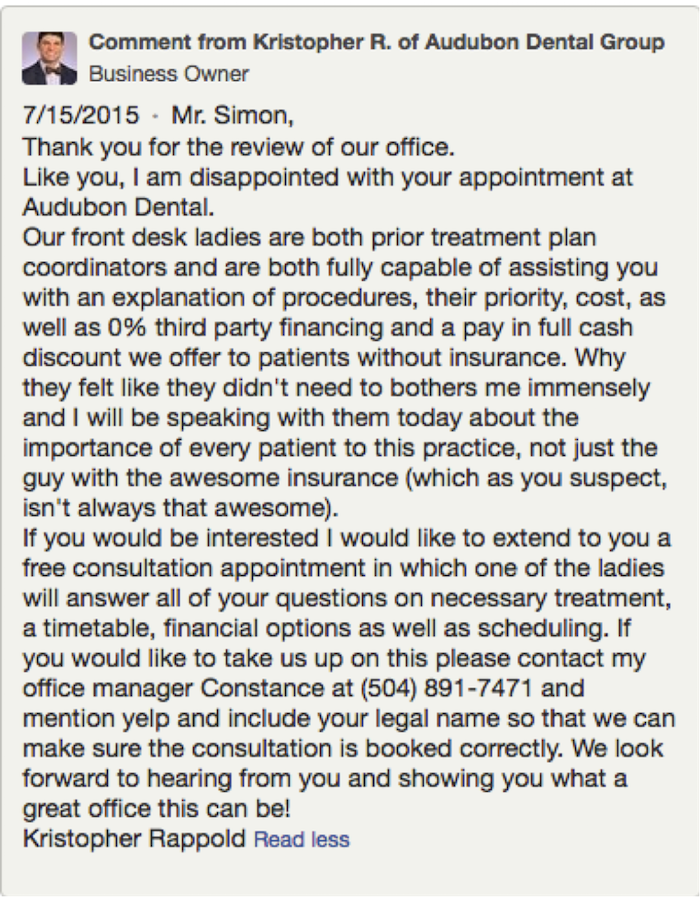
    If negative feedback does show up on a review site, respond to the criticism in a non-defensive manner. This will signal to potential patients that you listen and care about customer service. Remember to never discuss personal medical information, but focus on broader policies. And remember, always ask the patient to contact you to discuss his or her dissatisfaction. This shows others that your practice takes responsibility for patient satisfaction.

    LM 2

    5. Deliver Your Best Service

    The more satisfied your patients are, the more likely they are to write positive online reviews. Patients have high customer service expectations, so train everyone, including receptionists and the billing department, to treat them with kindness and respect. Always look for ways to improve your patient’s experience. Practices with the best service get the best online reviews.

    Screenshot Credits:

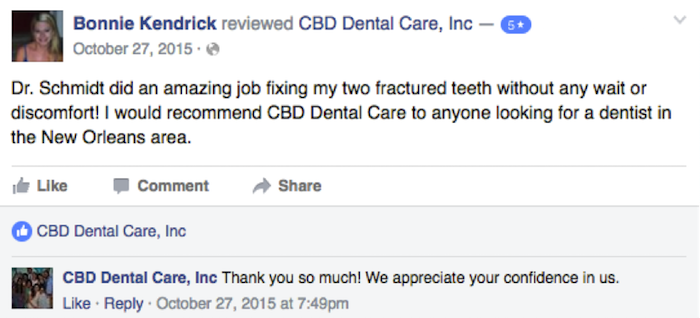
    Facebook Screenshot Image
    Yelp Screenshot Image