Tag: seo

  • Your AI Traffic Has Plateaued. Now What?

    Your AI Traffic Has Plateaued. Now What?

    Key Insights

    • The AI traffic plateau is real and expected. The experimental growth phase is over; we’ve entered an optimization and efficiency phase.
    • AI-referred traffic is smaller but higher quality. Engagement time and intent consistently outperform traditional organic sessions.
    • Visibility ≠ measurability. AI Overviews and AI Mode remain partial black boxes, making citation trends more meaningful than raw rankings.
    • On-site optimization alone isn’t enough anymore. Third-party comparison and aggregator content increasingly shape AI understanding.
    • Winning brands build citation networks, not just pages. Presence across AI-trusted domains now drives long-term visibility.
    • Success metrics must evolve. Citation momentum, brand sentiment in AI responses, and AI-assisted conversions matter more than impressions.

    If you’ve been tracking AI-driven traffic, you’ve probably noticed something: the growth curve is flattening.

    That’s not a bug. It’s a feature.

    The Inflection Point Is Here

    Here’s my working theory: We’ve hit the point where AI presence in search has largely stabilized. The industry has shifted from rapid, experimental rollout to deep infrastructure integration. AI Overviews aren’t new anymore — they’re baked in. The dramatic expansion phase is behind us.

    Unless there are global increases in total search traffic or dramatic expansion of AI features, we should expect:

    • Organic traffic stops declining
    • AI-referred traffic stops growing
    • Everything settles into a new equilibrium

    This isn’t necessarily bad news. It’s just… news. The land grab phase is ending. Now comes the optimization phase.

    The Visibility Gap We Can’t Ignore

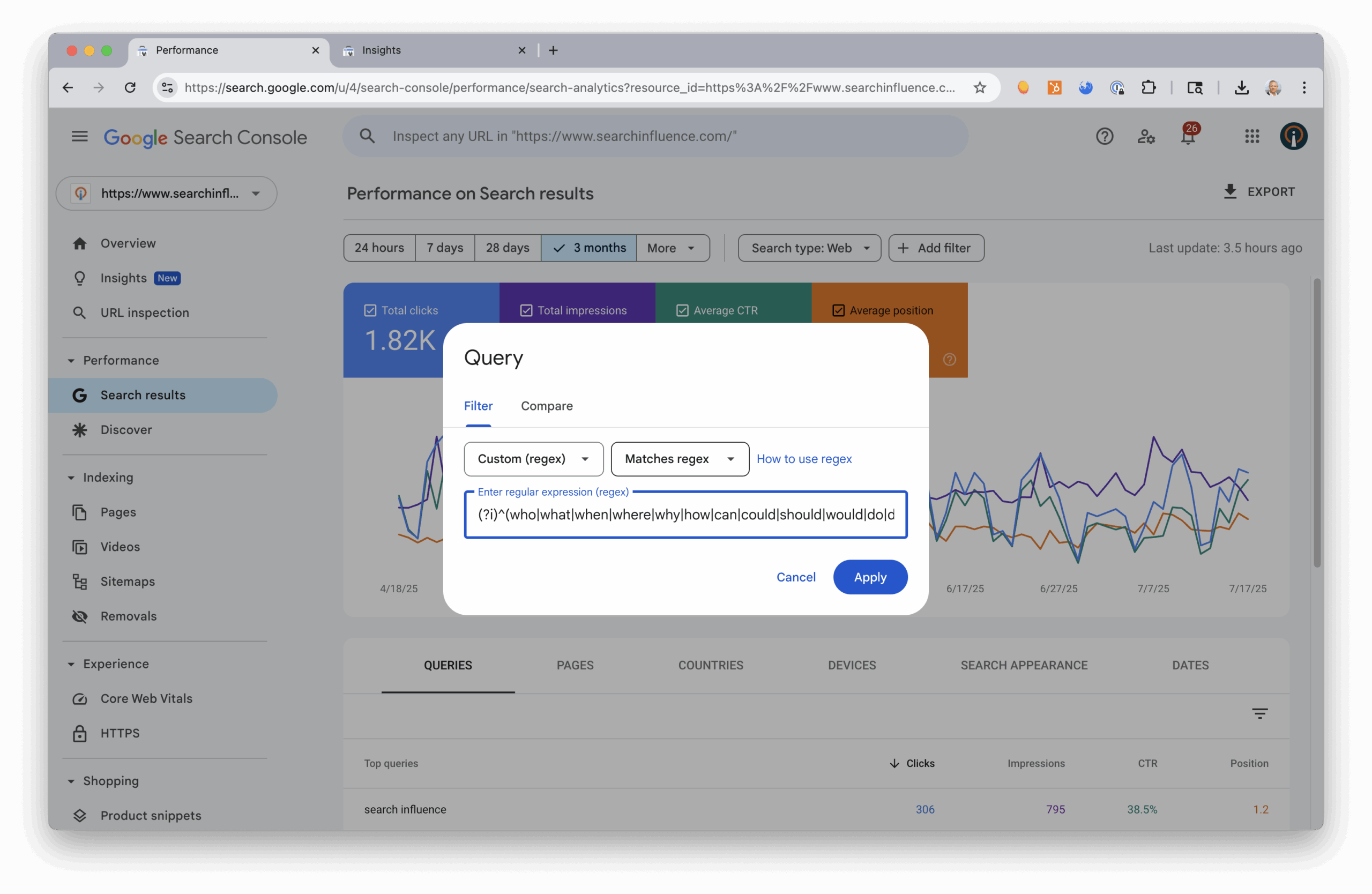
    Here’s the piece we don’t have visibility on: AI Overviews and AI Mode as traffic drivers.

    We’re still relying on tracking URL parameters — UTM sources, page anchors, the little breadcrumbs platforms leave behind. But that’s incomplete. Google’s AI Overviews, in particular, represent a black box of citation-driven traffic we can’t fully measure yet.

    What we can see: citations are increasing even as AI Overview rankings plateau. That’s encouraging. It suggests presence is building even when ranking positions stay flat.

    Google Is Refining the AI Overview Experience

    One thing that explains the plateau: Google is getting smarter about when to show AI Overviews.

    According to recent reports, Google is now stripping AI Overviews from searches where users aren’t interacting with them. They’re figuring out what people actually engage with and putting AI Overviews there.

    What this means: You’re not ranking for random, low-intent searches anymore. The pie has shrunk, but it’s a more qualified pie.

    Less visibility in aggregate, but potentially more valuable visibility where it matters.

    The data backs this up. Looking at recent numbers across several higher ed clients, AI-referred traffic consistently shows stronger engagement than traditional organic:

    SEO Engagement Time AI Engagement Time SEO Engagement Rate AI Engagement Rate
    Client A 1:05 3:14 32% 71%
    Client B 2:07 3:17 65% 45%
    Client C 2:27 6:03 67% 46%

    AI traffic isn’t just smaller — it’s more qualified. These users are arriving with higher intent and spending more time with the content.

    What’s Actually Working: Lessons from the Field

    Looking at clients who’ve maintained or grown their AI presence during this plateau period, a few on-site tactics stand out:

    1. Semantic Header Optimization

    Not just “put keywords in H2s” — but structuring headers to reflect how AI models organize information. Think entity relationships, not keyword density.

    2. AI-Friendly Language

    Shift from salesy, marketing-speak to fact-based, outcome-based content. LLMs are trained on informational content. They don’t respond well to “Schedule your free consultation today!”

    What they do respond to: clear statements of fact, specific outcomes, data points.

    3. Structured Data with Linked Entities

    Schema markup matters more than ever, but it’s not just about having schema. It’s about connecting your entities to the broader knowledge graph. Make sure your Course, Organization, and Person entities reference established identifiers.

    4. FAQ Optimization

    Still a consistent win. LLMs love well-structured Q&A content. It’s easy to parse, easy to cite.

    The Comparison Content Problem

    On-site optimization only gets you so far. AI models give weight to what other authoritative sources say about you. If you’re only optimizing your own site, you’re playing with one hand tied behind your back.

    Here’s an uncomfortable truth: AI Overviews are increasingly citing off-site aggregator and list-style content.

    “Top 10 medical billing programs,” “Best car service providers in Chicago,” “Construction management software comparison.”

    This content format is showing up everywhere in AI responses. And for many clients, it’s content they can’t or won’t create.

    Brand compliance teams get nervous about comparing themselves to competitors. Legal wants to vet every claim. By the time approvals come through, the opportunity has moved on.

    The workaround? Third-party placements.

    We’ve had success getting comparison content placed on external sites — parenting blogs, industry directories, and niche publications. It’s not scalable, but it works.

    One example: A comparison article we placed on a regional parenting site now ranks 7th organically for a competitive local service query. Not in the Map Pack, not in the AI Overview, but it’s in the ecosystem. That content is feeding the AI’s understanding of the market.

    The Path Forward: Building Your Citation Network

    So where do we go from here?

    I’m working on building a list of 50-100 article placement opportunities. Sites that:

    1. Accept guest content
    2. Are indexed by Google
    3. Are cited by AI (both Google AI and ChatGPT)

    That third point is key. Being in Google News isn’t enough. The question is: are these domains showing up in AI responses?

    How to verify:

    • DataForSEO has metrics for Google AI and ChatGPT indexing
    • Ahrefs shows indexed pages and citations in their main view
    • Or build your own tool using SERP APIs and LLM APIs (I’m working on this now)

    The hypothesis: if a domain is already cited by AI platforms, content you publish there has a higher chance of feeding those same AI responses.

    Tracking the Right Metrics

    Given the plateau, what should you actually be measuring?

    Stop obsessing over:

    • Prompt-by-prompt rankings (too volatile)
    • Total AI impression counts (too noisy)

    Start focusing on:

    • Citation trends over time (up and to the right)
    • Brand sentiment in AI responses (does the model understand what you do?)
    • Conversion attribution from AI-referred traffic (when trackable)
    • Third-party mentions in AI responses

    All the data is wrong. The question is: how wrong is it? Pick your metrics, track consistently, and look for directional movement.

    What This Means for Your Strategy

    If AI traffic has plateaued, the response isn’t to panic — it’s to shift from growth tactics to optimization tactics.

    Priority 1: Technical Foundation

    AI engines are less patient about crawl than traditional search. If they can’t see your content quickly and cleanly, they won’t cite it.

    • Fix crawlability issues
    • Improve site speed
    • Verify AI bot access in robots.txt

    Priority 2: Content Format

    Structure content for AI ingestion:

    • Clear heading hierarchy
    • FAQ sections
    • Definition lists for key terms
    • Schema markup that connects entities

    Priority 3: Third-Party Footprint

    Build presence on sites that AI already trusts:

    • Industry publications
    • Authoritative directories
    • Comparison content (even if you’re not creating it yourself)

    Priority 4: Measurement Infrastructure

    Set up tracking for AI-referred traffic now, before you need it:

    • Monitor URL parameters (UTM sources, anchors)
    • Track citation trends in AI monitoring tools
    • Document brand mentions in AI responses

    The Monetization Wildcard

    There’s one variable we can’t predict yet: how will future monetization of AI answers affect referral behavior?

    Google hasn’t fully figured out how to make money from AI Overviews. Neither has OpenAI, Perplexity, or anyone else. When they do, the incentive structures will shift.

    A few scenarios to watch:

    Scenario 1: Ads in AI responses. If Google inserts sponsored content into AI Overviews (they’re already testing this), organic citations become less prominent. Your content might still inform the answer, but the click goes to an advertiser.

    Scenario 2: Premium AI tiers. Paid AI modes could behave differently than free ones — deeper research, more citations, different source preferences. Optimization strategies might need to account for which tier your audience uses.

    Scenario 3: Publisher revenue sharing. If platforms start compensating publishers for citations (the way some news partnerships work), the economics of content creation change. Sites that currently can’t justify AI-focused content might suddenly have a business case.

    None of this is certain. But the fact that AI monetization is still being figured out means the referral dynamics we’re seeing today aren’t permanent.

    Build for the current reality, but stay flexible.

    The Bottom Line

    The AI traffic plateau isn’t the end of growth — it’s the end of easy growth.

    The early adopters who were showing up everywhere just by existing have hit their ceiling. What comes next is more intentional: optimizing for how AI models understand and cite your content, building presence on the sites that feed those models, and measuring what actually matters.

    Traditional search isn’t going anywhere. AI is additive, not a replacement. The brands that win are the ones that show up in both.

    What are you seeing with your AI traffic trends? I’m curious whether this plateau is showing up across industries or if it’s specific to certain verticals.

    This post was based on a conversation among the Search Influence SEO team, Will, Cory, and Chuck, with input from Jess, the account manager for a couple of the cited clients.

    The question we were tasked to discuss was how to explain the plateau in AI traffic.

    Ready to learn more about traditional SEO and AI SEO? Contact us to speak with our team of experts.

    Images:
    Unsplash
    Unsplash

  • AI Search Optimization for Graduate Education Marketing in 2026

    What 2025 Research Tells Us About AI Visibility, Zero-Click Search, and Enrollment Strategy

    Executive Summary

    Here’s the reality: the way prospective graduate students find and evaluate programs has changed faster than most of us anticipated. Research from across 2025 — including original survey data from UPCEA and Search Influence (n=705) — shows that half of all prospects now use AI tools weekly, while 82% are more likely to consider programs appearing on page one of search results. Zero-click searches have climbed to 69% of all Google queries. AI Overviews now appear on nearly half of search results.

    And this is just where we are today. The trajectory for 2026 is clear.
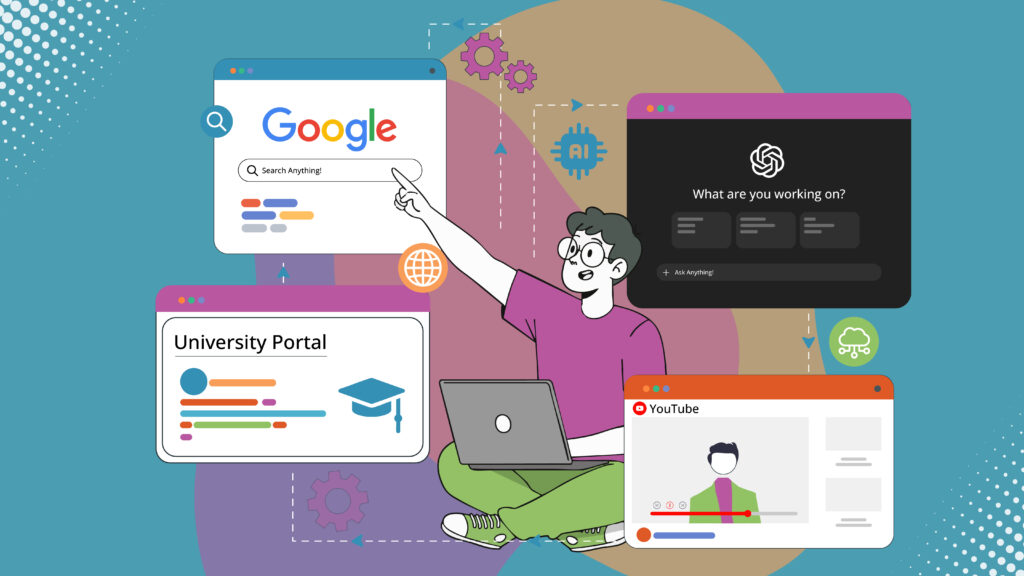
    Key Findings at a Glance

    Metric 2025 Finding Implication for 2026 Source
    AI tool usage (weekly+) 50% of prospects Expect 60%+ as tools improve UPCEA/Search Influence
    Page one consideration 82% more likely AI citations become equally critical UPCEA/Search Influence
    Zero-click searches 69% of queries Will exceed 75% for informational Similarweb/SparkToro
    AI Overview reach 1.5B monthly users Expanding to 80%+ of queries Google Q1 2025
    ChatGPT weekly users 800 million Continued exponential growth OpenAI September 2025
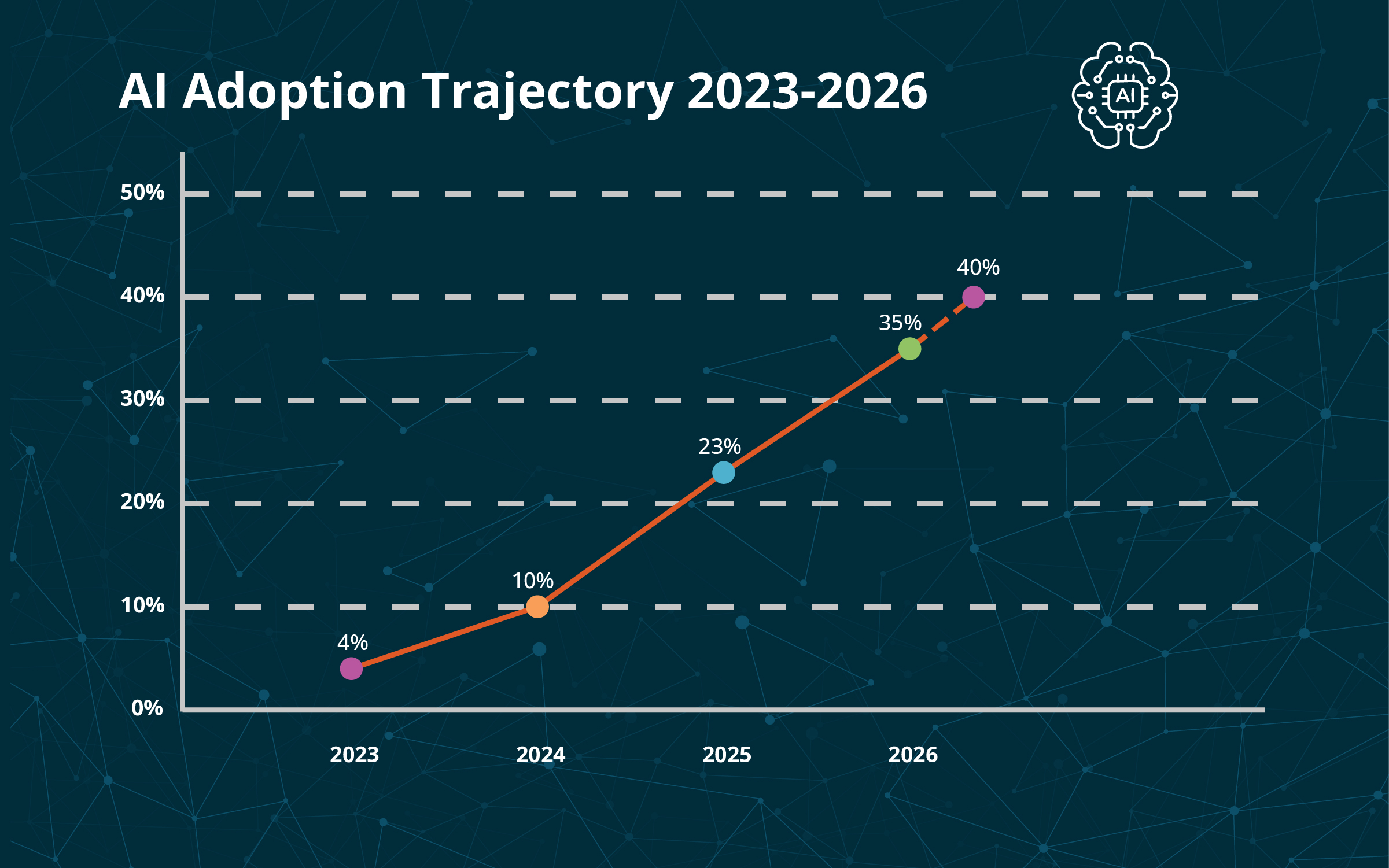
    AI in college search 23% (6x from 2023) 35-40% projected Carnegie 2025

    So what does this mean for 2026? Traditional higher education SEO and paid search remain foundational—that hasn’t changed. But they’re no longer sufficient on their own. Institutions that fail to invest in AI search optimization and AI visibility strategy risk disappearing from the consideration set entirely, before prospects ever visit a website.

    The institutions that act now on GEO for higher education will have a 12-month head start on those still debating whether this matters.

    The State of AI Search: Where We Are and Where We’re Headed

    The Adoption Curve Has Been Steeper Than Anyone Expected

    I’ll be honest: when we started tracking AI adoption in college search two years ago, I didn’t expect to see numbers like these so quickly.

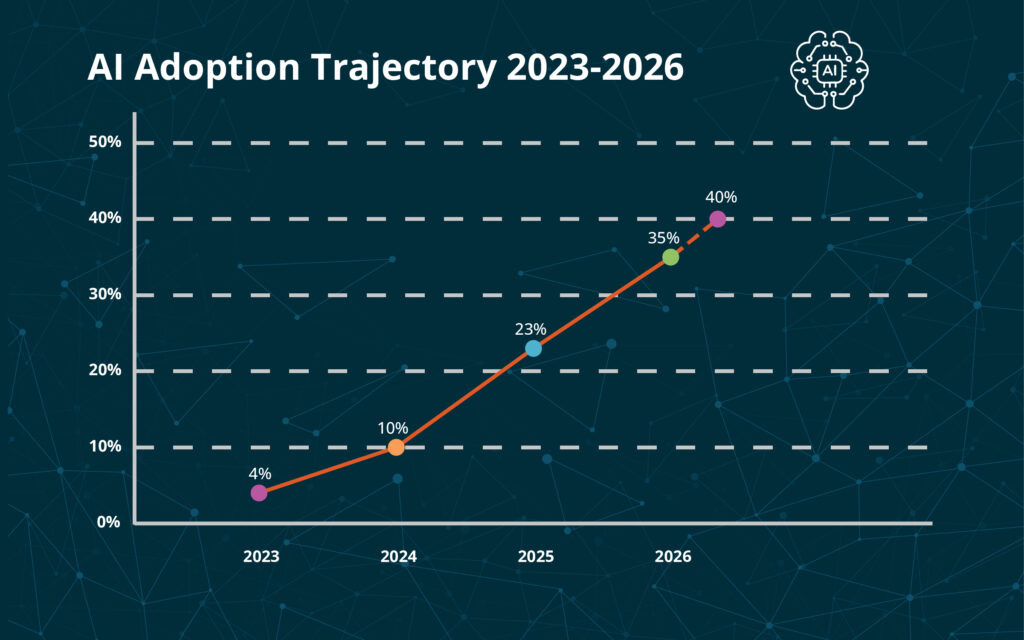
    According to Carnegie’s 2025 Summer Research Series, AI usage in the college search process jumped from 4% in 2023 to 10% in 2024 to 23% in 2025—nearly 6x in two years. Rising students show even higher adoption at 25%, while parents trail slightly at 21%.

    If this trajectory holds—and there’s no indication it won’t—we’re looking at 35-40% AI usage in college search by the end of 2026. For graduate and professional programs, where prospects skew older and more research-oriented, adoption may be even higher.
    The UPCEA/Search Influence study of 705 qualified respondents (March 2025) digs deeper into professional and continuing education prospects specifically:

    • 24% use AI-powered tools daily
    • 26% use them weekly
    • 18% use them a few times per month
    • 17% never use AI tools for search

    Younger prospects show higher daily and weekly usage, which isn’t surprising. But here’s what caught my attention: even among older demographics, the “never use” category is a minority. This isn’t a Gen Z phenomenon anymore. By 2026, the “never use” segment will likely shrink to single digits.

    Search Engines Still Dominate—But the Picture Is Getting More Complicated

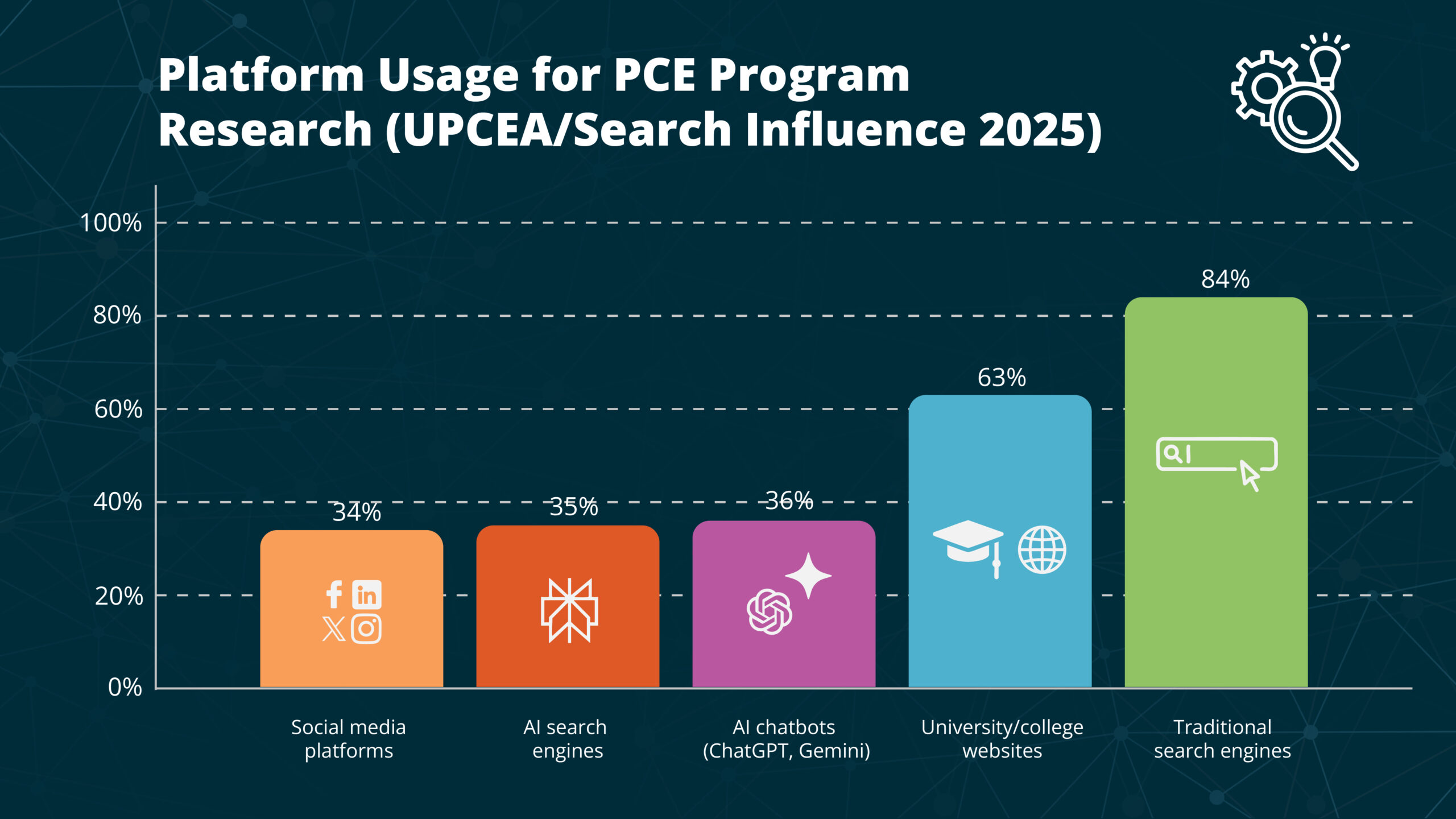
    When researching professional and continuing education programs, prospects use multiple platforms, often in the same search session:

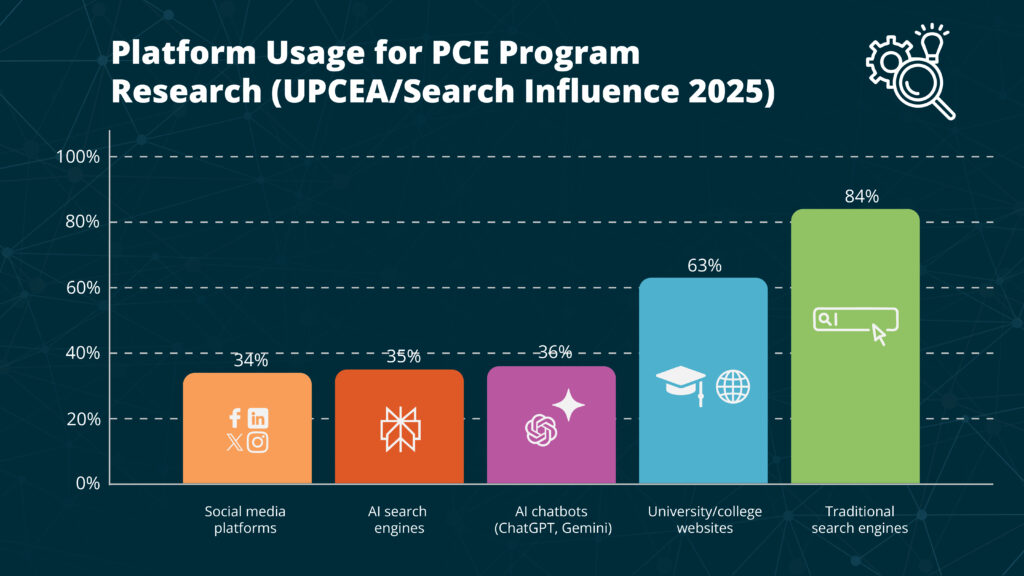
    Platform Usage for PCE Program Research (UPCEA/Search Influence 2025)

    Platform Extremely/Very Likely to Use
    Traditional search engines 84%
    University/college websites 63%
    AI chatbots (ChatGPT, Gemini) 36%
    AI search engines 35%
    Social media platforms 34%

    Here’s the number that should get your attention: AI-assisted tools now warrant the same strategic investment as social media, where institutions spend an average of $166,303 annually on advertising, according to UPCEA’s 2024 Marketing Survey. Are you spending proportionally on AI visibility for your university? Most graduate enrollment marketing teams aren’t—yet. By 2026, that gap will separate the visible from the invisible.

    The Lines Between “Search” and “Browse” Have Blurred Permanently

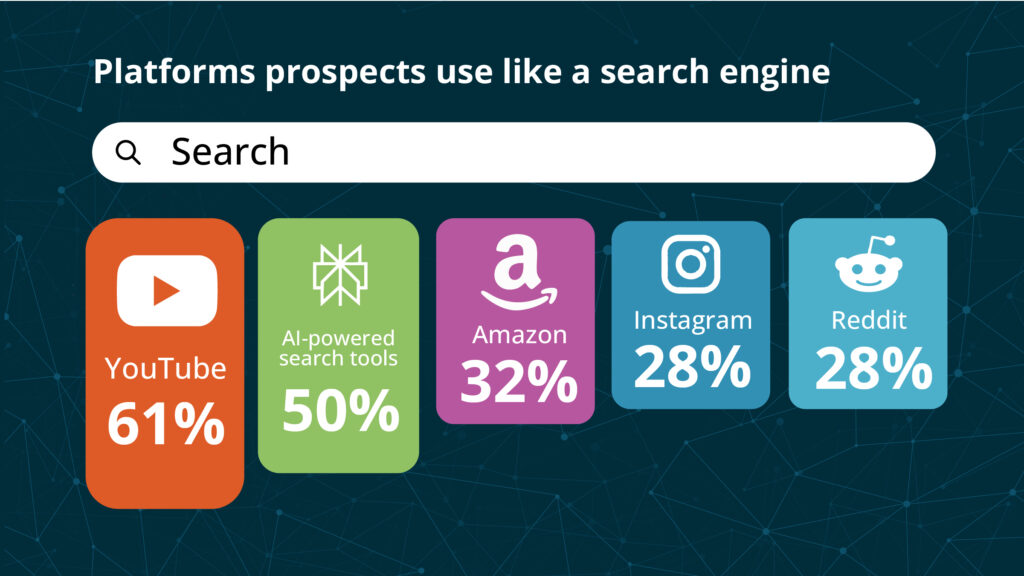
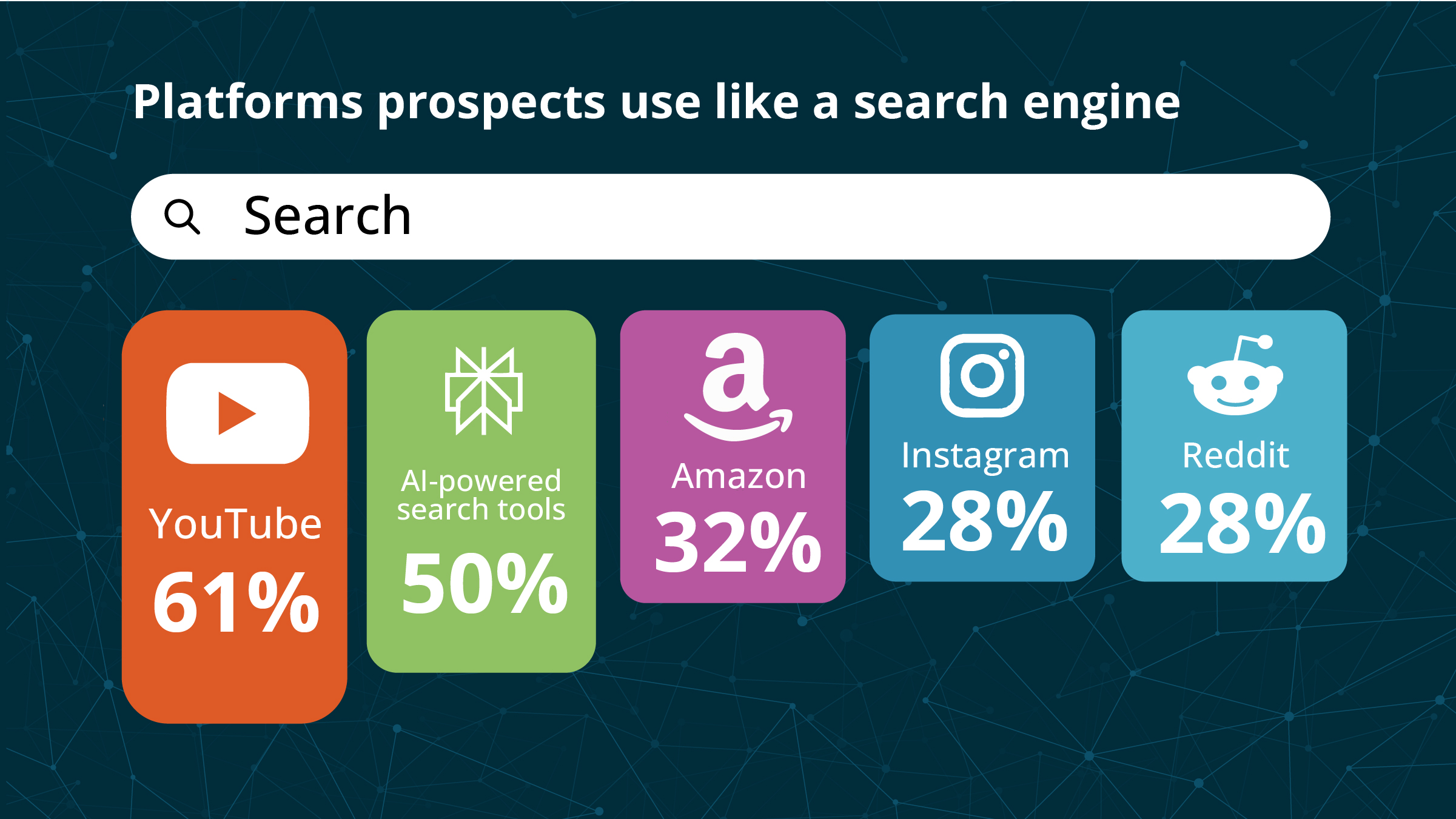
    We asked respondents which platforms they use “in a way similar to how you would use a traditional search engine.” The results tell us something important about how prospects actually behave:

    • YouTube: 61%
    • AI-powered search tools: 50%
    • Amazon: 32%
    • Instagram: 28%
    • Reddit: 28%

    Prospects don’t distinguish between “search” and “browsing” the way we do in marketing meetings. YouTube is a search engine to them. ChatGPT is a search engine. Instagram is a search engine. Your content has to work across all of them, or you’re only reaching part of your audience.

    For 2026 planning, this means content strategy can’t be siloed by platform. The same information needs to exist in formats optimized for each discovery channel.

    The Zero-Click Search Reality: Planning for a Post-Click World

    Most Searches Don’t Result in Clicks Anymore

    Zero-click searches—queries where users get answers directly from search results without visiting a website—have reached a tipping point:

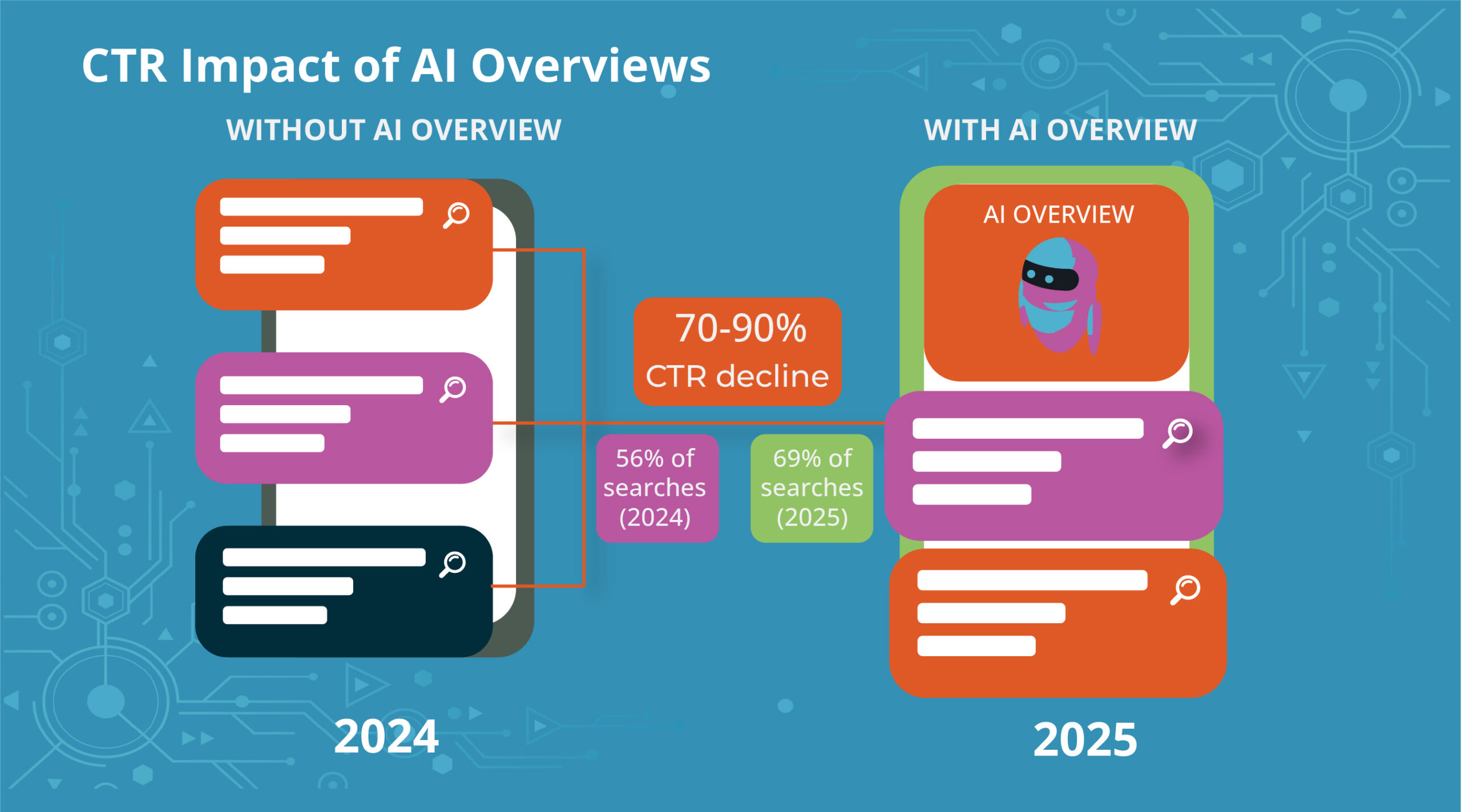
    • 69% of Google searches ended without a click (May 2025), up from 56% in May 2024
    • 60-63% of all Google searches result in zero clicks according to SparkToro/Similarweb
    • 70-90% click-through rate decline when AI Overviews appear
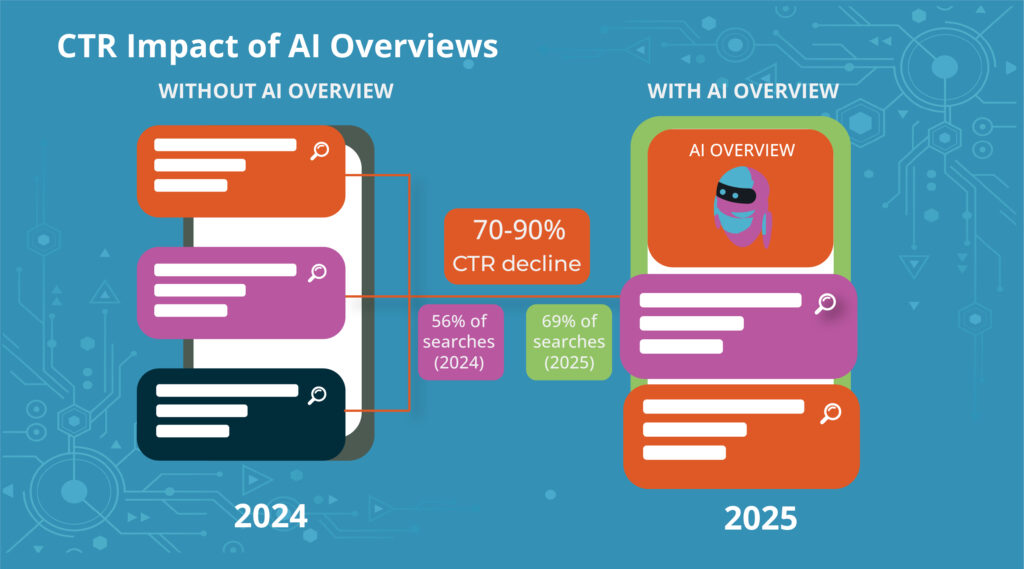
    Google’s AI Overviews now reach 1.5 billion monthly users as of Q1 2025. The feature appears on 47% of searches today, with Google’s internal testing suggesting this will exceed 80% for informational queries in the near future.

    For 2026 planning: Assume zero-click will exceed 75% for the informational queries that drive graduate program research. Questions like “What are the admission requirements for [Program X]?” or “How much does an MBA cost?”—exactly the queries your prospects are typing—will increasingly be answered without a click.

    What Zero-Click Search Means for 2026 Graduate Enrollment Marketing

    The implications for university marketing teams are significant, and I don’t think we should sugarcoat them:

    1. Traditional funnel metrics are becoming less reliable.

    If prospects get answers about tuition, deadlines, and program details from AI summaries, they may form opinions about your institution without ever reaching your website. Your analytics won’t capture that interaction. You’ll have incomplete data on what’s actually influencing enrollment decisions.

    2026 action: Build brand visibility metrics alongside click metrics. Track AI citations, brand mentions, and sentiment—not just traffic. This requires a different approach to higher education analytics.

    1. You’re paying more for declining performance.

    Everspring reports that the average cost-per-click for higher education terms has increased 45% year-over-year, while performance has declined. That’s a rough combination that will only intensify.

    2026 action: Rebalance paid media budgets. The ROI calculus on traditional higher education PPC is shifting. Organic AI visibility may deliver better long-term value.

    1. This is already disrupting adjacent industries.

    Learning platform Chegg reported a 49% decline in non-subscriber traffic between January 2024 and January 2025, coinciding with AI Overviews answering homework and study questions that previously drove site visits. Graduate enrollment marketing isn’t immune to the same dynamics.

    2026 action: Don’t wait for disruption to hit your specific program category. Invest in zero-click search strategy now.

    The Trust Signal Hidden in AI Overviews

    Here’s where the data gets interesting. The UPCEA/Search Influence study shows how prospects actually interact with AI Overviews:

    • 79% read the AI-generated overview when it appears
    • 51% click on sources most of the time or always
    • 43% click occasionally
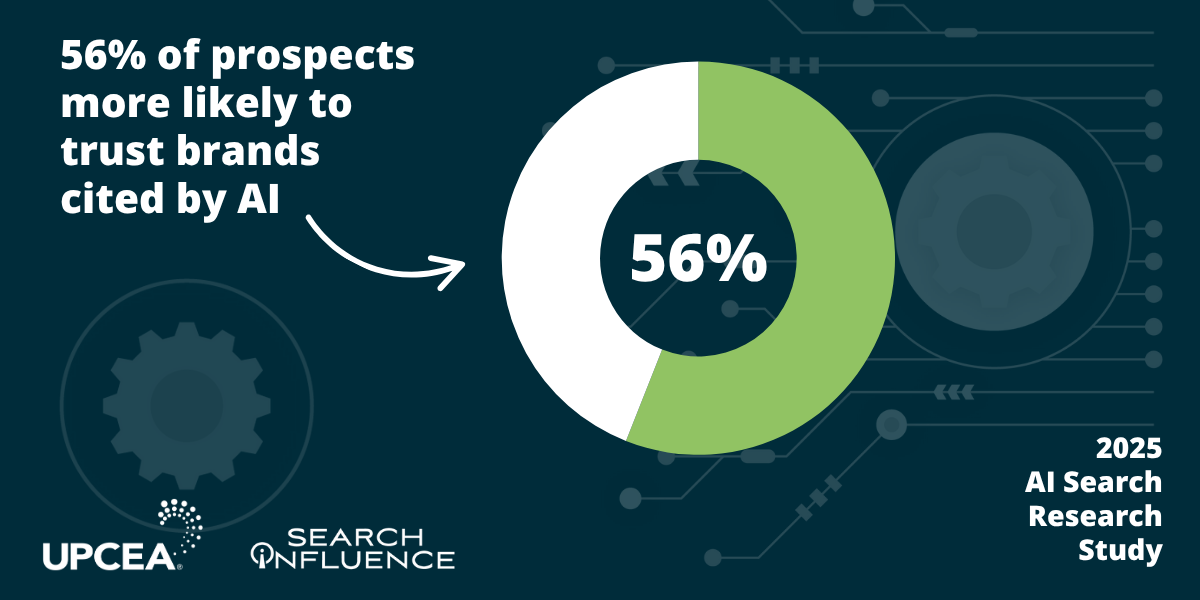
    • 56% are more likely to trust brands/websites cited in AI Overviews

    That last number matters enormously for 2026 strategy. Being cited in AI Overviews isn’t just about visibility—it’s a credibility signal. When prospects see your institution referenced in AI-generated content, they’re more likely to view you as trustworthy. Absence from those results may communicate the opposite.

    Rethinking Optimization: From Higher Education SEO to GEO

    SEO vs. GEO for Universities: A Different Kind of Target

    Here’s a useful way to think about the shift we’re navigating:

    Traditional SEO feels like optimizing for an algorithm—a system that scores and ranks based on signals (keywords, links, technical factors). It’s mechanical, pattern-matching. You’re essentially optimizing for a librarian: cataloging, indexing, and retrieval.

    GEO (Generative Engine Optimization) feels fundamentally different. It feels like optimizing for a reader who happens to have perfect memory and infinite patience—an entity that’s actually trying to understand what you do, synthesize it, and explain it to someone else. You’re optimizing for a research assistant: understanding, synthesizing, recommending.

    Put more directly: with GEO, you’re writing content that helps an AI form an accurate opinion about your institution—because that’s what it’s going to share with prospects.

    The practical difference:

    • SEO rewards structure and signals
    • GEO rewards clarity, accuracy, and citable claims

    You’re not just trying to rank anymore. You’re trying to be the source an AI would quote if it were writing an article about your program category.

    What This Means for University Content Strategy in 2026

    For 2026, your higher education content strategy needs to serve two masters simultaneously:

    1. Traditional search engines that still drive significant traffic and still reward keyword optimization, technical SEO, and backlink profiles
    2. AI systems that are reading your content to form an understanding of who you are, what you offer, and whether you’re worth recommending

    The good news: these aren’t entirely at odds. Clear, factual, well-structured content performs well for both. But the emphasis shifts. AI systems don’t care about keyword density—they care about whether they can extract accurate, citable information. This is the core of AI-ready website optimization for higher education.

    What Prospects Trust—and Don’t Trust

    The Trust Hierarchy Is Clear (and Stable)

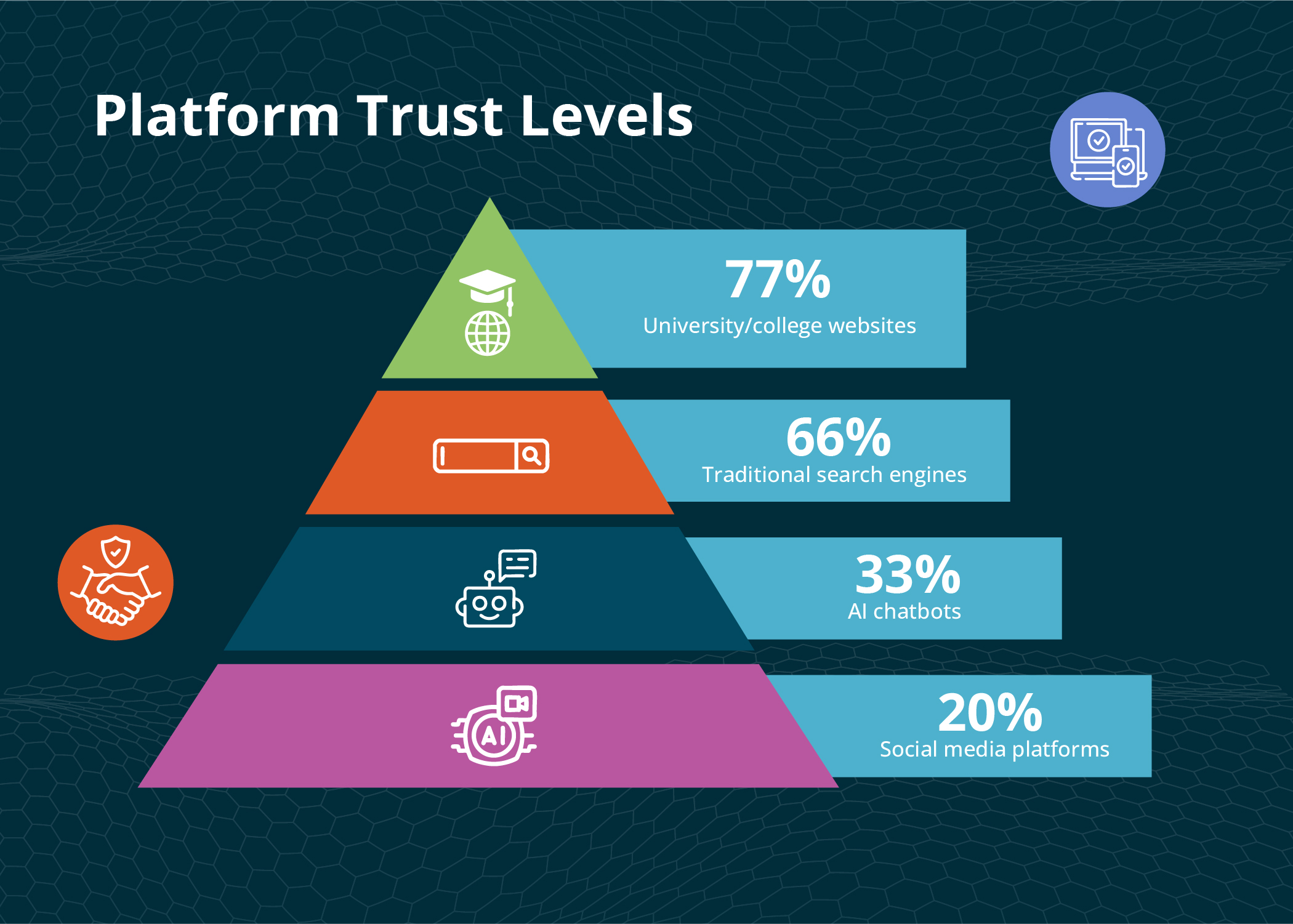
    When searching for professional and continuing education programs, prospect trust varies dramatically by source:

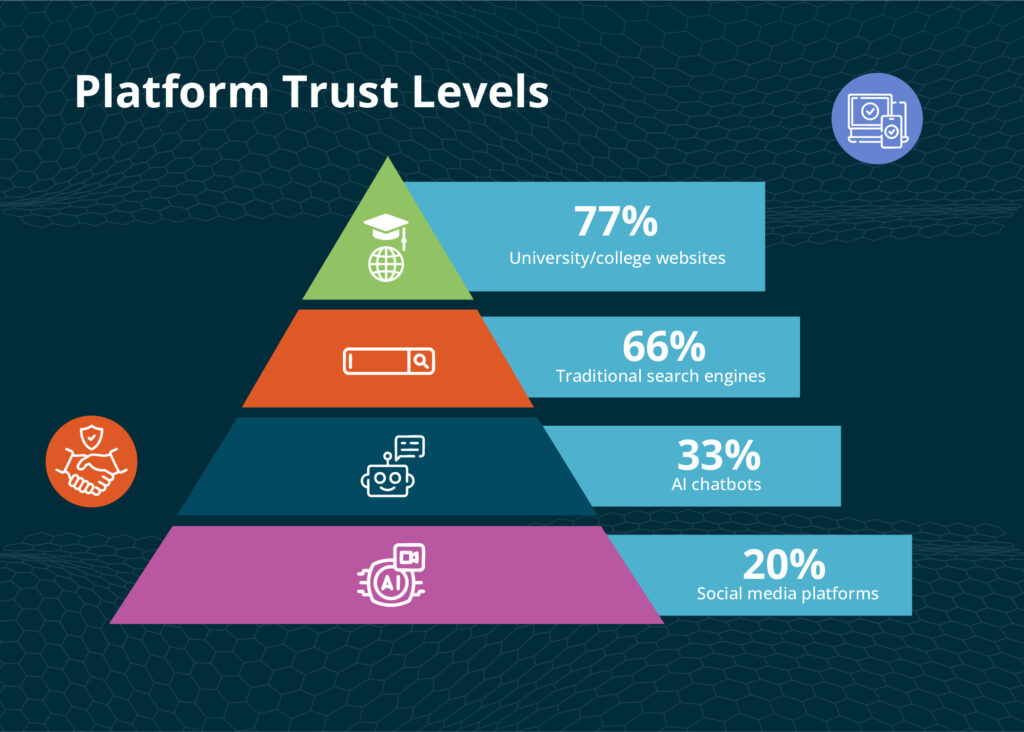
    Trust Levels by Platform (UPCEA/Search Influence 2025)

    Source Extremely/Very Trustworthy
    University/college websites 77%
    Traditional search engines 66%
    AI chatbots 33%
    Social media platforms 20%

    University websites are still the most trusted source by a wide margin. That’s actually good news for 2026. While AI tools are gaining usage, the destination of trust remains institutional websites. The challenge is making sure AI tools surface and cite your content accurately—so prospects who trust AI still end up trusting you.

    Think of it this way: AI is becoming the intermediary, but your website is still the authority. You need AI to accurately represent what’s on your site.

    Not Everyone Is Worried About AI Accuracy

    This surprised me a bit: nearly a third (32%) of respondents have no concerns whatsoever about using AI search tools for researching professional and continuing education programs.

    Among those who do have concerns:

    • 28% worry about validity, reliability, or accuracy
    • 7% cite privacy or security concerns
    • The remainder mention environmental impact, bias, and relevance

    So while accuracy concerns exist, a substantial portion of your prospect pool is comfortable taking AI recommendations at face value. That makes your AI presence even more critical—if AI gets your information wrong, a third of prospects won’t question it.

    What Would Build More Trust?

    When asked what features would be most valuable in AI-generated search results:

    1. Transparent sources for AI-generated recommendations: 51%
    2. AI-generated side-by-side comparisons of programs: 50%
    3. Emphasis on accredited institutions: 39%
    4. AI personalization based on interests: (favored by younger prospects)

    Prospects want AI to show its work. Transparent sourcing and comparison tools matter more than fancy personalization for most age groups.

    2026 implication: Structure your content with clear, citable claims. Include specific data points, credentials, and outcomes that AI can reference. Make it easy for AI to cite you accurately.

    Search Query Patterns: How Behavior Differs by Platform

    People Talk to AI Differently Than They Talk to Google

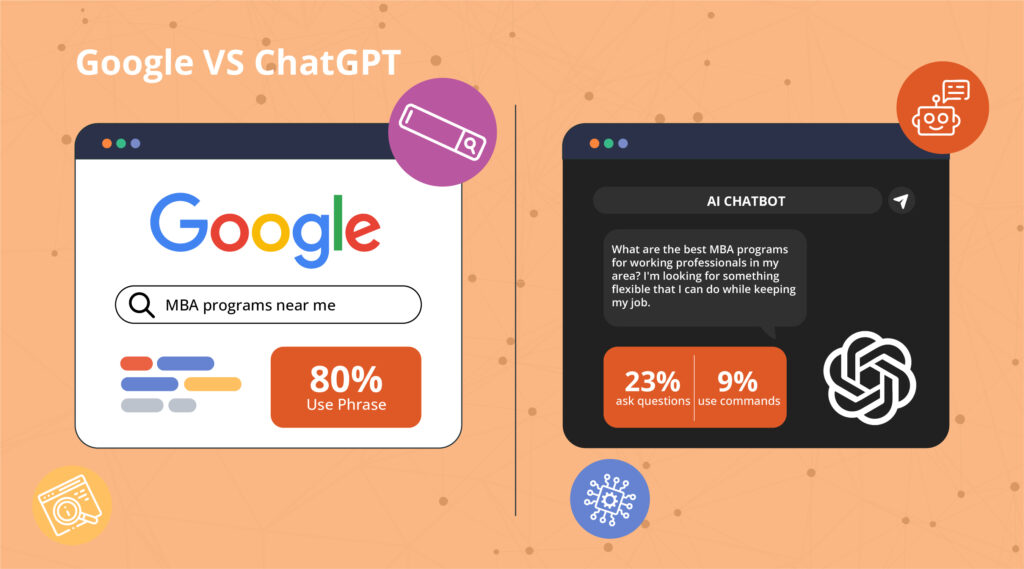
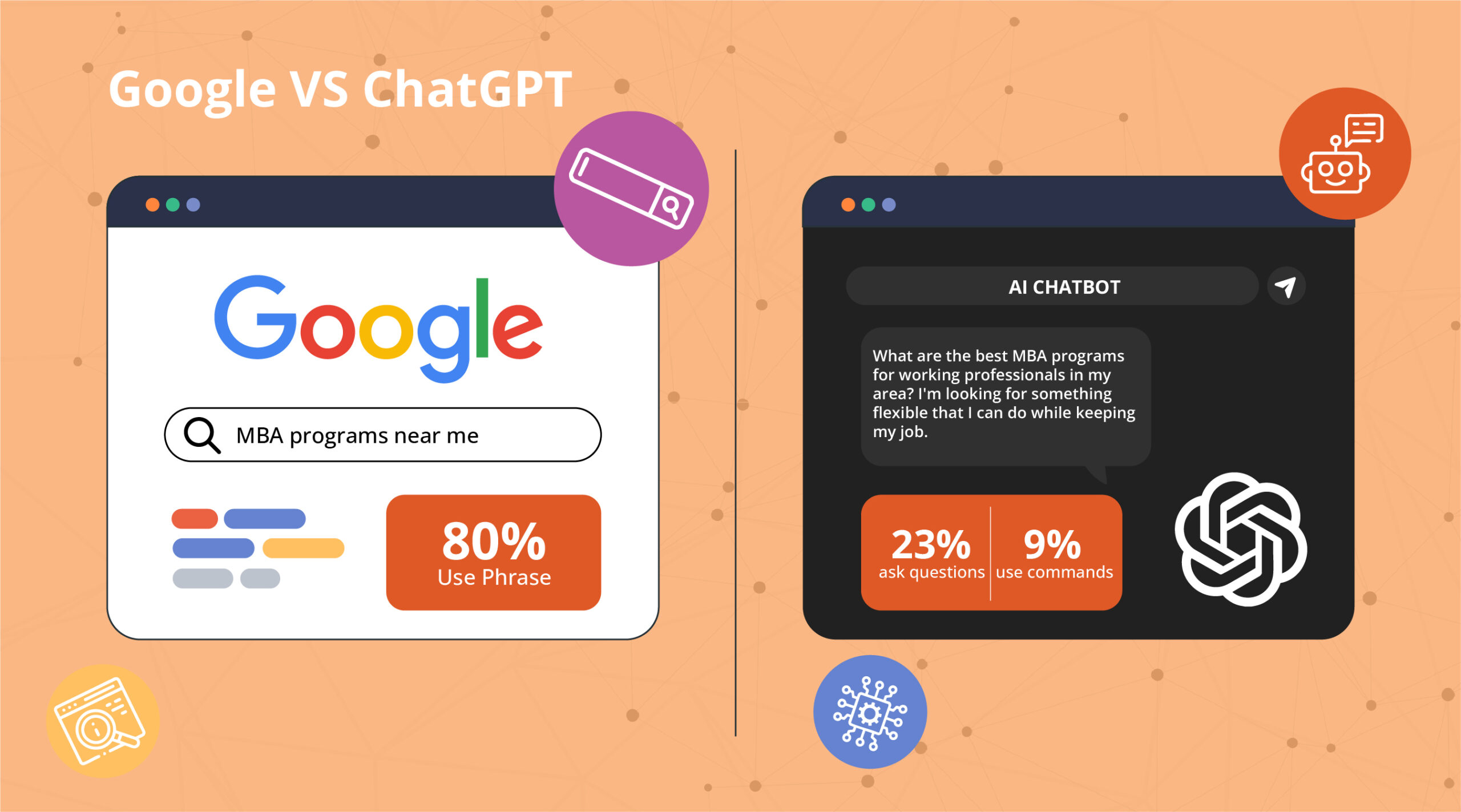
    This is one of the more actionable findings from the research. The UPCEA/Search Influence study asked respondents what they would type when searching for an MBA program across different platforms. The patterns are distinct:

    Query Type by Platform

    Query Type Traditional Search AI Search Engine AI Chatbot Social Media
    Phrase 80% 64% 55% 71%
    Question 12% 16% 23% 8%
    Command 1% 8% 9% 2%
    One-word 6% 6% 7% 9%
    Wouldn’t use 1% 5% 6% 10%

    On traditional search, 80% of prospects type phrases like “MBA programs near me.” On AI chatbots, that drops to 55%, while questions jump to 23% and commands to 9%.

    What this means for 2026 content: If you’re only optimizing for keyword phrases, you’re missing the conversational queries that dominate AI interactions. Content that answers questions directly—”What is the best MBA program for working professionals?” “Compare online vs. in-person MBA programs”—will perform better in AI contexts.

    The Core Keywords Still Matter

    Across all platforms, the most common search approaches for MBA programs included:

    • “MBA programs/degrees/courses/education” (27-31%)
    • “Best MBA programs/schools” (8-11%)
    • “MBA programs near me” (8-12%)

    The consistency across platforms tells us that core keyword targeting still matters. People are looking for the same information—they’re just asking for it differently depending on where they’re searching. Your content needs to address both the keyword and the question.

    Platform-Specific Behaviors: What to Prioritize for 2026

    ChatGPT Is the Default, But Don’t Ignore the Others

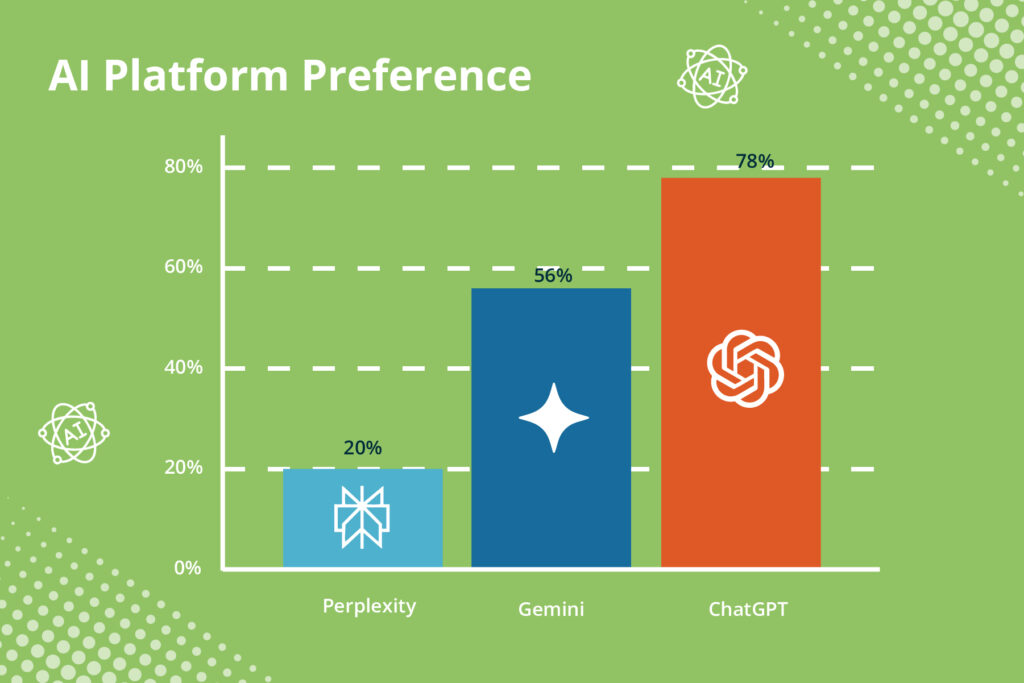
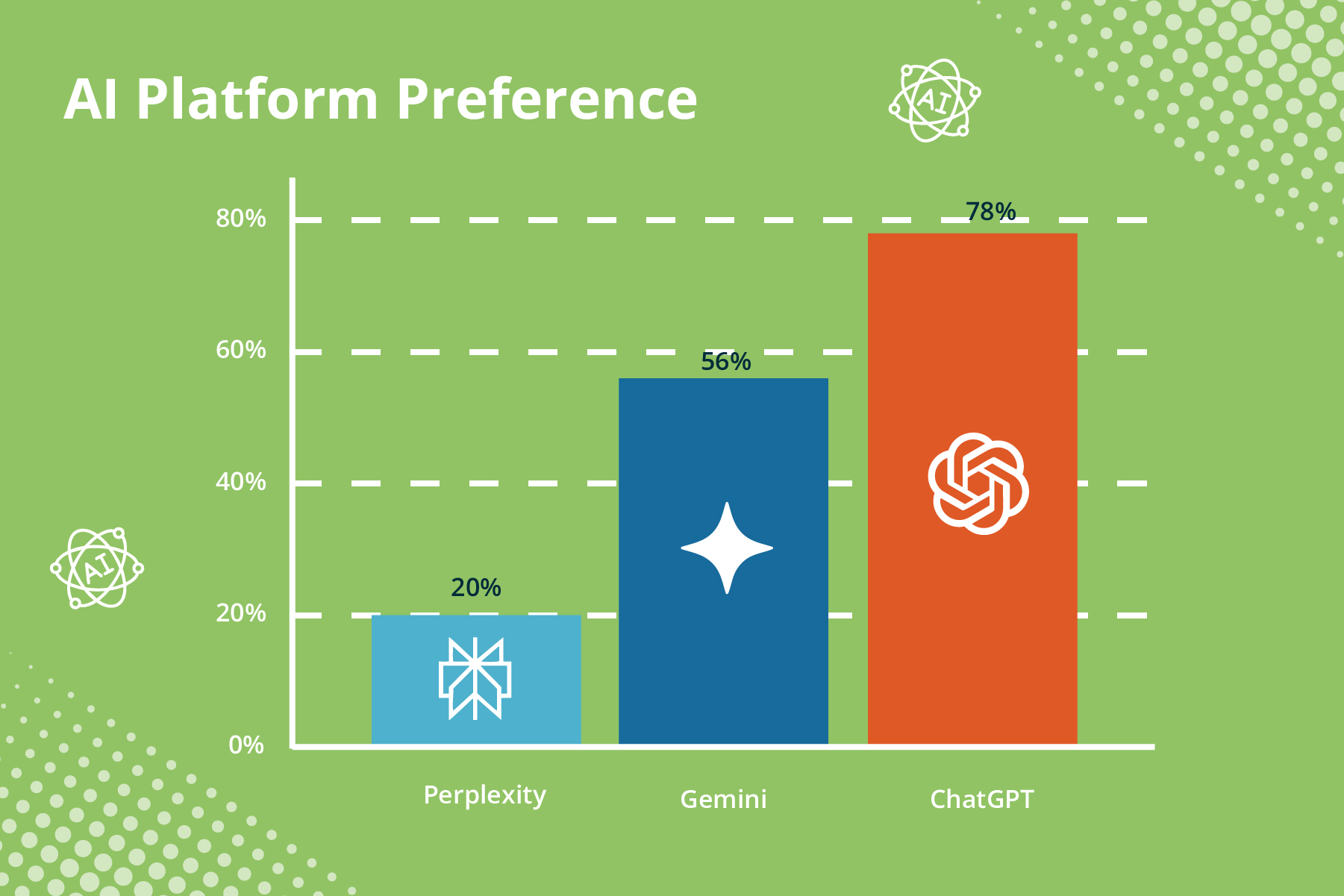
    Among prospects likely to use AI platforms for program research:

    AI Platform Would Use
    ChatGPT 78%
    Gemini 56%
    Perplexity 20%

    Here’s an interesting wrinkle: older age groups were more likely to use Gemini and Perplexity than younger prospects. My guess is this reflects different adoption pathways—Gemini through the Google ecosystem that older users are more embedded in, Perplexity through professional and research applications.

    2026 consideration: Your AI visibility strategy can’t focus on ChatGPT alone. Gemini is integrated into Google’s ecosystem (where 84% of your prospects still search), and Perplexity is growing fast among research-oriented users—exactly your graduate prospect demographic.

    The Scale of ChatGPT Is Hard to Overstate

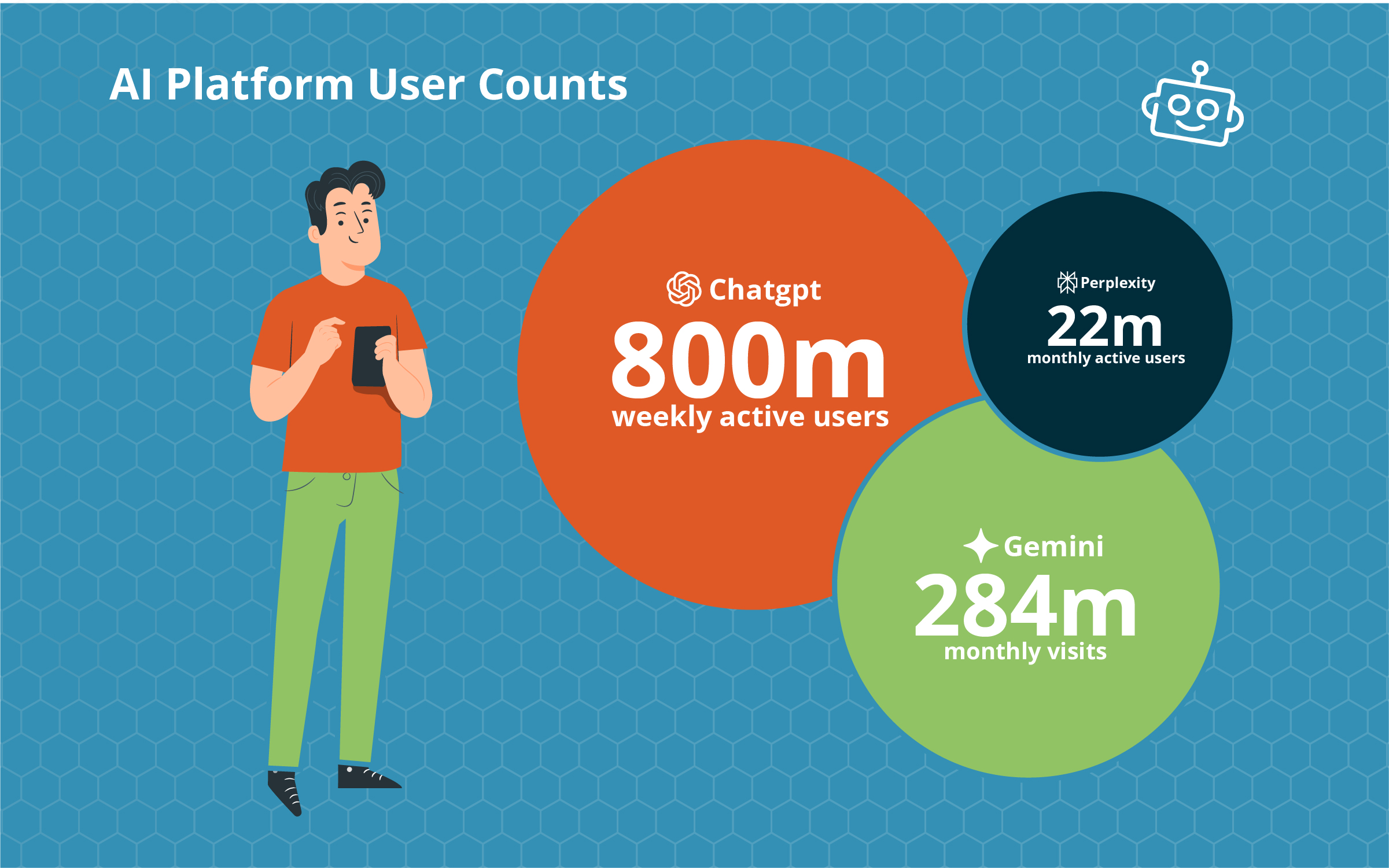
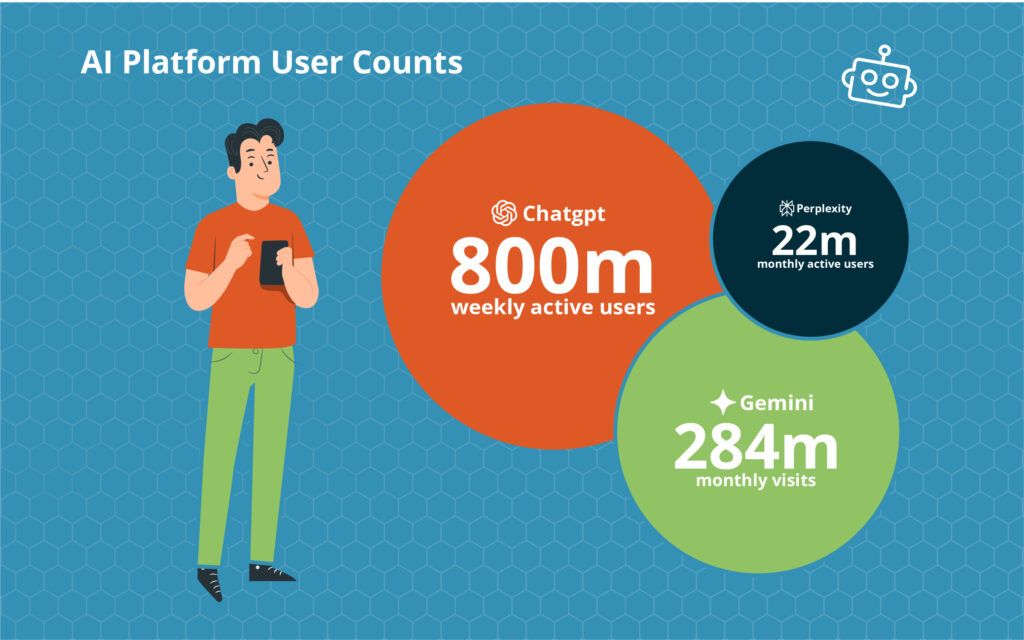
    As of late 2025, ChatGPT’s numbers are staggering:

    • 800 million weekly active users (September 2025)
    • 190 million daily active users
    • 5.72 billion monthly visits
    • 77.2 million monthly active users in the US alone
    • 46.7% of users are aged 18-24

    For context, Perplexity AI processes 780 million monthly queries with 22 million monthly active users—substantial and growing fast, but still an order of magnitude smaller than ChatGPT.
    Social Media Platform Preferences Vary by Age

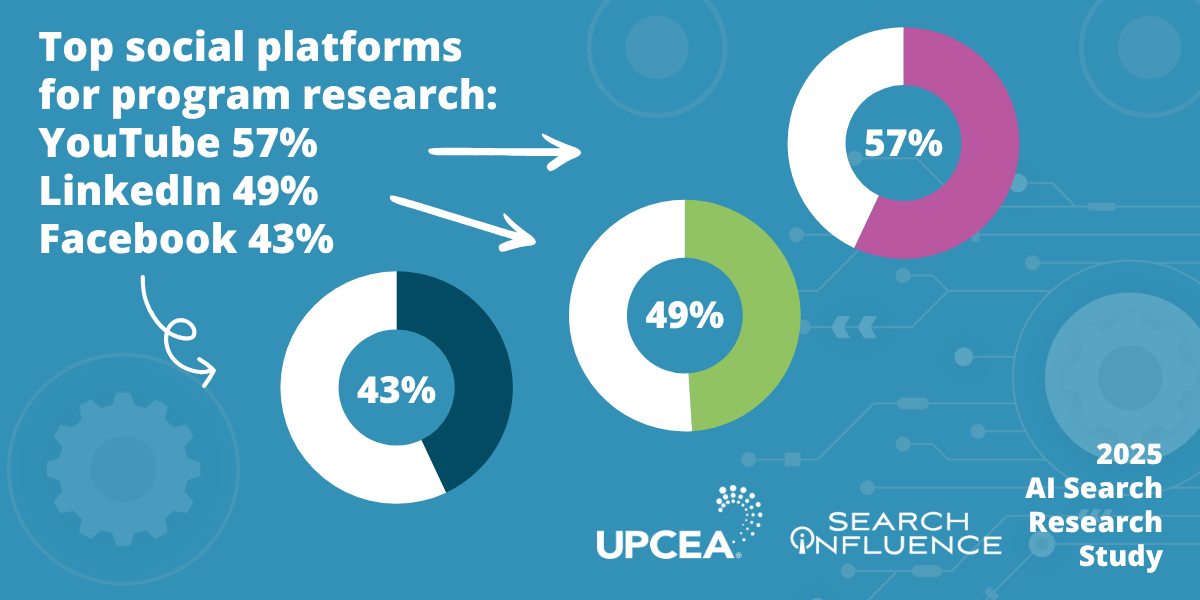
    Among prospects likely to use social media for program research:

    Platform Would Use
    YouTube 57%
    LinkedIn 49%
    Facebook 43%
    Instagram 35%
    Reddit 31%

    The age patterns are predictable:

    • YouTube, Instagram, TikTok: Skew younger
    • LinkedIn, Facebook: Skew older
    • Reddit: Relatively consistent across age groups

    What Actually Works on Social

    When using social media to research programs, prospects find these content types most helpful:

    1. Program summaries or descriptions: 65%
    2. Career advice related to education choices: 54%
    3. Student testimonials: 50%

    One exception worth noting: for 18-22-year-olds, university/college advertisements ranked as the most helpful content type. Traditional advertising still resonates with the youngest prospects in ways it doesn’t with older demographics.

    The AI Tools Landscape: A Quick Reference

    Major AI Platforms by the Numbers (Late 2025)

    Platform Monthly Active Users Monthly Queries Key Demographics
    ChatGPT 800M weekly / 190M daily 5.72B visits 46.7% aged 18-24
    Google Gemini 284M monthly visits 18% education sector
    Perplexity AI 22M MAU 780M queries 57% aged 18-34
    Claude ~3.2% US market share Professional/technical skew

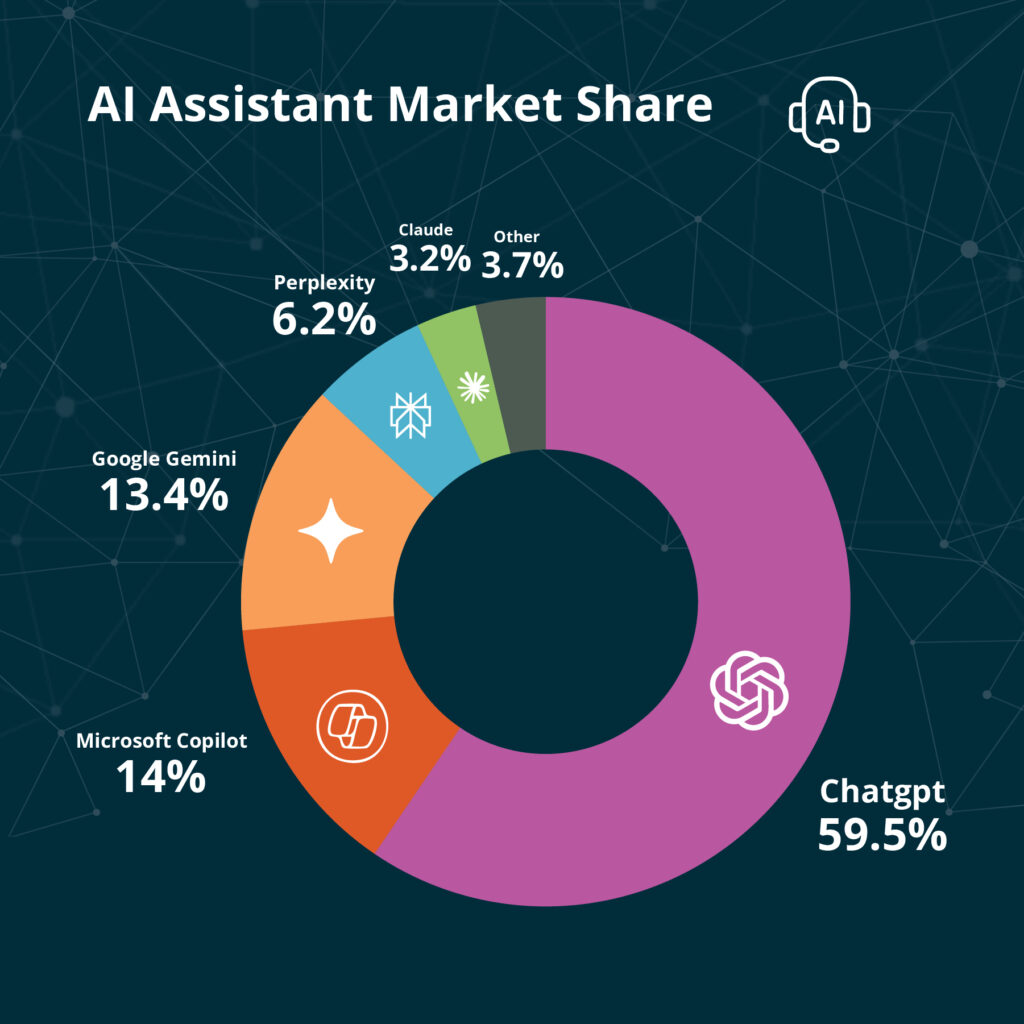
    US Market Share Context

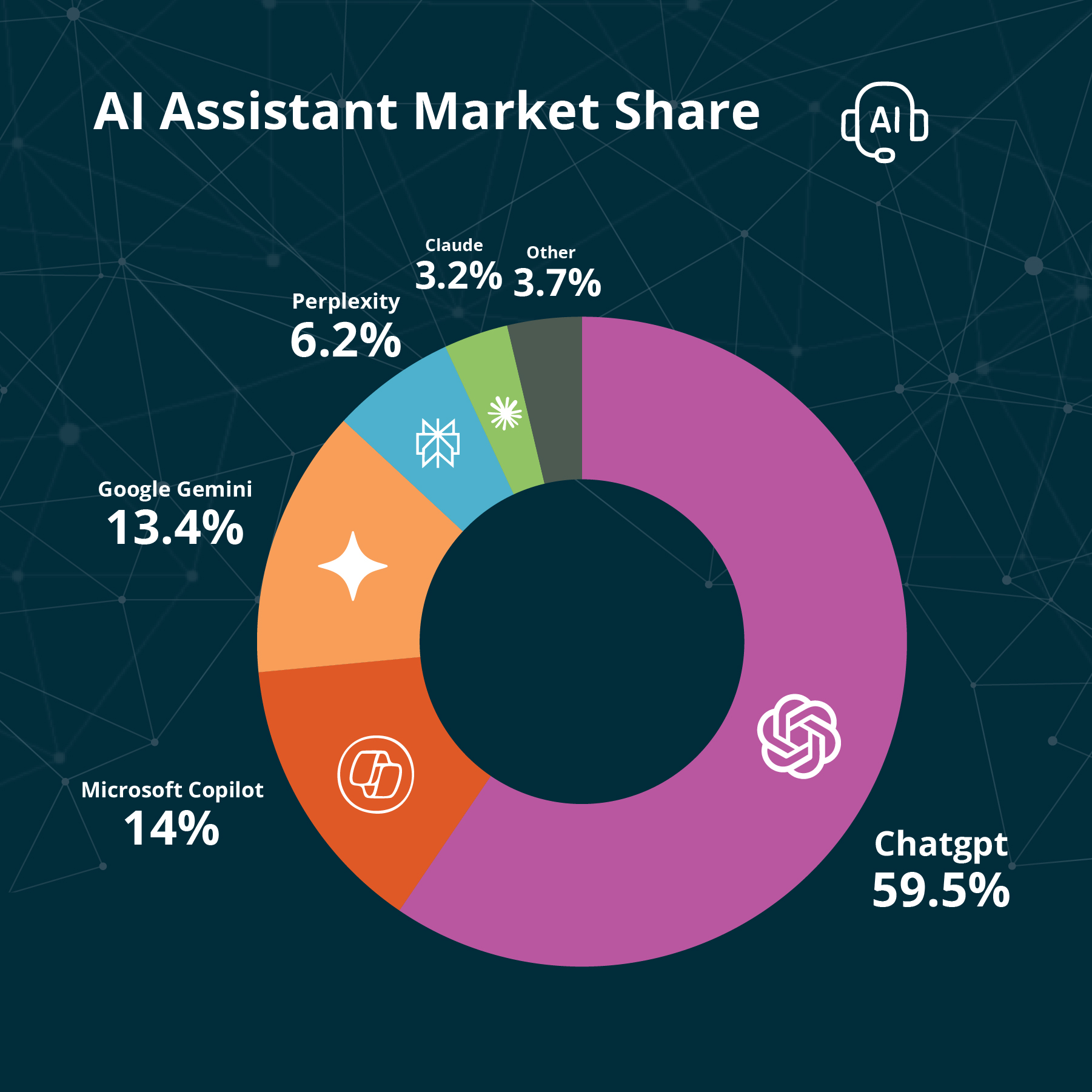
    • ChatGPT: 59.5%
    • Microsoft Copilot: 14%
    • Google Gemini: 13.4%
    • Perplexity: 6.2%
    • Claude: 3.2%

    Strategic Roadmap: AI Search Optimization for Higher Education in 2026

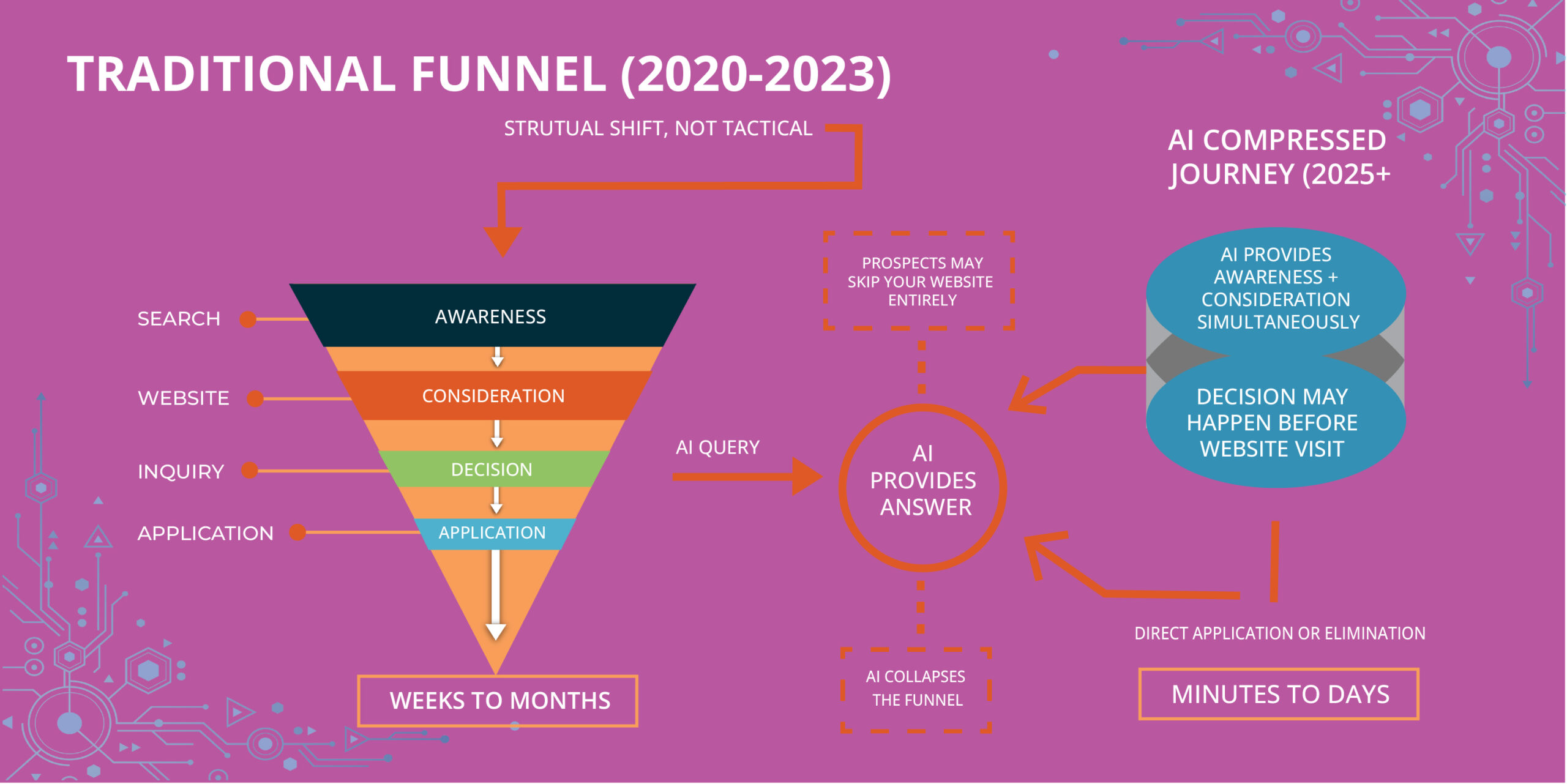
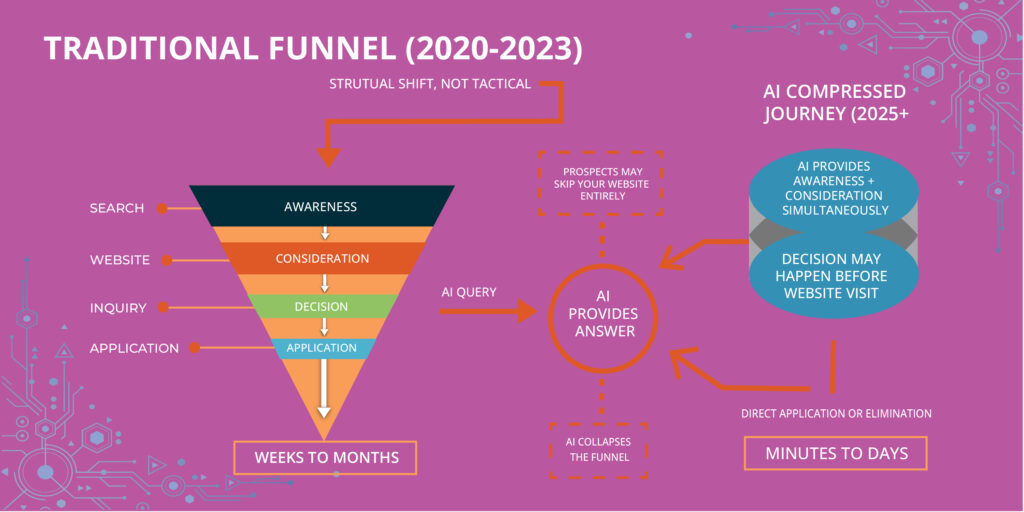
    The Shift Is Structural, Not Tactical

    Let me be direct about what the data is telling us about graduate enrollment marketing:

    1. Search behavior has diversified permanently.

    Prospects use 5+ platforms interchangeably for program research. If you’re only optimizing for Google, you’re reaching a shrinking portion of your audience. Single-platform strategies are increasingly risky.

    1. AI is compressing your funnel.

    Generative AI tools deliver answers about your institution—and your competitors—before prospects visit any website. The traditional “awareness → consideration → decision” funnel is collapsing. Prospects may move from “never heard of you” to “crossed you off the list” without a single website visit.

    1. Citation is the new ranking.

    Being referenced in AI Overviews and AI tool responses builds credibility. Absence from these results may signal irrelevance. For a generation that trusts AI to give them straight answers, not appearing in those answers is a problem.

    1. Your metrics are incomplete.

    Website traffic and click-through rates don’t capture AI-mediated discovery. Brand visibility and AI citation frequency matter, but most institutions aren’t tracking them yet.
    Your 2026 Action Plan for Graduate Enrollment Marketing

    Q1 2026: Foundation—AI Visibility Audit and Technical SEO

    1. Conduct an AI visibility audit. Query ChatGPT, Perplexity, and Google AI Overviews with the exact phrases your prospects use. Screenshot what appears. Document what’s missing or inaccurate. This is your baseline for AI search optimization.
    2. Review your website’s structure for AI readiness. AI tools favor content with clear headings, factual statements, and authoritative data that they can easily extract and cite. Does your program content deliver that, or is it buried in marketing language? An AI-ready website audit should be your first step.
    3. Check your technical SEO fundamentals. Crawlability and site speed matter more than ever for higher education SEO. AI engines are less patient than traditional crawlers. If they can’t see your content, they can’t cite it.

    Q2 2026: Content Development—GEO and Multi-Platform Strategy

    1. Develop a YouTube strategy if you don’t have one. 61% of prospects use YouTube like a search engine. Program overviews, student testimonials, and career outcome videos aren’t optional anymore for graduate enrollment marketing.
    2. Create content in multiple formats for AI optimization. AI chatbots favor Q&A formats. Traditional search favors keyword phrases. Social favors summaries and testimonials. The same information needs to exist in multiple expressions optimized for each platform.
    3. Build FAQ and comparison content. These formats are highly citable by AI systems and directly address how prospects query AI tools. This is core GEO for universities.

    Q3-Q4 2026: Infrastructure and Measurement Evolution

    1. Implement structured data and schema markup. Help AI tools understand your programs, faculty, outcomes, and accreditations through proper technical implementation. This is table stakes for AI visibility in higher education.
    2. Distribute content through authoritative channels. AI tools favor citations from recognized sources. Publishing through professional associations, research outlets, and established media increases the likelihood of AI citation—a key component of any higher education SEO strategy.
    3. Evolve your measurement approach. Start tracking brand mentions, AI citations, and sentiment alongside traditional metrics. The full picture of enrollment marketing visibility now extends well beyond clickable results.

    Methodology

    UPCEA/Search Influence Study (2025)

    Survey period: March 11-13, 2025

    Sample:

    • Total participants: 1,061 individuals
    • Qualified respondents: 760 (met all criteria)
    • Completed surveys: 705

    Qualification criteria:

    • Adults aged 18-60
    • Minimum high school diploma
    • Not currently enrolled in a PCE program
    • Interested in advancing skills through professional/continuing education

    Respondent demographics:

    • 55% female, 45% male
    • 68% employed full-time
    • Education: 32% bachelor’s degree, 19% some college, 18% master’s degree
    • Age: 25% ages 46-54, 19% ages 55-60, 17% ages 35-40

    Distribution: Internet panel

    Conducted by: UPCEA and Search Influence

    Carnegie Summer Research Series (2025)

    Sample: 3,400+ prospective students and parents

    Focus: College choice trends, AI usage in admissions, personality-driven communication

    Key longitudinal finding: AI usage in college search: 4% (2023) → 10% (2024) → 23% (2025)

    Additional Data Sources

    Platform statistics compiled from company announcements, third-party tracking services (Similarweb, SparkToro, Semrush), and industry research reports. All figures represent the most recent publicly available data as of November 2025.

    Glossary of Key Terms

    AI Overview: Google Search feature providing an AI-generated summary at the top of results, synthesizing information from multiple sources. Previously called Search Generative Experience (SGE).

    Zero-click search: A query where users find their answer directly in search results (featured snippets, AI Overviews, knowledge panels) without clicking to any website.

    Generative Engine Optimization (GEO): Optimizing content and digital presence to appear in AI-generated responses from tools like ChatGPT, Perplexity, and Google’s AI Overviews. Unlike traditional SEO (optimizing for algorithms), GEO focuses on helping AI systems accurately understand and represent your institution.

    Professional and Continuing Education (PCE): Post-secondary programs for working adults seeking to advance skills, change careers, or earn credentials—including graduate degrees, certificates, professional development, and continuing education.

    AI chatbot: Conversational AI interface (ChatGPT, Gemini) responding to queries in natural language, often synthesizing information from training data and/or real-time web search.

    AI search engine: Search tool (Perplexity, SearchGPT) providing direct answers by searching the web and synthesizing results, rather than returning a list of links.

    Frequently Asked Questions

    How are prospective students using AI tools in their program search?

    Half of prospects (50%) use AI-powered tools at least weekly for general information search. For program research specifically, 36% are extremely or very likely to use AI chatbots, and 35% likely to use AI search engines. ChatGPT dominates (78% of AI users would use it), followed by Gemini (56%) and Perplexity (20%).

    Do prospects trust AI-generated information about educational programs?

    It’s complicated. Only 33% rate AI chatbots as extremely or very trustworthy for program research, compared to 77% for university websites. But 32% have no concerns whatsoever about using AI for this purpose, and 56% say they’re more likely to trust brands cited in Google’s AI Overviews. Trust in AI is lower than traditional sources, but AI citations boost trust in the sources cited.

    What percentage of searches result in zero clicks?

    As of May 2025, roughly 69% of Google searches end without a click to any website, up from 56% a year earlier. When AI Overviews appear, click-through rates to top-ranking websites decline by 70-90%.

    Which platforms do prospects use to research graduate programs?

    Search engines dominate (84% extremely/very likely), followed by university websites (63%), AI chatbots (36%), AI search engines (35%), and social media (34%). But 61% also use YouTube “like a search engine,” and 50% use AI tools the same way. Platform diversification is the new normal.

    How do search queries differ between traditional search and AI tools?

    On traditional search, 80% use phrase-based queries. On AI chatbots, only 55% use phrases while 23% ask questions and 9% use commands. AI-optimized content should address conversational queries and direct questions—not just keyword phrases.

    What content types work best on social media for program discovery?

    Program summaries and descriptions (65%), career advice (54%), and student testimonials (50%) rate highest. Exception: for 18-22 year-olds, university advertisements were actually rated most helpful.

    What’s the difference between SEO and GEO?

    Traditional SEO optimizes for search algorithms—systems that score and rank based on signals like keywords and links. GEO (Generative Engine Optimization) optimizes for AI understanding—helping AI systems accurately comprehend and represent your institution so they can recommend you to prospects. SEO is like optimizing for a librarian; GEO is like optimizing for a research assistant who needs to explain you to someone else.

    About This Report

    This analysis synthesizes original research from the UPCEA/Search Influence study with data from Carnegie Higher Education, Everspring, EAB, and platform-specific metrics to provide a forward-looking view of how AI search optimization is reshaping program discovery in graduate education.

    The report is designed to help enrollment marketing leaders, higher education SEO professionals, and university marketing teams understand the AI visibility landscape and develop effective GEO strategies for 2026.

    Primary research sponsor: Search Influence

    Research partner: UPCEA (University Professional and Continuing Education Association)

    Report date: November 2025
    Sources and Citations

    Primary Research

    1. UPCEA and Search Influence. “AI Search in Higher Education: How Prospects Search in 2025.” Survey conducted March 11-13, 2025. n=705 qualified respondents.
    1. Carnegie Higher Education. “2025 Summer Research Series: AI Use in the College Search.” Survey of 3,400+ prospective students and parents.

    Industry Reports

    1. Everspring. “AI and the Collapse of Student Search: 2025 Higher Ed Trend Report.” May 2025.
    1. EAB. “Is Your College Website AI-Ready and Built to Drive Enrollment?” July 2025.
    1. EAB. “How Graduate Enrollment Leaders—and Prospective Students—Are Using AI.”
    1. Semrush. “AI Overviews Study: What 2025 SEO Data Tells Us About Google’s Search Shift.” May 2025.
    1. SparkToro and Similarweb. Zero-click search analysis, May 2025.
    2. EducationDynamics. “Engaging the Modern Learner: 2025 Report on the Preferences & Behaviors Shaping Higher Ed.”

    Platform Statistics

    1. OpenAI. ChatGPT usage statistics, August-September 2025.
    1. DemandSage. “ChatGPT Statistics” (November 2025).
    1. DemandSage. “Perplexity AI Statistics” (November 2025).
    1. Business of Apps. “ChatGPT Revenue and Usage Statistics” (2025).
    1. Business of Apps. “Perplexity Revenue and Usage Statistics” (2025).

    Additional Sources

    1. ICEF Monitor. “Students are switching to AI for search. Are you ready?” August 2025.
    1. EdTech Innovation Hub. “Universities face digital visibility crisis as students shift to AI search tools.”
    1. Search Engine Journal. “Google AI Overviews Impact On Publishers & How To Adapt Into 2026.”
    1. Bruce Clay. “How Google’s AI Overviews Are Changing Click Behavior and SEO Metrics.”
    1. Pew Research Center. AI usage survey, 2024-2025.
    1. McKinsey & Company. “The State of AI.”
    1. UPCEA. “2024 Marketing Survey Results.” (Social media advertising spend data—available to UPCEA members)
    2. Statista. “Share of Adults Who Would Switch to an AI-Powered Search Engine by Generation.”

    The landscape described here is evolving quickly. The 2025 data establishes clear trajectories, and the institutions that invest in AI search optimization and GEO for higher education now will have a meaningful advantage heading into 2026. AI-mediated discovery is becoming the norm, not the exception. The question for graduate enrollment marketing isn’t whether to adapt—it’s how quickly you can move.
  • Higher Education SEO Checklist for Nontraditional Programs

    Higher Education SEO Checklist for Nontraditional Programs graphic

    Key Insights

    • Nontraditional programs are driving enrollment growth. These offerings now provide working adults and lifelong learners with accessible routes to advance their skills and careers.
    • Your real competition isn’t just other universities. Private bootcamps, online platforms, and credentialing providers are dominating search results and targeting the same students you are.
    • High-intent traffic requires high-intent content. Prospective students aren’t always searching for institutions. They’re searching for outcomes, credentials, and career alignment. Your web pages must reflect those priorities to convert.
    • Visibility in search starts with proper SEO. Content must be structured, helpful, and authoritative to appear in traditional search engines, Google’s AI Overviews, ChatGPT, and other generative tools.

    The future of higher education isn’t confined to traditional four-year degrees. Certificates, bootcamps, and microcredentials have increasingly become pathways for career switchers, adult learners, and professionals who need quick, targeted upskilling.

    But high demand alone doesn’t guarantee enrollment.

    Universities now compete not just with peers but with corporate training providers, digital learning platforms, and alternative credentialing organizations. And with AI-driven search like Google’s AI Overviews and ChatGPT shaping how people find information online, visibility determines who wins attention and who gets overlooked.

    Prioritizing search engine optimization (SEO) ensures your programs surface in traditional search results and AI-generated answers, giving your institution the edge it needs.

    Not sure where to start? This higher education SEO checklist outlines essential steps to capture visibility and convert interest into enrollment.

    Why Nontraditional Programs Are Surging

    More adults are returning to education

    A growing number of learners today are 25 and older, many of them balancing work, family, and other responsibilities. To them, educational convenience is non-negotiable. These students are drawn to programs that offer flexibility, affordability, and credentials that directly support career advancement.

    That’s why online, hybrid, and evening/weekend formats continue to gain traction. These formats allow adult learners to continue working and managing daily responsibilities while investing in their future, without the need to pause their lives.

    Employers need rapid reskilling

    Workforce disruptions and rapid technological change are creating urgent skill gaps across nearly every industry. In response, employers are embracing skills-based hiring, prioritizing specific competencies over traditional degrees.

    This shift has elevated the credibility of certificates, microcredentials, and bootcamps. Programs that align with industry-recognized certifications (ex: project management, cloud computing, continuing education in healthcare) help learners meet employer expectations and compete in fast-moving job markets.

    Learners want faster ROI

    Many students today are motivated by outcomes they can act on quickly — a promotion, a licensure renewal, or a career pivot. Nontraditional programs offer a shorter, more focused timeline that aligns with these goals.

    Most last weeks or months rather than years, and they clearly map to real-world results. For busy professionals weighing the cost of time and tuition, programs with defined outcomes and immediate career relevance offer a much stronger return on investment than traditional long-term degree tracks.

    Why SEO Matters for Nontraditional Programs

    Different search behavior requires different SEO

    Prospective students for nontraditional programs often search differently than traditional undergrads. Their queries focus on outcomes, credentials, and convenience, not necessarily institutions.

    Terms like “online certificate in digital marketing”, “CEU courses for teachers in Florida”, or “best coding boot camps near me” reflect a clear intent to act.

    If your program pages aren’t built to match these kinds of searches, you’ll miss the opportunity to connect with the very students your programs are built for. SEO makes those connections possible by aligning your content with how and what people are actually searching for.

    Competition extends beyond universities

    More and more top-ranking results for nontraditional programs don’t come from universities. Instead, they come from private bootcamps, online platforms, and credentialing providers that build SEO directly into their business models. Companies like Coursera and Udemy publish detailed, optimized pages for nearly every course and often outrank universities on the same terms.

    These providers are targeting the same prospective students, using content that speaks directly to their goals and matches exactly how they search. Without a focused SEO strategy, even the strongest university programs can be overlooked.

    Search is evolving with AI

    Prospective students no longer look for answers solely on search engine results pages. AI-driven tools like Google’s AI Overviews, ChatGPT, Gemini, and Perplexity reshape how information surfaces and which sources get visibility.

    These platforms favor content that’s clearly structured, built around recognizable entities, and written with authority. Pages that anticipate common questions and offer well-organized details are far more likely to be referenced or cited in AI-generated responses.

    To compete in this environment, nontraditional program content must be optimized for traditional rankings and conversational discovery. That means thinking beyond just keywords and writing for how both humans and machines understand relevance.

    Higher Education SEO Checklist for Nontraditional Programs

    A journal with plan written on the front

    Step 1: Understand the nontraditional searcher

    Before shaping any SEO strategy, start by understanding who you’re targeting. Nontraditional students often have very different motivations and decision-making processes than traditional undergrads, and those differences shape how they search.

    Most are working adults with specific goals in mind. They’re focused on outcomes, timelines, and credentials, not student life or campus culture. Your content and keyword strategy should reflect that.

    Keep these traits in mind as you develop your SEO approach:

    • They want programs that support career advancement, a pivot into a new field, or the renewal of a professional license.
    • They tend to move quickly with shorter enrollment cycles and a strong need for fast, measurable ROI.
    • They prioritize flexibility, often searching for online, part-time, or evening/weekend options that fit into full schedules.
    • They search with intent, using job titles, certifications, or credential-specific queries.

    When you build content that speaks directly to these priorities, search engines understand the relevance, and potential students see the value immediately.

    Step 2: Target high-intent keywords and long-tail queries

    To attract qualified leads, your keyword strategy must reflect how prospective students search. Generic degree terms like “business program” or “computer science major” won’t surface certificate or bootcamp content, and they can cannibalize SEO for your other academic programs.

    Instead, build keyword sets around:

    • Program type + skill + career outcome (e.g., “online UX certificate for working adults”)
    • Credential-based terms (e.g., “PMP certification training,” “teacher CEUs online”)
    • Conversational queries aligned with voice search and AI (e.g., fastest cybersecurity certificate with job placement)

    Be sure to group keywords by intent (exploratory vs. ready-to-enroll) and format (certificate, bootcamp, CEU, etc.). Then map those keywords to optimized landing pages that speak directly to each audience segment. You can use Google Search Console and other free keyword research tools to track performance and identify gaps in your content strategy.

    Step 3: Optimize dedicated program pages

    Every nontraditional program should live on its own page, not be buried under a general “Continuing Education” tab or lumped into a degree overview. When each certificate, bootcamp, or CEU has a dedicated, well-structured page, users, search engines, and AI platforms can find what they’re looking for faster.

    Strong program pages answer real questions and guide prospective students toward the next step. They should include:

    • A clear program overview, including what it is and who it’s for
    • Timeline and start dates
    • Admission criteria, tuition, and any financial aid details
    • A list of courses or skills taught
    • The outcome: what students can do or qualify for after completion

    Make sure the page is easy to scan. Use clear headings, bullet points, and internal links that help users move between related content.

    And yes, it should load fast, work on mobile, and follow accessibility best practices. Search engines notice when a page respects users’ time.

    Step 4: Build a content cluster for each program

    Your program page shouldn’t stand alone. Develop a content cluster around each nontraditional program to build authority and improve search visibility. This strategy helps search engines understand the depth and relevance of your content and gives prospective students multiple entry points to engage.

    Start with the program page as your pillar. Then support it with content that speaks to different aspects of the student decision-making process, like:

    • Blog posts answering common questions (e.g., “How long does it take to complete a UX certificate?”)
    • Faculty perspectives on industry trends and credential relevance
    • Alumni success stories highlighting real-world impact
    • Employer endorsements or partnerships

    Interlink this content back to the pillar page to establish topical authority. A well-structured cluster signals relevance to search engines and helps students explore without hitting dead ends.

    Step 5: Build enrollment-stage resources that support decision-making

    Beyond discoverability, prospective students need tools to evaluate your programs and decide whether to apply. These enrollment-stage resources address common concerns, support advisor conversations, and give learners the confidence to move forward.

    Create assets like:

    • Downloadable program guides with curriculum, cost, timelines, and FAQs
    • Credential comparisons (certificate vs. degree, CEU vs. bootcamp, etc.)
    • Career outlook PDFs mapping skills to job titles and salary ranges
    • Webinar slides or follow-up one-pagers for info sessions

    Once created, make these resources easy to find and repurpose:

    1. Feature them on LinkedIn and program pages
    2. Share via email campaigns and lead nurture flows
    3. Use them in admissions conversations and webinars

    These tools help students compare options and understand outcomes, and they provide additional SEO value when hosted and linked properly.

    Step 6: Use strategic calls to action (CTAs)

    Once your program pages and supporting content are optimized, guide visitors toward the next step with CTAs that reflect their stage in the decision-making process. A generic “Learn More” or “Apply Now” won’t always cut it, especially for prospective students browsing during a break between shifts or researching late at night after putting kids to bed.

    Your CTAs should match the user’s intent and readiness:

    • Early-stage learners are gathering information. Use CTAs like:
      “Download the Certificate Guide,” “Explore the Curriculum,” or “What Can I Do With This Credential?”
    • Mid-funnel users are comparing programs. Guide them to:
      “Sign Up for a Live Info Session,” “See Career Outcomes,” or “Compare Certificate and Degree Options.”
    • High-intent students are ready to take action. Prioritize:
      “Register for the Next Session,” “Start Your Application,” or “Speak With an Enrollment Coach.”

    Make each CTA specific and time-sensitive. Embed them in multiple places: the top of the program page, within FAQ sections, after testimonials, and in blog content.

    Step 7: Leverage multimedia for SEO impact

    Multimedia isn’t just decorative. It’s a core part of your higher education SEO and conversion strategy. Videos, audio snippets, and visuals like infographics give prospective students more ways to connect with your program, and they can also be featured in AI-generated responses (especially YouTube videos).

    Start with the program page. Add:

    • Faculty introductions explaining course content or how the program connects to industry needs
    • Alumni testimonials sharing what they gained, where they work now, and how quickly they saw a return on their investment
    • Short videos explaining the format (e.g., how a weekend-only bootcamp works) or answering FAQs

    Upload any videos to YouTube with optimized titles, descriptions, and tags. Then, organize them into playlists grouped by category, like “Healthcare Certificates,” “Business Microcredentials,” or “IT Bootcamps.” These playlists become assets you can embed across pages, emails, and social posts.

    Always include captions and transcripts for accessibility and indexing. Pages with embedded, captioned video can help with higher time-on-page and reduced bounce rates.

    Step 8: Prioritize technical SEO and user experience

    You can have the most relevant content on the web, but if your site is slow, confusing, or inaccessible, it won’t matter. Technical SEO ensures your content performs well across devices and platforms, while a thoughtful user experience keeps prospective students engaged.

    Start with a mobile-first design. Nontraditional learners often research on the go — between meetings, during commutes, or late at night on their phones. Make sure all program pages are responsive, load fast, and avoid unnecessary pop-ups or clutter.

    Run regular audits to assess:

    • Page speed using Core Web Vitals (especially Largest Contentful Paint and Cumulative Layout Shift)
    • Broken links and redirect loops
    • Schema markup to support AI and rich results
    • Navigation clarity, especially for programs not housed under “Degrees”

    Adhere to accessibility best practices like alt text for images, proper heading structure, keyboard navigation, and ARIA labels. This benefits all users while improving search engine visibility.

    Step 9: Track the right KPIs with UTMs and event tracking

    For fast-moving programs like bootcamps and CEUs, you can’t wait six months to evaluate performance. Use an analytics infrastructure that tracks behavior in real time and ties specific campaigns to measurable outcomes.

    Start by defining clear KPIs that go beyond keyword rankings, such as:

    • Program brochure downloads
    • Webinar registrations
    • Inquiry form submissions
    • Applications/registrations started or completed

    Set up UTM parameters on every paid, organic, and email campaign. These tags help you segment traffic by source and determine what’s actually driving engagement in your SEO efforts.

    Use event tracking (via Google Tag Manager or another tool) to monitor:

    • Clicks on CTAs
    • Video views
    • Form submissions and dropdown interactions
    • Time on page for high-converting content

    With a consistent and comprehensive approach to analytics tracking, you’ll quickly see which programs have strong momentum and which need refinement.

    Step 10: Build authority and citations

    Search engines have long used backlinks to evaluate trust, but AI platforms are increasingly relying on citations (mentions of your institution in trusted spaces) to determine authority. While links still carry weight, visibility in Google’s AI Overviews, ChatGPT, and Perplexity often depends more on who references you, not just where you’re linked.

    To build citation-worthy authority:

    • Publish faculty insights in trade publications, industry blogs, or local news outlets
    • Collaborate with employers or associations to be named in workforce training directories
    • Secure alumni coverage in media stories, awards lists, or “Where Are They Now?” features
    • Submit your programs to credible rankings or curated resource lists (e.g., “Best Data Analytics Bootcamps”)
    • Strengthen internal linking between programs and thought-leadership pages to reinforce topical relevance

    Each citation builds trust, not just with humans, but with AI engines scanning the web for reliable answers to user queries.

    A person working on a laptop in an office

    Nontraditional Program SEO Checklist FAQs


    Is SEO still relevant today?

    Yes. SEO is essential for online visibility, especially in higher education, where competition is growing. Even as AI tools reshape search behavior, traditional search engines remain a major discovery channel for prospective students. SEO ensures your programs rank for relevant keywords, appear in AI-generated results, and meet the expectations of search engines and users alike.

    How does AI search change SEO for higher education?

    AI search favors structured, authoritative content that directly answers questions. Platforms like AI Overviews and ChatGPT look for well-organized pages, strong citations, and recognizable entities to inform their responses. This means the most effective SEO strategy must go beyond keywords, prioritizing AI SEO fundamentals like semantic relevance, entity-rich content, and citation-building to stay visible in both AI and traditional search.

    How is SEO different for nontraditional programs?

    Nontraditional students search with different goals and intent, so SEO must reflect that. They often use career- or credential-focused queries like “online project management certificate” instead of institutional brand names. Optimizing for these long-tail, high-intent searches and providing fast, mobile-friendly, easy-to-navigate pages helps you reach this audience effectively.

    Does page speed affect SEO?

    Yes. Slow loading times negatively impact search rankings and user experience. Google’s Core Web Vitals prioritize fast, stable performance across devices, especially mobile. For higher ed sites serving adult learners on the go, optimizing load speed and reducing layout shift can improve both visibility and conversion.

    What content works best for nontraditional program SEO?

    Detailed, outcome-driven content performs best for nontraditional programs. Pages should clearly explain the program’s purpose, who it’s for, what it costs, and what students can do after completing it. Supporting assets like alumni stories, FAQs, and videos boost engagement and help your pages surface in AI-generated answers.

    How do I measure SEO success?

    Measure SEO success by tracking both visibility and conversions. Look at keyword rankings, organic traffic, and AI citations, but also monitor form fills, brochure downloads, and webinar signups. Tools like Google Search Console, Google Analytics (with UTM tags and event tracking), and Scrunch AI offer the full picture of what’s working and what needs refinement.

    Build Smarter SEO Strategies for Nontraditional Programs

    Search is the front door to your programs, and today, that door opens in more places than ever. From Google’s AI Overviews to voice assistants and generative platforms, visibility depends on how well your content performs across both traditional and AI-powered search.

    SEO isn’t just a checkbox. It’s your edge in a competitive market.

    The higher education SEO checklist above gives you the foundation. The next step? Putting it into action.

    Download our free SEO Workbook for Higher Education Websites to:

    • Focus on the SEO strategies that move the needle for nontraditional programs
    • Assess your current visibility in both search engines and AI-generated responses
    • Build a practical, three-month roadmap to boost traffic, engagement, and conversions

    The future of enrollment starts with being seen. Put your revamped SEO strategy in motion today.

    Images:
    Unsplash
    Unsplash

  • New From Search Influence – AI Search in Higher Education: How Prospects Search in 2025

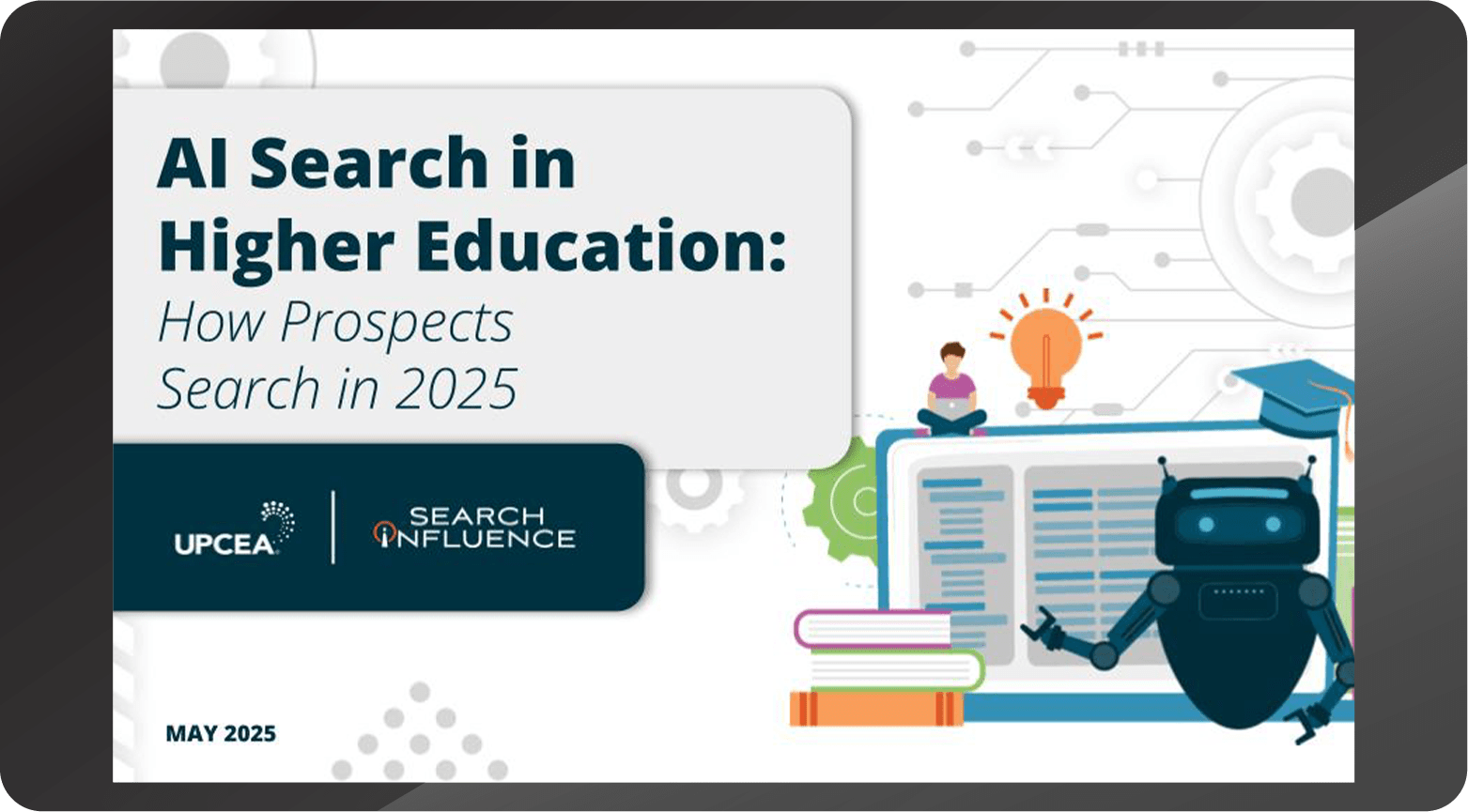
    AI Search in Higher Education: How Prospects Search in 2025 image on a tablet

    Artificial intelligence isn’t on the horizon for higher ed — it’s here. Half of prospective students already use AI tools weekly to search for information in the same way they use Google.

    To help institutions adapt, the Online and Professional Education Association (UPCEA), in partnership with Search Influence, has released the 2025 AI Search in Higher Education Research Study. This research sheds light on how prospective adult learners use AI, search engines, university websites, and other platforms to explore, trust, and select programs.

    Download the full AI Search in Higher Education Research Study

    About the AI Search in Higher Education Research Study

    The AI Search in Higher Education report surveyed 760 qualified adult learners between 18 and 60, all interested in advancing their skills or knowledge through online and continuing education. These respondents represent today’s prospective adult learners, a growth market for universities and an early indicator of broader enrollment trends.

    UPCEA led the research, bringing its deep expertise in online and continuing education, while Search Influence shaped the study with insights from our nearly 20 years as an SEO and AI search optimization agency.

    Together, we uncovered how AI, traditional search, and institutional websites are reshaping the way prospective students find, trust, and ultimately choose programs.

    Key Findings: How Prospects Search in 2025

    The results illustrate a rapidly diversifying student journey. Here are the top takeaways:

    • AI tools are an integral part of the enrollment funnel. 50% of prospective learners use AI platforms weekly, making them a standard part of the search process.
    • University websites anchor trust. 77% of respondents rated institutional websites as their most reliable source when exploring programs.
    • AI citations influence credibility. 79% of prospects read Google’s AI-generated overviews, and 56% say they are more likely to trust schools cited within them.
    • Search visibility drives consideration. 82% of students report they are more likely to consider programs that appear on the first page of search results.
    • Discovery spans multiple platforms. 84% of prospects use search engines, 61% use YouTube as a search engine, and 50% rely on AI tools in the same way they use Google.

    These findings confirm that students are moving fluidly between AI platforms, search engines, and video-based resources. Institutions cannot rely on a single channel. They must create content that performs across all of them.

    50% of prospects use AI tools at least weekly

    Why Online and Continuing Education Students?

    Online and continuing education students are often early adopters of new search behaviors, and their choices ripple outward to the broader higher ed market. They are career-focused, typically employed full-time, and actively researching programs that fit their personal and professional goals.

    By focusing this study on online and continuing education prospects, we’re able to capture a forward-looking snapshot of how AI search in higher education is shaping program discovery, trust, and enrollment decisions.

    What This Means for Higher Ed Marketers

    For higher ed leaders and enrollment teams, the implications are clear:

    • Multi-channel visibility is non-negotiable. Students expect to find you on Google, university websites, AI-generated responses, and video platforms like YouTube.
    • SEO is the connective tissue. Strong, authoritative SEO is the foundation that fuels visibility across both traditional and AI search engines. Without it, your programs won’t appear in the places students are looking.
    • Early movers will win. Many institutions have not yet adapted their strategies for AI search. Schools that act now will gain a competitive advantage in enrollment visibility and trust.

    Measuring Success in AI Search

    Success in AI search isn’t just about rankings. Institutions should track citations in AI Overviews, visibility across AI platforms, and engagement from AI-driven traffic, alongside traditional metrics like cost per inquiry (CPI) and ROI. By adding these benchmarks, schools can better understand how AI contributes to the enrollment funnel and make smarter investments in visibility and trust.


    top social platforms graphics

    Take Action: Be Visible in AI Search

    AI search is a core part of how students find and evaluate higher ed programs.

    The 2025 AI Search in Higher Education Research Study confirms what many institutions are beginning to notice: if you’re not visible in AI search, you’re not in the consideration set.

    The good news? Acting now puts you ahead.

    Download the full 2025 AI Search in Higher Education Research Study to explore the data and recommendations.

  • Search Influence Honored as One of 2025’s Best Women-Owned Businesses by New Orleans CityBusiness

    Search Influence is proud to announce that New Orleans CityBusiness has named us one of the 2025 In the Lead: Best Women-Owned Businesses honorees.

    The special section, profiling recognized companies, will appear in the September 19, 2025, issue of New Orleans CityBusiness.

    This honor comes alongside our recognition as an honoree in the 2025 CityBusiness Empowering Women Award and adds to our ongoing distinction of being named five times to the publication’s Best Places to Work list.

    Together, these awards highlight our growth as a digital marketing agency and our commitment to creating a workplace where women lead, innovate, and thrive.

    What the Award Represents

    CityBusiness selects honorees based on business performance, innovation, workplace culture, and community impact.

    To qualify, companies must be owned in whole or majority by women and based in the Greater New Orleans area. Honorees are chosen for achievements such as:

    • Demonstrating strong growth in revenue or employees
    • Trailblazing in industries traditionally dominated by male-owned firms
    • Building a workplace that supports employees with programs that foster morale and growth
    • Showing consistent community engagement and mentorship

    At Search Influence, these values align directly with our mission. 75% of our leadership and 79% of our team are women, and our culture emphasizes mentorship, inclusion, and opportunity.

    A Women-Owned Digital Marketing Agency Making an Impact

    From our beginnings in a spare bedroom to becoming a nationally recognized digital marketing agency, our growth has always been rooted in people. Being a women-owned company means leading with empathy and strength while ensuring every team member has the tools to succeed. Flexible schedules, paid parental leave, and clear paths for professional development are just a few ways we support our team.

    We also give back by hosting YouthForce interns each year, helping mentor the next generation of women interested in business, technology, and marketing.

    Driving Innovation Through AI SEO and Digital Advertising

    This award also celebrates how we’ve helped clients succeed through innovation.

    Search Influence has been an early adopter of AI SEO strategies, ensuring our clients appear in AI-powered search results like Google’s AI Overviews and conversational assistants.

    Our dual approach, optimizing client visibility in AI search while using AI tools to improve SEO workflows, keeps our partners ahead of rapid industry changes.

    In addition to SEO, our expertise spans digital advertising and data-driven email marketing.

    For nearly 20 years, we’ve delivered measurable results through strategies that blend human creativity with advanced analytics.

    Looking Ahead

    Recognition as one of the Best Women-Owned Businesses underscores what we’ve always believed: When women lead, companies and communities grow stronger.

    We’re grateful to New Orleans CityBusiness for this honor and proud to stand alongside other local businesses that are making an impact.

    As AI, search, and digital advertising continue to evolve, Search Influence remains dedicated to helping our clients thrive in a competitive environment. Our story proves that innovation, inclusion, and community commitment are the foundation of lasting growth.

    Ready to maximize your success with a proven women-owned digital marketing agency?

    Contact Search Influence today to discuss how AI SEO and digital advertising can drive your next stage of growth.

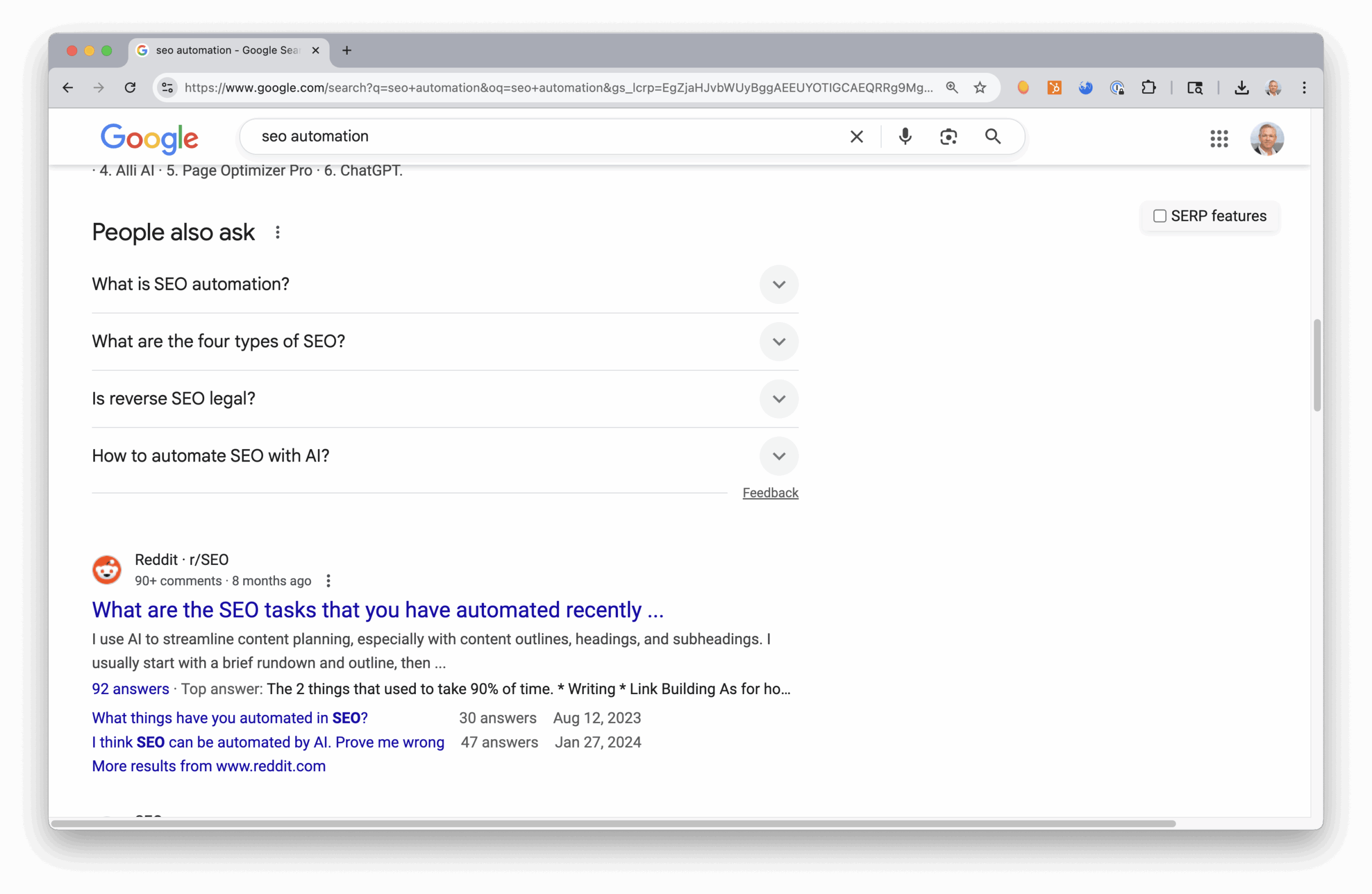
  • SEO Automation: How I Built an AI-Powered Question Discovery System with Make.com

    SEO Automation: How I Built an AI-Powered Question Discovery System with Make.com

    SEO Automation: How I Built an AI-Powered Question Discovery System with Make.com

    I recently automated an SEO process that used to take our team hours of manual work. 

    It now runs in 5 minutes. This isn’t about replacing experts. It’s about getting them out of spreadsheets so they can actually solve strategic problems and get creative with content. 

    Here’s how I built it using Make.com, Google Search Console, Semrush, and People Also Ask data from AlsoAsked, and why every SEO team should be doing this.

    SEO Automation: How I Built an AI-Powered Question Discovery System with Make.com

    The Manual Question Discovery Process We Had to Kill

    Here’s what our question discovery automation process looked like before implementing SEO automation with Make.com:

    1. Google Search Console Export: Pull search queries for specific URLs and domains
    2. Semrush Research: Cross-reference GSC data with broader keyword opportunities
    3. People Also Ask Research: Manually collect AlsoAsked questions for FAQ optimization
    4. AI Search Analysis: Hunt through competitor frequently asked questions for AI Overviews
    5. Related Topic Research: Expand into connected topics for broader search visibility
    6. Relevance Assessment: Manually score questions for content fit and business value

    This took 2-3 hours per analysis. Multiply across clients, pages, and team members, and you’re wasting 15-20 hours weekly on work that doesn’t require strategic thinking.

    The turning point came when I realized our senior strategists were spending more time pulling data than actually optimizing for the things that matter – like getting featured in Google’s AI Overviews and other search features that are reshaping SEO.

    How to Build Your Own SEO Automation with Make.com

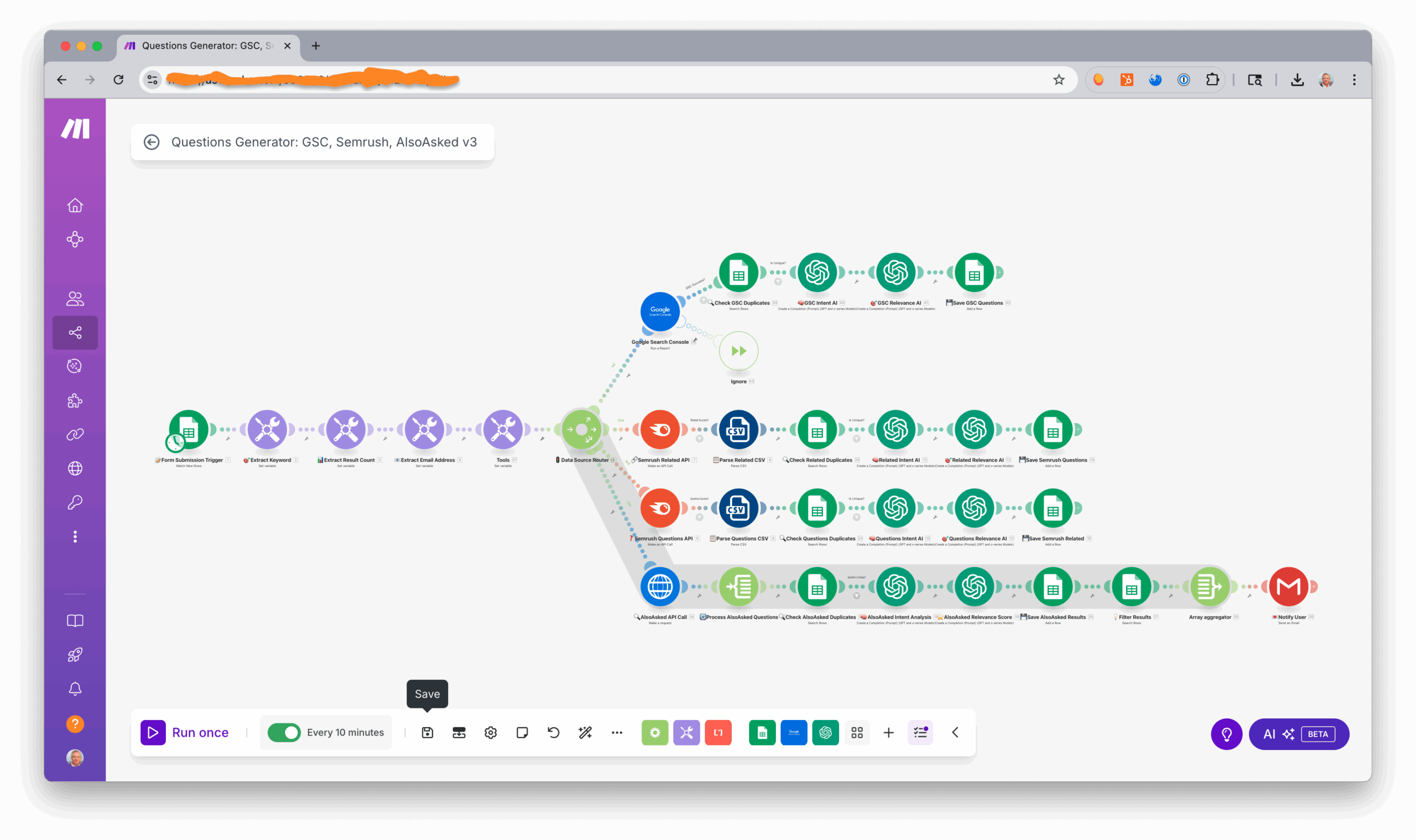
    I built the SEO automation in Make.com to actually analyze, not just move data around. The workflow connects Google Search Console, Semrush, and People Also Ask into one system. If a URL has enough data in GSC, it pulls questions from there. If not, it automatically looks at the whole domain for context. Then it grabs related questions from People Also Ask, pulls keyword data from Semrush, and uses AI to score every question based on what you’re actually trying to accomplish with that page.

    High-Traffic Pages: Get laser-focused questions with direct GSC processing, plus related questions from People Also Ask for thorough FAQ development.

    Newer Content: Enhanced with domain-wide context and AI question discovery to find content gaps and optimization opportunities.

    Strategic Analysis: Semrush integration helps us spot competitive keyword opportunities and find gaps in the market.

    AI Search Optimization Through Automated Question Discovery

    Raw question data from Google Search Console and Semrush tells you what people search for. AI-powered analysis tells you what’s relevant for AI search optimization and FAQ schema implementation.

    The automation looks at two things most tools completely ignore:

    Page Context: What’s this page actually trying to accomplish? Is it a service page, blog post, product page? What’s already covered in FAQs? What could work better for AI search?

    Business Context: What industry you’re in, who you’re targeting, and what actually matters for your goals.

    Then it scores each question on several factors: how relevant it is to your page topic, whether the search intent matches what your page does, how likely it is to show up in AI Overviews, whether it’s good for FAQ sections, and how much business value it could drive.

    This isn’t search volume analysis—it’s contextual intelligence that considers what you’re actually trying to accomplish with AI search optimization and semantic SEO.

    Benefits of SEO Automation for AI Search Optimization

    The real value of question discovery automation isn’t the 20 hours we save weekly. It’s consistency in AI search optimization. Automation doesn’t cut corners or make mistakes when deadlines are tight. It looks at opportunities with the same care every time, and it’s specifically built to work with AI Overviews, People Also Ask boxes, and FAQ schema markup.

    More importantly, the Make.com automation handles all the grunt work so the team can focus on what actually requires human expertise: figuring out why competitors are winning, developing content strategies that align with business goals, and solving complex technical SEO problems.

    As Google’s AI Overviews and other AI search features change how people find content, having good answers to specific questions matters more than ever. The teams that will win are those using automation for data collection while putting human expertise toward strategy and execution.

    Here’s something important: Google’s AI search features literally pull answers from web content to populate results. If your content answers the questions people are actually searching for, you show up. If it doesn’t, you don’t. The automation helps identify exactly which questions your content should answer to get maximum visibility in these new search features.

    Implementing SEO Automation: Make.com Blueprint for Question Discovery

    I made the complete blueprint open source because everyone should be doing this instead of manual data collection. Everything you need—the Make.com workflow, Google Search Console setup, Semrush integration, and People Also Ask automation—is at https://github.com/willscott-v2/get-questions.

    What took us months to build, you can set up in an afternoon. The blueprint has everything: smart routing logic, AI scoring for relevance, People Also Ask automation, Semrush workflows, plus optimization features for AI search.

    The automation can also help with FAQ schema markup, How-To schema, and other structured data that search engines love.

    Strategic Advantage: Human Creativity Unlocked Through SEO Automation

    If your team is still spending time manually sourcing questions for FAQ optimization and AI search, you’re losing strategic ground in AI-driven SEO.

    As AI search and Google’s AI Overviews continue to change search, the choice is simple: let your best people do work that Make.com automation can do better, or free them to do the strategic work that actually wins in AI search optimization.

    SEO automation isn’t about doing less work—it’s about doing different work. The kind that requires creativity, strategic thinking, and industry knowledge that machines can help with but can’t replace.

    Every hour spent manually pulling questions is an hour not spent on competitive analysis, content strategy, or optimizing for AI search features. The tools exist to fix this trade-off.

    The complete SEO Automation blueprint is available on GitHub, including setup guides, People Also Ask integration, Semrush workflows, Google Search Console automation, and FAQ optimization features.

    You like it? Link to it. Link to this post, please: SEO Automation, or AI Search Optimization.


  • Higher Education Marketing Strategies: Align SEO & Paid Ads for Smarter Results

    Higher Education Marketing Strategies: Align SEO & Paid Ads for Smarter Results

    Higher Education Marketing Strategies: Align SEO & Paid Ads for Smarter Results

    Key Insights

    • The modern student journey is multi-channel: Your marketing efforts must span search engines, social platforms, and AI tools.
    • SEO builds long-term visibility: SEO is a key strategy for sustaining awareness and reducing overall acquisition costs over time.
    • Digital ads deliver speed and precision: Paid ad placements boost visibility during critical enrollment windows and for time-sensitive offers.
    • Together, SEO and ads drive better results: Aligning both helps you maintain visibility and adapt to changing search behaviors.

    Today’s prospective students are intentional researchers in their college search.

    They explore degree programs, admissions requirements, and career outcomes on platforms like Google, ChatGPT, TikTok, and YouTube, often before visiting your website. To reach them during these early moments of consideration, your higher education marketing strategies must prioritize visibility across search engines, social platforms, and AI-driven tools.

    This is where SEO and digital ads work in tandem to keep your institution present, credible, and competitive.
    When aligned well, these tactics guide prospective students from first search to final enrollment with greater efficiency and impact.

    Search Engine Optimization (SEO) at a Glance

    Search Engine Optimization (SEO) at a Glance

    What is SEO?

    SEO stands for search engine optimization. It’s a long-term strategy that improves your website’s visibility in organic (non-paid) search results. This involves refining your content, technical structure, and site authority so your pages appear more prominently when prospective students search on platforms like Google, ChatGPT, and other AI-driven tools.

    In higher education, visibility at key points in the decision-making process directly impacts who finds your programs and who doesn’t. SEO helps your institution show up across the enrollment journey, from early awareness to application. When your site is optimized effectively, it becomes easier for students to find the information they need and easier for you to convert interest into action.

    Why is SEO important for higher education institutions?

    SEO is important for higher education institutions because it helps your programs appear where student intent begins. Research shows that 68% of online experiences start with a search engine, making visibility in those early interactions critical for attracting qualified prospects.

    Today’s students are self-directed and often explore degree options, admissions requirements, and tuition costs on their own, sometimes weeks or months before they ever reach out to an academic institution. If your content doesn’t surface during that initial research phase, your school may never make the shortlist.

    By investing in SEO, higher ed institutions build lasting authority, credibility, and trust. It reinforces your brand presence without relying entirely on paid channels and sets the foundation for long-term enrollment growth.

    What are the benefits of higher education SEO?

    A strong SEO strategy does more than drive traffic. It brings the right traffic. In aligning your content with what prospective students search, you improve visibility and engagement at every stage of the recruitment pipeline.

    Some of the leading benefits of higher education SEO include:

    • Capturing high-intent search traffic from students actively searching for programs like yours
    • Supporting content marketing by making blogs, guides, and admission web pages more discoverable
    • Improving user experience through technical SEO that enhances site speed and mobile responsiveness
    • Boosting credibility with higher rankings, rich snippets, and inclusion in AI Overviews and other AI-powered search features
    • Enabling smarter decisions through keyword research and user behavior analytics
    • Strengthening long-term visibility as ad costs rise and search algorithms evolve

    SEO is not just a marketing add-on. It’s a strategic asset that improves performance across digital channels. When done well, it strengthens your institution’s credibility and reaches students where they’re actively searching.
    What does higher education SEO entail?

    Higher education SEO requires a strategic approach that reflects how 1) students search and 2) how modern search engines and AI platforms process content. It focuses on clarity, structure, and alignment with user intent.

    Key elements of a higher education SEO strategy include:

    • Conducting keyword research based on student goals, questions, and decision-making stages
    • Using entity-based and semantic SEO to match how AI systems interpret and connect information
    • Optimizing on-page elements like meta tags, headers, and image alt text
    • Creating evergreen content such as program pages, tuition details, and frequently asked questions
    • Improving technical performance through mobile-friendly design, fast load times, and structured data
    • Strengthening internal linking and earning high-quality citations from trusted sources
    • Monitoring performance metrics and adjusting tactics to respond to algorithm changes and user behavior

    This ongoing work creates a structured foundation that helps your institution remain relevant across traditional and AI-driven search platforms.

    Digital Advertising (Paid Ads/Pay-Per-Click) at a Glance

    Digital Advertising (Paid Ads/Pay-Per-Click) at a Glance

    What are digital paid ads/PPC?

    Digital paid advertising refers to any online campaign where you pay to promote your content, programs, or brand across platforms where prospective students spend time. These ads can appear in search results, on social media feeds, within videos, or across websites through display networks.

    PPC, or pay-per-click, is one of the most common payment models used in digital advertising. Instead of paying for impressions, you’re charged only when someone clicks your ad. In this way, paid advertising describes the strategy, while PPC refers to how you’re billed.

    Common platforms include Google Ads for search and display, Meta (Facebook and Instagram) for interest-based targeting, YouTube for video promotion, and programmatic networks for broader reach. Each offers a different way to connect with prospective students based on their behaviors, demographics, and intent.

    Why should digital advertising be part of your higher ed marketing strategy?

    Digital advertising is a vital tool for reaching students during critical decision-making windows. Unlike organic strategies, which take time to gain traction, paid ads offer “immediate” visibility in high-traffic environments like search results and social feeds. This immediacy is especially valuable during application pushes, event promotions, or when organic rankings fluctuate.

    For colleges and universities competing for attention in crowded markets, digital ads offer the agility to respond to shifting trends and student behavior in real time. They also create a clear path to visibility when SEO alone can’t secure top placement, especially for high-volume, high-competition keywords.

    When time-sensitive goals are at stake, paid ads allow you to act quickly, focus your message, and precisely reach your target audience.

    What are the benefits of digital ads?

    Digital ads offer a level of control, speed, and insight that is difficult to achieve through other channels. With the right setup, you can run targeted campaigns that respond to real-time behavior and performance data.

    Benefits of digital ads include:

    • Fast results, bringing qualified traffic to your site shortly after a campaign launches
    • Trackable performance that allows you to connect ad spend to inquiries and applications
    • Targeting precision based on factors like location, age, device, interests, or behavior
    • Budget efficiency through dynamic allocation based on campaign performance
    • Seasonal flexibility to scale campaigns up or down as enrollment cycles shift
    • Campaign testing to compare messages, creative formats, and calls to action
    • Retargeting power to re-engage visitors who left your site without taking the next step

    Well-executed campaigns go beyond visibility gains. They deliver measurable insight into which messages and channels are driving potential students to act.

    What does a digital advertising strategy entail?

    A strong digital advertising strategy involves setting clear goals, targeting a well-defined audience, and choosing ideal platforms for delivery. This helps your institution stay adaptable while reaching students where they spend their time online.

    Key elements of a digital advertising strategy include:

    • Identifying high-intent keywords and audience segments by program, location, age, and behavior
    • Choosing platforms that align with campaign goals, such as Google, YouTube, Meta, LinkedIn, or display networks
    • Writing ad copy, headlines, and landing pages tailored to each platform and audience
    • Designing creative assets that reflect your brand and support campaign objectives
    • Setting budgets, bids, and targeting rules by geography, demographics, or device
    • Launching campaigns with tracking to measure clicks, inquiries, and conversions
    • Adjusting creative, targeting, and spend based on performance
    • Retargeting visitors who viewed your site but didn’t convert

    This coordinated approach helps higher ed marketers reach the right students at the right time while maintaining full visibility into campaign success.

    Why SEO and Digital Paid Ads Work Better Together

    Why SEO and Digital Paid Ads Work Better Together

    When used together, SEO and digital ads give you better control over how and when students discover your programs. They serve different purposes but share the same goal: helping your institution show up, build trust, and guide prospective students toward taking the next step.

    Maximize visibility in search results

    Running both SEO and paid search campaigns lets your institution appear in multiple positions on a single results page. This increases your visibility, reinforces brand credibility, and reduces the likelihood of competitors taking that spot instead.

    Drive traffic while SEO gains traction

    SEO is a long-term, yet sustainable, investment. Paid ads help you stay visible in the meantime, especially when launching a new program or entering a competitive market. While your organic rankings build, ads keep inquiries flowing.

    Test messaging before you commit

    Digital ads allow you to quickly test headlines, descriptions, and offers. The best-performing messages can then be applied to SEO page titles, meta descriptions, and even on-page content, improving both click-through rates and relevance.

    Validate keywords with real results

    Paid search shows you which keywords actually drive clicks and conversions. This data can guide your SEO strategy by helping you focus on the terms students search most often and respond to rather than relying solely on keyword tools.

    Retarget prospects who leave

    SEO may attract the initial visit, but not every student is ready to apply right away. With paid ads, you can retarget those visitors and keep your institution top of mind, especially during high-stakes decision windows.

    Lower CPC with better landing pages

    SEO principles like clear structure, fast load times, and relevant content can improve your ad landing pages. This often leads to higher Quality Scores in Google Ads, which reduces your cost-per-click and increases return on ad spend.

    Share data to make smarter decisions

    When SEO and paid ad teams work together, both channels benefit. Search terms, audience behavior, and performance metrics from one can shape strategy for the other, leading to stronger messaging, better targeting, and higher conversion rates.

    How to Align Your Strategy and Budget with Goals

    A thoughtful, comprehensive marketing plan considers how SEO and paid ads contribute at different points in the recruitment cycle. While both digital marketing strategies play a unique role, aligning your investment with your institutional goals (rather than dividing tactics by default) helps you make more strategic, data-informed decisions.

    Use SEO for:

    Building visibility for evergreen content

    Program pages, admissions FAQs, and degree outcomes are high-interest assets that students search for year-round. SEO ensures these pages consistently rank and remain discoverable across enrollment cycles.

    Answering long-tail, high-intent questions

    Students often search with specific phrases like “best online MPH programs for working adults.” Optimizing for these longer queries helps your content meet students at key decision-making moments.

    Strengthening authority over time

    Search engines and AI platforms reward content that demonstrates expertise and trust. By publishing helpful, on-topic SEO content regularly — and earning backlinks and citations from reputable sources — you signal authority over time and improve your chances of ranking across high-impact search terms.

    Supporting decision-making after inquiry

    SEO helps prospective and admitted students find the content they need after expressing interest, such as financial aid resources, enrollment steps, and orientation details. Optimizing this type of content ensures your institution remains visible and helpful beyond the initial click.

    Reducing long-term CPI

    Unlike paid ads, organic traffic doesn’t require a cost per click. A strong SEO foundation lowers dependency on paid placements over time, driving qualified leads while keeping cost per inquiry (CPI) in check.

    Use digital ads for:

    Accelerating time-sensitive goals

    Campaigns tied to deadlines, events, or scholarships need instant visibility to drive action. Paid ads allow you to deliver focused, high-priority messages exactly when timing matters most.

    Launching new programs or locations

    New academic offerings or secondary campuses often lack the organic search authority to rank well early on. Paid ads help you build awareness and attract early interest while SEO efforts gradually take hold.

    Competing on high-volume search terms

    For highly competitive keywords where top rankings are difficult to secure, paid ads keep your institution visible. This ensures you’re not missing out on critical traffic during peak search activity.

    Testing and refining your message

    Digital campaigns offer a fast, low-risk way to test headlines, offers, and positioning statements. Use this performance data to gain insights, inform future updates, and shape messaging across other channels.

    Reaching segmented or niche audiences

    With detailed targeting options, paid ads let you focus on specific groups, like adult learners, out-of-state students, or those interested in a particular program. This helps extend your reach beyond what organic search alone can deliver.

    Questions to help allocate budget

    Before deciding how much to invest in SEO or digital ads, it’s important to clarify the goals, timeline, and audience of each initiative. Use the following questions to guide a smarter, more intentional allocation of resources:

    • Is this a short-term campaign or a long-term visibility play?
    • Do you already rank organically for target keywords, or are you starting from scratch?
    • Are you trying to increase awareness, generate inquiries, or drive completed applications?
    • What is the lifetime value of the program or student audience you’re targeting?
    • Do you need geographic or behavioral targeting that SEO alone can’t deliver effectively?
    • What insights from past campaigns can inform your channel mix for this initiative?

    Think of SEO as the groundwork for sustained visibility and trust, while paid campaigns offer speed and flexibility. By evaluating timing, audience intent, and program priorities, you can allocate budget where it makes the most impact.

    Create a Stronger Higher Education Marketing Strategy

    The most effective higher education marketing strategies don’t rely on a single channel. They align tactics to meet student expectations at every stage of their search journey.

    By pairing long-term organic visibility through SEO with the immediacy and precision of digital advertising, your institution will reach more prospective students, guide them through complex decisions, and support better outcomes from first search to final enrollment.

    If you’re looking for a more intentional way to prioritize your marketing efforts and budget, we’d be honored to help. Download “Solve Your Higher Ed Marketing Puzzle With SEO and Paid Digital Ads” to learn how to:

  • Focus on the tactics that make the biggest enrollment impact
  • Reduce wasted spend and improve lead quality
  • Increase conversions with personalization, testing, and retargeting
  • Tie campaign performance to ROI metrics that matter to leadership
  • See how you can integrate SEO and paid advertising to power your enrollment pipeline today.


    Image Credits:

    Unsplash , Unsplash and Pexels

  • UPCEA Guest Blog: Alison Zeringue on Using SEO + PPC in Higher Ed Marketing

    UPCEA Guest Blog: Alison Zeringue on Using SEO + PPC in Higher Ed Marketing

    Table of Contents

    Search Influence’s Director of Account Management, Alison Zeringue, is helping higher education marketers rethink their digital strategies in her latest UPCEA guest post: “Digital Marketing Strategy for Higher Education: Drive Enrollment With SEO and PPC.”

    In the blog, Alison highlights why schools can no longer rely on SEO or paid ads alone.

    Today’s student search behavior is fragmented across AI Overviews, social media platforms, and traditional search engines.

    To compete, institutions must build integrated campaigns that engage prospective students, wherever discovery happens.

    A magnifying glass

    Reaching Students in a Fragmented Search Landscape

    The modern student search journey is no longer linear. Students may watch a TikTok video, ask ChatGPT for degree comparisons, browse Google AI Overviews, or click a retargeted Instagram ad, all within the same day.

    Without a unified digital strategy, schools risk losing visibility at critical touchpoints. Alison explains how aligning SEO and PPC helps institutions close those gaps.

    SEO builds brand authority and improves organic visibility in both traditional search results and AI-generated summaries. Paid ads provide guaranteed placement in high-intent moments, supporting awareness, lead generation, and enrollment conversion.

    When combined, these tactics ensure your institution shows up consistently, guiding prospective students through every stage of their decision-making process.

    Building an Integrated Strategy That Drives Results

    A graphical representation of connections

    In her guest post, Alison offers actionable advice for bringing SEO and paid efforts into alignment. She covers how to:

    • Structure SEO content for AI-driven search
    • Build funnel-specific paid campaigns that match student intent
    • Use cross-channel insights to refine targeting and messaging

    As she emphasizes, schools that take a siloed approach will struggle to compete as AI-powered search and social search reshape how prospective students explore their options.

    Build a Smarter Enrollment Funnel

    If your team is ready to bring its marketing strategy in line with today’s search behavior, Alison’s blog is a valuable starting point.

    To go deeper, download our white paper: 7 Strategies to Create a Successful Education Marketing Campaign. It expands on many of the same themes, offering a practical, student-centered framework to help you:

    • Map the full enrollment funnel based on how students actually search
    • Align website content, paid media, and email nurturing to engage prospects at each stage
    • Build a cross-channel marketing strategy that drives more inquiries and conversions


    The white paper is built for higher ed marketers looking to drive measurable enrollment outcomes, not just traffic. If you’re ready to rethink your strategy, this is the resource to guide your next steps.

    Download the white paper to start building a stronger enrollment marketing foundation.

    Images:
    Unsplash
    Unsplash

  • SMX Advanced Boston Session: Will Scott on “5 Key Insights for Mastering Generative Engine Optimization”

    5 Key Insights for Mastering Generative Engine Optimization

    This past June, Search Influence Co-Founder and CEO Will Scott attended SMX Advanced Boston to speak on one of the most pressing topics in digital marketing today: Generative Engine Optimization (GEO).

    His session, “5 Key Insights for Mastering Generative Engine Optimization,” took place on Friday, June 13, from 1:45 to 2:15 PM ET.

    This fast-paced, tactical talk explored how marketers can improve their visibility in AI-generated search results across platforms like Google AI Overviews, Bing Copilot, and ChatGPT Search.

    Catch a preview of what was discussed in this video interview with Will Scott and Danny Goodwin, Editorial Director of Search Engine Land and Search Marketing Expo.

    Why Generative Engine Optimization Matters

    A model of brain synapses

    AI-powered search is rapidly transforming how content is discovered, ranked, and served. Instead of simply matching keywords, today’s generative engines rely on a mix of structured data, recognized entities, and conversational language to deliver summarized results.

    These changes aren’t just reshaping rankings. They’re redefining what “findability” means in search.

    To stay competitive, marketers need to understand how these systems retrieve and prioritize information. In “5 Key Insights for Mastering Generative Engine Optimization,” Will outlined five critical tactics to help SEOs adapt their strategies for the AI-first search world.

    After attending, marketers walked away with a clearer understanding of how to:

    • Align content with recognizable entities and structured data to improve AI relevance
    • Enhance visibility by incorporating sources and signals that reinforce trust
    • Evaluate how content performs across AI-generated search results using AI SEO tracking tools
    • Refine SEO tactics to accommodate conversational and predictive search

    About Will Scott

    Will Scott has been at the forefront of SEO for over two decades, helping marketers adapt to constant shifts in how content is discovered and ranked.

    In 2006, he co-founded Search Influence with his wife, Angie, and has since led the agency in supporting thousands of clients through everything from technical site fixes to the emergence of AI in SEO.

    He’s internationally recognized for his contributions to the industry and is credited with coining the term “barnacle SEO” in 2008 — a strategy still used today to build visibility through high-authority platforms.

    This spring, Will led a two-day Generative Engine Optimization Master Class for SMX, delivering practical guidance on content structure, entity optimization, and tracking AI search performance. He also presented at LocalU Global, sharing AI-powered strategies for streamlining local SEO efforts.

    In addition to leading Search Influence, Will regularly contributes to marketing publications and speaks at industry conferences such as Pubcon, offering insight into the evolving relationship between AI and SEO.

    Take Your AI SEO Strategy Further

    The words 'AI' with a robot hand and human hand

    The SMX Advanced session offered a sharp look into what matters most for AI SEO. But when the session ended, the real challenge began: taking those insights and turning them into action for your institution.

    That’s where our SEO Roadmap comes in.

    SEO Roadmap: A clear path to SEO success

    Built specifically for higher education marketers, the SEO Roadmap is a short-term, high-impact engagement that goes deep on one top degree program. It gives you a focused, testable plan you can implement immediately and scale strategically.

    Each SEO Roadmap includes four key components of a comprehensive SEO strategy:

    • Keyword Strategy: Targeted terms based on search demand, competition, and AI-query relevance
    • Content Strategy: Page-level guidance for structure, on-page optimization, and entity inclusion
    • Technical SEO: Fixes and enhancements to help search engines (and AI models) crawl and index your site more effectively
    • Authority & Link Building: Tactics to boost your trust signals and visibility in both traditional and AI-generated search results

    You’ll gain prioritized recommendations and clear next steps so your team knows what to do now and what to build toward next.


    Ready to start with one program and scale your results?

    Contact us to build a future-ready AI search strategy that drives enrollment.

    Images:
    Unsplash
    Unsplash

  • The June Influencer: Agency vs. In-House? Plus, Mastering AI for SEO

    Stay ahead in digital marketing with The Influencer, Search Influence’s monthly newsletter covering SEO, digital advertising, and content strategy. Get top tips to fuel your online growth, expert insights from the Search Influence team, and our latest company news. Don’t miss out!

    The AI SEO Guide: From Concepts to Application blog post

    The AI SEO Guide: From Concepts to Application

    WILL SCOTT | 17-MINUTE READ

    As AI reshapes search behavior, your content strategy must adapt. Learn AI SEO essentials to stay discoverable with help from Search Influence.

    Read More


    A quote about SEO Strategy from Search Influence

    Sales & Marketing Director Paula French for UPCEA’s Industry Insights Blog

    Higher Ed SEO Trends to Stay Competitive

    PAULA FRENCH | 13-MINUTE READ

    Find out how to conquer key higher ed SEO trends to ensure you continue to reach and engage prospective students effectively.

    Read More


    Coworkers giving each other a high five

    In-House Marketing vs. Agency Teams: Build a Strong Strategy Together

    PAULA FRENCH | 14-MINUTE READ

    Debating between in-house marketing vs. an agency partnership? See how leveraging both approaches benefits your long-term strategy with Search Influence.

    Read More


    How to Market Microcredentials for Maximum Program Visibility blog graphic

    How to Market Microcredentials for Maximum Program Visibility

    ALISON ZERINGUE | 13-MINUTE READ

    Driving enrollment for non-traditional degrees starts with visibility. Learn how to market microcredentials using a cross-channel approach with Search Influence.

    Read More