
Blog

  • Don’t Give a Dang About a Bad Reputation: I’ve Got No Online Reputation

    Don’t Give a Dang About a Bad Reputation: I’ve Got No Online Reputation

    Reviews are essential to a successful business. Bad reviews can make or break a long-established business or a fledgling one. Companies have even sprung up to help combat bad online reputations. But what of the companies that have little or no online reputation at all? This scenario can be just as detrimental to a business. In fact, there are many websites that can help businesses drive customers to write online reviews:

    Reputation.com

    • PRO: Along with many other reputation management services, Reputation.com offers in-depth review-garnering solutions. Services range from very hands-off on the part of the business or very hands-on. The very hands-off approach offers the ability to send out emails that can be customized with customer names, employee names, and business logos. It also offers an in-store review option that customers can fill out immediately after a purchase or visit. The online management part of this site gives in-depth analytics of the reviews garnered through its services as well as pre-existing reviews.
    • CON: Review management is just part of Reputation.com’s many services. If you already have search engine optimization services for your business, you might be getting more than what you really need to pay for.

    Chatmeter

    • PRO: Chatmeter monitors any reviews a business may receive online on various websites, and it gives daily updates so business owners can quickly respond to both positive and negative reviews. With constant interaction, customers can see that the business is active and working positively to improve its customer service. This site also gives in-depth analysis of the reviews received so a business owner can see if the reviews are trending positive or negative. Chatmeter also offers the ability to monitor competitors’ reviews and gives insight on what competitors are doing right.
    • CON: Chatmeter does not offer the ability to reach out to customers directly from the tool. The business must work on garnering reviews through strictly organic means, which can be a slow-moving process.

    Get 5 Stars

    • PRO: Get 5 Stars is strictly a review management tool. The tool can be used to monitor existing reviews as well as send out requests for new reviews from customers. This creates a survey for customers to fill out with differing results depending on the type of review. Bad reviews can be managed before they hit any other websites. Good reviewers can be asked to review on any number of sites or to have their review published directly to the company’s website. This tool also offers in-depth analytics to see open rates, success rates, and any problem areas that might be initially overlooked.
    • CON: This tool requires a way to collect customer emails, which can be difficult if the business does not have a storefront that customers frequent.

    These are just a few of the many ways a business can monitor a fledgling online reputation. Online review management coincides closely with local SEO, since a business needs a presence online before it can build a reputation.

    Image sources:

    Haters Gonna Hate GIF


  • Five for Friday: Google’s Phantom Update Revealed, Remembering Sally Ride & More!

    1. Google’s “Phantom Update” Is a “Quality Update” – Search Engine Land

    In early May, many people noticed significant ranking changes, which led to the rumor that Google had run a Panda update or a spam-related update. However, Google denied this, leaving many stumped by what could have mysteriously caused these rankings changes. Now, Google has finally confirmed that the “Phantom Update” actually included changes to how content quality is ranked, leading some to call it the “Quality Update.” However, exactly what changes were made and how quality is now assessed by Google is still being kept top secret.

    2. New Cortana App Will Sync iPhones to Windows 10 “Very Soon” – Marketing Land

    Microsoft announced its plans to make Windows 10 cross-device friendly with a new Cortana “Phone Companion” application that will connect your Windows PC to mobile devices, including iPhones. This app will take Apple’s “Continuity” feature to the next level by not only syncing across devices, but by syncing across devices regardless of your operating system. Stay tuned for the Android version of Cortana at the end of June; iPhone users will be on hold for the app until “later this year.”

    3. Google Webmaster Tools Becomes Google Search Console – Google Webmaster Central Blog

    Say goodbye to the name Google Webmaster Tools and start becoming familiar with the term Google Search Console in its place. After 10 years of offering the beloved Webmaster Tools, Google announced the rebranding change last week. The company stated that there were many types of Google fans using the tool, from small business owners to marketers to true webmasters, and the goal is to make sure that the “product includes everyone who cares about Search.” No drastic changes to the tool’s functions were announced with the new name. Contrary to speculation, Bing says that renaming its Webmaster Tools is “not on the radar.”

    4. Twitter Helps Reinforce Your Mobile Local Branding In Search Results – Blumenthals

    Google mobile search results can now display Twitter content for branded searches, which provides a great place for local businesses to increase their visibility and positive brand message while also pushing competitors further down on the search engine results page. This also gives local businesses another platform for sharing content, which can easily be synced to a Facebook page, and more ways to control front-page content for reputation management.

    5. Google Doodle Celebrates Sally Ride’s 64th Birthday – Search Engine Roundtable

    Tuesday, May 26 would have marked the late Sally Ride’s 64th birthday. Google remembered the birthday of the first American female astronaut in space with a series of Google Doodles inspired by her life’s many accomplishments. On June 18, 1983, Sally became the first American female in space—and the youngest still to date! After another successful mission, Sally founded Sally Ride Science, where she focused on educating young people, especially girls, about careers in science, technology, math and engineering. As a woman in the technology field, I would like to say “thank you” to Sally Ride for all she has done to pave the way for those who have come after her.

    Image sources:

    It’s classified GIF

    Goodbye elephant GIF

    Sally Ride GIF

  • Give Your Facebook a Facelift: Social Media for Dermatologists and Plastic Surgeons

    Facebook Facelift Image - Search Influence

    Time Magazine recently posed the question, “Can Plastic Surgery Make You More Likeable?” Certainly, there are many benefits to cosmetic procedures for the patients, but it is also time for plastic surgeons and other physicians to think about how to make their practices more “likeable.” Facebook and social media can be used to attract new patients and shape the local perception of a business. For example, Search Influence helped one plastic surgery practice attract nearly 70,000 new fans on Facebook. Search Influence can help create and manage the online presence of your business through social media, but if you want to get started on your own, follow these five steps:

    1. Make a Facebook Page

    Most Internet users visit social media sites daily, and social media can be a cost-effective place to advertise. Facebook accounts are free to create and maintain, and AdWeek reported last year that advertising on Facebook is 70 percent cheaper than the industry average. While using it effectively will take a significant amount of work, creating a Facebook page for your practice takes only a few minutes. With pictures and information about the procedures you offer, a Facebook page allows potential clients to learn about your practice without following an external link. This can be a great place for a list of services and a few testimonials from past patients. It’s a streamlined version of the most relevant information, and you can direct people to call your office or visit your website to learn more.

    2. Get More “Likes”

    It’s easier said than done, but awareness about your practice will grow as users “like” your page. To draw their attention, it helps to have compelling pictures and interesting information. Showing a little personality can encourage people to identify with your practice, which helps set you apart from the competition. As more people interact with your page, Facebook will give you demographic information about their ages, where they live and other details that can help you better know the local market.

    Struggling to get potential patients and customers to follow you on Facebook? One way to get more likes on Facebook is through Facebook fan-building campaigns, which have been effective for Search Influence plastic surgery clients.

    3. Get People Involved

    Ask questions, and post updates that encourage people to interact with your page. When fans “like” an image you’ve posted, it makes it more likely that their friends will also see your page. If you post about local events and holidays, it will help connect you with your community.

    4. Update Your Page Regularly

    While it’s inadvisable to offer medical advice over social media, your page or a separate blog can be a great place to explain procedures or post updates about your practice. If you explain medical terminology and correct common misunderstandings, then potential patients will see you as more qualified and trustworthy.

    5. Pay to Play

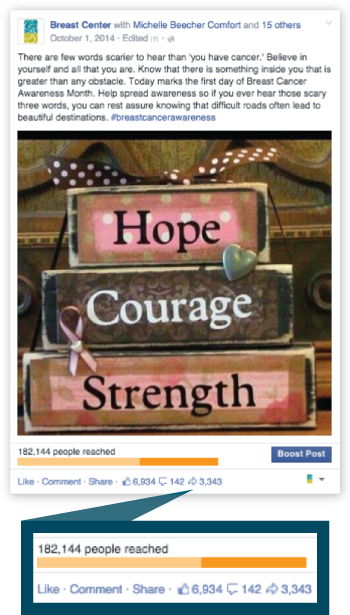
    Advertising your page on Facebook involves a lot of choices. Do you want help accumulating “likes,” or is it more important that people visit your website from your Facebook posts? While pay-per-click (PPC) advertising assures that people are viewing your page, your name will show up on more news feeds if you pay for exposure. For example, a promoted Facebook post for a Search Influence plastic surgery client reached more than 182,000 people.

    First Promoted Facebook Post - Success Study - Search Influence

    Because of the variety of choices involved, streamline your social media strategy and achieve successful results with the team at Search Influence managing your advertising plan. Search Influence can advertise on several sites and measure results in the ways that matter most to your practice, including new patients and calls to your office.

    If you want to give your whole business image a facelift, then injecting social media into your marketing plan is the most cost-effective option. Our team at Search Influence can help you create and manage your online image, and we can advertise on a variety of platforms including Facebook, Google+, Youtube, Pinterest and Twitter. Continuously providing updates can be a lot of extra work for your busy staff, and some employees may already spend too many work hours on their social media accounts. Let Search Influence manage your online image to make sure everything is handled professionally. Find out more about our services by browsing our website.

  • 3 Ways to Present Share-Worthy Visual Content

    Content is the reigning king of the marketing world, but the way that content is presented can be instrumental in its success. The most well-written, interesting article won’t do very well if it’s a long block of text. We live in a very visual world, so companies and marketing experts are finding that visual content is actually out-performing its less attractive counterparts. These are three ways you can present your content in a visually stimulating way to appeal to your audience base.

    Infographics

    Studies have shown that infographics can increase traffic to your website or social media accounts by up to 12 percent. These creative tools allow you to convey a lot of information in an attractive, readable way. From charts to illustrated timelines, infographics can be used in a variety of ways in any number of industries. You can present research findings, how-to guides, and even more traditional documents like annual reports in the form of infographics. You’ll find that your audience is far more likely to engage with your content if it’s communicated as visual information, resulting in a broader reach and an easier transfer of data.

    new orleans festivals 2015 infographic

    Annotated Image

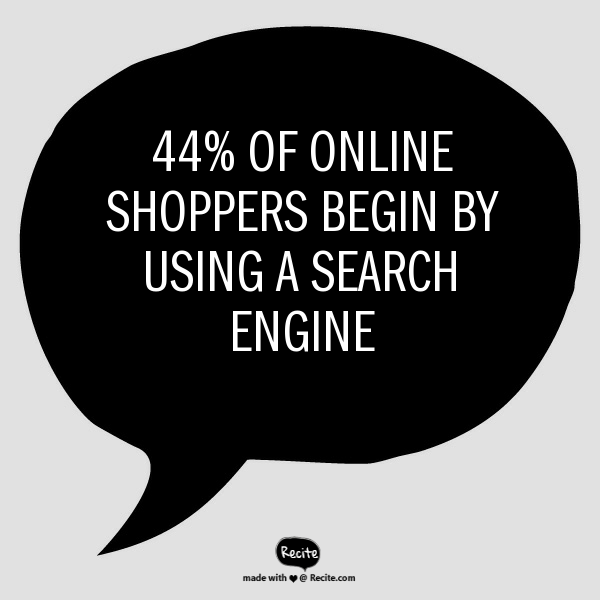
    Annotated images often take the form of inspirational quotes over attractive stock photos, but this media form can actually be used to communicate information. Consider statistics. Statistics are very shareable bits of data, but unfortunately, they’re often presented in a way that isn’t visually appealing. Don’t give your audience a bulleted list—present them with one statistic over a creative, relevant image or background color that matches your branding. These images are easy to digest and share, and they draw attention to your company’s mission without the heavy-handedness of an advertisement. Your annotated images can link to blog posts or internal pages on your website, or they can simply be a part of a series you regularly post to social media.

    Shoppers Searching Image - Search Influence

    Picture-Rich Blog Posts

    The way we blog or post articles has changed at a frighteningly slow pace, and is often counterintuitive to the way readers engage with our content. A tiny picture in the left-hand corner and large blocks of text simply don’t cut it anymore. Redefine the way you think about blogging. Break up your posts with full-sized, sharp images. If you don’t have your own pictures of the subject matter, high-quality stock images can be just as engaging and eye-catching. Shorten your paragraphs to a sentence or two, and use bold text to emphasize numbers and statistics. Simply put, make your blog posts highly visual and easily scan-able.

    By sharing information as an infographic, annotated image, or a photo-heavy blog post or article, you can outplay the average consumer’s waning attention span. If your content is great, present it in a way that will be noticed.

    Image source:

    Premier Allergy

  • Amazon Has a House Party, and Your Local Business Needs an Invite

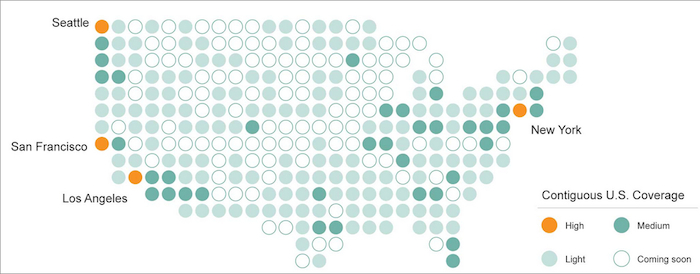
    Amazon Home Services Map Image - Search Influence

    To compete with Angie’s List, Craigslist, Yelp, Home Advisor and other marketplaces, Amazon has recently launched its own marketplace called Amazon Home Services.

    What makes this platform different from the others? How could it help you, as a local business, with an increase in leads and improved Google rankings?

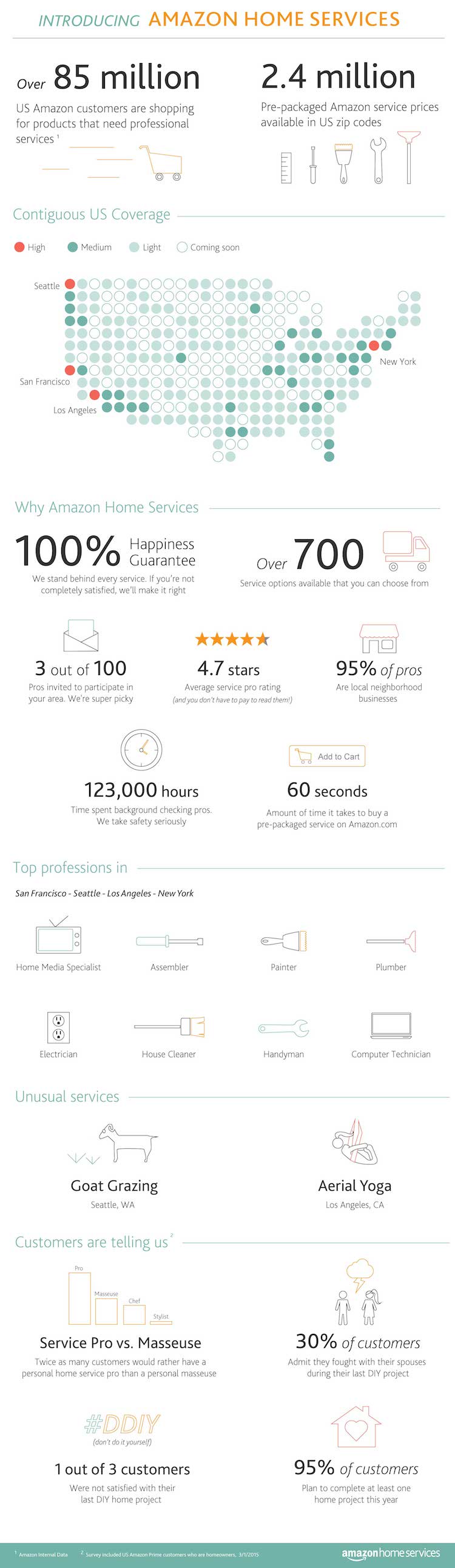
    Amazon has its own ecosystem: loyal customers and Amazon Prime members. Being a part of this ecosystem means being exposed to 85 million potential customers. “In less than 60 seconds, customers can now browse, purchase and schedule hundreds of professional services from wall mounting a new TV to installing a new garbage disposal to house cleaning, directly on Amazon.com,” according to the company’s recent press release. And your business can be a part of it.

    In contrast to Google, which ranks services in terms of the most accurate answer to the searcher’s query, Amazon ranks services in terms of what product the searcher is most likely to buy. This functionality is easier for small businesses. Indeed, Amazon’s algorithm will automatically show the best service to match what the searcher is looking for. In other words, when a searcher is looking for a television on Google, the result will include everything in relation to televisions except a list of local services, while Amazon will include all the repairs/installation services related to a television based on the searcher’s geolocation. That is why it will potentially make it easier for small businesses to rank on Amazon. But there is a catch: to be part of that ecosystem, you need to be invited by Amazon.

    So how can you get invited? First, you need to have a strong Web presence, a good strategy for displaying information about your services, a good reputation and finally, great online reviews from your customers. (But really, you’d want all of these things anyway.) On top of that, you need to be licensed and insured.

    Are you ready to apply? Don’t jump to it too fast! Google just announced it is going to open its own marketplace for local businesses, which means more visibility for you as well as more leads, since most people search on Google.

    Amazon Home Services Image - Search Influence

    Image sources:

    Amazon Home Services infographic

    Amazon Home Services map

  • Web Augmentation: 9 Tips to Get Your Plastic Surgery Practice Trending

    Web Augmentation for Medical Practice Marketing Image - Search Influence

    Every second, there are almost 50,000 unique searches on Google. With that much traffic, it’s crucial to establish your plastic surgery practice as an online authority. By using social media, search engine optimization, and paid search strategies, you’ll be able to climb to the top of Google’s rankings in short order.

    Tips for Social Media

    Utilize “Audience Insight” on Facebook

    As of March 31, 2015, there are 1.44 billion monthly active users on Facebook, making it the platform with the largest audience for your advertisements. With Audience Insight, Facebook helps you sort through your targeted demographics in order to understand the kind of content that is popular among them.

    Use targeted Facebook ads

    If you use targeted Facebook ads, you can choose what kind of Facebook users will see your microdermabrasion advertisements. Not only can you sort your audience by age, location, and gender, but you can also target them according to their relationship status, whether they have children, and their personal interests. Facebook fan-building campaigns are also effective in making patients and customers into fans.

    Tag and post about local events and businesses 

    If you want to maximize your visibility, you’ll have to post outside of your practice. By sharing posts about local events and businesses, you’ll increase your presence in the community. Your potential clients will start to follow and share your content if your page is a reliable source for interesting information. 

    Tips for Search Engine Optimization

    Research Longer Keywords

    A short keyword like “chemical peels” is a competitive keyword, which means a lot of practices will be using it. Try to find a longer keyword that your audience will search for, like “chemical peel for rough skin in NJ.”

    Host Webinars

    Live Internet events boost your SEO rankings because they keep your audience on your website for a long time. Set up some demonstrative or informational webinars that prove your expertise while optimizing your search results.

    Make Your Site Mobile-Friendly

    More and more people use their phones and tablets, rather than a computer, to browse the Internet. A mobile-friendly website will ensure that the information on your website is accessible to everyone. In fact, mobile website traffic for our plastic surgery clients’ websites averaged 48.6 percent. And that doesn’t include tablet traffic; it is purely mobile.

    Another way to pump up your plastic surgery website is to use natural content on your practice’s website. Find out about how medical marketing is making the switch to natural content.

    Tips for Paid Search

    Post Lots of Information on Your Landing Page

    By having a wealth of information on your landing page about topics that are relevant to your practice—such as eyelid surgery—you ensure that your potential client gets the knowledge they desire. When this happens, they’ll stay on your page longer, and their trust in your expertise will grow.

    Invest in High-Quality Video Production

    Potential clients will seek out videos demonstrating a procedure before they schedule an appointment for one. If your practice has a high-quality video demonstration of laser hair removal, 79 percent of the potential clients who watch it will visit your website. In addition to videos, other types of content can help attract patients searching online for your practice. Find out the four ways to drive conversions in the medical industry.

    Have Your Contact Information Readily Available

    The content you make available on your website is meant to inspire more people to come to your practice. Having your contact information readily available increases the chance that potential clients will call your site, visit it, or save it for later.

    Implementing these tips will get your plastic surgery practice trending in no time!


  • Tech Talent Times Two: New Influencers Join the Team

    Tech Talent Times Two: New Influencers Join the Team

    Our talented troop is growing at Search Influence. Meet the two new Influencers who are joining our online marketing team.

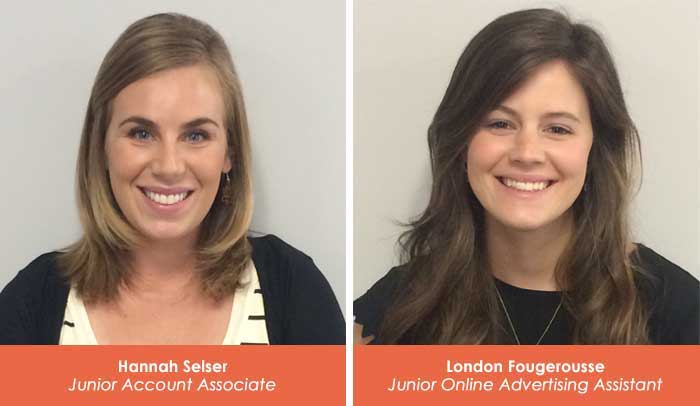
    May 2015 - New Influencers - Blog Image

    Hannah Selser – Junior Account Associate 

    Hannah grew up in New Orleans and recently graduated from Southeastern Louisiana University, where she got her bachelor’s degree in marketing with a concentration in advertising and integrated marketing communications. Before Search Influence, she worked at PJ’s Coffee for six years as a barista and special events coordinator. When she’s not working, she’s spending time with her friends and family or doing just about anything outdoors!

    London Fougerousse – Junior Online Advertising Assistant

    Originally from Baton Rouge, LA, London graduated from Louisiana State University in May 2014 with a B.A. in English and a B.S. in psychology. She will be finishing her final semester in the English M.A. program at Tulane University this fall. With a book always on hand, she’d be more than happy to give you a suggestion for your summer reading list. A writer on the side, London is obsessed with sharing her love of HBO, Wes Anderson movies, southern cooking, and fancy baking.

    Welcome, Hannah and London! It’s great to have you on the team.

    Interested in becoming the next great Influencer? Check out our jobs page.

  • Healthy Content: 4 Tips to Drive Conversions in the Medical Industry

    Healthy Content Marketing Image - Search Influence

    In the medical and plastic surgery industries, it can be hard to get past the medical jargon and engage with readers online. But despite these challenges, building up an online presence is vital in this day and age. Everyone online wants to gather information quickly, and they seek immediate gratification when it comes to scheduling appointments and learning about procedures. To keep their interest, you have to present your content in a user-friendly, engaging and attractive way. Let go of the olden days of long-winded explanations and paragraphs upon paragraphs of medical terminology that no one can understand. Step into the 21st Century with these four types of content:

    1. Infographics

    We all want something that is nice to look at and easy to understand. Infographics are not only engaging, but they can also be super informative! The medical terminology that your current and prospective patients need to know can be easily explained in shorter phrases and pictures or guidelines. Infographics help your patients connect with you and your practice.

    Infographics are also more likely to be shared by your customers. People love sharing fun and interesting infographics on their own social media pages, so this will ensure more conversions and potential new clients! Find out more about how infographics can give your content marketing strategy a facelift.

    2. Videos

    Videos are another great visual way to engage your website visitors. You could explain your processes and surgical procedures easily without scaring visitors off with long, complicated paragraphs. This is also a great way to introduce yourself and your practice to potential patients.

    You don’t have to do a stand-up; you could make a slideshow video with voiceover narration, or if your budget allows, an animated video. Make sure you include a call to action at the end so the viewer can take the next step in becoming a patient!

    3. Lists

    Lists are great. You’re reading one now! Putting the number of listed items in the title is especially helpful so people know exactly what they’re getting into. Readers are more likely to click through and take the time to read if there are 10 or fewer items. They’ll think it will only take a couple of minutes, then BAM! They’re hooked. They’re converting, and they’re your next patient!

    Make sure to write lists that are interesting and preferably not common knowledge, such as “10 Things You Didn’t Know about ____” or “5 Ways to Look Younger Without Surgery.” You could even promote your products or services with a list of great products for this, that, or the other thing. Keep it short, sweet, and to the point.

    4. Guides

    Because you specialize in a certain medical field, you have knowledge that is credible, useful, and interesting. Write it down! Guides can be about absolutely anything, and they’re excellent sharing material for those who want to stay informed and keep their social media followers/friends informed. For an example, check out the Search Influence guide on how your online presence can win and lose patients.

    An excellent way to drive up conversions is to make your guide a downloadable file and request information from the reader before they can download. This allows you to add them to your email newsletter list, which will make them more likely to become a patient in the future.

    Deciding how you want to present yourself online can be time-consuming and frustrating, but these four winning types of content are fun, engaging, and can help your conversion rates. Play around with some ideas and be sure to use different content on different pages to keep people wanting more!

    Interested in more content marketing tips for medical marketing? See how natural content can help your practice’s website attract patients.


  • Show Me An Infographic, Mister! New Orleans’ Unique Content Marketing Approach

    There’s definitely a story behind New Orleans—the city of festivals. And it’s an insider story you likely haven’t seen online before. For example, what New Orleans tradition includes 822 floats and is 21,000 riders strong? What celebration features more than 130 pyramids of burning logs? When it comes to content marketing, New Orleans gives tourists and locals alike reasons to share the kind of fun, behind-the-scenes information that makes the Big Easy one of the world’s most fascinating cities. In a city steeped with so much history and culture, infographics are helping to bring some of the key celebrations—such as the recent New Orleans Jazz & Heritage Festival and Mardi Gras—to life through visual storytelling.

    A City of Festivals Comes to Life

    The New Orleans Tourism Marketing Corporation enlisted the help of Search Influence and its creative infographics team to reinforce the city as a year-round destination where there’s always something happening. Yes, it’s true: there’s virtually always a parade, festival, second line, or other event every week. And along with the big-name festivals like the New Orleans Jazz & Heritage Festival, French Quarter Fest, Essence Music Fest and Voodoo Festival, there are many other celebrations that lend to the city’s reputation for being among the most diverse festival cities in the world.

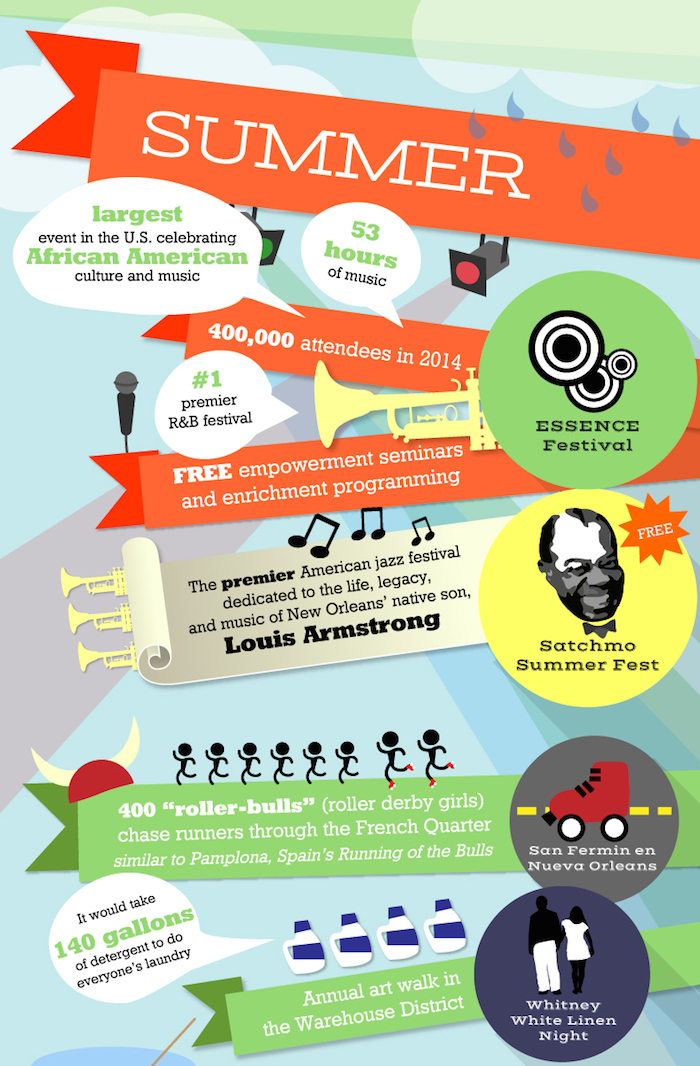
    In fact, New Orleans is deep in its festival season now, and this infographic gives the story in eye-catching detail—in a way that just plain old written content can’t match. Check out the part that describes summer festivals in New Orleans:

    new orleans festivals 2015 infographic

    See the Magic of Legendary Mardi Gras

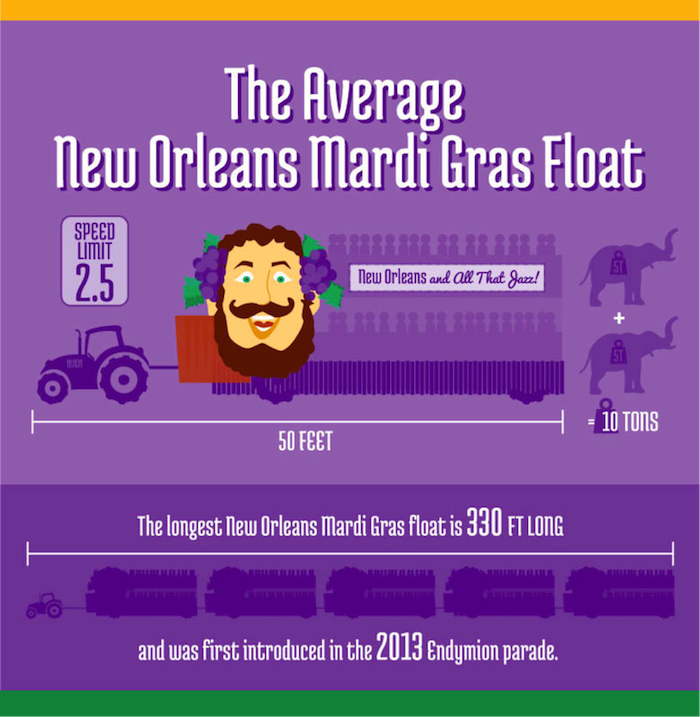
    This February, another Search Influence-produced infographic detailing the legendary New Orleans Carnival—a tradition that dates back to the city’s first Mardi Gras parade in 1837—helped bring renewed interest among people that visited the official New Orleans tourism guide website. While visitors to the website typically spend an average of two minutes browsing, visitors to the Mardi Gras infographic page were spending upwards of eight minutes reading the content. On social media, the infographic was shared more than 700 times on Facebook and Twitter. In fact, the infographic received 6,000 views in its first week. Here’s a glimpse of part of the infographic:

    Infographic Content Marketing Image Search Influence

    What Makes a Good Infographic?

    While content marketing is certainly taking off in New Orleans with lots of local flavor mixed in, all businesses—no Jazz Fest or Mardi Gras required—can learn infographic best practices from these New Orleans examples.

    When crafting an infographic, follow these four tips:

    • Include impressive or interesting statistics that draw readers’ engagement. For example, the average Mardi Gras float in New Orleans is 50 feet long and weighs 10 tons—the weight of two elephants!
    • Make sure the infographic is very graphics heavy. Include images and charts to show your audience the story. That streetcar with “Stellaaaaa” amplified by a megaphone really illustrates the best-loved play that pays tribute to one event: the Tennessee Williams New Orleans Literary Festival.
    • Include an element of usefulness. For example, with more than 70 different parades during the Carnival Season, it can be hard to keep track and determine which ones to attend. For example, the handy “Noteworthy Parades” section of the Mardi Gras infographic doubles as a useful calendar, and the key to the festivals infographic, for example, is to showcase the festival—or multiple festivals!—for every season theme.
    • To finish, craft all of your data and graphics into a visually appealing design. The Mardi Gras infographic, for example, makes use of the vibrant and traditional purple, green, and gold colors as well as a few bold fonts to form an appealing connection between all of the information.

    With these tips on creating the best infographic, keep in mind that the goal with this graphical content is typically to generate website traffic, backlinks, and social shares. And with Facebook and other social media sites putting more and more focus on visual content, it is a safe bet that infographics are not dead. In fact, these Big Easy examples demonstrate further that infographics should be a part of a company’s content marketing strategy.


  • Give Content a Natural Glow: Medical Marketing Makes the Switch to Natural Content

    Content marketing natural glow image - Search Influence

    Back in the early days of search engine optimization, there were a lot of shady practices that were less than ideal for site visitors. Keyword-stuffing, spammy tweets, backlink schemes, and useless content were often the norm, as these tactics helped websites climb the ranks of the search engine results page. With content more focused on algorithms than the audience, many websites scared off potential users. While some of these tactics have been left firmly in the past, many SEO strategies still optimize for Google bots instead of users. This is especially true when it comes to geo-modified keywords in healthcare marketing (think “plastic surgeon new orleans”), which continue to make many pages feel stuffy and awkward.

    Of course, letting go of geo-modified keywords can seem like a hard pill to swallow—especially for those in highly competitive fields such as the plastic surgery industry, where medical practices are constantly battling for the top spots in a Google search. “Going natural” when it comes to content might seem like an overwhelming change at first, but the benefits to your patients and your practice make it a worthwhile strategy in the long run.

    Content is King

    So what do we have when we eliminate all the spam? Natural content. Google rewards sites that provide better user experiences, relevant information, and quality content—those with high click-through rates, low bounce rates, and long time-on-site—with better overall rankings.

    What’s more, all of the updates to Google’s algorithm have made the search giant incredibly advanced, and you might be surprised by some of the astonishing leaps it can make. A search engine results page might pull up one or more high-ranking pages that never actually include the words a user originally entered as a query. For example, a search for “breast implants new orleans” might return pages that never actually use this exact term. Highly relevant pages on “breast augmentation” might rank higher in a Google search than irrelevant, keyword-stuffed pages. What does all this mean? Google’s smarter than you thought.

    Interested in more content marketing strategies for your website? Find out how infographics can give your online strategy a facelift.

    It’s All About the Audience

    As its name suggests, SEO has always focused on search engine optimization—but the best way to earn trust from your patients is to focus on your patients. Forget trying to keep up with algorithm changes: Google’s updates are always centered around providing a better user experience, so why not focus on that as well?

    Spammy, keyword-stuffed content isn’t doing your patients any favors. Visitors to your site can see through the awkward “fluff” content, and they’ll abandon it to find content that actually answers their questions and meets their needs. Sites with overly optimized content tend to see higher bounce rates and less time spent on the site overall.

    Protection Against Algorithm Updates

    Beyond the fact that you’re losing your human visitors by focusing your content on the needs of Google bots, you also hurt yourself with this approach. Overly optimized content is vulnerable to every new update to Google’s algorithm. Well-written natural content, on the other hand, won’t need any of the major edits that spammy content will regularly require. Content that is relevant to the needs of your patients will always be useful—and Google’s algorithm can see that without your help. If you need help determining whether your website content will pass the Google test, fill out the short form on our homepage to sign up for a free website analysis.

    Search Intent Optimization

    At the end of the day, your potential patients are looking for something, and it’s your job to figure out what. Maybe they need help to become informed about a procedure they’re considering, maybe they’re weighing the pros and cons of several medical options, or maybe they know what they need and are searching for a trustworthy practice in the area.

    Whatever the case, you’ll need to do your research. Figure out what they consider useful and decide how you can use unique and creative content to solve their problems. Patients will be able to see the value in content that gives them the answers they need, and they’ll trust the information more if it doesn’t seem awkward or spammy. Go from there to build your relationship with them—rather than building a relationship with an algorithm.

    If you’re ready to take the dive into offering patients more natural content, but you’re not sure where to start, let us know how we can help! Interested in the ins-and-outs of search engine optimization for the medical industry? Check out our tips on the art of “Googleplasty.”