Blog

  • AI Is Here, and It’s Affecting Your SEO: A Look at Google’s RankBrain

    In late October, Google announced that they are actively using an artificial intelligence algorithm called RankBrain as part of the search results engine. This has rolled out slowly since early 2015 and has become a factor for website owners and search marketers to pay attention to, according to Bloomberg.

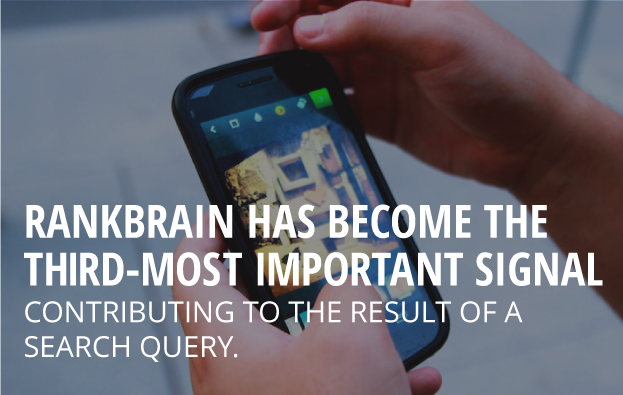
    “RankBrain has become the third-most important signal contributing to the result of a search query.”

    What are you saying? What madness is this?

    RankBrain is used as a way to interpret the searches that people submit to find pages that might not have the exact words that were searched for. It correlates words on your website page to those expected to be seen about the topic. A very simple example from Search Engine Land: RankBrain helps determine whether your page is about “apple,” the fruit, or “Apple,” the company.

    RankBrain is self-learning. It’s analyzing billions and billions of searches and click actions to determine what content is more helpful to consumers and what is less helpful. When there are content updates on your site or a competitor’s website, this algo is reanalyzing and reconfiguring search results. This is not done in real time.

    How often does RankBrain update?

    Because it is self-learning, it is constantly updating itself. But the real question is: how often is it updating search results?

    “Google periodically updates the system by feeding it a load of new data to help it better reason with new concepts.”

    So Google is feeding it batches of search data, and it’s crunching through the data in batches. The algo is constantly updating itself as it learns from the content it’s analyzing, but the search results are not constantly updating. Search results are updated in batches, which may explain some unexpected ups/downs in Google organic traffic that don’t match up to announced algo updates.
    1511-SI-Newsletter-KG-A-02

    Does Google’s RankBrain change any SEO that we do?

    As RankBrain learns more and more, and as Google feeds it more new data to crunch, we may see some organic traffic blips, up or down. These will not likely be announced data updates. Google has said they typically won’t announce data updates. Ups and downs are expected as the AI figures out how your content relates to specific search terms relative to the other content in your market.

    With the launch of Hummingbird and the continuous Pandas, Search Influence has long seen the need for really informative consumer-focused content. We have seen consistently positive results across many websites in many industries with this standard of content. If your content is written in accord with Panda and Hummingbird, meaning it is rich text, educational, and really on topic, RankBrain should not be a problem for you.

    For further reading, this blog post by Cyrus Shepard was one of the more influential in our constantly evolving content standards, and I think it is definitely related to this discussion.

    What’s Next?

    “Facebook Inc. uses AI techniques to filter the newsfeed that comprises the personalized homepage of the social network and Microsoft Corp. is using artificial intelligence to increase the capabilities of its Bing search engine.”

    Google is actively using self-learning artificial intelligence, its driverless cars have driven over 1 million miles, and it has the dead/undead Google Glass. Reach into your sci-fi knowledge, and consider what Google might do next.

    Image Sources:

    Google RankBrain

    Smartphone

  • Will Camp Out for Marketing Tips: Your Black Friday Survival Guide

    1

    November is here! A month full of falling leaves, dropping temperatures, giving thanks, and many people’s favorite shopping day: Black Friday. Last year, 133.7 million people shopped during the Black Friday weekend, according to a Fundivo.com study. As a local business, you may be trying to get a piece of the Black Friday pie this year, but you might not know where to start. Follow these tips to make the most of your online marketing efforts on one of the busiest the shopping days of the year.

    Plan Early

    The time to start thinking about marketing for Black Friday is now. If you traditionally experience a high volume of customers and sales during this time, like a retail store, you won’t necessarily be able to think about your marketing plan as you’re stocking extra inventory a few days before.

    One of the first things to decide is what your business is going to offer for Black Friday. Is it going to be a storewide sale? Will you sell a product you don’t typically offer? Consider your goals and determine what makes the most sense for your business.

    Get the Word Out

    Once you’ve chosen your Black Friday offer, you need to let people know about it. By promoting your offer online, you’ll be able to reach significantly more potential customers than by promoting it in-store alone.

    If you don’t have extra budget specifically for your Black Friday offer, use social media to connect with your fans. Stand out amongst competitors by posting images of products that will be available during your sale or offer an online-only incentive to entice shoppers to stop in on Black Friday.

    If you’re willing to put a bit of spend behind your efforts, Facebook advertising is an affordable alternative to a costly pay-per-click campaign. You can use their impressive targeting options to get your message in front of your specific demographic. Facebook targeting ranges from gender, age, and location to education, income level, interests, shopping habits, and more.

    Also, consider adding a page to your website with information specific to your Black Friday offer. That way, anyone scouting out sales in your area beforehand will know exactly what to expect from your business.

    Be Creative

    Black Friday isn’t just for retail. Although retail stores tend to see the majority of the action, it doesn’t mean other industries can’t jump on the bandwagon.

    Not everyone loves waiting in line overnight and battling crowds all day, but who doesn’t love a bargain? If you’re a service area business, reward your customers for being productive with home maintenance on Black Friday by offering discounted service or installation. Since many people take the day off work, it’s a great time to take advantage of gaining some extra business.

    Restaurant offers are also a great way to capitalize on Black Friday foot traffic. Let customers know ahead of time that appetizers are half off or you’re offering happy hour prices all day so they know where to go when they need a break from the shopping crowds.

    Make sure your business is taking full advantage of Black Friday this year by creating your marketing plan early, making your offer known, and utilizing creativity to gain more customers.

    Image Sources:
    Jingle All The Way
    Glee
    Gossip Girl
    Shopaholic

  • Google My Business Brings the Holiday Cheer with Special Office Hours Pre-Sets

    4

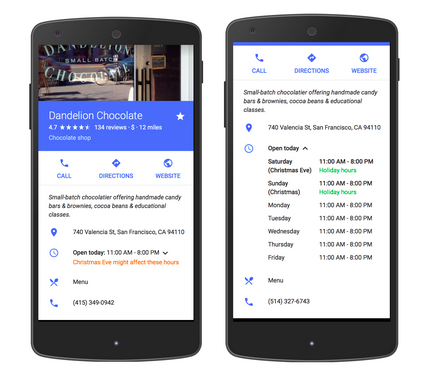
    Yesterday, a new My Business feature was published by Google in the product forums. This new feature allows business owners to pre-set special hours to their My Business listing for holiday closings or special times that are exceptions to your day-to-day office hours.

    google my business special hours exampleThere is more information in Google Support documentation. If you have many locations to update, there is a spreadsheet upload feature. If your business has hours that extend into a second day, there is information on how to manage that scenario.
    Editing Your My Business Special Hours

    This morning, I updated the office hours of a local credit union. This feature will be especially helpful in publicizing the dates their office is closed in the upcoming weeks. It will also be especially helpful to the community for finding the times each branch is closed, and we know Google is focused on user experience.

    Once you log into your Google account, navigate to your list of locations and choose one location to edit the location details. Scroll down to “Special Hours” below the standard “Hours.”

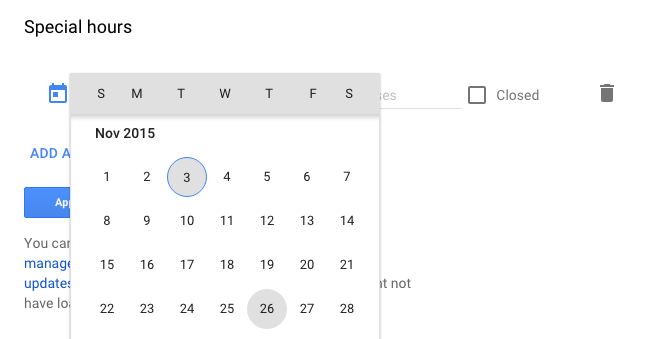
    choose the holiday date for special hours

    Click on “Special Hours,” and you can choose a day from a drop-down calendar and either apply early closing hours or mark if the office is closed the entire day.

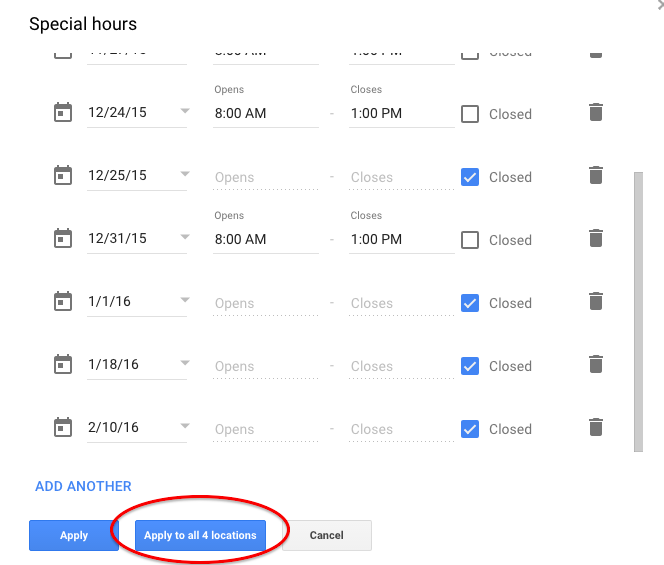
    If the hours will be the same at all of your locations, Google has thoughtfully provided a button to apply the hours to all locations within your account.

    Your final Special Hours or office closing times may look something like this for your summary review. Some days they are closed, and some days the branch is closing early:

    apply special hours office closed times to all locations

    Great New Feature

    You may want to set up some reminders to update your holiday hours every quarter or every six months.

    I know businesses have wanted this feature for quite some time, and now it’s available just in time for Thanksgiving and the December holidays. Very good timing, Google!

  • We Went to AdWords Bootcamp so You Don’t Have to: 5 Tips from the Experts

    We Went to AdWords Bootcamp so You Don’t Have to: 5 Tips from the Experts

    I had the pleasure of living and breathing AdWords for two full days on its home field—at Google Tech Corners in Sunnyvale, California.

    We had some very focused discussions that dove into some of the newer features and the best practices for long-standing features. I share some of my key takeaways below!

    1. Be present for your customers’ “micro-moments.”

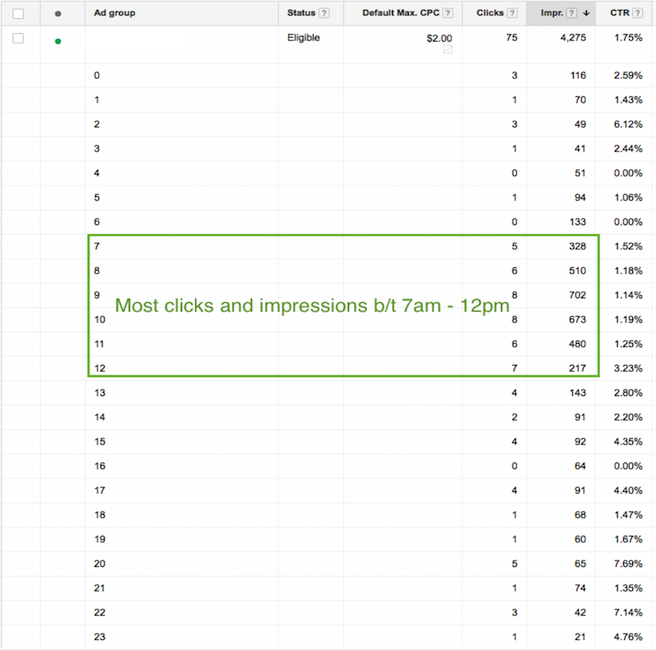
    These “micro-moments” are the key critical points in time in which your customers are searching for your products and services. You must be present when your customers’ micro-moments occur. You may want to increase your bids at certain times of day when more searches for your type of business are being done.

    Ex: restaurant upping bids leading up to and during mealtime.

    If your customer’s micro-moments aren’t as obvious as that of a restaurant, you can identify those high times by analyzing the following:

    • Google AdWords: impression & click reports by time of day
    • Google Analytics: visits by time of day

    Paula Blog 1

    2. We can trust cross-device conversions.

    If you work in AdWords, you’ve likely seen the column “Estimated Conversions.” Google has recently changed the name of this column from “Estimated” to “Cross-Device Conversions”

    Only conversions with a 95% certainty will be included in this number.

    Why do you care?

    Search sessions are segmented for the same purchase throughout the day and across devices. Gone are the days when a user sits at their desktop at nighttime and researches everything they want to know within 30 minutes.

    For example: instead, we’re talking two minutes at 7 a.m., five minutes at 9 a.m., ten minutes at noon, and maybe five minutes again at 6 p.m. to purchase.

    1511-SI-BlogImage-D-01

    3. You better not ignore cross-device conversions.

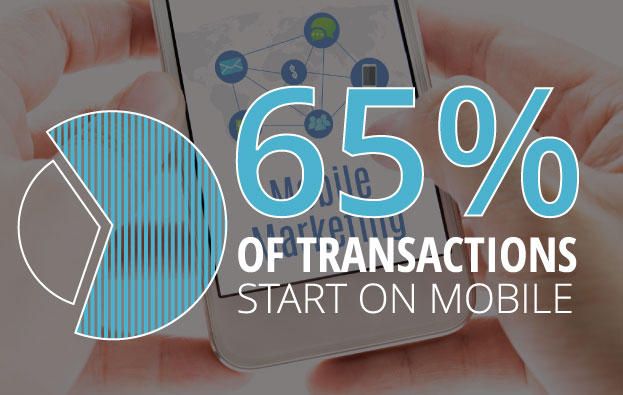
    Why? 65% of transactions start on mobile.

    I’ll be making it a priority to look at cross-device conversions in addition to the traditional conversion metrics (which only include users who search and convert on the same device). If you are looking at traditional conversions only, you are missing out.

    In order to see this metric, you must have one or more conversions set up in AdWords. Then, Google will do the rest.

    4. Leverage in-market segments and affinity segments.

    In both AdWords display targeting and Google Analytics, you can find “In-Market Segments” and “Affinity Segments.” Analytics allows you to see this info about your existing site visitors, and AdWords allows you to target potential customers using these two targeting options.

    This isn’t new knowledge, but I was given a fantastic example of what distinguishes the two, and I thought it was worth sharing:

    Affinity Segments:

    Users in this group have demonstrated (via the sites & pages they visit) what their lifestyle interests are.

    Example: A user in an affinity segment for “automobiles” would read car blogs and articles about future car releases, and they would also watch YouTube videos about cars.

    In-Market Segments:

    Users in this group are actually in the market for a given category of product or service.

    Example: A user in an in-market segment for “automobiles” would be looking at Kelly Blue Book, local dealership sites, Edmunds, TrueCar, etc.

    5. Allow new features to make your life easier.

    Last but not least, what I finally realized is that Google is constantly adding new features to AdWords to help us better spend our money. Given advertising is very much Google’s main source of revenue, this only makes sense.

    As new features roll out, learn their benefits and capabilities, and adjust your process accordingly.

    With consumer behavior changing faster than you can say “micro-moments & cross-device conversions,” there’s never an excuse to say “Well, we’ve always done it this way.”

  • Boo! These 3 Talented New Influencers Are So Good, They’ll Scare You!

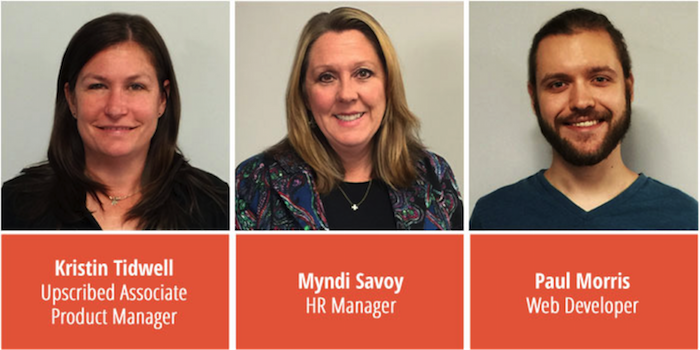
    This October, Search Influence welcomed three new Influencers to the team—and they’re so good, they’re scary! Say hello to our Halloween hires:

    Oct 2015 New Influencers

    Kristin Tidwell – Upscribed Associate Product Manager

    A Louisiana native, Kristin comes to Search Influence after a 15-year hiatus from the city. After spending time in Colorado and Oregon, her hobbies include hiking, snowboarding, and mountain biking. Suggestions for new hobbies are currently being accepted.

    Myndi Savoy – HR Manager

    Myndi is a Louisiana native who grew up in Baton Rouge. She lived in Dallas for 17 years (though she is NOT a Cowboys fan, she’s a die-hard Saints season ticket holder) and moved to New Orleans 3 years ago. She has 15 years in human resources, mostly in hotels, restaurants, and hospitality industries. She has two fur-kids, Deuce and Thibodeaux, who are pit-mutt mixes of nearly 75 lbs and 100 lbs respectively. In her free time, she likes biking and going to festivals and concerts. Her personal goal is to attend a NFL game in every stadium. So far, she has been to 16 different stadiums, including Wembley stadium in London when the Saints played there.

    Paul Morris – Web Developer

    Paul is a New Orleans native and self-taught programmer/web developer and die-hard Saints fan. He has had a lifelong love affair with computers but also enjoys camping, the outdoors, and rock-climbing. He has played guitar since a young age and enjoys just about every kind of music, especially anything by George Clinton. Ready to meet new people and learn from those around him, Paul is incredibly excited to start working at Search Influence!

    We’re always ready to welcome new energy and talent to our team! If you’re ready to help us share our SEO tricks and treats, visit our careers page to apply. We look forward to hearing from you!

  • ‘Tis the Season: Ten Ways to Enhance Your Online Presence All Year Round

    2

    Traffic to your website depends on how relevant your landing page is in relation to the terms being searched and how well optimized your site is in the eyes of Google. If demand for your products and services is low for a certain time of the year, chances are search volume will also be lower, resulting in less traffic to your site. Having a strong online presence is all about understanding user behavior and optimizing your site to achieve the best results. In order to accomplish this, utilizing a seasonal SEO strategy will help boost your overall online performance annually.

    Whether your business maintains consistent demand or changes with the time of year, there’s something for everyone when it comes to seasonal SEO!

    What Is Seasonal SEO?

    Seasonal SEO refers to optimizing your site for seasonal keywords in order to get more visibility in search engine results during a specific time of the year. For example, let’s say you own a jewelry business. Around the holidays, search volume will increase for Christmas presents. Instead of just optimizing your site for vintage jewelry, you may try optimizing for “Christmas vintage jewelry,” “vintage jewelry for Christmas,” or even “holiday vintage jewelry” in order to enhance your site’s ability to be found amidst the high search traffic for the season. Optimizing your site seasonally could prevent your business from missing out on additional holiday revenue.

    22310142726_1b807169fc_z

    Capitalizing on the Seasons

    So how does one go about optimizing for the seasons? Here are five tips to get your site ready, no matter the time of year.

      1. Do your research. Don’t just blindly select any season to optimize your site. Look at year-over-year data on Google analytics to make inferences on when traffic to your site is the highest in order to determine what season optimizing your business will most benefit from. You will want to concentrate your efforts on one to two seasonal holidays, three at most.
      2. Start planning now! Once you’ve selected which seasons you will be optimizing for, create a seasonal SEO calendar to outline which items you intend to seasonally optimize. (Local SEO consultant Andrew Shotland has provided an excellent resource here.) Keep in mind that searches for most seasons start much further in advance. For example, planning for Valentine’s Day starts mid-January. Once more, it can take a while to gain momentum when it comes to SEO, so starting months in advance is key.
      3. Create unique pages of seasonal content and optimize it for the appropriate seasonal keywords. During the season, place the seasonal landing page in the main navigation, HTML sitemap, and XML sitemap so that humans and search engine bots can access it more easily. Create one or two seasonal pages annually, three at most.
      4. Update your meta descriptions for seasonal pages and your site. Meta descriptions exist to facilitate a higher click-through rate between the search engine results page and your website. Not only is it a good idea to create seasonally focused meta descriptions for seasonal pages, but it is also a good idea to update the meta descriptions of your year-round pages (i.e., your home page) so that they’re seasonally focused for the time being. After the holiday season is over, be sure to change them back.
      5. Do not delete seasonal pages once the season is over. It can take a while for new pages to gain authority and recognition with Google. Once you get a seasonal page to rank, deleting that page would mean that you would be starting from scratch the following year. You can simply reuse the seasonal pages for next year by updating the content. Because you may not want to keep these pages in your navigation all year round, it is very important to keep these pages indexed in both your HTML and XML sitemaps so that these pages remain crawlable and hopefully indexed all year round. When the season rolls around again, be sure to implement it back into your navigation again. Rinse and repeat.

    Off-Season Businesses

    But what happens if you own a seasonal business? Perhaps your store is closed during certain times of the year (i.e., a ski company closed for the summer), or perhaps nobody is looking for your swim store’s bikini line in the middle of January! Do not fear: indeed, while search traffic to your site will be lower off season due to its correlation to current consumer demands, there are still steps you can take to maintain your online presence year round.

      1. Do your research. Look at year-over-year traffic and conversions in Google analytics to ensure you’ve identified the correct high season for your business.
      2. Display positive customer reviews off-season. While the season is still in its prime, be sure to gather customer reviews about your business, especially your Google+, Yelp, and Bing pages. For example, a family may decide in May that they would like to take a winter ski trip. They may begin reading reviews on ski resorts and ski gear months in advance in order to be well prepared for their upcoming trip.
      3. Engage in social media all year round. It is critically important to always be engaged with your clients and potential clients on social media. Here’s why.
      4. Play up off-season hype. When it’s snowing outside, it wouldn’t hurt your business to post a picture of a sunny beach with your company’s sandal line to generate top-of-mind awareness even off season.
      5. Create interesting blog topics year round. This will provide readers with plenty of content during peak season as opposed to taking a break from posting during off-season months. It will also generate fresh content for your site, which signals to Google that your site contains relevant content for viewers.

    How do you maintain your business’s online presence year round?

  • You’ll Never Believe How Clickbait Techniques Are Causing the Downfall of Ads

    1511-SI-BlogImage-C-01

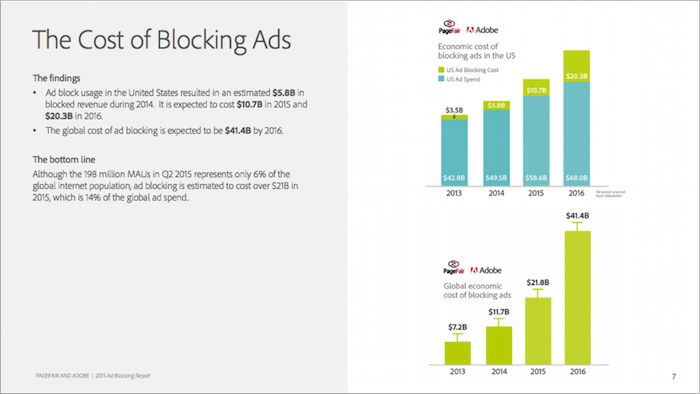
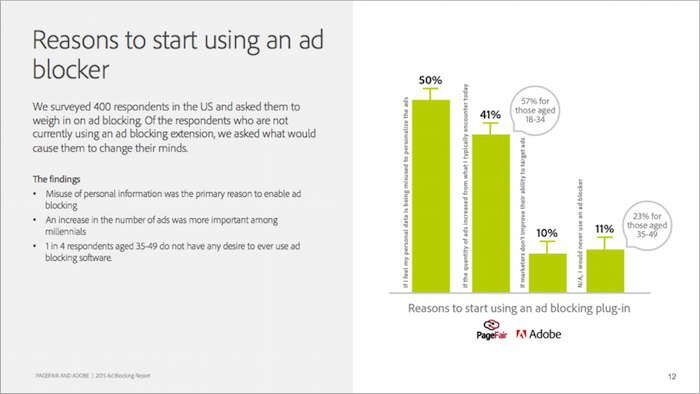
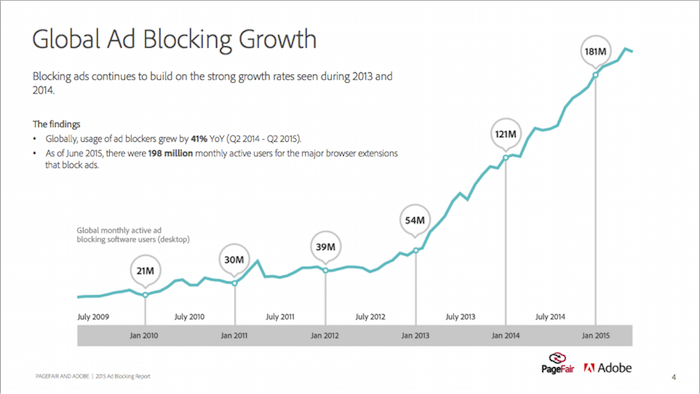
    The atmosphere for Internet advertisers has changed over the past couple of years following a trend that marketers of the past simply didn’t see coming. Thanks to an overuse of several marketing techniques, including clickbait titles, dynamic advertising, and uninspired cookie-cutter content, Internet users have learned ways to avoid ads and are experienced enough to know a clickbait title when they see one. All in all, this has a direct effect on potential income brought on by advertisements.

    Ad Block 1

    Why the Change?

    It would be remiss of us to believe the fault in this lies with the consumer, or that advertisers of today are responsible for the actions of other advertisers in the past. In truth, this should have been an expected outcome when considering how simple it is to copy these techniques and how pervasive they have become on today’s Internet. People learn through experiences, and the sheer overabundance of these techniques simply expedited the desensitizing process. On top of that, other Internet users have found ways to use the current mood toward advertisements to their advantage.

    Ad Block 2

    AdBlock and AdBlock+ are the best examples of simple, easy-to-install ad blocker plugins that have seen increased usage and popularity. The effectiveness of dynamic advertisements, arguably the most adaptive and effective marketing technique there is, is completely nullified. What once showed ad content based on the Internet history of the user simply doesn’t load with the rest of a webpage. And it doesn’t stop here.

    AdBlock has now become popular enough that it has started to set and enforce its own criteria for quality, non-intrusive ads. The criteria focuses on ensuring:

    • Static advertisements
    • Text over image usage
    • Proper placement that does not block site content or require a mouse-click to hide or mute
    • All advertisements are labeled as advertisements

    The organization has even started to write a whitelist and ask other websites to voluntarily submit to these regulations. Though it might be difficult to imagine any major site agreeing to such demands, a glance at the growing number of AdBlock users makes clear the potential benefits.

    Ad Block 3

    Clickbait titles are also a commonly used technique that focuses on numbers over quality, and it has lead to a response from Internet users that to me is a far more fascinating result. People have started to avoid clicking on interesting titles on their own, because from the person’s experience, these titles usually offer little more than lackluster and boring content. Or at least, that is what people have learned to expect as a result of past Internet marketers. Simply put, clickbait titles have become less and less effective over time. This is an especially unfortunate result for those webmasters and organizations that actually offer quality content and are simply trying to draw traffic toward their site in an effective, eye-catching manner.

    Now what?

    So knowing all of this, what can be done? The simplest answer is to change the paradigm and make quality of content and advertisement more important than quantity. It may seem counter-productive, but this is more likely to have a long-term effect simply because it is what Internet users are looking for and prefer—at least for the moment. Another good option is to turn to professional advertisers and Internet marketers who are familiar with the ever-changing environment and are ready to follow through with new or changing regulations, whether they come from AdBlock or from Google altering its search engine algorithm once more. Without this assistance, an advertiser or organization has to start building its own community and establishing trust with those individuals using consistent, quality content. Internet users can then vouch for the content by sharing it, not necessarily with the rest of the world, but with the friends and family within their community that trust their opinion. That, in itself, makes a statement that reverberates across multiple online communities quickly.

    Image credits:

    2015 Ad Blocking Report

  • Stalking, Espionage, and More: The Guide to a Successful B2B Marketing Campaign

    Dealing with business to business, or B2B, clients in search engine optimization, search engine marketing, or social media can be challenging. There is an extra layer of difficulty associated with a technical business that you don’t typically have when working on B2C campaigns.

    The key to starting a B2B online marketing campaign is to focus on your business. Having a jumping-off point of information also allows you to craft thoughtful questions to ask in your initial meeting. Here are some easy things you can do to understand a technical client’s business and industry (besides scouring their site).

    Understanding the Client

    1. Watch the Tube – I love watching YouTube videos that my clients have created. Industrial clients tend to be good at showing off their technology via video. It can be super insightful, and it may help with your strategy down the road.

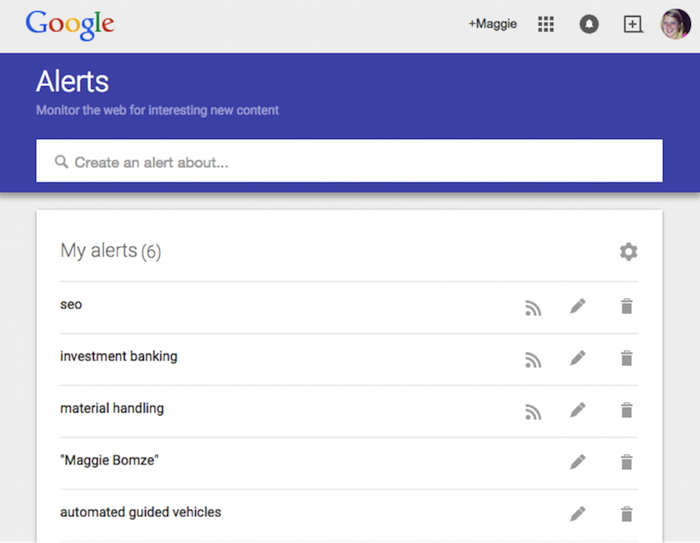
    2. Set up a Google Alert – Reading up on industry news can initially help with learning about the B2B client, and it can be informative later on when you need ideas for social media posts and press releases. (Side note: I think it’s 110% acceptable to have a Google Alert about yourself, so go on and set that up too.)

    MB Blog 1

    3. Do Some Stalking – Head over to LinkedIn to find out who you are going to be speaking with and what their background involves. I’ve also gone as far as joining engineering groups on LinkedIn to see what people in the industry are talking about (and more importantly for SEO and SMO, what types of posts get them engaged). I would also advise checking out any professional associations, charity organizations, and conferences where they regularly attend or present.

    Reaching the Client’s Customers

    1. Infiltrate the Buying Center – Find out (most likely by asking) which industries the client works with, and ask the right questions to find out who the decision makers are in the buying process. This can help you with ad targeting and creating relevant content for C-level buyers vs. operational team members.

    2. Find the Trigger – I always ask technical clients about their sales cycle, and most importantly, what triggers the need for our client’s goods/services. It is helpful to know what other businesses are going through and where search engine optimization fits into the B2B marketing plan.

    3

    Relaying that Knowledge to Your Team

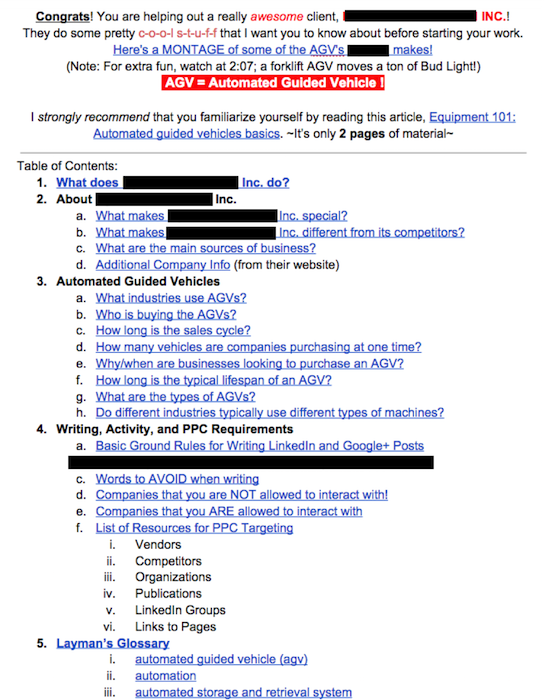
    1. Shout It from the Rooftops – Let the appropriate people on your team know the information they’ll need in order to produce the highest quality work for your client. This might be the hardest part of a B2B marketing campaign. Ask anyone on my team: I’m guilty of giving everyone all of the info I have on a super-technical topic! One short-term solution is to keep an ongoing “Everything you need to know” doc and organize it through bookmarks. This way, your team can quickly get to the info that impacts their task.

    MB Blog 2

    What are some of your tips for working with B2Bs in SEO? Let us know in the comments!


  • A Little Bit Goes a Long Way: Small Steps For Improving Your Online Presence

    Establishing your online presence can seem like a daunting task for small businesses or those who are less knowledgeable about the tech world. Fortunately, there are a few simple ways to market your brand and engage your customers without the hassle. Taking actions like creating social media accounts, keeping your content relevant, and being proactive are valuable ways to attract and keep prospective clients and customers.

    Create Social Media Accounts

    One of the easiest ways to promote your product or service(s) online is by interacting with current and potential customers. A good way to do that is through social media. In the last decade, the social media world has exploded in popularity. Social networking services such as Facebook, Twitter, and Instagram (because who doesn’t love artsy photos of…things) are just a few simple ways to promote your brand while giving you the opportunity to interact with potential clients. The best part about them? They’re free and can be set up in just a few easy steps. Sharing content on your social media account allows you to not only communicate with current clients or customers, but it may also lead those consumers to share it with those who wouldn’t have seen it otherwise.

    Keep Your Content Relevant

    Whether it’s on your social media accounts or your website, it’s important to keep your content fresh and up-to-date. There are few bigger turnoffs to online users than seeing out-of-date information about your company. Offering a new product or service? Customers should know about it (and let’s be honest, you definitely want them to). Moved to a new location? Be sure to change your address. No one wants to get to your “location” only to find out that you’re no longer there.

    CC1

    Be Proactive

    If you’re famous, it’s probably best to avoid reading what people are saying about you online. If you’re a business, you better be. Read online reviews to find out what is or isn’t making your customers happy, and make any necessary adjustments when possible. Engage with your customers directly to show them that you hear them and are working on ways to improve a product or service. Think like a customer. What were some experiences that caused you to support or abandon a certain brand or business? You can’t make everyone happy, but you can certainly take steps to appease the majority.

    There are many other ways to improve your online presence, but these are just a few, easy steps to get started. Interacting with consumers through social media, providing relevant and up-to-date content, and getting proactive will help you to market your brand in a digital world.


  • Retool Your Online Presence: 3 Tips for Small Auto and Home Repair Businesses

    Everyone can relate to the frustration surrounding a defunct air conditioning unit or a well-traveled car falling apart—which is part of the reason why HVAC and auto repair companies are ubiquitous, particularly in the small business arena. As it stands today, there are over 1 million home and auto emergency companies represented in the U.S. alone. With such a large presence, it may be difficult to stand out, particularly in the ever-evolving world of digital marketing and search results. How does my company get noticed?

    Thrive Analytics, a digital marketing research company, sought to shed some light on this question. Their research indicated that while the fastest-growing methods of business awareness were related to digital platforms (websites, social media, e-mail), 60% still spent the majority of their media budget on traditional types of marketing (newspapers, yellow pages, direct mail).

    Additionally, their polling discovered that only 53% of these businesses had and maintained a website. However, the majority of those sites were archaic by today’s standards, and even more so when considering the ever-growing importance of mobile searching. Suffice it to say, many businesses in these industries do not get the maximum return from the growing digital market. So how can you counteract this?

    1. Develop and maintain an up-to-date and mobile-friendly website.

    The Local Search Association announced early this year that mobile searches have surpassed computer searches in terms of volume. Also consider this statistic from that same press release: “70% of the nearly $18 trillion US GDP is driven by consumer spending that occurs within 20 miles of home or work.”

    This is an extremely important factor for businesses servicing people’s homes and vehicles, since they are reliant on proximity. Your business will run the risk of losing a market share locally that is becoming more and more dependent on search results for information.

    2. Find your presence on social media.

    While many businesses have a presence on social media sites, it takes more than mere existence in order to drive customers. Staying on top of your social media with relevant content and attractive profile and cover images is more important.

    This is also applicable for mobile users. According to comScore’s 2015 U.S. Mobile App Report, the amount of time people spend on digital media has increased 50 percent over the last two years. Social media platforms are a huge part of this number—with Facebook ranking as the #1 smartphone app by total time spent. In an industry where social media usage is often stale or non-existent, this can be an opportunity to differentiate yourself and grab attention.

    3. Think about how you are spending on marketing.

    Sure, traditional marketing methods are comfortable and certainly have merit, but if you are trying to reach a new customer base, it would be foolish to not consider the shifting search demographics. Of the businesses polled in Thrive Analytics’ report, 37% of responders said lack of experience with online media was their biggest apprehension, while 27% said it was time. This is where it make sense to enlist the help of a company that understands the market and can help maximize your presence. It does not need to be a task directly undertaken by your employees, and it would represent a smart way to allocate media dollars.

    For small businesses that make up a large portion of the small business landscape and a relatively small section of the digital marketing field, building up your online identity and marketing strategies could be the key to drawing in customers ahead of your competitors.