Blog

  • Learn How to Create a Snapchat On-Demand Geofilter to Boost Your Next Event

    Who doesn’t love a good Snapchat? Whether you are the one trying to get the best shot or viewing your friend’s stories, Snapchat has become one of the most-used social media platforms by all ages and demographics today.

    Back in February, Snapchat announced that users could create On-Demand Geofilters for any event for a fee as low as $5. This could include creating a filter for a birthday party, wedding, business event, or just for fun! Before this update, Snapchat only allowed Community Geofilters, which were used for cities, landmarks, schools, etc. The Community filters were free to submit and dependent on Snapchat’s approval to push the filter live.

    Choose Your Filter Type

    Submitting On-Demand Geofilters is broken down between two categories. You can either mark the Geofilter as a personal or business filter. The difference between the two is that the business On-Demand Geofilters is a filter a user submits on behalf of a business. This is also used if the filter includes any branding, logos, or business marks/names. Basically, if it is promoting a business or a brand, it is safe to say you are submitting a business filter. Any other filters submitted would be considered a personal On-Demand Geofilter.

    The GeoFilter Process

    After noticing a few of my Snapchat friends’ custom filters used for graduation parties they attended, I began wondering how easy it was to create a custom filter. After doing some digging online, I discovered that the process looked relatively easy. There were only 3 steps to submit an On-Demand Geofilter.

    1. Design – Snapchat does not create the graphics for Geofilters submitted for approval. They do provide a few templates that work with some image editing programs, but the submitter is free to be as creative as they want. There are a few guidelines to follow when designing the filter, but, overall, nothing too crazy in my opinion.
    2. Dates and area covered – Snapchat provides a map for you to mark off the area you would like your On-Demand Geofilter to cover. The larger the area and length of time the filter will run impacts the amount of money the filter will cost.
    3. Buy – Snapchat confirms with you the date(s) and area you would like the filter to run, along with the price and design you submitted. Enter in your payment information and agree to a few terms and conditions.

    Testing the Process

    I was recently part of a team that helped in planning Search Influence’s annual crawfish boil and thought a team building event in Audubon Park would be perfect to test the Snapchat On-Demand Geofilter submission process.

    I began with reaching out to our graphics team to create the On-Demand Geofilter that we all thought would look best for the event. Once the graphic was completed, I uploaded the file to the upload assets and followed the steps outlined below.
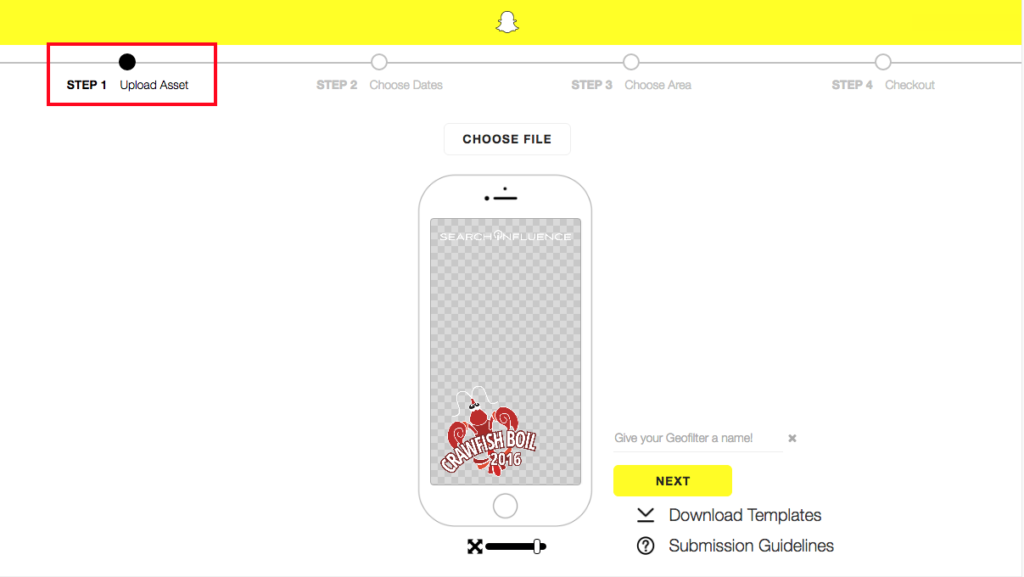
    Snapchat On-Demand Geofilter 1

    Once the image upload was completed, I moved on to selecting the date and duration of the event along with the area of Audubon Park the crawfish boil would be held. I added a few extra hours just in case the party lasted past 5 p.m. Once the area and duration was added, the price was given immediately.
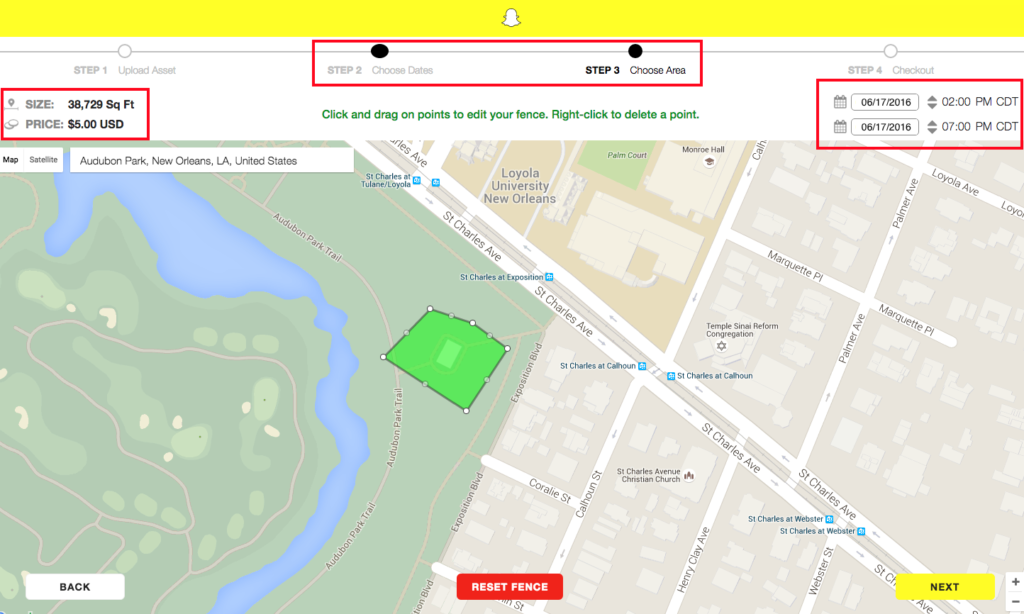
    Snapchat On-Demand Geofilter 2

    Lastly, I was guided to the checkout screen. I was prompted to name the filter, add in payment information, select the filter type, and agree to all of the term and conditions.
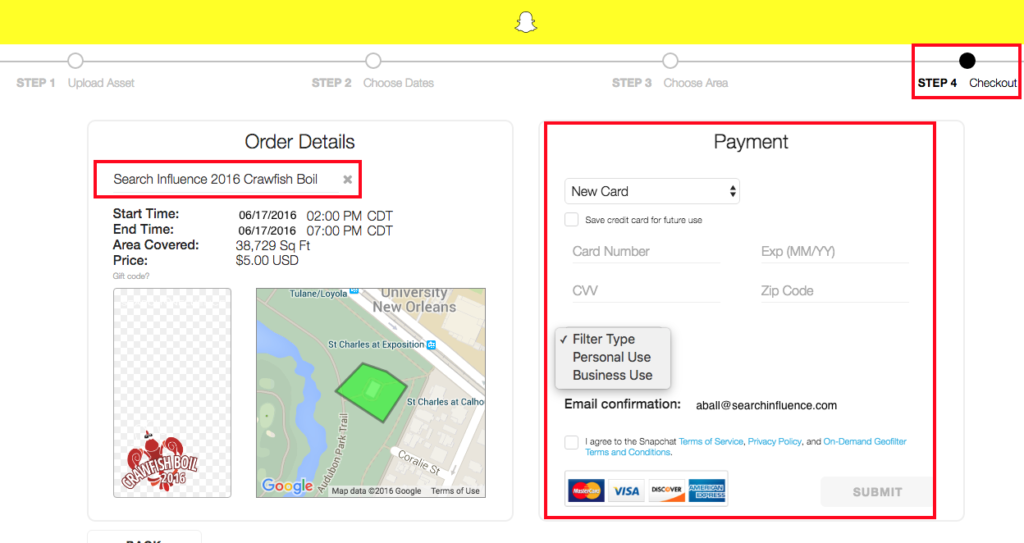
    Snapchat On-Demand Geofilter 3

    Once submitted, I was emailed a confirmation that the Geofilter was waiting for approval, which can normally take up to 48 hours. I received approval within the next few days and patiently waited to see if it would generate the day of the event.

    The day of the team-building event, I received an email that the Snapchat On-Demand Geofilter had started running at the noted time I requested. From there, the team used the filter throughout the event.
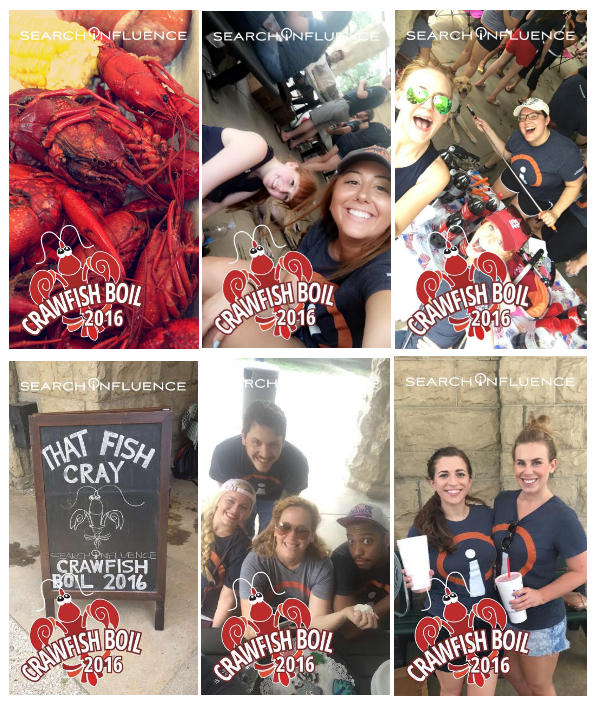
    Snapchat On-Demand Geofilter 4

    Measuring Your Geofilter’s Popularity

    Once the On-Demand Geofilter is finished running, you can log into your Snapchat account to see uses and views for the filter during its duration. For the few hours the filter ran, 84 Snapchat users used the filter and 3,837 Snapchat users saw the filter in their view. This includes a post in a user’s story and direct Snapchats.
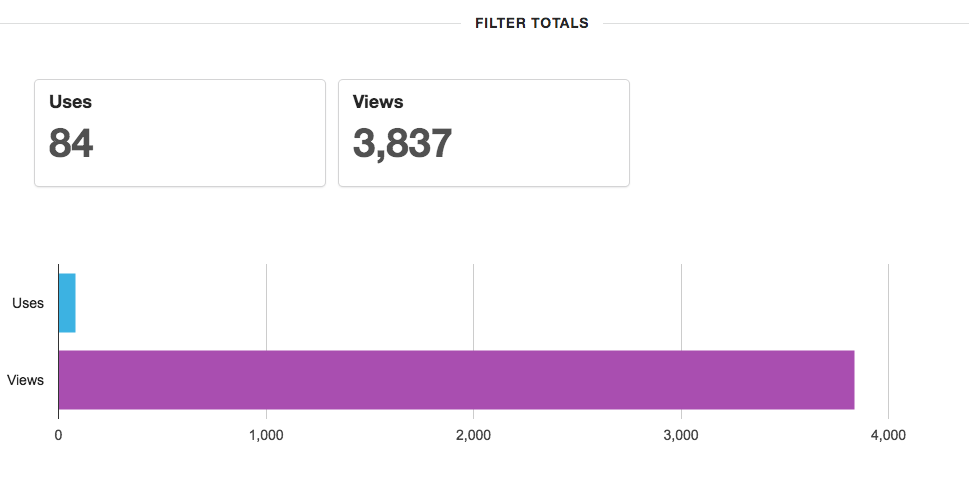
    Snapchat On-Demand Geofilter 5Overall, the process was easy and seamless. I will definitely be creating another On-Demand Geofilter for the next event or party I throw or help plan.

    What event do you think you would like to create an On-Demand Geofilter for this year?
  • Meet Our Newest Team Members

    New Influencers Image

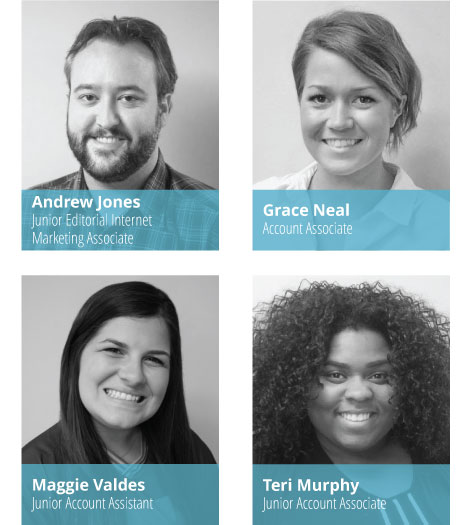
    Our team at Search Influence continues to grow with these four recent new hires.

    Andrew Jones

    Andrew grew up in a small town on Mobile Bay in southern Alabama. After graduating from Auburn University with a degree in political science and English, he worked for a political polling firm in Montgomery. He relocated to New Orleans in 2011 with his dog, Hank. Most recently, he worked with an environmental defense law firm and as a freelance music writer. At Search Influence, he has joined the Content Team as a Junior Editorial Internet Marketing Associate. In his free time, he can be found reading, cooking, making music, and playing trivia around the city.

    Grace Neal

    Grace Neal has joined Search Influence as an Account Associate. Originally from Cincinnati, Ohio, she attended Mississippi State University to study communications to follow her family’s legacy as a fourth-generation bulldog. Prior to working at Search Influence, she was a sales manager for JCPenney. Some of her favorite things to do in New Orleans are biking at Audubon Park and grabbing beignets at Cafe Du Monde. On any given day, you can find Grace facetiming her parents’ wiener dog or dancing to her favorite artist, Michael Jackson.

    Maggie Valdes

    Maggie is extremely excited to join the Search Influence team for the summer as a Junior Account Assistant. Born and raised in New Orleans, Maggie is a rising senior at Louisiana State University, where she is concentrating on digital advertising. Aside from her studies, Maggie loves to travel and try new experiences. She previously worked at Men’s Fitness Magazine in New York City and spent the last four months studying abroad in Italy. However, she’s finally glad to be back enjoying crawfish and snowballs in the Big Easy.

    Teri Murphy

    Teri is our newest Junior Account Associate. Born and mostly raised here in New Orleans, Teri Murphy is a recent honor graduate of Dillard University, where she received a Bachelor of Science degree in business administration. Although she concentrated in management, after taking a handful of marketing courses during undergrad, she decided a career in marketing was for her. Prior to joining Search Influence as a Junior Account Associate, Teri volunteered for a local nonprofit and held internships in accounting and education. In her spare time, she loves watching makeup tutorials on YouTube, going to museums, and spending time with family and friends. She is a member of the #BeyHive and can sing really well in the shower.

    Welcome to Search Influence, Andrew, Grace, Maggie, and Terri. We are excited to have you on the team.

  • Talk Nerdy to Me: One Influencer Explains Why She Embraces Her Inner Geek

    Today is National Embrace Your Geekness Day, and I’m here to tell you what that means and why I’m personally proud to be a geek.

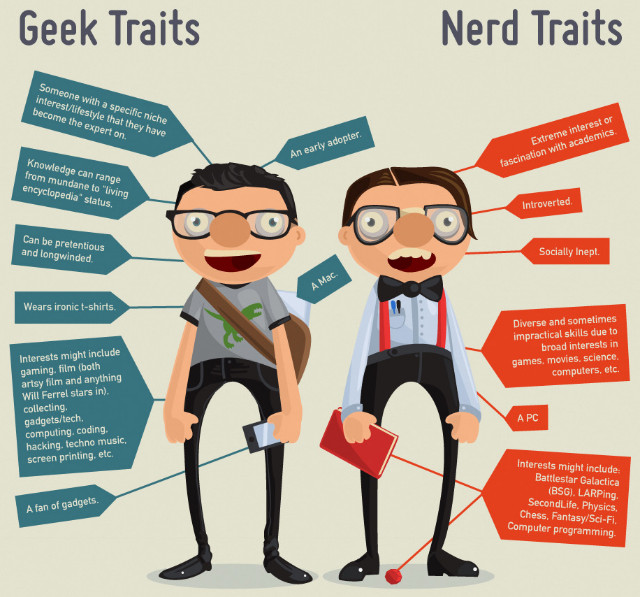
    So let’s start with the very common question, “Is being a geek the same as being a nerd?” I personally identify as both a geek and a nerd (and am proud of it), but many people prefer to differentiate between the two.

    What Is the Difference: Geeks vs. Nerds

    The terms geek and nerd may sometimes seem synonymous, but they have very different roots in history.

    The term nerd was coined from Dr. Seuss in 1954 in a line that read “A nerkle, a nerd, and a seersucker too!” – So really nerkle and seersucker are synonymous with nerd.

    While used as a derogatory term originally, the word “geek” gained popularity in the circus. Circus performers that performed amazing feats were called Geeks.

    Geeks are often gamers, comic book enthusiasts, or musicians who are really interested in a specific niche hobby that they become an expert on. I’m someone with a weekly pull list at the local comic book store and I love to cosplay at anime conventions, so that’s how I fit that mold. Geeks also tend to be the “living encyclopedia” types who can cite random facts about miscellaneous obscure things like how hemp milk is made or what the dietary habit differences are between hawks and falcons.

    On the other hand, nerds often have an interest in academics. They’re the science and math enthusiasts who usually end up with jobs like computer programming, science research, or engineering.

    Why I’m Proud to Be a Geek

    I’m proud to be a geek. To me, it means that I’m capable of excelling at anything I put my mind to. I have hobbies that range from standards like painting, piano, and photography to less typical ones like glass blowing, fire baton twirling, and comic book collecting. If there’s something I’m interested in, I make it a point to become an expert on that topic. That’s also what makes me pretty good at what I do.

    When I studied online marketing in college, I fell in love and made it a point to become an expert in local SEO. In my time here at Search Influence, I’ve even made it a point to track the changes Google makes in its guidelines for business. Understanding the local search ecosystem and how various mapping systems work together to provide users with information is something I find very interesting and love learning more about.

    So whether you consider yourself a nerd or a geek, know that there are a lot of nerds and geeks out in the world and that it’s something to be proud of. Let your geek flag fly!

    Image 1 Source  | Image 2 Source

  • 10 SEO Blogs You Should Be Following

    10 best SEO Blogs Image

    SEO is one of the most important aspects of a business’ online presence. Everyday, we start to see traditional marketing approaches becoming more and more obsolete as new trends are discussed and new strategies go into development. In this post, I’ve outlined 10 of the industry’s most informative, entertaining, and essential SEO blogs you should be reading.

    1. The Google Blog

    The Google Blog

    It should go without saying that if your business uses any of Google’s products or its many services, this should be one of the top blogs for you to follow.

    The Google Blog is the company’s official blog. Although purely for the latest in company news, it provides insight into topics such as product updates, developer challenges, and code snippets.

    2. HubSpot

    HubSpot attracts over 2 million monthly visitors and is gaining fast popularity among those especially interested in marketing and sales. The HubSpot blog is divided into two groups: the marketing blog and the sales blog. You’ll find all SEO-related content in their marketing blog, however, I definitely recommend looking into their sales blog too. By separating the two into different categories, readers can browse content and search specific topics by relevance.

    3. KISSmetrics

    KISSmetrics is known to focus on more of the analytical aspects of SEO, but this blog also covers other topics such as marketing and testing. Blog posts typically examine statistical trends to help businesses determine different ways for improving online performance. Their content is usually pretty thorough and almost always supported with corresponding metrics and factual reasoning.

    4.  Moz Blog

    Moz Blog

    The popular SEO consulting company has been devoted to the practice of website optimization since 2004. It is undoubtedly one of the best resources out there. Moz’s online blogs (Moz Blog, YouMoz, Rand’s Blog, Dev Blog) feature some of the industry’s top experts offering their best advice, research, and how-tos.

    The Moz blog covers everything you need to know with just the right amount of detail to make things comprehendible without being overwhelming. So whether you’re an SEO novice or expert, Moz will provide you with exceptional value about the best SEO practices for your business.

    5. Search Engine Watch

    Similar to Search Engine Land, Search Engine Watch offers detailed information about SEO and paid search. Blog content is updated frequently and provides readers with great information, tips, and tricks for improving online visibility.

    6. SEMrush

    As one of the best in competitive research services for online marketing, SEMrush focuses on generating valuable content for digital marketing. Posts are both informative and detailed and will sometimes feature posts written by well-known industry experts.

    7. Search Engine Roundtable

    Rather than just simply publishing original blog content, Search Engine Roundtable adds a unique twist by providing readers with a one-stop shop for reading the most popular topics covered in SEM. Search Engine Roundtable offers a single source for visiting and locating the most interesting threads covered on various forums and then provides greater detail into those threads. The website has won numerous awards and covers several search topics.

    8. Search Engine Land

    Search Engine Land

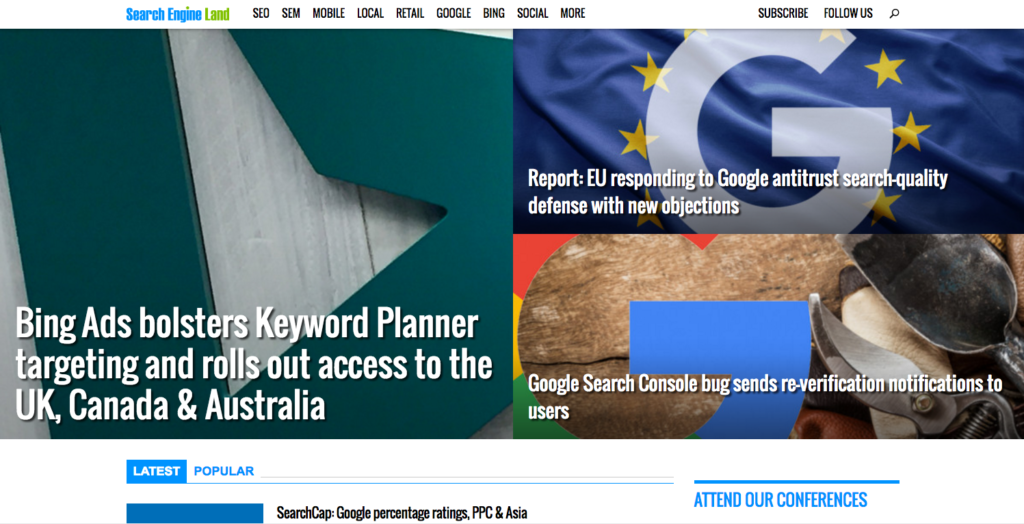
    Search Engine Land is considered one of the leading digital publications for online marketing. Their blog examines many elements in the industry and is typically one of the first to introduce breaking content. Posts cover a wide variety of topics, including daily news, industry trends, and product changes on popular platforms.

    In addition to its editorial news coverage, the blog also features articles by subject matter experts across all digital marketing disciplines, filled with practical tips, tactics, and strategies for running successful marketing programs.

    9. Content Marketing Institute

    Content is an essential component for SEO success. With that said, the Content Marketing Institute is a great resource for content marketing. Blog posts will also include discussions related to SEO strategies, social media, analytics, and more.

    10. Search Influence

    Being a full-service search engine marketing company, it should come as no surprise that our internal team blog about online marketing and SEO practices. We publish a few articles each week and offer great information and advice for improving SEO. So, if you’re looking for great content that is both easy to understand and focuses on the most effective strategies, our blog is not one to miss.

    The rules of SEO are constantly changing, and it’s important for businesses to lay a solid foundation for growing their organic traffic. By keeping up with the most recent industry news, you’ll be able to determine the most valuable information and useful advice for improving your SEO. Don’t see your favorite? Leave a comment below and let us know which blogs should have made the list.

  • Here Are Our Top 5 Blogs You May Have Missed Last Month

    Woah! Did June fly by for you, too? If you are on the beach this week and doing some summertime reading, here are our most popular five blogs from last month that you will want to check out.

    Knowledge is power gif

    What Happened to Facebook’s 20% Text Grid Tool?

    Michelle’s blog is coming in hot as Search Influence’s most-read blog of 2016! If you’re advertising on Facebook, you need to understand the rules and limitations of the images you include. Facebook’s allowance for text within ads has changed slightly over the past few months, so be sure to read up about the latest updates and what they mean for online advertisers.

    5 Medical Practices Effectively Using Instagram

    Calling all doctors: Is your social media strategy healthy? Are your social media channels helping you generate more traffic to your site and more qualified leads? Read how these five medical practices have been utilizing Instagram to further establish their brand, increase their online presence, and stimulate user engagement.

    Instagram gif

    These 10 Expert Tips Will Drive Traffic to Your Business’s Website

    Feel like you’re doing everything to strengthen your online presence but still not seeing the traffic numbers you’d like to see within Analytics? From schema markup to shareable content to video syndication, we provide ten valuable tips from industry experts to help you increase your site traffic with ease.

    Getting Hands On With the New Google My Business

    Though originally written in 2014, this June blog is still hyper-relevant to the industry. Quite a lot has changed within the Google landscape since 2014, but it can be JUST as confusing to navigate through business pages and local profiles. Let Mary guide you through what’s changed in the world of Google business and what these changes mean for your bottom line. Additionally, if you need help claiming your Google My Business page, check out this recently-completed Search Influence video to painlessly walk through the steps!

    5 Rookie Mistakes That Will Ruin Your New Website’s SEO

    Just launched a new site? Don’t let all of your efforts go to waste; make sure your site is optimized properly so search engines deem it “worthy!” Read on to learn about five big new-site mistakes, and ensure that your site is strong and ready to rank.

    Gif 1 Credit  |  Gif 2 Credit

  • 12 Things You May Not Know About Online Marketing

    12 Things You May Not Know About Online Marketing

    While some aspects of online marketing may seem straightforward, some things might surprise you. Here are 12 things that surprised some of our team members when they started working at Search Influence.

    1. When listing your business location anywhere online, you should use the USPS verified address.

    “I worked at traditional ad agencies for over 10 years. It shocked me to find out that, when developing a website for a client, it is best practice to use the exact address that the USPS has on file for a business. And that same address should be used on all social media profiles, as well, to enhance a website’s search engine ranking. In my former life, we would simply use what looked or fit best.” – Melissa

    2. Gain traffic to your website through local search results with industry specific directory listings.

    2


    “I was surprised to learn how many industry specific directories exist. Also, surprised to learn how valuable those can be for businesses to gain traffic to their website through local search results.” – Mary

    (Note: Don’t have a physical location? Check out this blog about ways to improve the local search ranking for a service area business.)

    3. Google My Business is important!

    3


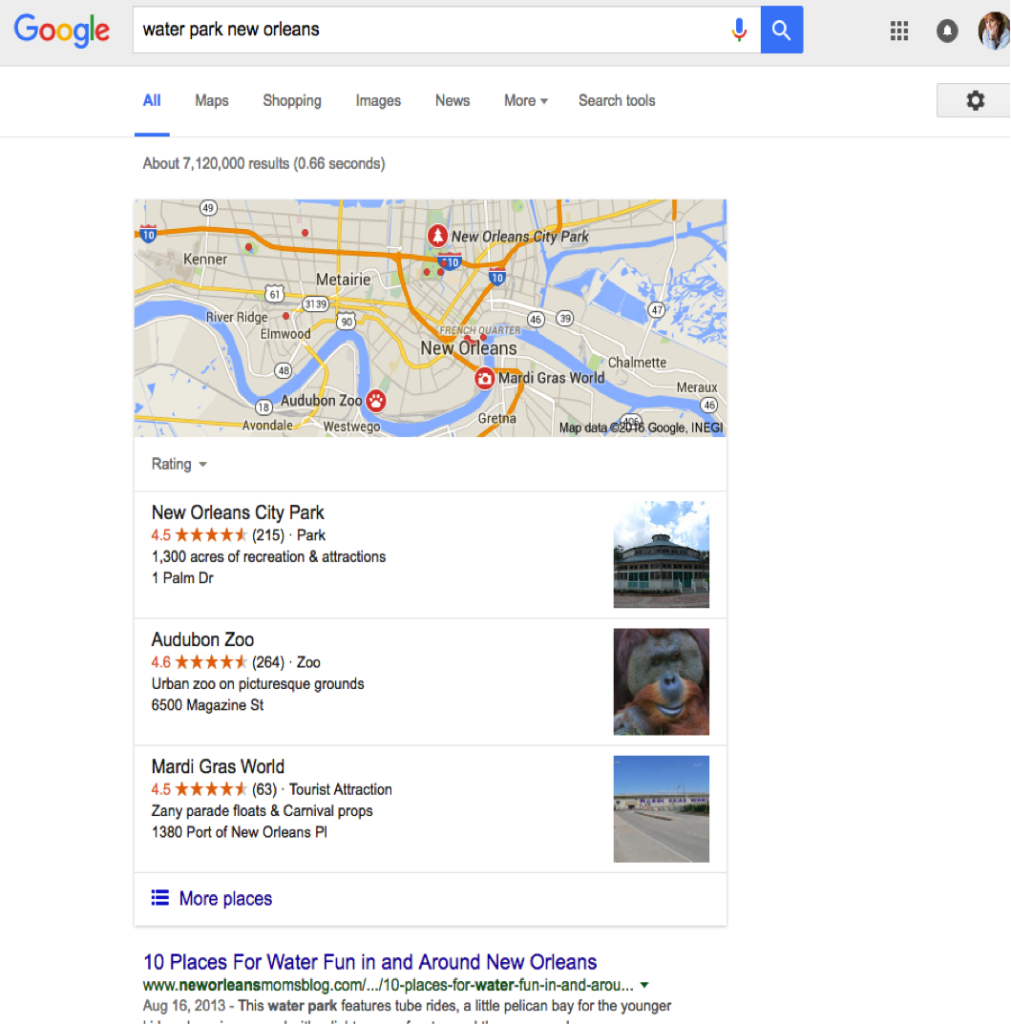
    “I was really surprised to learn that Google My Business had such a large impact on website visibility. I thought, “Google Plus? No one uses that.” And that’s partially true. But having a page, verifying it, and having reviews can play a large role in ranking in the maps pack.” – Ariel

    4. Google prefers location images for profile pictures on Google Plus.

    “With my graphic design background and my love for branding, I was surprised to learn that Google prefers the use a picture of your business location (if you’re a brick and mortar shop) instead of a logo for your Google Plus profile picture.” – Michelle

    5. Content on images cannot be crawled by Google.

    “I was surprised to learn that Google could not track infographics on pages as static images, but we can help make them more Google-friendly through optimization.” – Kayla

    6. Content optimization is for humans too!

    “It may sound basic, but I was surprised to learn that SEO is geared just as much toward optimizing content for human users as it is for computers. When I first started hearing about SEO, I thought it referred only to technical, back-end fixes that would gain the attention of search engines. Working at Search Influence taught me that a huge part of SEO focuses on enhancing the overall user experience, not just making it easy for Google to find your website.” – Aubrey

    7. Google penalizes sites from showing up in search results.

    7

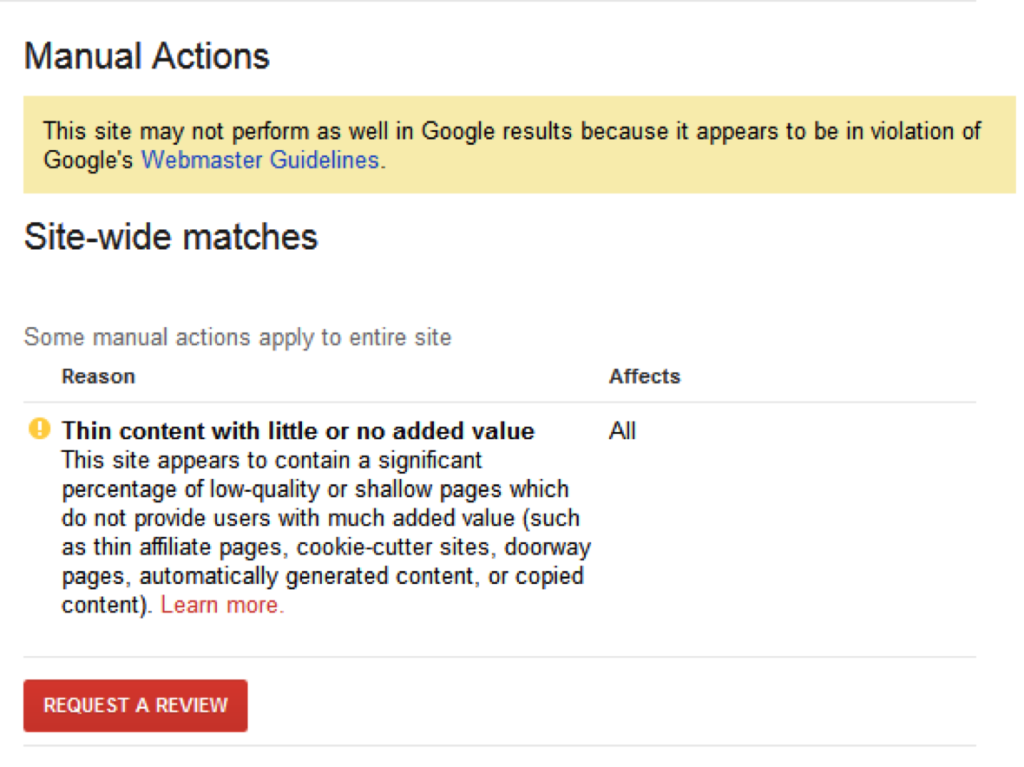
    “I was surprised to learn about Manual Actions and how Google can penalize your website, removing it from search results or reducing its ranking. It totally makes sense now that I know more, but coming into the industry without much knowledge of the impact of manual actions, I was definitely surprised.” – Presley

    8. Quality content can affect rankings.

    “The importance of content! It makes so much sense once you actually understand how it affects your website’s ranking potential. I feel like it’s still the number one thing I harp on the most to our clients.” – Gussie

    9. Meta descriptions are helpful in gaining user click through from SERPs.

    9


    “It never occurred to me that meta descriptions are something that needs to be created and are a valuable part of SEO. Now they’re one of the first things I mention when I tell people about the kind of content I work on, because who knew that could be someone’s job?“ – Meaghan

    10. Schema markup can help Google locate the important information on your site.

    10

    “I think schema markup is really cool. I like how you can insert coding to “highlight” important pieces of information on a website, especially since Google is processing lots of information across the internet.“ – Jensen

    (Note: Looking for Schema for Medical Clinics? Check out this blog about the recent Schema update.)

    11. Online marketing best practices are always changing.

    “Having worked for an online marketing company before starting at Search Influence, I was surprised to see how much the industry can change. There was about a three-month gap between my last job and Search Influence, and the environment of SEO was entirely different. Algorithm changes, social media image size changes, changes to what’s good practice and what’s not. Everything was different. Search Influence gave me the tools to navigate those changes and come out with more knowledge than I thought possible.“ – Eric

    12. Attack your online marketing campaign from multiple angles for a greater impact.

    “I wasn’t necessarily surprised by this, but what I love about what Search Influence does is that we fit all of the various components of online marketing together into such well thought out, comprehensive strategies for our clients. Offsite work to benefit organic search, social media marketing, onsite work + paid advertising efforts can complement each other so well and do such great things for small, medium, and large businesses when the work is synchronized with intent!” – Erica

    Staying on top of your online marketing campaign can be tough. We can help! Contact one of our SEO specialists to find out more information.

  • 5 Ways Online Marketing Offers Better ROI Than Traditional Approaches

    5 Ways Online Marketing Offers Better ROI Than Traditional Advertising

    These days it seems like everyone and their dog is using social media. Don’t believe me? Then check out @toastmeetsworld and try resisting to follow that pup.

    Toast Meets World Screenshot

    As technology becomes an essential part of our day-to-day lives, we are increasingly turning to the digital world for personal interactions and information. Every day magazines are folding, and newspapers are becoming online publications. Yesterday, my colleague posted a blog highlighting how online marketing will surpass TV advertising in 2019. It may be difficult to keep up with the trends, but there are many reasons why businesses should transition to online marketing from traditional medias such as print, radio, and TV ads.

    Targeting

    A more traditional approach tends to be a shot in the dark. You can run an ad in a paper that many will see, but you might not appeal to your target audience. Online marketing allows clients to target their audience easily. Chances are there are already people interesting in your goods or services. It’s only matter of finding the right audience and targeting your message.

    Real Time Effect

    Placing ads in papers, billboards, or on TV can be expensive, not to mention stagnant. Your ad may run for several weeks, but it lacks real time effects. Optimizing and posting on social media platforms allows your followers to see your post in real time, and you can post as many times as you want. With social media marketing, your company can also network and interact with your audience, forming and cultivating relationships that print ads can’t give you.

    Global Outreach

    Social networks are easily accessible throughout the world, so you can reach more than twice as many people. You may run an ad in your city or nationwide, but you are only reaching those who happen to come across the ad. Through online advertisements not only will you reach your audience in your geographical location, you have the possibility of reaching extended circles through likes and shares. With increased visibility, you can compete on the same level as bigger brands.

    Tracking

    One of the best advantages of online marketing is that it’s easy to track. Traditional approaches leave little room to track and tweak your campaign. However, social platforms and Google searches offer several built-in tools and metrics to track your progress. You can quickly make adjustments in your approach if necessary.

    Bigger Return on Investment

    Online marketing tends to be low-cost in relation to traditional marketing, and there is also more room to get creative, which sets clients up for a higher return on investment. Here at Search Influence, our niche approach to search engine optimization works to improve our client’s ranking on search engines. Our services will help you build a competitive online presence that is sure to increase your clientele base.

    Image Credit

  • Should Small Businesses Pick Online or Traditional Marketing?

    Budget graphs

    At some point every year, all marketers must ask themselves one very important question. Whether you’re with a small business, agency, or massive corporation, this question plays an integral role in how you shape that year’s marketing strategy:

    Where Should My Budget Go?

    It’s inevitable, and you need to decide how best to use the money you have to bring in the most valuable customers.

    Now there’s no one answer to this question; it depends wholly on your overall business goals, target audience, internal capacity, and so much more. But I’m not here to tell you how to spend your money.

    Online vs. Traditional Marketing

    You’re not going to figure out every line item before first figuring out the higher level allocations. Here’s where I can offer some insight. The biggest follow-up question when considering marketing budgets these days is how to allocate between online and traditional marketing outlets.

    This is a common point of contention, but here’s what Big Data has to say:

    Online marketing and ad budgets are projected to surpass TV by 2019, taking the lead in highest allocation over radio, print, and cinema, as well.

    Online will soon account for about 35% of marketing budgets, more than each other facet. I know, you’re probably saying, “but I thought online marketing was supposed to be cheaper than traditional.” For the most part, that’s true, and online marketing is shown to reach the same number of consumers at a much lower cost.

    However, marketers and businesses alike are also still exploring and tapping into the myriad ways in which they can use the internet and technology to reach more consumers and increase their conversions. In conjunction, online businesses, marketing services, search engines, and tech companies are mining all the opportunities they can find to meet and expand upon that demand.

    Search (SEO and PPC) and display advertising will take the largest shares of online marketing budgets through 2016.

    Search graphic

    There are differing opinions on which actually comes out on top, but sources seem to agree that these two remain the major contenders for your online marketing budget, primarily because of their ROI measurability and continuing advances in demographic targeting.

    Do note that many marketers report they are still increasing their budget spending on email and social, so let’s not forget about these guys. Falling under the growing umbrella of content marketing, many marketers forecast the steady and growing demand for these outlets as they move focus toward consumer interaction and engagement.

    Finally, there’s mobile. What is there to say about mobile except that it’s become such an integral part of all types of marketing? Regardless of where it falls in your hierarchy of expenditures, mobile implementation is a major consideration, representing 66% of the overall online marketing budget growth through 2019.

    Only newspaper advertising is projected to decline by 2019, in traditional marketing outlets.

    Newspaper gif

    Although they aren’t growing at the same rate, traditional marketing outlets still serve as a complement to expanding online endeavors. Digital TV, radio, and magazines still fall under traditional categories. Online advertising outlets are budget-wise and projected to grow at greater rates than their offline counterparts. However, the point here is that traditional marketing still plays an important role in brand recognition and now, more than ever, in driving users to convert online.

    Ok, this is just a snapshot of the information available (special thanks to Big Data and the industry shift toward data-driven solutions). So, what does this mean with regard to the questions above?

    These projections offer more than just numbers. Remember, marketing is a growing and complex industry. You have so many opportunities and so many choices to make for each campaign. Make sure you’re not missing out on any on- or offline.

    By using online marketing teams to help your efforts, you can focus on what your business does best while still gaining traction and engaging with your consumers online.

    Gif Source


  • Why Link Building Is Important for Dentists

    Why Link Building Is Important for Dentists

    Another Day, Another Molar

    Up until last year, I had gone to the same dentist since I developed my first tooth, maybe before. Once a year, I would visit the office, get a nice teeth cleaning, and pick out a prize. I might be in my twenties but, dangit, I like prizes.

    When I moved to New Orleans, I had to start all over and find a new medical “squad” to take care of me. I didn’t mind a new doctor (urgent cares, amirite?), but I was worried about finding the right dentist. Will I like them? How much paperwork will I need to fill out? Do they let “children at heart” get prizes?

    Is This Real Life? David Gif

    To find a new dentist, I first asked people around the office: “Do you like your dentist?” and “How did they fix your cavities?” I asked people who I trusted and some people who I didn’t trust but had nice teeth. After a few word-of-mouth referrals, I ended up turning to the internet to read reviews, rankings, and credentials.

    Many practices used to grow solely on word-of-mouth referrals, and while referrals from family and friends still provide a direct path to your dental chair, the internet’s influence on how patients find new dentists is growing. If trends continue, more and more patients will find their new dentist on search engines. To increase your practice’s visibility and rank high on SERPs, you need an SEO campaign.

    Which brings us to link building. If you are struggling with business outside of personal referrals, I have a solution for you! If your patients have grown up and moved cities, I can help you out! If you give prizes out to adult patients, let me lend you a hand!

    The Wisdom Tooth of Linking

    Linking is the SEO equivalent of a personal referral. Search engines are like busy bodies: They interact with every website, and the more your site interacts with other sites, the more trust and authority your site will receive from search engines. But how do you get your site to interact with other sites? How do you build trust?

    To find new patients, you need to interact, or link, with industry websites. Sites like HealthGrades and RateMDs are specifically for medical professionals. These websites require verification information such as license numbers, which is why search engines trust them. These sites also allow users to post reviews for their dentists, creating another platform for interaction between you and your patients. (If you want to learn more about the benefits of reviews and how to get more from your patients, check out this blog post by a friend or this blog by yours truly).

    There are also sites specifically for the dental industry, such as Every Dentist. You can create a profile, get links, and build even more trust and authority for your website. When a patient searches “dentists,” links from specific dental sites tell search engines, “Hey! I’m a trusted dentist!” The search engines, in return, will give your site a higher ranking.

    So, if you want to get more patients, get to linking! Who knows? I could be your next patient. I promise I won’t lie about how much I floss…

    And That's the Tooth Simpson Gif


    Gif 1 Credit |  Gif 2 Credit

  • These 10 Expert Tips Will Drive Traffic to Your Business’s Website

    Grow Your Business Graphic

    It doesn’t take a web expert to know that more traffic to your website means more business. However, researching ways to improve your online traffic isn’t always easy. We asked our in-house experts for their thoughts and came up with these ten ways to drive traffic to your website.

    1: Implement Schema Markup and Rich Snippets on Your Site

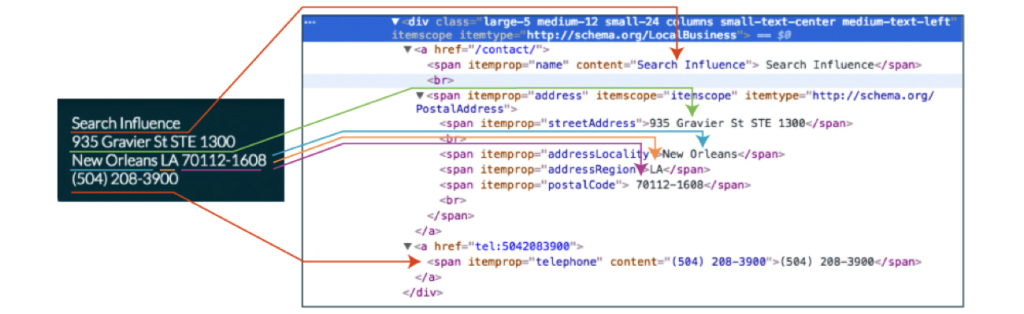
    Schema Markup is structured data that labels existing elements on your website so search engines can better understand the content. Essentially, when Schema.org markup is implemented into your website’s HTML source (the only place where it should be visible), it clearly defines specific parts of your content, such as your business address and telephone number.

    Rich Snippets are a structured data markup only recognized by search engine algorithms. When used on appropriate content, Rich Snippets can show exact content from a website on Search Engine Result Pages (SERPs) of search engines like Google, Yahoo, and Bing. These snippets are the few lines of text under every search result. For example, if you run a medical practice that wants to advertise its high rate of patient satisfaction, you can markup content from patient testimonials so that your glowing reviews show up when people search for doctors in your area.

    Healthgrades Screenshot

    2: Improve Your Site Speed

    Site speed is the amount of time a page needs to completely load. This matters for both users and search engines, as users are less likely to stay on a website that takes a long time to load and search engines will penalize your website for being too slow. Google’s PageSpeed Insights Tool is a great way to analyze your site for ways to improve your site speed and will provide you with detailed information on how to fix each issue.

    3: Use Google Search Console

    Google Search Console (formerly Webmaster Tools) allows you to indicate to Google the various details of your site. A very important part of this process is submitting your sitemap so that search engines can better crawl and categorize your site—if you haven’t done this yet, you should! Search Console will give you a report on the average ranking of your website on SERPs for specific search queries. These reports will let you know what you should be improving on your site to gain a high position and click rate.

    4: Publish Press Releases

    Press Releases are great when you have an announcement to make or a story to tell. They’re also highly useful for helping you own your business name in SERPs. Sites like PRWeb and Cision will distribute your press releases for you and get them published on news sites and blogs. For a little extra money, they’ll also send your release to journalists and bloggers, in hopes that they’ll publish it on their sites as well.

    5: Perform On-Site Link Building

    Internal Linking is a link from one page to another on your website. This process fosters a great user experience, as anyone visiting your site will find themselves easily hopping from one page to another without having to really search for the information they’re looking for. Search engines like Google are very focused on user experience. Good internal link building helps googlebot understand the relationship between pages, among a set of content.

    6: Perform Off-Site Link Earning

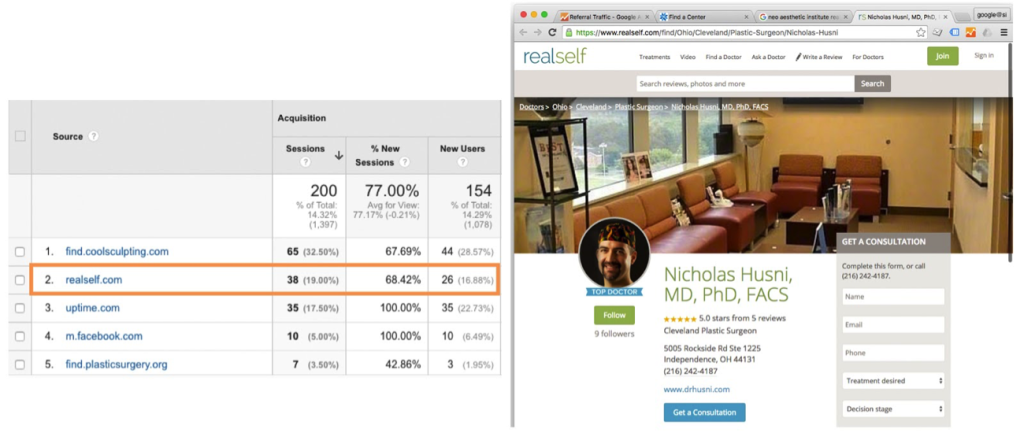
    By submitting your website to online forums, specifically those that pertain to your business’ physical and professional communities, you’re naturally increasing the chances that someone will visit your website. Engaging on social platforms like StumbleUpon, Reddit, Digg, and Delicious can be more valuable than you think.

    7: Perform Off-Site Citation Building

    Similarly to off-site link earning, submitting business listings to niche directories (industry & categorical), data feeds, major directories like Google, Yelp, Bing, Foursquare, YP.com, and secondary directories like Merchant Circle, HotFrog is a great way to drive traffic to your website.

    8: Syndicate Your Videos

    It’s no secret that having a YouTube channel filled with optimized videos drives up web traffic. However, you should also syndicate your videos across other sustainable video channels, such as Vimeo and DailyMotion. Videos will earn links and citations on social sites because they’re highly shareable. These increase link source diversity.

    9: Post and Promote on Social Media

    This may seem like a no-brainer, but you would be surprised by how many businesses don’t actually do this. Paying for promoted posts on Facebook offers a relatively inexpensive way to get your business in front of target consumers. Facebook also offers radius-based targeting for ads, which lets you target people who are/were:

    • Living in your area
    • Located in your area
    • Recently visiting your area
    • Traveling to/in your area

    Posting and promoting isn’t limited to Facebook, though! LinkedIn and Pinterest are other examples of great social media sites that are perfect for driving traffic to your website.

    10: Be a Resource in Your Industry Through Sharable Content

    It’s one thing to be ahead of your competition, but it’s another thing entirely to be an industry thought leader. You can do this by creating shareable content. For example, you MUST have a blog. Your blog should be on site, not offsite. If your website is hosted on a CMS like WordPress, then you can easily integrate a blog within your existing site! Not only does blogging build authority for your brand and show off the human side of your company, but according to Hubspot, businesses who prioritize blogging experience 13 times increase in ROI.

    You should also start to create infographics. They combine easily digestible—but valuable—information with a visually appealing information, making them highly shareable across all social media websites. For example, this infographic, created for a medical directory, was shared more than 900 times, got more than 300 Facebook shares, and was pinned more than 150 times.

    Want more information? Watch our recent webinar for more information and tips.