Category: Marketing Analytics

  • How to Use Google Shopping to Increase Retail Sales

    It’s more important for retailers, now more than ever, to capitalize on the internet as an additional revenue source for their businesses. The vast majority of internet users in the U.S. are expected to shop online this year, with Statista estimating that 80% of all internet users in the country are expected to make at least one purchase online during the 2019 calendar year. Compound this fact with the matter of Google being the most used search engine worldwide with over 1 trillion searches taking place on the search engine per day, the importance of utilizing Google’s shopping tools to boost profitability can’t be overstated.

    What Are Google Shopping Ads?

    One of the most important Google tools that online retailers can take advantage of is Google Shopping Ads. Google Shopping Ads are product listing ads that are featured across Google’s Search and Shopping results. These ads differ from Google’s paid search ads in that they feature product pictures, while paid search ads do not. There’s also no need to set up text ads or bid on any keywords with the use of Google Shopping Ads, which is another key difference between the two popular ad types.

    Person using credit card to make purchase on Google Shopping

    Online retailers can use Google Shopping campaigns to promote their local and online inventory, and boost traffic to their websites and local stores. Shopping campaigns also give retailers the benefit of being able to find better qualified leads for their product offerings. By featuring detailed product information directly within your shopping ads, online retailers better help shoppers make well informed purchasing decisions, which in turn leads to increased conversions and purchases. In addition to including detailed product information within your Google Shopping Ads, there are several other key areas of importance that retailers must focus on in order to achieve success with a Google Shopping Ads campaign.

    Your Product Feed: The Key to Campaign Success

    One of the most important areas to consider when taking on a shopping campaign is the proper setup and optimization of your product feed. For context, Google Shopping is powered by two platforms: AdWords and Google Merchant Center. Google Merchant Center is where your product feed lives. Your data feed is simply information about the products that you want to sell formatted in an organized way that Google can read and understand. As we previously mentioned, you don’t bid on the keywords your Product Listing Ads show up for. Google instead crawls your feed and determines if one or more of your products is relevant for a particular search query. In this regard, Google Shopping has similarities to SEO. You need to structure the various elements of your feed so that Google can make sense of it and find it relevant for the appropriate search queries.

    The three most important elements to consider when building your product feed include the product title, product description, and Google product category. First and foremost, your product title should be accurate, descriptive, and include top keywords as well as the name of the product. Important information about the product should be frontloaded in the title, and additional descriptors such as make, model, size, or color are all helpful keywords to include in the title of your product.

    Secondly, product descriptions should follow the same guidelines as product titles. Ensuring that your product description accurately describes the item at hand, while also including relevant keywords and important product information at the beginning of the description all help increase the chances of your ad being shown for relevant search queries.

    Lastly, choosing an appropriate category for the products in your shopping campaign is an important (and required) step to getting your products to show up for the right search queries. Google has created a fairly exhaustive list of categories and subcategories that your products might fall under, which can be found here. There are currently over 6,000 categories and subcategories to choose from on Google’s list. Only one category per product can be selected, so it’s important to choose the most relevant category for the product at hand. This will help Google understand exactly what your product is when deciding to display your ad in response to consumer search queries.

    Carrying shopping bags after a lot of retail spending

    Getting Your Bidding Strategy Correct

    Aside from your product feed, your shopping campaign bids are the most important part of your ad strategy. Your bids will play a key role in determining which queries your ads show up for, along with the overall profitability of your campaign. Shopify suggests taking into account your product price, profit margin, and online conversion rate to calculate your initial cost per click bid. Once your initial bid is set, be sure to adjust your bids if you find that your ads aren’t gaining enough impressions, clicks, and conversions. Increase bids slightly—by $.05 to $.10 at a time—until the ads begin to generate more impressions and clicks.

    You’ll also want to be mindful of your daily budget, and monitor this metric closely. It’s very likely that a new campaign won’t hit their maximum daily budget in the first days and weeks. Over time, as your click-thru rates improve, and as Google gains more data on how users respond to your ads, they’ll begin to show them more frequently for relevant queries. Once this trend shifts, you’ll want to review your daily budget to allow for more impressions and clicks for your campaign.

    Campaign Performance Review & Ongoing Optimizations

    After your campaigns are set up, and you’ve settled on a successful bidding strategy, it’ll be time to track your success and review your campaign for optimization opportunities. Reviewing the amount of clicks and impressions for the products in your product feed can help you in deciding next steps to further boost the performance of your campaign.

    For example, products with a high amount of clicks but low conversions may benefit from a thorough review of their product page on your site. Could your product images be clearer? Does the page showcase product reviews? Think of the onsite page optimizations from a consumer standpoint, and make adjustments accordingly.

    Another report worth reviewing regularly is the search query report. Reviewing keyword performance will give you insight into whether adding negative keywords, changing up your product feed, or reducing certain product bids would be an effective optimization.

    When you partner with our team at Search Influence, we will handle every detail of your campaign to make sure it performs effectively so you can focus on growing your business. Our online advertising services can help you reach your target audience and make continuous improvements to your advertising strategy. Get started today by requesting a proposal online.

    Images

    Shopping

  • Top 5 Google Analytics Metrics for E-commerce Tourism Companies

    Top 5 Google Analytics Metrics for E-commerce Tourism Companies

    With a growing number of travelers using mobile search to book their vacations, it’s a great time to be in the tourism industry, assuming you have an e-commerce option for your customers. Whether you’re offering hotel rooms, dinner reservations, or curated experiences, your customers are more likely than ever before to make their travel purchases online and on the go. But, how can you tell if the e-commerce side of your business is operating at peak performance? With a strong track record of successful marketing for zoos, museums, and other tourist attractions, Search Influence is here to help! We’ve compiled the top five Google Analytics metrics that your business should be tracking to make sure you’re optimizing your potential.

    1. E-commerce Conversion Rate

    Google divides the number of completed sales by the number of visitors to your website to provide your e-commerce conversion rate. This metric is one way to measure your business’ success in terms of online sales. While it does not measure how much revenue each sale brings in (that’s the average order value, and we’ll talk about it next!), your e-commerce conversion rate tells you how many visitors to your site have become paying customers. It’s an especially important metric to keep track of because converting current visitors into customers is much more cost effective than acquiring a new customer base.

    Of course, e-commerce isn’t the only conversion rate you can measure. Break down conversion points on your site into micro and macro. In the world of e-commerce, your macro conversion would be a purchased products/tickets. Micro conversions are smaller actions that lead up to the end goal of purchases. For tourism, this would likely include visits to key pages (like ticket pricing page), to adding something to a shopping cart, to email signups. You should watch your success of micro conversions and tune your campaigns to those as well, as each of these actions should be designed to drive customers toward macro conversions—increasing that e-commerce conversion rate of visitors turned into paying customers.

    2. Average Order Value

    Average order value tells you how much revenue online purchases generate for your business, on average. It is calculated by finding the total revenue generated from online orders and dividing it by the number of orders. According to some experts, like Databox, it could be the one most important metric for your e-commerce business to focus on.

    So, how do you improve your average order value? MonsterInsights provides some key suggestions.

    First, price your products with upselling in mind. For example, if you’re a photographer shooting on-site family vacation photos, you might offer a base package of 20 photos, with the option to add more at an increased price-per-photo rate.

    Second, offer product bundles at discounted prices. For example, if you’re running a walking tour company, you could bundle together a daytime and a nighttime tour. Customers will be enticed by the promise of extra touring for their dollars, and you’ll still gain more income than if they had just purchased a single tour.

    Finally, offer savings with a minimum order—something like, spend $100 and get $20 free. Customers may spend more than they ordinarily would just to access the discount. All three of these strategies can drive up your average order value, bringing in more revenue for your e-commerce tourism business.

    A close-up of a woman touching a screen - Search Influence

    3. Revenue Per Visitor

    Revenue per visitor is a crucial metric – increasing it can mean revenue growth for you without having to drive new visitors. You can increase this metric by both converting more visitors into customers and increasing your customers’ average order value. Revenue per visitor is calculated by dividing your total online revenue by the number of unique visitors.

    You can increase revenue per visitor by using any of the previously discussed methods, like upselling, bundling products, and offering discounts with a minimum spend. Keep in mind that a low revenue per visitor is not necessarily an indication that your business is struggling. For example, if you’re selling lower priced items, like postcards or other tourism souvenirs, your revenue per visitor will be much lower than for a company selling high-dollar items like cruise tickets or hotel suites. You’ll just need a larger number of unique visitors to boost your sales and drive revenue overall, and this should play heavily into your marketing goals and strategy.

    4. Customer Lifetime Value

    Customer lifetime value tells you the total value that an individual customer, acquired during a particular time period, has spent with your online business.

    This metric is best used for estimating appropriate marketing costs for your business, and for analyzing your customer acquisition strategy. For example, if your average customer will only spend $100 at your business over the course of their life, it isn’t worth paying hundreds of dollars to attract this customer. Maximize your return on investment (ROI) by keeping your marketing and advertising expenses reasonably lower than the income your average customer is likely to generate for your business. Most businesses are willing to spend 5-10% of revenue to acquire a new customer. (See more in our blog “What’s The Perfect Marketing Budget For Your Company?”)

    5. Return on Advertising Spend

    Speaking of ROI, let’s discuss return on advertising spend—or ROAS as it’s sometimes called—which is a key metric for determining the effectiveness of your digital advertising. It tells you how much income you earn for every dollar spent on advertising campaigns. If you’re running online ads and want them to be as effective as possible (who doesn’t?), you need to raise your return on advertising spend. Ideally, your ads should drive about three times as much income as you paid to advertise.

    A man viewing graphs and charts on a tablet - Search Influence

    So, how can you raise your return on advertising spend to this ideal 3x level? Conversion Fanatics Blog offers some great tips. First, do some testing to figure out what channels work best for your business. For example, if your Facebook ads tend to perform better than your Google ads, channel your dollars to Facebook, where your ads drive the most revenue. Similarly, test the times at which your ads have the best results. If you notice that holiday ads bring in more clients for you than summer ads do, it could be worth concentrating your ad dollars on that crucial time of year. Finally, you can dive into even more metrics. Monitor the user journey by tracking how many customers click on your ad, how long they stay on the resulting landing page, and so on. If you can pinpoint which stages of the user journey are working well for you, and which stages are losing potential customers, you can fine-tune your ads and landing pages for an improved user experience.

    These five metrics, all available through Google Analytics, are key components of e-commerce tracking for any online tourism company. For more information about how to optimize your travel business’ potential, contact Search Influence at 504-208-3900, or request a proposal today to hear opportunities from our strategists.

    Images:

    Camera and Phone

    Touchscreen

    Tablet

  • Are Your KPIs Leading to a Healthy ROI?

    Marketing research displayed on multiple graphs and charts - Search Influence

    One metric that every small business owner should track and strategically work to improve is return on investment (ROI). Improving ROI can depend on boosting any number of individual indicators that help businesses focus on what they’re doing right and where they need to improve. Learn how these indicators apply to digital marketing and how to track, set goals for, and improve those indicators.

    What Are ROI and KPIs?

    Most business owners are familiar with the concept of ROI as an important, perhaps the most important, bottom line for any expenditure. ROI provides a simple ratio that expresses how successful an expenditure is relative to the income it generates. For some business decisions, calculating ROI is relatively straightforward. The ROI for a rental property, for example, would be based on the cost of buying the property plus taxes and upkeep divided by the amount paid by tenants each year. In the world of digital marketing, however, it can be difficult to determine the value of clicks, shares, and retweets, and to draw a direct line from any specific customer to a specific advertisement.

    Key performance indicators (KPIs) are more specific data that provide the metrics to analyze the effectiveness of a digital marketing strategy. In fact, ROI itself is a KPI. A business may select ROI as their #1 KPI, and then other secondary KPIs to watch as leading indicators of success. Paying attention to the right KPIs, and understanding how they relate to and inform ROI, can allow businesses to agilely hone a lean marketing approach around what works by cutting out the fat failing to provide a return.

    How to Determine Your KPIs

    It’s important to realize that not every metric is a KPI. For example, a tourism company might find it especially helpful to track how often promotional emails are forwarded or social media posts are shared. People like to share vacation experiences with friends who often rely on recommendations, and people also like to vacation with their friends. A high share rate could indicate a multiplier effect for some promotions, meaning that the marketing strategy is generating customers outside of a business’ subscriber list or social media following who nonetheless engage with the content. (Read more about creating customer advocates for tourism businesses). While every metric might not be important for your business, here are some common KPIs:

    Website traffic sources – Visitors enter your site from many avenues. The traffic sources can be organic, direct, referral, or paid. Each source can be reviewed to provide high-level information about your site traffic. Organic search traffic, when a visitor finds your website by searching keywords in a search engine and clicking through to your site, is the top source for generating traffic. It’s essential to improve SEO in order to increase your organic traffic.

    Engagement metrics – Take a moment to compare your favorite website to a website that you dislike. What impacted your experience on those sites? Optimizing your website for an intuitive user experience is essential. Bounce Rate and Average Time on Page are two key indicators of how visitors are interacting with your site. Be sure to monitor these metrics and optimize your website layout and content as needed.

    Conversion rate – This is a KPI that any business owner wants to see continually increase. Filling out an on-site form, clicking your number to call, or purchasing your product are just a few conversions that you want to encourage on your site. Each conversion can generate a lead for your campaigns. The higher the conversion rate, the higher the ROI.

    How Do KPIs Affect ROI?

    In a certain sense, ROI is the mother of all KPIs. The best performance indicator of almost any business investment is how much return it produces. Calculating ROI, however, requires an understanding of how a business’ applicable KPIs determine ROI.

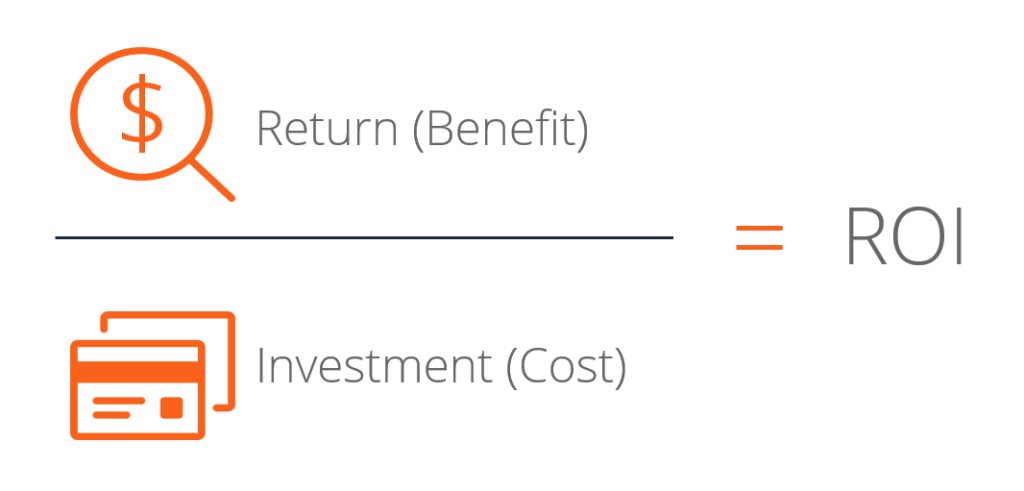
    A simple formula is just the return minus investment and then divided by the investment:

    Your result can then be expressed as a percentage. In order to account for your KPIs, your return should take into consideration factors such as the average lifetime value of a customer and conversion rate of turning leads into customers, in addition to the average profit margin.

    How to Set S.M.A.R.T. Goals for Your KPIs

    Businesses commonly use the acronym S.M.A.R.T. when setting KPIs; it stands for specific, measurable, achievable, results-oriented, and time-bound. Focus on goals that are detailed and clearly defined, and that can be tangibly measured to determine success or failure unequivocally. They should be within reach (a business that constantly falls short of its goals needs to rethink their achievability) and based on the objective ends rather than the means. Finally, they should have a definitive deadline to make sure goals aren’t kicked to the next quarter or year.

    Digital marketing may not quite be rocket science, but it does get pretty complicated. It’s important to determine what KPIs are most important to your industry, look to competitors and market leaders to see where indicators are comparable and where there’s a discrepancy, then develop strategies to boost those indicators. Small business owners have enough on their plate to worry about without poring over the nitty-gritty of analytics and lead tracking. Search Influence is a nationally recognized leader in search-focused digital marketing, with the expertise to help small businesses succeed in an ever-more digital world. Read testimonials from our clients to get a feel for how we can help your business grow, or contact us today to see what our understanding of KPIs can do for your ROI.

    Images:

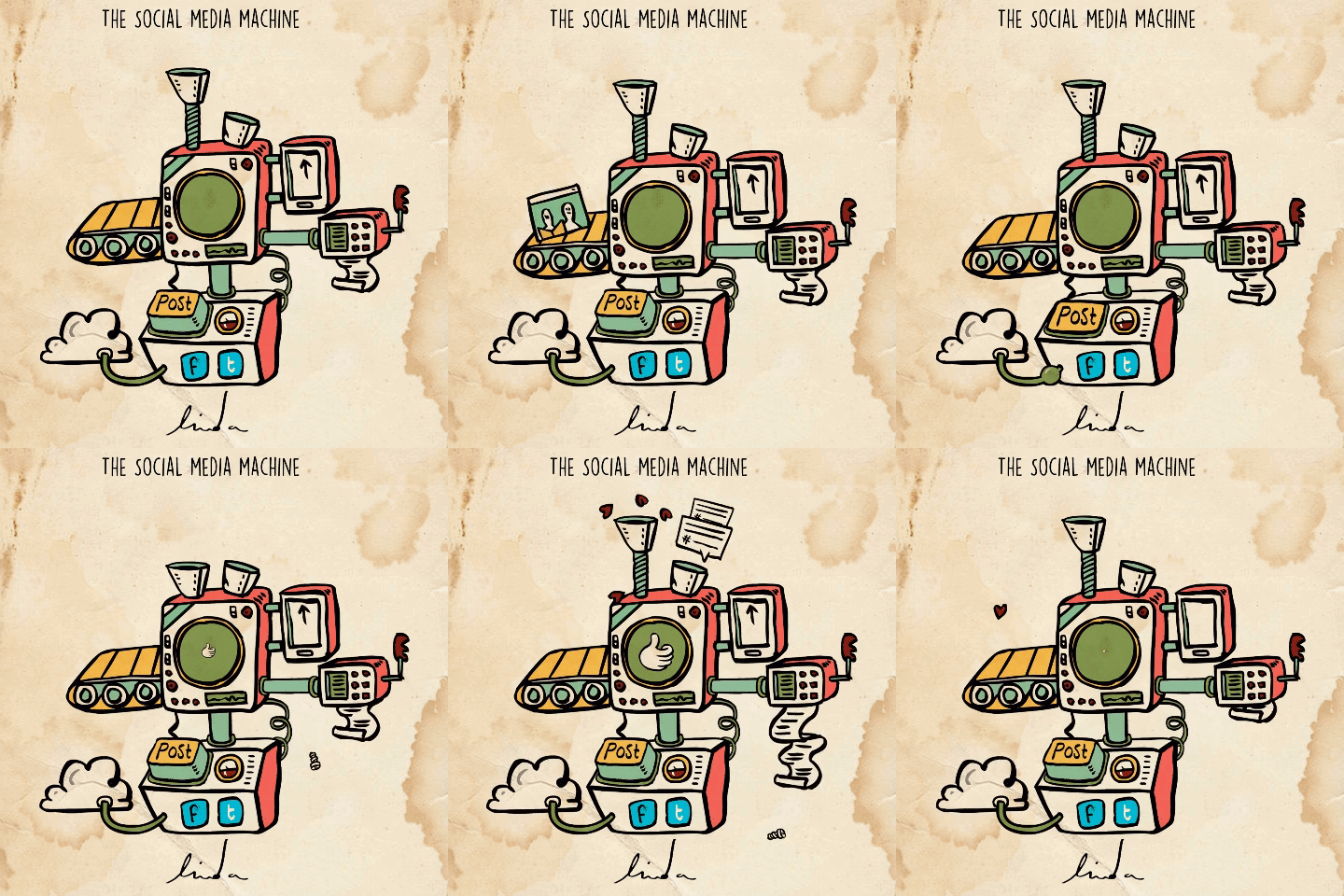
    Social Media Machine

    ROI Calculator

    Rockets Away

  • Google Attribution Allows Clear, Seamless Campaign Analysis for Marketers

    How do you know which of your interactions with a customer mattered the most? How do you measure an organic search that someone performed for a product on one device compared to an ad clicked right before the point of purchase on another? Well, Google set out to solve some of these and other problems that marketers face daily with their newest rollout from their Marketing Next event—Google Attribution. Now, marketers can finally begin to answer the age-old question that is typically at the forefront of their minds—is my marketing working?

    How Google Attribution Streamlines Data

    Google Attribution uses machine learning and data to help marketers measure the impact of each of their marketing touch points, across multiple channels, and across multiple devices. It uses data that’s already there from Adwords and Google Analytics; it just takes that data and shows you how each customer moved through their buyer’s journey and attributes those conversions respectively. It provides a single view of the path to purchase to help marketers learn what is actually working compared to what seems to be working.

    “The aim of Google Attribution is to simplify the complex problem of multichannel, multi-device attribution by leveraging data advertisers already have in Google Analytics, AdWords, or DoubleClick Search,” said Kishore Kanakamedela, director of product management at Google.

    To give an example of how a richer lens of an entire campaign was able to better benefit a business, Virgin Holidays utilized store sales measurement to look at store sales after users clicked on a search ad:

    “Virgin Holidays discovered that when it factors in store sales, its search campaigns generate double the profit compared to looking at online KPIs alone. A customer purchasing in-store after clicking on a search ad is also three times more profitable than an online conversion.”

    Google already rolled out a store visits measurement in 2014. They’ll be rolling out store sales measurements as yet another touch point that marketers can analyze through Google Attribution.

    And possibly the best part? Attribution is free for anyone to use. It’s in its beta version right now and will be more readily available this fall.

    A Shift Away From Last Click

    Until now, many marketers were left to use last-click attribution to measure the value of their efforts. With last click, the reward for the conversion often went to the last touch point that the user made, often with a sale after a click on an ad. This could lead to false impressions about the effectiveness of an ad campaign versus display ads, organic search, social, email affiliates, and many other interactions that a customer made with a business along the buyer’s journey. Maybe organic search is actually more important display ads or vice versa.

    With Attribution, users can see how effective each step of a campaign is instead of just pointing to the last click of an ad before purchase. There are so many micro-moments that happen on the path to purchase. Now, marketers can have a more accurate view of business, and in turn, can then update bids or move budgets between channels based on such results.

    Image Of Woman Typing On A Computer With Media App Logos Flying Around - Search Influence

    This move to a more holistic view of a campaign makes sense. Video ads, banner ads, carousel ads, emails, social campaigns, and all other types of digital materials work together to drive solid leads to become conversions, so why would it make sense for only the final ad to get all of the credit and influence a business’ campaign and budgeting decisions?

    There is already a slew of companies that have seen the benefit of implementing the data-driven results of Attribution. Check out the success stories that Google has touted so far.

    Eliminating Waste and Annoyance With Unique Reach

    Most people use multiple devices to access their multimedia channels, whether that be a phone, a tablet, a smart TV, or a computer. For example, let’s say you’re shopping for a new laptop. You may first see a search ad when searching on your phone and then find a display ad while on your tablet. Then, you’ll come across a shopping ad by the time you decide to purchase the laptop on your current computer that needs replacing. According to Bill Kee, Google’s Group Product Manager for Attribution presenting at Marketing Next, “30% of people use 5 or more devices today. If you reach each of those devices three times, you’ll reach that person 15 times.” It’s safe to say that’s a bit of an overkill.

    With Unique Reach reporting in AdWords and DoubleClick, marketers will be able to measure how many people were shown display and video ads. It will show unique users and their average impressions. This helps marketers better understand how many people they reached in their target audience and how many times they reached them. This will allow businesses to find any wasted budget in over-saturated placements and, more importantly, better please their potential customers by not wasting their time with endless ads.

    People are expecting a simple, frictionless user experience on their path to purchase. Unique Reach is, well, unique in that it puts the customer right at the heart of the journey. Unique Reach is available in AdWords now and will be available in DoubleClick in the coming months.

    Image Of Person Sitting Out By The Water At Sunset - Search Influence

    The Customer Is the New Channel

    Instead of the mindset of measuring your reports within online or offline channels, Google has highlighted the importance of recognizing the customer or user as the new channel. The line between being online and offline has disappeared.

    Consumer expectations are higher than ever. So, the best way to meet those expectations is to try our best to understand consumers’ intent. Google also shared their Surveys 360 product connected to AdWords and Google Optimize. It helps marketers deliver more relevant ads with targeted surveys that seek to understand a customer’s intent along with their buyer’s journey.

    Marketers are already working hard to develop a strategy that brings conversions for their potential and current clients; Google Attribution helps them work smarter with data. By using their machine learning to put context into the consumer journeys, this new tool should help marketers create a simple, more streamlined campaign that their users will love and respond to. To quote Sridhar Ramaswamy, Senior Vice President of Ads and Commerce at Google and opening speaker at the Marketing Next event: “To really assist people, we need to become smart in how we use data to assist them.”

    Interested in learning how we can better market your business? Reach out to us at any time.


    Image Sources:

    Google Marketing Next

    Woman Checking Her Phone At Sunset

  • Top 5 Ways to Bounce Back from a High Bounce Rate

    Growing up in New Orleans, hearing the word “bounce” means something completely different to most people. I hear the word “bounce” and immediately think of the music! After starting at Search Influence at the end of 2014, I learned that “bounce” also had a meaning in the digital marketing world.

    Artist Big Freedia at a parade - Search Influence

    Bounce rate is a value given to hits on a website from users that don’t stay on the site after viewing a page. This value indicates to Google that you might have uninteresting content or spammy content that users aren’t interested in.

    Though I’d like to take this blog in my usual direction (Beyoncé-themed), I will be paying homage to bounce music, the only bounce reference in my life until I was 29 years old. With the help of some local talent, here are the top five ways to help decrease bounce rate on your site.

    1: Interesting Content Updates

    Image of Rapper Juvenile at a basketball court in New Orleans - Search Influence

    Updating your website content to get Google to crawl your site is a great way to decrease your bounce rate. If you find yourself with a high bounce rate, try updating your content with industry news or new services you are providing. The best way to show Google, and your potential customers, that you are an expert in your field is to use fresh, up-to-date, informative content on your site.

    The way your content is displayed is also a part of this. Bulleted lists and paragraphs that are broken up into smaller “chunks” to display your information in a reader-friendly way are helpful in getting clients engaged and staying on your site.

    2: Navigation Updates

    Your navigation should be incredibly user-friendly so that users will be able to learn about you and your business. There should be a clear path a client can follow with your top level navigation, but not too packed where the user is overwhelmed. If there are too many options, then your user experience might need some work.

    This is also true for sidebars. If you have a sidebar on your site that is embedded in the template (i.e. it shows up on every page) make sure the links here are relevant for all the pages on your site. This  is usually a call to action button (learn more, get a quote, etc.) Having an attractive sidebar can help lead people further into your site and decrease bounce rate.

    3: Become a Google Analytics Wizard

    Image of Birdman rubbing his hands together - Search Influence

    Bounce rate is something that is documented in Google Analytics. Understanding where these numbers come from, what pages they are occurring on, what referral sites they are from, and almost 100 other factors are keys to decreasing your bounce rate. This step could be the trickiest, but that’s OK!

    Hiring a company like Search Influence is the easiest way to accomplish this step. Google has special training and certifications for their products so that people like me (and my fellow co-workers) can be masters at reading all of this amazing data so that you don’t have to.

    4: Enhance the User Experience

    There are a few things that you can add or take away from your site to enhance the user experience. If you currently have multiple pop-ups or widgets on your site to help push for sales, this may be an indicator of why your bounce rate is high. Users are less likely to click on these if they aren’t engaged in your site. Make sure that these aren’t bombarding the client during their natural reading of your content.

    Inversely, if you have a high bounce rate but no particular ad experience on your site, add some! Just be thoughtful about it. Adding catchy call-to-actions to get people to click further through your site is helpful in decreasing bounce rate.

    5: Update Metadata

    Image of Rapper Lil Wayne adjusting his glasses - Search Influence

    Making your site reader friendly for SERPs will not only decrease your bounce rate but also increase your organic ranking for Google. It’s a two-fer! If your landing pages have descriptive, catchy titles along with meta descriptions to entice the reader, you will be guiding Google and its users to the page they are looking for. Bounce rate commonly occurs when someone has landed on a page that they aren’t looking for. They quickly click off of the page because it’s not the information they need. If you have strong metadata, Google will know exactly which user you should be targeting and bring them to you.

    Bounce rate can affect your site’s performance as well as your business goals. Knowing what could be the culprit for your high bounce rate or preemptively updating your site to keep a low bounce rate is a marketing must for your strategy. It’s something that is manageable with the help of an expert digital marketing guru who also knows a thing or two about “bounce.”

    Images:

    Big Freedia

    Juvenile

    Mannie Fresh

    Birdman

    Lil Wayne

  • Put a Ring on It: Turning Inquiries Into Lasting Patient Relationships

    Let’s envision an ideal scenario. Your private practice has a dynamic social media campaign, your website is optimized for all the right keywords, your blog showcases helpful and engaging posts, and maybe you’re even showing up on page one of Google’s search results. Basically, you’re an online marketing all-star. Well, to be honest, the real payoff relies on what you do next.

    Image Of Character Ron Burgundy - Search Influence

    How do you respond when all of this great marketing generates a lead? After all, you put a lot of hard work into building new patient relationships. But while all of this marketing could be seen as the courtship, handling the inquiry is the proposal. You better time it right and create an experience worth remembering.

    At this point, the prospective patient is taking the initiative to make contact, which means they are serious about taking action—they’re ready for a commitment. Even if you’re just posting your first Facebook status or still need some SEO guidance, every inquiry is the potential for a new patient to make the jump from interested to committed.

    Responding to inquiries is your first real engagement with a prospective client. They responded to your presence online, but how does it stack up to your presence IRL? In the healthcare industry, competition is high, and patients may be willing to travel great distances for the right provider—but that prospective patient may just move on to the next option if they don’t hear from you quickly or get the right answer.

    So, what’s the best way to ensure a “yes” to your proposal? Here are three tips to turn inquiries into actual patients.

    Image of Beyonce - Search Influence

    Respond Quickly

    Quickly can’t be overemphasized. In fact, according to The Lead Response Management Study conducted by Dr. James Oldroyd of MIT, the odds of qualifying a lead are 21 times less likely when comparing a response rate of 5 minutes vs. 30 minutes. Similarly, according to research from Harvard Business Review, companies that follow up on leads within an hour are 7 times more likely to have a meaningful conversation with the decision maker. This isn’t all that surprising when you consider our fast-paced culture of instant gratification. That same person who reaches out to your practice is likely contacting your competition, scouring through Google results and online directories to weigh the best healthcare options. They may already have their appointment scheduled at the office next door if you don’t respond quickly.

    You can increase your response speed by creating a short cheat sheet or script for answers to common questions, especially pertaining to pricing. This will empower an administrative team to handle inquiries confidently and quickly without consulting with the doctor or dentist before every response. Don’t forget that inquiries on social media, like questions through Facebook messaging, should be treated with the same level of professionalism and timeliness. Other features like online chat and online appointment scheduling make the conversion happen even more quickly. Many users are opting for digital communication, and it’s important to talk to your prospective patients in the format that they prefer.

    Track Your Leads…and Your Successes

    So how do you know what your patients prefer? You can start by collecting valuable information about the behaviors of your current and prospective patients to meet their needs better and make communication as seamless as possible. Online and call lead tracking will allow you not only to understand which communication methods work best, but also what led interested parties to your practice in the first place. Are they interested in a specific treatment page? Are they looking for plastic surgeons close to a particular location? Tracking this behavior can help tailor your response and deliver the right information.

    A tracking system also allows you to keep a detailed record of your correspondences and successful conversions. Use these metrics to determine what’s working and where to focus your energy. Maybe you see the biggest conversions through your online appointment scheduling feature, or maybe most of your new patients are searching on mobile and calling the office—use the data to build on your successes. For example, if you see a lot of phone call conversions, you can tailor your online marketing campaign to feature your phone number more prominently in your ads and website copy. Either way, you can’t make improvements if you don’t have the data. Learn more about the value of lead tracking and analytics.

    Listen to Their Needs and Make It Personal

    Now that you have systems in place for generating prompt replies and tracking your successes, you can focus on the actual response. This part might seem obvious, but it’s the most important aspect—especially in the healthcare industry where your customers are trusting you with, well, their health. Make sure your response includes questions, and spend more time listening to the inquiry than dishing out information. While phone scripts or automated email responses are great timesavers, be sure you consider multiple lead types and create responses that can fit different common inquiries like procedure costs or consultation requests.

    Remember that your response should show that your office is competent, knowledgeable, and compassionate. This extends beyond the healthcare professionals to the caring and attentive administrative staff answering the phones and making the appointments. Each employee is a representative of your brand and can create a memorable first interaction—whether it’s a phone call, email, or social media post. Your staff or a marketing agency should be equipped and ready to handle responses appropriately through multiple channels.

    Essentially, your response should be crafted to potential patients’ needs from the very start. While it may seem simple, ensuring that these steps are built into your systems and training will result in consistent and successful conversions. When it comes to healthcare, patients are looking for the gold standard in quality. So if you’re popping the question (you know, the “do you want to schedule an appointment?” question), be sure to time it right and execute a thoughtful, personalized message. Of course, if you’re still working on your online marketing all-star status, we’re always here to help.

    Images:

    Ron Burgundy

    Beyonce

  • 5 Ways Online Marketing Offers Better ROI Than Traditional Approaches

    5 Ways Online Marketing Offers Better ROI Than Traditional Advertising

    These days it seems like everyone and their dog is using social media. Don’t believe me? Then check out @toastmeetsworld and try resisting to follow that pup.

    Toast Meets World Screenshot

    As technology becomes an essential part of our day-to-day lives, we are increasingly turning to the digital world for personal interactions and information. Every day magazines are folding, and newspapers are becoming online publications. Yesterday, my colleague posted a blog highlighting how online marketing will surpass TV advertising in 2019. It may be difficult to keep up with the trends, but there are many reasons why businesses should transition to online marketing from traditional medias such as print, radio, and TV ads.

    Targeting

    A more traditional approach tends to be a shot in the dark. You can run an ad in a paper that many will see, but you might not appeal to your target audience. Online marketing allows clients to target their audience easily. Chances are there are already people interesting in your goods or services. It’s only matter of finding the right audience and targeting your message.

    Real Time Effect

    Placing ads in papers, billboards, or on TV can be expensive, not to mention stagnant. Your ad may run for several weeks, but it lacks real time effects. Optimizing and posting on social media platforms allows your followers to see your post in real time, and you can post as many times as you want. With social media marketing, your company can also network and interact with your audience, forming and cultivating relationships that print ads can’t give you.

    Global Outreach

    Social networks are easily accessible throughout the world, so you can reach more than twice as many people. You may run an ad in your city or nationwide, but you are only reaching those who happen to come across the ad. Through online advertisements not only will you reach your audience in your geographical location, you have the possibility of reaching extended circles through likes and shares. With increased visibility, you can compete on the same level as bigger brands.

    Tracking

    One of the best advantages of online marketing is that it’s easy to track. Traditional approaches leave little room to track and tweak your campaign. However, social platforms and Google searches offer several built-in tools and metrics to track your progress. You can quickly make adjustments in your approach if necessary.

    Bigger Return on Investment

    Online marketing tends to be low-cost in relation to traditional marketing, and there is also more room to get creative, which sets clients up for a higher return on investment. Here at Search Influence, our niche approach to search engine optimization works to improve our client’s ranking on search engines. Our services will help you build a competitive online presence that is sure to increase your clientele base.

    Image Credit

  • Should Small Businesses Pick Online or Traditional Marketing?

    Budget graphs

    At some point every year, all marketers must ask themselves one very important question. Whether you’re with a small business, agency, or massive corporation, this question plays an integral role in how you shape that year’s marketing strategy:

    Where Should My Budget Go?

    It’s inevitable, and you need to decide how best to use the money you have to bring in the most valuable customers.

    Now there’s no one answer to this question; it depends wholly on your overall business goals, target audience, internal capacity, and so much more. But I’m not here to tell you how to spend your money.

    Online vs. Traditional Marketing

    You’re not going to figure out every line item before first figuring out the higher level allocations. Here’s where I can offer some insight. The biggest follow-up question when considering marketing budgets these days is how to allocate between online and traditional marketing outlets.

    This is a common point of contention, but here’s what Big Data has to say:

    Online marketing and ad budgets are projected to surpass TV by 2019, taking the lead in highest allocation over radio, print, and cinema, as well.

    Online will soon account for about 35% of marketing budgets, more than each other facet. I know, you’re probably saying, “but I thought online marketing was supposed to be cheaper than traditional.” For the most part, that’s true, and online marketing is shown to reach the same number of consumers at a much lower cost.

    However, marketers and businesses alike are also still exploring and tapping into the myriad ways in which they can use the internet and technology to reach more consumers and increase their conversions. In conjunction, online businesses, marketing services, search engines, and tech companies are mining all the opportunities they can find to meet and expand upon that demand.

    Search (SEO and PPC) and display advertising will take the largest shares of online marketing budgets through 2016.

    Search graphic

    There are differing opinions on which actually comes out on top, but sources seem to agree that these two remain the major contenders for your online marketing budget, primarily because of their ROI measurability and continuing advances in demographic targeting.

    Do note that many marketers report they are still increasing their budget spending on email and social, so let’s not forget about these guys. Falling under the growing umbrella of content marketing, many marketers forecast the steady and growing demand for these outlets as they move focus toward consumer interaction and engagement.

    Finally, there’s mobile. What is there to say about mobile except that it’s become such an integral part of all types of marketing? Regardless of where it falls in your hierarchy of expenditures, mobile implementation is a major consideration, representing 66% of the overall online marketing budget growth through 2019.

    Only newspaper advertising is projected to decline by 2019, in traditional marketing outlets.

    Newspaper gif

    Although they aren’t growing at the same rate, traditional marketing outlets still serve as a complement to expanding online endeavors. Digital TV, radio, and magazines still fall under traditional categories. Online advertising outlets are budget-wise and projected to grow at greater rates than their offline counterparts. However, the point here is that traditional marketing still plays an important role in brand recognition and now, more than ever, in driving users to convert online.

    Ok, this is just a snapshot of the information available (special thanks to Big Data and the industry shift toward data-driven solutions). So, what does this mean with regard to the questions above?

    These projections offer more than just numbers. Remember, marketing is a growing and complex industry. You have so many opportunities and so many choices to make for each campaign. Make sure you’re not missing out on any on- or offline.

    By using online marketing teams to help your efforts, you can focus on what your business does best while still gaining traction and engaging with your consumers online.

    Gif Source


  • SEO 101: How to Install Google Analytics on Your Website

    Blog1

    So you want to take your business to the next level. You built this amazing website, but you have no idea if anyone is even looking at it. You’ve looked around online and found a pretty cool stat counter, but you need more information than that. That’s where Google Analytics comes in.

    What Is Google Analytics?

    Google Analytics is a robust tool used to track visitors to your site and how they arrived there—and it’s absolutely free. With Google Analytics, you can track how many visitors have viewed your website, what pages they viewed, how long they stayed on your website, and a lot more. You can even figure out where in your conversion process visitors are most likely to abandon the conversion. This kind of information is essential for truly optimizing your website to appeal to your visitors.

    Hopefully, I’ve sold you on Google Analytics, but before we can glimpse any of those sweet, sweet metrics, we have to install it on your website.

    Step 1: Sign up for an account.
    Navigate to the Google Analytics homepage and select Google Analytics from the “Log In” dropdown. Then select “Sign Up” on the following page.

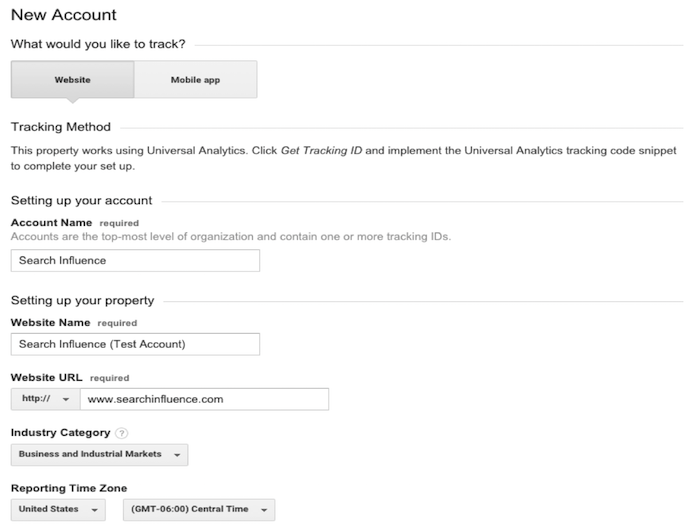
    Step 2: Fill out information about your website.
    Provide Google with basic information about your website, including its name and location. After filling out this information, accept the terms the conditions, and we’re almost there!

    New Google Analytics Account, Login Screen Image

    Step 3: Copy and paste the Google-provided JavaScript snippet onto your website.
    Make sure you implement the JavaScript snippet so it appears once per page on every page of your website. This is important to make sure we track all users on your website accurately. If you are using a templated website, it is best to insert the snippet above the closing </head> tag.

    JavaScript Snippet For Google Analytics Image

    Step 4: Filter all your internal traffic.
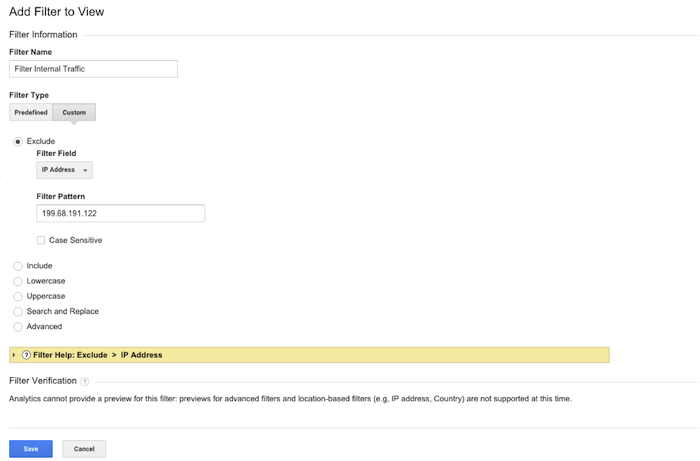
    You don’t want the pageviews to your website to be skewed by your own visits to your site. That’s why it is important to create a filter that removes any visits from your IP address. You can easily find out what your network’s IP address by clicking on this link. Copy your IP address and navigate to the Admin section of your Google Analytics account. In the rightmost column, select “Filters” and add a new filter titled “Filter Internal Traffic,” as in the image below. Click save, and you’re all set!

    Filter internal traffic for Google Analytics image

    Get tracking!

  • You’ll Never Believe How Clickbait Techniques Are Causing the Downfall of Ads

    1511-SI-BlogImage-C-01

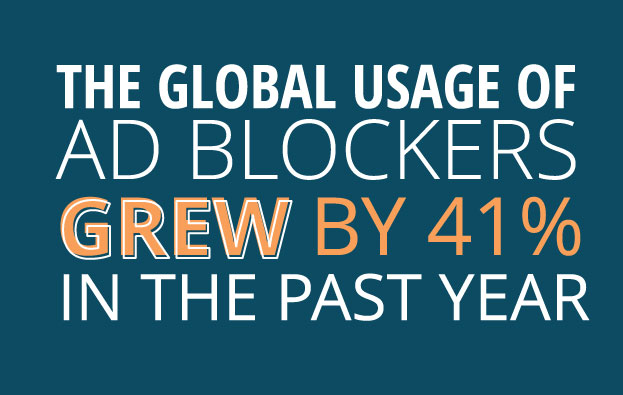
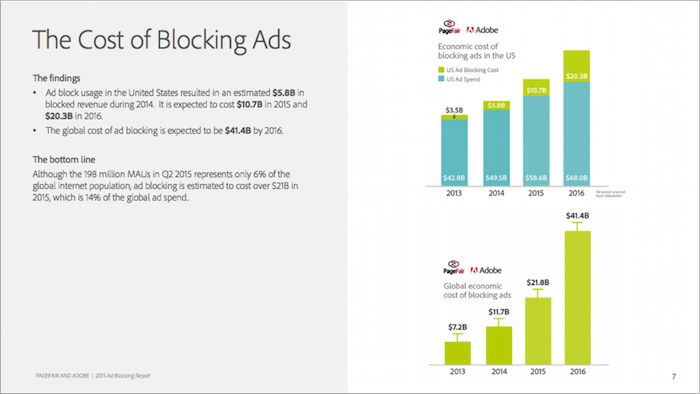
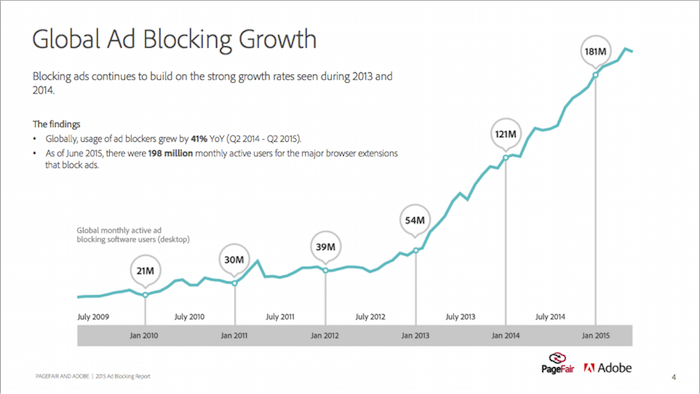
    The atmosphere for Internet advertisers has changed over the past couple of years following a trend that marketers of the past simply didn’t see coming. Thanks to an overuse of several marketing techniques, including clickbait titles, dynamic advertising, and uninspired cookie-cutter content, Internet users have learned ways to avoid ads and are experienced enough to know a clickbait title when they see one. All in all, this has a direct effect on potential income brought on by advertisements.

    Ad Block 1

    Why the Change?

    It would be remiss of us to believe the fault in this lies with the consumer, or that advertisers of today are responsible for the actions of other advertisers in the past. In truth, this should have been an expected outcome when considering how simple it is to copy these techniques and how pervasive they have become on today’s Internet. People learn through experiences, and the sheer overabundance of these techniques simply expedited the desensitizing process. On top of that, other Internet users have found ways to use the current mood toward advertisements to their advantage.

    Ad Block 2

    AdBlock and AdBlock+ are the best examples of simple, easy-to-install ad blocker plugins that have seen increased usage and popularity. The effectiveness of dynamic advertisements, arguably the most adaptive and effective marketing technique there is, is completely nullified. What once showed ad content based on the Internet history of the user simply doesn’t load with the rest of a webpage. And it doesn’t stop here.

    AdBlock has now become popular enough that it has started to set and enforce its own criteria for quality, non-intrusive ads. The criteria focuses on ensuring:

    • Static advertisements
    • Text over image usage
    • Proper placement that does not block site content or require a mouse-click to hide or mute
    • All advertisements are labeled as advertisements

    The organization has even started to write a whitelist and ask other websites to voluntarily submit to these regulations. Though it might be difficult to imagine any major site agreeing to such demands, a glance at the growing number of AdBlock users makes clear the potential benefits.

    Ad Block 3

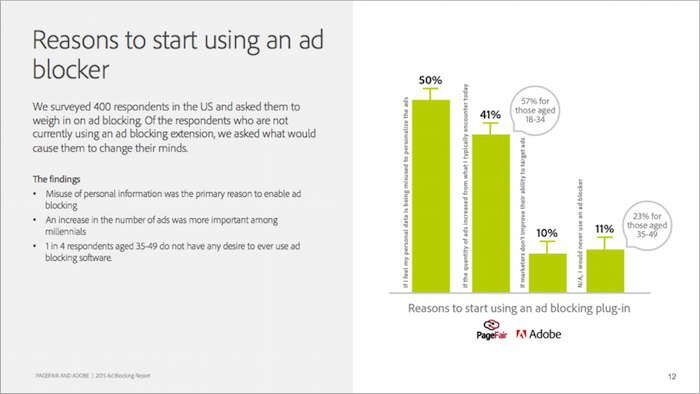
    Clickbait titles are also a commonly used technique that focuses on numbers over quality, and it has lead to a response from Internet users that to me is a far more fascinating result. People have started to avoid clicking on interesting titles on their own, because from the person’s experience, these titles usually offer little more than lackluster and boring content. Or at least, that is what people have learned to expect as a result of past Internet marketers. Simply put, clickbait titles have become less and less effective over time. This is an especially unfortunate result for those webmasters and organizations that actually offer quality content and are simply trying to draw traffic toward their site in an effective, eye-catching manner.

    Now what?

    So knowing all of this, what can be done? The simplest answer is to change the paradigm and make quality of content and advertisement more important than quantity. It may seem counter-productive, but this is more likely to have a long-term effect simply because it is what Internet users are looking for and prefer—at least for the moment. Another good option is to turn to professional advertisers and Internet marketers who are familiar with the ever-changing environment and are ready to follow through with new or changing regulations, whether they come from AdBlock or from Google altering its search engine algorithm once more. Without this assistance, an advertiser or organization has to start building its own community and establishing trust with those individuals using consistent, quality content. Internet users can then vouch for the content by sharing it, not necessarily with the rest of the world, but with the friends and family within their community that trust their opinion. That, in itself, makes a statement that reverberates across multiple online communities quickly.

    Image credits:

    2015 Ad Blocking Report