Category: Higher Education Marketing

  • Search Influence Announces Platinum Partnership with Higher Education Association UPCEA

    NEW ORLEANS, Sept 8, 2022—Search Influence, an ROI-focused, digital marketing agency, is now a Platinum Partner of UPCEA, the leading association for professional, continuing, and online (PCO) education. As part of the partnership, Search Influence will share its expertise on higher education marketing strategies and how institutions can optimize, measure and track their search engine optimization (SEO) and paid ads strategies to drive more qualified prospects to their marketing channels. Search Influence will also collaborate on a study with UPCEA’s Center for Research and Strategy in order to provide insights to the PCO community that help them understand the impact of their SEO strategies.

    Search Influence is an UPCEA Platinum Partner

    Over the course of the two-year partnership, Search Influence will publish articles and blog posts, host webinars and appear at several UPCEA conferences to share the value of SEO and paid ads strategies, as well as how analytics and tracking help higher education marketers better understand how their marketing performs and how it contributes to driving inquiries.

    “In our experience, most institutions utilize SEO, paid search and targeted display ads as part of their strategy but don’t know how to measure their impact.” says Search Influence Co-owner and CEO Will Scott. “We’re eager to help demonstrate the ROI of these critical marketing tactics and how they drive recruitment.”

    Search Influence is a corporate member and has spoken at several UPCEA conferences, including their annual conference and Marketing, Enrollment, and Student Success (MEMS) conference. Additionally, one-third of Search Influence’s leadership team completed “Markets, Marketing, and Managing the Cycle from Prospects to Learners,” a course about the importance of data-backed decisions in enrollment management, led by UPCEA’s Chief Research Officer, Jim Fong.

    “We’re proud to offer these partnership options to our members. Search Influence’s investment in UPCEA demonstrates their passion in improving the effectiveness of PCO marketers, as well as their commitment to growing their team’s understanding of higher education marketing trends and challenges,” says Kim Zaski, UPCEA’s chief membership officer and vice president of corporate partnerships. “We view their partnership as a great opportunity for our members to benefit from Search Influence’s SEO and paid ads knowledge.”

    About Search Influence:

    Search Influence is a women-owned, ROI-focused, digital marketing agency who helps institutions drive prospects into and through the recruitment funnel with analytics-backed strategies that include search engine optimization and paid digital advertising.

    Founded in 2006, Search Influence’s core purpose is to optimize potential. We collaborate with well-regarded institutions both nationally and locally in New Orleans. Clients include Tulane University School of Professional Advancement, Tulane University School of Medicine, University of Maryland School of Public Policy, Palo Alto University, and Edgewood College.

  • Grow Traffic to Your Higher Ed Content With a Personalized Marketing Strategy

    Key Insights

    • Just like other businesses, higher education institutions need to use marketing tools and strategies to broaden awareness of their brand and attract new students.
    • Education marketing can help a higher education institution to present relevant, personalized information to prospective students, which in turn spurs their interest in enrollment.
    • When you use data to better understand prospective students and provide them with tailor-made content, they will be more likely to engage with you directly on the content you produce.

    When prospective students look for new schools online, they often focus their searches on programs and institutions that will help them achieve their educational and professional goals. The higher education market is extremely competitive, so it can be challenging for prospects to navigate their options and find the right program.

    With a personalized marketing strategy, your higher education institution can more effectively promote your program offerings, highlight what sets you apart from the competition, and attract more students.

    Student at university holding textbooks

    What Is Education Marketing?

    Like businesses, higher education institutions need to use marketing tools and strategies to broaden awareness of their brand and reach new students. In addition to traditional marketing techniques, schools also use digital marketing to increase traffic to their websites, giving prospective students valuable information about their programs and benefits. Education marketing efforts on the web often include search engine optimization (SEO), digital advertising, content creation, and outreach using social media and email.

    Benefits of Education Marketing

    Brand recognition

    Education marketing helps schools increase awareness of their brand, which can be especially useful for attracting new students. The more visible, compelling, and reputable a school’s brand is online— and out in the world — the more that students will be interested in attending.

    Lead generation

    One of the primary goals of any marketing strategy is lead generation, gathering contact information from potential consumers. Education marketing can help a school to present relevant, personalized information to prospective students, encouraging them to provide information via website form submissions, content downloads, or calls to the school. This allows the school to identify and develop a list of prospective students to engage with throughout the marketing funnel.

    What Is a Personalized Marketing Strategy?

    To stand out from competitors, businesses have started to ramp up their marketing efforts by using personalized marketing strategies. Personalized marketing uses data collected from consumers to deliver brand messages tailored to individual prospects. When educational institutions use personalized marketing strategies, they get the chance to know more about prospective students—their interests, browsing behaviors, and search terms, for example—and can then market their brand to them more effectively.

    This attention to detail is paying off for brands across the globe. According to SmartHQ, 72% of consumers claim that they respond to marketing messages that are exclusively crafted to their choices.

    Benefits of Using a Personalized Marketing Strategy for Your Education Marketing Content

    Gain a better understanding of prospective students

    When an educational institution uses a personalized marketing strategy, they learn more about their prospective students’ interests, habits, and desires. This crucial information helps higher education marketers develop smarter marketing strategies and create student-centric journeys through the marketing funnel, giving schools an advantage over competitors when it comes to enticing and recruiting new students. It can also help schools tailor their program offerings and incentives to better match what incoming generations of new students look for in their higher education options.

    Lead nurturing

    Lead nurturing is the process of developing relationships with potential consumers in order to nurture them through the student’s journey. When schools use data to better understand prospective students, they can more effectively market to them as they transition from interested prospects to enrolled students.

    Prospective student engagement

    When you use data to better understand prospective students and provide them with tailor-made, personalized content, they will be more likely to engage with the content you produce. Targeting users with relevant content leads to a 73% higher conversion rate, according to Aberdeen. Increased engagement is a good sign that prospects are interested and can be nurtured toward a final decision.

    Prospective student social sharing

    If your content is useful and engaging, it’s also more likely that prospective students will share it using social media and word-of-mouth. This is a great way to increase awareness of your brand and have your content distributed organically to other prospective students, even those who may not yet be in your personalized marketing strategy.

    Prospective student retention

    A personalized marketing strategy enables you to build closer relationships with prospective students. This helps to retain them from their initial interest in your institution to the moment they decide to enroll.

    Professor giving lecture in a college lecture hall

    Basics of Implementing a Personalized Marketing Strategies for Higher Education Institutions

    Student personas

    Student personas are semi-fictional profiles that mimic the demographic information, goals, and challenges of real prospective students you’re trying to reach and recruit. Personas are a great way to refine your messaging across all marketing tactics, improve your content strategy, and increase applications.

    Remarketing through digital ads based on actions and/or funnel stage

    Remarketing tailors digital ads to prospective students who have already shown interest by visiting pages on a school’s website or interacting with other brand content. This form of re-engagement is useful for nurturing prospects through the marketing funnel and keeping them interested in your brand.

    Program-specific email nurture

    Having data about your prospective students’ interests enables you to send them program-specific emails. These are far more engaging than generalized emails, and they give students valuable information about programs they’re interested in, which helps to nurture them as they consider enrollment.

    Action-driven email nurture

    Emails can also encourage recipients to take action that furthers their engagement with your brand. For example, effective action-driven emails may include a clickable link to a new blog post or video, an invitation to sign up for an event, or an opportunity to start a conversation with a student advisor.

    Appropriate calls to action

    Calls to action in emails and other communications should always be appropriate for the intended recipient. A call to action for a prospective student who is earlier along in the marketing funnel might ask them to request more information about a program, while a call to action for a prospect who’s in later stages of the marketing funnel might ask them to begin filling out an application.

    The Education Marketing Experts at Search Influence

    A personalized marketing strategy enables your educational institution to reach and engage prospective students. Our team of experts at Search Influence will help you to develop a strong marketing strategy and provide you with the digital marketing tools you’ll need to broaden your audience, including SEO, analytics and lead tracking, and content marketing.

    To learn more about the services we offer, fill out our online contact form.

    Images

    Student

    Lecture Hall

  • 5 Minute Power-Session: Solving 3 Key Higher Education Marketing Data Challenges

    5 Minute Power-Session: Solving 3 Key Higher Education Marketing Data Challenges

    When it comes to marketing and recruitment pipeline data and analytics in higher education, there are a few common challenges universities and professional, continuing, and online education units (PCOs) often face:

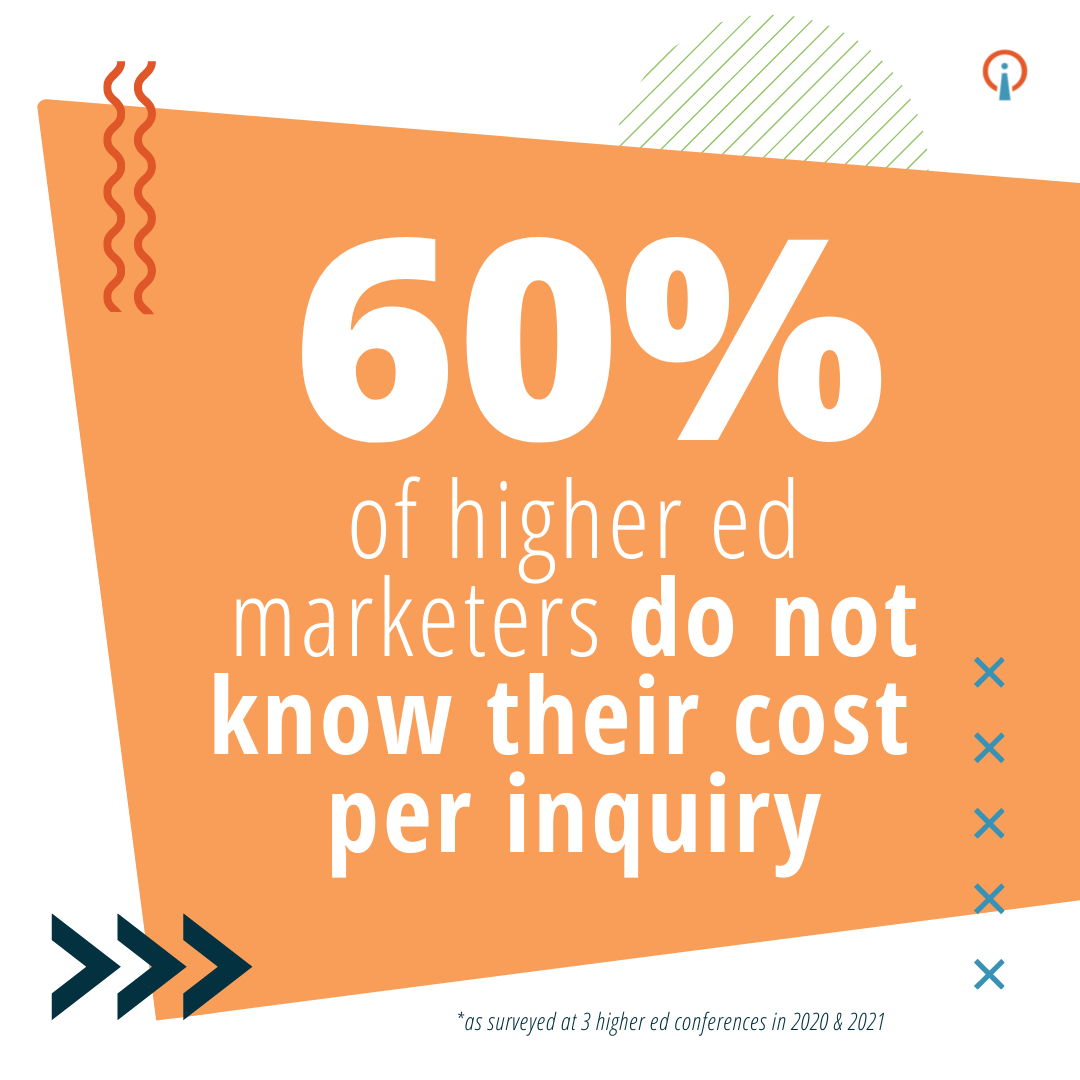
    60% of Higher Ed Marketers do not know cost per inquiry

    Silos within the university

    Marketing is responsible for owned and paid media including the website, social media channels, and placing media buys but it often has limited or no access or insight into the enrollment CRM. Meanwhile, the recruiting team isn’t even aware of the depth of rich data available to them about prospects and current students. The existence of this data presents an opportunity for marketing to better understand the ideal student, and adjust their strategy to reach more of them, in a more effective way.

    Data systems challenges

    Many institutions have data about their students and prospects living in disparate systems, there’s simply too much of it, and it is incredibly time consuming to collect and understand, much less piece it together for insights.

    Fragmented data

    There’s largely an inability to string together information about a single prospect all the way through the recruitment to enrollment funnel, or even to understand the funnel end-to-end.

    Recently we were honored to present a quick 5-minute power sessions at HighEdWeb Analytics Summit, where we dove into Marketing Data, Dashboards, and Decisions, with a goal of helping universities and PCO’s understand the impact they can have when they’ve done the work to better understand their own first party data and overcome these common data challenges.

    Higher ed marketer looking at marketing metrics

    As we’ve presented this and similar insights to higher education stakeholders and conferences over the last 3 years, we’ve polled to get an understanding of where most institutions fall within those 3 key data challenges. The results are telling: 60% of our respondents didn’t know how much they currently spend on marketing for an inquiry. As an analytical marketer I can tell you – that pains me!

    Check out our presentation for more on where to start to overcome the most common data challenges facing universities today, tools you can use to facilitate deeper insights, and examples of how access to data can influence key decisions and strategic direction.

  • Yes, Your Higher Ed Marketing Agency Needs Developers

    Key Insights

    • Higher education marketers need web developers that understand marketing and can think out of the box to solve problems
    • To optimize your higher education marketing strategy, you need visibility in each step of the funnel
    • With so many disconnected systems, you need a skilled development team to track the student journey and prove your marketing ROI
    Yes your higher ed marketing agency needs developers

    Your Higher Education Marketing Agency and The Student Journey

    It’s not enough to simply create and understand your marketing funnel in today’s world of digital advertising and marketing. You need to plan, track, and earn buy-in through each phase of the prospect’s student journey and react quickly to changes in the market.

    An even bigger challenge is that the vast majority of higher ed CRM software is antiquated and lacks the ability to track prospects as they move through the funnel.

    Whether in search, display advertising, or social media it’s critical that your CRM software can connect the dots.

    With higher education CRMs so lacking, institutions have considerable gaps in their ability to effectively market degree programs to the right prospect at the right time. And it’s especially hard to react quickly to unforeseen changes to the education market.

    This is why it’s so important for you to have a development team—either internal or at your higher ed marketing agency—that understands your unique website and the prospect’s student journey. Although some universities rely on their IT staff, this is usually not enough.

    To ensure you support your prospect’s student journey, you need a skilled development team behind you that understands the technology and the higher ed marketing funnel. With the help of a higher education marketing agency and a skilled development team, you can track your prospective students through the funnel, assuring they’re getting the content they need at every phase until they’re enrolled.

    In this blog post, we will go over why it’s important to track students at every step in the recruitment journey. Your marketing team needs to understand where students get stuck. Then they can create content (case studies, blog posts, videos, and more) so you can optimize your strategy to move them through.

    Inbound Marketing Strategy and Your In-house Dev Team

    Right about now, you are probably thinking, “I’ve got that covered! We’ve got a brand strategy, we get lots of organic traffic, and at my university, I’ve got a built-in development team that manages our university website, including the pages for the program I’m responsible for.”

    And to be fair, your developers are probably amazing at maintaining the university website and keeping your degree pages online and running smoothly.

    But this is not about design and development. It’s about an effective higher education digital marketing strategy. To make your prospective student journey most effective, your development team should:

    • Understand higher education inbound marketing
    • Understand the marketing funnel
    • Know the details of your specifically defined marketing funnel
    • Have experience tracking prospects through the entire student journey
    • Have the skills to help you track the data that informs you if your online marketing efforts provide positive ROI and bring you prospects

    Search Influence is a higher education marketing agency whose development team does all the above on the daily, and it’s exciting!
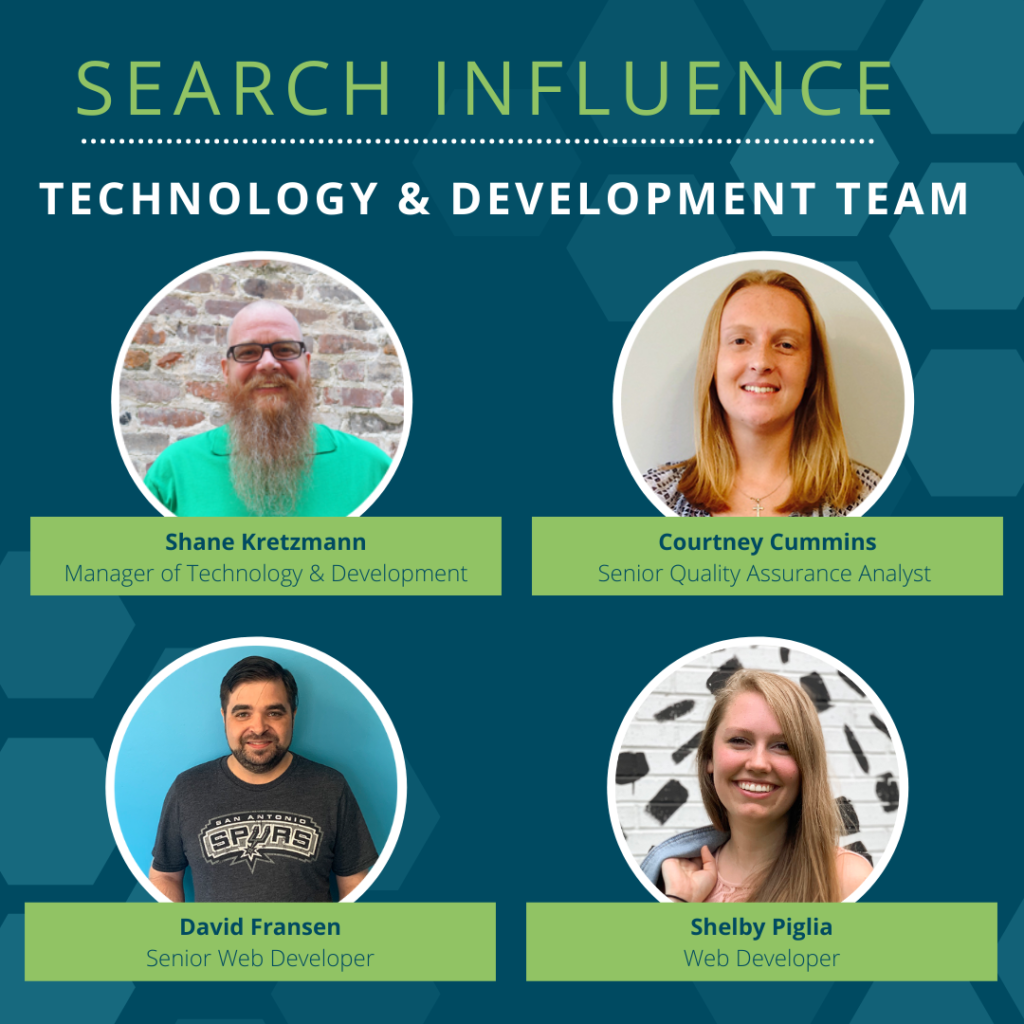
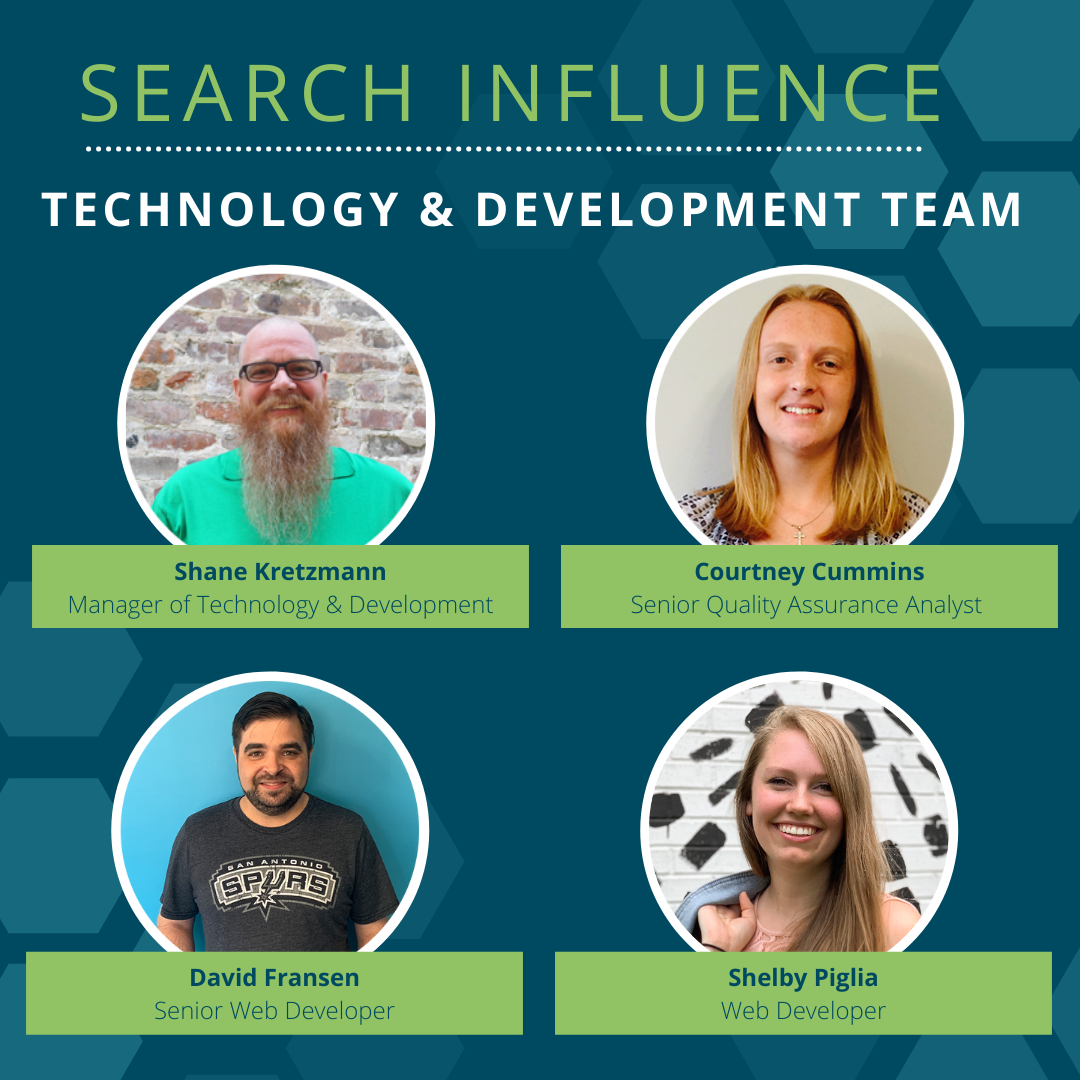
    Headshot photos of the Search Influence technology and development team

    Our development team specializes in marketing, implementing, and troubleshooting tracking and analytics. We also provide the information needed to ensure you invest your budget wisely.

    We do the things you might typically associate with web development, such as content implementation, updating your website’s look, and adding functionality. As a higher ed marketing agency, we excel at thinking outside the box to get the results colleges and universities need.

    With deep knowledge in tracking and analytics, we can do this in search engines, digital ads, or even [gasp] offline.

    A Real-World Example: How Automating Your CRM Data Entry Can Help You Market Your Degree Program

    Goal & Situation

    One of our higher ed institution clients wanted to target prospects on Facebook (aka Meta), but their CRM had no integration options for social media outlets. This meant the data collected in Facebook wouldn’t seamlessly integrate with their CRM.

    Their internal team would have to do a lot of manual data entry work to track the effectiveness of the Facebook campaign and to connect the data obtained to their university CRM software.

    As you can imagine, this type of manual work is time-consuming, prone to errors, and frustrates everyone involved.

    No built-in connection existed between Facebook and the university’s CRM but we knew we could figure out a way to automate this process and give time back to the university’s marketing team.

    Search Influence’s Approach

    At this point, many development teams would simply tell their clients that it would not be possible to automate this process. They are focused on your website, keeping it looking modern, and keeping that CRM running smoothly.

    As a higher education marketing agency, Search Influence has worked on many similar projects to connect data from one source to another. With this experience in mind, we gathered the facts and knew we could solve the problem.

    First thing first, we had to determine if the CRM offered any sort of API that you could push data into. Without a way to push data in, this whole project would be dead in the water.

    In this case, we confirmed that this CRM did, in fact, accept lead information via an API endpoint. But it could only receive the information in a very strict XML format.

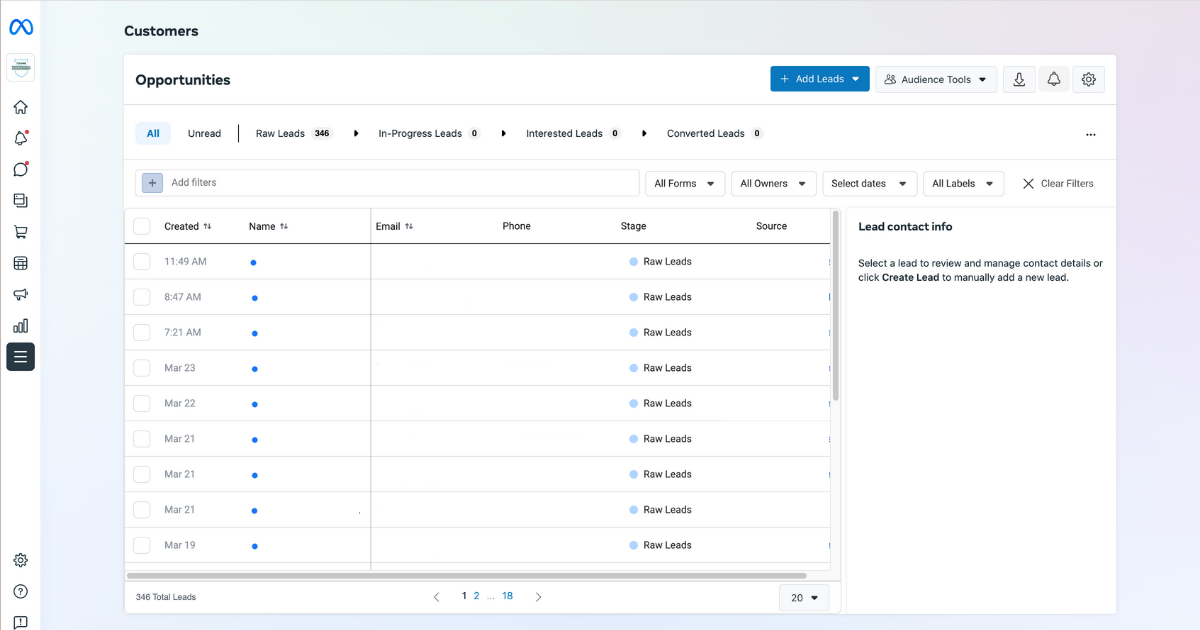
    Facebook provides a way to export lead data from Facebook Business Manager.
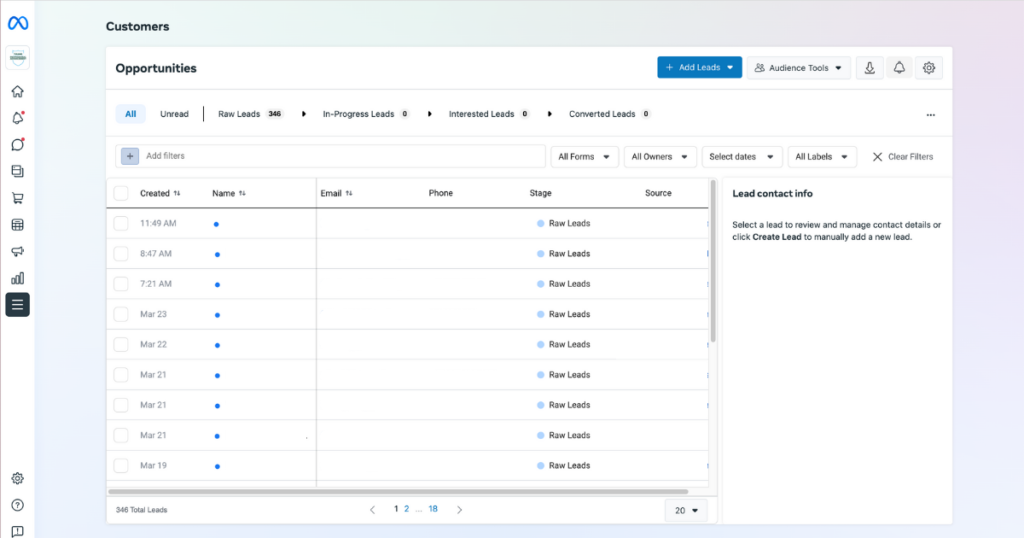
    Screenshot of Facebook lead center

    Unfortunately, it’s manual and the export is provided in CSV or XLS format. Plus, the data collected on Facebook differed from how the university CRM accepted it in their API.

    For this project, we ended up using the integration tools available at Zapier.com.

    We knew Zapier already had a connector to get data out of Ads Manager, and if you feed it a form id, it can listen for lead submissions. Once the lead is “zapped” into Zapier, we manipulated the data and remapped it to match the expected inputs the university CRM required via the XML API endpoint.
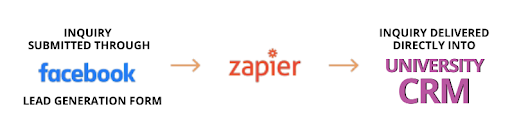
    Once everything matched the university CRMs XML rules, we automatically sent the data. The Facebook lead data became instantly available to the university CRM.

    Result

    We eliminated manual copying and pasting from Facebook to the university CRM, and now the university uses the data collected from Facebook for other efforts.

    We took advantage of their Facebook marketing efforts to set up email drip campaigns to ensure prospects coming from Facebook get the right information they need at the right point in the student journey.

    This is the real benefit of working with an experienced higher education marketing agency with equally experienced development staff. If there’s a solution, we’ll find it.

    The Higher Ed Marketing Experts at Search Influence Can Help!

    This is just one example of how out of the box thinking can help your educational institution’s marketing and communications get the data you need to be effective. If you don’t have confidence your current higher ed marketing agency has the technical chops to manage the challenging world of digital marketing, it’s time for an upgrade! Contact the Higher Education Marketing experts at Search Influence to help you meet your enrollment goals.

  • 4 Steps to Demonstrate the Value of Your Higher Education Marketing Strategy

    Key Insights:

    • Define relevant SMART goals for your marketing strategy to provide clarity on the results you want to achieve.
    • Utilize research-backed data to demonstrate how your campaign’s messaging and platforms help reach your target demographic.
    • Tailor your presentation to your audience to convey how your strategy helps each stakeholder reach their unique goals.

    A person making charts and graphs on a computer

    After you’ve created your marketing plan, your next step is to present your strategy to key stakeholders to demonstrate how it will improve the organization’s results. Effectively presenting this information is essential for gaining stakeholder trust and aligning your organization’s goals. In this post, we will outline the four-step formula for demonstrating the value of a new marketing strategy.

    #1: Share Your Goals

    Discussing the goals of your campaign allows stakeholders to visualize the end result of your higher education marketing strategy and understand the expected returns. Furthermore, sharing your goals conveys you have thoroughly examined how this plan impacts the organization.

    When sharing goals, focus on quantitative measures primarily, but don’t forget to bring in some qualitative measures to show the whole picture. Start by defining important qualitative goals, and then turn these into more tangible measures by adding quantitative metrics. These goals should be SMART: specific, measurable, achievable, relevant, and time-bound. SMART goals clarify what results you are trying to achieve and the time frame you aim to achieve them.

    After defining these goals, let your stakeholders know how often you will update them on your progress. This will keep you accountable to the measurement of your performance and lets your stakeholders see your commitment to achieving results.

    #2: Relate Your Goals to Your Target Demographic

    After you have defined the goals of your marketing strategy, it is essential to demonstrate how these goals impact your target demographic. This helps you convey to stakeholders how this direction aligns with your organization’s goals. To demonstrate this, start by researching industry data on the demographic makeup of the platforms your campaign is utilizing.

    The good news is that you can find an abundance of reliable data on the demographic makeup of popular social media platforms in the age of digital marketing. Knowing where your target demographic is consuming information can aid you in conveying the power of your higher education marketing strategy and stay ahead of the curve. For example, here are the largest age groups on major social media platforms:

    You should also research how much time your target demographic spends on each platform. This will allow you to determine how effectively your marketing strategy will reach these users. For example, 20% of Gen Z spends more than 5 hours every day on Tiktok. This data can convince stakeholders that TikTok can be a very effective platform to reach Gen Z due to its high engagement with that demographic. Take a look at this breakdown of the average time spent per day on each popular social media platform:

    • Facebook: 38 minutes per day
    • Instagram: 29 minutes per day
    • Twitter: 3.53 minutes per session
    • TikTok: 45+ minutes per day

    Including this demographic information while presenting your strategy allows stakeholders to understand the effectiveness of this plan. Additionally, showcasing these key statistics helps gain stakeholder buy-in and aids in preparing you for any potential objections.

    During a strategy presentation, use this research-backed data to justify the messaging of your campaign. You can use this data to explain what challenges your target demographic faces and how your messaging drives conversions.

    For instance, let’s say you are a higher education institution trying to reach Gen Z students applying to college. You do research and find that 67% of Gen Z students indicate their top concern is being able to afford college. Using this data, you can adjust your campaign’s messaging to speak to this concern. You can convey this by highlighting your programs’ affordability or by providing resources on applying for financial aid.

    Then, when demonstrating the value of your marketing plan, make sure to include these key statistics that helped you determine your target consumer’s needs. Presenting research-backed data that supports your campaign’s platforms and messaging can help gain stakeholder buy-in.

    #3: Compare and Contrast to Your Current Strategy

    When you present a new marketing plan, you must emphasize why the current strategy doesn’t meet your organization’s goals. Comparing and contrasting it with your proposed tactics will clarify the necessity of a new approach.

    To compare and contrast with your current strategy, pull data on which audiences your current campaigns reach and what results it has achieved. You can do this by looking at Facebook, Google Ads, and Google Analytics campaign results. Use this data to highlight where your current campaigns fail to meet your goals and reach your target demographic. Then, emphasize how your proposed strategy will fill in the gaps and deliver more results for your organization. You can convey this by using research-backed data and SMART goals to demonstrate to stakeholders the results you expect with this new campaign.

    #4: Tailor Your Presentation to Your Audience

    Depending on who you are presenting to, it is beneficial to make slight adjustments to how you explain your strategy and what data you bring to support it. Different stakeholders have unique needs and interests, and tailoring your presentation assists you in conveying how this higher education marketing strategy will benefit them in particular. Furthermore, your stakeholder’s personality can help determine the most successful approach. Using personality assessments like the DISC method can help you understand how best to reach different personality types.

    Be sure to tailor your metrics depending on the different stakeholders you are talking to. Tailor the data you include based on what is most important to your audience and the funnel stage of your campaign.

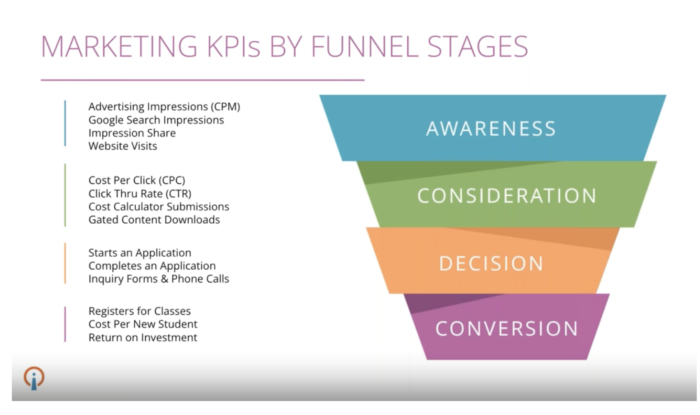
    For instance, different stakeholders may respond better to macro or micro metrics. Macro metrics are actions that directly contribute to the primary objective of your campaign, such as cost per enrollment and return on investment. Macro metrics are useful when presenting to stakeholders that may not be as familiar with marketing terms and are more invested in the overall picture. On the other hand, micro metrics are secondary conversions that support the overall goal, such as cost per click and click-through rate. These metrics are more likely to be effective when presenting to stakeholders with marketing experience.

    In addition, the stage of the marketing funnel you are targeting will help determine which metrics to present. For instance, awareness campaigns might focus on metrics such as website visits and impressions, while conversion-focused campaigns are more suited for tracking metrics like return on investment and cost per new student. By tailoring the data and messaging in your presentation to each audience, you can more effectively communicate how your plan will drive results by using language your audience is familiar with.

    marketing KPIs by funnel stages

    In order to gain stakeholder trust in a new higher education marketing strategy you should define goals that align with your target demographic; compare these to your current strategy, and tailor the presentation to your audience. By following this guide, you can use research-backed data and targeted messaging to convey the value of your marketing plan to any stakeholder.

    To learn more about how Search Influence handles higher education marketing strategy, fill out a form to get access to our on-demand webinar series.

    Images:

  • How to Use Quantitative Data in Your Higher Ed Marketing and Recruitment

    Key Insights:

    • Having some shared form of internal communication between all departments improves workflow for everyone
    • By identifying user touchpoints, you discover opportunities that can improve the quality and/or quantity of your data
    • There are tools and platforms available to you to help visualize your quantitative data for easier digestion

    Businesses within the higher education category hold a selling proposition not commonly found amongst other industries. Enrolling in a higher education institution gives consumers something both intangible and invaluable—a well-rounded set of knowledge and enhanced values. This makes it that much harder to find the right target market, especially for institutions within specialty fields of study.

    Quantitative data allows businesses to identify and feed into their target market, finding new opportunities to improve the student experience at every point during their enrollment journey. According to Attomdata, companies with a focus on data-driven marketing notice a 75% increase in consumer engagement over time. It improves the workflow of all teams involved and acts as a connector between every department, regardless of their end goal.

    In this post, we will cover how you can properly utilize and sort all the recruitment data you’ve acquired (no matter how big or small) to improve results for your higher education clients.

    The 3 Key Data Challenges in Higher Education Digital Marketing

    • Silos within the university: Marketing, enrollment, and administration departments have their own separate systems they use to operate in their day-to-day functions, as opposed to having a shared language between one another
    • Data in disparate systems: Having too much or little data pushed through systems that are not capable of utilizing its full potential
    • Inability to connect data: Struggling to connect data to the different stages throughout the student journey funnel

    These challenges strip the value from collected data and prevent other useful data from coming through. This, in turn, makes the jobs of every involved team member more difficult while also decreasing the number of qualified leads that may have otherwise made it through.

    What to Do With Limited Data

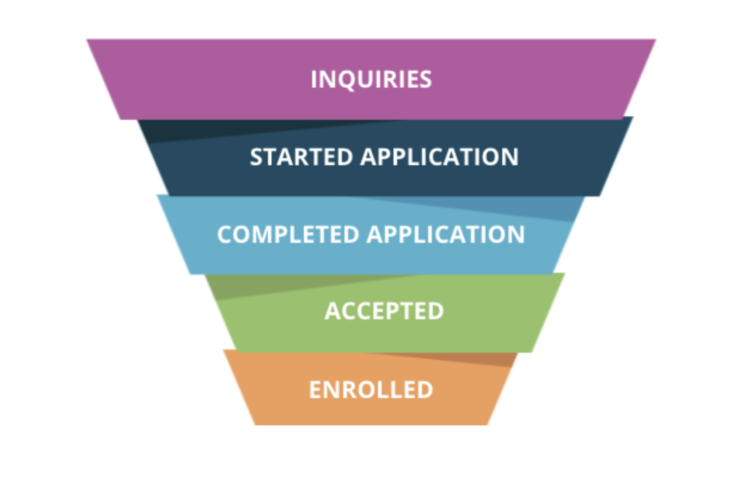
    When there aren’t enough touchpoints identified in the student recruitment process it makes it nearly impossible to offer any recommendations for developing your higher education digital marketing strategy. This funnel is a great visualization of the touchpoints a typical student reaches throughout their enrollment journey.

    Marketing funnel for higher education

    Visualizing Your Funnel

    Make an effort to visualize each step of your prospective students’ journey, from the moment they show interest in your institution via form submission to the point they decide to enroll. Segment the data to fit each respective step in that student’s journey. If you haven’t already, make sure to create a buyer persona of your institution’s ideal student so that you have a solid base to work from.

    Considering what students think about at different points in the process will help reveal ways to make that journey more seamless. For example, when students inquire about a semester, the actual period they plan on attending tends to differ from the time that they reach out. To accommodate that, we add semester-specific questions to university inquiry forms to offer information that’s relevant to their intended enrollment period and, therefore, more relevant to them.

    What to Do With Too Much Data

    Sometimes marketers receive a large influx of data with no established method for sorting it. This data can hold value–it just needs to be served to the right team. Breaking the data into easy-to-understand KPIs (key performance indicators) helps us understand it and determine which departments would best benefit from what information.

    Micro Marketing Metrics

    These metrics speak most directly to those working in marketing-focused teams:

    • CPC (cost per click)
    • CPM (cost per 1,000 impressions)
    • CTR (click-through-rate)
    • IMP (impressions)
    • IS (impression share)

    Macro metrics are ideal for those working on other teams like enrollment and administration:

    • CPI (cost per inquiry)
    • CPA (cost per application)
    • CPE (cost per enrollment)
    • CPA (return on investment)

    Communicating the Story of Your Data to Stakeholders

    To effectively report your results to fellow stakeholders, it is vital that you break down those silos that each team uses by finding a common point for all to connect at. In a recent online poll given during a Search Influence webinar, only ”… 20% of registrants indicated that they “can clearly see/demonstrate the correlation between marketing & enrollment.” This tells us that a serious information barrier exists between the two teams, where there should be a collaborative relationship.

    Connecting gives everyone the chance to step back and see the bigger picture of what your data does/how it works together for every team’s benefit. This can be done through something as simple as a weekly marketing meeting, ensuring everyone is on the same page. Frequent meet-ups will give stakeholders unfamiliar with marketing standards a chance to become more acquainted with relevant terminology.

    From there, determine all the different touchpoints that your potential students may encounter. This will reveal gaps in between conversions from which more valuable data can be discovered. Then you can figure out how to best extract data from those points to better serve your future students and stakeholders. Finally, collect that data as it rolls in and take advantage of its full potential! When you analyze it correctly, data can reveal user experience problems, internal dilemmas that a student may face at a given stage, and much more. This leads to a world of possibilities that could help create a more friendly, seamless experience for your future students.

    Tools to Support Visualization

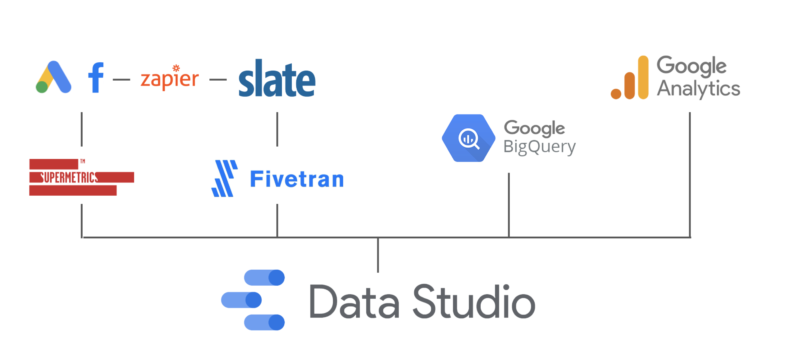
    At Search Influence, we utilize Google Data Studio (GDS) to present quantitative data to our clients and fellow stakeholders. GDS is a great tool that can pull data from various platforms. We use several data tools such as Google Analytics, Facebook, Zapier, Google Big Query, Google Ads, and Slate. GDS visualizes that data for easier digestion between departments and clientele!


    tools for google data studio integrated reporting

    Of its many features, GDS allows you to view your conversions through every touchpoint, by channel (organic search, Google paid search, Facebook ads, etc. ), so that you can identify the best performing channels and improve the others. With many of these platforms, you can generate KPIs automatically based on past data and later edit for easier view in Google Data Studio. Google Analytics, a website-analytics monitoring platform, is a free and popular method of sorting a business’s data, and it’s on the rise.

    A recent article done by Marketing Evolution states that “…As of 2020, the use of analytics in marketing was(at) 52.7 percent.” In addition, reporting platforms like GDS let you view your acquired leads by location, which can be used by recruitment teams to decide where to campaign next and to find the most promising areas for building-up referrals. Each business is different, so while you may not have a use for all the previously mentioned platforms, we recommend trying a few to find the ones that work best for your institution. What’s most important is having an understandable and accessible method of viewing quantitative data for all stakeholders.

    To wrap it up, there are methods and tools available to assist marketers in the collection, sorting, and analysis of quantitative data. Quantitative data is irrefutable proof of whether or not your strategy is working well for your target market and how you can go about enhancing their enrollment experience. When you implement common language amongst all teams, real discussions start to happen, making the end goal for increased conversions a team effort and, therefore, much less intimidating. Gain more control over your institution’s performance by applying this advice and taking advantage of these widely-used tools. Your next big breakthrough is only a few clicks away!

    Need help using your quantitative data to support your higher education digital marketing strategies? For over 15 years, we have been helping businesses collect and analyze data to create real-world results. Contact Search Influence today to fill out a form to get access to our on-demand webinar series.

  • Create a Student-Centric Journey with the Marketing Funnel

    Key Insights

    • By creating a student-centric journey with the marketing funnel, universities can better understand the mindsets and behaviors of prospective students.
    • When considering goals and tactics for your student-centric campaign, ensure your ask is appropriate to a student’s current mindset and behavior.
    • To ensure your student-centric marketing plan yields real-world results, ask yourself during every step of the process, “Am I considering the mindset and behavior of my audience?”

    For those who work in marketing, the marketing funnel is nothing new. Understanding the decision-making process of prospects is an age-old, effective marketing strategy. Like teenagers, adults in their mid-20s are still figuring out what they want to do with their career post-bachelor degree, all while learning how to budget their own money and make sure the laundry pile doesn’t get too high.

    By creating a student-centric journey with the marketing funnel, universities can better understand the mindsets and behaviors of prospective students. When university marketers understand who would be interested in their graduate programs, they can create a user experience that drives prospects down the student funnel.

    a student walking down a paved pathway

    The Marketing Funnel From the Prospect’s Perspective

    Looking at the marketing funnel from the student perspective allows marketers to open their eyes to the right types of content and the appropriate placement to have the most effective strategy. You can use the higher education inbound marketing funnel to create a map of the route a prospect takes from the time they first encounter your brand, to the time they register, and even through retaining them and turning them into a loyal advocate for your brand. This differs from the normal marketing funnel in that it allows you to gain a deeper understanding of a student’s habits and desires.

    To fully understand the student-centric journey, you must take an in-depth look into a student’s mindset and behavior during the marketing funnel’s awareness, consideration, and decisions stages.

    Awareness

    To better understand the mindset of prospective students in the awareness phase, you have to learn about their habits. These prospective students are working full time after earning their bachelor’s degree and probably feel truly independent for the first time in their lives. They are likely in their mid-20s, or maybe a little bit older, and have some sort of career plan but are still trying to figure it out a little bit.

    These prospective students are also likely to understand the type of career advancement that interests them, but don’t have a complete plan yet. Prospective students in the awareness phase may wonder if earning a graduate degree would be worth it, as well as the potential ROI, their availability to take classes, and if they would qualify for their desired program.

    While these prospective students are still figuring things out, they are probably consuming industry news and best practices and spending some time on LinkedIn and other job sites evaluating the career opportunities available to them after earning a graduate degree. Their web searches might include:

    • How to get promoted
    • How much money does [career/job] make?
    • How to become a [career/job]

    This information should inform your strategy by giving you insight into what your prospective students look like—from their possible age to their work life. To help them move onto the consideration phase, you should present them with information that makes them more confident that a graduate degree can elevate their career and earning potential.

    Consideration

    During the consideration phase, prospective students’ mindsets have changed slightly. Prospective students want to collect information about their prospective university’s programs, culture, and what it’s like to attend.

    Some problems they may worry about during this phase include:

    • Their ability to meet application deadlines
    • Their ability to meet school’s requirements for admission
    • Unsure if the program is a good fit

    Prospective students will begin to look to FASFA, articles about best programs, job titles of recent students, and available jobs for the program that interest them. Their Google searches will include things like:

    • Master’s programs near me
    • Best (program name) programs
    • Affordable (program name) programs
    • Online (program name) programs
    • Jobs for master of (program name)

    As a university marketer, you should use this information to inform the next steps of your campaign. This could be helpful in preparing your strategy for content, SEO, Facebook ads, and Google ads. To help prospective students to move into the decision stage, you should present them with information that shows the validity of your program and that your program can help them get the job they desire with a flexible schedule and affordable price.

    Decision

    Okay, you’ve made it! You’re now in the decision stage.

    During this stage, prospective students have:

    • Established their consideration set
    • Formed opinions about the pros and cons of programs
    • May have identified a first choice

    But they haven’t made all their decisions yet so they need guidance. Students during this phase may need help starting the application process and may still be unsure how to pick the right university. They may not know the best semester to begin their program.

    To help alleviate this uncertainty, they may start:

    • Reviewing programs or universities
    • Spending more time on the school’s website and social media
    • Search university professors on Rate My Professor
    • Use tuition/financial aid calculators

    To help them find this information, they will start searching for things like:

    • Branded searches (school’s name)
    • Application deadlines
    • Tuition information
    • Financial aid applications

    During this stage, you should center your ads and content around your universities application deadlines, tuition information, and financial aid applications to aid in their search.

    Be sure to have all this information readily available for students during the decision stage. The easier it is for students to find this information on your website, the easier it will be for them to decide to attend your university. Make your website easy to scan through so applicants can find this information quickly.

    students posing while wearing caps and gowns

    Goals and Tactics

    When considering goals and tactics for your student-centric campaign, When considering goals and tactics for your student-centric campaign, ensure your ask is appropriate to a student’s current mindset and behavior. For example, your ask in the awareness stage should require less of a commitment than your ask in the decision stage.

    Awareness

    During the awareness stage, your program may help prospective students advance their careers. Your campaign should bring to their attention that your program answers the questions about their career problem.

    The appropriate KPI to track this metric is website traffic. One tactic you can use to bring attention to your program is centering content around the expertise of your professors and programs on timely topics. This can be done through blogs and social media posts.

    Consideration

    During the consideration phase, your number one goal is to get prospective students’ contact information. To measure this KPI keep track of all inquiries. To get contact info from prospective students, showcase your universities rankings, common graduate job titles, and success rates of former students as incentives to request more information.

    Decision

    Finally, during the decision stage, you should convert prospects into applicants. This is where you want to get started applications to become completed applications. To track this KPI, measure started applications and completed applications. The number one tactic you should use to ensure that students finish filling out their applications is making your application process as simple as possible.

    Closing: Tying Tactics to the Funnel

    To ensure your student-centric marketing plan yields real-world results, you should ask yourself during every step of the process, “Am I considering the mindset and behavior of my audience?” By keeping this in mind throughout your campaign, you can ensure your university’s programs are presented as a solution to your prospective student’s career problems. Remember, your audience is still trying to figure out what direction they want to go with their career, be sure your campaign informs them and helps them make that decision.

    Use the steps above to create a well-thought-out and designed higher education inbound marketing plan. If you need more counseling on creating a campaign that can attract prospective students to your campus, contact the education marketing experts at Search Influence.

    Images:

  • Search Influence Presents Virtual Higher Education Marketing Training, “How to Gain Stakeholder Trust in Your Marketing Plan ”

    About the Virtual Training

    As an education marketer, it’s your job to help deans, admissions, and other stakeholders understand how new marketing strategies fuel student growth.

    Search Influence will guide you through how to build a case for new marketing efforts, including ways to demonstrate how your strategies impact your institution.

    Learning objectives:

    • How to use quantitative goals to plan and pitch marketing strategies.
    • Tactics to demonstrate how a given strategy will help you reach a specific target audience.
    • Guidance to tailor your discussion based on personality styles and role.

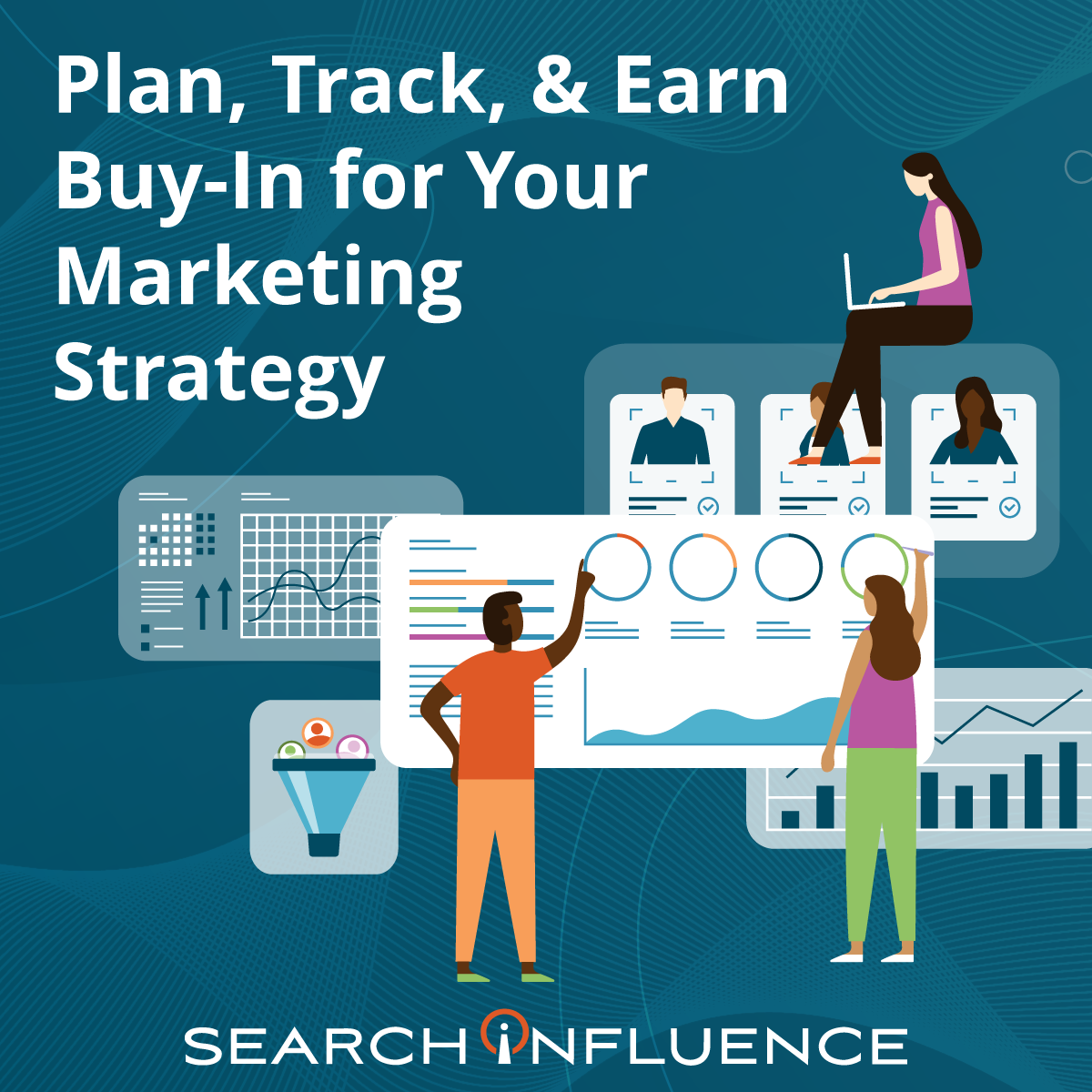
    Plan, Track, & Earn Buy-In for Your Marketing Strategy webinar graphic

    This is the third part of our free training series, “Plan, Track, and Earn Buy-In for Your Higher Education Marketing Strategy. The series helps higher education marketers create a strategic and measurable marketing plan and build excitement for the plan among stakeholders.

  • Search Influence Presents Virtual Higher Education Marketing Training, “Marketing Data, Dashboards, and Decisions”

    Search Influence will host Marketing Data, Dashboards, and Decisions on Tuesday, Dec 7, 2021 at 12pm EST/11am CST.

    Register for this training and our January session here. All registrants receive a recording of the first part of the series, as well as all upcoming sessions.

    About the Virtual Training

    Discover how to unlock powerful insights by using quantitative data to tell a story about the performance of your institution’s recruitment and marketing strategies.

    Learning objectives:

    • Suggestions for tools and high-level processes to use when integrating disparate data into a dashboard.
    • How an integrated reporting dashboard can improve efficiency.
    • Methods to tie marketing and enrollment data together to communicate your work to non-marketing people.

    Plan, track and earn buy in for your marketing strategy graphic

    This is the second of our free training series, “Plan, Track, and Earn Buy-In for Your Higher Education Marketing Strategy.” The series helps higher education marketers create a strategic and measurable marketing plan and build excitement for the plan among stakeholders.

    Upcoming

    Session 3: How to Gain Stakeholder Trust in Your Marketing Plan

    Tuesday, Jan 11, 2022 | 12PM ET/11AM CT
    Register

    As an education marketer, it’s your job to help deans, admissions, and other stakeholders understand how new marketing strategies fuel student growth.

    Search Influence will guide you through how to build a case for new marketing efforts, including ways to demonstrate how your strategies impact your institution.

    Learning objectives:

    • How to use quantitative goals to plan and pitch marketing strategies.
    • Tactics to demonstrate how a given strategy will help you reach a specific target audience.
    • Guidance to tailor your discussion based on personality styles and role.
  • Search Influence Hosts Higher Education Marketing Series, “Plan, Track, and Earn Buy-In for Your Higher Education Marketing Strategy”

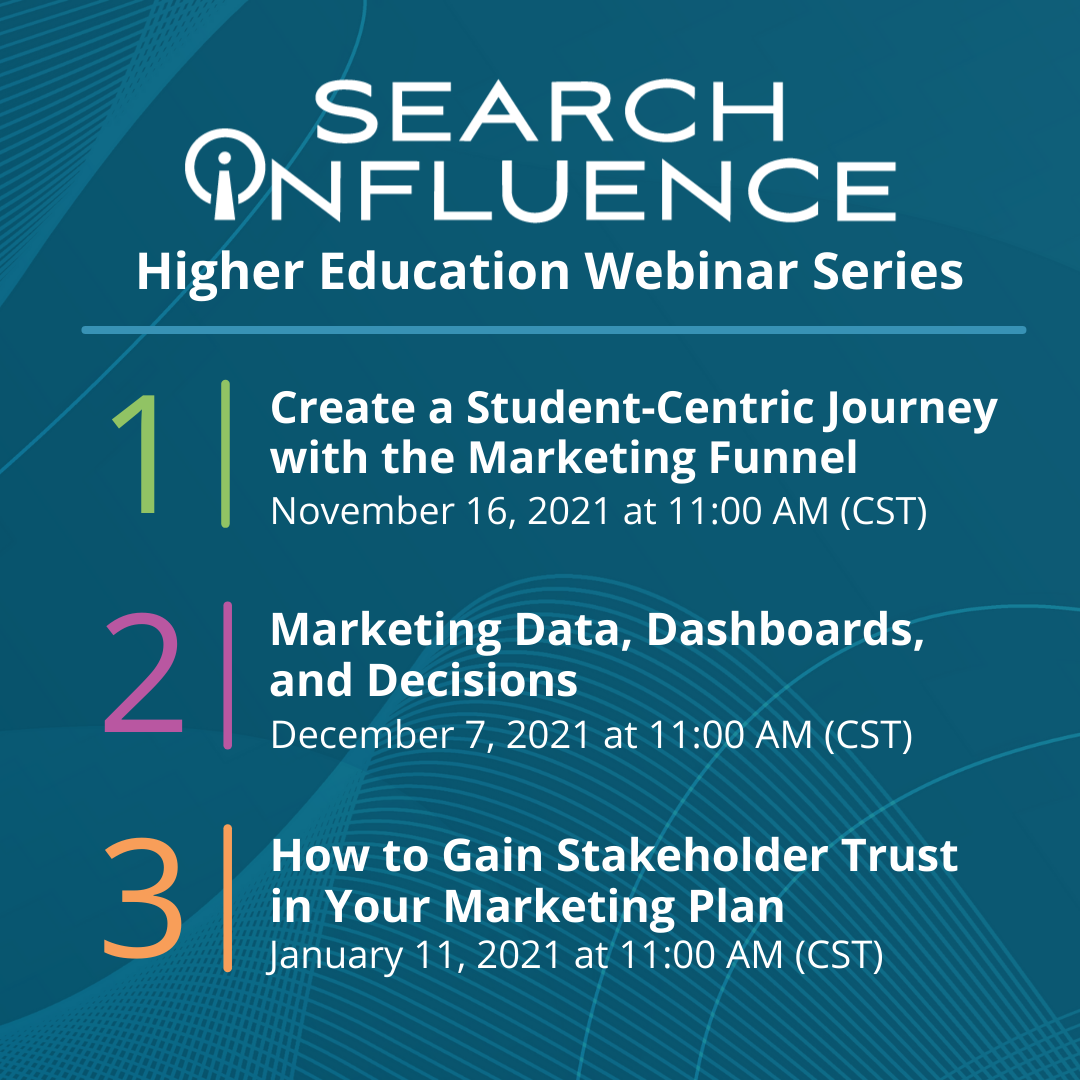
    Search Influence will host Plan, Track, and Earn Buy-In for Your Higher Education Marketing Strategy, a free, three-part training series. The series is designed to help higher education marketers create a strategic and measurable marketing plan and build excitement for the plan among stakeholders.

    Watch all three recordings here.

    Dates for Search Influence's 3-part higher education marketing webinar

    Session 1: Create a Student-Centric Journey with the Marketing Funnel

    Tuesday, Nov 16 | 12PM ET/11AM CT
    Watch the recording here.

    In this Higher Education Strategy Session, Search Influence will walk you through how to nurture prospects with tactics that align to the marketing funnel and student journey.

    Learning objectives:

    • How to look at the marketing funnel from the student’s perspective.
    • The ideal formula and structure for content that converts on your program and degree page.
    • Opportunities to create innovative conversion website points that help you qualify leads.

    Upcoming Sessions

    Session 2: Marketing Data, Dashboards, and Decisions

    Tuesday, Dec 7 | 12PM ET/11AM CT
    Watch the recording here.

    Discover how to unlock powerful insights by using quantitative data to tell a story about the performance of your institution’s recruitment and marketing strategies.

    Learning objectives:

    • Suggestions for tools and high-level processes to use when integrating disparate data into a dashboard.
    • How an integrated reporting dashboard can improve efficiency.
    • Methods to tie marketing and enrollment data together to communicate your work to non-marketing people.

    Session 3: How to Gain Stakeholder Trust in Your Marketing Plan

    Tuesday, Jan 11, 2022 | 12PM ET/11AM CT
    Watch the recording here.

    As an education marketer, it’s your job to help deans, admissions, and other stakeholders understand how new marketing strategies fuel student growth.

    Search Influence will guide you through how to build a case for new marketing efforts, including ways to demonstrate how your strategies impact your institution.

    Learning objectives:

    • How to use quantitative goals to plan and pitch marketing strategies.
    • Tactics to demonstrate how a given strategy will help you reach a specific target audience.
    • Guidance to tailor your discussion based on personality styles and role.